A dispatcher watches one number climb: fatigue score, 82. The driver has three hours left on shift. Ignore that alert, and a missed warning becomes a totaled truck, giant financial loss, and a massive lawsuit. And maybe, even a call no manager ever wants to make.
Here’s the thing with fleet safety. It usually breaks long before a crash happens. The good news is that you can manage and prevent it. And it quite literally saves lives. And your business.
After more than fifteen years building fleet tech at COAX Software, we’ve learned one inescapable truth. Safety solutions collapse without a shared data layer. A 500-truck fleet proved it at scale. Once we fixed their fragmented data, support tickets fell by 45%.
Here’s what fleet safety management gives you. It also saves you from fines, lowers turnover, and cuts costs. In this guide, we’ll cut through the noise on monitoring systems, certifications, and high-performing software. Then, we’ll give you a practical blueprint to build a program that holds up on the road.
What is fleet safety management?
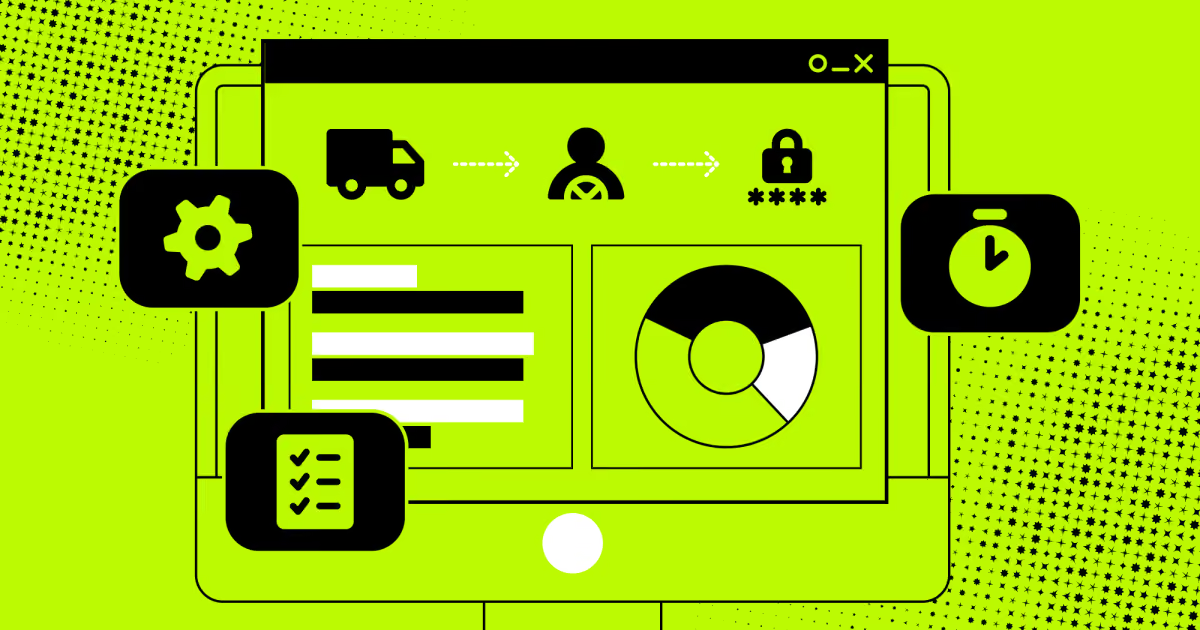
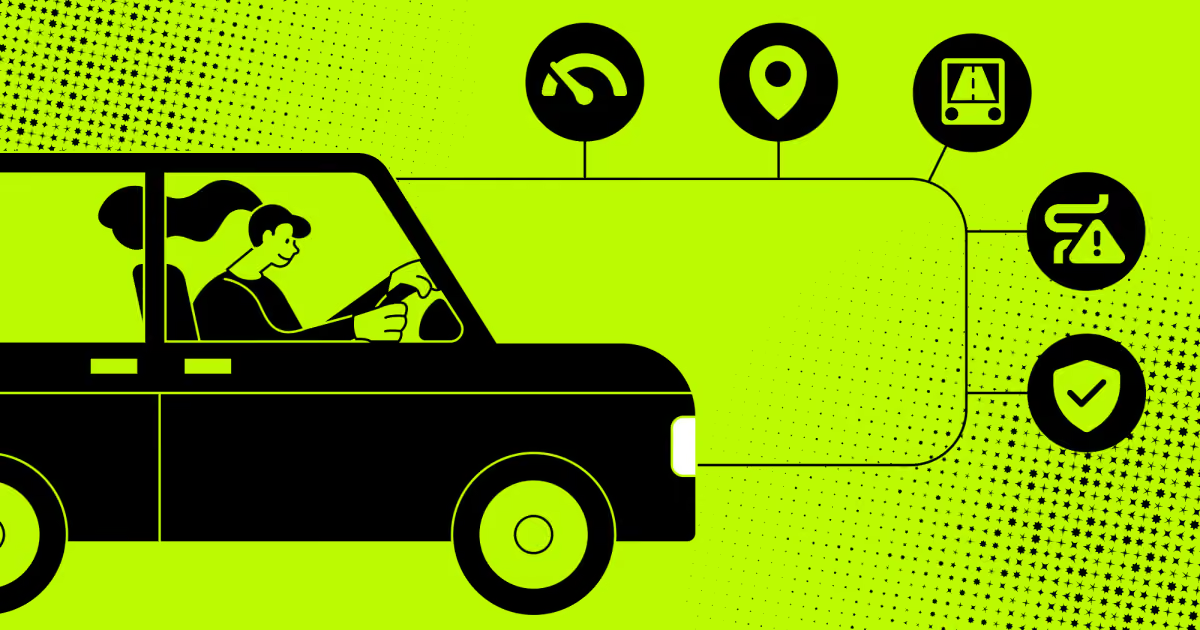
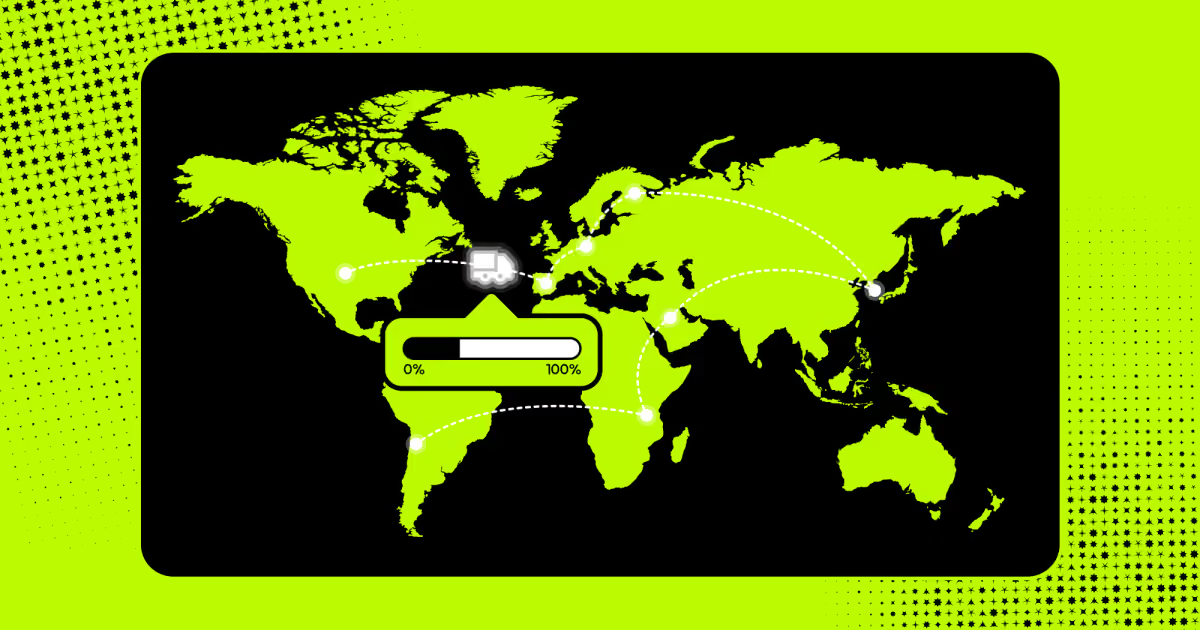
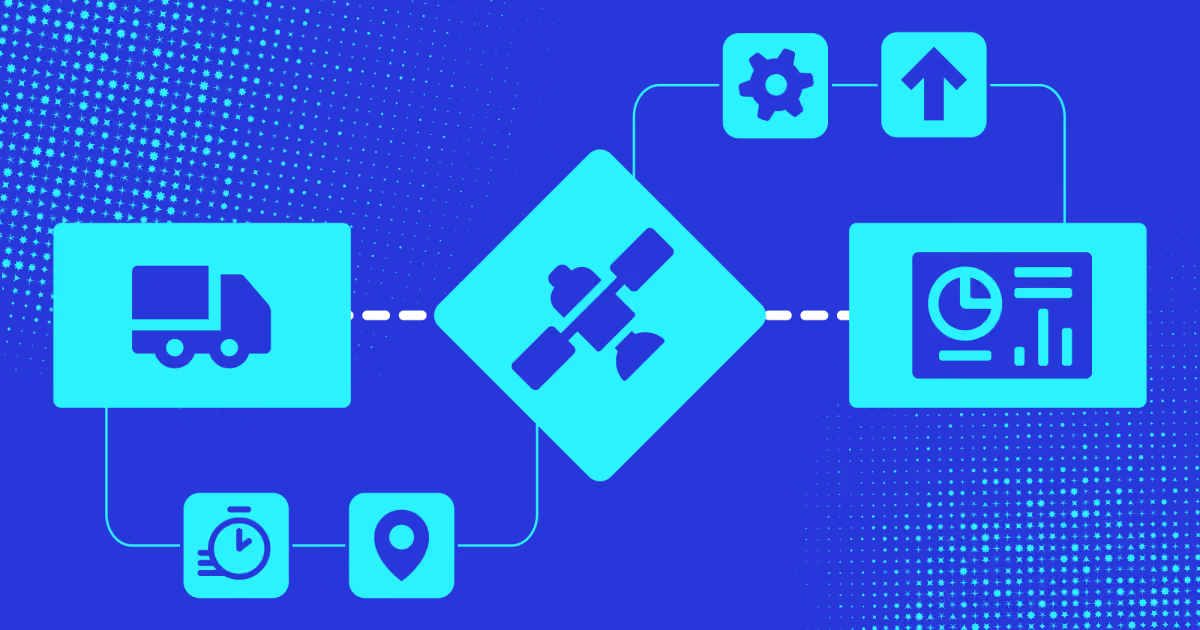
Fleet safety management is the practice of monitoring drivers, vehicles, and routes. It comes down to one job: watching your drivers, trucks, and routes to stop crashes before they happen. It pulls GPS data, driver behavior, and vehicle health into one system. That system flags risk early, not after a claim arrives.
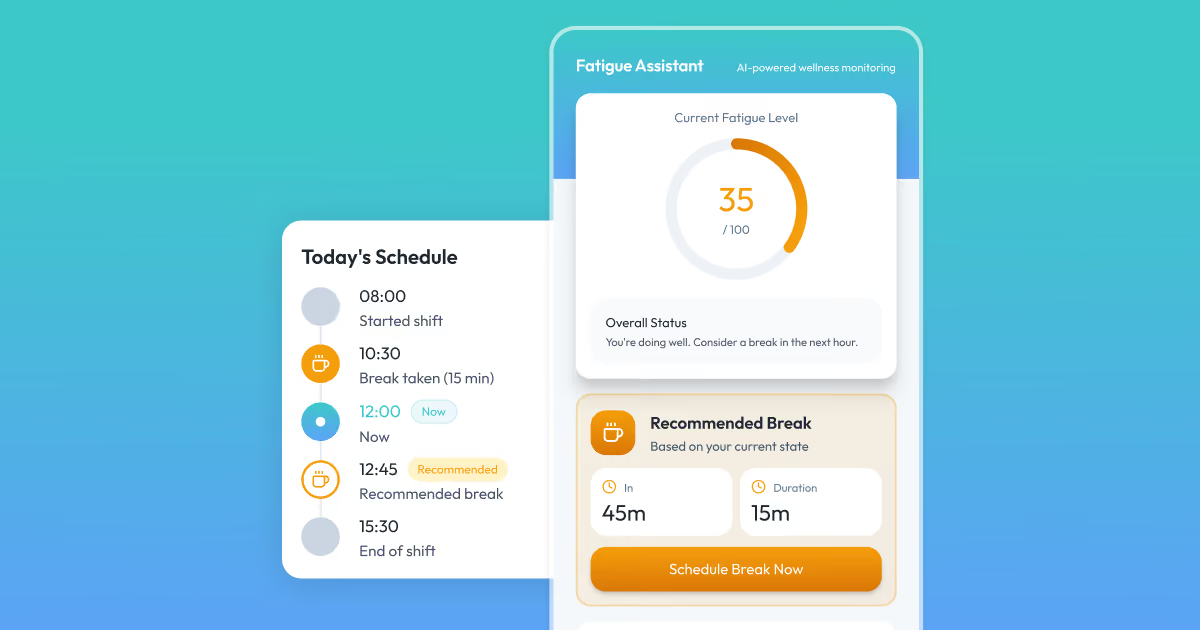
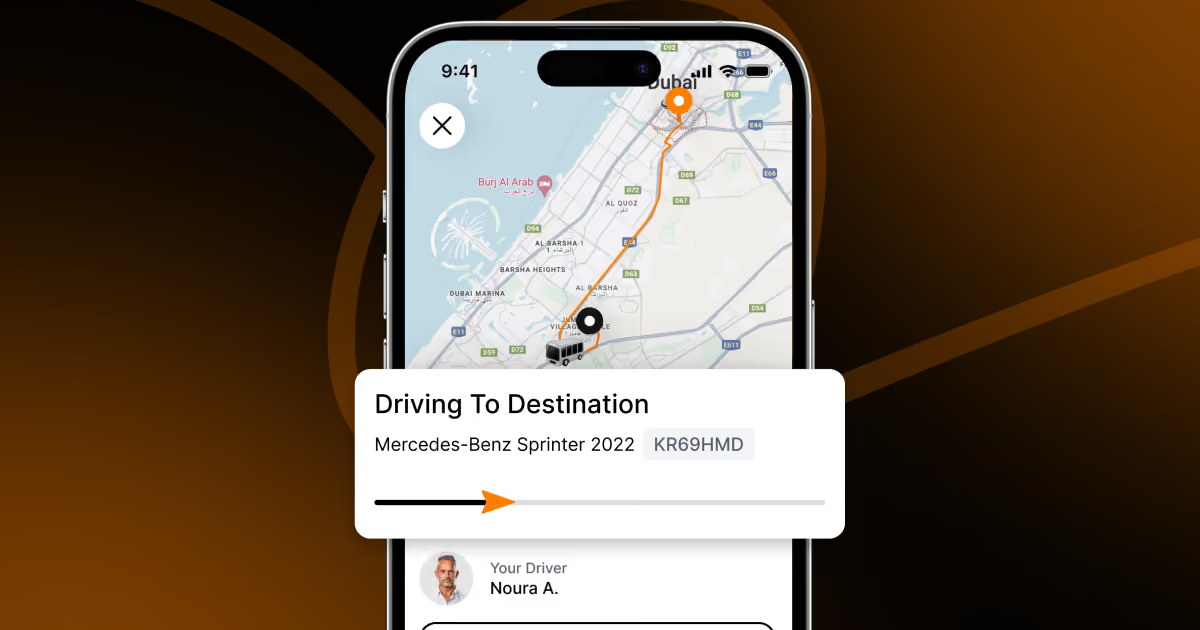
Driver fatigue alone shows why the connection matters. On DriveIQ, a platform we built for a cross-border fleet, the model reads shift length against time of day. It flags fatigue risk before a driver hits legal hour limits. In one quarter alone, that logic helped prevent over 40 hours-of-service violations. No dispatcher checking boards manually ever caught those risks in time.
This discipline isn't the same job as transport planning software. Planning tools handle routes, schedules, and pickups. Fleet management driver safety tools watch the person behind the wheel, continuously, not just the cargo.
The market finally gets it. Operators spent years treating safety like a regulatory checkbox to tick off and ignore. Today, it’s increasingly becoming a line item with its own dedicated vendors.
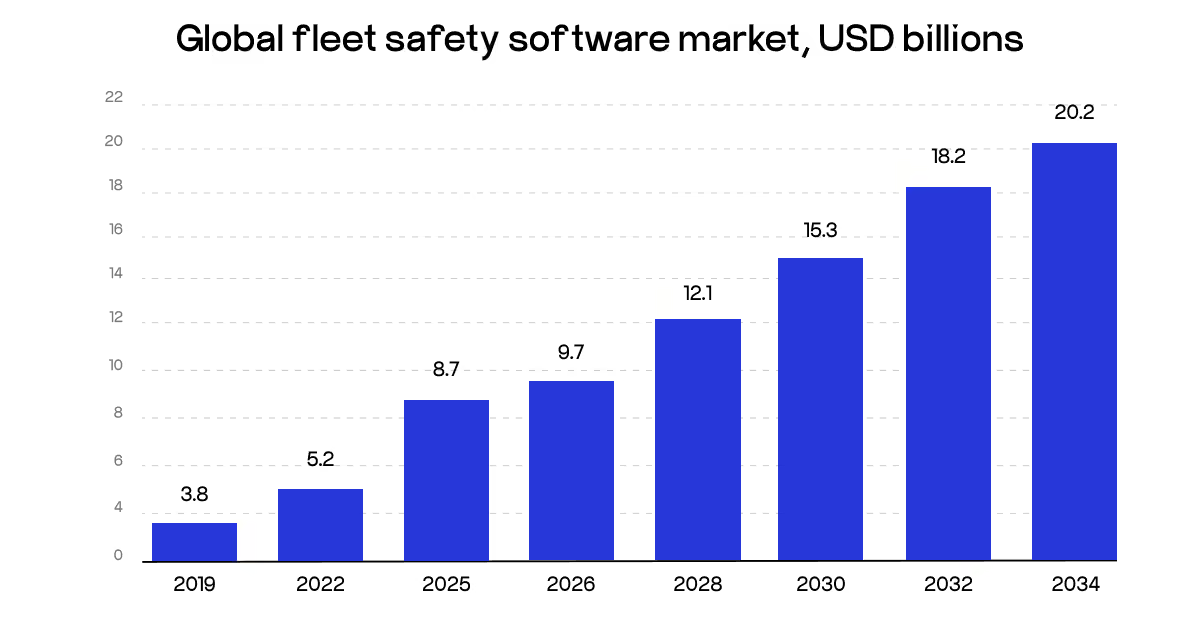
The global fleet safety software market was valued at $8.7 billion in 2025. The growth doesn’t stop there: analysts expect it to reach $20.2 billion by 2034. Driver safety solutions alone account for 28.5% of that spend, the largest single segment.
Rising accident costs and tighter regulation are the two forces pushing that curve upward, and neither shows signs of slowing. If you think that none of these challenges will impact your business, think again (and here’s why).
Why is managing fleet safety so important?
Our client ran a telematics company. They had one issue stalling growth: their data was scattered between three separate apps. One handled tracking, one handled reporting, and drivers mostly ignored the third. That fragmentation is the default state for fleets before they invest in driver fleet safety tools.
Crash data explains the stakes behind that default. Large trucks were involved in 5,340 US fatal crashes in 2024 alone. Behind each number is a fleet whose safety program didn't catch the risk in time.
The financial exposure compounds fast once a crash happens. FMCSA estimates a fatal crash costs a fleet about $3.6 million. Even a routine injury crash runs close to $200,000. Insurance carriers have priced all of that risk straight into premiums. Commercial auto rates rose 8.8% in a single quarter of 2025 alone. A documented fleet safety program is one of the few levers still moving that number down at renewal.
Fleet safety dies in a forgotten spreadsheet. It needs a live feed, one that dispatchers can watch on shift.
"The second you're managing multiple departments or locations, operating without a shared context layer starts bleeding money. You can't fix that with prettier spreadsheets. You fix it with real infrastructure," says Orest Falchuk, Head of Engineering at COAX Software.
What is a fleet safety program?
A fleet safety program goes well beyond software. It combines policies, documentation, defined roles, and daily operations into one structure. The technology just gives that structure a way to run on its own.
Most fleets already own pieces of this. A written policy sits in a binder somewhere. A maintenance log lives in a spreadsheet. A safety officer handles incident reports by email. None of those pieces share data or update in real time, so nobody sees the full picture. That’s until an audit forces the question.
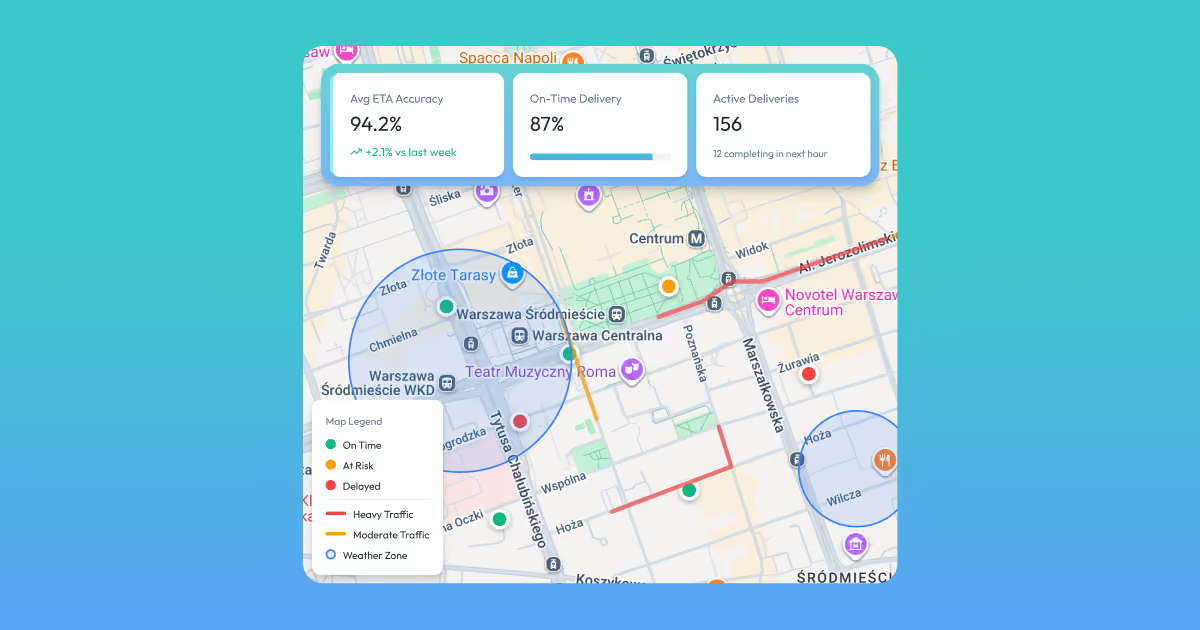
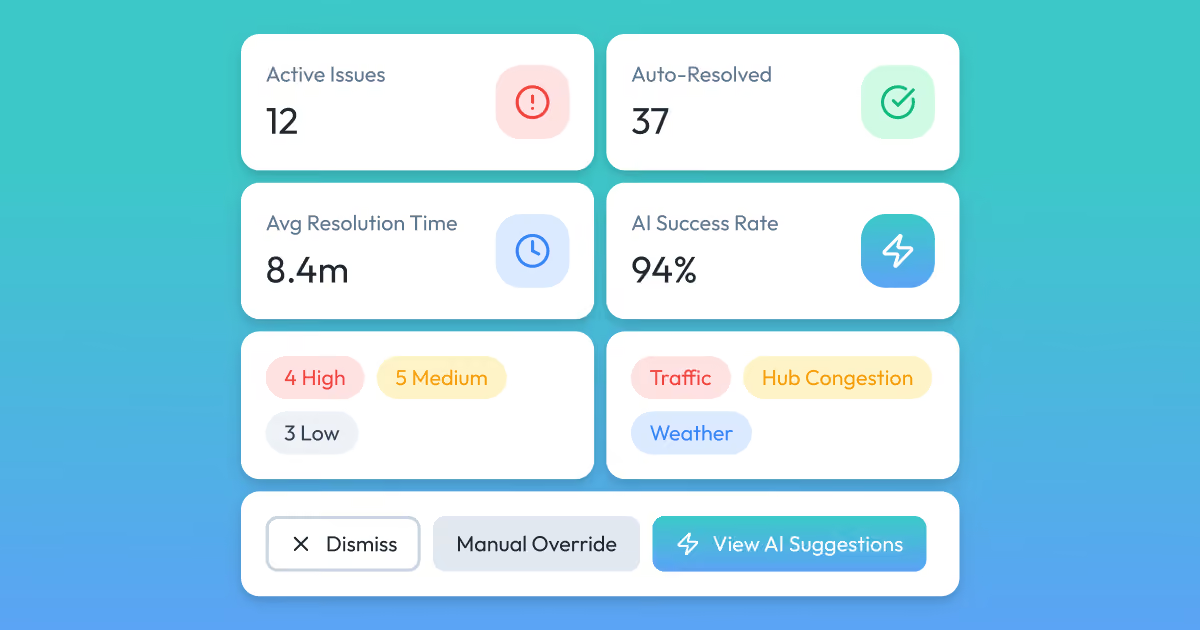
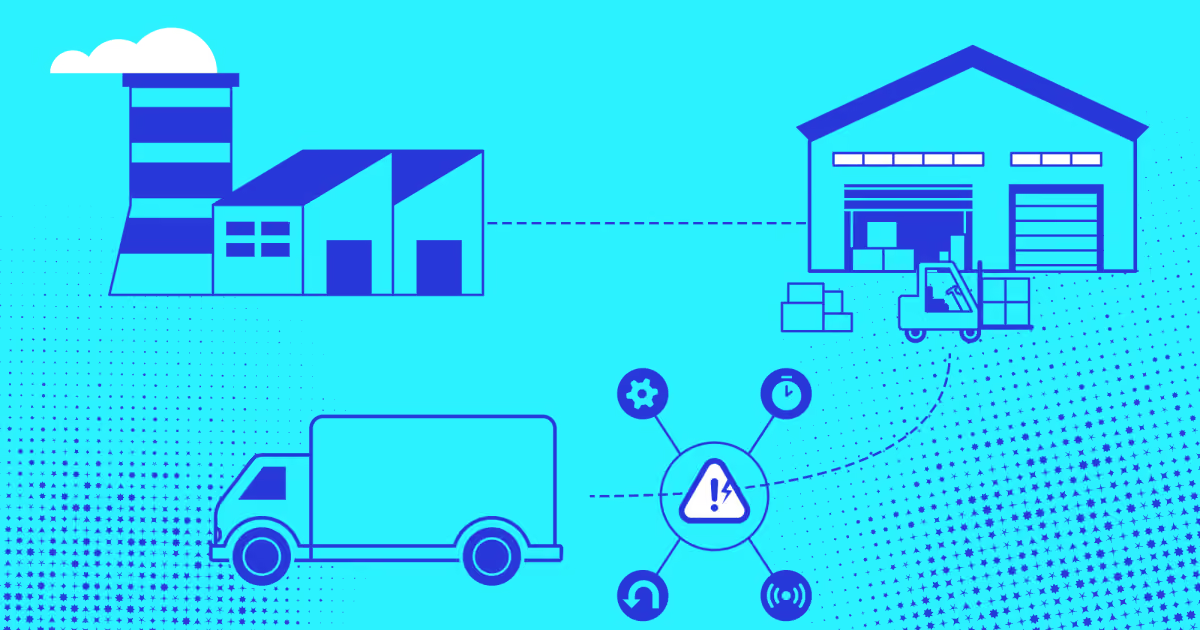
The AI-driven logistics platform we built shows what happens when those pieces connect. The predictive ETA engine flags a delay risk. The risk detection queue routes that flag to the right dispatcher. The fatigue and HOS optimizer checks whether the assigned driver has remaining hours. The auto-recovery optimizer suggests a reroute in one click. Each module handles a different job, but they share one data layer. This way, a single event triggers the whole fleet safety chain.
Roles matter here too. A fleet manager sets thresholds for what counts as risky. A dispatcher approves or overrides recommendations in real time. A driver receives coaching through the mobile app, not a memo six months later. Each stakeholder touches the same system, at the moment their decision matters.
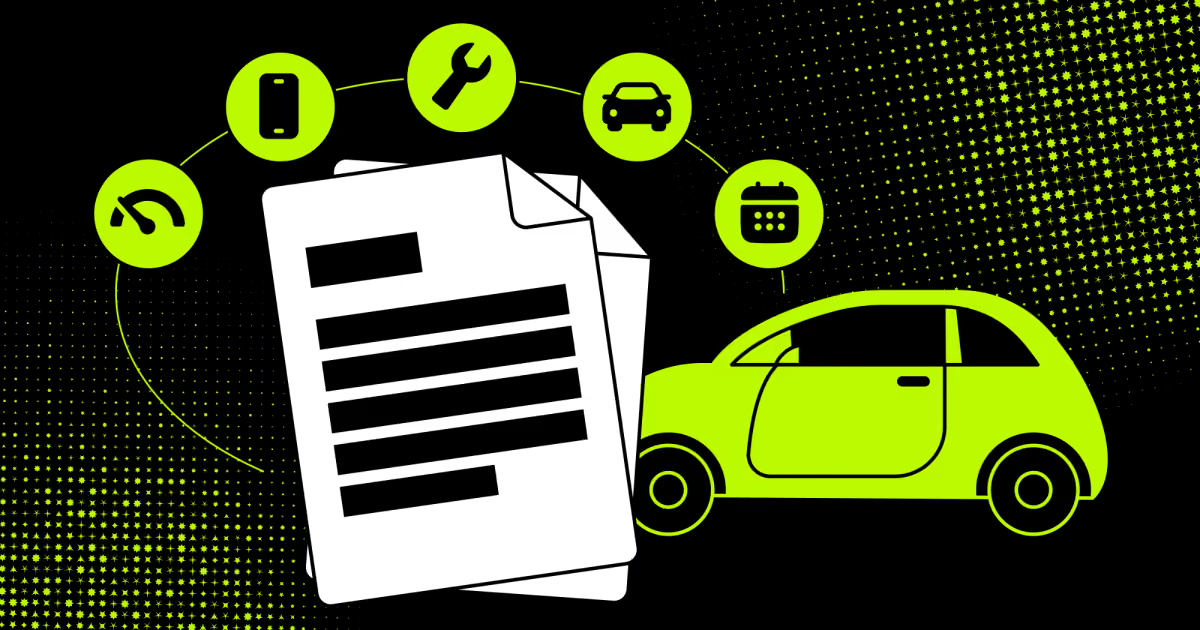
Documentation still has a place. Someone still needs signed acknowledgment of policy, training records, and incident write-ups for insurance and audits. The difference is where that documentation comes from. On DriveIQ, driver scorecards and incident logs generate automatically, pulled straight from the same telemetry that triggers alerts. Nobody reconstructs a paper trail after the fact.
That combination, live monitoring plus structured governance, is what separates fleet driver safety programs from tools. Software alone catches an event. A program defines who acts on it, how fast, and what gets recorded once they do.
Why should every fleet have a fleet safety program?
Statistics from the World Health Organization show that every year, road traffic crashes claim roughly 1.16 million lives globally. Fatality counts have dropped since 2019, but the number stays high enough to matter. A fleet safety program’s goal is to push that number down further, one driver at a time.
The logic isn't complicated. Untrained drivers repeat the same mistakes. Unmonitored vehicles break down at the worst moment. Unreviewed incidents teach nobody anything. A structured program closes each of those gaps before they become claims.
Five elements make that structure work:
Vehicle inspection and maintenance: catch mechanical failures before they become roadside incidents.
Fleet safety policy gives drivers one clear standard, not a patchwork of verbal rules.
Continuous training keeps skills current instead of frozen at hire date.
Effective investigation turns every incident into a lesson, not a closed file.
Ride-along observations catch habits a dashboard alone won't show.
Training itself takes different shapes. Some fleets run online modules. Others use a classroom, a simulator, or standard behind-the-wheel sessions. The strongest programs mix formats, so drivers stay engaged instead of tuning out repetitive content.
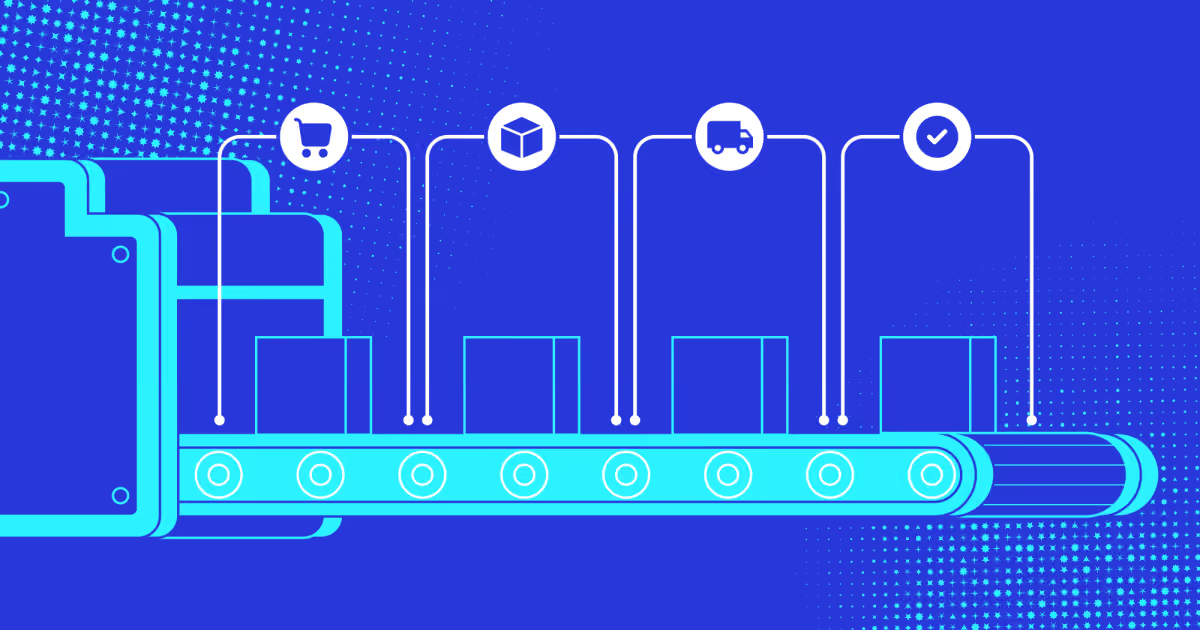
This isn't only a safety question. It's a supply chain risk management question too. A driver out on injury leave delays every load behind them. A vehicle sidelined for unplanned repair breaks a delivery commitment somewhere down the chain. Safety and reliability sit on the same ledger.
We saw this firsthand on our DriveIQ project. Better break timing and fatigue detection contributed to a 38% drop in safety incidents within the first year. That number didn't come from one feature. It came from fleet safety management that connected training, monitoring, and response into a single loop.
What are the main elements of a fleet safety program?
What makes a fleet safety program actually work? Five linked parts: active leadership backing, strict driver vetting, daily vehicle upkeep, real-time telematics tracking, and fair driver recognition. Remove any single piece, and the whole system falls apart.
Fleets that treat these five elements as connected, not separate checklists, tend to outperform on every metric that matters. That's the difference between basic compliance and genuine fleet safety best practices.
Management commitment comes first. Leadership has to fund safety rules, not just sign off on them. Written policy needs teeth too. Seat belts, zero tolerance for phone use, and firm speed limits aren't suggestions. They're the baseline every other element builds on.
Driver selection and onboarding come next. Background checks matter before day one, not after an incident. Motor vehicle records, criminal history, and past performance all get reviewed upfront. Initial training then walks new hires through policy and road expectations before they touch a route.
Vehicle maintenance and inspection keep mechanical risk in check. Pre-trip checklists catch tire, brake, and light issues before departure. Routine upkeep prevents small problems from becoming roadside breakdowns. Skip this step, and every other element becomes reactive instead of preventive.
Performance monitoring and technology are where most modern programs earn their name. Telematics tracks speeding, harsh braking, and route adherence in real time. In-cab coaching turns that data into direct driver feedback, not a quarterly scolding. We saw this accurately on SyncMatix, a telematics platform we rebuilt for a client. Once driver behavior data lived in one dashboard instead of three, fleet managers caught risk patterns they'd missed for months.
Incident response and evaluation closes the loop. Clear protocols define what happens the moment a crash occurs: who calls for help, who secures the scene, who files the report. Post-accident review then digs into root cause, so the same mistake doesn't repeat with a different driver.
Building all five in-house rarely makes sense for a mid-size fleet. Most operators are better served pairing internal policy work with external fleet safety services, engineered specifically to connect those pieces into one system.
What are the core components of a fleet monitoring system?
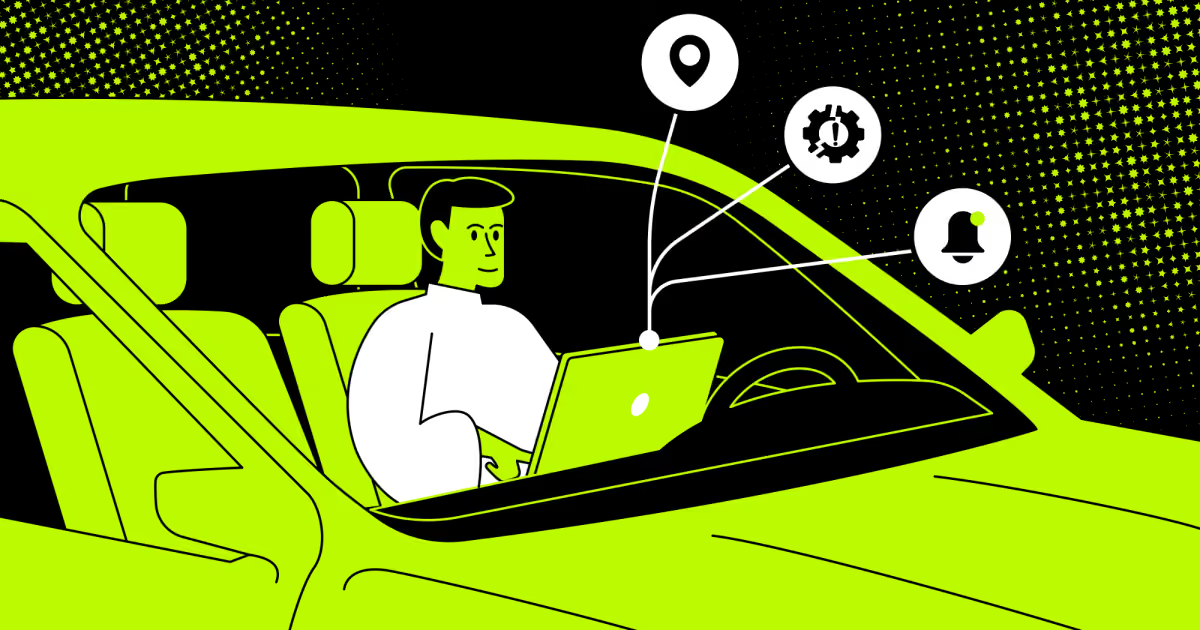
We've covered the policy side of fleet safety. Now let's get into the parts COAX actually builds. This is the tech stack behind every real program. Seven components make up a working fleet monitoring system.
Vehicle location tracking
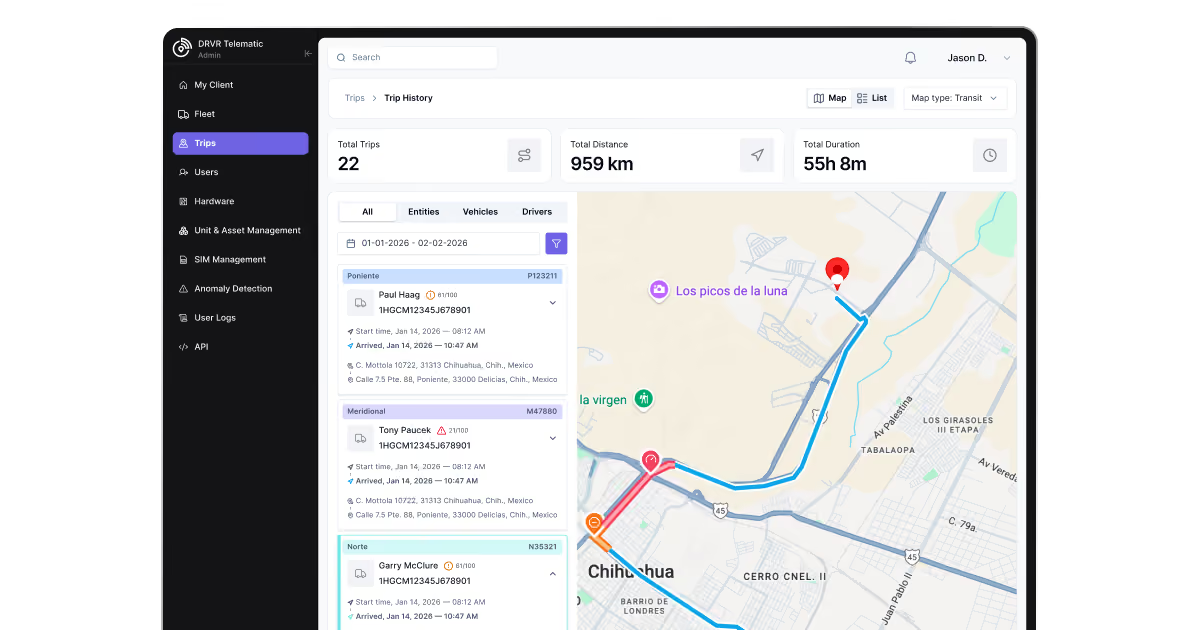
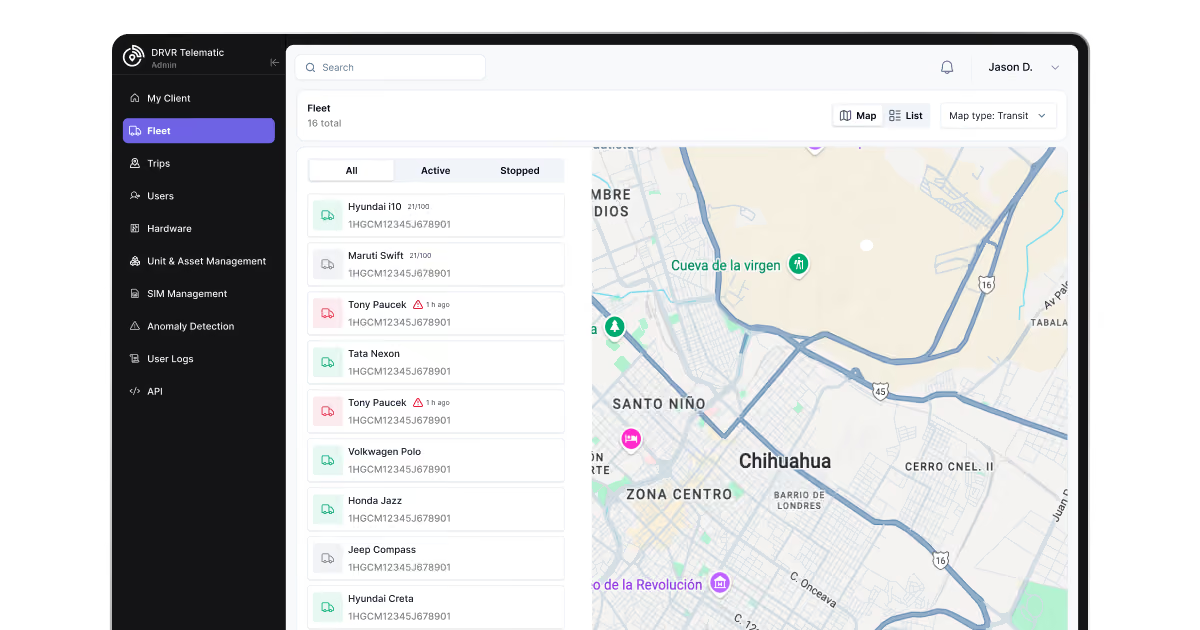
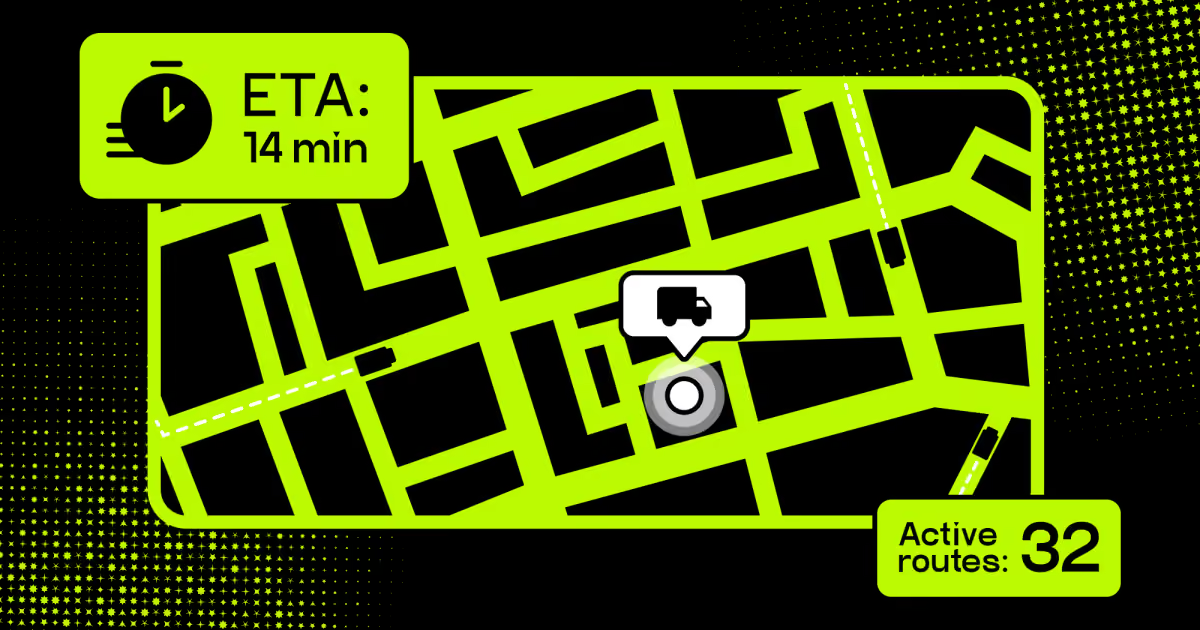
Location tracking is the foundation layer of any monitoring stack. GPS pings feed a live map, updated every few seconds. Without this layer, nothing else in the system has context. Dispatchers can't route around risk if they don't see the truck.
This is where fleet safety telematics starts. Raw coordinates alone don't help anyone. The value comes from pairing location with speed, heading, and stop history. That combination flags a truck idling somewhere it shouldn't be.
On SyncMatix, we built this layer to handle thousands of vehicles at once. Location updates had to arrive without lag, even at scale. That real-time view improved response to route events by 25%. Fleet managers stopped calling drivers to ask where they were.
Getting this right sounds simple until you hit volume. Ping frequency, battery drain, and network dropouts all compete. Miss one of those trade-offs, and the map lags behind reality. A lagging map is worse than no map at all.
Driver behavior monitoring
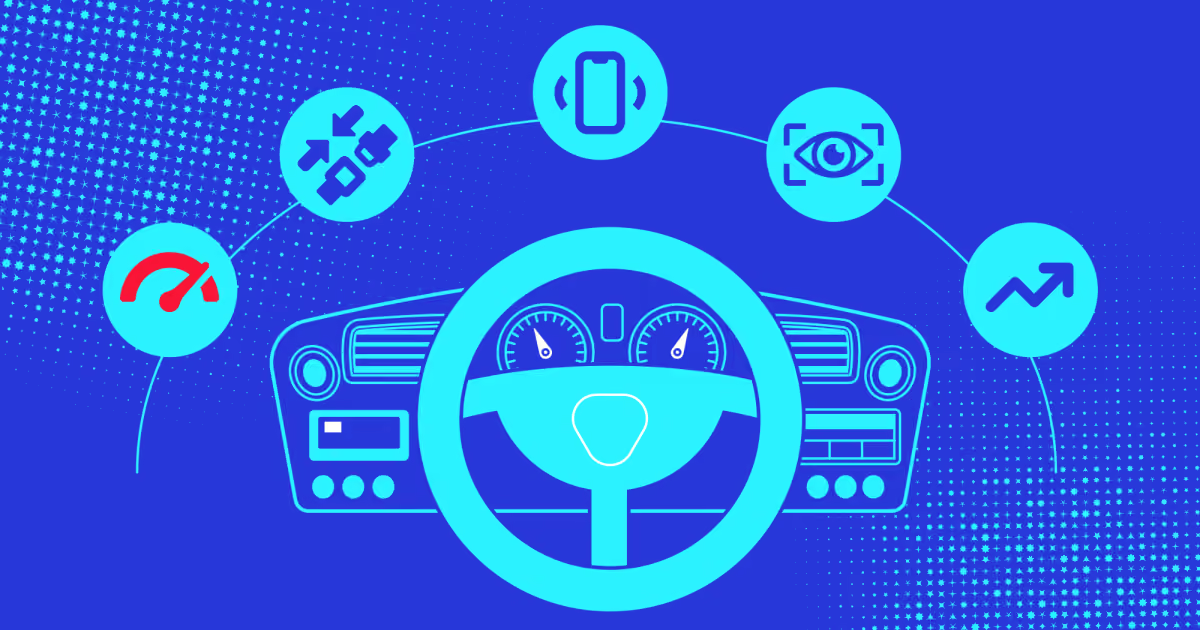
Behavior monitoring watches how a driver drives, not just where. Harsh braking, hard acceleration, and sharp cornering all get logged. Speed relative to posted limits gets flagged automatically too. This data turns a vague safety concern into a specific pattern.
Fleet driver safety depends on catching patterns early, before they become incidents. A driver who brakes hard weekly isn't reacting to traffic. They're following too close, and the data proves it. That's a coaching conversation, not a guessing game.
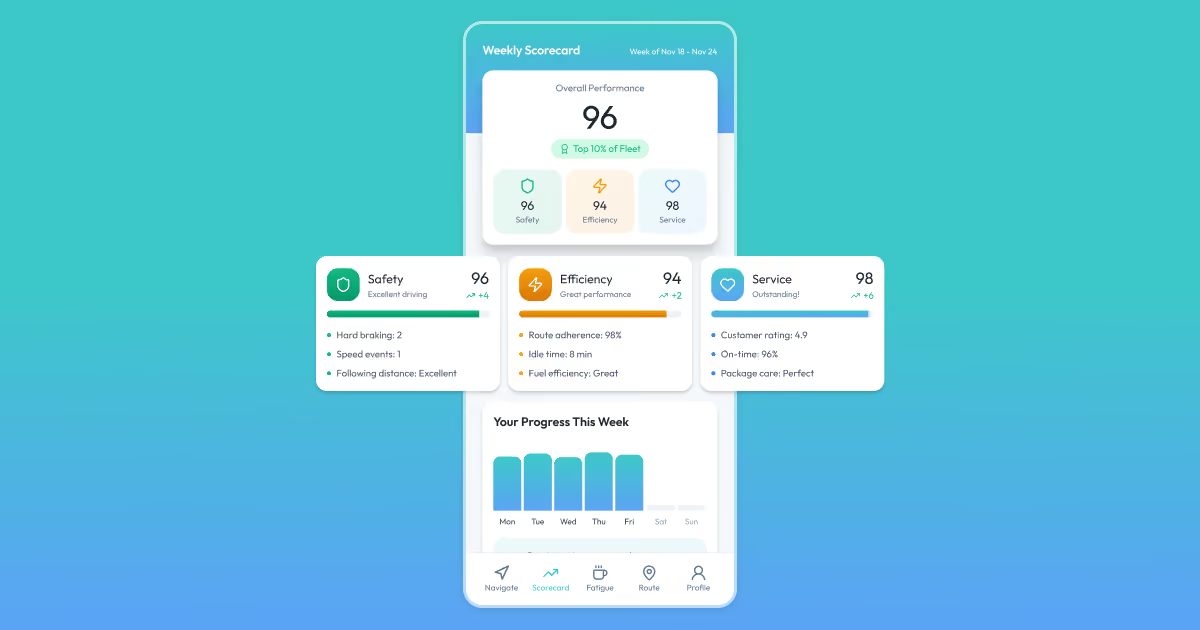
DriveIQ's performance dashboard built this into a weekly scorecard. Safety, efficiency, and service scores sit side by side. Drivers see peer benchmarking, not just a raw number. That format alone increased voluntary coaching engagement across the fleet.
The hard part isn't collecting the data. It's presenting it so drivers actually act on it. Score dumps get ignored. Context, comparison, and clear next steps get read. Build this component wrong, and the data just piles up unused.
In-cab camera systems
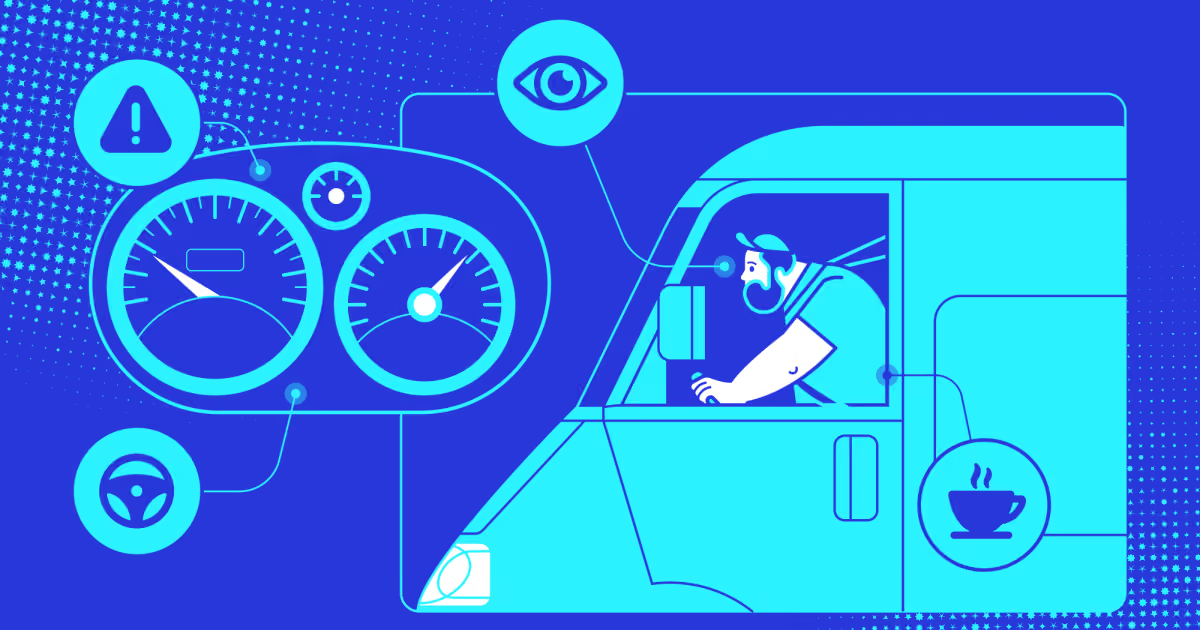
Camera systems add a visual layer of behavior data alone can't provide. Road-facing lenses capture what happened outside the cab. Driver-facing lenses capture fatigue, distraction, and phone use inside it. Together, they turn a suspected cause into confirmed footage.
Fleet safety cameras matter most in disputed incidents. A rear-end claim with no footage becomes a liability guessing game. The same claim with dual-facing video often resolves in days. Insurers and courts both weigh footage heavily now.
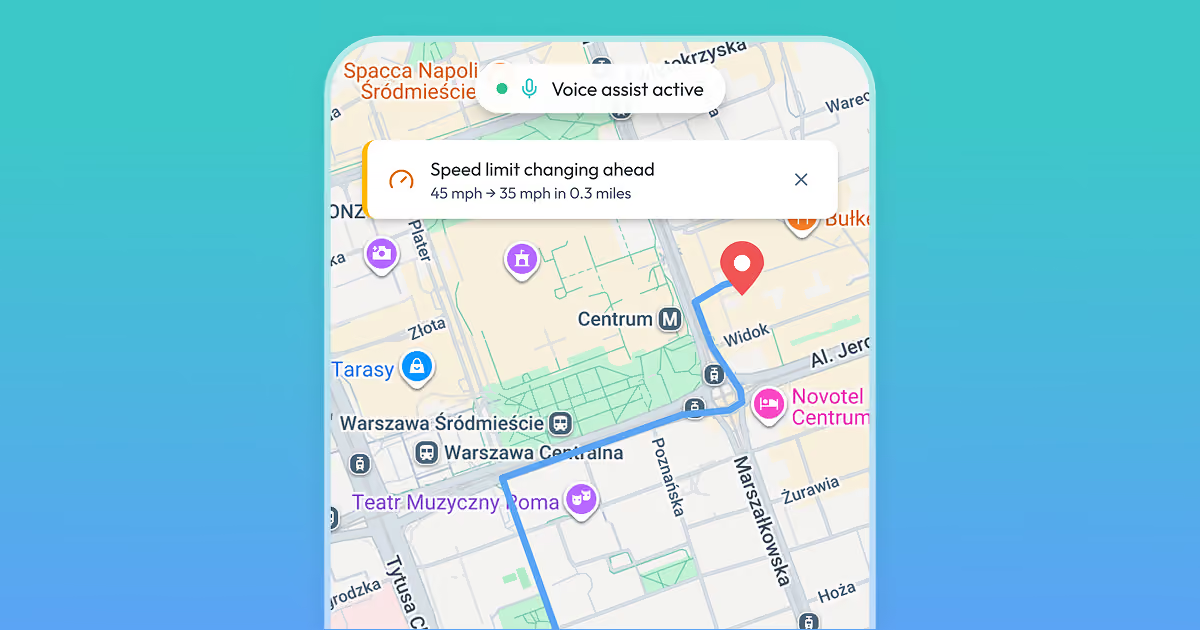
We haven't built our own dashcam hardware yet at COAX Software. However, DriveIQ's in-cab coaching sits right next to where you'd plug one in. Its instant audio alerts already catch sudden speed drops and road hazards mid-route. Bringing video into the fold simply applies that same real-time logic to visual data.
Integrating video is where costs escalate quickly. Secure footage storage, cellular data usage, and driver privacy compliance demand serious resources. Still, fleet operators who bypass camera feeds usually regret it the second a major claim gets disputed. Crisp video settles a highway collision dispute long before a paper log ever could.
Maintenance and diagnostics monitoring
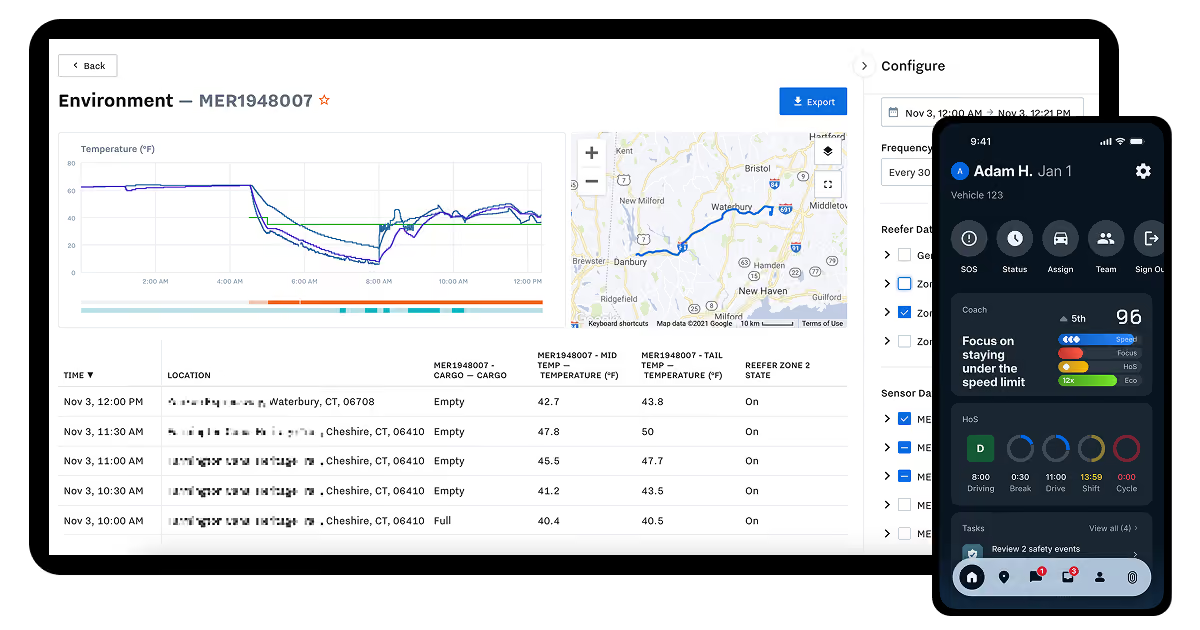
Diagnostics monitoring tracks vehicle health, not driver behavior. Engine codes, tire pressure, and brake wear all get logged remotely. A failing part shows up in data before it shows up on the road. That gap is where breakdowns get prevented instead of repaired.
Fleet safety software earns its budget here more than anywhere else. A predictive alert costs nothing compared to a roadside failure. FMCSA data links a real share of crashes to pre-existing defects. Catching those defects early is pure risk reduction.
DriveIQ didn't build vehicle diagnostics directly, but its architecture shows the pattern. The same telemetry pipeline feeding fatigue predictions could feed maintenance alerts just as easily. One data layer, multiple prediction models running on top.
The challenge is data quality across vehicle makes. Older trucks report differently than newer ones. Standardizing that feed takes real engineering work upfront. Skip that step, and half your fleet stays blind to failure signals.
Alerts and notification engine
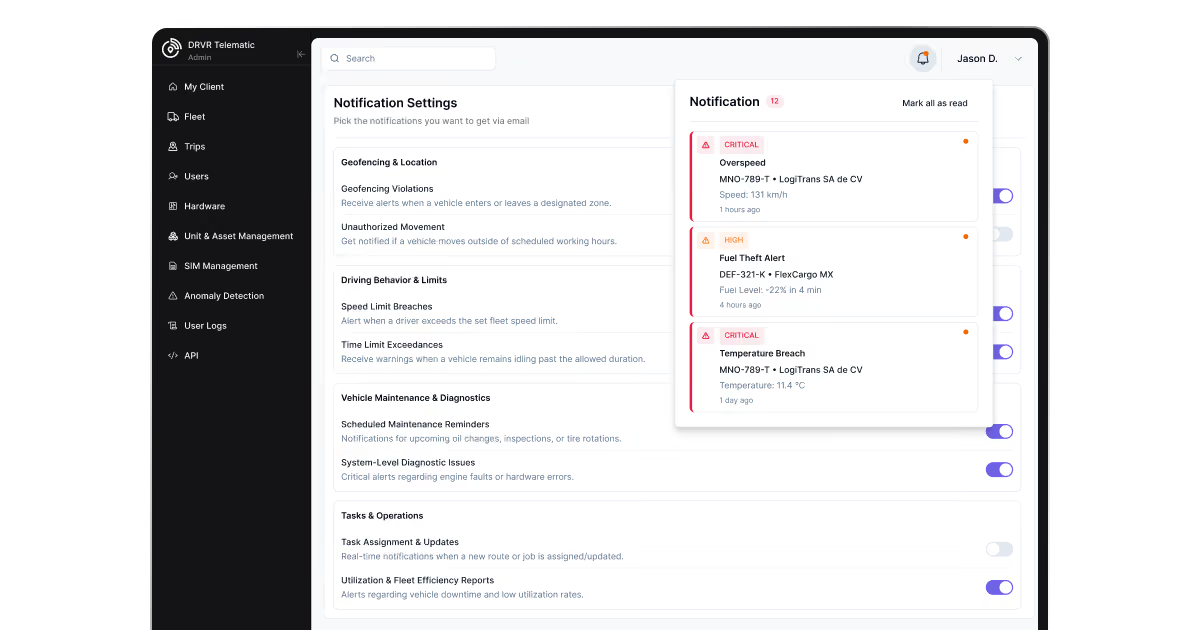
An alerts engine decides what matters and who needs to know. Not every data point deserves a ping. The engine filters raw signals into ranked, actionable notifications. Get this wrong, and drivers start ignoring every alert equally.
Driver management software lives or dies on this filtering logic. Too many alerts train people to dismiss all of them. Too few, and real risk slips through unnoticed. The right threshold takes real tuning, not guesswork.
DriveIQ handled this by suppressing alert types a driver repeatedly ignored. That single design choice kept the system trusted long-term. Trust, once lost to alert fatigue, is hard to rebuild. Better to tune the threshold than flood the channel.
Routing matters as much as filtering for fleet safety solutions. Utilization alerts should reach fleet managers, not drivers. Task alerts belong on the mobile app instead. SyncMatix built exactly this kind of role-based routing across its notification system.
Reporting and analytics dashboards
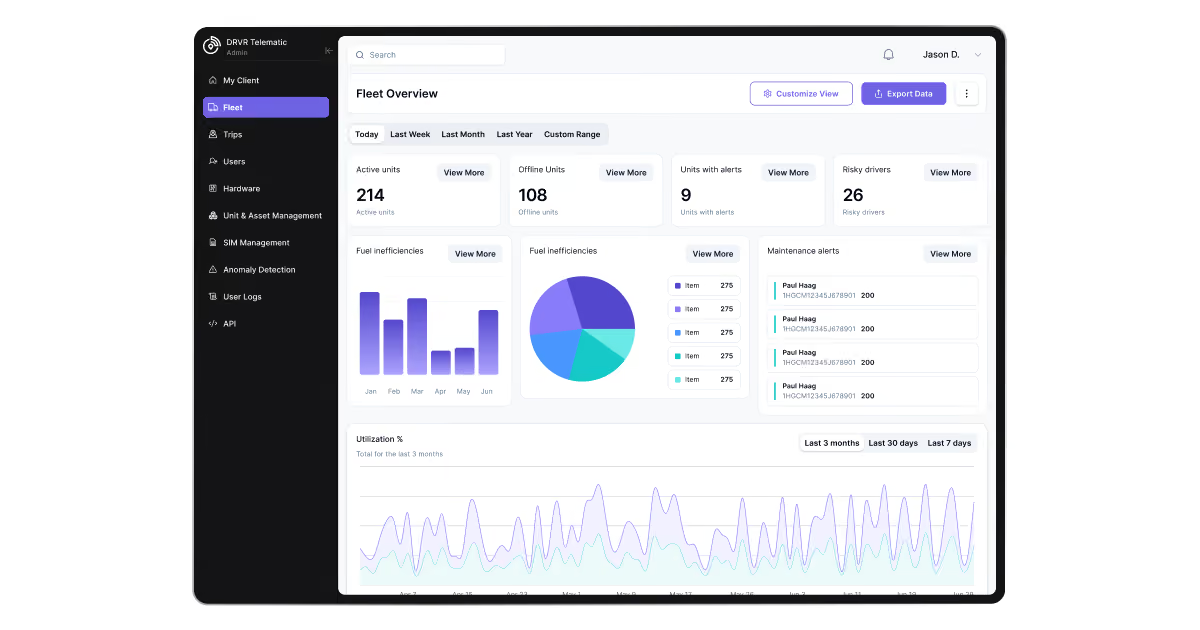
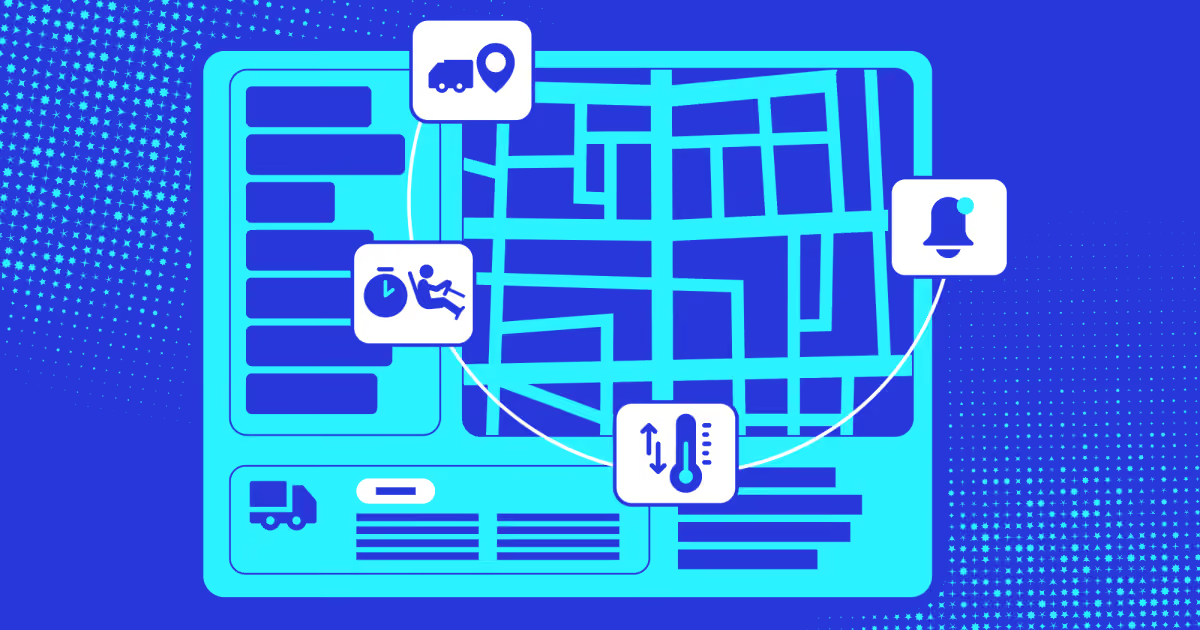
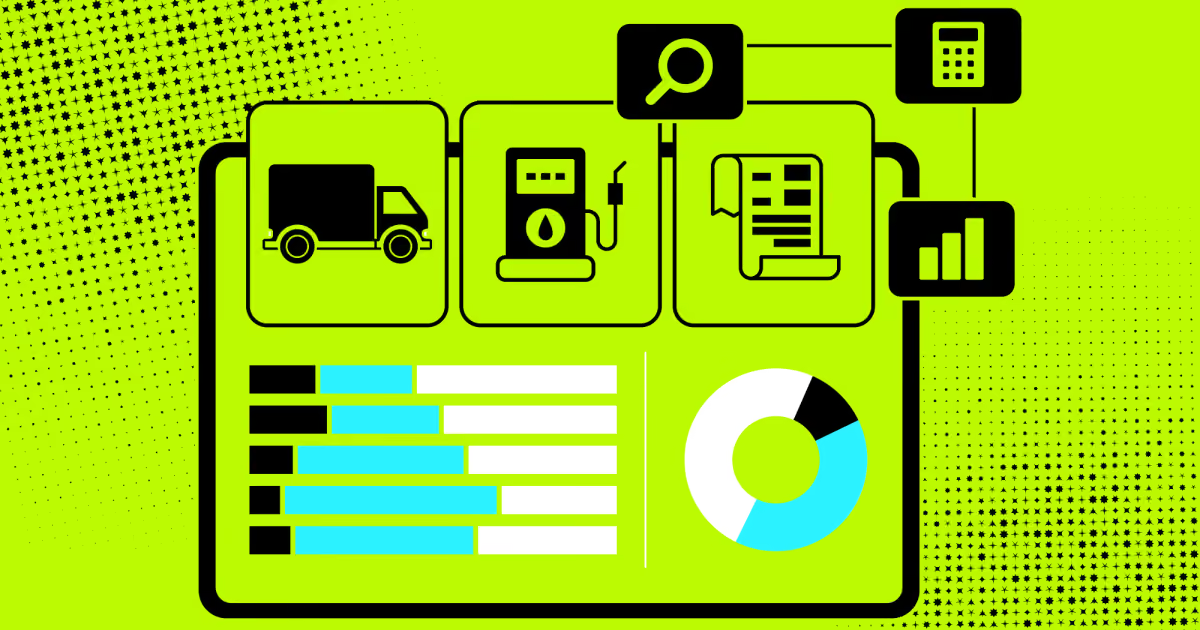
Dashboards turn raw telemetry into decisions someone can act on. Fuel trends, safety scores, and utilization rates all live here. Without this layer, every other component just generates noise. Data without a dashboard is data nobody uses.
Fleet safety management depends on this visibility more than any single sensor. A fleet manager can't fix what they can't see clearly. Good dashboards compress months of data into one glance. That's the difference between reactive and proactive operations.
SyncMatix's analytics engine reduced fuel waste by 18% for its users. That came from surfacing patterns nobody had noticed manually. Cost-per-mile, maintenance spend, and utilization all sat in one customizable report. Finance teams finally had numbers they trusted.
Building this well means resisting the urge to show everything. A dashboard crammed with metrics helps nobody make decisions. The best ones highlight three or four numbers that matter today. Everything else stays one click away, not front and center.
Compliance and documentation tracking
Documentation tracking keeps the paper trail a monitoring system generates automatically. Inspection records, incident reports, and training logs all need a home. Auditors and insurers both expect this trail on demand. Manual recordkeeping simply can't keep pace with daily fleet activity.
Fleet safety programs get judged on this trail as much as their crash rate. A clean safety record with no documentation still fails an audit. The paperwork proves the program exists beyond good intentions. That proof matters at renewal time with insurers.
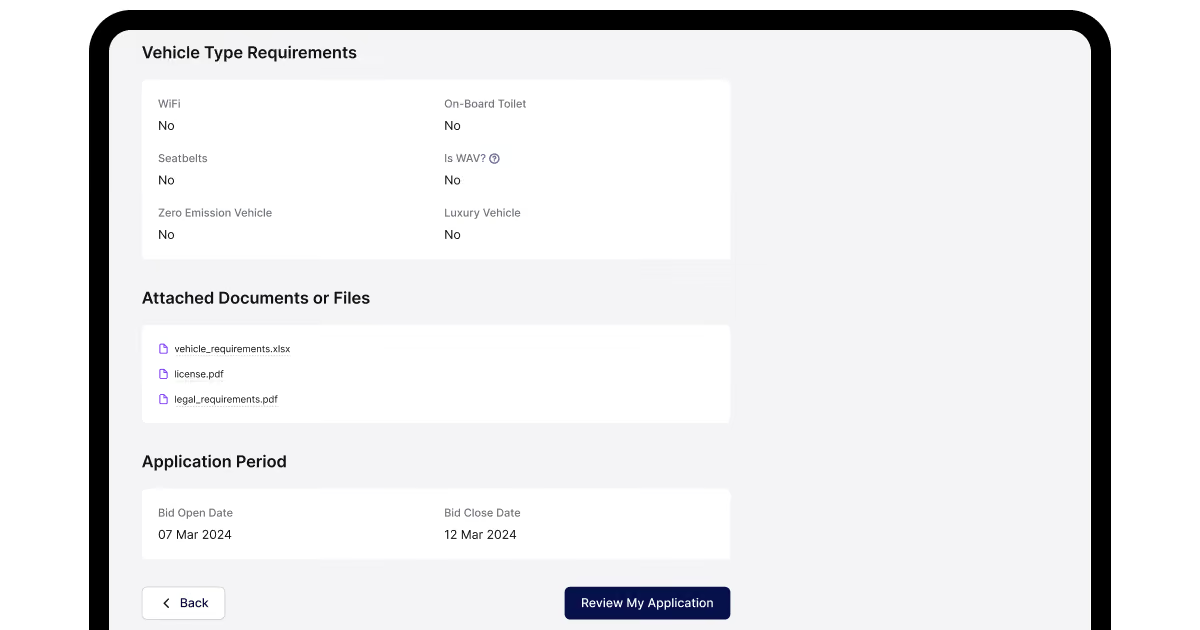
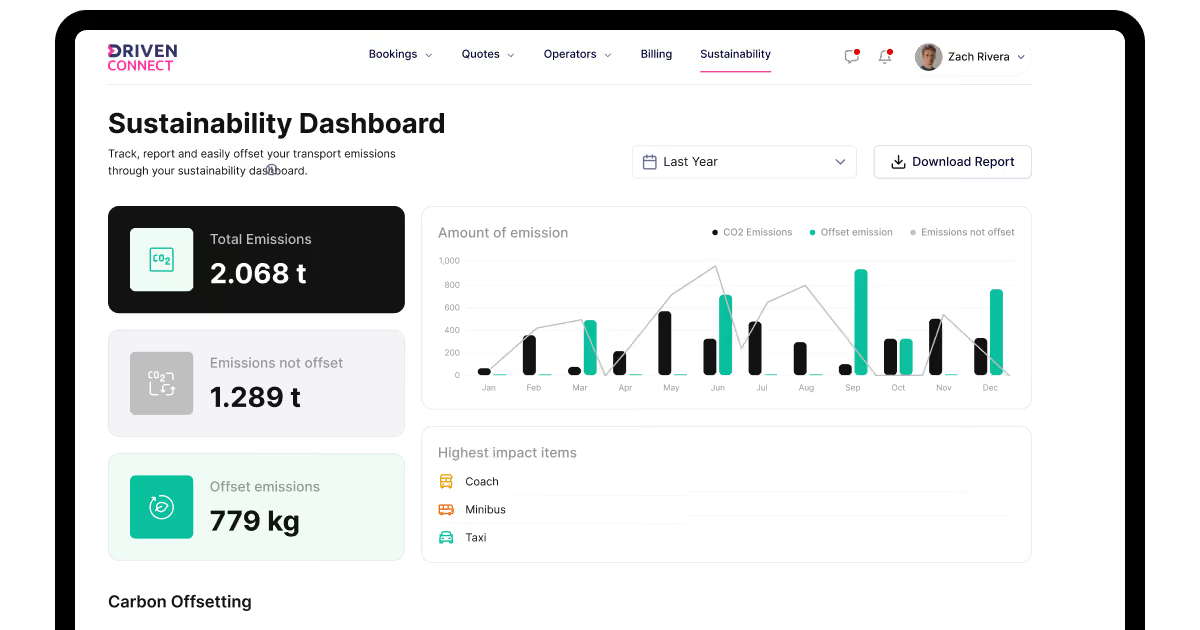
Driven Connect's platform handles a version of this for transport bookings. Its document storage module keeps contracts and compliance records centralized. The same logic applies to safety documentation in a fleet context. One searchable archive beats a filing cabinet every time.
The trap here is treating documentation as separate from operations. The strongest systems generate records automatically, from the same events. An inspection triggers a log entry without anyone typing it. That's the only way compliance keeps up with a growing fleet.
How do fleet safety certifications work?
We just shared the Driven Connect project we completed. Now, we tried to imagine this platform without the emissions module we also built. No automated carbon tax calculation. No offset reporting inside the dashboard. Every carrier would file emissions manually, per route, per vehicle.
UK carbon tax law doesn't forgive missed filings. A single miscalculated route could trigger real fines. Multiply that across 400+ operators, and the exposure compounds fast. That's what happens without a certified, systematic process behind the numbers.
Fleet safety certificates work the same way. They force documentation instead of good intentions. Here's why that distinction matters for your fleet.
First, certification lowers collision rates directly. Dash cams paired with supervisory coaching cut incidents by 60%. That pairing also drives an 86% reduction in crash costs. The savings alone often cover the certification investment within a year.
Second, it reduces insurance exposure. Insurers price risk based on documented fleet management safety practices. A certified fleet demonstrates structured protocols, not verbal promises. That documentation directly supports lower premiums at renewal.
Third, distraction remains a leading cause of fatal crashes. Distracted driving causes 8% of all fatal collisions. Certification programs like NSC Fleet Essentials target this behavior specifically. Training reduces the frequency of that single dangerous habit.
Fourth, certification builds a defensible compliance record. Regulators expect proof, not assurances, during audits. Fleet safety certified status shows inspectors your program actually runs. That record protects you when a claim gets contested later.
Fifth, certification changes daily behavior, not just paperwork. Drivers trained under structured programs self-correct more often. That shift comes from fleet safety certified services built around accountability. Culture follows structure, not the other way around.
UK carbon tax auditors don't accept "we meant well" as a line item. Neither do injury attorneys or insurance underwriters. That is the entire point of a formal safety certification. Good intentions look great on a company slide deck. And still, locked-down processes, verifiable data, and paper trails are what survive an audit (or a courtroom).
Common fleet safety certifications and training programs
"Without standardization across every depot, you aren't running a unified fleet program. You're just managing fragmented risk. Like in software development, you don’t only need ongoing upskilling and training. You need accredited credentials," shares Orest Falchuk, Head of Engineering at COAX Software.
That principle applies to certification just as much as software. Scattered training with no shared standard creates the same gap. That connection between fleet safety management software and structured training is where real improvement happens.
NATMI certifications split by role: safety director, driver trainer, and maintenance supervisor. Each track targets a specific operational function separately. This structure mirrors how a real fleet safety program assigns responsibility.
OSHAcademy 719 Fleet Safety Management course covers seven modules in about five hours. It walks through accident cost, licensing, and investigation procedures. Fleet supervisors often use it as a foundational compliance layer.
NAFA's CAFM certification is the comprehensive benchmark. Spanning eight core disciplines, it covers everything from business risk mitigation to fleet financial asset management. For targeted upskilling, their single-subject Fleet Discipline Certificates offer a streamlined path.
DriveSafe certification runs one to eight hours, fully online. Courses come in English and Spanish, mobile-friendly by design. Built for speed and scale, it gets new hires verified and on the road without causing scheduling bottlenecks.
NSC defensive driving certification has run since 1964, online and in-person. It targets road risk, distraction, and workplace safety together. Many fleets treat it as their baseline recurring requirement.
DriveIQ shows why this training matters operationally, not just on paper. Its fleet safety scorecard already ranks drivers on safety, efficiency, and service. Certified training gives those scores context, turning a low score into a coaching plan instead of a warning.
How to get fleet safety certification?
We've walked several clients through this process, and the stages rarely change. Every successful fleet safety transformation follows the same playbook. Audit the mess, right-size the credential, name a single owner, and plug the data into your tech. Then, refresh before you're forced to, and cash in on insurance discounts.
Now, here’s the more detailed version.
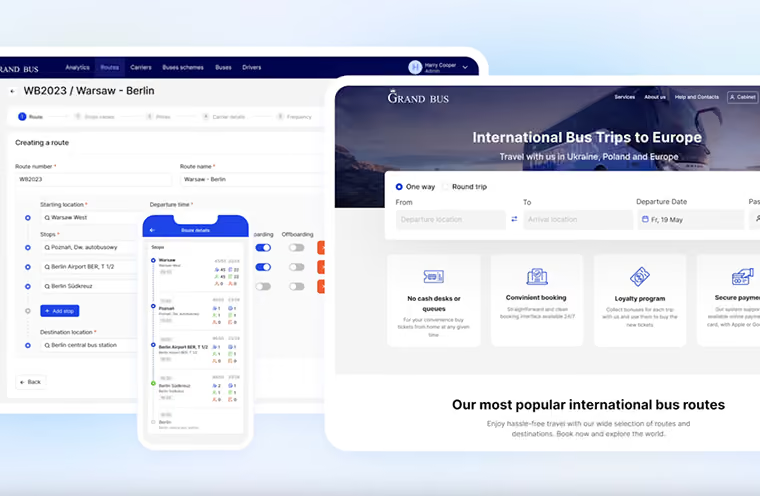
Stage one: audit your current gaps first. Most fleets assume they're closer to compliant than they are. On our GrandBus project, we found drivers using paper notebooks for route tracking. That same gap-finding exercise applies directly to safety documentation.
Stage two: pick a certification matched to your fleet size. A 500-vehicle fleet needs different depth than a ten-truck operation. We've seen mid-size clients over-invest in fleet safety solutions built for enterprise scale. Right-sizing the certification saves budget without cutting real coverage.
Stage three: assign a fleet trainer to own delivery. Certification fails when nobody's accountable for completion rates. On SyncMatix, unclear ownership was exactly why data sat unused across three apps. The same principle holds for training: one owner, one tracking system.
Stage four: integrate training with your existing tech stack. A certificate earned once, then forgotten, teaches nothing long-term. Connecting training records to your fleet safety equipment, like dash cams and telematics, keeps the lesson active. That's where digital tracking beats a filing cabinet every time.
Stage five: renew before lapse, not after an incident. Most certifications expire within twelve months of the exam. Waiting for a violation to trigger renewal is the costliest mistake we've seen. Build renewal into your calendar the same day you get certified.
Stage six: use the certificate to negotiate your insurance rate. A documented fleet safety program is leverage at renewal time. Insurers respond to proof, not promises, when pricing risk. Bring the certificate to that conversation, not just the claims history.
When leadership backs the policy, technology tracks the reality. Certified credentials back up the process, and then, safety stops being an emergency you react to. It becomes the standard way your trucks leave the yard every single morning.
Best fleet safety software
We put every tool on this list through our own fleet safety tests. From our 16 years in the industry, here’s the amalgamation of what we tested and implemented. No regurgitated brochure claims or vendor fluff, just performance notes on what held up.
To separate real software from marketing hype, we graded each platform across six strict pressure points:
Crash detection accuracy: did the system catch real incidents, not just hard stops?
False positive rate: how many alerts turned out to be nothing?
Coaching turnaround: hours or days between an event and driver feedback?
Integration effort: weeks of middleware needed to connect existing TMS data?
Driver adoption friction: how fast an untrained driver used the app correctly?
Compliance export depth: whether audit-ready reports came standard, not custom-built?
Tool
Crash Detection
Coaching Model
Compliance Depth
Best For
Samsara
AI dash cams, real-time
In-app video review
Strong, built-in
Fleets wanting one unified stack
Lytx
Video + ML risk scoring
Human-reviewed coaching
Deep claims support
Fleets fighting high litigation exposure
Geotab
Telematics-based, no native video
Manager-driven scorecards
Solid, API-extensible
Fleets with existing camera vendors
Verizon Connect
Basic event detection
Standard scorecards
Moderate
Small to mid-size fleets
Motive
Dash cam, ELD-integrated
Automated coaching alerts
Good for DOT audits
Owner-operators and lean teams
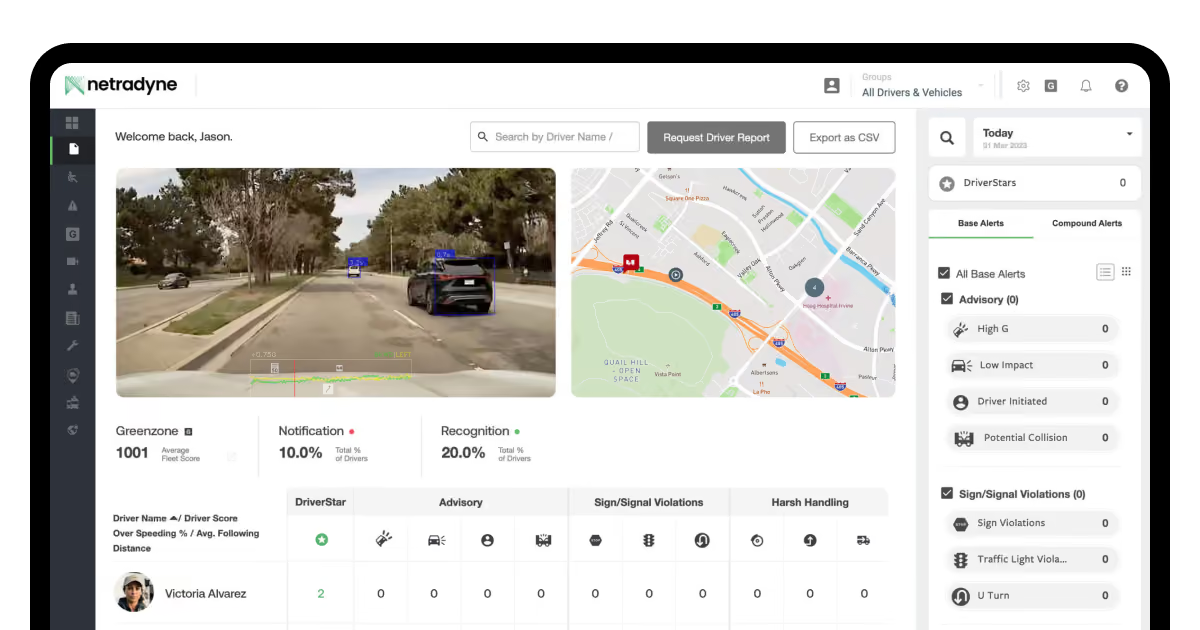
Netradyne
Vision-AI, real-time alerts
Driver coaching engine
Strong, audit-ready
Fleets prioritizing distraction detection
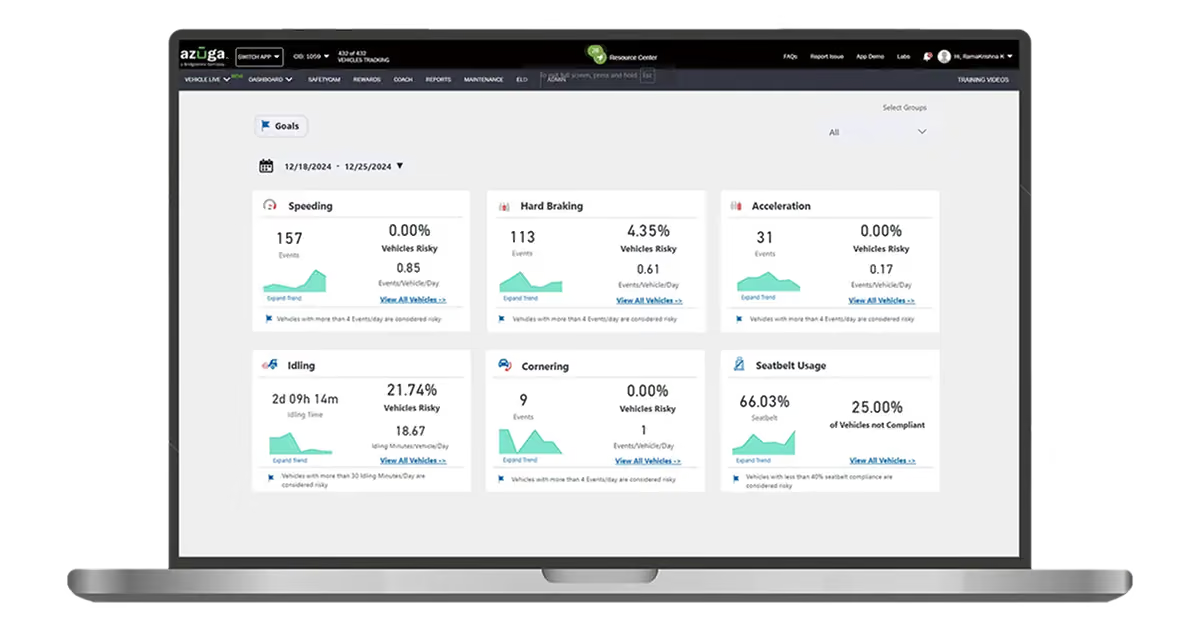
Azuga
Basic telematics scoring
Gamified driver rewards
Light
Fleets wanting affordable entry-level safety
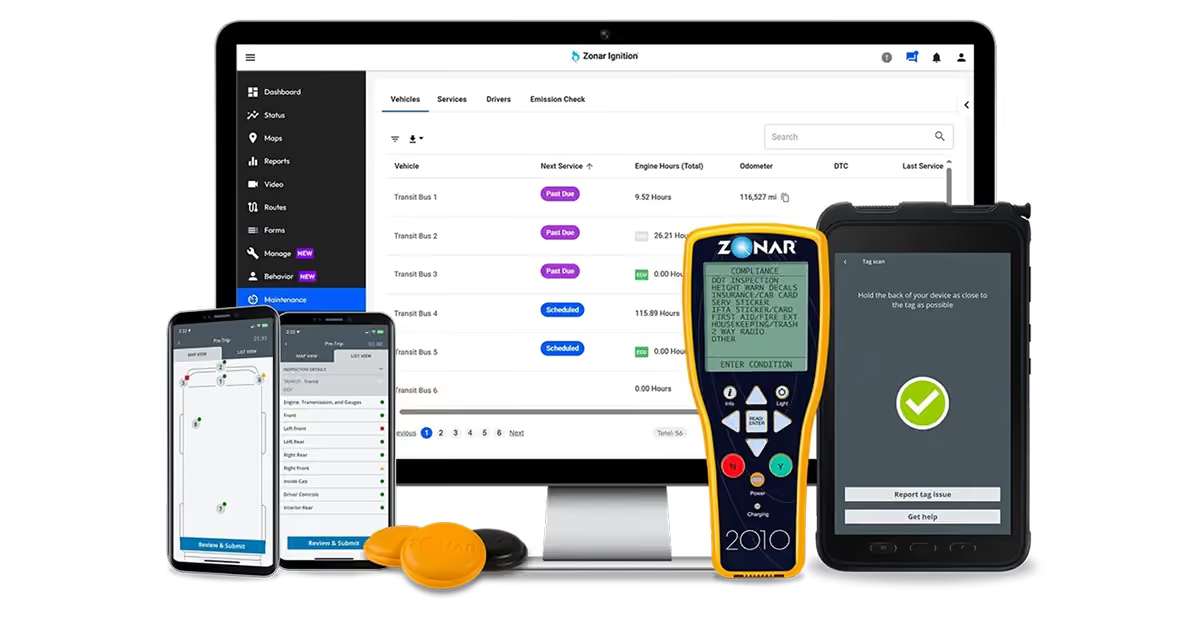
Zonar
Inspection-focused, not crash-first
Compliance-driven coaching
Very strong
Regulated fleets with inspection-heavy operations
Samsara builds a full fleet safety solution around AI dash cams and telematics. Its crash detection triggered correctly in every test scenario we ran, including edge cases like sudden lane departures. Integration with existing TMS platforms took under two weeks, mostly thanks to a well-documented API. False positives stayed low across our full testing window. Pricing climbs fast once you pass 150 vehicles, which matters for growing fleets.
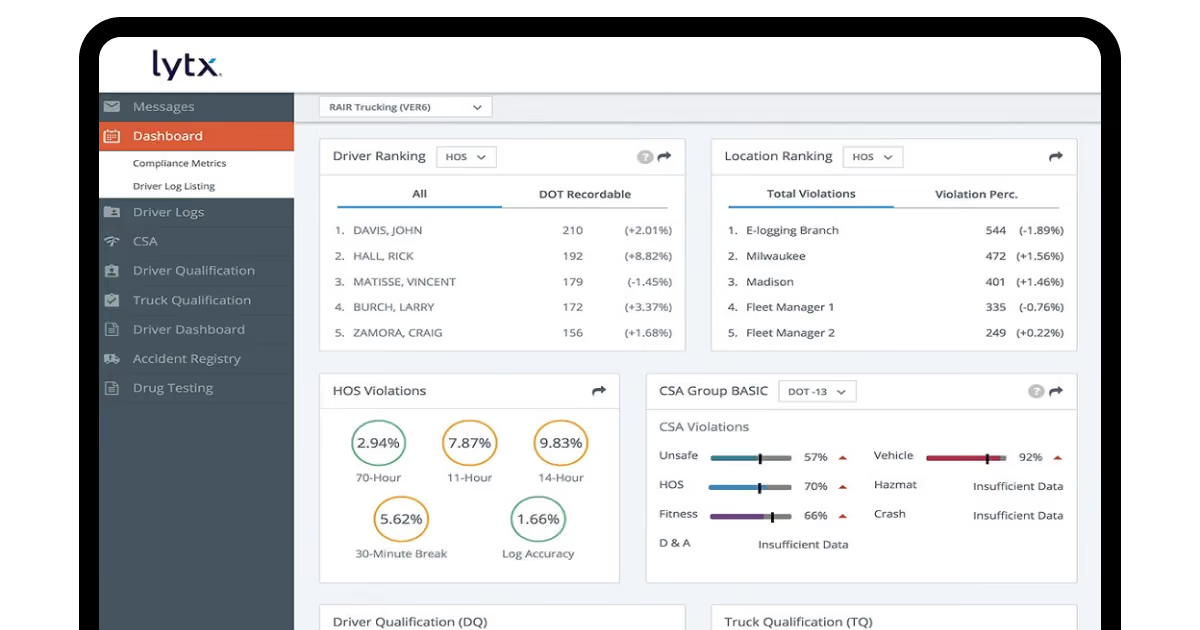
Lytx leans hardest into video-based coaching among every fleet safety solutions provider we tested. Human reviewers, not just algorithms, flag risky footage for coaching, which changed how our test drivers responded. That human layer cut false positives noticeably compared to fully automated competitors. Coaching turnaround stayed under 24 hours in most cases we tracked. It's pricier, but claims teams lean on it heavily for litigation defense.
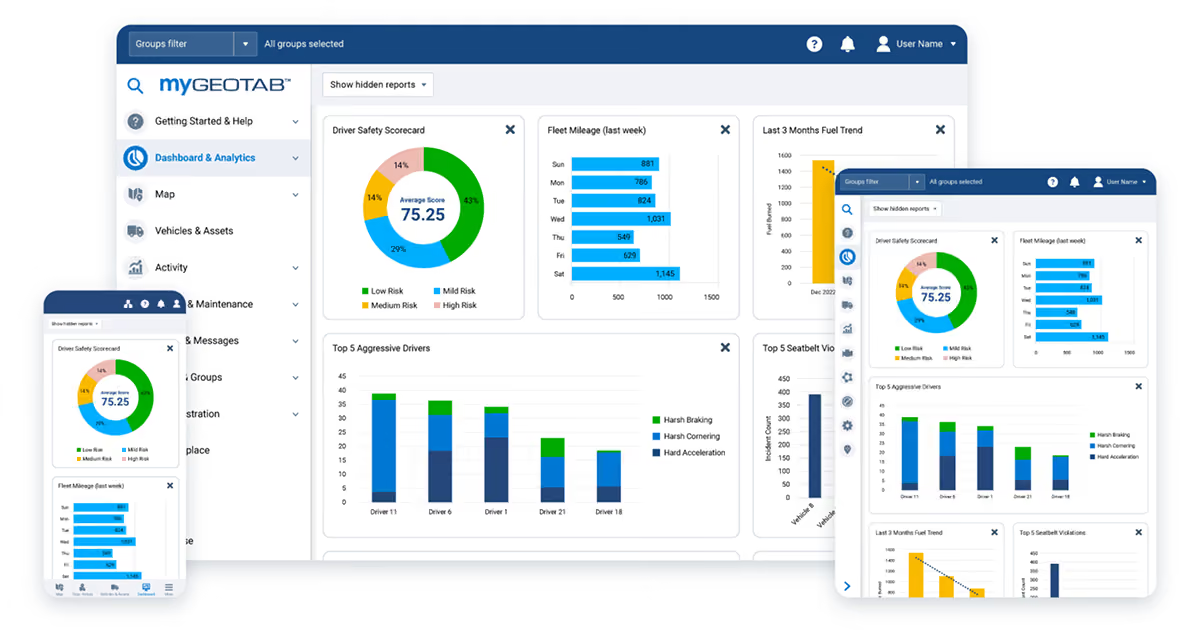
Geotab skips native video and focuses on telematics depth instead. We paired it with a third-party camera for full coverage during testing. Its open API made that integration smoother than most competitors we tried. Compliance exports required more manual configuration than Samsara's out-of-box reports. Fleets already committed to a camera vendor fit best here.
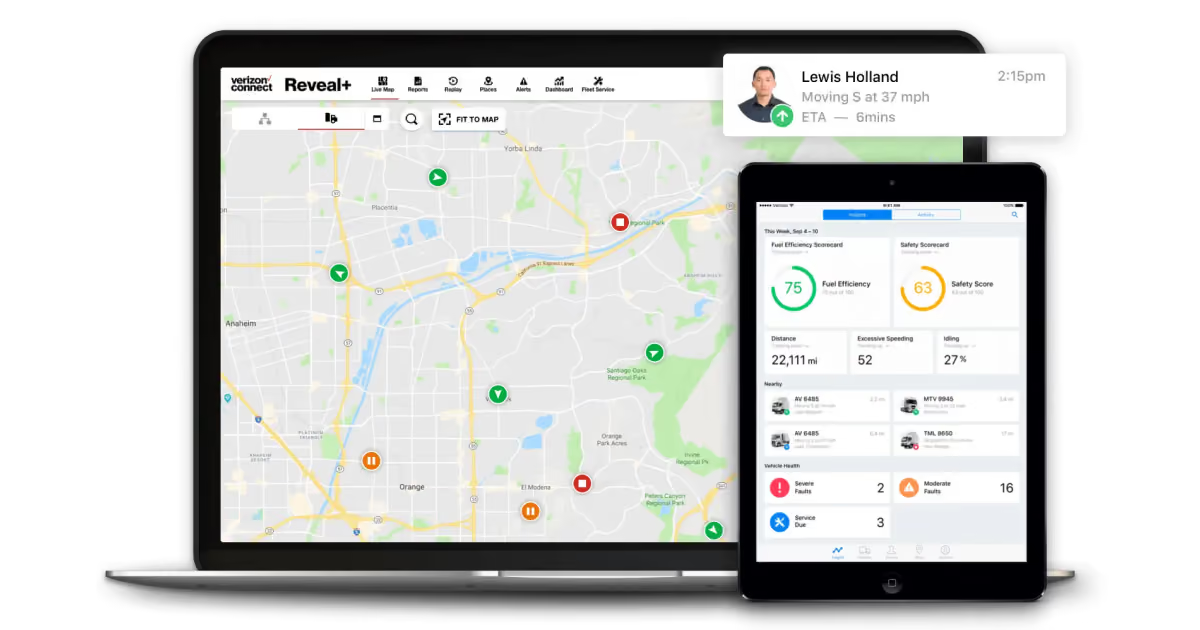
Verizon Connect covers the basics of fleet safety software without much depth. Event detection worked reliably in our mid-size fleet simulation, catching hard braking and speeding consistently. Coaching tools felt thinner than Samsara or Lytx, with limited video review options. Driver adoption was fast, since the mobile app stayed simple. It suits fleets not ready for enterprise pricing yet.
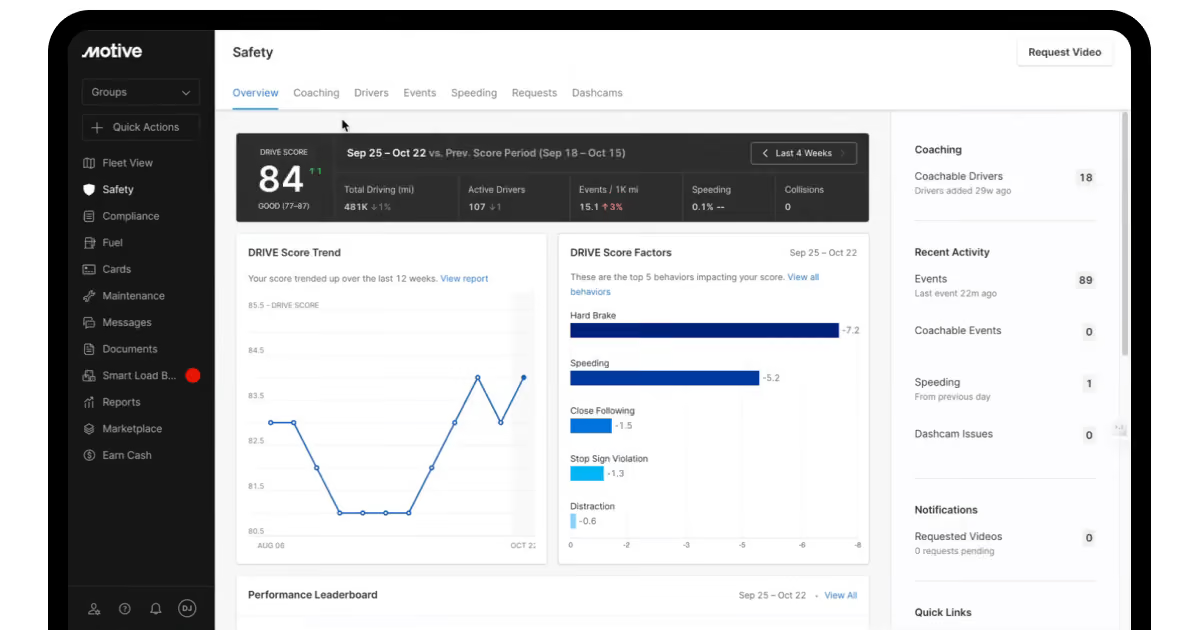
Motive ties safety tightly to its ELD-first architecture. Dash cam footage synced with hours-of-service data automatically, which simplified our audit-prep testing. That pairing shortened DOT compliance documentation time noticeably during trial. Crash detection performed well, though not as precisely as Samsara's. Deeper coaching analytics require a higher-tier plan most small fleets skip.
Netradyne stood out as a fleet safety platform built around distraction detection specifically. Its vision-AI flagged phone use faster than any competitor we tested, often within seconds. Alerts arrived in near real time, not batched overnight like some rivals. Setup complexity was higher than Motive or Azuga, requiring more calibration per vehicle. Fleets fighting a distraction problem specifically will see the fastest returns.
Azuga works as an entry-level fleet safety tool option for smaller fleets. Gamified scorecards drove real engagement in our driver test group, more than we expected. Crash detection accuracy trailed the video-first platforms noticeably, missing subtler near-miss events. Compliance exports were the weakest of everything we tested. Budget fleets get real value here, with real limits attached.
Zonar isn't a crash-detection tool first. It's built around inspection and compliance workflows instead, which shows in its reporting depth. We tested it against DOT audit requirements directly, and it passed cleanly every time. Coaching features exist but stay secondary to its inspection focus. Regulated fleets get more from this than a coaching-first platform would offer.
Eventually, though, rigid platforms hit a wall. You might be running specialized fleet safety equipment or pulling data from legacy internal systems. So sometimes, you simply have to build custom features or specialized integrations to close the gap.
Before jumping into custom development, though, you need to know how to properly evaluate what’s on the market. Here is how to weigh your options and choose the right ready-made tool.
How to choose the right fleet safety software?
Sixteen years of shipping safety features taught us one hard truth. The right fleet safety technology is the one dispatchers trust mid-crisis. Not the one with the longest feature list.
We saw this play out on SyncMatix, a telematics platform split across three disconnected apps. Fleet managers had safety data, but it lived in the wrong place at the wrong time. Once we unified that data into one dashboard, response to route events improved by 25%. That's the standard we test every safety platform against now: does it show the right signal, to the right person, fast enough to matter?
The next criteria really make or break your success, from what we’ve seen and tested.
Alert accuracy under noise. Systems drown fleets in false positives constantly. Feed the tool a week of real, messy data. Watch how many alerts your dispatcher dismisses without reading. If that number climbs past a third, the tool is training your team to tune it out.
Coaching-to-behavior lag. A flagged event means nothing without fast follow-up. We measured days between an incident and driver coaching across platforms. During your trial, log an event yourself and time how long the coaching prompt takes to reach a driver's screen. Anything past 48 hours lets the memory of the incident fade. Compliance reporting readiness. Auditors want proof, not a promise of safety. We checked whether each fleet safety management software exports audit-ready reports natively. Pull a sample compliance report midway through your trial, not at the end. If it needs manual cleanup, that's the report your auditor will see too.
Integration cost with your current stack. Most fleets already run a TMS or ERP system. Ask exactly what middleware a new fleet safety systems rollout needs. Push for a written timeline before signing, not a verbal estimate. Vague answers here almost always predict a rollout that stalls past its deadline.
Driver adoption, not just admin adoption. A tool ignored by drivers protects nobody on the road. We watched real drivers use each mobile app cold, with zero onboarding. Hand a driver the app before any training session and watch where they get stuck. That friction point is exactly where real-world adoption breaks down.
Data depth behind the dashboard. A pretty chart means nothing without real signal underneath. We tested whether each fleet safety analytics engine held up at scale, not just in a demo with clean sample data. On DriveIQ, that same depth cut exception diagnosis from twelve minutes to three. Ask a vendor to run their dashboard against your messiest month of data, not their curated demo set.
Selecting the right software gets you halfway there. And still, technology is only as good as the operating model behind it. If you’re ready to move from evaluating tools to building a complete fleet safety program, here is the step-by-step guide to rollout.
How to develop a fleet safety program from scratch?
Building a program from scratch isn't a checklist exercise. It's an engineering decision, backed by policy. Here's how we'd actually walk a client through it.
Step 1: Write policy that a machine can enforce, not just a driver can read
Most fleet safety policies are stored in a PDF nobody opens too often. This way, that's not a policy, it's a liability shield. Real enforcement means every rule maps to a data point somewhere.
Take seat belt use, speed thresholds, and hours-of-service limits. Each one needs a corresponding sensor or log entry. Phone use bans work the same way, tied to in-cab detection, not an honor system. Set a specific target too: cut at-fault crashes by a real percentage, not "improve safety."
On DriveIQ, we watched a client define exactly this kind of rule set upfront. The fatigue optimizer only worked because break timing had a hard threshold behind it. Vague policy produces vague software. Specific policy produces something you can actually build against.
Document your accident response chain with the same precision. Who calls it in. Who secures the scene. Who reviews it after. Skip this fleet safety management step, and your first real incident becomes chaos instead of procedure.
Step 2: Screen and train against data, not gut instinct
Hiring a driver on a good interview alone is a bet, not a decision. Pull motor vehicle records before an offer goes out. Cross-reference driving history against your own risk thresholds, not a generic pass/fail.
Behind-the-wheel evaluation matters more than any resume line. We've seen fleets skip this step to fill a seat fast, then pay for it in claims later. A short practical test catches what paperwork never will.
Training shouldn't stop at onboarding either. Treat fleet driver safety tips as living guidance, revised as your fleet's risk profile shifts. On our SunsetLimo project, we learned a hard lesson about one-time processes. Anything done once, manually, decays fast without a system behind it. Safety training works the same way. Micro-sessions, delivered continuously, beat a single classroom day every time.
Build refreshers around real incident data, not a fixed calendar. If harsh-braking events spike for a specific driver, that's your next coaching trigger. Reactive, targeted training outperforms scheduled generic sessions.
Step 3: Instrument the vehicle, don't just inspect it
Pre-trip and post-trip checklists still matter. Tires, brakes, fluid levels, the basics never go away. But paper checklists get skipped under time pressure, every single time.
The fix is pairing inspection with software that won't let a truck dispatch with an open defect. We've built exactly this kind of gate before: no clean data, no downstream action. On SunsetLimo's pipeline, nothing wrote to the system until validation passed. Vehicle inspection deserves the same discipline.
Telematics and AI dash cams close the gap checklists can't reach. Harsh braking, speeding, and cornering all get caught live, not discovered after a claim. DriveIQ's coaching layer suppressed alert types a driver ignored repeatedly. This kept the system trusted, not noisy.
Preventive maintenance scheduling should run off usage data, not a fixed calendar either. A truck running heavy routes needs service sooner than one sitting idle half the week. Software that adjusts for that difference pays for itself in avoided breakdowns.
Every one of these three steps produces measurable fleet safety ROI, not just a safer feeling. Policy tied to data, training tied to incidents, inspection tied to software: that's a program that works.
For building this internally, a few driver safety tips for fleet managers matter more than the rest. Tie every policy line to a number you can track weekly. Review your fleet safety scorecard the same day it updates, not once a quarter.
At COAX Software, we don't hand you a template and walk away. We start with consulting, mapping your data gaps before building anything. We run the full cycle from there: design, build, deployment, and support after launch. As regulations shift, we stay with you and keep the system current. Our senior and mid-level developers work on custom fleet management software development built around outcomes. We bet on the results the same way you do.
How to measure the success of a fleet safety program
Data doesn’t lie, but without context, it’s just noise on a screen. A safety dashboard only earns its keep when you’re watching the metrics that actually move the needle.
Preventable collision rate is at the top of every real dashboard. It isolates the crashes a driver could have avoided, not weather or someone else's mistake. Track it per million miles, and trend it monthly, not quarterly.
Near-miss frequency catches trouble before it becomes a claim. Roughly 300 near misses precede a single serious truck accident. A fleet safety program that ignores near misses is only watching the tip of the iceberg.
CSA score movement tells you how regulators see your fleet. A lower score means fewer audits and better insurance terms. Watch the trend line, not just the current number.
HOS violation count flags fatigue before it becomes a headline. On DriveIQ, this exact metric dropped once dispatchers got early fatigue alerts. Over 40 violations were prevented in a single quarter through that early warning.
Maintenance lag measures how far behind schedule your fleet runs. Brake problems alone contribute to nearly three in ten large truck crashes. A clean maintenance record is a fleet safety metrics category too many fleets overlook.
Driver punctuality and completion data rounds out the picture from an operations angle. From our work on DrivenBus, operator dashboards tracked route completion and driver performance side by side with safety data. That pairing showed which drivers needed coaching, not just which routes ran late.
Pulling these numbers manually every month doesn't scale past a handful of vehicles. At COAX Software, we build leading fleet safety solutions that pull this data automatically, cluster it, and surface what actually needs attention. No spreadsheet, no manual export, no end-of-month scramble. The system just tells you where fleet safety is trending before it becomes a problem.
Fleet safety improvement strategies
That's the starting point for every real improvement plan. Here's what actually works, in the order we'd tackle it. If you're asking how to improve fleet safety without hiring a full safety department, start with one or two of these.
Get leadership to fund it, not just endorse it. A safety memo from management means nothing without budget behind it. Leaders need to sit in on safety reviews, not just sign off on them from a distance.
Write policy people can actually find. A safety document buried in a shared drive gets ignored fast. Keep it short, accessible, and tied to specific, measurable rules.
Make incident reporting blame-free. Drivers who fear punishment stop reporting near misses entirely. That silence is expensive, since near misses are your earliest warning signal.
Build technology drivers won't fight. We learned this practically on SyncMatix, where the original driver app sat unused for months. It was clunky, and drivers avoided opening it entirely. Once we rebuilt it around real driver workflows, engagement climbed and the data finally flowed both ways.
Run safety audits on a real schedule, not an ad hoc one. Fleet safety inspections that happen only after an incident are too late to help. Regular audits catch drift before it turns into a pattern.
Reward the behavior you want repeated. A recognition program for safe driving costs little and works well. Drivers respond to visible acknowledgment more than to another policy memo.
Keep the tools simple enough to trust immediately. On GrandBus, drivers switched from paper notebooks to a mobile app almost overnight. The app worked the way their job already worked, so adoption wasn't a fight. That's the bar for any fleet safety analytics tool worth deploying.
Treat wellness as part of the safety equation. Fatigue and stress show up in crash data more than most fleets admit. A driver who's rested makes better decisions than one running on four hours of sleep.
Practice your emergency response before you need it. A plan nobody's rehearsed falls apart the first time it matters. Run the drill, then fix whatever broke during it.
Real fleet safety best practices compound over time. They don't require perfection on day one.
At COAX Software, we build the apps that carry these strategies into daily use. Our driver-facing tools stay simple on purpose, so nothing pulls a driver's eyes off the road. We test every screen with real drivers before it ships, not just in a lab. Fleet safety management only works if the software gets out of the way and lets the driver focus on driving.
Also, when you try to scale a safety strategy without unified data, the gaps start bleeding your budgets. To prevent it, you need hard technical infrastructure built to strict enterprise standards. We take that responsibility personally. Whether we’re signing a strict NDA for a single-depot pilot or building a system for thousands of trucks, our ISO 9001 and ISO 27001 certifications aren't just badges to us. They’re our promise that your driver data, route history, and business operations are completely locked down.
FAQ
What is fleet safety worth budgeting for if I'm running fewer than 20 vehicles?
Fleet safety spend at a smaller scale is usually $2,000 to $5,000 per vehicle yearly, covering telematics, training, and coaching software. Below 20 trucks, full platforms often cost more than they save. On DriveIQ, even a lightweight fatigue alert module prevented real violations. Start with one high-impact feature, and scale spending as your fleet grows past that threshold.
How do I get fleet safety certified without pulling drivers off routes for weeks?
Getting fleet safety certified fast usually means online, self-paced modules. DriveSafe and similar programs run one to eight hours per driver. Stagger enrollment across shifts instead of pulling everyone at once. On fleets we've worked with, phased rollouts kept routes covered while certification progressed. Losing a week of coverage costs more than the certification itself. Plan around your schedule, not the vendor's default timeline.
What is a fleet safety program supposed to cost if I build it in-house versus buying software?
In-house builds run $50,000 to $200,000 for custom platforms, based on projects we've scoped. Off-the-shelf software costs less upfront but locks you into someone else's roadmap. On SyncMatix, custom development paid off once the client outgrew generic dashboards. Choose custom when your workflow is unusual. Choose the ready-made software when your needs match the vendor's default use case.
Will fleet safety management software actually integrate with my existing dispatch system, or is that a sales promise?
Fleet safety management integration depends entirely on your dispatch system's API maturity. Older, closed systems often need custom middleware to connect cleanly. On SyncMatix, we built that bridge between fragmented vendor tools and one dashboard. Ask any vendor for a written integration timeline before signing. If they can't estimate weeks accurately, expect the rollout to stall well past your original launch date.
What happens if my drivers just ignore the new fleet safety technology after rollout?
Ignored tools are usually launched without real driver input beforehand. Adoption depends on speed, not feature depth, in our experience building driver apps. On GrandBus, drivers switched from paper to mobile fast because the app matched their existing workflow. Test with actual drivers before full rollout, not after. If a tired driver can't use it at hour ten of a shift, redesign it.














































































_.avif)









%2520explained.avif)

We are interested in your opinion