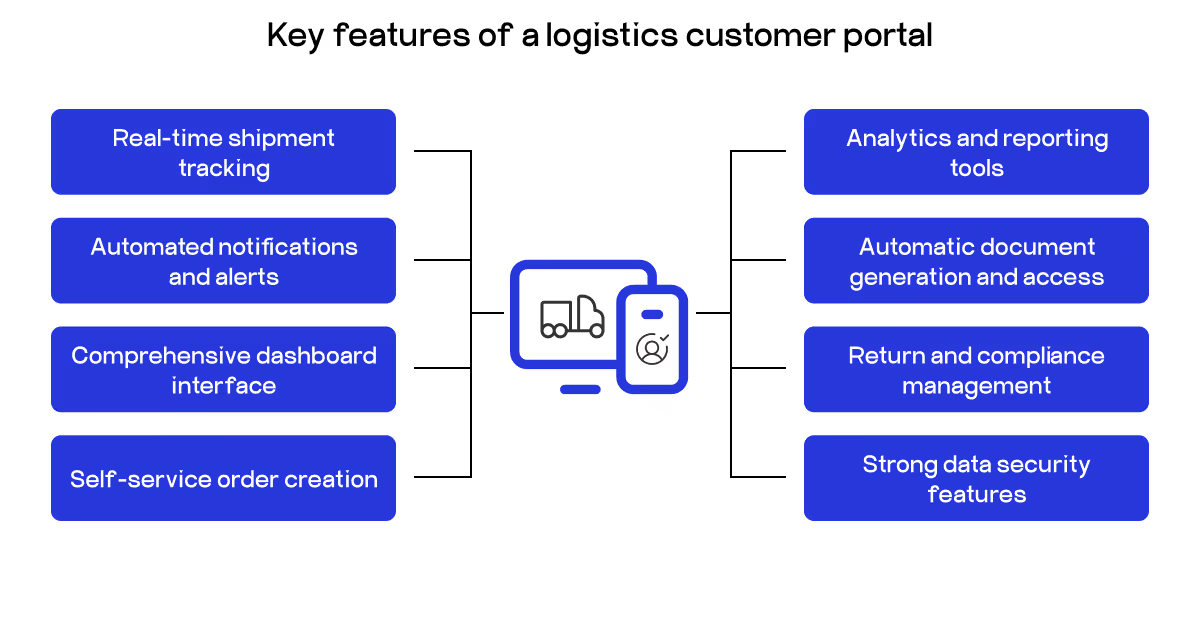
You have a way to empower your clients with real-time visibility, retain their trust and long-term value, and cut the support costs down with one solution: a logistics customer portal. The success of this software can be easily explained:
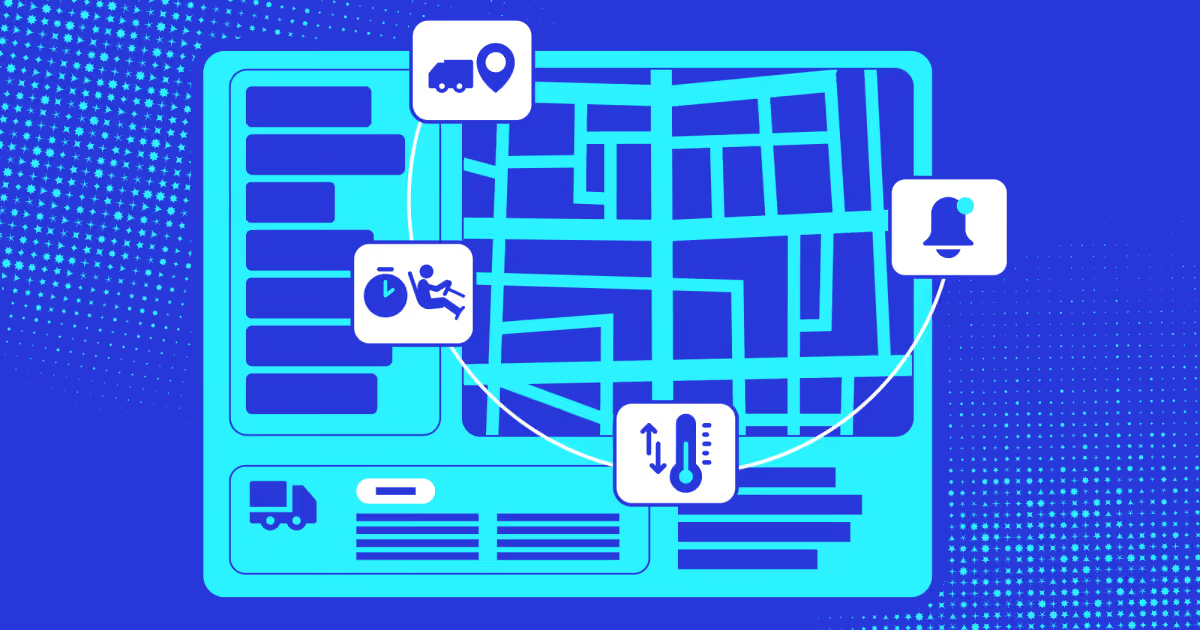
Customers instantly access locations and delivery dates with shipment tracking.
By proactively informing clients of status updates, automated notifications lower the volume of inquiries.
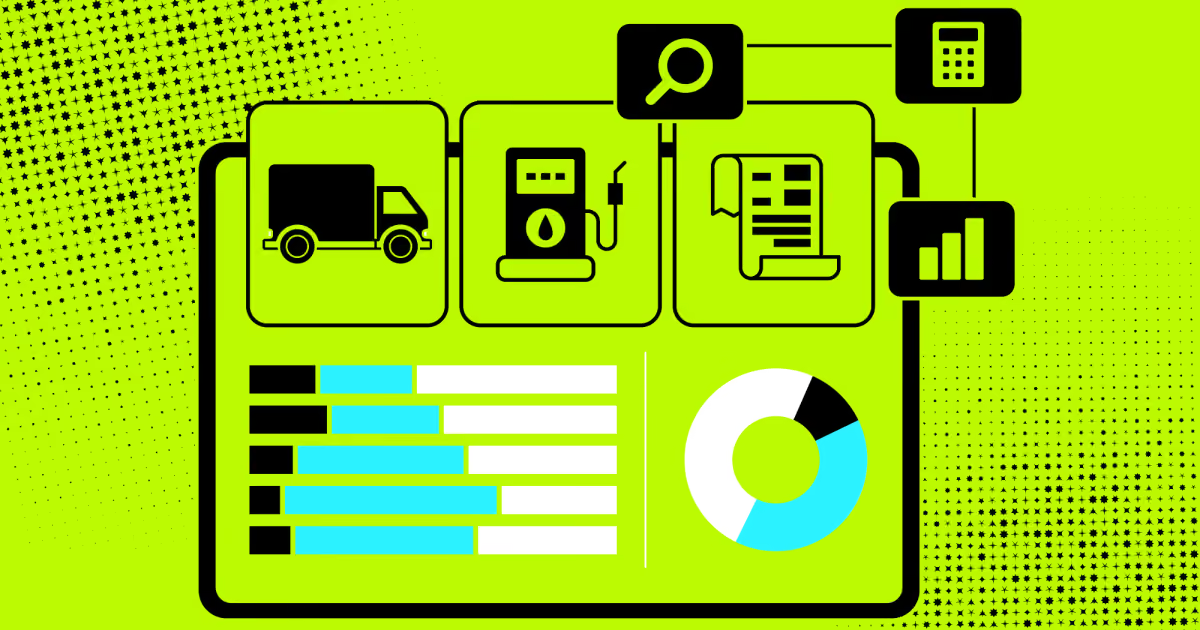
Detailed dashboards combine several shipments into a single, easily usable interface.
Errors and manual data entry go away with self-service order creation.
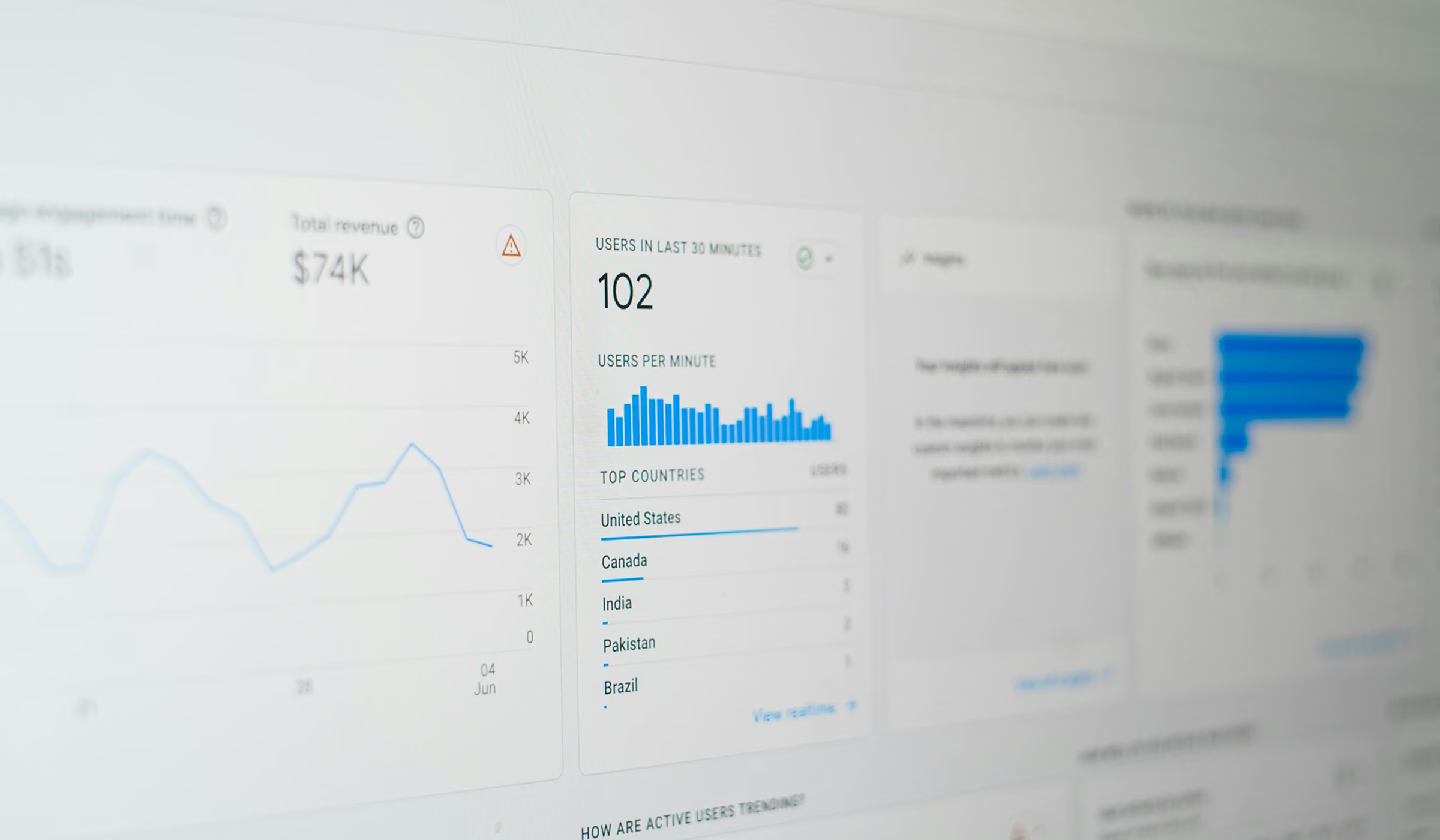
Data-driven decisions become easy with analytics and reporting tools.
Automatic document generation generates bills of lading and invoices.
Return and compliance features show responsibility and boost satisfaction.
Robust security measures safeguard confidential operational and payment data.
In this article, we break down the nuances of customer portal development, explain the key features you should have in your solution, outline the main ready-made options, and give you an end-to-end guide to custom building.
What is the logistics customer portal?
A logistics customer portal is a secure, web-based platform that serves as a centralized interface between third-party logistics (3PL) providers and their clients. According to Chen, such portals enable clients to access important information independently, track shipments in real-time, manage documentation, and communicate with service providers without direct intervention from the provider’s staff.
By combining several touchpoints (such as order placement, shipment tracking, invoice management, and support requests) into a single, accessible digital environment, these self-service systems simplify the entire process.
Customer portals rewire traditional logistics relationships into cooperative partnerships, enabling transparency and empowering customers.
Why build a customer portal for logistics businesses?
Because logistics businesses are under increasing pressure to enhance service quality and efficiency, customer portals have become crucial. Poor logistics experiences come at a cost: according to McKinsey, 85% of customers won't return to a provider after a bad delivery experience.
These issues compound into direct costs (including wasted fuel, re-delivery expenses, productivity losses), as well as indirect costs through the growing number of dissatisfied customers and reduced repeat business. For carriers specifically, inefficiencies at delivery handoffs account for 13-19% of revenue losses.
Meanwhile, a customer portal for logistics brings you significant benefits:
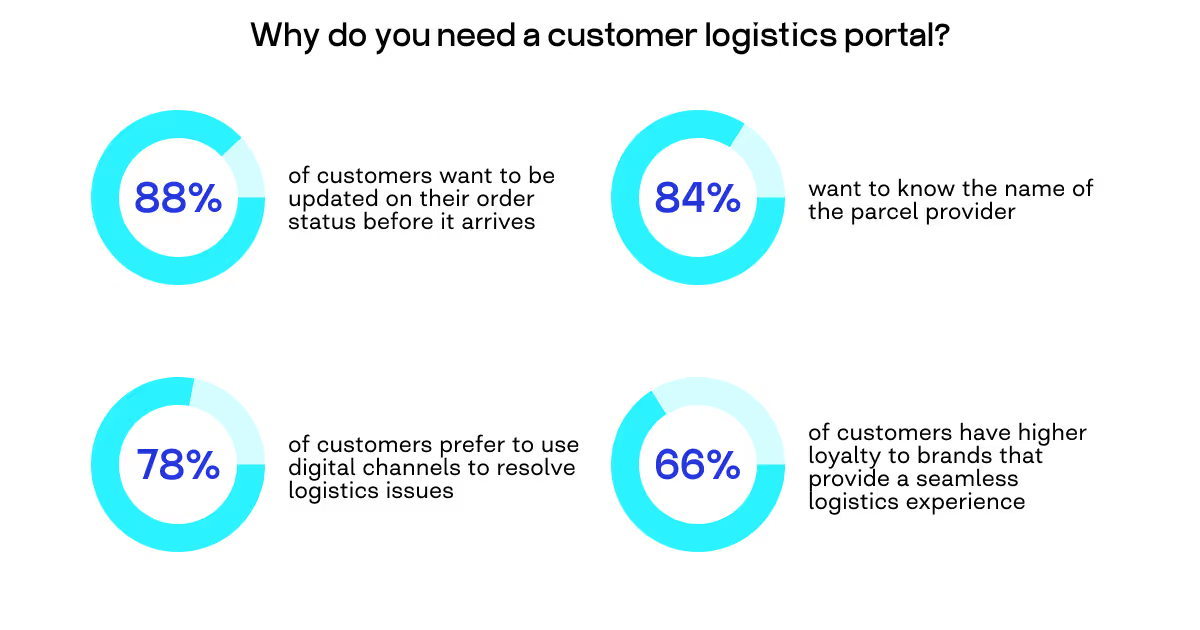
Better client experience. Customer service portals allow clients 24/7 access to their orders, tracking, shipping, documentation, and invoicing. Hryhorak reports that having this transparency creates a feeling of trust and control, with 88% of customers wanting to get updated of their order status before it arrives. Having access to live shipment tracking also reduces anxiety related to lost shipments due to tracking errors.
Increased efficiency of operations. By allowing customers to take advantage of self-service options within the portal, you lower time spent responding to requests and coordinating shipping. Historically, logistics apps incur $20-$45 in direct operating costs (per driver), requiring considerable coordination with customers. When logistics providers implement a portal to automate these transactions, it cuts delays and allows employees to spend their time addressing more complicated customer issues.
Advantage in the market. Having a positive customer experience is directly related to customer loyalty and increased sales. Currently, almost 70% of logistics companies report a positive correlation between an enhanced customer experience and increased sales. Having a customer portal with advanced functionality demonstrates to customers that the provider is dedicated to providing excellent operations and customer service, clearly differentiating the providers from others in a very competitive market (and 44% of customers switch providers simply based on their service experience).
With all these advantages possible to achieve with one comprehensive solution, now it’s time to define the features you need to implement within your software.
What features should the customer portal have?
The key goal of logistics portal is to give a real-time shipment visibility, get customers alerted on status change, and give them a way to manage all processes and documents, the main features seem pretty obvious. However, there are nuances in each part of this functionality.
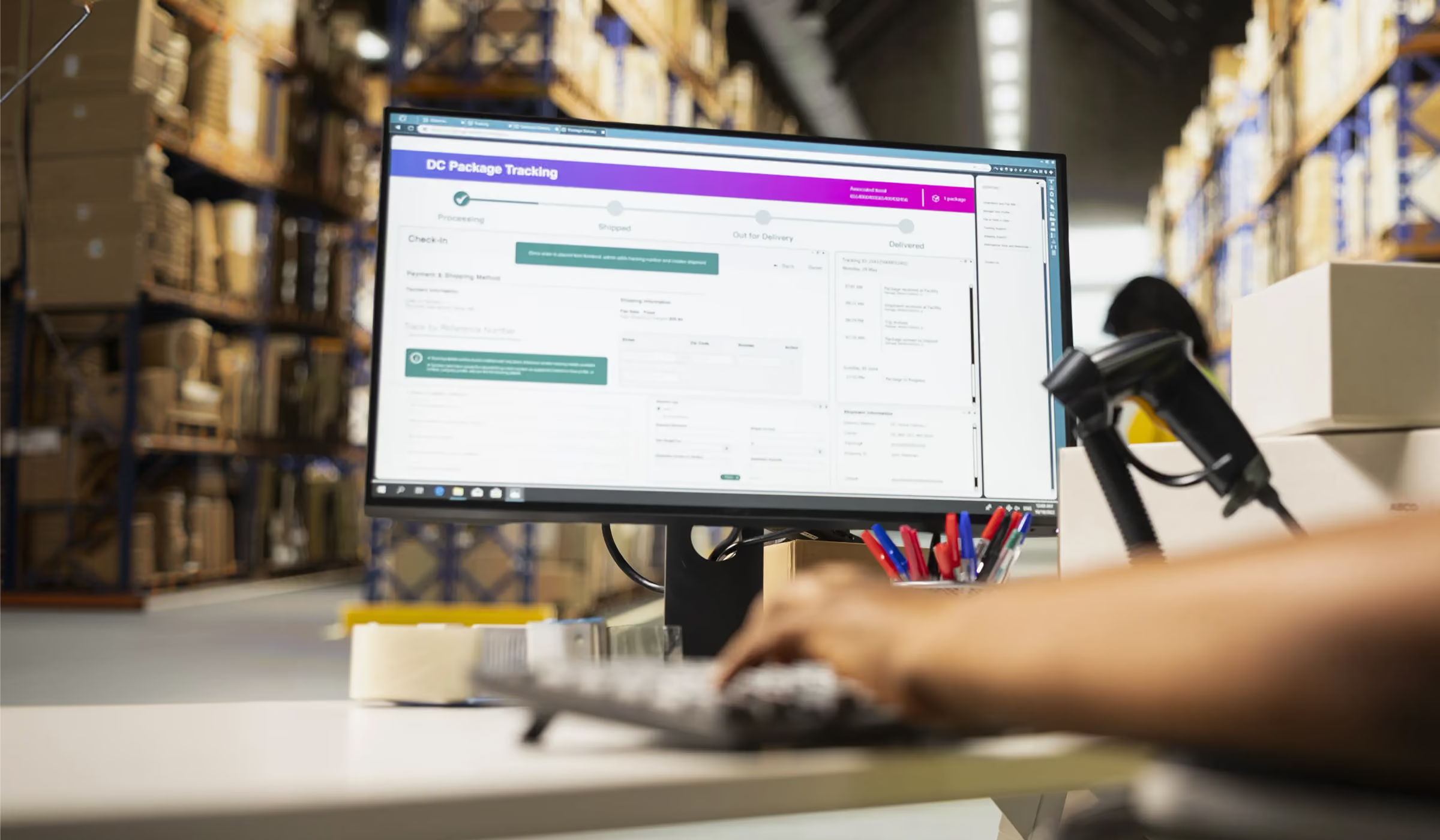
Real-time shipment tracking
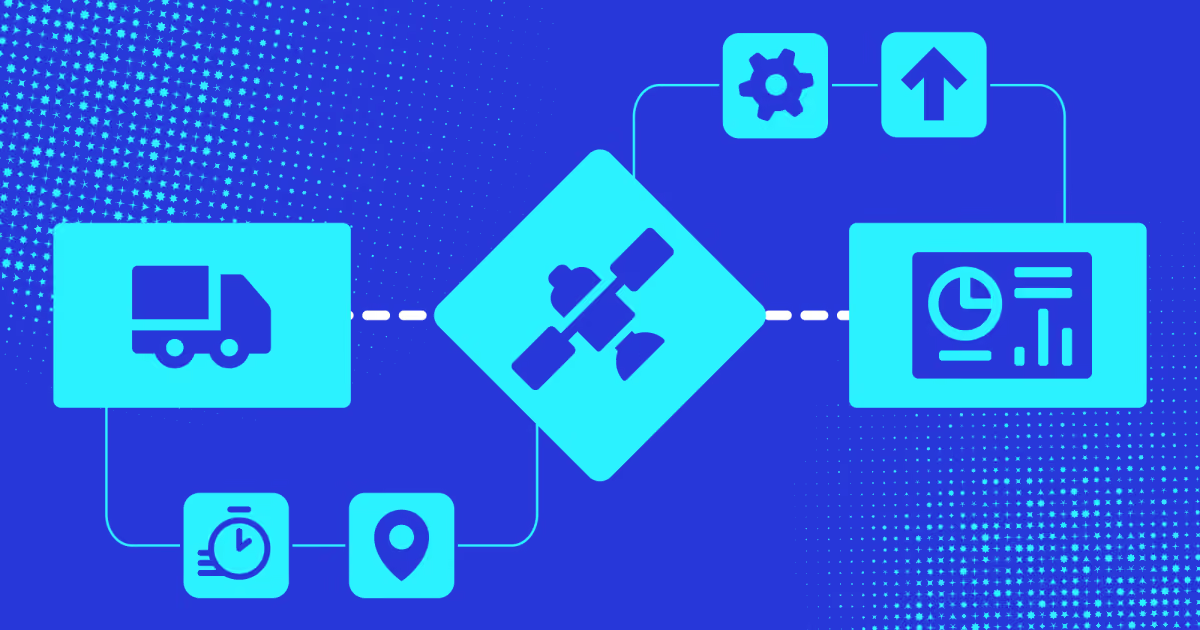
Trust and online customer portal visibility are built on real-time tracking. In order to modify business operations and adapt to changing circumstances, customers require instant access to shipment locations, destinations, and planned routes. Zhou and others note that portals must sustain continuous data exchange between the transportation management system (TMS), driver management system, and customer interface. The portal should instantly update when the TMS's shipment status changes.
Apart from tracking, you should provide estimated delivery dates so that customers can make plans accordingly. Unlike B2C operations, which frequently allow tracking via unique codes, B2B logistics companies should impose authorization requirements prior to granting tracking access. According to research, 80% of consumers want proactive shipment notifications, making real-time visibility a must for competitiveness.
Automated notifications and alerts
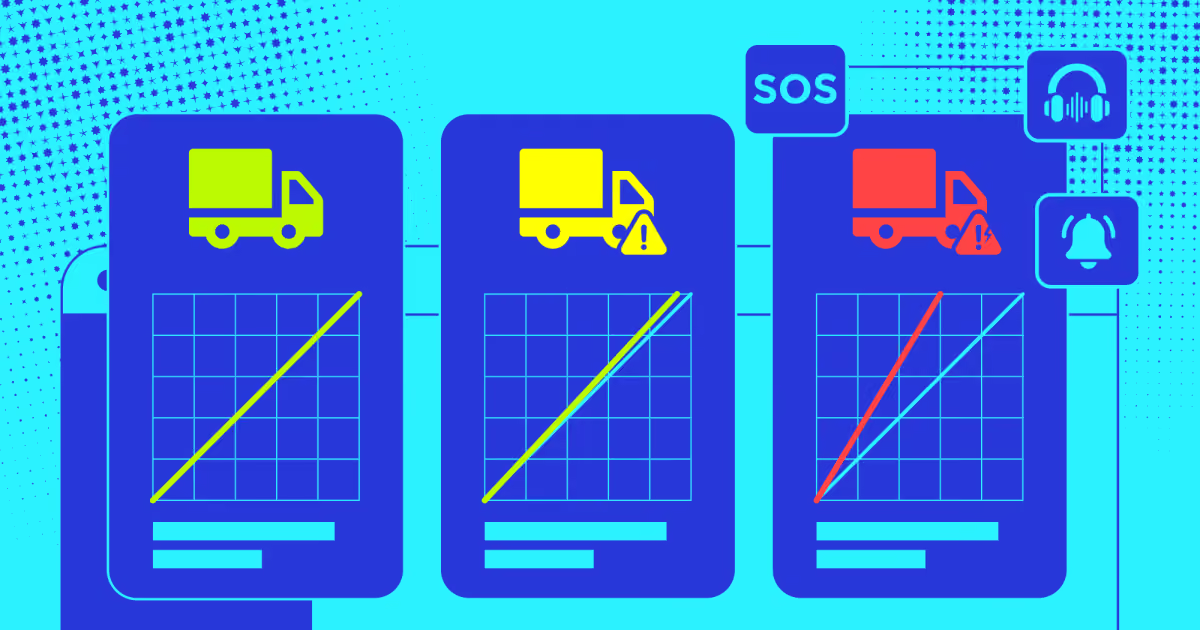
Automatically notifying clients when there is a change in their shipment's status can decrease customer inquiries and create further trust, allowing them to proactively take action regarding any issues they may have. Li recommends implementing automatic SMS, email, or push notifications triggered by shipment status changes in your TMS. Notify customers when orders approach delivery locations or arrive at final destinations. These automated communications demonstrate the operational transparency you offer with your logistics client portal.
Comprehensive dashboard interface
You should implement dashboards that combine multiple shipment details into one easily accessible location that best fits customers managing multiple deliveries at the same time. Additionally, user-friendly, easy-to-use interfaces, together with the ability to quickly access individual shipment details, are a must for effective dashboards.
Dashboards should only provide essential data (estimated arrival time, delivery status, current location, and critical alerts), and, for organizations managing dozens of concurrent shipments, allow customers to avoid the burden of manually tracking every shipment and, therefore, facilitate strategic distribution planning. The customer portal design should include a clear visual hierarchy with filtering options that enable customers to sort their shipments by delivery date, destination, shipment priority, or status.
Self-service order creation
The ability to create orders online facilitates communication and relieves managers of repetitive data entry duties. To ensure simplicity and ease of use, reduce the number of fields to only the main ones and steer clear of repeated information requests to make this process more convenient.
For a B2B customer portal, provide functions that enable the creation of reusable order templates, automatically load data from uploaded files, reuse data from prior shipments, and automatically fill in general information from customer profiles. To avoid form overload, use conditional field display, which shows or hides fields according to service type or transported items. For instance, only show specialized fields when clients choose barrel or pallet transportation. This self-service method removes misconceptions that lead to mistakes.
Analytics and reporting tools
Customers need to access logistics performance insights, build future logistics plans, and measure overall business performance. Besides, planning an environmentally oriented customer service includes establishing a data-driven capability, which Pozniak comments on, to support the demand for analytics regarding total shipments, combined shipment weight, shipment transit times, successful deliveries, and total costs.
Environmental data, such as carbon emissions per shipment and the amount of environmentally friendly transport used, should also be included in order to meet customer sustainability reporting requirements. A useful way to get these insights allows customers to identify trends and facilitate more effective supply chain decisions, while also giving them the means for customers to demonstrate their environmental responsibility.
To build a customer portal, customizable date ranges and comparison ranges should also be included in order for customers to analyse trends and compare past performance with present performance over time.
Automatic document generation and access
Logistics operations are based upon extensive documentation, including bills of lading, delivery receipts, commercial invoices, customs forms, and claims. Li suggests that generating the required documents automatically from internal applications (TMS, order management system, delivery management, or CRM) with direct access via a customer portal app is useful.
Providing customers with the ability to upload their own customised document templates for generation according to their internal requirements allows them to efficiently generate the documents for their records and reporting. Documents should also be designed for easy retrieval via search functionality and for downloading in multiple formats (PDF, CSV), as well as being archived for the appropriate audit period.
Return and compliance management
Customer satisfaction and retention directly depend on an easy return and complaint procedures, which is why you should enable them with your customer portal features. Establish organized processes that allow clients to submit return requests along with the necessary paperwork, follow the status of returns through predetermined phases, and track the progress of complaint resolution. Provide options for viewing resolution timelines, choosing return reasons from predetermined categories, and uploading pictures of damaged goods.
Provide frequent status updates, allow customers to rate the quality of the resolution, and automate acknowledgment notifications when returns or complaints are filed. In a market where customer experience increasingly determines competitive success, this transparency sets your business apart by demonstrating accountability and a dedication to service quality.
Strong data security features
A customer portal software contains confidential information about an organization’s operations (including payment information) and employees. You can try using the OWASP Risk Rating methodology to find system flaws and assess how serious a cybersecurity risk is. Other recommendations for securing web applications are to use secure connections (HTTPS) and to choose database management systems that provide the least chance of data breaches.
Additionally, it is essential to develop a strict hierarchy of user types concerning sensitive materials and secure APIs that allow systems to communicate and share information, using authentication, rate-limiting, and encryption. The above technical measures should be augmented by cybersecurity training, so that employees will learn how to avoid accidentally downloading malicious software, recognize when they may be receiving suspicious emails, and ensure they are using the systems in an appropriate manner.
The importance of protecting customer data in your logistics supplier portal be overstated, as data breaches lead to long-term reputational damage and poor customer relationships.
How to build a logistics customer portal?
When you want to create a customer portal that incorporates all the described features and provides ease of use and value to your clients, you should follow a step-by-step approach. Let’s outline the key stages of this development.
Start by conducting thorough user and market research. Determine the logistics requirements of your target market, evaluate portal offerings from competitors, and set specific business goals. Chen and colleagues discovered that portal adoption rates are impacted by knowledge of customer characteristics (inclination for innovation and optimism toward technology). Verify the issues your customers face before creating any features. In a market where 77% of logistics companies see customer experience as their competitive advantage, research competitors to find functionality gaps your portal can fill. This will create opportunities for differentiation.
Gather technical and functional requirements from stakeholders. Define your stack, project budget, timeline estimates, and success metrics. Hryhorak emphasizes that this requires planning that aligns technology investments with customer relationship management goals. Document system architecture, integration points with existing ERP and CRM platforms, security protocols, and scalability requirements. Create a development roadmap with milestones, resource allocation, and risk mitigation strategies to prevent scope creep and ensure clear expectations about deliverables and timelines.
Create user-friendly sitemaps, layouts, and visual components of your customer portal dashboards. Take into account interactive elements, color schemes, and iconography that improve usability without overpowering users. 78% of consumers prefer using digital channels to solve logistics problems, so your design must take this into account by using mobile-responsive layouts and clear navigation.
Create an MVP with essential features before you start accrual development. For quicker iteration, think about low-code development techniques. By validating key features, the MVP enables you to fine-tune requirements before full-scale builds. Pozniak points out that throughout development cycles, iterative planning techniques allow for constant improvement and adaptation to shifting client needs.
Perform integration testing before launch and unit testing during development. Check that all features operate as intended, third-party integrations are seamless, and sensitive data is protected by cybersecurity measures. To guarantee consistent performance, test on various devices, browsers, and user scenarios.
After the release, keep an eye on the performance of the portal, address bugs quickly, and add features in response to user input. Ongoing portal optimization is a strategic investment rather than optional maintenance because improved customer experience is associated with higher revenue.
The success of your client portal development directly depends on the technical foundation you define. This is why you should pay attention to the stack you choose for your product.
Tech stack
There are many aspects to consider when you determine the main technologies. It depends on whether you’re creating a customer web portal solution, a desktop application, or a lightweight mobile app. However, some basics remain the same as you need to make your portal fast-loading, secure, and combine multiple sources.
Composable and headless architecture. Future-proof your system by decoupling presentation layers from business logic. For instance, JAMstack delivers speed, microservices allow components to scale independently, event-driven patterns keep systems responsive, and adding new channels becomes straightforward.
IoT and real-time data gathering. You gain unprecedented visibility thanks to physical world connectivity. This is why you should use GPS to track cars and shipments, temperature sensors to keep an eye on cold chain conditions, RFID to automate warehouses, smart locks to secure cargo, and AWS or Azure IoT Hub to connect it all.
API-first design. The foundation of logistics customer portal development is made up of APIs. Create webhooks for real-time updates, add rate limiting and authentication, create REST or GraphQL endpoints for flexible integration, thoroughly document, and manage versions to preserve backward compatibility.
Serverless computing and cloud-native architecture. Access to the cloud is a huge benefit if you want to be able to use the maximum amount of capacity available, for example for seasonal usage spikes, without having to invest money in additional hardware. With cloud solutions, you can also recover from hardware failure automatically and prevent major outages (using automatic failover) and pay only for the services you use. The cloud computing giants you can choose from are AWS, Microsoft Azure, and Google Cloud. Package your application into a Docker or Kubernetes container for fast deployment, scaling, and application performance improvement.
Blockchain provides transparency. This technology provides recorded information that cannot be altered by anyone. It allows for automated compliance through smart contracts, facilitates cross-border paperwork, and minimizes the potential for fraudulent activity. Overall, it increases confidence between partners.
Integration of AI and machine learning gives you a real competitive edge. By using Python with TensorFlow or PyTorch, you can create AI models, capable of processing vast amounts of data. Pre-trained models can be used for routine operational decision making and to apply the data generated from these transactions to enrich your customer portal with logistics analytics software that turns your offering into a data-driven platform with a much higher value.
To make your solution efficient and robust, you need to connect your portal with your internal ERP and CRM systems so that it can synchronize customer data, order data, billing information and operational performance.
The use of secure RESTful APIs enables the secure transfer of data between systems, which requires a robust third-party integration expertise. As soon as an order status changes in the TMS or warehouse management system, this information should be updated immediately in the customer portal. Likewise, when clients submit an order via your customer management portal, this information should also automatically flow into your business operational systems for processing.
With COAX, you skip all these technological intricacies and get straight to the value. From preliminary research to continuous support, we offer end-to-end logistics management software development. Product discovery and requirements analysis are the first steps in our process, which then proceeds to interface design and technical architecture planning, iterative development, thorough quality assurance testing, and post-launch monitoring and maintenance. We collaborate with logistics firms to develop unique custom customer portals that enhance customer satisfaction, expedite processes, and foster business expansion.
Challenges of customer portal development
Similarly, with both mobile portal apps or customer web portal development, you might face some challenges that need to be addressed.
Incorporating data from a variety of platforms (and, in many cases, legacy systems) with no connectivity creates headaches for end users. Many legacy systems will not allow for the data integration necessary to achieve an integrated view of real-time information. Data integration issues are also a significant source of delays and discrepancies in shipment tracking.
Security and compliance. Customer portal solutions handle sensitive shipment data, demanding multi-factor authentication, encryption, and robust access controls. Protecting against breaches while meeting regulatory requirements is non-negotiable for maintaining customer trust.
User experience and adoption. Even feature-rich portals fail without intuitive design that solves genuine customer problems. The interface must work seamlessly across devices and touchpoints. Studies using extended UTAUT models demonstrate that performance expectancy, effort expectancy, and perceived satisfaction directly influence adoption behavior.
Controlling expectations. In B2B logistics settings, customers now demand B2C-level convenience, such as customized experiences and self-service features, so you should consider it in your B2B customer portal development. Last-mile delivery research shows that social influence and enabling circumstances have a big impact on technology adoption.
Scalability versus customization. Unique business needs are rarely met by off-the-shelf solutions. Custom development must strike a balance between meeting particular requirements and being scalable as operations and traffic increase.
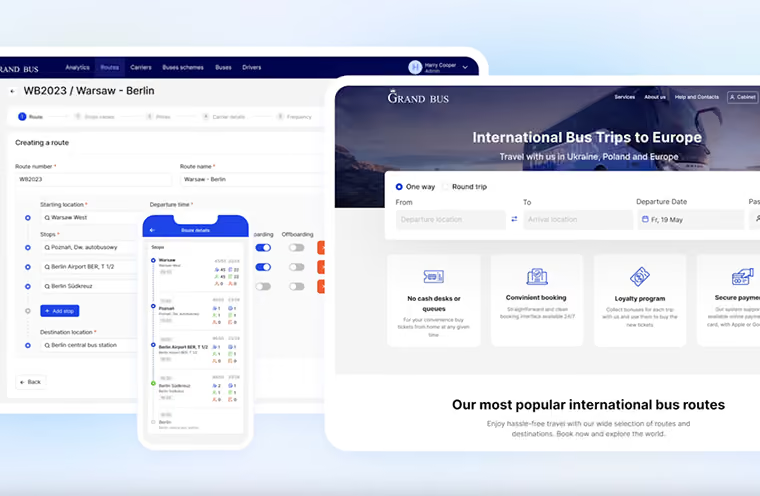
These challenges are complex, but with the right partner, you make a strong foundation to never face any issues in your development process. For instance, we've used our full stack development services strategy to create an end-to-end coach and minibus booking platform that links businesses with regional transport providers.
In five months, our team developed the MVP, which included quote request systems, multi-role interfaces for buyers and operators, route planning integration, and emissions tracking capabilities. We improved booking procedures, added carbon tax payment features, and modified the platform to accommodate both B2B and B2C flows as the business model changed in response to market feedback.
Top off-the-shelf solutions
If you decide to try out a ready-made solution, we have compiled a list of customer portal examples that can simplify the process and get you a convenient tool for your operations.
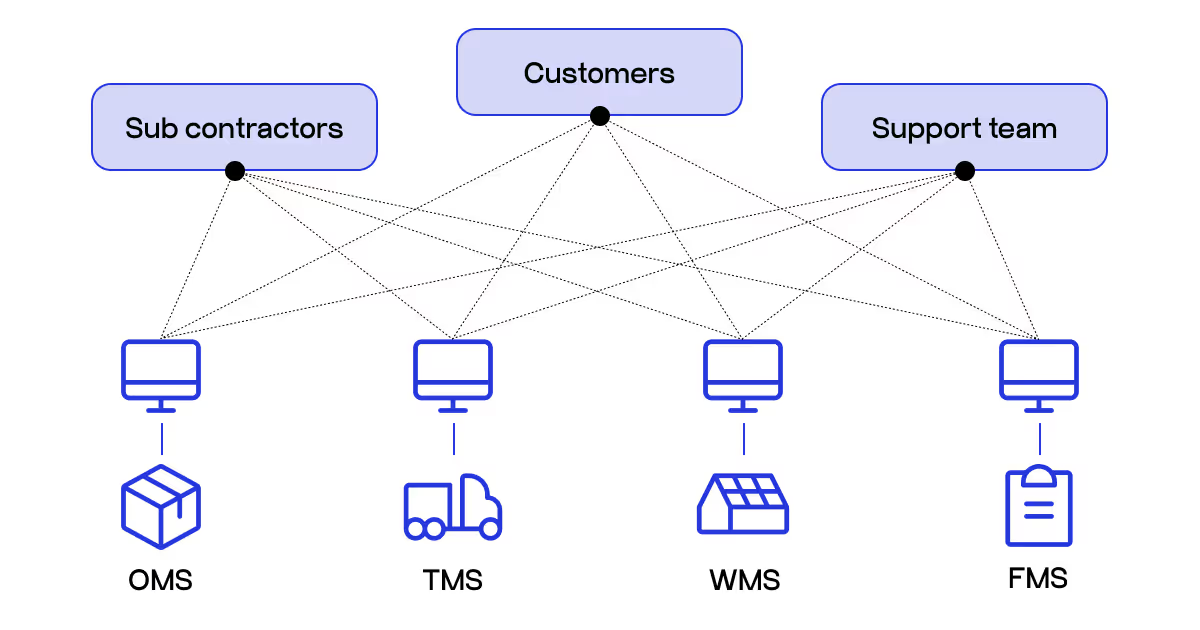
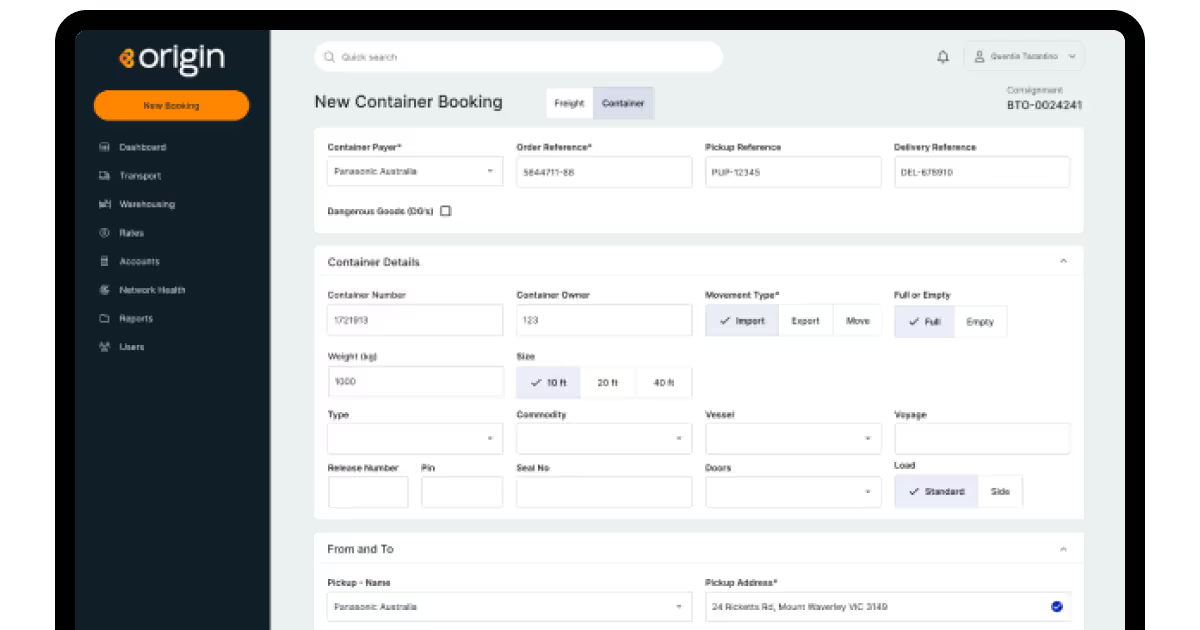
Origin is a logistics portal that combines information from partner platforms, TMS, WMS, and ERP into a single, branded interface. The platform is useful for 4PLs, control towers, and multi-modal providers because it specializes in supply chain visibility across intricate partner ecosystems. Without switching systems, customers can access self-service financial statements, inventory management, real-time tracking, booking, and quoting. Origin's Crossfire integration manages file-based, EDI, and API connections under the supervision of supply chain specialists. Pricing is determined by the number of users, transaction volume, and integration complexity.
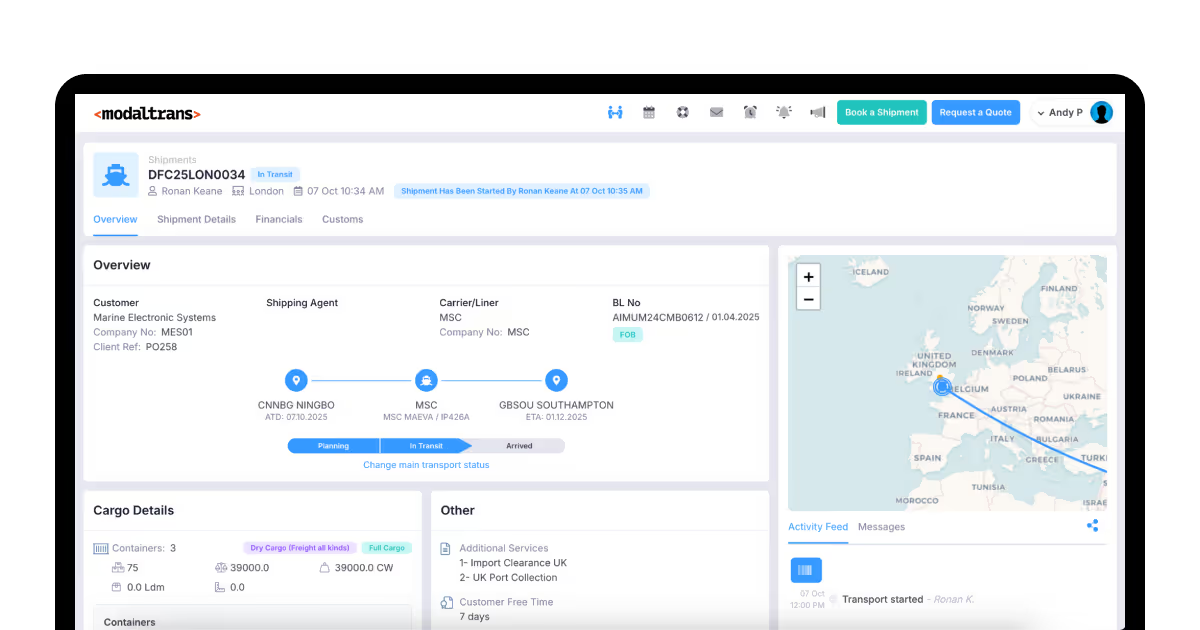
Modaltrans is a provider of cloud-based logistics solutions that includes a customer web portal for shippers, forwarders and customs brokers. All aspects of shipping are included within one platform, including transportation and warehouse management, and CRM. With Modaltrans you can book a shipment, track it, create and manage your customs documentation, and receive invoices in real-time. Automated milestone notifications mean less repetitive phone calls, and integrated messaging allows shippers to easily communicate with each other and manage conversations related to shipping files. Modaltrans offers a free trial, with pricing based on the number of users, transaction volume and the modules.
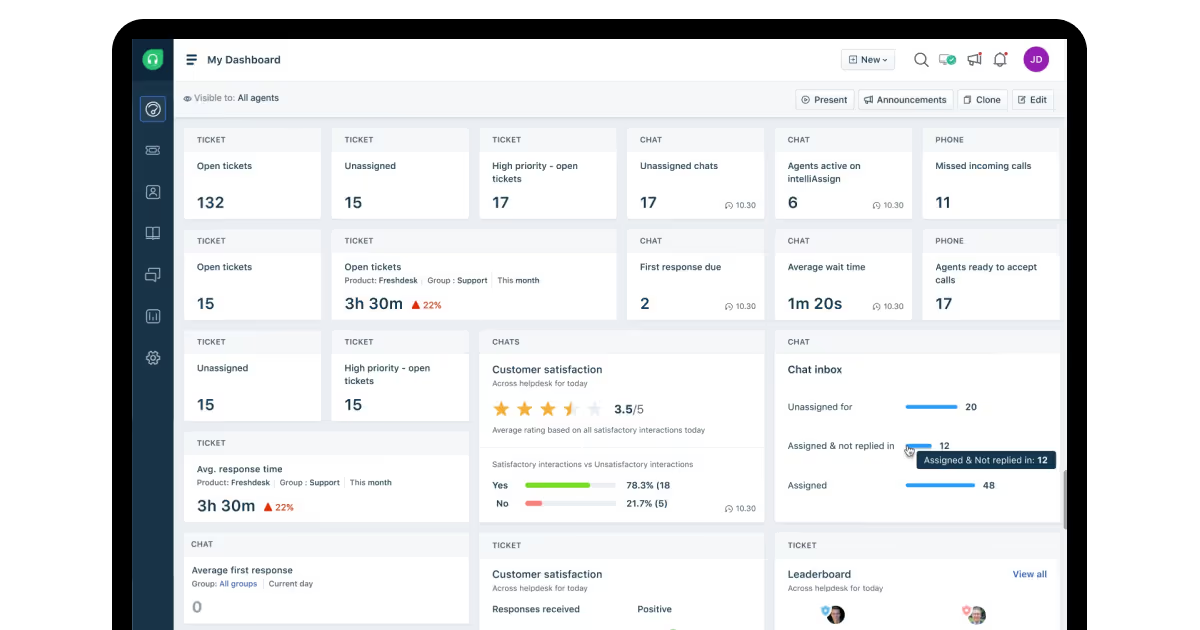
Freshdesk is a customer service platform that provides a self-service online customer portal software with shipment-related inquiries and support. The focus of Freshdesk is on building a knowledge base for customers, a ticketing system for addressing concerns and automated communication with customers. The AI Freddy virtual assistant provides instant, automated responses to frequently asked questions or routine support requests. Freshdesk integrates its platform with all telephony service providers to provide a one-click experience for both voice and digital interactions. Monthly subscriptions for the Growth plan are $15 per agent, the Pro plan with custom branding and advanced routing is $49 per agent per month, and the Enterprise plan includes audit logs and skills-based assignment for $79 per agent per month.
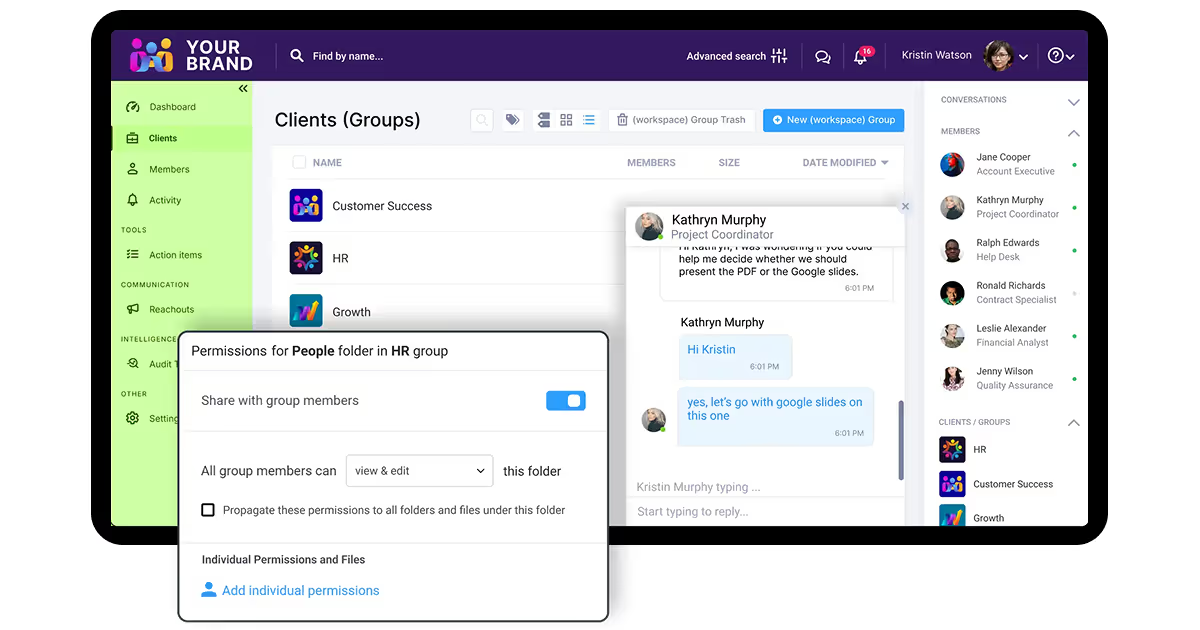
Clinked offers white-label customer portal software focused on document management, customer communication, and file sharing. The platform provides branded workspaces for accessing shipment documentation and exchanging messages, though it lacks native tracking or TMS integration. Clinked organizes bills of lading, commercial invoices, and compliance documents with version control and audit trails. File request features prompt customers to upload documents for customs clearance with reminders for overdue submissions. The platform provides AES-256 encryption, GDPR compliance, and optional HIPAA readiness, as well as multiple integrations. Pricing starts at $95 monthly for Lite (100 members, 100GB), $239 for Standard (1TB, custom domain), $479 for Premium (3TB), with custom Enterprise quotes for 1,000+ users.
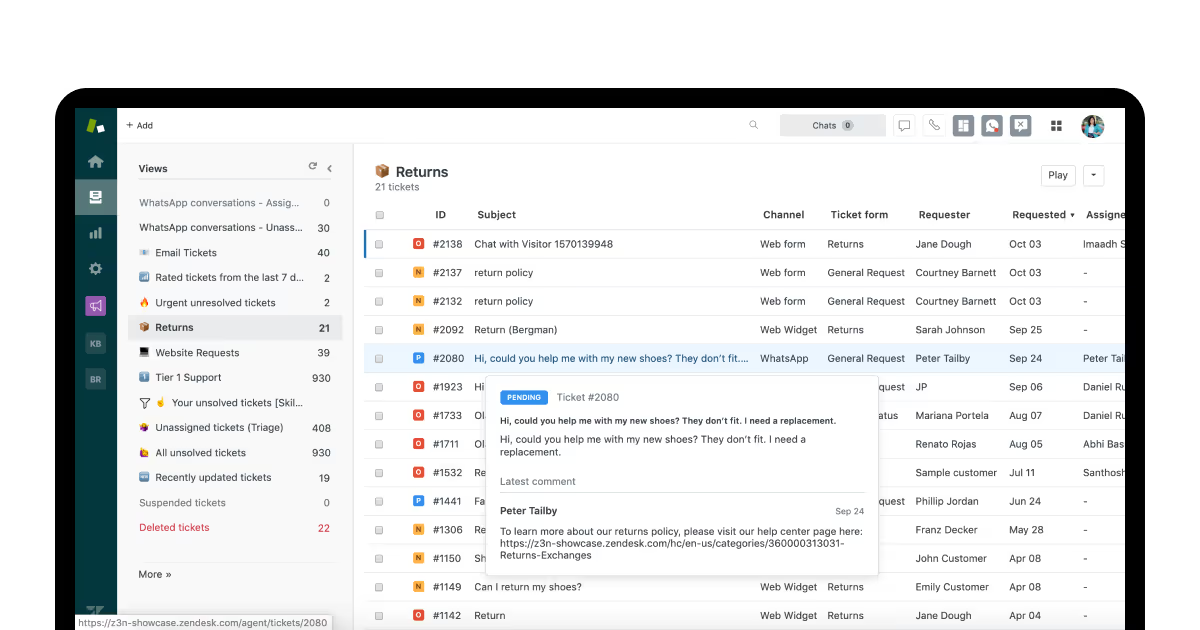
Dedicated to improving ticketing and knowledge management for customer support, Zendesk offers an AI-powered self-service portal. Customers can submit tickets using branded portals created on Zendesk, providing a way for customers to access help articles and monitor the status of their tickets. The AI agents have access to your company's knowledge base, allowing them to respond to FAQs. The platform helps support teams identify trending support topics so they can prioritize updates to their knowledge base related to delivery issues. The pricing is custom with a free trial.
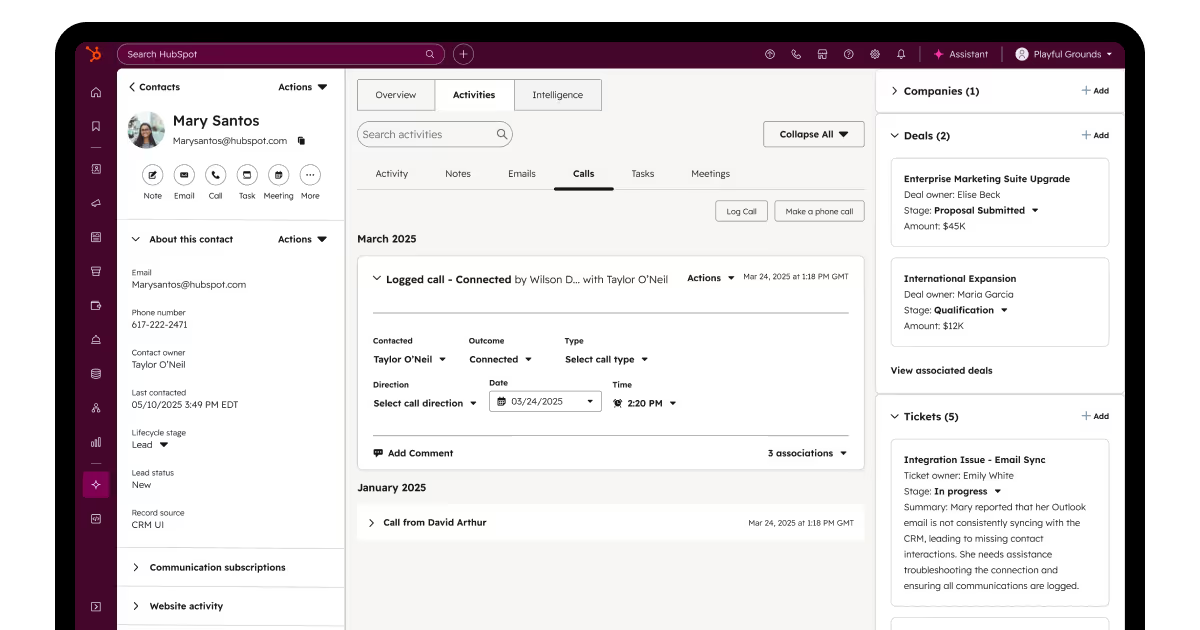
HubSpot Service Hub offers comprehensive customer service features integrated with a CRM customer portal and marketing automation for scaling logistics organizations. The platform provides centralized ticketing and help desk functionality. Automated workflows streamline routine tasks, freeing teams for high-value support. HubSpot integrates with transportation and warehouse systems through 500+ native integrations and APIs. Automated alerts keep communication during shipping processes. HubSpot offers tiered pricing with a free plan including essential service tools.
In the end, choosing the best customer portal software comes down to a careful assessment of your needs. Let’s break down how to do it right.
How to choose the best tool
Every company has its own workflow of choosing the most appropriate logistics portal, but there are some well-established principles that help you come to a balanced option.
Begin your analysis by auditing all systems currently installed (WMS, TMS, ERP), as well as how they interconnect. In cases of using legacy software with limited API capabilities, consider either modernizing that software or utilizing separate systems that provide a bridge between your legacy and current software. The ability to provide access to your data through your portal will be entirely dependent upon the quality of that data.
Create a list of required functionality (from a customer's perspective). If your customers are constantly contacting you regarding the status of their shipments, then having real-time tracking capabilities will be an absolute requirement. If your customers have difficulty managing their documents, then providing a method for managing them in a digital format should be a top priority in your logistics customer portal software.
Assess integration adaptability. Request examples of successful integration with your specific application stack. Obtain copies of all vendor API documentation and verify whether or not they use standardized integration protocols (REST, SOAP, EDI, etc.). Having prebuilt connectors available for common platforms will save you a significant amount of development time (months).
Test the user's experience. Ask your team and a few chosen clients for demos. It should be easy to navigate in a matter of minutes rather than hours. Drivers and warehouse employees operate from tablets and phones, so mobile responsiveness is essential.
Check your security credentials. Check for ISO 27001 certification, SOC 2 compliance, or comparable standards. Inquire about incident response protocols, backup plans, and encryption techniques. Inquire specifically about security track records from client references.
Determine the total cost of ownership. Consider integration work, training, continuing support, and future customization in addition to licensing fees. When hidden costs appear, less expensive solutions frequently become costly.
These tips should help you decide on the best customer portal to bring your business forward. Now let’s define how to understand whether the software you choose is really bringing you improvements.
How to measure the success of a logistics customer portal?
Pay attention to several important KPIs that you should track and compare quarterly to see if the solution you picked is efficient or just an expensive toy.
Engagement and adoption. Keep track of the proportion of customers who actively use the digital customer portal compared to all registered users. Monitor self-service completion rates, or the proportion of questions answered without contacting customer service. The length of sessions and the frequency of feature usage show which features are truly valuable.
Customer satisfaction signals. Deploy Net Promoter Score (NPS) surveys specifically about portal experience. Count support ticket volume reduction for routine tracking inquiries (fewer calls indicate successful self-service adoption). Monitor return rates and complaint frequency as indirect indicators of transparency and communication quality.
Operational performance. Prior to and following customer portal software development and implementation, track the rates of on-time-in-full (OTIF) delivery. Determine how to improve order accuracy and shorten the cycle time from placement to fulfillment. Monitor reduced order processing error rates and manual data entry hours. Research on cross-platform logistics cooperation shows a direct correlation between platform profitability and social welfare benefits and transaction volume and service supply metrics.
Combined analysis approach. Establish baseline measurements before launch, then review monthly. A successful portal typically shows an about 35% adoption within six months, 30% reduction in status inquiry calls, and measurable improvements in OTIF rates. Correlate metrics to identify which features drive the strongest business outcomes, then prioritize development resources accordingly.
The improvement compounds over time, so don’t expect the impact to happen overnight. Track these metrics and compare the historical data to understand your ROI.
ROI
When designed properly with user intent in mind, self-service portals can be a game-changer. The following three capabilities provide the most significant financial return:
Using structured content to assist customers in finding answers to common questions about the supply chain (documentation requirements, service offerings, rates, and claims processes) allows users to resolve issues on their own rather than having to call into a customer service center for assistance.
Ability to get instant AI-driven responses through conversational interfaces allows users to ask questions regarding shipment status, delivery dates, and service availability without having to escalate an inquiry, while providing a means for maintaining customer satisfaction.
Customer portal solution interfaces for scheduling and quoting, along with features such as upload functions for documentation, allow users to handle routine administrative processes on their own rather than relying on the operations team for support.
Companies that implement these three components with clear customer communication about portal availability typically recover implementation costs within 6-12 months.
Customer portal website ROI derives from three measurable areas: expense reduction due to decreased support costs, efficiencies accrued from decreased operation time, and an increase in customer loyalty. You should monitor your total volume of inquiries, the average handling time for each inquiry, and your total support expense. Using these figures, you can develop an estimate of how many inquiries could be deflected through the use of your portal and the resulting savings from the combined impact generated through these three areas.
FAQ
What is a customer portal for logistics?
A secure web-based platform that gives customers centralized access to supply chain data and self-service transaction capabilities is known as a logistics customer portal. Effective logistics portals, according to Blümel, combine information systems, communication workflows, and business process models to allow users to efficiently plan and manage transport operations while preserving mobility. These portals create unified customer-facing interfaces by combining data from partner networks, warehouse platforms, and transportation management systems.
What is a customer portal’s key success factor?
When a logistics customer portal offers a seamless user experience along with deep system integration and fast adaptation, it succeeds. The portal must offer access to shipment information by a navigation that removes pointless clicks. Real-time data accuracy across all customer touchpoints is ensured by strong backend integration with TMS, WMS, and ERP systems. The trust necessary for managing sensitive financial and logistical data is created by enterprise-grade security procedures.
How to create a customer portal that will showcase your own business offerings?
Logistics firms can offer services under their own brand identity thanks to white-label customer portals. Set up your company's logo, color schemes, typefaces, and other visual components in the portal interface to reflect your corporate identity. Use your branded URL instead of third-party addresses when customers access the portal by implementing custom domain mapping. Adapt navigation structures, feature sets, and terminology to your unique service offerings, such as customs clearance workflows for brokerage services, air waybill management for air cargo, and container tracking for ocean freight.
How does COAX achieve a secure and successful customer portal development?
For thorough security management, risk assessment, and ongoing threat monitoring, COAX maintains ISO/IEC 27001:2022 certification. Throughout development cycles, our ISO 9001 certification guarantees optimized quality processes. We use secure API architectures that link TMS, WMS, and customs systems, role-based access controls customized for supply chain stakeholders, and encrypted data transmission protocols for logistics portals. We perform penetration tests targeted at logistics vulnerabilities, such as financial information leaks, documentation breaches, and shipment data exposure.


























































































_.avif)












%2520explained.avif)

We are interested in your opinion