










































Contact us

About us

Scholarship

FAQ

Careers

Product Strategy

Product management

Product Discovery

Product discovery

Product UI/UX Design

Product UI UX design

Revenue Leakage Detection And Prevention

Revenue leakage detection and prevention

CRO (Conversion Rate Optimization)

CRO conversion rate optimization

User Journey Optimization

User journey optimization

Accessibility Audit

Accessibility audit

Have Ideas?
Contact Us

Product Engineering

Solution engineering service

Software Audit & Consulting

Software audit consulting

Platform Development

Platform development

Quality Engineering

Quality engineering

Third-party Software Integration

Third party software integration

Cloud & DevOps Services

Cloud and DevOps services

SaaS Platform Development

SaaS platform development

ERP Software Development

Product Growth

Product growth

Digital Strategy

Digital strategy

SEO/GEO Services

SEO GEO services

Content Marketing

Content marketing

Marketing Analytics

Marketing analytics

Have Ideas?
Contact Us

Agentic AI Development

Agentic engineering

Vibe Coding Cleanup

AI Infrastructure As A Service

AI infrastructure as a service

Data Engineering

Data engineering

Operational AI & Consulting

Operational AI and consulting

Have Ideas?
Contact Us

Revenue leakage detection

AI-powered Tripian integration

Travel API integrations

Website security audit

Conversion rate optimization

Have Ideas?
Contact Us

AI Trip Planning (Tripian)

AI Agents for Travel & Hospitality

AI Agents for Fleet Operations

AI Search Visibility (GEO)

Travel and hospitality software development

Travel API integration

Travel booking software development

Hotel management software development

Travel mobile app development

Travel website development and design

Transportation and logistics software development

Delivery management solution development

Fleet management software development

Custom inventory management software development

TMS software development

Dynamic route optimization solution development

Vehicle monitoring system development

Supply chain software development

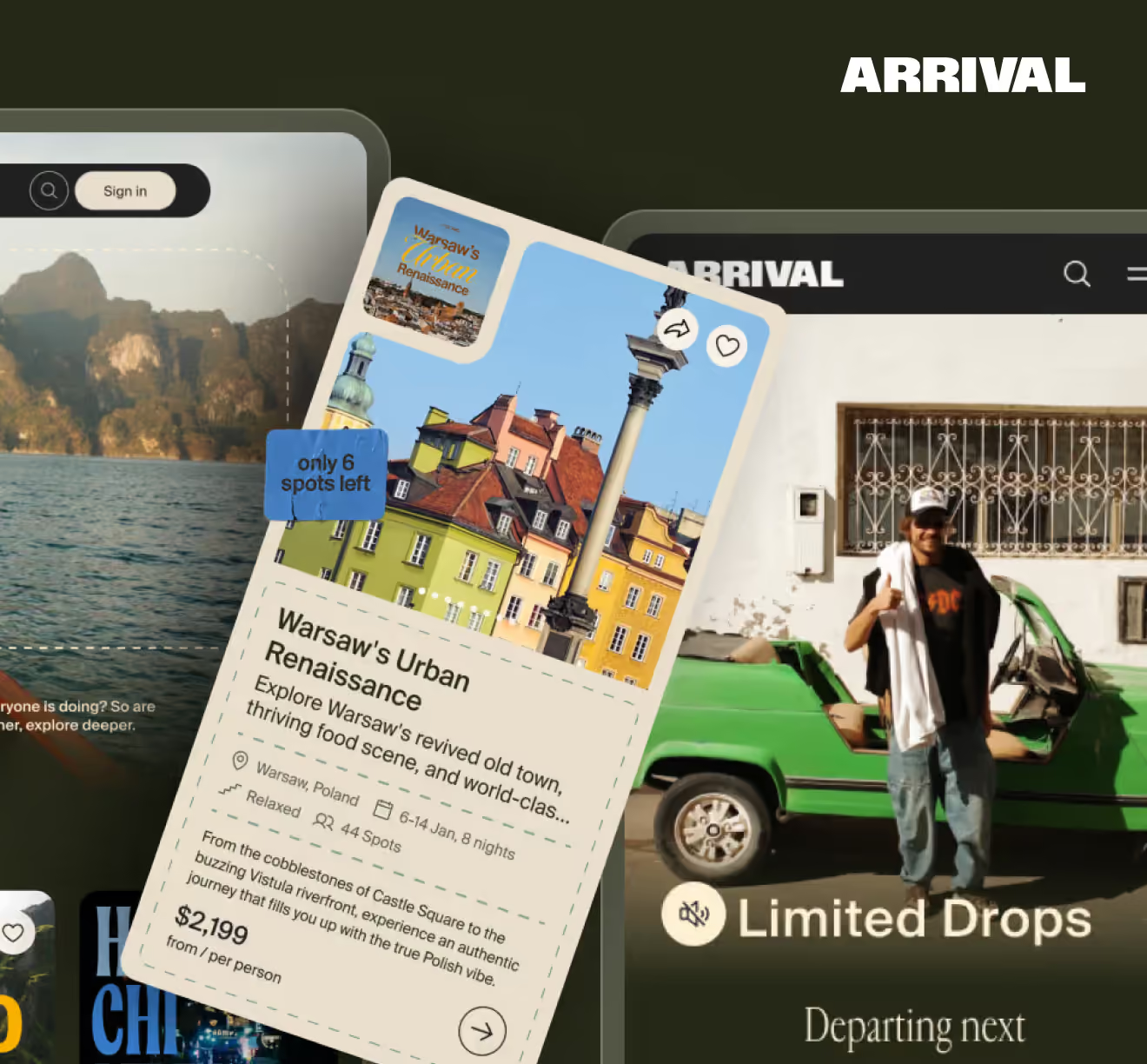
Shiji — Custom Webflow for a global hospitality provider

Coach and minibus hiring service with quote system

See all

An online travel booking platform for Australia's most viral content creators

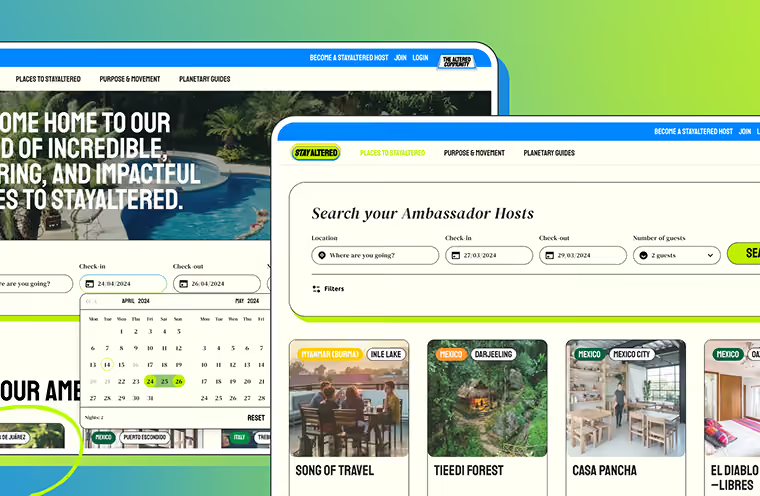
Booking platform for community-based tourism

See all

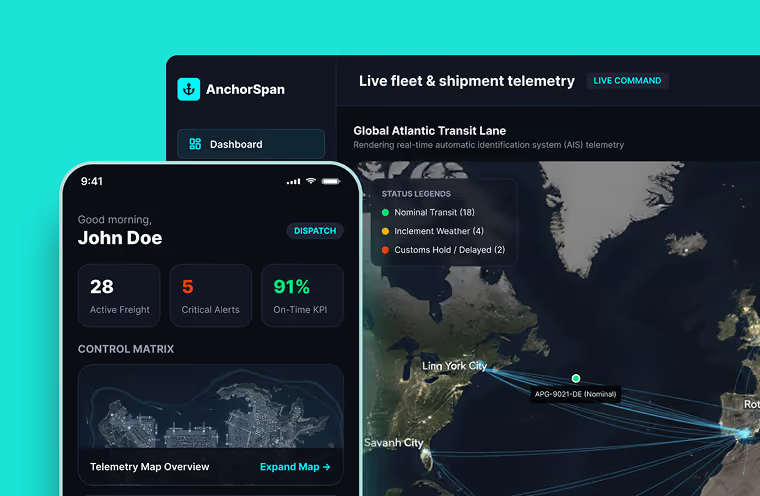
AnchorSpan — system for warehouse, port, and delivery visibility

BSTK  Grandbus — bus ticket booking platform

See all

Tour operator's guide to preventing cancellations

10 fast no-dev conversion fixes for travel & transportation websites

All e-books & white papers

Logistics

Employee transportation software: Features, benefits, and best solutions

Logistics

A complete guide to warehouse slotting optimization

Check our blog

Industries

Dynamic route optimization solution development

Dynamic route optimization solution development

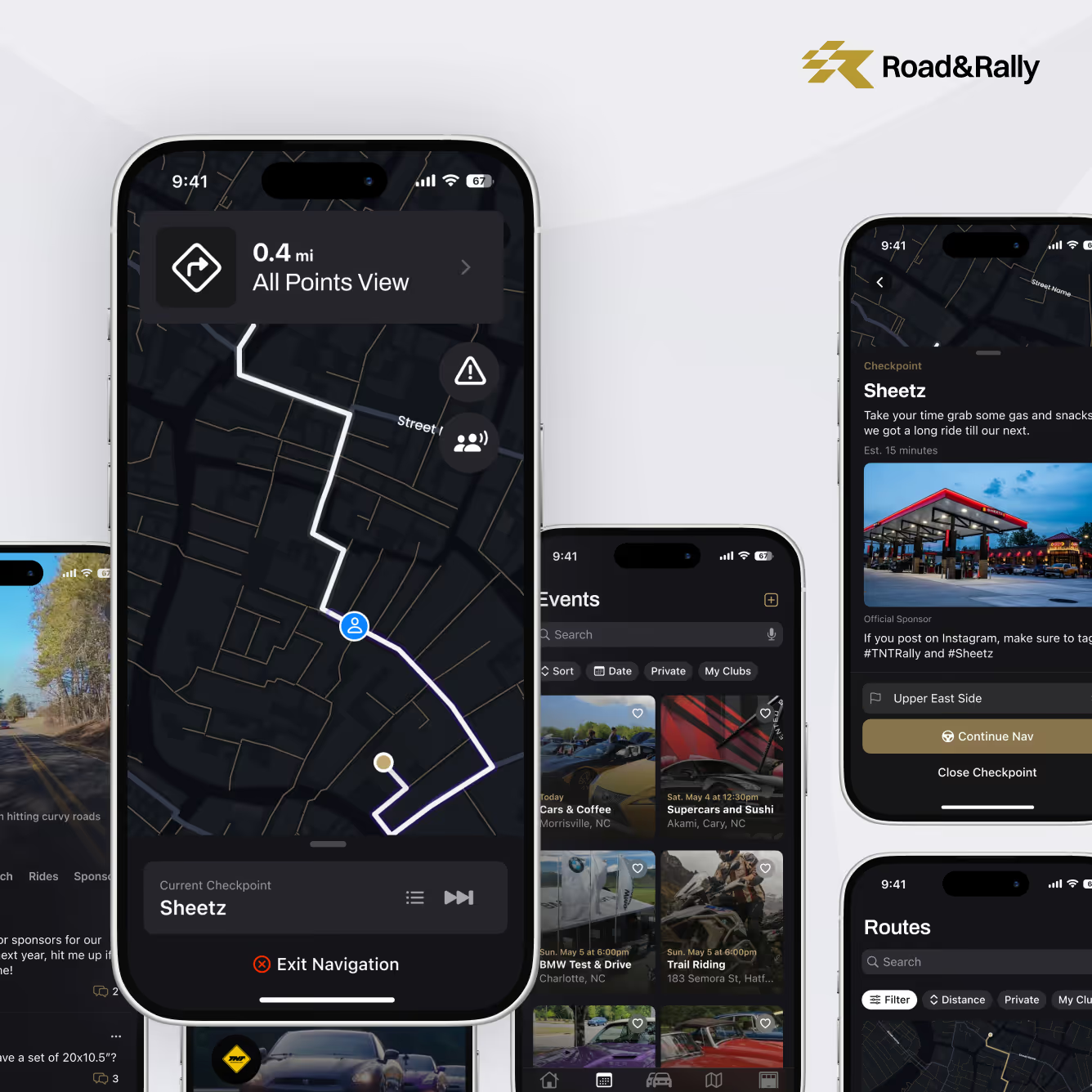
Plan better routes, adapt in real time, save fuel, and cut costs. To guarantee your fleet runs at its best, our experts create algorithms that constantly analyze real-time traffic data, weather, and delivery windows to recalculate routes for optimal effectiveness.

Industry leaders we work with

Krytter logoLocation Live logoShiji logoArrival logoDriven connect logoStayaltered logoRoad rally logoRoadster logo

Logistics route optimization: What services do we deliver?

Last mile delivery route optimization

We configure last mile transportation solutions that calculate the most efficient stop sequences, accounting for delivery windows, vehicle constraints, and local traffic patterns. The system automatically prioritizes deliveries where on-time arrival matters most, keeping service-level agreements intact and reducing route planning time.

Vehicle routing optimization

Our experts build algorithms that assign orders to vehicles while balancing capacity limits, driver hours, and road-specific restrictions like low bridges or weight limits. This reduces empty return trips compared to traditional planning methods and keeps fleet utilization at maximum levels.

Workforce optimization

Apart from improving vehicle efficiency, route planning in logistics should focus on employee performance. We put it on autopilot by aligning driver shifts, break periods, and skill sets with daily delivery demands and real-time road conditions. This helps reduce labor costs by eliminating underutilized shifts and compliance violations.

Real-time route optimization

COAX developers create route optimization software that processes second-by-second GPS pings and road incident reports to redirect drivers around delays while preserving original delivery time commitments. This automatically prevents bottlenecks, maintaining fuel efficiency and on-time performance even during disruptive events.

Geospatial data analysis

Our specialists create algorithms that process coordinates into actionable insights using GPS fleet tracking route optimization, analyzing historical movement patterns to identify recurring congestion zones and underutilized corridors. This reveals additional route efficiency potential that real-time systems alone can't detect.

Real-time traffic monitoring

We build systems cross-referencing anonymized mobile device movement patterns with incident and traffic density databases to predict emerging bottlenecks and detect slowdowns before standard GPS alerts trigger. With this technology, you prevent unnecessary detours and reduce sudden braking.

Why do you need tailored transport optimization software?

Lower costs, higher savings

Those extra 20 minutes stuck in traffic? They add up fast, but fleet route planning software shaves them off automatically. And even better, custom solutions that adjust to your preferred areas and vehicle size, finding detours before your drivers hit congestion. And when fuel prices jump, tighter routes mean your tanks and budget don’t rise with it.

Faster deliveries, every time

Your drivers shouldn't need to outthink traffic, and a smart routing system does it for them, finding shortcuts even locals miss while accounting for real-time delays. A custom solution goes further, recalculating based on your engine types and packing in as many vehicles and drivers as you need.

Increased driver efficiency

Drivers stuck in unnecessary traffic burn time and morale, and truck route optimization helps greatly, calculating the most efficient path in real time, factoring in road restrictions and shift schedules. Custom tech automatically balances routes across your fleet and even predicts potential delays before they happen, dynamically rerouting drivers to minimize downtime.

Improved customer experience

Missed delivery windows hurt trust, while optimization solutions adjust routes in real time to maintain delivery windows, even when delays happen. The systems built for you specifically bring an even greater value, as they allow to integrate the preferred alert channels and tracking capabilities from day one without the complete plan change after a few months.

Scalable for growth

Wondering if last mile software solutions can handle your expansion? Custom systems are modular by design — they absorb new delivery zones, vehicle types, and order volumes without rebuilding. Whether you're adding five trucks or fifty, the optimization adjusts proportionally, keeping your cost-per-delivery metrics stable.

Enhanced safety and compliance

Fleet route optimization software reduces risks by avoiding accident-prone zones and factoring in weather, road rules, and vehicle specs. It enforces compliance, cuts fines, and even predicts maintenance needs, keeping drivers safe and costs low. Fewer incidents mean smoother operations and lower insurance premiums.

Build, optimize, and scale with logistics routing software

Get a route efficiency assessment

Strategic integrations for route optimization in logistics

Maps

Our developers develop systems that ingest proprietary map data to identify optimal truck paths that account for weight-restricted roads, seasonal road condition reports, and turn radius limitations. This prevents navigation errors that typically cause delays in unfamiliar territories.

Telematics & IoT sensors

We integrate real-time vehicle diagnostics and IoT sensor data into route planning. The system automatically reroutes trucks showing maintenance flags or carrying sensitive loads, preventing breakdowns and spoilage. Live fuel consumption metrics further optimize routes for efficiency.

TMS

COAX experts make sure your tailored transportation routing software syncs directly with TMS platforms to convert load assignments into optimized routes using carrier-specific equipment profiles and contract rates. The integration automatically adjusts for dock scheduling conflicts and preferred carrier lane assignments stored in the TMS.

Accounting software

We can implement the integration that automatically categorizes route-related expenses (fuel, tolls, driver bonuses) by cost center using your existing accounting codes, eliminating manual ledger entries. It cross-references actual mileage against planned routes to flag discrepancies for audit before month-end closing.

Asset tracking

Our engineers enable fleet route optimization software to dynamically reassign drop-and-hook operations to the nearest available assets as soon as it receives live location updates, cutting empty trailer movements. The system we build will cross-reference asset utilization data to prioritize routes for underused equipment before deploying additional units.

ERP

We can add an integration that syncs planned routes with ERP inventory levels to prioritize shipments of stock-constrained SKUs, adjusting transportation plans when warehouse allocation data changes. It feeds actual delivery timestamps back into the ERP to update production schedules and vendor payment terms in real-time.

WMS

While building your load and route optimization system, we can enable it to pull real-time pallet dimensions and weight distributions from WMS to configure truck space utilization before loading begins. It will cross-reference warehouse staging area GPS coordinates to sequence pickup routes based on actual loading dock availability.

CRM

Finally, we can link your customer relationship management tool to your route optimization solution so that the system dynamically adjusts route sequencing to prioritize the stops for the high-priority accounts defined by a CRM. The two-way sync also updates CRM timelines whenever delivery exceptions occur, linking transportation events to customer service histories.

Why develop your dynamic routing software with COAX?

Customized solutions

Your challenges aren't off-the-shelf, so neither is our last mile delivery management solution — we configure it around your unique mix of vehicles, delivery zones, and customer expectations. The system learns your patterns over time, automatically adjusting to your preferred way of working without forcing rigid processes.

Proven track record

We've been solving real logistics problems for over 15 years. This means we've seen it all — frozen trucks, missed time windows, and other headaches of day-to-day operations. Our systems have handled everything from last-minute delivery changes to complete route overhauls when roads get blocked.

User-friendly interfaces

We know that your employees need drag-and-drop stops, one-click scenario testing, and alerts that show what's urgent without unnecessary noise. We designed our dynamic route planning software for hectic logistics offices — readable buttons, instant visual route changes, and status updates that anyone can understand at a glance. 

Full-cycle development

From the first planning session to regular system updates years later, we build, monitor, and refine your solution. With COAX, you get no passing you between different teams or dropping the ball after launch. If your delivery patterns evolve, we will evolve the tech right along with you.

Multi-stage testing process

Before any route planning optimization goes live, we run it through real-world scenarios — testing how it handles rush hours, sudden road closures, and last-minute "can you add one more stop?" requests. Only when it passes our dispatch team's scrutiny does it get cleared for your drivers.

Uncompromised data security

Your delivery info stays private and secure with basics done right: locked-down servers, encrypted communications, and clear rules about who can see what. Also, all data transfers automatically comply with the latest transport industry security protocols.

Client feedback

Logistics route planning in action

See all projects

Our process of developing logistics optimization software

Get an estimate

1

Discovery phase

Our team analyzes your current routing logic, timing how long dockside checks take, measuring the optimal components for your delivery route optimization algorithm. These granular realities shape the tech’s constraints and priorities from day one.

2

Planning

We start by translating the discovery findings into a detailed technical workflow, defining how the system will ingest live traffic data and output optimized paths. This includes specifying update frequencies, fallback protocols for poor connectivity, and reroute notifications details.

3

UI/UX design

Our designers create simple screens for last mile delivery software that show drivers exactly what they need — the next stop, package details, and any delays, with big buttons and clear colors. We use large text and high-contrast colors so it's readable in any lighting.

4

Development

Our engineers implement algorithms that optimize routes by factoring in real-world constraints, ensuring reliable performance in both cities and rural areas.. Every API connection gets stress-tested to maintain performance during peak delivery windows.

5

Quality assurance

COAX’s QA team stress-tests your route optimization solutions by flooding them with fake but realistic scenarios — peak-hour traffic jams, last-minute stop additions, and conflicting delivery priorities. Every edge case gets tested and validated for safety and efficiency.

6

Maintenance

We monitor system performance, applying small updates to routing algorithms based on new traffic patterns and driver feedback. We also handle behind-the-scenes updates to mapping APIs and third-party integrations so you don’t have to.

Other services
Transportation & logistics

Go to the service page

Inventory optimization

Go to the service page

Courier management

Go to the service page

TMS software development

Go to the service page

Transportation route optimization

Go to the service page

Custom fleet management

Go to the service page

Vehicle monitoring

Go to the service page

Frequently asked questions and answers

When choosing route optimization software, prioritize features that address route planning for logistics, like dynamic rerouting for traffic/weather, multi-stop sequencing, and load-specific constraints. Also, look for path calculations, driver hour compliance tools, and real-time tracking integration. If you handle local deliveries, last mile delivery management software brings extra value, like signature capture, and tight urban route optimization for parking challenges.

Route optimization works well for small businesses. For example, a small retail business might use eCommerce last mile delivery software that offers basic features like simple route planning and driver tracking, helping it save time and fuel without needing advanced logistics tools.

They help save fuel costs by calculating the most efficient paths, avoiding unnecessary idling in traffic or long detours. They analyze road conditions, vehicle load, and driver behavior to reduce mileage. Fleet management route optimization tools also group nearby deliveries, cutting down on wasted trips.

Yes, most route optimization apps work with standard GPS devices by syncing optimized routes directly to the unit or through companion mobile apps. The software typically integrates with vehicle GPS trackers and drivers' mobile navigation apps, ensuring turn-by-turn directions match the most efficient calculated path.

For smooth performance, update your route management app whenever new versions are released, typically every few weeks. Regular updates ensure your tools have the latest traffic patterns, bug fixes, and features to keep deliveries efficient.

Track your current costs (fuel, labor hours, vehicle wear) for a month, then compare them to costs after using the app for the same period. The savings from reduced mileage, fewer overtime hours, and faster deliveries show your ROI.

First mile delivery covers moving goods from warehouses or suppliers to distribution hubs, while last mile delivery handles the final step — getting packages to customers' doors. Last mile automation software helps improve this final leg by optimizing routes, tracking deliveries in real time, and reducing delays

To improve last mile delivery, use last mile route optimization to plan faster, more efficient routes that account for traffic, delivery windows, and parking challenges. Pair this with real-time driver tracking and customer notifications, as this reduces delays and failed deliveries.
Insights from the COAX blog

Check our blog

Logistics

The ultimate fleet management software development company: Top 10 options to work with

October 8, 2026

Go to the blog post page

Logistics

Top 10 transportation software development companies to partner with

October 2, 2026

Go to the blog post page

Travel

Top 10 travel app development companies in 2026

September 30, 2026

Go to the blog post page

Logistics

Smart warehouse guide: Key technologies, features, and best practices

September 28, 2026

Go to the blog post page

Logistics

Employee transportation software: Features, benefits, and best solutions

September 18, 2026

Go to the blog post page

Logistics

A complete guide to warehouse slotting optimization

September 17, 2026

Go to the blog post page

Travel

Short-term rental software: A complete guide to choosing the right tools

September 16, 2026

Go to the blog post page

Logistics

What is fleet telematics? Turn vehicle data into better fleet decisions

September 14, 2026

Go to the blog post page

Travel

Why do you need a cloud hotel management system?

September 11, 2026

Go to the blog post page

Logistics

Warehouse control systems explained: Workflow, features, and solutions

September 10, 2026

Go to the blog post page

What we’ll do next?

  • 1

    Contact you within 24 hours

  • 2

    Clarify your expectations, business objectives, and project requirements

  • 3

    Develop and accept a proposal

  • 4

    After that, we can start our partnership

Serhii Danyliuk

Head of Strategic Partnerships