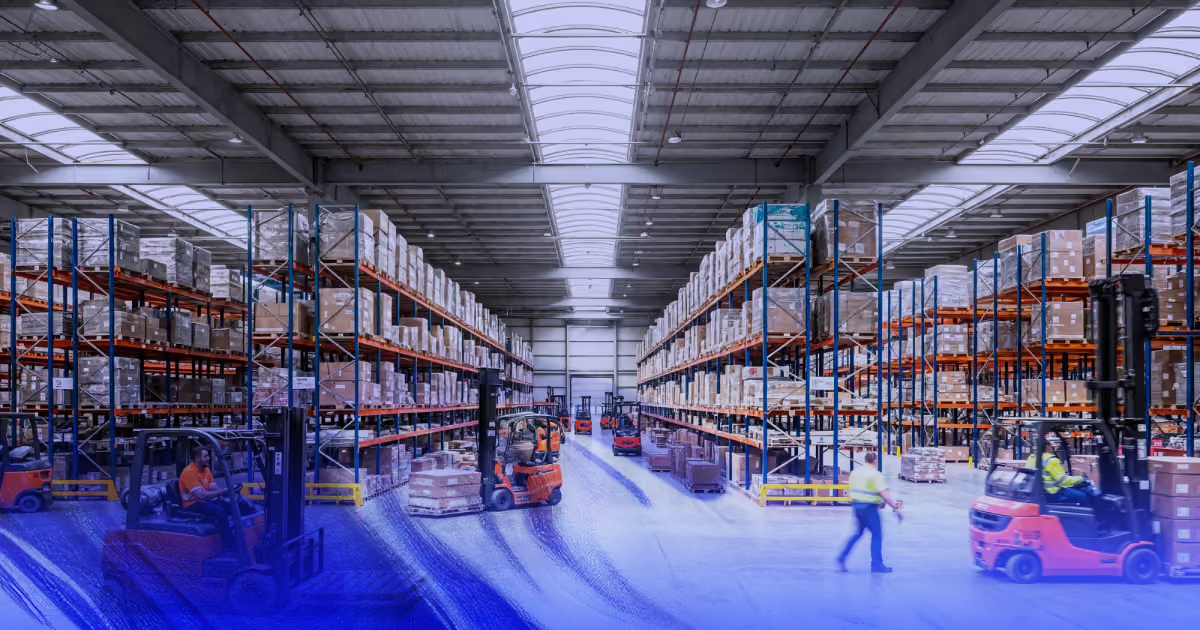
A smart warehouse runs on connected sensors, robots, and software.
Traditional sites rely on manual counts; smart sites track everything live.
Automation stabilizes labor, space, accuracy, and demand swings at once.
IoT, AI, robotics, and RFID form the technology backbone.
Real-time visibility and predictive alerts define the core features.
Platforms like Symbotic, Locus, and Exotec each solve different bottlenecks.
A successful transition follows six clear, measurable steps.
Training and phased pilots decide whether adoption actually sticks.
Custom integration closes gaps no off-the-shelf platform covers.
A smart warehouse connects sensors, robots, and software into a single system. Such warehouses reorder stock before anyone notices a shortage. They run themselves with minimal human input. That setup cuts labor costs and speeds up order fulfillment. It also cuts down on costly picking errors.
The smartest rollout starts small. You automate one bottleneck first. You prove the return, then you scale.
This guide covers what makes a warehouse smart. It walks through the technology behind it. And it shows you how to build one step by step.
What is a smart warehouse?
A smart warehouse blends automation, sensors, and software into one system. It replaces manual tracking with real-time visibility. The market behind this shift is growing fast, and for good reasons.
At its core, smart warehouse management links every asset to one system. It connects both hardware and software components. Robots move pallets across the floor. Sensors scan barcodes and RFID tags automatically. Software studies sales data to predict demand. Together, these tools make up modern smart warehouse technology.
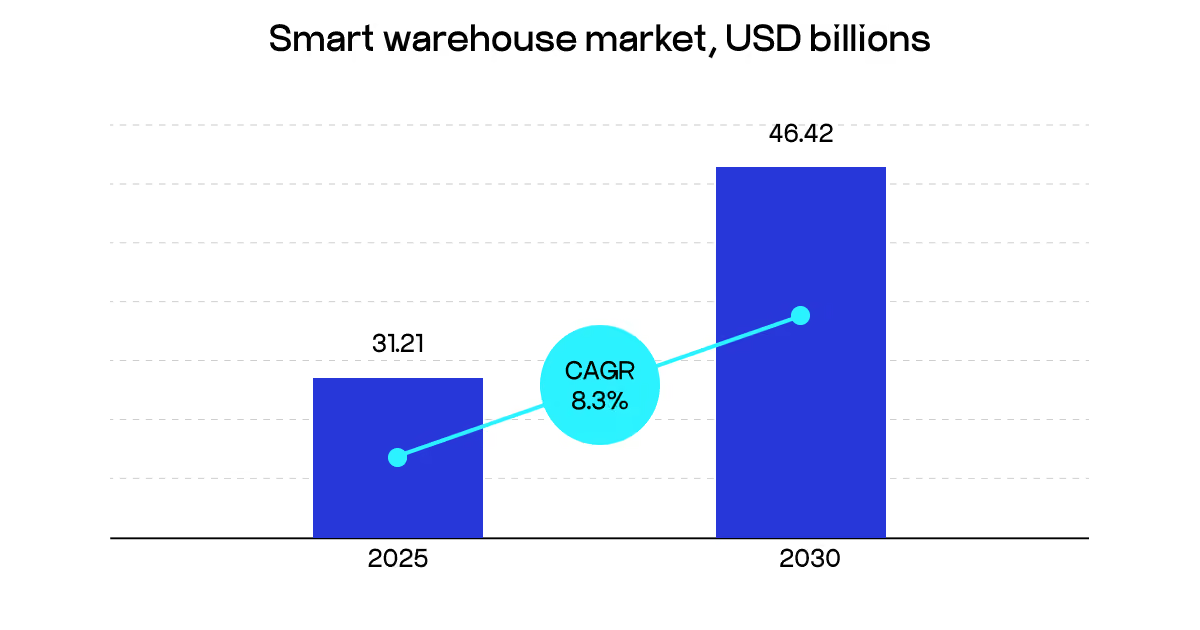
The numbers show real momentum for this type of solutions. The smart warehouse market reached about $31.21 billion in 2025. Analysts expect it to hit $46.42 billion by 2030. That's a CAGR of 8.3 percent through the forecast period.
E-commerce growth and labor shortages are fueling this surge. Companies need speed and accuracy at the same time. Manual processes just can't keep pace anymore.
How does a smart warehouse differ from a traditional warehouse?
A traditional warehouse runs on manual labor and paper records. Smart warehousing relies on connected sensors, robots, and software instead. The gap shows up in speed, accuracy, cost, and scale. Traditional sites keep upfront costs low. Smart sites cut costs over time through automation.
Aspect
Traditional warehouse
Smart warehouse
Inventory tracking
Manual counts, periodic checks
Real-time sensors and RFID
Labor role
Picking, packing, sorting by hand
Oversight of automated systems
Decision making
Based on past reports
Driven by live data and AI
Scalability
Limited by hiring and training
Expands through added machines
Upfront cost
Lower initial investment
Higher initial investment
Long-term cost
Rises with labor and errors
Drops through automation
Automation and labor.
Traditional warehouses lean on workers for picking and packing. Staff walk aisles and scan items by hand. Mistakes creep in when volume spikes at peak times. Smart warehousing technology swaps much of that manual work for machines.
Automated guided vehicles carry pallets without a driver. Pick-to-light systems point workers to the right shelf. Labor still matters, but the role shifts toward oversight. That shift trims errors and shortens turnaround time.
Real-time visibility.
Traditional warehouses check stock through periodic manual counts. Data often lags behind what's actually on the shelf. Errors pile up between counts and go unnoticed. AI warehouse software flips this model entirely.
Sensors and cameras feed data into the system nonstop. Managers see stock levels, location, and movement in real time. Machine learning models flag shortages before they cause delays. That visibility turns guesswork into a data-backed decision.
Scalability.
Traditional warehouses hit a ceiling fast. More capacity means hiring and training extra staff. That process takes weeks, sometimes months. Growth stalls right when demand peaks.
Smart warehouses scale by adding machines, not headcount. A robot fleet can expand overnight with software updates. Storage systems adjust layouts based on real demand. That flexibility keeps operations steady through seasonal swings.
Cost structure.
Traditional warehouses cost less to set up at first. Basic shelving and manual processes keep initial spend low. But labor and error costs add up over years. Operational expenses climb as volume grows.
A smart warehouse solution costs more upfront. Sensors, robots, and software all carry a price tag. That investment pays back through lower labor costs. Fewer errors and faster fulfillment recover the difference within a few years.
Both models work. The right pick depends on your volume, budget, and growth plans.
What role does a smart warehouse play in modern business?
A smart warehouse solves the problems that stall growth. It cuts labor dependency, reclaims wasted space, and fixes accuracy gaps. It also absorbs demand spikes without breaking. Each function ties back to one goal: keep the business moving when conditions change.
Stabilizing labor-dependent operations
Warehouses can't find enough workers. Seventy-eight percent of facilities report real difficulty hiring and retaining staff. Turnover runs near 36 percent a year. That cycle drives operational costs 15 to 25 percent above industry norms.
Smart warehouse automation breaks that cycle. Robots and pick-to-light systems absorb repetitive tasks. Fewer roles depend entirely on manual labor. Staff shifts toward oversight instead of constant physical picking. That shift matters most during ramp-up, when new hires still learn the floor. Automation keeps output steady even as turnover continues. It doesn't eliminate labor needs. It just makes the business less fragile when labor is scarce.
Recovering wasted space
Storage space keeps shrinking relative to demand. Poor layouts can add 30 to 40 percent to worker travel distances. Peak season alone can push order volumes up to 500 percent. Most facilities can't expand their footprint fast enough to keep up.
Smart warehouse technologies answer this by building up, not out. Vertical racks, automated storage and retrieval systems, and dynamic slotting add capacity within the same footprint. Software recalculates optimal placement as demand shifts. Products move closer to shipping lanes automatically. That density gain replaces the need for a second facility. It also shortens the walk between shelf and dock, which speeds up every order behind it.
Closing the accuracy gap
An average warehouse runs at 83 percent inventory accuracy. The missing share often turns into phantom stock. That's inventory the system claims exists but isn't on the shelf. Shrinkage alone costs facilities close to 1.4 percent of annual revenue.
RFID tagging and real-time scanning close that gap fast. Some facilities push accuracy past 99.5 percent this way. A warehouse control system ties scanners, robots, and software into one coordinated layer. It confirms every pallet move the instant it happens. Errors get caught before they reach a customer, not after. That single change touches receiving, putaway, and shipping all at once.
Absorbing demand swings without breaking
Seasonal peaks used to mean scrambling for temp labor and overflow space. Productivity can drop 30 percent when facilities aren't ready. Return volumes have climbed 92 percent since 2019, adding pressure on the way back in too.
A connected system flexes instead of cracking under that load. Cloud-based platforms scale up during Black Friday, then scale back down. Robots don't need training or a ramp-up period. They just run more shifts. That elasticity is one of the clearest benefits of smart warehouse adoption. It turns a seasonal scramble into a routine, planned event.
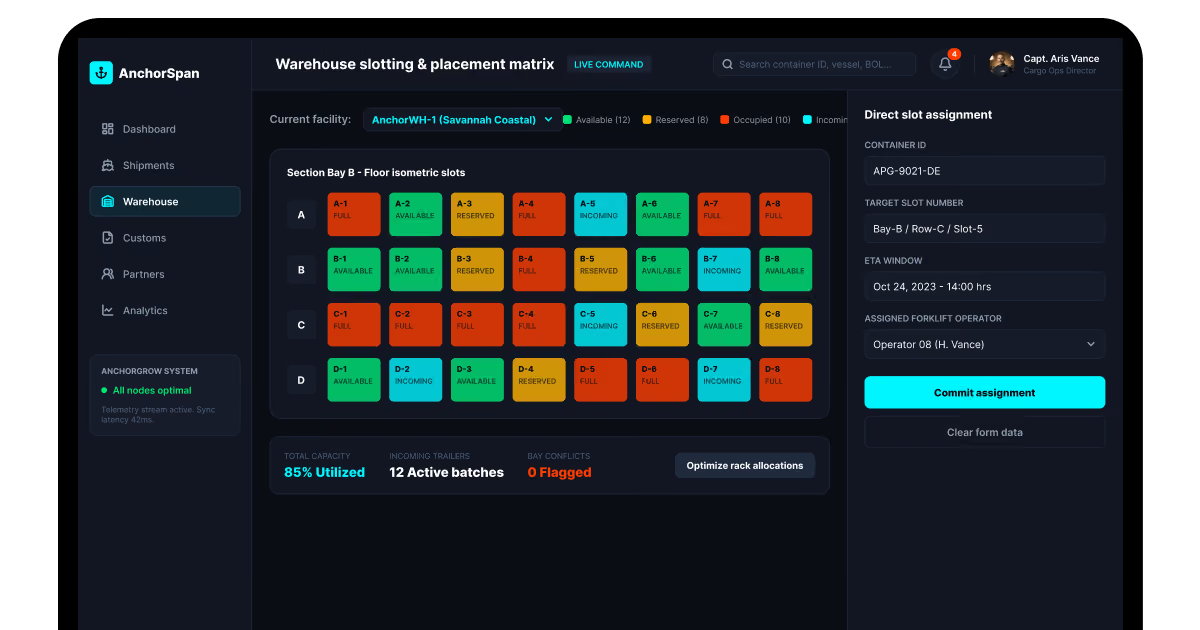
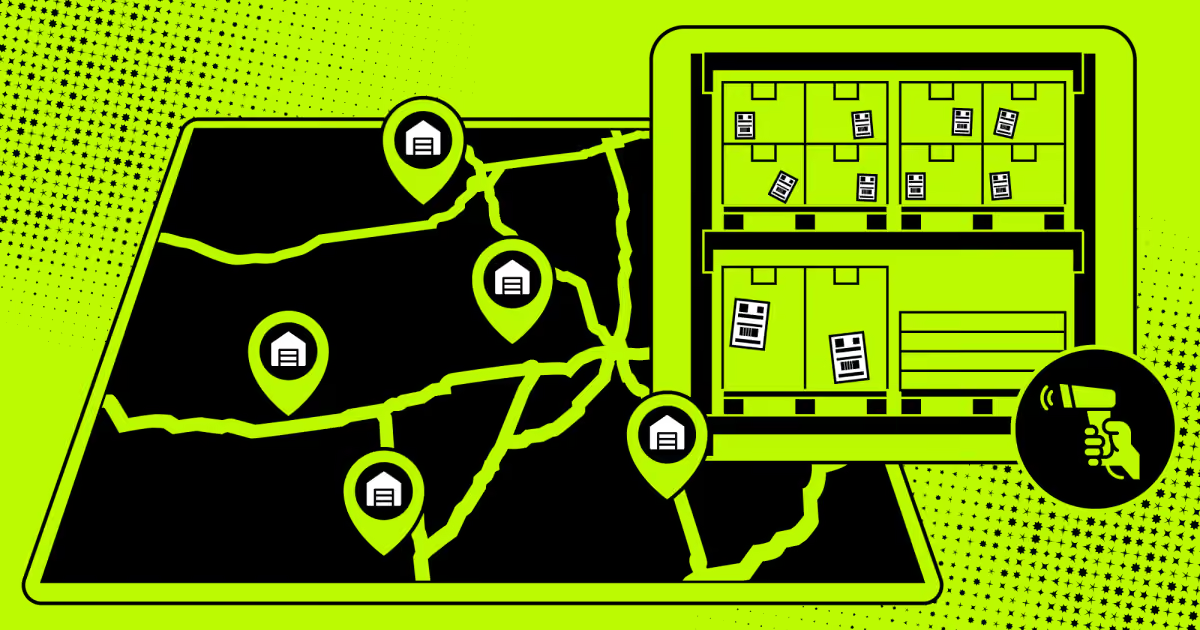
When we built a warehouse and cargo platform for AnchorGrow Cargo Group, this played out directly. Their six warehouses ran on disconnected tools, so dispatchers learned about delays only after they'd already happened. We built a warehouse slotting dashboard that assigns pallets by live capacity, not a spreadsheet from yesterday. Misplaced-pallet incidents fell 34 percent in the first quarter. Dwell time across all six sites also dropped from 11 hours to 6.4.
Which technologies power smart warehousing?
A smart warehouse technology stack blends eight core tools. The Internet of Things collects live data from the floor. Artificial intelligence turns that data into fast decisions. Robots and automated vehicles move goods without constant human input. RFID tags and barcodes track every item in transit. Automated storage systems and picking tools speed up fulfillment. A central management platform ties every piece into one view. Together, these tools define what modern smart warehousing looks like today.
Technology
How it works
What it integrates with
Benefits
Internet of Things
Sensors and connected devices stream data nonstop
Management platforms, robots, control towers
Real-time visibility, fewer blind spots
Artificial intelligence
Analyzes history and live data to predict outcomes
Forecasting tools, robotics, management platforms
Fewer stockouts, faster decisions
Mobile robots (AGVs/AMRs)
Move goods along fixed or self-planned routes
Management platforms, conveyors, docking stations
Shorter travel time, fewer walked miles
RFID and barcodes
Tags and scanners confirm item identity on the move
Control towers, management platforms, sorting systems
Higher accuracy, fewer manual counts
Automated storage and retrieval
Automates the storage and retrieval of goods
Management platforms, picking tools
Higher density, faster retrieval
Warehouse management platform
Centralizes inventory, orders, and staff activity
Picking tools, sensors, robotics
One view, fewer errors
Collaborative robots
Work alongside staff on repetitive tasks
Conveyors, packing stations, safety sensors
Less fatigue, steadier output
Automated picking solutions
Lights or voice prompts direct each pick
Management platforms, shelving systems
Faster picks, fewer wrong items
Internet of Things (IoT)
IoT devices form the nervous system of any warehouse. Smart warehouse sensors, scanners, and connected robots feed data nonstop. They track temperature, humidity, and stock levels in real time. They also flag equipment that needs maintenance before it fails. This constant data stream removes blind spots from daily operations. Every device on the network shares data with the same system. That link prevents silos between receiving, storage, and shipping teams.
IKEA built its inventory checks around this idea. It partnered with Verity to deploy autonomous drone systems. The drones scan pallets overnight and capture 3D depth data. Staff review the results each morning and close the gaps.
Artificial intelligence
AI studies warehouse data and predicts what comes next. It spots demand spikes before they hit the shipping floor. It also flags risks like overstocking or delayed shipments early. Teams use these signals to plan staffing and stock levels. A smart warehouse solution often centers its logic on AI models. Those models study sales history, weather, and market shifts together. That mix turns raw numbers into a plan you can use.
For instance, Amazon leans on AI-driven forecasting to place inventory near demand. FedEx and UPS use similar AI tools to anticipate routes. Both companies sort packages faster because the system predicts bottlenecks first.
Mobile robots (AGVs and AMRs)
Automated guided vehicles follow fixed paths marked by wires or sensors. Autonomous mobile robots go further and navigate without fixed markers. Both machines move pallets, totes, and carts across the floor. AMRs adapt to obstacles in real time. AGVs mostly can't. Workers no longer walk miles a day to chase stock between aisles. One person can now oversee an entire fleet from a tablet.
As a smart warehouse example, Amazon runs hundreds of thousands of mobile robots across its network. Walmart pairs automated resupply systems with high-speed robotic sorting. That combination helps it manage massive inventory volumes at scale.
RFID and barcodes
RFID tags and barcodes give every item a digital identity. Scanners read that identity the instant a product moves. This removes the need for manual counts or paper logs. Accuracy climbs past 99 percent in facilities that use RFID well. The technology also feeds data straight into a warehouse control layer. That layer confirms every pallet move the moment it happens.
JD.com built its "Asia No.1" centers around this kind of tracking. Digital-twin technology mirrors the physical site down to each tag. Hundreds of robots then sort and store goods with that data.
Warehouse management systems (WMS)
A WMS gives you one dashboard for every inventory movement. Modern smart warehouse systems link every device into that same view. It shows stock levels, order status, and staff activity live. The platform also connects to picking tools to guide workers directly. That link cuts the guesswork out of finding the right item. Fewer wrong picks mean fewer returns and happier customers down the line.
Nike ties its distribution centers together through this kind of coordination. Automation across its network reduces complexity and speeds up fulfillment. That coordination is what separates a smart warehousing company from a traditional operator.
Collaborative robots (cobots)
Cobots work directly beside warehouse staff, not apart from them. Sensors and safety mechanisms stop the arm before contact happens. They handle repetitive jobs like palletizing, picking, and packing all day. That shift frees staff to handle judgment calls robots still can't make. Fatigue and injury rates drop once repetitive lifting shifts to a cobot. Most cobots run without a safety cage, unlike older industrial arms. That design lets you place them close to workstations and conveyors.
Automated picking solutions
Pick-to-light, put-to-light, and voice-directed systems guide workers to the right slot. Lights or voice prompts cut search time down to seconds per pick. Order accuracy rises because the system removes guesswork from each pick. These tools also work well for training new warehouse hires. Staff ramp up faster since the system shows the right spot.
Every smart warehouse depends on this mix of tools to run well. The table below breaks down what each one does on its own.
What are the key features of smart warehouses?
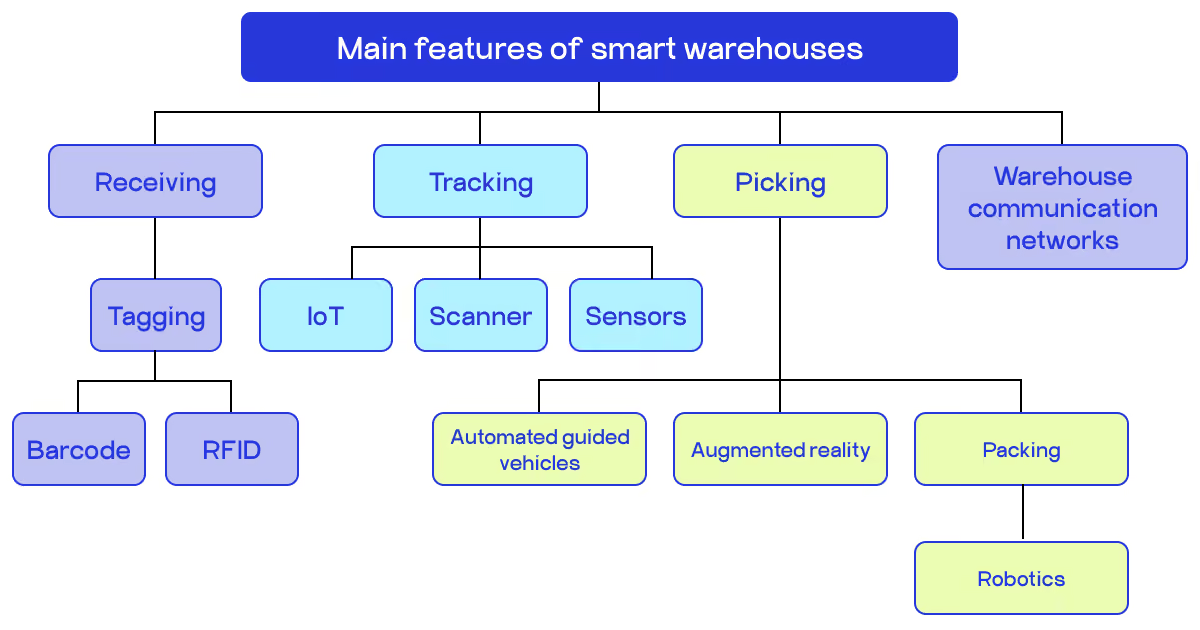
Four features define an efficient smart warehouse: receiving, tracking, picking, and communication. Receiving tags every item the moment it arrives. Tracking keeps that item visible from shelf to dock. Picking routes staff and machines to the right spot fast. A communication network ties all three functions into one system. This kind of smart warehouse technology integration turns separate tasks into one connected flow.
Receiving
Receiving starts the moment a shipment hits the dock. The system tags each item before it reaches a shelf. That single step sets up everything downstream, from tracking to picking.
Barcode labels print fast and cost little per unit.
Scanners read them in a split second at any angle. Most facilities still lean on barcodes for high-volume, low-cost tagging.
RFID tags skip the line-of-sight scan barcodes need. A reader picks up dozens of tags at once, hands-free. That speed makes RFID the better fit for high-throughput receiving docks.
Together, barcode and RFID feed the same inventory record. Whichever tag a facility picks, the data lands in one place.
Tracking
Tracking keeps every tagged item visible after it leaves receiving. This is where smart warehousing technology does its heaviest lifting.
IoT devices sit throughout the facility and report status nonstop. They log temperature, humidity, and location for sensitive goods.
Scanner stations confirm an item's position at key checkpoints. Workers or robots trigger a scan each time stock moves.
Sensors watch for motion, weight, and proximity on shelves and lifts. They catch a misplaced pallet before it becomes a lost one.
IoT devices, scanners, and sensors all feed the same live map. That map is what makes smart warehousing worth the investment.
Picking
Picking turns inventory data into physical movement. This function decides how fast an order actually ships.
Automated guided vehicles carry pallets and totes along fixed or guided routes. They cut the walking distance a picker covers each shift.
Augmented reality overlays picking instructions right onto a worker's field of view. Headsets or glasses show the exact bin and quantity needed.
Packing closes out the order once every item's confirmed. Robotics handle the box selection, sealing, and label placement here.
AGVs deliver the goods, AR guides the pick, and robotics finish the pack. Each step hands off cleanly to the next.
Warehouse communication networks
A communication network links receiving, tracking, and picking into one loop. Wi-Fi, private 5G, or a mix of both carry this traffic. Every AGV, sensor, and scanner reports back through this same layer.
Good warehouse management software sits on top of this network and makes sense of the flow. It turns thousands of small signals into one dashboard you can act on. Without a stable network, none of the other three features work well together. This is the piece that makes smart warehousing solutions function as a system, not a pile of separate tools.
Feature
Components
Dependencies
Receiving
Tagging: barcode, RFID
Reliable print and scan hardware at the dock
Tracking
IoT devices, scanners, sensors
A live network to carry constant status updates
Picking
Automated guided vehicles, augmented reality, robotics for packing
Accurate location data from the tracking layer
Warehouse communication networks
Wi-Fi or private 5G, central software dashboard
Stable connectivity across every device on the floor
What tools make a warehouse smart?
The right automation platform depends on your floor, not a spec sheet. We judged each tool below against five practical markers. Together they separate truly smart warehouse software from a robot that just moves boxes.
Placement intelligence: Checks whether the system decides where inventory goes, not just how fast it moves.
Density gain: Measures how much extra storage capacity a tool adds within your existing footprint.
Integration depth: Looks at whether the platform plugs into your current WMS or forces a full swap.
Scaling path: Confirms you can start with a handful of units and expand as volume grows.
Labor offset: Tracks how much walking, lifting, or repetitive picking the system removes from staff.
These five markers shaped every ranking below. A platform that scores well on one axis often trades off on another, so match the tool to your actual bottleneck.
Platform
Core approach
Integration need
Best for
Symbotic
AI robotics for dense, high-speed storage
Standalone or WMS-tied
Grocery and retail with fast-moving SKUs
Locus Robotics
AMR fleets that guide pickers through zones
API-based WMS connection
High-volume fulfillment with tight labor budgets
Vecna Robotics
Orchestrated pallet, tugger, and piece-picking bots
Native WMS data exchange
Mixed SKU profiles with variable demand
GreyOrange
AI orchestration across robots, people, and inventory
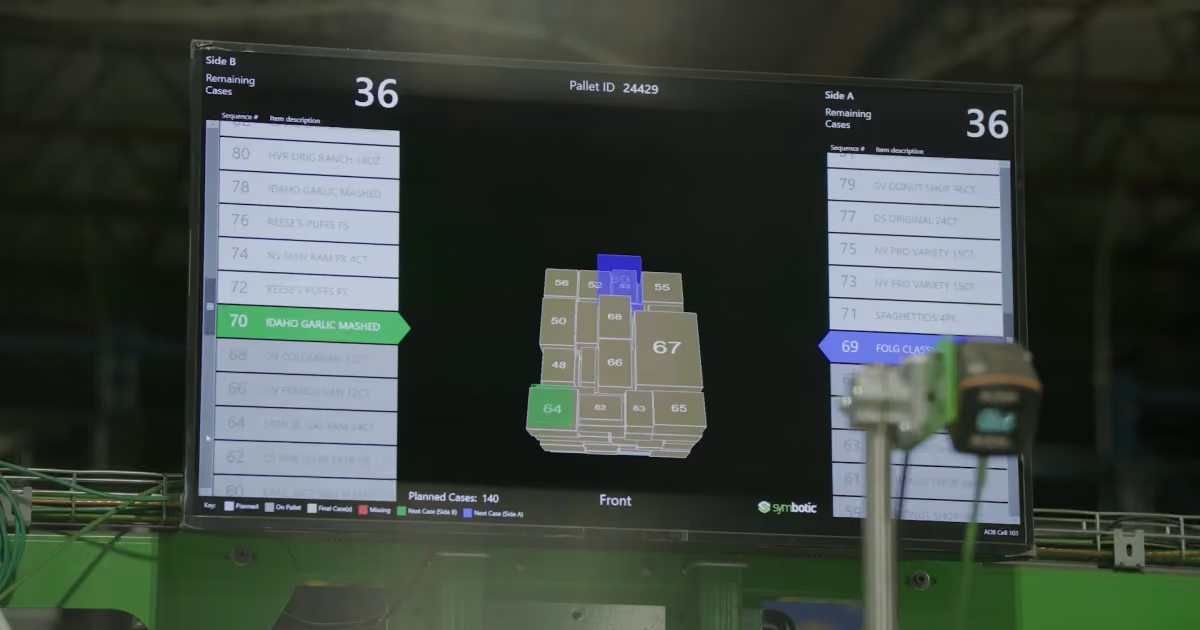
Symbotic runs autonomous robots alongside AI software that picks, moves, and palletizes at speed. It stacks inventory both vertically and horizontally within one footprint. Grocery chains and food distributors use it to shrink order cycle times on high-volume, fast-turning stock. The upfront cost runs high. Most operators recover it through lower labor spend and higher sustained throughput. It's a smart warehouse example built specifically for operations that can't add square footage.
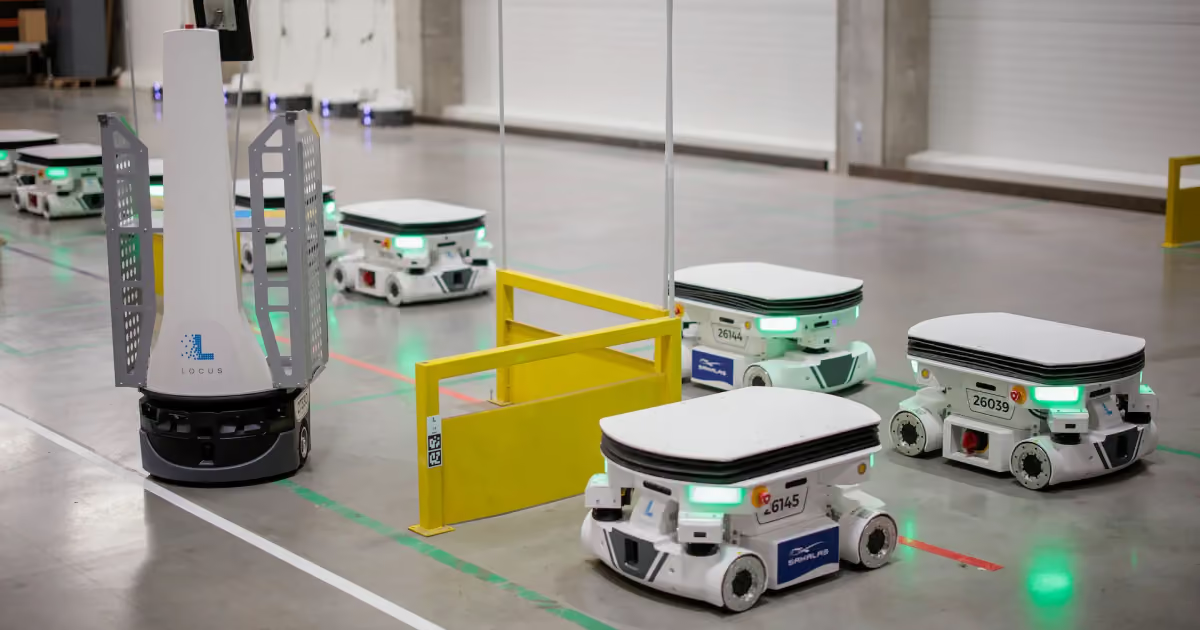
Locus Robotics deploys fleets of autonomous mobile robots that walk pickers through optimized routes. Workers still handle the picking. The robot just eliminates the empty-handed walk between stops. Its software reassigns routes live as order priority shifts through the day. Fulfillment centers with tight labor budgets see the fastest payback. Because it layers onto existing racking, sites skip a full infrastructure rebuild.
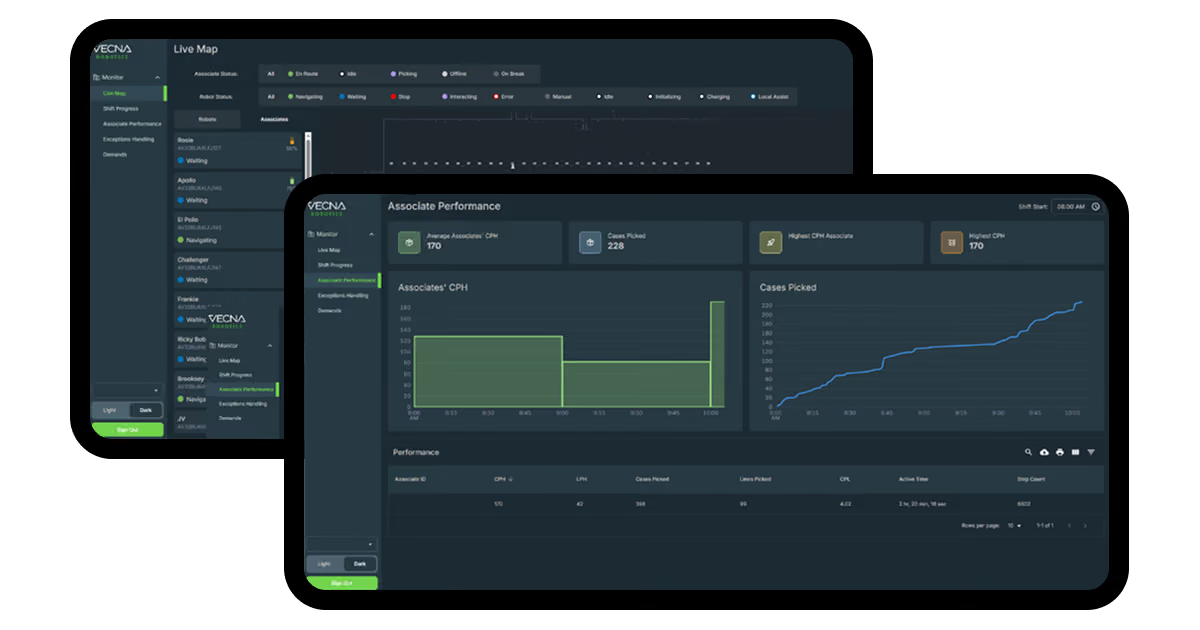
Vecna Robotics takes a different route. Its pallet trucks, tuggers, and piece-picking bots run under one orchestration layer. That software assigns each task to whichever robot fits it best. Warehouses with a mix of fast and slow movers benefit most from this setup. The Tote Retrieval System pulls items straight from standard shelving, cutting walk time for staff. Because it ties directly into existing smart warehouse management solutions, data-driven task assignment happens without a system overhaul.
GreyOrange runs an AI orchestration layer that coordinates robots, staff, and inventory together. Its platform forecasts demand and repositions stock before a spike hits. Multi-site retailers use it to keep fulfillment consistent across locations. The system leans on machine learning to rebalance work in real time. That constant rebalancing is what separates it from a static picking robot.
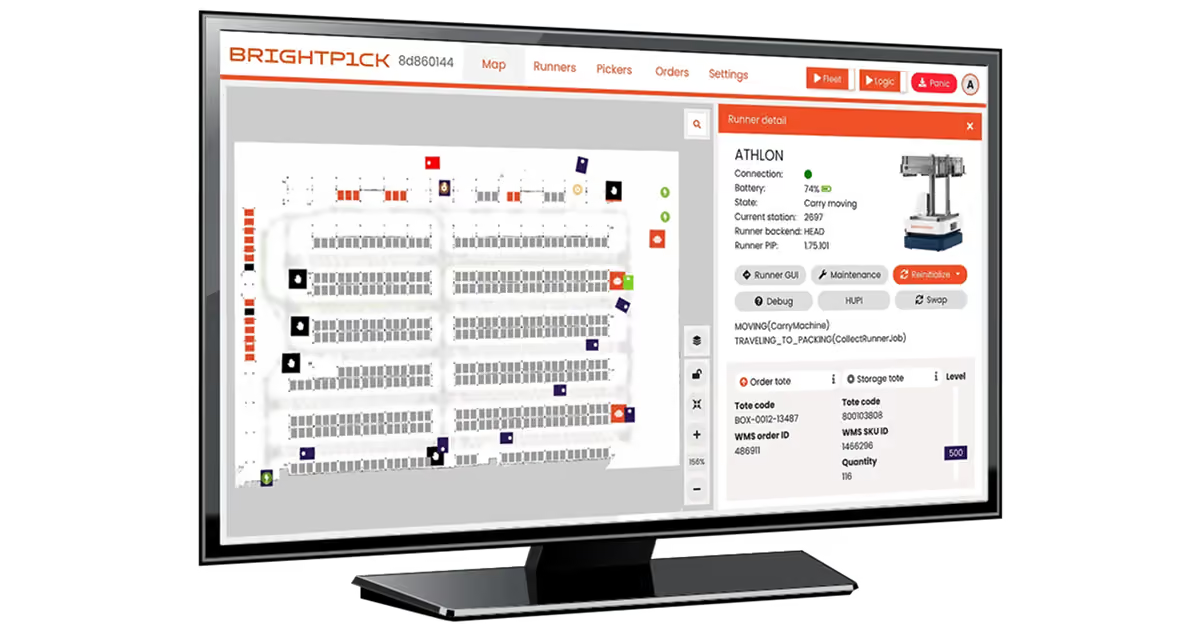
Brightpick builds robots around AI navigation, 3D vision, and mobile manipulation. Its Autopicker and Giraffe units handle small items and high shelves that slow down manual pickers. E-commerce operations with dense SKU counts see the clearest gains here. Automating that repetitive reach-and-lift work cuts strain on staff and speeds fulfillment. Because the system scales in modules, you can add units gradually instead of committing to a full rollout on day one. That phased path makes it a practical entry point into smart warehousing for teams still proving ROI.
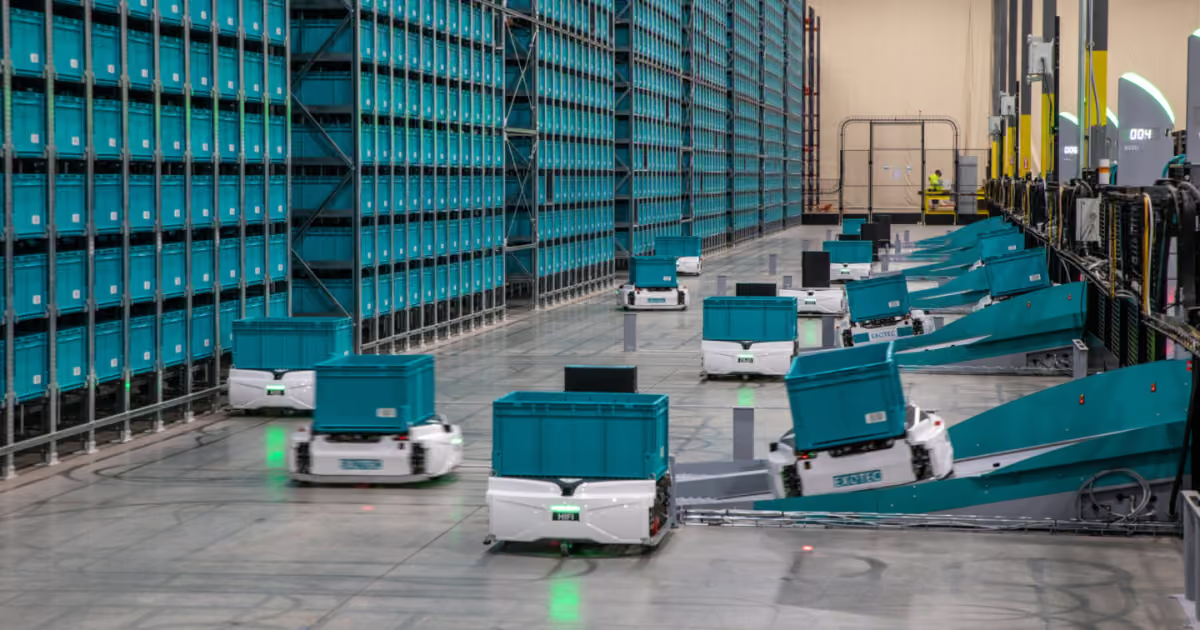
Exotec builds cube-style storage where shuttles retrieve totes from floor to ceiling. Vertical density is the whole point here. Facilities running out of floor space gain capacity without expanding their footprint. Skypod robots climb the cube structure directly, so aisles stay narrow. The tradeoff is a custom install that takes real engineering upfront. Once running, throughput per square foot climbs sharply.
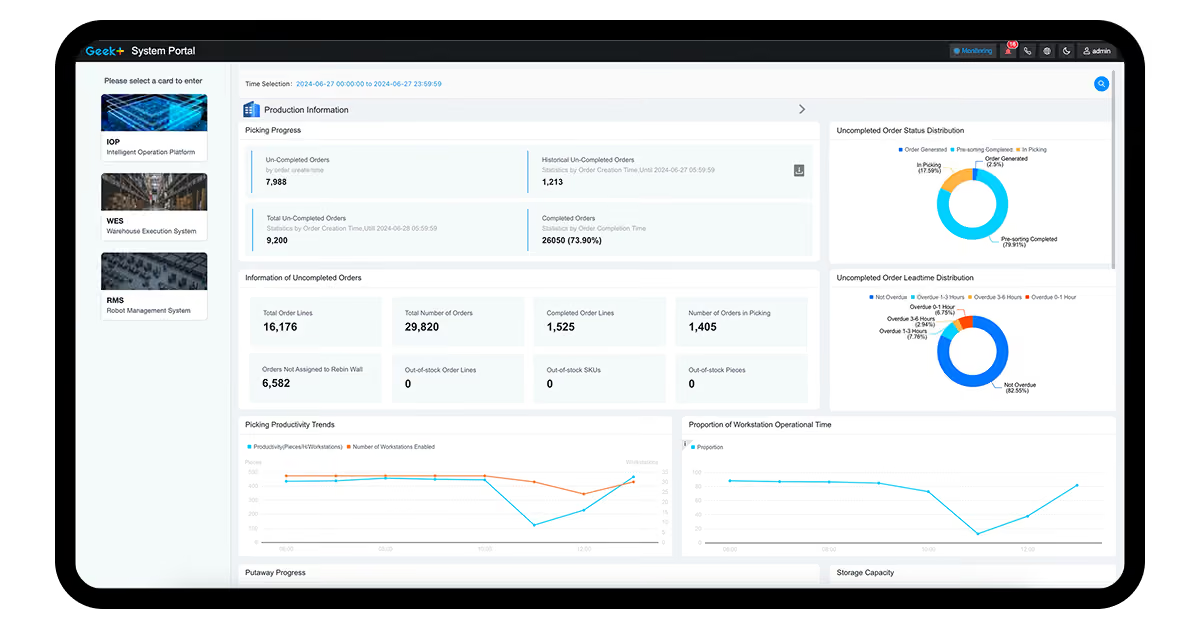
Geek+ deploys goods-to-person AMRs that bring shelving straight to the picker. Workers stay stationary while the robot fleet does the walking. Fast-growing 3PLs use it to scale pick volume without scaling headcount. The system runs standalone or ties into an existing WMS. Modular rollout lets a site start small and add robots as order volume climbs.
Each platform above solves a different piece of the automation puzzle. The next question is how you actually get from a manual floor to one running any of them.
How to transition to a smart warehouse?
Based on our experience creating warehouse solutions and working with businesses in the field, we crystallized some other suggestions for you to follow:
Moving to a smart warehouse isn't a single purchase decision. It's a sequence of six steps, backed by habits that keep the system working. Skip a step and the rollout stalls. Skip the habits and gains fade within a year.
Describe key optimization needs.
Start by walking your floor with fresh eyes. Track where pickers backtrack, where pallets sit idle, where paperwork piles up. Pull a month of order data and look for the slowest ten percent of picks. That slice usually points to the real bottleneck, not the one everyone assumes. Skipping this step means buying smart warehouse technology that solves the wrong problem. A clean baseline also gives you something to measure against once the new system runs. Without it, "improvement" stays a feeling instead of a number you can defend to finance.
Set targets before buying a solution.
Pick two or three metrics that matter to your business specifically. Maybe that's dock-to-stock time, maybe it's pick accuracy, maybe it's peak-season throughput. Vague goals like "get more efficient" produce vague results. A target of "cut putaway time by 20 percent in six months" shapes every vendor conversation that follows. It also stops feature creep, since anything that doesn't move that number becomes an easy no. Write the targets down and share them with whoever signs the budget.
Choose technology that fits your floor.
Not every operation needs robots on day one. Some need RFID and a decent WMS first. Others already have inventory control nailed and need routing intelligence instead. Match the tool to the bottleneck you mapped in step one, not to what a competitor bought. Our own predictive analytics layer, built for clients running mixed SKU profiles, flags demand shifts before they hit the picking floor. That kind of targeted addition beats a full-platform swap when the gap is narrow. Buying broad when the problem is narrow wastes budget and slows adoption.
Test in one zone first.
Run the new smart warehouse system in a single zone or shift before touching the whole site. A pilot surfaces integration gaps while the blast radius stays small. It also gives supervisors a working example to point to, which helps with the harder conversations later. Track the same metrics you set in step two, on the same schedule. If the pilot underperforms, you fix the model with limited cost, not after a full-site commitment. Most successful rollouts we've supported ran a pilot for four to eight weeks before scaling.
Review, then optimize on a schedule.
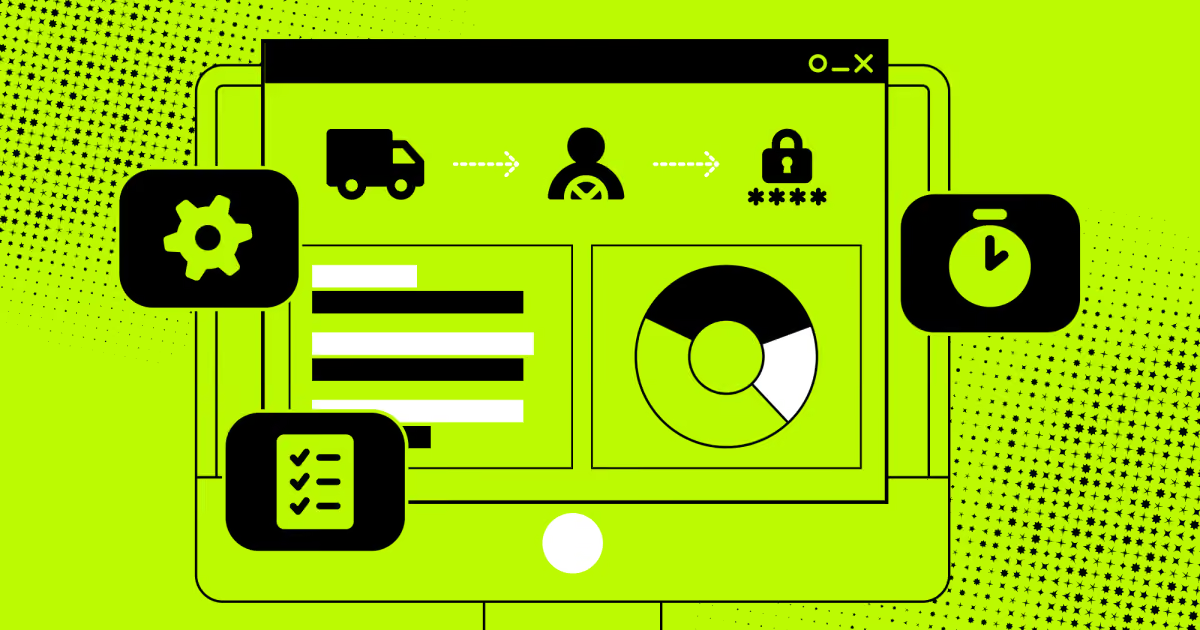
Set a monthly cadence for pulling data out of the new system. Look at the metrics you defined in step two and compare them against the baseline. Role-based alerting, the kind we built into a cargo visibility platform, keeps managers reacting to the right signal instead of digging through dashboards. AI-driven slotting adjustments, similarly, recalculate placement as demand patterns shift rather than waiting for a manual re-slotting project. Treat the first quarter as tuning, not completion. The system should keep improving well past launch day.
Fund training as seriously as software.
Budget training and support across every phase: design, configuration, testing, and go-live. Keep that support running into the months after launch too, since real usage surfaces questions a demo never does. Staff needs structured onboarding. Run sessions before go-live, keep a support line open during the first weeks, and revisit training after ninety days once habits have settled. Resistant operators tend to come around fastest when training feels practical, not theoretical. New hires ramp up faster too, since the smart warehouse solution itself teaches correct behavior through its workflow, not a manual nobody reads twice.
Off-the-shelf platforms cover most of this well. Where they don't, that's usually where a missing workflow rule lives, not a missing feature category.
No two floors run the same way, no matter what a smart warehousing company's demo suggests. A regional labor rule, a legacy WMS with no clean export, or an industry-specific compliance requirement can all fall outside what a packaged tool was built to handle. Twenty years spent in travel, transportation, and logistics systems means our teams have usually faced a version of that gap before, so inventory management software built around your actual constraints tends to move 50 to 60 percent faster than starting from scratch.
Don't reinvent warehouse logic from scratch. Established smart warehouse management system deployments carry field-tested processes that already account for common failure points. Adapting a proven framework to your specific layout and SKU mix moves faster than building rules from zero. It also reduces the odds of repeating mistakes other operators already fixed years ago.
The customization still matters. A framework only earns its keep once it's tuned to your actual receiving dock, your actual aisle widths, your real order profile.
Automation doesn't stop at picking and storage. Paperwork, customs forms, and compliance records slow operations just as much as a bad layout does.
Step
Key target tasks
Challenges
Solutions
Document capture
Digitize receiving and shipping paperwork
Legacy formats, manual retyping
OCR and automated data entry
Compliance routing
Route forms to the right reviewer
Missing certificates, mismatched weights
Rule-based exception queues
Customs workflow
Auto-fill shipment data into forms
Slow manual cross-referencing
Direct data pipelines from WMS to forms
Audit trail
Keep a record of every change
Scattered logs across systems
Centralized event stream with timestamps
That final row is worth dwelling on. A shared event stream, the kind we built for a client moving 40,000 containers a year across two ports and six warehouses, turns scattered documentation into one traceable record. Customs processing time fell nearly 75 percent per shipment once that pipeline replaced manual retyping.
This is why we treat feature requirements so seriously at COAX Software. We don't push a rebuild when a smaller fix will do the job. Sometimes the right move is connecting your existing smart warehouse solutions through an integration layer instead of replacing them outright. Other times, the missing piece is genuinely new, and we build it rather than force your operation into a workaround built for someone else's floor. Either way, the goal stays the same: a system that matches how your warehouse runs like a glove.
Bottom line
A smart warehouse is the link between sensors, robots, and software that lets a facility see and react to its own operations in real time. The gap between a warehouse with scattered automation and a genuinely smart one comes down to that connection, not the number of robots on the floor.
Getting there takes a clear-eyed look at your actual bottleneck, a technology stack sized to match it, and a transition plan that treats training as seriously as software. Off-the-shelf platforms cover most of that ground well. Where they don't, the fix is usually a missing integration or workflow rule, not a missing feature, and that's the kind of gap worth solving with the right technical partner rather than a workaround.
FAQ
What are the best automation platforms for smart warehouses?
The best fit depends on your bottleneck, not a single "top" vendor. Symbotic suits dense, high-speed grocery operations, while Locus Robotics fits fulfillment centers with tight labor budgets. We've found that operations get the clearest ROI when they match a platform to one specific constraint first, then expand automation from there instead of buying broad and hoping it fits.
How much does smart warehouse technology cost to implement?
Cost varies widely with scope, from a single RFID rollout to a full robotics fleet. Specialist slotting tools can show results in days for a few thousand dollars a month, while enterprise smart warehouse technology with consulting support runs into six figures over several months. Budget for training and integration alongside the software itself, since that's where most projects overrun.
Which smart warehouse system fits a mid-size operation?
A mid-size floor usually doesn't need a full robotics fleet on day one. A cloud-based smart warehouse system covering WMS, barcode scanning, and basic slotting often delivers the bigger early win. We typically recommend starting there, proving the ROI, then layering robotics or AI forecasting once the baseline system is stable and the team trusts it.
What are the real benefits of smart warehouse adoption for warehousing?
Across warehousing operations, the clearest benefits of smart warehouse adoption show up in accuracy, speed, and space. Picking accuracy commonly climbs past 99.5 percent, cycle times drop 20 to 50 percent, and directed storage frees up to 30 percent more usable space. In client work, we've also seen dwell time cut nearly in half once tracking data ties warehouse, transport, and delivery into one view.



















































































_.avif)








%2520explained.avif)

We are interested in your opinion