








































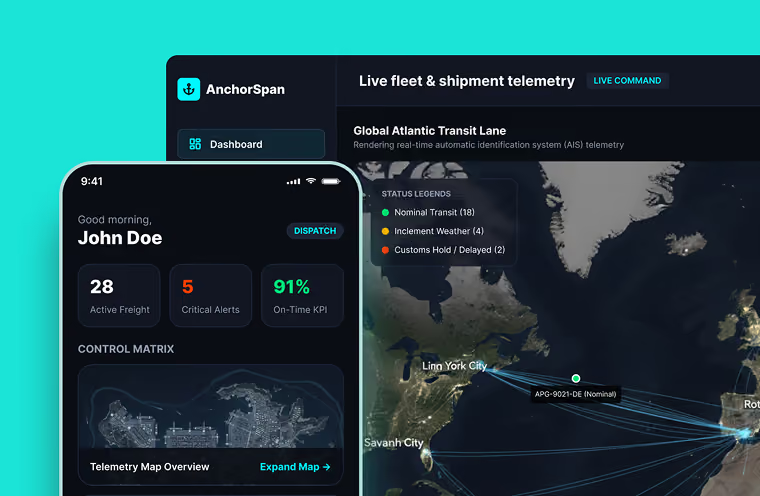




Generative AI development for travel
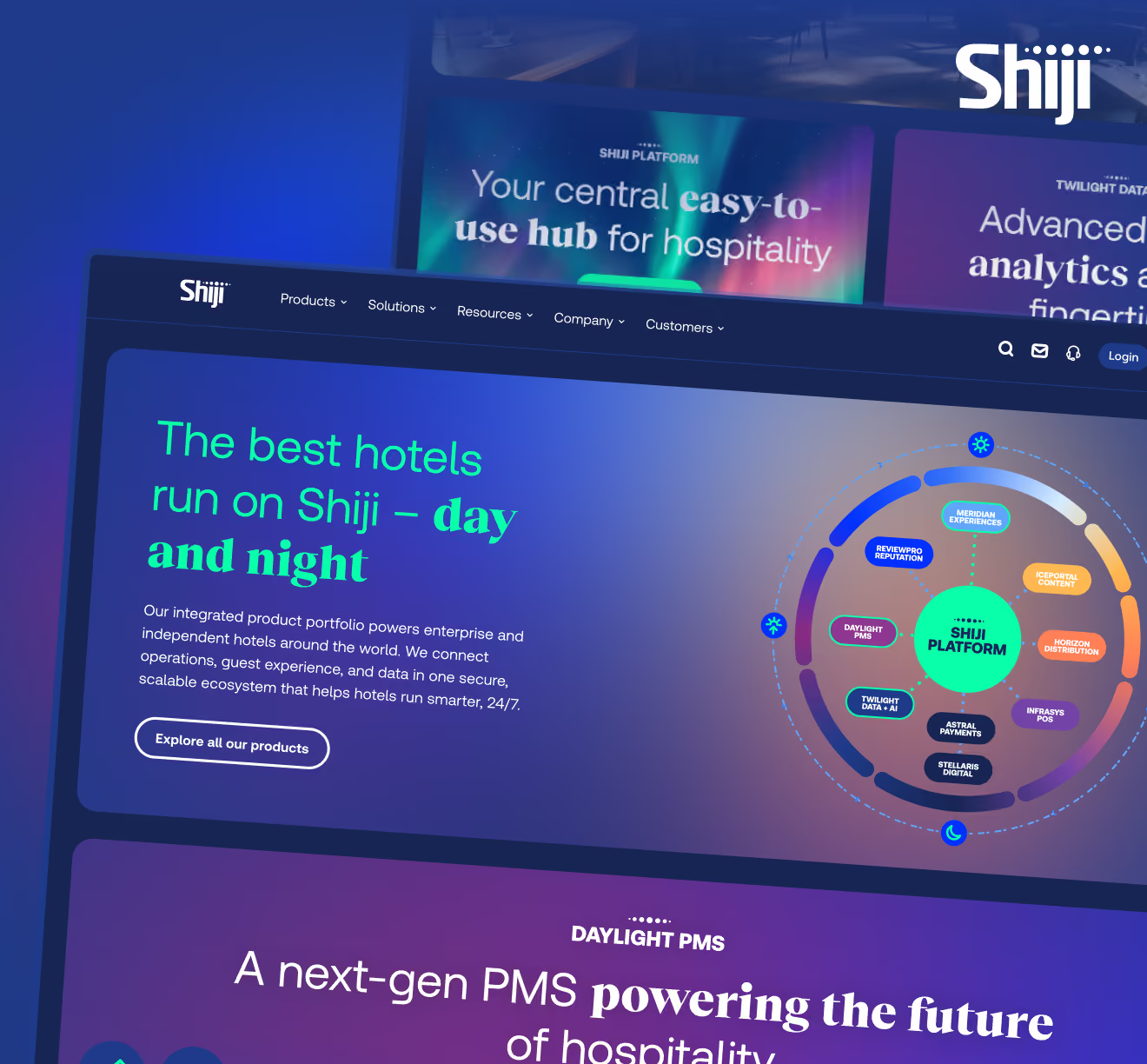
Your chatbot follows a decision tree. Your guests don't. They ask about late checkout, dinner, and a broken AC at once. We build GPT-4o agents that handle all three. Tickets land in your PMS. Upgrades get processed. Guardrails stop the agent from promising rooms you don't have. Launch takes 3 to 4 months.
Industry leaders we work with



Generative AI services we build for travel

Custom LLM concierges and conversational agents
Guests type the way they talk. Messy, mixed, often at 2 a.m. Our agents run on the web, app, WhatsApp, SMS, and voice. They can handle 80%+ of repetitive guest requests. RAG over your property knowledge base keeps every answer grounded in your facts. Anything sensitive goes to a human.

Generative itinerary builders and discovery engines
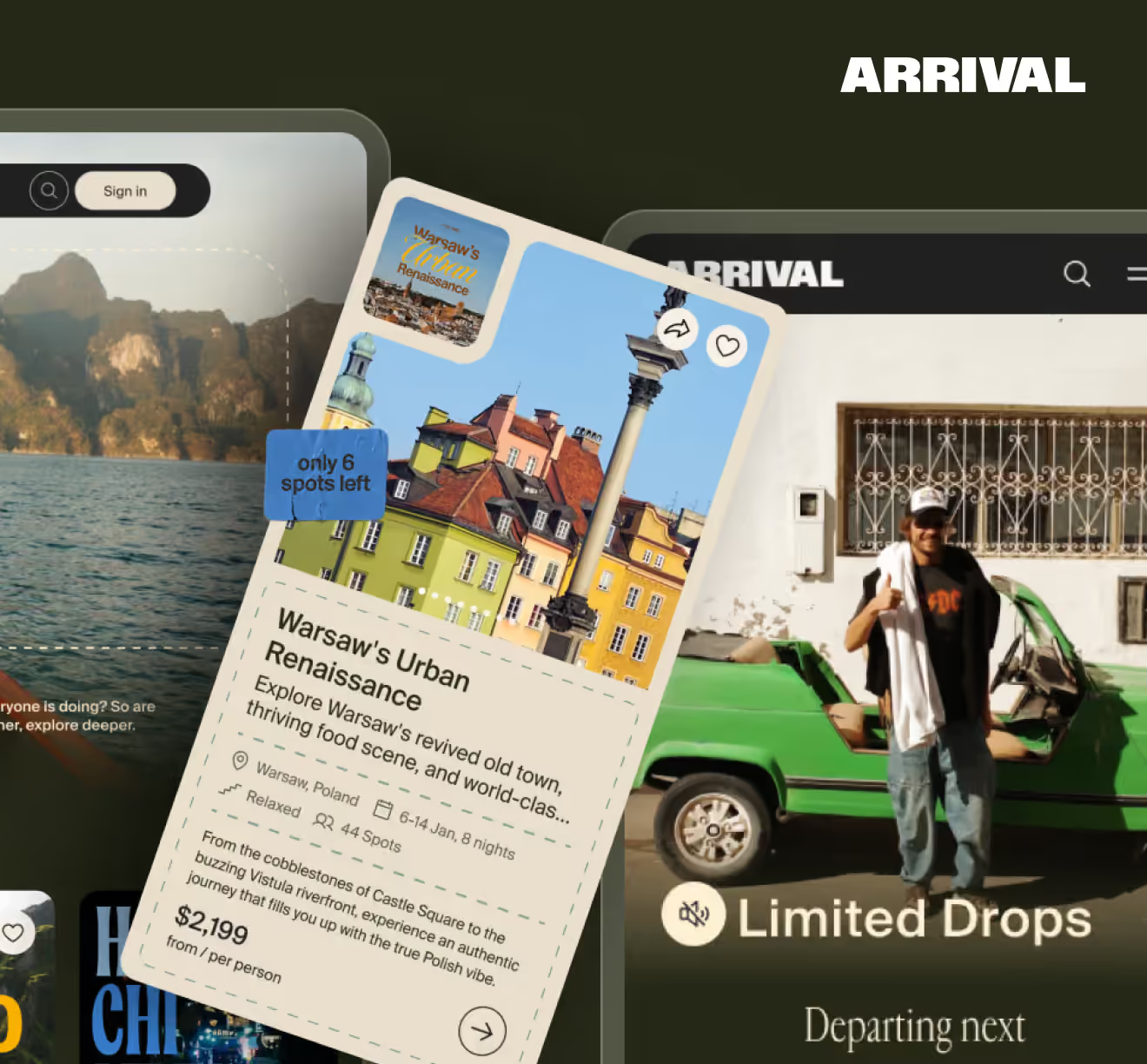
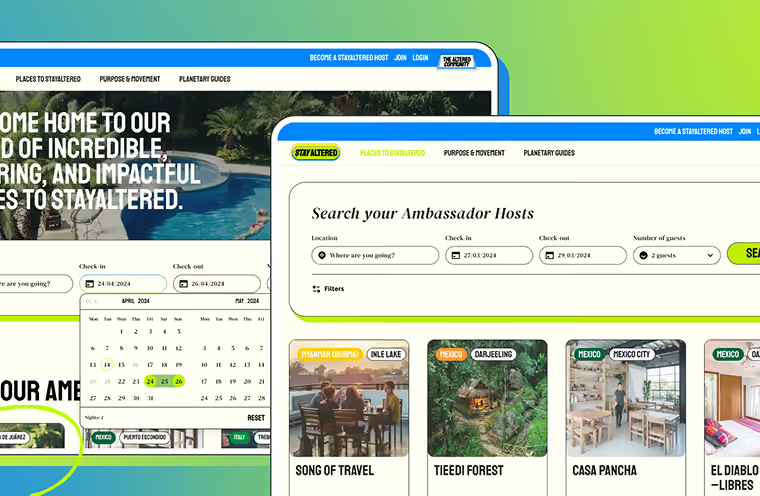
A traveler says "surf, street food, no early mornings." Our engine turns that prompt into a bookable cart. Hotels, activities, and transfers come from Nezasa, Katanox, and Hyperguest in real time. Persona quizzes, like Swell Chaser, shape the first draft.

Generative engine optimization (GEO)
Travelers now plan trips inside ChatGPT, SGE, and Perplexity. If your rates and amenities aren't structured, those engines guess. Badly. We rebuild Payload CMS and Webflow content into AI-ready structures. Your site becomes the source of truth.

Automated travel content generation
Room descriptions, travel journals, and guest messages pile up across every channel. GenAI drafts them in the right language and tone. Your marketing team publishes them without filing a developer ticket.

AI workforce and recruitment automation
Seasonal hiring buries teams in postings and applicant screening. We use the OpenAI API to draft job descriptions and vet candidates. SMS and email outreach runs on its own. DrivenPeople hit 98.7% credential approval precision this way.

Exception clustering and automated support
One delayed transfer triggers near-identical tickets. LLM intent classification clusters them and finds the root cause. Then it writes the customer update. As a successful example of our Generative AI for travel development, DriveIQ AI cut diagnosis time from 12 minutes to under 3.

AI-native modernization of legacy travel platforms
Old PMS, CRS, and TMS code slows every new feature. Our multi-agent AI factory rewrites and migrates it, sprint by sprint. Senior engineers review 100% of the output. Architecture decisions stay with humans.
Our generative AI travel development roadmap
We read your support logs and find what guests actually ask.Inquiry patterns ranked by volume and revenue impact. A shortlist of agent actions worth automating first.
Deliverable: GenAI opportunity map, prioritized use cases
An agent is only as good as what it can read.RAG sources mapped across property data, policies, and rate tables. PMS, GDS, CRM, and payment actions defined before any prompt work.
Deliverable: RAG architecture, integration map
Here we decide what the agent must never say. Deterministic unit tests and LLM evaluators check every agent trajectory. EAA 2025, WCAG 2.1 AA, GDPR, and PCI DSS built into the chat UI.
Deliverable: guardrail test suite, compliance checklist
Multi-agent tooling drafts specs and code. Our engineers review every line.Sprints run 50 to 60% faster than traditional delivery. Intent classification tuned on your real guest phrasing.
Deliverable: working agents, sprint reports
One property or one channel goes first. Human escalation tested against live, unscripted requests.Baselines set for deflection, upsell revenue, and response accuracy.
Deliverable: launch plan, metrics baseline
LLM judges keep scoring answers after launch.Weekly reviews of hallucination flags and escalation rates.
Proven flows roll out to new channels, properties, and languages.
Deliverable: evaluation dashboard, expansion roadmap
Results of Generative travel AI development services in production
12 min → under 3
Issue diagnosis time with LLM exception clustering at DriveIQ AI
35%
Fewer support tickets after LLM-based customer messaging went live
98.7%
Credential approval precision with OpenAI-powered vetting at DrivenPeople
89%
Candidate match rate from GenAI qualification filtering
99.2%
Shift match accuracy on the same DrivenPeople platform
50 to 60%
Faster sprints with our AI-native delivery framework
3 to 4 months
Typical build time for a custom GenAI travel product
Our generative AI technology stack
Generative AI and LLMs

OpenAI
GPT-4o

LangChain

LlamaIndex

RAG
AI quality and governance
LLM evaluators
Intent routing
Anti-hallucination guardrails
Mobile and Front-End

React Native

Flutter

Swift

Kotlin
React.js

Webflow

Payload CMS
Back-End and cloud
Node.js

Python

Ruby on Rails

GraphQL
PostgreSQL

Docker

AWS
Travel and operations integrations

Nezasa

Katanox

Hyperguest

Mapbox

Stripe

HubSpot

Freshchat
What backs our work in Generative AI in travel and hospitality
Why choose COAX Software to implement Generative AI in travel?
Agents wired into your core systems
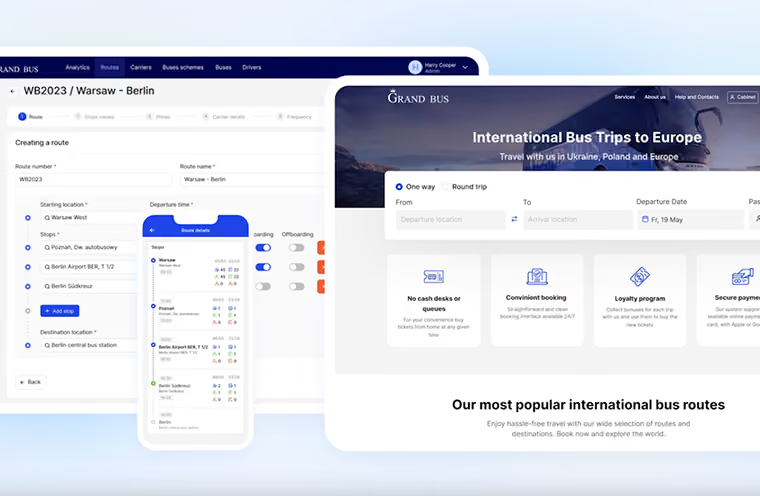
A chatbot that can't touch your PMS just takes messages. Ours connect to PMS, GDS, CRM, and payment gateways. So the agent can modify a booking or reserve a table.

Guardrails with human sign-off
Every agent trajectory passes deterministic tests and LLM evaluators. Humans approve what goes live. Your concierge won't quote a rate that doesn't exist.

Live in 3 to 4 months
Our AI-native framework compresses sprints by 50 to 60%. Custom GenAI products launch in 3 to 4 months, at lower build cost. Engineers still review every line.

Accessible chat from day one
Accessibility gets designed into the chat UI before launch. EAA 2025 and WCAG 2.1 AA come standard. Travelers using screen readers can book through your agent too.

Fleet-grade task routing
We built constrained assignment models for a 500-vehicle fleet. The same logic routes housekeeping and concierge tasks inside hotels. Requests reach the right staff member the first time.
FAQ
Two layers of checks, basically. Hard errors like wrong prices get caught by automated tests. Then an LLM evaluator checks whether each response actually sticks to policy. Anything shaky gets kicked to your team before it reaches a guest.
About 3 to 4 months, typically. Our approach to Generative AI for travel development runs sprints 50 to 60% faster than usual. Multi-agent tools draft the specs and code, and senior engineers check everything before it ships.
RAG means retrieval-augmented generation. In practice, the agent reads your property's knowledge base before it says anything. So policies, amenities, and local tips all come straight from your data, not some generic internet guess.
Web, mobile app, WhatsApp, SMS, voice, you name it. One knowledge base feeds all of them, so the answers never contradict each other. And a human can jump in on any channel whenever needed.
Yes. It'll draft room descriptions, travel journals, and guest messages across channels, all in your brand voice. Localized versions come out of the same flow automatically. Your team just edits and hits publish, no developer needed.
Only if they can actually parse it. That's where Generative AI in travel and hospitality work gets technical: we restructure your rates, amenities, and property data so ChatGPT, SGE, and Perplexity can read it correctly. Your site becomes the source those engines trust.
Yes, that's a big part of what Generative travel AI development services cover. Our multi-agent AI factory handles migration from legacy PMS, CRS, and TMS codebases. Architects stay in the loop on every structural call. Nothing ever gets decided without a human.









What we’ll do next?
1
Contact you within 24 hours
2
Clarify your expectations, business objectives, and project requirements
3
Develop and accept a proposal
4
After that, we can start our partnership