Must-have features: Calendar sync, direct booking, dynamic pricing, and task automation matter most.
Best platforms: Ten platforms compared, each fitting a different portfolio size and OTA mix.
Short-term rental software is any platform that automates booking, pricing, and guest communication across your listings. The right tool syncs calendars, blocks double bookings, and cuts hours of manual admin every week. Picking one comes down to your portfolio size, how much you rely on OTAs, and how much automation you actually need.
But when do you decide that you need such a solution in the first place? Your calendar just double-booked itself. Again. That's usually the moment hosts start searching for a real fix
In this guide, we help you find a suitable, relevant fix through technology. This guide breaks every category down, from calendar sync to full property management. You'll get a feature checklist, a platform comparison, and a clear path to the right fit for your operation.
What is short-term rental software and why do you need it?
Short-term rental software covers every tool that runs a vacation rental business online. It connects your calendar, your guests, and your revenue in one system. Think of it as the operating layer behind your Airbnb, Vrbo, and Booking.com listings.
The category spans booking engines, calendar sync, guest messaging, payment processing, and reporting. Some tools handle one job well. Others bundle everything into a single dashboard. Larger operators lean on short-term rental management software to run every property from one screen, and that's the backbone of modern short-term rental property management.
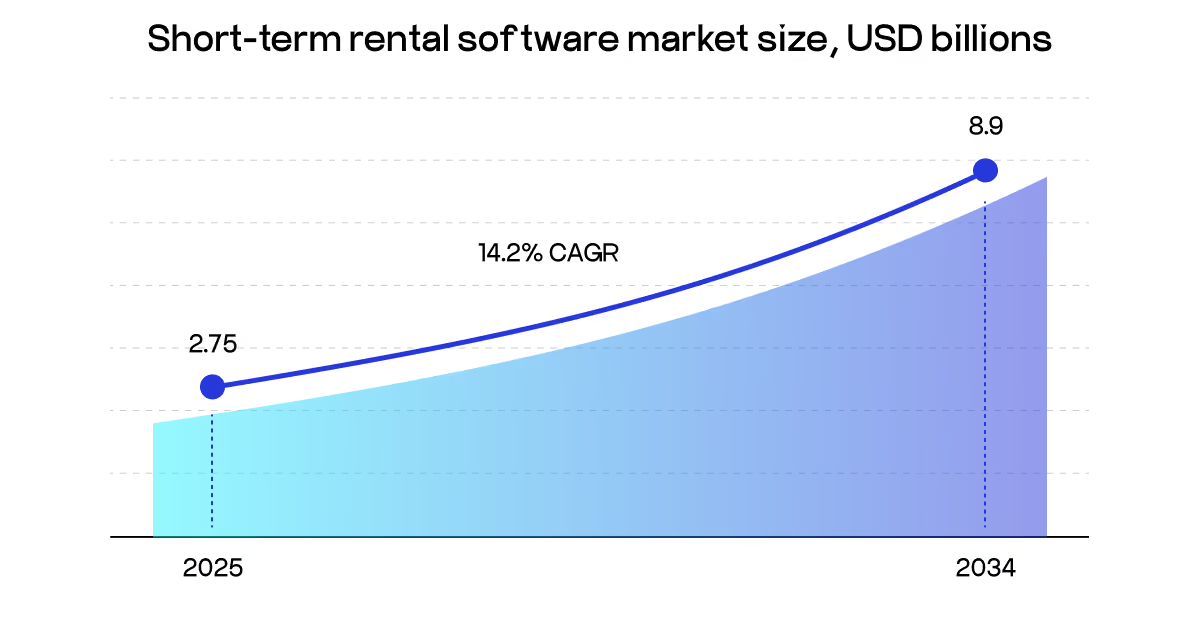
The market backs up why this matters right now. The global short-term rental software market is projected to grow to nearly $8.9 billion by 2034. Global demand for vacation rental software is accelerating fast for several reasons.
The first one is the revenue gap. Short-term rentals in major cities often earn two to three times more per night than long-term leases.
Occupancy plays a role, too. Average occupancy is now between 55 and 70 percent, depending on location and season.
The use case is shifting to professional hosts now. A growing share of listings now belongs to hosts running multiple properties, not just one.
Since we have mentioned the use case already, let’s define which businesses need dedicated short-term rental platforms the most, and for what purposes.
Who needs short-term rental software?
Three types of operators need this software, and each one needs a different depth of tools. Portfolio size drives almost every decision here. Get the size wrong, and you'll either overpay for features you don't use or outgrow your tool in a year.
The first use case goes to individual hosts. They are the ones who have one to three properties.
Who they are: Owners renting a single vacation home, a spare room, or a couple of units.
Why they need it: To sync calendars across Airbnb, Vrbo, and Booking.com so nothing gets double-booked.
Key tools: Lightweight apps that centralize guest messages and automate check-in instructions.
The next category is the growing property managers. They are the businesses that have four to 50 properties under control. They have a different set of needs for short-term rental management:
Who they are: Operators managing a small but expanding portfolio.
Why they need it: Spreadsheets break down fast at this size and stop scaling.
Key tools: Platforms that automate cleaning schedules, dynamic pricing, and staff alerts.
The final category is the large property management companies. These are serious players with 50+ properties.
Who they are: Enterprise agencies running full-service vacation rental portfolios.
Why they need it: To handle trust accounting, owner payouts, and regional compliance rules.
Key tools: Enterprise systems built for complex staff hierarchies and financial reporting.
Every one of these segments shares one pressure point: short-term rental platforms keep changing their fee structures. Airbnb recently moved to a single service fee model, shifting the full cost onto hosts at roughly 15.5% of the booking subtotal. Guests pay no separate service fee, but hosts absorb the difference. That single change is pushing more operators toward tools built around short-term rental management and direct booking, instead of full OTA dependence.
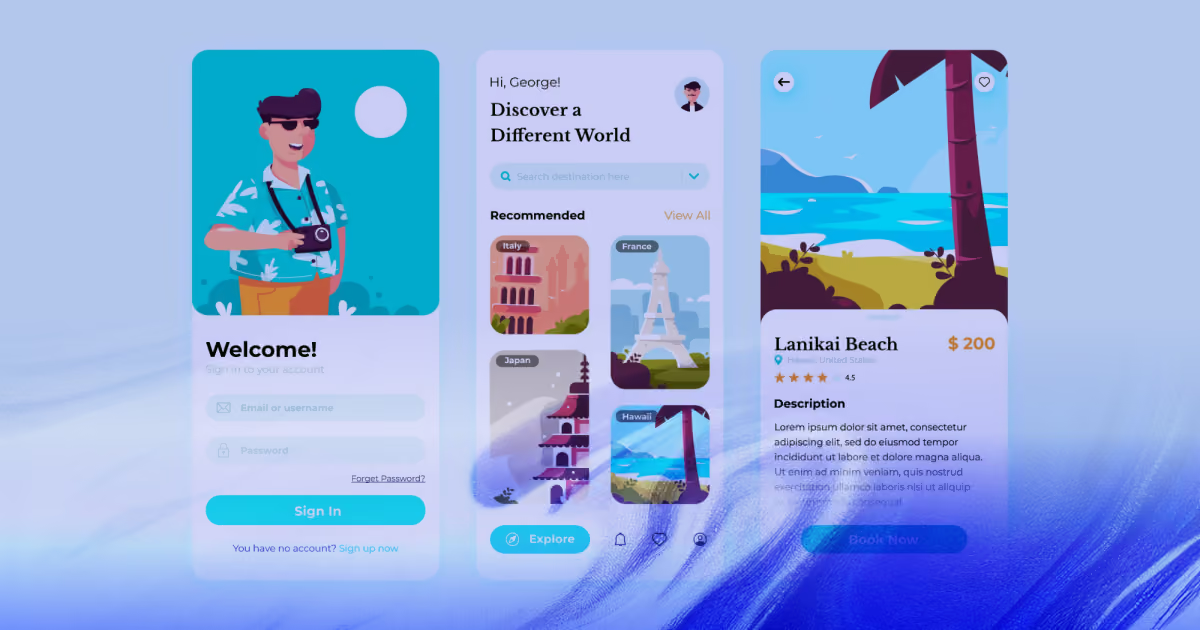
That pressure is the main reason that pushed us to build Hosty, our own vacation rental product. Most small hosts we interviewed ran their bookings through Instagram and TikTok messages, not a dashboard. Hosty gives them a short-term rental direct booking website widget for their bio link, so guests book directly and owners keep 100% of the revenue. It's a small-scale example, but it shows exactly what individual hosts need: something mobile-first, simple, and free of OTA commissions.
How can direct booking software help you reduce OTA dependence?
We just showed why OTA fees squeeze hosts. Here's how the fix actually works underneath.
Direct booking software doesn't replace Airbnb or Booking.com overnight. It gives you a parallel channel that runs on your own rules. Guests book through your travel booking engine, not a marketplace listing. You keep the data, the pricing, and the margin.
Think of it as a five-step loop that runs on autopilot.
Industry
Use case
Direct booking benefit
Individual hosts
Booking link in an Instagram or TikTok bio
Zero commission, instant guest data
Community and values-driven platforms
Curated stays booked through an owned site
Guest relationships an algorithm can't gatekeep
Multi-property managers
PMS-integrated booking widget across listings
Real-time sync with no manual entry
Trip and experience platforms
Persona-based direct booking flow
Loyalty tied to fit, not price alone
Step 1: Route the guest to your own channel. A booking widget lives on your website or social bio link. Guests click through instead of searching an OTA first. That single redirect skips the marketplace fee entirely.
Step 2: Pull real-time availability. The system checks your calendar the moment a guest lands. Short-term rental automation software blocks any date already booked elsewhere. No manual cross-checking, no accidental double bookings.
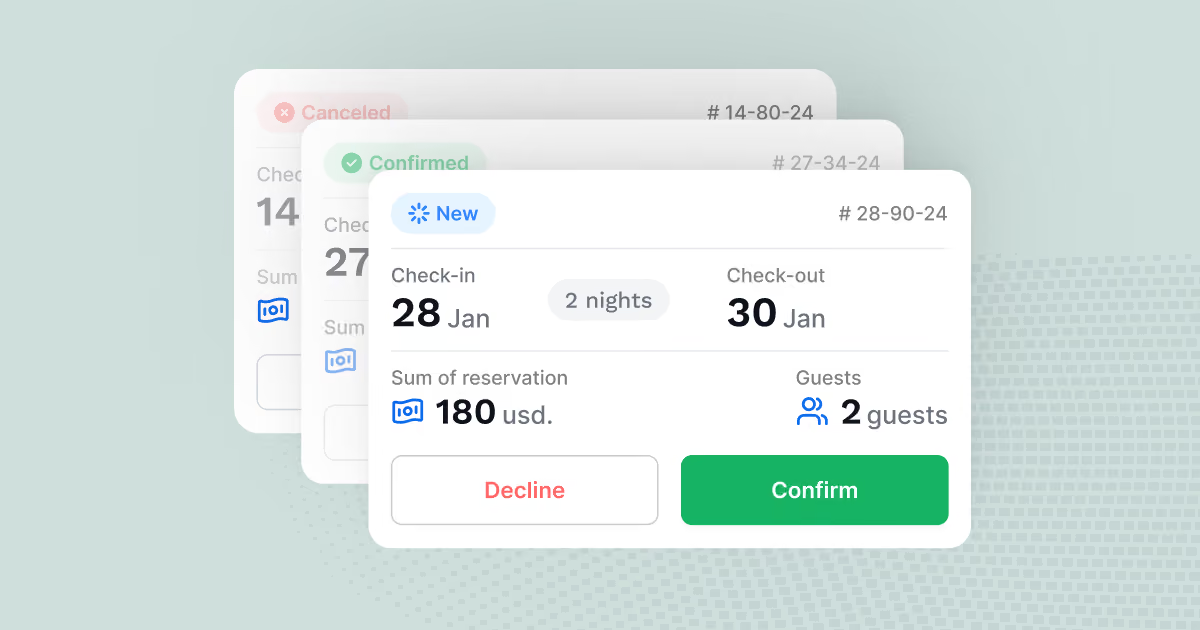
Step 3: Confirm the booking instantly. Guests pick dates, add services, and pay through checkout. Short-term rental booking software confirms the reservation within seconds. Both host and guest get confirmation immediately.
Step 4: Capture guest data directly. Every direct booking feeds your own CRM, not the OTA's. You own the guest's email, preferences, and full booking history. That data powers every future marketing touch.
Step 5: Turn guests into repeat bookers. Loyalty perks and personalized offers bring guests back on their own. Repeat direct bookings compound over each season. That's where real OTA dependence starts shrinking.
That loop repeats for every guest, without you touching a thing. Here's where the benefit lands across different types of operators.
Beyond the mechanics, direct booking changes three things at once for your business.
Revenue benefits.
Higher margin: You keep the full nightly rate instead of losing 15% or more.
Flexible pricing: You set rates without an algorithm capping your visibility.
Upsell room: Add-on services like breakfast or late checkout stay pure profit.
Guest relationship benefits.
Direct communication: Messages go straight to you, not through a filtered inbox.
Owned data: Email lists and preferences stay yours after checkout.
Personal touch: You tailor offers guests never see on an OTA listing.
Operational benefits.
Fewer logins: One booking engine replaces juggling three or four OTA accounts.
Consistent branding: Your own site represents your business, not a marketplace template.
Faster confirmations: Automated checks remove the back and forth of manual approval.
Each of these gains compounds over a full season, not just one booking through your short term rental platform. That's why hosts who make this shift rarely go back to full OTA dependence.
Proven by experience: how COAX has helped reduce OTA dependence
We've built this exact shift for three very different operators. Each project solved OTA dependence a different way. The mechanism stayed the same: direct data, direct payment, zero middleman fee.
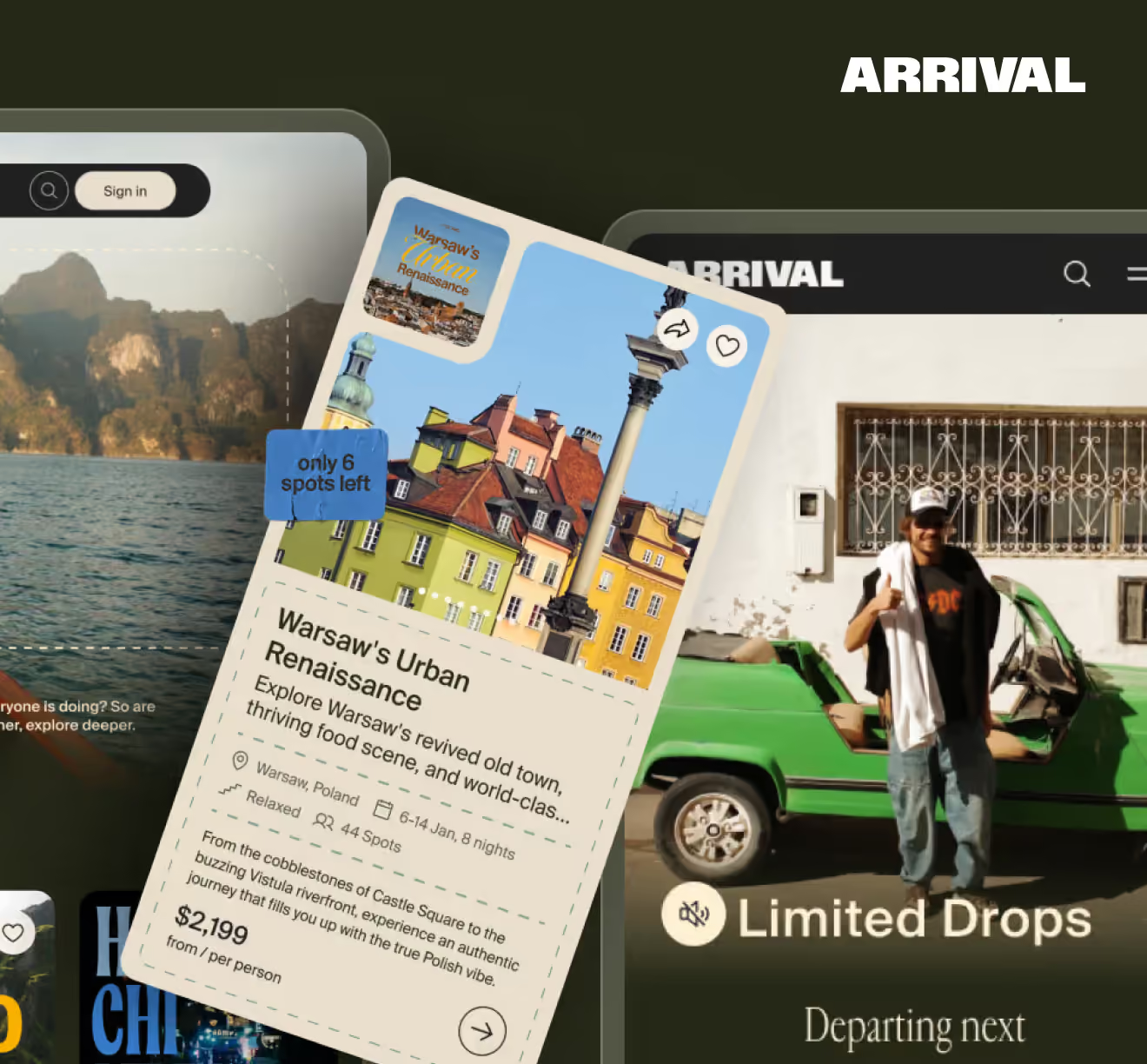
Arrival launched as a fully owned booking platform for two of Australia's biggest content creators. Guests book trips through Arrival's own travel booking engine, skipping any third-party marketplace fee. A persona quiz personalizes every recommendation, so travel style shapes what each guest sees. Result: 500,000 visitors and 200-plus trips booked direct.
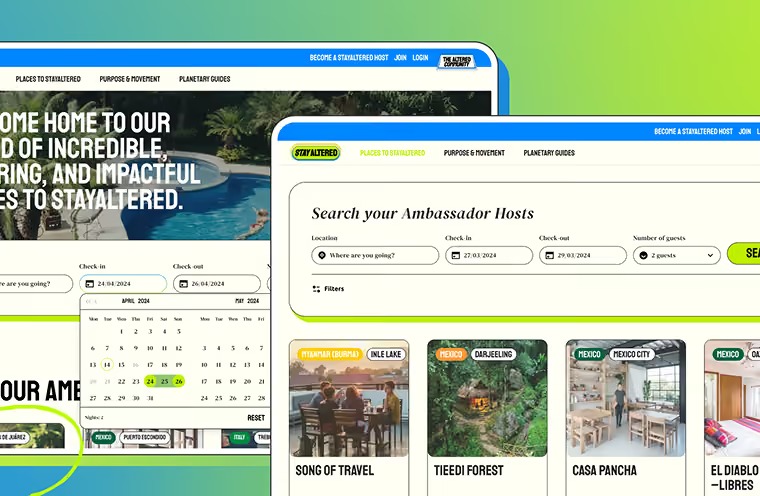
Stay Altered needed a way to scale independent, community-based hosting. We integrated Katanox and Hyperguest so its booking widget pulls real-time PMS availability across partner properties. A rewards program adds 9% back on standard stays and 50% on sustainable ones, and that loyalty layer is what turns a single booking into a repeat guest. The platform now runs across 170-plus verified properties in 45-plus countries.
Hosty, our product that we mentioned, targets hosts running one or two properties straight from Instagram and TikTok. A dynamic short term rental property management calendar syncs every reservation automatically, so nothing gets double-booked. Hosts can also toggle more than 20 add-on services per property, from breakfast to spa treatments.
Case
Benefit
Mechanism
Arrival
Zero-commission bookings at scale
Own booking engine + persona-based personalization, no marketplace layer
Stay Altered
Instant confirmations plus guest loyalty
Katanox/Hyperguest PMS sync + Instabook + rewards program
Hosty
Commission-free bookings for solo hosts
Social bio booking widget + dynamic calendar + configurable add-ons
Personalization is what turns a one-time direct booking into a habit. Stay Altered's rewards program and Arrival's persona quiz both do the same job. They give a guest a reason to choose you again. That repeat behavior compounds into real long-term ROI, and it future-proofs your business against the next OTA fee hike.
What types of short-term rental software are available?
No single tool runs a rental business end to end. Short-term vacation rental management actually splits across seven connected tool types, each doing one job well. Booking data, guest messages, and pricing logic all live in different systems. EU platform bookings hit 144.3 million guest nights in the first quarter of 2026 alone, and that volume is exactly why fragmented tools stop holding up.
Solution
Function
Integrates with
PMS
Central hub for bookings and staff tasks
Channel manager, payment tools, smart locks
Channel manager
Syncs listings and pricing across OTAs
PMS, OTA APIs
Direct booking engine
Captures commission-free reservations
Website, CRM, payment processor
Guest CRM
Stores guest data and stay history
PMS, marketing and loyalty tools
Dynamic pricing tool
Adjusts nightly rates automatically
PMS, market data feeds
Communication automation
Sends scheduled guest messages
PMS, messaging channels
Payment/trust accounting
Processes payments and owner payouts
PMS, banking and payment gateways
Property management systems (PMS): A short term rental PMS centralizes calendars, guest messages, and staff tasks. Every other tool in your stack plugs into this one.
Channel managers: These sync availability and pricing across Airbnb, Vrbo, and Booking.com. Update once, and every listing updates with it.
Direct booking engines: Custom short term rental websites capture reservations without OTA commission. Guests pay you directly, not a marketplace.
Guest CRM systems: Much like a hotel CRS, these store guest profiles, preferences, and stay history. That data drives repeat bookings and loyalty offers.
Dynamic pricing tools: AI models adjust nightly rates against demand and competitor data in real time. Rates react to the market, not a static spreadsheet.
Guest communication automation: Scheduled messages cover check-in codes, Wi-Fi details, and checkout reminders. Support requests drop once guests stop asking the basics.
Payment and trust accounting tools: These process deposits, refunds, and owner payouts securely. Larger operators need this layer for regional compliance.
Most short term rental management software bundles two or three of these together. How well those pieces talk to each other usually matters more than any single feature.
We've built pieces of every layer on that list, not as an abstract claim. COAX Software has spent close to 20 years in travel and transportation technology specifically. That work covers booking platforms, property management systems, reservation systems, marketplaces, and revenue optimization tools, the same categories listed above. If an off-the-shelf platform doesn't fit your stack, we can build the missing piece instead of forcing a workaround around it.
Which features to look for in short-term rental software?
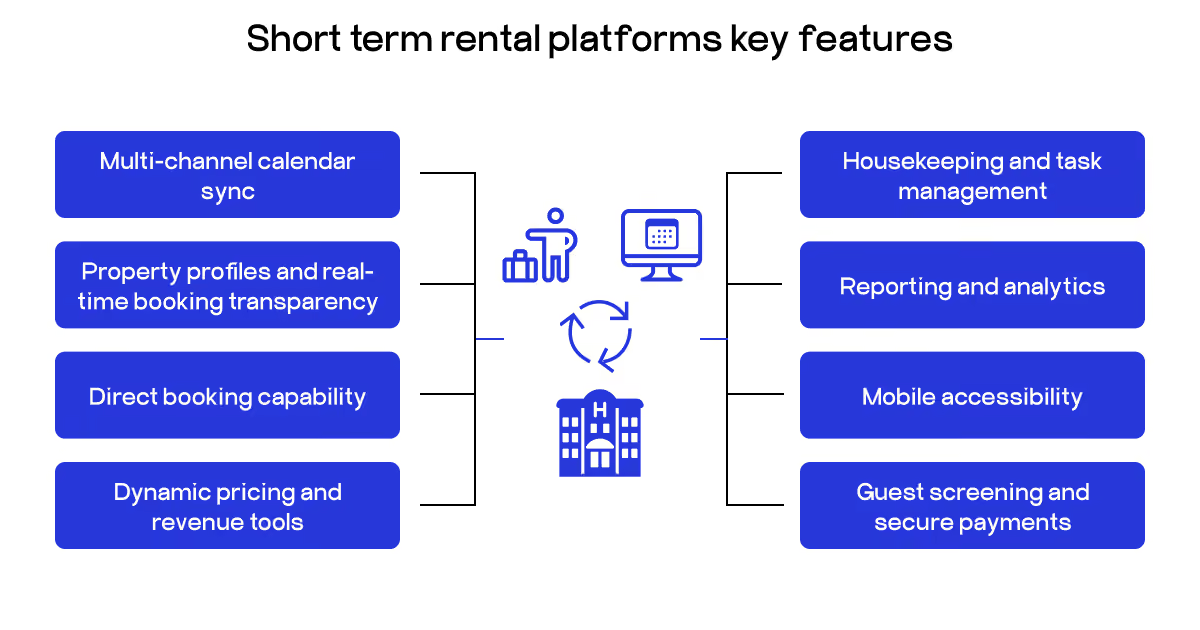
Feature lists all look similar until you actually run a property. Short term rental platforms differ wildly by their weakest link. Check each one before you commit to anything. Short term rental management software generally bundles calendar sync, messaging, and payments. Which pieces matter most depends on your portfolio size. Here are eight features worth testing first.
Multi-channel calendar sync
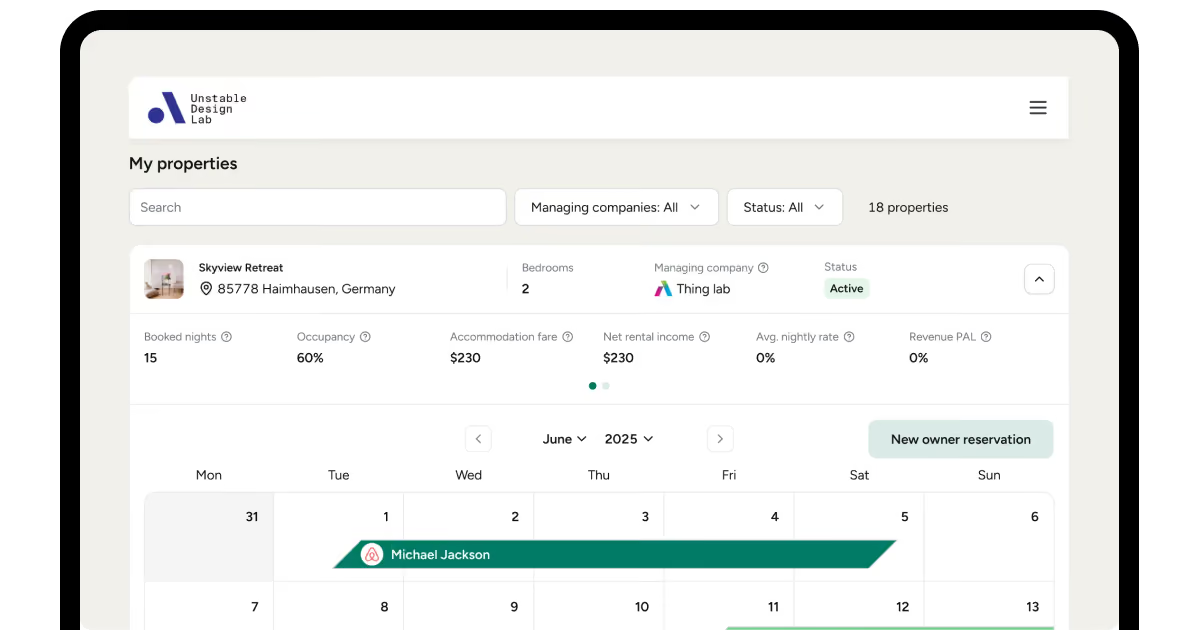
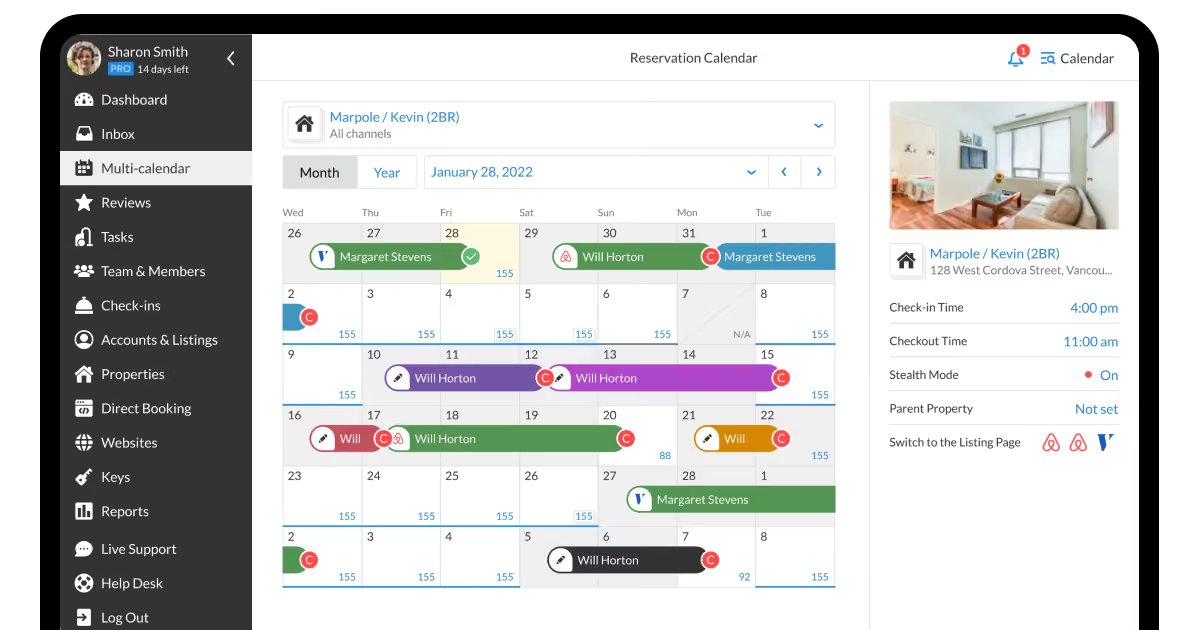
Nothing kills bookings faster than a double-booked calendar. Calendar sync within your short term rental software pulls availability from every OTA into one view. It updates within seconds, not hours, once a guest books. A reservation on Airbnb should block that date everywhere else instantly. Weak sync is still the top cause of overlapping reservations today.
Property profiles and real-time booking transparency
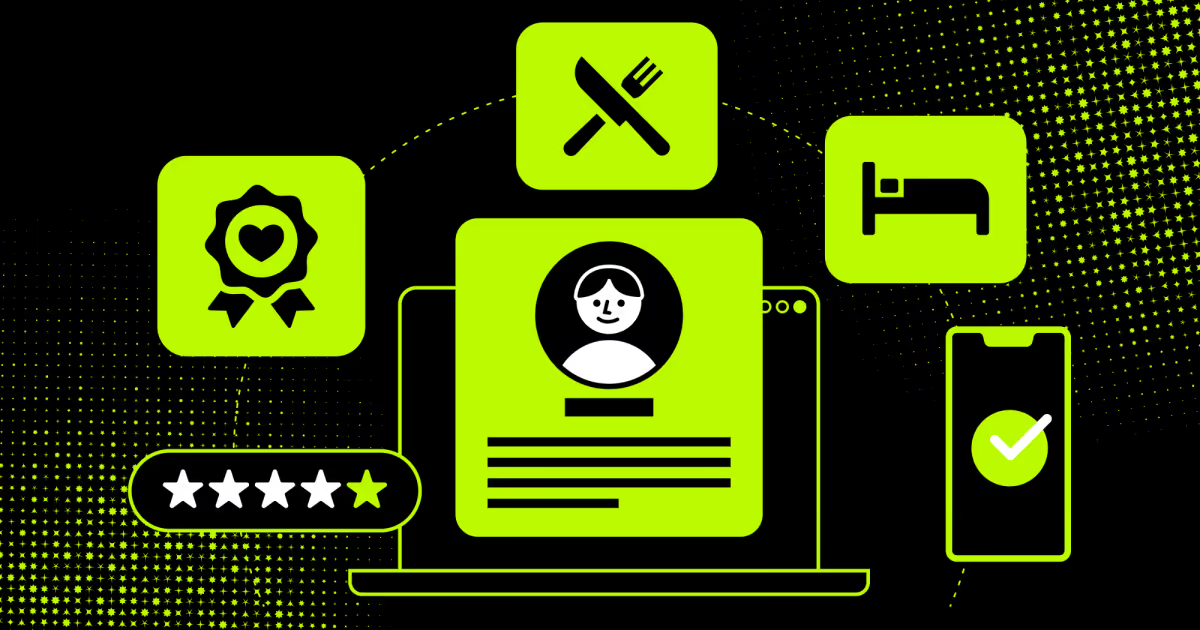
Guests book faster when they can see everything upfront. Detailed listings pair photos, host stories, and clear pricing together. Real-time availability skips the back-and-forth of a manual quote request. Reviews, ratings, and a location map round out the picture.
Short term rental sites built this way convert more browsers into bookers. We built a similar profile page for Stay Altered. It pairs host stories with live availability and a map.
Direct booking capability
A platform that only manages OTA listings keeps you commission-dependent. Look for a built-in booking engine, not just calendar sync. Short term rental property management software should include its own booking engine. Guests should book and pay right on your website. That keeps guest data and margin under your control.
Dynamic pricing and revenue tools
Manual pricing leaves money on the table every single week. Dynamic pricing tools adjust nightly rates against demand automatically. They factor in local events, seasonality, and competitor rates. Good tools update daily, not once a month by hand. That responsiveness matters most during sudden demand spikes or dips.
Housekeeping and task management
Cleaning delays cause more bad reviews than almost anything else. Task tools assign cleaning and maintenance jobs the moment a guest checks out. A typical turnover runs through a short, repeatable chain:
Checkout trigger: The system flags the unit the moment a guest leaves.
Auto-assignment: A cleaning task routes to the next available staff member.
Completion check: Staff mark the job done from a mobile app.
Reopening: The calendar reopens the unit for new bookings.
That chain runs on its own once you set it up. Manual coordination by text stops scaling past a few units.
Reporting and analytics
Numbers you can't see are numbers you can't improve. This works strongly with short term rental automation. Reporting tools track occupancy, revenue, and guest satisfaction together. Good dashboards break performance down by property, not just totals. Export options matter too, especially for owners who need statements. Look for custom date ranges, not just fixed monthly reports.
Mobile accessibility
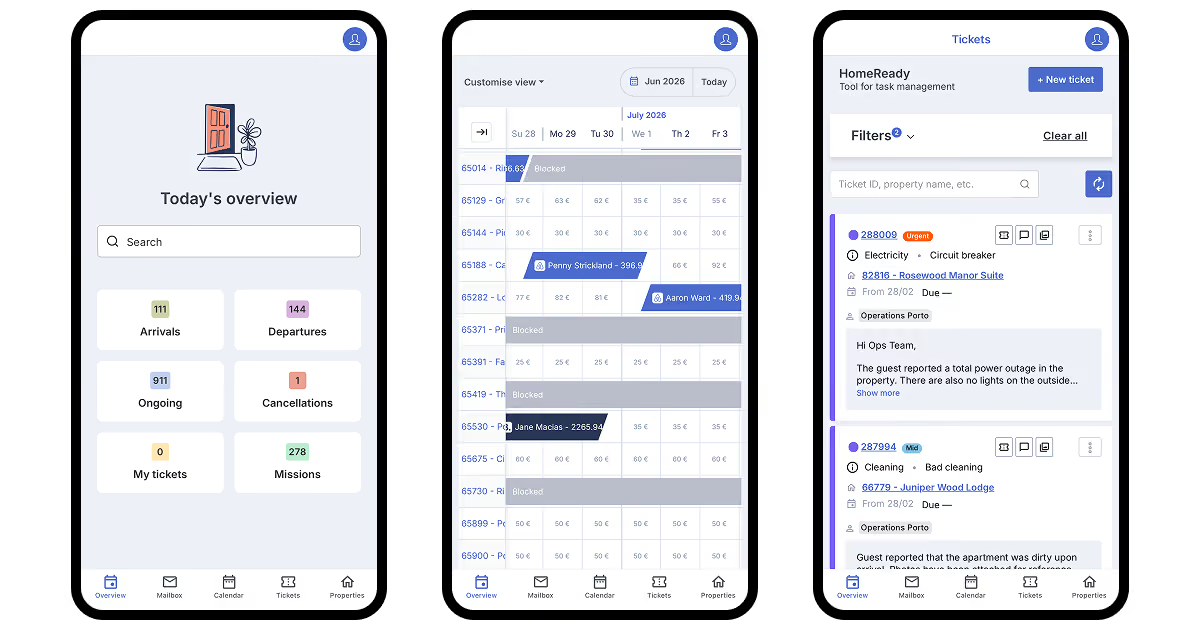
You won't always be at a desk when something needs attention. A mobile app should cover the same functions as the desktop. That includes approving bookings, messaging guests, and assigning tasks. Field staff need it too, for photos and task updates. A platform without solid mobile support will slow your team down.
Guest screening and secure payments
One bad guest can cost more than months of profit. Screening tools verify identity before a booking gets confirmed. Payments should run through a hospitality-specific gateway, not a generic one. That setup handles deposits, refunds, and chargebacks in one place. Together, these tools cut fraud risk without adding booking friction.
Best short-term rental platforms
Finding the best short term rental property management software means testing against real operations. We ran ten platforms through five criteria we built specifically for this category. The list spans short term rental companies of every size, from solo-host apps to hotel-grade PMS. No single short term rental platform aces every test equally.
Generic feature checklists miss what actually breaks a rollout. We built five tests around the problems hosts hit in production. Each one targets a specific failure point, not a marketing claim.
Test
What it measures
Why it matters
Turnover test
Speed from guest checkout to next booking
Cleaning delays cost real revenue
Commission escape test
How fast you can launch a direct booking site
Judges real direct booking short term rental readiness
Multi-channel stress test
Sync accuracy across three or more OTAs
Prevents double bookings at scale
Solo-to-scale test
Pricing and features from one to 50-plus units
Avoids a forced migration later
Guest-facing polish test
Look and feel of the booking flow
Builds trust and lifts conversion
Here's how ten short-term rental software platforms performed across those five tests. Coverage ranges from single-host apps to hotel-grade systems built for blended portfolios.
Platform
Best for
Core strength
Pricing model
Guesty
Scaling property managers
60+ channel sync, full automation suite
Quote-based, tiered
Hostaway
Growing managers
Deep API integrations, task automation
Quote-based by listings
Lodgify
Independent hosts
Website builder, flat-rate tiers
From roughly $16/month
OwnerRez
Hosts wanting control
Accounting, guest CRM, channel sync
Subscription, by property
Hospitable
Small hosts and co-hosts
AI-driven guest messaging
Active-property pricing
Avantio
Managers with 20+ units
PMS plus channel management
Quote-based
Smoobu
Small hosts wanting simplicity
Lightweight inbox and channel sync
Low-tier subscription
iGMS
Operations-focused hosts
Cleaning and task automation
Subscription by listings
roommaster
Blended hotel and rental portfolios
Hotel-grade PMS plus channel sync
Custom, by units and modules
RentalReady
AI-first operators
AI-powered PMS and automation
Quote-based
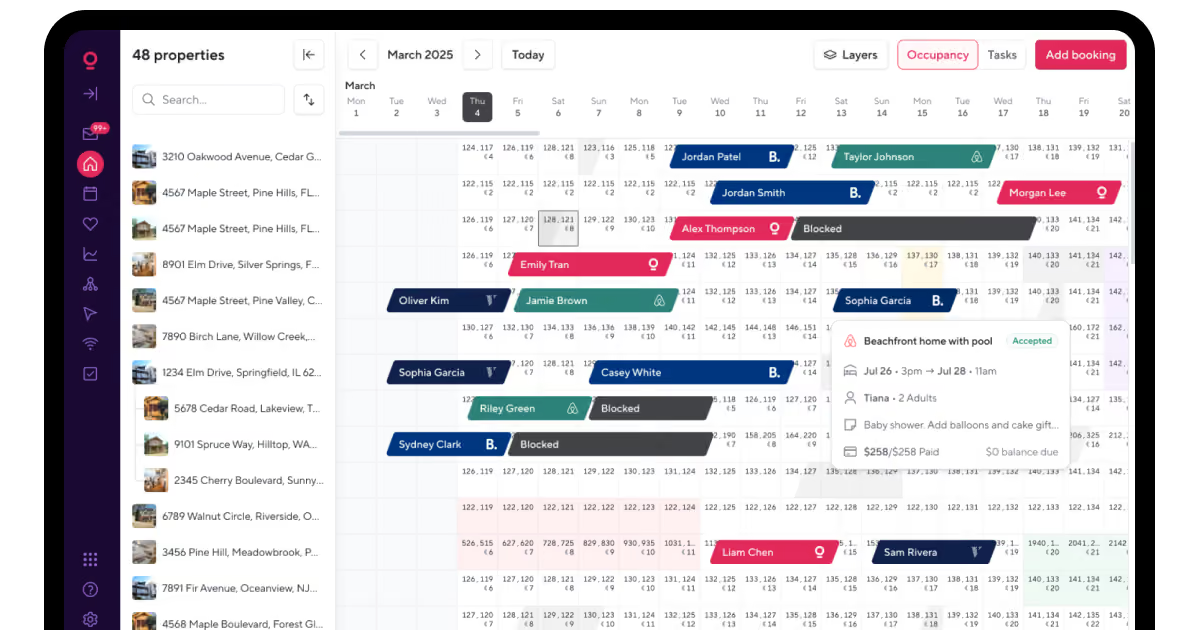
Guesty covers the widest range of channels, syncing over 60 platforms with real-time accuracy. It passed our multi-channel stress test cleanly. The trade-off is cost. Pricing climbs fast once you add premium modules like dynamic pricing.
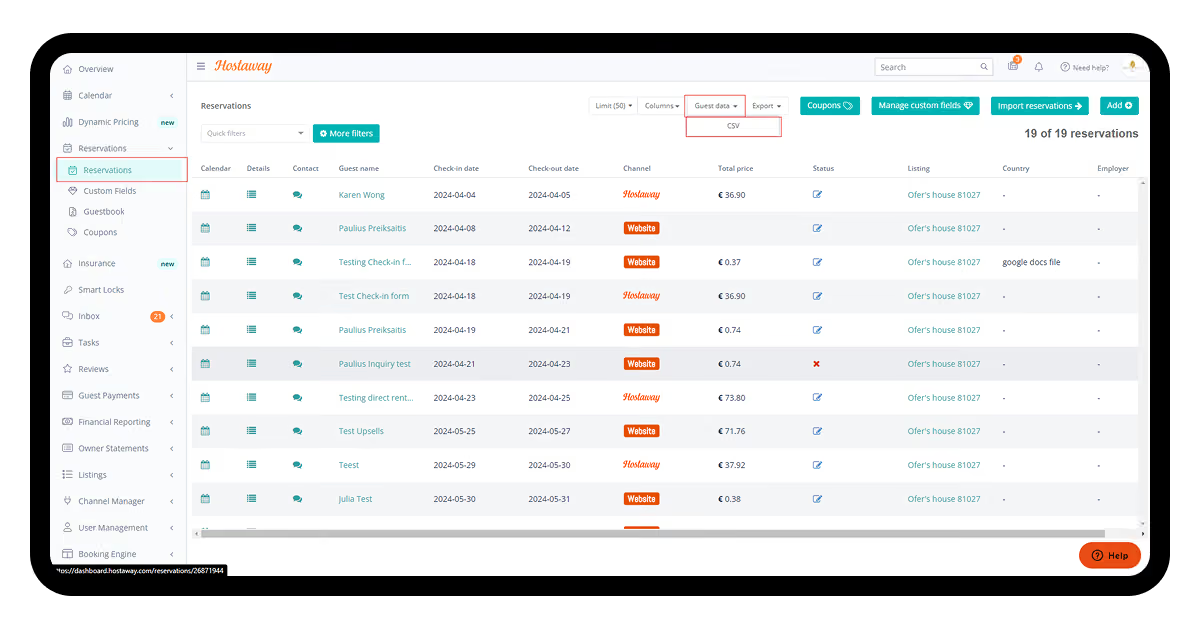
Hostaway leans hardest into automation and integration depth. Its API connects to tools beyond the usual OTA list. Onboarding takes longer than lighter platforms, but the payoff shows up at scale.
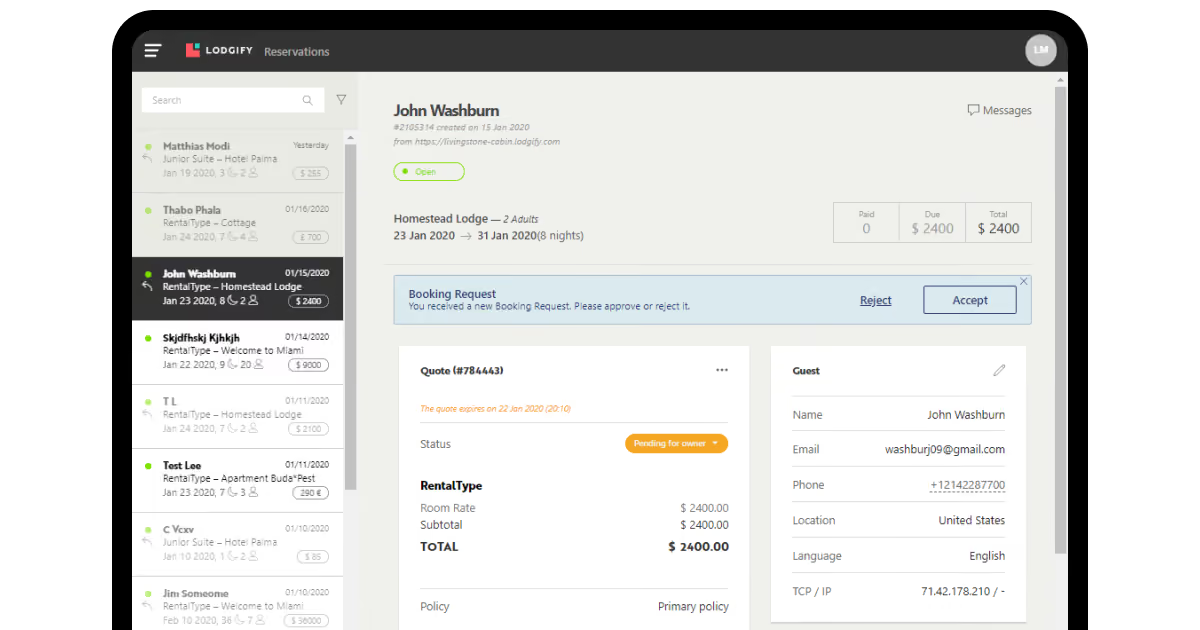
Lodgify leans hardest into its short term rental website builder. Setup finishes fast, and pricing stays transparent from the start. It's the strongest commission escape test performer for solo hosts.
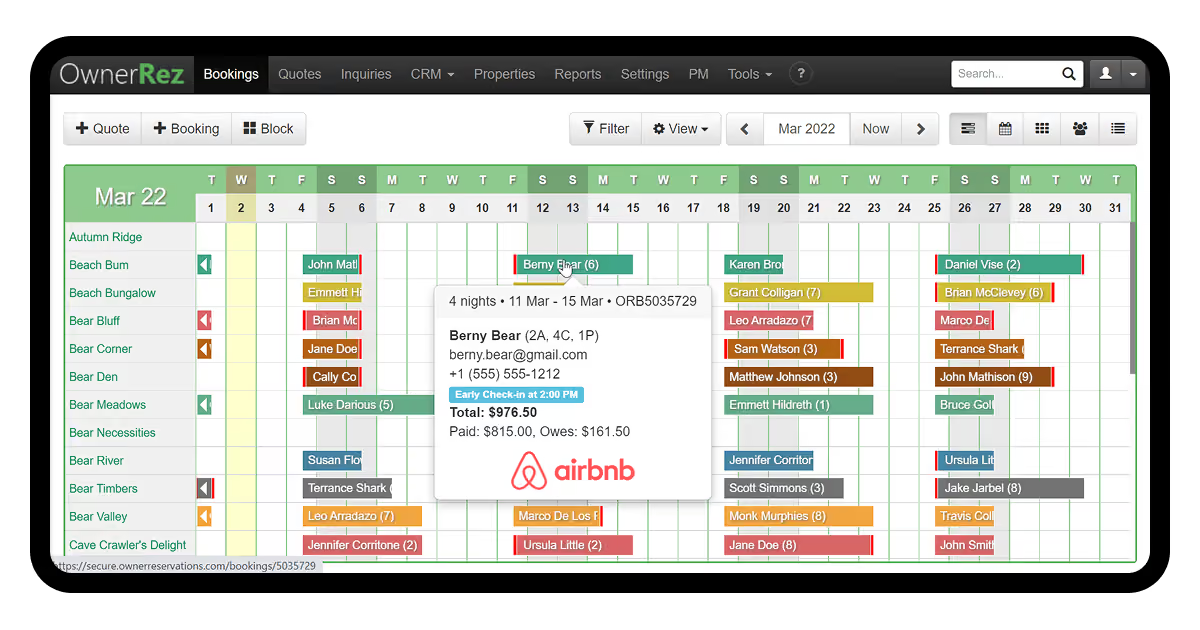
OwnerRez is one of the best short term rental management software that stands out on accounting and guest CRM depth. Property managers who need detailed financial control gravitate here. The interface feels dense compared to newer, more visual platforms.
Hospitable wins on guest communication, with AI drafting replies automatically. Smaller hosts and co-hosts get the most value from this. Its feature set thins out past a mid-size portfolio.
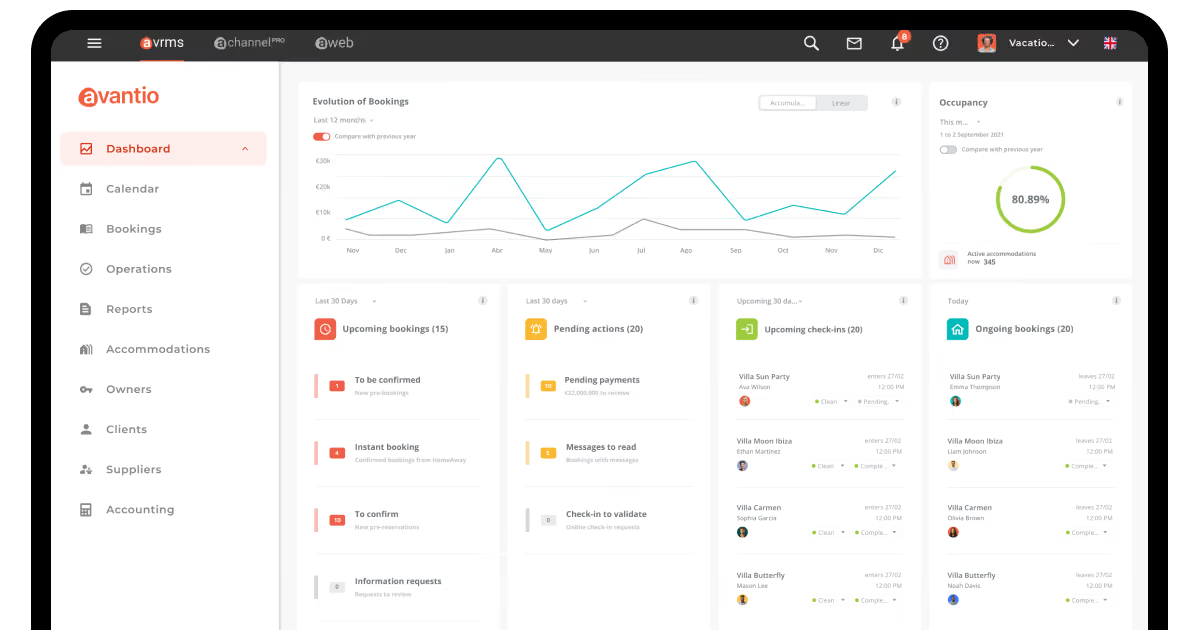
Avantio targets professional managers running 20 or more units. PMS and channel management live in one system here. Pricing requires a direct conversation, with no public tier.
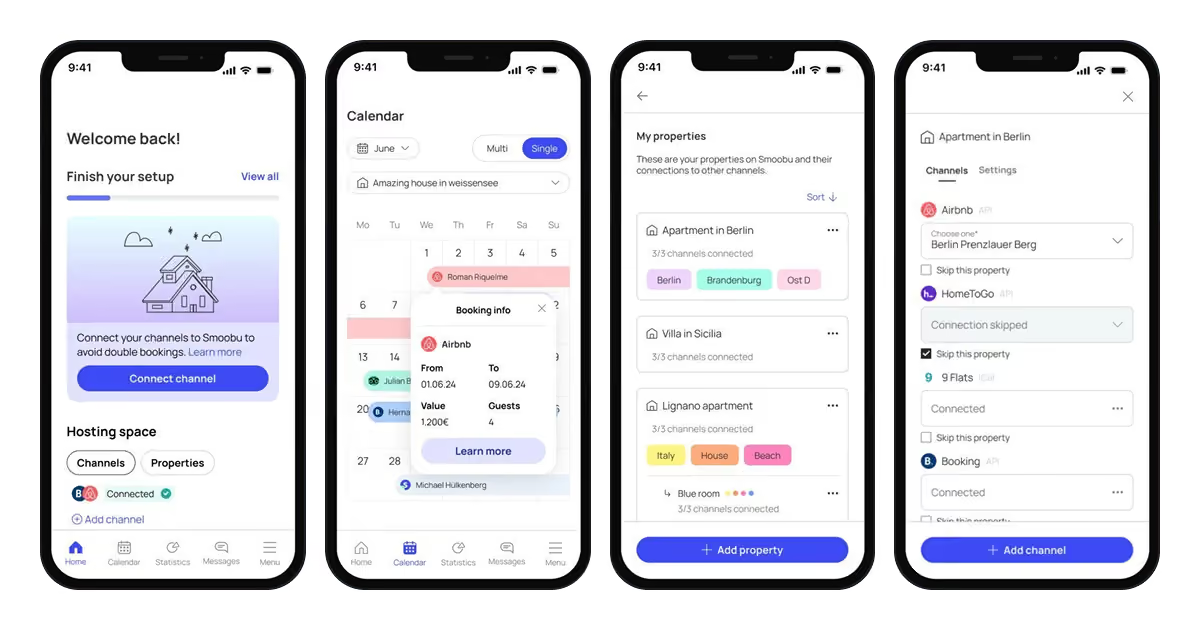
Smoobu is a short term rental app that keeps things simple for small hosts entering the category. The inbox and channel sync cover the basics well. Depth drops off fast once a portfolio grows past a handful of units.
iGMS puts operations first, with strong cleaning and task automation. Hosts who care more about staff coordination than marketing fit best here. Multi-channel sync stays solid but not class-leading.
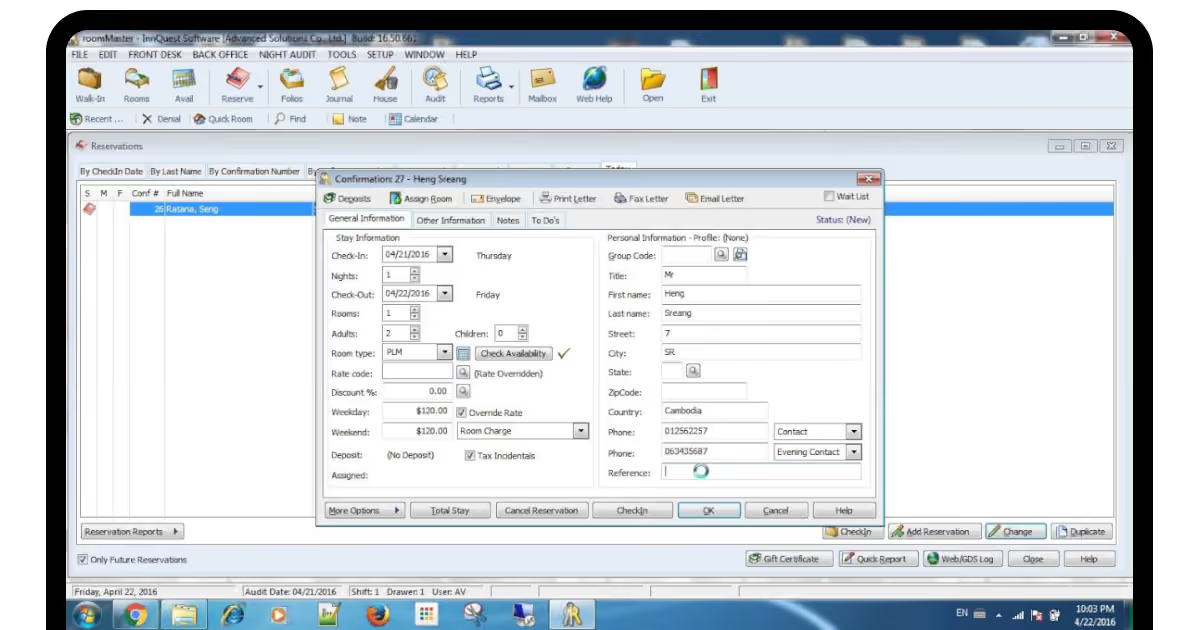
roommaster solves a different problem: blended hotel and rental portfolios. It's the only platform on this list with a real hotel front desk. That makes it the outlier pick for mixed-inventory operators.
RentalReady bets on AI-first automation across its PMS. Newer to the category, but reviewers rate its interface highly. It's worth a pilot if you want automation depth without legacy baggage.
That range covers most operators searching for the best short term rental software on the market today. Fit still depends on your portfolio size and how you sell. That's exactly what the next section walks through.
How to choose the right short term rental software?
There's no single best short term rental management software for every operator. The right pick depends on your portfolio size, your OTA mix, and your appetite for automation. Ask these questions before you sign anything.
Portfolio size fit: Ask if pricing and features still make sense at double your current size.
Direct booking depth: Confirm the booking engine supports your own domain, not just a subdomain.
Integration cost: Ask exactly what connects out of the box versus what needs custom work.
Contract terms: Check for lock-in periods before you've tested real usage.
Support model: Ask who handles onboarding, and how fast support tickets get resolved.
Data ownership: Confirm you can export guest and booking data at any time.
Pilot access: Insist on testing with real properties, not just a sales demo.
Answering these honestly narrows the list fast. Most platforms fail on at least one point.
A few warning signs tend to repeat across bad rollouts we've seen and heard about:
No pricing anywhere, not even a rough range on the website.
Vague answers about custom integration cost or timeline.
Long contract terms with no trial period or opt-out clause.
Support that routes every question straight to a sales call.
No reviews or case studies outside the vendor's own marketing pages.
Any one of these alone isn't disqualifying to find a suitable short term rental booking software. Two or more together usually is.
Off-the-shelf tools cover most cases on the list above. Still, sometimes a portfolio's specific rules or integrations don't fit any of them. That's the gap COAX Software usually gets called in to close.
Our teams don't start from zero on a new short-term rental management software project. We've solved versions of these integration problems across travel and logistics before. That experience comes from domain expertise, proven architecture patterns, and real integration work. Reusable accelerators and AI-assisted development processes cut timelines further. Builds typically move 50 to 60 percent faster than with a generalist firm.
We cover the full cycle, from early research through long-term support. That includes custom integrations, AI features, analytics layers, and legacy modernization work. Whether you need one missing piece or full booking software development services, that's the kind of build we take on.
Final notes
Short-term rental software isn't one tool. It's a stack that depends on your portfolio size. A solo host needs calendar sync and a booking link. A 50-property manager needs trust accounting and staff coordination. Somewhere between those, dynamic pricing starts paying for itself.
Every case in this guide solved OTA dependence differently. Arrival built its own booking engine for a viral audience. Stay Altered paired PMS sync with a loyalty program. Hosty gave solo hosts a widget and zero commission. The mechanism stayed the same: skip the middleman, keep the margin.
Test any platform against your actual operation before you sign anything. Whatever you can't find off the shelf, we can usually build instead.
FAQ
What is the best short-term rental platform?
There's no universal best short-term rental platform for every host. Fit depends on portfolio size, your OTA mix, and how much automation you want. We usually recommend piloting two or three finalists against real properties first.
What is short-term rental software?
It's any tool that automates booking, pricing, and guest messaging. Most platforms bundle a calendar, an inbox, and a payment system together. The category ranges from lightweight apps to full property management suites.
How much does short-term rental software cost?
Pricing runs from around $16 a month for solo hosts to custom enterprise quotes. Cost usually scales with property count, not just feature depth. Ask for the full price, including add-ons, before comparing platforms.
Can I run a rental business from a short term rental app alone?
Yes, for a small portfolio. A solid short term rental app covers messaging, calendar sync, and task alerts from your phone. Once you're coordinating staff across several properties, a desktop dashboard usually becomes necessary too.
Is short-term rental software the same as vacation rental software?
Yes, vendors just use different names for the same category. Short-term vacation rental management and vacation rental software describe identical tools. Compare the actual feature set instead of the label.
Do I need short term rental management software if I only have one property?
Probably, once you list on more than one channel. Even a single Airbnb and Vrbo listing can double-book without sync. We've seen solo hosts lose a booking this way in their first month.







































































































.avif)




%20for%20hotels.avif)


.avif)
.avif)


.avif)





.avif)

.avif)





.avif)


.avif)

We are interested in your opinion