Tour operator software connects bookings, supplier availability, and payments into one system. It swaps the spreadsheets and inbox threads most growing operators outgrow fast. But which solution will drive the most long-term growth?
We tested ten platforms head-to-head against five criteria. We assessed booking flexibility, supplier coordination, bundling logic, payment breadth, and role-based access. Here’s the shortlist for you to find your ultimate use case in:
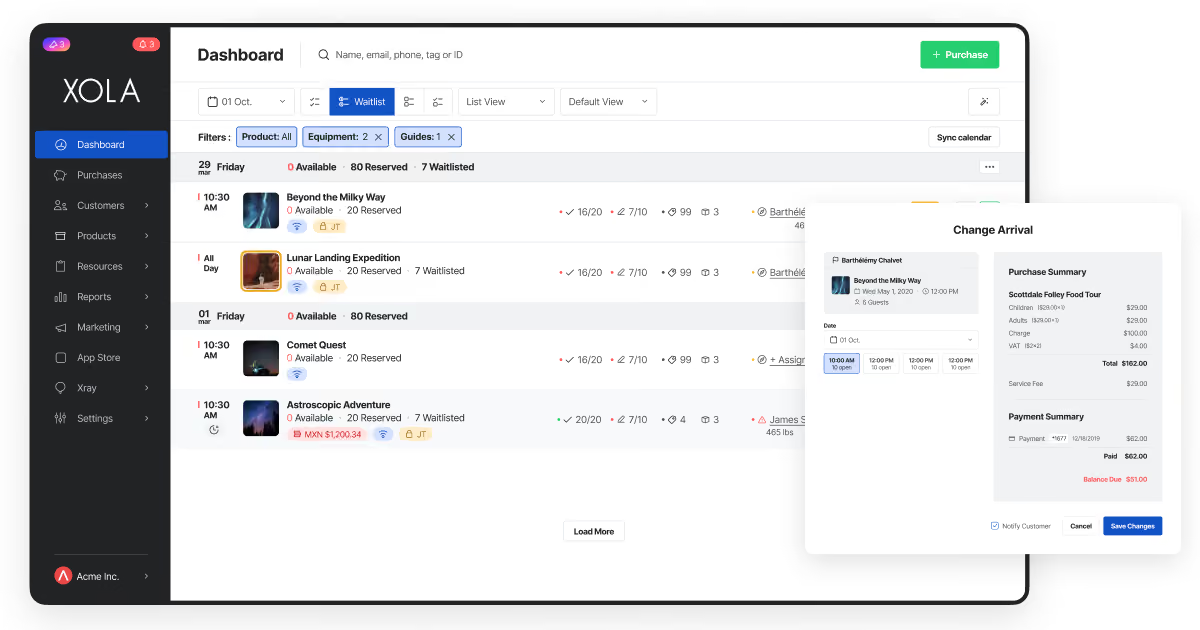
Xola: Best for conversion-focused direct booking.
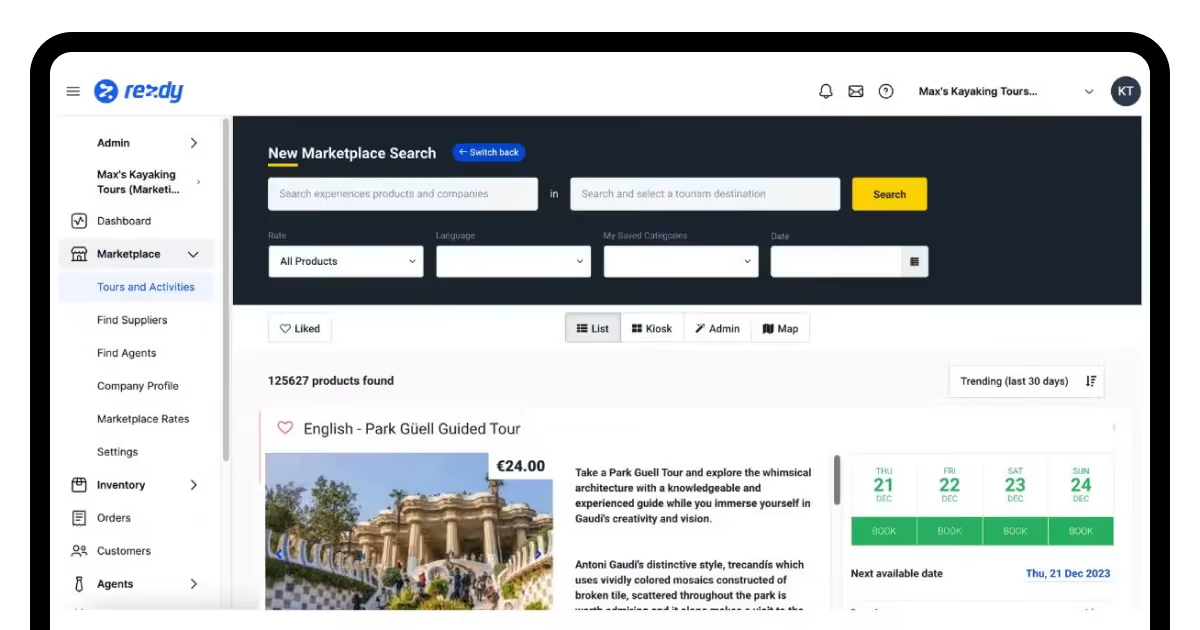
Rezdy: Best for multi-channel resellers and agents.
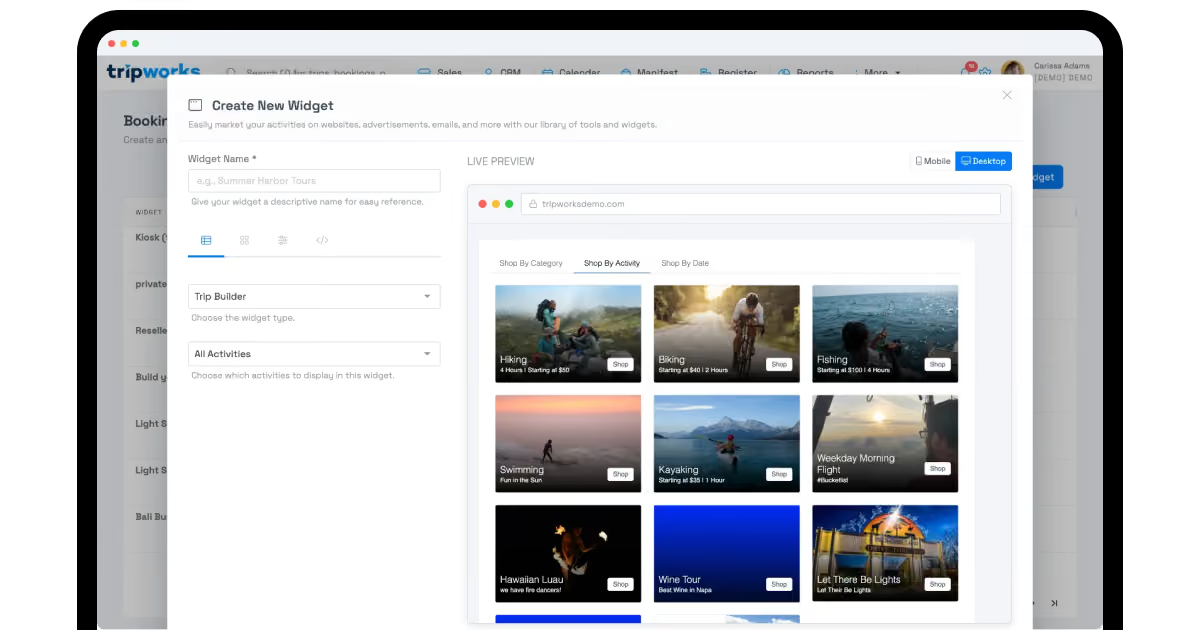
TripWorks: Best for adventure and outdoor operators.
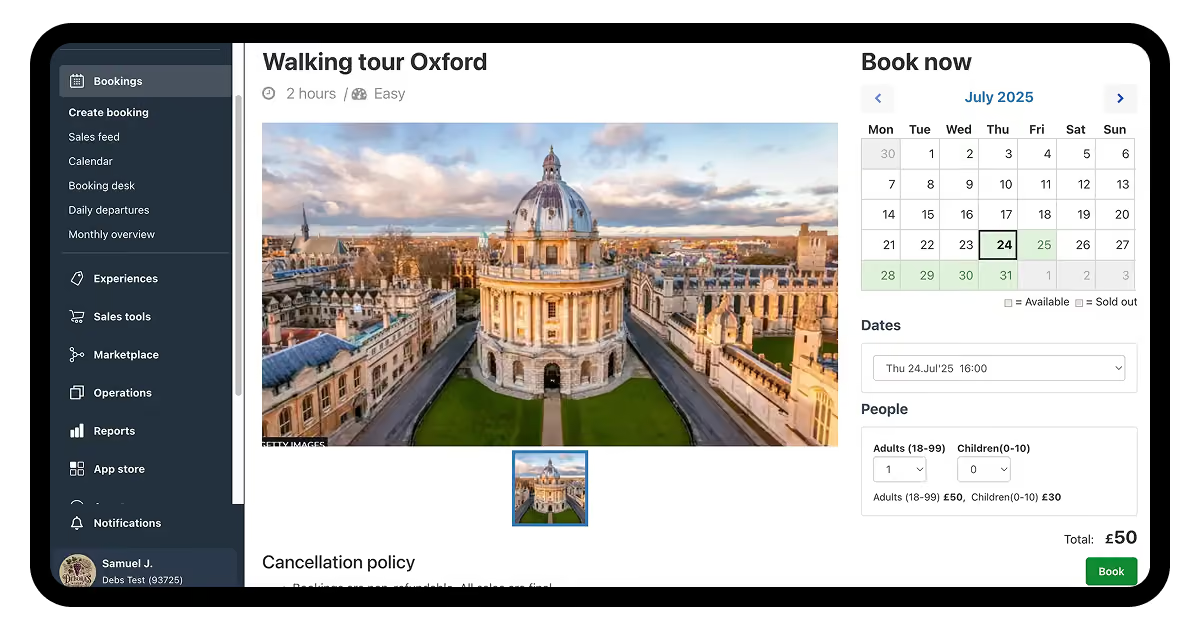
Bókun: Best for Viator-connected, growth-stage operators.
TicketingHub: Best for high-volume ticketing operations.
Checkfront: Best for mixed tours, activities, and rentals.
FareHarbor: Best for large-scale OTA distribution.
TrekkSoft: Best for European sightseeing and adventure tours.
Peek Pro: Best for in-destination and walk-up sales.
Ventrata: Best for enterprise attractions and ticketing.
This article breaks down the main functionality of these platforms, how well it integrates into your business logic, and whether its pricing model actually plays out at booking volume. You'll also get a framework for matching a platform to your tour type, booking volume, and fee structure, so you're not choosing based on feature count alone.
Things we tested to find the best tour operator system
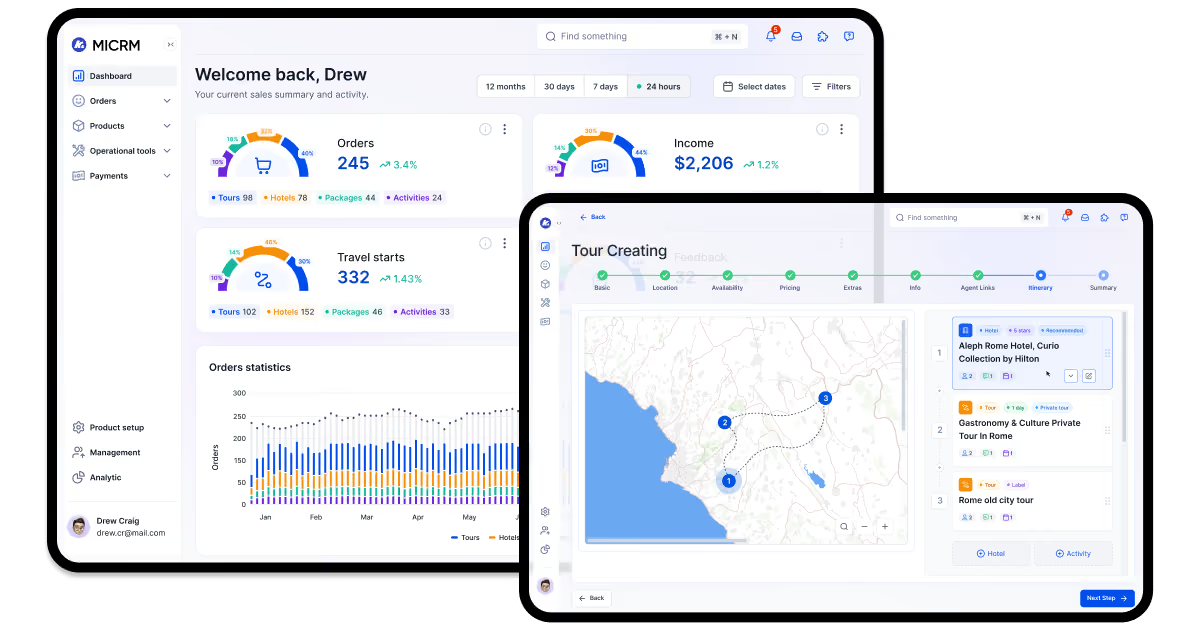
We evaluated every platform the way we'd scope a tour operator system for a client. We actually did while creating a custom CRM for a tour operator. Five dimensions mattered most, and each one came from a real operational failure point we've seen firsthand.
Booking and rescheduling flexibility: can customers change dates without a support ticket?
Supplier coordination depth: does the system talk to vendors in real time, or just log requests?
Package and bundling logic: can staff combine tours, hotels, and activities into one sellable unit?
Payment breadth: does it handle partial payments, multiple gateways, and tokenized cards?
Role-based access: do admins, agents, and suppliers each see only what they need?
Why have we defined these specific criteria for testing? Picture a Monday morning in your tour company. A booking lands in your inbox. A supplier confirms availability over WhatsApp. Meanwhile, a spreadsheet tracks who paid, who didn't. One payment reminder forgotten, one tour guide texting to ask about tomorrow's pickup time.
Sound familiar? That's what running tours without the right system looks like.
At COAX, we've spent over 16 years building booking systems, CRMs, and supplier integrations for travel businesses. We know the gap between a demo and a Tuesday during peak season.
We ruled out tools locked behind annual contracts with no trial. We also dropped platforms that treated tour booking as a side feature bolted onto generic ecommerce.
Two of these criteria came straight out of our own build. We developed a custom tour operator software solution using React.js and Ruby for a client managing tours across scattered supplier networks. Package bundling was the hard part: staff needed to combine tours, hotels, and activities into one package, then send it out for single-click payment. Real-time supplier coordination was the other. Drivers, guides, and agents needed the same live view, not three disconnected inboxes. Those two features shaped how we weighted every platform on this list.
"You can't judge a booking system by its demo. You judge it by whether a supplier's availability update actually reaches the agent before a customer books a dead slot," Orest Falchuk, Head of Engineering at COAX Software.
That's the bar we held every best tour operator software candidate against.
Top-rated tour operator software platforms
Ten platforms make this shortlist, chosen after running each one against the five criteria we outlined above. The table below gives you a quick comparison. The deep dives after it explain why each platform landed where it did.
Platform
Best for
Pricing model
Standout feature
Xola
Conversion-focused direct booking
Variable fee, 2.39%+ per transaction
Abandoned-cart recovery
Rezdy
Multi-channel resellers and agents
From $49/month plus 3% fee
Built-in channel manager
TripWorks
Adventure and outdoor operators
From ~$99/month, no commission
Native digital waivers
Bókun
Viator-connected growth-stage operators
From $49/month, 1.5% fee
Marketplace and referral network
TicketingHub
High-volume ticketing operations
No subscription, 3% to 5% fee
50+ OTA connections
Checkfront
Mixed tours, activities, and rentals
$99/month plus 3% fee
Resource-based scheduling
FareHarbor
Large-scale OTA distribution
No monthly fee, commission-based
Deepest OTA partner network
TrekkSoft
European sightseeing and adventure tours
From $49/month, tiered fees
Combo product bundling
Peek Pro
In-destination and walk-up sales
No monthly fee, 6% commission
Checkout conversion tools
Ventrata
Enterprise attractions and ticketing
From $575/month, 2% to 0.5% fee
Turnstile and kiosk hardware
Every platform on this list has a real strength. None of them fits every operator equally well, which is exactly why the testing mattered.
We didn't rank these by feature count. We ran each through the same five criteria: booking flexibility, coordination depth, bundling logic, payment breadth, and access control.
Xola built its whole platform around one goal: stop losing customers at checkout. Its abandoned-cart recovery follows up automatically, and dynamic pricing adjusts rates without manual input. Analytics tie straight into Google Ads and Meta, so you can trace a booking back to its source. The catch sits in the fee structure. It starts at 2.39% plus 30 cents, but international transactions can climb past 6%. When you're evaluating tour operator booking software for a conversion-heavy direct sales strategy, Xola earns a real look. Our testing found strong booking flexibility, but role-based access lagged behind platforms built for larger teams.
Rezdy covers the basics competently and connects to over 200 resellers through one channel manager. Agents and OTAs sync in real time, which matters if your bookings come from a wide partner network. The interface feels dated next to newer competitors, and waiver support stays limited. Pricing climbed recently, with plans now starting around $49 a month plus per-booking fees. For operators leaning heavily on third-party distribution, it still holds up as one of the best tour operator platforms for reach. Our coordination-depth test showed solid supplier sync, though bundling logic felt shallow compared to purpose-built alternatives.
TripWorks was built by former tour operators, and it shows in the details. Digital waivers, including minor consent handling, come built in rather than bolted on. Guide scheduling includes certification tracking, a feature few competitors offer natively. Pricing stays transparent: a flat monthly fee with zero booking commissions. It's a smaller company, so its OTA network trails FareHarbor and Rezdy by a wide margin. Adventure operators who value top tour operator software with honest pricing over network size should shortlist this one; our safety-and-waiver criterion ranked it near the top of the group.
Bókun leans on its Tripadvisor parentage, and the Viator integration reflects that. Bókun waives its own booking fee on every Viator reservation, which adds up fast at volume. The Marketplace connects you to thousands of other travel businesses for cross-selling and referrals. Onboarding takes hours, not weeks, according to most reviewers we checked. Enterprise tiers unlock agent portals and subvendor management for teams outgrowing the basics. As a tour operator booking system for operators already selling through Viator, it's hard to beat on connected distribution, though our bundling-logic test found the core package builder less flexible than Checkfront's.
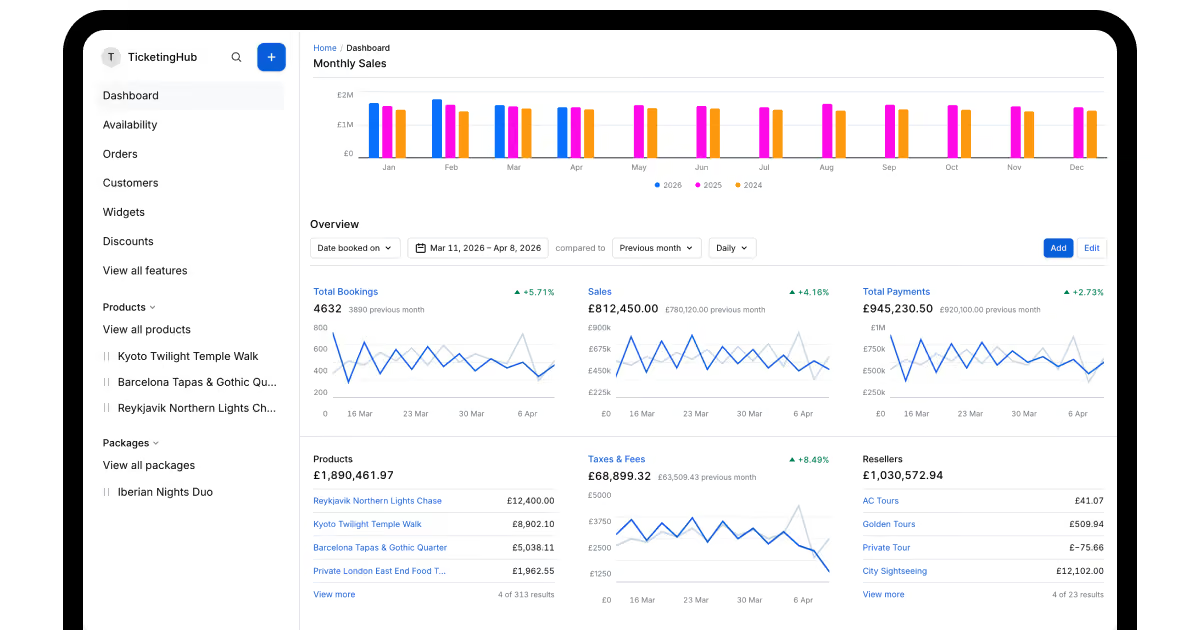
TicketingHub targets high-volume ticket sales, and its 50-plus OTA connections back that up. There's no monthly subscription, just a 3% fee on every booking, online or offline. Route bookings through an OTA integration, though, and that fee jumps to 5%. Group booking tools and a package builder round out a genuinely deep feature set. Support gets consistently good marks for responsiveness in user reviews. Operators moving serious ticket volume through connected channels should weigh the OTA surcharge against Ticketing Hub's coordination strength. Our payment-breadth test rated it well, but fee stacking hurt its total-cost score.
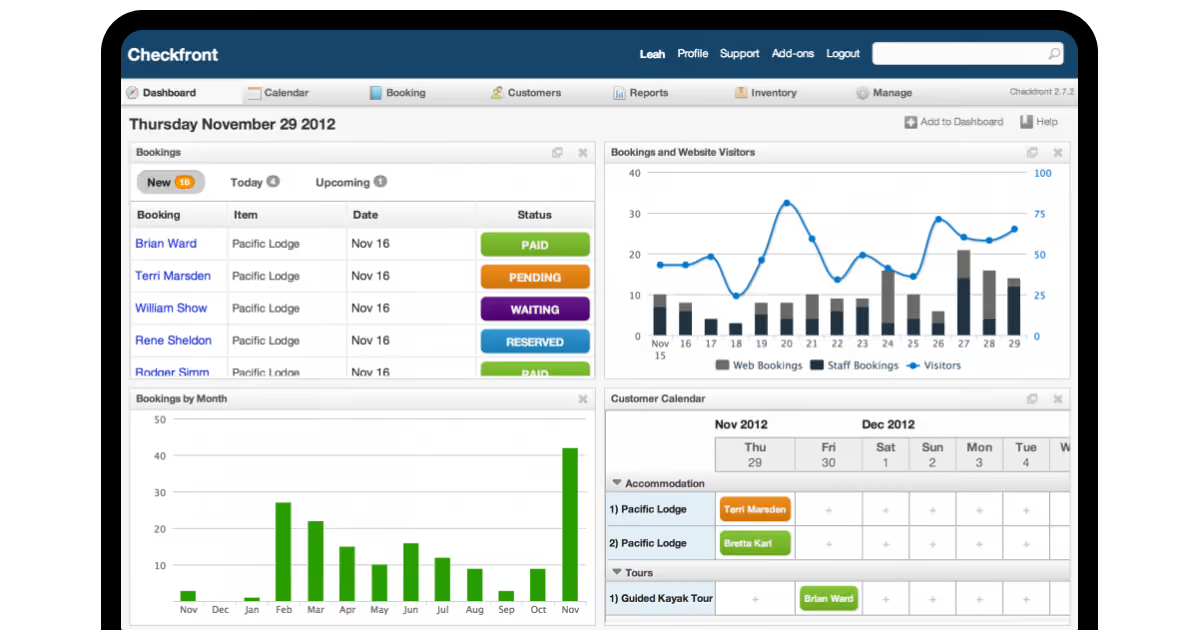
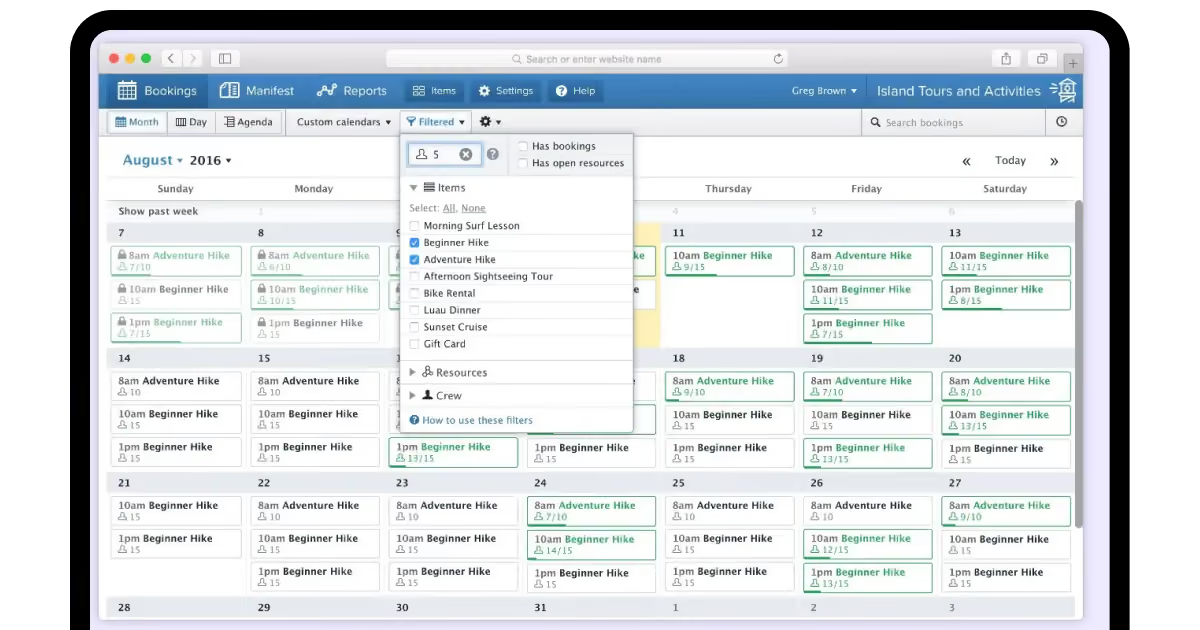
Checkfront plays generalist, and that's both its pitch and its limit. Tours, activities, and basic rentals all run through one resource-based scheduling engine. Bundling multiple offerings into one bookable package works cleanly, which stood out in our tests. Pricing rose recently to $99 a month plus a 3% fee, without matching feature updates. Guide-specific tools, like certification tracking, stay less developed than dedicated competitors. If your business mixes tours with rentals under one roof, Checkfront's bundling logic scored highest of any platform we tested, even though its guide-management depth trailed TripWorks.
FareHarbor is the name most operators already know, backed by Booking Holdings since 2018. Its OTA network is the deepest on this list, with tight Viator and GetYourGuide integration. There's no monthly fee, but a commission lands on every single booking. Waivers need a third-party add-on, since none come built in. Smaller teams often find the interface built for a scale they haven't reached yet. For high-volume operators chasing OTA exposure above all else, it remains one of the most reliable tour operator software picks for sheer reach, though our ease-of-use score dropped for smaller operations.
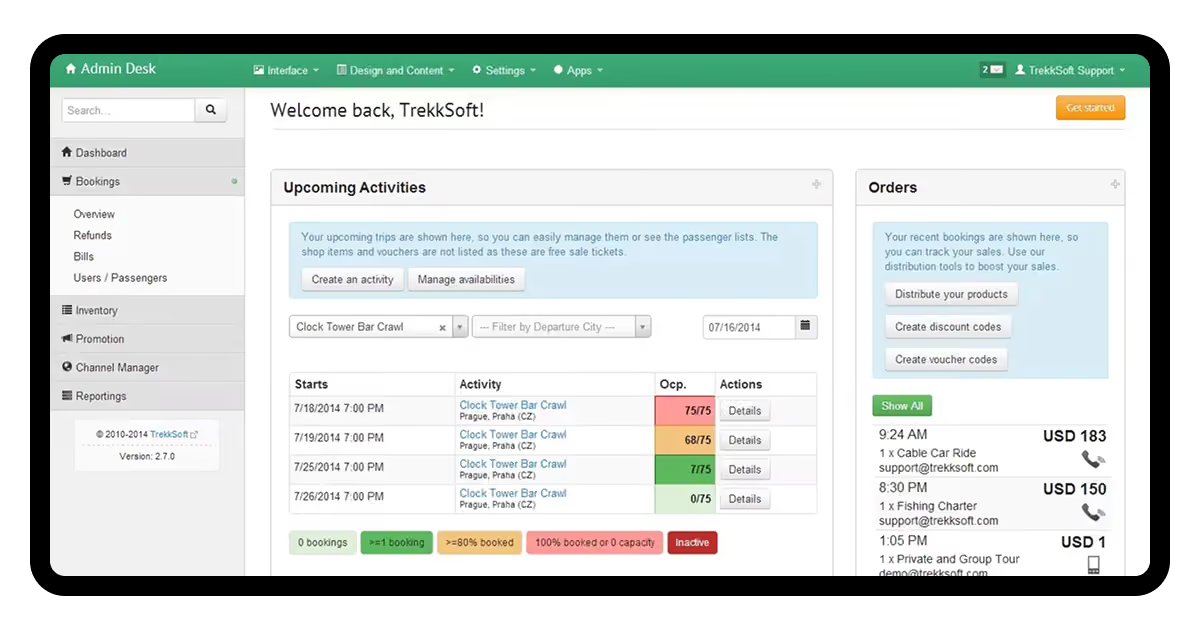
TrekkSoft targets European sightseeing and outdoor operators specifically, and combo product tools reflect that focus. Bundling experiences together works well, alongside private-rate and special-seat pricing options. The entry plan looks affordable at $49 a month, but most teams need the $175 tier for real functionality. A separate Payoo transaction fee stacks on top of every plan's booking fees. Total monthly cost often runs higher here than on comparable platforms we tested. European operators building multi-experience combo packages get real value, though our pricing-transparency score suffered from the layered fee structure.
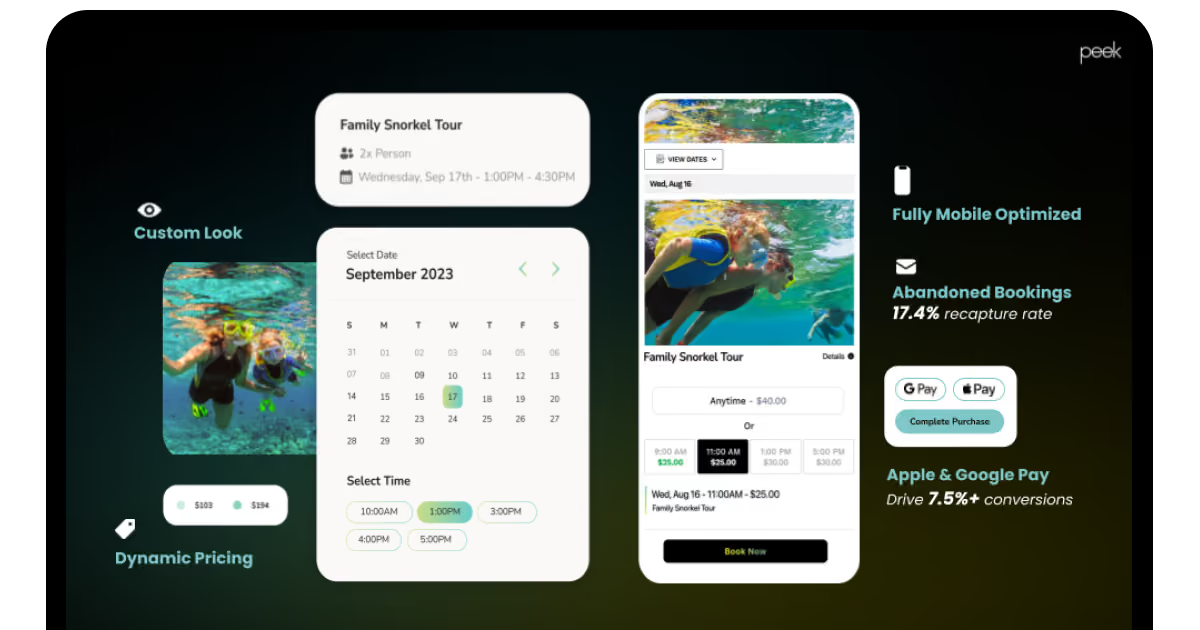
Peek Pro built its entire platform around one number: conversion rate. Dynamic pricing, urgency signals, and one-click upsells all push toward a completed checkout. Its point-of-sale tools work well for concierge desks and walk-up kiosk sales. Guide scheduling stays basic, and there's no rental inventory management at all. Fees run 6% per booking, which adds up fast once volume climbs past $150,000 a year. In-destination, high-foot-traffic operators fit this platform's design better than remote or rental-heavy businesses do.
Ventrata serves a narrow, specific customer: enterprises doing at least $1 million a year. Its offline POS keeps functioning without internet, a real advantage at unreliable venues. Turnstile integrations and self-service kiosks support serious ticket-volume attractions. Pricing starts at $575 a month, climbing to $5,750 for the top tier. Reviews stay sparse, but every one we found praised the onboarding process. For large attractions running dedicated hardware at scale, our scalability-ceiling test put it well ahead of every other platform we ran.
Ten platforms, ten different operational bets. The right pick depends less on features and more on what your business does on a Tuesday.
How to choose the right tour operator software?
The right pick depends on your business model. Day tours run on different logic than multi-day packages. Booking volume, sales channels, and itinerary complexity all shape the decision more than headcount does. 66% of profitable operators run a dedicated booking system, compared with just 40% of unprofitable ones. So the software you choose is tied directly to whether you turn a profit.
Match the platform to your tour type
Day tours and multi-day packages need fundamentally different tools. A platform built for hourly slots will buckle under a seven-day custom itinerary, and vice versa.
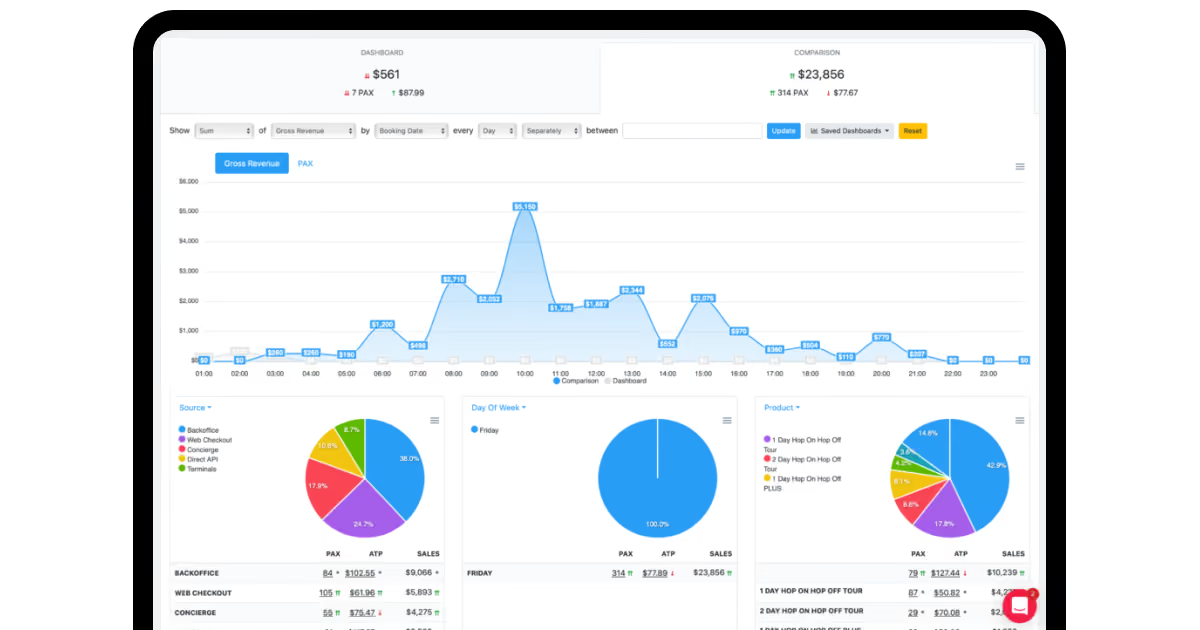
Day tours and activities run on fixed hourly or daily slots. You need real-time ticket quotas, fast check-ins, and airtight calendar accuracy. FareHarbor handles high-volume walk-ups well, and Rezdy's automated multi-channel sync suits operators selling across several platforms at once.
Multi-day and custom itineraries break basic calendar widgets fast. If you sell packages spanning multiple days, hotels, and suppliers, you need a real tour operator itinerary software layer, not a booking widget bolted onto one. Tourwriter fits bespoke, designer-style itineraries. WeTravel suits multi-day group trips with flexible, staged payment schedules.
Most operators land somewhere between these two models, which is exactly where generic platforms start to strain.
Size the platform to your booking volume
Booking volume decides which pricing model and feature depth actually make sense. Getting this wrong means either overpaying for unused capacity or hitting a ceiling mid-season.
Small and seasonal operators running under 30 bookings a week need low fixed overhead above everything else. Zero-monthly-fee models that charge a small transaction percentage, like Samba or FareHarbor, keep costs proportional. A freemium WordPress plugin can work if you manage your own site directly.
Mid-size and scaling operators running 30 to 100-plus bookings weekly need something different. Robust OTA connections matter most here. You need inventory synced across Viator and GetYourGuide without manual double-booking risk. Bókun's Viator integration and Rezdy's channel manager both fit this stage well.
Large enterprises and wholesalers need full ERP-level depth. Accounting integrations, agent hierarchies, and multi-currency support become non-negotiable at this scale. Softrip and Tourplan both operate at that level, built for complexity smaller platforms don't attempt.
Globally, 80.6% of tour operator software adoption comes from small and medium enterprises moving to SaaS. That share tells you most vendors design for the smaller end of this range first.
Weigh subscription pricing against commission fees
Pricing structure changes your margin math more than any single feature does. The right model depends on how steady your bookings run through the year.
Flat subscription pricing gives you predictable monthly costs. It suits operators with high, steady volume, since you keep a larger share of every sale as bookings climb.
Pay-per-booking pricing carries no monthly retainer at all. Costs scale with revenue automatically, which suits seasonal or newer businesses managing tight cash flow.
We'd add a third factor most comparisons skip: fee stacking. Several platforms in our testing charged a base fee, then added a separate surcharge for every OTA-sourced booking. A 3% fee can quietly become 5% the moment a booking arrives through Viator. Read the fine print on blended rates before you commit, not after your first busy month.
Factor in mobile behavior and digital discovery
Your customers are booking on their phones, and your marketing has to meet them there. This isn't optional anymore; it's the majority channel.
AI trip planning has already been used by 40% of travelers, with 62% open to trying it.
Social discovery drives 81% of travelers researching destinations before they book.
Social promotion gets active use from 88% of travel and tourism businesses.
A platform with a clunky mobile checkout or no social integration is fighting your customers' habits, not supporting them.
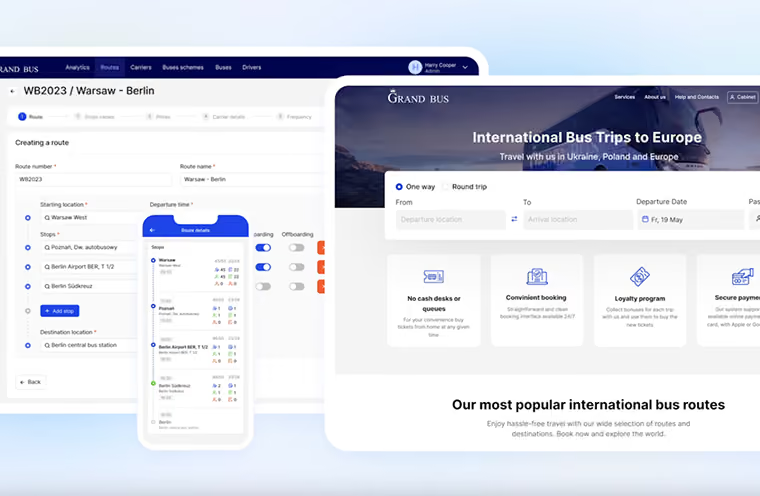
We built a tour operator booking system for a bus tour company, and the lessons carry over directly. The client started on a generic CRM. Growth exposed the limits fast: no supplier customization, no real data integration across their network. After our work, real-time coordination now runs between staff, drivers, guides, and suppliers automatically.
The result: a 40% profit increase, 60 new affiliates, and 20 new suppliers added to the network.
The feature that mattered most was Create Your Journey, a self-serve trip builder we added later. It pulls standalone hotels, activities, and custom packages into one marketplace. Travelers personalize a trip by interest and pace, then check real-time pricing across every supplier at once. That's the kind of feature no off-the-shelf tour operator booking software ships with by default, because it depends entirely on your specific supplier mix.
Off-the-shelf software solves most of this well enough, until your operation doesn't match the demo. Plenty of vendors can sell you a platform. Fewer can adapt it to the version of your business that breaks their standard workflow. Online booking software development that actually changes outcomes takes engineers who've hit your specific integration problem before.
For straightforward needs, an off-the-shelf tour operator system handles the job fine. Once your supplier network, payment mix, or package logic gets specific, that's where a packaged platform starts to strain. We've built custom bridges between legacy booking tools and modern payment gateways, CRMs, and supplier APIs before. The pattern repeats: keep what works, replace what doesn't, and never break a live booking flow mid-rollout.
What is tour operator software?
We've covered the top platforms and how to pick between them. Now let's get under the hood: what this software is and how it solves your headaches.
Tour operator software is the system that runs the operational core of a travel business. It handles bookings, availability, payments, supplier coordination, and customer communication in one place. Think of it as the layer that replaces spreadsheets, phone calls, and scattered email threads with one connected workflow. Without it, every extra booking adds manual work instead of margin.
The scale behind this category is hard to overstate. Global business travel spending hit $1.47 trillion in 2024, and GBTA projects it'll reach $1.69 trillion by 2026. B2B tour operator software exists precisely because that volume can't run on spreadsheets anymore. A market moving that much money doesn't tolerate manual reconciliation for long.
Consumer travel tells a similar growth story. International tourist arrivals reached 1.52 billion in 2025, up 4% on the prior year. Travel and tourism contributed $10.9 trillion to global GDP in 2024, 10% of the entire world total. Growth at that scale means one thing for operators: the market rewards differentiation, not sameness.
Group and multi-day travel show the same pattern of complexity outgrowing spreadsheets. Business travelers increasingly extend trips for leisure. Sixty-nine percent of millennials do it routinely, blending corporate and personal itineraries into one booking. That blend is exactly why multi-day tour operator software with real itinerary logic, not just a calendar widget, matters more every year. A platform that only handles single-day slots can't keep up with a traveler mixing a conference with a weekend extension.
Group coordination adds its own layer of demand. Corporate travel managers increasingly book for teams, not individuals, which is why group booking software capabilities show up as a baseline requirement now, not a premium add-on. Coordinating rooms, activities, and schedules across a dozen travelers by email doesn't scale, and it never did.
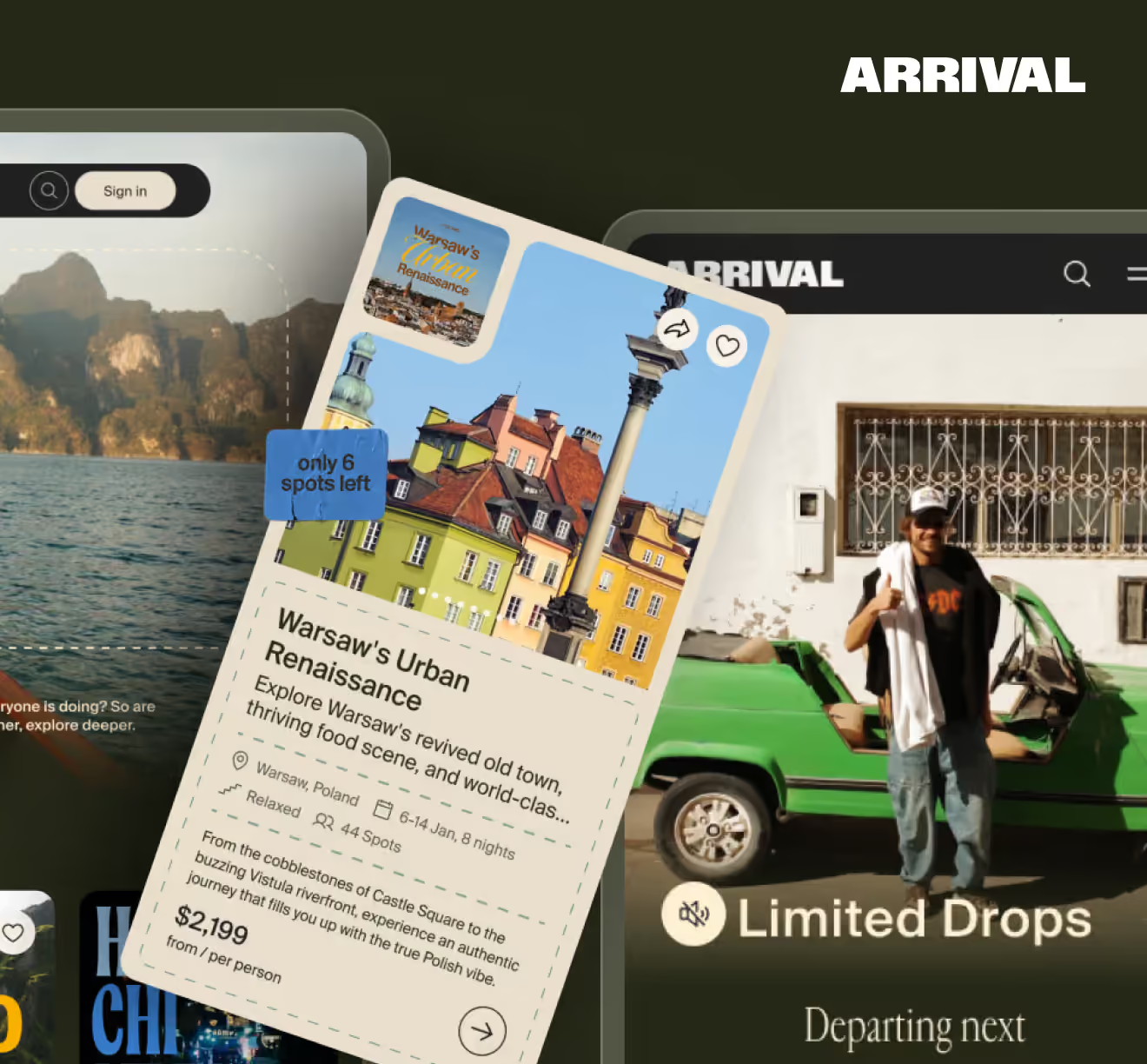
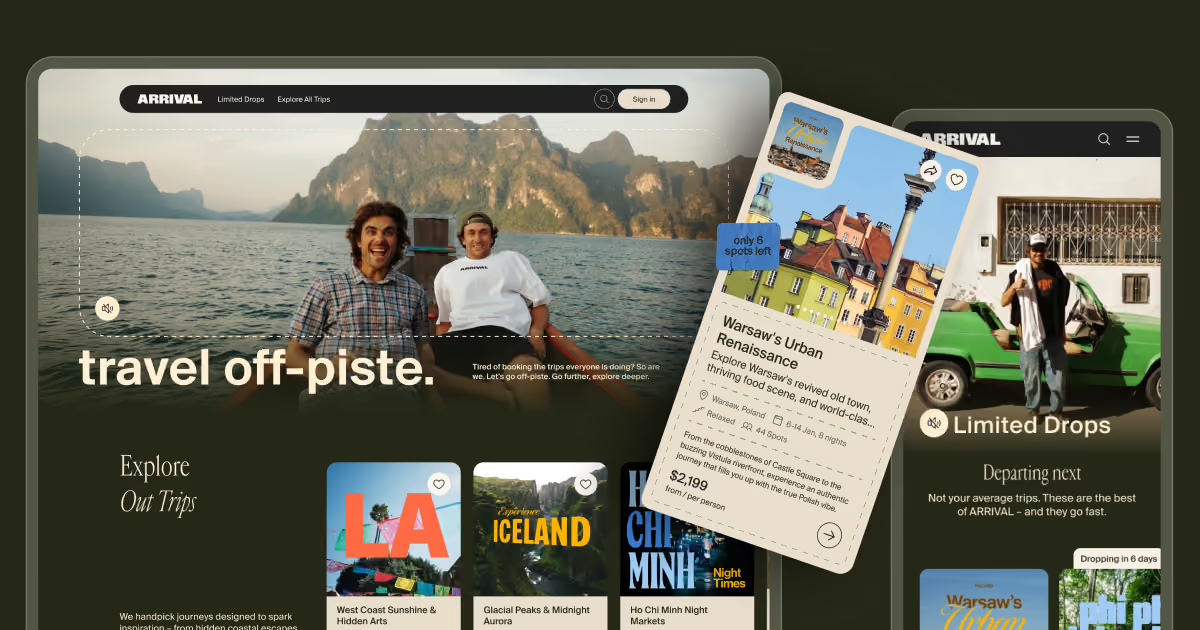
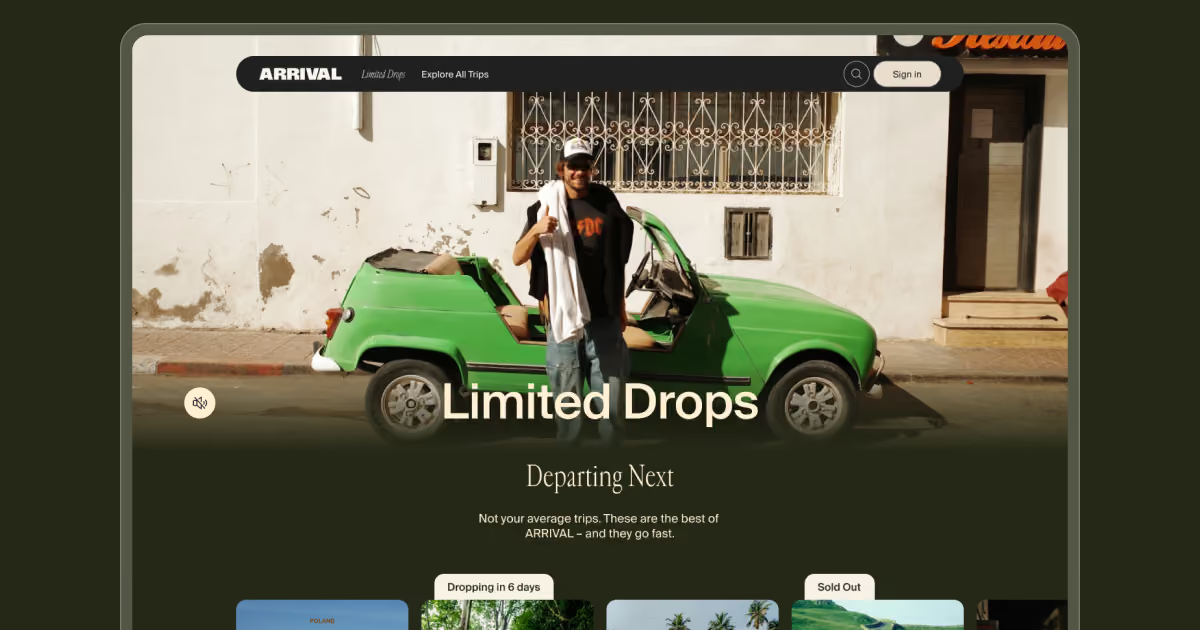
As an example of a growing social demand driving successful launches, we can also name our Arrival project. We built an online tour operator software platform for an Australian brand with over two million social followers, engineered to handle viral-launch traffic and mobile-first booking from day one. The platform saw over 120,000 pre-launch sessions and 50,000 users by release day, proof that infrastructure built for social-driven demand handles it very differently.
The takeaway across every one of these numbers is the same: the market is large, growing, and getting more competitive by the season. Standing out takes more than listing your tours online. It takes software built around how your specific customers actually search, book, and travel.
What are the key features of tour operator software?
Seven components separate a genuine operational platform from a glorified booking widget. Each one solves a specific failure point that shows up the moment your business grows past a spreadsheet.
Booking and reservation management
This is the engine room of any tour operator reservation software. It pulls bookings from your website, phone line, and agent network into one shared inventory. Availability updates instantly across every channel the second a slot fills. Without it, two agents can sell the same seat to two different customers. That's not a minor glitch. It's a refund, an apology, and a damaged reputation in one incident.
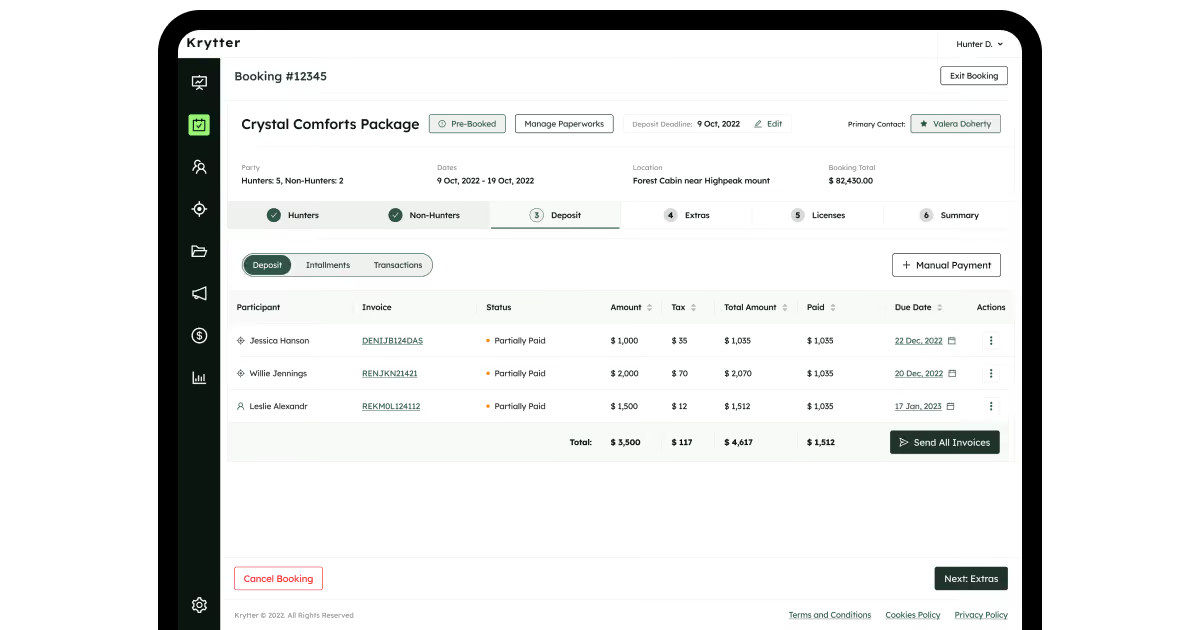
On Krytter, we built booking logic around a genuinely tricky constraint: reservations placed years in advance, paid across multiple installments. Standard reservation systems assume a booking happens once and gets paid once. Hunting trips don't work that way, so the system had to track partial payments against a reservation that might not finalize for two years.
Quotation and itinerary builder
A strong itinerary builder pulls from pre-loaded rates and assembles a branded proposal automatically. Staff stop retyping the same supplier costs into a document by hand. This matters most for inbound tour operator software managing complex, multi-supplier packages across a destination. Skip this feature and every quote becomes a manual spreadsheet exercise, prone to pricing errors and slow turnaround. Slow quotes lose bookings. Travelers comparing options rarely wait around for a proposal that takes three days to land.
On Arrival, the itinerary layer had to support two entirely different booking logics at once, fixed-date drops and flexible anytime departures, both drawing from the same underlying trip catalog.
Supplier and inventory management
Every tour operator system depends on knowing exactly what a supplier can deliver, and when. This module tracks allocations, contracts, and settlement terms across every vendor relationship. Miss a contract renewal date, and you're selling inventory you no longer hold. Get supplier settlement wrong, and you're either underpaying a partner or double-paying an invoice.
Neither builds trust with vendors you depend on repeatedly. Arrival's trip data syncs automatically from Nezasa, a supplier aggregation platform with its own rigid data model. Getting that sync reliable took real engineering effort, since a mismatch anywhere breaks pricing or availability downstream.
Complex costing and margin control
Seasonal rates, markups, and multi-currency pricing all need to calculate correctly, every single time. A pricing engine that can't handle this forces staff to manually adjust rates before every quote goes out. That's slow, and it's where margin quietly leaks. A markup applied inconsistently across agents costs real revenue over a full season.
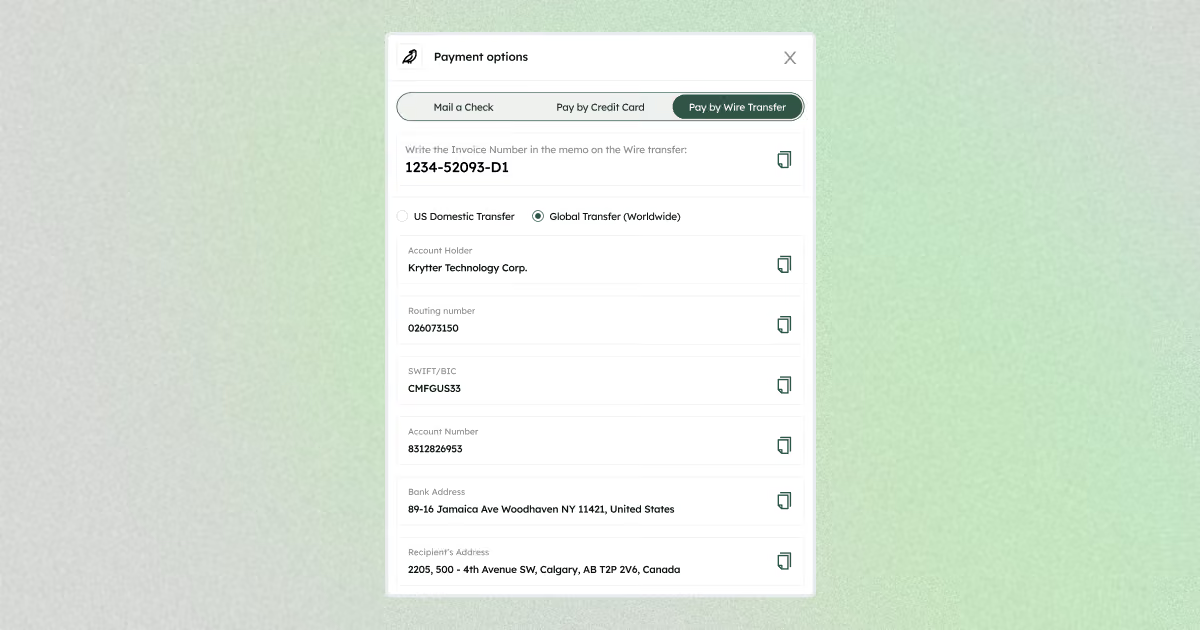
Krytter's financial module handled this at real depth: tax compliance across multiple jurisdictions, four separate payment methods, and invoices split across cash, transfer, and installment plans simultaneously. Getting hunting license taxes and regional compliance rules correct took several development iterations before the logic held up under real bookings.
Channel manager and OTA sync
Selling through Expedia, Viator, and GetYourGuide multiplies your reach, but only if inventory stays synced everywhere at once. A channel manager pushes availability changes out to every connected platform the moment a booking lands. Without this, you're back to manually updating three or four dashboards after every sale, and errors creep in fast. One missed update means an overbooking on a channel you forgot to touch.
This capability sits at the center of any credible tour operator booking software, since distribution reach is often the whole reason operators adopt OTAs in the first place.
Customer relationship management
A dedicated tour operator CRM stores traveler history, preferences, and communication automatically. It's the difference between treating every booking as a first interaction and actually remembering who your repeat customers are. Automated follow-ups after a trip, personalized offers based on past bookings. None of that works without this layer holding the data together.
A CRM also carries real accessibility value. It can flag specific needs tied to accessible travel or preferences unique to solo travelers, so staff doesn't have to remember every detail manually for every guest. On Arrival, booking and order data flows straight into HubSpot through webhooks, powering everything from support workflows to marketing automation without a single manual export.
Content and communication
Content and communication tools deserve a mention here too, since they sit close to CRM in practice.
Content management lets non-technical staff update trip listings, journals, and marketing pages without touching code.
Automated messaging handles confirmations, reminders, and post-trip follow-ups without a staff member sending each one.
Self-service portals let customers view or modify bookings without opening a support ticket.
These three features together cut the operational overhead of running a growing customer base. Arrival's content team publishes new trip listings and travel journals at the pace of their social media output, with zero developer involvement required for routine updates.
Financial and accounting integration
Payment processing needs to feed directly into your accounting ledger. This closes the loop between what customers paid and what your books actually show. Without it, finance teams spend hours each month matching transactions across two disconnected systems. That's hours that don't scale as booking volume grows.
Who needs tour operator software?
Anyone running trips at a scale their memory can't track anymore needs tour operator software. That threshold arrives faster than most operators expect: one missed booking, one double-sold slot, and the spreadsheet stops being a system.
"The businesses that struggle most aren't the small ones. They're the ones who scaled past their tools without noticing," shares Orest Falchuk, Head of Engineering at COAX Software
Five business types hit that wall in distinct, recognizable ways.
Multi-day and package operators juggle hotels, flights, and international suppliers across a single trip. Coordinating that by phone and spreadsheet works until a supplier changes a rate mid-season. Multi-day tour operator software exists precisely for this complexity: real-time margin visibility across every moving piece of a package.
Activity and excursion providers run day tours, boat rentals, or walking tours where capacity is fixed and finite. A ninth person can't join an eight-seat boat, no matter how the booking got made. Live capacity tracking isn't a nice-to-have here; it's the entire difference between a smooth departure and an overbooked one.
Tailor-made trip planners build document-heavy, highly personalized itineraries for travelers who want something no one else is offered. Multi-currency pricing and real-time margin tracking matter more here than almost anywhere else, since every quote is custom-built from scratch. This is where a good tour operator system earns its keep: automating the math so staff focus on the itinerary, not the spreadsheet.
Destination management companies run custom itineraries for B2B agents, not individual travelers. That means juggling group logistics and distributor relationships simultaneously. Without solid tour operator back-office software, agent commissions and group allocations get tracked in parallel spreadsheets that inevitably drift apart.
Growing travel agencies sell across OTAs, a direct website, and an agent network all at once. Centralized inventory stops the same slot from selling twice across three different channels. This is exactly the terrain Arrival operates in: a direct-booking brand competing against algorithm-driven discovery, needing every channel to draw from one shared trip catalog rather than fragmented, disconnected listings.
Arrival's persona quiz shows what this looks like when it's tuned for the individual traveler. Guests select a travel style at registration, and the platform surfaces trips matched to that preference instead of a generic destination list. That's tour operator software solutions doing double duty: operational backbone and personalization engine, running on the same data.
If you're evaluating travel planning apps for your own operation, the real question isn't which platform has the most features. It's which one matches the exact shape of your daily bottleneck.
At COAX Software, we've spent close to twenty years building booking platforms, reservation systems, and operational automation across travel. That history means we don't start from zero on a new online booking software development project. Domain expertise and reusable architecture patterns typically cut delivery time by 40 to 50% compared to generalist teams.
Whatever platform you land on, most operators eventually want more than the box it ships in: AI-driven recommendations, deeper analytics, a custom API tying a supplier into your existing stack. At COAX, we build that layer into infrastructure you already run, without forcing a full rebuild to get there.
How can tour operator software improve your business operations?
Running an agency, DMC, or tour operator business means juggling more than itineraries. Supplier coordination, quote-building, and client follow-up all compete for the same limited hours. The right tour operator systems remove friction from all three at once. Here's what actually changes once it's in place.
Streamlined bookings and operations
No more juggling three spreadsheets to check one tour's availability. A centralized dashboard puts packages, pricing, and inventory in one place, visible to every team member instantly.
Centralized dashboard: manage tours, itineraries, and pricing without switching tools.
Automated reservations: bookings, changes, and cancellations are processed without manual entry.
Fewer errors: real-time availability replaces the double-booking risk spreadsheets carry.
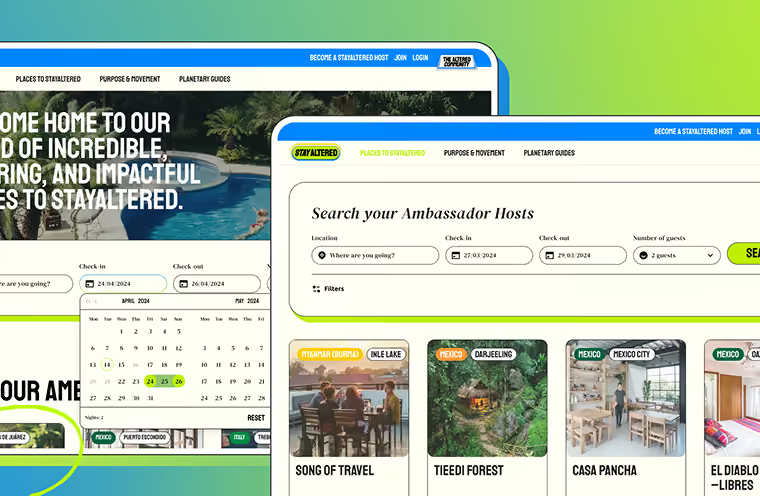
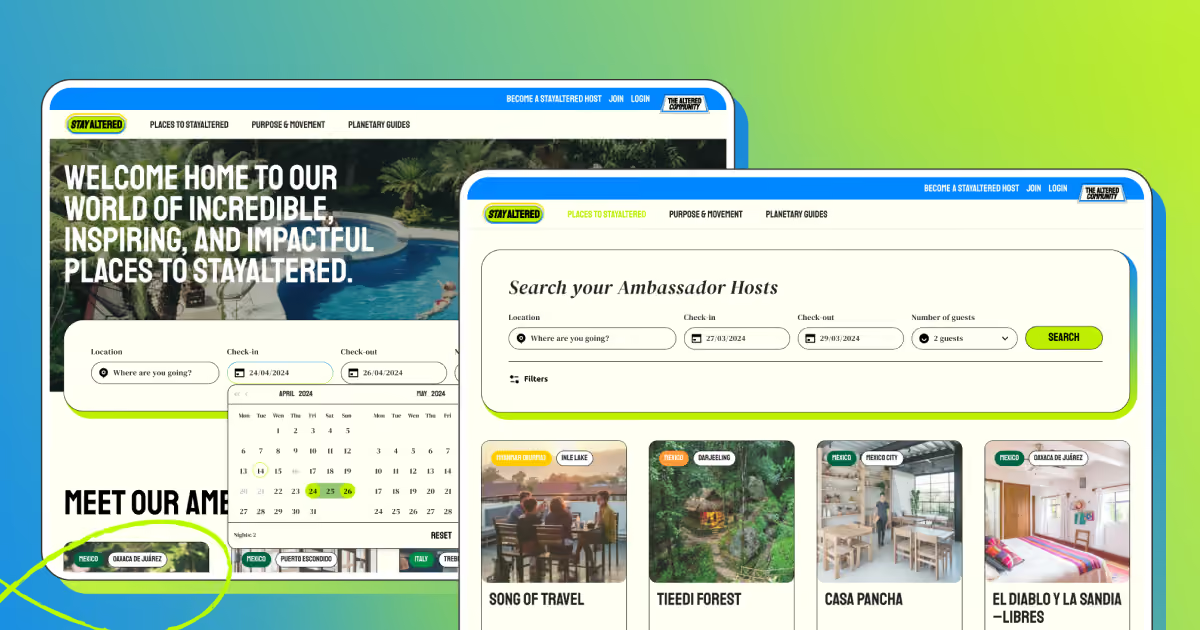
That combination turns a tour operator reservation system into something closer to infrastructure than a booking tool. Stay Altered needed this. Their platform had bookings, but manual PMS coordination across dozens of independent hosts was slowing everything down.
We integrated Katanox and Hyperguest as intermediaries, giving hosts automated, real-time availability without forcing them onto one rigid PMS. The result: 170-plus verified properties across 45-plus countries, coordinated through one system instead of scattered host-by-host workflows.
Better customer management
No more scrambling to rebuild a quote from scratch every time a lead asks a follow-up question. A proper tour operator CRM layer tracks every inquiry, past booking, and preference automatically.
Fast proposals: accurate quotes and itineraries go out in minutes, not days.
Tracked inquiries: leads and post-trip follow-ups stay visible instead of buried in an inbox.
Personalized marketing: segment past bookers and send campaigns that actually match their travel history.
This is where a web-based tour operator software platform earns its keep on the customer-facing side. No more chasing down which license a returning customer already holds. The system remembers, and staff stop re-verifying the same details every season.
Financial and business growth
No more waiting until month-end to learn which tours actually made money. Real-time reporting surfaces profit by trip, season, and channel while there's still time to act on it.
Real-time insights: see which packages drive margin, not just volume.
Scalability: connect new OTAs and suppliers without rebuilding your core system.
A solid tour operator booking software setup turns growth from a rebuild risk into a configuration change. Add a supplier, connect a channel, and the underlying system absorbs it rather than straining under it.
A solid system requires a solid team behind it. According to the COAX team data, median engineering tenure at COAX runs 6.5 years, well above the 3.1-year median across all roles. That gap matters more than it sounds. It means the engineer solving your integration problem has likely solved a version of it before, and stays around long enough to keep improving it.
Our work goes beyond writing code against a spec. We've partnered with companies from their earliest stage through their growth into recognized industry leaders, shaping the roadmap alongside them, not just executing it.
Whatever shape your tour operator software solution needs to take, we build across the whole stack. That means a customer-facing mobile app, a web platform, an internal admin panel, and a CRM tying it all together, all running on infrastructure that grows with your booking volume instead of buckling under it.
FAQ
What are the best travel software development services for tour operators that want to automate bookings and payments?
Custom development wins once payment flows get complex. We built Krytter's financial module for staged payments. It handled cash, transfer, and card payments together, across multiple jurisdictions. Off-the-shelf tools rarely manage split or installment payments well. A tailored booking-and-payment build pays off fast.
Can you recommend a travel marketing agency that would integrate with booking platforms for tour operators?
We're not a marketing agency, we're engineers. But we connect booking platforms to marketing stacks constantly. On Arrival, order data flows into HubSpot automatically. That powers email campaigns and support workflows. If you need that pipe built, we're your fit.
Which booking systems support multi-location or high-volume tour operators?
FareHarbor and Rezdy handle high volume well, with deep OTA networks. Ventrata fits large attractions that run dedicated hardware at scale. Rezdy's channel manager syncs agents and OTAs in real time. Past a certain size, most operators outgrow off-the-shelf limits. They need custom supplier logic instead.
What are the leading tour operator software solutions available?
FareHarbor leads on OTA reach, backed by Booking Holdings since 2018. Xola stands out for conversion tools and abandoned-cart recovery. Bókun connects tightly to Viator, useful for growth-stage operators. Rezdy suits multi-channel resellers well. We tested all ten head-to-head; each fits differently.
What are some popular tour operator software solutions for small businesses?
For small operators, start smaller than you think. Bókun and FareHarbor both handle supplier sync without heavy setup. Both charge per booking, not a flat monthly fee. That keeps costs proportional to actual volume. Migrate one supplier first, then expand from there.
Which tour operator software is best for automating tasks and improving operations?
Checkfront scored highest in our bundling tests. It combines tours and rentals into one system. TicketingHub automates high-volume ticket sales well. Fee stacking on OTA bookings hurts its total cost. For deep automation, custom builds often win. It depends on which task costs you most.























































































.avif)




%20for%20hotels.avif)

.avif)
.avif)


.avif)




.avif)

.avif)



.avif)


.avif)

We are interested in your opinion