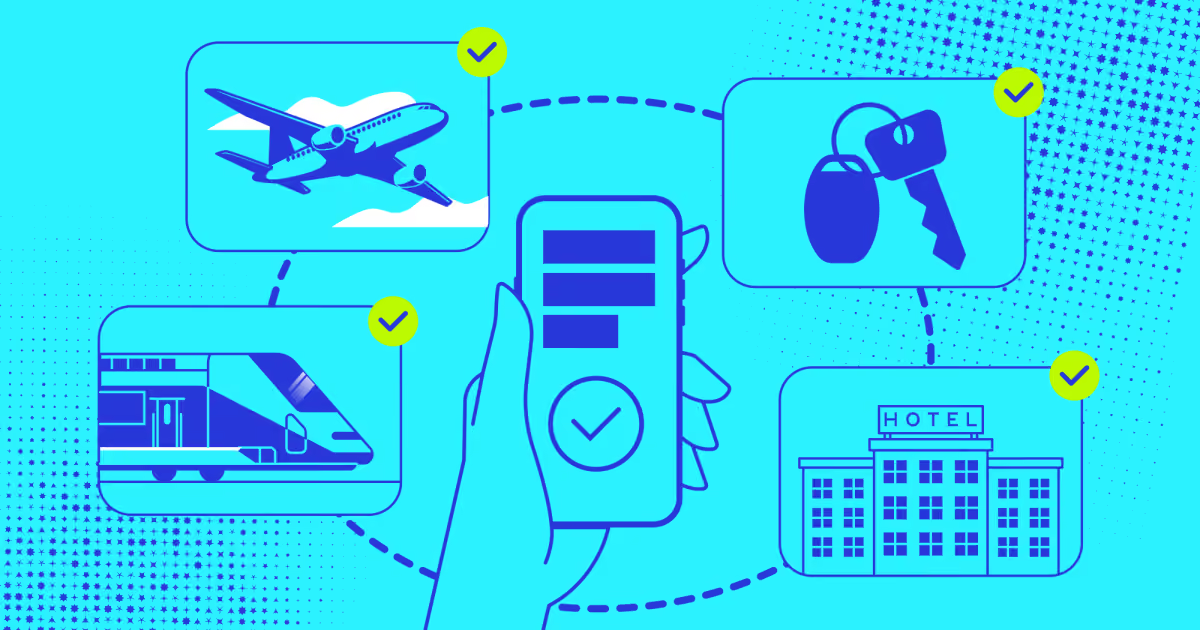
Like in any physical office, your travel business can’t keep everything (including processes and operations) in the same room. In the digital space, the important rooms to connect with your travel storefront that customers see are mid- and back-office systems.
Why are they important? If you don't have mid- and back-office software, your travel agency has to do everything by hand, miss reconciliations, and let money quietly disappear. This is completely different when you have modern OTA technology, though:
Booking engines get real-time inventoryfrom GDS, NDC, and direct supplier APIs.
Mid-office workflows automatically check, ticket, and record every reservation.
Supplier reconciliation tools automatically match payments to BSP statements.
Tools for tracking commissions let you know when you're underpaid.
CRM modules keep track of customer history and personalize every interaction.
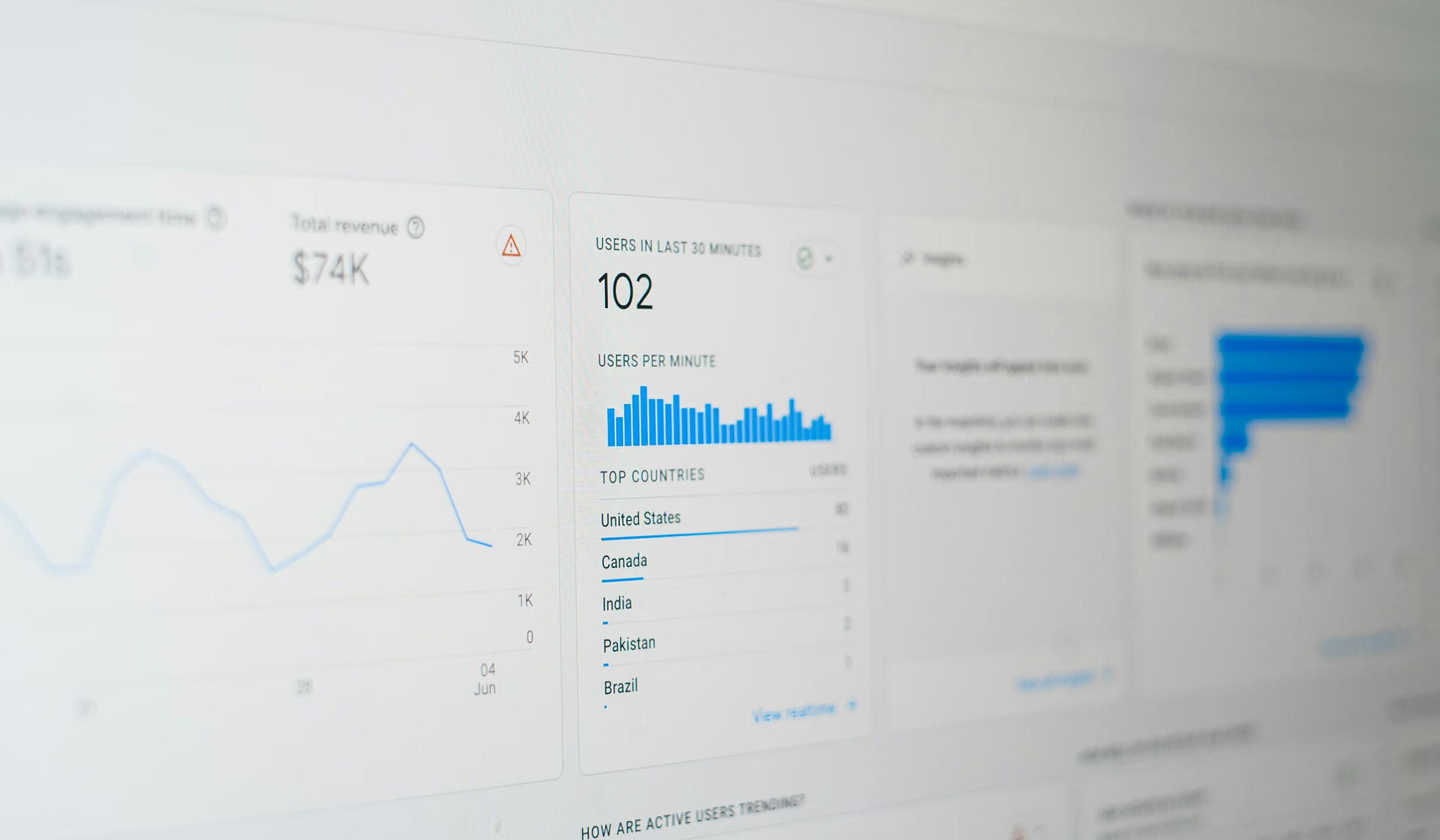
Financial dashboards show margin, revenue, and outstanding payments in real time.
Approval workflows route corporate bookings to the right stakeholder before a ticket is issued.
Post-booking automation handles modifications, cancellations, and refunds without agent intervention.
Multi-currency accounting tools reconcile across markets and subsidiaries in one record.
Custom back office software is built to your stack, your suppliers, and your scale.
In this article, we will break down the differences between back office management software and mid-office systems, discover the functionality of each, and discuss the workflows that connect them. Also, we will outline the top picks for travel agency mid-office and back-office solutions and help you bring your operations in order with the right tool.
What is a mid-office system?
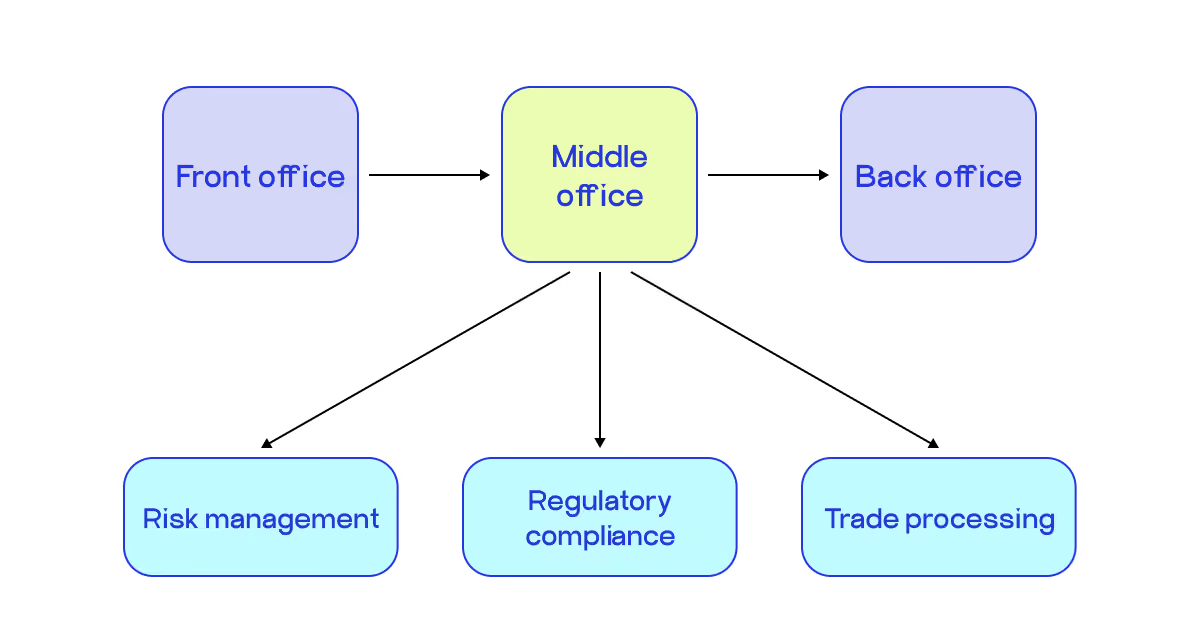
Your travel business runs on three layers. The front office sells. The back office system handles finance. And in between sits something most agencies underestimate: the mid-office.
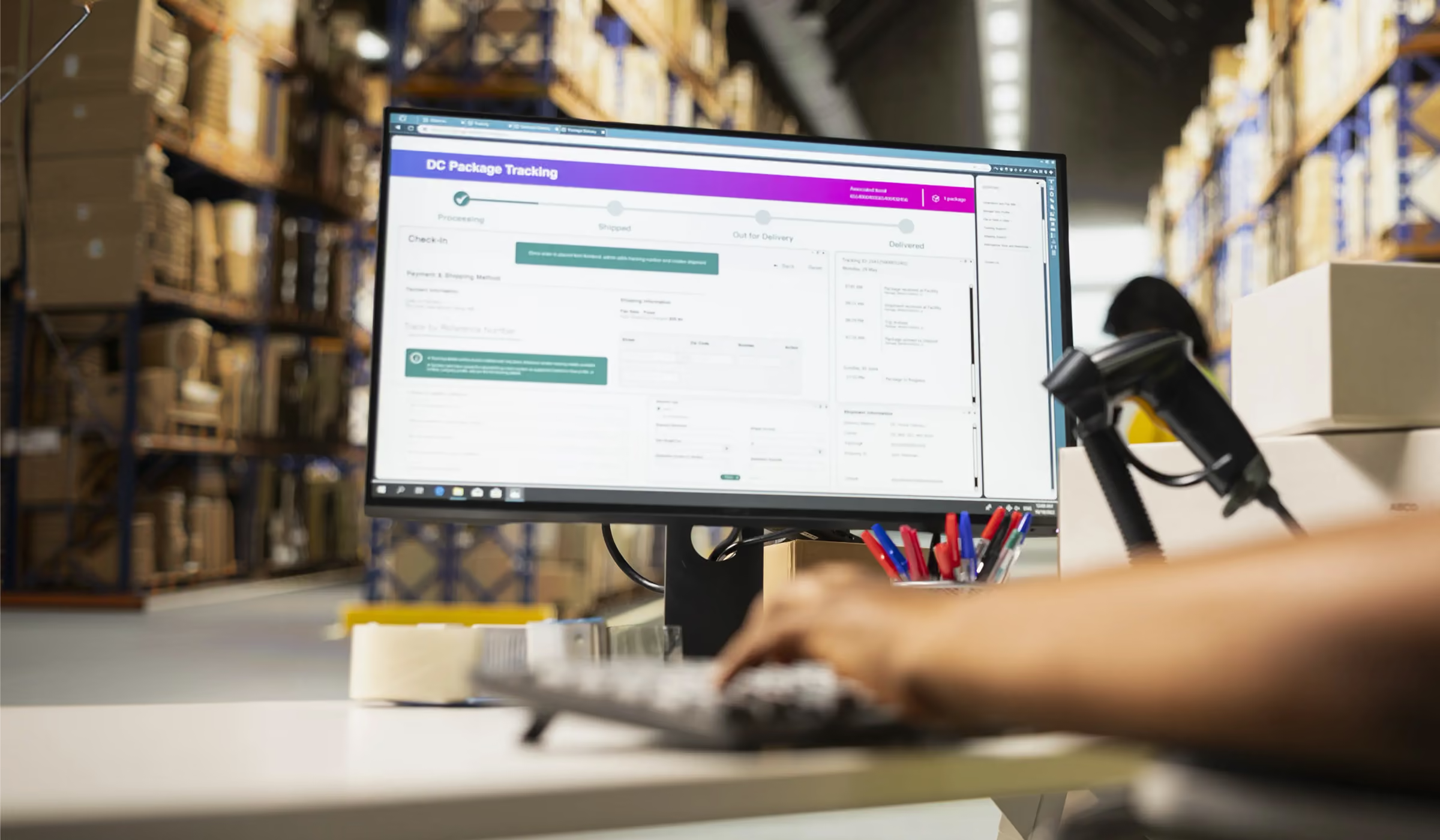
Mid office software is the operational core of any OTA. It connects your booking engine to your back office software, processing every reservation after the sale and before the accountant touches it. Ticketing, cancellations, invoicing, supplier reconciliation, markup control, and customer data management. All of it runs here, automatically.
This layer turns a confirmed booking into a fulfilled, documented, financially clean transaction. Without it, your team does that work by hand.
Market
OTAs now control roughly 55% of global travel bookings, with the market having hit $938 billion by the end of 2025. Booking Holdings, Airbnb, Trip.com, and Expedia lead by market cap, but hundreds of niche players compete for the same travelers. What's driving this?
Generative AI is shifting OTA platforms from basic search tools into intent-driven planning engines that bundle flights, hotels, and experiences dynamically. Mobile-first booking, price transparency, and convenience keep pulling travelers away from direct supplier channels.
Traditional agencies still hold ground in luxury, corporate, and complex itinerary segments. Millennials and Gen Z are returning to travel advisors for experience-first trips. So the market is not purely OTA-dominated. It is split by complexity and value.
For any OTA operating in this environment, the quality of your mid and back office software directly affects how well you scale, how fast you reconcile, and how much revenue you keep.
Core functions and importance
A travel agency mid-office typically does the work that your agents should not be doing manually. Let’s break down the key functionality.
Financial management is at the center. The system generates invoices, tracks supplier commissions, reconciles BSP statements, and feeds data into your accounting tools automatically. No spreadsheets. No chasing payments.
Booking and inventory control cover the full reservation lifecycle. Modifications, cancellations, package building, supplier contract management, and itinerary creation. Every change gets logged and processed without someone touching it twice.
On the administrative side, CRM tools store customer history and preferences. Reporting gives you sales figures, staff performance, and profitability by segment. Document generation handles vouchers, tickets, and itineraries without manual input.
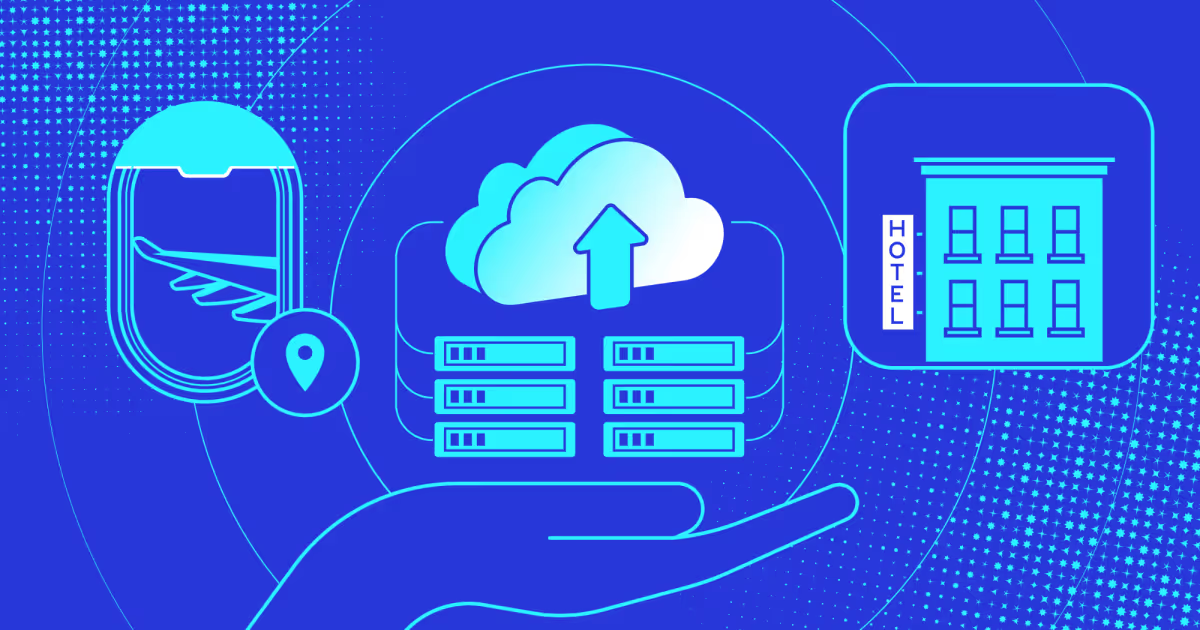
Integration ties it all together. GDS systems connections pull live inventory to your back office management software. APIs link external suppliers and booking engines directly to your operations.
Agencies that centralize these functions reduce errors, cut operational overhead, and gain real visibility into their financial position. The agencies still running these processes manually are not just slow. They are losing money on every booking they touch.
How OTA mid-office systems work
A mid-office does not work in isolation. It sits between your front office software and your financial layer, and every component serves a specific job in that chain. Here is what a fully built mid-office contains.
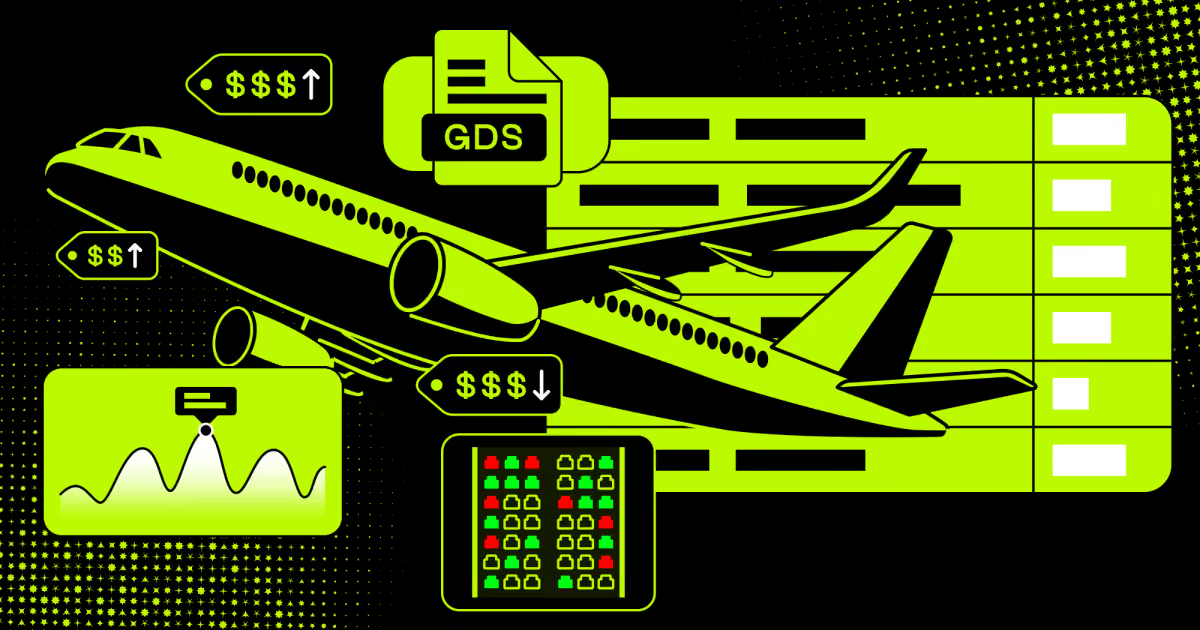
Ticketing. After payment clears, the mid-office triggers your GDS to issue the e-ticket and sends it directly to the traveler. It also replicates the passenger name record into its own database for audit and reporting purposes. This is flight-specific but critical.
Notification service. The system pushes real-time alerts to travelers across email, SMS, or app. Itinerary changes, booking approvals, schedule disruptions, policy flags. Your traveler stays informed without your team lifting a finger.
Post-booking services. This is where most of the operational weight sits. Cancellations, modifications, refunds, and repricing. In corporate travel, these workflows connect to mid office software approval chains and duty-of-care logs. In leisure, the focus shifts to consumer assistance rather than policy enforcement. As AltexSoft notes in their analysis of travel technology architecture, corporate tools also automate reshopping for lower fares inside the rebooking window, canceling and rebooking automatically when a cheaper option appears before departure.
Quality control. The mid-office runs automated checks on every booking. Flight data, hotel details, policy compliance, data accuracy. Errors get caught before they reach the traveler or the accounting team.
Profile sync and data enrichment. Traveler profiles flow in from the GDS, CRM, HR systems, and online booking tools. The mid-office consolidates and updates them continuously, adding frequent flyer numbers, payment preferences, cost center assignments, and travel history. This keeps your front office software fed with accurate, current data at every touchpoint.
Approval workflow. For corporate operations, every booking request routes to the right approver based on pre-set business rules before a ticket is ever issued. The mid-office logs every approval step for compliance and auditing.
Duty of care. Corporate mid-office tools track where travelers are in real time and connect to risk intelligence providers like International SOS or Crisis24. When disruptions happen, whether political, weather-related, or health-related, the system knows who is affected and where.
Reporting and MIS. Management information modules aggregate data across bookings, approvals, profiles, and transactions. You get configurable reports on travel spend, supplier performance, policy compliance rates, and traveler behavior.
All these separate features come together in one algorithm. Let’s outline the main workflow elements.
Workflow
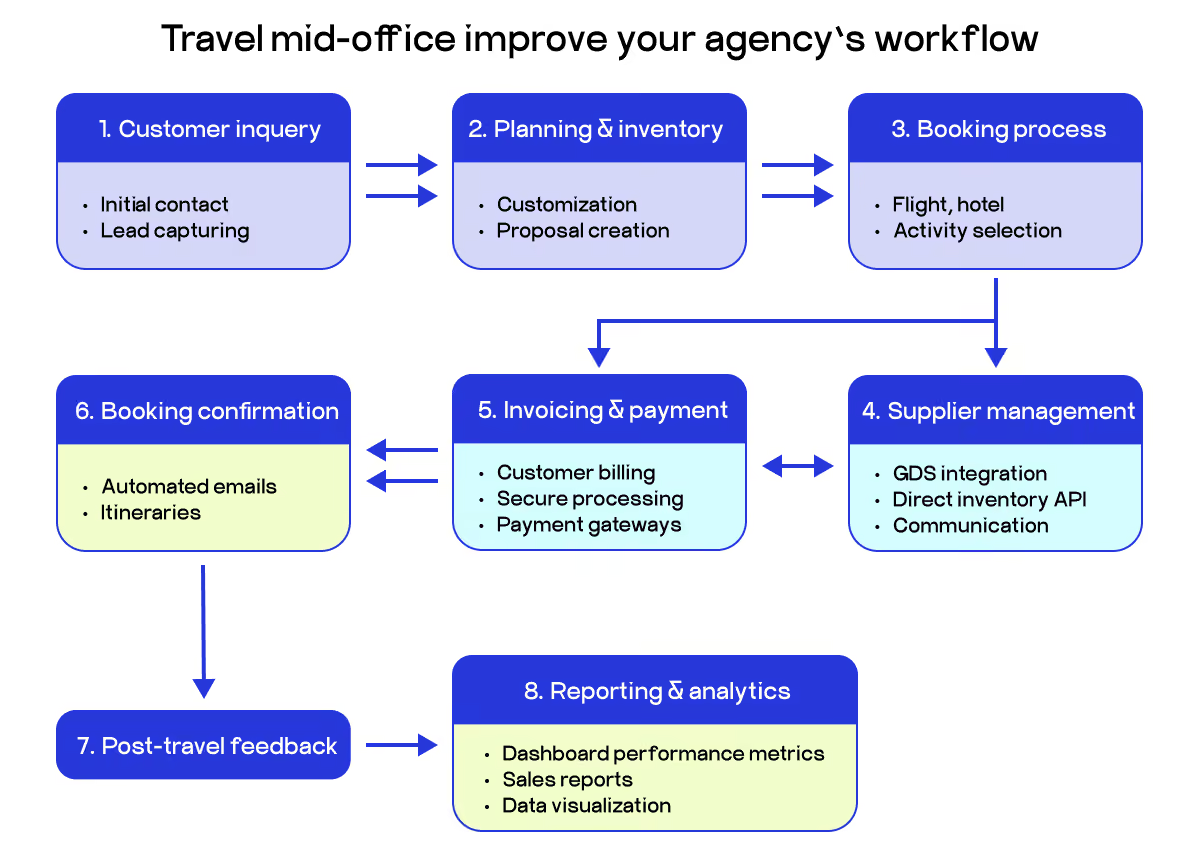
Here is how a booking moves through a travel agency mid office, from the moment a customer makes contact to the moment the trip is closed.
A traveler submits a request. Your front office software captures it, whether through a booking engine, a web form, or a direct agent interaction. That inquiry triggers the planning layer. The mid-office pulls live inventory from GDS connections and supplier APIs, building itinerary options against your configured markups and rate rules.
The customer confirms. Now the mid-office takes over completely. It validates the booking data, checks policy compliance if rules are configured, and routes the reservation for approval if required. Once cleared, it triggers ticketing through the GDS, generates the invoice, and sends the confirmation with full itinerary documentation to the traveler automatically.
This is the point where a back office system would normally pick up. But unlike travel agency back office software, the mid-layer does not hand off a clean, finalized transaction. It manages everything that happens in between: modifications, refunds, supplier communications, schedule change alerts, and rebooking logic. Only once a booking is fully fulfilled and financially settled does it pass clean data downstream to accounting and reconciliation.
Throughout the journey, your cloud software for travel keeps all of this synchronized across agents, suppliers, and travelers in real time. No version conflicts. No data sitting in one person's inbox. No manual handoffs between departments.
Post-trip, the mid-office collects feedback signals, closes the booking record, and feeds final data into your reporting layer. That data then informs everything from supplier negotiations to agent performance reviews.
The whole sequence runs without your team managing each step manually. That is the point.
What is a back-office system?
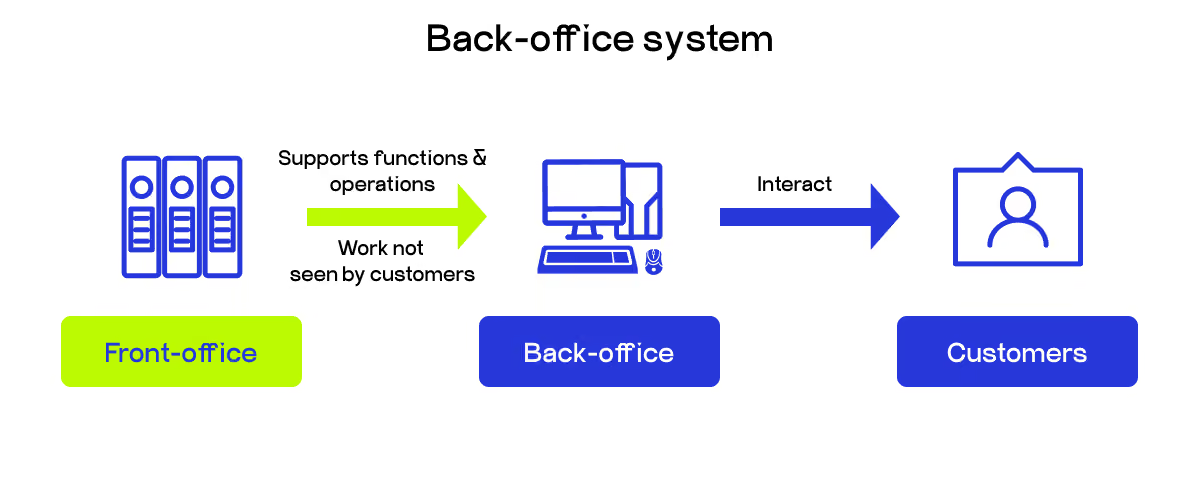
Picture your travel agency as a physical office. Walk through the front door, and you find your agents, your booking screens, your customer conversations. That is the front office. The people here use tools to talk to clients, search inventory, and confirm reservations.
Now walk further back. Past the agents, past the booking desks. Here you find the bookkeeper, the accountant, and the admin team. This is where the agency actually runs. And the software they use is your back office management software.
A back-office system is the operational and financial engine behind every booking your agency makes. It handles the work that customers never see, but that keeps the business solvent: payments to suppliers, invoice generation, reconciliation, financial reporting, and booking lifecycle management. Everything from the moment a sale closes to the moment the accounts balance.
Front-office tools handle the sale. Back office systems handle everything that happens after it.
Market
The global travel management software market is projected to reach $18.92 billion by 2031. That growth is easy to understand.
Two forces are driving it. First, global business travel expenditure is expected to hit $1.57 trillion in 2025. At that volume, manual processes simply collapse. Agencies need back office system solutions that can handle thousands of transactions without human input at every step. Second, duty of care requirements are tightening. Companies need real-time visibility into where their travelers are and what they are spending. That visibility lives in the back office.
The competitive pressure is real, too. OTAs now capture 55% of global travel bookings. Independent agencies and tour operators that cannot match OTA speed and pricing accuracy are losing ground. Modern travel agency back office software closes that gap by automating the operational layer that used to require full admin teams.
Corporate travel dominates the segment at over 60% of total market share. But leisure and group travel are catching up fast, particularly as post-pandemic demand pushes volume back through smaller agencies that never built the infrastructure to handle it efficiently.
The agencies investing in travel agency back office software now are not just cutting costs. They are building the operational foundation to compete at scale.
Core functions and importance
A back-office system covers every function your agency runs that customers never see but that determine whether your business is profitable.
Accounting and financial management are the core. The system generates invoices, tracks accounts payable and receivable, manages supplier payments, and monitors revenue and profit margins in real time. For hotel back office accounting software specifically, this means reconciling nightly rates, managing commission settlements per property, and tracking occupancy-linked revenue across booking periods. None of that works reliably by hand.
Booking and reservation management centralizes every reservation from every channel into one record. The system validates payments, processes cancellations, handles modifications, and maintains a clean audit trail across the full booking lifecycle.
Supplier management handles contracts, pricing agreements, and purchasing workflows with hotels, airlines, and tour operators. Automation here removes the manual back-and-forth that slows reconciliation and creates errors.
Travel analytics and reporting give you operational intelligence. Sales performance, agent productivity, supplier margin, and financial health by segment. As Trawex notes in their travel back-office system guide, automated document generation covers invoices, vouchers, and tickets without manual input, which removes a consistent source of error from the workflow.
CRM integration stores client history, preferences, and communication records, feeding personalized service without requiring agents to remember everything manually.
Back office software services that handle all of this in one platform eliminate the version conflicts, data gaps, and reconciliation headaches that plague agencies still running these functions across spreadsheets and disconnected tools. In short, the back office does not generate revenue directly but determines how much of your revenue you keep.
How OTA back-office systems work
Your back office system software set is usually a collection of connected modules, each handling a specific layer of your operation. Here is what a fully built OTA back office contains.
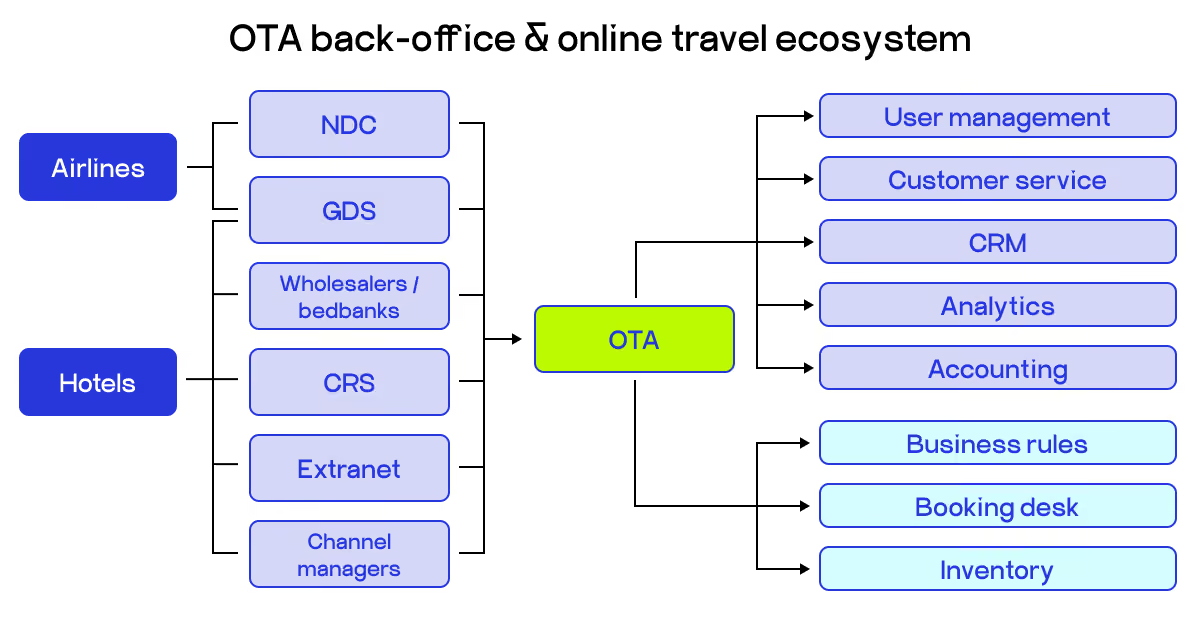
Business rules engine. This is the logic layer. It defines how your system makes decisions automatically: which inventory gets surfaced, what markup applies, which bookings require manual review, how pricing rules trigger. Everything else in the system executes against these rules.
Booking engine and connectivity. The booking engine connects your OTA to Global Distribution Systems, Central Reservation Systems, wholesalers, and direct supplier APIs. It pulls live inventory, processes reservation requests, and pushes confirmed bookings back to suppliers. This is where airlines, hotels, car rentals, and insurance providers feed into your platform simultaneously.
Booking desk. Reservations arrive from multiple channels: web, mobile, phone, chat. The booking desk centralizes all of them into a single queue for manual or automated handling. No reservation gets lost between channels.
Accounting and finance. Payment processing, general ledgers, invoicing, supplier payment tracking, and financial reporting all sit here. Your back office software solutions should give you real-time visibility into cash flow, outstanding payments, and margin by booking segment, not just monthly summaries.
Quotation and markup management. Agents configure markups, build custom packages, and generate multiple quote options for clients directly inside the system. Pricing logic applies automatically based on the rules you set.
CRM. Customer records, booking history, preferences, communication logs, and marketing activity all live in the CRM layer. This data feeds personalization across every customer touchpoint.
User management. Roles, access levels, and permissions are configured here for every staff member and partner. Your finance team sees what they need. Your agents see what they need. Nothing bleeds across.
Analytics and reporting. Sales performance, conversion rates, supplier margins, employee productivity, user behavior. Your back office system aggregates all of this into dashboards and exportable reports that inform pricing decisions, supplier negotiations, and operational planning.
All these connected parts connect with the other systems you have to form a specific workflow.
Workflow
Here is how your back-office system processes a booking from inventory request to closed financial record.
A customer searches on your platform. Your booking engine fires queries simultaneously across connected GDS feeds, CRS systems, and direct supplier APIs, pulling live availability for flights, hotels, car rentals, and ancillary services. The business rules engine applies your markup logic and filters results against your configured pricing and availability rules before anything reaches the customer screen.
The customer selects and confirms. Payment processes through your integrated gateway. The back office management software validates the transaction, generates a booking record, assigns it to the correct supplier account, and triggers automatic invoice creation. Confirmation documents go to the customer. Supplier notification goes out through the relevant channel.
Now the operational layer takes over. For hotels, hotel revenue optimization logic kicks in here: the system tracks rate movements, monitors booking pace against targets, and flags opportunities to adjust pricing or inventory allocation. For flights, ticketing triggers through the GDS. For packages, the system manages each component against its respective supplier record.
Throughout the booking lifecycle, every modification, cancellation, or payment update flows through your back office software automatically. Supplier reconciliation runs against incoming statements. Commission tracking updates in real time. Your finance team sees the full financial picture without chasing data across departments.
When the trip completes, the system closes the booking record, finalizes the supplier settlement, and feeds all transaction data into your reporting layer. Revenue figures, margin by product type, agent performance, channel contribution, it's all there without anyone compiling it manually.
That is the workflow your software runs on every single booking, at whatever volume your business operates.
Mid-office vs back-office systems
Most travel agencies run three operational layers at the same time. They just don’t always know where one ends and the other begins. That confusion costs time, creates gaps, and leads to the kind of manual workarounds that quietly drain revenue. So to avoid it, let’s take a good look at the difference.
The front office is everything your customer touches. Your booking engine, your website, your agents on the phone or chat. Front-office tools handle search, discovery, pricing presentation, and the moment of sale. This is where revenue is generated. It produces the transaction that the rest of your operation then has to fulfill.
The mid-office takes over the moment a booking is confirmed. It is the fulfillment layer. It validates the booking data, applies your business rules, triggers ticketing, manages post-booking changes, handles notifications, and ensures that everything the front office sold is actually deliverable. It sits between the sales and the accounting. Without it, the gap between booking confirmed and booking fulfilled is filled by your staff, manually, one task at a time.
The back office handles everything after fulfillment as a financial and administrative core. Invoicing, supplier payment reconciliation, commission tracking, reporting, CRM, and compliance. Your back-office system cares about whether your business is financially accurate and operationally sound. For hotels specifically, back office hotel software manages nightly rate reconciliation, occupancy-linked revenue tracking, and property-level supplier settlements. For tour operators, tour operator back office software handles package costing, component-level supplier management, and the complex reconciliation that comes with multi-supplier itineraries.
Layer
Who uses it
When it operates
Core job
Front office
Agents, customers
Before and during booking
Search, sales, customer interaction
Mid-office
Operations team
Post-booking, pre-accounting
Fulfillment, ticketing, changes, notifications
Back office
Finance, admin
After fulfillment
Invoicing, reconciliation, reporting, compliance
The connection between all three is data. The front office creates a booking record. The mid-office enriches it, validates it, and fulfills it. The back office receives the completed record and processes it financially. Each layer depends on clean, accurate data from the layer before it. When that chain breaks, at any point, the error compounds downstream.
A common mistake is treating the mid and back office as the same system. The mid-office operates in real time, responding to booking events as they happen. The back office management system operates on completed transactions, processing what the mid-office has already handled. They overlap in some platforms, particularly in smaller agency tools, but their functions serve different purposes at different stages of the booking lifecycle.
The cost of outdated travel technology
Most agencies lose money on bad processes. A booking confirmed on a GDS, manually copied into a spreadsheet, re-entered into an invoicing tool, and then reconciled by hand against a supplier statement is not a workflow. It is four opportunities to make an error on a single transaction. Multiply that by hundreds of bookings a week, and you have a structural revenue leak that never appears on a single report but shows up everywhere in your margins.
OTA platforms lose 10% of revenue to commission mismanagement and reconciliation errors. Fraudulent bookings increased by 8% in 2024 and keep growing now. Data breaches affected 3% of OTA users globally that same year, each one traceable in part to fragmented, poorly integrated systems that store data inconsistently across tools.
The operational cost is just as real. An agent spending 40 minutes manually processing post-booking documents that automated travel backoffice management handles in seconds is not a productivity problem. It is a technology problem dressed up as a staffing problem.
Agencies respond by hiring more admin staff instead of fixing the system, causing the workload.
Common failure points in outdated setups include duplicate booking records across disconnected platforms, supplier payment delays caused by manual reconciliation backlogs, invoice errors that trigger customer complaints and refund requests, and commission settlements that get missed entirely because no system is tracking them automatically.
For tour operators running multi-supplier packages, the problem compounds. A single package touching four suppliers, each with different payment terms, different commission structures, and different cancellation policies, managed across spreadsheets, is a reconciliation disaster waiting to happen. For hotels running property-level reporting without integrated back office systems software, rate variance between OTA channels and direct bookings goes undetected until it shows up as margin erosion at the end of the month.
The cost of outdated technology is not a recurring drain on every booking your agency processes.
How can modern software fix it?
Modern travel agency back office software replaces the manual chain with a single connected workflow. Booking data enters once, at the point of sale, and flows automatically through fulfillment, invoicing, supplier notification, reconciliation, and reporting without human re-entry at any step. The error rate drops because the number of manual touchpoints drops.
Automated supplier reconciliation eliminates the backlog. Instead of a finance team spending days matching booking records against BSP statements, the back-office runs the comparison automatically, flags discrepancies, and generates a clean settlement record. What took three days takes three minutes.
Commission tracking works the same way. Every supplier agreement lives in the system. Every booking maps to the relevant commission structure. Every payment gets tracked against what was expected. If a supplier underpays, the system flags it. Nothing gets missed because nothing depends on someone remembering to check.
For agencies dealing with high booking volume, real-time financial dashboards replace the monthly scramble to understand where the business stands. You see revenue, margin, outstanding supplier payments, and channel performance updated continuously, not summarized four weeks after the fact.
The agencies that made this switch see fewer staff hours spent on administration, faster supplier settlements, cleaner financial records, and the ability to scale booking volume.
Outdated technology actively works against your margins. Modern back office systems software does not just remove that friction. It turns the back office from a cost center into a source of operational accuracy that protects every dollar your front office generates.
Best solutions for your OTA
As we have differentiated between the mid- and back-office solutions, let’s discover the best options separately as well.
Mid-office platforms
Most mid-office platforms share partial functionality with the front office. This is why we will mostly cover the tools that contain both parts of the feature set.
Platform
Best for
Key strength
Pricing
Tramada
Corporate, leisure, broker agencies
GDS agnostic, NDC ready, 50+ integrations
From ~$92/month, custom
MIDOCO
OTAs, tour operators, business travel
BSP/ARC reconciliation, 70+ integrations
Custom enterprise quote
PASS TAD
Mid-to-large agencies, TMCs
Multi-source GDS/NDC unified interface
$10,000 to $125,000+
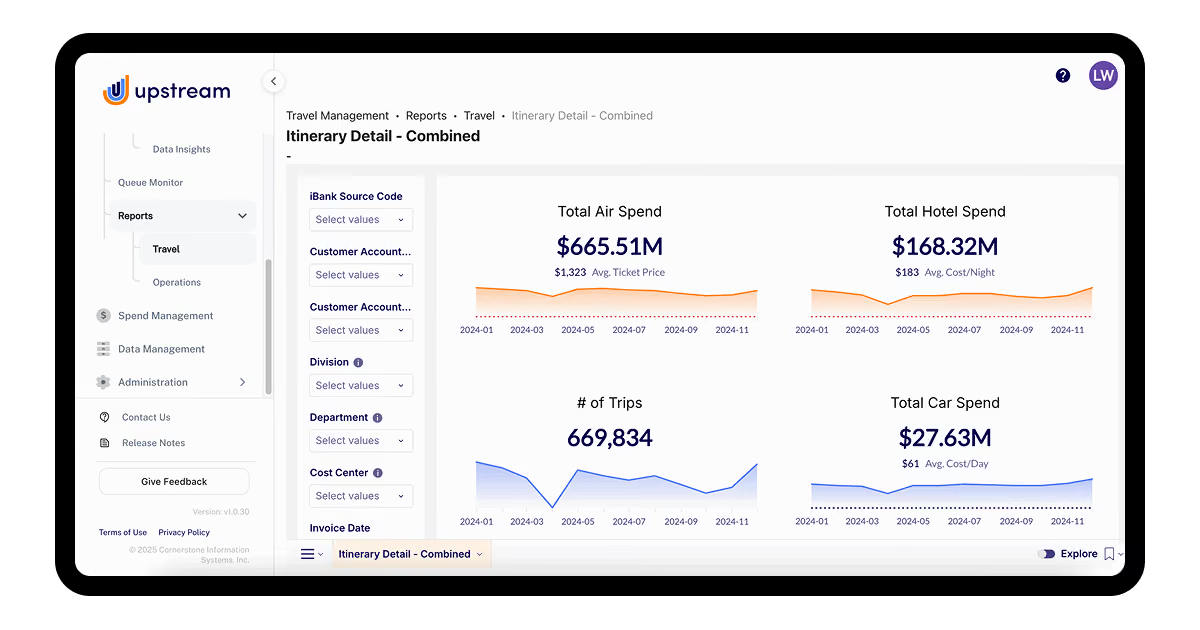
Cornerstone
Corporate travel programs
Approval workflows, policy compliance
From ~$19,920/year
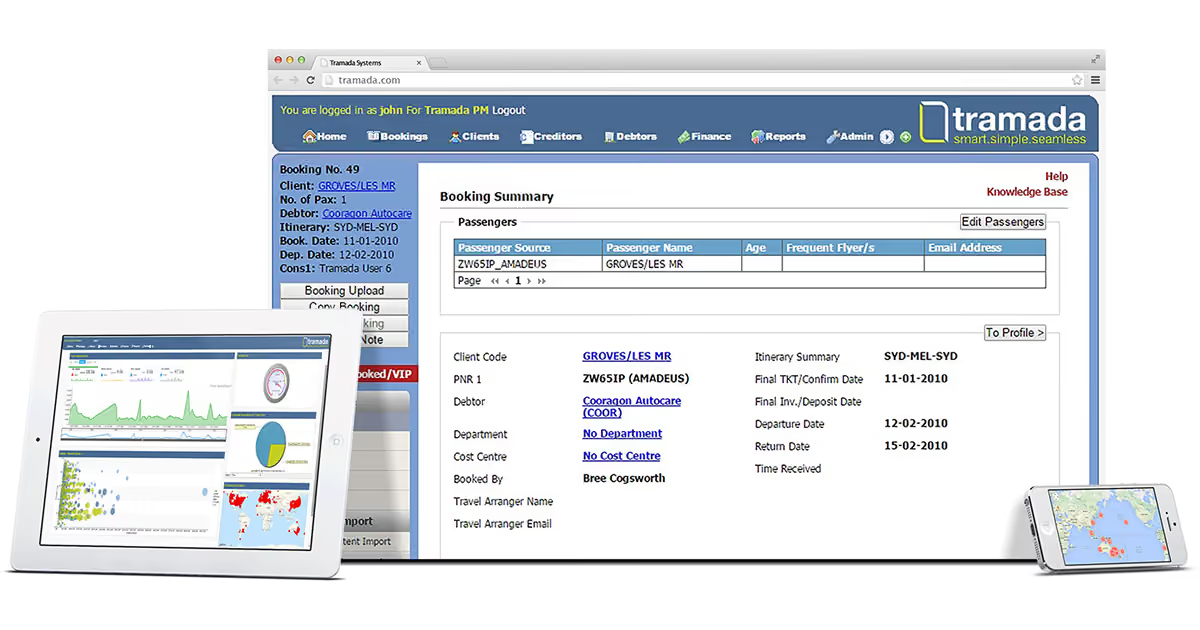
Tramada is a cloud-based SaaS platform covering front and mid-office functions for corporate, leisure, and broker agencies. It automates post-booking document production, handles commission management and GL-mapped accounting handoffs, and connects with over 50 products through a plug-and-play integration design. GDS agnostic and NDC ready, it works across booking channels without locking you into a single distribution system. Pricing is custom, with third-party estimates starting around $92 per month, though actual costs scale with agency size and modules.
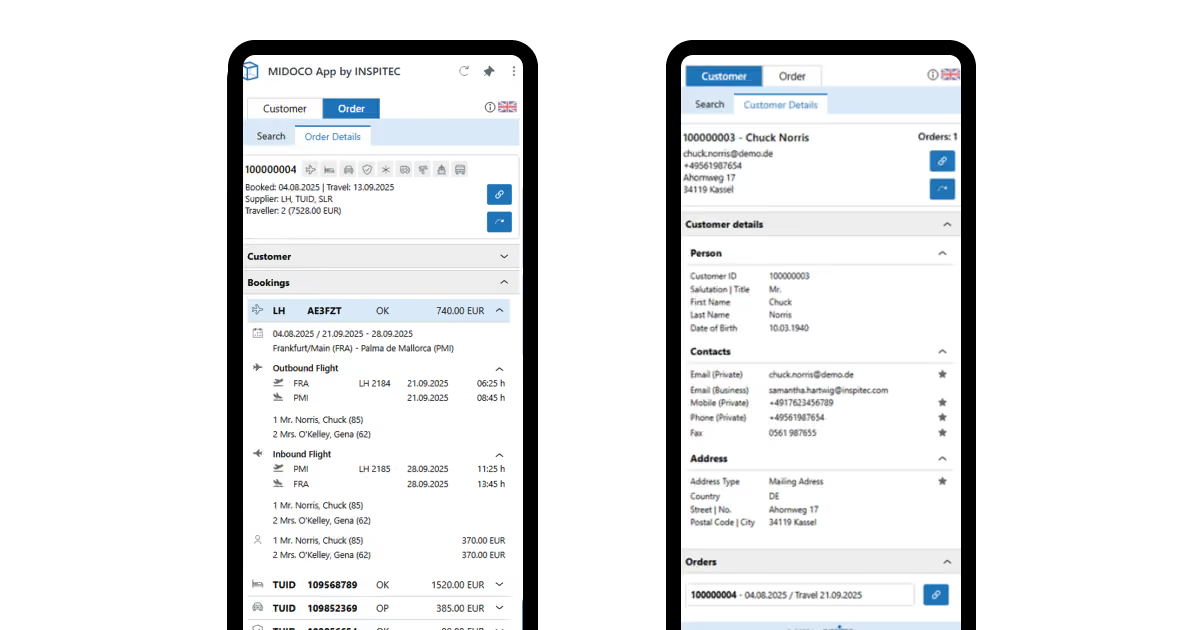
MIDOCO is a mid-office software and ERP platform built for travel agencies, OTAs, and tour operators that need automated post-booking workflows at scale. It imports booking data from reservation systems automatically, handles BSP and ARC reconciliation, manages multi-currency payments including virtual cards, and maintains a GDPR-compliant CRM across the full customer lifecycle. It integrates with over 70 partner systems and is one of the few platforms purpose-built to act as a central data hub between your booking tools and external accounting software. Pricing is enterprise and custom; contact MIDOCO directly for a quote.
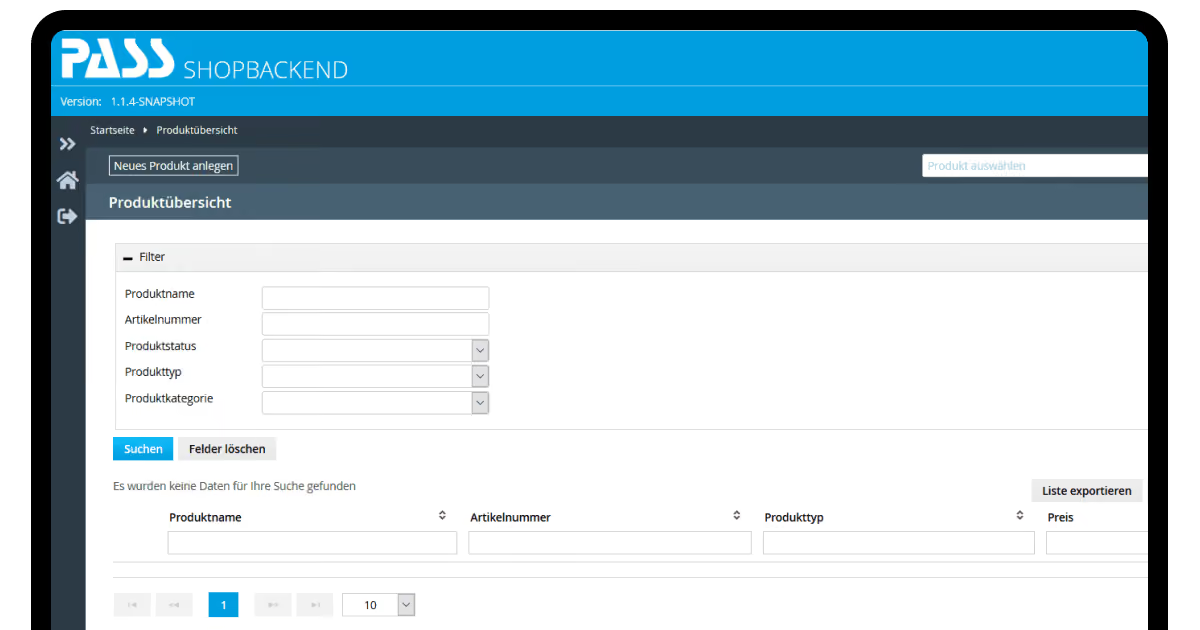
PASS Travel Agent Desktop (TAD) consolidates GDS, NDC, low-cost carrier, and direct supplier content into a single web interface, removing the need to switch between disconnected booking systems. It handles end-to-end booking management, including profile syncing, MIS reporting, and real-time lifecycle tracking, making it a strong fit for mid-to-large agencies and TMCs managing complex multi-source inventory. Pricing is not public and is scoped per implementation; enterprise travel software of this type typically ranges from $10,000 to over $125,000, depending on scale.
Cornerstone is a corporate-focused travel agency mid office designed for larger travel programs that need structured approval workflows, policy compliance, and duty-of-care integration. It follows a per-user, per-month subscription model with annual contracts; mid-market implementations typically run around $19,920 per year, scaling with employee count and module requirements.
Now that we outlined the most popular options, let’s move on to the back-office systems. This category has a greater number of standalone and integrated solutions.
Back-office platforms
Choosing the right software is all about finding the right level of automation for your specific workflow, whether you're a high-volume agency that needs audit-ready financial accuracy or a modern tour operator that needs to generate documents without any problems. Here is a list of the best options.
Platform
Best for
Key strength
Pricing
TravCom
North American agencies
GDS/NDC reconciliation, 30+ financial reports
Custom, trial from $300
TravelOperations
Small, medium & enterprise travel agencies
Microsoft Dynamics 365 integration, automated BSP/ARC reconciliation, dashboards
From $120/user/month (min. 10 users)
Softrip
Tour operators, 5–500 users
All-in-one platform, full workflow coverage from reservations to accrual accounting
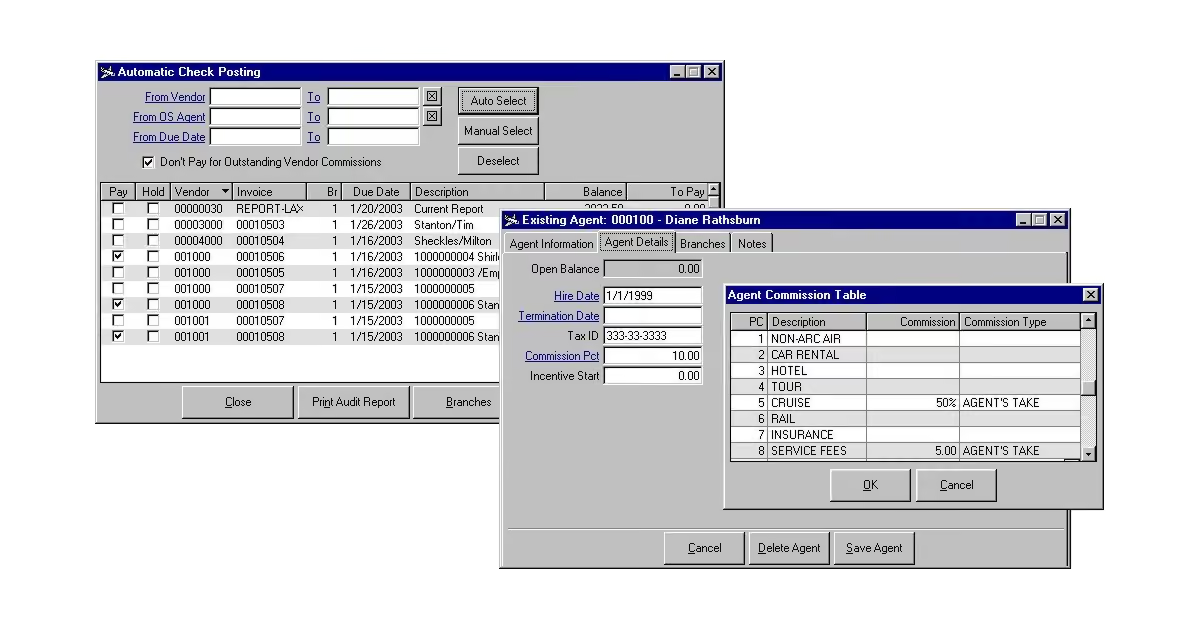
TravCom is one of the oldest travel agency back office software platforms still in active use, and for good reason. It handles invoicing, BSP, and credit card reconciliation, multi-currency accounting, and commission tracking through tight GDS and NDC integration, with over 30 built-in financial reports. It suits North American agencies running high volumes of standardized bookings that need proven, audit-ready financial management. Pricing is custom; a historical entry point has been a three-month trial for $300, followed by a prorated annual fee.
TravelOperations is a cloud-based mid and back office system built on Microsoft Dynamics 365 Business Central, designed for small, medium, and enterprise travel agencies that want a fully integrated finance and operations stack without custom development. It offers automated BSP/ARC reconciliation, Power BI dashboards, workflow alerts, task management, and seamless integrations with leading booking, HR, and GDS tools across a single unified data layer. Pricing starts at $120 per user per month, which includes the full Microsoft Business Central license and all TravelOperations travel functionality, with a minimum of 10 users required.
Softrip is a comprehensive tour operator platform built within Gate 1 Travel and purpose-engineered for businesses ranging from 5 to 500 users that need reservations, product management, operations, CRM, reporting, integrated payments, and accrual-based accounting in one system. It eliminates the need for third-party vendors by covering the entire tour operator workflow, from supplier contract management and dynamic pricing to GDS and hotel API connectivity,with a strong focus on immediate ROI through process automation and yield management. Pricing is available on request via a personalized demo.
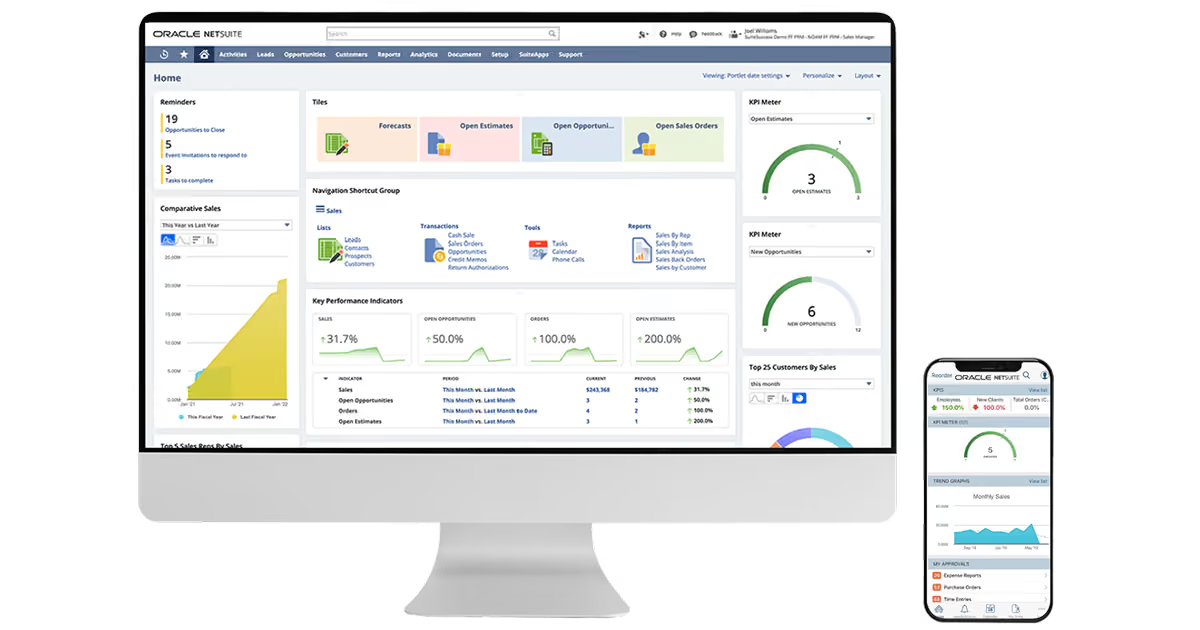
Oracle NetSuite is enterprise-grade back office hotel software and a broader travel ERP for companies managing multi-entity operations, high booking volumes, and complex supplier payment structures. It automates general ledger, accounts payable and receivable, revenue recognition, and multi-subsidiary consolidation, with hospitality-specific integrations pulling data from PMS and POS systems directly into financial reporting. Total first-year costs for mid-market firms typically range from $50,000 to over $200,000, depending on modules and user count.
SAP Concur is the dominant choice for large enterprises that need back-office management software tightly integrated with existing SAP ERP infrastructure. It automates the full travel-to-reimburse cycle: expense auditing, approval workflows, credit card matching, payroll integration, and Sarbanes-Oxley compliance reporting. Pricing varies from £0.21 per unit for specific services to fully custom enterprise contracts; implementation consulting typically adds $120 to $250 per hour.
Ezus is modern back office software for tour operators, DMCs, and MICE specialists who need margin tracking, multi-currency budgeting, and automated document generation in one workspace. The visual itinerary builder feeds directly into live budget calculations with VAT handling across multiple countries, and proposals, vouchers, and invoices are generated in a single click with your branding. It supports six languages natively, connects via API and Zapier to over 7,000 tools, and offers custom pricing based on team size.
TravelWorks is the go-to best back office software choice for North American agencies whose primary need is financial accuracy: commission processing, GDS reconciliation with Amadeus and Sabre, and a comprehensive AP/AR suite. It is accounting-first by design, which makes it a strong fit for agencies processing standardized bookings at volume rather than building complex tailor-made itineraries. Pricing typically starts above $500 per month depending on users and modules.
As great as the solution you can find in the market is, it will still probably limit you. Let’s break down the other way, as well.
What will a custom back office system give you?
Off-the-shelf platforms cover common ground, but they don’t cover your ground. If your OTA runs processes that do not fit standard workflow logic, connects to supplier systems that generic platforms do not support, or operates at a scale where licensing costs outpace the value of features you actually use, custom software is worth consideration.
Our travel agency software development service covers the full cycle: discovery, architecture, build, testing, and live support after deployment. We do not hand you a product and walk away. We build to your current stack, connect to your existing tools, and stay engaged after go-live to handle what inevitably needs adjusting in real operating conditions.
On the functional side, that means any workflow your business requires. Custom booking logic, supplier-specific reconciliation rules, role-based access structures built around how your teams actually operate, reporting dashboards configured to the metrics your management team tracks. Not a standard module you adapt to, but software built around how you work.
Our payment integration services handle the complexity that generic platforms avoid: multi-currency processing, virtual card automation, regional payment gateway connections, BSP settlement logic, and supplier-specific payment structures that do not fit standard AP workflows.
We also build the integrations that matter for modern OTA operations: GDS and NDC connectivity, AI-powered recommendation and pricing layers, CRM synchronization, third-party risk and duty-of-care tools, and real-time analytics pipelines. These are the capabilities that separate back office software solutions that scale from platforms that cap out when your business grows past them.
FAQ
What is back office software?
Back office software manages the operational and financial layer of a travel business that customers never see. It handles invoicing, supplier payments, reconciliation, reporting, and booking lifecycle management. It is the system that determines whether your agency is financially accurate, operationally organized, and able to scale without adding administrative headcount proportionally.
What are the challenges of travel back office management?
Manual data re-entry across disconnected tools, supplier reconciliation backlogs, commission tracking gaps, and invoice errors are the most common failure points. At volume, these compounds fast. Fragmented systems create version conflicts, delayed settlements, and financial blind spots that only surface at month's end, when correcting them costs more than preventing them would have.
How to make back office software for tour operators secure?
Use role-based access so staff only reach the data for their job. Encrypt data in transit and at rest. Apply PCI/DSS-compliant payment processing for all transactions. Run regular security audits and penetration testing. Choose vendors with ISO 27001 certification. Sign NDAs covering your business and customer data. Treat security as architecture, not a feature added later.
How does COAX cover back-office software services efficiently?
Our team is 90% mid and senior level, ISO 9001 and ISO 27001 certified, and experienced in travel production environments. We handle the full cycle from strategy to post-launch support, sign an NDA on every project, and run agile delivery with no handoff gaps. We build to scale from day one. Rated 4.9/5 on Clutch.



























































































.avif)




%20for%20hotels.avif)

.avif)
.avif)


.avif)




.avif)
.avif)



.avif)


.avif)

We are interested in your opinion