Whether you’re running a travel agency or a hotel, being successful in 2026 can’t go without modern cloud travel solutions and specifically designed cloud hospitality software. But how to choose one for your needs?
To narrow your pick, we’ve assembled the top ten best cloud travel solutions using parameters like the best travel and booking APIs, hotel management solutions, CRM tools, and security:
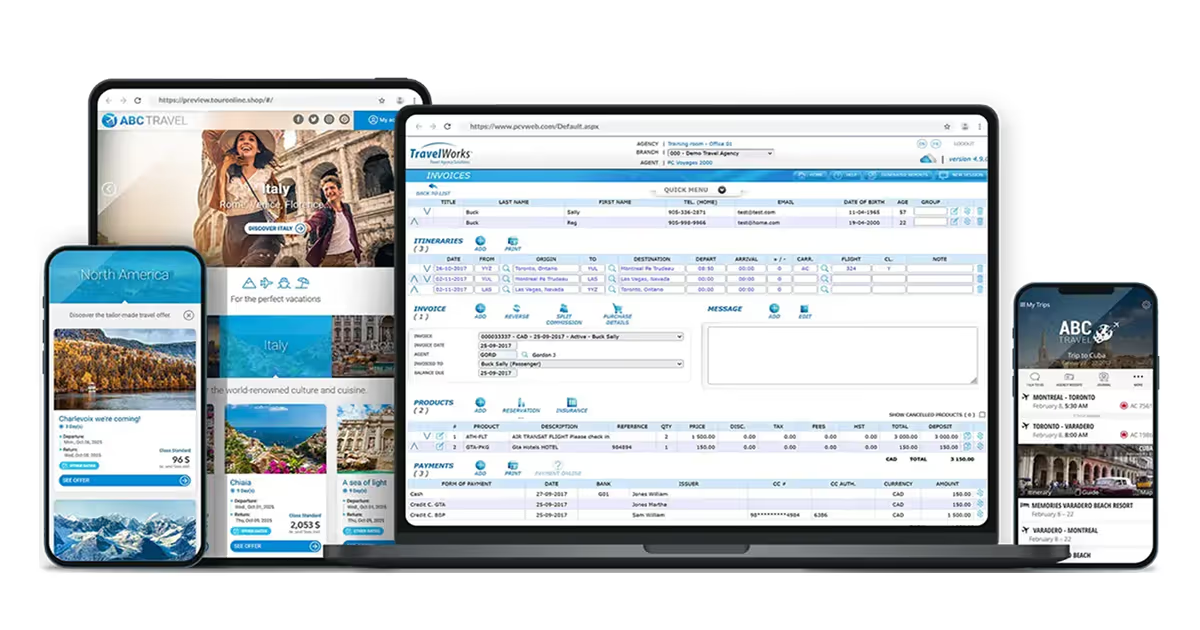
TravelWorks - Great for managing back-office operations, CRM, and accounting.
Sabre Hospitality - Perfect for large hotel chains needing dynamic pricing and multi-property management.
Lemax - Ideal for DMCs and travel agencies wanting to automate workflows.
Tourwriter - Excellent for creating multiple custom itineraries daily.
TravelPerk - Perfect for beginners seeking a simple tool for flights, accommodations, and car rentals.
SkyTouch Hotel OS - Great for mid-sized hotel groups needing faster operations.
Rezdy - Ideal for businesses needing 30+ global payment and invoicing options.
TravelShift - Perfect for small and medium agencies needing AI-powered itinerary creation.
WebRezPro - Great for operations needing full front desk and housekeeping.
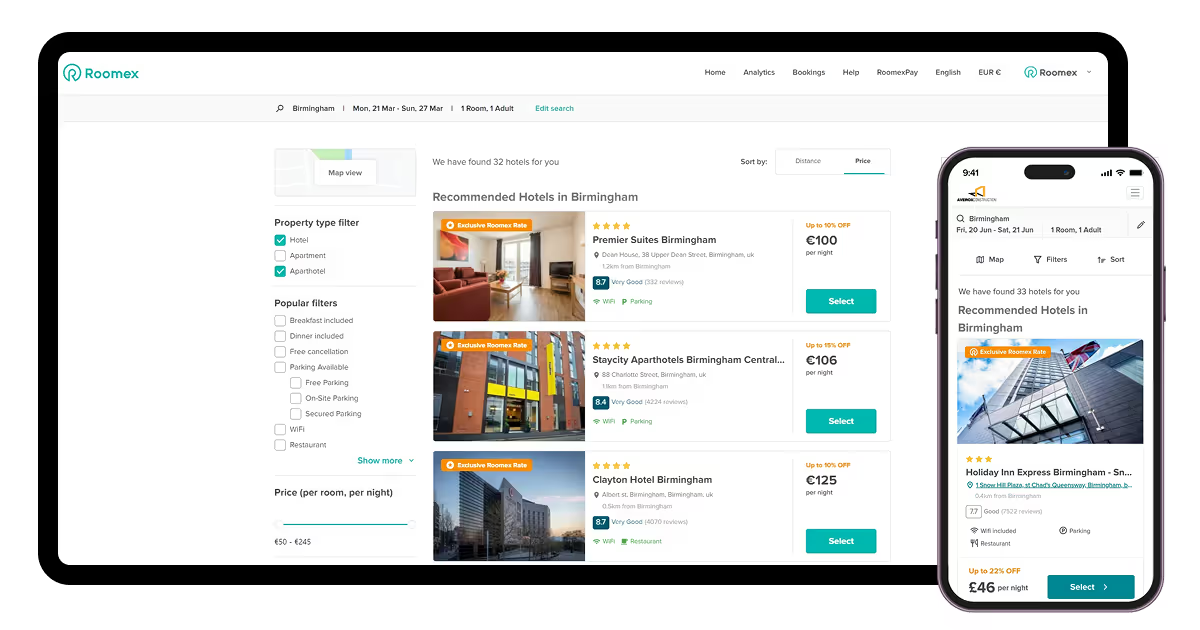
Roomex - Great for tracking client activities and managing payments.
This guide also unlocks the key features of hospitality and travel industry cloud technology, key cloud computing models, and describes how to pick and implement the solution that truly makes a change.
Why are cloud solutions important for the travel industry?
Before you undermine the importance of cloud travel technology, remember that digitization is now the order of business. The travel sector has changed a lot over the past decade, shifting to digital-first operations. This makes cloud computing in hospitality and tourism absolutely a must.
According to Nadda and colleagues, cloud computing provides travel businesses with easy access to web platforms that deliver more productive, efficient, and competitive services. The technology addresses critical operational needs: cost control, faster deployment, reduced complexity, and efficient capacity management.
Geopolitical disruptions, dynamic pricing, and personalization demands require companies to invest in new technologies. Companies with cloud architectures adapt to changing circumstances, scaling back operations when demand drops and developing new products quickly for emerging opportunities. Traditional infrastructure simply cannot match this flexibility.
Another pressing challenge is cybersecurity threats. Traditional security measures fall short because cloud environments lack a defined perimeter. This interconnectedness creates vulnerabilities through insecure application programming interfaces (APIs) and account hijacking risks. Modern cloud solutions address these security gaps with advanced protection.
What industry numbers show the importance of cloud travel solutions?
Let’s look at the market picture closer. Travel and leisure businesses will invest $24.4 billion in cloud computing by 2028, up from $12.3 billion in 2024. This sharp rise shows the technology's worth.
By 2027, online travel sales will be slightly more than half a trillion dollars. According to some reports, cloud travel advancements could propel online travel sales to $1.8 trillion by 2025. Nowadays, between 80 and 90% of travel-related businesses use cloud solutions to improve customer experiences and operations.
Investment patterns vary by company size. Small and medium-sized travel companies invest in software as a service (SaaS) solutions, which provide ready-to-use, scalable applications. Larger travel companies invest in infrastructure as a service (IaaS) and platform as a service (PaaS) from public cloud providers. We will review them further in this guide.
This responds to specific business needs: scalability, data analysis capabilities, and real-time information access. These features enable personalized services that modern travelers expect.
Types of cloud computing solutions for travel and tourism
Before we outline the top solutions, let’s figure out the key types to choose from. The first one focuses on hosting nuances, and the second one - on the business model provided.
Public, private, and hybrid clouds
When you have any type of cloud-based hospitality software or a tourism solution, it has to be hosted somewhere. The cloud can be available to general internet users, private to you, or somewhere in between - let’s review each of these cases.
Public travel cloud solutions.
Public cloud is a computing model where service providers make computing resources available to users over the public internet. Customers share a virtual resource pool that is automatically provisioned via a self-service interface, according to IBM. The workloads of several tenants may operate on shared physical servers, but their data is kept apart. Travel agencies can quickly add compute capacity during unforeseen traffic spikes thanks to public clouds' quick scalability. You only pay for the resources you actually use, saving money on on-premises infrastructure. But compared to private options, you have less control over security and personalization. Once your platform is fully configured, vendor lock-in may make provider switching challenging.
Private travel cloud solutions.
A private cloud environment dedicates resources to a single company. Resources are only available to one client in a single-tenant setting. Private clouds can be housed on cloud service infrastructures, offsite data centers, or on-site. More control over security and resource customization is offered by private clouds. Hardware and software can be modified to satisfy particular compliance requirements. Private firewalls protect sensitive data, reducing attack surfaces. This is important for cloud hospitality platforms that manage visitor payment data. The main disadvantage is that it is more expensive than a public cloud. Infrastructure management requires internal IT resources, which lessens the financial advantages of cloud computing.
Hybrid travel cloud solutions.
Hybrid cloud combines public cloud, private cloud, and on-premises infrastructure into a single IT environment. As stated by IBM, this model allows you to transfer workloads and apps between environments in accordance with business or tech objectives. During traffic spikes, public cloud resources scale up swiftly and affordably without impacting private cloud workloads. This setup aids in controlling unexpected spikes in computing demand. Microservices architecture, where apps are made up of independently deployable components, is supported by hybrid clouds. However, handling several environments makes things more complicated. Careful planning and continuous upkeep are necessary for integrating various cloud types.
Selecting the right model ultimately depends on your specific scalability needs, security priorities, and budget constraints.
SaaS, PaaS, and IaaS
Similarly, the solution you adopt can be from one of the business model types that define your usage, type of management, and the vendor support you get.
Software as a Service (SaaS). SaaS uses cloud-hosted applications to make software available on-demand. According to IBM, SaaS vendors are responsible for the operations, management, and support of both the software and the physical infrastructure. For travel businesses, cloud based travel management solutions like booking systems, customer relationship management platforms, and payment processing tools are typically SaaS products. As a SaaS vendor, you are not required to budget for hardware, software, or IT resources to manage the software: all upgrades, enhancements, and required maintenance are handled by the vendor. On the other hand, SaaS options generally do not allow for full customization.
Platform as a Service (PaaS). PaaS offers hardware, software, and infrastructure, with servers, networks, operating systems, databases, and development tools. Travel cloud and hospitality cloud development projects benefit from PaaS. Developers building custom booking engines, loyalty program platforms, or airline retailing systems can access ready-made development environments. AI software development for personalized travel recommendations or dynamic pricing also leverages PaaS platforms. The benefit is that without making significant financial commitments, you can test new operating systems and languages. However, when transferring big, complicated applications, vendor lock-in becomes a problem. You are totally dependent on the development platforms and infrastructure provided by the vendor.
Infrastructure as a Service (IaaS). IaaS provides on-demand access to networking, storage, and computing resources hosted in the cloud. IaaS is used by travel agencies to handle high-performance workloads with unexpected spikes in user activity. By using redundant servers in different locations, you can increase system availability. By running apps closer to users, latency is reduced and performance is enhanced. In the event that one server fails, you can ensure business continuity by developing disaster recovery and cloud backups for travel. The problem is that operating systems, applications, middleware, and runtime environments are still managed by your IT departments.
Beyond understanding these core cloud service models, you should focus on specific features when evaluating a travel cloud solution to ensure optimal performance and scalability.
Key features to look for in a travel cloud solution
When getting yourself cloud travel technology, it's important to understand what matters most. This is what distinguishes costly headaches from helpful platforms.
Mobile access. Your employees work from client offices, hotels, and airports. Instead of a compromised desktop experience, they require full functionality on their phones and tablets.
Automated reservation processing. Reservations, cancellations, and changes are handled automatically by good cloud hotel management software. When routine changes are automatically processed by the system, you save hours each week.
Payment processing. Bookings and payments should be handled by a single platform. Different systems lead to mistakes and double work. Seek out programs that use the same interface to handle corporate accounts, credit cards, and refunds.
Tools for customer relations. CRM travel solutions keep track of communication, booking history, and client preferences. When you keep in mind that your client always wants aisle seats and avoids early morning flights, you'll close more deals.
Intelligent AI support. An AI flight attendant that responds to frequently asked customer questions, makes recommendations for better itineraries, and manages simple support tickets are examples of features found in modern platforms. Your team can now concentrate on more complicated requests.
API connectivity. Your cloud platform should connect with other tools you already use. Look for open APIs that link to accounting software, email systems, and third-party booking engines without custom development.
Data governance. Before you choose a cloud management travel tool, you want to know how your business data moves, who secures this data, and who truly controls it. You want to ensure that the data security and privacy terms are clearly stated and that you understand them before signing an agreement. Additionally, ensure you're clear on cookie policies and other legal terms that bind you to their services.
Reliability and security. Above anything else, choose cloud service with a positive history. Remember that your business rests on the shoulders of your chosen cloud service. This is because cloud systems form the back end of your online travel agency business. At this stage, reliability and security are a priority. A good rule of thumb is to ask your colleagues for recommendations. Besides their suggestions, research properly before finalizing the cloud solution to use.
Data migration support. Migrating business data from an on-premises location to the cloud or from one cloud service to another can be overwhelming, as cloud security for travel solutions is non-negotiable. It’s the duty of your cloud service to ensure this process is easy. Before choosing a solution, inquire about their data migration support. So that when you want to change or upgrade your cloud needs, it is easier to transfer or migrate your container or services to another cloud system.
Now that we’ve discussed the key features of cloud travel systems, let’s find out the best off-the-shelf solutions you can get.
What are the best cloud solutions for hospitality and travel businesses?
Now that you’re clear on why you need cloud solutions in 2026, here are our best cloud solutions for travel agencies.
This solution for cloud management for travel companies boasts a range of features for travel agencies, including back-office, CRM, and accounting tools, ideal for inventory and customer management. However, the array of features leads to complex pricing, which might be a bit overwhelming for those new to cloud systems. However, you can start with a demo or contact their team for more information about its pricing.
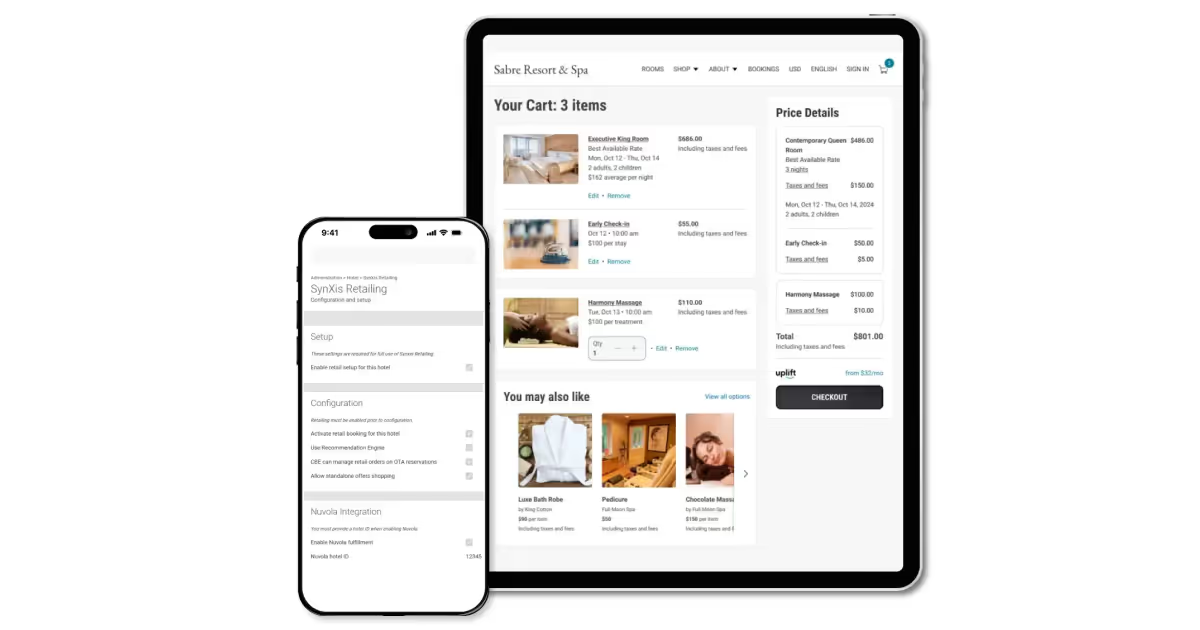
Sabre Hospitality provides varied cloud hospitality services - worldwide reservations, inventory, and pricing for effective revenue and market control by providing strong distribution and reservation management through its SynXis platform. A CRS that manages direct and third-party reservations, GDS/OTA integrations, dynamic pricing with rate parity, multi-property tools, and robust forecasting reporting are among the key features. Its extensive channel management, dependable large-scale support, and enterprise-grade analytics make it perfect for big hotel chains with intricate ecosystems.
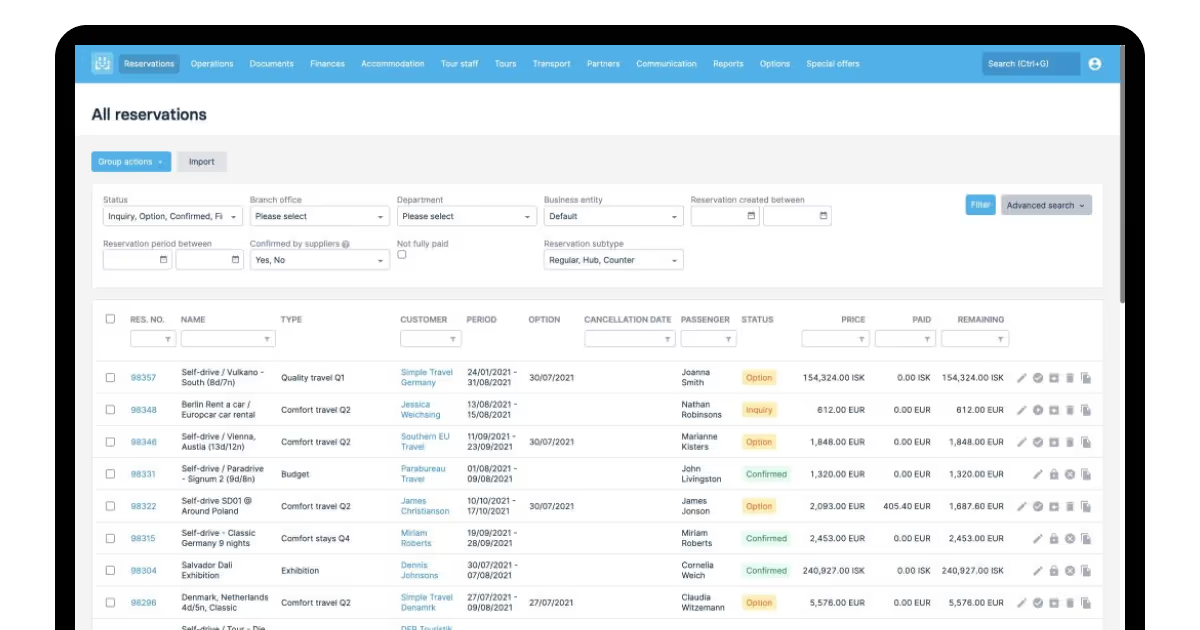
Lemax is a tour operator software that prides itself as a one-stop shop for Destination Management Companies (DMCs) and travel agencies. The platform offers solutions that help you automate your business workflow and increase sales.
Notable features:
Procurement tools.
Inventory management.
Online trip booking.
Payment and invoice.
CRM tools for tracking customers’ activities.
Сloud solutions for travel agencies.
Overall, Lemax serves as a comprehensive one-stop-shop tour operator software for DMCs and travel agencies.
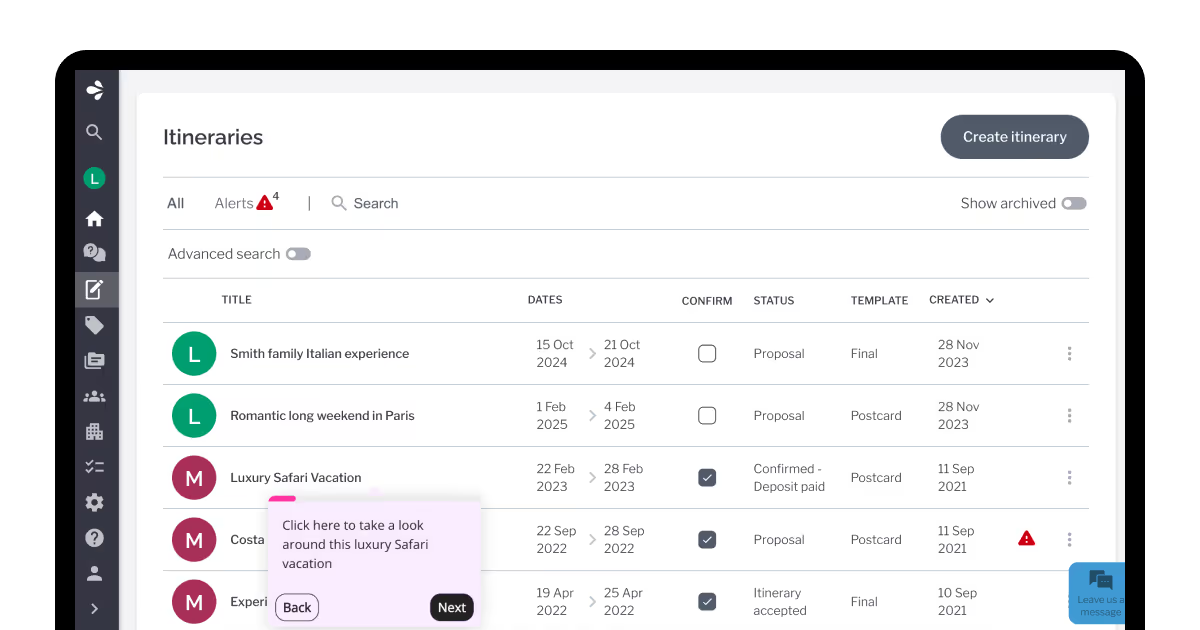
Also on our list of top tools for cloud computing for the travel industry is Tourwriter, a tour operator software that provides you with the front-end and back-office toolkit to design and manage your travel business operations. After reviewing Tourwriter, we found out that clients love it for its easy-to-use integrations and implementations that let you create as many itineraries in a day as possible. Also, its interesting pricing strategy includes a 1% success fee on sales, aligning their success with yours.
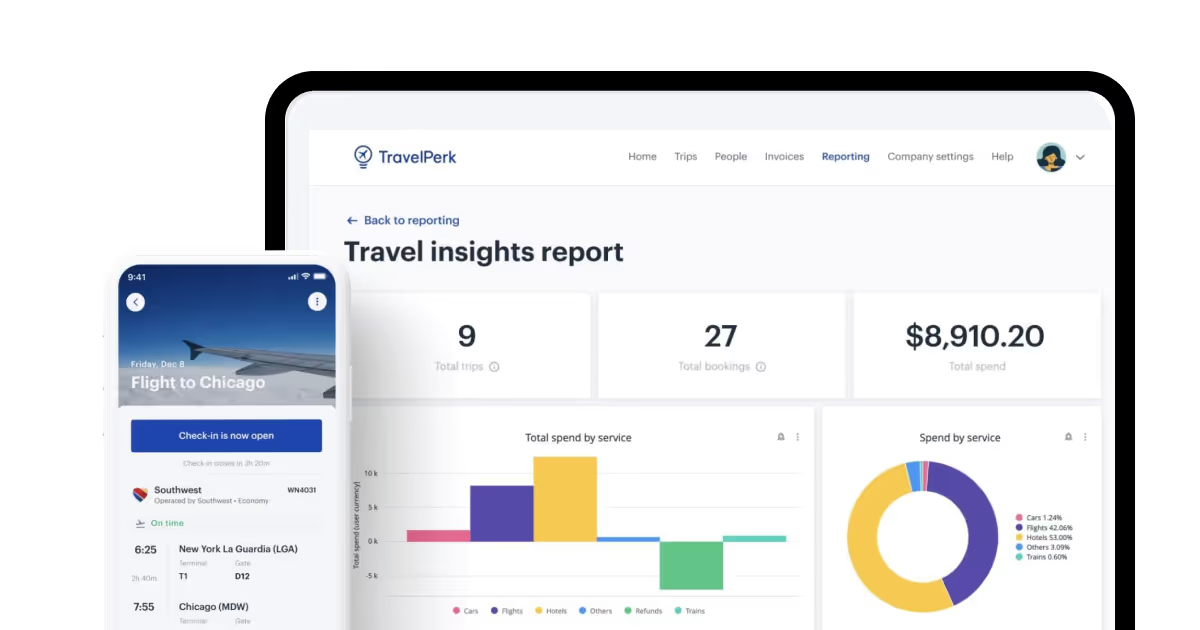
TravelPerk claims to be pioneering the future of the travel business with its one-size-fits-all cloud-based solution for travel agencies. Its services extend to flight, accommodation, and car rentals. The good side of TravelPerk is its broad range of offerings and customization toolkits available with a free trial. It’s particularly beginner-friendly, with a clear fee structure. Hence, you may want to use it if you're starting as a travel agent or tour operator.
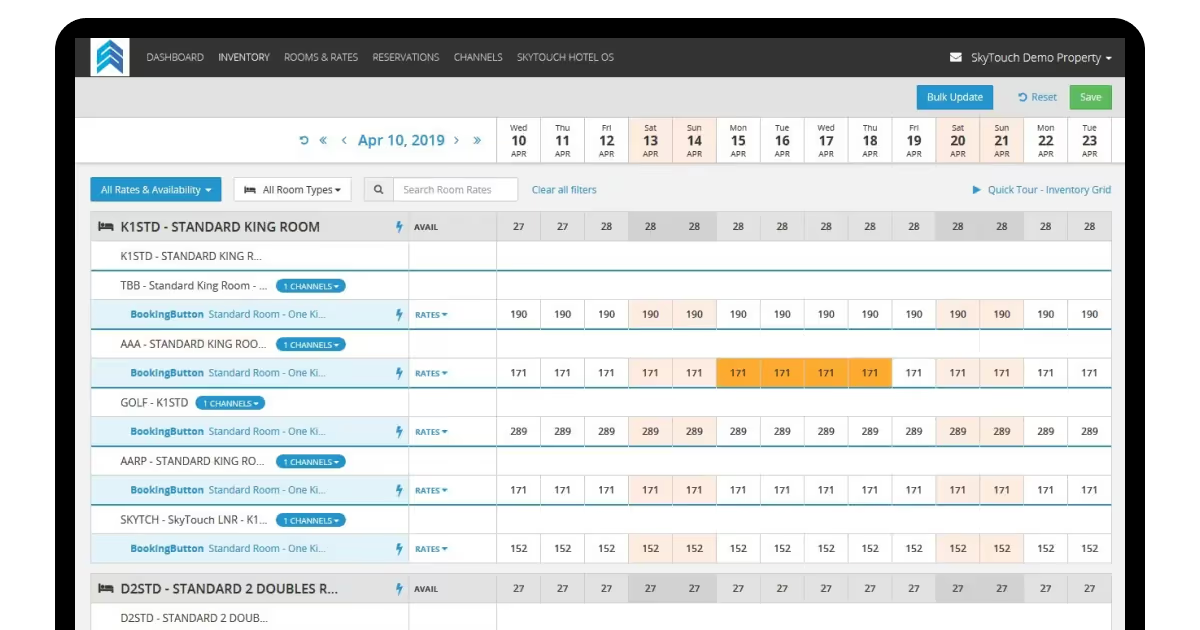
SkyTouch Hotel OS provides a simplified cloud based hotel software for mid-sized hotel groups, minimizing errors and streamlining operations with easy rate management, room assignments, guest history, staff tasks, custom dashboards for reporting, and top-rated support - ideal for 10-30 properties seeking minimal training, core functionality, and flexible pricing.
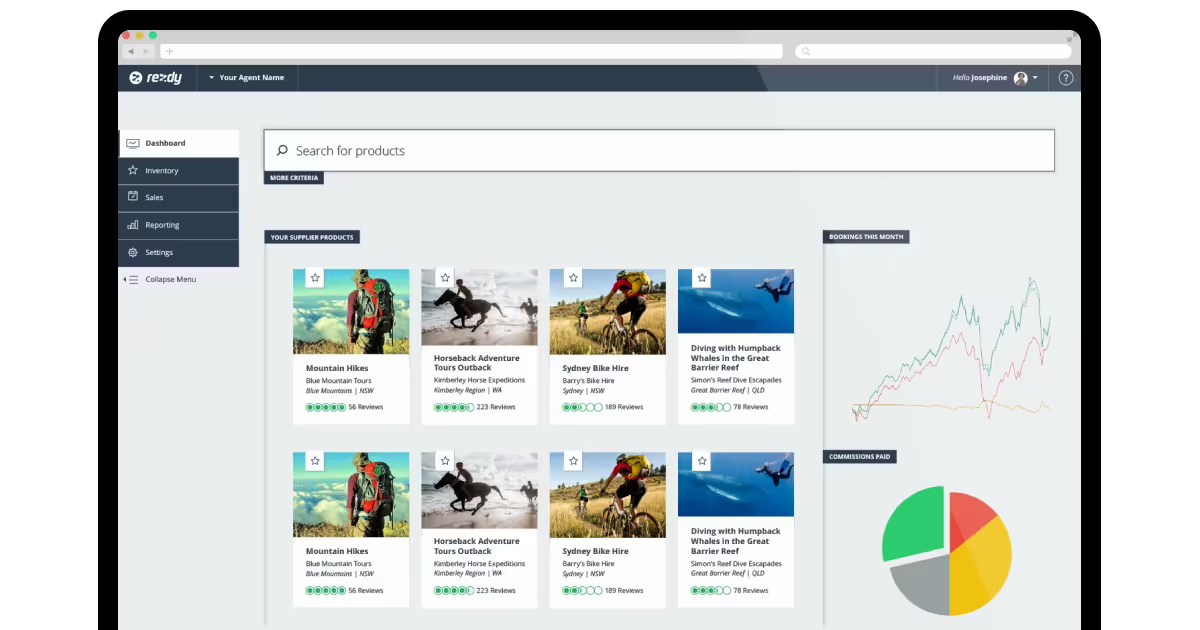
Rezdy offers transparent data privacy and security services and has a broad range of cloud features and distribution channels to elevate your travel business in 2024. One fantastic thing about Rezdy is that it has about 30+ payment and invoicing options that let you perform instant transactions globally.
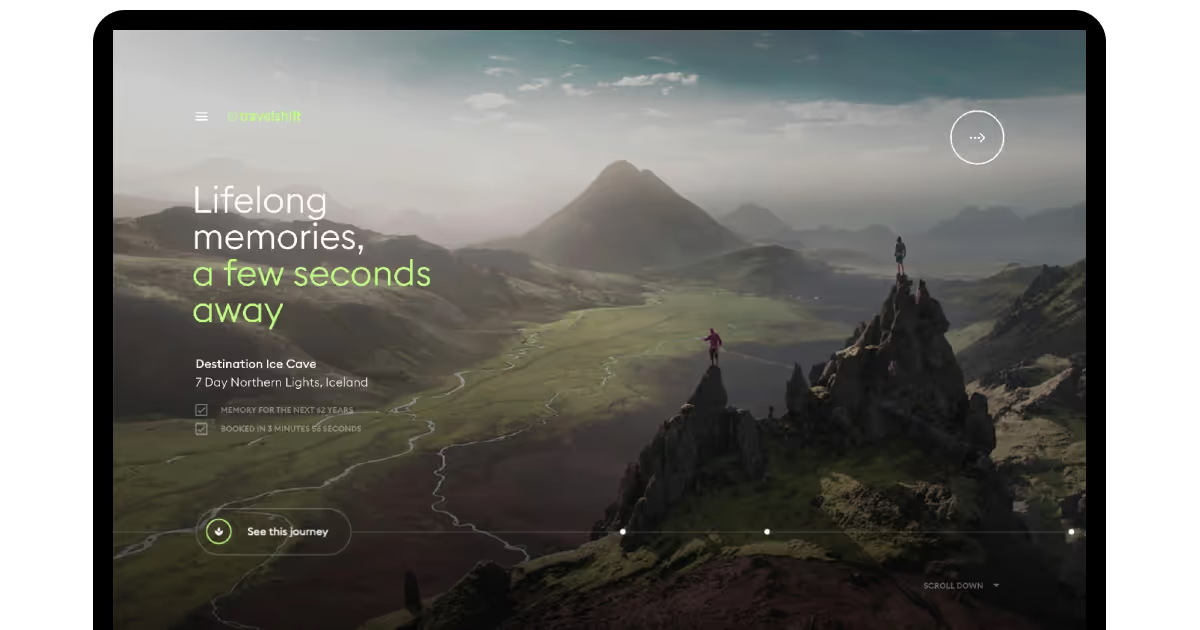
TravelShift doesn’t just provide a hotel management solution and infrastructure for travel and tours; it includes connectivity and community power to help you grow faster. Small and medium-scale travel agencies can collaborate and pull resources to support one another to glory using TravelShift. The platform enhances user experience and leverages AI for creating detailed travel itineraries.
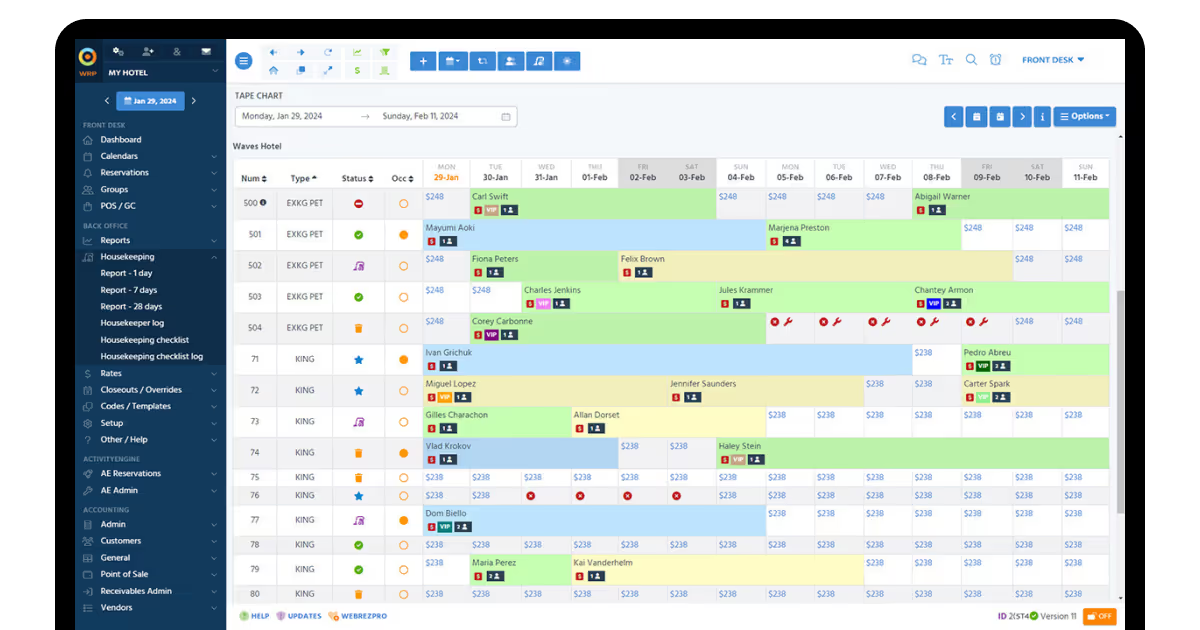
With full front desk, housekeeping, accounting, and reservation tools with real-time availability, integrated booking, guest profiles, custom reporting, and seamless integrations for POS, payments, and OTAs, WebRezPro's cloud hospitality solution is ideal for nimble operations that scale like larger brands through modular design, promotion management, and professional support.
With tools like RoomexAnalytics, this service helps track client activities and manage CRM data. Its RoomexPay system is notable for combining various payment gateways. While its premium features are free, the service charges start from 3% per booking, a competitive rate in the cloud solution market.
How to choose the right cloud system for your travel business?
With so many hotel cloud software available, you may find it overwhelming to settle for the right one. In that case, considering these factors will guide you when choosing the right cloud system for your travel business:
Cost.
CRM or cloud software services are notable for their complex prices. This is why you must consider cost when buying cloud products or services. The price of the travel cloud package you buy for your travel agency or business must complement your business needs and goals. Since most of these solutions are scalable, you need to consider how much you’d need to pay now and when you decide to upgrade.
Usually, cloud services display their respective package prices on their websites. For enterprise-level packages, you can request a custom quote from the company’s sales department. A general rule of thumb is choosing packages that offer you the quality services you need relative to the price presented. Finally, before settling on a price, compare the prices of other brands for similar packages to determine a fair market value.
Business compatibility.
Cloud services, including turnkey solutions, usually target various industries and businesses. Cloud services must be compatible with your services to help you achieve or fulfill your business needs and goals. So you need to choose travel and hospitality cloud solutions that best suit your business needs.
For example, if you need to improve your business accounting and financial management, it will be unwise to purchase a collaboration solution. Even if you may need it, it’s not your priority and will grossly affect your budget and business plans. Moreover, you won’t address your business’s more pressing concerns. Instead, go directly for an accounting tool and see your business grow.
Size of your project.
The more storage space you buy, the higher the price. It’s even higher if you run enterprise-level cloud systems. So, you must know how big or small your project is before choosing the cloud system features you need. Also, if you have long-term plans for your business, consider that when finalizing your project size. Nevertheless, you could start with smaller cloud travel packages or software and go higher later.
Vendor assistance and security.
Reliable suppliers reduce downtime risks during times of high demand and promote expansion by providing high uptime, prompt assistance, and travel-specific knowledge. Give preference to suppliers who have strong encryption, data isolation, and compliance certifications like GDPR or PCI-DSS in order to protect sensitive traveler data, including payments and personal information, from hacking.
Rolling out cloud travel solutions takes planning and clear execution. Here's how you make it work.
Define goals. Start by identifying what you want to fix. You might need better cost control, faster booking processes, or stronger policy compliance. Write down specific targets before you touch any software.
Train your team. Everyone who books travel needs hands-on training. Show them how to search flights, use the mobile app, submit approval requests, and track expenses. Don't assume people will figure it out on their own.
Make it mandatory. The fastest way to drive adoption is simple: stop reimbursing bookings made outside the system. When you mandate your hospitality cloud solutions, you gain access to negotiated rates, real-time data, and proper expense tracking. Most companies see immediate compliance when off-platform bookings aren't reimbursed.
Integrate travel and expenses. Choose platforms that handle both booking and expense management in one system. This integration gives you better visibility into spending, enforces policy automatically, and creates a smoother experience for travelers.
Gather feedback and iterate. Ask employees what works and what doesn't. Use their input to refine processes and push your provider to add features you need. The best systems evolve based on real user experience.
However, no matter how thorough your implementation efforts are, you still might find challenges associated with ready-made software. Cloud travel solutions give you the foundation, but your business might need custom features that standard platforms don't offer. This helps you avoid vendor lock-in, ensure security standards that match your business, and add the functionality you need the most instead of what you get in predefined packages.
COAX has a 15 years-proven expertise in travel and hospitality software development - this is why we design solutions around your specific needs. We create custom applications when off-the-shelf options fall short, and we help you integrate existing cloud travel technology into your operations. Secure API integrations, advanced cloud computing stack, iterative Agile approach, and responsiveness and responsibility all define our value.
Our team handles backend infrastructure, frontend interfaces, CRM connections, and complete turnkey solutions. We've delivered successful cloud based hotel management system implementations for travel businesses, hospitality companies, transportation, and logistics, so when something or someone is moving - we build the right infrastructure to make this movement profitable, successful, and trouble-free.
Whether you need a completely custom platform or strategic guidance on existing hospitality cloud solutions, we provide the technical expertise to make your implementation successful.
FAQ
What are the challenges of implementing cloud computing in hospitality industry?
Some obstacles are most evident:
Data security concerns
Initial migration costs
Staff training requirements
Integration with legacy systems
Compliance with data protection regulations
Internet connectivity dependence
Vendor lock-in risks
Cultural resistance to change.
How can a cloud-based hospitality management system help a small hotel improve operations and revenues?
Cloud based hotel management systems deliver real-time booking updates, instant confirmations, and integrated payment processing that increase conversion rates. According to Oliver, hotels adopting hospitality cloud technology report enhanced operational efficiency and increased revenue through optimized resource allocation. The pay-as-you-go pricing model reduces costs while scalability handles peak seasons effectively, improving guest satisfaction and driving repeat bookings.
What are the key differences between cloud for hospitality and for travel agencies?
Hospitality cloud platforms focus on property management, guest services, room inventory, and on-site operations like housekeeping and maintenance. Travel agency solutions prioritize multi-supplier booking aggregation, itinerary building, commission tracking, and customer relationship management across flights, hotels, and tours. Hotels need real-time occupancy management while agencies require broad supplier network integration and complex booking workflows.
What areas to implement travel industry cloud technology to get the quickest wins?
Focus on booking management and payment processing first. Nadda and others note that cloud travel technology delivers immediate efficiency gains through automated reservations and instant confirmations. Customer data integration comes next, enabling personalized recommendations that boost conversion rates. Mobile access provides quick returns by letting staff work from anywhere, improving response times and customer satisfaction without major infrastructure changes.
How does COAX implement secure and efficient cloud travel solutions?
COAX follows industry-leading security protocols including encrypted data transmission, regular vulnerability assessments, automated backup systems, and role-based access controls. We implement multi-layer authentication and continuous monitoring to detect threats in real-time. COAX is ISO/IEC 27001:2022 certified for comprehensive management of security, risk assessment, and monitoring security risks. We also have a confirmed ISO 9001 certification that ensures optimal processes for quality.










































































.avif)


%20for%20hotels.avif)

.avif)
.avif)


.avif)



.avif)
.avif)


.avif)

.avif)

We are interested in your opinion