Travel and hospitality technology trends are changing continuously. Like any other business, travelers want to book their flights, hotels, and tours online, and this is where they can’t go without travel APIs of varied types.
Travel APIs are the best sources for travel platforms to match user needs due to these important factors:
Flight APIs eliminate manual fare tracking by connecting your platform to live airline inventory across GDS networks and NDC aggregators.
Hotel APIs remove double bookings by syncing real-time room availability and pricing from OTAs, bed banks, and PMS systems.
Car rental APIs simplify ground transport by aggregating multi-brand vehicle inventory.
Rail and cruise APIs cover gaps that flights miss, from multi-operator rail networks to cabin inventory across major cruise lines.
Public transit APIs complete journeys with live departure data and multimodal routing.
Authentication layers protect exchanges through API keys, OAuth tokens, and rate limiting.
Data and analytics APIs sharpen pricing and personalization decisions.
In this end-to-end guide, we cover the main types of APIs for travel and hospitality and define the key elements of their workflows. Also, we outline the best travel API providers for each type to help you create a truly integrated infrastructure.
What is a travel API?
A travel API is software that lets booking platforms pull live data from airlines, hotels, car rentals, and other suppliers andsend bookings back to them automatically.With APIs, you need no manual data entry, no static price lists. Just a real-time exchange between systems that would otherwise have nothing in common.
This valuable tool allows developers to access and interact with travel-related data from various sources, including airlines, hotels, car rental companies, and other travel service providers. APIs give travel platforms access to live data across flights, hotels, rentals, and attractions, so suppliers keep inventory current without manual updates after each booking. Customers get everything in one place, from real-time flight delays to hotel reviews, without jumping between sites. However, an API’s functionality ultimately depends on the developer’s expertise who integrates it into the application.
How APIs connect travel suppliers with booking platforms
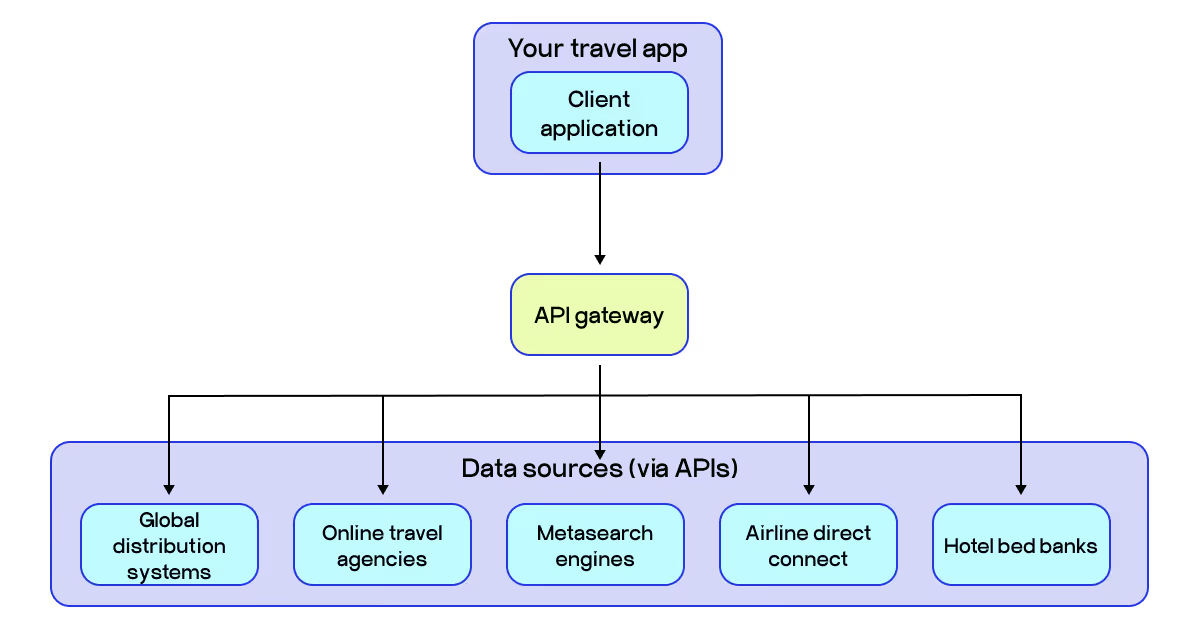
Travel APIs work between a supplier's internal system and a booking platform, handling data exchange automatically and in real time. Here’s how it happens.
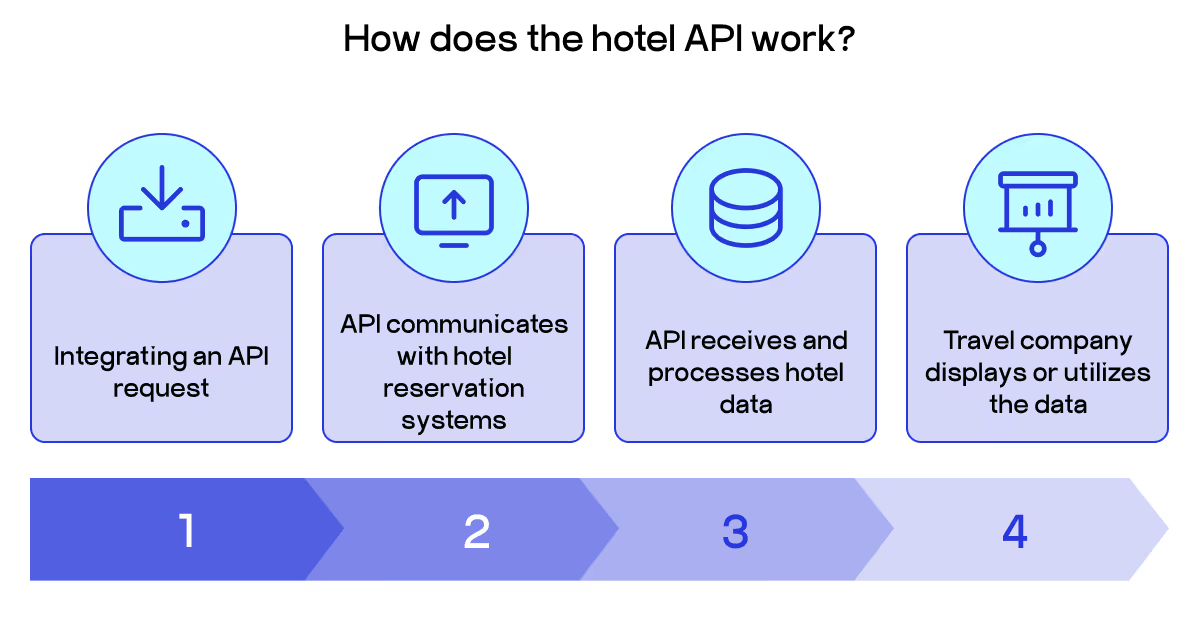
When a hotel updates its room rates, the API pushes that change to every connected platform instantly. When a traveler books a room, the API sends the reservation to the hotel's system and returns a confirmation in seconds.
This connection does four things practically.
It syncs inventory so customers always see accurate availability.
It aggregates options from hundreds of suppliers into one interface, so a single search returns flights, hotels, and rentals without the platform maintaining separate contracts with each provider.
It automates the booking flow end-to-end, cutting errors that come with manual processing.
It distributes rich content like photos, policies, and amenity lists alongside pricing.
As Jubair notes, platforms like Kiwi.com and eDreams ODIGEO take this further by combining traditional Global Distribution Systems (GDSs) with direct API connections to airlines, giving them both structured fare agreements and real-time pricing in one place.
How travel APIs work
To understand the technical basis of travel APIs, we need to break them down into several key components. Each of them allows these technological connectors to help your systems communicate with varied providers.
Request-response model
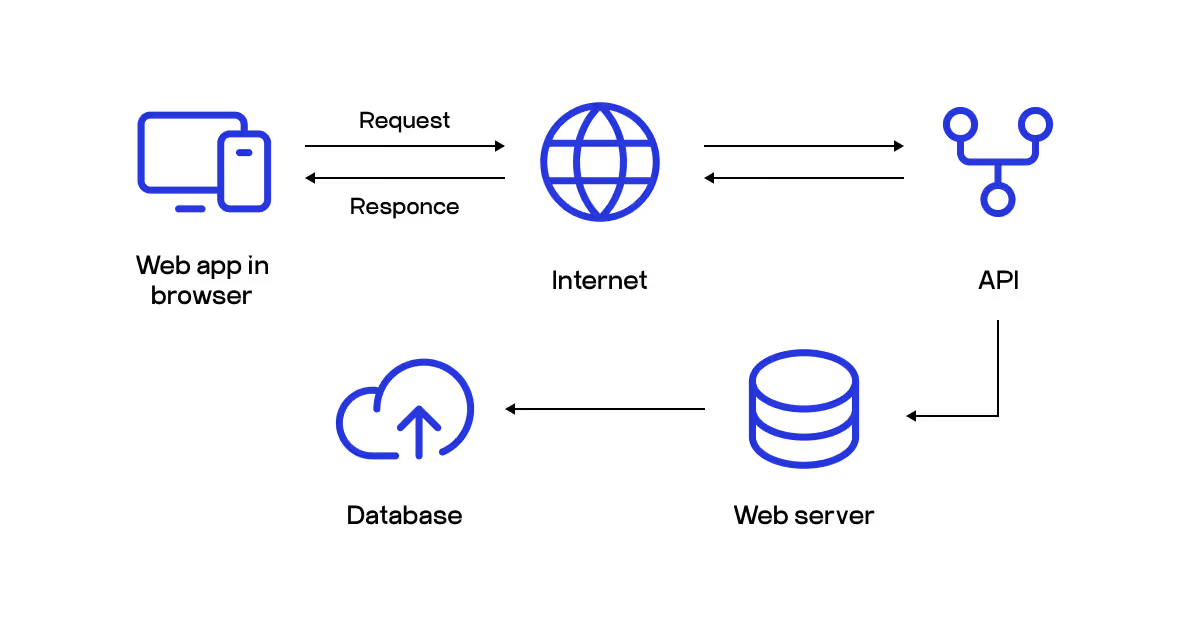
Every interaction with an API for travel services follows the same basic pattern: your app sends a request, the API processes it, and returns a response. That's the full loop.
When a user searches for flights, the app sends a POST request with a query object that includes parameters like market, currency, locale, and travel dates.
Skyscanner's API receives that request, pulls live pricing data, and sends back a response. That response carries a status field that tells your app whether the results are complete, still loading, or failed.
If the status returns RESULT_STATUS_INCOMPLETE, your app hits the poll endpoint repeatedly until the full dataset arrives.
Once it returns RESULT_STATUS_COMPLETE, the user sees their results.
The diagram below illustrates this flow: a web app sends a request over the internet to the API, which retrieves data from a web server and database, and then returns the response to the user's screen.
What travels in these requests is JSON, a lightweight text format that's fast to send and easy for code to read. One search query can return dozens of flight options, with prices, schedules, and availability all packed into a single response.
Role of REST and SOAP protocols
Two protocols handle most of the communication in travel APIs: REST and SOAP. They do the same job, but differently.
Aspect
REST
SOAP
Data format
JSON
XML
Speed
Faster
Slower
Security
Standard HTTPS
Built-in WS-Security
Best for
Modern OTAs, mobile apps
Legacy GDS, enterprise systems
Example
Amadeus, Sabre
Travelport
REST is the standard in modern travel tech. It uses regular HTTP methods, exchanges data in JSON, and responds fast. According to Khanyi, REST accounts for 26.53% of API configurations studied across industries, making it the most widely used type for travel and hotel API integration. Amadeus and Sabre both run REST APIs for general travel search and booking.
SOAP is older and stricter. It uses XML exclusively and enforces a rigid structure, which makes it slower but more reliable for complex, high-stakes transactions. Travelport's GDS integrations still run on SOAP because legacy corporate booking systems were built around it.
Authentication methods
Before any data moves, the API needs to confirm your app has permission to access it. Travel data APIs use three main methods to do this.
API key authentication is the most common entry point. Your app sends a unique key with every request, and the API checks it before responding. It's quick to set up but works best when paired with additional security layers. Emerging Travel Group's API, for example, uses HTTP Basic Authentication built around an API key structure where your KEY_ID acts as the username and your API_KEY acts as the password. ETG explicitly flags that exposing the API_KEY to third parties can compromise your entire data access.
OAuth 2.0 goes further. Instead of sending permanent credentials, your app exchanges them for a temporary access token that expires after a set period. Travelport's JSON APIs use this approach. It means that even if a token gets intercepted, it becomes useless quickly.
HTTP Basic Authentication sends encoded credentials in the request header. It works, but only safely when the connection runs over HTTPS, which encrypts everything in transit.
Most travel API providers layer these methods together. ETG, for instance, enforces rate limits on top of authentication, returning headers like X-RateLimit-Remaining so your app always knows how many requests it has left in the current window.
Data flow
A travel API search is not a single exchange. It's a sequence of steps that moves data between your app, the API layer, and the underlying supplier systems.
A user types in a route and dates. Your app packages the input into an API request and sends it to a data provider, whether that's a GDS like Amadeus or a direct NDC connection to an airline.
The provider's system searches live inventory and returns available options with current pricing, seat counts, and schedules. Your app receives that data in JSON or XML and displays the results.
When the user selects a flight, a separate booking request goes out. This one locks the fare and seat in the supplier's system.
Payment processes, and the supplier returns a confirmation record, known as a PNR (Passenger Name Record) for flights or a booking ID for hotels. That ID is what the traveler receives as their confirmation.
The whole cycle runs in seconds with the right travel API integration. What makes it work is that each step is stateless: the API does not remember the previous request, so every call carries all the context it needs. Your app handles the continuity, while the API handles the data retrieval and writing.
Core travel API types and data sources
There are several types of travel APIs, each with its own unique features and functions. Travel applications rarely run on a single API. A complete booking experience pulls from several distinct API types, each connected to its own data sources and built around different functions. Some of the main types of APIs for travel include:
Flight APIs help travel agencies or businesses provide a proper travel solution.They pull data from GDS platforms like Sabre and Amadeus, which hold global airline schedules, fare rules, and seat inventory. NDC aggregators like Duffel are direct airline connections, pulling ancillaries and upgrade options. Price comparison layers like Skyscanner aggregate fares from GDS and direct sources. Specialized providers like OAG and Cirium supply schedule accuracy and flight status data independently of booking systems. Travel agency software can significantly benefit from integration with a Flight booking API. This integration offers flexible rates and streamlines the booking process for customers.
Hotel APIs draw data from three main source types. Hotels connect to a local or global API, like booking.com, which in turn connects to other agency sites offering a large database updating in real-time. OTAs like Booking.com and Expedia maintain directly contracted hotel inventories with verified photos, reviews, and amenity details. Wholesale bed banks like Hotelbeds purchase hotel rooms in bulk from properties and resell them to agencies at B2B rates. Meanwhile, GDS systems carry major hotel chain inventory and work well for corporate travel programs.
Ground transportation and public transit APIs pull from two source types. Rideshare and taxi APIs like Uber or Lyft source real-time driver location and fare data from their own platforms. Public transit APIs draw from operator-published GTFS (General Transit Feed Specification) datasets, which contain static schedule data, plus real-time feeds that track live vehicle positions and service disruptions. An API allows a business to have more clients over and over again. It is a boost for many providers in getting recurring clients.
Car rental APIs source their inventory directly from rental brand systems, pulling vehicle availability, pricing, and location data from companies like Hertz or Avis. Aggregator APIs like Rentalcars.com consolidate multiple brand inventories into a single connection. APIs help travelers connect with thousands of rental services and pick the best ones to fit their needs and budget. OTAs usually book car services for their customers to have a luxurious tour. Travel APIs help you provide the maximum solution to the problems for both clients and travel agencies.
Activity and experience APIs pull inventory from tour operators and attraction management systems. Providers like Viator and GetYourGuide maintain their own supplier networks, aggregating availability and pricing from thousands of local operators into a single data layer. Attraction-specific systems like those used by museums or theme parks feed availability and ticketing data directly.
Rail APIs source data from national rail operators and global rail aggregators. Operators like Amtrak, Deutsche Bahn, and Eurostar maintain their own booking systems with seat class availability, pricing, and timetables. Aggregators like Trainline or Eurail pull from multiple operator systems, though coverage gaps exist as public APIs aren’t disclosed.
Travel data and analytics APIs are sourced from airline operations databases, airport systems, and mapping services. Map service APIs like Google Maps or Amap source routing, travel time, and distance data from their own geographic databases. For example, Tang and Ream show that integrating Amap API route data alongside traditional travel survey data improved machine learning prediction accuracy .
Cruise APIs source cabin inventory, itinerary schedules, port information, and pricing directly from cruise line reservation systems. Providers like Royal Caribbean and Carnival run their own APIs for travel agent access, while aggregators like CruiseCompete attempt to consolidate multi-line inventory, though the category remains fragmented compared to flights or hotels.
Weather APIs source forecast and current condition data from national meteorological services and private providers like The Weather Company or Tomorrow.io which aggregate sensor networks, satellite data, and atmospheric models into queryable feeds.
Once a customer visits your site, they don't need to leave the page since there's an influx of consolidated information on a single site. Also, with APIs, developers can create booking engines that allow travelers to search for and book flights, hotels, and other travel services all in one place.
These are a wide variety of APIs, but in this guide, we want to do more than describe each type in general. The sections below focus on the API types your travel platform is most likely to build around, depending on the type of business case you have.
Hotel and business travel APIs
Hotel APIs are at the center of most travel platforms. They connect your booking interface to live inventory across thousands of properties, handling everything from availability checks to reservation management. Hotel APIs have been integrated with small- to large-scale travel agencies, offering services according to the luxury level.
The data flow works like this: hotels feed their room inventory and pricing into a hotel API provider through a channel manager or directly via PMS software development. Your platform queries that inventory in real time, pulls available rooms with current rates, and pushes confirmed bookings back to the property system. Guests can book rooms according to their preferences, match costs, and filter for preferences with advanced APIs combined with powerful search portals.
Overview of top hotel API providers
How to find hotel APIs? Where should you go to rent your rooms? What kind of inventory should you show your users to get more bookings? Let’s define the best options of API providers for this type of travel inventory and real-time information.
Booking.com APIs give you access to one of the largest directly contracted hotel inventories. Beyond room availability and hotel prices API data, it returns verified guest reviews, detailed amenity lists, cancellation policies, and property photos. It supports full reservation lifecycle management, meaning you can retrieve, create, modify, and cancel bookings through a single connection.
Hotelbeds API is a strong choice for B2B travel businesses and wholesale-focused OTAs. Hotelbeds purchases hotel rooms in bulk from properties, which means their inventory often includes rates unavailable on public channels. Their Booking API covers search, real-time availability, reservation management, and cancellation, while their separate Hotel Content API returns descriptive data, including photos, amenities, and facility details. This makes it one of the top hotel APIs for hotel booking software providers that need transactional and content layers.
MakCorps Hotel Price Comparison API is built for platforms that lead with price discovery. It aggregates real-time and historical pricing data from over 200 OTAs simultaneously, so your platform can show users a cross-market rate comparison without running separate queries to each source. It does not handle bookings directly, making it best suited for metasearch products or price intelligence tools rather than transactional platforms. The company also offers a free tier for testing.
Amadeus Hotel APIs cover both search and booking through GDS infrastructure, returning room type details, board options, rate conditions, and availability in a single response. For corporate travel programs, Amadeus is the best hotel API choice because its GDS backbone carries negotiated corporate rates and loyalty program integrations. Their self-service developer portal gives teams access to sandbox environments and documentation without needing a commercial contract upfront.
Cloudbeds API connects to the property management layer rather than a distribution network. Running across 157 countries and integrating with over 600 technology partners, it gives you access to guest data, live reservation status, and operational details from hotel management systems. It uses standard HTTP methods with JSON responses over HTTPS, includes a dedicated Reporting API, and supports adjustment management for modifying active reservations. PMS integrations built on Cloudbeds work well for platforms targeting independent hotels and boutique properties.
Hotelapi.co delivers real-time rates from major OTAs through a single GET request. It focuses on pricing and rate comparison rather than full booking functionality, which suits developers building price-aware discovery features before layering in a transactional connection. Its transparent pricing tiers make it accessible for startups assessing hotel API options before scaling.
That's a general example, but the main advantage of hotel APIs is that users have plenty of options available. The ease is what makes it more reliable for a user to book rooms before their tours. An API allows a business to have more clients over and over again.
Car rental and public transportation APIs
You need transport services according to your visits from one place to another, no matter where you go. For this, transportation APIs have a lot of perks to utilize.
Ground transportation APIs cover everything that happens after a traveler lands. Car rental API integration connects your platform to vehicle inventory from rental brands globally, while public transit APIs handle urban mobility through schedule and real-time tracking data. Getting this layer right matters: arriving at a destination without pre-booked ground transport wastes time and often costs more.
How do car rental APIs work?
OTAs usually book car services for their customers to have a luxurious tour. Travel APIs help you provide the maximum solution to the problems for both clients and travel agencies.
A user searches for a vehicle by pickup location, date, and car type. The API queries multiple rental brand systems simultaneously and returns available vehicles with pricing, terms, and mileage policies. When the user confirms, a booking request goes back to the rental system and locks the reservation. Travel API cost for car rental connections varies widely between aggregators and brand integrations, so your choice of provider affects budget and coverage.
Now that we understand the workflow, let’s get to the best options.
Rentalcars.com API aggregates inventory from major brands, including Hertz, Enterprise, Avis, Budget, and Sixt, into a single connection. It returns vehicle class options, pricing breakdowns, included extras, and cancellation terms. For platforms that want broad market coverage without managing individual brand connections, this aggregator keeps a free travel API evaluation before committing to commercial terms.
Priceline API covers rental cars alongside hotels and flights, making it practical to bundle accommodation and ground transport in one flow. It returns pricing, vehicle availability by category, and location data, including airport and city pickup points, with pricing structures that scale based on transaction volume rather than a flat subscription.
Smartcar API connects directly to connected vehicle systems, exposing live data like fuel level, odometer readings, and door lock status. This makes it relevant for fleet management platforms, mobility services, and corporate travel programs that need operational vehicle data together with booking records.
Trawex API covers car rentals as part of a broader travel distribution stack that also includes flights and hotels. It connects to rental suppliers globally and returns availability, pricing, and booking confirmation in a single integration, which suits smaller travel agencies building a complete booking platform without assembling separate API connections for each service category.
Apart from car rental APIs, some other transportation connectors should be taken into account. Let’s outline them, too.
Public transportation APIs
Landing at your tourist location and wandering around for a reliable and cheap transport option is nearly impossible unless you have them booked in advance. APIs help travelers connect with thousands of rental services and pick the best ones to fit their needs and budget.
The APIs connecting businesses to the providers of data on public transport come from several data sources. Let’s start with the one we already explored before and move to the new ones.
Google Maps Platform Transit API pulls schedule and routing data from hundreds of public transit operators worldwide through GTFS feeds. It returns multi-modal journey options combining subway, bus, and rail segments with walking directions, fare estimates, and real-time disruption alerts where operator data supports it.
Rome2rio API specializes in multi-modal route planning across flights, trains, buses, ferries, and driving, covering over 160 countries and returning full journey options with duration, price estimates, and booking links. This travel API provider addresses the gap between airport arrival and final destination by surfacing every available transport option between any two points globally, which makes it a natural fit for itinerary tools.
Citymapper API focuses on dense urban transit networks in major cities, pulling real-time data from local operators to return accurate directions with live departure times, platform information, and service disruption alerts. It works best for city-focused travel apps where transit routing accuracy matters more than global coverage.
Now that we have covered the ground transportation APIs, let’s move to the rail and maritime transit providers.
Rail and cruise APIs
Rail inventory is more fragmented than flights. Unlike airlines, which largely distribute through GDS systems, rail operators often run closed or semi-proprietary reservation systems. A train travel API either connects directly to a single operator or goes through an aggregator that normalizes data across multiple networks.
Trainline API is one of the strongest aggregators for European rail. It connects to over 270 rail and coach operators across 45 countries, returning live availability, pricing across fare classes, seat reservation options, and booking confirmation in a single integration. For platforms targeting European travelers, Trainline removes the need to negotiate separate connections with operators like SNCF, Deutsche Bahn, or Trenitalia. Their API supports both one-way and return journey searches with real-time pricing.
Amadeus Rail API is within the broader Amadeus travel ecosystem, which means platforms already using Amadeus for flights can extend into rail booking API functionality without adding a separate provider relationship. It covers Eurostar, Renfe, and several other major European operators, returning schedule data, seat availability by class, and fare conditions.
Eurail API focuses specifically on pass-based rail travel, exposing inventory for multi-country rail passes used heavily by international leisure travelers. It returns pass types, validity periods, activation options, and pricing. For travel API development teams building products aimed at long-haul tourists rather than point-to-point commuters, Eurail fills a gap that operator-specific APIs do not cover.
National Rail API covers the UK rail network with real-time departure and arrival data, live service disruption alerts, platform information, and timetable access. It draws from Network Rail's live feed infrastructure, which means the data reflects actual operational status rather than scheduled times alone. Developers building UK-focused transport tools can access a free travel API for developers tier through the OpenLDBWS service, which gives access to live departure boards and service details.
For platforms building a full itinerary tool or travel booking engine API, rail and cruise connections handle the journeys that air travel does not cover. Let’s now move to the APIs that cover scenic sea routes.
Cruise APIs
Cruise distribution is the least standardized segment among the best travel APIs in the market. Most major cruise lines run proprietary reservation systems with limited third-party API access, making aggregation harder than in the hotel or flight space.
Cruiseline.com API and similar aggregator platforms pull cabin inventory, itinerary schedules, port-of-call data, and pricing from multiple cruise lines into a single queryable layer. They return cabin class options, deck plans, included amenities, and departure schedules. For travel agencies building cruise booking capability, these aggregators offer the fastest route to multi-line inventory without direct contracts with each operator.
Royal Caribbean API provides travel agents access to their reservation system through a dedicated developer portal. It returns cabin availability by ship and sailing date, pricing across cabin categories, shore excursion inventory, and onboard package options. Connecting directly to a major operator like Royal Caribbean gives platforms access to promotional rates and early booking offers that aggregators sometimes miss.
Carnival API follows a similar model, offering direct agent connectivity for cabin search, pricing, booking, and reservation management across Carnival's fleet. Their system returns detailed itinerary data, including port schedules, sea days, and excursion availability at each stop. Combined with a cruise booking API aggregator for multi-line coverage, a direct Carnival connection adds depth for this most-booked cruise brand.
Viator API overlaps with cruise distribution at the shore excursion layer. While not a cruise-specific API, it covers bookable tours and activities at ports of call globally, which cruise-focused platforms can surface alongside sailing inventory to give travelers a complete picture of what each port offers.
As with flight booking APIs, which we explore in depth in our dedicated article, choosing the right provider depends on your target market, booking volume, and whether your platform needs transactional capability or search-and-display functionality.
How to choose the right travel API
When choosing the right travel API for your business or application, there are several factors to consider to ensure that you select the one that meets your needs. These factors include:
Data coverage comes first.
It's important to consider the data coverage of the travel API, which refers to the types of travel-related data it provides access to. For example, some APIs may specialize in flights or hotels, while others may provide access to a broader range of travel services. A hotel booking API should cover properties across your target markets with real-time availability, not cached data that goes stale between searches. A travel agency API needs broad supplier coverage because your clients expect options, not gaps.
Quality of data.
The quality of the data provided by the API is also important. You should choose an API that provides accurate and up-to-date data to ensure that your application or business is providing reliable information to your customers. Khanyi found that data reliability and real-time processing were among the top factors determining operational efficiency gains from API adoption. Verify that the API updates pricing and availability frequently enough for your use case.
Technical performance .
Response time matters more than most teams realize at the evaluation stage. A travel API for developers should return search results in under two seconds under normal load. Check the provider's uptime SLA, how they handle peak traffic periods like holiday booking surges, and whether their sandbox environment reflects real production behavior.
Pricing and payment model.
The pricing and payment model of the API is another important factor to consider. Some APIs may charge a subscription fee, while others may charge based on the number of API calls or the amount of data accessed. A free API for travel website development can be a good starting point for prototyping, but check what the pricing looks like at a production scale.
Ease of integration.
The ease of integration of the API with your application or business is also important. You should choose an API that provides clear documentation, robust developer tools, and support to ensure you can integrate the API quickly and easily. A hotel management API with poor documentation can add weeks to your integration timeline, regardless of how good the underlying data is. Evaluate the quality of their developer portal before you evaluate the pricing.
Security and compliance.
Check whether the API requires PCI DSS compliance for your integration, how they handle data encryption in transit and at rest, and what their incident response process looks like. Khanyi flagged a 400% increase in API-related cyberattacks in Q1 2023 alone, targeting sectors that include travel and hospitality. This is not a theoretical risk.
Support quality.
Look for multiple support channels, documented SLAs for critical issues, and regular API versioning with deprecation notices that give you time to adapt. Running a short pilot integration before signing a commercial agreement is the most reliable way to assess this in practice.
COAX has been building travel platforms and providing API integration services for over 15 years. Our team handles the full cycle: evaluating which APIs fit your specific use case, designing the integration architecture, writing and testing the connection code, and maintaining it.
We have helped numerous clients improve their travel booking process with advanced APIs, and our experts have a deep understanding of the unique needs of the travel industry to pick up and integrate the most relevant API for your specific project
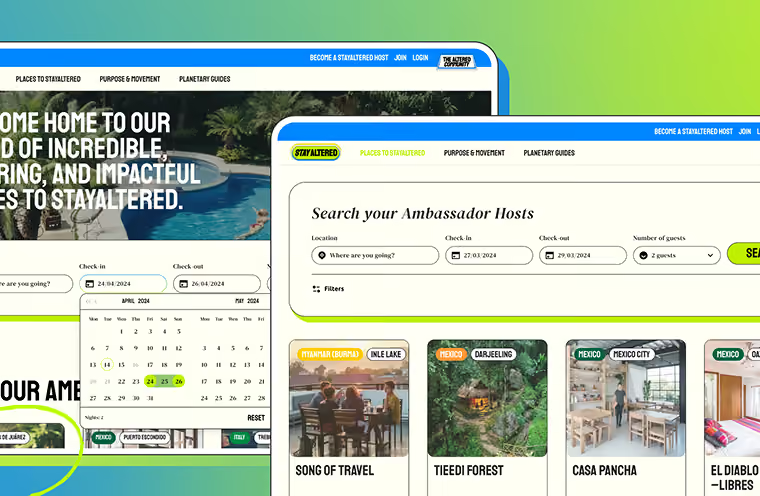
A recent example of this in practice is a platform for community-based tourism that connects hosts with conscious travelers. The client needed PMS integrations to automate reservations at scale. We selected Katanox and Hyperguest as intermediary layers to cover the broadest range of properties efficiently. Now, it has 170+ verified properties across 45+ countries, with real-time availability checks and seamless booking confirmation.
Whether you are building a new platform from scratch, adding a new travel API type to an existing product, or replacing a legacy GDS connection with something more flexible, our team brings the domain knowledge and proven experience in custom API integration to make that transition clean. Get in touch with the experts and consult us to help you ideate, develop, and integrate the most advanced travel APIs.
FAQ
What are the challenges of integrating APIs in the travel industry?
You might face the following challenges when integrating your travel API:
Data normalization across multiple suppliers
Rate limit management during peak traffic
Keeping up with provider API versioning and deprecations
PCI DSS and GDPR compliance
Handling duplicate inventory across GDS and direct sources
Latency and uptime dependencies on third-party systems
High initial integration costs
Cybersecurity vulnerabilities.
When do you need white label travel API?
When you want to offer booking functionality under your own brand without building inventory from scratch. Ali and Salih found API adoption drives 15-20% operational efficiency gains, making white-label viable for businesses wanting fast market entry. Examples: tour operators launching branded booking portals, corporate travel platforms, and destination management companies needing instant multi-supplier inventory.
What is an API for travel agents and how does it differ from other API types?
Travel agent APIs prioritize B2B workflows: commission structures, multi-client management, and itinerary building across suppliers. Consumer APIs focus on price display. Data APIs focus on analytics. Agent-specific solutions like Amadeus, Travelport, and Duffel combine live inventory access with booking management, payment processing, and multi-currency support in one connection built specifically for agency operations.
Do small businesses need hotel reservation APIs, or can manual booking suffice?
Yes. Manual booking fails at scale. Once you handle more than 20-30 reservations monthly, manual processes create errors, double bookings, and staff bottlenecks. APIs automate availability checks, confirmation, and cancellations instantly. Small agencies using manual booking also lose competitive pricing visibility that real-time hotel reservation APIs provide automatically.
How does COAX handle complex travel and hotel booking API integrations?
COAX evaluates your inventory requirements, selects appropriate providers, and handles normalization across multiple data sources. We hold ISO/IEC 27001:2022 certification covering security management and risk monitoring, plus ISO 9001 certification ensuring quality processes throughout integration.

















































































































.avif)



%20for%20hotels.avif)


.avif)
.avif)



.avif)





.avif)

.avif)





.avif)


.avif)

We are interested in your opinion