

















































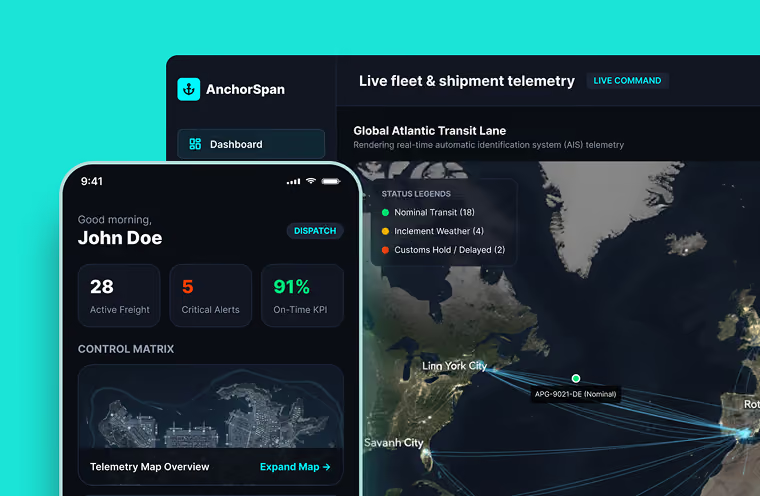




Travel API integration services
We cover it all from sandbox to production, without the vendor surprises that eat up your timeline. Our teams combine PMS, Channel Managers, OTAs, GDS, and payment providers. Then, we synchronize inventory, rates, and bookings once they go live.
Industry leaders we work with



COAX Travel API Integration Framework
Stage
Timeline
Key steps & workflow
Deliverables
Responsible roles
Stage
1
Discovery & Architecture
W1 – W2
API Inventory Review: audit availability, inventory & booking endpoints, data schema, & auth protocols;
Requirement Mapping: align product search, booking, ancillaries, & confirmation flows;
Architecture Design: define security, rate limits, data mapping, & failover strategy
Integration Architecture Doc (IAD);
API Endpoint & Field Mapping Specs;
Security & Compliance Checklist
Solution Architect (Lead);
Travel Domain Consultant;
Business Analyst
Stage
2
Development & Config
W3 – W6
Connector Build: develop bi-directional REST/SOAP wrappers for search/booking;
Data Transformation: implement JSON/XML mappers & currency/time encoders;
Middleware Setup: configure authentication token handling, caching, & logging
API Connector Middleware Code;
Data Transformation Pipeline;
Dev Sandbox Environment Setup
API Integration Engineers;
Backend Developers;
DevOps Specialist
Stage
3
Testing & Validation
W7 – W9
End-to-End Testing: simulate product search, reservation, & payment settlement;
Performance & Stress: verify latency under heavy search volume & peak loads;
Edge-Case Handling: validate error codes (cancellations, sold-out inventory, timeout recovery)
Automated Integration Test Suite;
Performance & Security Audit Log;
UAT Sign-off Document
QA Automation Engineers;
Security Auditor;
Client Acceptance Team
Stage
4
Deployment & Go-Live
W10 – W11
Production Rollout: deploy API gateways with zero-downtime canary deployment;
Live Traffic Switch: route live production booking traffic to supplier endpoints;
Real-time Telemetry: initialize live monitoring dashboard & automated alert triggers
Production Deployment Plan;
Live Production Environment;
Rollback & Contingency Guide
DevOps / Release Engineer;
Integration Lead;
Supplier Technical Point
Stage
5
Support & Optimization
Ongoing
SLA Maintenance: provide 24/7 API health tracking, incident management, & bug fixes;
Schema Upgrades: adapt integration to backward-compatible supplier API version updates;
Performance Tuning: continuously optimize caching strategies & query response times
Monthly SLA & Uptime Reports;
API Version Compatibility Plan;
Continuous Optimization Backlog
L2/L3 Support Engineers;
Account Technical Lead;
DevOps Engineer
Engineering challenges we solve
New integration must be live by the season
Let’s say you have four months until peak season starts. Adding a new hotel, channel, or payment connection takes about six months. Every week of delay costs your business real money.
What you get:
- A realistic audit that reveals what the vendor handles versus what you assumed they do.
- A clear integration audit that defines what the vendor's code covers and the gaps you'll need to fill.
- A quick audit that highlights what the vendor really manages so you aren't caught off guard by hidden gaps
If the vendor's API can't handle your requirements, we'll tell you up front before you sign a contract. You won’t have to find out after you sign a contract.
Overbooking and inventory that doesn't add up
You might face a situation where an OTA sells a room that's already gone. Every sync lag turns into a guest at the front desk holding a confirmation you can't honor.
What you get:
- Multi-way sync between your PMS, channel manager, and OTAs, with conflict resolution included from the start.
- Reconciliation logic that catches rate and availability drift before it leads to a parity fine or a lost guest.
- One factual inventory for your front desk, revenue manager, and booking engine to access.
If your tech stack can’t handle true real-time syncing under high booking volumes, we’ll identify the bottlenecks so you can fix them before your peak season starts.
Bookings start, but too many don't finish
It often goes this way: Search works, checkout starts. Then, the numbers drop off: stale availability, a mid-payment timeout, and a declined card nobody ever retries.
What you get:
- Transaction tracing through your actual logs, to find where bookings die instead of where you assume they do.
- Booking-flow fixes shipped in weeks: payment retries, availability sync, timeout handling.
- A weekly drop-off report, so a new leak shows up before it costs you a month of revenue.
Web analytics only tell you that users left. We dive into your backend logs to reveal the technical failure behind every abandoned cart.
API integration services for travel platforms

Integration architecture & orchestration
We design and build the integration layer that connects your PMS, channel manager, OTAs, and payments. That includes a canonical data model, supplier contracts, retry and fallback logic, and reconciliation between systems, so every connection reads from the same source of truth instead of drifting apart over time.

Hotel booking API integration
We integrate Booking.com, Expedia, Hotelbeds, Agoda, and other supplier feeds into a single availability and pricing layer. Instant confirmation, cancellation handling, and inventory sync are built to hold at peak load in real-world conditions.

Hotel PMS API integration
We build two-way sync between your booking engine and property systems like Mews, Cloudbeds, and SiteMinder. Rates, availability, and reservations reconcile in both directions, so your front desk and your booking engine are never looking at two different truths.

Travel booking engine API integration
We connect tour, transfer, activity, and ancillary providers directly into the guest's booking flow and folio, so spa, parking, and late checkout sell wherever the room sells. We use standard APIs where they exist and build custom connectors where they don't.

AI & data on AWS
Raw data in a database has no value. We build real-time predictive and AI-powered systems on top of that infrastructure. By wrapping proven models (such as LLMs and AWS Rekognition), we turn complex data streams into forecasts, actionable alerts, and operational dashboards.
Integrations we work with
GDS & flight

Sabre

Amadeus

Travelport
Hotel inventory & PMS

Booking.com

Expedia

Agoda

Airbnb

Hotelbeds

Mews

Cloudbeds

SiteMinder

Katanox

Hyperguest
Booking engines, tours & transfers

Bokun

Tripian

TravelCarma

Nezasa

Parsec
Payments & services

Stripe

PayPal
SafeCharge

Credorax

Nexio

DocuSign

Google Places
Our approach to travel API integration
Why choose COAX for travel API integrations?

Travel-native integration team
We've shipped Nezasa, Katanox, HyperGuest, and Stripe integrations on live travel platforms. We already know where OTA and PMS APIs break, so you don't pay for us to learn it.

Architecture without vendor lock-in
Every connection is on one canonical data model with its own retry, fallback, and reconciliation logic. You can swap a channel manager or payment provider without rebuilding the booking flow.

AI-enabled delivery and monitoring
We've delivered AI projects since 2017. AI speeds up our engineering, and an AI monitoring layer watches your connections for latency drift, sync failures, and silent schema changes.

Partners past go-live
Our RePlan partnership has run for 5+ years. The client returned for payment modernization, and we migrated them from MangoPay to Stripe with zero downtime.
100+
in-house specialists
16
years of engineering
170+
properties synced across 45+ countries
4.9/5
client rating on Clutch
Client feedback


Dan Brooks

President, Krytter
View showcase


Bohdan Zabawskyj
Co-founder and CPO at Fortay.ai


Neil Winkworth

ex-CTPO, Location Live
View showcase


Joseph Heenan

CEO, Proteineer
View showcase


Mykola Bronitskyy

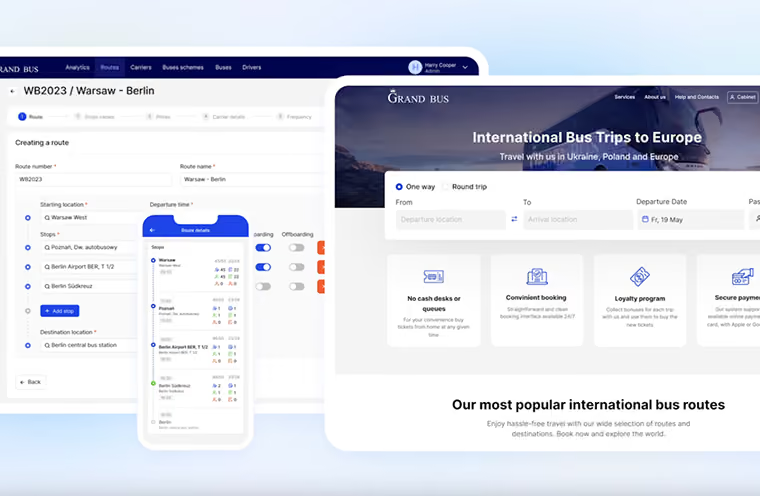
Co-founder, GrandBus
View showcase

Frequently asked questions and answers
It depends on the vendor more than the code. Sandbox access and certification often take longer than the build, so we start them in parallel with architecture work. After the audit, you get a timeline per connection, starting with the one behind the most bookings.
Yes. We build against their APIs and handle the technical side of certification. Commercial access and credentials run through your account with the provider, and we help you set that up.
Yes. We use standard APIs and webhooks where they exist and build custom connectors where they don't. If the vendor's API can't support your flow, we'll tell you before you commit.
Contract tests and monitoring catch schema changes before bad data reaches your inventory. Because each connection sits behind its own adapter, an update touches one module instead of your whole booking flow.
Yes. We did this for PlansChange, moving from MangoPay to Stripe with zero service interruption. We also added multi-currency support with local payouts in GBP, EUR, and USD.









What we’ll do next?
1
Contact you within 24 hours
2
Clarify your expectations, business objectives, and project requirements
3
Develop and accept a proposal
4
After that, we can start our partnership