



















































Contact us

About us

Scholarship

FAQ

Careers

Product Strategy

Product management

Product Discovery

Product discovery

Product UI/UX Design

Product UI UX design

Revenue Leakage Detection And Prevention

Revenue leakage detection and prevention

CRO (Conversion Rate Optimization)

CRO conversion rate optimization

User Journey Optimization

User journey optimization

Accessibility Audit

Accessibility audit

Have Ideas?
Contact Us

Product Engineering

Solution engineering service

Software Audit & Consulting

Software audit consulting

Platform Development

Platform development

Quality Engineering

Quality engineering

Third-party Software Integration

Third party software integration

Cloud & DevOps Services

Cloud and DevOps services

SaaS Platform Development

SaaS platform development

ERP Software Development

Product Growth

Product growth

Digital Strategy

Digital strategy

SEO/GEO Services

SEO GEO services

Content Marketing

Content marketing

Marketing Analytics

Marketing analytics

Have Ideas?
Contact Us

Agentic AI Development

Agentic engineering

Vibe Coding Cleanup

AI Infrastructure As A Service

AI infrastructure as a service

Data Engineering

Data engineering

Operational AI & Consulting

Operational AI and consulting

Have Ideas?
Contact Us

Revenue leakage detection

AI-powered Tripian integration

Travel API integrations

Website security audit

Conversion rate optimization

Have Ideas?
Contact Us

AI Trip Planning (Tripian)

AI Agents for Travel & Hospitality

AI Agents for Fleet Operations

AI Search Visibility (GEO)

Travel and hospitality software development

Travel API integration

Travel booking software development

Hotel management software development

Travel mobile app development

Travel website development and design

Transportation and logistics software development

Delivery management solution development

Fleet management software development

Custom inventory management software development

TMS software development

Dynamic route optimization solution development

Vehicle monitoring system development

Supply chain software development

Shiji — Custom Webflow for a global hospitality provider

Coach and minibus hiring service with quote system

See all

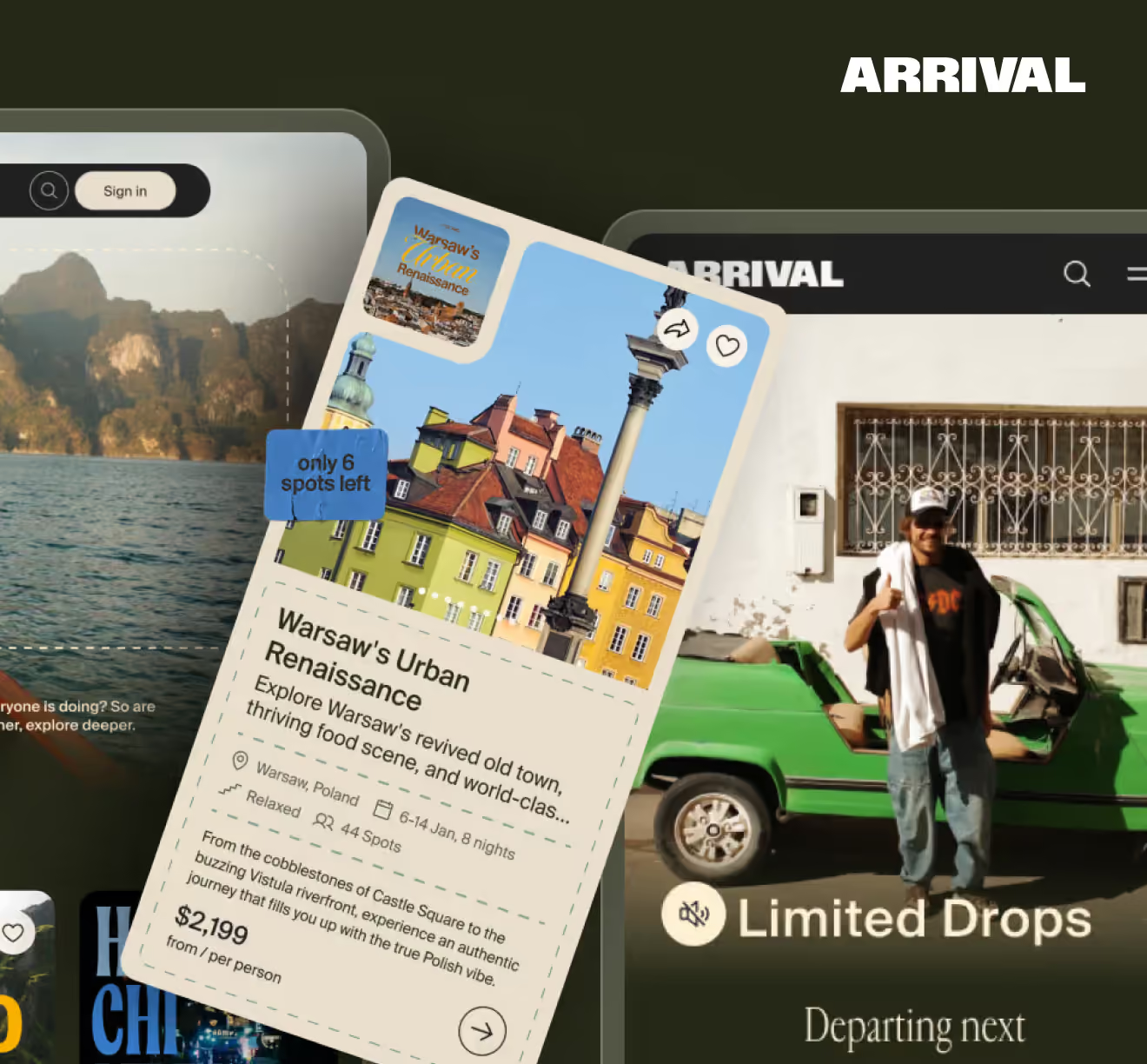
An online travel booking platform for Australia's most viral content creators

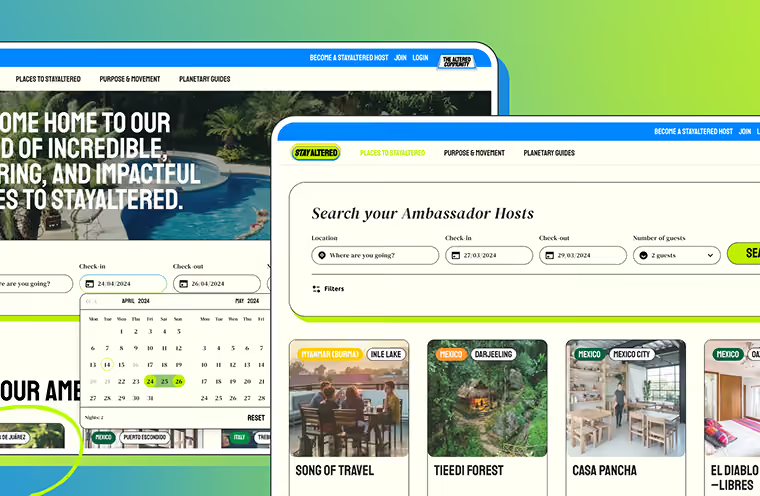
Booking platform for community-based tourism

See all

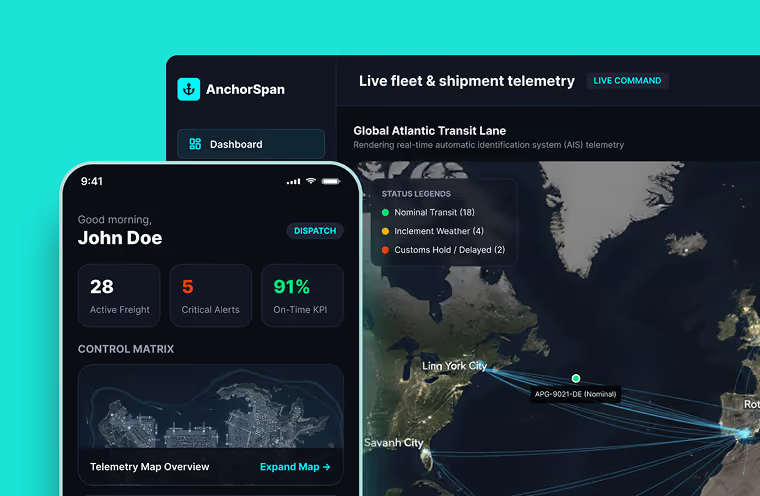
AnchorSpan — system for warehouse, port, and delivery visibility

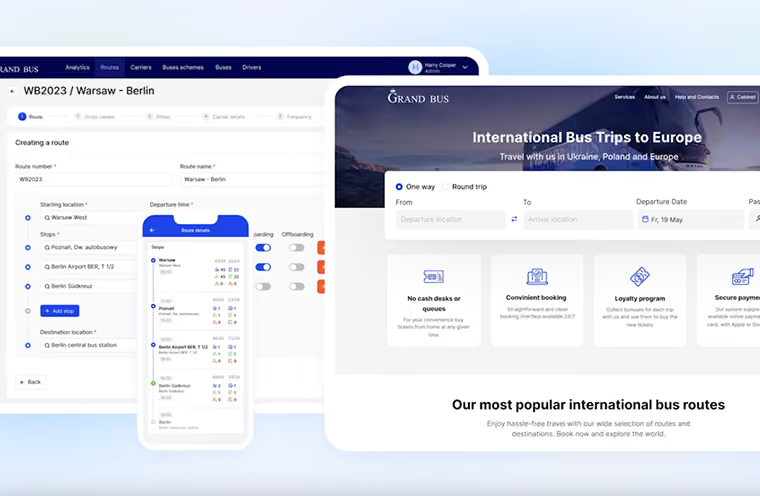
BSTK  Grandbus — bus ticket booking platform

See all

Tour operator's guide to preventing cancellations

10 fast no-dev conversion fixes for travel & transportation websites

All e-books & white papers

Logistics

Employee transportation software: Features, benefits, and best solutions

Logistics

A complete guide to warehouse slotting optimization

Check our blog

Industries

TMS software development

TMS software development

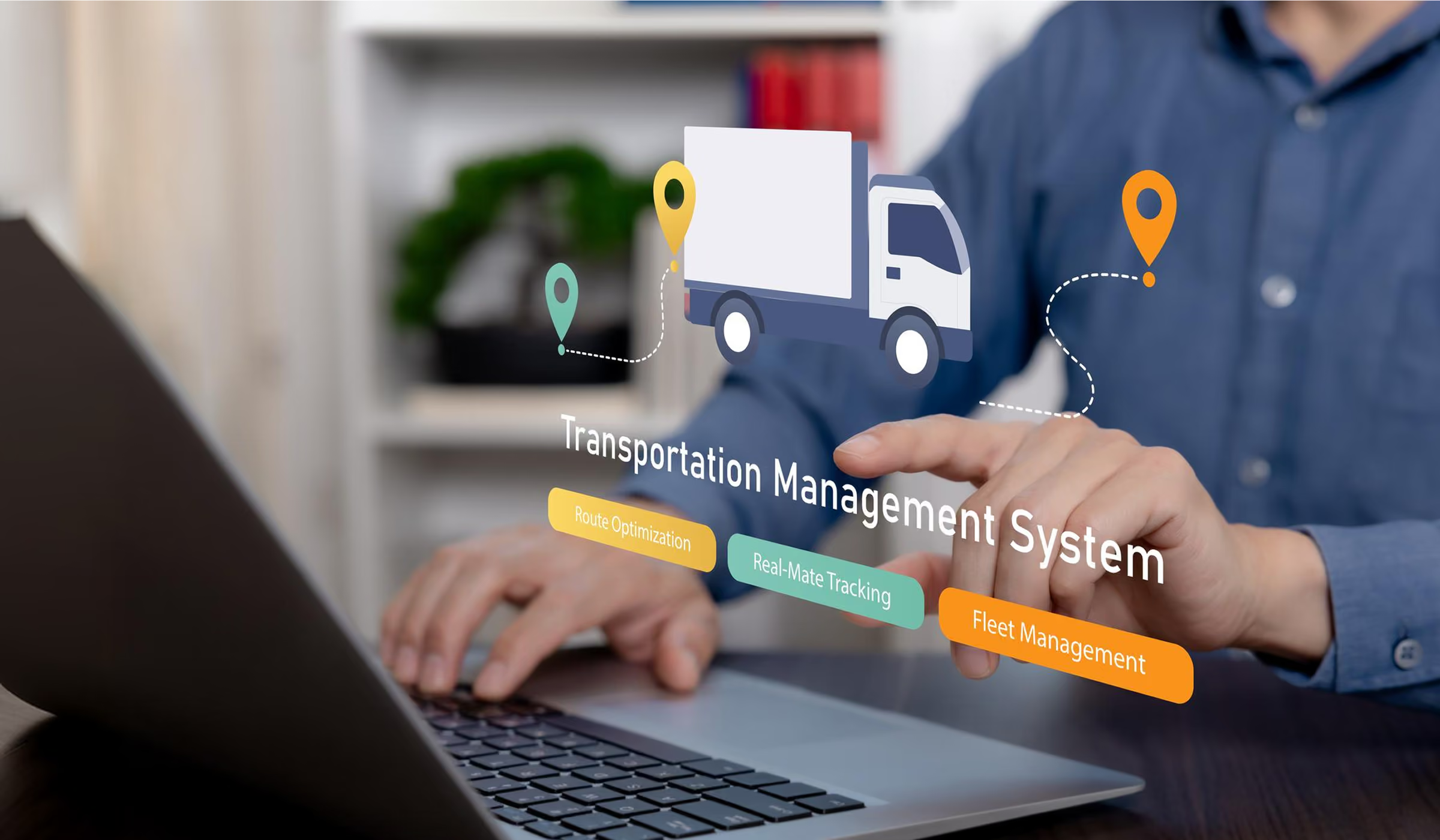
Get real-time control, avoid routing inefficiency, and cut fuel overspending with custom solutions. For full supply chain visibility, we develop TMS platforms that easily interface with your current order management and warehouse systems.

Industry leaders we work with

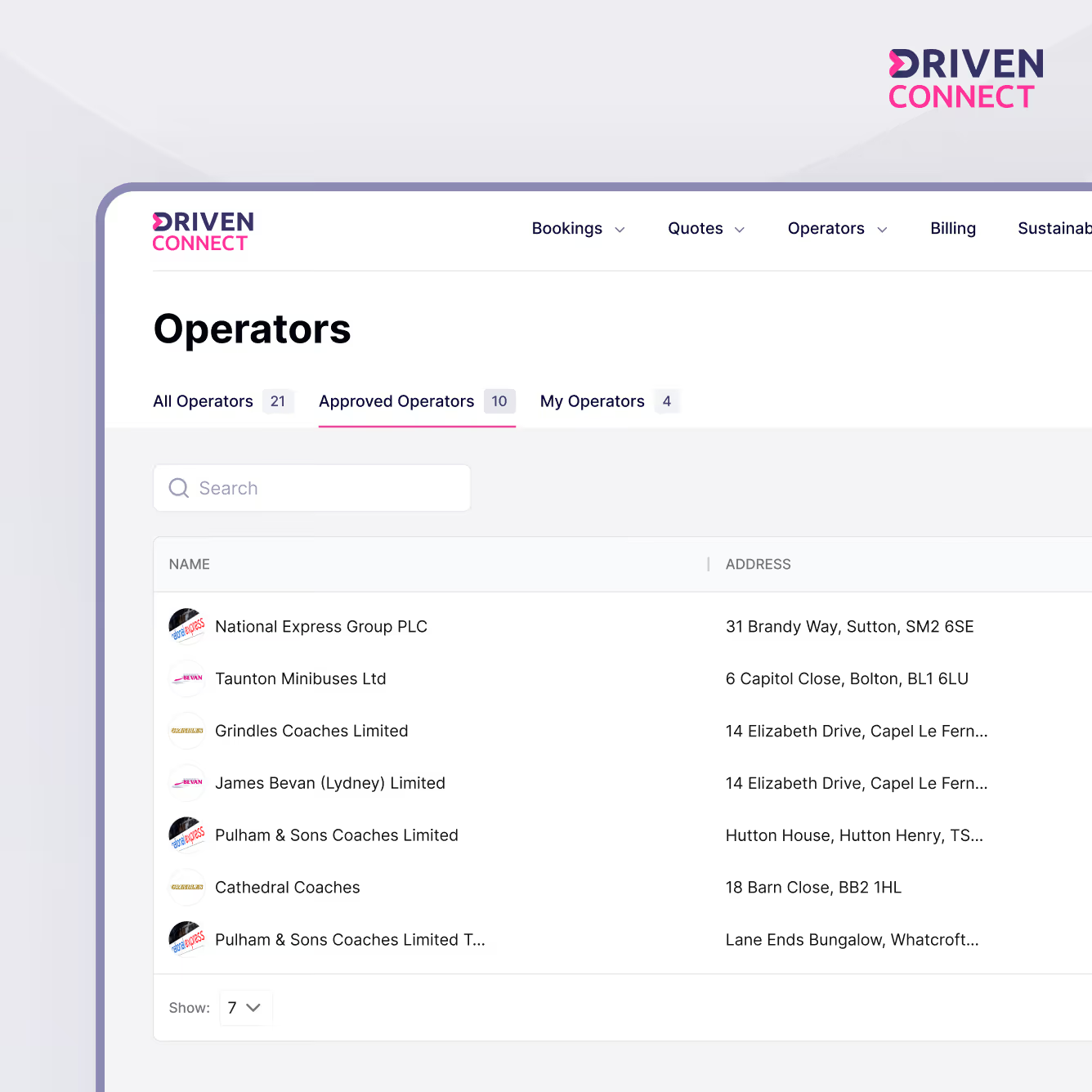
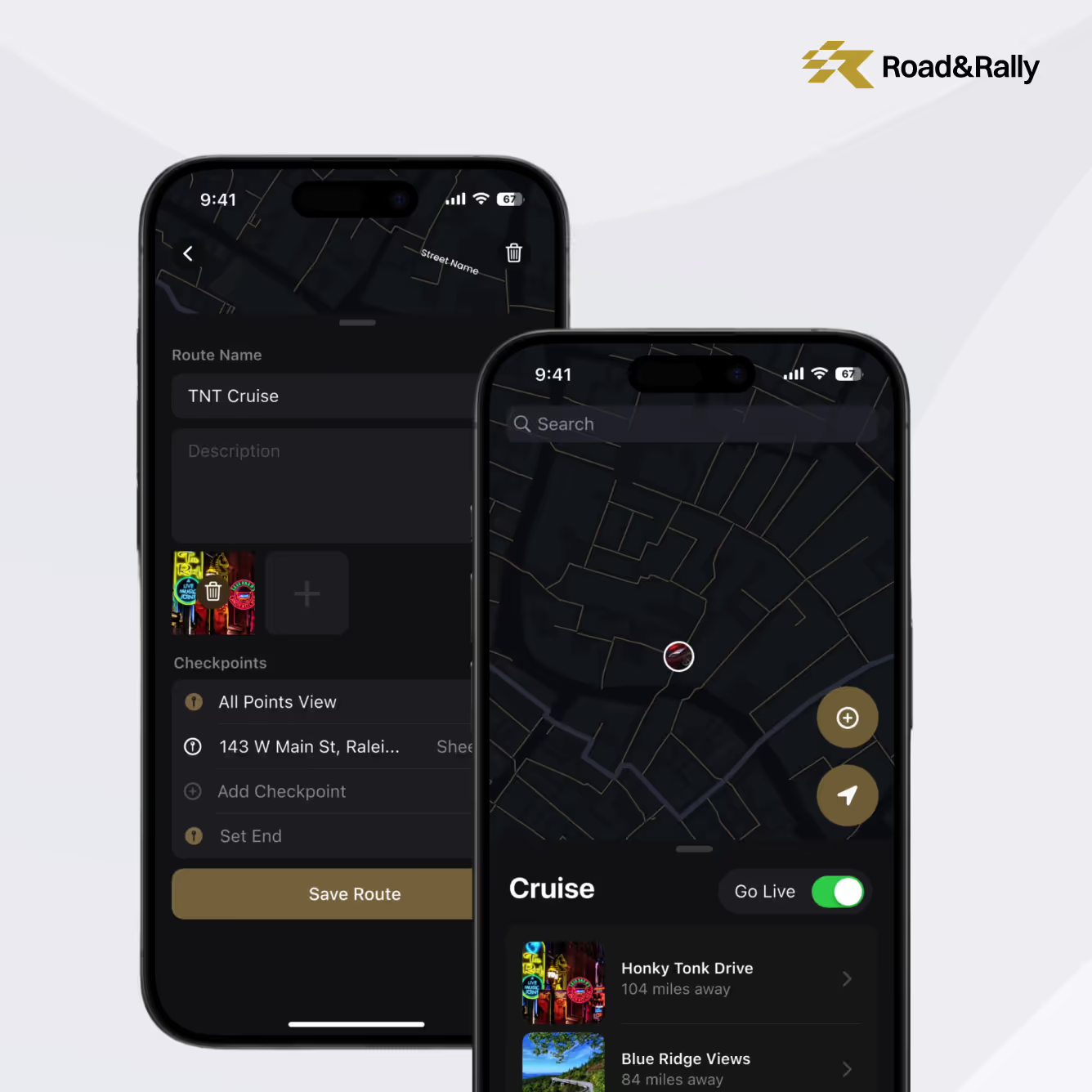
Krytter logoLocation Live logoShiji logoArrival logoDriven connect logoStayaltered logoRoad rally logoRoadster logo

Our transportation software development services

Custom TMS development

We build custom TMS software that replaces generic tools with your business rules, from lane preferences to private fleet prioritization. You get exact reporting fields, workflow rules that match your ops, and scalability that grows with your freight volume.

Transportation software consulting

Our team audits your workflows, identifying where manual steps, outdated tools, or data silos create unnecessary costs. We also analyze your current tech stack, from legacy systems to carrier integrations, and map gaps against your operational bottlenecks to give specific recommendations on what to build, buy, or integrate to bring immediate and long-term benefits.

TMS mobile apps

We develop transport management system apps that give drivers real-time load updates, digital POD capture, and route changes without extra requests. This allows you to put warehouse receiving docks, yard managers, and drivers on the same live schedule with barcode scanning and photo proof of condition for fewer detention charges and disputes over shipment damage.

Cloud-based TMS development

Our experts build cloud based transport management systems featuring secure multi-tenant architectures with regional failover nodes to guarantee full uptime across all carrier integrations. You get enterprise-grade reliability without the physical data center overhead or maintenance contracts.

TMS scaling and integration

We implement TMS software integration that connects your transportation data directly to accounting, warehouse, and telematics systems through standardized APIs. This eliminates manual data transfers and ensures freight costs, inventory levels, and truck locations automatically factor into every shipping decision.

TMS migration and legacy update

Our legacy updates turn monolithic TMS codebases into modular microservices that scale independently by function (rating, routing, visibility). This cuts maintenance costs while allowing incremental upgrades and gives you current system capabilities without losing decades of operational knowledge.

The benefits of a custom transportation management system

Reduce freight expenses

Manual route planning burns fuel and budget, but often, so do off-the-shelf tools that don’t fit your processes. Custom transport management software analyzes traffic in your specific area, knows your carrier rates, and optimizes load based on your vehicle weight and type to cut costs. It also automatically locks in the best rates before checking the forecast.

Track real-time deliveries

Guessing where shipments are wastes everyone's time, and getting trapped in a vendor lock-in means issues arise when adding new drivers or changing routes. A custom-made TMS pulls GPS, ELD, and traffic data to display exact locations and ETAs, with the added benefit of expanding as needed.

Empower customer service

Vague 'in transit' updates frustrate your clients, and many ready-made tools only include detailed customer updates in the most expensive plans. A tailored TMS tracking system automatically shares delivery milestones, delay alerts, and live ETAs through your preferred channel and lets you choose what you want to track in these notifications.

Impact warehouse efficiency

Unplanned dock congestion throws off entire operations, while advanced TMS solutions that COAX develops sync inbound/outbound schedules with WMS data, letting warehouses pre-stage loads and balance labor shifts before trucks arrive. As a result, forklift teams stop searching and start unloading on the spot.

Higher supply chain efficiency

While developing your solution, TMS software companies like ours can integrate your freight data with ERP and warehouse systems, exposing exactly where shipments stall so you can fix the weak links. What you get is the ability to turn what-if scenarios into pre-optimized plans before daily operations even start.

Streamline transportation financials

Manual freight audits miss billing errors, and not all off-the-shelf solutions include any financial tracking at all. Meanwhile, a custom TMS can cross-check carrier invoices against contracts and actual shipment data, as well as flag detention risks, reweigh conflicts, and special service needs, recovering overpayments before they hit your books.

Reveal new opportunities with custom TSM software development

Audit my current logistics tech

Integrations for transport management solutions that we can implement

ERP

ERP integration syncs freight costs with general ledger codes, eliminating month-end reconciliation work and ensuring accounting always reflects actual shipping spend. Linking TMS to ERP also automatically reserves inventory for outbound shipments, preventing overselling while warehouse teams still see available stock levels.

Order management system

Connecting to your order management system automatically prioritizes shipments based on customer SLAs, ensuring your last mile transportation management system dispatches urgent retail deliveries before bulk commercial orders. Besides, drivers always have current delivery notes and special instructions without manual re-entry.

Shipping carriers’ systems

Direct carrier API connections auto-compare spot rates against your contract discounts, ensuring you never overpay for unoptimized lanes or last-minute bookings. Moreover, live carrier tracking feeds update the ETAs system-wide, eliminating check-calls for freight status while dynamically adjusting warehouse receiving schedules.

Warehouse management system

Connecting your transportation management system for warehouse operations automatically reserves dock doors when trucks are 30 minutes out, preventing yard congestion and keeping forklift teams productive. It also syncs pallet-level inventory data with outbound loads, automatically adjusting shipment priorities when stock levels hit critical thresholds.

Procurement software

Procurement software integration compares current freight spend against vendor contracts, flagging when spot-market bookings exceed negotiated rates so you can enforce compliance. Also, this ensures fuel surcharges and accessorial fees get validated against agreed terms, preventing billing errors.

Accounting software

One of the critical functions of transportation management system in logistics is checking freight bills against accounting codes, saving hours of manual work, and preventing payment mistakes. It shares real shipping costs with your accounting software, so your numbers are always up-to-date and accurate.

Billing software

Correct billing is vital, and your TMS auto-generates accurate freight invoices by pulling verified weights, distances, and carrier rates, so you no longer get manual calculations or billing disputes. It cross-checks customer contracts against actual shipments, automatically applying the correct fuel surcharges and accessorial fees for error-free billing.

Fuel card systems

Integrating fuel card data with your TMS automatically validates fuel purchases against planned routes, flagging discrepancies like off-route refueling. It also tracks fuel spend by vehicle/driver, helping enforce efficiency policies and capturing tax credits for IFTA reporting.

Why choose COAX as your transportation management system development company?

Making customizable TMS software 

We are focused on your benefits and growth. If it’s beneficial, we will implement custom transportation software that can prioritize local deliveries, private fleet rules, or any specific customer requirements without forcing you into rigid templates.

Wide technology stack

At COAX, we have experts in most modern web & mobile development technologies. From legacy systems to cloud platforms, our experience across different technologies means we can build a solution that works with your current tech.

Agile development practices

We divide our transportation software development into small chunks with phased building and testing, incorporating your team's feedback at each step to ensure the final product solves daily logistics problems. It's software shaped by the people who use it.

Superior TMS maintenance

With our TMS implementation services, you get regular performance optimizations, system checkups, and updates. COAX dedicated teams treat your system like it's our own, because your business can't afford downtime, and we cannot afford dissatisfied clients.

Client feedback

How we develop your transportation management system

We dig into your shipping processes, costs, and tech setup to pinpoint what your custom transportation management software development should fix. We identify which tasks waste time, where data gets stuck, and what needs automating.

We break down your entire shipping operation into clear steps, then design a custom system that automates the tedious parts. You get a plan showing how the software will handle your loads, routes, and paperwork. Every feature gets prioritized based on immediate gains.

We build the transport management system interface with one-tap shipment tracking, two-click route updates, and unmissable alerts. Before we code anything, we also test clickable prototypes with your staff to catch confusing layouts early.

Our transportation software developers write clean code that turns your specific requirements into working features, building exactly what your logistics operation needs. No excessive and complicated functions, just the tools to manage shipments, routes, and costs effectively.

We test every feature with real shipping data before delivery, catching errors that would slow down dispatchers or cause freight delays. Our QA process mimics your actual operations — if a feature can't handle peak season volumes or last-minute route changes, we rebuild it.

Our transportation management application development doesn’t stop at release. When you add new trucks, carriers, or warehouses, we adjust your software. And sure, our teams monitor your system and apply updates during off-hours, so your shipping never slows down.

Technologies we use

AI

Anthropic

OpenAI

ElevenLabs

pytorch

langchain

Front-End

React.js

TypeScript

Redux Toolkit

Vite

tanstack/query

Webflow

Back-end

Node.js

Ruby on Rails

Python

Django

Express.js

Flask

FAST API

Asyncio

Next.js

Nest.js

Meteor.js

Cloud & Databases

AWS

Google Cloud

Oracle

Terraform

Docker

Digital Ocean

PosgreSQL

MongoDB

Operational Data Stack

ElasticSearch

Redis

Rabbit MQ

Airflow

Algolia

Valkey

Learn more about our comprehensive technology stack

See all technologies

Other services

Transportation & logistics

Go to the service page

Inventory optimization

Go to the service page

Courier management

Go to the service page

Transportation route optimization

Go to the service page

Custom fleet management

Go to the service page

Vehicle monitoring

Go to the service page

Frequently asked questions and answers

TMS software helps businesses plan, execute, and optimize freight shipments. It handles route planning, carrier selection, tracking, and freight cost management, replacing spreadsheets and guesswork with automated tools. Essentially, it's the control center for moving goods efficiently.

The time needed to build a solution depends entirely on your transportation management system requirements — typically 4-9 months for most custom systems. We analyze your specific shipping workflows, needed integrations, and feature priorities first to give you an exact timeline. Simple systems with basic needs can ship in 12 weeks, while complex operations with many requirements may need 6-12 months of development.

A TMS improves efficiency by automating route planning and load optimization to reduce empty miles and fuel costs. It boosts visibility across all carriers in one dashboard, eliminating blind spots in your logistics operations. The software for transport management system also analyzes performance data to identify bottlenecks and suggest improvements.

A TMS system's key features include route optimization to find the fastest, cheapest paths; load planning to maximize trailer space; real-time tracking of shipments; automated freight billing; carrier management to compare rates; and analytics to spot inefficiencies. It essentially handles the entire freight lifecycle from quote to delivery.

The cost of developing a transport management system primarily varies based on the complexity of your shipping operations, required integrations with other systems, and custom features needed. TMS software providers also consider whether you need mobile capabilities, AI-powered tools, or advanced analytics. The scale of deployment and ongoing support requirements further influence the quote for building your solution.

Custom TMS fits your exact workflows and needs, while off-the-shelf solutions force you to adapt to their limitations. It grows with your business and eliminates unnecessary features.

A TMS improves route optimization by analyzing traffic, weather, and delivery windows to determine the most efficient paths, cutting fuel costs and delays. An on demand transportation management system takes this further, especially for dynamic operations like last-mile or ride-hailing, by instantly adjusting routes as new orders come in, driver availability changes, or unexpected disruptions occur.

A custom TMS provides tailored analytics on key metrics like delivery performance, freight costs, and carrier efficiency, giving you actionable insights to optimize routes and reduce expenses specific to your operations.


Insights from the COAX blog

Check our blog

Logistics

The ultimate fleet management software development company: Top 10 options to work with

October 8, 2026

Go to the blog post page

Logistics

Top 10 transportation software development companies to partner with

October 2, 2026

Go to the blog post page

Travel

Top 10 travel app development companies in 2026

September 30, 2026

Go to the blog post page

Logistics

Smart warehouse guide: Key technologies, features, and best practices

September 28, 2026

Go to the blog post page

Logistics

Employee transportation software: Features, benefits, and best solutions

September 18, 2026

Go to the blog post page

Logistics

A complete guide to warehouse slotting optimization

September 17, 2026

Go to the blog post page

Travel

Short-term rental software: A complete guide to choosing the right tools

September 16, 2026

Go to the blog post page

Logistics

What is fleet telematics? Turn vehicle data into better fleet decisions

September 14, 2026

Go to the blog post page

Travel

Why do you need a cloud hotel management system?

September 11, 2026

Go to the blog post page

Logistics

Warehouse control systems explained: Workflow, features, and solutions

September 10, 2026

Go to the blog post page

What we’ll do next?

  • 1

    Contact you within 24 hours

  • 2

    Clarify your expectations, business objectives, and project requirements

  • 3

    Develop and accept a proposal

  • 4

    After that, we can start our partnership

Serhii Danyliuk

Head of Strategic Partnerships