Domestic and cargo shipment costs are inevitably climbing up. Meanwhile, growing competition requires precise rate management and prediction, instant quotes, and access to a global pool of information. Lucklily, you can get it all at a freight forwarding marketplace.
To help you choose the right one for your needs, we have made an ultimate list for 2026:
Freightos - Multi-forwarder platform with market intelligence tools and rate management.
SeaRates - Massive price database with 70 million data points for all global shipping lines.
FreightMango - Zero-cost platform without intermediary fees or hidden charges.
SHIPNEXT - Auction-based marketplace designed for non-containerized cargo.
iContainers - AI-driven pricing engine with instant quotes across 40,000 ocean and air routes.
ShipHub - One form generates competing quotes from multiple forwarders at once.
Loadsmart - North American trucking and rail platform with 100% carrier acceptance.
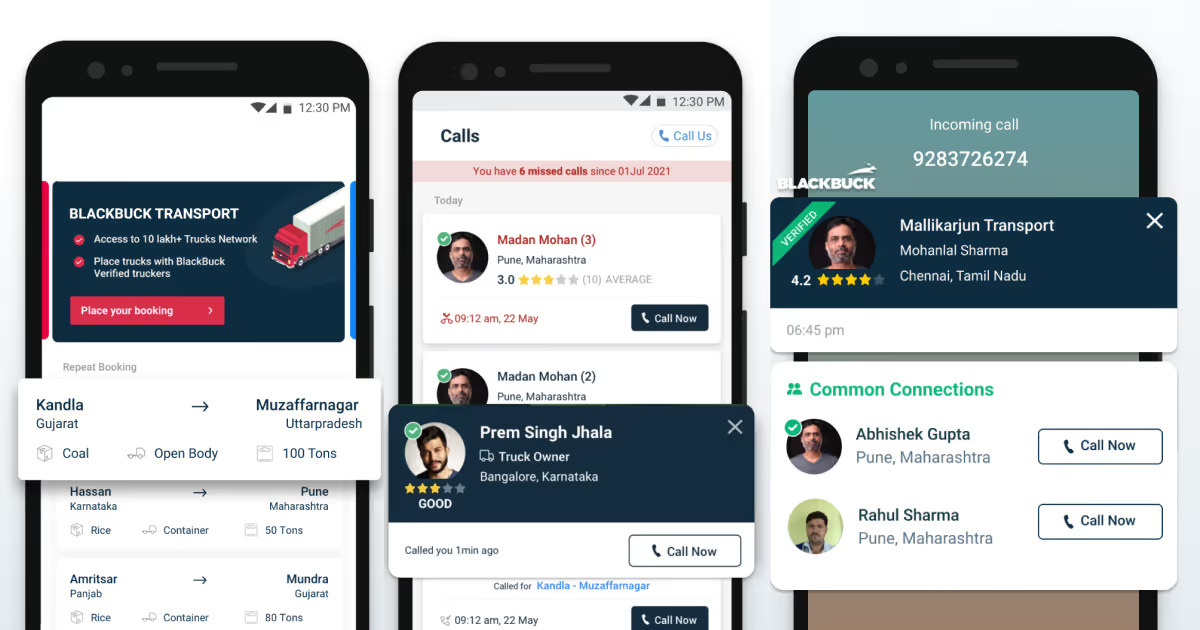
BlackBuck - A digital trucking network using ML to optimize road freight pricing.
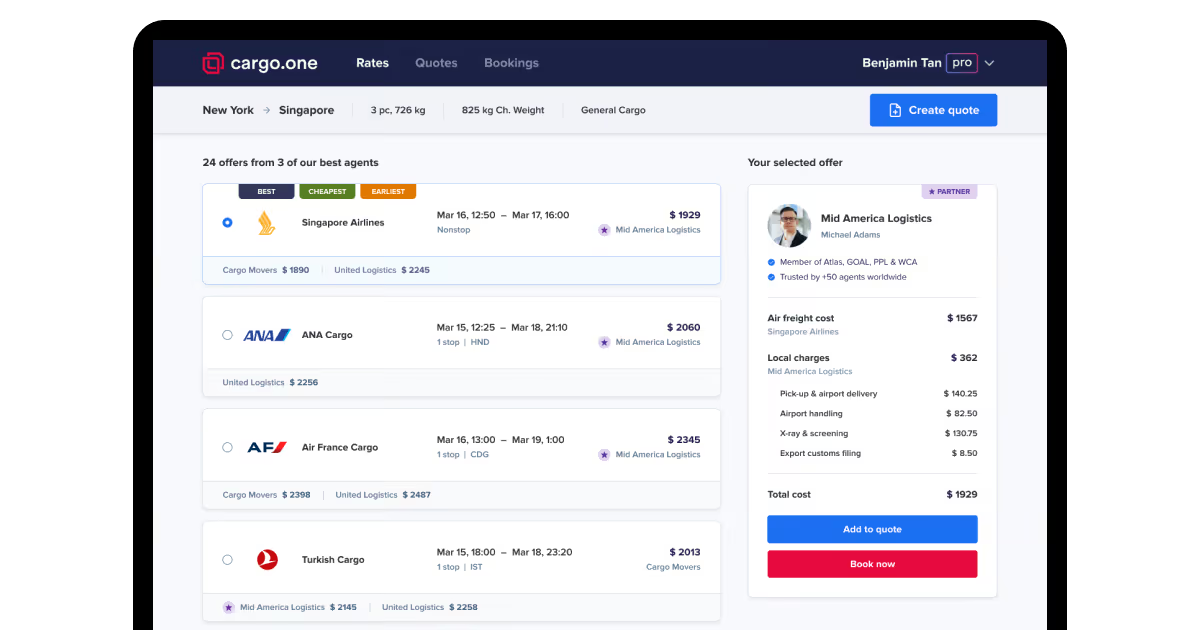
Cargo.one - Air cargo tool connecting freight forwarders to airline inventory.
Custom development - The most flexible and easy-to-scale model that pays off by no vendor lock-in and reccuring fees.
In this article, we will outline the concept of freight marketplaces and outline the top options in the market compared to tailored solution development. Then, we’ll give some years-proven tips on implementation to help you get the most out of this technology.
What are freight marketplaces?
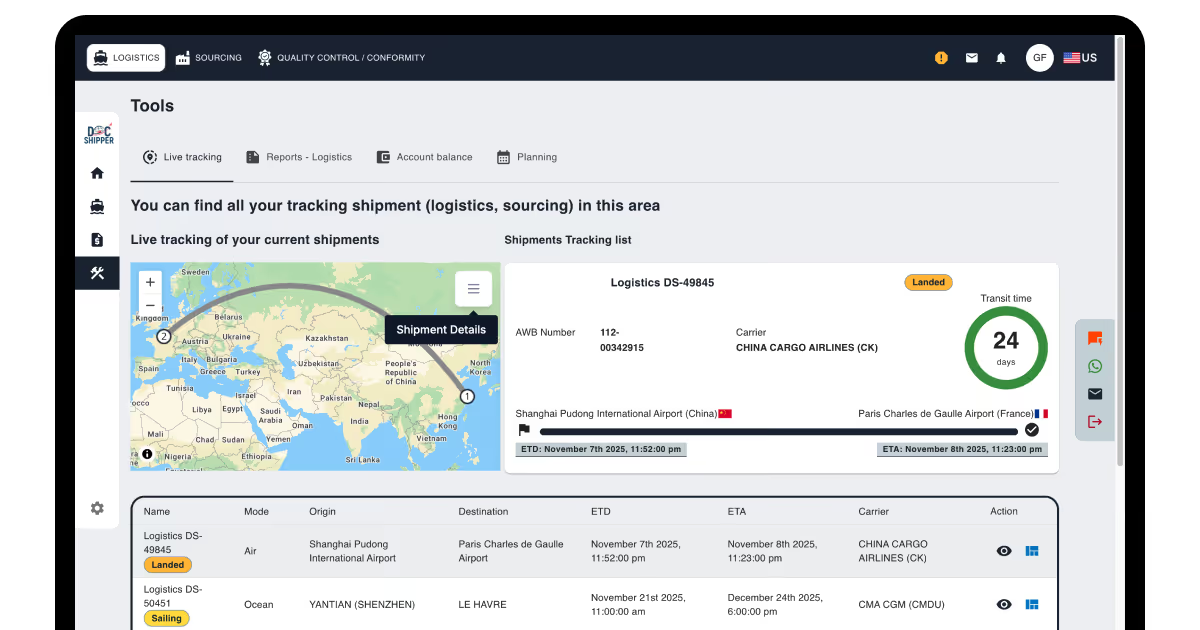
A freight marketplace is an online platform that connects shippers with logistics service providers. These providers include ocean carriers, air freight companies, freight forwarders, third-party logistics providers, customs brokers, and consolidators. This technology serves as a common meeting point where businesses looking to ship goods can find and compare services from multiple logistics providers. You can search for available options, compare rates, and book shipments without calling or emailing dozens of companies individually.
DocShipper - Freight marketplace
Sometimes, freight marketplaces are confused with trucking load boards. The basic idea is similar. Both connect shippers with transport providers, but they serve different purposes.
Load boards like DAT, uShip, and Truckstop.com focus on domestic trucking. They help you find a truck driver to move goods across a country or region.
Unlike them, freight marketplaces handle international shipments. They help you organize ocean freight from China to Europe or air cargo from the US to Asia. The logistics of such hubs are complex because of customs, documentation, and multiple transport modes.
Why do freight forwarders use freight marketplaces?
Freight forwarders use marketplaces because customers expect fast quotes, transparent pricing, and reliable service. Manual processes simply can’t cover these things consistently.
Marketplaces open up opportunities. Recent data from Descartes shows 67% of freight forwarders view technology as fundamental to growth. The same study found that 25% cite manual workflows as their top barrier. To overcome these issues, freight forwarders turn to marketplaces. When you rely on phone calls and email chains to quote rates and book shipments, you waste time and lose deals to competitors.
Global instability affects 60% of forwarders, according to the study. Tariff volatility impacts 42%. Customer pricing pressure hits 61%. You need tools that help you respond quickly to these challenges.
Freight forwarder marketplaces solve several problems at once. You get access to more shipping options without building individual carrier relationships. You also quote rates faster because the platform aggregates information. You automate booking and documentation, and finally, payment gets simplified through the platform.
The shift toward AI and automation matters too.According to the study, 65% of forwarders expect AI to deliver the greatest value over the next two years. Marketplaces increasingly integrate these technologies, giving you capabilities you could not afford to develop yourself.
You also reduce errors. Manual data entry leads to mistakes in quotes, bookings, and documentation. When information flows through an automated system, accuracy improves, and your team spends less time fixing problems.
Network effects provide another advantage. As more carriers and shippers join a marketplace, the value increases for everyone. You find better rates through competition and more shipping options through variety.
The research by Smith reinforces this point. Digital freight forwarding systems improve access to services, increase transparency, and create competition among providers. These benefits apply in whatever part of the world you work at.
Custom vs. off-the-shelf freight marketplaces
Not all marketplaces are created the same. You often come to a choice when applying a freight marketplace to your business: use an existing platform or build your own.
Off-the-shelf freight shipping marketplaces let you start immediately. You sign up, browse available carriers, and book shipments. The platform handles payments, tracks cargo, and manages papers. You avoid development costs and technical headaches.
Custom marketplaces give you control. You design workflows that match how your business actually operates. You integrate directly with your existing systems instead of forcing employees to switch between multiple platforms. You set your own commission structure and keep more revenue.
The difference matters most when you have specific requirements. Maybe you serve a niche industry with narrow cargo handling needs. Perhaps you need unique compliance features for certain trade routes. Ready tools rarely cope with these well.
Custom solutions also scale better as you grow. You add features when needed without waiting for a vendor to build them. You own your customer relationships and data instead of depending on a third-party platform that could change terms or raise prices.
The tradeoff comes down to speed versus flexibility. Off-the-shelf works when you need something now, and your requirements fit standard shipping patterns. Custom marketplace development makes sense when you have the resources to invest and need a platform that works exactly how you need. Additionally, it provides value when you want to charge shippers for your platform and get additional income for the unique features no other tools offer.
Find the best fit for your business
Now that we have outlined the basics, let’s get started with the top options you can find in the market today. Choosing the right freight marketplace depends on what you ship, where it goes, and how you operate. Each platform specializes in different cargo types, routes, and service models. Let’s break each one down.
Marketplace
Key features
Booking flow
Integrations
Pricing
Freightos
Quotes from multiple forwarders, Rate management, Baltic Index, Multi-mode tracking
Enter shipment details → Get AI quote → Book → Track
Standard APIs
Dynamic pricing. Includes documentation, excludes duties
ShipHub
Single request form, Multi-forwarder quotes, SME-focused
Submit request → Receive multiple quotes → Select → Book
Sea, rail, air carriers
Free. No commission. Discounted carrier rates
Loadsmart
100% tender acceptance, AI pricing, Reliable contracts, FTL/LTL/rail
Get instant rate → Book immediately → Track
TMS integration, ShipperGuide Marketplace
Free setup. Rates include fuel. No price changes post-booking
BlackBuck
India-focused, Dynamic ML pricing, FASTag, Fuel cards
Search loads → Match carriers → Book → Track
Payment systems, Toll systems
10-20% commission. Premium subscriptions available
Cargo.one
Air freight specialist, 60+ airlines, Instant booking, Forwarder-focused
Search capacity → Compare rates → Book instantly → Confirm
200+ airlines, PDF quoting
Free for forwarders. Revenue via airline commissions
Freightos
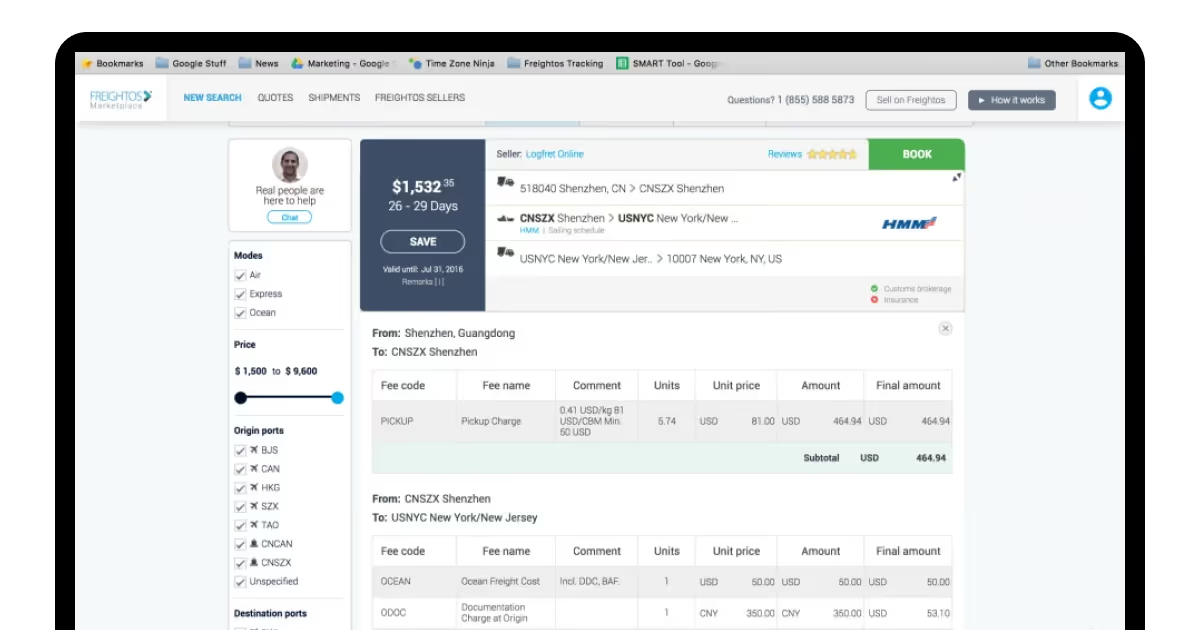
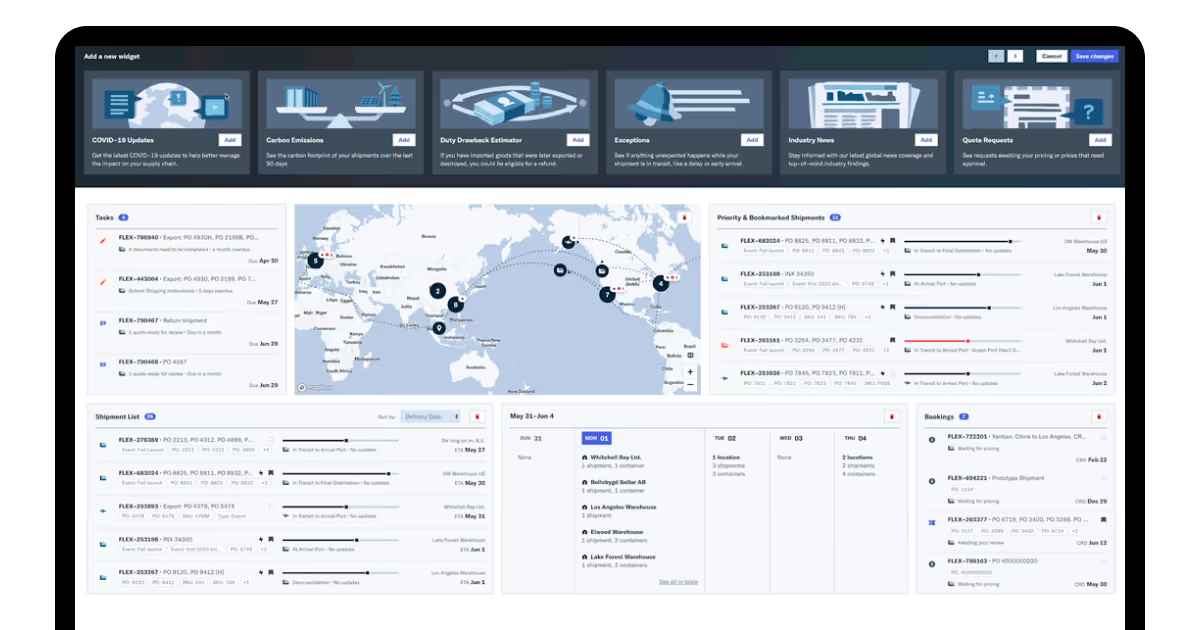
Freightos operates as an online marketplace for comparing and booking air, ocean, and trucking freight across multiple forwarders. The platform targets businesses looking to reduce shipping costs through instant quote comparison.
Features:
Instant quote comparison from multiple freight forwarders
Rate management tool for tracking and analyzing shipping costs
Freightos Baltic Index for market visibility and trend analysis
Integrated booking system for air, ocean, and trucking
Payment management dashboard
Shipment tracking across all transport modes
This online shipping marketplace itself is free to search, compare, and book shipments. Rate Management Services start at $40, and the platform charges approximately $49 per user monthly. Your actual shipping costs vary based on weight, volume, and route. There's no free plan for the paid software tools.
SeaRates
SeaRates provides a real-time digital freight marketplace featuring over 70 million price points across sea, land, rail, truck, and air freight, with direct connections to major carriers like Maersk and MSC.
Features:
Freight calculator with detailed quotes, including fees and insurance
SeaRates Freight Index showing daily market rate changes
Direct online booking of transportation services
Real-time tracking with volume limits based on account type
Access to major shipping lines, including Hapag-Lloyd, COSCO, and CMA CGM
Market trend analysis tools
The basic platform is free to use. Unregistered users get one free track daily, while registered users can track up to five shipments monthly. Freight costs vary by cargo type, route, and carrier. Subscription options are available if you need higher tracking volumes.
FreightMango
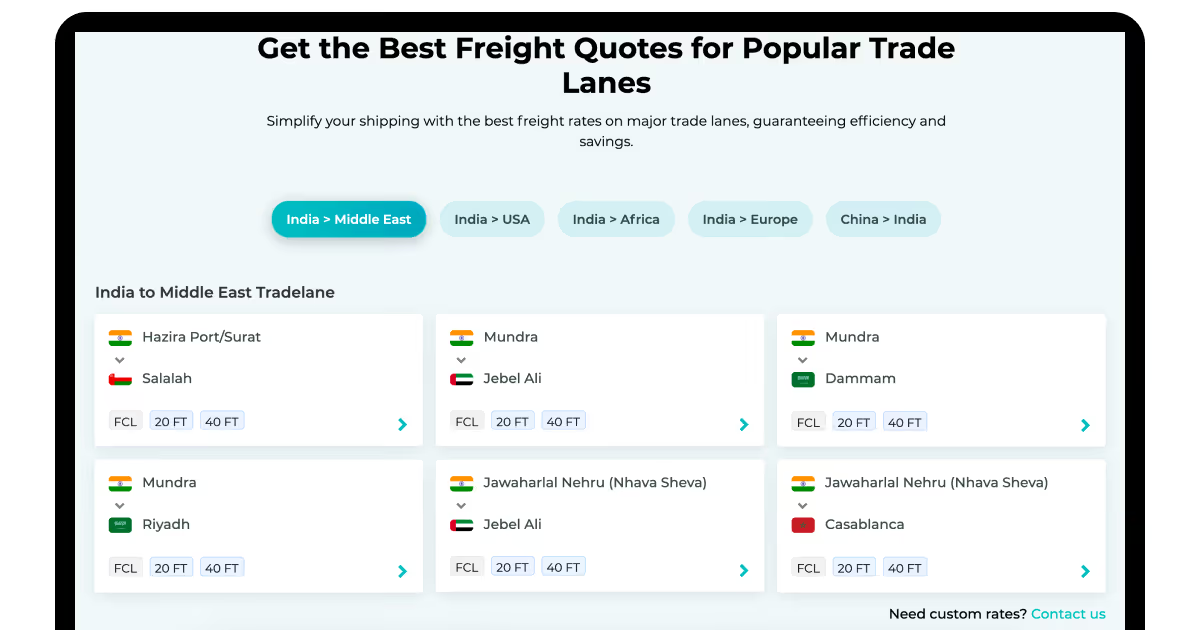
FreightMango offers a free option for an ocean and air freight marketplace. It connects shippers directly to carriers for international ocean and air freight with transparent, no-hidden-fee pricing.
Features:
Transparent pricing with no hidden fees
FCL and LCL ocean freight rates
Air freight calculations based on weight and volume
API integration for automated quoting
Coverage of major trade lanes, including India tothe USA, Africa, Europe, the Middle East, and China
Free shipment booking, management, and tracking
The platform is completely free. You pay nothing for booking, managing, or tracking shipments. The API integration includes a free trial, after which you'll need a custom quote for continued access. Your shipping costs are based on standard carrier rates without platform markup.
SHIPNEXT
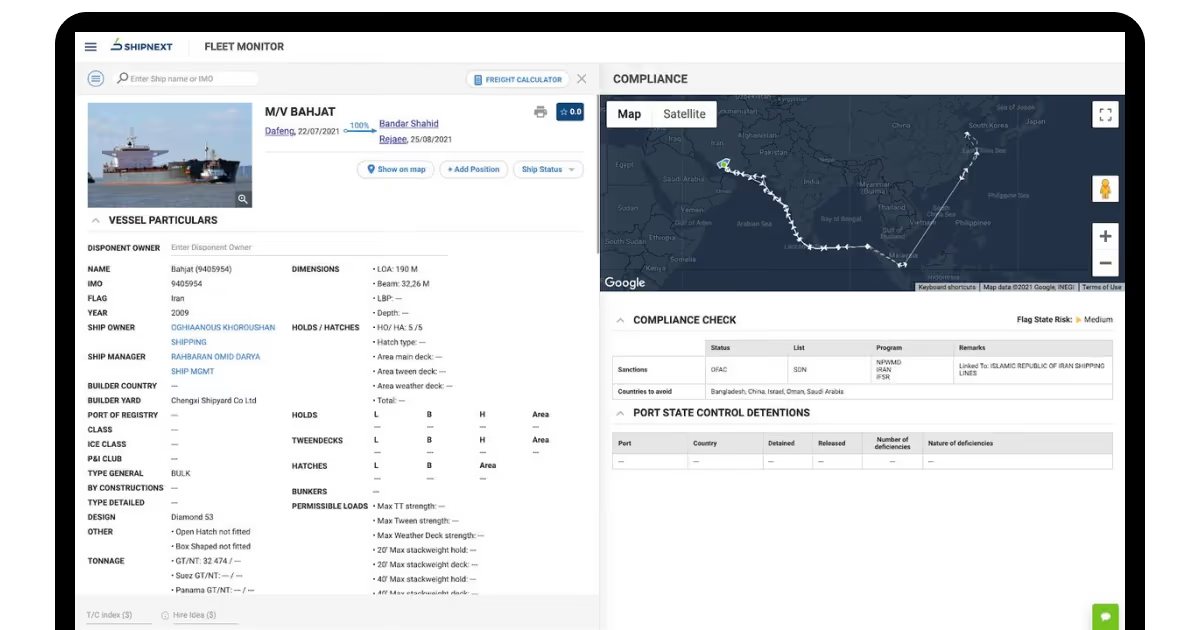
SHIPNEXT operates a digital marketplace specializing in breakbulk, bulk, and containerized cargo with a subscription model centered around their Trading Desk platform.
Features:
24/7 marketplace access
Automated cargo-to-ship matching
Reverse freight auctions
Contract management tools
Port data and analytics
White-labeling options for enterprise clients
Automated calculators are reducing manual broker communications
A free tier offers limited platform access for testing. The SHIPNEXT Trading Desk costs $66.58 monthly or $799 annually and includes full marketplace features. Corporate and white-label customization is available for larger organizations. Freight costs are separate from the platform subscription.
Flexport
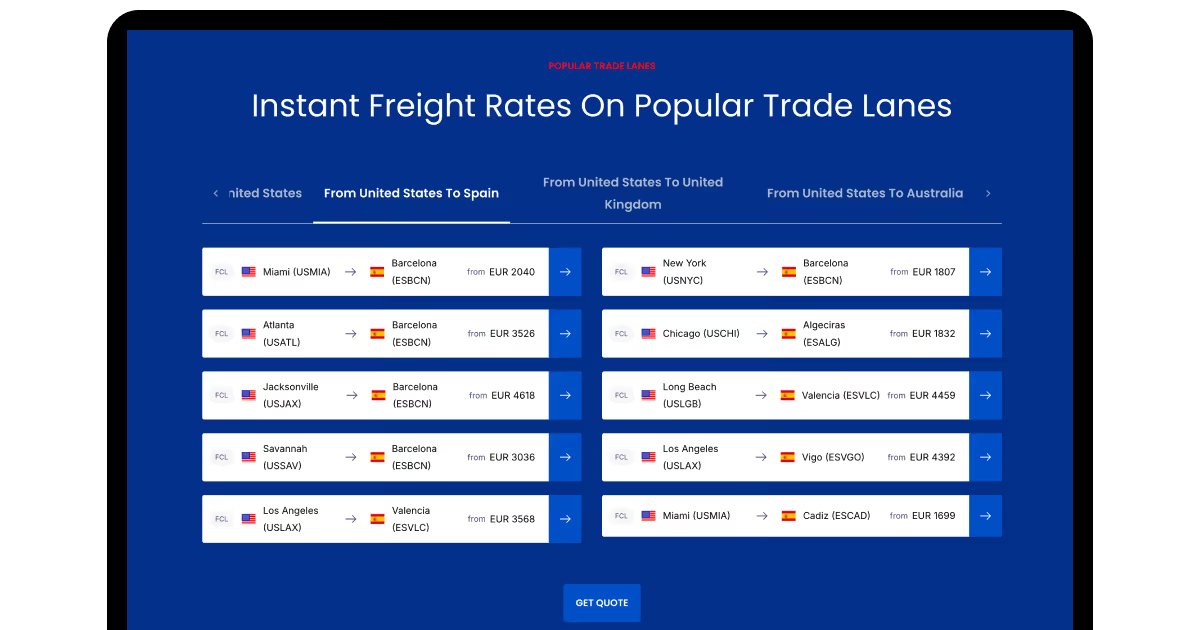
Flexport is another great option of a freight rate marketplace offering instant, all-inclusive, guaranteed pricing for air, ocean, and trucking services based on real-time and historical data.
Features:
Instant comparison and booking across air, ocean, and FTL options
All-inclusive rates with most surcharges included
Air freight pricing is calculated on the chargeable weight
DDP (Delivered Duty Paid) options available
Integration with platforms like Shopify
Detailed service fee breakdown
Rates vary by weight, dimensions, and destination. The all-in pricing includes most surcharges like GRI and PSS, though detention, storage, or special handling may cost extra. Trucking fees for FCL deliveries are charged separately. DDP options through partners cost approximately $3.50 per unit. Service fees include $2 per SKU for dimensional measurements and $48 hourly for special handling.
iContainers
iContainers delivers instant, AI-powered quotes for FCL and LCL ocean freight plus air freight across over 40,000 routes using dynamic, real-time market data.
Features:
Instant competitive rate quotes
Dynamic AI pricing evaluates fuel prices, demand, and capacity
Comprehensive rates including terminal handling and documentation
Transparent, itemized quote breakdowns
Coverage of 20ft, 40ft, and High Cube containers
Port-to-port and door-to-door service options
The platform’s dynamic pricing adjustsbased on container size, route, and market demand. Rates typically include documentation and local fees but exclude destination taxes and duties. LCL pricing works better for smaller shipments, while FCL makes more sense for higher volumes. Market conditions like General Rate Increases and peak season surcharges affect your final costs.
ShipHub
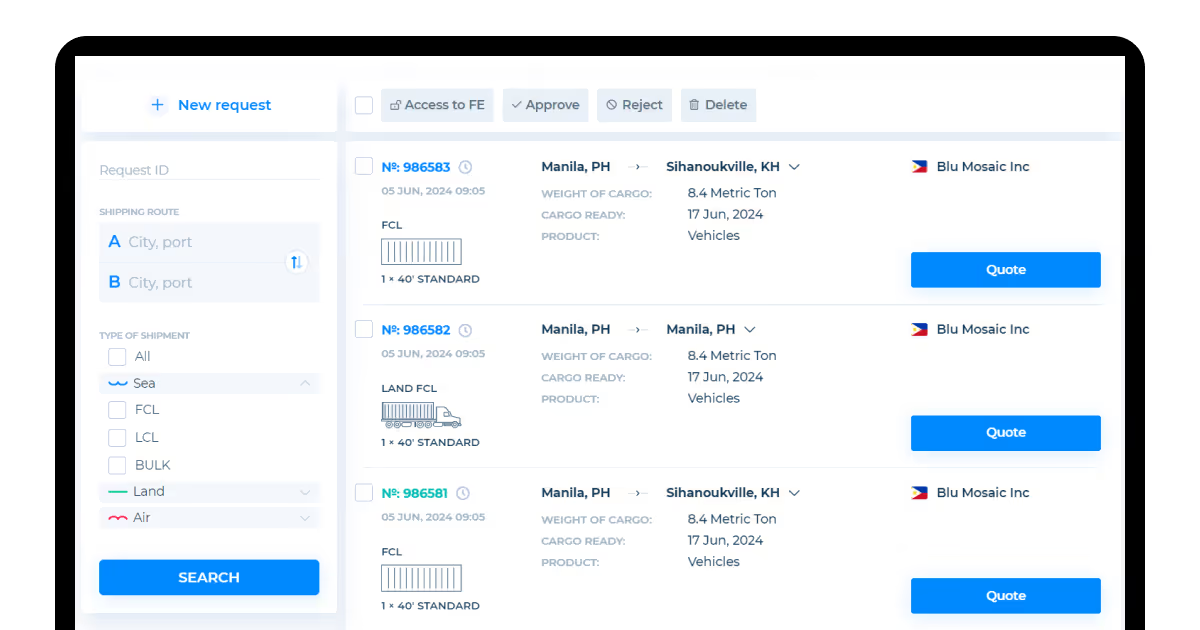
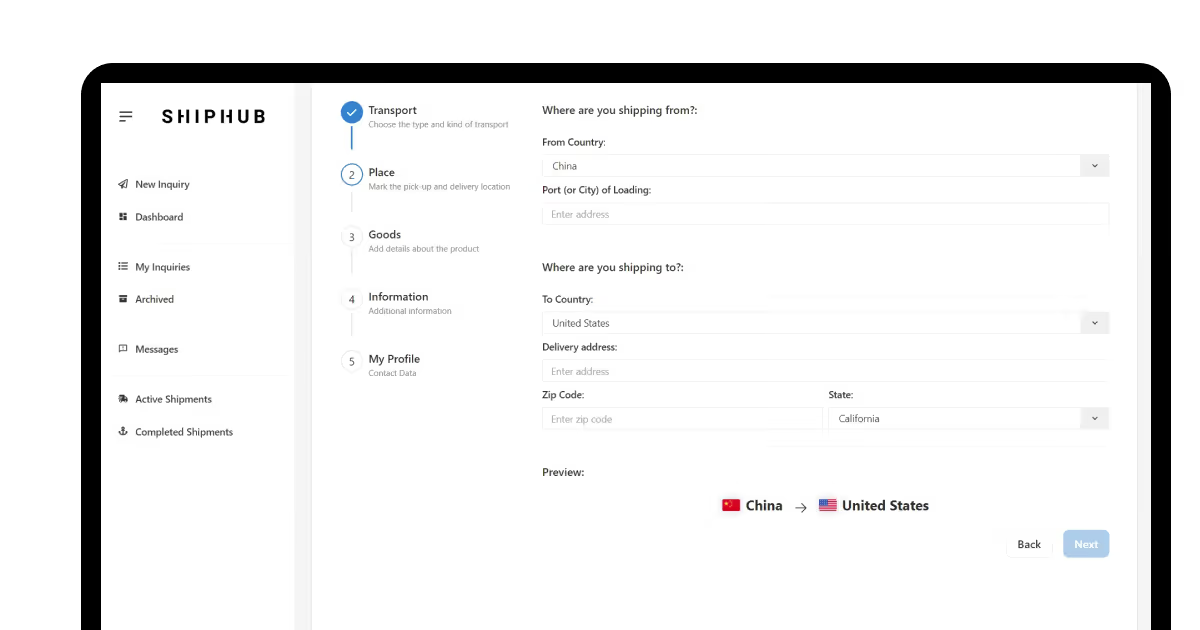
ShipHub is another option of a cost- and commission-free international freight marketplace helping businesses of all sizes find and compare shipping rates through a single request form.
Features:
Single request form for multiple freight forwarder quotes
Coverage of sea, rail, and air freight modes
Comparison tool for different shipping options
Access to discounted shipping rates
No volume minimums
Designed for SMEs and logistics beginners
The platform software is completely free with no commission fees. You get access to discounted carrier rates regardless of shipping volume. The service works for both low and high-volume shippers, with savings varying by route and carrier.
Loadsmart
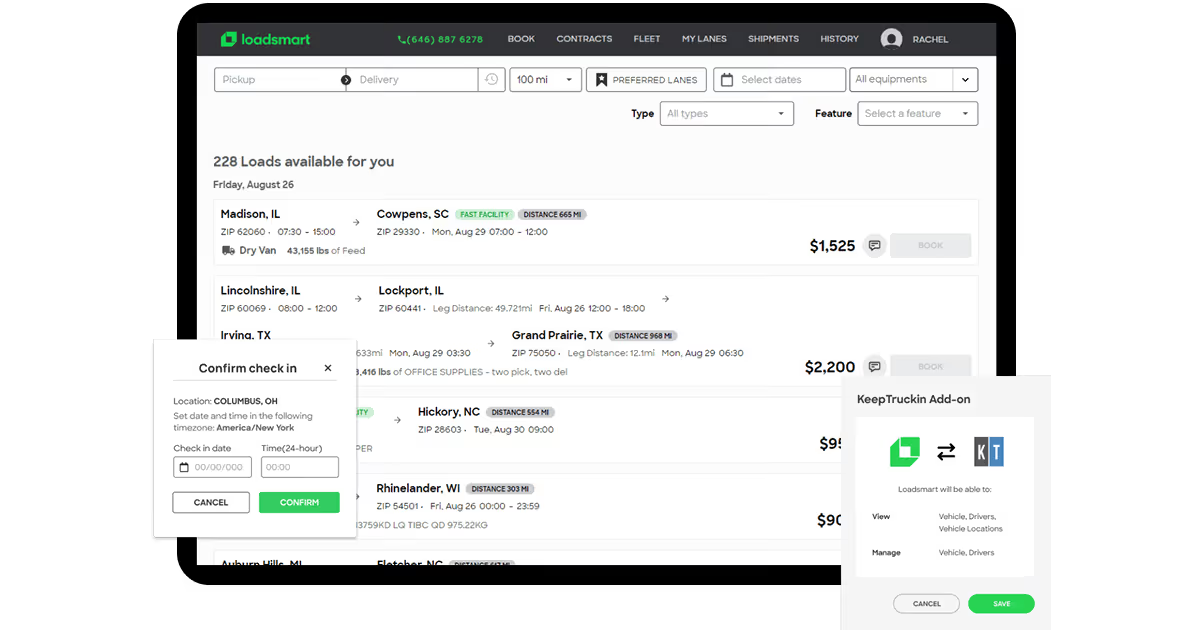
Loadsmart provides instant, AI-driven, bookable freight rates for FTL, LTL, and rail with 100% tender acceptance and no price changes after booking.
Features:
Bookable rates eliminate negotiation
AI-powered dynamic pricing engine
100% tender acceptance guarantee
Reliable contracts with target and ceiling pricing
ShipperGuide Marketplace for rate comparison
Full cost and margin transparency
TMS system integration
Historical FTL Market Rates Calculator
Setting up and accessing this online freight marketplace is free. The platform covers FTL, LTL, and rail, with rates including fuel and base haul costs. Specialized services or extra surcharges may apply separately. The reliable contracts feature offers budget security through ceiling prices, so you know your maximum cost upfront.
BlackBuck
BlackBuck uses dynamic, machine-learning-based pricing to connect shippers with fleet operators in India while offering value-added services like fuel cards and insurance.
Features:
Dynamic, real-time pricing based on supply and demand
Machine learning optimization of rates
FASTag for toll payments
Fuel card services
Insurance options
Premium route optimization for subscribers
Real-time tracking
BlackBuck charges a commission of 10% to 20% on freight transactions. The dynamic pricing factors in demand, vehicle types, and routes. You'll pay subscription fees for premium services like advanced route optimization. Value-added services like FASTag and fuel cards have separate fees. Pricing decisions use historical data and operational factors like current fuel prices.
Cargo.one
Cargo.one operates an air freight marketplace letting freight forwarders search, compare, and book cargo capacity from over 60 airlines in real-time.
Features:
Real-time capacity search across 60+ airline partners
Access to live rates plus static, ad-hoc, contract, and promo rates from 200+ airlines
Instant booking with confirmation
Agent rates from vetted freight forwarders
Instant PDF quoting for customers
Shipment tracking
Rate management tools
Premium workflow features available
Freight forwarders can browse and book for free with no hidden costs. The platform generates revenue through airline commissions rather than charging users. Premium features like cargo.one pro for advanced workflows may have associated costs. Your shipping costs are based on the airline rates you select.
Tips for choosing the best
Choosing between numerous freight marketplace solutions comes down to matching your specific needs with what each platform actually delivers. Here's how to evaluate your options.
Match the platform to your cargo type.
For ocean freight specialists, Freightos, SeaRates, and iContainers focus heavily on FCL and LCL shipments. If speed matters more than cost and you ship by air frequently, a specialized air freight marketplace makes more sense than a general platform. For trucking and domestic freight, BlackBuck offers machine learning pricing, while Loadsmart handles FTL and LTL in North America with guaranteed tender acceptance.
If you ship non-containerized cargo, you need a platform built for those specific requirements. Also, if your cargo requires unique handling, temperature control, hazardous materials compliance, or other specialized services, a custom freight marketplace makes more sense.
Consider your geographic focus.
If you ship primarily within one region or corridor, a regional platform often provides better rates and deeper local expertise than global marketplaces. For global coverage, Flexport, Freightos, and SeaRates cover multiple continents and transport modes. Alternatively, if you operate specific trade lanes, or you need integration with local carriers that major marketplaces don't include, building your own platform gives you control over your carrier network and pricing.
Evaluate technology and automation needs.
For basic comparison and booking, ShipHub and FreightMango offer straightforward quote comparison without complex features. For an advanced optimization, platforms like Loadsmart and Transfix use AI and machine learning for dynamic pricing, route optimization, and automated matching. Meanwhile, if you ship high volumes and want algorithmic optimization, custom freight forwarder marketplaces deliver better efficiency.
Integration requirements.
Check whether the platform integrates with your existing TMS, ERP, or warehouse management systems. For instance, Loadsmart specifically mentions TMS integration, and Flexport offers Shopify integration for e-commerce businesses. However, if you need specific integrations with proprietary systems, unique workflow automation, or specialized analytics, custom development lets you build exactly what your operations require.
Assess pricing transparency and structure.
You have several options. Commission-based models like the one from BlackBuck charges 10% to 20% commission on freight value, and Cargo.one is free for forwarders but takes a commission from airlines. Subscription models like SHIPNEXT’s one that charges $66.58 monthly for full access might cost less than commission-based models.
Additionally, ShipHub and FreightMango charge no platform fees. And yet, with a custom online freight marketplace, you control the entire pricing structure. You can build in your margins exactly how you want, offer volume discounts automatically, or create tiered pricing for different customer segments.
Look at collaboration features.
Research emphasizes that successful freight marketplaces need more than just matching capabilities. The critical elements include proper governance, information sharing mechanisms, and trust-building features. If you want to share capacity with other shippers or consolidate freight, look for platforms that facilitate collaboration. The research by Dinu notes that horizontal collaboration remains underserved by most marketplaces despite significant cost-saving.
Some platforms connect multiple supply chain parties beyond just shippers and carriers. If you need coordination across manufacturers, warehouses, customs brokers, and final delivery, choose a platform that supports these connections.
Evaluate sustainability tracking.
Since 2023, EU regulations require large companies to report Scope 3 emissions from subcontracted services. The ISO 14083 standard provides a framework for calculating logistics emissions. Check whether the platform calculates and reports CO2 emissions for your shipments. Some platforms now highlight or prioritize lower-emission transport options. However, if you need specific emission calculations, want to prioritize certain sustainable carriers, or need detailed sustainability reporting for compliance, a custom platform lets you build these features exactly right.
Consider scalability and support.
If you're scaling up, choose a platform that handles increasing volume without dramatic price increases. Also, evaluate the level of support provided. For complex international shipments, having someone to call when problems arise matters. Finally, as your business grows and changes, a custom marketplace grows with you. You add features when you need them, expand to new regions or transport modes at your own pace, and modify workflows as your operations evolve.
Online shipping marketplace development: The COAX advantage
All the benefits of building tailored freight marketplace solutions is what you get with the transportation software development by COAX. We build custom marketplaces for businesses that have outgrown standard platforms or have specific requirements that existing solutions don't address. We know well how to handle their unique challenges. This includes specialized cargo handling, complex pricing models, multi-party collaboration, custom compliance workflows, and integration with legacy systems.
We can develop platforms that match carriers and shippers, calculate custom pricing based on your specific business rules, integrate with any systems you already use, and provide the exact data and analytics you need for your operations.
If you've looked at existing freight marketplaces and found they don't quite fit how your business actually works, or if you want to provide freight rate and booking services to other businesses, we can build a custom solution that does exactly what you need.
FAQ
What are a freight marketplace's key modules?
Such solutions usually have the following modules:
User management for shipper and carrier profiles.
Matching engine to connect loads with vehicles.
Booking and payment for transactions.
Tracking and visibility for real-time updates.
Document management for digital paperwork.
Rate management for pricing and quotes.
Analytics and reporting for performance insights.
Integration APIs for connecting external systems.
What are the challenges of implementing digital freight booking marketplaces?
Building trust between shippers and carriers requires time and transparent governance structures. Research by Dinu identifies that horizontal collaboration often fails without neutral coordination. Technical challenges include standardizing data formats across different systems and managing real-time inventory across multiple transport modes. Achieving a critical mass of users creates a chicken-and-egg problem where both sides need sufficient participation for the platform to deliver value.
How can a freight marketplace help me as a small business owner?
You compete with larger companies through access to the same carrier networks and technology. According to Kuranovič and team, digital marketplaces reduce search and matching costs while providing volume-based discounts regardless of your size. You get instant quotes, automated documentation, and transparent pricing without maintaining your own logistics infrastructure or negotiating individual carrier contracts.
How does COAX create secure and efficient online freight marketplaces?
We implement end-to-end encryption, role-based access control, and automated security monitoring. Our architecture uses microservices for scalability, API rate limiting for stability, and database optimization for speed. We conduct regular penetration testing and maintain comprehensive audit logs for compliance. All these practices are confirmed with our ISO/IEC 27001:2022 certification for security and risk management, plus ISO 9001 for quality processes.
















































































































_.avif)













%2520explained.avif)

We are interested in your opinion