There’s a dangerous blind spot in logistics - what happens in the yard where your trailers, trucks, or containers get loaded and unloaded. Did the truck arrive on time in the first place? Is it correctly loaded? Did the driver do all the necessary paperwork? Most often, these questions are left unanswered until you face issues.
To address this challenge, the industry is brewing a new software sector - yard management software, speeding up to become a USD 3.97 billion market by 2032. Having an effective yard management system on board brings some noticeable advantages:
Visibility replaces outdated calls and manual yard walks with live digital oversight.
Automated gate operations coordinate arrivals to prevent bottlenecks.
Intelligent traffic flow and space optimization reduce congestion and safety risks.
Integration between TMSs, warehouse platforms, and ERPs creates full supply chain visibility.
Faster truck processing reduces detention fees and cuts costly penalties.
Performance analytics track dwell time, dock utilization rates, and capacity patterns help find issues before they escalate.
Custom development provides scalable cloud solutions with flexible deployment for both centralized control and local autonomy.
In this article, we break down the concept of yard management and explain the workflows, features, and integrations of YMS software. We also compare the top options you can get from the market with the pros and cons of creating your own tailored solution.
What is yard management?
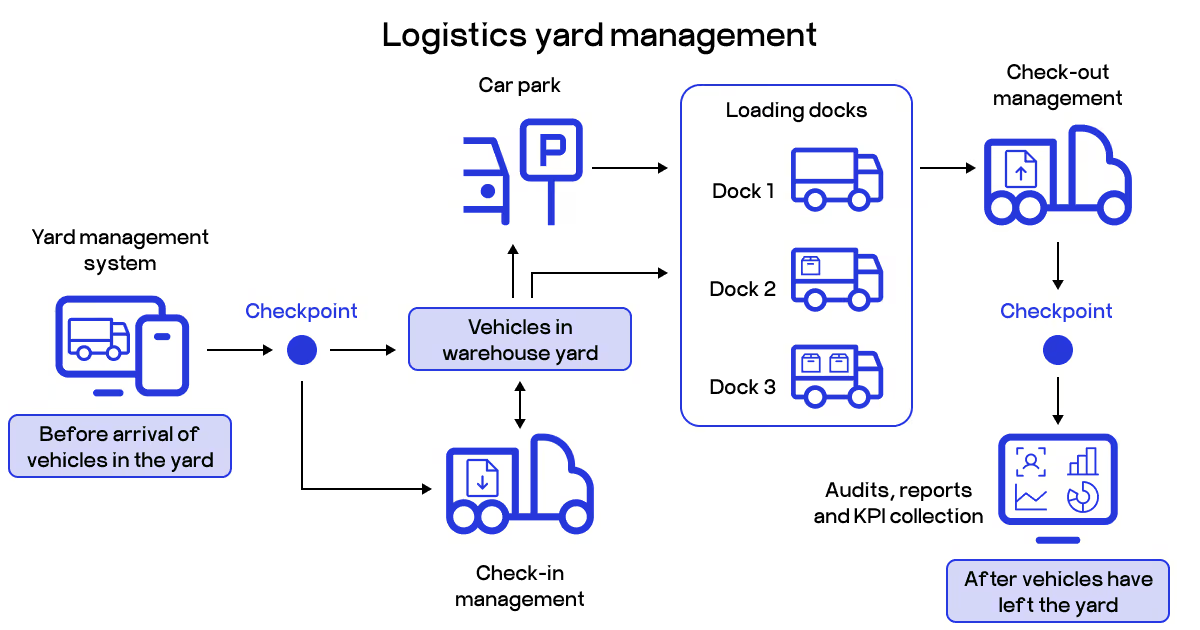
Logistics yard management is how you plan, track, and control the movement of trucks, trailers, and containers in your warehouse or distribution center yard. It connects your transportation management system (TMS) with your warehouse management system (WMS) and the enterprise planning solutions you have for coordination. Its goal is to cut delays, use your assets better, and make your supply chain run faster.
What counts as yard management changes based on your operation. Managing containers at an automated shipping port requires completely different tools than tracking trailers at a retail distribution center. But whether you run a port terminal or a warehouse, you're solving the same problem: turning your yard from a messy, invisible zone into something you can control and see.
Why does yard management matter?
Yard management takes the space between your gate and dock doors and makes it clear and transparent for you. Right now, that space probably causes delays, costs you money, and creates safety risks. Good yard management fixes all three.
Vector surveyed hundreds of logistics professionals. Less than 10% said their yard runs smoothly. Out of 651 people surveyed, 58% said that 23% or fewer of their facilities use any yard management system at all. Most companies know they need it - they just haven't implemented it yet.
Here are the benefits you can expect from proper yard management:
Visibility in real time. You stop using spreadsheets and radios to track equipment. You see exactly where every trailer, container, and piece of equipment is at any moment.
Lower costs. You cut detention fees, demurrage charges, and driver wait time. According to a study, 29% of companies see fewer than one in ten trucks arrive on time. Late trucks mean detention fees. Yard management reduces both.
Safer operations. You organize traffic and reduce congestion. Fewer accidents happen when you control vehicle flow. At automated container terminals, most accidents trace back to human error. Better organization prevents those errors.
More efficient labor. You automate tasks that waste time. Your yard staff can focus on work that actually matters. The Vector survey showed 226 respondents said the lack of resources blocks improvements. Automation solves that problem.
Supply Chain Management Review reported that more shippers want YMS software to see what's happening at their docks. But the Vector survey found barriers: 112 responders said budgets are too tight. These obstacles make yard management more important, not less. When you can't afford waste, you need systems that eliminate it.
What is a yard management system (YMS)?
A yard management system is software that tracks and controls trucks, trailers, and containers moving through your facility's yard and docks. It’s operationally positioned between your transportation system and your warehouse system, connecting the two. Instead of tracking vehicles with paper logs or calls, you get live data on everything happening in your yard. Now, what is a yard management system’s key challenge to solve?
Yard management challenges
Running a yard without proper systems creates problems that cost time and money. Research by Yu and others shows that container terminals struggle with yard space allocation, and these same issues appear across distribution centers and warehouses.
No visibility into what's happening. You can't see dock occupancy, wait times, or where delays are building up. This leads to trucks stacking up at the gate, wasted dock time, and costs you didn't plan for.
Poor communication with drivers. You don't know when trucks will actually show up, what problems they will encounter on the road, or if schedules changed. Drivers don't know about issues at your facility either. This information gap makes planning impossible.
Detention fees add up fast. Trucks can legally wait one hour at your facility. After that, you pay penalties. When you take one to two hours just to process a truck, you're running right up against that limit every single day.
Resources get wasted. Your dock doors sit empty while trucks wait outside. Your yard crew spends time hunting for trailers. Your space fills up with vehicles that should have moved hours ago.
Safety risks increase. Yards are dangerous. Vehicles and people moving in tight spaces create accident risks. Poor organization makes those risks worse. Yu and team note that container terminals see most accidents from human error, fatigue, carelessness, and rule violations. The same applies to distribution yards.
Inbound operations create blind spots. With manual yard task management, you control what leaves your facility at best. However, you don't control when suppliers show up. Uncoordinated arrivals mean docks sit empty or get overwhelmed, both of which kill efficiency.
Change meets resistance. Workers resist new systems. They don't trust the technology or don't understand why it matters. Getting your team to adopt new processes takes training, communication, and time.
Costs keep climbing. Long wait times burn fuel. Inefficient layouts waste space. Manual processes require more staff. All of this cuts into margins.
Together, you get a dangerous mix of long waits, high speed, uncertainty, physical and emotional risks for workers, possible delays, and fines.
How the integration of YMS can help
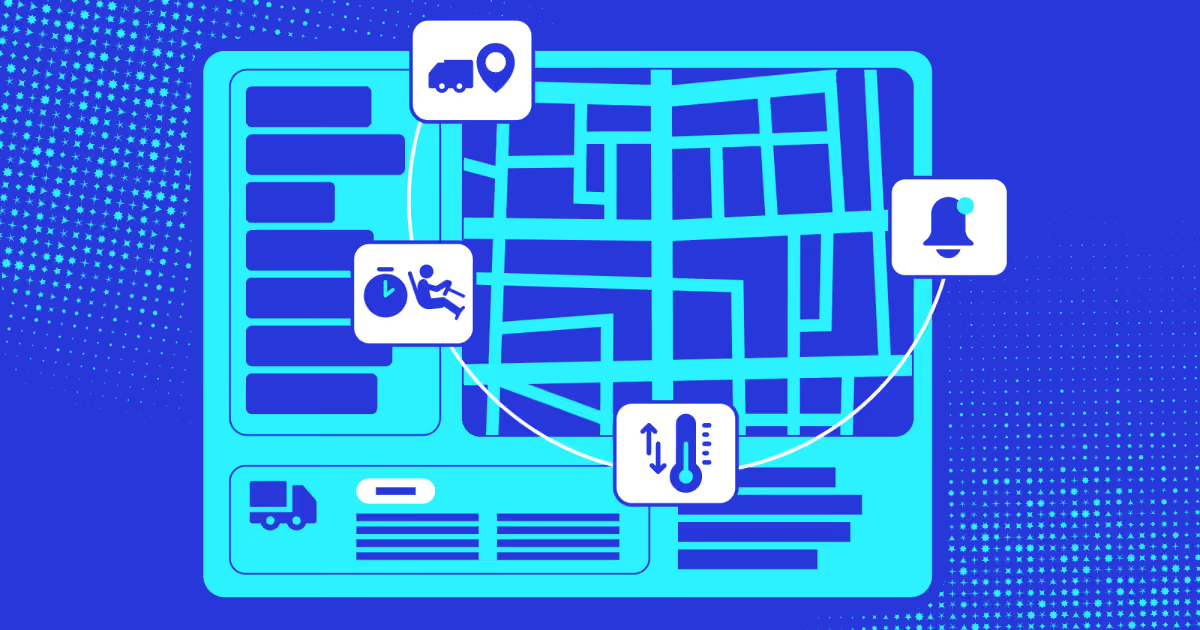
YMS logistics solutions fix these problems by making your yard visible and controllable. You see exactly what's happening in real time and can act on that information immediately.
Real-time tracking eliminates guesswork. You know where every truck, trailer, and container sits at any moment. No more radio calls asking "where's trailer 4529?" No more walking the yard with a clipboard. 60% of companies want automated processes specifically to cut out this kind of manual work.
Detention fees drop. You process trucks faster when you know exactly where they need to go and when the dock doors open up. The system routes vehicles efficiently, reducing the time each one spends on site.
Dock utilization increases. You see which docks are busy, which are free, and which will open soon. You assign incoming trucks to the right door at the right time. No more empty docks while trucks wait outside.
Safety gets better. You control traffic flow. Vehicles move in organized patterns instead of random chaos. Saravanan found that automation in container terminals reduces human error, the main cause of accidents. The same logic applies to distribution yards.
Planning becomes possible. When you see arrival patterns, processing times, and resource usage, you can plan better. You know when to staff up, which docks to open, and where bottlenecks will hit before they happen.
Data drives decisions. You can track metrics like average processing time, dock utilization rates, and detention fee costs. This data shows where problems exist and whether changes actually help.
With technology, you finally get yard management supply chain clarity and confidence. Also, as a bonus, you get easier scaling potential - what’s not to like?
What to look for in YMS?
When you're evaluating yard management tools, focus on features that solve actual problems of your business. The right YMS automates manual work, gives you visibility you didn't have before, and connects your yard to the rest of your operation.
Automated gate check-in/out. Trucks should check in digitally, not through a guard with a clipboard. Manual check-ins slow everything down and create errors. Look for systems that use mobile apps, kiosks, or QR code scanning so drivers can check themselves in and out without waiting. Research by Saravanan on QR-based yard management showed that digital check-in reduces misplacement of materials and minimizes operational disruptions.
Dock scheduling. You need to assign trailers to specific dock doors and time slots. Without this, trucks arrive whenever they want, and your docks are either empty or get overwhelmed. The research by Wang and team analyzing five years of YMS system data across three logistics centers showed that automated scheduling directly improved throughput. Their study found statistically significant increases in both inbound and outbound freight volumes after YMS implementation.
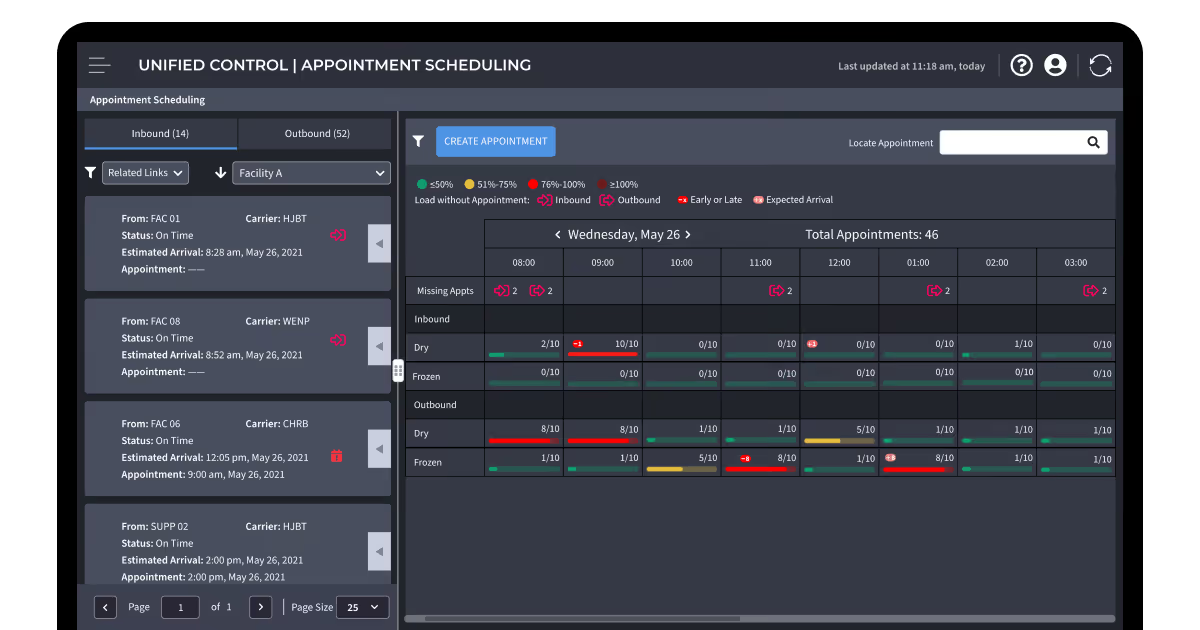
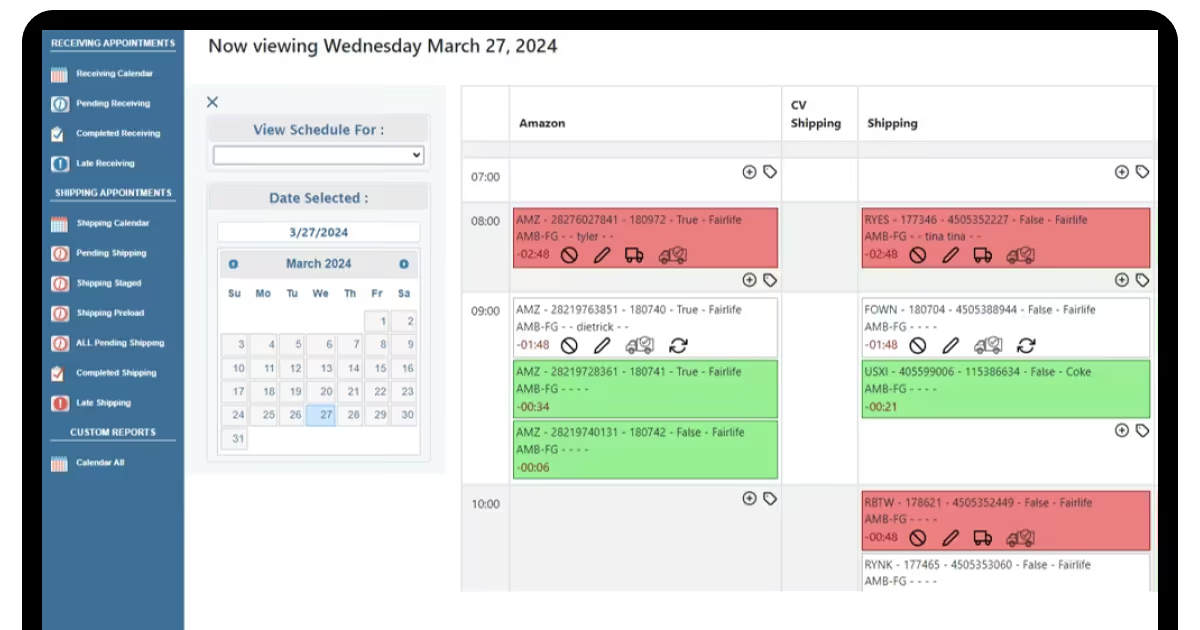
Appointment scheduling. Carriers and suppliers need to book time slots in advance. This coordinates arrivals so you're not guessing when trucks will show up. Uncoordinated truck arrivals are a major problem. Appointment scheduling fixes this by spreading arrivals across the day instead of bunching them up.
Real-time location tracking. You should see exactly where every trailer, container, and yard truck is located at any moment. Wang emphasized that real-time visibility was central to the YMS they studied, enabling operators to locate assets instantly instead of searching the yard manually. Saravanan demonstrated that QR codes on materials and bins provide real-time visibility into product and bin statuses, enabling yard managers to track material locations effectively.
Yard planning & optimization. The system should help you use your space better. This means smart trailer placement, efficient routing for yard trucks, and faster trailer rotation. Research by Yu on container yard management software found that effective yard space allocation directly impacts handling efficiency and is key to improving throughput. The same principle applies to distribution yards. Look for systems that optimize trailer positioning based on priority, type, and scheduled departure times.
Automated alerts and notifications. The system should send automatic alerts about delays, early arrivals, or deviations from schedules. Real-time tracking systems can notify logistics managers immediately, allowing swift decision-making and reducing wait times. This proactive approach prevents small problems from becoming disruptions.
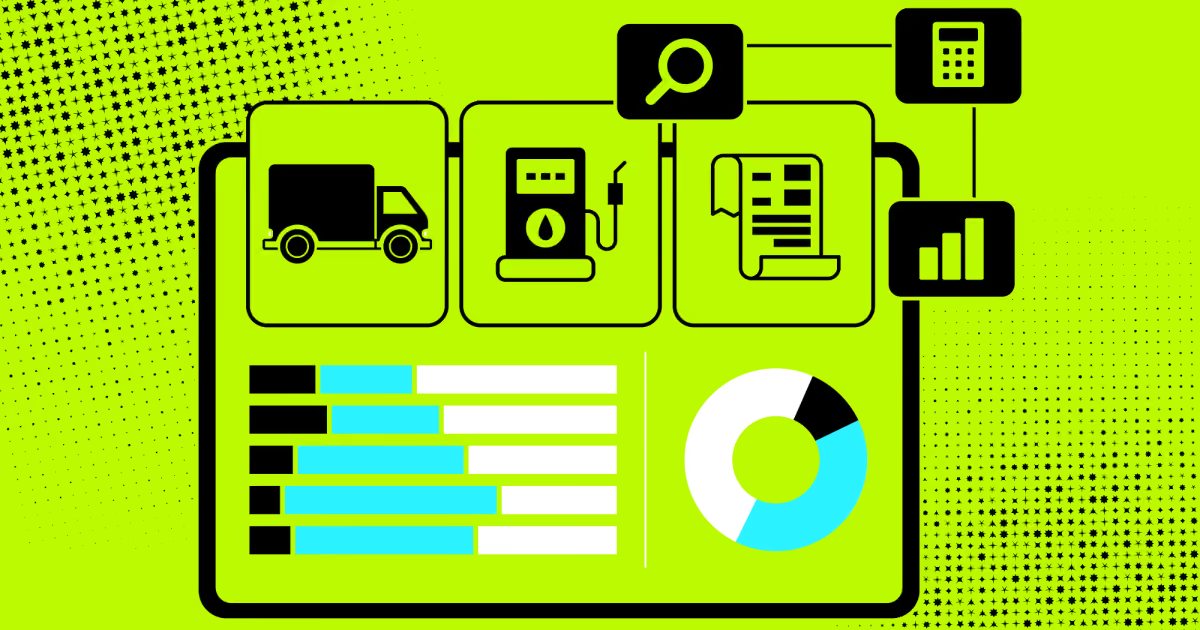
Dashboards and predictive analytics. Modern YMS should collect and analyze real-time data to provide insights into operational performance. Predictive analytics enables companies to anticipate disruptions, optimize scheduling, and reduce costs. Key metrics to set are dwell time, turnaround time, dock utilization rates, and detention fees.
Traffic and congestion management. Your YMS software should manage truck flow to prevent yard congestion. Smart gate control systems and machine learning based yard congestion forecasts. Most unexpected disruptions happen because of delays, and intelligent traffic management helps mitigate these issues.
Security and compliance. Your system should include biometric authentication for truck check-ins, automated compliance tracking for safety regulations, and monitoring for security threats. This speeds up authentication and enhances security.
Material and product validation. The system should verify that materials are placed in the correct locations. Saravanan showed that QR-based validation for the yard management process flow ensures materials go in the right bins, reducing misplacement and inventory discrepancies. This is very important for yards with diverse product types.
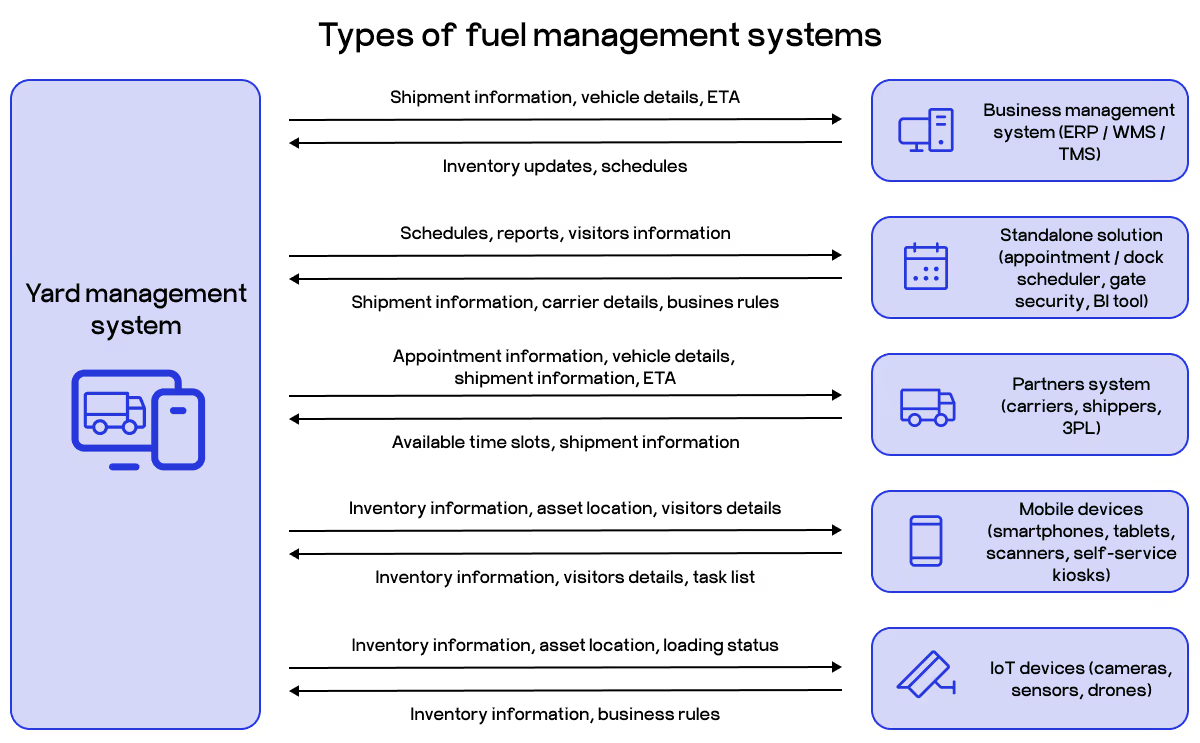
One of the most important features of your solution is always connectivity, apart from the main functionality. It’s especially important for connecting with your other major systems.
Yard management system integrations
A YMS that doesn't connect to other systems is just an expensive island of data. Integration is one of the yard management system benefits - it helps you see the entire flow associated with your supply chain.
Warehouse management system (WMS) integration. Your WMS tracks inventory inside your building. When integrated with YMS, your warehouse knows exactly when inbound freight will arrive at the dock door and can prepare receiving staff and space accordingly. Connecting yard check-ins with warehouse bin assignments automates the entire receiving process and eliminates manual data entry errors, making inventory management software development more efficient in sync with yard management.
Transportation management system (TMS) integration. Your TMS manages freight movement on the road. Integration means your TMS knows when outbound trailers are actually loaded and ready to leave, not just when they were scheduled. Companies integrating TMS with yard automation platforms achieve faster operations, optimized shipping routes, reduced manual processing errors, and faster order fulfillment.
ERP integration. Your ERP handles orders, invoicing, and business processes. When your YMS feeds data to your ERP, you get accurate timestamps for billing and compliance. Detention costs get tracked in real time. TThis connection serves as a good basis for business innovation and a platform for process efficiency.
Driver management system integration. Your YMS should connect with driver management platforms to track operator assignments, certifications, and hours of service automatically. This integration ensures the right qualified drivers handle specific equipment while maintaining compliance with safety regulations and rest requirements.
Truck load optimization system integration. Connecting load optimization software with your YMS software helps you match trailer capacity to actual shipment volumes before trucks arrive at the dock. The system prioritizes high-capacity loads for faster processing and identifies partially loaded trailers that could consolidate to free up yard space.
Before integrating, understand your processes and what matters to each department. Identify all your software systems and what data could help if shared. Define objectives and find gaps where information doesn't flow. Know what integrations you already have in place.
When you're ready to integrate, determine which systems will share data, what type of data gets shared, how it will be shared (APIs, flat files, etc.), and how often data syncs. Look for systems with open APIs, standard data formats, and real-time synchronization.
Best yard management software to choose from
You have a good and diverse choice pool. Solutions for yard management range from lightweight cloud tools to heavy enterprise platforms. Your choice depends on your operation's complexity, volume, budget, and existing technology stack. Let’s outline some of the top picks.
Tool
Best use case
Starting price
Key strength
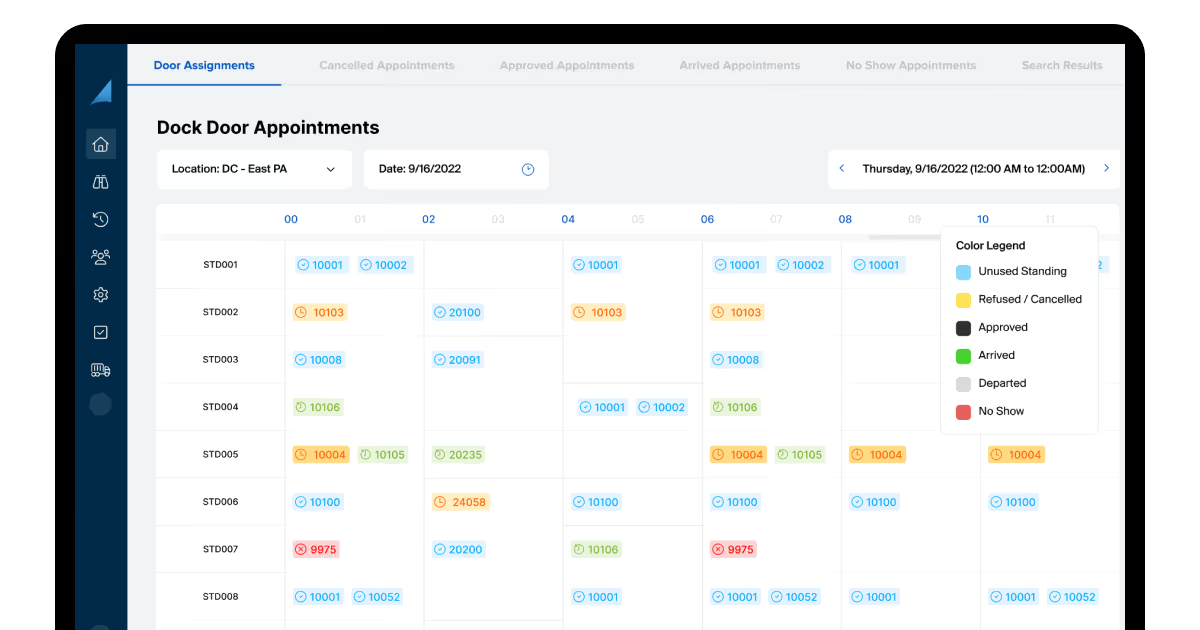
DataDocks
High-throughput distribution centers and 3PLs
$249/month
Cloud-native with self-serve carrier portal
FourKites Yard Management
Organizations using FourKites for freight tracking
$250,000/year
End-to-end visibility from origin to delivery
Kaleris
Ports, energy terminals, chemical/mining sites
$175–$249/user/month
RTLS accuracy with autonomous drone recounts
Manhattan Active Yard
Large enterprises with Manhattan WMS
Free for WMS users; ~$2,000/user/year otherwise
Native WMS integration, no version upgrades
Blue Yonder
High-volume retail and grocery operations
Quote-based
Constraint-based scheduling and scenario planning
Descartes
Security-focused operations
Quote-based
Modular deployment with RFID/GPS tracking
YardView
Drop trailer operations, first-time adopters
Custom quote
Rapid deployment, affordable mid-market pricing
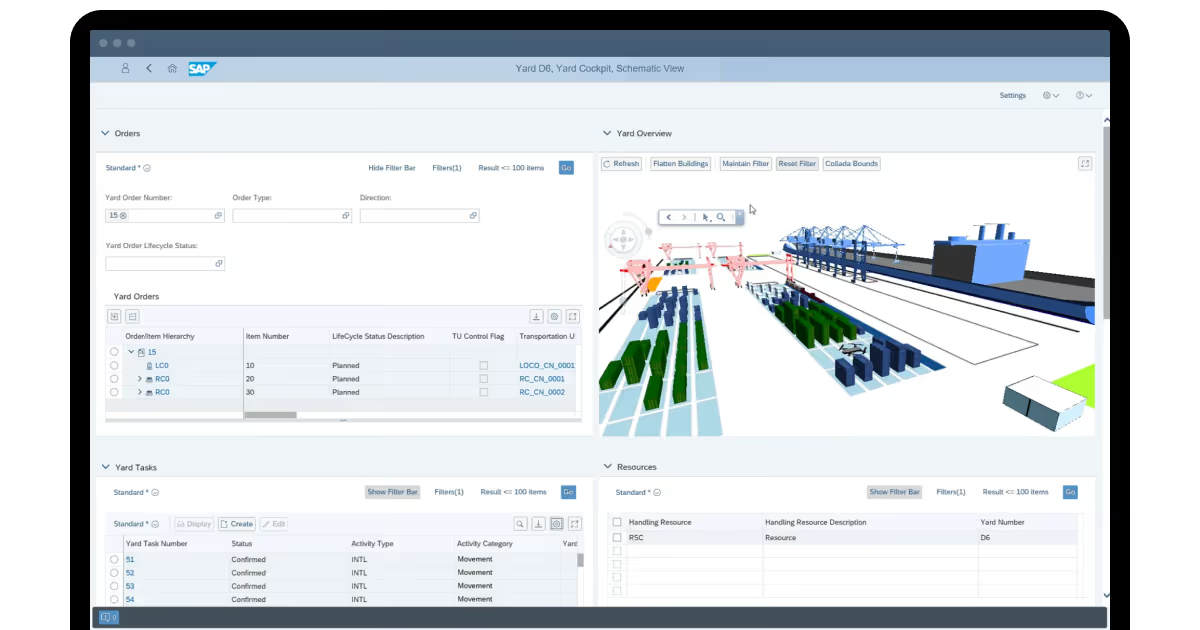
SAP Yard Logistics
SAP S/4HANA organizations
~15,000 documents minimum
Multi-modal yard management with 3D visualization
Made4net YardExpert
Mid-market seeking value and speed
$100–$200/user/month
Fast implementation, lower total ownership cost
C3 Yard
Enterprise 3PLs with compliance needs
$7,000/year+
Edge case workflows for hazmat and specialized handling
DataDocks
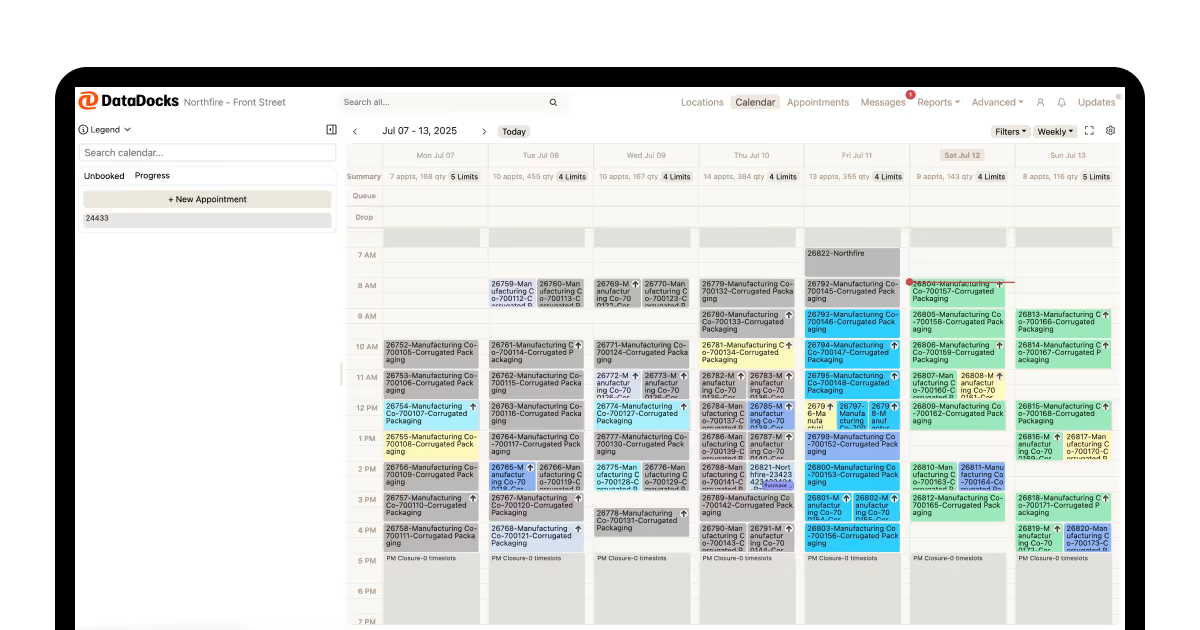
Launched in 2013, DataDocks targets high-throughput distribution centers and third-party logistics operations with a warehouse yard management platform that's 100% cloud native. Supervisors, planners, and carriers see the same live calendar whether they're at the guard shack, in the warehouse office, or working remotely, making it ideal for operations that need real-time coordination across multiple stakeholders.
Key features:
Self-serve carrier portal for online booking, rescheduling, and cancellations
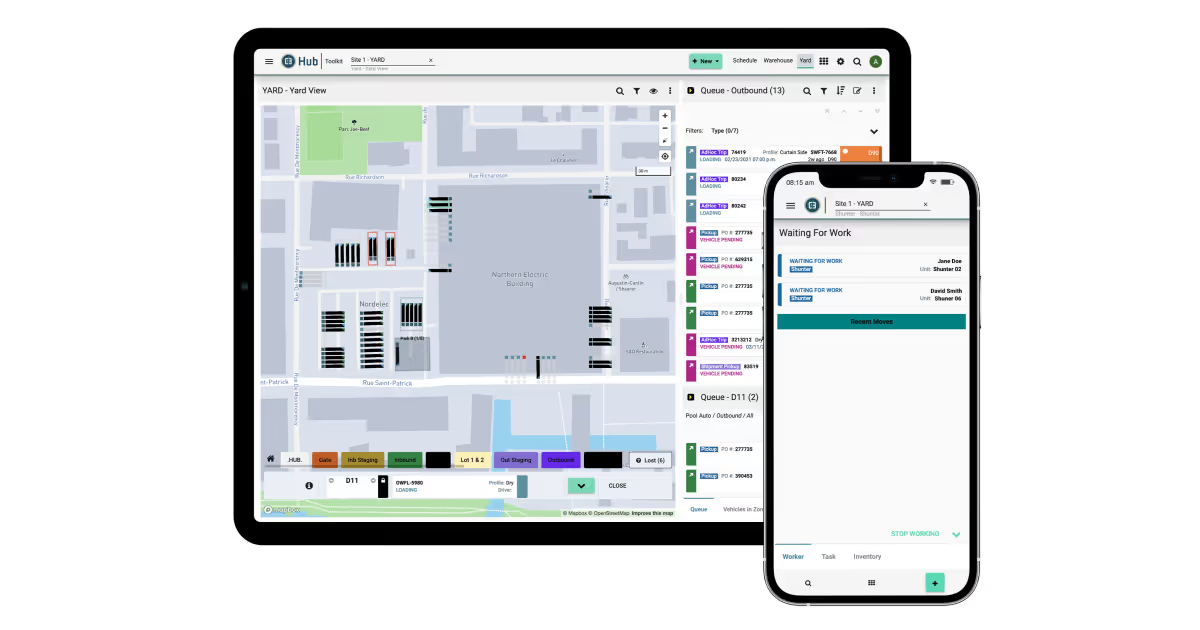
Real-time yard map with drag and drop trailer moves and color-coded aging alerts
Rule-based automation for freight allocation and carrier approval
Live multi-user calendar editing
Pre-built WMS and TMS connectors plus flat file and webhook options
Pricing starts at $249 per month, flat rate. Free trial is available with no credit card required. This solution is great for busy distribution centers and 3PL yards with growing volumes and sites.
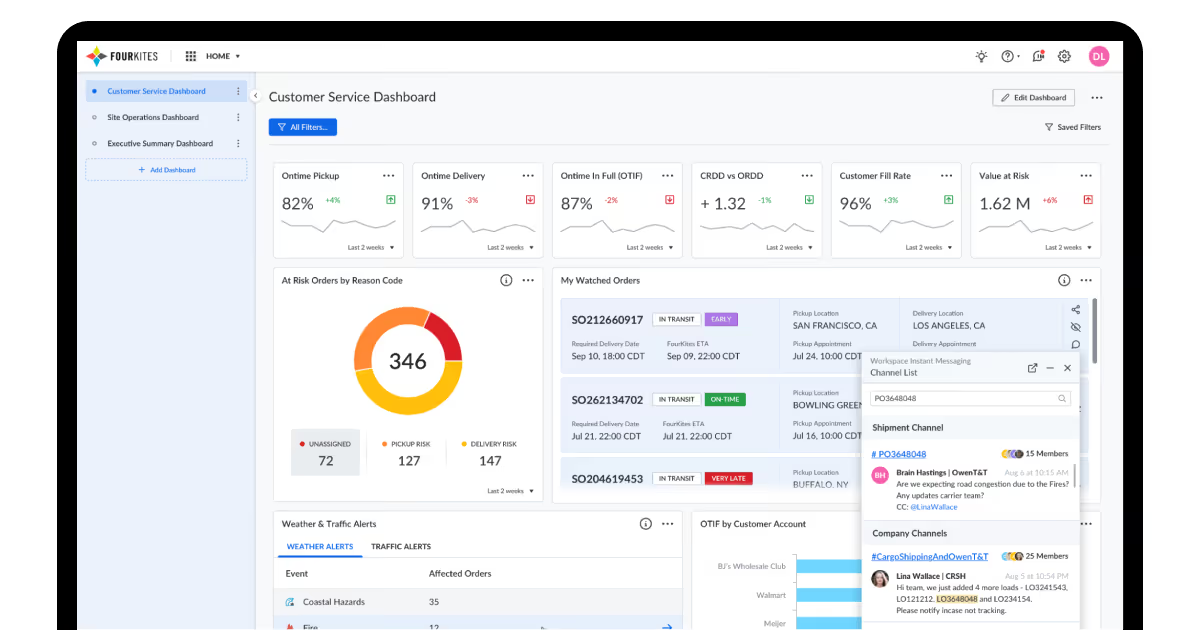
FourKites Yard Management
FourKites, a leader in real-time supply chain visibility, offers a cloud native Dynamic Yard management system that connects yard data with over-the-road tracking for true, unbothered visibility. The platform integrates with the broader FourKites ecosystem, allowing companies to track shipments from origin through the yard and out to final delivery without data gaps.
Key features:
Unified visibility linking in-transit data with yard status
AI-driven predictive ETAs
Automated spotter tasking based on warehouse priority
Mobile app for yard drivers and security
Temperature and fuel monitoring for reefers
Digital gate logs
Enterprise solution starts around $250,000 per year for 12-month contracts. Customized quotes are required based on sites, trailers, and features. ROI focused on detention, demurrage, and efficiency savings.
Most of all, this tool with fit businesses already using FourKites as the main freight forwarder software.
Kaleris
Born from the merger of PINC YMS and several terminal software brands, Kaleris positions itself as a digital yard system for asset-intensive supply chains like ports, chemicals, and heavy manufacturing. The platform combines real-time location systems with IoT sensors and even autonomous drones to deliver the most accurate asset tracking available.
Key features:
Real-time location system using GPS, RFID, or optical sensors
Automated yard recounts using autonomous drones
Cloud-based enterprise view for hundreds of yards
Advanced shuttle and spotter management with optimized routing
Carrier portal integration for self-service scheduling
Marine terminal native hooks
Kaleris’ pricing is quote-based, starting around $175 to $249 per user per month. Average ROI payback is within 3 to 6 months. This solution will be great for ports, energy terminals, large chemical or mining sites where RTLS accuracy outweighs agility.
Manhattan Active Yard Management
Part of the Manhattan Active® Supply Chain suite, this yard management software is built on a cloud native microservices architecture specifically designed to work seamlessly with Manhattan's market-leading WMS. The no version loss architecture means you're always on the latest software version without painful upgrade cycles, making it particularly attractive for large enterprises that value continuous innovation.
Key features:
Native Manhattan WMS integration for warehouse to yard synchronization
Mobile task management for yard jockeys with real-time updates
Automated dock door scheduling based on labor availability
Dynamic trailer prioritization for just-in-time manufacturing
Global view of assets across all supply chain nodes
There’s good news for existing Manhattan Active WMS users - no additional cost for the yard module. However, there’s an extra fee for Manhattan Active TMS users. General Manhattan Active WMS starts around $2,000 per user per year. No free trial, but demos are available. Most often, it’s a good option for large enterprises already invested in Manhattan WMS.
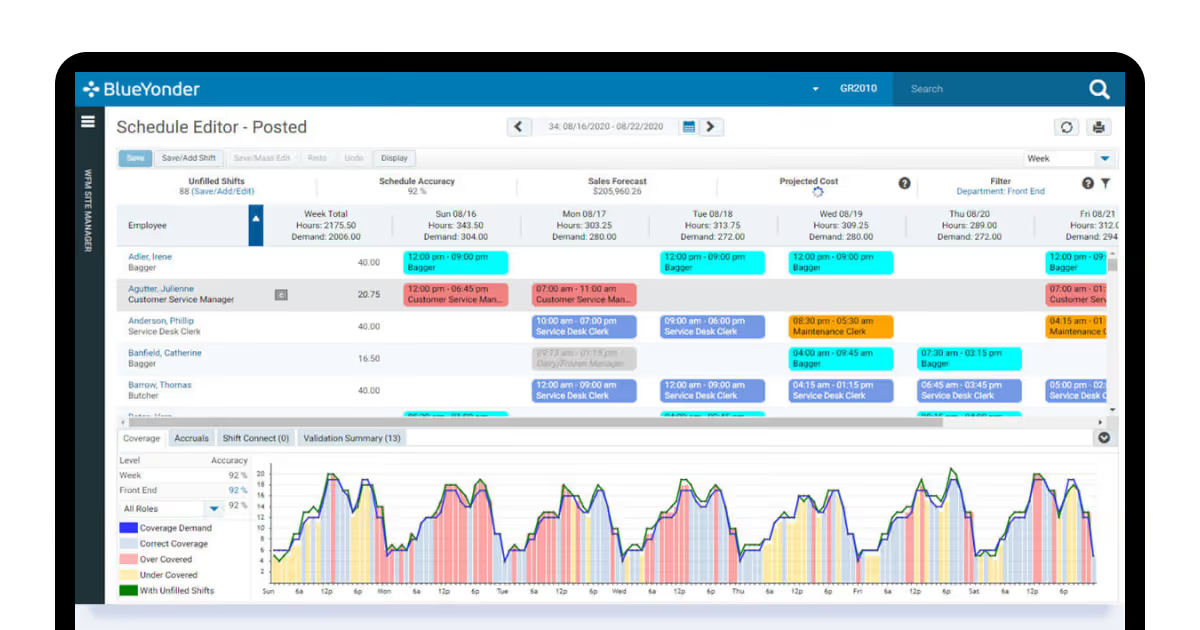
Blue Yonder Yard Management
Blue Yonder provides an enterprise-grade yard management platform focusing on optimizing the synchronized flow of labor, equipment, and inventory. Known for its strength in retail and grocery operations, the platform excels at constraint-based scheduling and what-if scenario planning that helps operations prepare for peak season surges and unexpected disruptions.
Key features:
Constraint-based scheduling for dock and yard resources
Visibility into trailer contents and shelf life requirements
Automated alerting for detention and demurrage risks
Comprehensive gate management with integrated security protocols
Support for complex multi-facility yard environments
This tool has quote-based enterprise pricing, so a sales contact is required. Blue Yonder is suitable for high-volume retail and grocery operations with complex scheduling.
Descartes Yard Management
Descartes offers a modular yard management solution designed to be easy to deploy and scale, with a particularly strong focus on improving visibility and security of assets in the yard. The modular approach allows companies to buy only the features they need and add capabilities as they grow, making it a flexible option for operations with evolving requirements.
Key features:
Real-time tracking using passive and active RFID or GPS
Touch screen kiosks for driver self-check-in
Integrated yard check mobile audits for high-accuracy inventory
Automated alerts for unauthorized trailer movements
Seamless TMS data flow
This tool has quote-based enterprise pricing, so a sales contact is required. Descartes YMS will fit operations prioritizing security and modular deployment.
YardView
Founded in 1998 in Castle Rock, Colorado, YardView is one of the earliest dedicated providers with plenty of trailer yard management depth built over more than two decades. The longevity means solid trailer tracking capabilities at a mid-market price point, though the product still carries the DNA of a legacy Windows application with a web layer added later for basic tasks.
Key features:
Drag and drop yard map interface
Rapid deployment, live in days
Automated detention tracking and carrier notifications
Text to driver communications for gate and dock assignments
Web-based carrier portal for real-time trailer status
Solid trailer tracking toolkit with dwell time alerts
The tool offers customized quotes based on operational needs. Low fixed rate monthly cost structure based on users or transactions. It will be best for drop trailer operations and yards wanting an affordable first step from pen and paper.
SAP Digital Supply Chain
For businesses running SAP S/4HANA, SAP Yard Logistics provides a native extension to manage the yard as part of the broader digital supply chain. The platform offers unmatched depth in handling multi modal yards that combine rail, container, and truck operations, with 3D visualization and full integration with SAP's EWM and TM modules.
Key features:
Full integration with SAP EWM (Extended Warehouse Management) and TM
Support for rail, container, and truck yard management
3D visualization of yard for real-time asset monitoring
Automated gate integration with IoT and weighbridge connectivity
Built in compliance for hazardous materials and specialized handling
This yard management tool provides cloud subscription based on volume, typically per document (check-in/check-out posting) per year. Usually sold in blocks of 5,000 documents with minimum 3 blocks (15,000 documents). It also offers activity based billing for specific yard tasks.
SAP will suit organizations deeply invested in SAP ecosystem needing multi modal yard management.
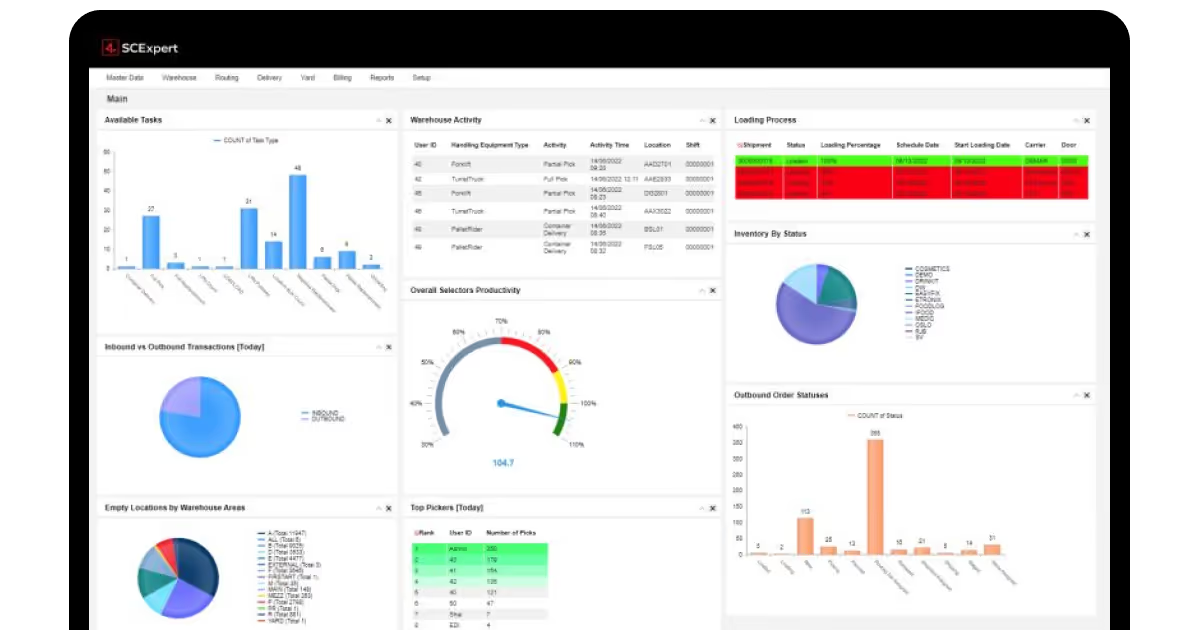
Made4net YardExpert
Made4net provides a robust, mid market focused solution as part of their broader SCExpert suite, emphasizing affordability and agility not all yard management companies can offer. The platform offers exceptional value for the feature set provided, with fast implementation and lower total cost of ownership that makes it attractive for operations that need solid functionality without enterprise level pricing.
Key features:
Integrated appointment scheduling and gate control
Mobile interface for shunters with optimized next task logic
Real-time visibility of empty versus loaded trailers
Automated emails to carriers when detention thresholds met
Easy integration via web services (APIs)
SaaS/Cloud subscription can start from $100 to $200 per user per month, or approximately $500 per facility. Mid-tier systems $200 to $300 per user per month or $1,000 to $1,500 per warehouse. Comprehensive solutions range from $2,500 to $10,000 per facility for smaller scale, up to $20,000 to $200,000+ for high volume operations.
This tool is best for mid-market operations prioritizing value and fast implementation.
C3 Yard
Founded in 2000 in Montréal, C3 Solutions has spent more than two decades building dock scheduling and best yard management systems for highly specialized industrial sites. That heritage delivers depth in handling edge cases like internal shuttles between multiple plants, hazardous goods zoning, and temperature-controlled staging, though the platform's heavyweight design is often better suited to compliance-heavy businesses.
Key features:
Automated gate management with self-service driver kiosks
Real-time trailer tracking and inventory management
Intelligent task assignment for yard drivers
Comprehensive dock management and appointment scheduling
Multi-site visibility for regional or global yard oversight
Advanced reporting and KPI tracking (trailer aging, dwell time)
Edge case workflows for internal shuttles, hazmat zoning, and temperature-controlled staging
Pricing for this tool starts at approximately $7,000 per year. SaaS based annual subscription (based on trailer check-in volume) plus one-time implementation fee. Includes 24/7 support, hosting, and maintenance. Costs vary by customization, site size, and integration needs.
C3’s platform will fit enterprise 3PLs needing granular safety logic and able to absorb higher cost and complexity.
As you see, the market is full of diverse and efficient yard management systems. However, there’s another way - create your own tailored tool to cover all use cases.
The benefits of custom yard management software
To understand if you need to develop your own yard management app or stick to a ready-made solution, you need to see the advantages that tailored software brings to this specific industry.
You get software that fits your operation exactly. Off-the-shelf systems force you to adapt your processes to their templates. Custom software works the other way. You tell a developer what your yard needs, and they build it.
Your workflows stay intact. If you stage refrigerated trailers separately from dry freight, the system handles that. If you prioritize certain customers or require hazmat zoning, you build those rules right into the code of your yard task management platform, with no workarounds or manual overrides.
You own the code. That means no vendor lock-in, no surprise price increases at renewal, and no waiting for a vendor's product roadmap to catch up to your needs. When your operation changes, your development team updates the software immediately.
Integration happens the way you need. Your custom system connects to your existing WMS, TMS, and ERP exactly how you want. You choose which data gets shared, when it syncs, and how it displays. No limitations from standardized APIs or connector fees.
You skip features you don't need. Every off-the-shelf YMS software includes modules built for other industries or use cases. You pay for appointment scheduling even if you run a drop trailer operation. You pay for reefer monitoring even if you never touch temperature-controlled freight. Custom software includes only what you actually use.
Your team gets an interface that makes sense to them. Buttons appear where they expect them. Data displays in the format they're used to. Training time drops because the software mirrors how your people already think about the work.
Security and compliance meet your exact requirements. If you operate in regulated industries or handle sensitive freight, you build those controls directly into the system instead of configuring generic compliance modules.
Flexible, reliable, and fully yours - here are the best characteristics of a custom-built yard management system. So, how much investment does it take to create one?
Cost of building your own solution
The thing with tailored vehicle yard management creation is that development takes time and money upfront.
You hire developers to analyze your operation, design the system, write code, test everything, and deploy it. Expect this phase to run six to twelve months, depending on complexity. Small operations might spend $50,000 to $100,000. Larger, more complex yards can hit $200,000 to $500,000 or more.
Maintenance also never stops. Software needs updates, bug fixes, security patches, and new features as your operation evolves. You either hire internal developers or keep a relationship with an outside development team. Budget $10,000 to $50,000 per year minimum for ongoing support.
Infrastructure costs add up. You need servers, databases, backup systems, and security tools. Cloud hosting might run $500 to $2,000 per month, depending on your data volume and user count. On-premises YMS software infrastructure costs more upfront but less over time.
Hidden costs may also surface during the project. Your staff spends time in discovery meetings, testing sessions, and training. Operations might slow down during implementation. You might need temporary workarounds while the system gets built. Factor in these indirect costs.
Integration multiplies complexity and cost. Connecting to multiple systems requires API work, data mapping, error handling, and ongoing maintenance as those external systems change their interfaces. Each integration adds $5,000 to $30,000 to the project.
Scalability requires planning from day one. Building a system that handles 50 trucks per day is different from one that handles 500. If you don't architect for growth early, you'll hit limits and need expensive rewrites later.
There are numerous nuances - but with our transportation software development services, you only get the benefits. COAX delivers custom yard management software that fits your workflows without the typical development risks. Our ISO-certified team builds scalable architectures from day one, whether you process 50 or 500 trucks daily. We handle the complexity of WMS, TMS, and ERP integrations through proven API frameworks, eliminating surprise costs and delays.
Our transparent fixed-price model and agile development approach cut typical custom software costs by 30 to 40 percent. You get tailored features, seamless integrations, and a system your team will understand and use, all while avoiding vendor lock-in and recurring subscription fees.
Whether you need a standalone YMS system or this specific functionality created as part of fleet management software development, you get predictable, high-ROI projects delivered on time, within budget, and always above expectations.
Key question: Build vs buy?
For many businesses, ready-made tools will suffice. The workflows that feel special to you are often common across your industry. Ready solutions handle them fine. Additionally, off the shelf systems go live in weeks instead of months. Vendors have solved the problems you'll encounter. You get tested software that works immediately. Subscription costs are predictable, and vendors handle maintenance, security patches, and updates while you focus on operations.
Meanwhile, especially for yard management in logistics, custom software wins on fit. Your yard layouts, workflows, and requirements get built exactly how you need them. Dock assignments follow your actual rules. Integrations connect precisely to your systems. You own the code with no vendor lock-in or surprise price increases.
What to conclude? Build custom if your operation is genuinely unique and creates a competitive advantage, or if you run multiple high-volume yards that have compliance requirements or complex workflows. Besides, with COAX, you get a reliable partner who will never squeeze you into a fixed plan or “update” your system to remove just the feature you bought it for.
FAQ
What is yard management in technical terms, and what are its components?
Yard management coordinates equipment movement between the gate and dock through integrated software systems. Yu and team identified key components:
Automated rail-mounted gantry cranes for container handling
Real-time location tracking systems
Yard space allocation algorithms
Equipment scheduling optimization.
The system connects transportation management with warehouse operations, using data analytics to reduce handling conflicts and improve throughput efficiency.
What are the challenges of implementing yard management system software?
You might face the following issues:
Safety accidents from human error, fatigue, and rule violations
Aging equipment with high failure rates and maintenance costs
Integration complexity between WMS, TMS, and ERP systems
Staff resistance to new technology and lengthy training periods
High upfront costs and uncertain ROI are deterring investment
Why are yard task management services important for businesses of different sizes and types?
Yu demonstrated that yard management directly improves container handling efficiency and reduces operational costs across terminal types. Small operations eliminate manual tracking waste. Medium facilities optimize dock utilization and cut detention fees. Large automated terminals coordinate complex equipment flows. Every size benefits from real-time visibility, safer operations, better resource planning, and data-driven decisions that boost throughput.
How does COAX make reliable and efficient yard management systems?
COAX is ISO/IEC 27001:2022 certified for comprehensive security management, risk assessment, and monitoring. ISO 9001 certification ensures optimal quality processes. We build modern cloud systems that sync data instantly, connect seamlessly with your WMS and TMS platforms, and provide continuous support to keep everything well-oiled.











































































_.avif)









%2520explained.avif)

We are interested in your opinion