Businesses in any supply chain that run on legacy ERPs, disconnected logistics tools, and manual procurement are losing money to problems that already have solutions. The cloud supply chain is a global, unlimited, smarter way to connect and organize your processes digitally. Here’s how the impact is made:
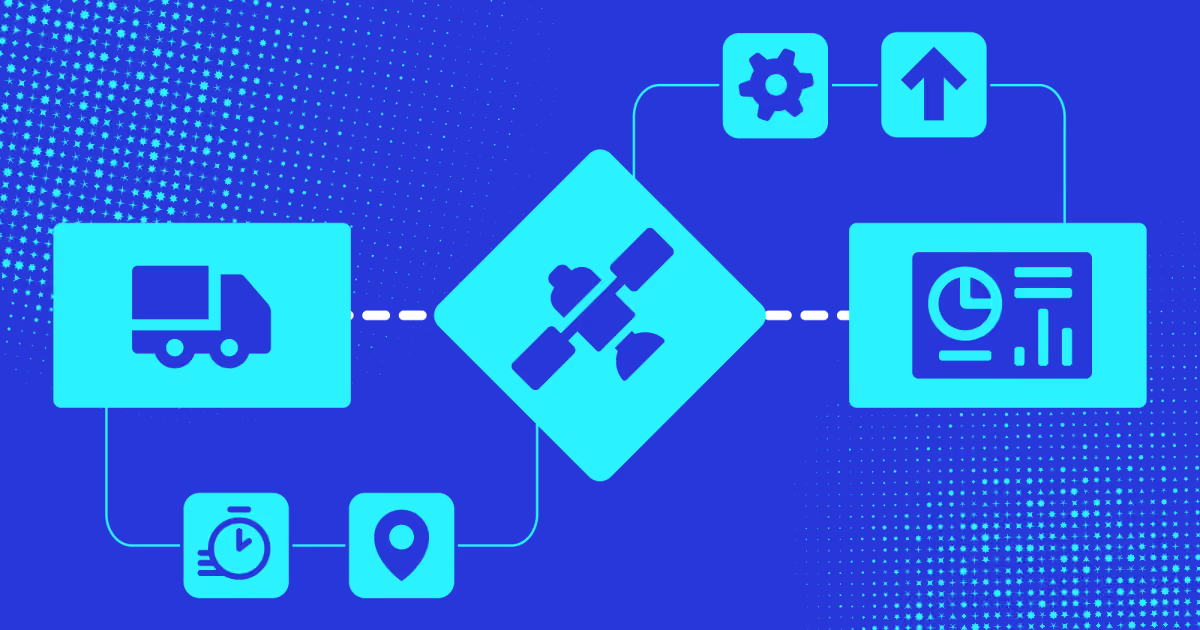
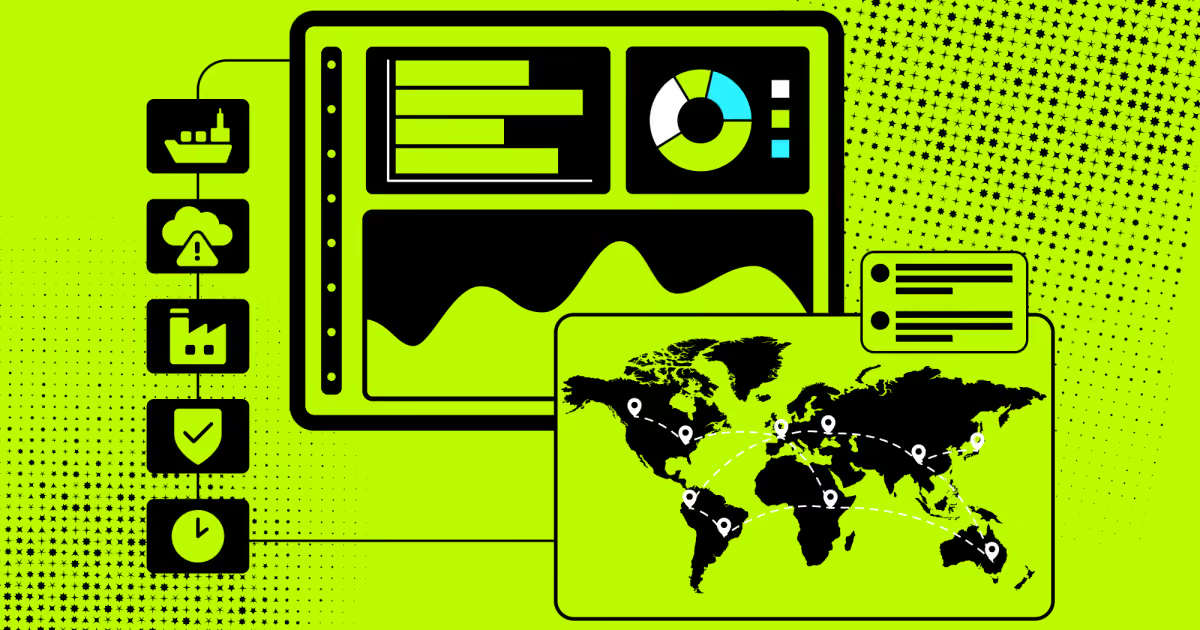
Real-time visibility connects every node from supplier to customer in one live view.
Elastic infrastructure scales with demand without hardware investment or downtime.
Integrated platforms remove the data silos that slow procurement and logistics.
AI-driven forecasting catches demand shifts before they become issues.
Automated compliance tracking keeps operations clean across jurisdictions.
Supplier portals give buyers and vendors shared data, cutting delays and miscommunication.
Cloud security frameworks protect every connection point across the entire chain.
Custom development delivers supply chain software built around your workflows, not someone else's.
In this guide, we cover the main issues that businesses face in the supply chain, and break down simply how to solve them with cloud-based supply chain management tools. Also, we’ll outline the steps to implement a reliable solution, list the best market-ready solutions, and share some practical insights on integrating this new, promising technology.
What is cloud supply chain management?
Cloud-based supply chain management is the use of remote, internet-based servers to run the tools, processes, and infrastructure that move goods from origin to customer. Instead of storing data on physical equipment at your location, everything lives on networked servers maintained by third-party providers and accessed from anywhere with an internet connection.
As Dolgui and colleagues describe it, this model enables "cloud-enabled networking of third-party physical and digital assets to design and manage a supply chain network." Your inventory levels, shipment data, and supplier records stay current, backed up, and available around the clock.
Most companies start cautiously. Before expanding their cloud budgets, decision-makers typically want clear evidence of return on investment. However, the adoption of cloud technologies is growing - let’s see why.
Why businesses are moving from traditional to cloud-based SCM
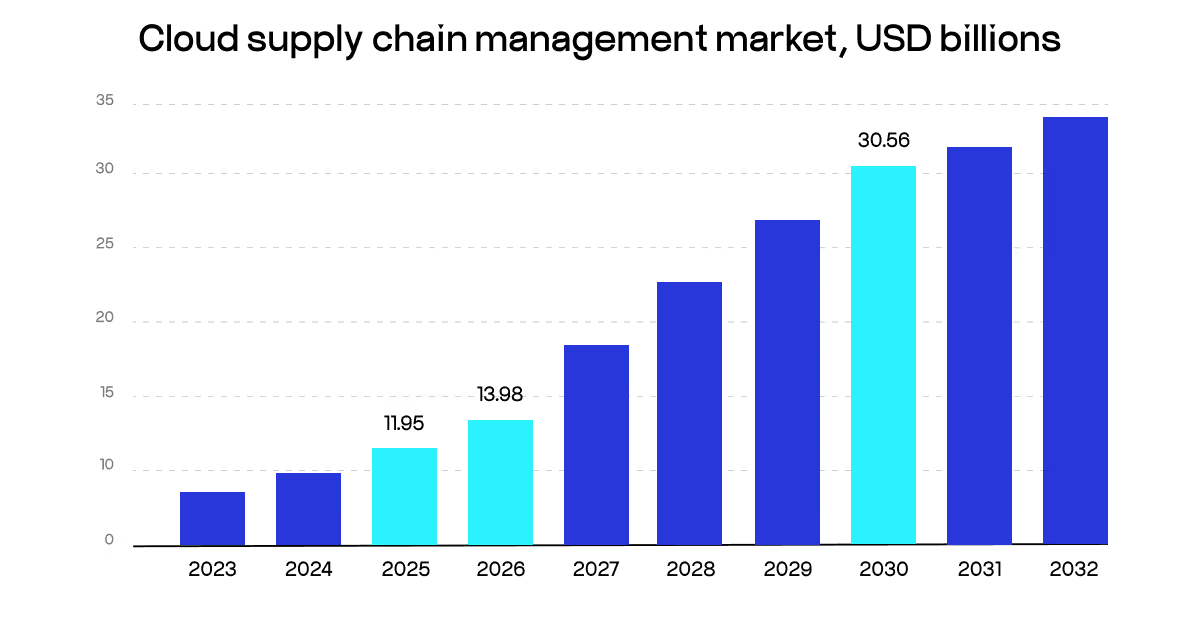
The market is clearly shifting towards the cloud. The global cloud supply chain management market is now at roughly $14 billion in 2026 and is projected to reach $30.56 billion by 2031, growing at nearly 17% annually. That growth reflects real problems businesses are solving.
Traditional on-premise systems are expensive to run, slow to update, and difficult to scale. A single software license can exceed $5 million before you even count in yearly maintenance. Cloud SCM software converts that expense into a monthly subscription, often $100 to $500 per user. For instance, 78% of Blue Yonder's 2024 bookings were subscription-based, up from 52% in 2020. And not to mention custom solutions - they cut vendor dependence and annual fees entirely.
Beyond cost, the operational advantages are concrete. You get real-time visibility across shipments and inventory. You scale storage and processing power when demand spikes without buying new hardware. Suppliers, carriers, and warehouses share the same data, which cuts the back-and-forth that delays decisions.
Yang and others found through survey data from 329 enterprises that flexible cloud infrastructure directly improves supply chain performance, with stronger effects in uncertain markets where the ability to adjust quickly matters most.
Automation removes manual data entry errors from order processing and invoicing. Route optimization reduces fuel costs. And unlike legacy systems that take months to roll out, supply chain cloud solutions connect to your existing ERP and warehouse platforms through standard APIs in weeks.
Common IT challenges in supply chain and procurement
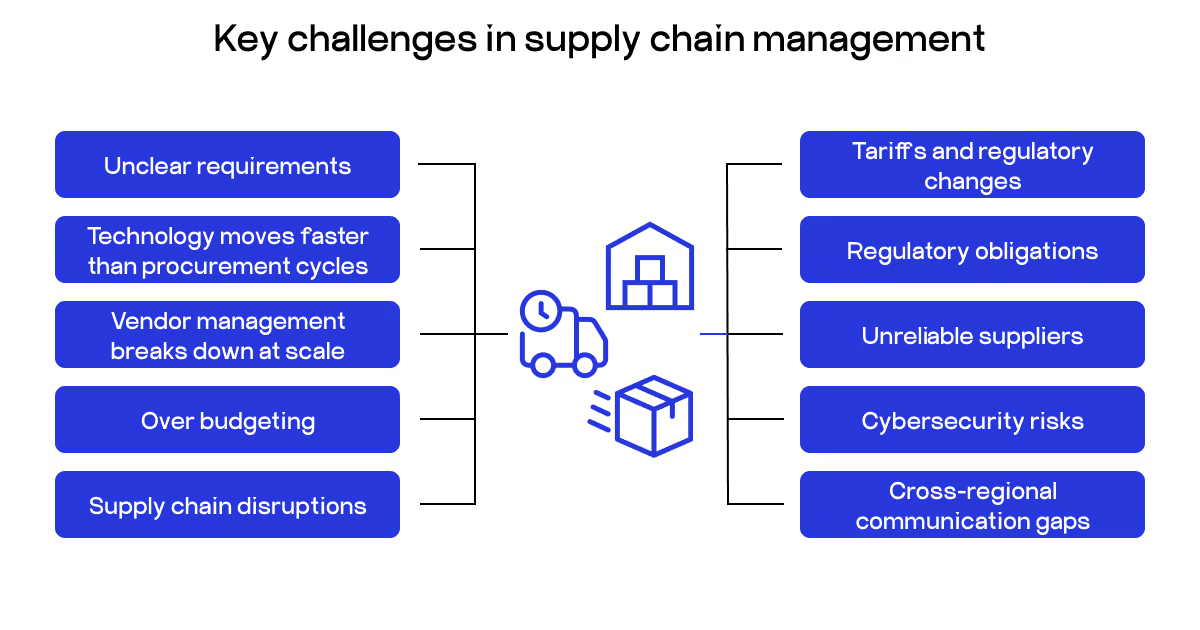
Supply chains run on data, coordination, and technology that often fail at the worst moments. Here are the real problems companies face, and what each one actually costs.
Unclear requirements waste money before the project starts
55% of IT procurement teams struggle to define requirements, according to Forrester. When specifications are vague, companies buy solutions that don't fit, pay for customization, and still end up with tools their teams won't use. Projects stall. Budgets inflate. The problem compounds when different departments have conflicting expectations that nobody resolved upfront.
The key impact here is that the mismatched technology means you pay twice. Once for the wrong tool, once to replace it (and with cloud supply chain tools automatically updated, this isn’t the case).
Technology moves faster than procurement cycles
Gartner predicts 50% of large global companies will implement AI, advanced analytics, and IoT in their supply chains by 2025. Most procurement processes take 6 to 18 months. By the time you finish evaluating a solution, a newer one has already been created. Companies in rigid contracts with vendors who stop innovating fall behind competitors running newer systems.
As a result, you end up maintaining legacy tools while your peers move faster with better data.
Vendor management breaks down at scale
60% of companies struggle with vendor management, as Deloitte found. Without structured evaluation frameworks and clear service level agreements, you get pricing inconsistencies, missed deliveries, and compliance gaps. When a vendor underperforms, most companies find out through a failure rather than through monitoring.
In the end, without cloud-based supply chain management, service failures reach your customers before you know there is a problem.
IT projects routinely exceed budget
As much as 91.5% of IT projects go over budget, driven by hidden costs, scope changes, and external factors like inflation and tariffs. Total cost of ownership is rarely calculated correctly upfront. Companies budget for software licenses but forget implementation, training, integration work, and ongoing maintenance.
As a result, finance teams cut scope mid-project, leaving you with a partial system that creates more problems than it solves.
Supply chain disruptions expose every weak point
Nearly 80% of businesses encountered at least one supply chain disruption in the past year. Disruptions lasting longer than one month happen on average every 3.7 years, according to McKinsey. Geopolitical tensions, tariffs, and regional instability mean your supplier in one country becomes a liability overnight. McKinsey's 2025 supply chain risk survey found 82% of companies were affected by new tariffs, with 20 to 40% of their supply chain activity impacted in some way.
A reliable supply chain cloud is your safety net here. Companies without diversified suppliers and contingency plans absorb the full cost. Those with supply chain analytics software and backup sourcing adapt faster.
Customs and logistics compliance adds unpredictable cost
New tariffs and regulatory changes in 2025 added complexity that most procurement teams aren’t ready for. McKinsey found 39% of companies facing tariff impacts saw increases in supplier and material costs, while 30% reported reductions in customer demand. Staying compliant across multiple jurisdictions requires dedicated expertise and real-time regulatory tracking that most internal teams lack.
What do you get in the end? Compliance failures mean shipment delays, fines, and customers who don't receive orders on time.
Regulatory obligations keep expanding
From GDPR to the EU Corporate Sustainability Due Diligence Directive (CSDDD, effective July 2024), companies must now assess human rights and environmental impacts across their full supply chains. Only 9% of McKinsey survey respondents say their supply chains are currently compliant with new rules. 30% admit they are behind or significantly behind.
Without cloud SCM’s built-in compliance that adapts in real time, non-compliance creates legal exposure and disqualifies you from contracts with buyers who have their own compliance requirements.
Unreliable suppliers create quality and security failures
Choosing suppliers without a thorough and deep vetting leads to defective components, system failures, and security vulnerabilities. In interconnected supply chains, one weak supplier can compromise an entire product line. Cybersecurity and data protection ranked as joint top compliance risk priorities for 51% of executives, and the average cost of a data breach reached $4.88 million in 2024.
This issue is cascading and recurring. Quality failures reach customers. Security failures reach the press. In the end, you get reputational damage and loss of long-term and high-value clients.
Cybersecurity risks grow with every new connection
The more systems and suppliers you connect, the larger your attack surface. NIST emphasizes that risks now distribute across every node in your supply chain, not just your own infrastructure. A breach at a logistics software provider can expose data of 40,000 customers or even more, as recent incidents show. One compromised vendor can expose your data, your customers' data, and your operations simultaneously.
Cross-regional communication creates invisible delays
Global procurement means coordinating across time zones, languages, and different business practices. Misunderstandings in specifications, contract terms, or delivery expectations cause delays that are difficult to trace. By the time the miscommunication surfaces, inventory is already short and customers are already waiting.
The impact here is that the cultural and communication gaps slow decisions and create errors that look like logistics failures but are actually coordination failures. Here’s where cloud computing and supply chain management come together perfectly - with no regional or organizational limitations, you get a global coverage and global competitiveness.
How cloud computing solves supply chain problems
The problems described above share a common thread: information arrives too late, systems don't communicate correctly, and teams react to problems instead of preventing them. This is why the cloud supply chain management market is rapidly growing as the answer to this complex equation. It brings you a whole set of benefits:
You see everything in real time. Traditional on-premise systems update in batches. Cloud platforms pull live data from every node in your supply chain continuously. Carla DeSantis, Strategy and Operations Partner at PwC, puts it this way: cloud solutions provide "real-time visibility, allowing for better management of in-line operations" and enable teams to detect potential disruptions early rather than respond after the damage is done. That shift from reactive to proactive is where most of the value lives.
Your costs become predictable. On-premise infrastructure means capital expenses, maintenance contracts, and IT staff costs, whether you use the system fully or not. Cloud supply chain solutions switch to a subscription model. You pay for what you use, scale up during peak periods, and scale down when demand drops without buying new hardware.
Your systems connect. 62% of companies have adopted or are adopting cloud solutions, largely because integration was impossible with legacy setups. Cloud platforms connect ERP systems, warehouse management tools, logistics providers, and supplier portals through standard APIs. DeSantis describes this as "a unified view of the entire chain," which removes the siloed decision-making that causes costly trade-offs.
Your team can respond from anywhere. Cloud access is device and location-independent. A logistics manager rerouting shipments, a procurement officer approving a backup supplier, or a warehouse team adjusting inbound schedules can all act immediately without being at a desk running specific software.
Resilience becomes structural.Yang and team found that flexible cloud infrastructure improves supply chain performance most under conditions of high market uncertainty. The adaptive capacity adds to the overall cloud supply chain security and turns disruption response from a crisis into a managed process.
Now that we outlined the benefits and serious challenges you solve with cloud tools, let’s focus on the diversity of services and models you can get for your business.
Key cloud configurations and services for supply chains
Not all cloud setups work the same way. The model you choose determines how much control you keep, how fast you can move, and what your team actually has to manage. Here is what each model means in practice for supply chain operations.
IaaS means you control the infrastructure without owning it. Infrastructure as a Service gives you computing power, storage, and networking on demand. You manage the operating systems, applications, and data, while your cloud provider maintains the physical hardware. For cloud-based supply chain management, IaaS makes sense when you need raw compute capacity for running simulations or handling seasonal volume spikes without investing in servers that sit idle the rest of the year. Note that the trade-off is that your team should handle configuration, security, and maintenance of everything above the hardware layer.
PaaS means you build on top without managing the foundation. Platform as a Service handles the infrastructure and the development environment. Your team deploys applications without worrying about the underlying servers. Cloud SCM teams use PaaS to build custom integrations between logistics systems, develop demand forecasting tools, or create supplier portals that connect to existing platforms. Leukel and colleagues described this model as foundational to what they called Supply Chain as a Service, where supply chain operations become accessible through standardized electronic interfaces rather than rigid proprietary systems.
SaaS is the one that’s ready to use from day one. Software as a Service delivers complete applications managed entirely by the provider. You log in and use the tool. Updates, security patches, and infrastructure are someone else's problem. Most supply chain teams already use SaaS without labeling it that way. Warehouse management systems, demand planning tools, procurement platforms, and TMS solutions are typically SaaS products. They connect to your existing ERP through APIs, pulling order data, inventory levels, and supplier records into a shared environment.
Since we already touched on integrations in describing SaaS models, let’s expand on it so you understand the key integration necessity for your cloud-based supply chain management software.
Examples of integrations with ERP and analytics tools
The practical value of cloud computing supply chain management comes from integration. In real-world scenarios, we can see the following examples of these connections.
SAP S/4HANA and Oracle SCM Cloudconnect to cloud warehouse management systems through pre-built APIs, so a confirmed purchase order in your ERP automatically updates pick lists, inventory positions, and supplier portals without manual data entry.
Blue Yonder and Kinaxisplug into ERP data alongside external sources like carrier APIs, point-of-sale feeds, and weather data to give demand planners a single working environment instead of multiple disconnected reports.
Procurement tools like Coupa or SAP Ariba integrate with ERP financial data to reconcile purchase orders, invoices, and supplier performance metrics in one place, flagging discrepancies automatically rather than waiting for month-end reviews.
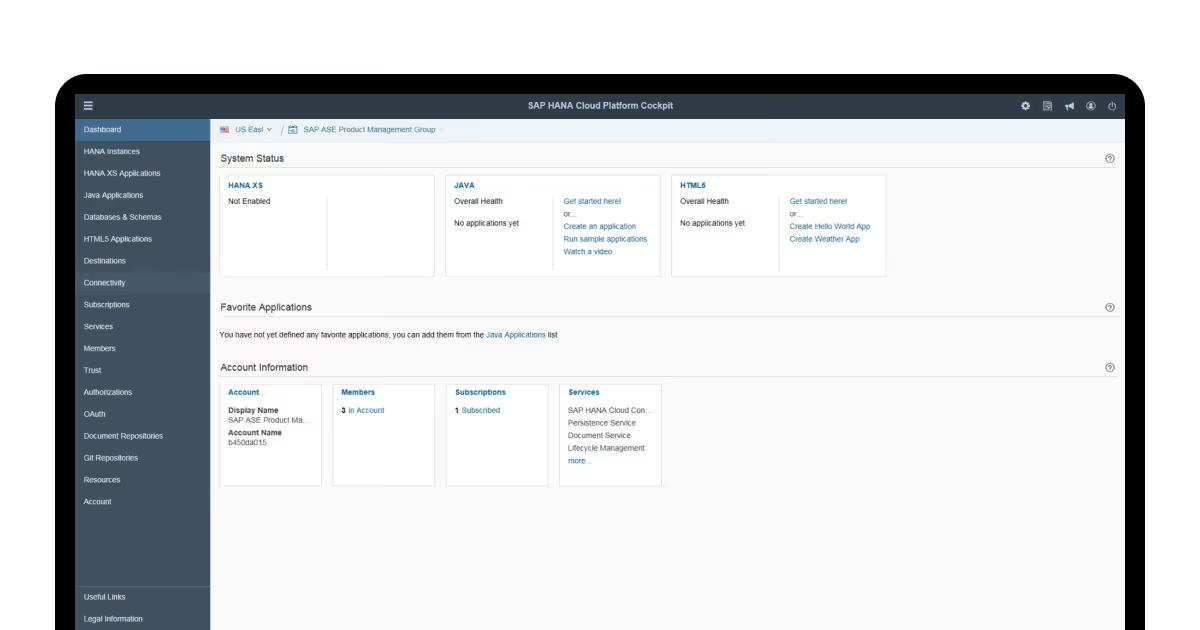
SAP S/4HANA
We will touch on these options of supply chain management cloud software in more detail soon. Our point here is that without integrations, you can’t make the most out of your solutions.
Dolgui and team frame integration as the core of the cloud supply chain model: combining digital platforms with physical operations so that procurement, manufacturing, logistics, and sales operate from shared, current data.
Practical use cases of cloud in supply chain management
Cloud software is beneficial for many applications within your supply chain. From planning demand and predicting disruptions to managing supplies, communication, and improving your routes, you can improve your business in a multifaceted way.
Demand planning and forecasting
Traditional forecasting ran on historical sales data updated weekly or monthly. At the same time, cloud based supply chain planning pulls point-of-sale data, inventory levels, supplier lead times, and external signals like weather and market trends continuously. Carla DeSantis notes that cloud solutions provide AI and machine learning to run complex forecasting and what-if simulations, assessing demand with external market data, even with shorter planning horizons.
Planners catch demand shifts before they become stockouts or overstock situations. Forecast accuracy improves, safety stock drops, and working capital tied up in excess inventory decreases. McKinsey's 2025 supply chain survey identified demand forecasting as the top use case for both analytical AI and generative AI.
Supplier relationship management
Cloud platforms give buyers and suppliers access to the same data, all at once. Suppliers confirm shipments, update lead times, and flag capacity issues directly in a shared portal. Buyers see that information immediately and don’t have to wait for email updates.
This matters more now than before. McKinsey found that only 42% of companies have visibility into tier-two suppliers, and 58% who mapped tier-two suppliers have no regular direct contact with them. Supply chain cloud software and supplier portals make continuous monitoring of deeper chain tiers practical without requiring dedicated relationship managers for every vendor.
Warehouse and inventory optimization
Cloud warehouse management systems connect inventory data across multiple locations simultaneously. A distribution center in one region sees stock levels everywhere else, enabling transfers before a stockout occurs.
Computer vision integrated through cloud platforms automates cycle counting, reducing labor needed to maintain accurate inventory records. When inventory data is current, replenishment triggers at the right time, not too early or too late, and you stop paying for stock you don't need.
Logistics and route optimization
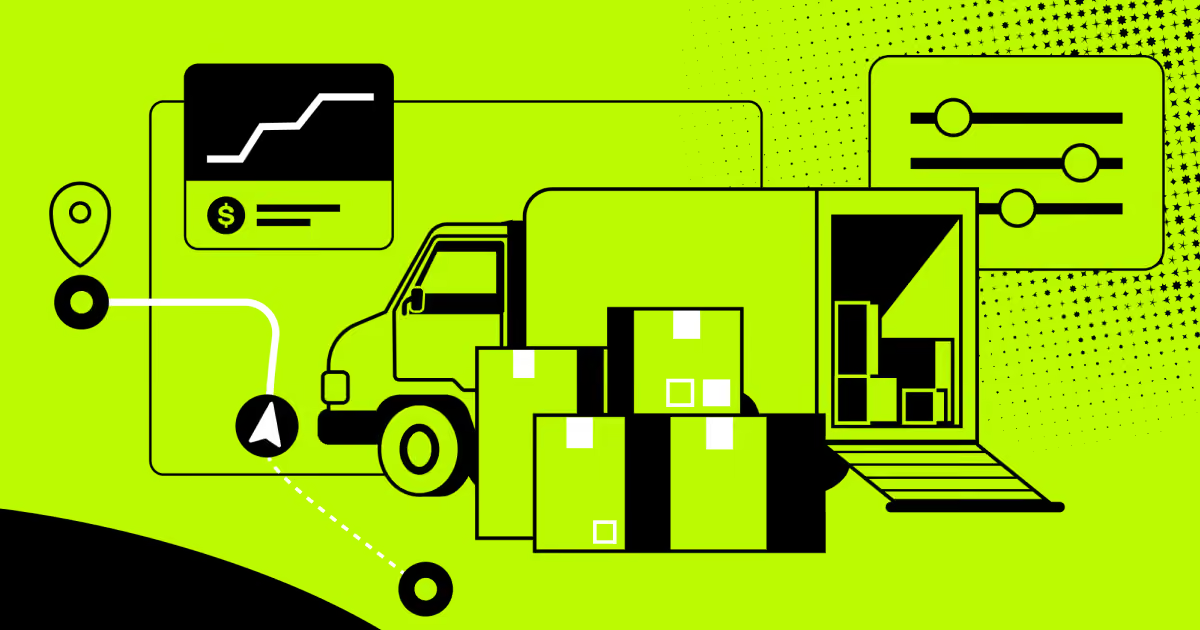
Supply chain management cloud computing in logistics management connects to carrier APIs, traffic data, port congestion indices, push-to-talk solutions, and customs systems in real time. Route optimization runs against current conditions rather than plans built the previous day.
When a port delay occurs, cloud systems reroute shipments automatically and notify downstream partners before the delay creates a receiving problem. Transportation and logistics management holds a great share of cloud supply chain spending, because real-time visibility and dynamic route optimization produce cost reductions that are straightforward to measure.
Top supply chain cloud platforms
The market has no shortage of cloud-based supply chain solutions. These are the platforms most companies actually end up evaluating, what each one does well, where each one falls short, and what you can expect to pay.
Tool
Best for
ERP integration
Starting price
Oracle Fusion Cloud
Large enterprises
Native
~$625/user/month
SAP IBP
SAP-based enterprises
Native SAP
Revenue-based, on request
Blue Yonder
Retail and logistics
API-based
Custom quote
Kinaxis Maestro
Manufacturers
API-based
Custom quote
Microsoft Dynamics 365
Mid to large enterprises
Native Microsoft
$180/user/month
Coupa
Network strategy
API-based
~$2,500/month
Infor CloudSuite
Distribution businesses
Native Infor
On request
Descartes
Logistics and freight
SAP and others
Modular, on request
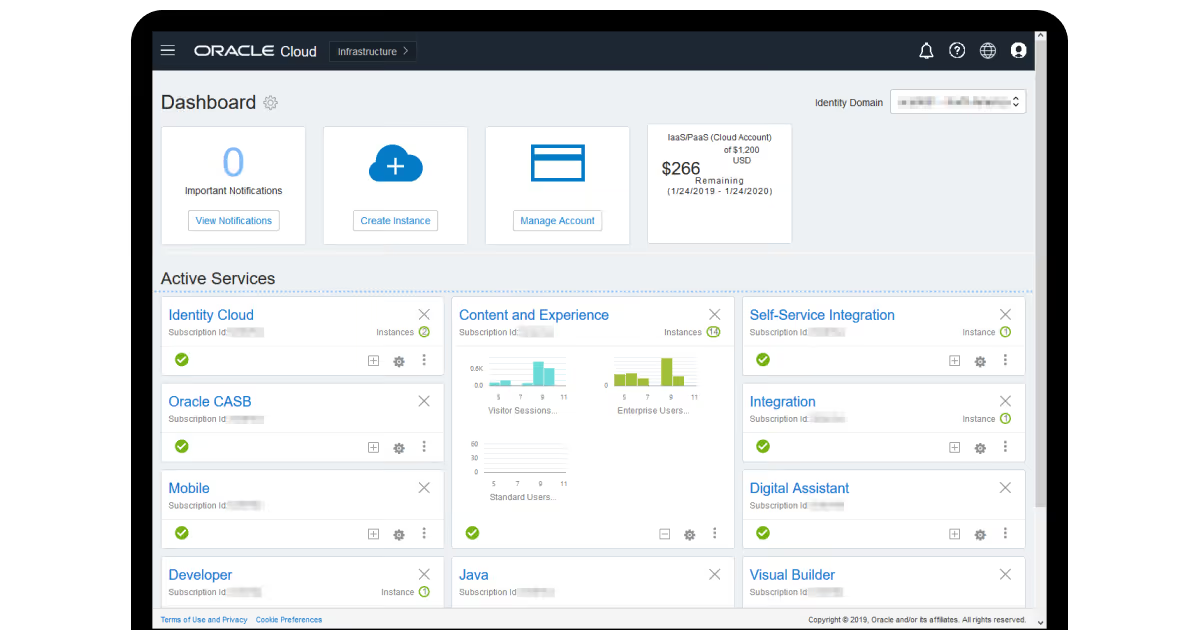
Oracle Fusion Cloud SCMcovers the full scope: planning, procurement, inventory, logistics, and analytics in one cloud-native environment. Its strength is unifying supply chain and finance under a single framework, with embedded AI supporting predictive execution. Pricing starts at around $625 per user per month with a minimum of 10 users, making it one of the higher-cost options in the market. This solution is a great fit for large enterprises ready to invest significant time and budget in setup and configuration.
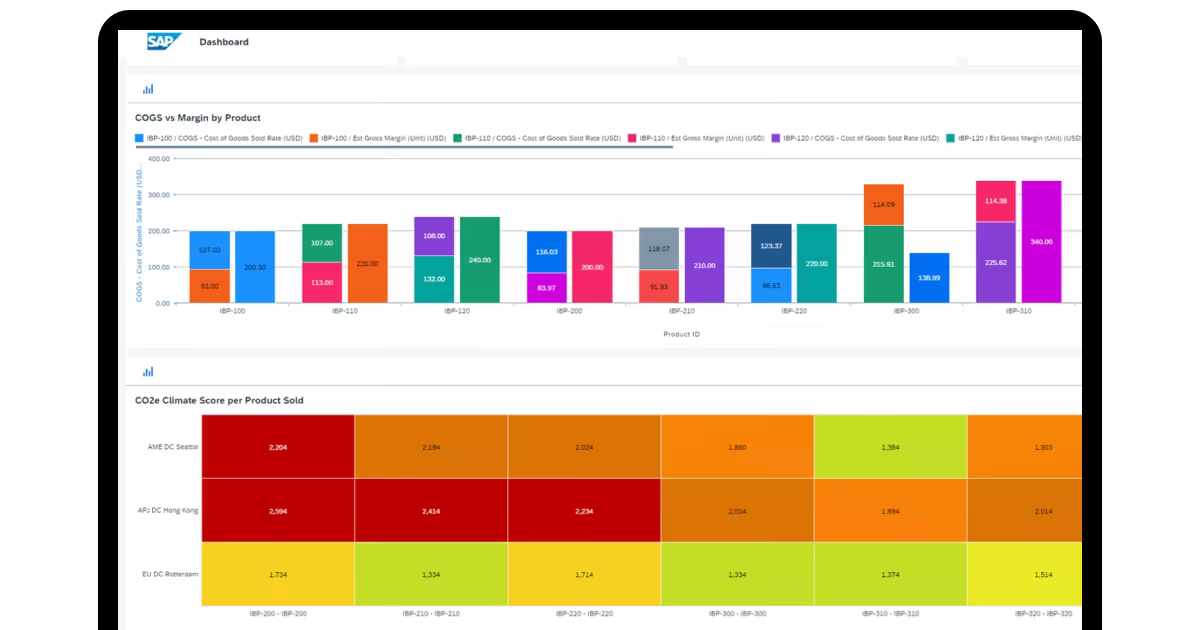
SAP Integrated Business Planning (SAP IBP) runs on SAP HANA and combines demand sensing, inventory optimization, S&OP, and replenishment planning with strong AI-driven forecasting. It integrates natively with SAP S/4HANA, which makes it the natural choice if you already run SAP across your business. This cloud-based supply chain software is priced on a revenue-metric model rather than per user, so costs vary significantly by size. Implementation is detailed and requires commitment, but the depth of planning capability is hard to match.
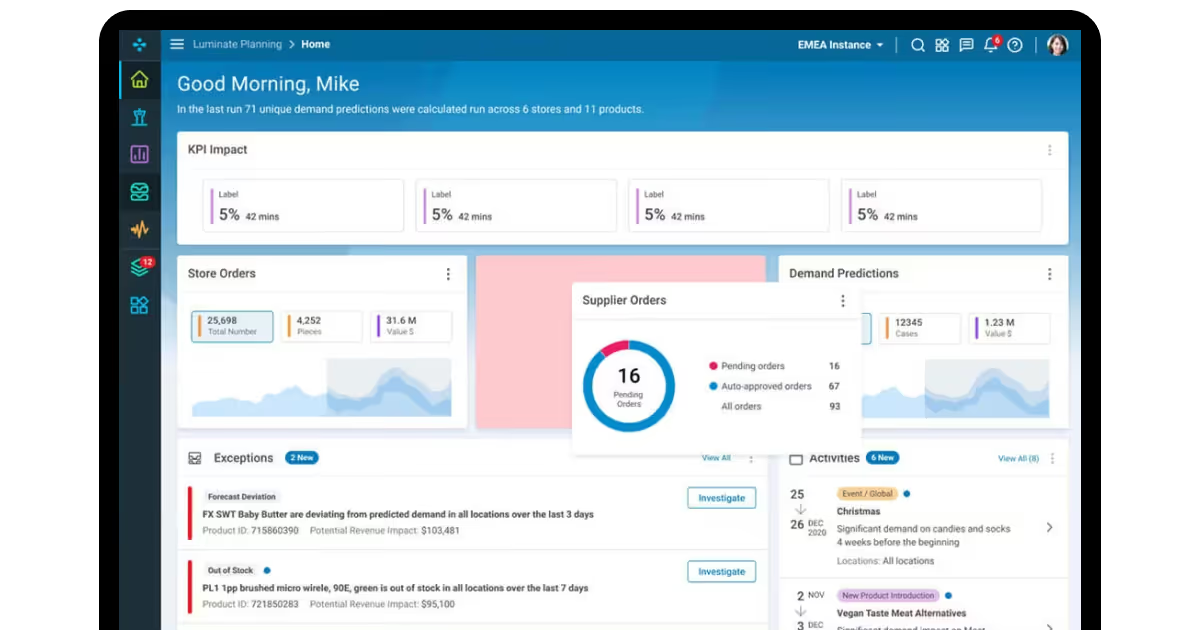
Blue Yonder serves 3,000 of the world's leading brands with a platform built around AI-powered demand forecasting, warehouse management, and real-time supply chain visibility. Its Luminate Control Tower delivers prescriptive insights across the end-to-end chain. Pricing is custom and quote-based, depending onthe modules selected. This option is a good choice for retailers and logistics-heavy companies focused on fulfillment and inventory risk.
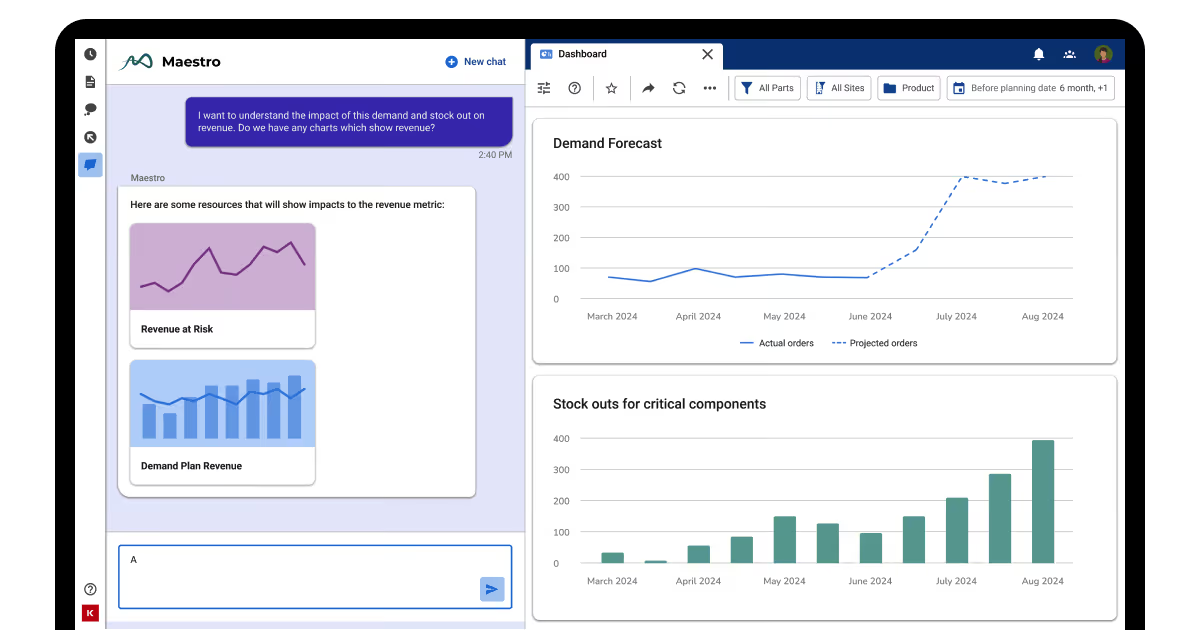
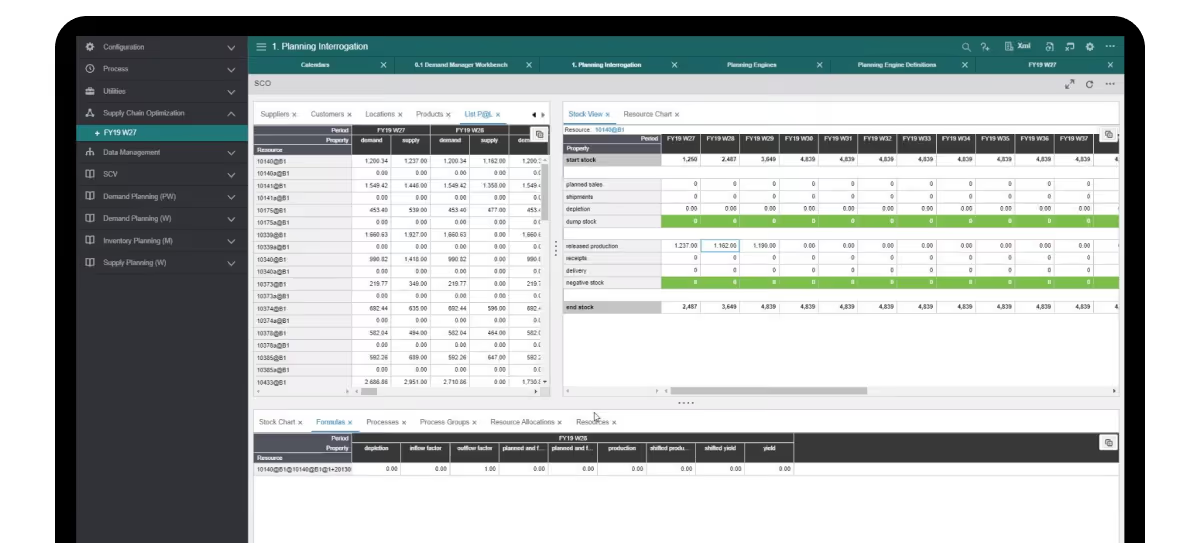
Kinaxis Maestro runs concurrent planning across demand, inventory, and capacity simultaneously. Its what-if simulation capability lets planners test scenarios and stress-test decisions before committing. Pricing is tailored to business size and needs, available on request. This is a winning option of cloud supply chain software for manufacturers and distributors operating in fast-changing environments where agility matters more than depth in any single function.
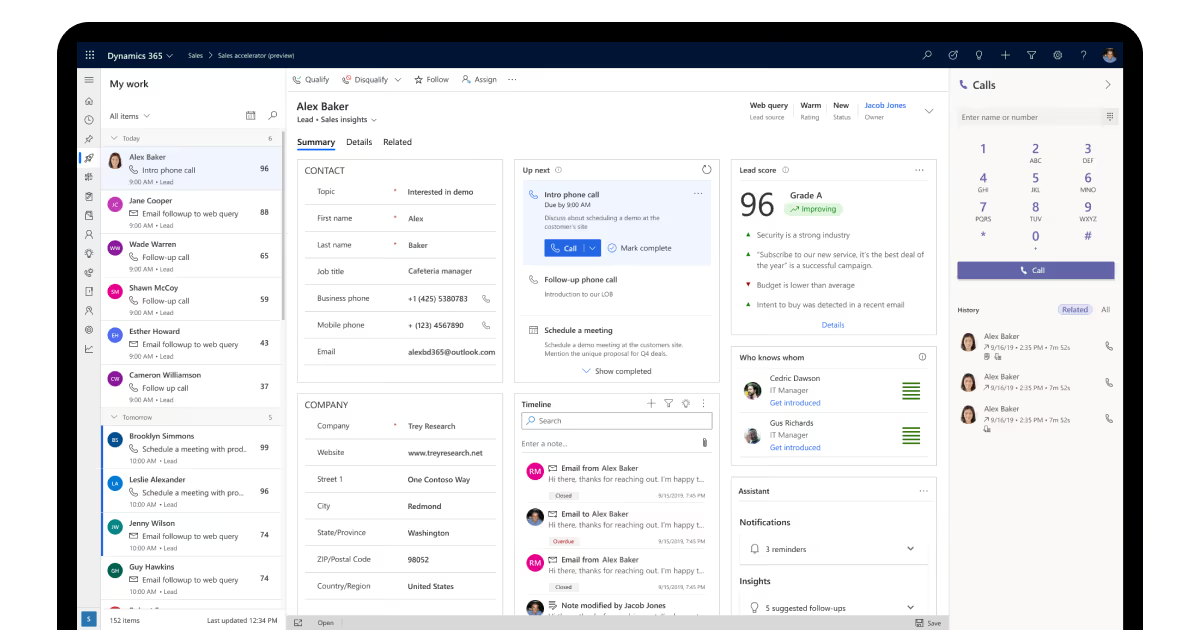
Microsoft Dynamics 365 combines ERP and supply chain management in one platform with embedded AI, IoT-based visibility, and predictive maintenance. Starting from $210 per user per month, it is one of the more accessible enterprise options on this list. Teams already using Microsoft tools adopt it quickly. This tool will fit mid to large businesses that want ERP and SCM consolidated without managing multiple vendor relationships.
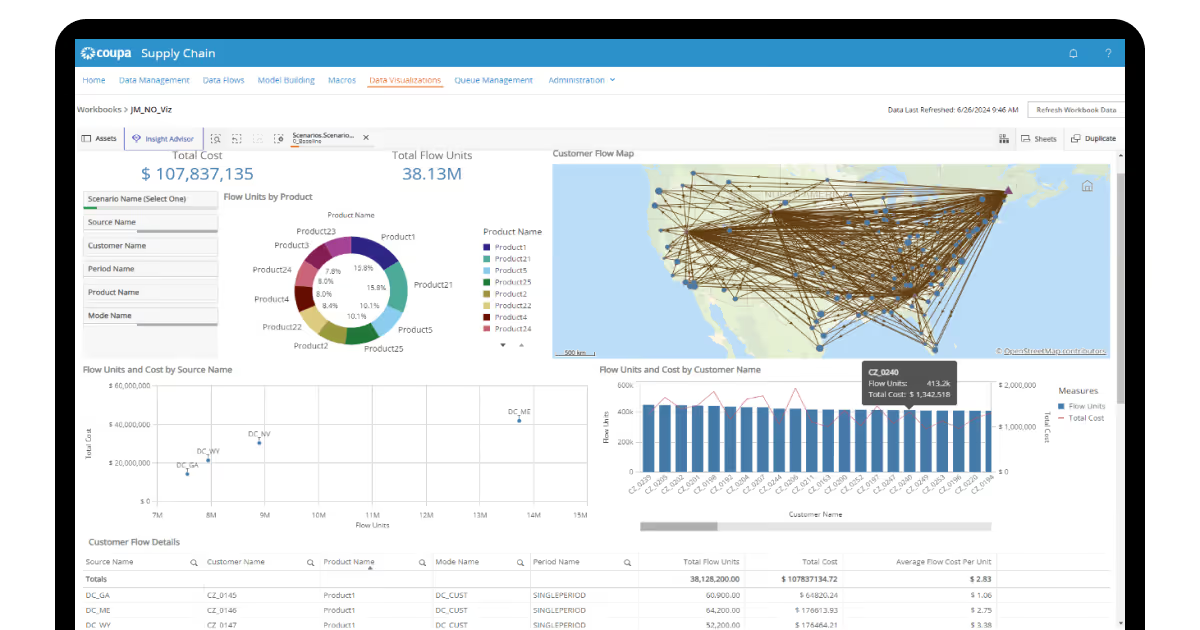
Coupa focuses on cloud supply chain modeling, network design, and strategic planning using digital twin technology. Its AI identifies cost and carbon savings across network configurations before you commit to changes. Pricing starts around $2,500 per month, with costs varying based on modules and user count. It’s an option for businesses focused on a long-term network strategy.
Infor CloudSuite SCM targets warehousing and distribution operations with AI-powered analytics that detect bottlenecks in real time. Pricing is enterprise-level and available on request. It works best within the Infor ecosystem. Overall, this solution is more for large distribution-focused businesses already running Infor products.
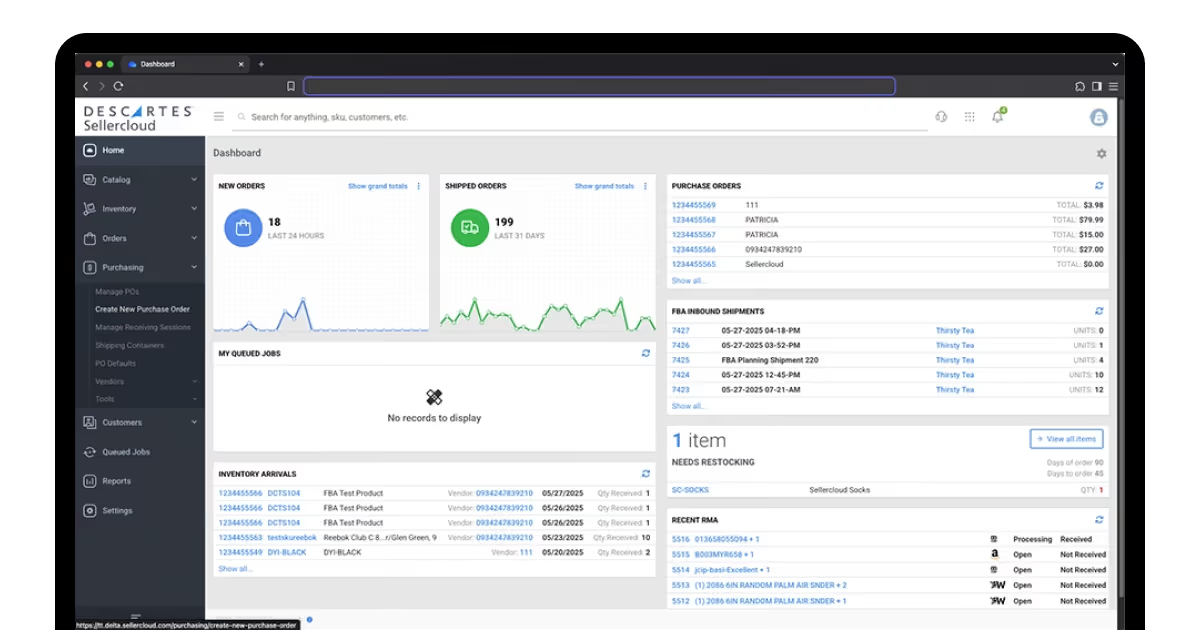
Descartes Systems operates the Global Logistics Network connecting over 13,000 customers across 160 countries, managing more than 30 million shipping routes. It focuses on transportation, customs compliance, and logistics messaging. Pricing is modular and quote-based, with the tool being best for companies with high logistics volumes and complex cross-border shipping needs.
With the great variety of tools available, it’s not always easy to define the one to fit your operations best. Let’s go through the aspects to focus on to make a good choice.
How to choose the right cloud SCM tool
To choose wisely between all the cloud-based supply chain solutions, start with your actual problem, not the feature list. Ask yourself where your supply chain loses the most money or time right now. That answer points you toward the right category of tool before you look at any vendor.
Four questions that narrow the field quickly:
What does your current tech stack look like? If you run SAP, IBP is the path of least resistance. If you run Microsoft, Dynamics 365 reduces integration work significantly. Fighting your existing stack adds cost and timeline.
What is your primary pain point? Demand volatility points toward Blue Yonder or Kinaxis. Logistics complexity points toward Descartes. Strategic network decisions point toward Coupa. Trying to solve everything at once with one platform rarely works.
What is your organization's implementation capacity? Oracle and SAP deliver the most capabilities but demand the most from your team during rollout. If you have limited IT resources, a cloud-based supply chain tool with a lower implementation burden, like Descartes or Coupa, may deliver faster results even if the ceiling is lower.
What is your realistic budget? Cloud platforms run on subscription pricing, but the total cost includes implementation, training, and ongoing configuration. A lower license fee with a complex setup often costs more than a higher license fee with a simpler one.
However, we have to note an important thing. Off-the-shelf platforms fit most businesses the way a rental apartment fits most tenants: functional, but full of compromises you didn't choose. When your supply chain has specific workflows, unusual integrations, or pricing logic that no standard module handles well, custom-built software stops being a luxury and starts being the cheaper option long-term.
Integration steps and tips
Moving to supply chain cloud computing and management is not a single event. It is a sequence of decisions, each one affecting the next. Here is how the process actually works, based on our experience.
Step 1: Outline everything you have before you touch anything. Document every system currently involved in your supply chain: ERP, warehouse management, procurement tools, carrier portals, spreadsheets people use unofficially. You cannot plan an integration without knowing what you are integrating from.
Step 2: Define what success looks like in concrete terms. Define something specific and achievable: order confirmation time drops from 48 hours to 4 hours, inventory discrepancies fall below 2%, or demand forecast accuracy reaches 85%. Measurable targets keep the project focused and give you a way to see if the platform is working.
Step 3: Choose your integration architecture. Decide how your cloud-based supply chain management platform will connect to existing systems. Most modern platforms use REST APIs or pre-built connectors for common ERPs. Some require middleware like MuleSoft or Azure Integration Services to bridge older systems. This decision affects your timeline and your ongoing maintenance load more than almost anything else.
Step 4: Start with a single process to transform. Pick one workflow: demand planning, purchase order management, or inbound logistics tracking. Migrate that process completely, stabilize it, and measure results before expanding.
Step 5: Clean your data before migration. Duplicate supplier records, inconsistent product codes, and outdated pricing tables will follow you into the new system if you do not address them first. Data quality problems that were manageable in a legacy system become visible and disruptive in a cloud environment where everything is connected.
Step 6: Run parallel systems during transition. Keep your old system running alongside the new cloud SCM for a defined period, typically 4 to 12 weeks, depending on complexity. This gives your team a safety net and lets you catch issues early.
Step 7: Train the people who actually use it daily. Software adoption fails most often not because the tool is wrong but because the people using it were not properly prepared. Warehouse staff, procurement coordinators, and logistics planners need hands-on training in their specific workflows, not a general product overview.
If you are building or integrating cloud supply chain systems and want a team that has done it before, that is what COAX does. Our supply chain software development services cover the full cycle: from scoping and architecture through development, integration, testing, and handover.
This includes connecting cloud platforms to existing ERPs, building custom supplier portals, developing demand planning tools, and creating logistics tracking systems that pull live data from multiple sources into one place. You’re not getting an isolated system: you get a solution that fits your workflows and business tech ecosystem perfectly and causes no further disruption or workarounds to address in the future.
Tips on making the solution work best
After 15 years of developing solutions for travel, transportation, and logistics, the COAX team gathered lots of insider knowledge under the hood. Based on this experience, we’re sharing some advice on how to get the most out of cloud computing for supply chain management.
Do not let perfect data quality block you from starting. McKinsey found that no company with a deployed planning system considers its data perfect, yet many are satisfied with the results. Aim for 80% data quality and build processes to fix the gaps as you go. Waiting for perfect data means waiting indefinitely.
Involve your suppliers early. If your suppliers need to interact with a new portal or send data in a new format, give them lead time and support. A cloud platform that your suppliers cannot or will not use delivers half the value it promised.
Build your integration map before you sign any contract. Before committing to any cloud SCM tool, define which systems it needs to connect to and confirm that those connectors exist or are buildable within your budget. Discovering an integration gap after signing a contract is expensive.
Set up monitoring from day one. Configure alerts for data sync failures, unusual order volumes, and forecast deviations before you go live. Catching a broken API connection on day two is a minor fix. Catching it three weeks later, after inventory positions have drifted, is a real problem.
Plan for the integration to need maintenance. APIs change, ERP systems get updated, and carrier data formats shift. Your cloud integration is not a one-time build. Budget for ongoing maintenance from the start, or it will come as an unplanned cost later.
Get the middleware question answered early. If you are connecting a modern cloud platform to a legacy ERP built years ago, you likely need middleware. This is where a lot of hidden cost lives. Teams at COAX who work on cloud supply chain software development projects spend a significant portion of our integration work right here, mapping data between systems that were never designed to share data correctly. Knowing this upfront lets you budget and plan accordingly rather than discovering it mid-project.
Do not migrate and optimize at the same time. Migration moves your existing process to a new platform. Optimization changes the process. Doing both simultaneously makes it impossible to know whether a problem is a migration issue or a process design issue. Migrate first, stabilize, then optimize.
Trying to ensure all these processes go successfully is often like catching all the threads in a fragile tapestry - risky and challenging. Meanwhile, COAX’s cloud development service takes this weight off your shoulders.
Our experts handle the whole infrastructure layer: selecting the right deployment model for your needs, setting up the environments, managing security and compliance requirements, and making sure the system performs under real operational load.
What that means practically is that you are not handed off between teams as the project moves from planning to build to support. The same people who scoped your integration understand it when something needs adjusting six months later. Same with post-launch support - we stay with you every step of the way and much further if needed to ensure you get continuous benefits of cloud computing in supply chain management.
FAQ
What is cloud supply chain management key components set?
Cloud SCM connects procurement, inventory, logistics, and finance through a shared cloud infrastructure. Karvela defines the core as visibility, scalability, and information sharing. In practice, that means:
Real-time dashboards pulling IoT data
AI-driven demand forecasting
Automated procurement workflows
Multi-location inventory tracking
Cloud ERP integration
Route optimization,
Cybersecurity across every node.
What are the challenges of implementing cloud computing in supply chain management?
Karvela flags security, vendor lock-in, and legacy integration as the three structural barriers most companies underestimate. Add a 90% talent shortage reported by McKinsey, cross-border data compliance obligations, and migration costs that routinely exceed initial estimates, and you have a set of challenges that require deliberate planning rather than a standard IT rollout.
How can cloud computing supply chain software help small and medium businesses?
SMEs pay subscription fees instead of six-figure license costs, access enterprise-level forecasting and inventory tools, and connect to carrier and supplier networks through pre-built APIs. Tan and team state that data-driven cloud inventory methods outperform traditional approaches by 13 to 16% in accuracy, results now accessible to smaller operations without dedicated data science teams.
How does COAX ensure cloud software supply chain security and efficiency?
COAX holds ISO/IEC 27001:2022 certification covering security management, risk assessment, and continuous monitoring, alongside ISO 9001 certification for process quality. In practice that means encrypted data handling, third-party risk controls, defined security protocols at every integration point, and quality-assured development processes from architecture through deployment and ongoing support.

















































































_.avif)







%2520explained.avif)

We are interested in your opinion