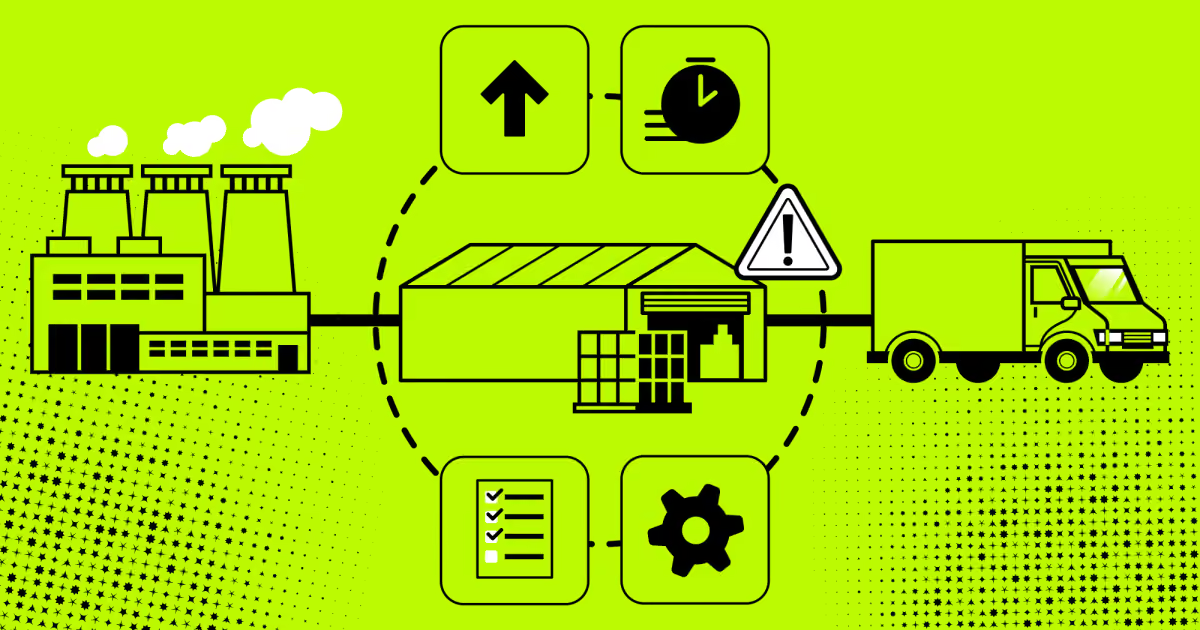
Let us assume how your supply chain operates. Your supply chain generates mountains of data but delivers marginal improvements. Disruptions blindside you, inventory is usually in the longest-reaching warehouses, and forecasts miss demand by double digits. Meanwhile, supply chain AI changes that equation by turning information into action.
Predictive accuracy with machine learning models that reduce forecasting errors.
Inventory intelligence analyzes consumption patterns and supplier behavior to slash inventory costs.
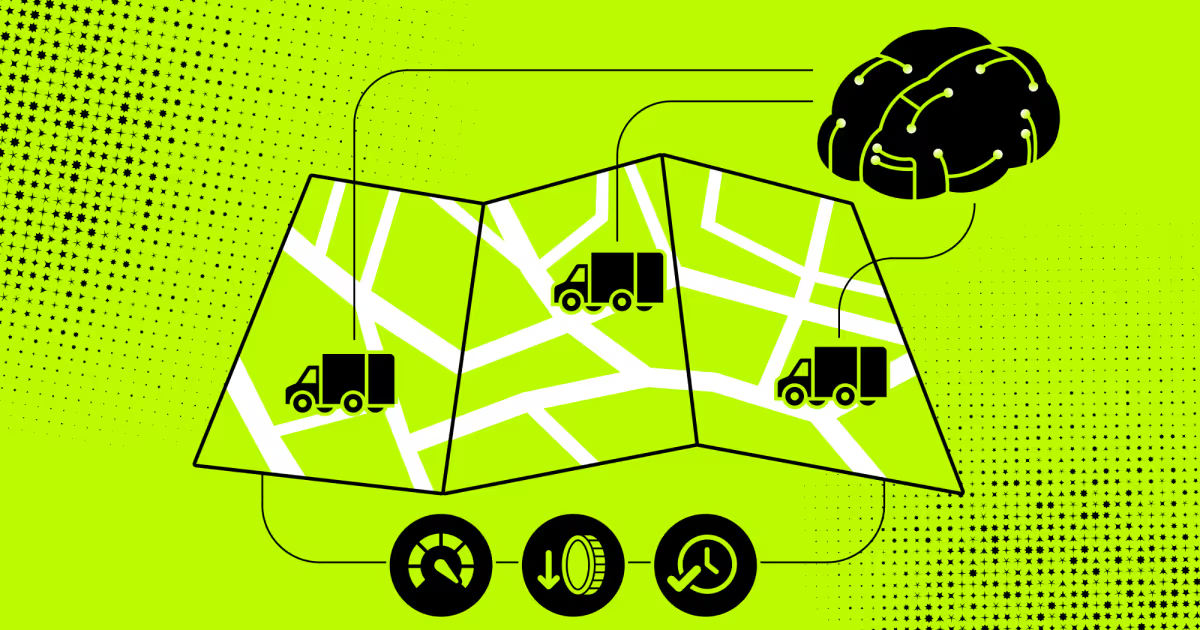
Logistics optimization calculates routes in real time, cutting transportation costs.
Production continuity monitors equipment with IoT sensors to predict failures.
Automated decision-making rebalances inventory, reroutes shipments, and adjusts plans.
Procurement efficiency reduces manual tasks through AI-powered supplier evaluation.
Custom development builds solutions fitted to your unique business rules, legacy systems, and competitive advantages.
In this guide, we break down how to efficiently implement artificial intelligence in the supply chain. We outline the key technologies, challenges, and steps to integrate a smart solution into your business.
What is AI in supply chain management?
AI in supply chain management is the technology that uses intelligent systems to analyze data, predict outcomes, and make decisions across the entire supply network. AI learns from patterns in your operations to improve forecasting, routing, inventory levels, and logistics planning. It processes information from sensors, orders, shipments, and market signals to help you respond faster to disruptions and customer demands.
Machine learning models study your historical data to predict what customers will order next month. Computer vision systems inspect products for defects. Natural language processing tools read supplier contracts and customer feedback. These capabilities work together to reduce costs, shorten delivery times, and build more resilient operations.
According to Awasthi, AI provides machines with cognitive functions that mimic human behavioral patterns, enabling automation and digitalization. AI addresses vulnerabilities by anticipating problems. For instance, when a port closes or demand spikes unexpectedly, AI platforms can reroute shipments, adjust production schedules, and reallocate inventory.
How AI differs from traditional automation
Traditional automation handles repetitive physical tasks using predefined rules. A conveyor system moves boxes, or an automated invoice generator fills in fields. These systems work reliably but cannot adapt when conditions change.
AI brings intelligence to these processes, and supply chain AI news confirms it.McKinsey research shows AI-enabled supply chain planning reduces inventory by up to 20% and lowers supply chain costs by up to 10%. Their research also found that AI-powered supply chain management can reduce logistics costs by 15%, cut inventory levels by 35%, and improve service levels by 65%.
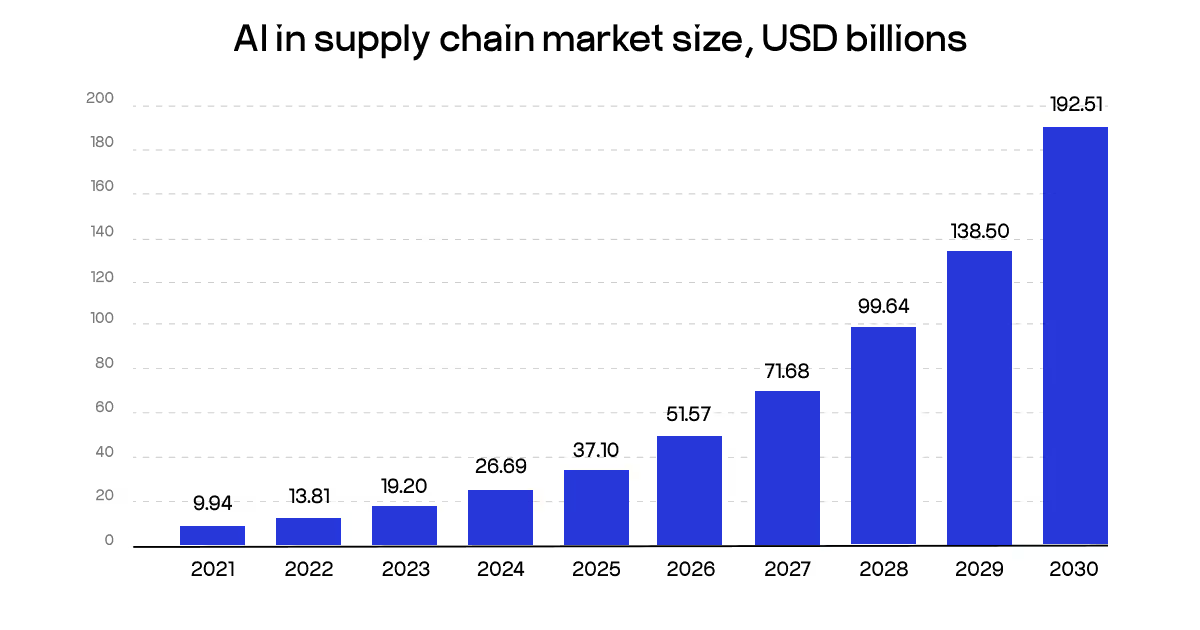
All of these improvements come together to a rapidly growing market. AI has already reached $13.81 billion now, and it's heading to $192.51 billion by 2034. This adoption is hinting you on the best moment to start adopting intelligent technology as well.
Here's what sets them apart to unlock these benefits:
Data processing. Automation triggers actions when certain conditions are met. AI analyzes massive, unstructured datasets from multiple sources to identify risks and opportunities you might miss.
Learning capability. Automation executes "if this, then that" logic. AI learns from data patterns and improves accuracy over time. Your demand forecasting gets better with each sales cycle.
Adaptability. Automated systems break down when faced with exceptions. AI adjusts to real-time changes like weather delays, supplier shortages, or sudden demand shifts without human intervention.
Decision complexity. Automation excels at simple, repeatable tasks like printing shipping labels. AI tackles strategic decisions such as which carrier to use for each shipment based on cost, speed, reliability, and current conditions.
The result? Companies using supply chain AI see measurable improvements. AI-enabled platforms reduce cart abandonment caused by delivery uncertainty, cut logistics costs by up to 30%, and decrease inventory holding costs by 20% while maintaining better stock availability.
How AI works in supply chain management
AI enables intelligent supply chain management through specialized algorithms that process data, recognize patterns, and execute decisions with minimal human input. Each algorithm serves distinct functions within the network.
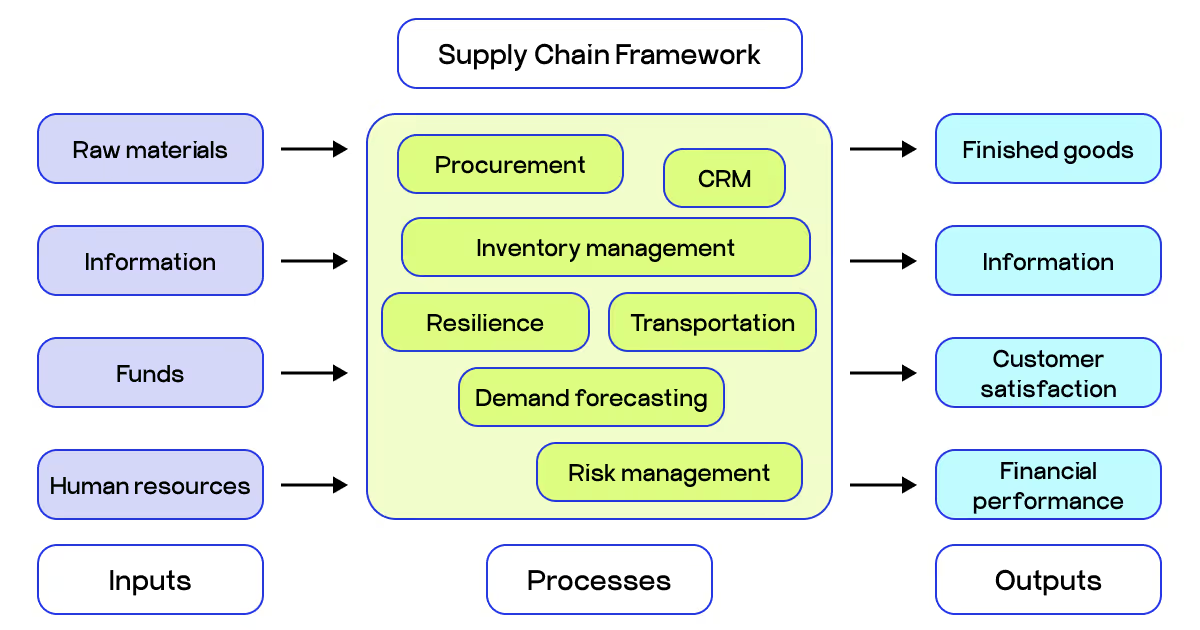
Daios and colleagues present a framework showing how AI algorithms integrate across the supply chain structure. The framework maps three layers: inputs, processes, and outputs.
The input layer consists of raw materials, information streams, financial capital, and human resources flowing into the system. AI algorithms begin working at this entry point, analyzing incoming data from suppliers, markets, and internal systems.
The process layer contains the core supply chain functions where AI delivers the most value. Customer relationship management uses chatbots and sentiment analysis to understand buyer needs. Inventory management applies reinforcement learning to optimize stock levels. Transportation networks employ route optimization algorithms. Procurement leverages intelligent agents for supplier selection. Demand forecasting combines neural networks with time series analysis. Risk management uses Bayesian networks to evaluate threats and build resilience.
Output layer measures results: finished goods delivery, information flow to stakeholders, customer satisfaction scores, and financial performance metrics. AI systems monitor these outputs continuously, feeding results back into the algorithms to improve future decisions. This creates a learning loop where the entire framework becomes more efficient over time.
But how can AI be applied to supply chain activities in practical terms? Let’s break down the specific underlying technologies that cover varied functions and give you that automated, fully digital improvement.
Role of machine learning, predictive analytics, and optimization models
AI is a multifaceted technology. In the supply chain, it’s presented by machine learning, predictive analytics, and optimization algorithms and models. Each of which performs specific complex tasks.
Machine learning forms the foundation of most AI applications. These systems study historical data to predict future outcomes. According to Daios and team, ML techniques like support vector machines, neural networks, and decision trees analyze information to generate precise forecasts and help companies develop adaptive inventory policies. These AI supply chain algorithms improve accuracy with each cycle, learning from results to refine predictions.
Predictive analytics uses statistical algorithms and machine learning to identify likely future outcomes based on historical data. Companies forecast demand fluctuations, anticipate delivery disruptions from weather or traffic, and predict potential supplier failures. With this capability, you can adjust routes, manage customer expectations, and allocate resources more efficiently before breakdowns happen.
Optimization algorithms solve complex logistical issues that would overwhelm manual planning. Genetic algorithms and particle swarm optimization tackle vehicle routing problems, warehouse layout design, and resource allocation. These methods evaluate thousands of possible solutions simultaneously to find the most efficient approach. Daios and team note that ant colony optimization algorithms excel at dynamic route scheduling, particularly for last-mile delivery challenges.
As you see, all these algorithms have their specific advantages and applications. However, apart from the algorithms, you can apply a larger pool of AI-based technologies to improve your supply chain.
AI technologies used in supply chain management
The described models handle the strategic heavy lifting of logistics AI, but they need supporting cast members to actually see, hear, and touch the physical world. These technologies turn algorithms into actionable systems that can read documents, spot defects, and move boxes.
Machine learning in the supply chain excels at finding patterns in complex and massive data. They process information from multiple sources simultaneously, spotting correlations between seasonal trends, economic indicators, supplier performance, and customer behavior. Reinforcement learning and anomaly detection capitalize on data insights to fine-tune inventory levels by analyzing historical stock quantities. The technology adapts as conditions change. When a model makes a prediction and sees the actual result, it adjusts its internal parameters to improve future accuracy.
Neural networks mirror how human brains process information through interconnected nodes. Deep learning variants analyze multiple data layers to identify subtle patterns in demand fluctuations, supplier reliability, and operational bottlenecks. Deep convolutional neural networks demonstrate exceptional capability in calculating complex, nonlinear relationships among supply chain variables.
Computer vision enables machines to interpret visual information. Cameras paired with AI inspect products for defects, monitor inventory levels, and track goods moving through facilities. This technology automates quality control and warehouse management tasks that previously required human observation.
Natural language processing reads and understands text from contracts, invoices, emails, and supplier communications. This combo of supply chain and AI extracts relevant data points, flags potential issues, and automates documentation workflows. Large language models can analyze historical logistics data, including delivery logs, transportation trends, and consumer demand predictions.
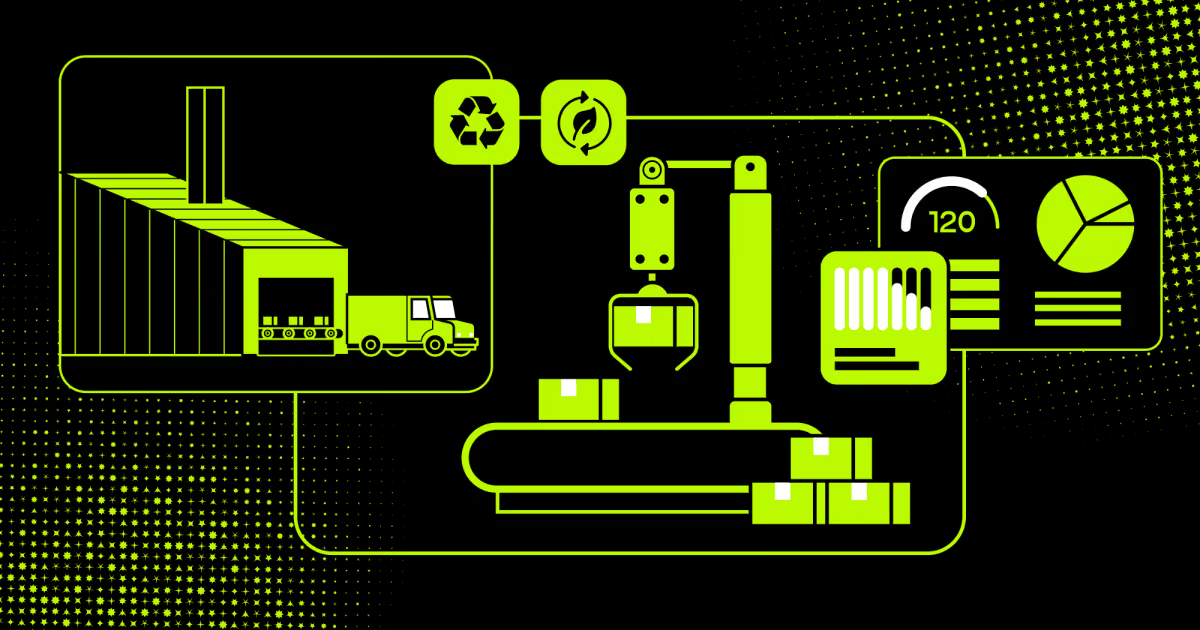
AI-powered robotic systems improve physical supply chain operations.According to Daios, robotic systems assisted by AI and drones optimize warehouse operations by automating picking, packing, and inventory counting. These systems adapt to different products, handle unexpected situations, and work safely alongside employees. Robots equipped with computer vision identify items, navigate complex layouts, and optimize movements to reduce time and energy consumption.
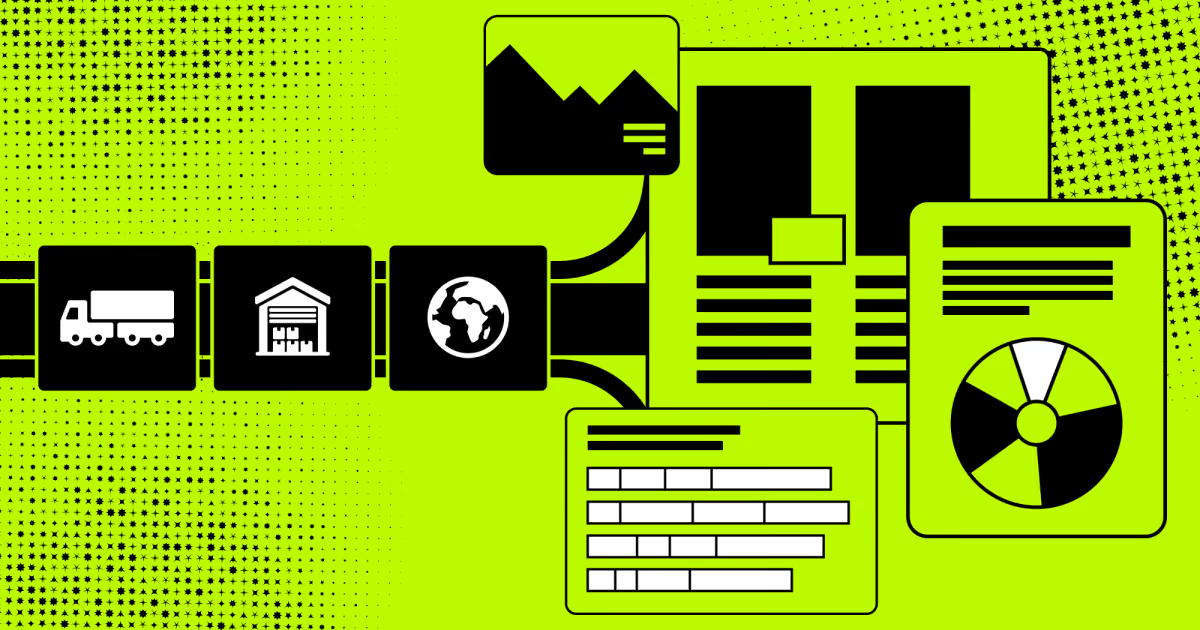
IoT devices generate the data streams that fuel AI decision-making. IoT has the leading role of generating data for AI to analyze, and integrating IoT with AI unlocks advancements in transparency, agility, and overall functionality. Sensors embedded in trucks, warehouses, and products collect real-time information about location, temperature, humidity, and equipment status. This constant data flow enables AI systems to monitor conditions, detect anomalies, and trigger automated responses.
These technologies work closely together. Computer vision spots a damaged pallet, natural language processing generates an incident report, IoT sensors confirm the temperature stayed within range during transit, and robotics reroute the affected goods. The result is a supply chain that can see problems, understand context, and take action without waiting for humans to connect the dots.
Challenges of AI in supply chain management
From what we described so far, it might seem like implementing supply chain management AI is all sunshine and rainbows. However, as with any advanced technology, you may face significant challenges. Next, we outline the most common ones and try to find solutions to them.
Data quality issues
AI systems depend entirely on the information they receive. Poor data quality undermines even the most sophisticated algorithms, producing unreliable forecasts, flawed routing decisions, and inaccurate inventory recommendations. Companies must establish rigorous data cleansing processes to remove duplicate entries, fix errors, and eliminate irrelevant information.
Using a single, authoritative data source helps maintain consistency across systems. Without clean, accurate data feeding into AI models, the technology for AI for the supply chain delivers little value and can actually harm operations by leading teams toward wrong decisions.
Data accessibility barriers
Traditional organizational structures create data silos where each department maintains separate information systems. This fragmentation blocks AI effectiveness because algorithms need access to comprehensive data sets across functions. According to Ok and colleagues, supply chains generate and handle large volumes of sensitive data, and ensuring proper access while maintaining security becomes crucial.
Breaking down these silos and standardizing data formats allows AI supply chain management systems to generate insights that single departments could never achieve alone. Companies that fail to address accessibility issues will find their AI investments delivering minimal returns.
Employee resistance
Workers often view AI as a threat to their jobs rather than a tool to enhance their capabilities. This fear creates internal pushback that can let all the implementation efforts go to waste. Employees worry that automation will eliminate their roles or fundamentally change what they do each day.
Overcoming this resistance requires clear communication about how AI makes work easier and empowers people to perform better. Training programs also help teams understand their evolving roles and see the advantages firsthand. Choosing user-friendly applications that clearly demonstrate benefits accelerates acceptance across the organization.
Trust and accountability concerns
Supply chain AI systems operate as complex decision engines that can be difficult to understand. Ok and team note that AI decision-making processes create a "black box" problem where accountability becomes unclear when mistakes occur. Who takes responsibility when an AI-driven forecasting system fails to predict a disruption?
You should maintain human oversight, especially for critical decisions, and establish clear protocols for when AI recommendations require verification. Building trust takes time and requires demonstrating consistent, proven results. The first thing to do is to clearly understand accuracy rates and risk factors for each AI application, ensuring professionals trained in the technology monitor its performance and limitations.
Supply chain AI use cases and examples
AI addresses distinct challenges across each supply chain component. Each of these use cases helps companies plan, source, produce, store, and deliver products more efficiently. In this part, we will get to know these use cases and also see what companies use AI for supply chain, and what results they achieve.
Demand forecasting
Predicting customer demand has always involved uncertainty. Traditional methods rely on historical averages and fixed seasonal patterns, missing sudden shifts in consumer behavior or market conditions. These forecasting errors are causing either stockouts that frustrate customers or excess inventory that ties up capital.
Here comes AI for supply chain optimization. It imploys the power of predictive analytics in logistics to analyze multiple data streams simultaneously: past sales patterns, weather forecasts, social media trends, economic indicators, and promotional calendars. According to Capgemini, AI applications in supply chain management help companies reduce forecasting errors by up to 50% and reduce lost sales by up to 65%.
For example, Amazon uses AI-driven demand forecasting across more than 400 million products with minimal human input. The system analyzes customer data, market trends, and external factors to predict future demand, ensuring warehouse stock levels match upcoming spikes or dips in product popularity. The technology also triggers automatic reorders for items running low or experiencing high demand.
Inventory management
Balancing stock levels requires answering tough questions: How much should sit in each warehouse, and when should you reorder? What happens if suppliers face delays? Traditional inventory systems use fixed reorder points and safety stock formulas that waste capital.
Supply chain artificial intelligence monitors actual consumption patterns, supplier lead times, and seasonal fluctuations to calculate optimal stock levels for each location and product. Walmart uses AI to manage inventory across thousands of stores, adjusting restocking strategies in real time based on customer demand, supply chain delays, and regional trends.
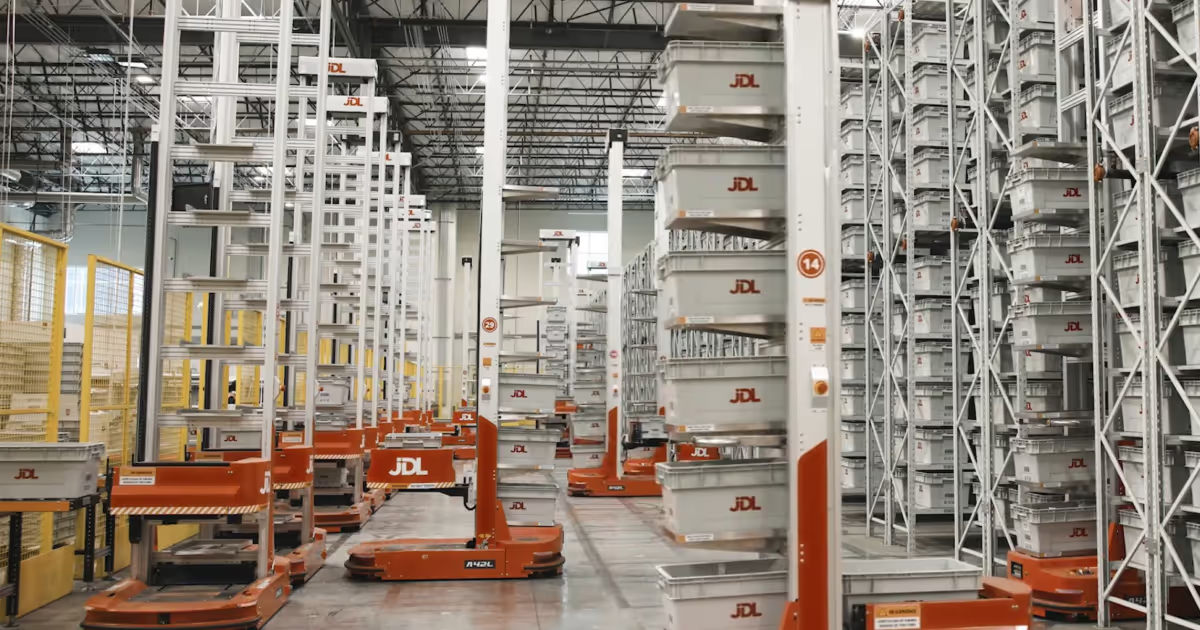
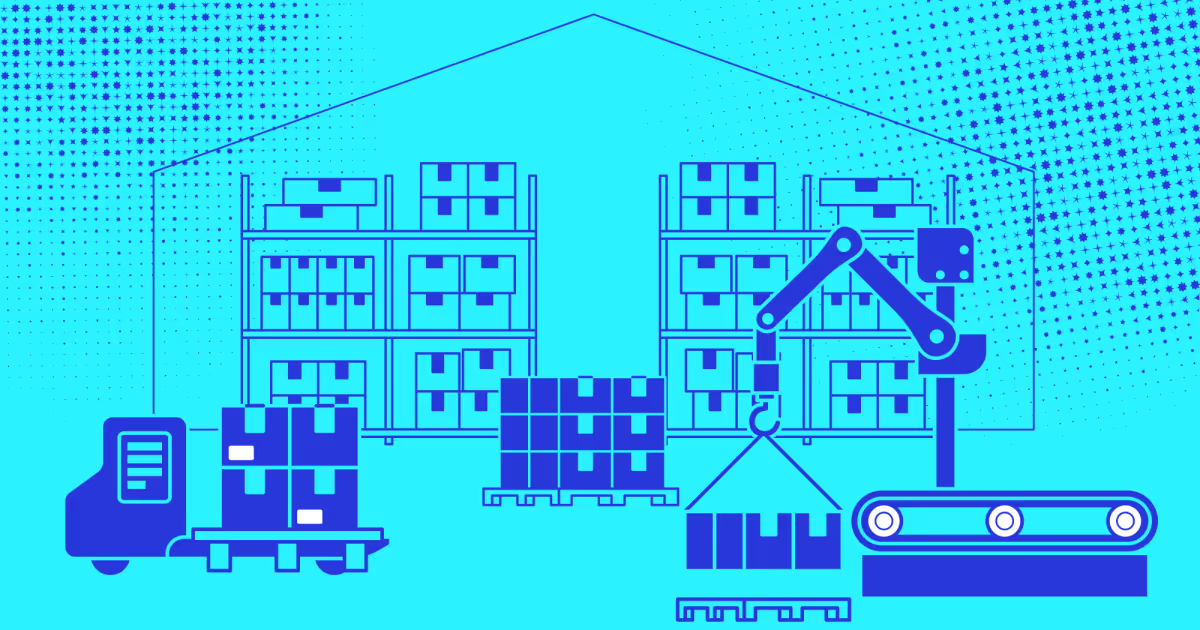
As one of the examples, JD Logistics operates self-managing warehouses where AI determines optimal placement for goods based on demand patterns, dimensions, and weights. This maximizes space and accelerates picking and packing. The approach increased available storage units from 10,000 to 35,000, boosting operational efficiency by 300%.
JD Logistics warehouse
Procurement
Procurement teams handle supplier selection, contract negotiations, purchase timing, and risk assessment. Choosing the wrong supplier or ordering at the wrong time creates disruptions that ripple through production and delivery schedules. Deloitte's survey found that AI implementation led to a 65% reduction in manual tasks in procurement functions.
AI evaluates supplier performance continuously, monitoring delivery reliability, quality metrics, financial stability, and external risk factors like political instability or weather threats. As one of the examples of artificial intelligence in supply chain management, Lenovo uses AI to predict delivery dates and delays across its 2,000-plus suppliers, optimizing manufacturing capacity to meet customer demand consistently.
Additionally, Maersk automates supplier negotiations using an AI chat interface that combines natural language processing, generative AI, and data analytics to conduct human-like negotiations. This allows the shipping giant to sign deals faster and at scale across its global vendor network.
Production
Manufacturing requires precise coordination between demand signals, raw material availability, equipment capacity, and labor schedules. Misalignment in any area creates bottlenecks, idle workers, or rushed orders that compromise quality. This area also has great potential for AI in the supply chain. Such systems connect these variables into integrated production planning.
For instance, General Electric uses predictive maintenance powered by AI and IoT sensors across aviation and energy operations. The system monitors equipment temperature, vibration, pressure, and usage patterns to detect early failure signs. This resulted in a 40% reduction in unplanned downtime and millions in annual savings.
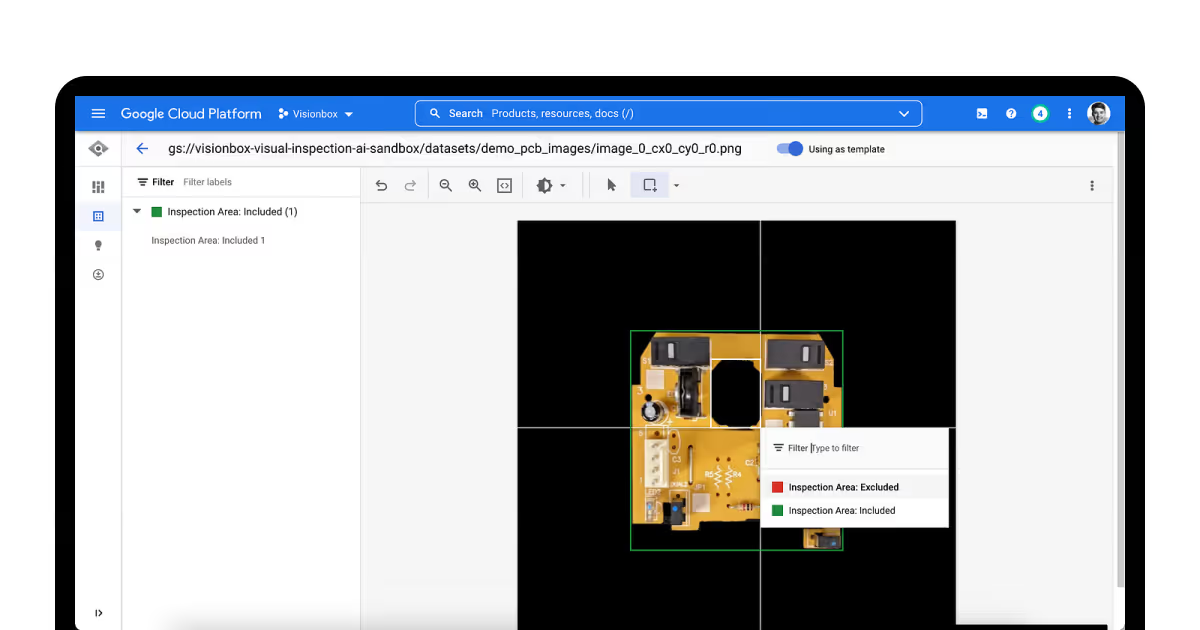
As another successful implementation, FIH Mobile uses Google's Visual Inspection AI to automate quality inspections, combining computer vision with AI models to examine products accurately and rapidly. This addresses the problem of poor quality control, which costs businesses up to 20% of annual sales revenue.
Google's Visual Inspection AI
Logistics
Moving products from factories through warehouses to customers involves countless decisions about routes, carriers, delivery timing, and fulfillment methods. Inefficient logistics waste fuel, increase costs, and disappoint customers with late deliveries.
For one of the prominent AI in supply chain examples, Walmart developed Route Optimization, a proprietary AI solution that optimizes driving routes in real time, maximizes packing space, and reduces miles driven. The technology eliminated 30 million driver miles from routes, saving 94 million pounds of CO2. Also, FedEx uses its FedEx Surround platform to provide real-time visibility into transportation networks, offering predictive delay alerts and actively intervening.
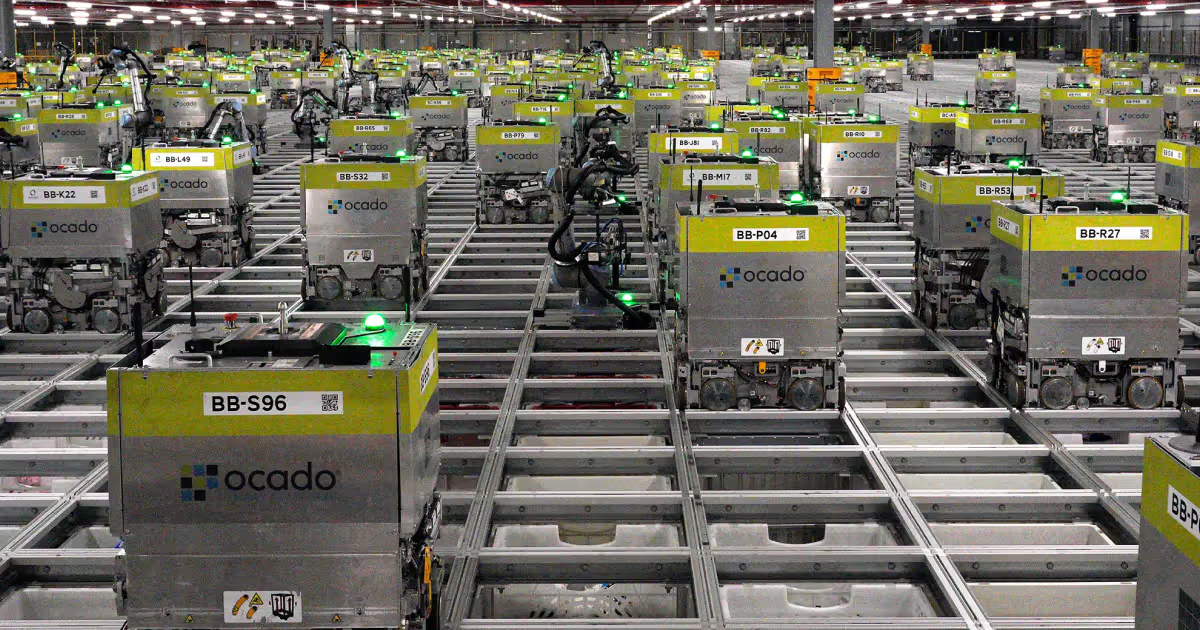
Inside warehouses, we can also see the power of robotic process automation (RPA) in the supply chain. AI automates picking, packing, and sorting to accelerate order fulfillment. For example, Ocado uses AI-powered robotic arms that handle and pack food items with accuracy and speed, completing 50-item orders in just minutes. Lineage Logistics applies AI algorithms to optimize cold-chain operations, forecasting when orders will arrive or leave warehouses so staff can position pallets effectively. This boosted operational efficiency by 20%.
Ocado's AI-powered robots
There are numerous use cases for AI supply chain planning, automation, and optimization - and even more success stories. If you want to join these stories with a fruitful implementation, you have two ways: a ready-made tool or a custom solution. Let’s start with the best market-ready options first.
Best AI supply chain software
With the demand rising, you can see the number of AI supply chain companies growing. As a result, the market offers dozens of ready-made platforms, each claiming to improve your operations. Here's what actually sets the leading solutions apart.
Platform
Features
Pricing
Best for
GigaSpaces eRAG
Conversational AI interface, real-time data integration, multi-step analysis automation
Custom quote based on data volume and users
Companies that need instant answers without complex training
SAP IBP
Scenario modeling, financial impact simulation, Joule AI copilot, SAP ecosystem integration
$25K–$500K+ annually
Large enterprises with multi-region operations
IBM Sterling
Watsonx procurement assistant, order fulfillment automation, partner network coordination
$50K+ annually (modular)
Companies moving from reactive to predictive strategies
Oracle SCM Cloud
Role-based AI agents, demand sensing to manufacturing execution, predictive disruption alerts
$75K–$400K annually
Global operations across healthcare, retail, automotive, and high-tech
Microsoft Dynamics 365
IoT-driven predictive maintenance, Copilot automation, Teams integration
$180/user/month+
Microsoft ecosystem users that want seamless integration
Google Cloud Supply Chain
Digital twin creation, BigQuery analytics, Vertex AI custom models, Visual Inspection AI
Pay-as-you-go (usage-based)
Data-driven companies building custom solutions
Blue Yonder
Five specialized AI agents, 25B daily predictions, unified data model
$100K–$1M+ annually
Retailers and manufacturers with high transaction volumes
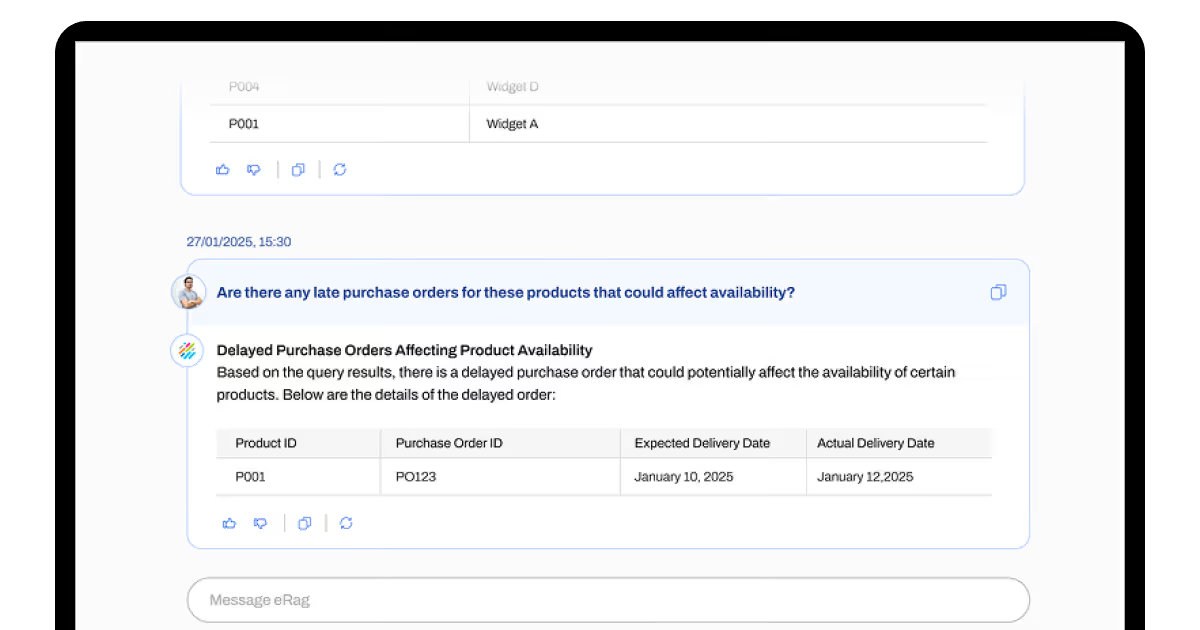
GigaSpaces eRAG. This solution lets anyone ask supply chain questions in plain language. The system retains full conversational context, so follow-up questions build on previous answers rather than starting over. The agentic layer connects to live data sources across your systems, running multi-step analyses automatically. When tariffs change or suppliers adjust lead times, eRAG adapts within minutes. It’s best fo companies tired of waiting days for custom reports or training staff on complex analytics interfaces. The pricing is custom-based on data volume and user count.
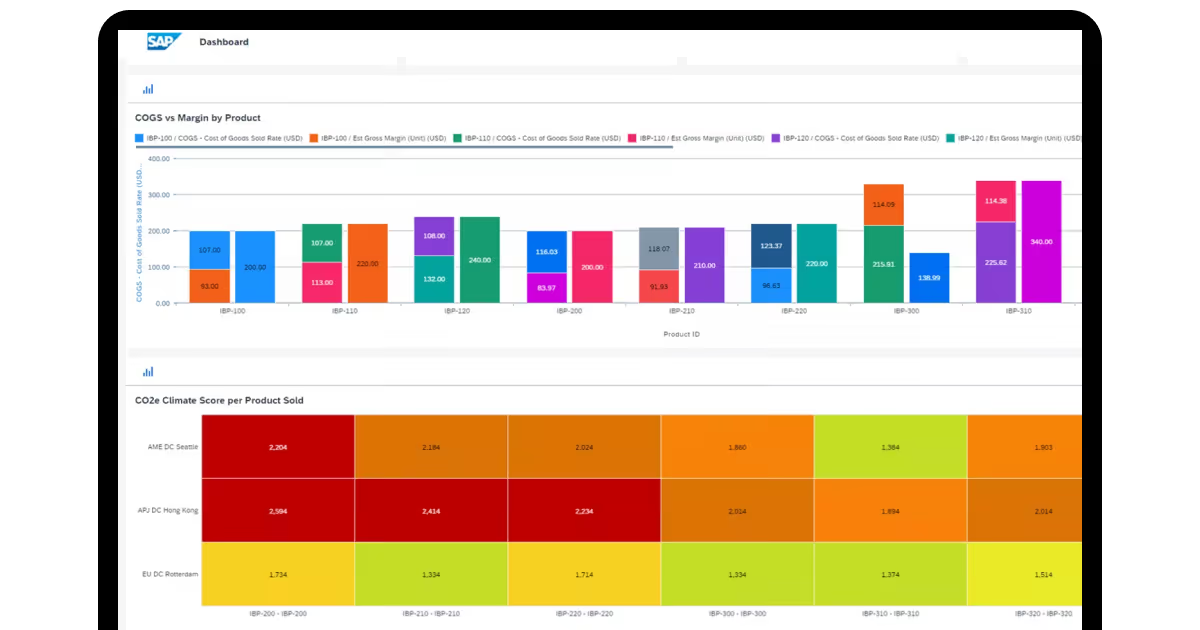
SAP Integrated Business Planning. SAP IBP runs on HANA's in-memory database, enabling scenario modeling across demand, supply, sales, and inventory planning. With this artificial intelligence supply chain management tool, planners can simulate multiple response strategies and see financial impacts. Joule, the AI copilot, translates natural language questions into data queries. The platform excels at connecting supply chain decisions to financial outcomes. Also, integration with existing SAP systems provides seamless data flow. This solution fits large enterprises with complex, multi-region operations. The pricing starts around $25,000 annually for basic modules, while enterprise deployments typically range from $100,000 to $500,000+.
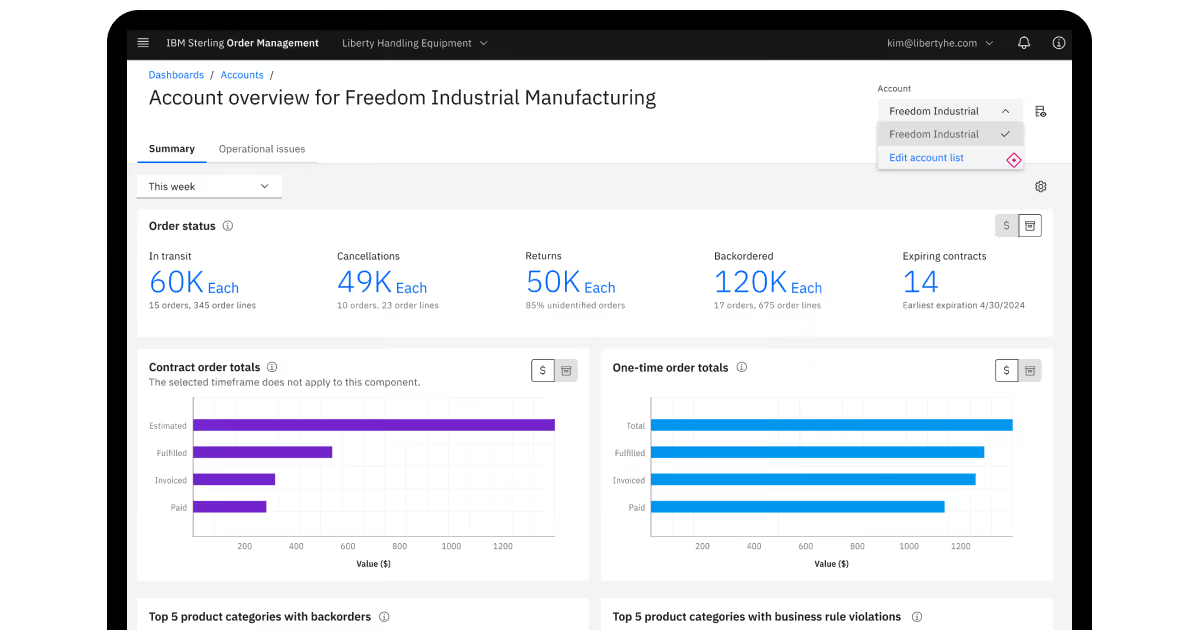
IBM Sterling Supply Chain Solutions. Watsonx Orchestrate acts as a procurement digital assistant, automating supplier onboarding, contract monitoring, and routine purchasing tasks. The Sterling suite covers order fulfillment, inventory management, and partner network coordination. The platform targets companies moving from reactive operations to predictive strategies with advanced AI for supply chain management. Industries like automotive, banking, consumer goods, healthcare, manufacturing, retail, and telecommunications use it to eliminate bottlenecks across complex partner networks. The modular pricing starts around $50,000 annually.
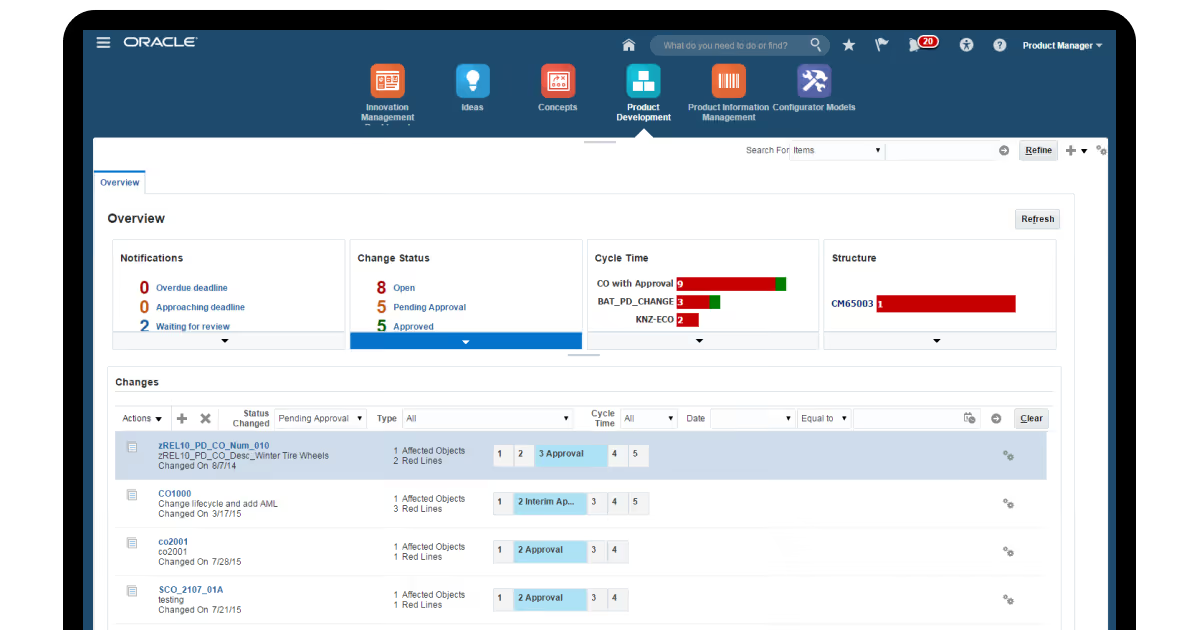
Oracle SCM Cloud. Oracle built role-based AI agents that deliver personalized insights to different users. The platform handles everything from demand sensing to manufacturing execution to transportation management in a unified architecture. Predictive analytics also identifies potential disruptions. Strongest integration with Oracle ERP systems, though APIs connect to other platforms. This tool will fit businesses managing complex global operations across healthcare, retail, financial services, automotive, high-tech, and wholesale distribution. The cloud subscription pricing varies by modules, with typical enterprise deployments range $75,000 to $400,000 annually.
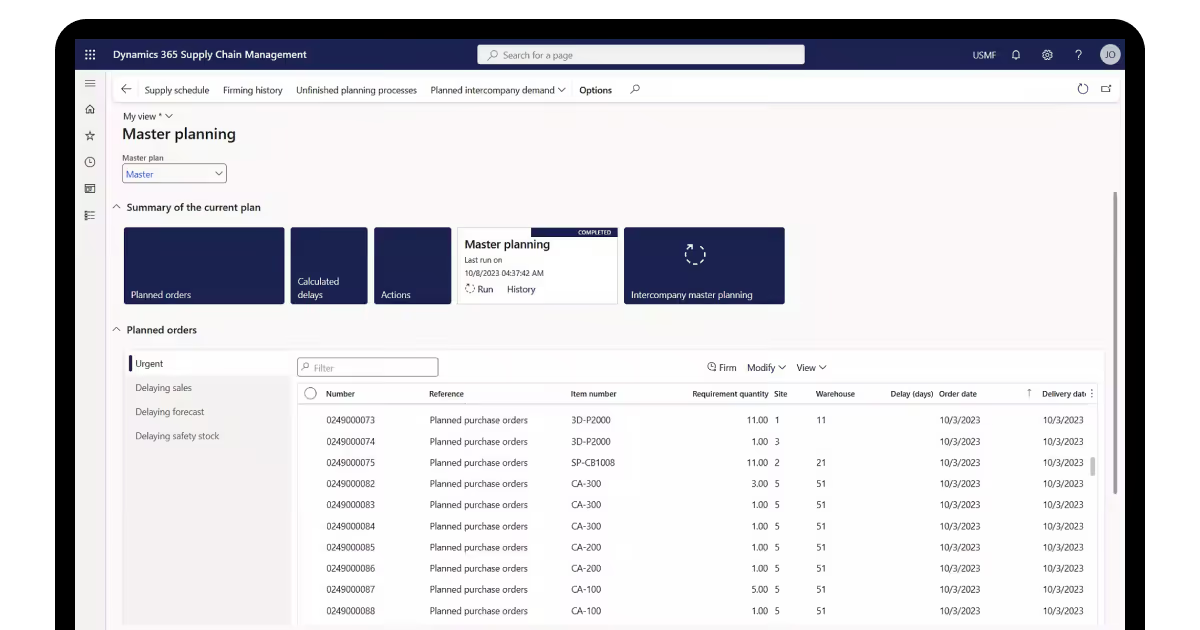
Microsoft Dynamics 365 SCM. The integration of AI and IoT in the supply chain drives Dynamics 365's predictive maintenance. Equipment failures are flagged, cutting unplanned downtime across manufacturing and distribution. Copilot automates inventory placement recommendations and optimizes fulfillment paths. When the AI detects potential stockouts or equipment issues, it can automatically create a Teams workspace, pull in stakeholders from different departments, and share context. Such a setup fits companies using Microsoft tools who want seamless integration across productivity and operations. Pricing plans start around $180 per user per month for basic capabilities.
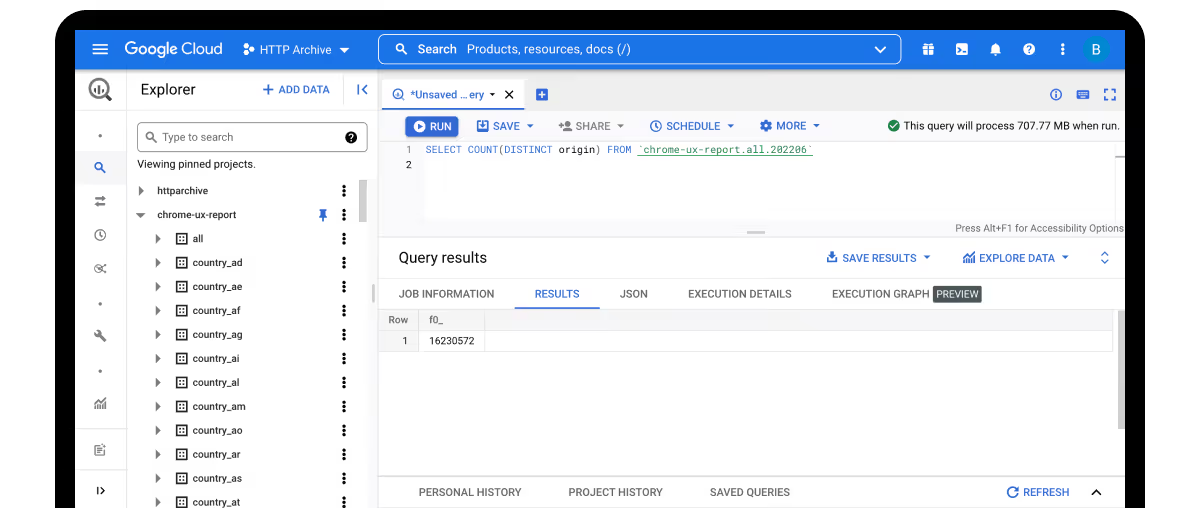
Google Cloud Supply Chain.Google's platform creates a digital twin of your supply chain, layering external data like weather, traffic, and local events onto shipment information. BigQuery handles massive-scale data analysis while Vertex AI enables custom ML models. Visual Inspection AI automates quality control, and Document AI processes logistics paperwork. The platform suits data-driven companies comfortable building custom solutions on Google's infrastructure. The tool has a pay-as-you-go cloud pricing based on compute and storage usage.
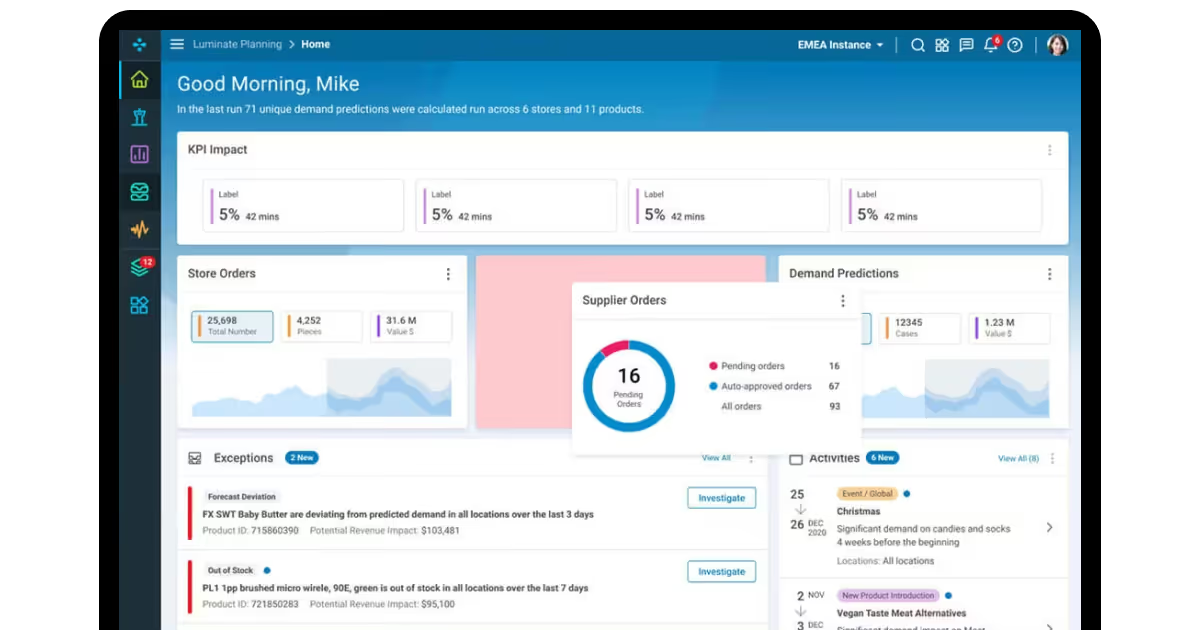
Blue Yonder Cognitive Solutions. Five AI agents handle inventory operations, network optimization, logistics coordination, demand planning, and warehouse management. This AI and supply chain powerhouse processes 25 billion predictions daily, rebalancing inventory, rerouting shipments, and adjusting plans. The cloud platform runs on a unified data model, providing comprehensive visibility for retailers, manufacturers, and logistics providers across apparel, automotive, consumer goods, high-tech, and life sciences. The enterprise pricing starts around $100,000 annually. Large deployments with full agent capabilities range from $250,000 to $1,000,000+ based on transaction volumes.
With this variety of large-scale, powerful AI for supply chain solutions, you may still face a problem. Enterprise platforms deliver full functionality but demand six-figure budgets and complex implementations. Budget tools offer quick wins but lack depth for complexity. Most companies fall somewhere between these extremes, needing capabilities that standard packages cannot provide.
Why you need a custom solution
Standard platforms solve common problems, but your supply chain has unique constraints that they cannot address to bring all the benefits of AI in supply chain for your business. Maybe you source materials from regions with unreliable infrastructure where standard lead time calculations fail. Or in other situations, your contracts include performance penalties tied to metrics that off-the-shelf software does not track.
Custom solutions integrate your actual business rules. A food distributor might need AI that accounts for product shelf life, temperature-controlled routing, and seasonal demand shifts simultaneously. Meanwhile, a construction equipment manufacturer might require models that factor in project timelines, rental agreements, and maintenance schedules. These specific combinations rarely exist in packaged software.
Your data is also usually in systems that vendors did not anticipate. These are frequently legacy ERP platforms, inventory databases, and supplier portals built decades ago. Custom supply chain software implementation connects these sources without migrations to new platforms.
Competitive advantage comes from doing things competitors cannot replicate. If everyone uses the same Blue Yonder or SAP modules, you all optimize toward the same solutions. Custom supply chain AI finds opportunities specific to your operations, supplier relationships, and customer commitments.
Preparing your supply chain for AI: Checklist and best practices
Before you start integrating artificial intelligence in supply chain management, you need to prepare a specific list of tasks to perform to get ready. We compiled a checklist that will help you do it properly.
Data infrastructure.
Audit existing data sources across your ERP, WMS, TMS, supplier portals, and IoT sensors to understand what information you actually have. Identify data quality issues like duplicates, missing fields, and inconsistent formats that will undermine the accuracy of the collaboration of artificial intelligence and the supply chain you have. Establish a single source of truth for critical data types rather than maintaining multiple conflicting versions. Set up data cleansing processes and validation rules that run continuously. Break down departmental data silos by standardizing formats across systems and documenting who owns each data type.
Technical readiness.
Assess current IT infrastructure capacity to handle AI workloads and determine whether cloud or on-premises deployment makes sense for your operations. Review API availability for key systems since supply chain artificial intelligence platforms need programmatic access to your data. Test integration points between platforms before committing to any solution to avoid incompatibilities mid-implementation. Verify security protocols meet AI requirements and ensure compliance with data privacy regulations in all regions where you operate. Plan for GPU and compute resources if you are deploying models that require significant processing power.
Team preparation.
Identify AI champions within your teams who understand both the technology and your business operations. Assess current skill gaps and develop training programs for new tools. Create a change management communication plan that addresses employee concerns about automation and job security. Define clear roles and responsibilities for AI oversight so someone owns the technology's performance. Establish human review protocols for AI decisions, especially in early deployment stages. Set up feedback loops for continuous improvement where employees can report when AI recommendations seem wrong.
Use case selection.
List the pain points AI could address in your operations, then prioritize by potential ROI and implementation difficulty. Start with one or a few high-value, achievable AI use cases in the supply chain rather than trying to improve everything simultaneously. Define success metrics for your pilot project upfront so you can measure actual results. Set realistic timeline expectations, define stakeholders for each use case, and get their buy-in before starting.
Vendor evaluation.
Request demos with your actual data. Ask for customer references in similar industries and actually call them to learn about implementation challenges. Review integration capabilities with your existing systems in detail since compatibility problems sink projects. Understand the full pricing structure, including hidden costs for implementation, training, and ongoing support. Check the vendor's financial stability and longevity because you need a partner who will support the system for years. Finally, negotiate data ownership terms explicitly to avoid surprises.
Governance framework.
Establish AI decision approval thresholds that define when automation can act independently versus when humans must review. Create escalation procedures in case your artificial intelligence supply chain tool fails, so teams know exactly what to do when predictions go wrong. Define data access and privacy policies that specify who can see what information and how AI can use it. Set up audit trails for AI recommendations so you can trace back through decisions when investigating problems. Document bias testing procedures to regularly check whether your models treat different suppliers, regions, or products fairly.
This checklist will help you get ready for the basics, the implementation process itself, and getting the post-launch clarity that your AI won’t cause more troubles than it’s trying to solve. However, there are even more ways to ensure success - and we’ve gathered them based on our experience.
Expert insights from 15 years of implementation
After building supply chain systems with a diverse technology backbone, we've learned what separates successful AI deployments from expensive failures.
Start with process documentation, not technology. Most companies jump straight to evaluating AI platforms. This creates a problem: you cannot automate or optimize processes you have not defined. Before considering any AI in supply chain examples of solutions we outlined, record what procurement actually does when suppliers miss deadlines. Capture the workarounds your logistics team invented to handle edge cases. That knowledge needs to become explicit rules in your AI system, or you will lose it.
Build feedback loops before deploying models. AI models degrade over time as market conditions shift. The demand forecasting algorithm that worked perfectly in 2025 might fail when inflation spikes or competitors change pricing strategies in 2026-2027. Most companies only realize this when customers complain about stockouts.
Set up monitoring systems that track model performance continuously. Compare the predictions your supply chain AI tool does against actual outcomes daily, not quarterly. When forecast accuracy drops below your threshold, trigger an alert for immediate investigation. This requires cultural change. Employees need permission to question AI outputs without feeling like they are resisting innovation.
Integrate gradually, not all at once. Pick one narrow use case, implement it fully, prove value, and only then expand. If demand forecasting is your priority, get that working across a single product category or region first. Once it delivers measurable improvements and your team trusts it, expand to other categories. This approach also helps with change management. Early wins build organizational confidence.
Plan for the data you do not have yet. Standard platforms for AI in supply chain management assume you have clean historical data on everything they need. In reality, you might have five years of sales data but only six months of supplier lead times. Identify these gaps early and start collecting missing data immediately, even if you cannot use it yet. In parallel, work with AI systems flexible enough to function with incomplete information. Probabilistic models can make reasonable predictions despite data gaps, improving as more information becomes available.
Treat AI as a team member, not a replacement. The most successful deployments are when AI is seen as augmentation, not automation. Experienced planners review AI recommendations and apply judgment that the algorithm cannot replicate. For instance, they remember that last year's promotion drove unexpected demand that the model would not predict. Structure your workflows to combine AI efficiency with human expertise. Let algorithms handle routine decisions and calculations. Humans focus on exceptions, relationships, and strategic choices.
These insights come from 15 years of supply chain software development services for companies dealing with real-world complexity. We have seen what works and what fails when integrating AI into existing operations.
Our approach starts with research. Our thorough research phase uncovers the constraints and opportunities in your supply chain. From there, we build custom integrations connecting your existing systems, develop AI models tuned to your data patterns, or create entirely new platforms from scratch. Sometimes the best solution involves rethinking legacy systems that have accumulated workarounds over decades.
Development does not end at deployment. We provide ongoing support and model tuning as your business evolves. Supply chains change constantly. To bring AI and supply chain management to a common success, your systems need to change with the real-world conditions, which requires partners who stick around rather than disappearing after launch.
Whether you need intelligent demand forecasting, automated inventory optimization, or predictive logistics planning, we build solutions fitted to your operations.
FAQ
What is the likely future of AI in the supply chain?
AI will enable autonomous supply chains where systems predict disruptions, execute decisions, and adapt without human intervention. According to Lin and Zhang, AI enhances supply chain resilience through improved information transparency and dynamic capabilities. Expect widespread agentic AI deployment, digital twins simulating entire networks, and integration with quantum computing for optimization problems currently unsolvable at scale.
What are the applications of AI in SCM for small and medium businesses?
Small businesses use AI for demand forecasting, analyzing sales patterns and social media signals, real-time inventory tracking that adjusts reorder points automatically, and route optimization, reducing transportation costs. McKinsey research shows AI implementation can reduce inventory by 20 to 30% while improving cash flow. Automated procurement and supplier risk monitoring help SMEs compete effectively.
What AI in supply chain use cases should I apply for the fastest tangible results?
Prioritize demand forecasting using historical data to align supply with demand immediately, optimize inventory to reduce costs, and optimize routes to lower transportation expenses. Shamsuddoha and team emphasize that predictive maintenance with IoT sensors reduces unplanned downtime by 40 percent. These applications convert existing data into actionable insights rapidly.
How does COAX implement secure and efficient supply chain artificial intelligence?
COAX holds ISO/IEC 27001:2022 certification for comprehensive security management and risk assessment, plus ISO 9001 certification ensuring optimal quality processes. We implement AI with encrypted data pipelines, role-based access controls, and continuous monitoring systems. Our solutions integrate securely with existing infrastructure while maintaining audit trails, ensuring both operational efficiency and regulatory compliance throughout implementation.







































































_.avif)










%2520explained.avif)

We are interested in your opinion