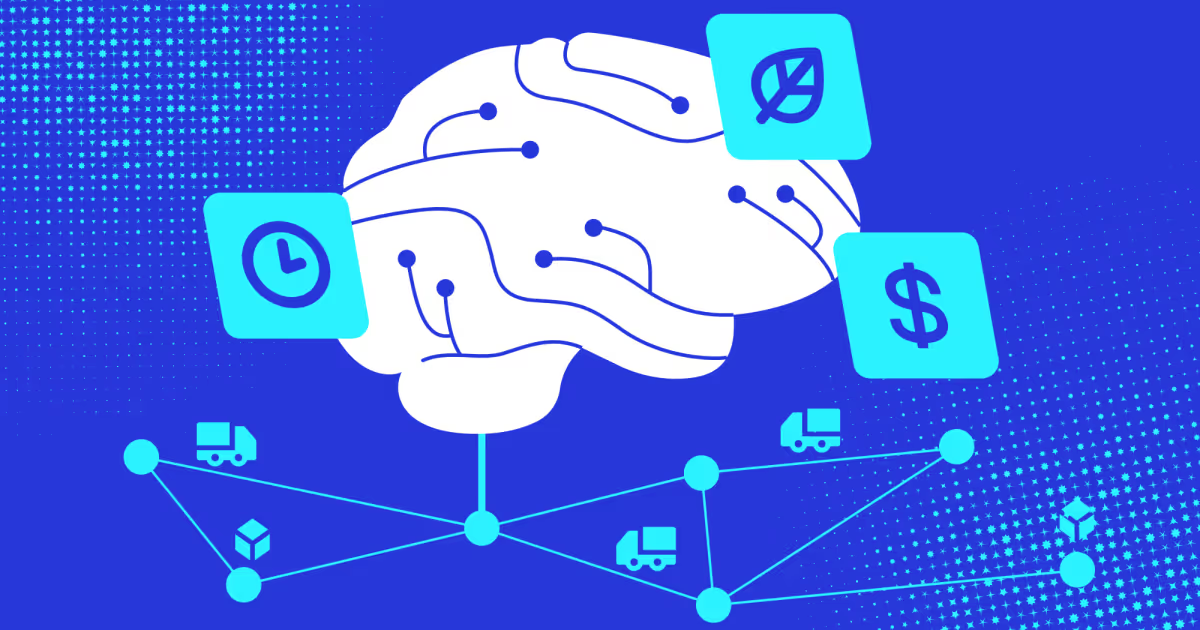
The digital, connected, and smart logistics isn’t possible without AI nowadays. Implementing AI in the logistics industry helps you outperform competitors, solve operational problems, cut fuel costs and vehicle downtime, prevent costly repairs, and avoid supply chain disruptions through these significant factors:
Predictive analytics and demand forecasting that reduce both overstocking and stockouts.
Computer vision systems that enable automated inspection and safety monitoring in warehouses.
NLP tools that power 24/7 chatbots, automate document processing, and scan for early risk warnings.
Reinforcement learning algorithms that adapt routes to real-time conditions.
Automation and robotics that handle picking, packing, and sorting tasks.
Fleet management and predictive maintenance that reduce downtime, cut maintenance costs, and prevent breakdowns.
Extended demand forecasting that expands prediction windows for capacity planning and proactive disruption responses.
In this article, we will outline how to use AI in logistics, break down its main use cases, technology types, and challenges to overcome, and help you build your logistics AI roadmap.
Why do AI and ML matter in modern logistics?
The sector is changing a lot these days. Now, 67% of decision makers intend to use AI in logistics within five years, and two-thirds believe it will be very important for their businesses. It's an acknowledgment of what technology already provides.
In logistics operations, AI can reduce operating costs by as much as 50%. Also, AI helps businesses cut logistics expenses by 15%, according to McKinsey. These savings are significant for a sector with narrow profit margins.
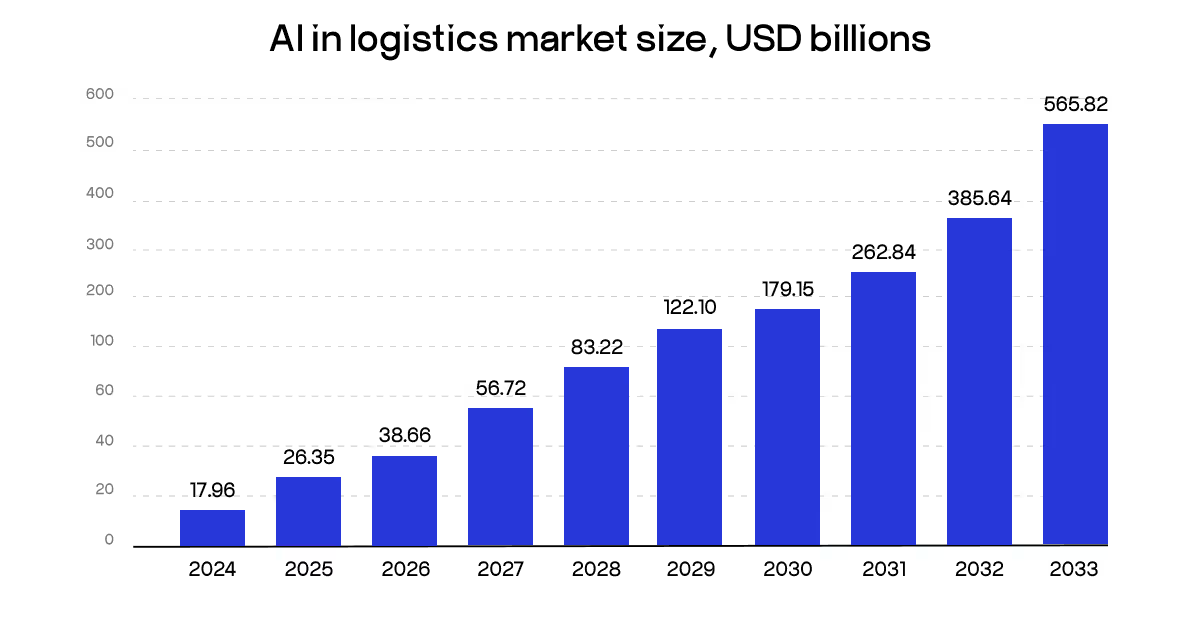
Technology is seen as a competitive advantage by 61% of logistics executives, and the best thing is that they’re right. AI and data science will be integrated into the platforms of 75% of supply chain management vendors by 2026. Through 2028, the supply chain AI market is expected to grow at a rate of 20.5% per year. You can't wait out on this trend.
Adoption is being driven by useful applications. Because these areas yield fast results, businesses concentrate on risk management, freight optimization, and workflow automation. What’s the result? Previously taking hours, route planning now takes only a few minutes. Rough estimates of demand turn into precise forecasts. Data now powers warehouse operations that once relied on intuition.
What matters most, though, is that early adopters are making progress. While 19% of businesses currently employ AI in logistics, most are still in the planning stages. Some people benefit from that gap, while others are put at risk. Will your business catch up? It depends on the challenges you choose to solve with AI.
What logistics challenges does AI help solve?
To understand how you can benefit from AI in logistics operations, you need to define the pain points that stall your growth, and then find a way to implement the technology correctly. Let’s start with how it works for each problem.
Accuracy of demand forecasting
Conventional forecasting techniques struggle with shifting consumer behavior and unstable markets. To more accurately forecast demand, AI algorithms examine past sales, seasonal patterns, meteorological information, and market trends. Businesses that use AI to forecast demand report 8-10% accuracy gains over traditional techniques.
This is important because inaccurate forecasts lead to a series of issues. Overstocking increases waste and ties up capital. Customers become irate, and sales are lost as a result of understocking. Improved forecasts reduce both scenarios by ensuring that warehouses have the right products at the right time.
Route optimization and efficiency of delivery
Drivers face traffic, weather delays, and constantly changing delivery schedules. Logistics and AI work amazingly together to solve this problem - AI processes real-time traffic data, delivery priorities, and vehicle capacity to calculate optimal routes on the fly.
The savings extend beyond fuel. Companies using AI for route optimization cut operational costs by 10 to 30% while reducing mileage by 15%. Delivery density increases as algorithms pack more stops into efficient routes. The result is faster deliveries at lower cost with reduced environmental impact.
Better management of inventory
Even very experienced managers find it difficult to maintain ideal stock levels across several locations. AI automatically places replenishment orders, keeps track of inventory in real time, and forecasts when items will run out. Businesses that use AI-driven inventory systems see a 12% decrease in inventory holdings and a 40% increase in stock accuracy.
Patterns are how the system learns. AI modifies stock distribution if a product sells more quickly in particular areas or at particular times. This keeps one warehouse from overflowing while another is empty. AI reduces waste by making sure products are shipped before their expiration dates, which is especially advantageous for perishable goods.
The cost of last-mile delivery
The final leg of delivery accounts for over 50% of total shipping costs. Urban congestion, failed delivery attempts, and scattered delivery points make this stage expensive and inefficient.
Artificial intelligence in logistics tackles this through several approaches:
Dynamic routing that adapts to real-time conditions
Delivery time predictions that reduce failed attempts
Optimal assignment of packages to delivery personnel based on location and capacity
Identification of the most cost-effective delivery methods for each package
AI is used by some businesses to forecast when clients will be at home and plan deliveries appropriately. Others use algorithms to assess each shipment's economic viability in terms of drone delivery, locker pickup, or conventional delivery.
Warehouse operations and labor shortages
There are notable labor shortages in the logistics industry. 61% of transportation and 56% of warehouse operations report understaffing, which affected 76% of logistics companies. These facilities manage increasing order volumes with more constrained delivery windows at the same time.
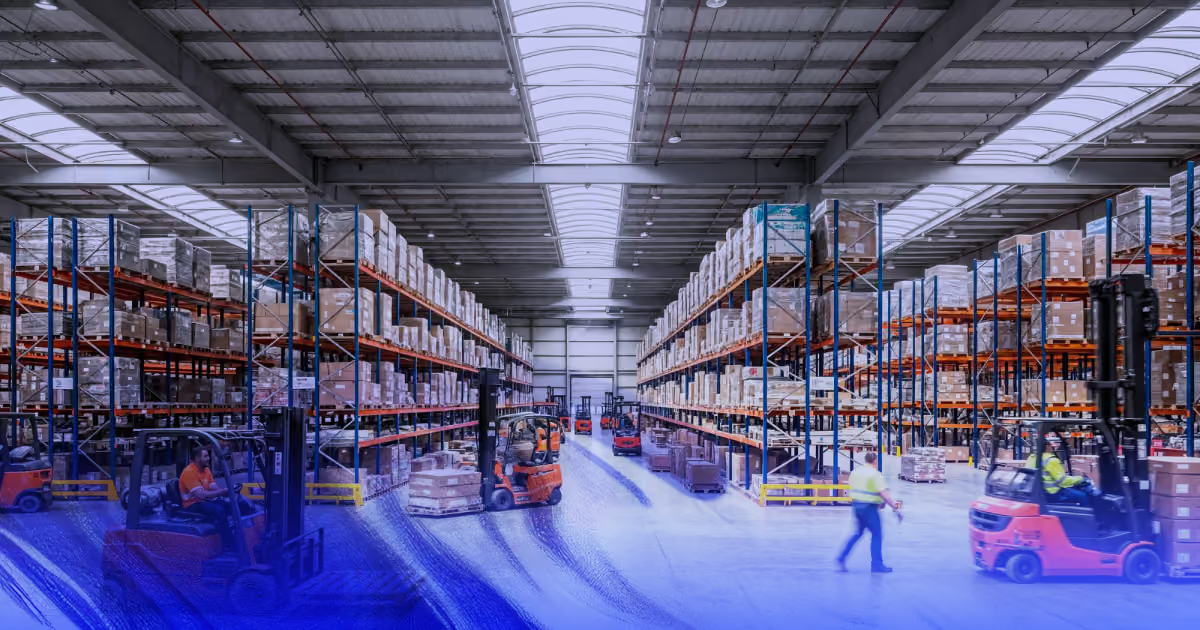
Logistics AI warehouse automation addresses this through robotic systems that handle picking, packing, and sorting. Computer vision guides robots to identify and grasp items of varying shapes and sizes. ML optimizes warehouse layouts based on product movement patterns. Early adopters of warehouse automation achieve fulfillment accuracy rates exceeding 99.5%.
These systems work alongside human workers rather than replacing them entirely. Employees focus on exception handling, quality control, and tasks requiring judgment while robots handle repetitive physical work.
Better transparency of the supply chain
Outside of their direct suppliers, 45% of businesses have little to no visibility. Businesses are caught off guard when disruptions happen upstream or downstream. Capacity limitations, quality problems, and delayed shipments go unnoticed until they become emergencies.
AI tracking systems use information from GPS, IoT sensors, and shipping manifests to keep an eye on shipments throughout the supply chain. Anomalies that indicate possible delays are found by machine learning algorithms. Businesses are able to reroute shipments, modify production schedules, or proactively notify customers when they receive early warning of disruptions.
Predictive maintenance
Traditional maintenance follows fixed schedules, servicing equipment whether it needs attention or not. This wastes resources on unnecessary maintenance while missing developing problems.
Artificial intelligence logistics solutions analyze sensor data from vehicles and equipment to predict failures before they occur. The system learns normal operating patterns and flags deviations that indicate wear or malfunction. Studies show AI-enhanced predictive maintenance cuts maintenance costs by 10 to 40%, and decreases equipment downtime by up to 50%.
This is used by logistics firms for sorting equipment, warehouses, and fleets. Instead of following arbitrary schedules, maintenance is done as needed. Longer equipment lifespans and planned downtime, as opposed to mid-shift emergencies, are used for repairs.
Risk management and disruption response
According to McKinsey, every 3.7 years, supply chains experience disruptions that last longer than a month. Uncertainty is always present due to market volatility, natural disasters, and geopolitical tensions.
AI logistics systems keep an eye on thousands of data sources, such as social media, news feeds, weather forecasts, and shipping information, in order to spot new threats. The technology uses sentiment analysis to identify changes in regulations, port congestion, or labor unrest. AI models simulate situations and suggest ways to respond to disruptions.
Companies using AI for risk management respond faster to changing conditions. They maintain backup supplier relationships, hold strategic safety stock, and adjust shipping routes based on risk assessments rather than reacting after problems materialize.
Core AI and ML technologies used in logistics
Now that we understand we can solve common business problems, let’s focus on the specific technologies - AI machine learning in the logistics industry - and how to apply it.
Predictive analytics
Predictive analytics services and tools forecast future events using machine learning, statistical algorithms, and historical data. The technology looks at historical trends in addition to current elements like weather, seasonal patterns, and economic indicators. Businesses like Amazon and Walmart use machine learning algorithms to forecast consumer demand and maintain ideal stock levels, resulting in stockouts of less than 5% and a 25% cut in inventory holding costs.
Predictive analytics yields quantifiable outcomes across logistics functions, as Mehta's research shows. DHL used AI-based dynamic route optimization to cut fuel costs by 15% and shorten urban delivery times by 12%. Predictive modeling reduced order processing variability in warehouse operations by 15%. The approach transforms three types of analysis:
Descriptive analytics examines historical data to identify trends.
Predictive analytics forecasts likely outcomes based on existing patterns.
Prescriptive analytics suggests actionable steps, like recommending route changes before traffic congestion hits.
Combining these methods with inventory tracking helps you maintain optimal levels across warehouses while reducing holding costs.
Computer vision
Computer vision enables machines to interpret visual data from cameras and sensors. The technology processes images and videos through deep learning algorithms, particularly convolutional neural networks, to recognize objects, detect anomalies, and guide automated systems. According to DHL's research, in less than ten years, the technology's object identification accuracy has increased from 50% to 99%.
Computer vision also directs robotic picking and packing arms in warehouses. Amazon's robotic systems achieve fulfillment accuracy rates above 99.5% by using cameras to recognize products of different sizes and shapes.
Conveyor belts with high-speed camera arrays are used for package inspection. To identify dents, rips, and damage, DHL employs vision-based systems created in collaboration with Cognex that integrate 2D and 3D cameras. Similar technology is used by FedEx to evaluate packages while they are in transit and reserve damaged items for repackaging.
Safety applications include monitoring workers near dangerous equipment. Cameras detect when employees enter restricted zones, triggering automatic slowdowns or shutoffs of nearby machinery. Autonomous vehicles and drones rely on computer vision for navigation, using stereo vision for depth perception and object tracking to avoid collisions, demonstrating AI in transportation.
Natural Language Processing
Computers can comprehend, interpret, and produce human language thanks to natural language processing. NLP is used in logistics to extract information from unstructured text sources, such as news feeds, emails, shipping documents, and customer reviews.
By analyzing survey responses to find trends and sentiment, Garg and colleagues show how NLP evaluates employee input in logistics companies. Businesses can better understand employee concerns and increase engagement with the use of technology.
NLP-powered chatbots offer round-the-clock customer support. These systems use natural dialogue to schedule pickups, respond to inquiries about shipment tracking, and address common problems.
Document processing is another valuable application. Logistics handles numerous time-sensitive papers, including bills of lading, customs forms, and delivery receipts. NLP automates data extraction from these documents, reducing processing time and minimizing errors from manual data entry.
Risk monitoring uses NLP to scan news articles, social media, and supplier communications for early warning signals. For instance, Maersk monitors maritime news feeds with NLP to predict port congestion risks up to two weeks earlier than manual reports, showcasing the role of artificial intelligence in logistics.
Reinforcement learning
Reinforcement learning trains algorithms to make sequential decisions by learning from trial and error. The system receives rewards for good decisions and penalties for poor ones, gradually improving its strategy without explicit programming for every scenario.
Yan and colleagues explain that RL excels at problems involving large state spaces and system uncertainties, making it well-suited for complex logistics operations. The technology has gained popularity as computing power and data availability have increased.
Route optimization benefits significantly from RL. Unlike traditional methods that calculate routes once, RL continuously adapts to changing traffic, weather, and delivery priorities. The algorithms balance multiple objectives simultaneously, like minimizing fuel consumption while meeting delivery windows and avoiding congested areas.
Inventory management applies RL to determine optimal reorder points and quantities across multiple locations. The system learns demand patterns and adjusts stock levels dynamically rather than following fixed rules. This proves especially valuable for products with volatile demand or short shelf lives, representing one of many AI in logistics examples.
Warehouse robotics uses RL for navigation and task allocation. Robots learn efficient paths through facilities, adapting when layouts change or obstacles appear. The technology enables coordination among multiple autonomous vehicles without central control, reducing bottlenecks and improving throughput. Amazon employs RL in warehouse operations where robots learn to optimize product placement and retrieval strategies based on order patterns.
Automation and robotics
Robots handle physical logistics tasks without human labor. They pick products from shelves, move pallets across warehouses, sort packages, and load trucks. The technology combines sensors, actuators, and AI algorithms. For instance, warehouse automation cuts labor costs by up to 70% while boosting overall productivity.
Autonomous mobile robots navigate warehouse floors using lidar and camera systems. They transport goods between stations without following fixed paths or requiring infrastructure changes. Robotic arms with gripper systems pick items of varying sizes and weights.
For example, Boston Dynamics developed Stretch, a robot designed specifically for truck unloading. It uses computer vision to identify boxes, then lifts and moves them at rates matching or exceeding human workers. It can work up to 16 hours straight, moving as many as 12800 items in that time. However, the technology works best when paired with human oversight, which lets warehouses run 24/7 operations without burning out staff. These applications demonstrate the power of machine learning for logistics in automating complex physical tasks.
Practical use cases of AI across logistics operations
Now, let’s move from theory to practice and understand how to use AI in the logistics industry to cover specific applications that improve your business greatly.
Fleet management and predictive maintenance
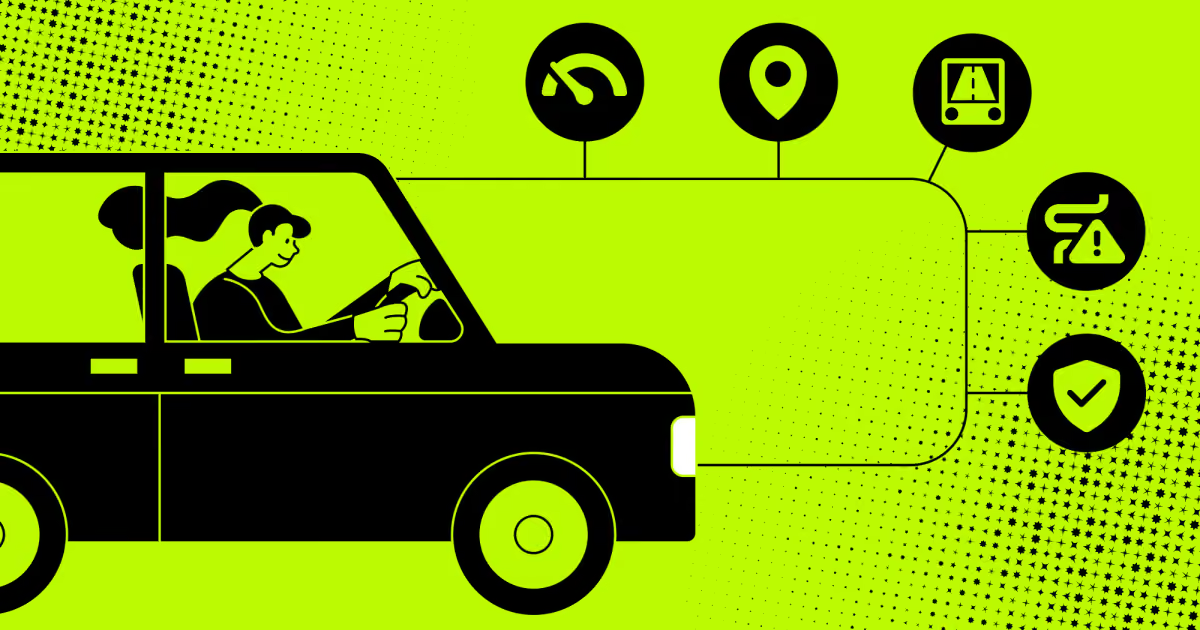
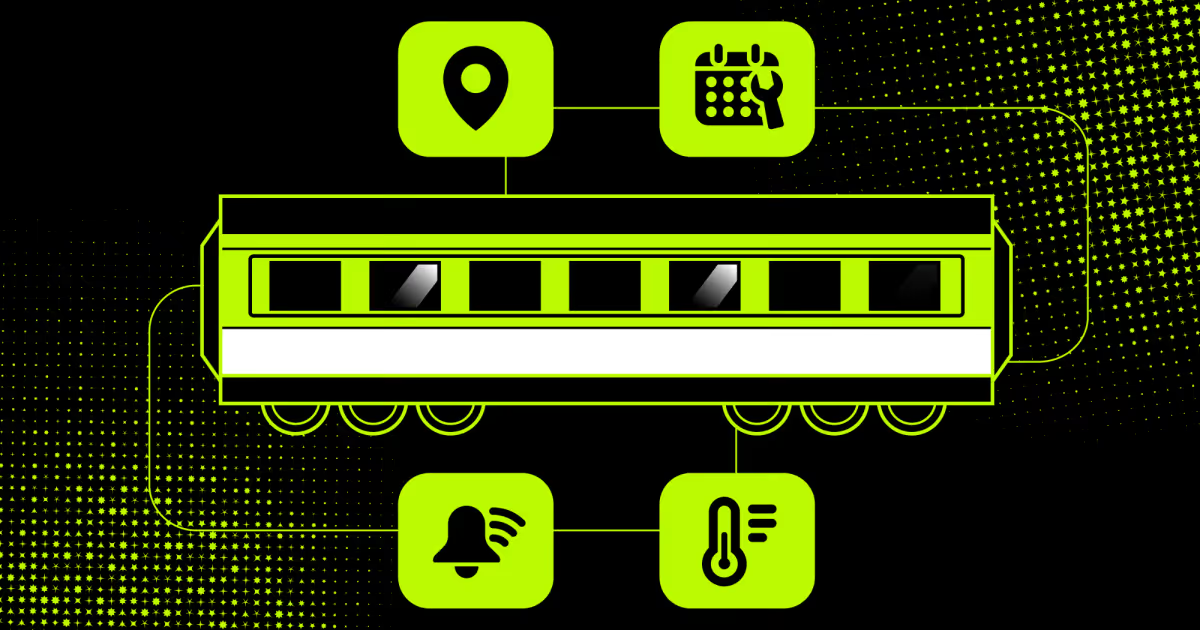
Artificial Intelligence is now used to identify potential failures before they occur by constantly monitoring the condition of vehicles. Sensors are used to monitor current performance data, including engine performance, tire pressure, fluid levels, and brake wear. Machine learning algorithms then utilize this data to determine when maintenance is required, as opposed to on a regular maintenance schedule.
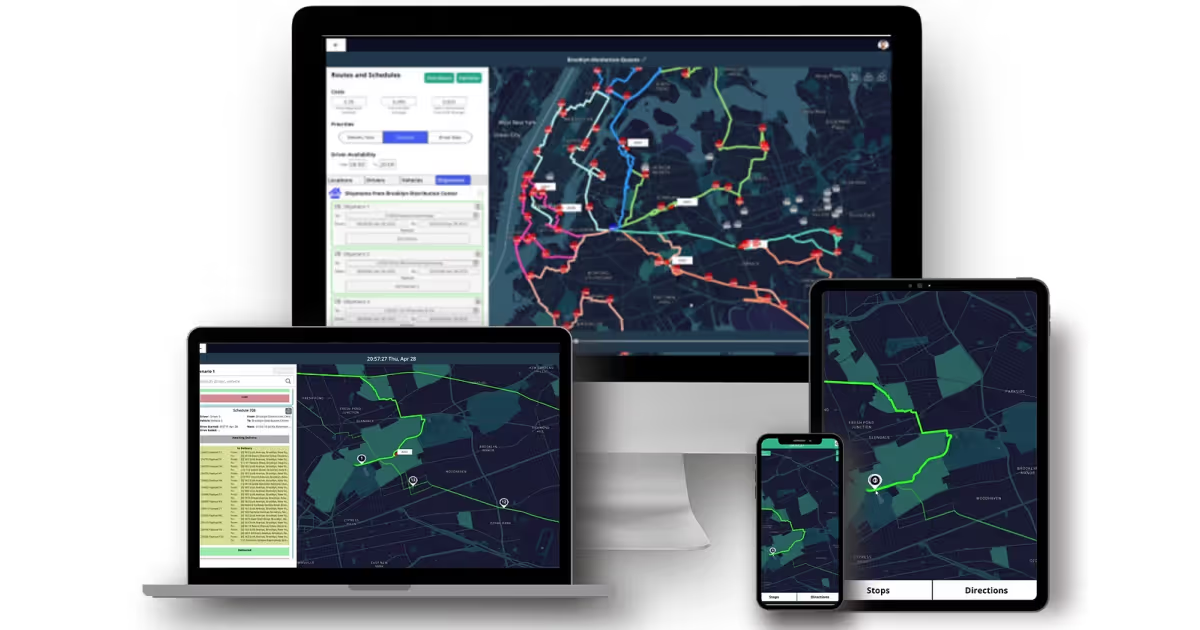
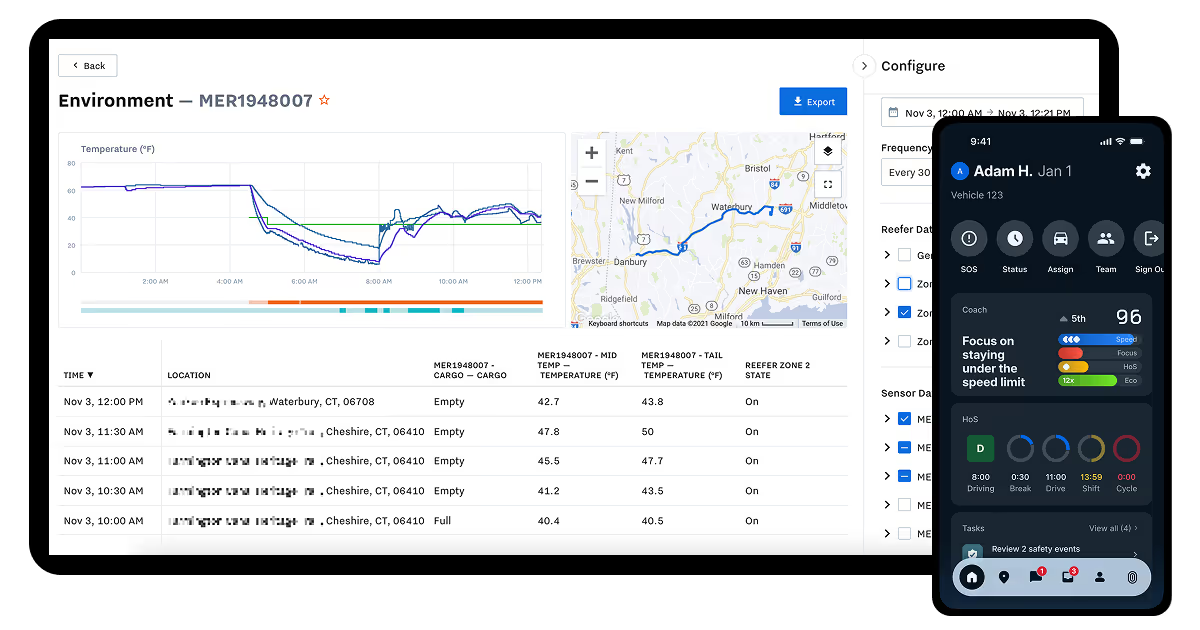
V2T Logistics AI offers the capability of monitoring the real-time location of vehicles while optimizing routes through automated route optimization for multi-depot operations.
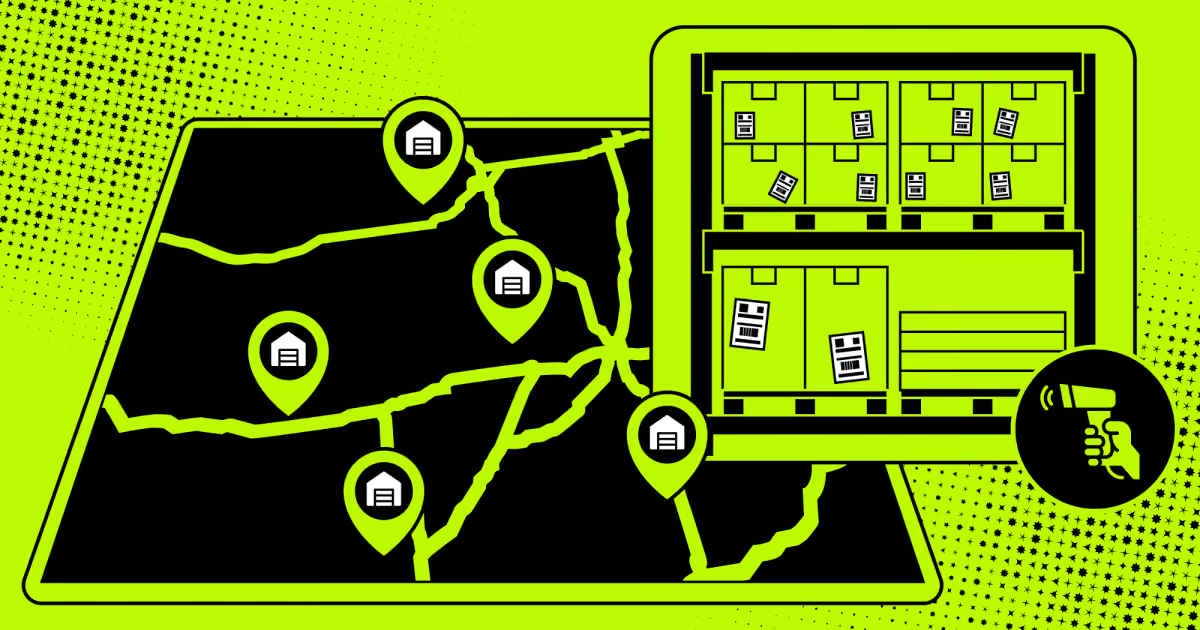
Scandit offers an excellent means of using visual recognition software to capture data on a smartphone, allowing fleet managers to monitor and track the location of fleet assets or inventory without the added cost and investment in costly scanning devices.
V2T Logistics AI
DHL utilized machine learning in monitoring their fleet, which has allowed for a 35% decrease in unscheduled downtime and a 25% reduction in maintenance expenses. The machine learning algorithms are capable of identifying vehicles that may be exhibiting early warning signs of impending failures and allowing the mechanics to make repairs at scheduled service intervals rather than having to respond to breakdowns on the road.
Maersk uses predictive maintenance similar to DHL, and it has resulted in a reduction of approximately 30% of their maintenance downtime. Maersk’s predictive maintenance utilizes data from the engine, environmental conditions, and route information to schedule optimal times for servicing the engine and enhancing on-time arrivals. These applications represent compelling AI use cases in logistics that deliver measurable operational benefits.
Temperature-controlled shipping
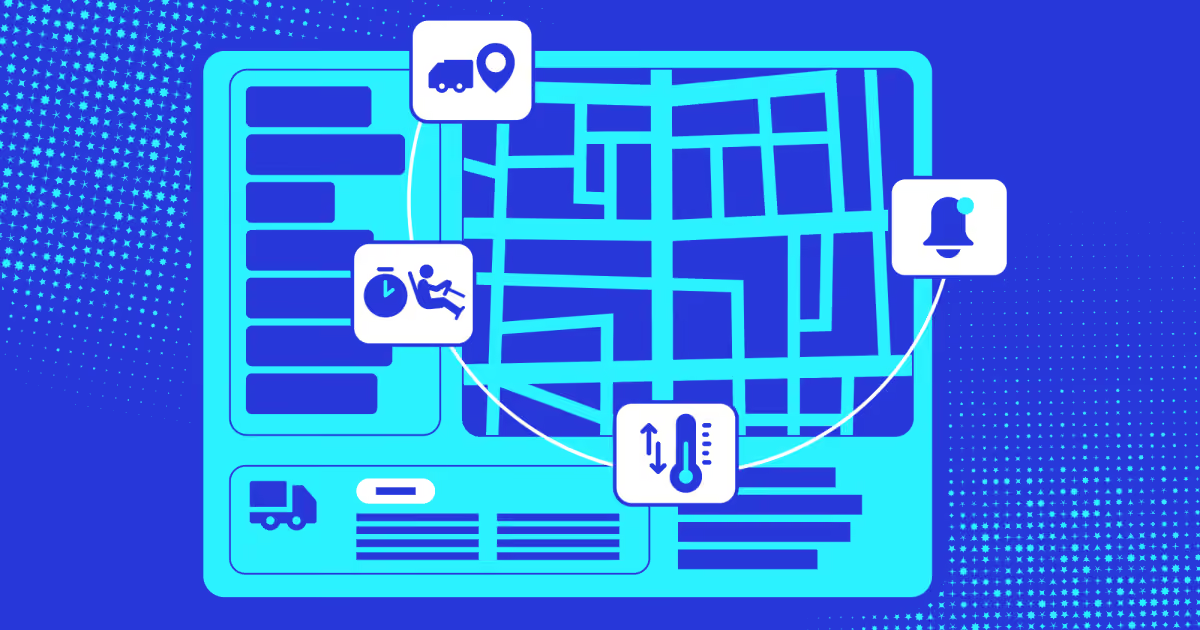
Refrigerated containers require constant monitoring to prevent spoilage of food and pharmaceuticals. AI systems track temperature, humidity, and other environmental factors throughout the journey. When readings deviate from safe ranges, the system immediately alerts managers who can take corrective action.
The technology prevents costly losses. A single container of spoiled pharmaceuticals can cost hundreds of thousands of dollars. Early warnings let logistics teams reroute shipments, adjust cooling settings, or expedite delivery before products are damaged. You can try the following tools:
FedEx Surround provides real-time shipment tracking with predictive delay alerts, letting teams intervene dynamically to protect time-sensitive cargo.
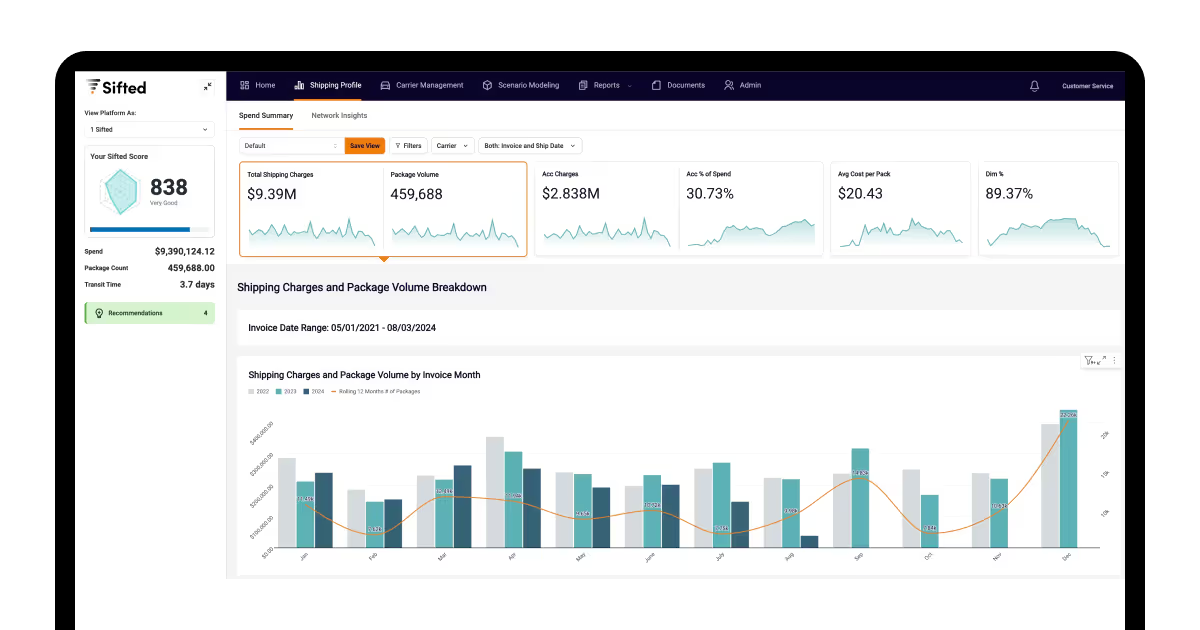
Sifted Logistics Intelligence delivers AI-powered insights for shipping lane optimization, helping cold chain operators choose the most reliable routes.
Shipsy uses machine learning for real-time tracking and automated workflows, giving businesses proactive control over temperature-sensitive shipments.
Sifted Logistics
As one of the examples of AI in logistics, Maersk's generative AI monitors refrigerated containers for over 3,600 companies. The system detects temperature deviations early, minimizing spoilage losses. It also simulates weather and port conditions to optimize routes for sensitive cargo, ensuring products arrive in proper condition.
Dynamic route optimization
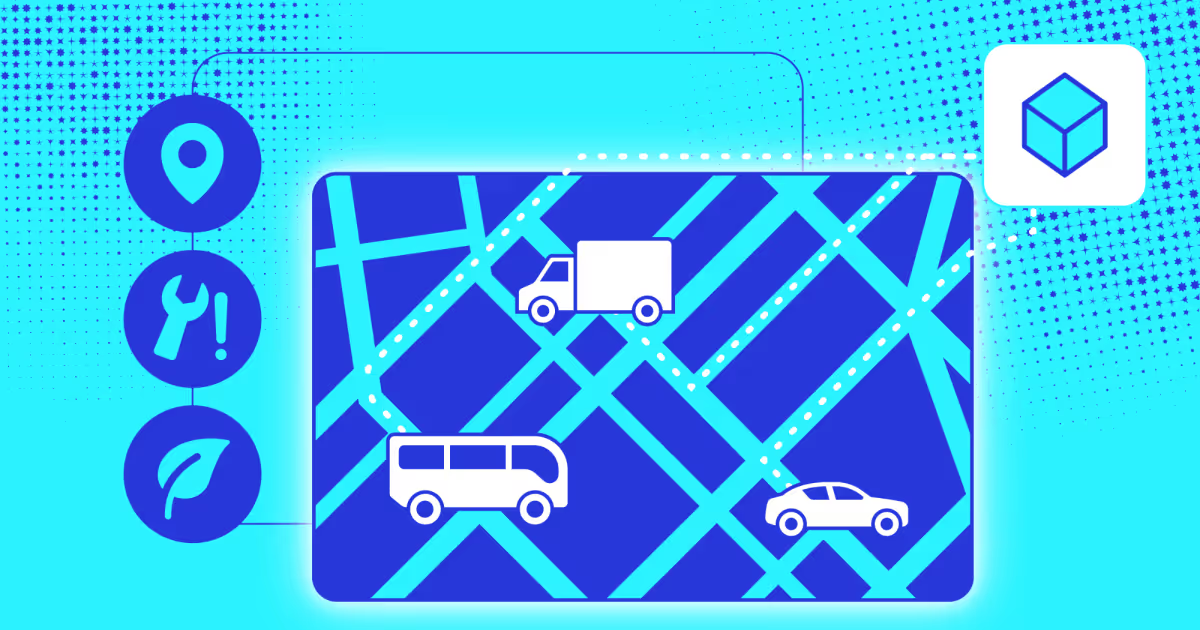
Constantly evolving traffic patterns, as well as changing weather, impact delivery routes and delivery priorities daily. As traffic, road conditions, and changing circumstances impact the delivery process, technologically advanced computer programs utilise complex algorithms to calculate the optimal route at any point in time. This optimised route can, and will, change as the daily circumstances change.
We can suggest such tools for route optimization:
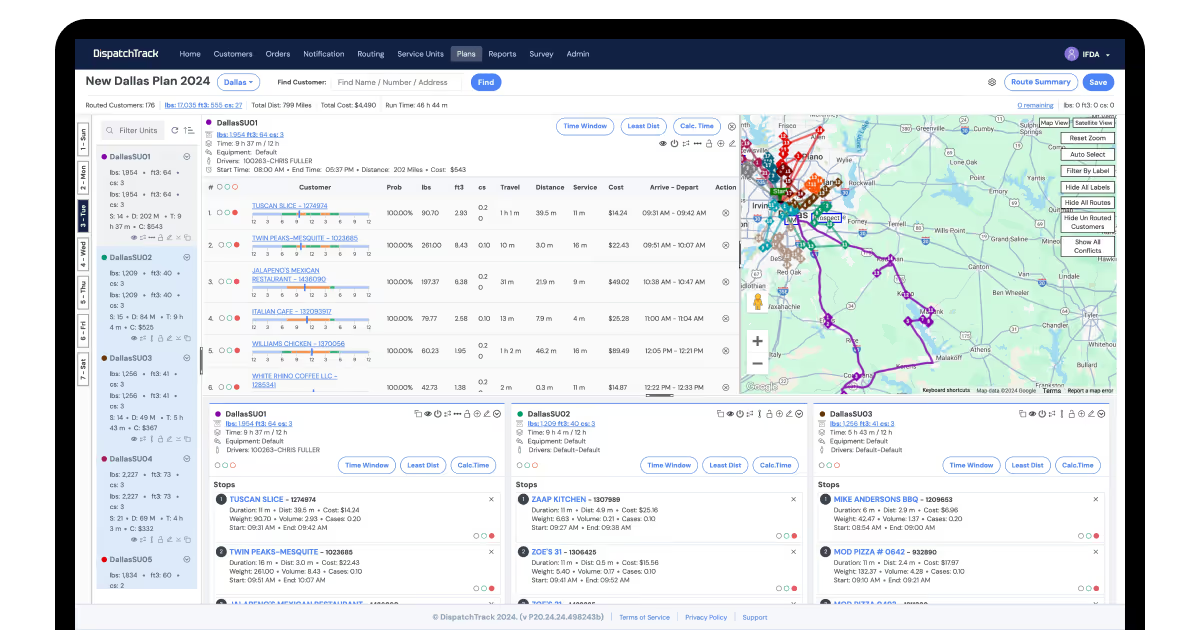
DispatchTrack specializes in last-mile delivery with AI-powered routing that achieves up to 98% ETA accuracy, improving customer trust through delivery transparency.
Elogii handles real-time route re-optimization for high-volume operations, offering dynamic adjustments and scenario simulations for fleet planning.
Onfleet combines AI route optimization with driver tracking and customer communication, providing live ETA updates through an intuitive management dashboard.
DispatchTrack
What is an example of AI in logistics in this use case? Walmart’s own proprietary system continuously calculates the optimal delivery route for their drivers, while at the same time maximising the weight each truck carries, while also minimising the number of miles driven by their trucks and ultimately saving 94 million pounds of CO2 emitted into the environment due to 30 million fewer miles driven.
UPS has developed routing algorithms to optimise route planning and routing decisions for more than 55,000 vehicles using current data regarding traffic, weather, and road conditions when calculating the optimal route to be driven. Their ORION system saves millions of miles annually and improves the efficiency of their delivery services due to its ability to change driver routes dynamically as the situation changes. UPS saves 10 million gallons of fuel annually with it.
Extended demand forecasting
Short-term forecasts miss market shifts that unfold over months. AI extends prediction windows by analyzing historical patterns, market trends, and collaborative data across supply chain partners. This helps companies plan capacity, negotiate contracts, and allocate resources months in advance.
You can try out such tools for extended forecasting:
Shipsy, the tool we mentioned before, provides predictive platform capabilities for demand forecasting and automated workflows, giving businesses proactive supply chain control.
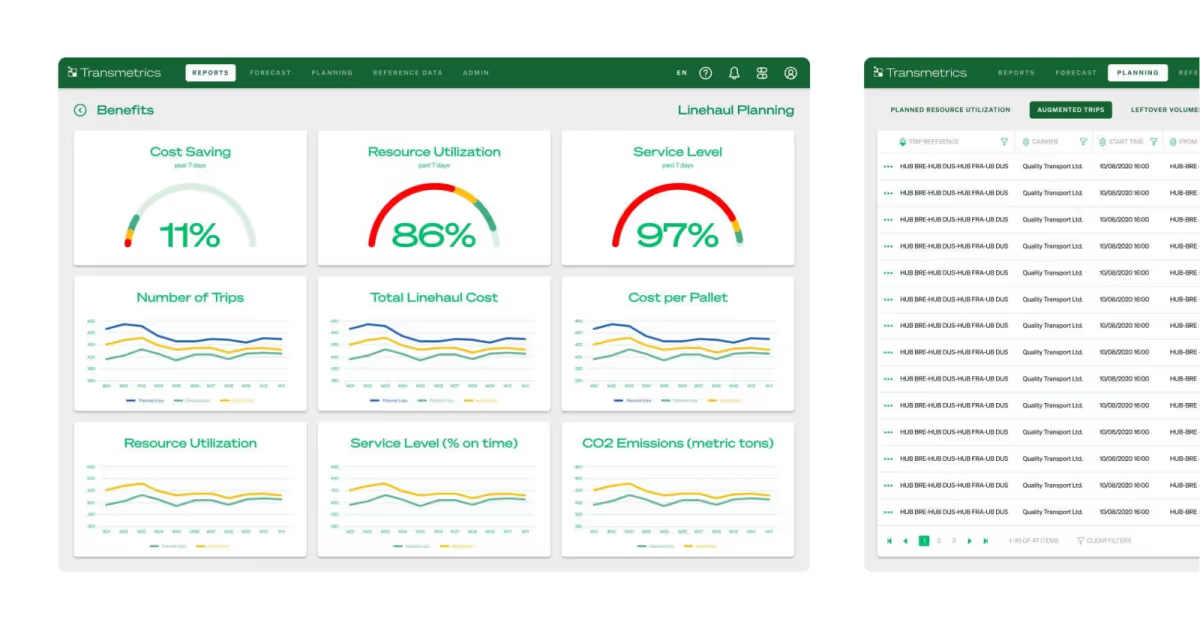
Transmetrics offers predictive analytics specifically designed for freight and fleet operations, optimizing network planning based on extended demand patterns.
Blue Yonder combines transport management with demand prediction, handling complex multi-depot networks efficiently.
Transmetrics
For instance, Poloplast integrated AI for supply chain forecasting, extending prediction windows from one month to 18 months through collaborative data centralization. The system saved significant planning time and improved forecast accuracy across teams. It enabled informed decisions during supply disruptions and demand fluctuations.
Longer forecast horizons help companies prepare for seasonal peaks, product launches, and market expansions. Traditional methods struggle with this timeframe because they rely on static models. AI adapts to changing patterns and incorporates external factors like economic indicators and industry trends. These advances demonstrate the great intersection of logistics and artificial intelligence in modern supply chain management.
Warehouse automation and order fulfillment
Picking, packing, and sorting consume significant warehouse labor. AI-powered robots handle these repetitive tasks with higher accuracy and speed than manual processes. Computer vision helps robots identify products of different shapes and sizes, while machine learning optimizes item placement based on order patterns.
So, what tools to use AI for logistics automation and robotics?
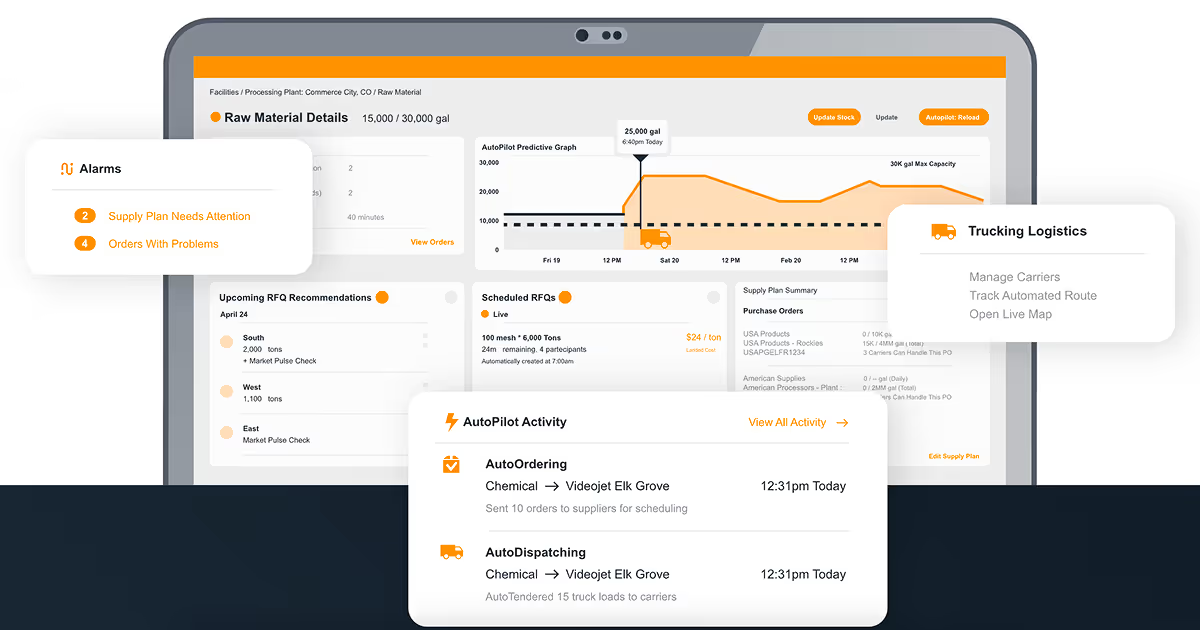
RoboDispatch, a warehouse automation solution, uses traffic/order volume and resource availability to make dispatch decisions and reduce Manual error when scheduling in a warehouse setting.
Vorto uses AI analytics to predict demand and automatically schedule logistics partners (preventing underutilization of assets).
Raft automates shipping documentation and invoicing for freight forwarders, utilizing large language models to assist with customs entries and compliance activities.
Vorto
As one of the logistics AI examples, Amazon operates over 520,000 mobile robots across its fulfillment centers. These robots bring inventory to workers instead of having workers walk aisles, cutting processing times dramatically.
With the use of 5,000 AI bots in the DHL facilities, collection efficiency increased by 50% or more. The ML-driven OptiCarton system reduces shipment space requirements by 50% through optimizing how items are combined when packed.
Intelligent courier and carrier selection
Different shipments need different handling. For instance, express parcels require speed. Heavy freight needs capacity. Fragile items demand careful carriers. As another use of AI in logistics, it analyzes dozens of parameters for each shipment to select the optimal courier or carrier.
Among the tools for carrier selection, you can try out these:
Pickrr uses predictive analytics to match shipments with the best-performing couriers based on destination, package type, and historical success rates.
Onfleet provides intelligent delivery assignments that consider driver location, capacity, and historical performance to optimize package distribution.
Samsara offers AI-powered courier selection integrated with route optimization, ensuring both efficient routing and appropriate carrier assignment.
Samsara
As a great application of AI in transport logistics, Pickrr employs AI to analyze over 50 parameters to choose optimal couriers per shipment, minimizing delivery failures and returns. The system identifies high-risk delivery zones and selects carriers with better success rates in those areas. E-commerce clients see streamlined last-mile operations through improved courier matching.
The parameters include carrier performance history, delivery zone success rates, package characteristics, cost factors, and real-time capacity. The system learns which carriers perform best for specific shipment types and adjusts selections accordingly.
Load matching and freight optimization
Fuel and money often get wasted by unused trucks. One of the benefits of AI in logistics is that it increases truck efficiency through real-time load-carrying and empty mile reduction association. In addition to pairing loads with carriers based on availability and route preferences, ML provides a comprehensive analysis of historical shipping patterns.
Both shippers and carriers benefit from this technology. Shippers receive competitive rates and reliable capacity; carriers receive maximum revenue potential by reducing deadhead mileage. The technology becomes increasingly accurate in future load-to-carrier matchings as it learns from millions of performed transactions each day.
Tools for freight optimization:
Elite EXTRA provides AI-powered load matching that pairs carriers with shipments instantly, reducing empty miles and improving utilization across trucking networks.
Route4Me Intelligence optimizes shipping lane costs and carrier performance management, helping freight brokers make data-driven decisions.
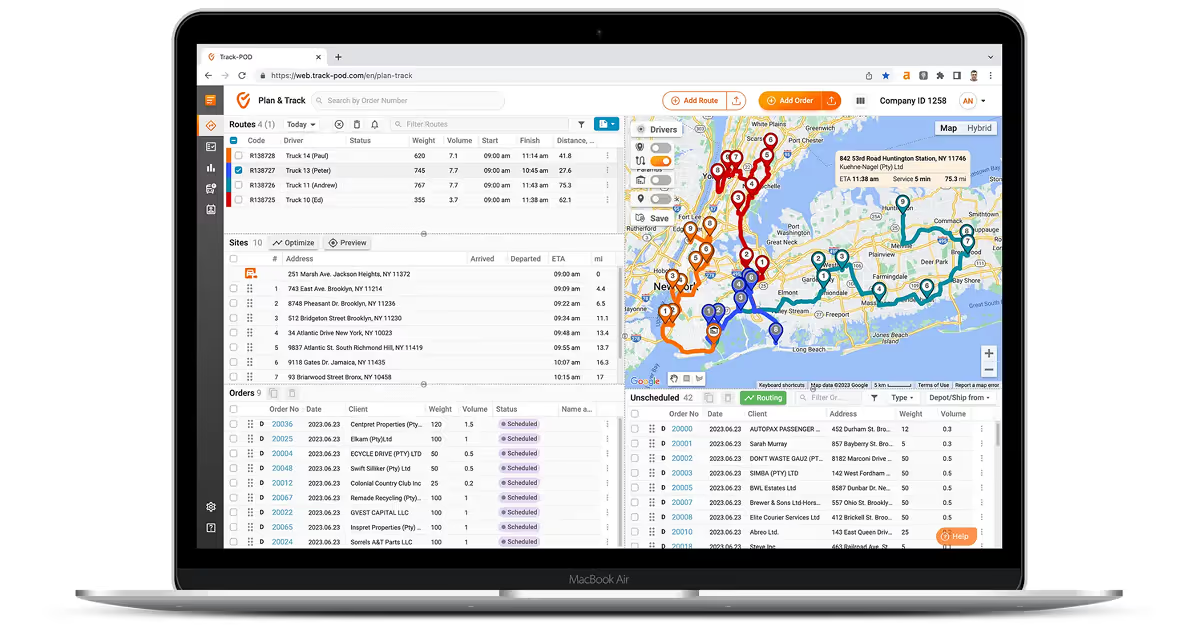
Track-POD uses predictive demand analytics to automatically schedule carriers and logistics partners, preventing asset underutilization.
Track-POD
As an instance of AI logistics use cases, Uber Freight uses algorithms to provide truck drivers with access to available loads, thus reducing the number of empty miles travelled by up to 15%. The platform provides freight transportation services for over $20 billion per year for Fortune 500 shippers. Real-time matching of trucking capacity to shipper demand results in the reduction of traditional freight shipping inefficiencies associated with returning to empty backhauls after delivery.
Crisis response and disruption rerouting
Natural disasters and geopolitical events disrupt logistics without warning. AI monitors risk factors in real time and automatically suggests alternative routes, suppliers, or transportation modes when disruptions occur. This keeps shipments moving despite unexpected obstacles.
Logistics machine learning technology processes news feeds, weather data, port schedules, and traffic patterns to identify potential disruptions before they impact operations. When problems arise, it calculates alternative solutions and presents options to logistics managers.
Tools for disruption management:
IBM Sterling delivers real-time tracking with predictive delay alerts, enabling dynamic intervention to protect critical shipments during disruptions.
SAP Integrated Business Planning provides AI insights for identifying alternative shipping lanes and carriers when primary routes face issues.
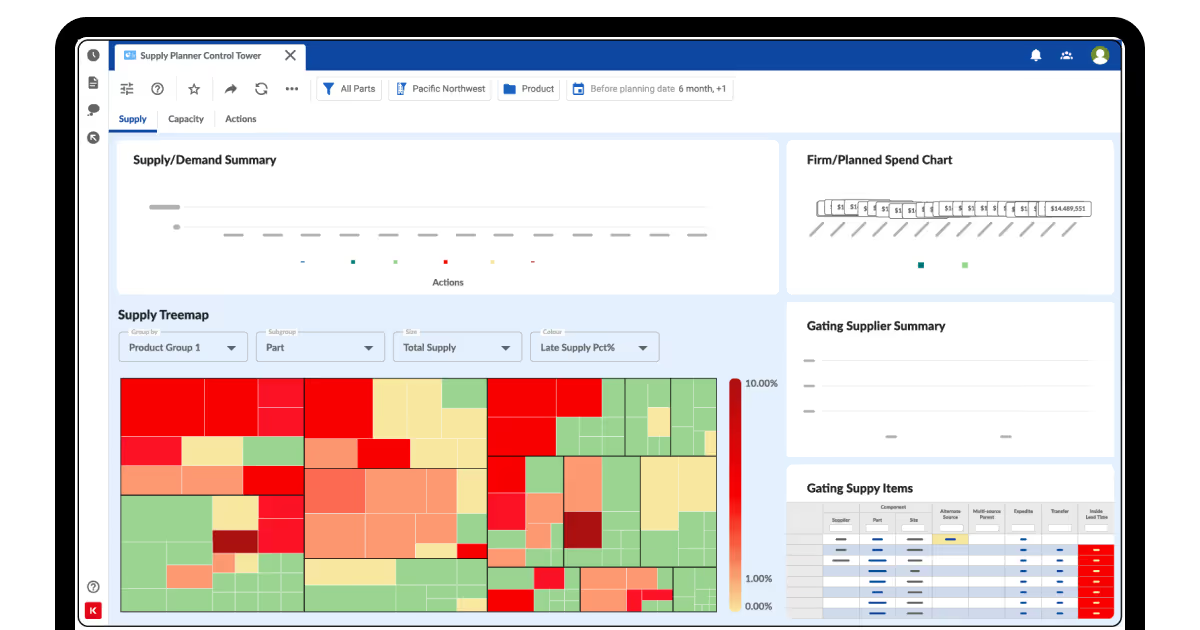
Kinaxis systems monitor news and weather patterns to predict port congestion and route obstacles up to two weeks early.
Kinaxis
To use the power of logistics artificial intelligence, Emerson used AI to reroute freight during hurricanes, volcanic eruptions, and the pandemic, fulfilling 100% of orders despite global disruptions. Response times for supply chain queries dropped from hours to seconds. The system also reduced emissions and costs through optimized transport alternatives.
Challenges of implementing AI in logistics
No matter how advanced the technology is now, you may still face some obstacles in implementing AI in logistics and transportation.
The primary concern with data quality arises because, without clean, organized data, the AI cannot function correctly. So, logistics companies have a potentially difficult task when trying to apply artificial intelligence in transportation and supply chain, as their data is on multiple systems, resulting in a lack of ability for those systems to connect. Hong Tao’s study highlights how a lack of unified data platforms hinder successful deployment of AI as an effective tool. Inaccurate, outdated, or inconsistent data can lead to poor-quality predictions even when using an advanced algorithm.
Technical complexity prevents many initiatives from progressing past the planning phase in the logistics industry. To build and maintain AI systems, companies often lack sufficient staff with the specialized skill set to accomplish these tasks. More than 90% reported their organization did not have sufficient talent and skill to digitally enable their organization. Hiring data scientists and machine learning engineers is an expensive proposition. Training existing staff on these topics can be time-consuming.
Integration with existing systems creates friction. Most logistics operations run on legacy software that wasn't designed for logistics AI. Connecting new tools to old systems requires custom development work. Companies often underestimate the time and resources needed for integration.
Cost presents another barrier. AI projects demand significant upfront investment in technology, talent, and infrastructure. Returns take time to materialize. Many companies struggle to justify the initial expense, especially when budgets are tight. Research shows that only 38% of companies in the supply chain plan reskilling initiatives in 2025, up from 25% in 2024, indicating slow progress on workforce development.
When it comes to applications of AI in logistics, many companies don’t recognize or manage the necessary components as part of their overall strategy. As a result, many companies attempt to implement AI solutions without taking into account their employees' abilities to adapt.
Thus, many AI solutions are used for only a short period of time before being deemed useless or becoming ineffective. In addition, many companies fail to adequately communicate changes to employees and provide adequate training before implementing AI solutions. As a result, most companies with poor adoption of AI solutions have done so due to inadequate communication with their employees and inadequate training on how to use the technology.
COAX removes these barriers through custom logistics software development that addresses your challenges. We build AI and machine learning logistics solutions that integrate with your existing systems. Our experts handle the technical complexity and work with your data, connecting scattered systems into unified platforms that give AI the clean, organized information it needs to truly outperform. This happens without disrupting your daily operations, and we build interfaces your team can use without extensive training.
But that’s not it. Our AI and ML development services go beyond off-the-shelf solutions. We create models trained on your data, tuned to your operational patterns, and designed for your challenges. Whether you need demand forecasting that accounts for your unique seasonality, route optimization that works with your fleet constraints, or inventory management that matches your warehouse configurations, we build AI that fits your business instead of forcing your business to fit the AI. You get technology that solves problems and delivers measurable results.
FAQ
What is the future of AI in logistics?
The future of AI and logistics involves highly automated, predictive supply chains driven by autonomous vehicles, drones, advanced robotics, digital twins for simulation, and predictive analytics for demand forecasting. Adopters reduce logistics costs and inventory, and improve service levels. AI enables resilient operations with human oversight focused on complex ethical decisions rather than routine tasks.
How is AI improving logistics?
Adeoye and colleagues demonstrate that AI improves logistics through dynamic route optimization using real-time traffic and weather data, reducing fuel consumption and delivery times. Chen's research shows AI enhances decision-making, optimizes resource utilization, and minimizes environmental impacts. Yan's review highlights machine learning in demand forecasting, inventory optimization, warehouse automation, and supply chain risk management, delivering measurable efficiency gains across operations.
How is AI used in logistics to improve sustainability?
Chen and team explain that AI optimizes transportation routes considering ecological factors, reducing carbon emissions and waste generation. The technology enables cleaner transportation options through route optimization that cuts fuel consumption. McKinsey reports that dynamic optimization of routing and freight contracting reduces both costs and environmental impact. AI provides data analytics for sustainable production, eco-friendly logistics, and greener supply chain practices.
What security measures should I take while implementing AI in transportation and logistics?
Adeoye's research emphasizes addressing regulatory frameworks, safety protocols, and public acceptance as critical barriers. Chen identifies data quality, integration challenges, and cybersecurity as key concerns requiring robust encryption, access controls, and network monitoring. Companies must implement controlled data versioning, comply with privacy regulations, and balance cost with accuracy while protecting against malicious data manipulation that could skew AI performance.
How does COAX implement secure and successful AI transportation and logistics solutions?
COAX implements security through ISO/IEC 27001:2022 certification for comprehensive security management, risk assessment, and continuous monitoring. Our ISO 9001 certification ensures optimal quality processes. We apply encryption, access controls, and privacy measures from the project outset. Our solutions include robust data integration, MLOps best practices, and controlling data versioning. We build AI systems balancing accuracy with cost while maintaining GDPR compliance throughout implementation.











































































_.avif)











%2520explained.avif)

We are interested in your opinion