Green claims sound loud. Cutting emissions and achieving carbon neutrality. Achieving social labor justice. Aligning your goals with the common, global good.
What if we tell you these might be empty - and it’s not even your fault?
It’s often that your supply chain might be working against you. Scope 3 emissions are invisible, labor violations are often buried three tiers deep, and you might just lack the supplier data to measure your own impact. Regulations tighten, customers notice, and your future is becoming fragile without proper supply chain sustainability.
However, there’s a way out, and it’s a technological and organizational one:
Emissions mapping exposes where 95% of your carbon footprint actually hides.
Supplier visibility reaches the tiers where labor and sourcing risks concentrate.
Circular thinking converts waste streams into recovered materials and reduced costs.
Technology integration connects AI, blockchain, and IoT into one coherent picture.
Social compliance protects brand value before reputational damage becomes financial damage.
Economic resilience absorbs disruptions that sideline less prepared competitors.
Custom tooling builds the infrastructure your specific chain needs to measure, report, and improve.
In this guide, we break down what sustainable supply chain management requires in practice, the three pillars that hold it together, the technologies making it measurable, and the steps that move you from intention to implementation.
What is supply сhain sustainability?
First of all, let’s define the very sustainable supply chain meaning.
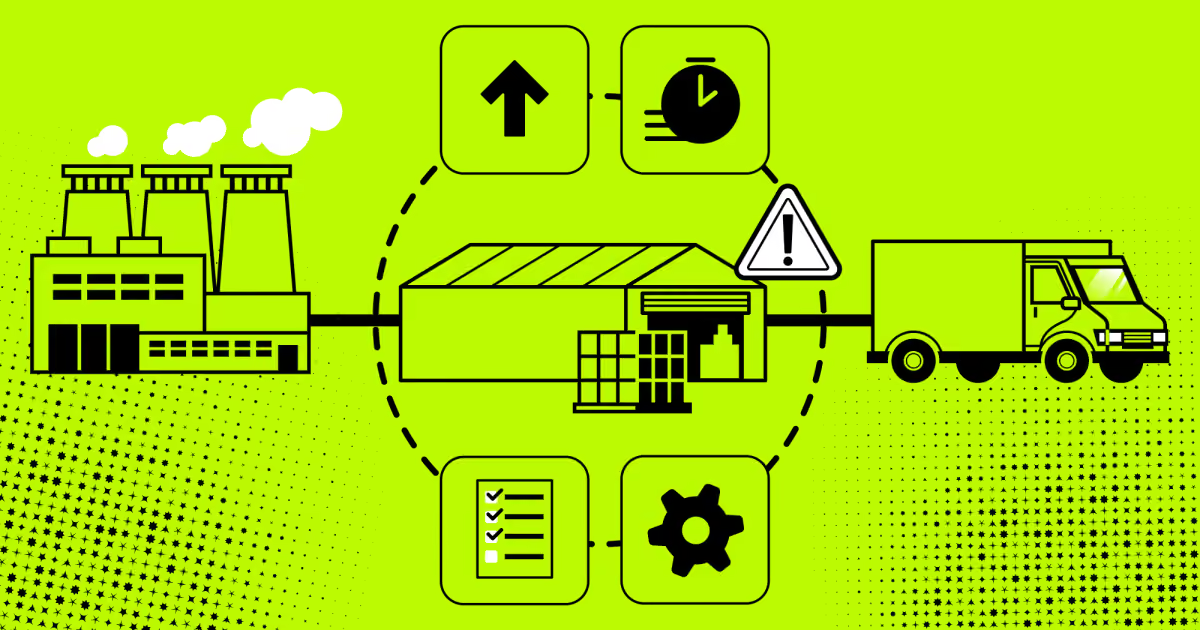
A sustainable supply chain integrates environmental responsibility, fair labor practices, and financial accountability into every stage of how goods move from raw materials to the end customer and back again. It doesn’t stop at the factory gate or the last delivery mile. It covers sourcing, manufacturing, packaging, transport, returns, and recycling.
The United Nations Global Compact defines 10 criteria for measuring supply chain sustainability, covering environmental responsibility, labor practices, human rights, and anti-corruption. These principles state that ethical and responsible supply chains are not just good for the planet. They build brand trust, reduce risk, and protect long-term profitability.
Digital transformation brings it all forward. AI, blockchain, big data analytics, and RFID sensors give companies far greater visibility into their operations. That visibility creates accountability. Companies can no longer claim ignorance about what happens upstream in their supply chain.
How sustainable supply chains work
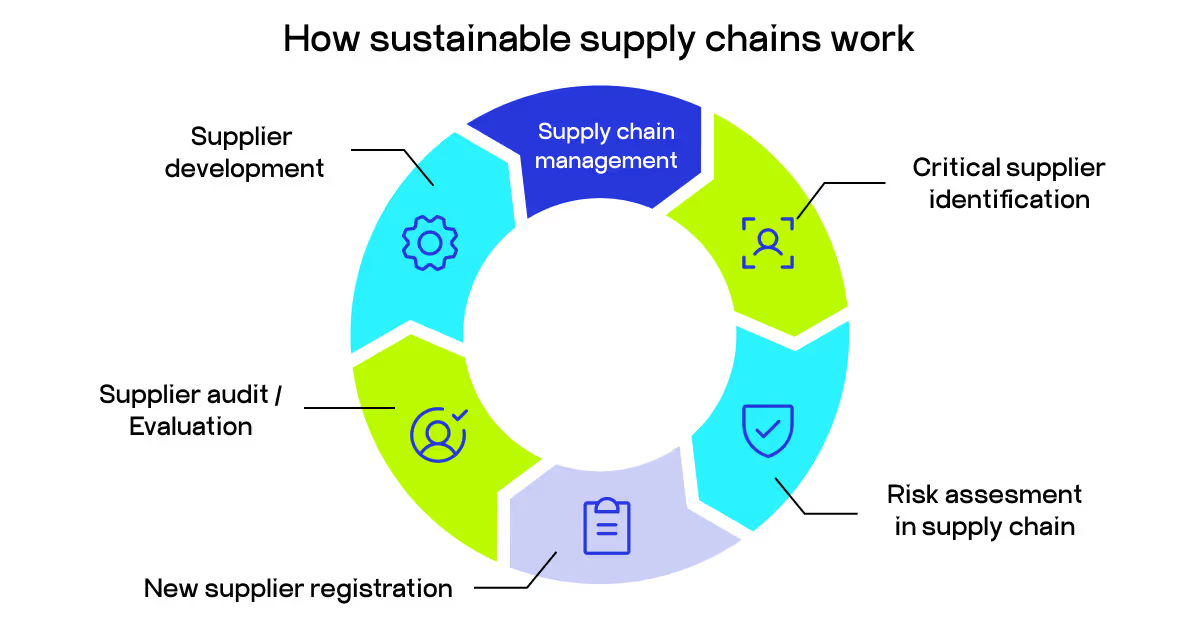
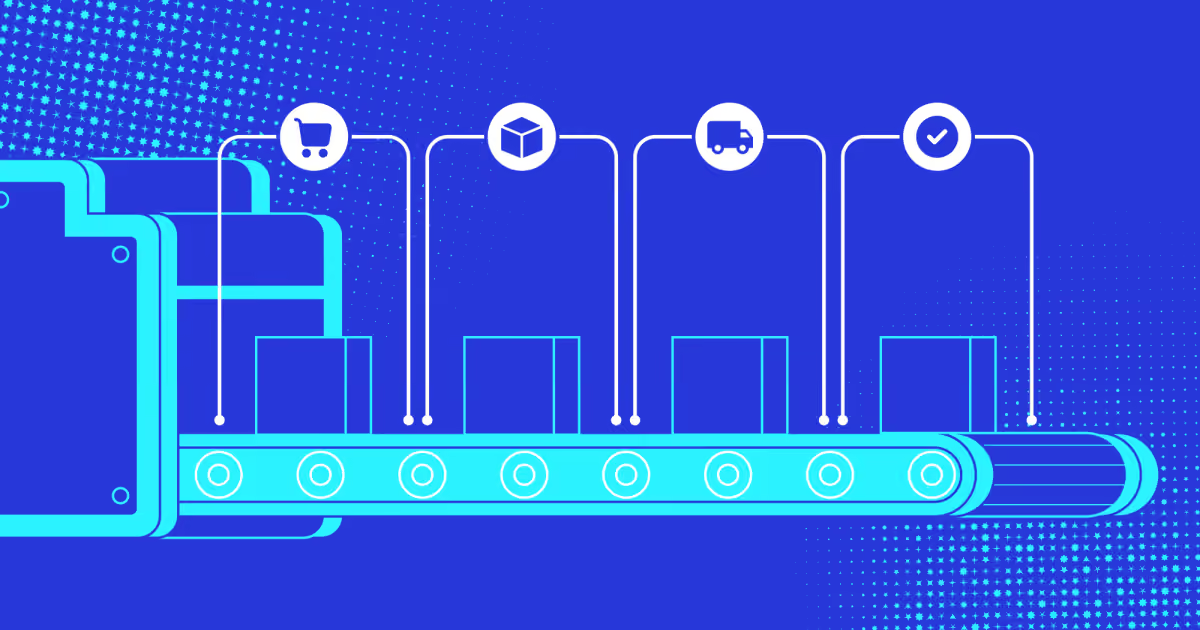
Think of a sustainable supply chain as a closed loop rather than a straight line. What is a sustainable supply chain from the workflow point of view? Let’s see its key components.
It starts with sourcing. Companies choose suppliers based not only on price and reliability but on whether those suppliers meet environmental and social standards. According to IBM, this kind of supplier relationship management sets the baseline for everything that follows.
From there, goods move through manufacturing, where the focus shifts to reducing energy use, cutting waste, and keeping production processes clean. Then comes transport and distribution, where route planning, fuel efficiency, and load consolidation all affect the carbon math.
At the other end sits the customer. But a sustainable chain does not end at delivery. Returns, product disposal, and recycling feed back into the system. UNIDO calls this circular economy thinking: reuse, recycle, and reduce new resource demand at every opportunity.
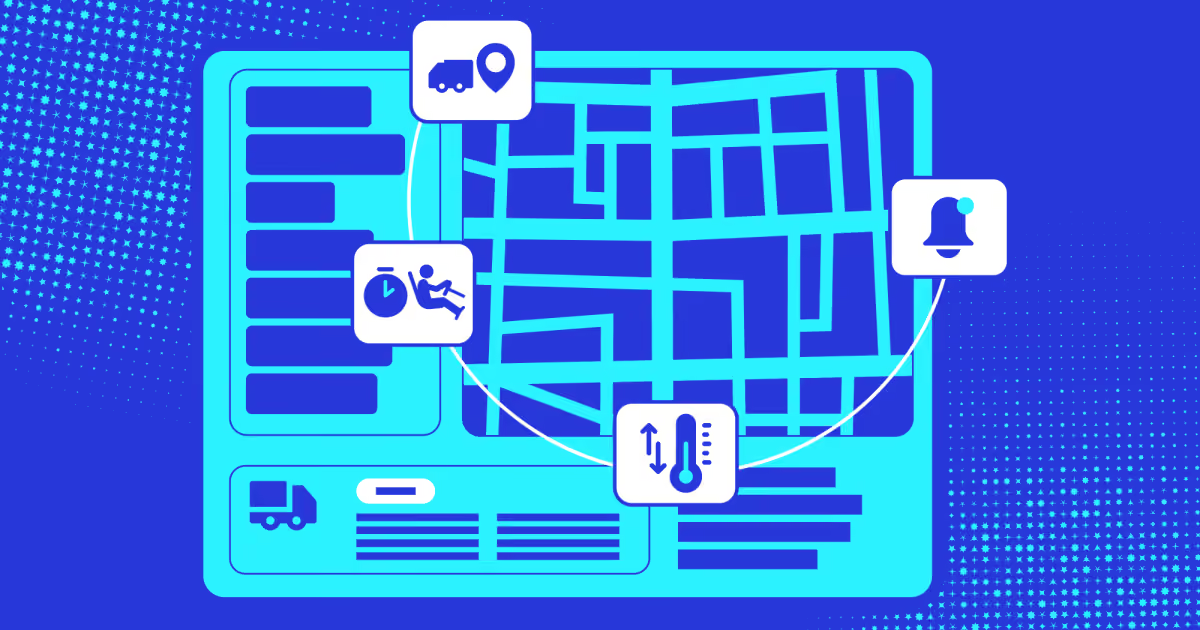
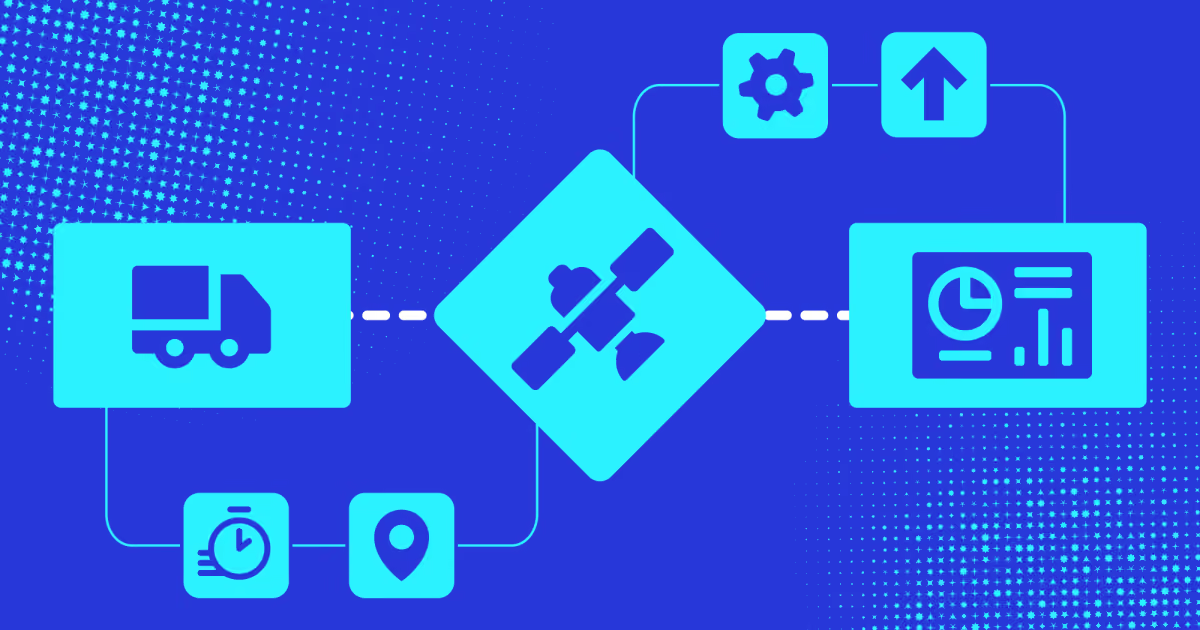
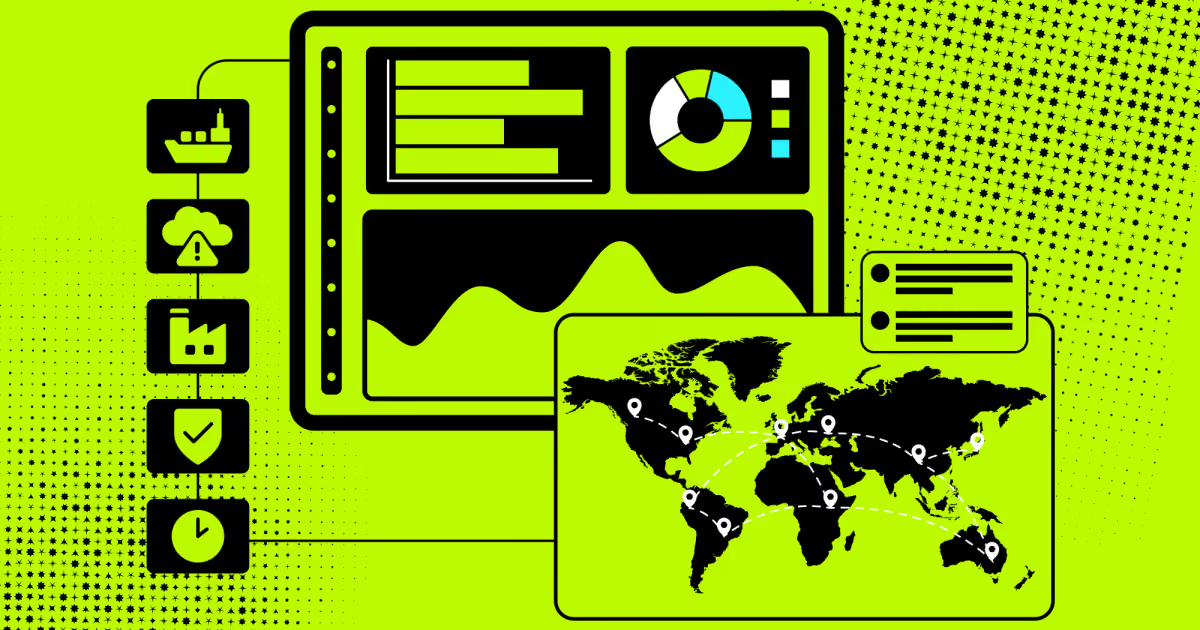
Throughout all of this, data ties everything together. Real-time monitoring lets companies spot inefficiencies, verify supplier claims, and report clearly to regulators and stakeholders. Over 450 million people work in global supply chains, according to UNIDO, and tracking conditions across that workforce requires serious infrastructure.
The whole system depends on one thing: visibility. You cannot manage what you cannot see. Sustainable supply chains make the invisible visible, from a factory's energy bill to the working conditions of a subcontractor three levels deep.
Why sustainability matters in the supply chain
Supply chains generate far more emissions than most companies realize.According to the Carbon Disclosure Project, a company's supply chain produces up to 11.4 times more greenhouse gas than its own operations. So, 90% of a company's total emissions come from outside its own walls, in factories, ships, warehouses, and farms it does not directly control.
Most companies are still not measuring that correctly.MIT's Sustainable Supply Chain Lab, led by researcher Velázquez Martínez, found in its 2025 report that 70% of surveyed businesses admit they lack supplier data to calculate their climate impact. Meanwhile, 50% of North American companies still track emissions using spreadsheets, not proper lifecycle assessment tools. As Velázquez Martínez put it plainly about sustainable supply chain management: "You get what you measure. If you measure poorly, you're going to get poor decisions."
The pressure to act is building from multiple directions. A Deloitte survey of Central and Eastern European companies found that 71% already address sustainability in their supply chains, and 77% report growing customer demand for sustainable products. An MIT survey of over 1,200 professionals across 97 countries found that 85% of companies are either maintaining or increasing efforts, even with the growing economic uncertainty.
On the risk side, supply chain disruptions lasting more than a month occur on average every 3.7 years, according to McKinsey. Companies that treat sustainability purely as a compliance exercise tend to miss the resilience benefits that come with it.
The financial importance of sustainability in supply chains is just as clear. One EY survey found 61% of companies pursued supply chain sustainability specifically to improve cost savings and operational efficiency. U.S. business logistics costs reached $2.3 trillion in recent years, representing 8.7% of GDP. Finding waste in that system is not a nice-to-have. It directly affects your margins. This stresses the impact of green logistics and emissions tracking even more.
Environmental, social, and economic impacts
Most of the environmental damage in a supply chain happens where you are not looking. As research by Atieh and Abushaega confirms, logistics operations face serious ecological pressure from fuel dependency, fragmented infrastructure, and slow adoption of cleaner technologies. Only 5% of supply chain emissions come from direct manufacturing, according to KPMG. The remaining 95% hide across transportation, sourcing, packaging, and disposal.
Carbon accounting that relies on estimates and averages masks real emission sources. You end up optimizing the wrong things, masking an unsustainable supply chain under greenwashing, intentional or not. MIT's research notes that regardless of which fuel wins out, there is always room to improve how existing infrastructure gets used. Better route planning, fuller loads, and smarter scheduling cut emissions without waiting for new technology to arrive.
The social dimension is even more striking. According to UNIDO, most employees work in the early stages of production, often in countries where labor protections are weaker, and enforcement is inconsistent. Social SCM sustainability in this case is about whether the people who make your products earn a fair wage, work in safe conditions, and have some basic protection if things go wrong. The efforts pay off for businesses, too. According to Bain and Company, suppliers with strong diversity and inclusion practices show 20% higher retention rates, which translates into more stable supply relationships for you.
The economic case for sustainable supply chains has moved well past theory. Deloitte found that 83% of large companies with revenues over 40 million euros now see sustainability as a competitive advantage. Among smaller companies, that figure drops to 54%. The gap reflects a real difference in access to capital and tech, but the direction is the same.
Atieh and Abushaega's research found a strong link between green supply chain innovation and performance. It means that companies that invest in green innovation consistently outperform those that do not, on environmental, social, and financial measures simultaneously.
The three pillars of sustainable supply chains
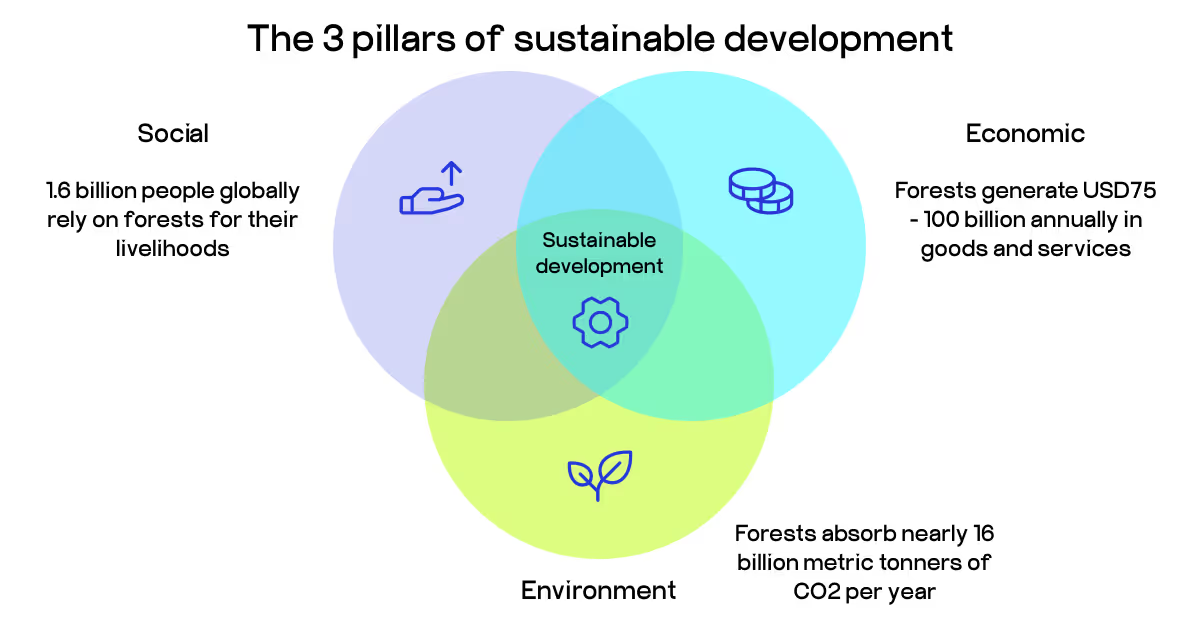
For years, the sustainability of supply chains used to mean one thing: don't pollute. That definition is no longer efficient. Today, a truly sustainable supply chain has to work across three dimensions at once: environmental, social, and economic, as we already discovered in the previous chapter.
This framework is known as the Triple Bottom Line, originally developed by John Elkington. Research by Kusmendar and team confirms that true sustainability only takes hold when all three dimensions are treated as equally important. Here is what each one means in practice.
Environmental sustainability: Reducing waste, emissions, and resource use
The environmental pillar is where the clearest targets exist. The goal is to build what practitioners call a green supply chain: one that integrates environmentally responsible principles into every stage, from product design and materials sourcing through manufacturing, logistics, and what happens after a customer is done with a product.
Getting this side of sustainable chain management requires rethinking how goods move and what they are made from. The logistics and transport sector alone contributes over a third of global carbon dioxide emissions. Maritime transport accounts for 11% of transport emissions by itself, which means shipping routes and vessel efficiency matter enormously.
Electric vehicles are part of the answer, but not the whole story. The freight industry runs on tight schedules, and charging infrastructure planning adds complexity that remains unsolved. In the meantime, cleaner technologies applied to existing fleets can deliver meaningful results.
The circular supply chain model addresses the waste problem at its root. Rather than discarding products, circular chains disassemble goods into their raw materials and feed them back into new production cycles. Recycled plastics in 3D printing and applying supply chain analytics software make this practical rather than theoretical. AI and machine learning help spot inefficiencies, reduce overproduction, and find the least wasteful path through networks.
Social sustainability: Fair labor practices, community impact, and human rights
Social sustainability is the pillar that gets the least attention until something goes wrong. In early 2024, fast fashion retailer Shein faced criticism over labor conditions at factories of its Chinese subcontractors. Reports of unsafe working conditions triggered public backlash, online boycotts, and pressure from U.S. and European legislators. The commercial result was a reported 40% drop in net profit. Social failure became economic failure within months.
This pattern shows up in electronics, agriculture, and construction. Most companies have reasonable standards for their direct suppliers. The trouble starts two or three tiers down, where oversight is thin, and documentation is often nonexistent, making supply chain and sustainability an impossible mix to achieve.
A transparent supply chain is the answer. Transparency means being willing and able to openly disclose where goods come from, who made them, and under what conditions. Blockchain technology has made this significantly more achievable.Cobalt sourcing illustrates the stakes well: an estimated 25% of cobalt mined in the Democratic Republic of Congo involves child labor, and without traceability tools, this was invisible. Blockchain creates an irrefutable record that follows materials to the finished product, making ethical sourcing verifiable.
The business case for social supply chain sustainability goes beyond risk avoidance. Stable supplier relationships reduce disruption risk and cut the cost of switching when problems arise.
Economic sustainability: Efficient operations, risk management, and long-term profitability
Economic sustainability in SCM is about building a supply chain that can absorb shocks, adapt to regulatory changes, and keep delivering value five and ten years from now.
The short-term pressures are serious. Almost 80% of businesses faced at least one major disruption in the past year. Companies that have not built resilience into their operations pay for that gap every time something breaks.
Part of the economic argument is about how sustainability and efficiency overlap. Reducing waste cuts material costs. Optimizing transport routes reduces fuel spend. Consolidating shipments improves asset utilization. These are operational improvements that happen to reduce environmental impact as a side effect.
All this effect accumulates in the long run. Companies that ignore environmental and social risks accumulate liabilities that eventually show up through fines, lost contracts, and reputational damage. Building economic sustainability means treating those risks as real costs rather than someone else's problem.
All three pillars point in the same direction. The supply chains that perform best on environmental metrics tend to be the ones with the strongest supplier relationships and the most resilient financial structures.
Technologies and tools driving supply chain sustainability
The tools available for supply chain sustainability management are no longer a nice addition to your efforts. It is the infrastructure that makes serious sustainability work possible. Let’s outline each of them.
Artificial Intelligence
AI handles the analytical work that no human team could do at scale. It processes data from across the supply chain to forecast demand, optimize inventory levels, and identify disruptions before they hit operations. Samuels found that using AI for sustainability reduces the bullwhip effect by enabling more accurate demand forecasting, which cuts overproduction and waste.
For sustainability in the supply chain, AI identifies inefficiencies in routes, flags supplier ESG risks, and helps companies model the carbon impact of sourcing decisions. Atieh and Abushaega note that digitally driven leadership, powered by AI tools, had the strongest effect on green supply chain innovation among all the capabilities they studied. AI adoption in supply chains is predicted to nearly triple from 28% today to 82% within five years, according to MHI.
Internet of Things (IoT) and RFID
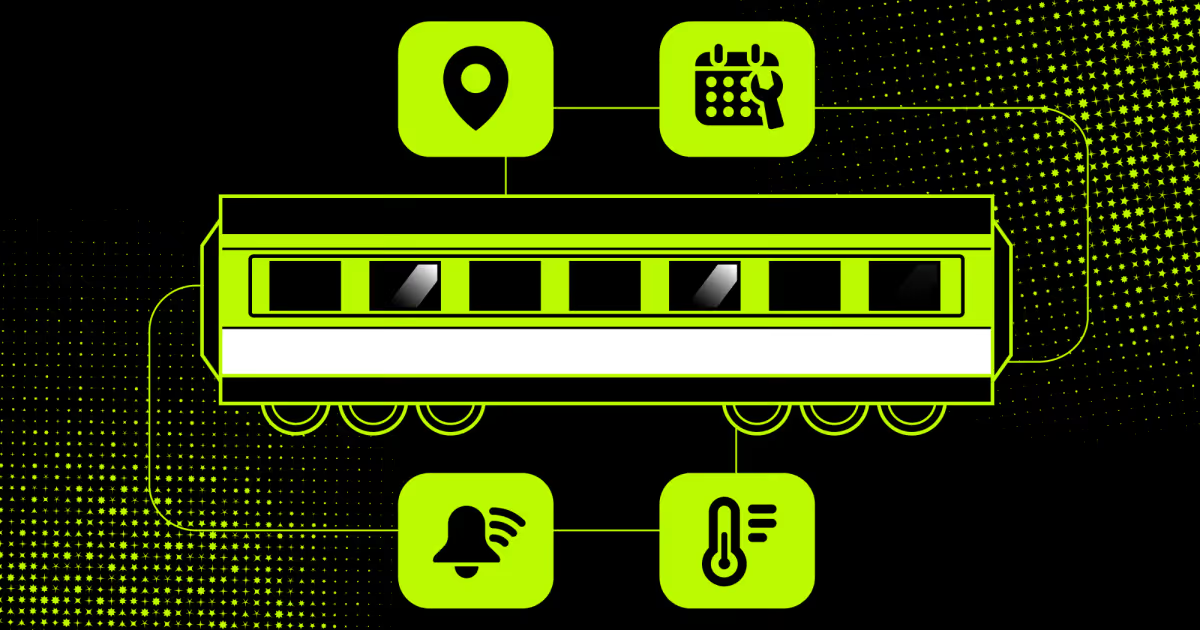
IoT connects the physical supply chain to the digital one. Sensors, RFID tags, and connected devices collect real-time data on location, temperature, humidity, and energy consumption across the entire logistics network. Soori and team explain that IIoT devices like sensors and RFID tags provide real-time data on the condition and environmental parameters of goods throughout the chain. This is particularly valuable in food and pharmaceuticals, where cold chain integrity determines both product quality and safety.
In broader logistics, IoT enables precise inventory tracking, eliminates stockouts and overstock situations, and supports energy monitoring across warehouses and transport fleets. RFID technology also strengthens ethical sourcing by making it possible to verify where materials came from and under what conditions, supporting compliance in industries like clothing and agriculture, where sourcing transparency is of the greatest importance of sustainable supply chain management.
Blockchain
Blockchain solves the problem of trust between parties who do not fully know or control each other. Creating a decentralized, tamper-proof record of every transaction and movement in the supply chain, it makes the history of any product verifiable. Samuels notes that blockchain can improve supply chain efficiency by 74% and reduce the time needed for digital documentation.
For sustainable supply chain management, the applications are concrete. In agri-food supply chains, blockchain tracks products from farm to shelf, enabling verification of organic or fair-trade claims. In electronics and mining, it traces raw material origins to screen for conflict minerals or child labor. Soori and colleagues confirm that blockchain combined with IIoT creates auditable records of the environmental impact of each supply chain stage, supporting both compliance and continuous improvement.
Big Data and advanced analytics
The volume of data flowing through modern supply chains is enormous, and standard reporting tools cannot make sense of it. Big data analytics processes information from suppliers, logistics providers, customers, and external sources like weather, geopolitical events, and commodity markets to give you a full, real-time picture.
MIT highlights that companies still relying on spreadsheets (and that’s 66.1%) for emissions tracking are making poor decisions. Proper analytics platforms replace those estimates with lifecycle assessment data that shows actual emissions at every stage, from material extraction through disposal. Research by Zhang, Yu, and Zhang states that big data analytics produces better sustainability outcomes by improving decision quality throughout the chain.
Digital twins
A digital twin is a real-time virtual replica of a physical supply chain. It mirrors actual operations and lets managers run scenarios without touching the real system. Want to know what happens to your carbon footprint if you switch from sea to air freight for a product line? Or how a new supplier affects your Scope 3 emissions? A digital twin answers that before you commit.
The technology is particularly useful for modeling circular economy scenarios, reverse logistics planning, and network redesign for supply chain management sustainability. It connects with IoT data feeds to stay current and with AI to run predictive analysis on different configurations.
5G connectivity
5G is the enabling layer that makes real-time IoT and AI applications practical at scale. Faster data transmission means sensors report conditions instantly rather than in batches, AI systems react to disruptions in real time, and remote management of logistics assets becomes reliable. Samuels adds that 5G networks are essential to the triadic integration of AI, blockchain, and IoT, ensuring rapid processing and dissemination of data across supply chain systems.
To get the benefits of sustainable supply chains, this matters because faster data means faster response to problems, whether a temperature excursion in a cold chain, an unexpected emissions spike, or a compliance issue flagged at a supplier facility.
Top tools for supply chain sustainability
The industry is digitizing rapidly, and some solutions offer a practical solution to challenges. Here is a practical look at the leading supply chain sustainability software and what each one does best.
Tool
Best for
Features
Pricing
EcoVadis
ESG supplier ratings
Sustainability scorecards, benchmarking, medal-based ratings across 150k+ businesses, carbon tracking, e-learning for suppliers
From ~$1,500/year for basic assessments; enterprise pricing on request
Carbon footprint integration with ERP, lifecycle assessment, AI emission factor mapping, and net-zero planning dashboards
Bundled with SAP suite; pricing on request
TrusTrace
Traceability and compliance
End-to-end supply chain mapping, AI and blockchain-based risk assessment, forced labor detection, certification validation
Pricing on request; mid-to-enterprise market
Assent
Manufacturer ESG compliance
Multi-tier supplier mapping, product compliance, CSRD and CSDDD support, automated workflows, and multilingual supplier engagement
Enterprise pricing on request
Greenly
Carbon footprint management
Supplier emissions dashboard, CSRD compliance tools, carbon reduction tracking, intuitive interface for SMEs and enterprises
From ~$500/month; enterprise plans available
IntegrityNext
AI-driven ESG due diligence
Automated ESG and compliance reporting, AI risk detection, global regulatory coverage, supplier sentiment monitoring
Enterprise pricing is best suited to large organizations
Blue Yonder
End-to-end supply chain planning
Demand and inventory optimization, AI/ML-driven disruption prevention, network design, integrated business planning
Enterprise licensing; pricing on request
Sedex (SMETA)
Ethical trade and social auditing
Secure supplier data sharing, SMETA audit management, risk assessments, 150+ country coverage, and audit deduplication
Membership from ~$1,000/year; varies by supplier volume
Transparency-One
Supply chain mapping and social risk
Multi-tier supply chain mapping, social and environmental risk identification, sourcing standards monitoring, and supplier network access
Pricing on request; mid-to-large enterprise focus
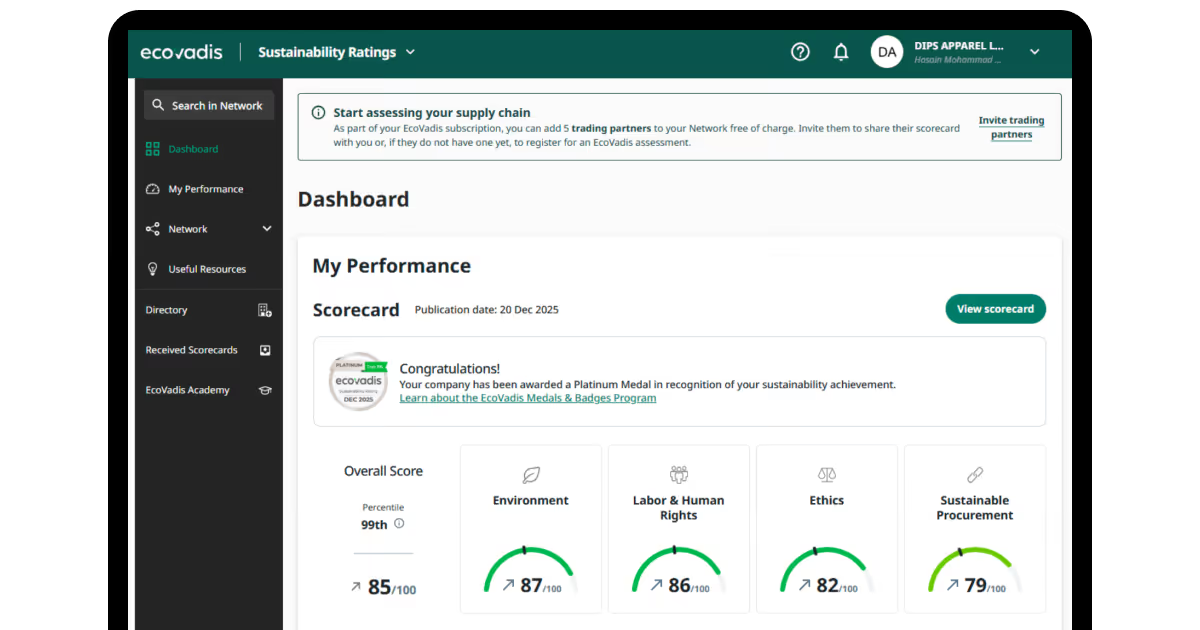
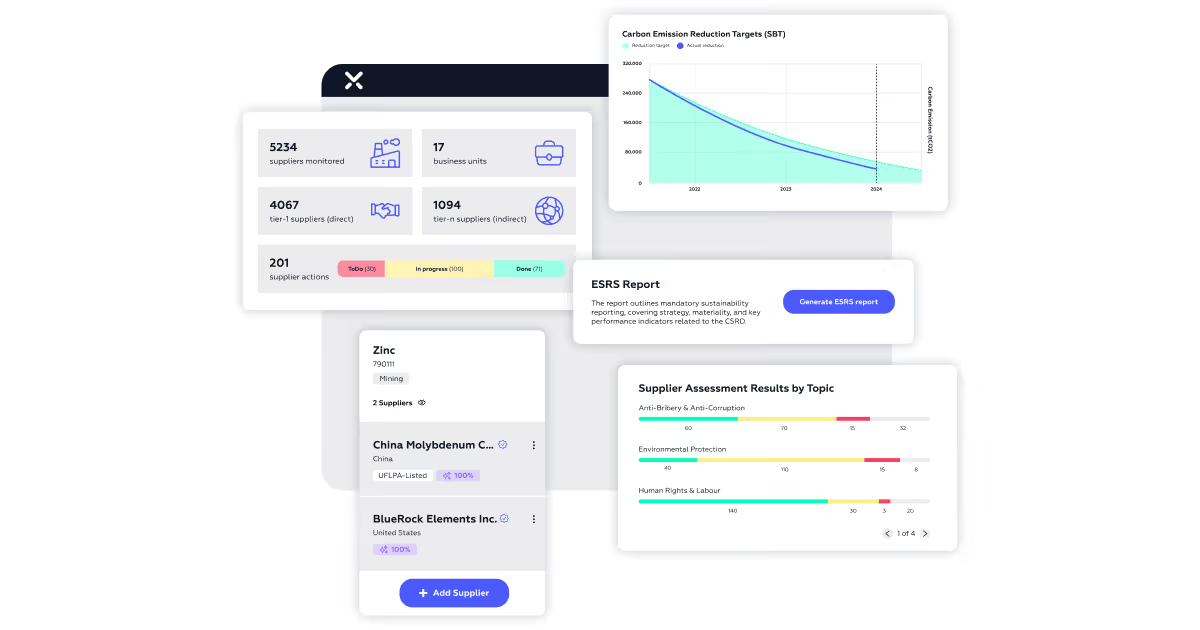
EcoVadis is the most widely used rating platform for global supply chain sustainability, with over 150,000 businesses on its network. It scores suppliers across environment, labor, ethics, and sustainable procurement using a methodology toward actions and results. Companies use it to screen suppliers, benchmark performance, and demonstrate ESG credibility to customers and investors. Pricing starts around $1,500 per year for basic assessments, with enterprise plans available on request.
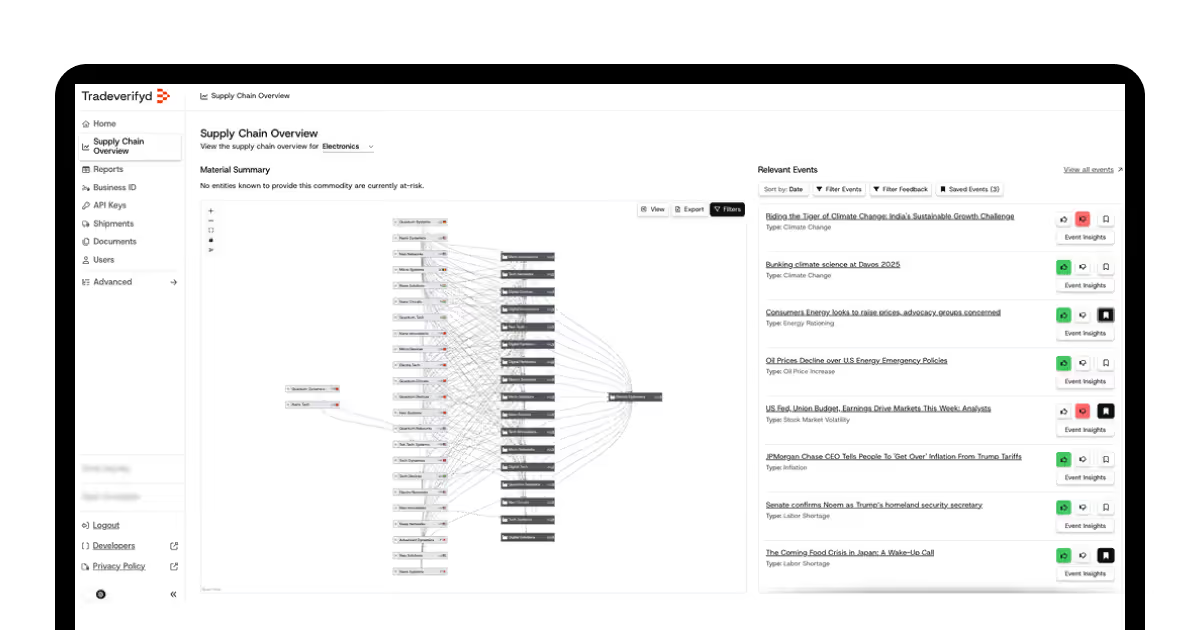
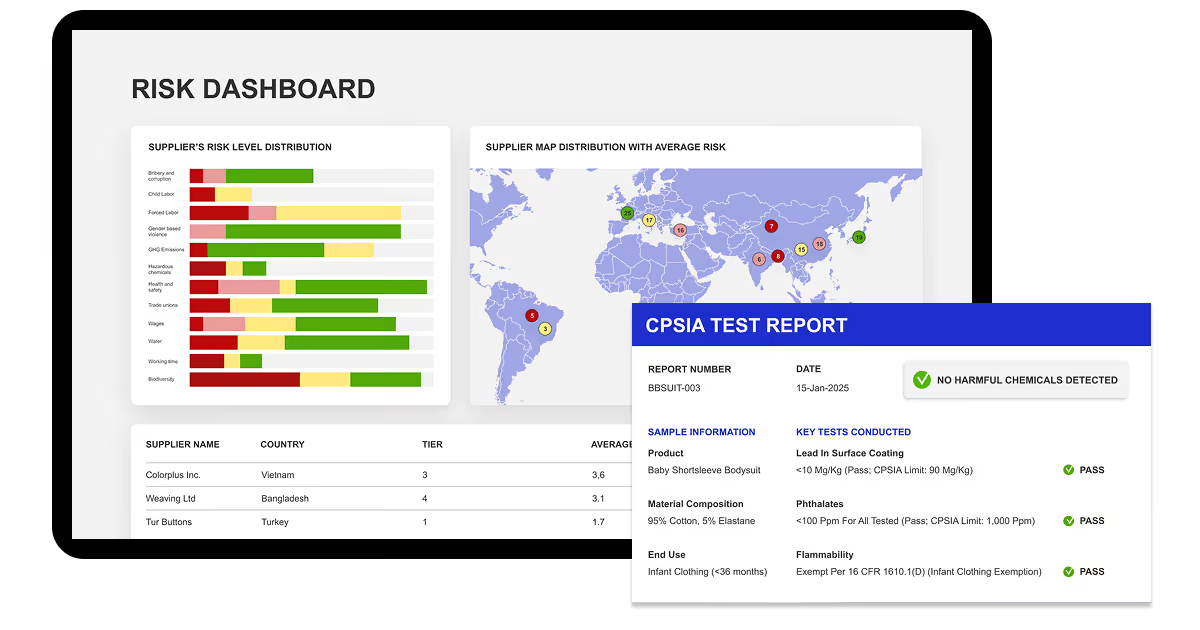
Tradeverifyd goes further than most tools by mapping supply relationships across multiple tiers. That matters because most hidden risks sit two or three levels deep. Its AI-powered supplier scoring and predictive intelligence features help you act on signals before they become disruptions. Pricing is enterprise-level and available on request.
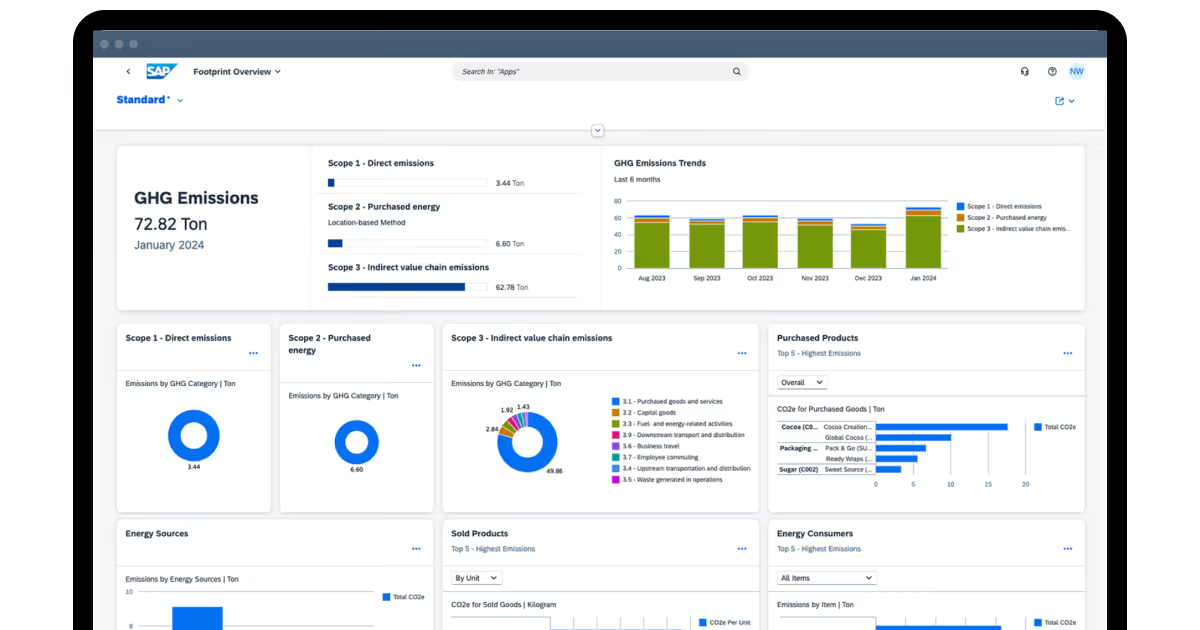
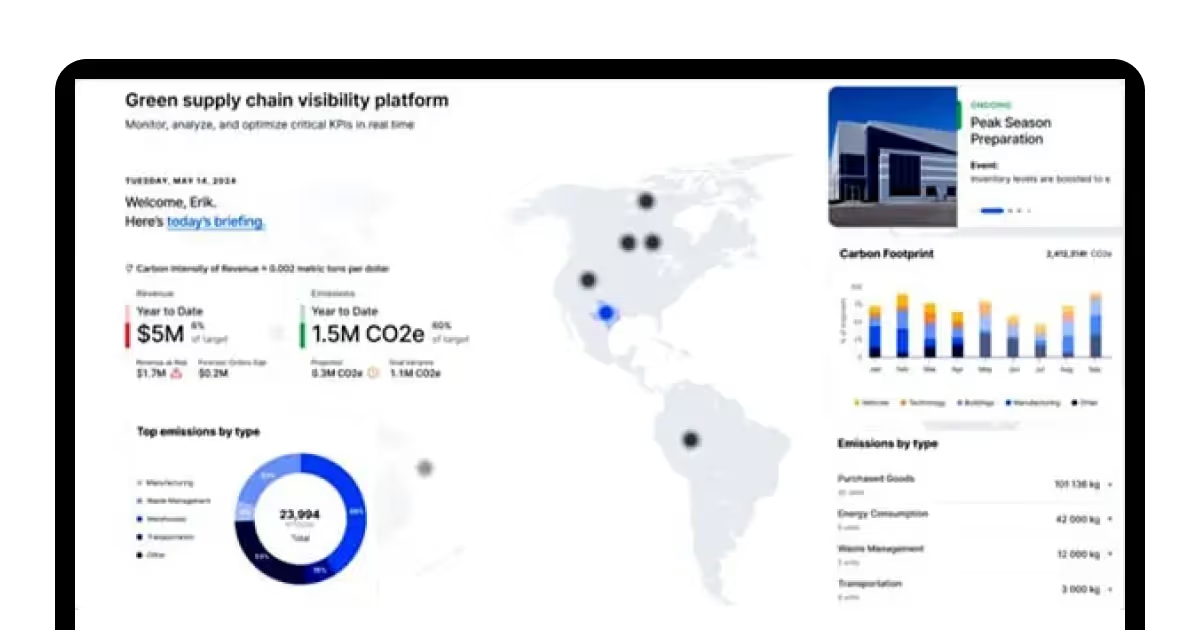
SAP Sustainability Footprint Management embeds carbon tracking into procurement and ERP workflows, covering Scope 1, 2, and 3 emissions. Its lifecycle assessment tools replace rough estimates with actual product-level data, and built-in dashboards support net-zero planning. It is most practical for organizations already running SAP infrastructure. Pricing comes bundled with the broader SAP suite.
TrusTrace focuses on traceability and compliance, mapping suppliers across tiers and using AI and blockchain to validate certifications and flag risks, including forced labor. It supports compliance with the EU Corporate Sustainability Due Diligence Directive and similar frameworks. Pricing is available on request and targets mid-to-enterprise organizations.
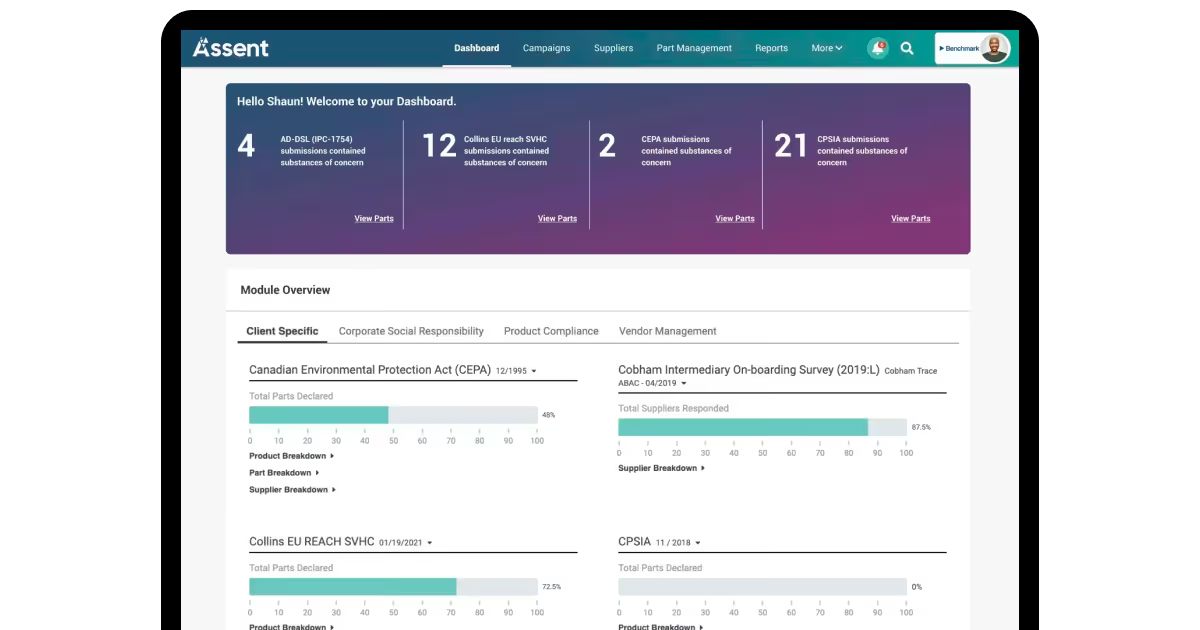
Assent is the sustainable supply chain software for manufacturers with complex product compliance requirements. It goes beyond Tier 1 suppliers to map the full chain, supports CSRD and CSDDD compliance, and offers multilingual automated workflows for supplier engagement. The custom pricing is available on request.
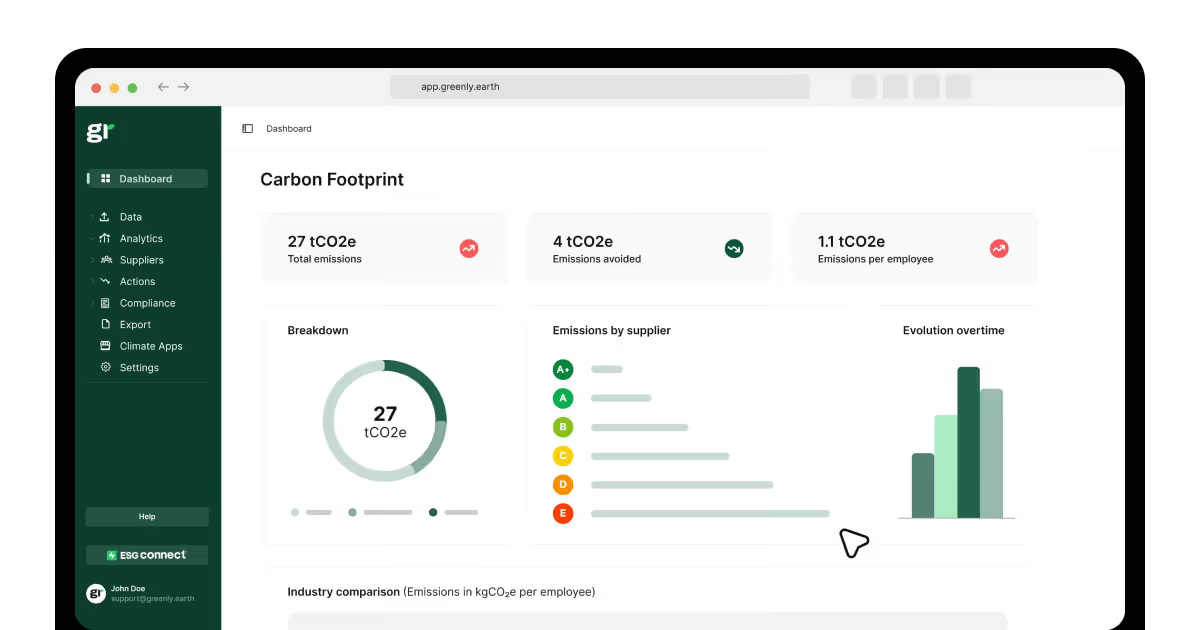
Greenly makes carbon footprint management accessible. Its supplier emissions dashboard and CSRD compliance tools are designed to be intuitive enough for companies that do not have large sustainability teams. Plans start from around $500 per month, making it one of the more accessible options for mid-sized businesses.
IntegrityNext is an AI-driven platform built for large enterprises with complex regulatory and ESG requirements. It automates due diligence, monitors news and data sources for supplier red flags, and generates standardized compliance reports across global regulatory frameworks. With enterprise pricing, it’s a better fit for larger organizations.
Blue Yonder approaches supply chain sustainability issues from the operations side, using AI and machine learning to optimize demand planning, inventory, and logistics. Cutting overstock, reducing waste, and planning efficient transport routes all contribute to sustainability outcomes. It is primarily an enterprise planning tool rather than a dedicated ESG platform, with licensing available on request.
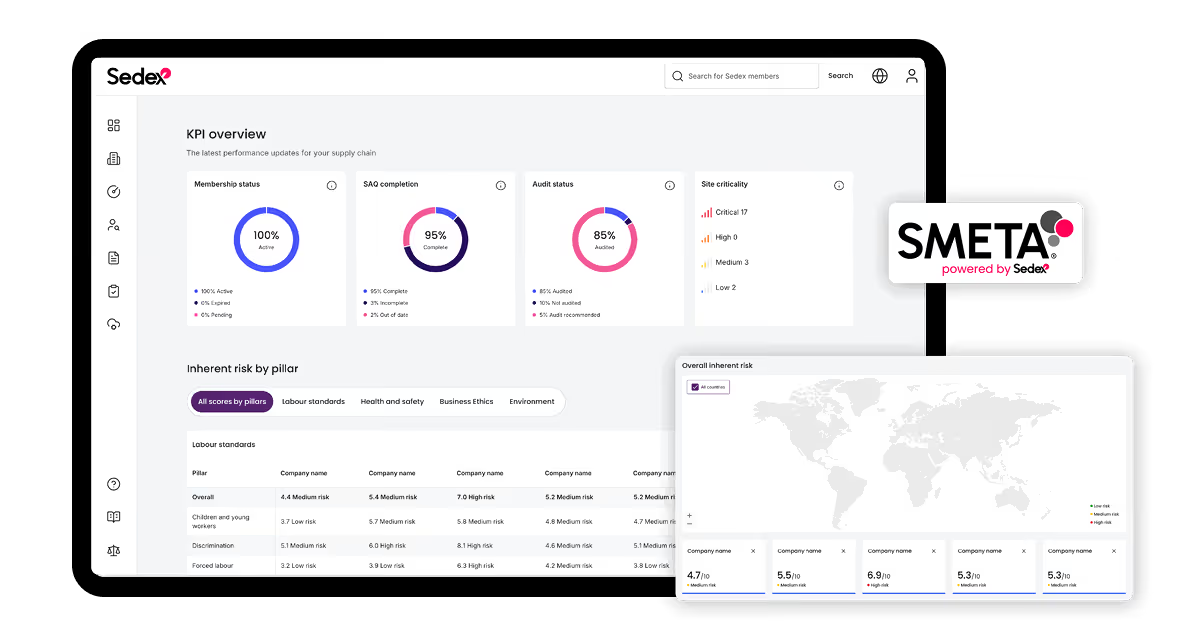
Sedex is the go-to platform for ethical trade auditing. Operating in over 150 countries, it centralizes supplier audit data using the SMETA framework, reduces duplicate audits, and gives companies a structured way to monitor labor conditions and social risks across their supply base. Membership starts from around $1,000 per year, varying by supplier volume.
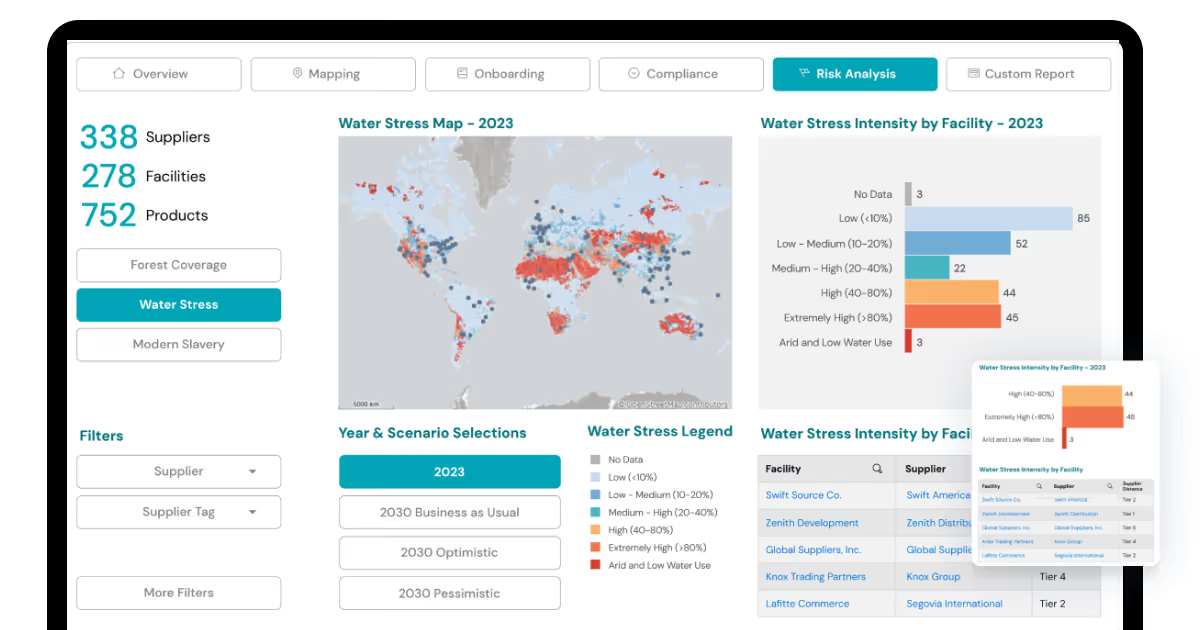
Transparency-One is right at the intersection of supply chain mapping and social risk management. It identifies environmental and social compliance risks, traces sourcing standards, and makes that information accessible across the supplier network. It works best for companies that need detailed visibility into where materials come from and the conditions under which they are produced. Pricing is available on request for mid-to-large enterprises.
Some companies need to measure emissions. Others need to map where their materials come from. Others need to manage supplier risk at scale. Choosing the right platform depends on what problem you are actually trying to solve.
Challenges of Green Logistics
What is sustainable supply chain management in reality? The social, economic, and environmental pillars together shape a well-rounded picture. The sustainability of supply chain management sounds straightforward in theory. In practice, it runs into friction at almost every turn.
High fuel dependency remains the dominant problem. The logistics and transport sector contributes over a third of global carbon dioxide emissions. Switching to electric vehicles helps, but charging infrastructure planning adds complexity. Many operators are still waiting for infrastructure to catch up before committing to fleet transitions.
Measurement is another persistent gap. Most businesses in the sector still use spreadsheets rather than lifecycle assessment tools. Without transparency, you can’t make decisions that make a real difference to reach supply chain environmental sustainability.
Technology adoption comes with its own barriers.Samuels' review in Frontiers in Sustainability identifies three recurring obstacles: interoperability between legacy systems and new platforms, cybersecurity risks that grow as supply chains become more connected, and the cost and complexity of upskilling workforces to operate digital tools effectively. Soori and colleagues add that integrating blockchain with IIoT, while powerful, requires significant technical investment and standardization across supply chain partners.
Regulatory fragmentation compounds everything. Environmental policies vary widely across markets, creating compliance burdens for companies operating across borders.
Adoption resistance is high. You can implement tracking and reporting at your company level. But with second or third-tier suppliers, it’s usually their responsibility to follow lead. Will they be willing to do it, with the need of investment, changing their operations, and retraining or hiring new staff? There’s a massive chance they won’t.
Navigating these challenges requires the right technical foundation. COAX supply chain software development services help businesses integrate AI, IoT, and blockchain capabilities into their existing operations. Whether you need better emissions visibility, smarter supplier monitoring, or tools that connect data across your chain, we build the infrastructure for sustainability in supply chain management that makes that possible without replacing what already works.
Best practices for achieving supply chain sustainability
To bring sustainability and supply chain management into one whole for your business, you should build a solid roadmap. It should connect your goals, regional and global regulations, your financial abilities and limitations, and your organizational structure. Based on 15 years of experience in the field, we put together some of the key things you need to do.
Start with emissions mapping, not goal setting. Most companies write sustainability targets before they know where their emissions actually come from. That gets the order wrong. Remember that 95% of your emissions hide across transport, sourcing, and disposal. Map first, then set targets based on what you find.
Go beyond Tier 1 suppliers. Only some companies know what is happening two or three tiers deeper than their direct operations. That is where labor violations, environmental damage, and sourcing risks tend to concentrate. Tools like blockchain and RFID now make multi-tier visibility achievable, not just theoretical.
Replace spreadsheet emissions tracking immediately. Using spreadsheets to calculate emissions only produces rough estimates. Lifecycle assessment software produces product-level data that shows where reductions are actually possible.
Build sustainability into supplier contracts, not just audits. Audits catch problems after they happen. Contracts with specific, measurable ESG requirements, tied to renewal terms and pricing, change supplier behavior before problems develop. Deloitte found that 57% of companies struggle to align business interests with supply chain management and sustainability practices. Written contractual obligations close that gap faster than voluntary programs.
Apply circular economy thinking to packaging first. Packaging is the easiest place to implement circular principles because the design decisions are entirely within your control. Reducing material weight, switching to recyclable formats, and designing for return programs all deliver cost savings alongside environmental benefits. It is a low-friction starting point that builds internal momentum for broader circular initiatives.
Measure Scope 3 emissions with the same rigor as Scope 1 and 2. Less than about 40% of companies track Scope 1 and 2 closely, and far fewer apply equivalent discipline to Scope 3. Closing that gap requires supplier data agreements, standardized reporting formats, and the analytical tools to process what comes in.
Train suppliers, not just your own teams. Supply chain sustainability learning has to extend to your supplier network. Shared training programs, sustainability workshops, and knowledge exchanges produce better outcomes than compliance checklists.
Use route optimization as a quick win on transport emissions. Logistics accounts for over a third of global carbon dioxide emissions. AI-driven route planning, load consolidation, and modal shifting from air to sea or road to rail deliver measurable reductions without waiting for fleet electrification. MIT research confirms that better use of existing infrastructure consistently finds efficiency gains that new technology alone cannot deliver.
At COAX, we have a vast expertise building software for businesses that operate complex supply chains. We work across the full development cycle, from discovery and architecture through build, integration, testing, and long-term support. We focus on that integration layer, whether that means connecting IoT data to your reporting systems, AI-driven risk monitoring into workflows, or building blockchain-based traceability into supplier onboarding processes.
To help you implement sustainable supply chain practices, we build analytics platforms that give you real visibility into supplier performance, emissions data, and operational efficiency. We also develop B2B supply chain management solutions that improve how you communicate, transact, and share data with partners, reducing the friction.
Sustainable supply chains in action
To achieve success in your efforts, you should learn from businesses that already tried and won. Let’s review some of the most efficient sustainability in supply chain examples in the market.
Patagonia started asking hard questions about its supply chain in 1985, long before sustainability became a business priority. Today, its Supply Chain Environmental Responsibility Program covers energy consumption, water use, waste, greenhouse gas emissions, and chemical impact across every supplier facility it works with. The company designs products to be repaired and returned rather than replaced.
IKEA's decarbonization framework runs on three words: Reduce, Replace, Rethink. The company sources nearly all its wood from FSC-certified or equivalent forests and has committed to using only recycled or renewable materials across its product range by 2030. On logistics, it targets a 70% reduction in emissions per transport movement and an 80% absolute reduction from logistics activities by 2040, with zero-emission trucks and vessels for all product transport by that date.
Unilever set five nature-based supply chain goals that go beyond carbon counting. These include verified sustainable sourcing for 95% of key crops by 2030, regenerative agriculture across one million hectares of farmland, and water stewardship programs in 100 water-stressed locations. The company works across an extensive supplier network to enforce responsible sourcing of raw materials and packaging, with circular economy principles built into procurement decisions.
Walmart's Project Gigaton asked suppliers to collectively avoid, reduce, or sequester one billion metric tonnes of greenhouse gas emissions. They hit that target six years ahead of schedule. As one of the greatest supply chain sustainability examples, Walmart is now targeting 100% renewable energy across its global operations.
Apple has committed to making its entire supply chain and all products carbon neutral by 2030. The company runs supplier clean energy programs that push renewable energy adoption across its manufacturing base, and has developed proprietary recycling technology to recover materials from returned devices. Recycled content now spans core components across its product lineup.
Nike has set a science-based target of a 65% reduction in greenhouse gas emissions per unit by 2030 from its 2015 baseline. On materials, the company shifted heavily toward recycled polyester across core product lines and maintains long-running supplier environmental monitoring programs. It has also piloted circular design in select ranges, building products with disassembly and material recovery in mind.
By the end of 2024, 97% of L'Oréal's production sites ran on renewable energy. The company went further by working with its suppliers to set their own Science Based Targets, treating supplier decarbonization as part of its own net-zero commitment. That resilience alongside responsibility, reflects how leading companies work now.
If you want to repeat these shining implementations and balance your financial goals with social responsibility, COAX’s sustainable supply chain consulting can help you bridge the gap. We start with a rigorous assessment of your technical and operational background to help you adjust your roadmap. For every issue and potential, we can build a tailored solution that incorporates modern technology and a deep understanding of current market demands.
FAQ
What is a sustainable supply chain from the financial perspective?
According to Zhou and Masi, sustainable supply chain finance (SSCF) uses financial incentives to drive ESG improvements across supply chains. Rather than treating sustainability as a compliance cost, SSCF ties financing rates directly to suppliers' environmental and social performance, making better sustainability scores worth real money through lower interest rates and early payment access.
What is supply chain sustainability's key benefit for SMEs?
Access to capital. Small suppliers typically face liquidity shortages that prevent them from investing in cleaner technologies or better labor practices. SSCF programs solve this by offering early invoice payments and preferential financing rates to suppliers who meet ESG criteria, turning sustainability performance into a financial asset rather than an operational burden.
How can I assess the sustainability of my supply chain?
Start by mapping emissions across all tiers using lifecycle assessment tools rather than spreadsheets. Then evaluate suppliers against standardized ESG criteria covering environment, labor practices, and governance. Platforms like EcoVadis provide structured scoring across 21 sustainability criteria. Scope 3 emissions, which account for roughly 75% of total company emissions, should be your primary measurement focus.
How does COAX develop secure and efficient supply chain sustainability software?
COAX holds ISO/IEC 27001:2022 certification covering security management, risk assessment, and ongoing monitoring, alongside ISO 9001 certification guaranteeing process quality. We build sustainability software through full-cycle development, integrating security by design from architecture through deployment, with continuous support ensuring your system stays compliant as regulations and supply chain conditions evolve. Fifteen years in the field inform every technical decision.










































































_.avif)








%2520explained.avif)

We are interested in your opinion