You hired more warehouse employees. Some got injured because of heavy boxes and imperfect processes. Some made picking mistakes and fulfilled the order incorrectly. The rest of them worked fine, but you didn’t expect the Black Friday surge and didn’t have everything in stock.
In any of these cases, you lose your hard-earned revenue. However, warehouse automation solves each problem. The gap between where warehouses are and where they need to be is widening fast. Here is what is driving that pressure:
Labor costs consume 50 to 70% of warehouse budgets and keep rising.
Manual picking errors cost up to $100 each and compound across thousands of daily orders.
Space constraints force costly expansions that smarter storage systems can prevent.
Customer expectations for speed and accuracy have outpaced what human-only operations can deliver.
Robotics, AS/RS, and GTP systems now solve problems that required entire teams a decade ago.
Integration between WMS, hardware, and data turns isolated tools into a coordinated system.
ROI on automation reaches 219% within three years when calculated correctly.
Implementation succeeds or fails based on process design, not just technology choice.
In this guide, we break down the key warehouse automation technologies, benefits, and integration nuances. We’ll also go through the best solutions in the market and the top modern warehousing methods and practices to help you put your success on autopilot.
What is warehouse automation?
Warehouse automation is the process of moving inventory into, within, and out of warehouses to minimize human involvement. It replaces labor-intensive, repetitive physical work and manual data entry with systems that handle these tasks faster and more accurately.
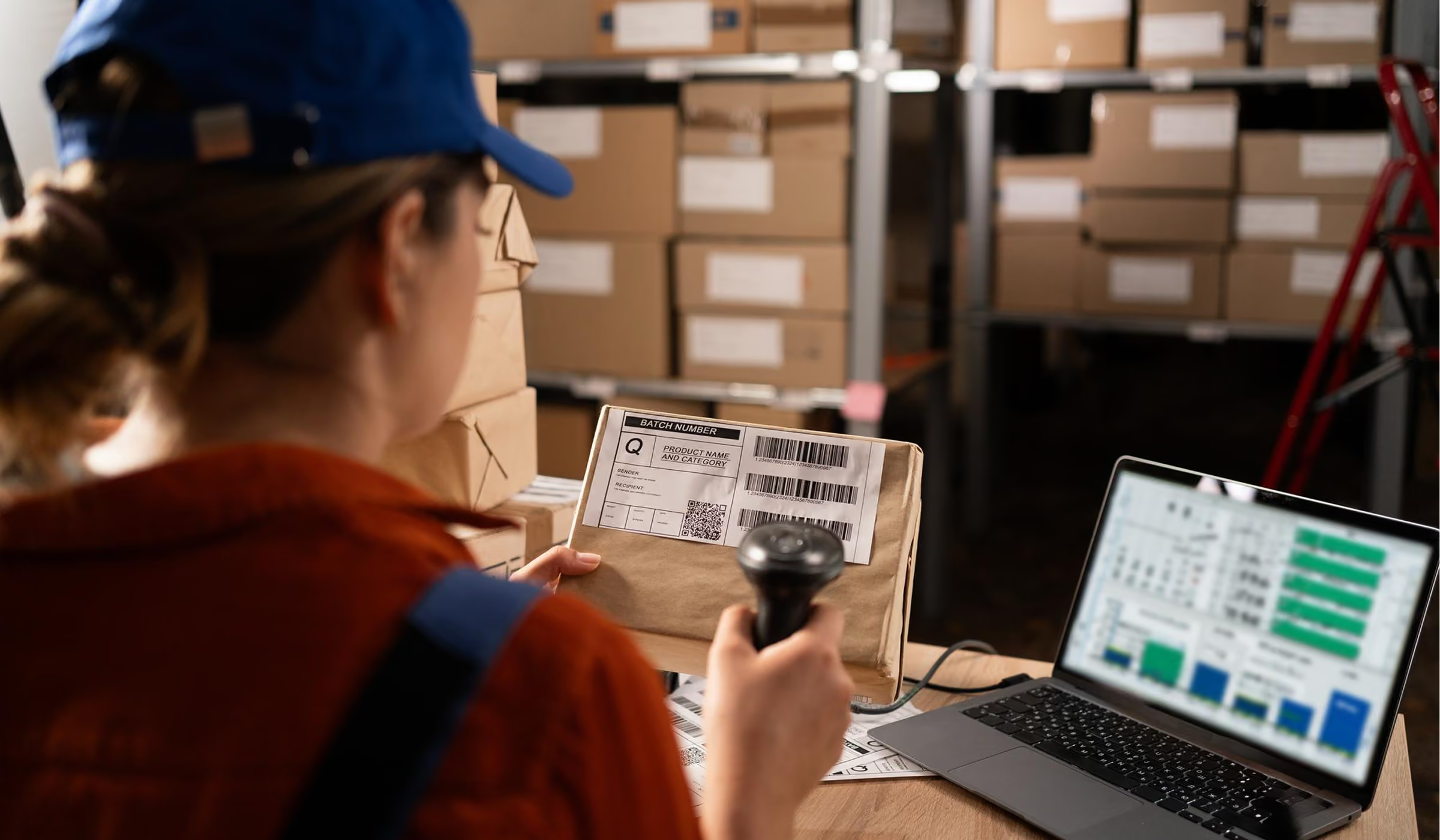
For instance, a worker loads a heavy package onto an autonomous mobile robot. The robot carries the inventory to the shipping zone while the software records every movement and keeps the records current. Humans and machines work together, each doing what they do best.
Physical robots are not always part of the picture, though. In many cases, robotic process automation means using software to replace manual tasks like data entry, inventory counting, or order tracking. Whether it involves robots, software, or both, the goal is the same: fewer errors, lower costs, and less physical strain on workers.
Manual vs. semi-automated vs. fully automated warehouses
The three types of warehouses differ mainly in how much technology does the work versus how much humans do. Let’s define the types of warehouse automation according to this division.
In a manual warehouse, workers handle everything physically, from moving goods to recording inventory. This gives you flexibility and lower upfront costs, but it comes with a real ceiling on speed and accuracy, and higher labor costs over time.
A semi-automated warehouse combines human labor with targeted automation tools like conveyor systems, barcode scanners, or goods-to-person picking stations. Workers still oversee and perform many tasks, but automation handles the most repetitive or physically demanding parts. According to research published in Safety, switching from manual to semi-automatic material handling can cut injury risk by up to 60% and reduce operating costs. Semi-automation costs less to implement than full automation and adapts more easily to changing business needs.
A fully automated warehouse runs with minimal human intervention. Advanced robotics, AI, and warehouse management solutions handle receiving, picking, packing, and shipping. As Amoo and team note in their comprehensive review, fully automated systems maximize throughput and accuracy but require substantial upfront investment and offer less flexibility when business needs shift.
Your choice depends on budget, order volume, product type, and how quickly you need to scale. However, the extent of automation isn’t enough to apply it to your business. You also need to understand the processes most suitable to choose to automate your warehouse.
What warehouse processes can you automate?
Almost every step of order fulfillment can be automated to some degree. However, each option has some nuances and specific technologies to implement as part of your automated warehousing system.
Receiving is where automation starts. Mobile devices and integrated software capture incoming inventory data instantly, feeding accurate records into every downstream workflow.
Putaway moves products from receiving to storage. Automated systems like stacker cranes and the Pallet Shuttle assign and execute storage locations based on WMS instructions, removing guesswork and cutting travel time.
Picking is the costliest manual activity in any warehouse. Travel time alone can consume up to 50% of a picker's working hours. Automated picking systems like goods-to-person solutions and autonomous mobile robots bring products to workers instead, cutting that waste impressively efficiently.
Sorting is handled by automated sortation systems and AS/RS equipment, which identify, separate, and route items, including fragile or oddly shaped ones, without manual intervention.
Replenishment happens automatically when inventory hits a set threshold. The system flags a reorder request without anyone having to notice or remember.
Packaging uses cartonization algorithms to select the right box size and material based on product dimensions and durability, reducing waste and cost.
Smart warehouse solutions for shipping combine conveyors, scales, dimension sensors, and label printers to select carriers, calculate rates, and prepare packages with no manual steps.
Load movement throughout the facility relies on pallet conveyors, overhead conveyor systems for lighter loads, and shuttle cars that connect warehouse zones faster than traditional conveyors.
Returns flow through automated sorting equipment that directs products back to stock or to designated storage without manual sorting.
Finally, pallet checkpoints embedded in conveyor circuits automatically identify, weigh, measure, and inspect pallets on arrival, catching quality issues.
As you see, all of these opportunities cover your lifecycle practically fully. Do you need to put each on autopilot? Probably not. So, should you bother about warehouse management automation at all?
Why should you automate your warehouse?
The answer is simple: because your competitors probably already are, judging from the quick market adoption. The global market for warehouse automation technologies was worth $19.23 billion in 2023 and is on track to hit $59.52 billion by 2030, growing at 18.7% annually. North Retail and e-commerce drive the most investment, and hardware still makes up over 58% of total spending.
However, the gap for you to fill is still large. Only about 25% of warehouses have implemented any form of automation, and just 10% use advanced automation. That gap between market growth and actual adoption is wide, and it represents both a problem and an opportunity.
Here is the problem side. Labor accounts for 50 to 70% of total warehouse operating costs. Real wages rose 40 to 50% from 2020 to 2024, eating into margins for warehouses that still run manually. The cost of a single mispick can reach $100, and 62% of companies name human error from manual processes as their top cause of inventory fulfillment issues.
Here is the opportunity side. Warehouses using robotics see efficiency gains of 25 to 30% within the first year. Warehouse automated picking systems reduce fulfillment errors by up to 70% and improve order speeds by up to 300%.
Are businesses catching up with the existing gap? Yes! 70% of top logistics and supply chain executives plan to invest around $100 million in automation over the next five years, according to a McKinsey survey. The pressure behind that decision is real: labor is harder to find, order volumes are rising, and customers expect faster, more accurate fulfillment.
Signs your warehouse is ready for automation
There’s no universally accepted formula to define whether you need warehouse automation optimization. However, some patterns hint at the right answer.
Errors and delays are becoming the norm. Picking mistakes, order backlogs, and unpredictable fulfillment times are signals that your current processes have hit their ceiling. These problems get worse under peak pressure, not better. Research by Amoo confirms that manual processes in high-volume environments bring compounding inaccuracy. Automated systems maintain consistent accuracy across every shift.
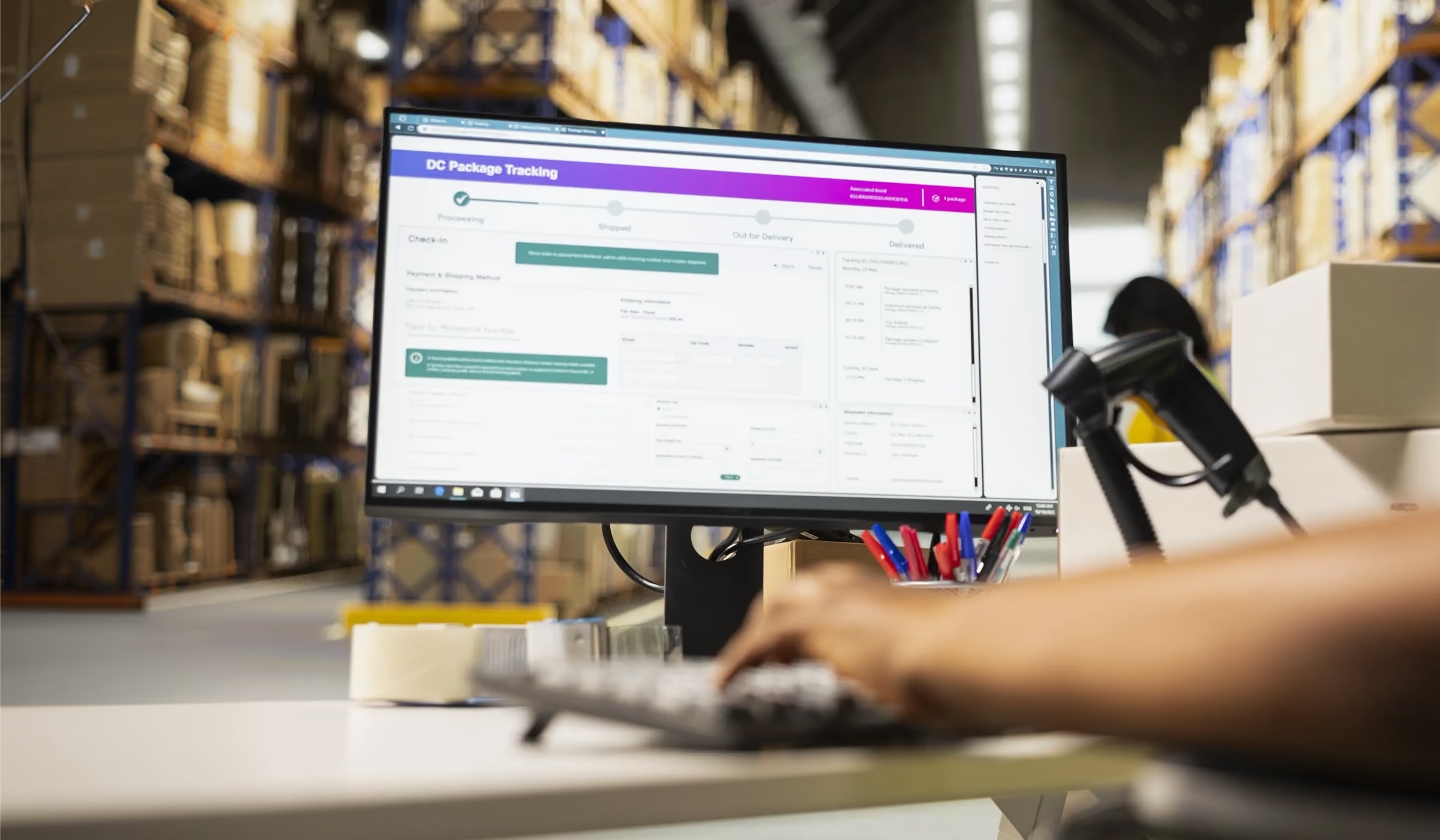
Your data is always behind reality. If your inventory records only reflect what someone entered manually hours or days ago, you are making decisions on stale information. Stockouts, overordering, lost pallets, and failed audits often trace back to this single root cause. When your warehouse grows beyond what a spreadsheet can track, you need automated warehouse systems that capture and update data continuously.
Getting more people on board doesn’t bring results. If rising wages, high turnover, and unreliable labor availability are limiting your ability to scale, adding headcount is not a sustainable answer. Labor volatility becomes a structural issue at a certain volume, not just a recruitment challenge. When consistent throughput depends more on who showed up that day than on your processes, automation stops being optional.
You are running out of space but not out of demand. Floor space fills up faster than most warehouse managers expect. Building or leasing new space is expensive and slow. Warehouse automation like AS/RS systems and goods-to-person solutions increases storage density and throughput within your existing footprint, often dramatically.
If two or more of these describe your warehouse today, the ROI case for automation is likely already there. The question is not whether to automate, but where to start. So let’s start with understanding the workflows of this technology better.
How warehouse automation works
No process is an island, so smart solutions start with bringing scattered operations together. Automating warehouse operations always begins with integrations and establishing communications between parts of your infrastructure.
Interaction between WMS, hardware, and data
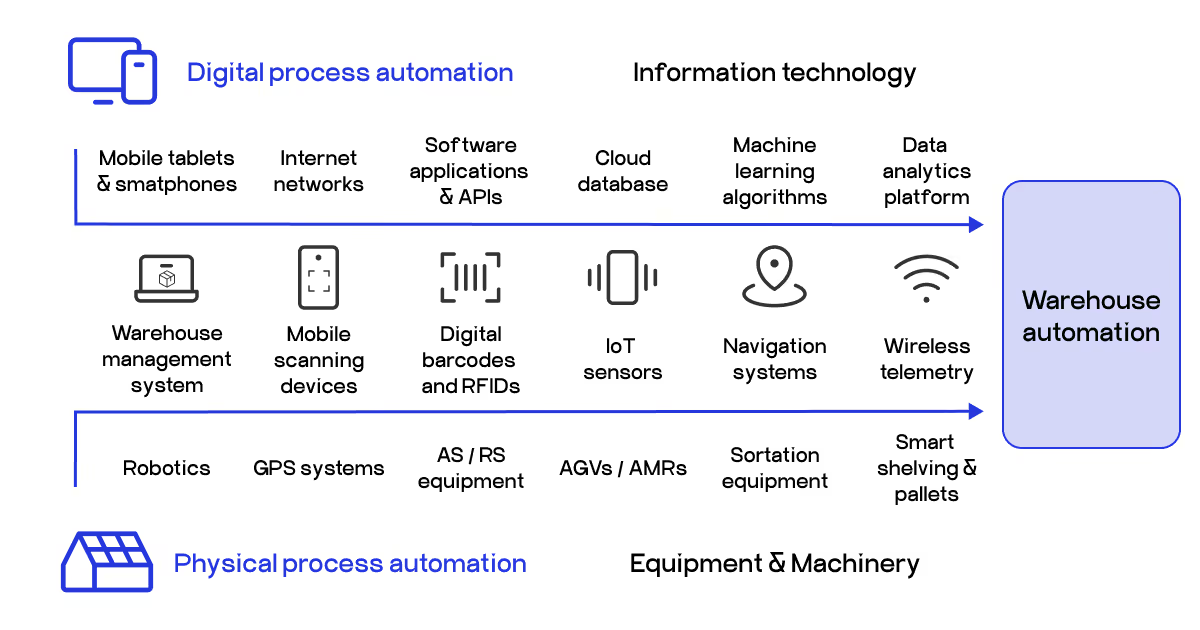
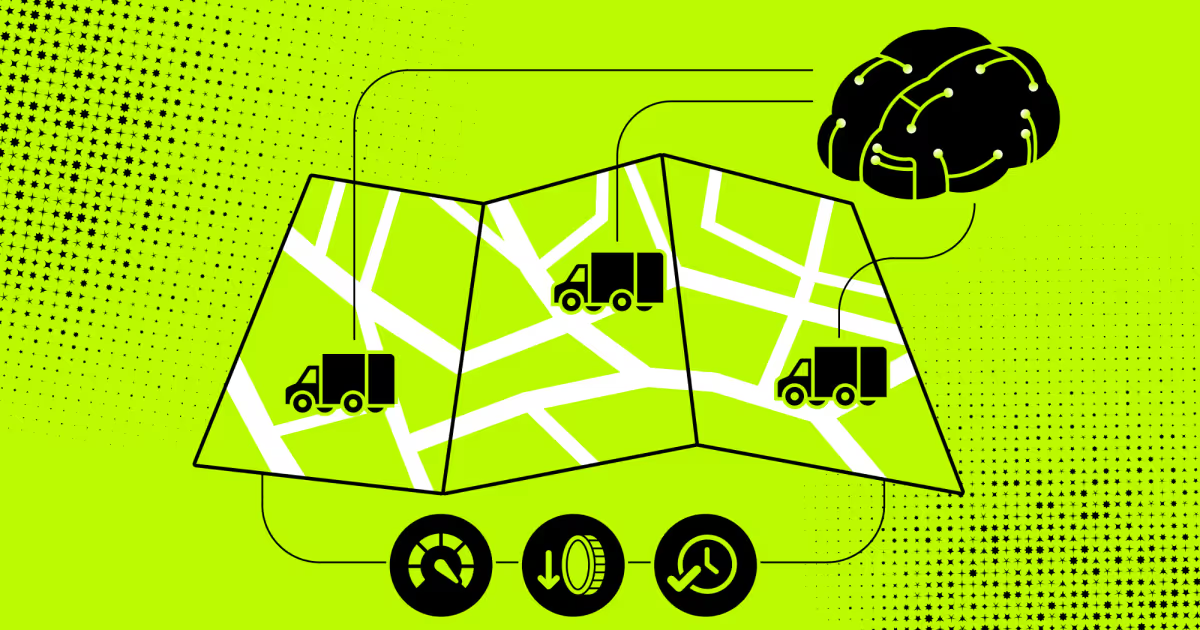
A modern automated warehouse is a living system with three parts: a brain, muscles, and a nervous system. The WMS automation is the brain. The physical hardware, robots, conveyors, scanners, and AS/RS systems are the muscle. Data is what connects them and keeps everything moving in sync (the nerves).
Here is how the loop works in practice. Hardware captures raw data constantly. RFID tags, barcode scanners, and IoT sensors track every product movement, inventory location, and order status in real time. That data flows into the WMS, which processes it and decides what happens next. The WMS then sends instructions back to the hardware, telling a robotic arm to pick a specific item, directing a conveyor to route a tote, or flagging a replenishment order. When the hardware completes the task, it confirms back to the WMS, which updates every record instantly. The loop closes and starts again.
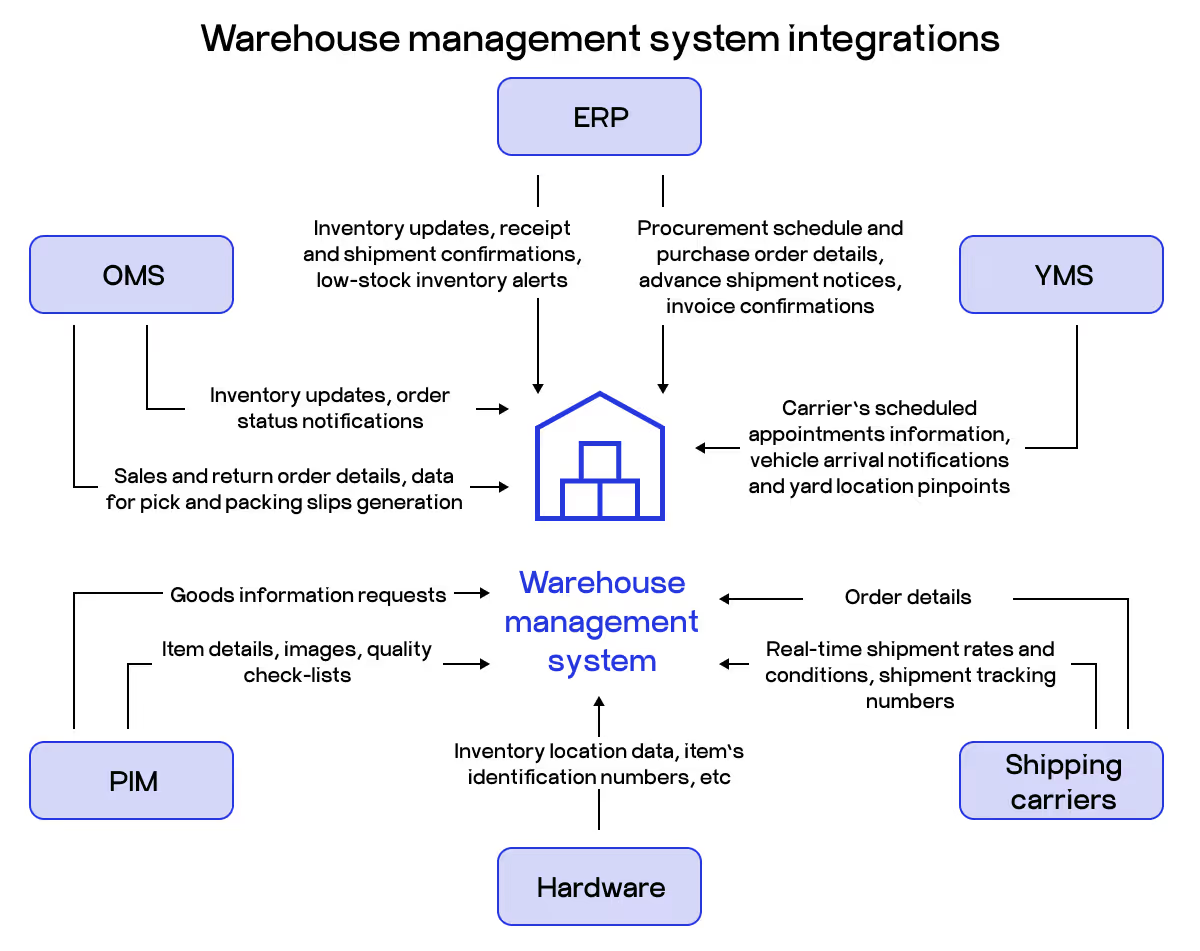
Most modern warehouses layer several systems on top of each other to make this work. The WMS manages inventory, orders, and fulfillment at the operational level. ERP sends inventory/orders to WMS, which coordinates picking/packing via OMS/PIM data. WMS directs ASRS hardware for storage/retrieval, updates yard locations via YMS, generates pick slips, and syncs shipping confirmations back to all systems. The ERP sits above all of them, connecting warehouse activity to finance, procurement, and demand planning at the enterprise level.
Three integration models connect these layers for any warehouse control systems.
The most common is WMS-directed integration, where the WMS acts as the single source of truth and coordinates everything below it.
API-based integration allows direct peer-to-peer communication between devices and systems, giving teams the flexibility to add or swap automation components without rebuilding the whole architecture.
Middleware integration uses a translation layer to bridge systems that cannot communicate directly, useful when older infrastructure needs to work alongside newer tools.
The practical result that gives you all the warehouse automation advantages looks like this: barcode scanners and RFID readers feed live inventory data into the WMS, which uses that information to direct both staff and equipment to storage locations organized by demand patterns and travel efficiency. When orders arrive, the system generates optimized pick lists, validates each step, and updates shipping records across the network in real time.
When the integration works, the warehouse stops being a collection of separate tools and becomes a coordinated system that scales with demand.
Categories of warehouse automation
As Bianco and team state, you need clear guidelines to invest in the right warehouse automation technology, because the available options span a wide range of complexity, cost, and capability. Here is how the four categories break down.
Basic warehouse automation is the starting point. This includes barcode scanners, basic conveyor systems, and traditional transport vehicles like forklifts. The main advantage is simplicity: low cost, easy to implement, and no prior automation experience required. The limitation is still present, though - such systems are inflexible. A fixed conveyor cannot adapt as your operation changes, and you still need significant human labor on the floor to keep things running. This level works as an entry point, not a long-term answer for growing operations.
Warehouse management system automation adds software to the picture. A Warehouse Control System or WMS coordinates the identification, picking, and routing of orders through data rather than purely manual oversight. Voice-assisted picking is a common example here, where workers wear headsets that receive instructions directly from the system and confirm actions by verifying location codes. The data-driven approach improves decision-making and gives performance visibility. The catch is that system automation without physical automation still leaves too much manual labor in the process. This might suit small warehouse automation options, but not enterprise businesses.
Mechanized warehouse automation is what most people picture when they hear the word automation. This is where AS/RS systems, AGVs, and AMRs enter the operation. AS/RS systems retrieve and deliver items to operators or workstations automatically. AGVs move inventory across fixed paths and work best in large, simple warehouse layouts where space allows. AMRs are more flexible, navigating independently without fixed guide paths, making them better suited for complex or smaller facilities. Both carry health and safety considerations that require proper planning and physical safeguards.
Advanced warehouse automation combines all three previous levels into a fully integrated, end-to-end system. System automation and mechanized automation work together so that data-driven decisions and physical execution happen simultaneously without human handoffs between them. An example is advanced wave picking, where the WMS batches orders by destination or order number and coordinates AMRs to fulfill each wave efficiently. This level delivers the highest efficiency and return, but the upfront investment is substantial.
For any of these types of warehouse management automation, you need to apply the right technological basis.
Types of warehouse automation technology
Your warehouse can be improved with a wide range of tools. The current warehouse automation technology trends span from software that coordinates inventory to physical systems that move goods without human involvement. Here is a breakdown of the main categories.
Goods-to-person (GTP) systems are the ones we mentioned multiple times before. In practice, they bring inventory to the operator instead of sending workers to find it. This eliminates the walking time. GTP setups include vertical lift modules, which use automated trays retrieved from vertical towers, carousels that rotate shelving to present items at a fixed workstation, and conveyor-based systems that route totes directly to pickers. These work best in high-volume environments with a wide SKU variety.
Autonomous mobile robots (AMRs) navigate warehouses independently using sensors, cameras, and AI-generated maps. They adapt to their environment, rerouting around obstacles and working alongside human staff without fixed infrastructure. AMRs handle picking support, tote transport, and replenishment tasks across dynamic environments like e-commerce fulfillment centers. Deployment of this automated warehouse equipment is fast since they need no guide paths or floor modifications.
Automated storage and retrieval systems (AS/RS) use cranes, shuttles, or robotic mechanisms to store and retrieve goods from high-density racking with precision and speed. Unit-load AS/RS handles full pallets, mini-load systems handle totes and cartons, and micro-load systems manage very small items. AS/RS systems are particularly effective in cold storage, pharmaceutical, and food and beverage operations.
Automated guided vehicles (AGVs) move materials along fixed routes defined by magnetic strips, floor markers, or lasers. They are reliable and consistent for repetitive transport tasks in large, straightforward layouts like manufacturing facilities ( alternatively, automation in distribution centers). Their limitation is inflexibility: fixed paths mean they struggle in complex or frequently changing environments.
Robotic picking arms handle picking, packing, and sorting tasks. Paired with computer vision, they identify and grasp items of varying shapes and sizes, reducing the need for manual touchpoints in repetitive fulfillment tasks.
Conveyor systems move products between receiving, storage, picking, and shipping zones. They range from simple roller conveyors linking two areas to complex multi-level networks integrated with sortation systems and robotic stations.
Automated sortation systems identify products using barcode scanners, RFID readers, or optical sensors, then route them automatically based on destination, order priority, or product type. These are standard for automated warehouses in parcel delivery and e-commerce fulfillment, where high volumes of mixed SKUs need to be sorted fast.
Automated dimensioning systems capture the precise weight, dimensions, and shape of parcels and pallets automatically. This data feeds directly into shipping rate calculations, storage planning, and load optimization, removing manual measurement.
Pick-to-light and voice-directed picking guide workers to the right location and quantity using light displays or audio instructions. These sit in the middle ground between fully manual and fully robotic automation in warehouse management, improving speed and accuracy without the capital investment of full automation.
Drones are still early in warehouse adoption, but are being used for inventory scanning in large facilities with high shelving, inspection of hard-to-reach areas, and security monitoring. They are not yet a primary automation tool for most operations, but adoption is growing as the technology matures.
Despite such a wide diversity of technologies forming the basis of automated warehouse systems, the hardware only works as well as the software coordinating it. At COAX, our work sits at this integration layer. We build and connect WMS platforms that serve as the operational core of automated warehouses, managing inventory and automated order management systems for routing, task assignment, and fulfillment workflows. A well-configured WMS is what turns individual automation tools into a coordinated system.
We also work with scanning technology integrations, connecting barcode scanners, RFID readers, and IoT sensors to give the WMS accurate, live data to act on. On top of that, we apply logistics AI analytics solutions to help warehouse operators spot inefficiencies, forecast demand patterns, and make smarter decisions about labor allocation and inventory placement. The goal is not just to automate tasks but to give your team the visibility to keep improving.
Real-world examples of warehouse automation
Theory can be useful, but watching technology work in practice is always better. Let’s learn from some companies that implemented warehouse automation.
Amazon's automation story started in 2012 with its acquisition of Kiva Systems. The Kiva robots, a type of AMR, moved shelving units loaded with products directly to human operators. Since then, Amazon has layered in additional systems. Sequoia combines mobile robots with automated picking stations that position items ergonomically for operators. Sparrow uses computer vision and AI to detect, select, and sort individual items into bins before final packaging.
Manitou Group boasts 500 order lines per hour in 560 square meters. This French manufacturer of material handling and earthmoving equipment, needed to speed up spare parts pickin across 16,000 SKUs. The company installed a Mecalux Shuttle System with two high-performance pick stations at its logistics center, and paired it with Mecalux's Easy WMS. as a result, 500 order lines are processed per hour using a goods-to-person method, with 20,000 boxes managed in real time across just 560 square meters.
IKEA has one of the most known warehouse automation examples of automating an existing facility without stopping operations. IKEA Components took a harder path, automating its existing warehouse in Slovakia, while keeping operations running throughout the project. The company installed automatic trilateral stacker cranes and pallet conveyors inside a pre-existing building structure. The finished system spans 12 aisles and achieves a 99% order fill rate.
Brazilian agribusiness cooperative Copacol centralized its logistics in a fully automated distribution center in Corbélia, Brazil, operating two separate automated warehouses at different temperatures: one at minus 25 degrees Celsius for frozen products, and one at 4 degrees Celsius for refrigerated goods. Stacker cranes handle all storage autonomously, replacing forklifts in an environment where human workers face real physical risk from cold exposure and heavy loads. The outcome is a 20% productivity increase and daily shipments of 925 tonnes of meat.
In October 2025, Macy's opened a 2.5 million square foot fulfillment center in China Grove, North Carolina, its largest and most technologically advanced facility to date. It is the first site in the Macy's network to operate with an advanced automated warehouse management system. China Grove uses WMS-level coordination on top of the physical automation. The facility handles all product categories from a single location, reducing split shipments and improving delivery speed.
These examples sound compelling and ambitious. Cutting costs and improving capacity is what most businesses in the industry want. Let’s check if the technology market has something ready-made to adapt to your use case.
Useful tools for managing warehouse automation
Once automation is in place, you need tools to keep it running at peak performance. Here are the main off-the-shelf platforms warehouse operators use today to keep issues off their shelves (pun intended).
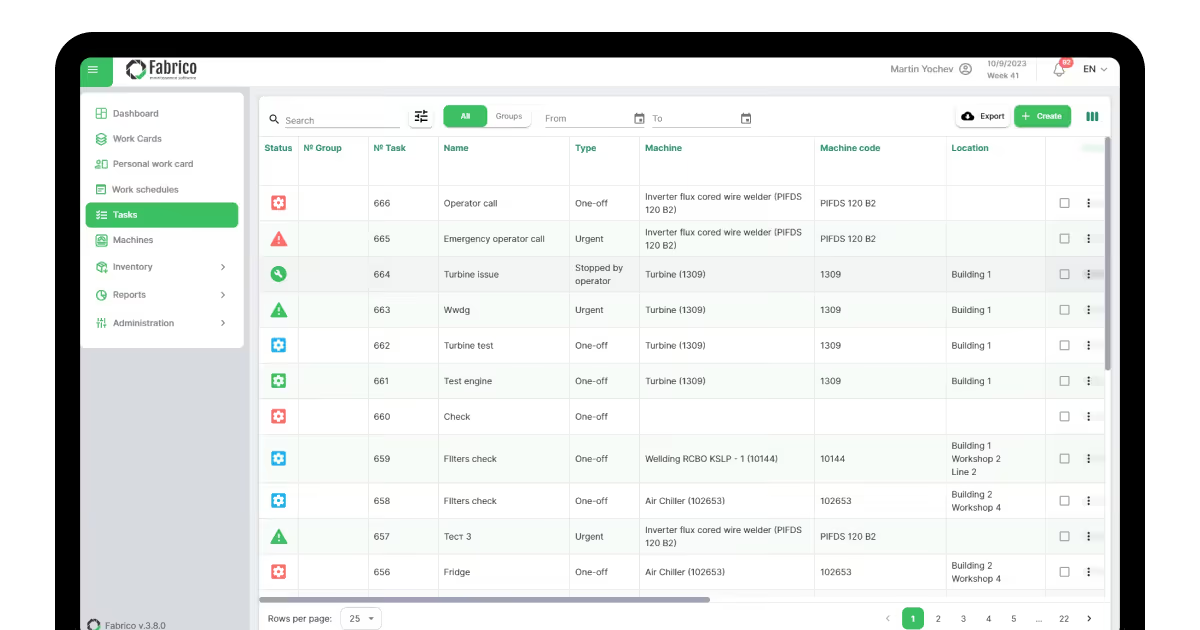
Fabrico is built for manufacturing plants that need to tie equipment health directly to operational throughput. It connects to the production floor, logs downtime, triggers rapid-response work orders, and monitors machine runtime hours to schedule preventive maintenance. Technicians can scan broken components on a mobile app, locate spare parts instantly, and access fault recovery guides for specific error codes. Setup takes weeks, not months. This automated management system is best for operations that treat their factory like a high-performance production line.
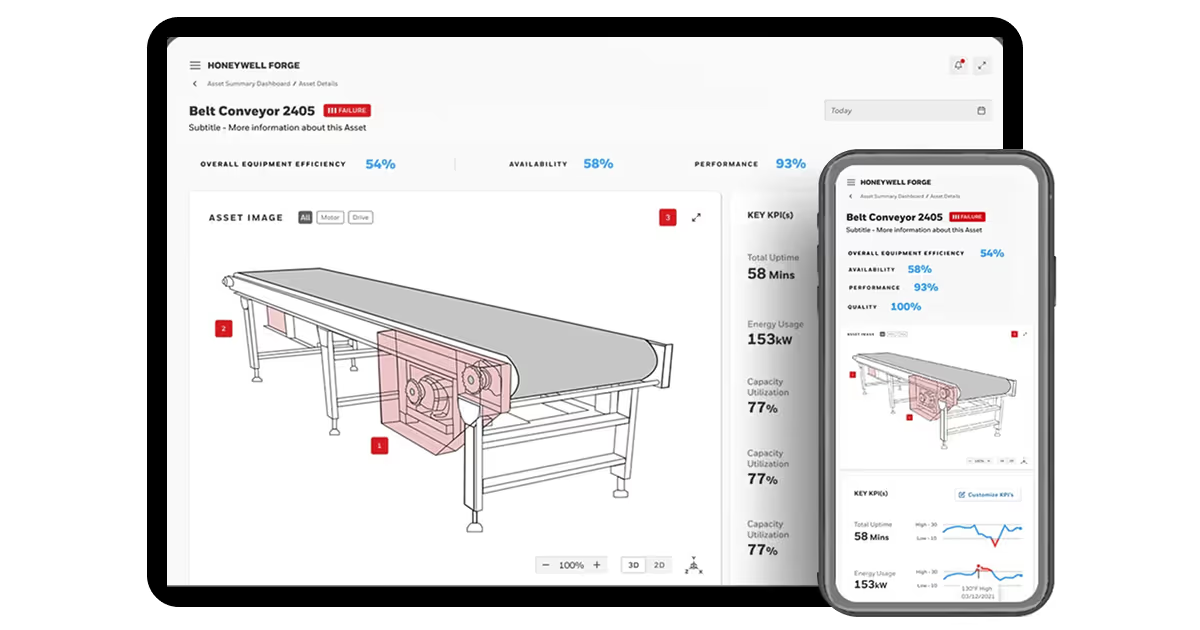
Honeywell Forge is the natural fit for facilities already running Honeywell Intelligrated hardware. It provides deep asset health diagnostics for Honeywell-specific equipment, including loop sorters and palletizers. However, there’s a downside - it works poorly with third-party equipment from vendors like Dematic or Vanderlande. Logically, it’s the best fit for Honeywell-native environments rather than mixed hardware fleets.
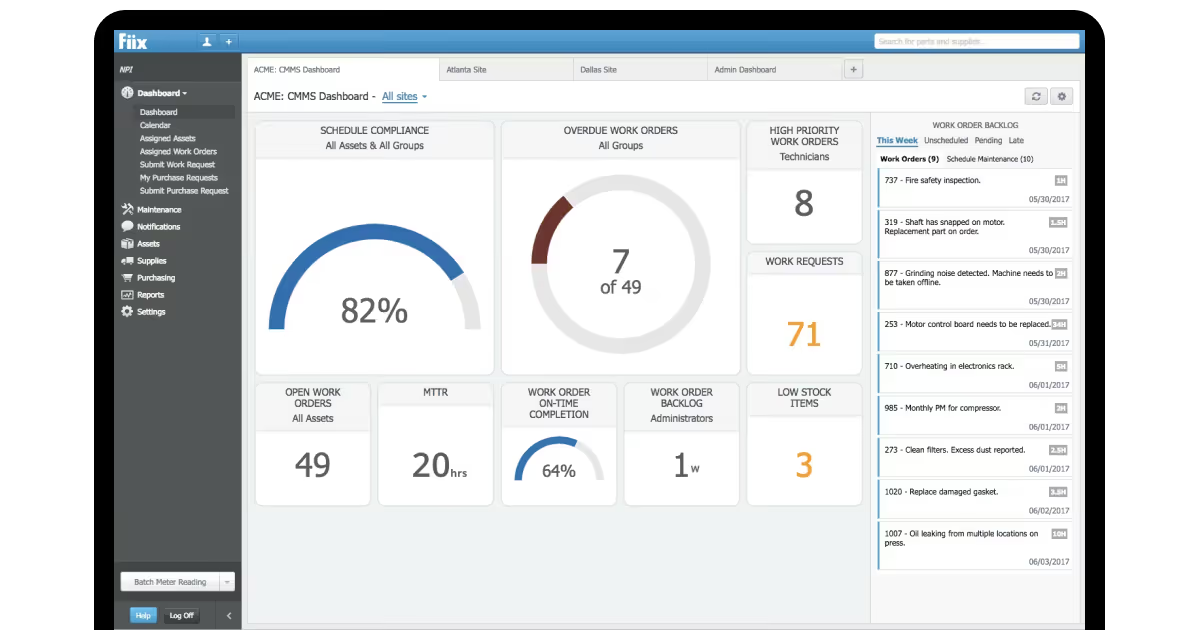
Fiix by Rockwell Automation connects well to facilities running Allen-Bradley PLCs, pulling tag data to trigger maintenance actions automatically. It offers strong multi-site reporting for warehouse networks. The trade-off is complexity: it is an enterprise engineering tool that can feel heavy for average logistics teams.
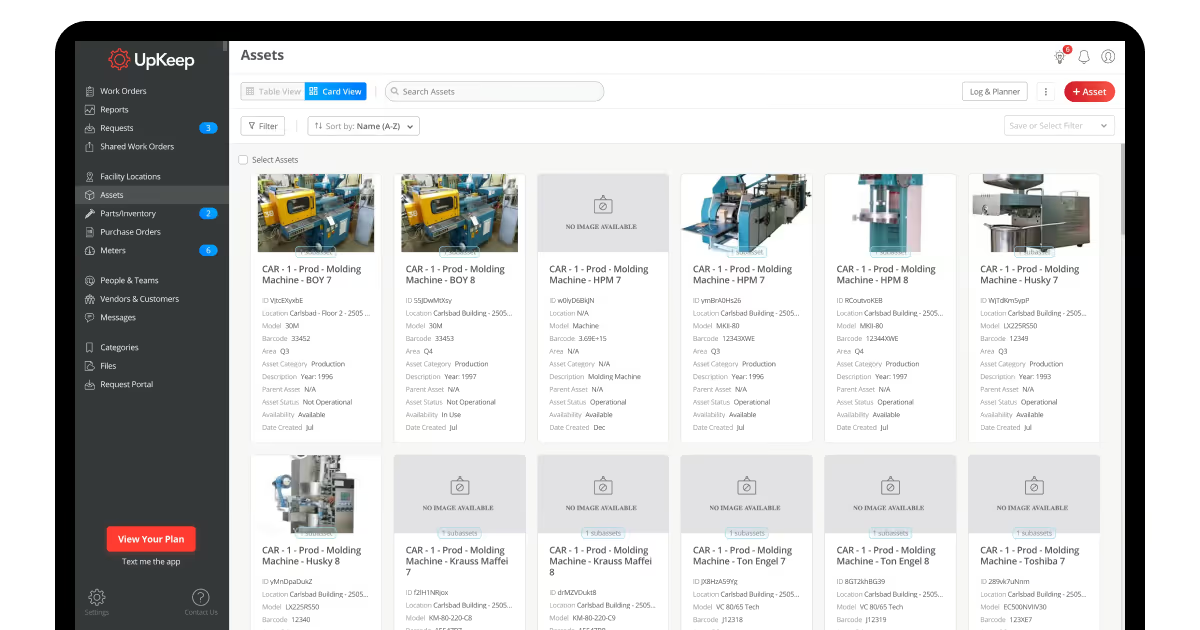
UpKeep works best in facility-heavy warehouses where most maintenance time goes toward dock doors, lighting, and HVAC rather than automation equipment. This smart warehouse solution is mobile-first and easy to deploy across networks of simpler warehouses. It’s not the best option for predictive maintenance on high-speed sorters.
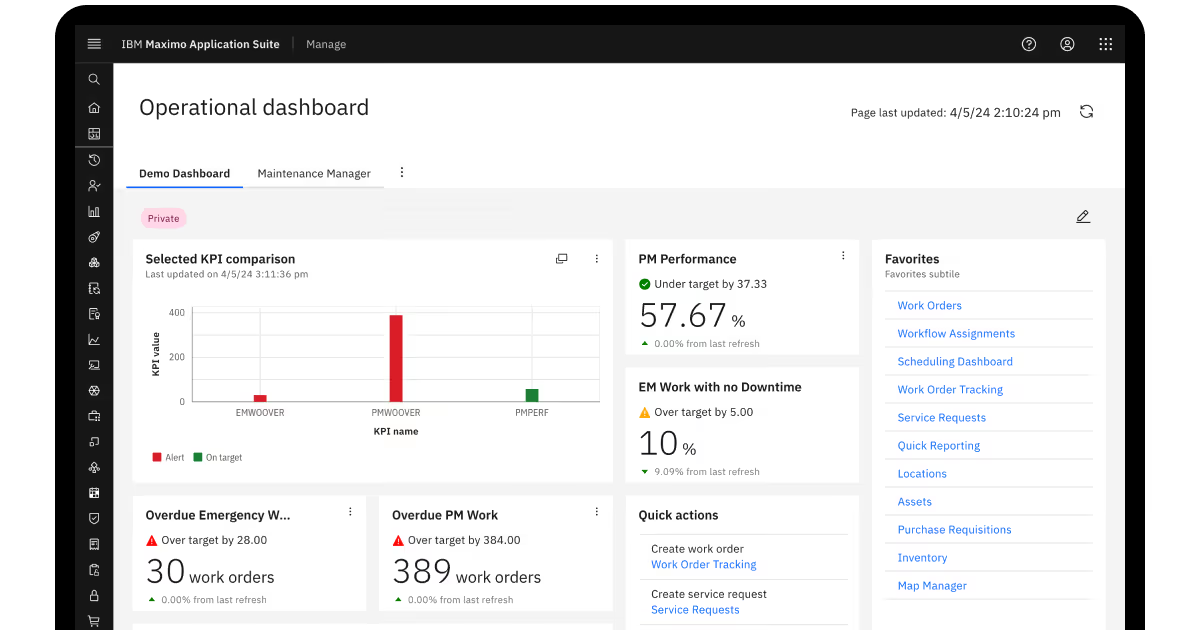
IBM Maximo operates at a different scale entirely, managing fleets, facilities, and automation in a single database across global networks. The cost and implementation timeline, often measured in years, make it relevant only for the largest operators.
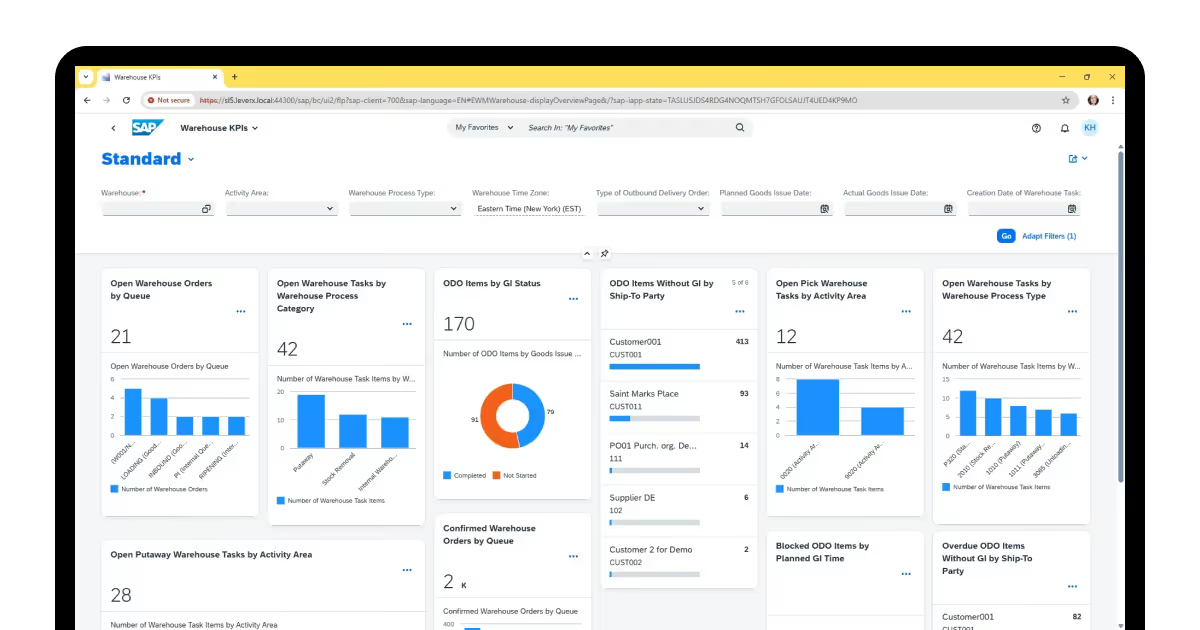
SAP Extended Warehouse Management covers the full stack from WMS to physical automated warehousing integration, supporting AGVs, AMRs, cobots, conveyors, voice picking, RFID, goods-to-person systems, and pick-to-light in a single platform. Pricing is enterprise-level and requires an integrator for implementation.
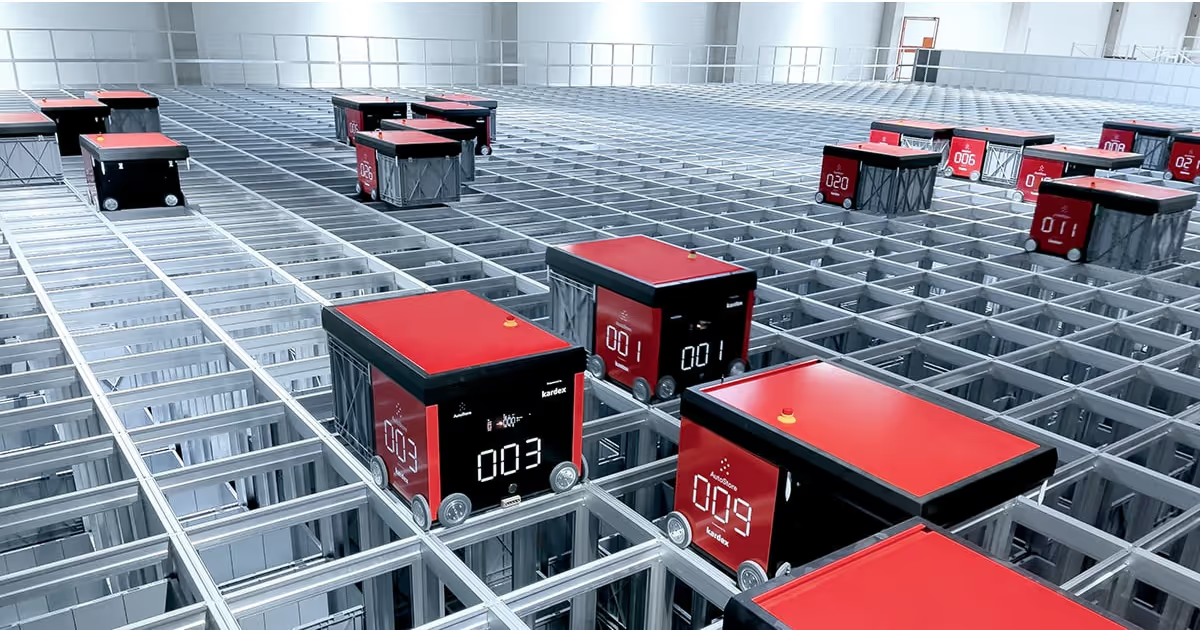
AutoStore operates across 56 countries and specializes in compact cube storage systems that pack inventory up to 400% denser than conventional shelving. It handles everything from frozen food to industrial parts, with smart robots managing storage and retrieval while software tracks inventory in real time. Its pick-to-light system uses QR codes and barcodes. Fully autonomous picking is also available. Pricing varies by installation size, but the system is typically positioned as a fully automated warehouse system for mid-to-large operations where space savings alone justify the investment.
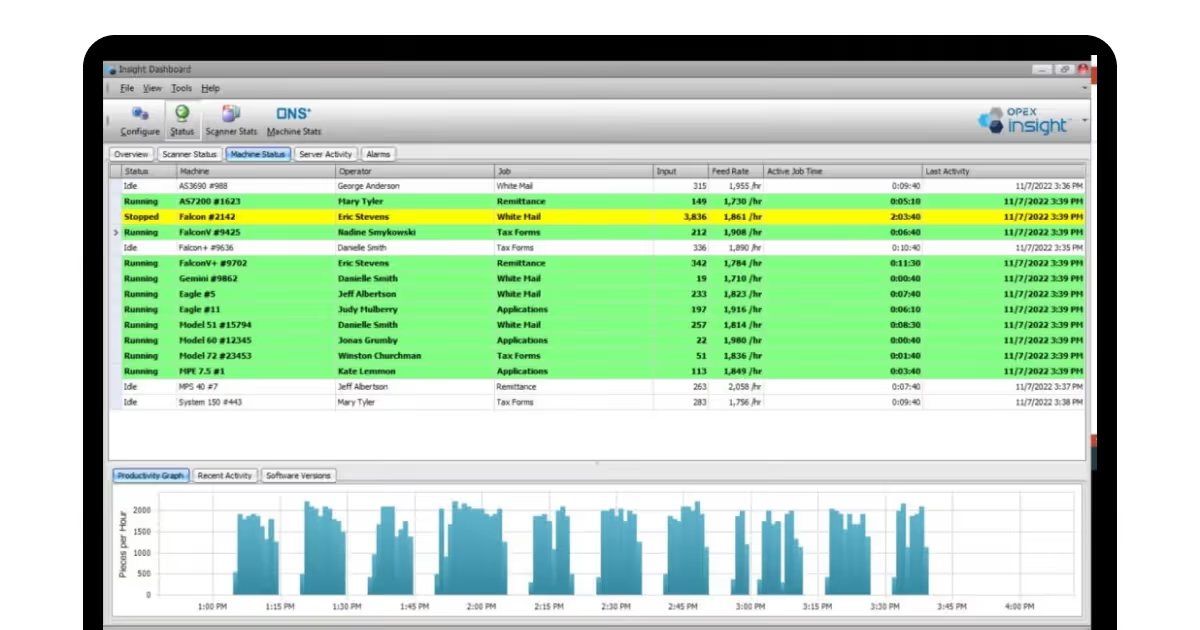
OPEX brings 50 years of experience and 333 patents to warehouse automation, currently serving 47 of the Fortune 100. Its product line includes the Perfect Pick for accessible goods-to-person picking, the Infinity system offering 35% more storage density than comparable options, and the Sure Sort series for higher-weight applications. The Remote Performance Monitor cloud platform gives access to live analytics and controls. OPEX also has a clear sustainability focus, with renewable energy programs and emissions reduction targets built into its business model. This closes the list of the best warehouse automation solutions as an end-to-end option for large enterprises with ambitious goals.
The technology and tooling choice is important - but defining the overall workflow is even more so. Let’s make a step-by-step breakdown of the actions to take.
Steps to automate your warehouse
Most automation projects fail not because the technology is wrong, but because the planning was rushed. Research by Fauzi and team confirms this: the most successful transitions from manual to automated warehousing systems start with precise measurement of current workflows before any technology decision is made. Here is a practical sequence that works, based on our 15 years of experience in the field.
Map what you actually do. Count how many people touch each process, how far they walk, how much they lift, and how often errors happen. You are looking for the tasks that consume the most labor hours, carry the highest injury risk, and create the most downstream problems. These are your best candidates for automation in warehousing. For instance, track overtime hours by department for one month. If a team consistently runs over because manual processes don’t keep pace with volume, that is your process.
Set a clear goal. Are you trying to process more orders per hour or free up floor space? Cut overtime costs? Giving a clear answer stops you from buying capabilities you don’t need and helps you reject solutions that won’t actually solve your problem.
Start with one process. Pick one high-impact, repetitive process and automate that first. Prove the ROI, learn how your team adapts, identify the integration issues early, then expand. A McKinsey analysis found that companies that piloted automation in focused areas before scaling achieved significantly better outcomes than those that attempted full facility overhauls from the start.
Choose automated warehouse management systems that can grow with you. The right question is: what will I need in three years, and can this system get there without a full replacement? Prioritize modular architectures. An AS/RS you can add aisles to, an AMR fleet you can scale up by adding units, and a WMS that integrates with new hardware through standard APIs.
Get your data clean before go-live. Accurate inventory records, clean SKU data, and standardized location naming are a must. A warehouse that goes live on a WMS with dirty master data will generate wrong pick instructions, misrouted goods, and inventory conflicts from day one. Allocate time and budget to preparation before implementation.
Train your team before the switch. Workers who understand why a process is changing and how the new system works are far more likely to use it correctly. The goal is not to replace your team but to remove the most physically demanding and error-prone parts of their jobs. When workers see that automation protects them rather than threatens them, adoption happens faster. To show them the advantages of an automated warehouse, run a parallel operation for at least two weeks after go-live. It costs a little extra short-term and prevents catastrophic order backlogs.
Automation technology only delivers results when the software layer underneath it is built correctly. That is where most warehouse projects run into trouble: the hardware works, but the systems connecting it to your operations, your ERP, your customer orders, and your inventory records do not.
At COAX, we build warehouse management from the ground up through our inventory software development services, covering the full cycle from initial discovery to post-launch support. We start by understanding your workflows and bottlenecks. From there, we design, develop, integrate, and test a system with your real data and for real users.
We handle integrations with scanning hardware, AS/RS systems, AMR fleets, ERP platforms, and third-party logistics providers. After launch, we stay involved: monitoring performance, resolving issues as your operation scales, and adding capability when your needs change. You do not hand a finished product to your team and figure out the rest alone.
If you have warehouse automation ideas or need to fix one that is not delivering what it promised, we can start with a technical assessment of where the gaps are.
How much does it cost to automate your warehouse?
There is no fixed price to adopt an automated warehouse system. Cost depends on what you automate, how deeply, and how complex your operation is. Basic automation, like barcode scanners and simple conveyors starts at $10,000 to $50,000. Mid-level systems including AS/RS, sortation, and robotic assistance, run $70,000 to over $1,000,000. Full advanced automation with integrated robotics, WMS, and AI-driven analytics starts at $500,000 and scales into the millions.
Cost item
Min
Max
Pilot fleet purchase
$150,000
$1,200,000
Test lab and R&D equipment
$50,000
$200,000
Integration tooling and software licenses
$30,000
$120,000
Depot chargers and infrastructure
$25,000
$150,000
Spare parts inventory
$10,000
$75,000
Integration and setup fees
$20,000
$100,000
Training and professional services
$15,000
$90,000
Total
$300,000
$1,235,000
The technology you choose is the biggest variable that determines the cost.
The more sophisticated the hardware, the higher the unit cost and the integration work behind it. A conveyor system and a fleet of AMRs are both automated warehouse storage systems, but they are at completely different price points.
How deeply you automate compounds this. Each level up multiplies the number of systems that need to connect, the software licenses required, and the engineering time to make it all work reliably. Your warehouse size and layout determine how much you need, and non-standard environments add customization costs.
Supplier choice matters more than most buyers expect. Established vendors charge more upfront but deliver better documentation, integration support, and long-term reliability. Scalability is a decision you make now but pay for in both directions: modular systems cost more initially but protect your investment when volume grows.
Maintenance typically runs 10 to 15% of the initial investment per year. Training and workforce transition are easy to underbudget but show up directly in adoption rates and whether the system actually delivers its projected returns.
The costs teams also often forget: ongoing cloud and integration fees, field service labor as the system scales, spare parts replenishment, and charging infrastructure. None are large individually, but together they consistently catch first-time warehouse automation technology projects off guard.
ROI: what to expect and how to calculate it
The standard formula is simple. Total benefits minus total costs, divided by total costs, multiplied by 100. The problem is not the formula or catching the latest trends in warehouse automation. It is what gets left out of it.
Most ROI models count labor savings and stop there. That misses error reduction savings (each mispick costs up to $100), overtime elimination, space freed by denser storage, injury cost reduction (automation cuts workplace injuries by 25% on average), and throughput gains from faster fulfillment. It also ignores the hardest benefit to quantify but often the most valuable one: the ability to grow order volume without adding proportional headcount.
Research by Koçak and team on intelligent storage solutions confirms that realistic ROI must account for the full cost lifecycle and all benefit categories. Projects that skip this produce business cases that look strong on paper but fail against operational reality.
In practice, early AMR adopters report payback quite soon.A Forrester study from December 2024 found that companies deploying warehouse intelligence platforms with robotics reached a 219% ROI over three years, with a payback period under six months.
Build your own calculation from your actual numbers: current labor cost and the percentage automation will reduce it, your real mispick volume and cost per error, actual overtime hours and rates, and current injury-related costs. If the model works conservatively with your own data, it will work in practice.
FAQ
What is an automated warehouse, and why should I automate mine?
Automated warehousing systems integrate information technology, robotics, and automation for efficient storage/retrieval, reducing costs, energy use, and pollution while boosting supply chain efficiency, according to Hao. Automate to gain perceived advantages like higher throughput, larger firm size/scope benefits, better operational performance, and adaptation to technological turbulence - key TOE framework drivers from 98 logistics firms' data.
How is retail warehouse automation different from manufacturing warehouse automation?
Retail automation prioritizes high-speed, diverse picking for e-commerce/omnichannel orders using Autonomous Mobile Robots (AMRs) and Goods-to-Person (G2P) systems to handle high-SKU, small orders with precision and reverse logistics. Manufacturing focuses on bulk raw materials/finished goods transport via Automated Guided Vehicles (AGVs), AS/RS, and robotic arms for heavy, repetitive production line support.
What are the challenges of logistics warehouse automation?
Implementing warehouse automation systems brings several obstacles:
Resistance from workers fearing replacement. Mitigate via upskilling for human-machine collaboration.
Daunting upfront investment. Offset by ROI from labor savings, efficiency gains, and financing.
Complex merging with legacy setups. Plan with providers for testing, phased rollout.
Failures disrupt ops. Use proactive schedules, quality gear, and redundancy.
Hard to adapt to growth. Select modular solutions, reassess regularly.
How does COAX develop secure and efficient automated warehouse solutions?
COAX develops solutions via ISO/IEC 27001:2022 certification for security, risk assessment, and monitoring; plus ISO 9001 for quality processes. Best practices include modular AMRs/ASRS designs, AI-driven predictive maintenance, seamless legacy integration, scalable G2P systems, and cybersecurity protocols, ensuring full uptime and tangible efficiency gains.

























































































_.avif)












%2520explained.avif)

We are interested in your opinion