Most businesses in supply chains still rely on disconnected tools that leave workers guessing about the demand and product condition, and managers blind to what's happening on the floor.
But the era of digital is inevitably demanding instant updates across warehouses, loading docks, and delivery routes. Those who don’t have them risk falling behind. This is where supply chain applications give you a helping hand - and this hand can really make a difference:
Real-time inventory accuracy prevents stockouts and overstocking without manual counts.
AI-powered demand forecasting predicts shortfalls before they happen.
Route optimization cuts delivery times and fuel costs through intelligent dispatching.
Offline-capable design keeps warehouse workers scanning and updating records even without network coverage.
ERP and CRM integration eliminates duplicate data entry and keeps records aligned.
Custom development builds workflows around your operation while scaling through phased deployment and long-term support.
In this article, we will break down the key benefits, features, and costs of supply chain app development. We’ll also outline the best off-the-shelf tools and compare them to building a tailored solution.
What is a mobile supply chain app?
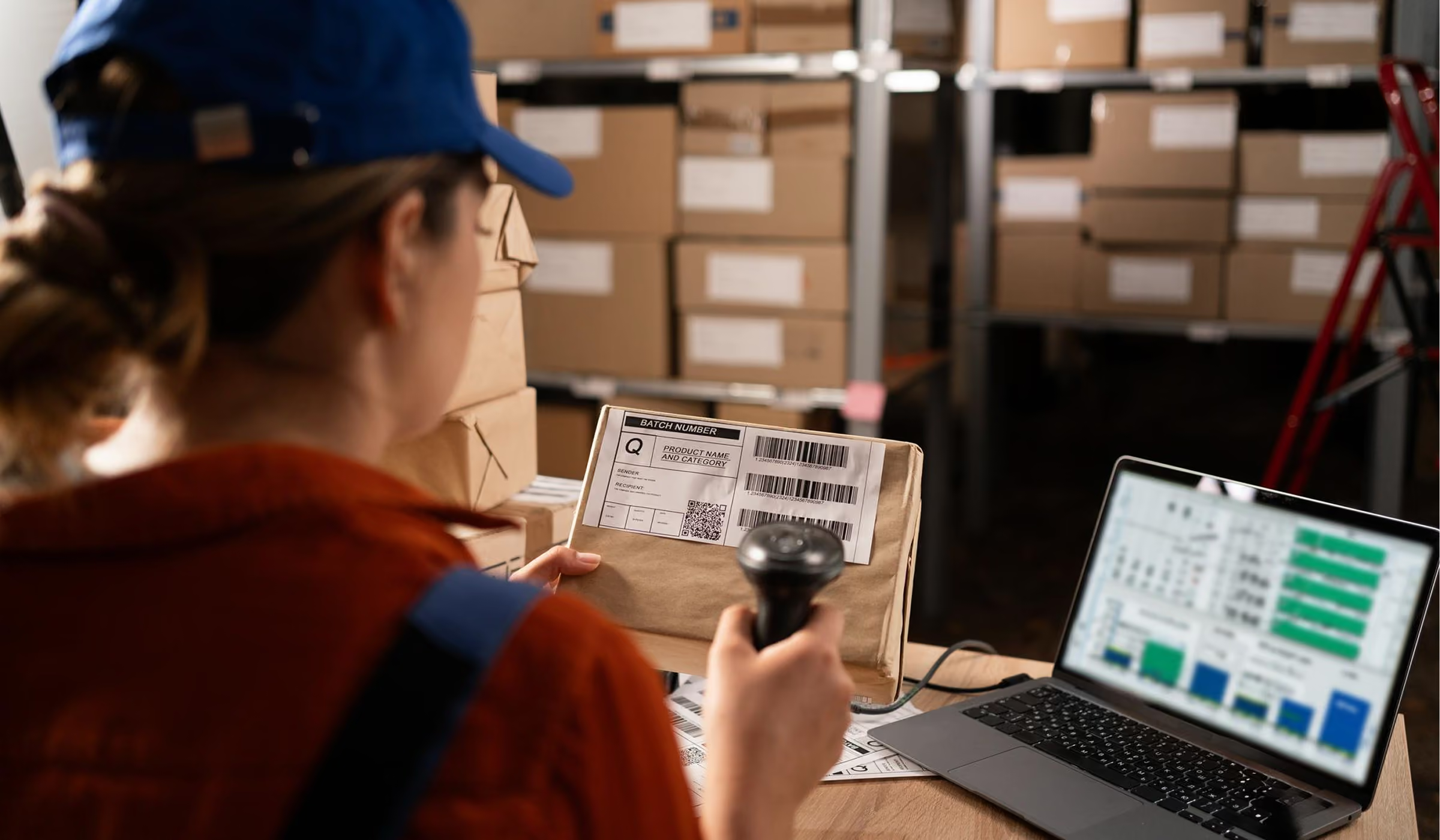
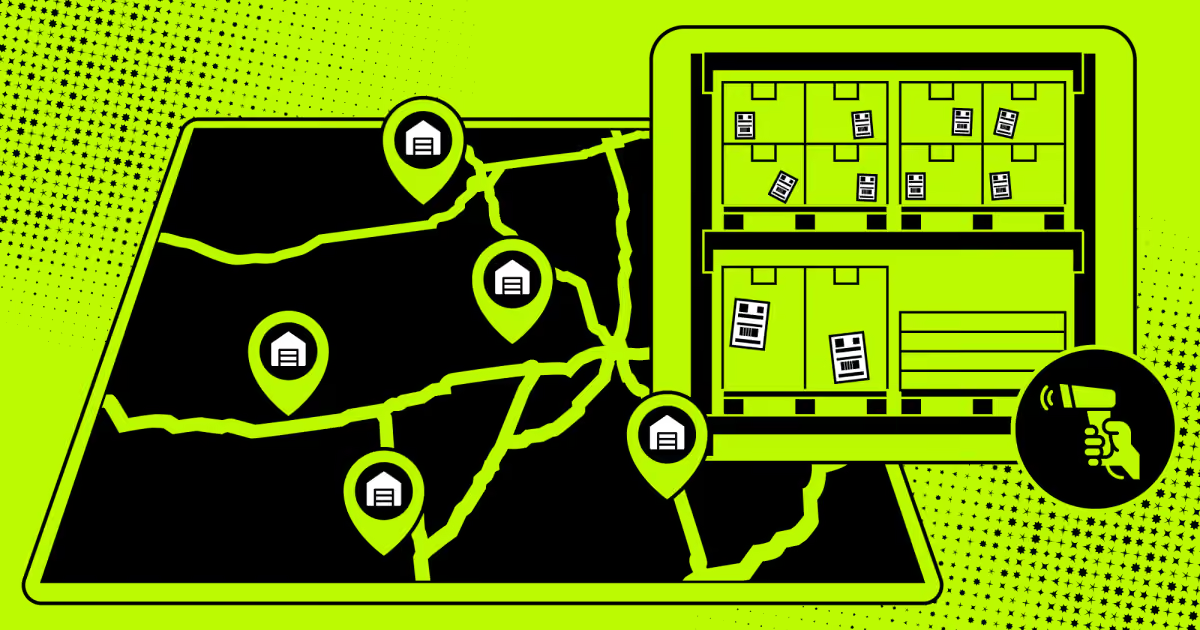
A mobile supply chain app is software built for smartphones, tablets, or handheld scanners that lets your team manage logistics, inventory, and production tasks in real time. Instead of clipboards and paper forms, workers scan barcodes, update records, and confirm shipments directly from the floor or loading dock.
Leber and team describe this shift as moving from "mono-perspective business processes" toward a connected, product-centric collaboration where every link in the chain shares live data. The result is faster decisions, fewer errors, and full visibility from warehouse to delivery.
Examples of tasks they can handle
Supply chain mobile apps cover a wide range of daily operations across your warehouse, shop floor, and shipping dock.
Inventory and warehouse management is where most teams start. Workers perform cycle counts, check on-hand quantities, look up item locations, and update License Plate Numbers without walking back to a desktop terminal.
Quality and data capture let inspectors view product specifications, record measurements, and photograph defects directly from their device.
Receiving and shipping become faster, too. Staff confirm purchase order receipts when goods arrive from suppliers and execute shipment confirmations before trucks leave the dock.
Manufacturing and shop floor use cases include issuing materials to production jobs, returning unused components, completing assemblies, and logging scrapped parts.
Picking and putaway runs on task-based workflows. The app tells a worker exactly where to pick an item and where to put away newly received stock, cutting travel time and wrong-location errors.
Labeling rounds out the picture. Workers print item or pallet labels wirelessly without leaving their station.
Ceynowa and colleagues found that dispersed information sources and a lack of real-time order tracking are among the biggest pain points for operations teams. Mobile apps solve both by centralizing data and giving every worker the same live view of what is happening.
Why invest in supply chain app development?
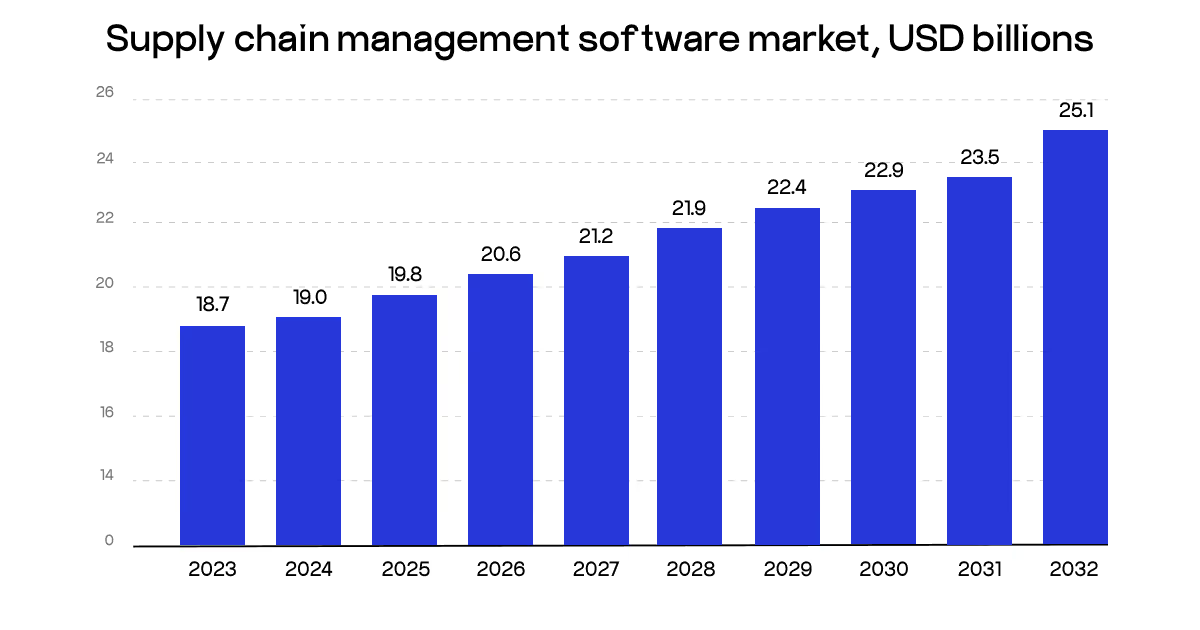
Even though your operations happen offline, the whole industry is growing more digital every day. The global supply chain management software market was worth $19 billion in 2024 and will reach $22.9 billion by 2030, according to Research and Markets. This is why it’s the perfect momentum for logistics and supply chain mobile app development.
What is driving this? Businesses stopped treating supply chain software as a back-office tool. McKinsey's 2025 survey of 100 supply chain leaders found that tariffs, geopolitical shifts, and demand volatility have pushed companies to rethink their entire operations. The researchers found that 82% of companies faced supply chain disruptions from new tariffs alone, with 39% reporting direct increases in supplier and material costs.
Companies that used to rely on spreadsheets now need platforms that give them real-time data across every tier of their supplier network. Daios and team confirm it, noting that cloud-based deployment, real-time data integration, and demand forecasting tools are now a must.
The shift isn’t about technology for its own sake. McKinsey found that companies building better digital capabilities now will handle the next wave of disruption better than those that delay. Those who paused digital investment to address short-term tariff pressures are falling behind.
Benefits for businesses
The practical case for building a supply chain management application comes down to what it does to your numbers. AI-powered supply chain management can cut logistics costs by 15%, lower inventory levels by 35%, and improve service levels by 65%. Those are not projections. DHL tested an AI route planning system that increased delivery speed by 15% and cut fuel costs by 10%.
Here is what drives those results in practice:
Inventory accuracy is where most businesses see the fastest win. Real-time stock data prevents both overstocking and stockouts, which directly cuts holding costs and lost sales. Daios and others found that AI inventory systems reduce stock-outs and minimize overstocking by analyzing historical data and spotting demand shifts that humans miss.
Demand planning gets sharper when your app pulls in live signals. Machine learning models process sales history, seasonal trends, and even external market data to produce forecasts your team can actually act on.
Automation removes the manual work that creates errors. With supply chain apps, order processing, invoicing, and shipment confirmations run without requiring data to be copied between systems.
Collaboration across your supplier network becomes practical when everyone works from the same data. Instead of chasing updates by email, your team sees inventory levels, order status, and delivery timelines in one place.
Agility matters most when something goes wrong. Apps that let you model scenarios before a disruption hits let you respond in hours instead of days. McKinsey found that companies with stronger digital tools recovered faster from tariff-related cost shocks in 2025 than those relying on manual processes.
Customer experience is at the heart of these improvements. When your customers track their orders in real time, returns and complaints drop. More returning customers mean better long-term revenues, so cost and a better market position come naturally from this.
Key features a supply chain app should have
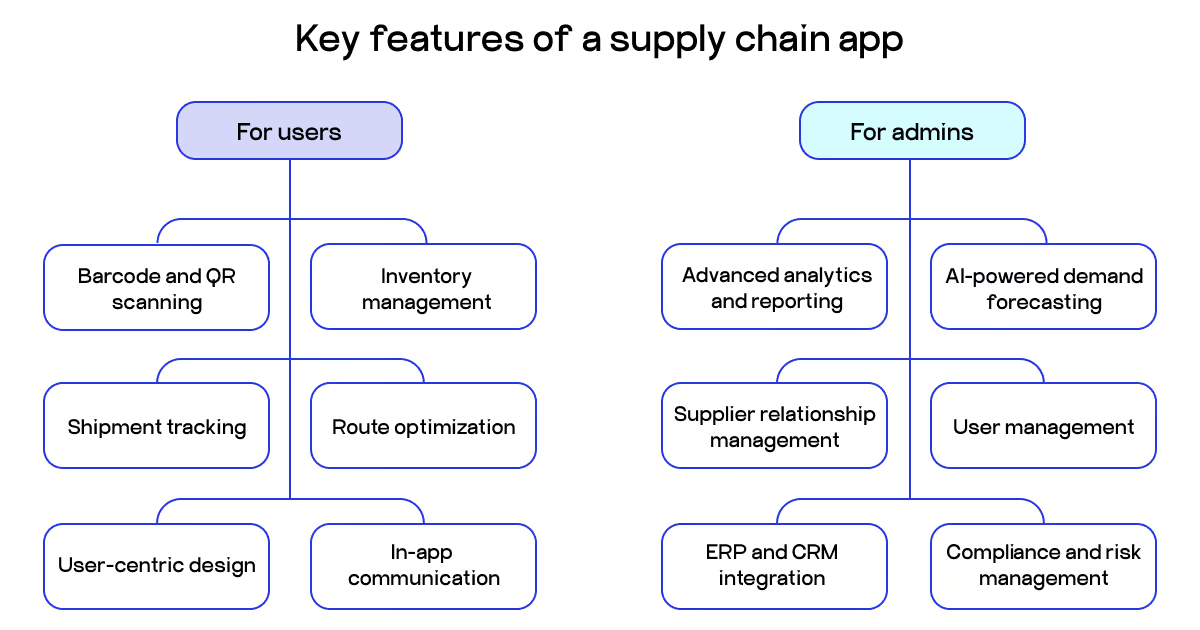
Good mobile supply chain software works differently for the people using it on the floor versus the people running the operation from above. Here is what each group needs.
For users
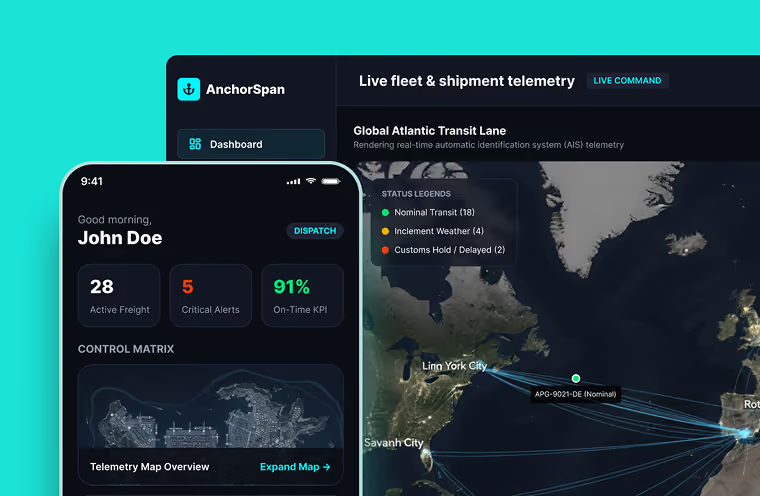
The app dashboard should have everything users need at a tap distance. The features should include inventory, orders, fleet monitoring, QR scanning, load planning, alerts, and possibly some advanced functionality.
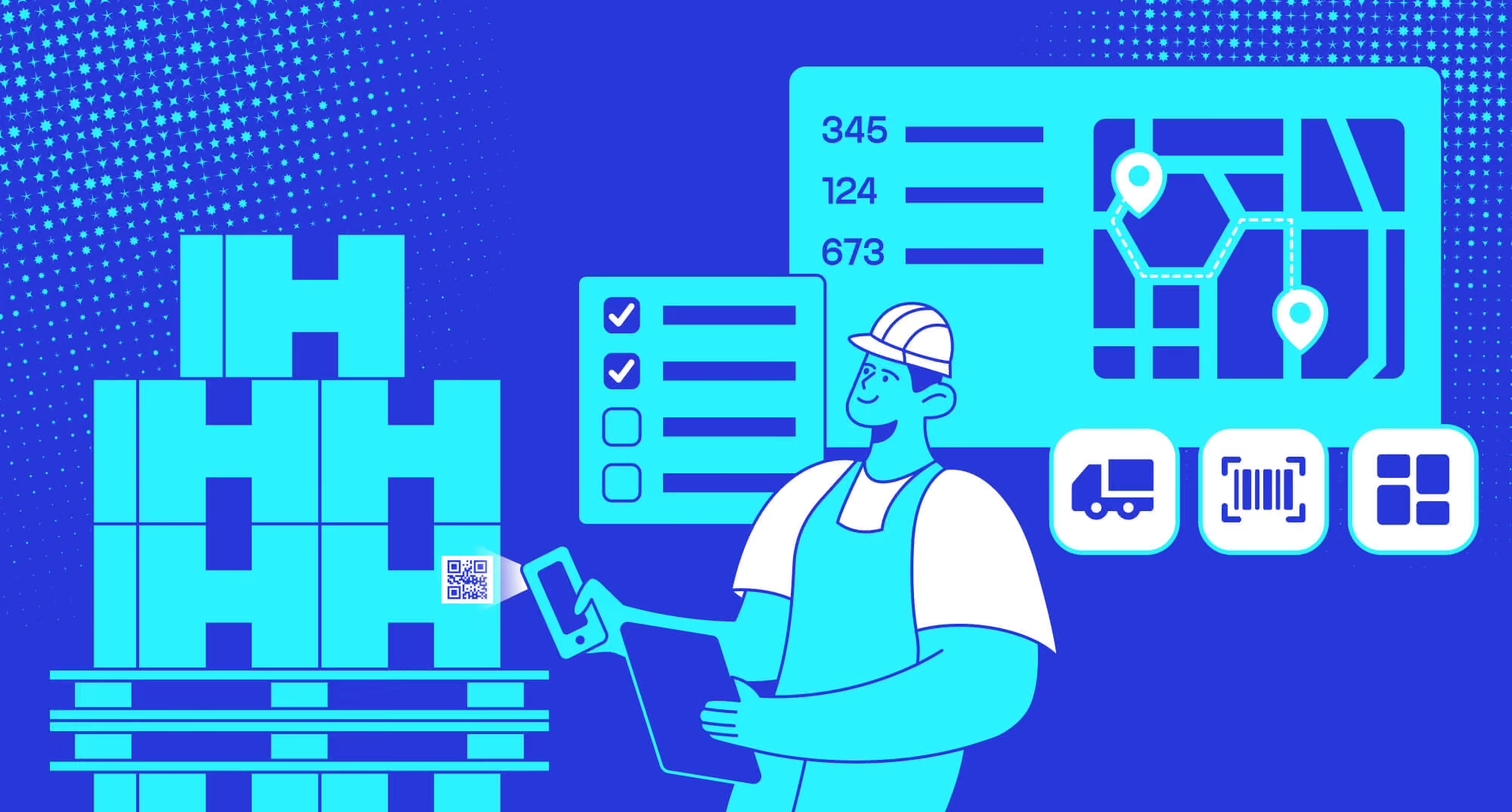
Barcode and QR scanning turn any smartphone into a warehouse tool. Workers scan items to check stock levels, confirm receipts, update locations, and pick orders without carrying separate hardware. Speed goes up, errors go down.
Offline functionality matters more than most people expect. Warehouses, loading docks, and rural delivery routes often have poor connectivity. A well-built app lets workers keep scanning, updating records, and confirming shipments even without a signal. Everything syncs the moment the connection returns.
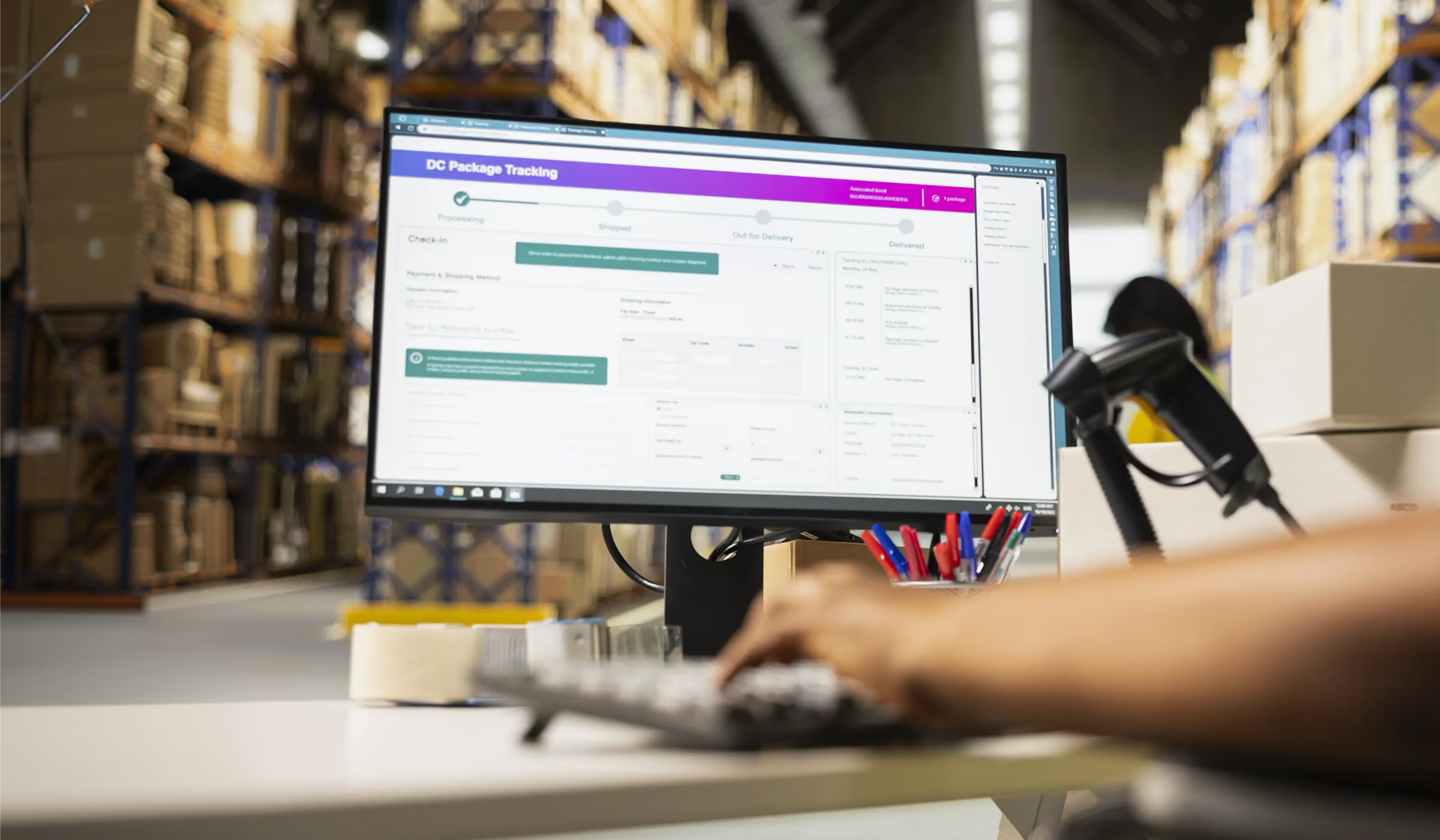
Order and shipment tracking gives floor staff the same end-to-end picture that managers see. A driver knows the delivery status. A warehouse worker knows what is coming in tomorrow. Nobody waits for a phone call to find out.
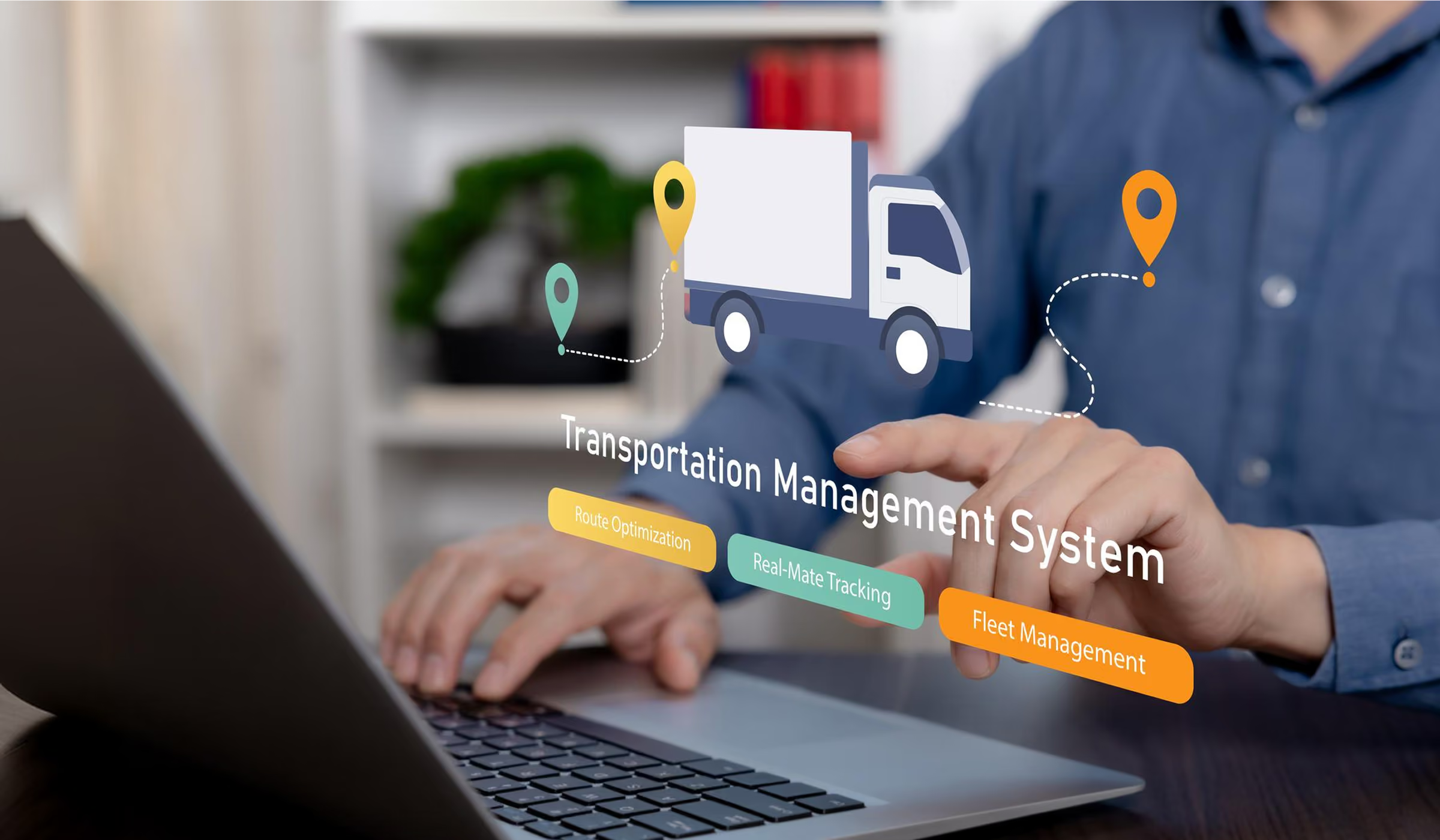
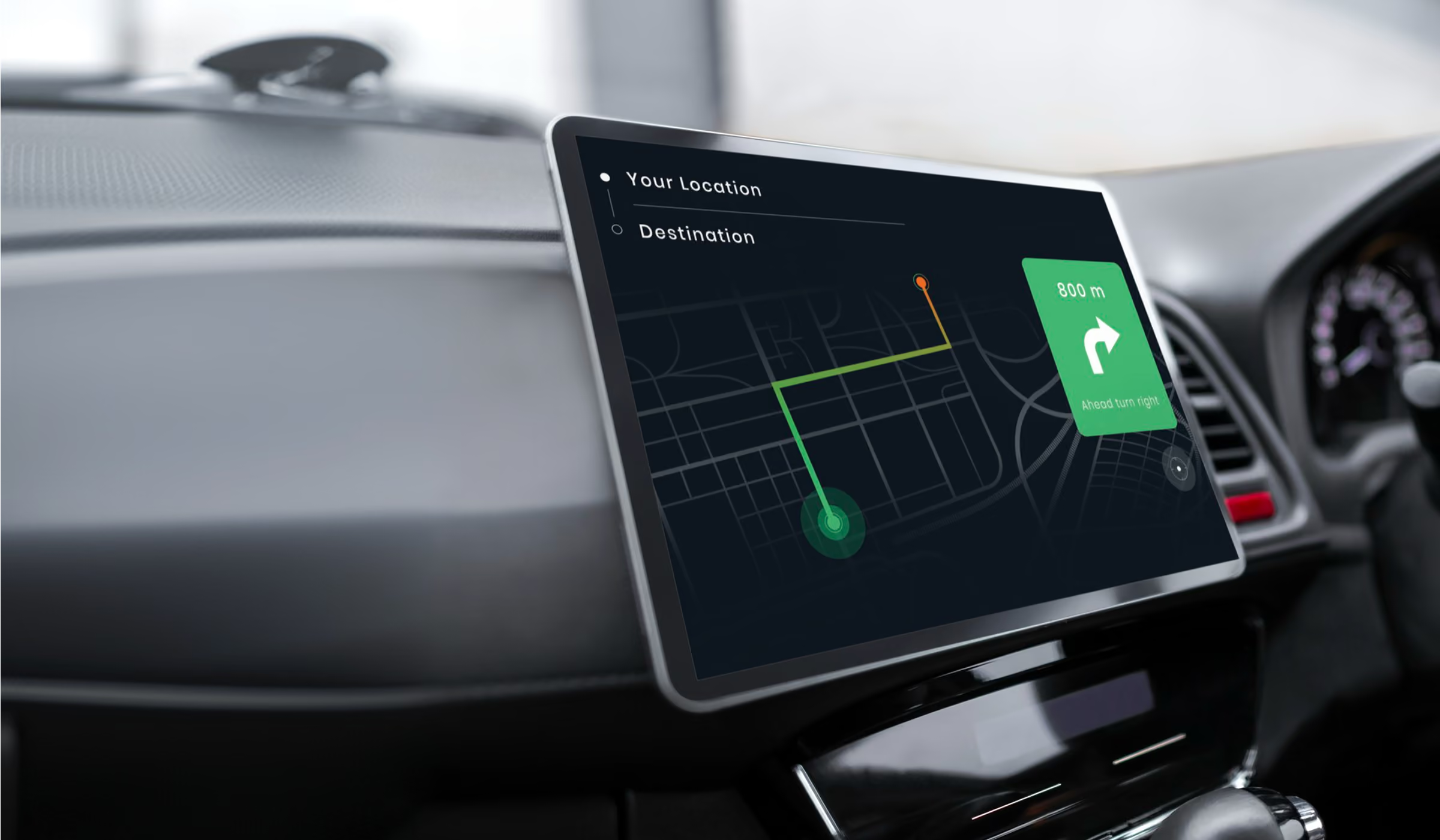
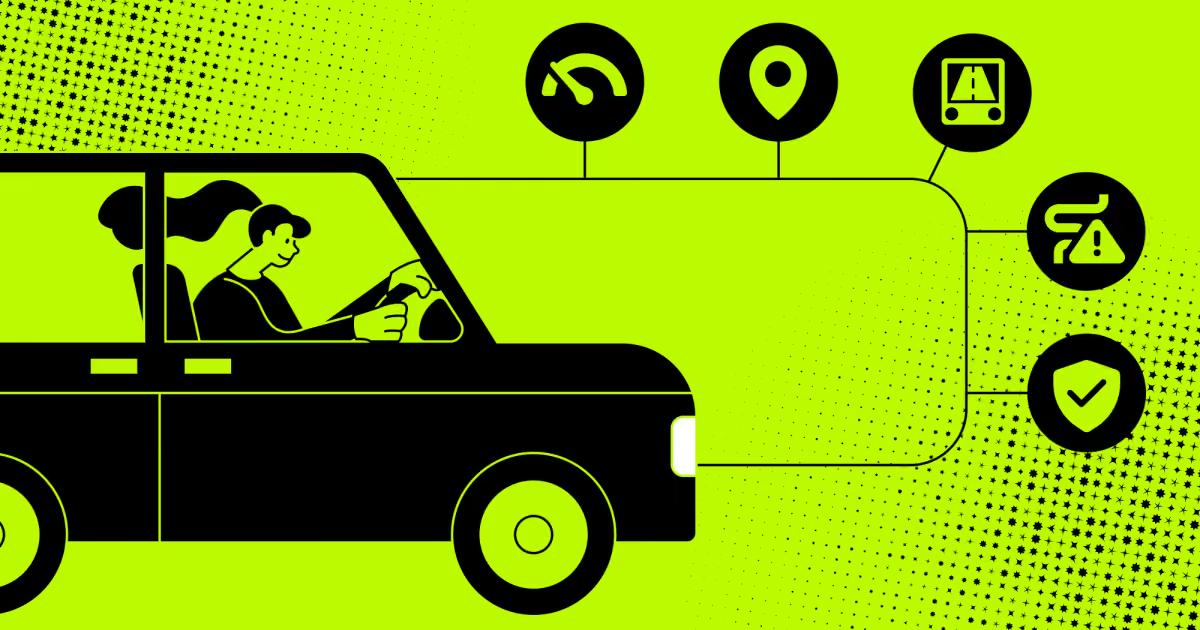
Route optimization removes manual planning from the driver's day. The app calculates the most efficient path, accounts for traffic and load constraints, and dispatches automatically. For instance, DHL's application of AI in supply chain management cut delivery times by 15% and fuel costs by 10% using exactly this approach.
Intuitive mobile UI and thoughtful app design with large buttons and high-contrast elements make the app usable in real working conditions, including cold storage gloves, bright sunlight, and fast-paced picking environments.
Task management and in-app communication connect warehouse staff, drivers, and supervisors without radio calls or paper notes. Notifications push instantly when a shipment is delayed, a task is reassigned, or a delivery needs confirmation.
When supply chain management software is designed for real users, it can overcome the initial resistance. Your employees don’t need sophistication and complexity. They need clear features, simple interfaces, and an easy understanding of the benefits they get with this tech.
For admins
Admins need full visibility and control across the entire operation, not just a snapshot of one warehouse or one supplier. Let’s break down what a perfect supply chain management app might look like for them.
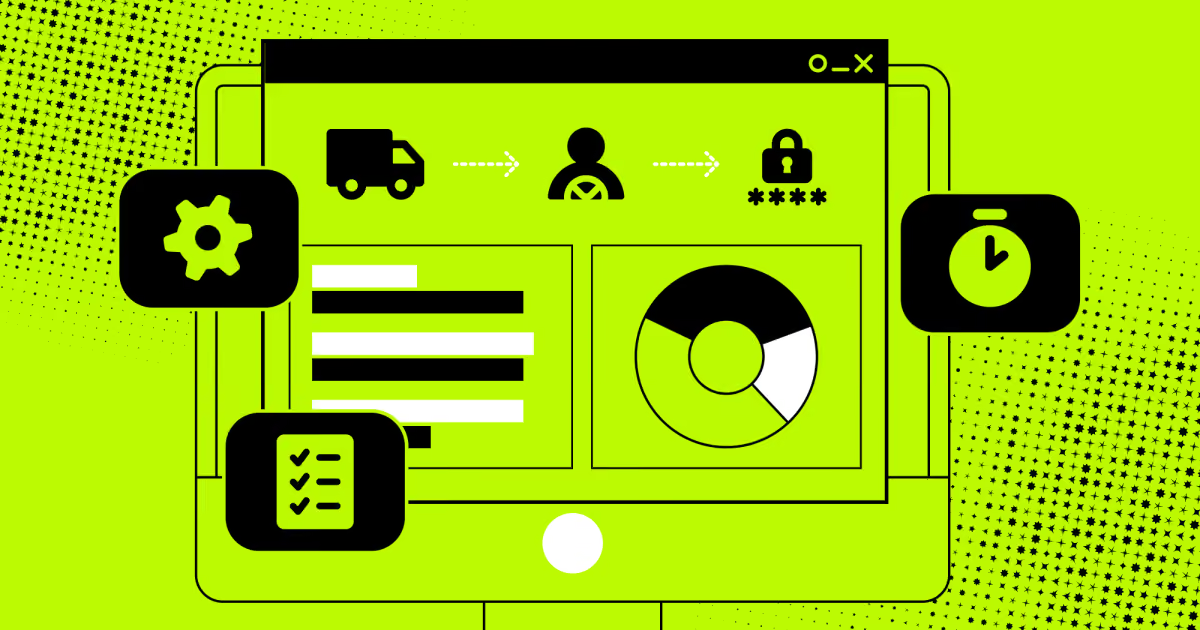
Advanced analytics and reporting dashboards surface live KPIs like inventory turnover, cost-to-serve, order accuracy, and warehouse efficiency in one place. For supply chain analytics software, real-time data processing is now a baseline expectation for competitive supply chain operations, not an advanced feature.
AI-powered demand forecasting analyzes your historical sales data, seasonal patterns, and external market signals to predict what you will need before shortfalls happen.
Supplier relationship management keeps every vendor in one system. You track contract terms, monitor delivery performance, flag underperforming suppliers, and send automated communications without switching between email threads and spreadsheets.
Warehouse layout and labor optimization help admins manage storage assignments, staff schedules, and picking workflows. When a warehouse runs efficiently, labor costs fall, and throughput rises without adding headcount.
Role-based permissions and user management give each team member access to exactly what they need and nothing else. A driver sees routes and delivery confirmations. A purchasing manager sees supplier performance and stock levels. An executive sees the full financial picture. Sensitive data stays protected without creating friction for daily users.
ERP and CRM integration connects the mobile supply chain solution to your existing financial, manufacturing, and customer management systems. Orders flow through without manual re-entry. Invoices generate automatically. Customer records are updated in real time. The integration removes the duplicate work that creates errors.
Compliance and risk management tools track regulatory papers, flag expiring certifications, and monitor your chain for disruption signals. When a supplier misses a delivery window, the system alerts admins immediately so they can act fast.
As with any logistics apps, it takes a structured approach to build a mobile solution for your supply chain. Let’s build this step-by-step process for supply chain app development.
Supply chain app development process
Building a supply chain app is not like building a standard mobile product. It touches real operations, physical goods, multiple departments, and sometimes dozens of third-party systems. Get the process wrong, and you ship software that nobody uses. Get it right, and you have a platform that runs your operation.
With 15 years of experience up our sleeves, we compiled the essential steps and some supply chain app tips for you.
Discovery and requirement mapping.
This means mapping procurement workflows, warehouse picking flows, carrier relationships, exception handling, and approval chains. You also define what success looks like in measurable terms: reduce stockouts by X%, cut manual order entry time, improve delivery accuracy. Car and team make a point here: mobile supply chain solutions fail most often not because of bad technology, but because the adoption depends on all partners in the chain.
Technology selection.
The right choice depends on your scale, integration requirements, and whether your workers operate in low-connectivity environments. Modern supply chain apps typically run on cloud-first architecture. Mobile interfaces use React Native or Flutter for cross-platform field tools, while Python handles data pipelines and forecasting logic. The integration layer matters just as much as the app itself. If you connect to any existing ERP, that integration shapes your architecture from day one.
UX and interface design.
Supply chain applications serve two very different audiences. Warehouse workers need large touch targets, high contrast, and zero learning curve. Managers need dense, scannable dashboards. Designing one interface that satisfies both groups requires dedicated UX work, not assumptions. How to do it? A warehouse picker stress-tests the scanning flow. A dispatch manager reviews the route assignment screen. This catches mistakes before coding.
Development in sprints.
Agile works here because supply chain operations have edge cases that nobody predicts upfront. Partial deliveries, wrong scans, multi-warehouse splits, supplier delays, and returns all need to be handled gracefully. Building in short sprints means you test with real stakeholders, catch the edge cases, and adjust before they become structural problems. Core modules ship first: inventory, order management, and shipment tracking. Forecasting, optimization, and advanced reporting come after the foundation is stable.
Testing under real conditions.
Supply chain software must handle bad inputs without crashing operations. Testing covers integration reliability, offline sync behavior, barcode scan accuracy, concurrent user load, and exception workflows. Broken integrations are the most common failure point, so automated integration tests run on every build.
Ongoing support and evolution.
Supply chains change. New suppliers, new carriers, new markets, new compliance requirements. The app must evolve with the operation. That means versioned releases, a clear SLA for incident response, and a development partner who understands logistics, not just code.
If you need reliable and stress-free supply chain custom web app development or a tailored mobile app, COAX teams will help you reach success. We have built logistics and operations software long enough to know where supply chain projects fail. It's most often the gap between how a workflow looks in a requirements document and how it runs on a warehouse floor.
Throughout our supply chain app development services, we cover the full process: discovery and workflow mapping, architecture design, mobile and web development, ERP and third-party integrations, UX for both field and management users, QA, phased deployment, and long-term support. We build for your real operation, not for a template of what operations should look like.
Estimating supply chain app development costs
There is no standard and universal price tag to define the supply chain app development cost. What you pay depends on what you build, how you build it, and who builds it. Here is how to think through each part.
Factors affecting cost
To build a reliable SCM app, you need to understand some aspects that will shape the price of development. They are typically the following.
Feature complexity is the biggest driver. Basic inventory tracking and order management cost far less. Meanwhile, the application of AI in the supply chain (like for demand forecasting, multi-warehouse routing, and real-time IoT tracking) will drive the cost up. Every module you add increases both development time and backend complexity.
Integrations add a high cost that many teams underestimate. Connecting your app to an existing ERP, a CRM, payment systems, or third-party logistics carriers requires careful API work. Each integration point needs building, testing, and maintaining. Appwrk estimates ERP integrations alone can run $10,000 to $50,000, depending on depth.
Platform choice affects your budget from day one. Building native apps for both iOS and Android separately costs more than a cross-platform build using React Native or Flutter. Cross-platform development shares a single codebase across both operating systems, which cuts both build time and long-term maintenance cost.
Team location changes your hourly rate substantially. North American developers charge $80 to $150 per hour. Eastern European teams run $40 to $70 on average. The work quality from experienced offshore teams is comparable, and the savings can reach 40%.
Security and compliance add cost that is easy to overlook during scoping. Role-based access control, encrypted data storage, GDPR compliance, and audit trails all require dedicated engineering time. For regulated industries like pharma or food, this layer is non-negotiable.
Offline functionality is another hidden cost multiplier. Warehouses, loading docks, and delivery routes often have poor connectivity. Building a mobile supply chain app that works offline and syncs cleanly when reconnected requires local storage logic, background sync, and conflict resolution protocols that add meaningful backend work.
Ongoing maintenance adds 15 to 25% of your original build cost every year. That covers bug fixes, OS updates, cloud hosting, security patches, and new feature releases. Factor this into your budget from the start, not after launch.
There’s one factor that affects both the cost and the timelines and processes - the model you choose to apply to your supply chain app development.
Development models
You have three main paths, and the right one depends on your timeline, budget, and internal capability.
In-house development gives you direct control over every sprint and keeps domain knowledge inside your company. The tradeoff is cost. Salaries, benefits, recruitment, and infrastructure push the total investment well above $100,000 before you ship anything. This model works for large enterprises building proprietary long-term platforms.
Outsourced development gives you access to specialists in logistics and supply chain software without hiring them permanently. Experienced agencies reuse proven components, frameworks, and integration patterns that cut engineering overhead significantly. The main risk is documentation quality and communication discipline. Choose a partner who understands supply chain operations, not just mobile development.
MVP first, then scale, is the supply chain application development approach that reduces financial risk most effectively. You launch with core modules, such as inventory, order management, and basic tracking, then add forecasting, optimization, and advanced integrations based on what real users actually need. This approach can save clients tens of thousands of dollars by validating assumptions before building expensive features nobody uses.
With these basics broken down into digestible pieces, let’s now define the possible ranges your development costs may fall into.
Price ranges
Both mobile builds and supply chain custom web app development pricing depend heavily on the functionality you’re creating. Here is what you can expect to pay across build complexity levels.
Build type
What you get
Price range
Basic MVP
Inventory tracking, order management, simple dashboard
A basic MVP covering inventory tracking, order management, and a simple dashboard runs $9,000 to $30,000. This is the right starting point for startups or businesses validating a supply chain workflow before committing to a full platform.
A mid-tier custom supply chain application platform with multi-warehouse support, supplier management, real-time analytics, and ERP integrations runs $30,000 to $90,000. This covers most growing businesses that need automation and visibility without enterprise-level complexity.
An enterprise-grade system with AI-powered forecasting, IoT integration, blockchain traceability, advanced role management, and global scaling runs $90,000 to $200,000 or more. Pharma, aerospace, and large-scale logistics operations typically sit in this range.
Individual modules give you a clearer picture of where the money goes. Warehouse management systems run $8,000 to $30,000. Transportation management adds $8,000 to $28,000. Demand forecasting and analytics cost $10,000 to $30,000. ERP integrations alone can reach $50,000 for complex enterprise connections.
If you are not sure where to start, start with the problem you feel most today, build a module around it, and expand from there.
Best supply chain apps
No single app works for every operation. The right choice depends on your size, industry, and what part of the chain gives you the most pain. Here are the top options worth knowing.
App
Best for
Platforms
Starting price
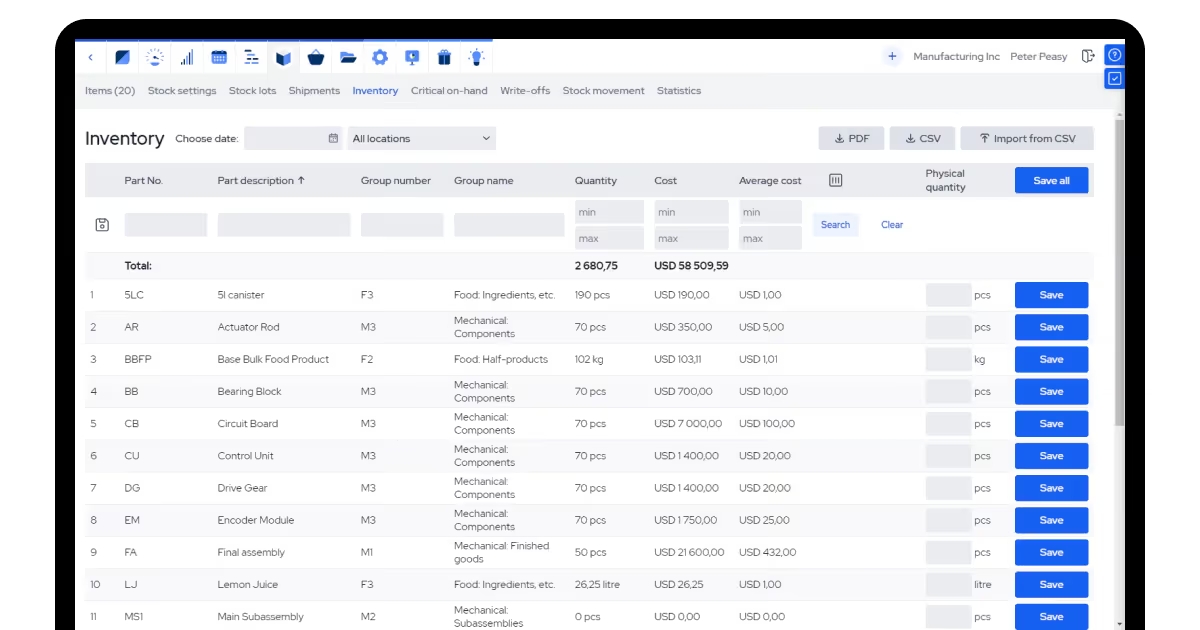
MRPeasy
Small manufacturers that need production and inventory control
iOS, Android
$49/month
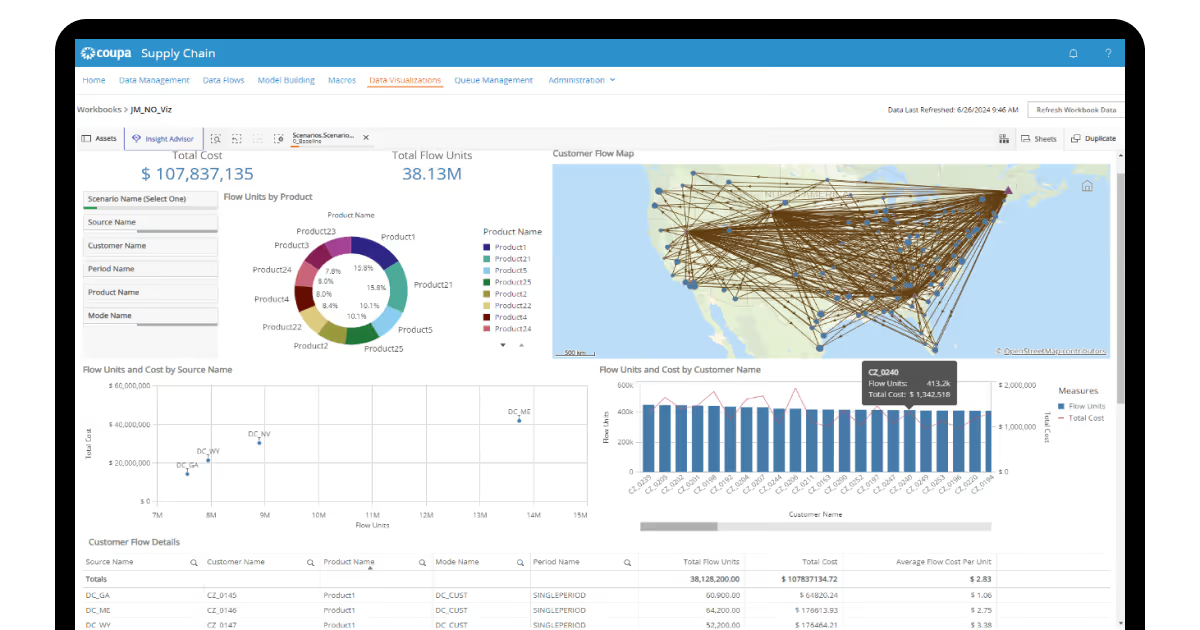
Coupa
Enterprise spend management and procurement automation
iOS, Android
On request
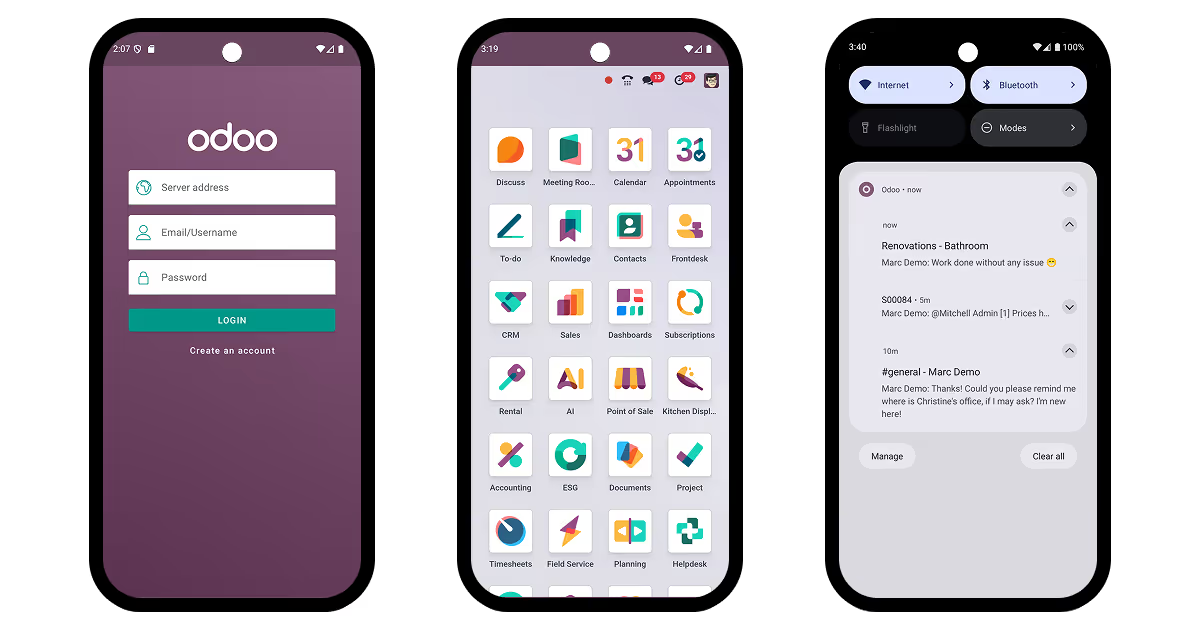
Odoo
Flexible all-in-one platform for multi-function operations
iOS, Android
$24.90/user/month
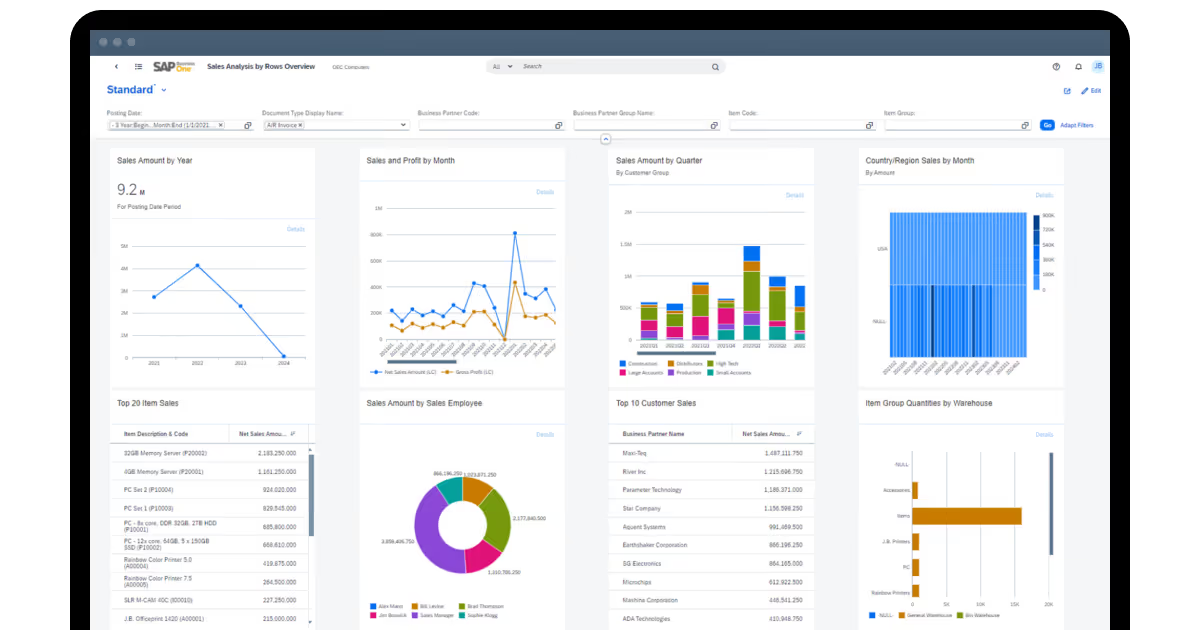
SAP Business One
SMEs needing full ERP depth across finance and inventory
iOS, Android
On request
Magaya Supply Chain
Freight forwarders and import/export logistics businesses
iOS, Android
On request
JAGGAER
Regulated industries with complex procurement and compliance needs
iOS, Android
On request
Plex Smart Manufacturing
Plant-level manufacturing execution and quality management
iOS, Android
$3,000/month
Tradogram
Teams that want clean, fast purchase order workflows
iOS, Android
$195/month
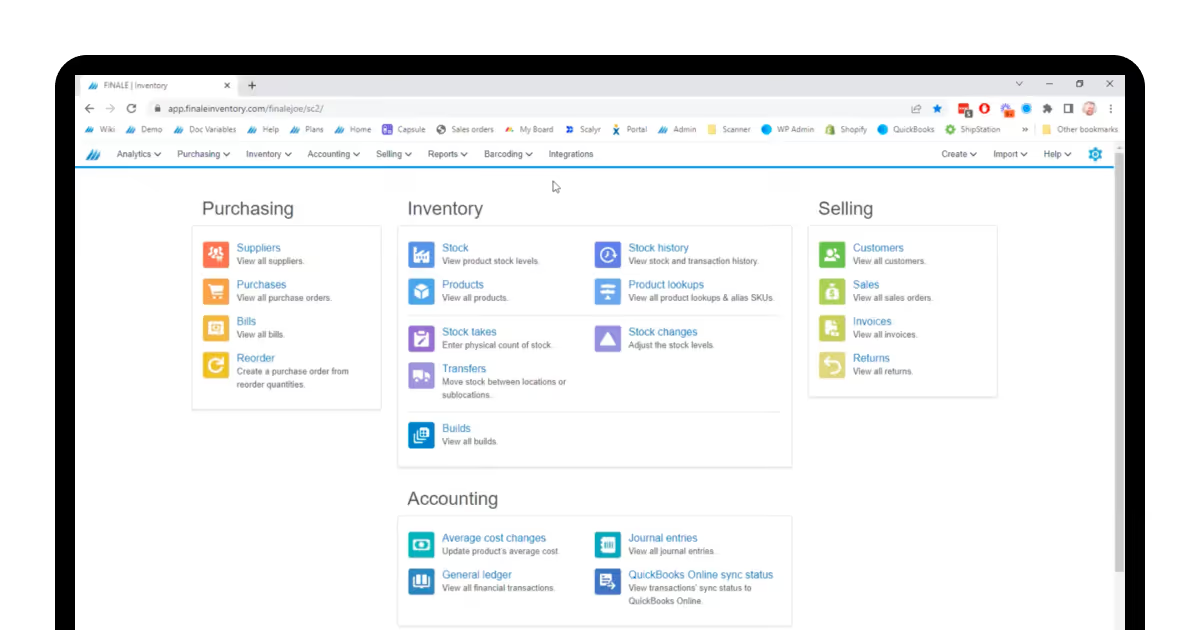
Finale Inventory
Multi-channel e-commerce and growing retail operations
Android, web
$99/month
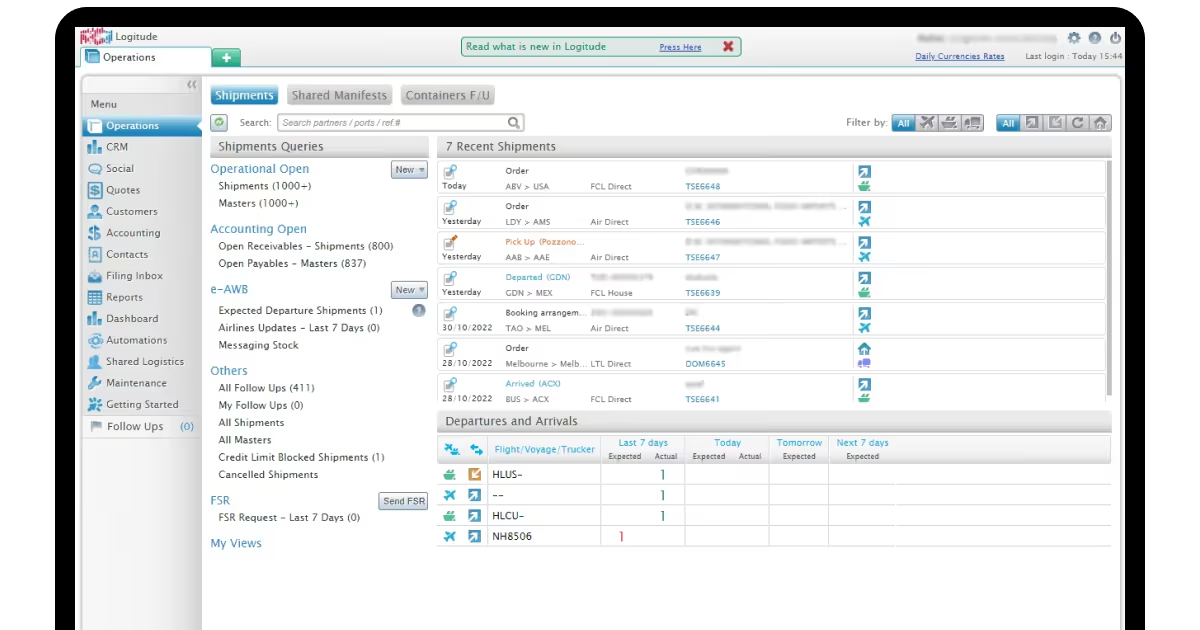
Logitude World
Freight forwarders managing global shipments and customs
iOS, Android
$39/user/month
MRPeasy. It’s a cloud-based manufacturing resource planning tool for small to mid-sized manufacturers, covering production planning, inventory, procurement, and sales in one place. Its standout feature is real-time shop floor tracking paired with scheduling that updates live as conditions change. It integrates cleanly with QuickBooks and connects well with e-commerce platforms, making it practical for product businesses that need both manufacturing and order visibility.
Coupa. This spend management and supply chain application software is used by companies that need tight control over purchasing, vendor relationships, and accounts payable. It automates invoicing, tracks expenses, manages supplier performance, and gives finance teams clear visibility into where money is going.
Odoo. Odoo is an open-source, modular platform that covers inventory, procurement, warehousing, CRM, manufacturing, and accounting under one roof. Its strength is flexibility: you activate only the modules you need and extend functionality with custom code or community apps. It deploys on cloud or on-premise and supports 45+ languages, which makes it practical for businesses operating across multiple regions.
SAP Business One. A full ERP solution designed for small to mid-sized businesses that need serious depth across purchasing, inventory, customer relationships, and financial reporting. It handles purchase orders, goods receipts, asset management, and analytics in a single system with both cloud and on-premise deployment options. Teams running complex procurement or distribution operations find it particularly solid for keeping financial data aligned with warehouse reality.
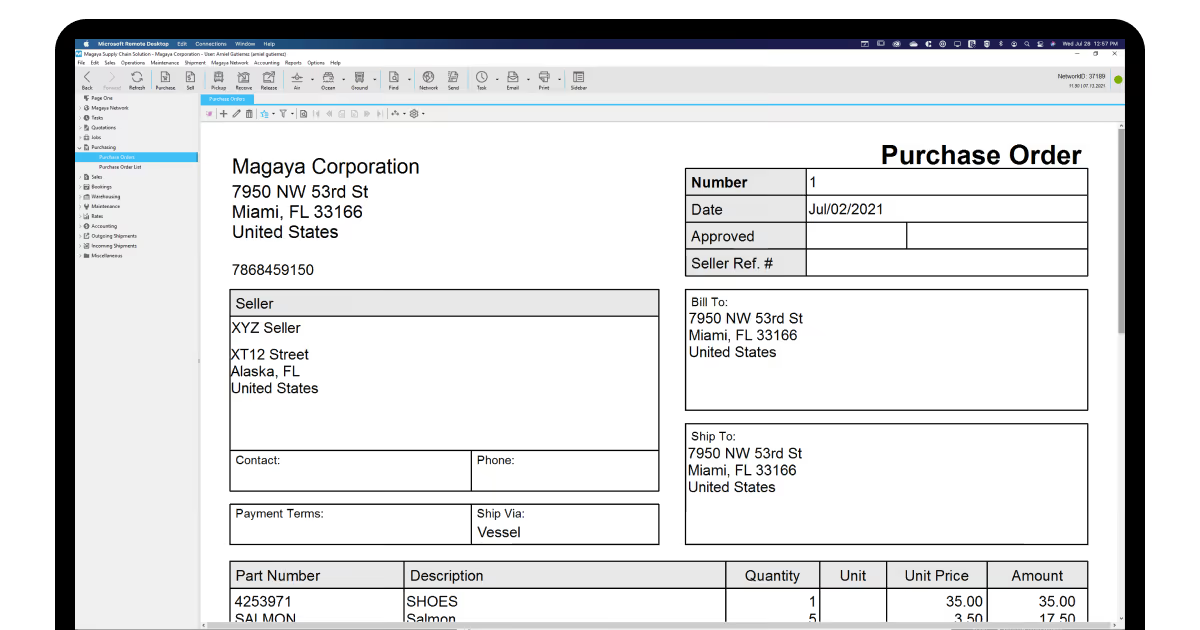
Magaya Supply Chain. This all-in-one logistics and supply chain management application is built for freight forwarders, warehouse operators, and import/export businesses. It handles shipment tracking, inventory, customs documentation, multi-modal transportation, and automated billing from one interface. Real users highlight the real-time shipment updates and reduced data duplication as the features that make the biggest difference day to day.
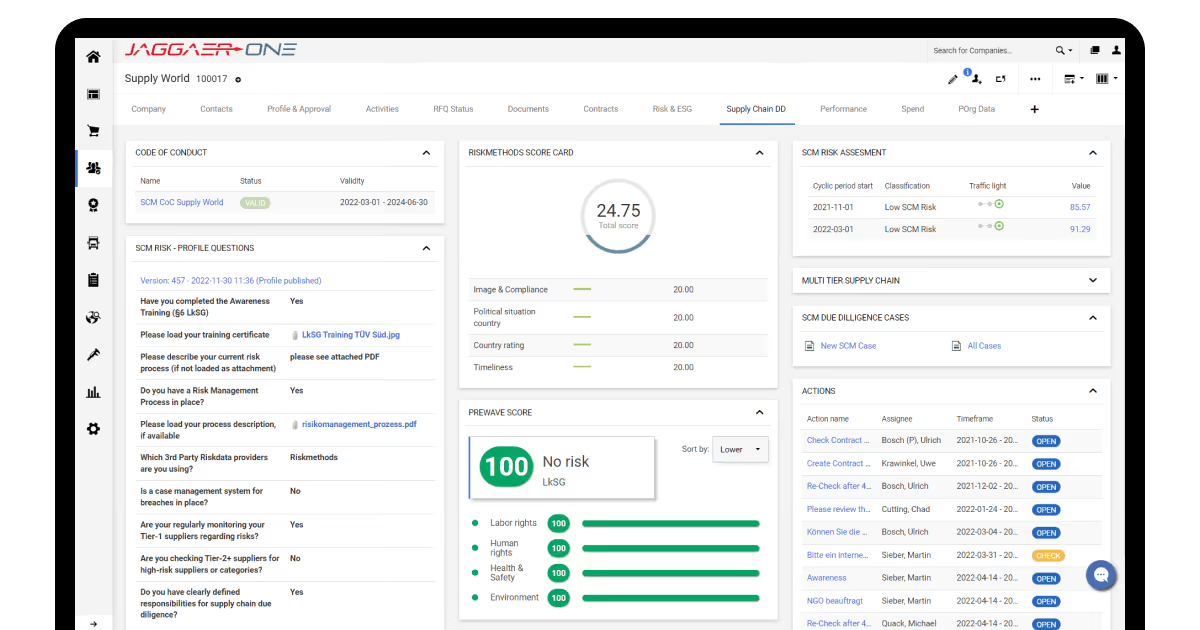
JAGGAER. An enterprise procurement platform covering the full sourcing and supplier management lifecycle, from contract management and vendor scoring to audit tracking and non-conformance resolution. It uses AI-driven analytics to surface spend patterns and flag risks before they become problems, and connects cleanly with existing ERP and finance systems. Best suited for manufacturing, pharma, and regulated industries where procurement compliance is as important as cost efficiency.
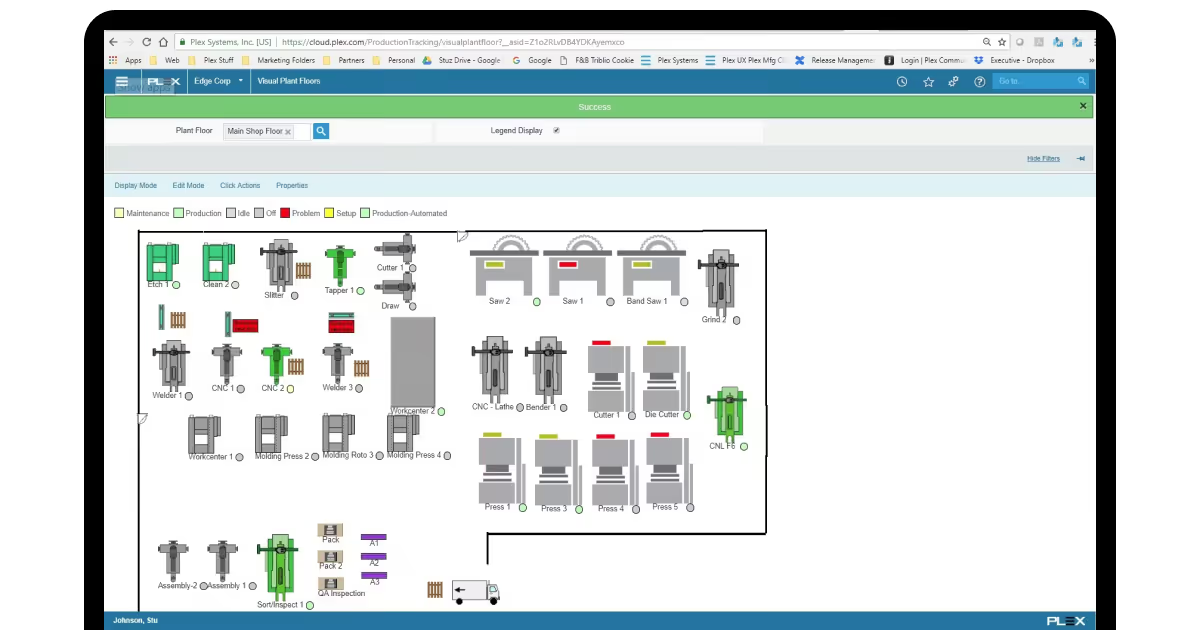
Plex Smart Manufacturing Platform. A cloud-based manufacturing execution and quality management system built for plant-level operations, covering production tracking, compliance, inventory, and quality control in real time. It automates quality checks, supports full traceability through every production step, and gives operations managers live visibility into plant performance without relying on manual reporting. Plant teams use it daily to manage schedules, collect floor data, and meet regulatory requirements without switching between systems. Available on iOS and Android. Starts at $3,000 per month.
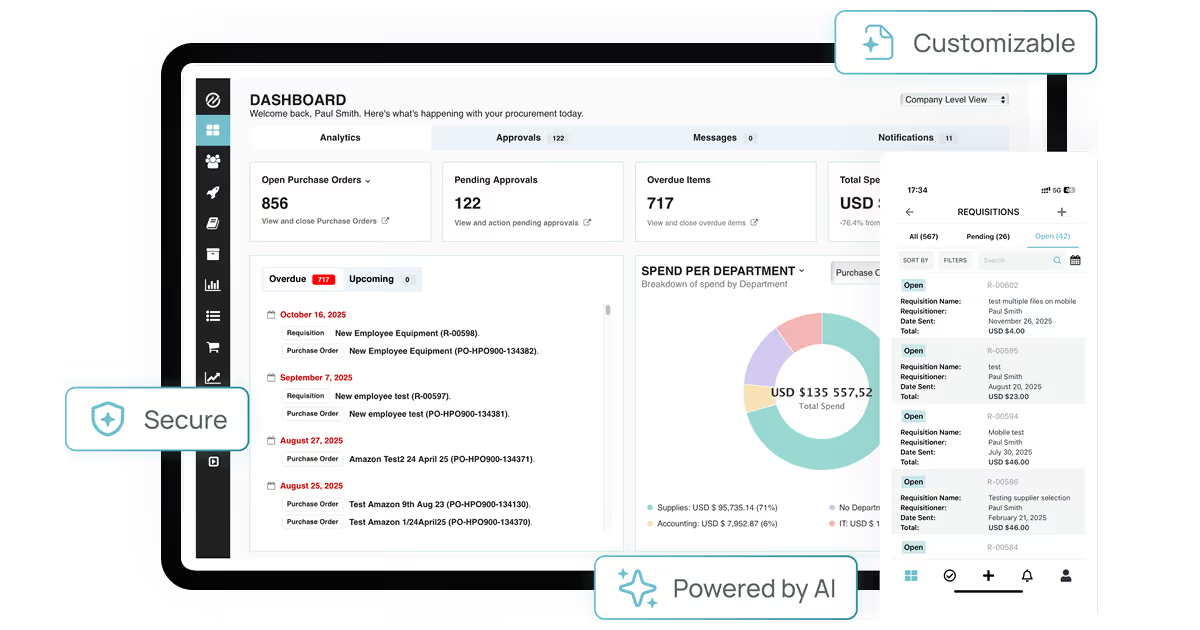
Tradogram. This procurement and supply chain app focuses on making the purchase order process clean and fast for teams of any size. It handles supplier management, requisition approvals, PO tracking, and spend analytics in a straightforward interface that requires almost no training to pick up. It offers a free version for basic use and scales into paid plans for multi-user workflows, approval chains, and deeper reporting.
Finale Inventory. A cloud-based inventory management platform suited for growing businesses that sell across multiple channels and need accurate stock levels without a complex WMS. It supports barcode scanning, purchase order management, multi-location tracking, and integrates with major e-commerce and shipping platforms to keep order fulfillment running cleanly.
Logitude World. This transportation management and supply chain application is built for freight forwarders and logistics businesses that need to manage shipments, carriers, customs documentation, and CRM in one platform. It covers shipping route planning, real-time delivery tracking, automated billing, and compliance documentation across global networks. It’s basically a complete TMS for freight operations, though it does not include fleet management for carriers who run their own vehicles.
Mobile supply chain management isn’t all that simple - and pretty diverse, too. Off-the-shelf supply chain apps work well when your operation matches the template they were designed for. But your supplier onboarding might involve document steps that sit outside any procurement module's default flow. When you buy a ready-made platform, you either change how your operation works to fit the software, or you spend years paying for features you cannot use.
Ceynowa observed this exact friction: small and mid-sized businesses consistently struggle with platforms designed around large enterprise assumptions, where complexity becomes a barrier.
Integration is where off-the-shelf platforms most visibly fail growing businesses. Your systems might require a connector that may not exist, may cost extra, or may work unreliably. When those integrations break, your data stops being trustworthy.
However, you can forget any of these issues with COAX’s custom mobile app development services. We start with your operation, not a feature list. Before any design or development work begins, our team observes your whole process: where goods move, where information gets lost, where manual work creates errors, and where your current tools stop short. Also, because we build custom, we are not constrained by what a vendor decides to include in a platform.
We also handle integration that connects your new app to the ERP, finance tools, and third-party logistics systems you already rely on. We do not hand you a generic API and wish you luck. And after launch, we stay involved. Supply chains change, and so should supply chain mobile apps: successfully adjust to new suppliers, new markets, new compliance requirements, and new carrier relationships. The goal is a system that runs your operation, not one your operation has to work around.
FAQ
What are the challenges of implementing mobile supply chain applications?
Eng identified early challenges around competitive advantage, relationship management, and coordination across disparate functions. Daios emphasizes more recent obstacles, including data privacy concerns, algorithmic bias, and cybersecurity threats.
The overall challenges include:
Data security and privacy risks with logistics and customer data
Legacy system integration complexity
Network instability in warehouses, loading docks, and rural delivery routes
High implementation costs for hardware, software, and training
User resistance from workers and digital maturity gaps
What is the best application of supply chain management for small businesses?
Small businesses benefit most from SCM applications that reduce costs, optimize inventory, and improve customer satisfaction through reliable fulfillment.
Top applications for small businesses include:
Real-time logistics visibility through cloud-based tracking
Supplier relationship management to negotiate better terms
Demand-driven planning to predict future sales patterns
Quality control and batch tracking to prevent defective products
Risk management through contingency planning
How to adapt supply chain applications to my specific use case?
Start by putting down where goods move, where information breaks down, where manual work creates errors. Identify the single biggest pain point and build or configure an app that solves that problem first before expanding to other modules. If your warehouse has poor connectivity, prioritize offline-capable features with background sync. If your procurement involves multi-level approvals, build custom approval logic into the app rather than forcing your team to adapt to generic workflows. Finally, integrate with the systems you already use and test with real users like warehouse staff, drivers, and procurement managers.
How do COAX's mobile supply chain app developers create secure and efficient solutions?
COAX holds ISO/IEC 27001:2022 certification for comprehensive security management, risk assessment, and monitoring. We also maintain ISO 9001 certification, ensuring optimal quality processes. Our development integrates secure architecture, encrypted data handling, role-based access controls, and continuous security audits throughout the build cycle.





































































_.avif)






%2520explained.avif)

We are interested in your opinion