With modern logistics growing more and more digital and connected, your competitive edge and the future of your business depend on having reliable logistics applications for your key processes. This necessity is explained by these undeniable improvements that such apps bring:
Fleet management and warehouse apps that centralize vehicle tracking, maintenance scheduling, and inventory management in real-time.
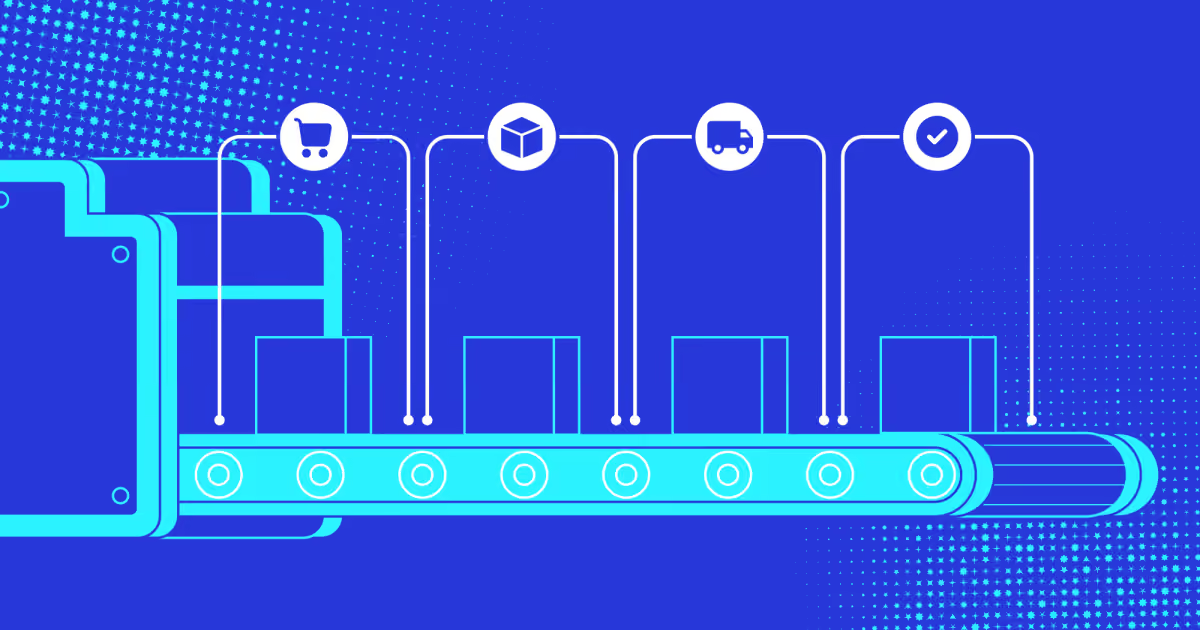
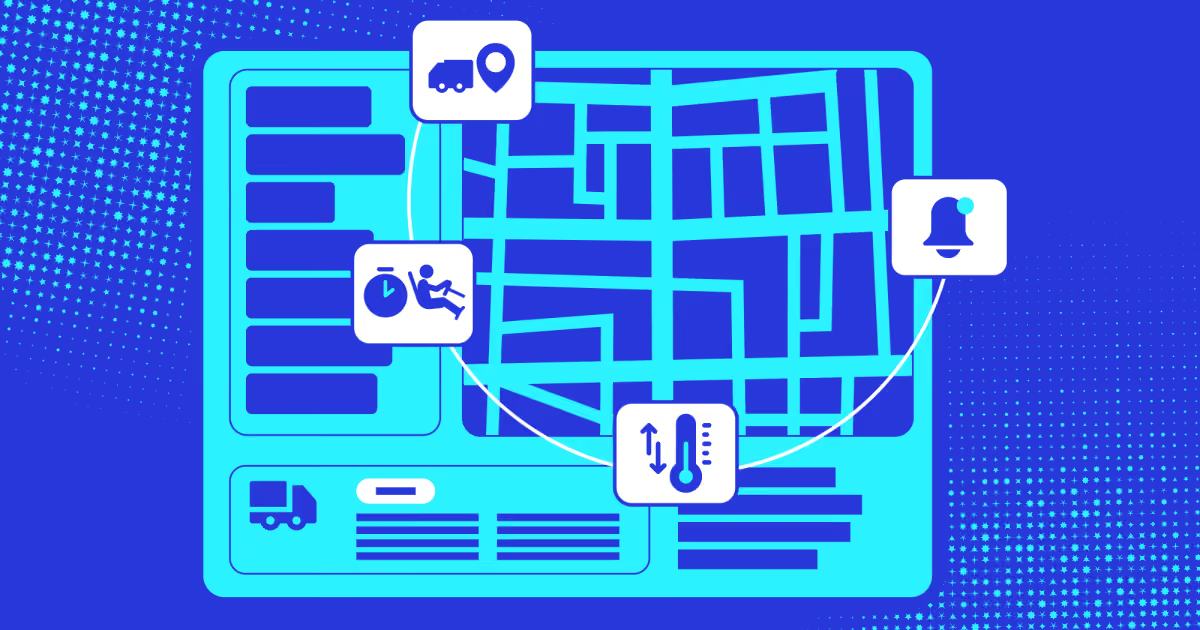
Route optimization and delivery tracking that use AI algorithms to create efficient multi-stop routes, cutting empty miles and giving customers live GPS visibility.
Driver and customer-facing mobile platforms that connect all parties through digital workflows, automated notifications, and direct communication channels.
Supply chain visibility platforms that detect risks early and enable proactive decision-making across your entire network.
Automated order management and proof of delivery features that streamline dispatching, eliminate manual errors, and provide instant confirmation.
Flexible development approaches ranging from ready-made solutions for standard workflows to custom-built apps that address your unique operational challenges.
This article outlines the logistics app development roadmap, from the key types of logistics apps to the necessary features and integrations, and a full guide to building your own solution.
Why logistics businesses need a mobile app
Traditional systems can’t provide the real-time responsiveness required by modern logistics. Mobile apps are now crucial tools for getting a competitive edge and optimizing operations. Here are some aspects that make it possible:
Teams can focus on strategic priorities by using apps to automate time-consuming processes (like route planning and dispatching). According to Jayvir, automated systems give businesses immediate access to vital information, enabling them to make informed decisions and optimize operations in real-time.
Today's clients demand openness, and mobile apps for logistics companies offer real-time order tracking and estimated arrival times. Customers are happier, and the reputation of the service gets better when problems are resolved quickly through better communication.
Logistics apps minimize delays and misunderstandings by reducing operational bottlenecks through cutting down on manual processes, driving smooth coordination between drivers, warehouses, and customers.
Having a convenient app is what took Amazon from a small online bookshop into a massive e-commerce platform. They achieved success by overcoming the difficulty of delivering goods to customers promptly, with features like one-tap purchasing and real-time order tracking. By charging customers up front for free two-day shipping, Amazon Prime enabled Amazon to expand its delivery network and improve planning.
Market trends for logistics app development
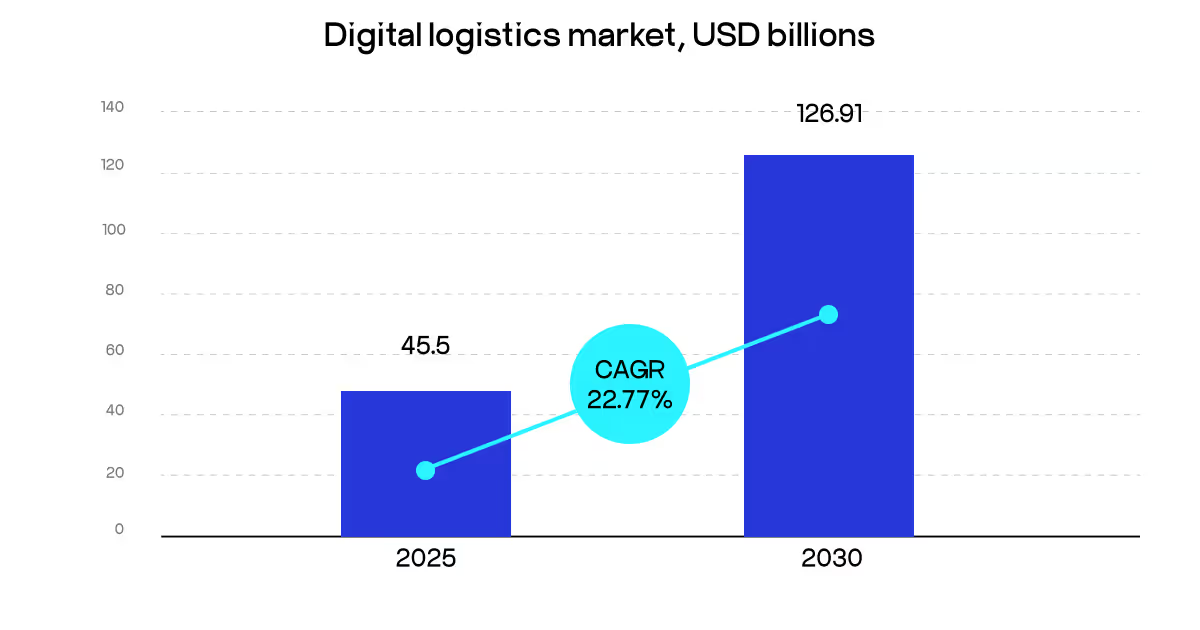
When we think about the drivers of the rapid adoption of apps in logistics, we face the fact that digitalization is pacing rapidly here. Digital logistics is expected to reach $126.91 billion by 2030, at an annual growth rate of 22.77%. Multiple forces are contributing to this.
The global expansion of e-commerce continues to drive increased demand for same- and next-day deliveries. As a result, businesses are investing heavily in the development of route optimization tech and micro-fulfillment centres. Also, a variety of AI-driven solutions are used by companies to manage the increased order volume.
According to research conducted by McKinsey, logistics firms intend to implement at least ten additional digital tools in the next three years to assist with their operations, and transport and logistics apps are surely among them.
The efficiency of the new tech is undeniable. IoT sensors on vehicles are helping reduce their downtime by nearly 30% and decrease fuel costs by 15-20% with the use of predictive maintenance. Additionally, by using analytics in warehouses, logistics firms are able to maintain the same service level while decreasing inventory levels by 20-30% (as found by McKinsey).
A shift to a direct-to-consumer model is necessitating new methods for delivering products. Changes to the traditional methods of distribution have also been noted in the automotive sector, where the vast majority (71%) of automotive manufacturers have chosen direct sales to customers rather than through their dealerships. As a result, logistics service providers are adopting digital solutions more rapidly than shipping companies, where, on average, 55% of logistics service providers plan to implement seven or more digital use cases within three years.
With all these aspects and trends considered, we can confidently state that logistics applications will continue to be a crucial element to maintain a competitive edge within the industry.
Key benefits for logistics companies
Now that the importance is clear, let’s define what exactly you will get as a business owner with an efficient logistic app development.
Daily operations improve with automation and real-time tracking. For instance, FedEx's automation tools reduced expenses by almost 25%, while DHL's real-time tracking system reduced delivery errors by 50% and lowered order processing time by 60%. According to Miraldes, these technologies enhance inventory management, lower labor costs, and improve transportation operations while also improving processes throughout the supply chain.
You can get the most out of your existing assets. Businesses applying sophisticated planning tools have reported a 15% increase in vehicle utilization and up to 25% fewer empty miles thanks to AI-powered algorithms that generate efficient routes that cut waste.
Transparency fosters trust by providing customers with real-time tracking and estimated arrival times. According to Jayvir, better communication through logistics apps makes it possible to resolve delivery problems more quickly, which results in satisfied clients and a better reputation.
Logistics apps help you cut costs.As defined by McKinsey, companies are able to reduce logistics costs by up to 15% using AI and real-time tracking. This happens this way: when companies optimize routes, fuel usage and time on deliveries are reduced, which ultimately leads to reduced cost.
Your decisions improve. Through apps, companies can access various data that identifies potential problems before they become chronic, says Jayvir. Over the past year, surveys indicate 66% of all decision makers in the logistics industry believe the implementation of new technologies guides them through better choices.
And simply, it’s easier to remain competitive in the market when you have a convenient customer- and driver-facing technology compared to the companies that simply don’t have such convenience to offer. It helps you manage risk and optimize workflows, helping you become a market leader.
Types of logistics apps
The difficulty with apps for logistics is in the great variety of their types and options. Some are for managing your inventory, and some are specifically for customers and drivers. Let’s break them down, type by type, to get the whole picture of this technology.
Fleet management apps
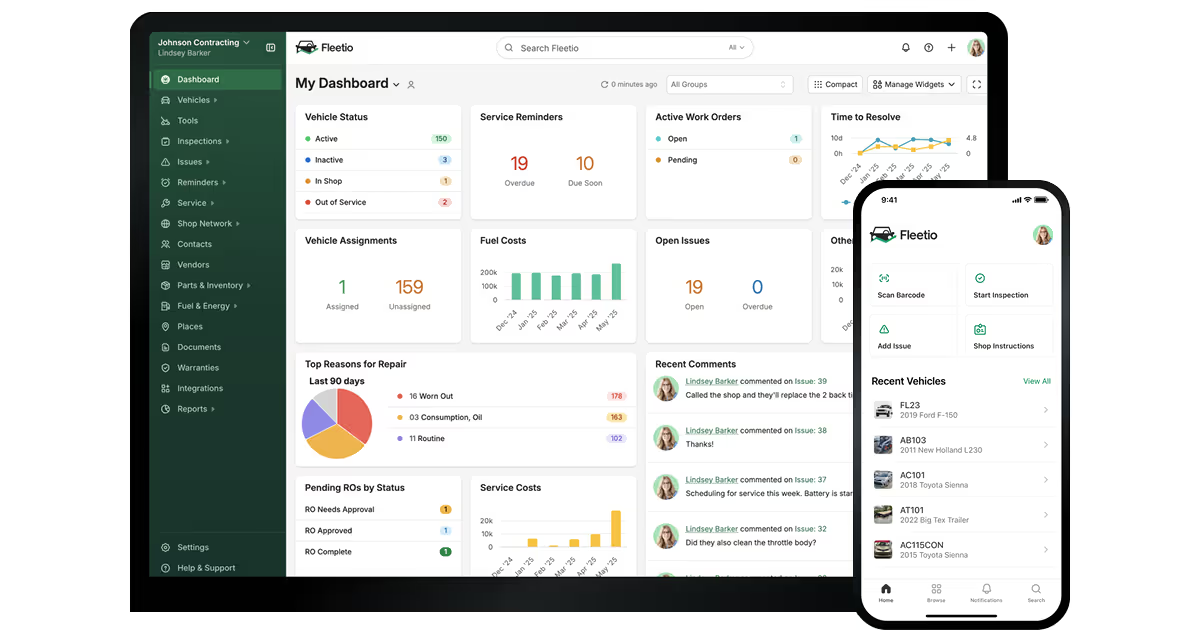
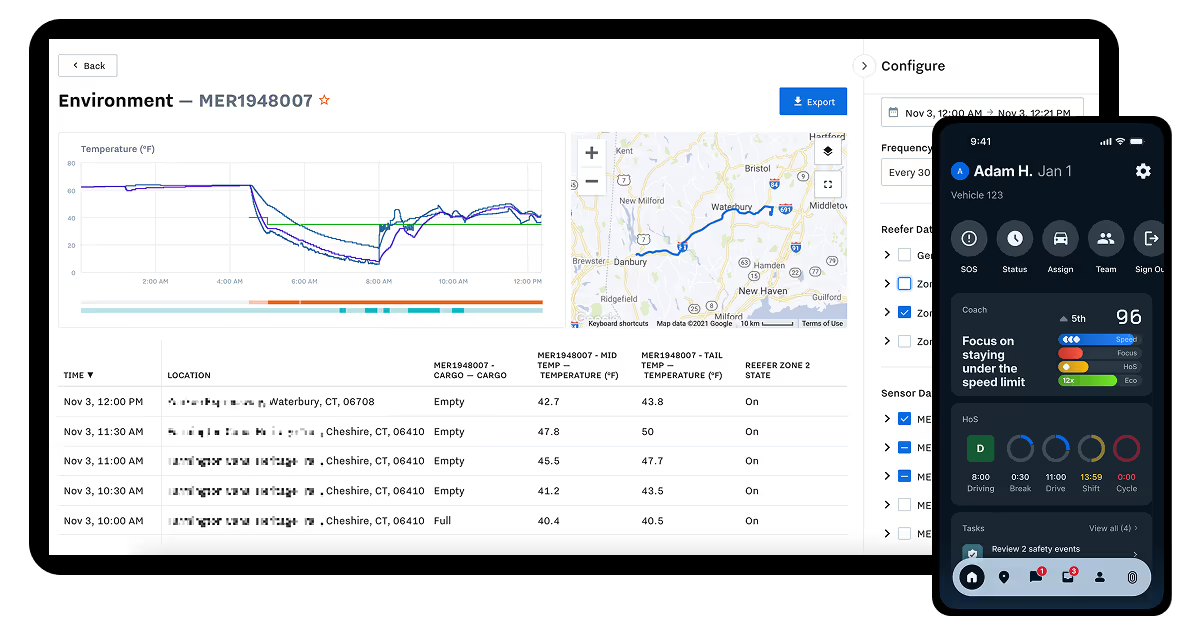
Fleet management apps centralize operations for any size fleet to increase productivity, safety, and profitability through real-time data and automation. They help businesses track vehicles, manage maintenance, optimize routes, monitor driver behavior, handle fuel expenses, and ensure compliance. Such an application for logistics typically has such features as:
GPS tracking includes geofencing, route optimization, and real-time location monitoring.
Work orders, scheduling, vehicle logs, and inspections (DVIRs) are all part of maintenance management.
AI-powered dashcams, behavior coaching, and incident alerts for driver safety.
Fuel tracking through MPG monitoring, integrating fuel cards, and managing expenses.
Tools for FMCSA compliance and Electronic Logging Devices (ELDs).
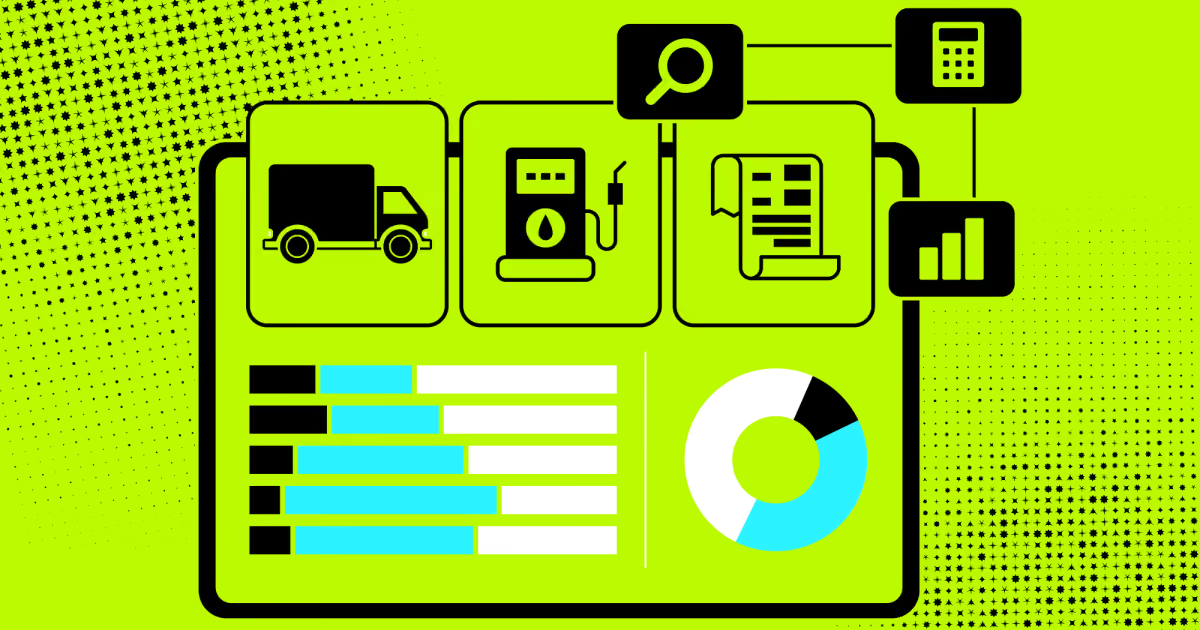
Comprehensive performance, efficiency, and utilization analytics.
Rahmad and Ghina point out that fleet management systems conduct real-time diagnostics through integrations to GPS and telematics like Geotab, Motive, and Verizon Connect. They also connect to accounting systems for financial reporting and expense tracking, maintenance providers for automated repair data, and fuel card services like Coast to monitor spending and stop fraud.
Amond the most popular solutions options you can try Fleetio (known for advanced fuel management), Samsara (automation and workflow management), Connecteam (all-in-one with GPS tracking and scheduling), and GPS Trackit (great for video monitoring and fleet visibility).
Fleetio
Warehouse and inventory management apps
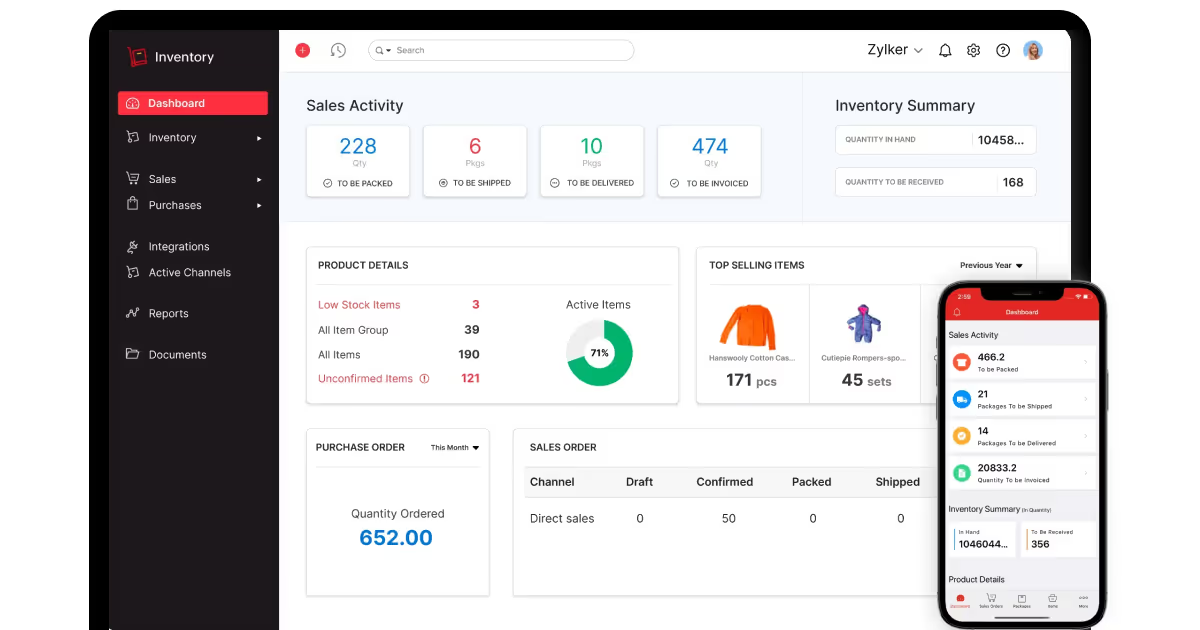
This type of logistics management app enables businesses to track inventory levels, manage orders, and optimise their warehouse operations, all while providing real-time visibility and multi-channel synchronization. This eliminates manual tracking errors, avoids stockouts and excess inventory, and creates streamlined order fulfilment processes. Key features are:
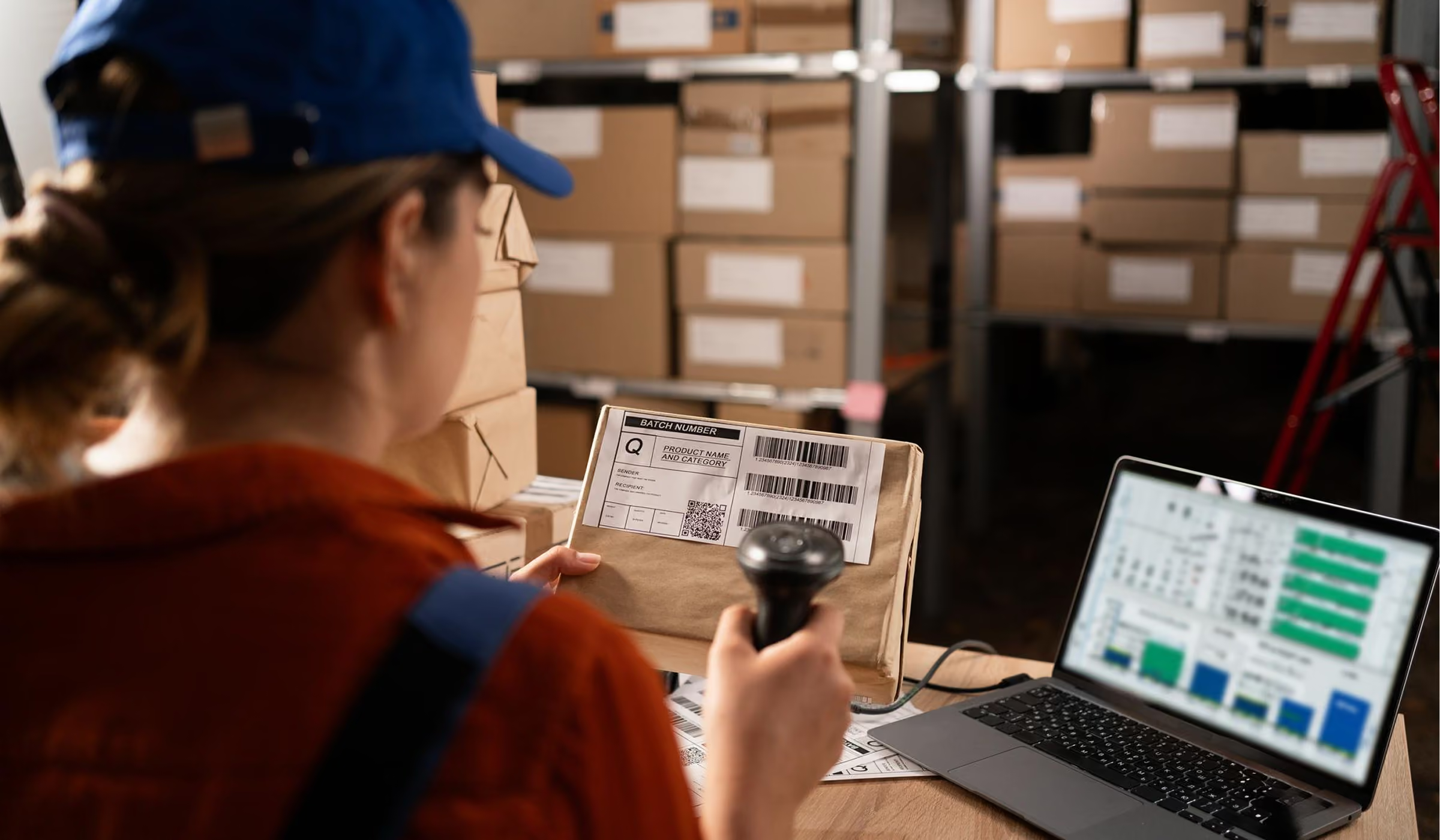
Real-time tracking using barcode scanning and RFID technology to ensure the accuracy of their inventory.
Mobile access to manage inventory from any location using a smartphone or tablet.
Multi-location management to track inventory in multiple warehouses at the same time.
Automated order fulfillment to speed up picking, packing, and shipping inventory.
Analytics that monitors stock levels, turnover rates, and slow-moving inventory items.
Integrations allow these apps to sync with e-commerce platforms to keep product listings and inventory levels updated. Additionally, they integrate with accounting software like QuickBooks and Xero for financial reconciliation. Integration with many ERP software provides a single point of control for entire businesses. Additionally, warehouse & inventory management applications automate the creation of shipping labels with organisations such as UPS or FedEx, and track inventory between multiple marketplaces and CRM tools in a single application.
Examples of warehouse and inventory management apps include Zoho Inventory (a free logistics app for small businesses), Sortly (mobile-first with QR codes), Square Inventory (beginner-friendly with stock alerts), and Odoo (open source with ERP deep integration).
Zoho Inventory
Transportation and route optimization apps
From basic navigation tools to specialized delivery platforms offering real-time tracking, proof of delivery, and sophisticated scheduling capabilities, transportation and route optimization apps help define the most efficient routes by analyzing multiple stops, traffic patterns, and delivery constraints. These logistics applications cut travel time and fuel consumption. They have such important features:
Multi-stop automatic optimization for optimal efficiency.
Real-time traffic-based routes modification in real time to prevent traffic jams and delays.
Time limitations and windows to keep the deadlines for delivery and service.
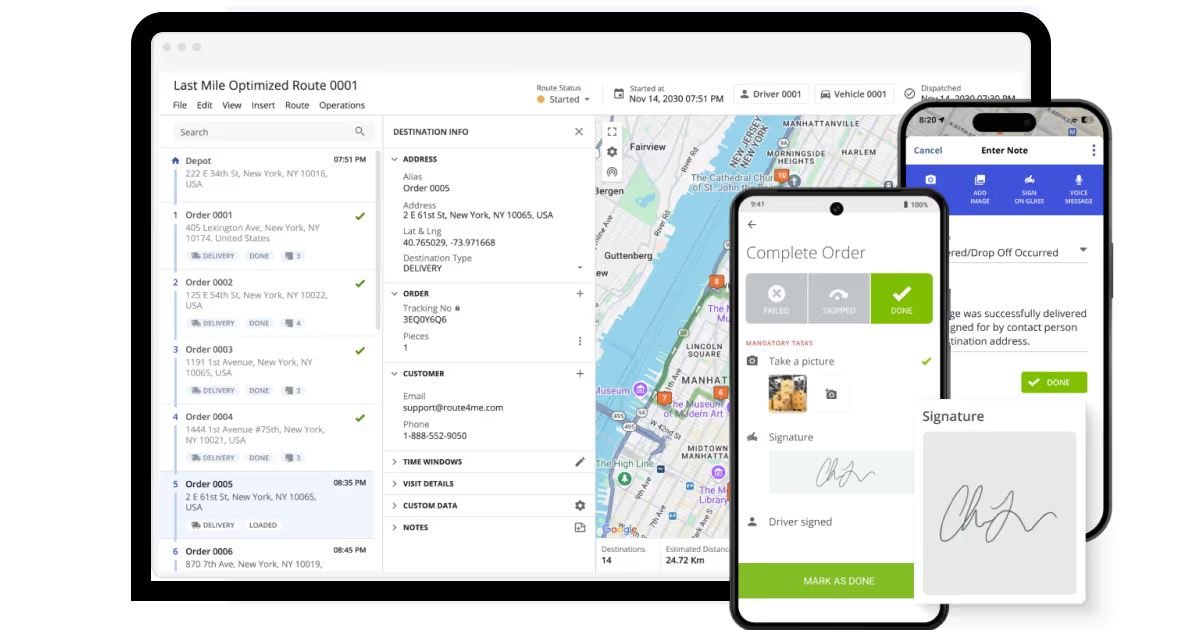
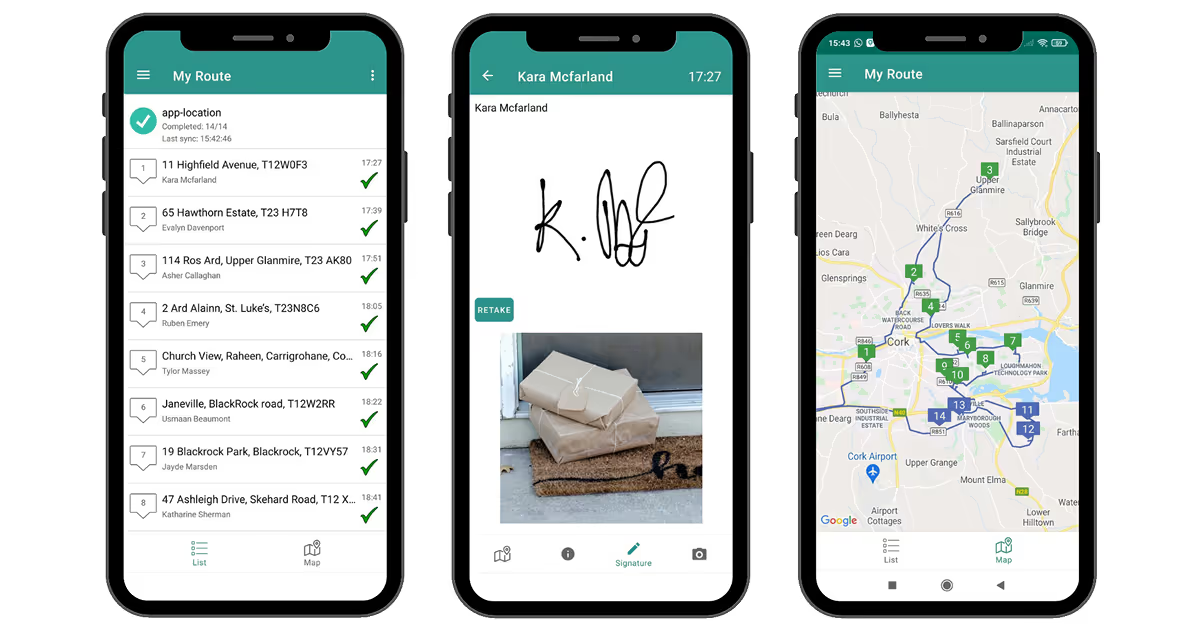
Proof of delivery: capturing a photo and signature for confirmation.
Scalability for large fleet operations.
For precise planning and visualization, route optimization apps integrate with mapping services, according to Kovvuri and associates. Additionally, they integrate with accounting software to track expenses and CRM systems to manage customer appointments.
Among the basic options of these logistics tracking apps, you can check on Waze (great for traffic alerts) and Google Maps for general navigation. You can also use more advanced delivery-focused solutions like RoadWarrior (flexible free tier with eight stops), NextBillion.ai (free web-based tool for up to ten stops), Route4Me (enterprise-grade with CSV import and truck-legal navigation), OptimoRoute (30-day free trial with live tracking and SMS notifications), Onfleet (dispatch management), and Zeo Route Planner (priority and time window analysis).
Route4Me
Delivery tracking & last-mile delivery apps
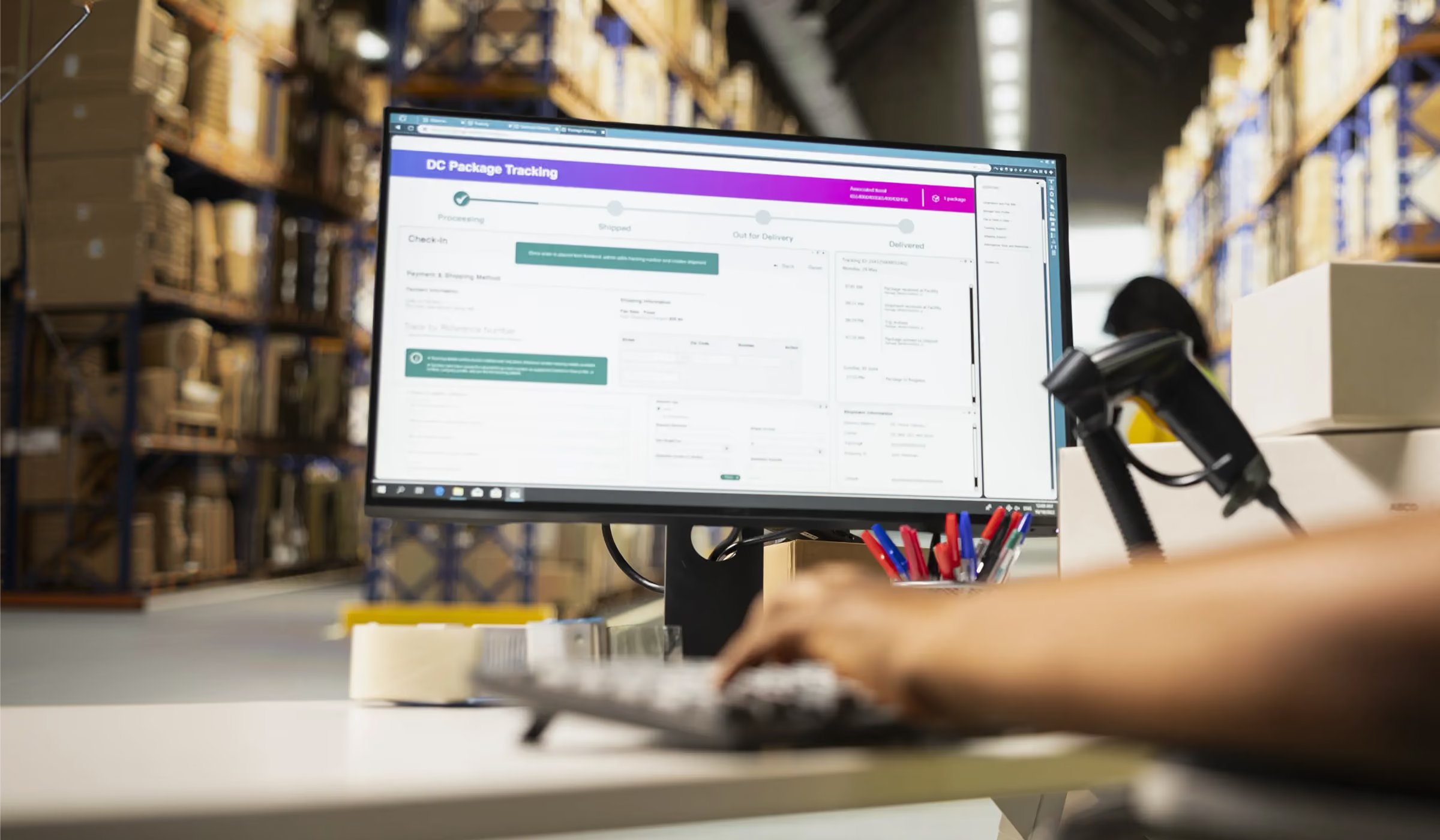
Delivery tracking apps offer real-time visibility by using GPS to pinpoint delivery positions and driver locations. Automated SMS or email customer notifications also reduce anxiety and support inquiries by providing recipients with precise ETAs.Intelligent dispatching systems streamline operations by allocating tasks to drivers according to location, capacity, and priority. Features that guarantee accountability at each delivery point include proof of delivery via electronic signatures, photo capture, or PIN confirmation. While carrier integrations make it possible to connect with several shipping companies for complete visibility, branded tracking pages enable businesses to maintain a consistent customer experience.
Last-mile logistics application software streamlines sending and receiving items from businesses. As outlined by Betrand and others, these platforms allow for the detection of goods' states, track their locations, and display the applicable services at the time of purchase or any time after. Companies benefit from lower costs associated with deliveries, enhanced speeds of delivery, and greater customer satisfaction by providing proofs of delivery, automated dispatching based upon driver workload, and analytics on their performance.
Examples of popular logistics mobile apps and web solutions include Circuit for Teams (specializes in route planning and teamwork), Routific (provides easy optimization for small manufacturers), Tookan (provides real-time GPS location monitoring and automated assignment of drivers), and SmartRoutes (provides complete service solutions from the time an order is placed until the time of delivery).
SmartRoutes
Freight management and cargo booking platforms
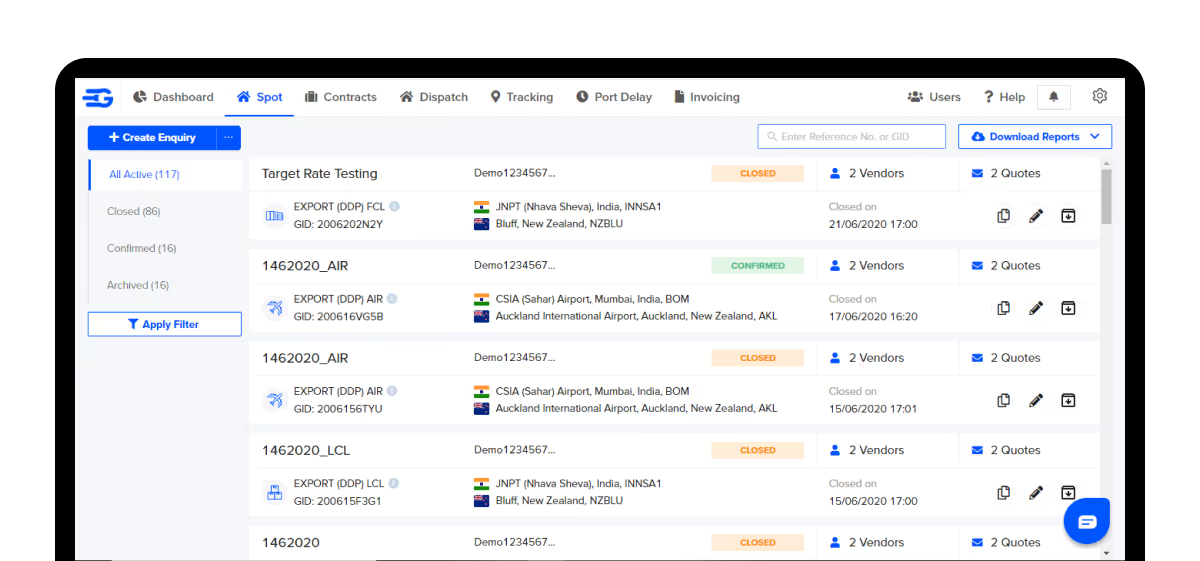
Freight management software helps businesses automate and improve shipping by managing the entire freight process, including booking shipments, tracking deliveries, optimizing routes, and automating paperwork in one centralized platform. These tools are essential for supply chain management. Key features include invoicing with multi-currency payment support, quoting and booking systems that generate quotes and convert them to shipments instantly, order and CRM management for tracking shipments and customer data, warehouse and inventory optimization, tracking across all transport modes, compliance tools for global customs forms, and analytics for demand forecasting and operational insights.
Leading solutions include CargoWise (cloud-based ERP with strong global compliance), Magaya (complete platform with dimensioner technology for accurate cargo measurement), GoFreight (native integration with over 125 carriers and 45 U.S. terminals), and GoComet (smart choice for global logistics).
GoComet
Cargo booking platforms simplify container reservations and freight procurement.Zeng notes that these logistics management apps offer real-time capacity visibility, instant rate comparisons, and automated booking confirmations. Features include multi-carrier integration for comparing options across ocean, air, and land transport, document management for bills of lading and customs paperwork, and shipment tracking from origin to destination.
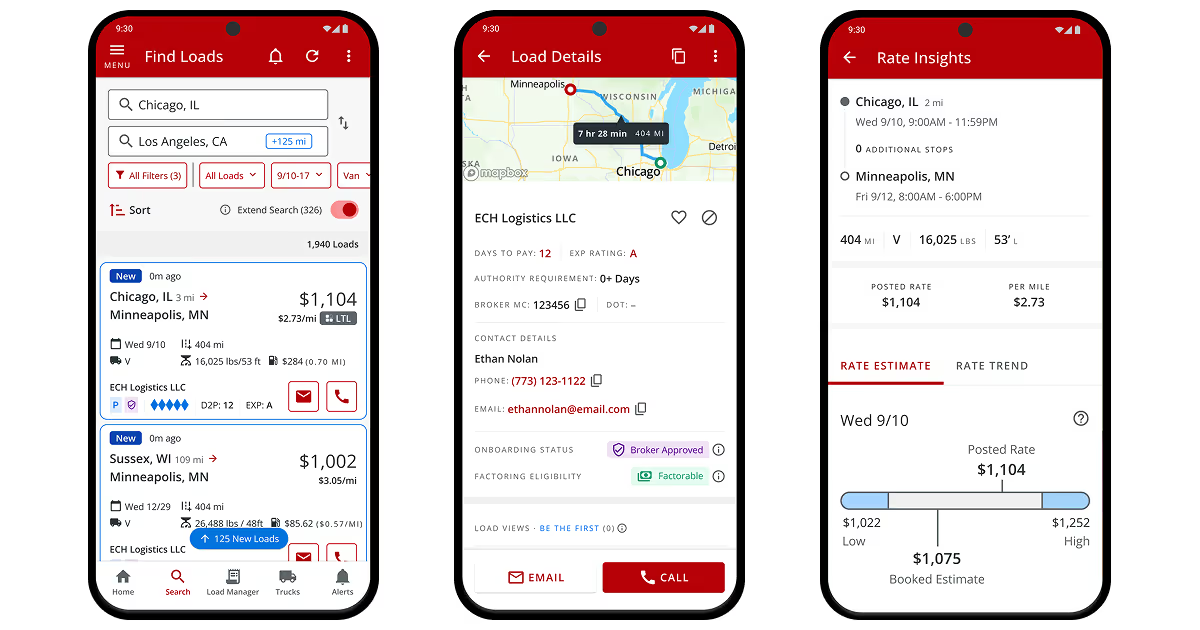
Examples of such technology include digital freight platforms for container bookings in maritime logistics, trucking load boards like Truckstop that match shippers with available trucks, and specialized platforms for air cargo and rail transport.
Truckstop
Supply chain visibility platforms
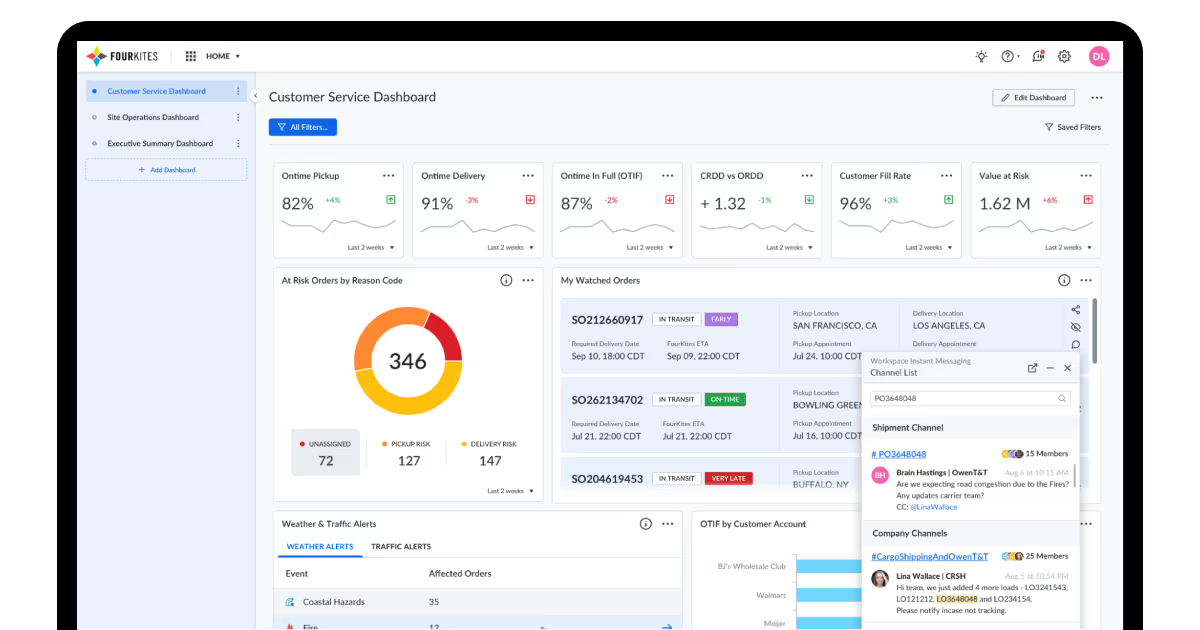
Platforms that provide visibility into the supply chain help respond to unforeseen events that disrupt operations through timely information. Prabu reports that visibility in the supply chain integrates information and data from all supply chain partners, including suppliers, manufacturers, freight carriers, third-party logistics (3PLs), distributors, retailers, and customers. These logistics app development solutions provide real-time tracking, predictive analytics for demand forecasts, risk detection to allow for timely risk mitigation, and adaptive planning for modification of plans as business requirements change.
Some of the commonly used visibility platforms are Project44 (real-time transportation visibility & predictive analytics), FourKites (predictive ETA and SKU-level tracking), Blue Yonder (end-to-end supply chain planning and execution), Oracle SCM Cloud (complete supply chain management with visibility tools), and E2open (comprehensive supply chain network for orchestration). As an example of supply chain app development for logistics, C&S Wholesale Grocers developed a digital twin of their supply chain using FourKites, reducing the number of calls related to logistics and transportation by 65% in only four months.
FourKites
Driver apps and customer apps
Driver apps are logistics mobile app options that streamline delivery by connecting drivers with dispatch systems and customers through digital workflows. These apps offer dynamic route optimization that creates efficient multi-stop routes with on-the-go adjustments, real-time order management for receiving and tracking delivery tasks, digital proof of delivery through signatures and photos, GPS navigation with turn-by-turn directions often using integrated mapping services, direct communication with dispatchers and customers, automatic status updates, trip history tracking, and offline capabilities for areas with poor connectivity.
Popular apps include Samsara Driver for full-stack fleet management with vehicle health monitoring, FarEye, and SmartRoutes offering AI-driven optimization with customer communication features.
Samsara Driver
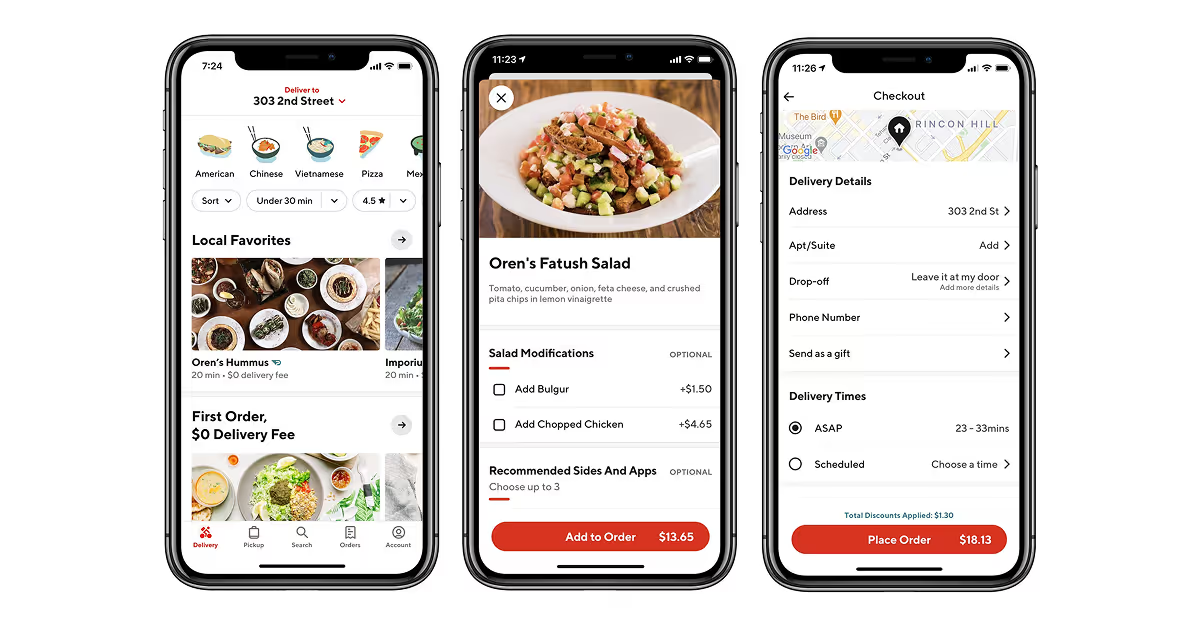
Customer apps let people order products or services, watch their deliveries move in real-time on a map, and message drivers or support directly from their phones. These apps send notifications when orders are confirmed, picked up, and delivered, keep a history of past orders and receipts, and show exactly where the driver is with updated arrival times.
Popular options include platforms like DoorDash and Amazon Flex for on-demand delivery opportunities with flexible earning potential, and Instacart for grocery shopping with live delivery updates and customer service chat.
DoorDash
Features of a logistics CRM
To choose a ready-made option or turn to custom logistics app development, you need to understand the necessary features of your platform. Some of them are necessary, and some are more advanced for establishing a more significant presence.
Must-have
Let’s start with the functionality that’s undeniably important for any logistics application development.
Driver/carrier features
Shipper features
Admin panel features
Profile registration
Registration
User management
Orders list
Order placement
Dashboard
Order search
Online documentation
Carrier queries
Order details
Real-time order tracking
Advanced algorithm
Smart payments
Payment gateway
Effective billing
Seamless maps
In-app communication
Driver verification
Digital document
24/7 support
Revenue tracking
Real-time notifications
Carrier matching
Billing administration
Customer profile registration and management. The central repository for customer data, including names, addresses, communication history, and account status, is an essential CRM feature for all logistics companies. This component of a logistics CRM creates visibility for all departments in a company, enabling them to keep track of their customers' (and any vendor or partner) engagement, thus delivering consistent service.
Order management and search. A view of all assigned orders allows drivers to see upcoming deliveries, prioritize tasks, and manage their workload. Quick search helps drivers locate orders by tracking number, destination, or customer name, saving time. Also, information on each order (pickup and delivery addresses, special instructions, item descriptions) ensures drivers have everything needed for the delivery to succeed.
Maps integration for freight tracking. Freight forwarders have a common challenge of efficiently tracking and monitoring freight locations in order to ensure their shipments remain on time. Real-time visibility is achieved through IoT technology with monitoring systems such as GPS, thus providing logistics teams and customers with the ability to know their freight's current location along with an estimated delivery time.
Documentation management (quotes, invoices). Logistics companies deal with multiple routes, landscapes, and currencies for quotations. Therefore, for a professional and credible quote, all information must be accurate and clearly stated. In addition, the same holds for invoices; thus, the invoices must be professionally written and easy to read to minimise the risk of future misunderstandings.
Notification and communication tools. Integrated communication features enable team members to contact customers via email, phone, or messaging directly from the CRM platform. This ensures all customer interactions are documented automatically, and through updates and notifications, customers can know exactly when their packages arrive or if there are any delivery issues and exceptions.
Integrated payments. Integrated payment processing allows drivers to collect payments on delivery, manage COD transactions, and track their earnings directly within the app.
Without these features, transport and logistics app development isn’t complete if you want a scalable, efficient, and easy-to-use CRM.
Advanced
The following features are more complex and are more typical for a next-level enterprise logistics mobile app development or creating an advanced CRM for your business.
Channel marketing automation. Advanced CRM systems provide sophisticated marketing tools that automate email campaigns, segment customers based on behavior and preferences, track campaign performance, and personalize communications at scale. Approximately 45% of marketing teams rely on CRM tools for these operations, helping logistics companies nurture leads, retain customers, and promote new services.
Customized workflow automation. Many logistics business-oriented routine activities can be automated, including day-to-day log data entry, scheduling routes, and customer follow-ups. Vu and colleagues note that CRM adoption improves logistics service quality when properly implemented. Ensure the CRM offers customized workflow automation features that allow automated workflows according to specific business needs.
Self-service customer portals. A key element in successful logistics app development is the self-service customer portal, which allows customers to have their own account so they can independently see where their shipment is located, when to expect delivery, access any associated documents to complete the shipment process, and contact an agent if they need assistance through the portal. Eliminating the need for staff to intervene saves the company on operational costs and improves customer satisfaction.
Advanced predictive analytics foresees demand fluctuations, estimates potential delays, and provides insight into the behaviours of at-risk customers, along with recommended best pricing strategies. This helps move away from reactive decision-making toward a more proactive one that breaks problems before they arise and finds new growth opportunities.
Complex integrations ensure the CRM supports IoT solutions, AI, Machine Learning, blockchain, business intelligence, and cloud computing platforms. Integration with ERP systems, accounting software, warehouse management systems, and transportation management platforms creates a unified technology ecosystem that boosts team productivity and ensures full scalability as the business grows.
To implement all these advanced capabilities, your development process should be well-defined and carefully planned.
Step-by-step logistics app development process
Creating an efficient custom logistics services app development isn’t the easiest task. We have compiled some guidelines on building it right.
Tech stack
Choosing the best stack is an important part of creating a successful app. When trying to decide which stack works best for your business, think about your business requirements and size.
For frontend development, you would generally use cross-platform tools, such as React Native or Flutter, which allow your logistics mobile app to be developed once but still be used on both iOS and Android. Using these cross-platform tools helps speed up development without reducing performance across the two platforms.
Backend development requires a strong server stack, which typically includes Node.js and Python, as they can scale well and have many libraries available. Ruby on Rails provides the fastest way to build apps, and Django provides some of the most secure applications.
The cloud infrastructure is at the centre of modern logistics mobile app development because the resources provided by AWS, Google Cloud, and Microsoft Azure enable app creators to store large amounts of data and use it to improve the user experience by providing them with faster, better, more efficient services. Cloud infrastructure also allows logistics services to grow as their user base continues to increase.
For database management, PostgreSQL, MongoDB, and MySQL are the most common options for this purpose. To define which one to use, analyse which database is needed based on the application requirements and how the app will query the data.
Further, other components used in these types of applications may also include payment gateways (Stripe, PayPal, Braintree), messaging services (Twilio, PubNub), analytics tools (Apache Spark, IBM) for measuring performance metrics and providing business intelligence based on performance data.
Logistics app integrations
Integration capabilities determine how well your app functions within existing business ecosystems. Here’s also a short logistics app development guide on the necessary integrations.
Core system integration connects your app with Warehouse Management Systems (WMS), Transportation Management Systems (TMS), and ERP platforms. These ensure accurate inventory tracking, order processing, and synced business operations.
Real-time asset tracking via GPS sensors and telematics devices is made possible by IoT device integration. This enables proactive problem-solving by giving visibility into
Through API integration, your app can communicate with third-party services such as customs systems for international shipping, weather services for route optimization, and mapping platforms like Google Maps and Mapbox. Data interchange between various platforms is made easier by standardized APIs.
Emerging technology integration includes machine learning for demand forecasting, computer vision for automated package scanning and damage detection, and artificial intelligence for predictive analytics and route optimization. These technologies increase productivity and lower operating expenses.
With so many nuances to implement, you must also be aware of the cost of developing your app.
Cost of development
Some aspects define logistics app development cost, including the advancement of the product you build, business nuances, technologies, and future maintenance.
Complexity. The base cost for a simple logistics app is between $25,000 and $50,000. Mid Tier apps, including robust features such as real-time tracking, route optimization, and payment integration, are priced at $50,000 to $120,000. Advanced analytics, fleet management, and integration with other enterprise systems make it possible to create higher-end apps that can run anywhere from $150,000-$250,000.
Geography. The typical hourly rate for North American developers is $100-$250. Eastern European teams typically charge $35-$70 per hour. However, it is important to keep in mind that the lower rates may create barriers regarding communications and time zone differences.
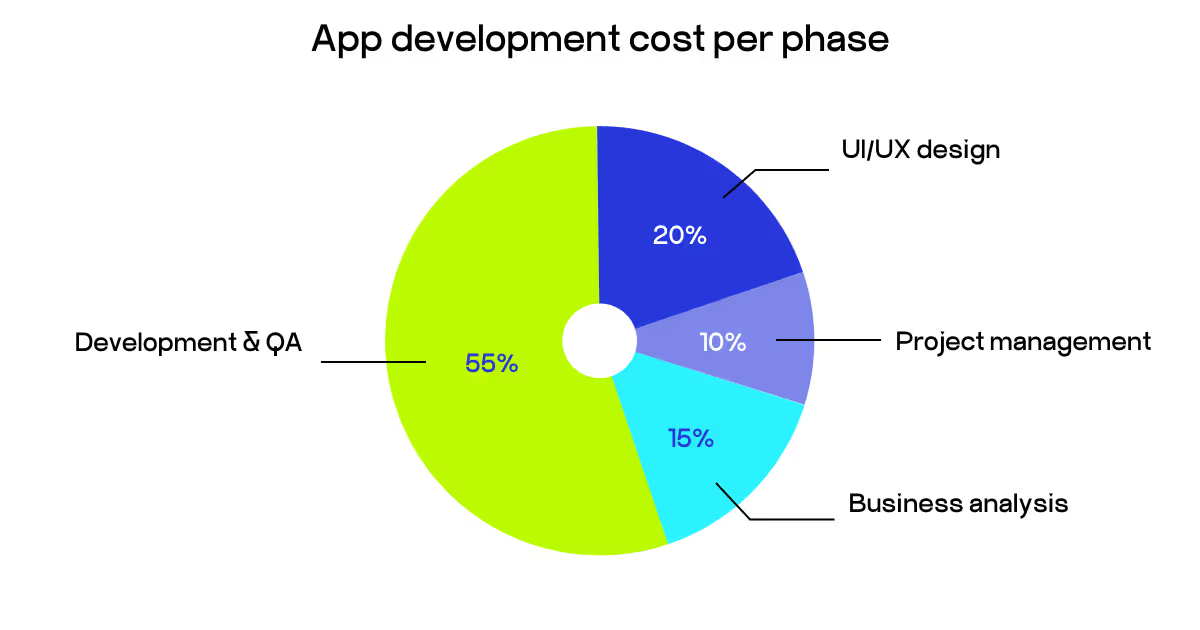
Cost allocation. Coding, testing, and QA typically receives 55% of the budget. 20% of the total cost goes toward logistics app design, which guarantees a user-friendly experience. 15% goes toward business analysis, which includes technical specifications, feature planning, and requirements gathering. 10% is dedicated to project management, which includes scheduling, stakeholder communication, and coordination.
The cost of annual maintenance is only about 15%-20% of the development budget to maintain bug fixes, security updates, and system compatibility. Marketing is an additional expense incurred to gain new customers, as well as ongoing feature upgrades for a competitive advantage within the changing logistics marketplace.
Now you understand the intricacies of working with logistics app developers. However, let’s also define the challenges that you might encounter when creating your app.
Challenges in building logistics apps
Logistics app development services often face several obstacles that need to be addressed before any building begins.
Seamless integration with existing ERP, CRM, and WMS systems remains non-negotiable, yet each client's unique infrastructure demands robust APIs and real-time data synchronization. Nebava notes that inadequate digital infrastructure and compatibility problems between new solutions and existing logistics systems create significant technological hurdles.
Security and user experience are the next challenge. When dealing with sensitive customer information and international shipments, data security and compliance with GDPR and CCPA are a must. The challenge of balancing the advanced functionality of the applications with a simple user interface still stands strong as an issue, as a lack of a good user experience can lead to mistakes and losses in efficiency due to errors in the use of complex legacy systems that have long dominated this industry.
Economic and human factors. The economics of logistics companies are affected by limited access to financing, the high cost of implementing new technologies, and limited access to foreign products without local supply possibilities. Also, in the legal arena, the inconsistency of the various laws and also the uncertainty due to vague definitions of the digital economy in the various jurisdictions creates confusion.
COAX’s full stack development team eliminates these issues completely. We have an excellent understanding of your industry’s challenges and compliance demands, have built solutions for this sector for 15 years, and have an excellent technical background. Our developers can integrate advanced technologies like AI and ML, establish complex calculation engines for fuel efficiency, and create communication interfaces for drivers and customers, tailored to your needs.
Our mobile app development services are robust, as well. We implement solutions for Android and iOS, as well as cross-platform software, ensuring fast loading and high conversions through closely calculated UX and intuitive and appealing UI design. If you’re looking for a logistics app development company that covers all bases from user research to development, Q/A, and post-launch maintenance, we’re your great option.
Choosing between a custom and a ready-made solution
When choosing between an off-the-shelf tool and logistics software development, you need to consider the pros and cons of each.
Ready logistics applications can be deployed right away, with regular updates, and features are included as part of a subscription fee. By using subscription pricing, you do not incur any development costs, and because the software is designed to be used with standard operating procedures in every business sector, its implementation will be uncomplicated.
The disadvantages of off-the-shelf software are that the features are typically generic and cannot be customized until the next vendor update, and the security risk of an off-the-shelf system is considerably higher than that of a custom-built solution. In addition, customer service is frequently limited, so problems may not be solved for weeks after a problem occurs.
Custom-built software provides built-in scaling capability and can accommodate a company's growth through adding new capabilities as the company expands. You can completely control your software's source code, providing you with the option to upgrade or resell the software. You will also use any software designed to fit your company's specifications, and you will remain involved in the development process to ensure a match between your requirements and the finished product. Also, the security architecture of a proprietary system is significantly more robust than that of an off-the-shelf system.
The tradeoffs of logistics mobile app development are higher upfront costs due to individual requirements and longer development timelines, requiring greater involvement.
Ready-made suits businesses with standard processes seeking quick, affordable deployment. Custom-built fits companies with complex, unique operations where long-term competitive advantage justifies the investment. Your choice depends on whether immediate functionality or strategic differentiation matters more to your business model.
Practical tips
As a final word, we’ve gathered some specific and actionable custom logistics mobile app development tips to create a truly comprehensive and efficient solution without excessive risks.
If you're starting from scratch, begin with an MVP focusing on 3-4 core features rather than building everything at once. If user adoption is slow, then add gamification elements like driver performance badges or delivery milestones to boost engagement.
When an application needs to be used offline, local data caching should be used, as well as the ability to sync back online after the user has finished being offline. For applications that allow the user to make payments to multiple currencies, the application should call the real-time exchange rate API to get current pricing.
If your logistics tracking app is going to be launching to multiple regions, it is important to perform user testing with real users located in those regions before it launches to market, as traffic patterns are different across regions.
If your budget is tight, instead of building your own infrastructure, consider using cloud-based services that utilize a pay-as-you-go model. If you are experiencing increases in costs associated with third-party APIs, negotiate volume pricing when your applications exceed 10,000 transactions monthly.
If the majority of users discontinue using your app after their first usage, provide in-app tutorials to help users when they are having trouble with certain features. If many drivers stop working for your company after a short amount of time, streamline the onboarding process for drivers so they can be productive in 15 minutes or less.
We hope these tips will help you in your custom logistics app development or in efficiently using any tool that fits your business like a glove.
FAQ
How to make a logistics app that’s easy to use by drivers on the go?
Implement an offline-first architecture, making sure the cached local data is available to drivers, and continue working without connectivity. Once connected again, the cached data would automatically be synced with the server. Kadłubek indicated that drivers' productivity will increase significantly when using these capabilities within intelligent transportation systems. Also, voice command functionality can be integrated to allow for hands-free operation while driving. Reducing the amount of text that drivers need to type into the app will also help save time and improve efficiency, and POD capture and route updates should be accessible.
How to create a logistics app that makes processes simpler?
Automating repetitive workflows, such as status updates and dispatch alerts, will lower the amount of manual input that the driver must perform to complete tasks. Marras and team have shown that using gamification combined with AI-based platform training reduces the amount of time required to learn a task and improves accuracy. Also, using templates for common shipment types will assist the dispatcher in preparing the orders for shipment. Implementing bulk processing options will simplify the dispatcher’s job, and using barcode or RFID scanning will also help eliminate the need for drivers to manually enter data into the app.
What are the security challenges of developing an app for logistics?
There are several challenges to address:
Protecting sensitive customer data and shipment information from breaches.
Securing API endpoints and preventing unauthorized access.
Ensuring encrypted data transmission between mobile devices and servers.
Managing authentication across multiple user roles and permissions.
Preventing GPS spoofing and location data manipulation.
Protecting against malware and mobile device vulnerabilities.
Ensuring compliance with GDPR, CCPA, and industry regulations.
Securing offline data stored on driver devices.
Preventing insider threats and unauthorized information sharing.
Managing secure integration with third-party carriers and payment systems.
How does COAX create secure and efficient logistics applications?
COAX provides logistics solutions with ISO/IEC 27001:2022 certification for overall security, risk assessments, monitoring, and management. We also have an ISO 9001 certification, which affirms our high standards of process. Our teams work on web/mobile development using end-to-end encryption, secure APIs, role-based access control, and real-time visibility into the shipment status using a cloud infrastructure. In addition, COAX's apps undergo a series of extensive penetration tests to ensure our customers that their application will be secure from any outside attacks or intrusions.



















































































_.avif)











%2520explained.avif)

We are interested in your opinion