Across hospitality, there’s one common and saddening situation. A 30-room hotel lost $7,200 in one quarter. Nobody stole it. No audit found a tax mistake and fined them. As it turns out, it’s just that the front desk clerk mistyped one rate code twice.
One mistake can’t lead to such grave consequences. But the error sat unnoticed for six weeks. It stayed buried in a spreadsheet nobody double-checked, and snowballed into a sum that undermined their business continuity.
Manual billing does this too often. It hides mistakes until the money's already gone, and the issue has grown big.
At COAX Software, we've built hospitality and travel software for years. We recognize this pattern when we see it. Our team created Hosty, a vacation rental management platform to solve this challenge among others. Property owners lose revenue to scattered tools and manual tracking. The same gap shows up in hotels that bill by hand. Here, automation makes a change completely.
This article breaks down what hotel billing software can do for your operation. We'll cover core features and integration points. You'll see who benefits, from owners to front desk staff. We'll close with real ROI numbers you can use.
What is hotel billing software?
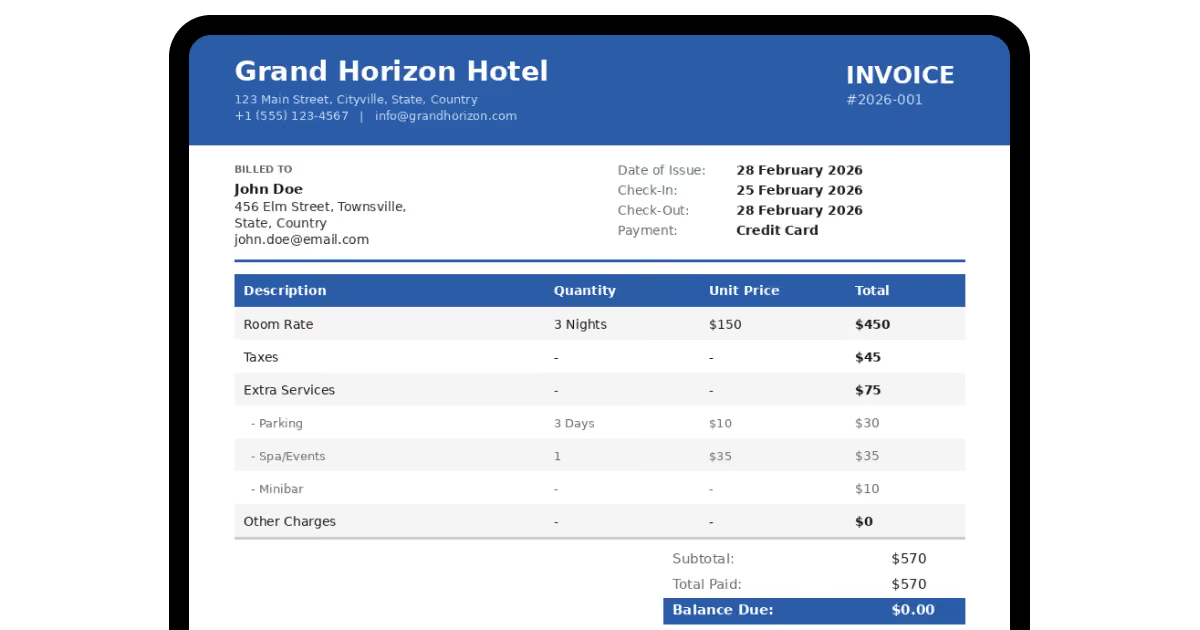
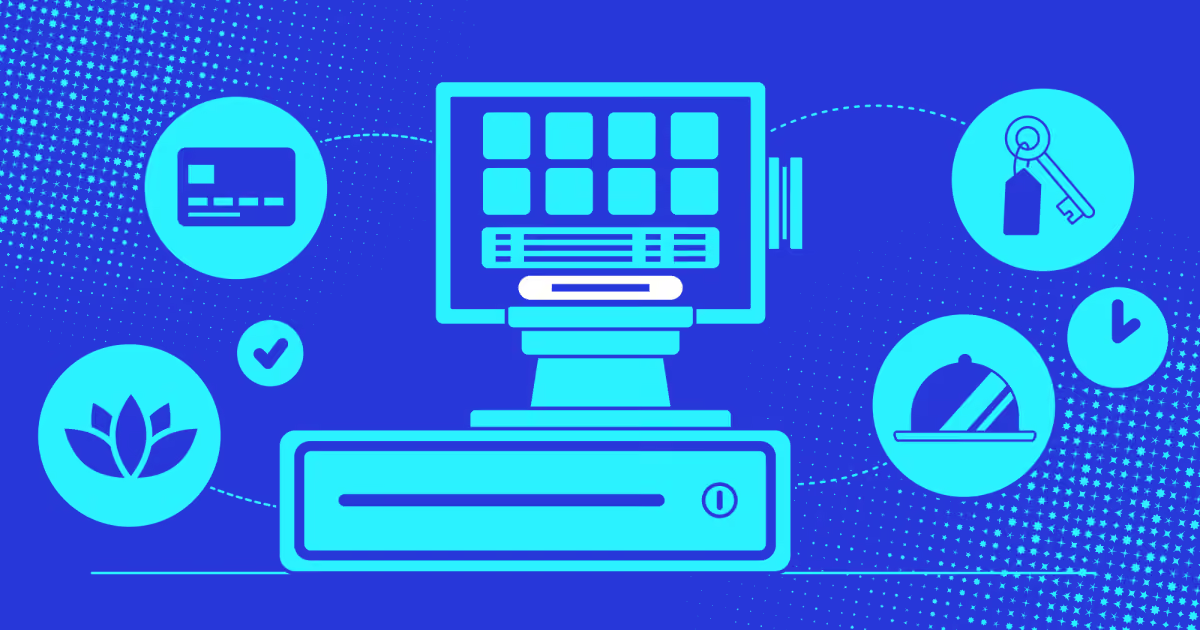
Billing software for hotel businesses automates guest charges, folios, and payments. It replaces manual ledgers and spreadsheets. Every charge, from room rate to minibar, routes to one folio.
Add-ons are a great example of usage. Say, a guest books a spa slot. They order room service and add valet parking. Without automation, staff manually total three separate charges. With billing software, those charges end up in one folio at once.
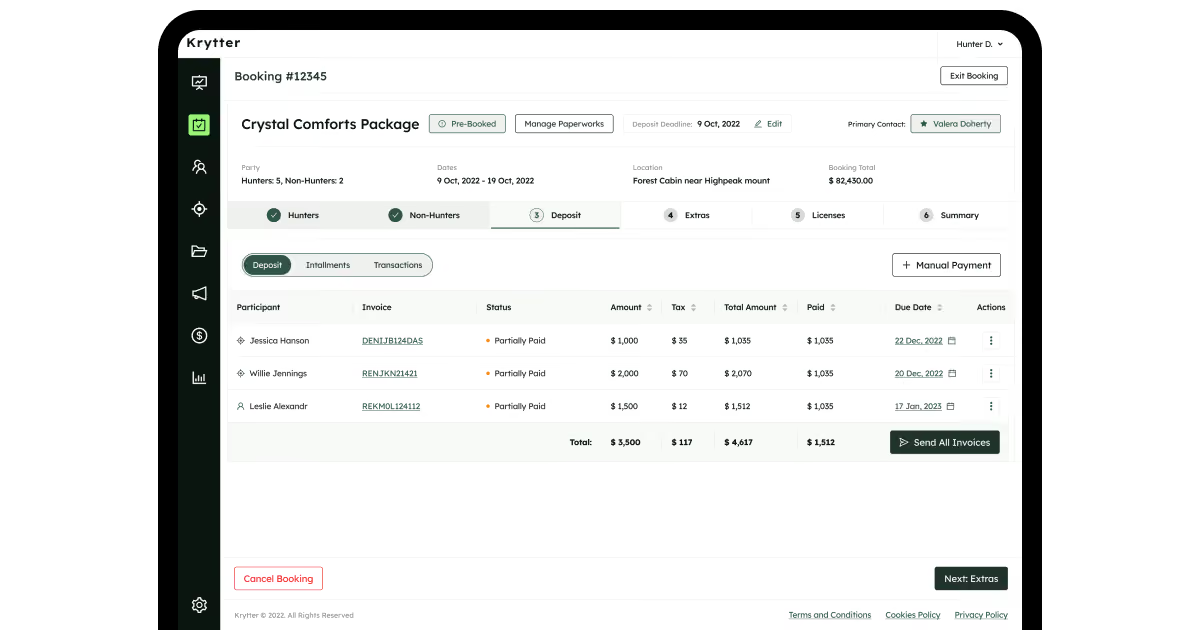
COAX built exactly this logic for Krytter, a hunting-trip booking platform. Krytter splits payments across cash, bank transfer, and card. Tax rules and jurisdictions apply automatically to every invoice.
Market-wide, demand for this kind of hotel billing automation keeps climbing. Precision Reports values this market at $24 billion in 2025. That covers the billing and revenue management software sector. Moreover, it projects $53.9 billion by 2035. Hospitality sits among the ten sectors this report tracks directly.
Hoteliers feel this shift already. HotelTechReport found 81% of hoteliers expect technology to matter more. That shift plays out over the next five years. Another 86% rank their property management system as most critical daily. Revenue management and channel manager tools follow close behind.
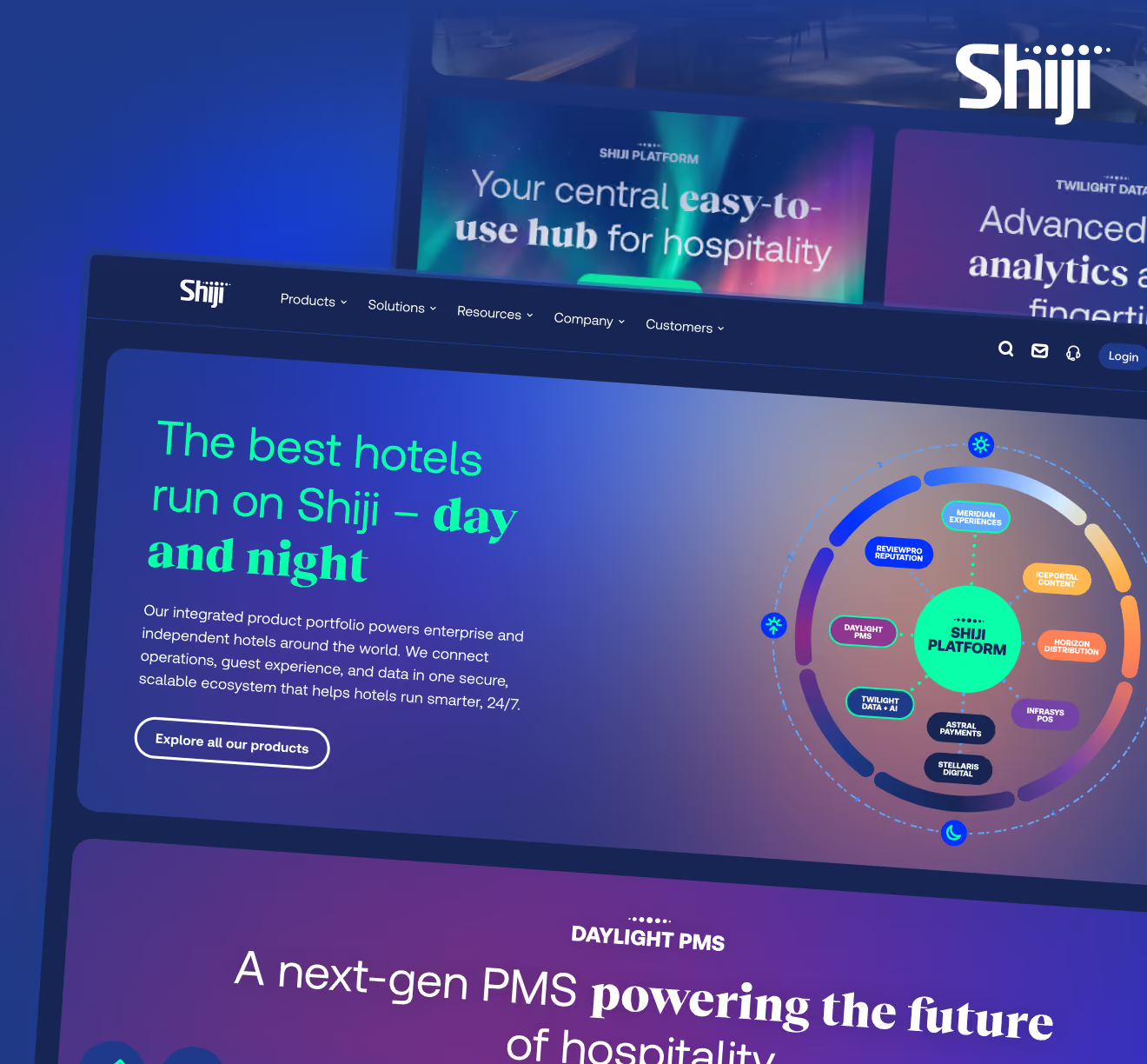
Hotels that make this shift see it firsthand. Shiji is a hospitality tech company. It serves more than 91,000 hotels worldwide. Shiji built its platform around this exact convergence. Billing, guest engagement, and property data now share one system. Not ten disconnected ones.
How hotel billing works from reservation and check-in to payment and checkout
Hotel billing touches every guest interaction, not just the final invoice. It starts the moment someone books a room. Four stages carry that money from promise to payment.
Reservation.
The guest hands over a card before ever seeing a lobby. That single step sets up everything the hotel billing system does later. Card on file secures the room and confirms the guest's intent to stay. Then, pre-authorization checks that the card works and holds real funds. Deposits apply for luxury stays or strict, non-flexible booking types.
Manual desks skip pre-authorization checks more often than you'd expect. A declined card at check-in becomes everyone's problem, fast.
Check-in.
This is where the guest meets the system face-to-face. Good hotel front-desk software turns a slow ritual into thirty seconds of work. Identity verification confirms the guest matches the reservation and card. After that, incidental holds reserve $50 to $100 nightly for minibar or room service. Finally, folio creation opens the running ledger that tracks every charge ahead.
Paper folios get transposed by hand at busy desks. One swapped digit here throws off the whole stay's math.
During the stay.
Charges pile up quietly while the guest enjoys the property. Every purchase needs to land on the correct folio, instantly. Room charges post each night automatically, taxes included. Also, on-site extras from the restaurant or spa route through POS systems.
Disconnected POS terminals are where most manual billing breaks down. A spa charge might never reach the front desk at all.
Checkout and payment.
Everything converges here into one number the guest actually pays. It's also where direct billing hotel arrangements diverge from standard folios. Folio review tallies room fees, taxes, and every incidental together.
Capture and settlement pull the final authorized funds from the card. Contactless checkout lets guests settle and leave without a desk visit.
We've seen this exact settlement gap firsthand. COAX built the payment engine behind Re:Plan, a marketplace reselling nonrefundable hotel reservations. Multiple gateway integrations handle brokerage, invoicing, and reporting across two sides of every transaction. Get one gateway wrong, and reconciliation stalls for days. That's the same failure mode a mistyped rate code causes at a front desk, just at marketplace scale.
How does corporate hotel billing actually work?
Corporate billing runs on a different clock than a leisure guest's card swipe. Someone else pays, later, against terms nobody negotiates at the front desk. That shift changes what a hotel management billing system needs to track.
Two COAX projects show this split clearly. Hosty serves individual travelers booking direct, on Instagram, paying instantly by card. Meanwhile, Re:Plan serves a marketplace where invoices, brokerage fees, and multi-party payments settle days apart. One captures a card. The other reconciles accounts.
That contrast maps almost exactly onto hotel guests versus corporate accounts. Here's where the two diverge.
Payer identity. A guest pays for themselves. A company pays for someone traveling on its behalf.
Timing. Guests settle at checkout. Corporate accounts settle on 15- or 30-day terms.
Documentation. Guests get a simple folio. Companies need itemized invoices tied to cost centers.
Approval. Nobody approves a personal stay. Corporate bookings often need sign-off before or after.
Rate structure. Guests pay published rates. Corporate accounts run on negotiated, volume-based pricing.
Miss any one of these, and reconciliation turns into a monthly headache. Luckily, billing software for hotel operations can help you overcome challenges in both of these use cases.
What are the challenges, and how can hotel billing software help?
Manual billing leads to consequences. You can sustain it for a while, but it’s not the best growth strategy. Each gap costs revenue today and trust over time. Here’s how.
Missing or delayed charges.
Restaurant, spa, and bar charges don't sync with the central folio automatically. A staff member forgets to post one dinner bill. That guest checks out $60 less than they should've paid. Multiply this across a busy month, and revenue leakage adds up fast.
Hotel billing automation routes every POS charge to the folio instantly. Nothing waits for someone to remember.
Tax and regulatory errors.
VAT, tourism taxes, and GST stack differently by jurisdiction and room type. Manual calculation means someone will eventually apply the wrong rate. That mistake either shortchanges the guest or exposes the hotel to legal risk. At the same time, automated systems apply the correct tax logic per booking type. Compliance stops depending on one tired clerk's memory.
Disputed charges and transparency.
Guests see an unfamiliar descriptor on their card statement and dispute it. Hidden incidental fees do the same thing. Chargebacks cost more than the disputed amount; they cost processing fees and trust. Clear, itemized folios prevent most disputes before they happen. Guests see exactly what they're paying for, in real time.
Cross-border currency complications.
International guests hit confusing exchange rates at settlement. Foreign transaction friction slows checkout and frustrates travelers already tired from a flight. Manual conversion math only makes this worse.
Modern systems handle currency conversion and display rates upfront. No surprises show up on a guest's statement later.
Fragmented payment flows.
Direct bookings, OTA payments, and on-property POS terminals all move money differently. Reconciling three sources by hand strains even organized front-desk teams. Hotel direct billing volume keeps rising, too. 60% of millennials now prefer booking through hotel websites directly.
A unified billing system pulls every payment source into one ledger. Nobody cross-references three separate reports at month's end.
The pricing gap nobody's closing.
Only 23% of hoteliers adjust rates daily, despite market prices shifting hourly. That's a hotel yield management problem billing systems can help solve directly. Global average daily rates are projected to rise just 1% to 2% in 2026. Hotels leaving pricing on autopilot leave real money on the table.
"Billing data is yield data hiding in plain sight. Every folio tells you what guests actually paid, not what you hoped they'd pay. Hotels that connect those dots price smarter within a quarter," says Orest Falchuk, Head of Engineering at COAX Software.
These aren't separate problems. They're symptoms of the same root cause: manual processes can't keep pace with modern guest expectations.
What are the benefits of hotel billing software?
Different roles feel billing pain differently. An owner cares about margin. A GM cares about operations. Front desk cares about not messing up a checkout. Hotel billing software touches all three, just from different angles.
For owners
Owners care about one thing above the rest: the bottom line. Software for hotel billing turns scattered folios into one clean revenue picture. No more waiting on a manager's monthly spreadsheet to know what came in.
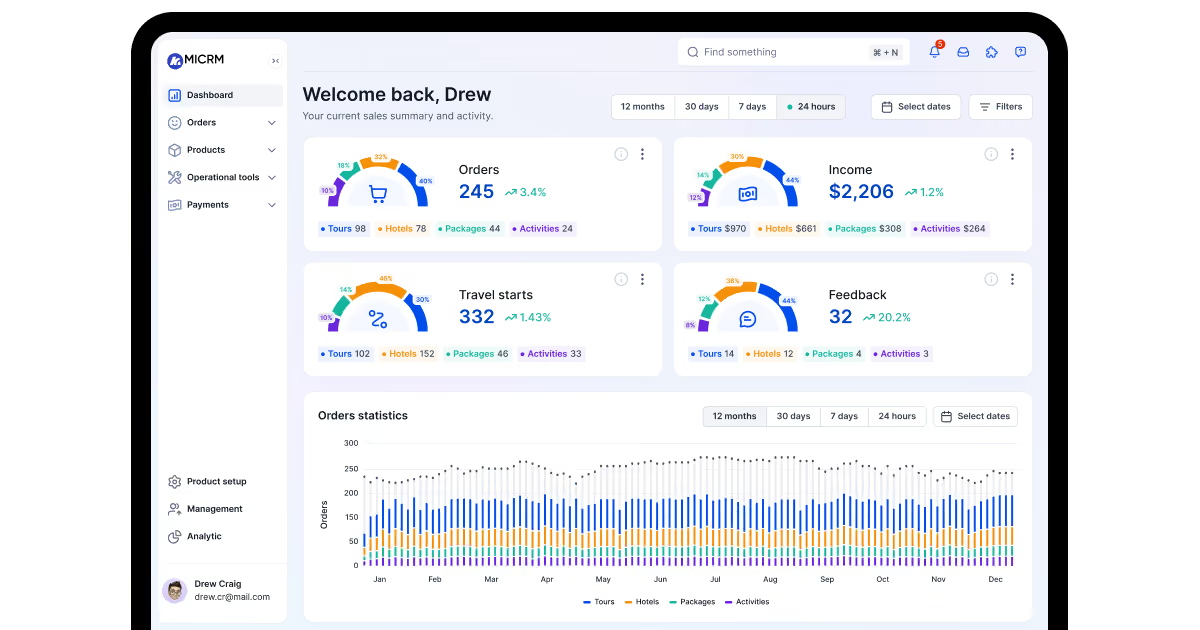
COAX built a similar kind of visibility for MICRM, a travel CRM platform. The system tracks sales, taxes, and seasonal comparisons automatically. That analytics layer drove a 40% profit increase for the client. Owners saw real numbers, not estimates pieced together after the fact.
Billing data also feeds pricing decisions directly. An owner who sees which room types underperform can adjust rates fast. Manual ledgers hide that pattern for weeks, sometimes months.
Multi-property owners feel this most. Reconciling five separate paper trails eats a weekend every month. One dashboard across every property removes that entirely.
Chargebacks and disputed charges hit margin hardest of all. Clear folios with itemized charges cut disputes before they start. Fewer disputes mean fewer processing fees eating into revenue.
Owners who switch from manual tracking usually notice this within one quarter, not one year.
For general managers
GMs sit between strategy and daily execution. A hotel billing system gives them real-time visibility without chasing five different reports. That's the whole appeal.
MICRM's dashboard shows a version of this at travel-CRM scale. Different widgets serve admin, staff, and supplier roles separately. A GM checking hotel performance needs that same role-specific view: occupancy, ADR, and outstanding balances together.
Staffing decisions get easier too. A GM who sees which shift generates the most billing errors can retrain fast. Guesswork disappears when the data's sitting right there.
Cross-department coordination improves as well. Spa, restaurant, and housekeeping charges route through one system instead of three. A GM doesn't have to call three department heads to reconcile a single guest's final bill.
Compliance reporting becomes less of a scramble, too. Tax breakdowns by jurisdiction pull automatically instead of getting rebuilt by hand each quarter. That matters more as properties expand across regions with different tax rules.
The bigger shift is trust. A GM working off accurate, current numbers makes faster calls. Guesswork slows a property down; live data speeds it up.
For front desk teams
Front desk staff live inside billing every single shift. Billing software for hotel teams removes the manual math that eats their time. Checkout stops being a stressful reconciliation exercise.
Hotel room billing software posts charges to the folio the moment they happen. A spa visit, a late checkout fee, a minibar snack: all land automatically. Staff isn't chasing down a paper slip from three departments before a guest can leave.
That speed matters for guest experience directly. A frustrated guest waiting at checkout while staff hunts down a missing charge doesn't tip well or return. Automated folios cut that wait to seconds.
Errors drop, too, and that protects staff as much as guests. A mistyped charge under the old system became someone's problem to fix later, usually under pressure. Automated posting removes that risk from the equation entirely. The result is a front desk that spends less time on math and more time on the guest actually standing there.
What are the most important features of hotel billing software?
Every feature below solves a specific failure point from the last section. Hotel billing software is a set of useful tools and functionality rather than one specific solution. Here are some of its key features, from the most important to the nice extras.
Automated invoicing generates one consolidated bill at checkout. Room rent, taxes, and every extra amenity merge automatically.
POS integration connects restaurant, bar, and spa systems directly. Incidentals post to the folio the moment they happen.
Split billing manages separate folios for groups, corporate stays, or families. Nobody argues over whose card covers what.
Multi-payment processing supports cash, cards, digital wallets, and payment links. Guests pay however they showed up ready to pay.
Tax and compliance management calculates regional VAT or GST automatically. Rates apply correctly without someone checking a jurisdiction chart.
Expense and stock tracking monitors departmental spending and inventory together. Profitability leaks get caught before they compound.
Real-time financial reporting produces instant cash flow and revenue updates. Nobody waits for a monthly close to see the numbers.
Multi-currency support lets international guests pay in their native currency. No confusing conversion math at the front desk.
COAX built a comparable payment engine for Krytter, a hunting-trip booking platform. Every invoice splits across cash, bank transfer, or check freely. Guests combine payment methods for a single hunt, license, and add-on fees. Tax logic switches automatically by accounting method and jurisdiction. That's the same layered complexity hotel accounting software has to handle daily, just wearing different terminology.
Billing software hotel functionality includes one more piece worth naming: booking widgets. Krytter's outfitters generate public booking links for social platforms. Hosty runs this model for vacation rentals, too. A guest clicks, books, and pays without a phone call or a spreadsheet.
A hotel billing system built this way stops treating billing as an afterthought. It becomes the backbone connecting every department that touches a guest's wallet.
How does hotel billing software integrate with other smart hotel systems?
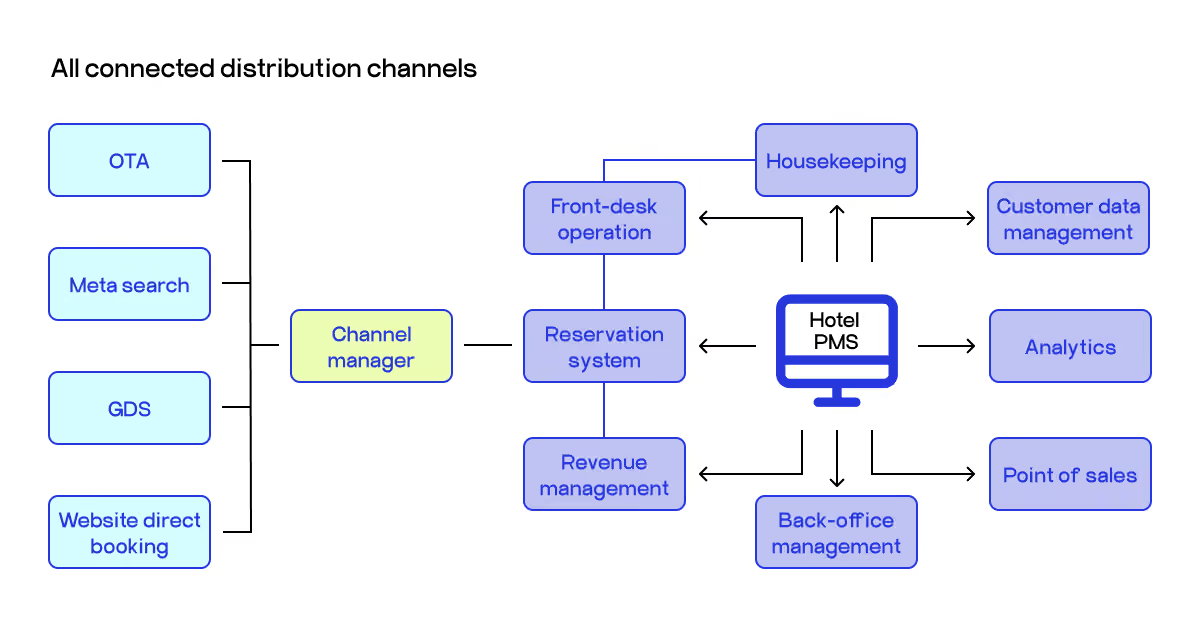
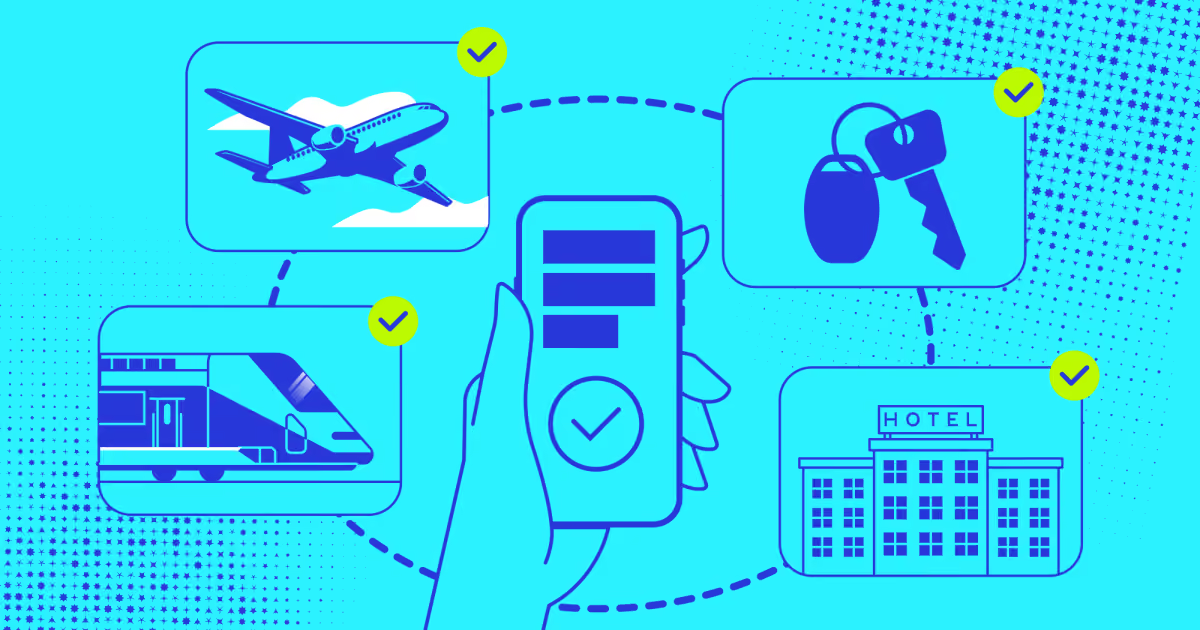
Just like booking, stock management, or other common hospitality workflows, billing never runs alone. It sits at the center of a hotel's tech stack, pulling data from six or more connected systems. Here's how an automated hotel billing system actually plugs into everything around it.
The property management system.
The PMS is where billing gets its instructions. Reservations, room status, and guest profiles all originate there first. Billing software for hotel operations reads that PMS data continuously. A guest checks in through the front desk module. The PMS flags the room as occupied, and billing opens a folio. If the room type changes mid-stay, rate adjustments flow through automatically.
Channel managers and booking engines.
Bookings arrive from four directions at once: OTAs, metasearch, GDS, and direct website traffic. A channel manager consolidates all four into one reservation feed. Hotel billing picks up each reservation with its correct rate plan attached.
This matters more as direct bookings grow. Sixty-six percent of millennials now book directly through hotel websites, as covered earlier. Billing has to apply different commission logic depending on the channel source.
Point-of-sale systems.
Restaurants, spas, and bars each run their own POS terminal. Every charge from those terminals needs to land on the right guest folio, instantly. Miss that connection, and revenue leakage creeps in exactly the way we covered above.
Our team builds this kind of connective tissue regularly. On Krytter, we integrated Stripe and Flywire alongside cash and check workflows. Every invoice split cleanly across payment methods without manual reconciliation. That's the same logic a POS-to-folio connection needs: no dropped charges, no mismatched totals.
CRM and guest data.
Guest profiles, loyalty status, and stay history live in a CRM layer. Billing draws on that data to apply the right rate, discount, or corporate terms. We've built this exact bridge with HubSpot and Salesforce integrations on other travel platforms. Guest data and billing logic talk to each other without a manual lookup.
ERP and back-office systems.
Revenue eventually needs to reach accounting, payroll, and inventory systems. That's where ERP integration comes in, often through Xero-style accounting connections. Hotel billing software exports settled transactions on a schedule the back office actually trusts.
Legacy ERPs rarely expose modern APIs, though. When a system doesn't play nice, we default to custom middleware rather than forcing a fragile direct connection. That's deliberate. A broker layer keeps the legacy system live while new billing logic runs cleanly beside it.
Connecting six systems that were never designed to talk isn't a plug-and-play job. It's the same integration muscle we've built across payment gateways, mapping APIs, and legacy platforms with no public API at all. Hotels rarely buy one unified system. They buy pieces, one at a time, over years. Making those pieces act like one system is where the real engineering happens.
Here’s where COAX Software helps by creating custom travel and expense management software that connects every piece of your business. We create tailored AI connections with secure protocols and cleansed data to ensure a safe and reliable integration.
Best hotel billing software in 2026
We tested five dimensions, each tied to a real production concern. Folio accuracy under split billing. POS-to-ledger sync speed. Tax logic across jurisdictions. Multi-currency handling for international guests. Integration friction with existing PMS platforms.
We approached this like engineers. We fed each platform messy scenarios: overlapping charges, mid-stay room changes, group bookings split three ways. We watched what broke, not what the demo promised.
We ruled out tools with no documented API and no trial access. Vendor-only pricing with zero public reviews got skipped too. We break down paid tools in a separate table from free ones below.
Our list covers thirteen platforms, split by pricing model. Free and lightweight tools suit small independents testing automation for the first time. Paid, hospitality-specific systems suit properties that need folios, POS sync, and audit trails built in. Rankings move from broadest fit to more specialized use cases.
Best free hotel billing software
Let’s start with the free billing software hotel solutions first.
Tool
Core billing feature
API access
Best for
Zoho Invoice
Free invoicing and folio-style billing
Yes
Solo operators, freelancers
ProfitBooks Invoicing
Free-for-life invoicing
Yes
Budget-conscious small properties
myBillBook
Low-cost billing with mobile app
No
Micro-properties under 10 rooms
TallyPrime
Free demo, subscription billing tool
Yes
Owners already using Tally accounting
Little Hotelier
Simple folio billing, trial access
No
Properties under 20 rooms
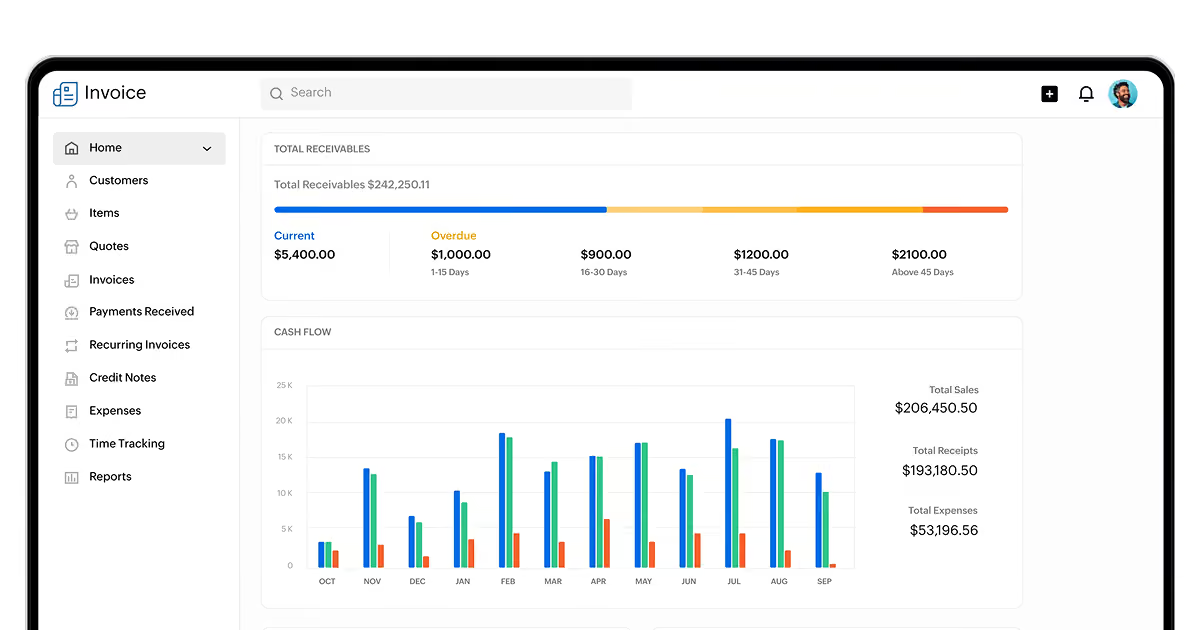
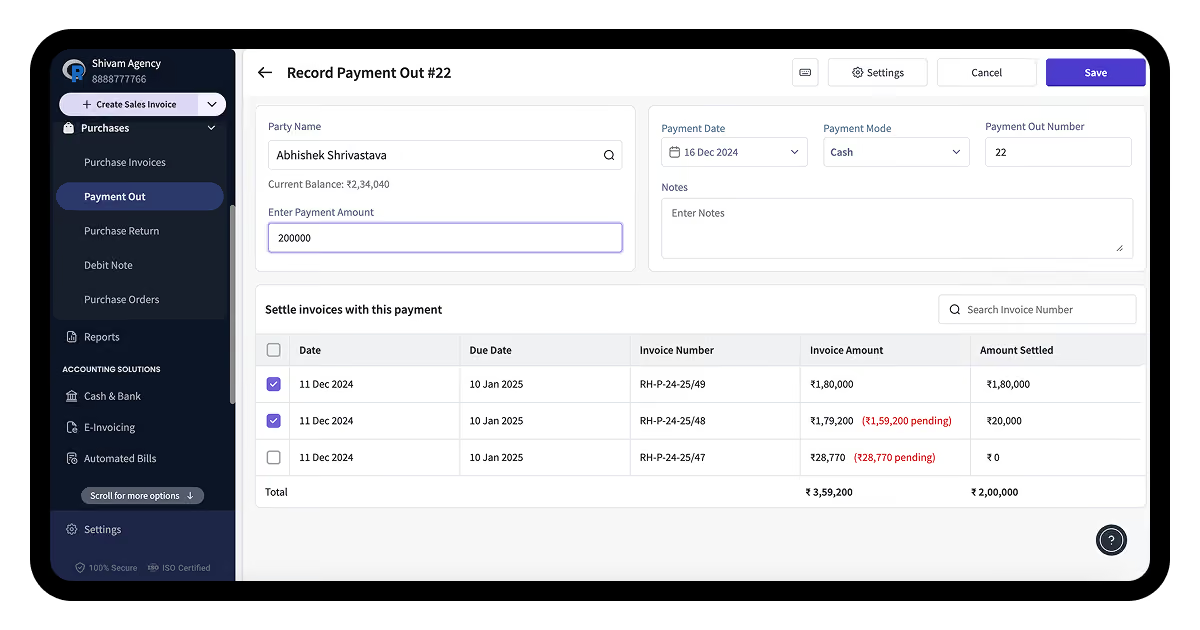
Zoho Invoice offers free billing with a neat, folio-style layout. With this common free hotel billing software, you get clean, branded invoices in seconds. Its mobile app lets you bill clients right from your phone. You can start today without dropping a credit card down. Hotel-specific systems do not connect here, though. You will miss out on native POS or PMS links. Grab this if you run a solo stay or tiny guesthouse. You pay nothing every single month.
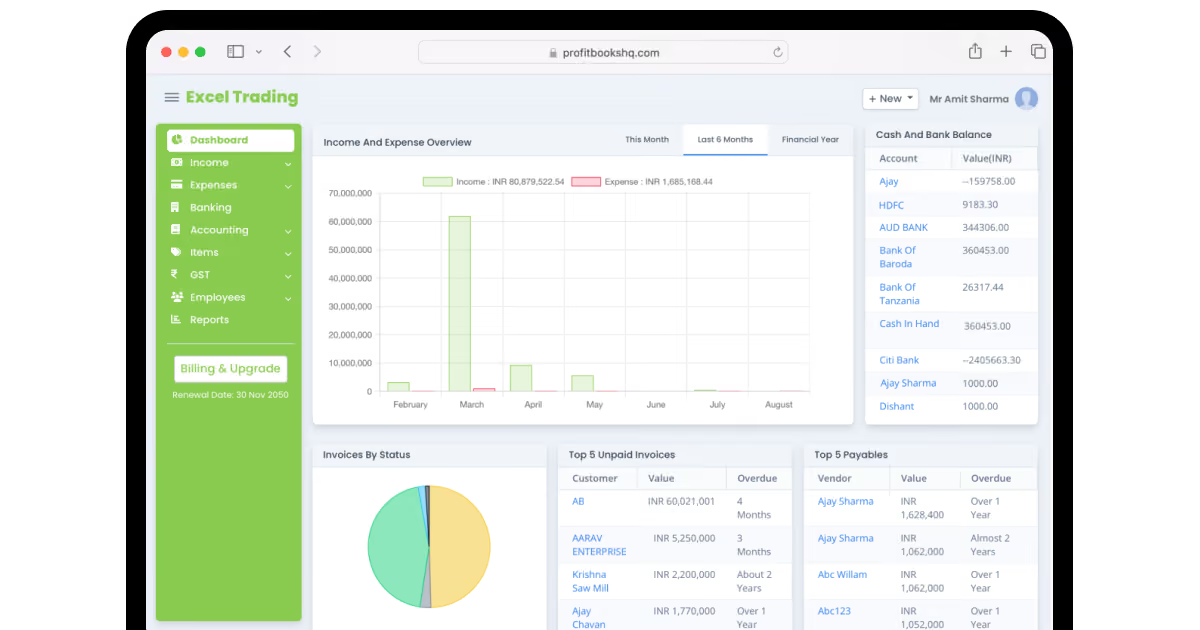
ProfitBooks Invoicing gives you a completely free invoicing hub built for smaller teams. You get zero-cost entry alongside full API access right out of the box. Generating a quick bill takes zero prior training. You will not find hotel tax presets or guest folio structures inside this hotel billing system, though. That makes it best for budget-first spots with simple setups. It costs zero dollars for life.
myBillBook is a low-cost platform that targets lean retail and small hotel desks. The mobile interface shines when you lack space for a bulk PC. Built-in inventory tracking ties your stock directly to front-desk sales. Still, the software lacks an open API for custom connections. That limits your ability to scale up later on. Expect to pay roughly $2 each month, so it’s basically free. It works best for micro-properties running tight operations.
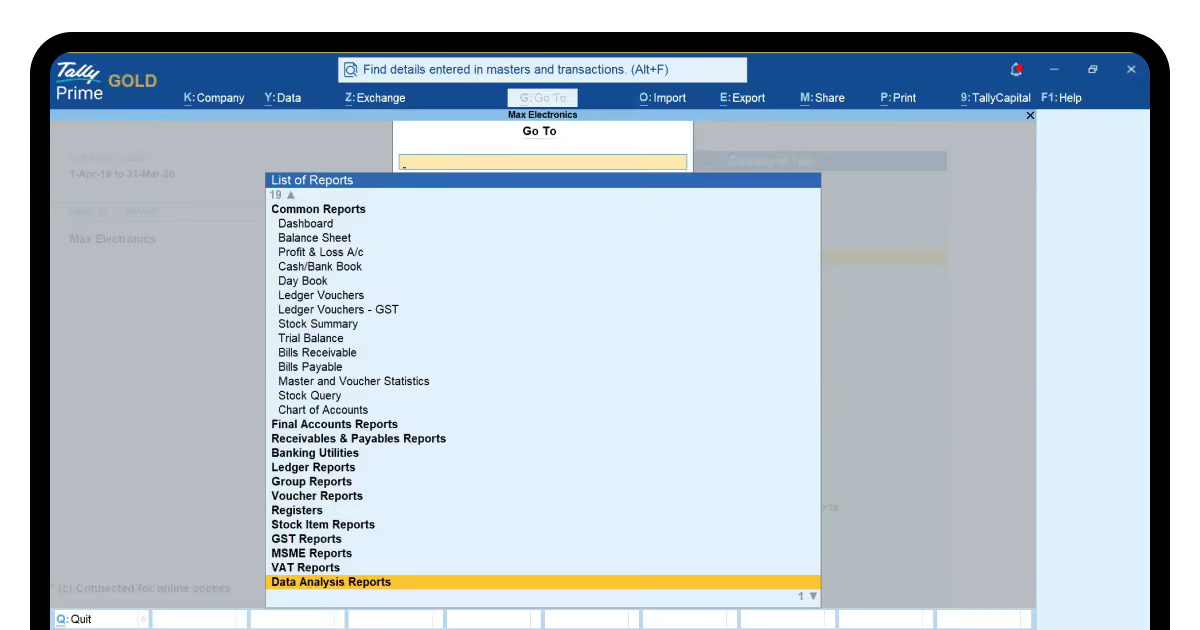
TallyPrime approaches property billing from an accounting foundation. It excels at heavy tax logic, making localized compliance painless. You can test-drive the full setup through a free demo. The interface feels clunky for room folios or fast food outlets. It also lacks direct POS sync out of the box. Grab it if your books already run on Tally. Licenses start around $8 monthly.
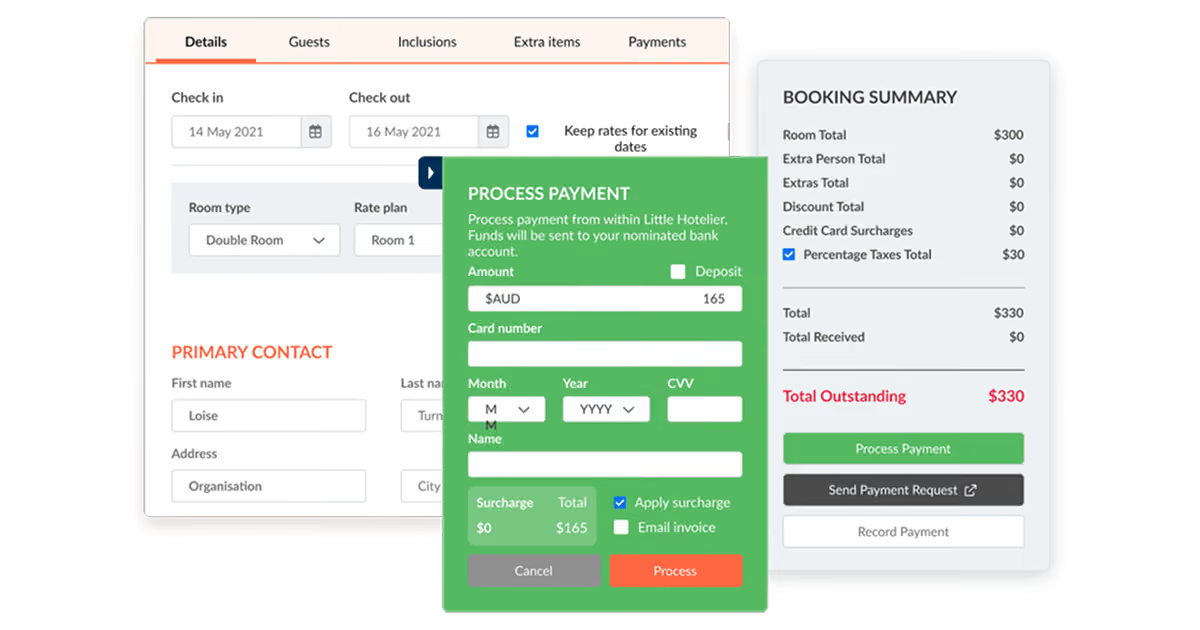
Little Hotelier packages your front desk, channels, and payments together. You control every key task inside one clear dashboard. The app makes ditching manual spreadsheets completely painless. From what we see with this tool, properties with over 20 rooms will hit operational walls fast. Growth requires more advanced tools than this app provides. Try the free trial first. Paid plans scale by property size each month.
If a free solution isn’t enough for your business, it’s wise to move to a more advanced option.
Best paid hotel billing systems
Paid hotel billing systems are more complex and give you more freedom. Let’s break them down.
Tool
Core billing feature
API access
Best for
roommaster
Full folio, tax, night audit
Yes
Independent hotels and groups
Cloudbeds
PMS-integrated billing and invoicing
Limited
Independent to mid-size hotels
Mews
Cloud-native, automated payments
Yes
Modern, multi-property hotels
Oracle OPERA Cloud
Enterprise billing, multi-currency
Yes
Large hotels and global chains
Inn-Flow
Multi-property billing plus back office
Yes
Multi-property operators
RoomRaccoon
Automated invoicing, multilingual docs
Limited
Boutique and independent hotels
Hotelogix
Multi-property folios, POS sync
Yes
Small to mid-size hotels and groups
Stayntouch
Mobile-first, guest-centric checkout
Yes
Mid-size to large hotels
Roommaster bakes billing right into its core cloud PMS system. Digital folios post instantly across split or multi-folio bookings. Night audits and taxes process cleanly without manual re-keying. You must request a custom quote to view exact pricing. No public rate card exists on their site. Pick this software for finance-grade billing inside your PMS. Costs vary by your room count and active modules.
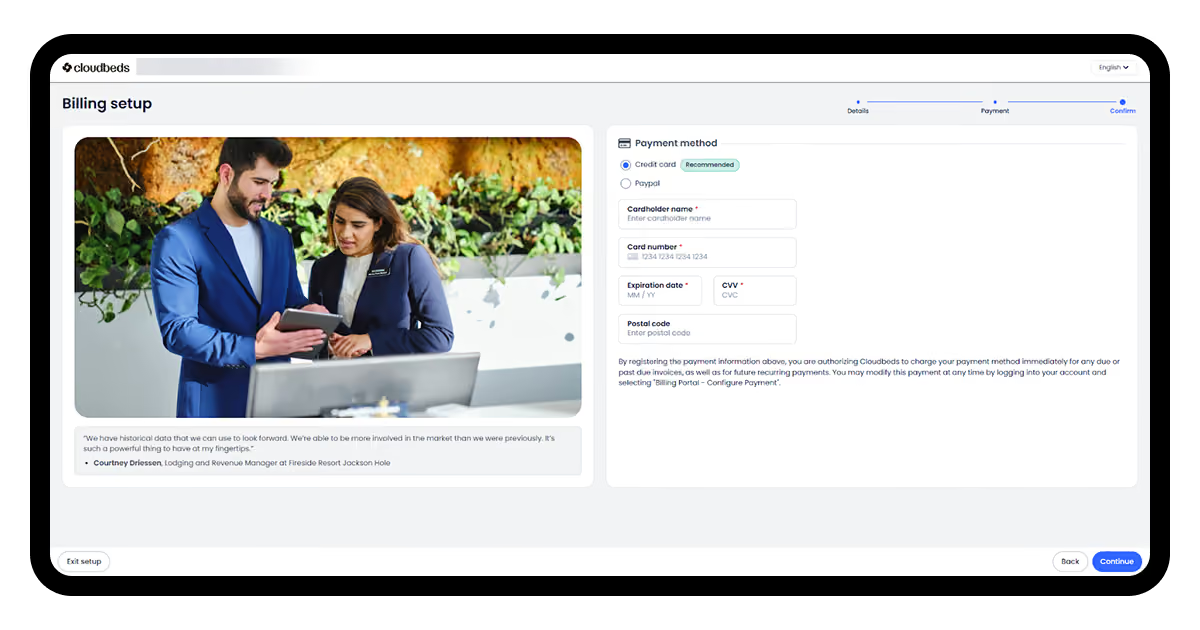
Cloudbeds folds hotel billing directly into a unified hospitality platform. Front-desk folios, POS charges, and reporting merge into a single workflow. You avoid juggling separate billing apps as your hotel expands. Multi-property depth lags behind dedicated portfolio tools like Inn-Flow, however. That makes it best for independent or mid-size setups scaling up. Custom quotes depend entirely on property size.
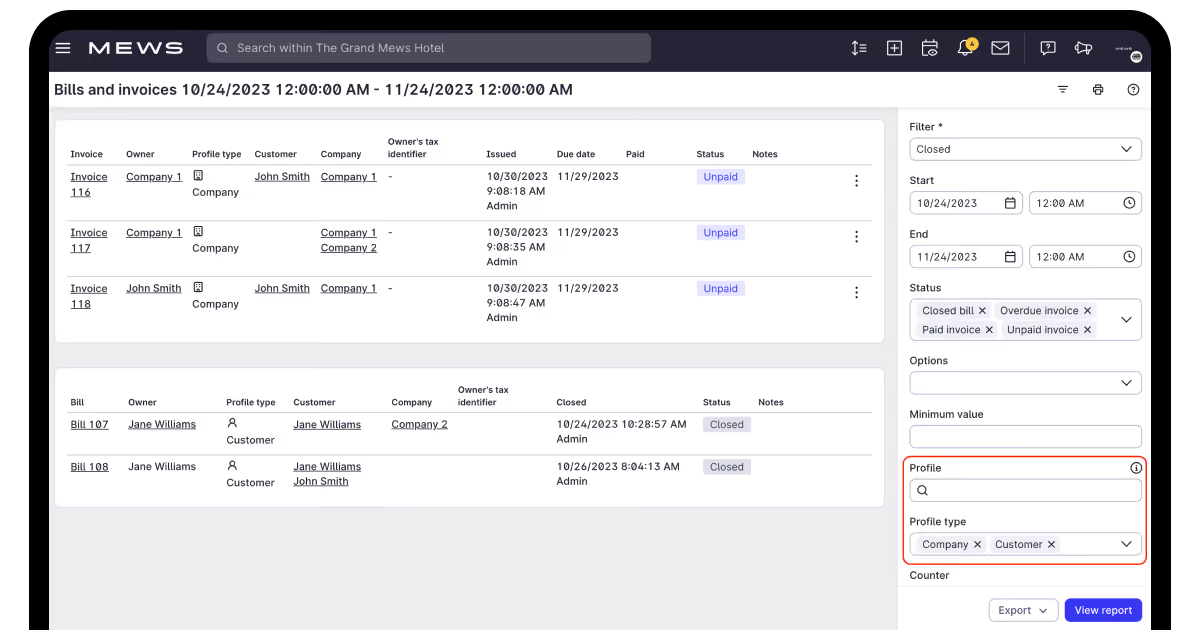
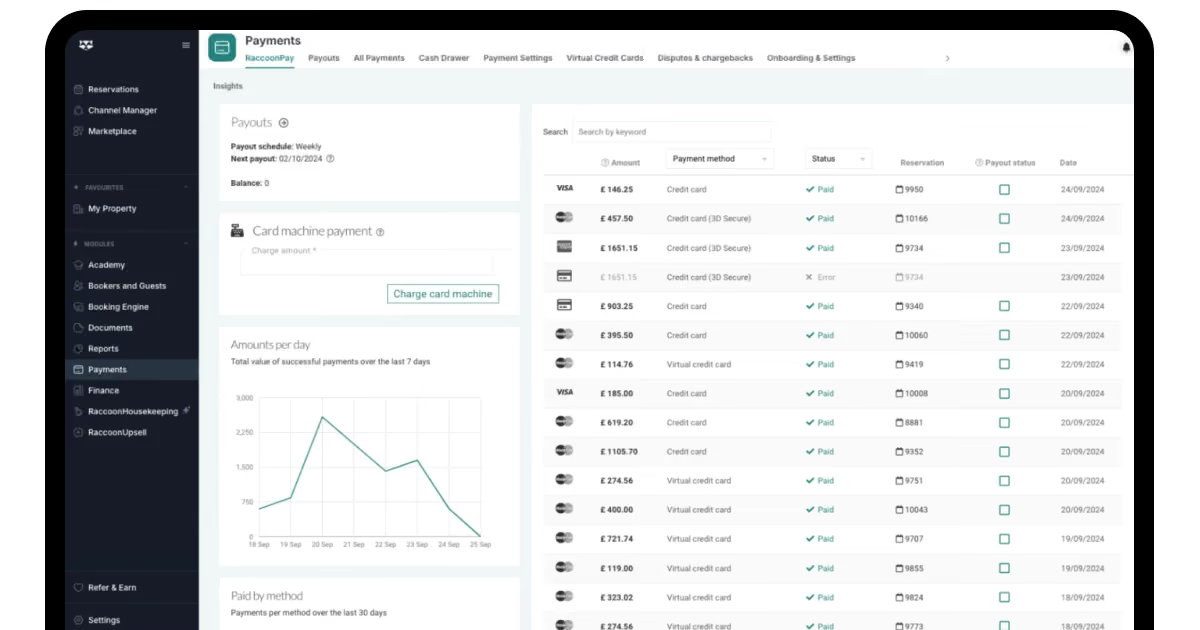
Mews uses a cloud-native platform focused on heavy automation. Automated payments and digital folios cut checkout steps down fast. POS links keep guest charges syncing without any annoying delays. This newer software has a smaller review base than legacy tools. It works brilliantly for modern, multi-property hotels targeting fast checkouts. Pricing requires a custom quote based on your needed features.
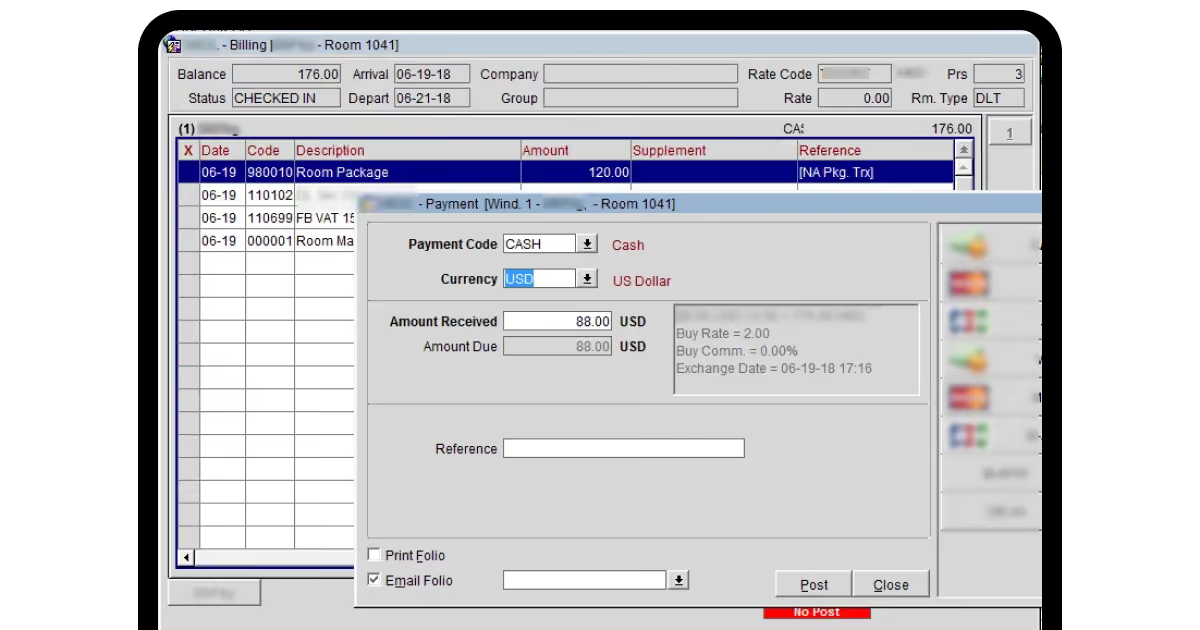
Oracle OPERA Cloud delivers enterprise PMS power for global-scale billing. Multi-currency and complex tax logic run seamlessly across borders. Deep audit trails satisfy strict compliance rules for multi-jurisdiction properties. Staff face a steep learning curve during onboarding. Users also report inconsistent support quality online. Choose it for large hotels or global chains. Enterprise agreements dictate final pricing.
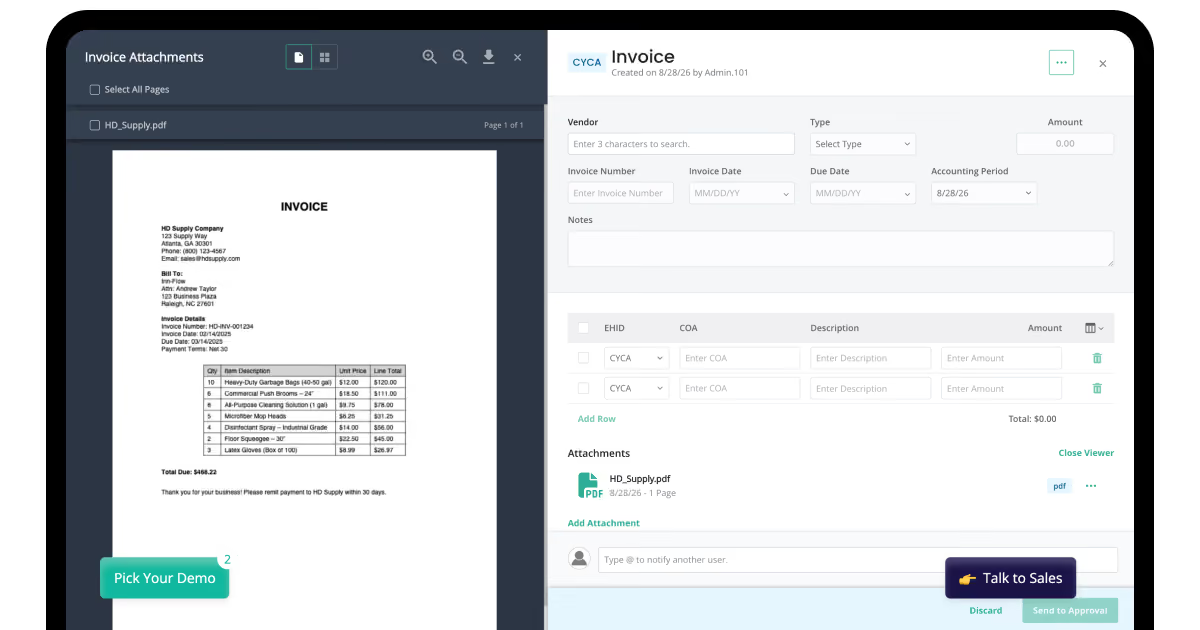
Inn-Flow combines multi-property billing with complete back-office accounting tools. Accounts payable data ties straight into your core billing setup. You can reconcile portfolio numbers without exporting spreadsheets to Excel. A smaller review sample makes verifying broad performance claims tricky. It’s easily the best hotel billing software for multi-property operators and small hotel groups. Subscriptions scale by active properties and modules.
RoomRaccoon stands out with polished, automated guest document generation. Multilingual invoices and automated messaging fit boutique branding needs. Folio management stays exceptionally clean for smaller operations. Multi-property features fall short of portfolio-focused platforms. Independent and boutique hotels get the most value here. Subscription tiers scale directly with room counts.
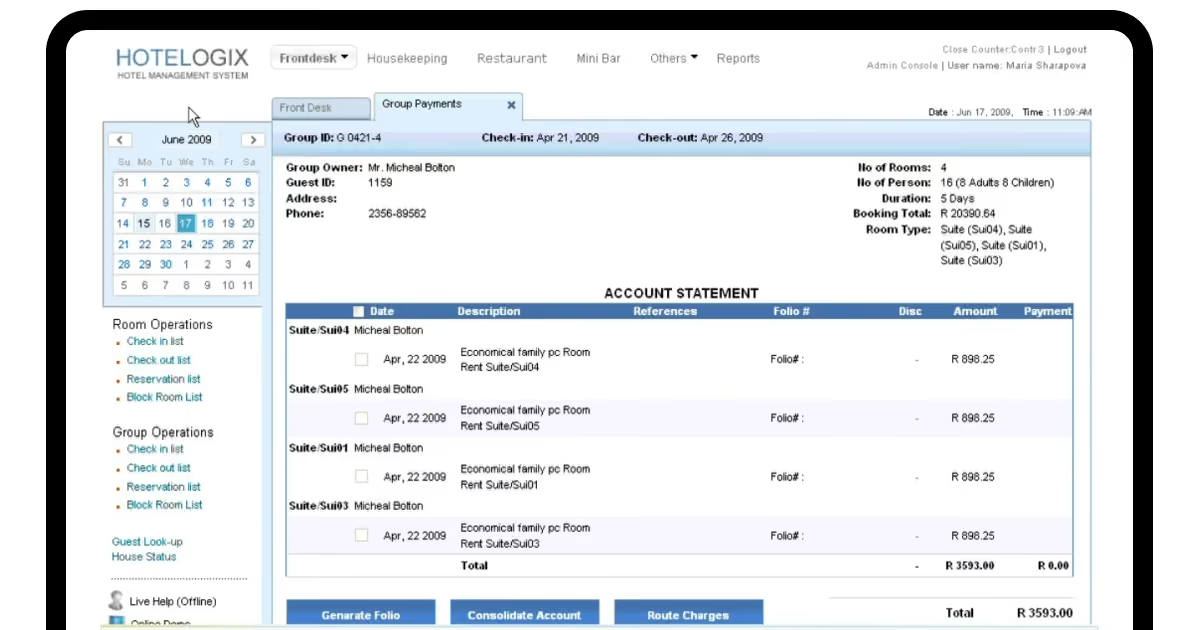
Hotelogix provides an affordable cloud PMS with built-in billing features. POS connections and automated invoicing handle heavy volume reliably. Multi-property folio billing supports growing regional hotel groups well. The system holds fewer public reviews than major category leaders. It suits small to mid-size properties watching their software budget. You pay a budget-friendly subscription per room.
Stayntouch puts mobile features first to speed up guest checkouts. Digital folios and POS posting keep pace with rapid turnover. High-volume properties clear billing queues rapidly using mobile screens. Tiny inns will find this feature set oversized for daily needs. Mid-size to large hotels reap the biggest rewards. Custom quotes scale according to property requirements.
Finding the ideal hotel room billing software comes down to matching the tool to your operational realities, not just buying a feature list. To cut through the noise, let’s outline the key decision filters.
How to choose the best hotel billing software?
Picking the right hotel billing software depends on property size, complexity, and growth plans. There's no single best answer here. A few decision filters make the choice clearer.
Property size and transaction volume.
Scale changes what your system needs to handle. A ten-room inn and a 200-room hotel face different math entirely.
Small properties should prioritize simplicity over depth. Free or low-cost tools like Zoho Invoice or Little Hotelier fit that profile. Larger properties need enterprise billing, like Oracle OPERA Cloud or Mews. Don't pay for enterprise-grade billing software for hotel operations you don't need yet.
Integration with your existing PMS.
Billing software rarely stands alone; it has to talk to your PMS. Weak integration turns a good tool into another manual workaround. Ask any vendor for their API documentation before a demo call. Request real integration examples, not marketing screenshots. We've seen strong feature lists fail entirely on weak APIs.
Multi-property and portfolio needs.
Owners running multiple properties need consolidated billing, not per-site silos. Reconciling five separate systems by hand wastes real hours monthly.
Platforms like Inn-Flow and Hotelogix build multi-property folios in from the start. Single-property tools like RoomRaccoon work fine at one location. They strain fast once you add a second site.
Tax and compliance complexity.
Cross-border or multi-region properties face layered tax rules. VAT, GST, and local tourism taxes all apply differently by location. Oracle OPERA Cloud and roommaster both handle this depth well. Smaller markets with simpler tax structures don't need that overhead. Match the hotel billing system's tax logic to your actual regulatory footprint, not a worst-case scenario.
"We test billing platforms the same way we test our own integrations. Feed it messy data, mismatched formats, and edge cases. What survives that is what actually ships," says a COAX backend engineer who's worked on payment logic for Krytter and MICRM.
Total cost, including implementation.
License fees rarely represent the full hotel billing software price. Implementation, training, and data migration add real cost beyond the sticker number. Build a realistic cost model before committing. Include staff training time and support fees. The cheapest monthly rate isn't always the lowest total cost.
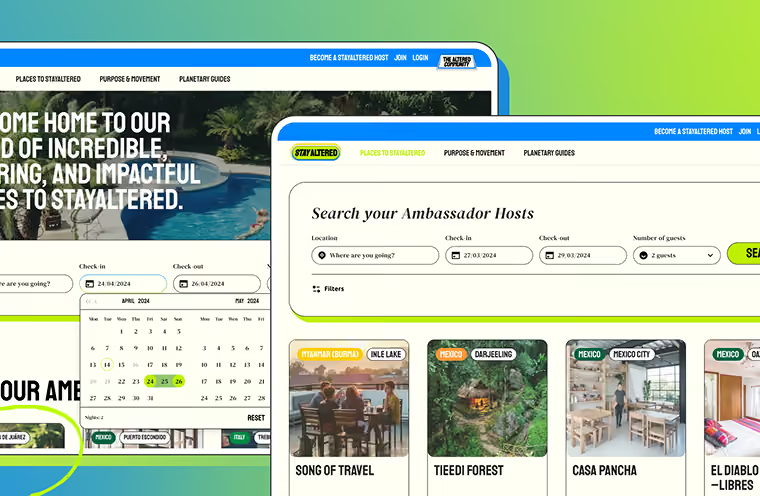
Our own project history backs this pattern up. Stay Altered needed something different: PMS integrations through Katanox and Hyperguest routed bookings directly into host billing systems. Neither problem fit an off-the-shelf template.
COAX has spent nearly 20 years in travel and hospitality tech. That work spans booking platforms, payments infrastructure, and revenue systems built for real properties. Few providers we've researched in Europe or Asia match that level of vertical focus in hotel management software development.
Most hotels shouldn't build billing from scratch. But when your property's billing needs don't fit a packaged platform, custom development is often the simpler long-term path.
What is the ROI of hotel billing software?
Automated hotel billing system ROI comes down to four numbers: processing cost per invoice, days sales outstanding, error rate, and headcount growth avoided. Properties that automate billing typically see payback within 12 to 18 months, sometimes faster once POS and PMS sync eliminates manual reconciliation.
Hotel billing costs money in ways that don't show up on a single line item. Staff hours spent chasing mismatched folios, delayed month-end closes, guests disputing charges that never should've posted twice. It drains margin every month.
Break the financial case into five buckets:
Processing cost per transaction. Manual invoice handling runs roughly $15 to $16 per invoice once you count labor. Automation cuts that by up to 80%, which adds up fast at 300+ folios a month.
Cash flow speed. Automated folio generation and payment routing shrink processing time by up to 60%, pulling DSO down 25% to 30%. Money sitting in accounts receivable is money that isn't funding next season's renovation.
Leakage prevention. Validation logic catches missed POS charges, expired rate overrides, and duplicate postings before they slip through. Rule-based checks alone cut billing errors by roughly 90% in the platforms we've reviewed.
Collections performance. Automated reminder sequences, timed and worded consistently, lift collection rates by around 40% compared to manual follow-up.
Headcount avoidance. A property scaling from 40 to 120 rooms doesn't need to triple its back-office staff if billing logic scales with transaction volume instead of headcount.
None of these factors work in isolation. A hotel billing app that speeds up invoicing but still leaks POS charges only solves half the problem. That's why hotel revenue optimization conversations increasingly start with billing infrastructure, not just pricing strategy.
Example ROI calculation for a hotel
The formula is simple enough to run on a spreadsheet:
Take a mid-size independent property running 150 rooms with three revenue streams: rooms, F&B, and spa. Before automating, they process roughly 600 invoices monthly at $15 each in labor cost. Together, it’s $9,000 a month, $108,000 a year. Add an estimated 3% revenue leakage from missed POS charges on a $2.4M annual revenue base: $72,000 walking out.
After moving to billing software for hotel operations with folio automation and POS sync, processing cost drops to roughly $3 per invoice ($21,600 annually), and leakage falls to under 0.5% ($12,000).
Combined recovered value: close to $146,000 a year. Against a platform cost of, say, $18,000 annually, that's an ROI north of 700% in year one alone.
We saw a version of this play out on Krytter. There, hotel direct billing logic had to split every invoice across Stripe, Flywire, cash, and check payments without a single manual reconciliation step. The savings showed up in how few hours the finance team spent closing the books.
Long-term value as the property grows
Here's the part spreadsheets don't capture well. Software for hotel billing that fits a 40-room boutique property rarely fits the same property at 150 rooms with a second location added. The ROI math shifts as complexity compounds. More revenue streams, more currencies, more tax jurisdictions, more staff touching the same folio at different points in a guest's stay.
This is where the upfront hotel billing software price stops being the whole story. A platform priced higher today but built to absorb multi-property complexity without a rebuild in three years often ends up cheaper on a five-year horizon than a cheaper tool you'll outgrow twice.
From our experience, one formula works best. Build the connective logic once, build it right, and let it hold as the business adds properties, streams, and staff. That's usually a better bet than re-platforming every time the operation outgrows what it bought two years ago.
Because we've solved variations of this problem before, we don't start from zero. Domain expertise and proven integration patterns cut delivery time significantly. Most engagements move 50 to 60 percent faster than a generalist dev shop would manage. Our ISO 9001 and ISO 27001 certifications also apply here. Guest payment data and booking contracts demand that level of governance regardless of property size.
If you need a team to cover integrations, custom development, design, redesign, and AI implementation under one roof, you’ve always got COAX to build your ultimate hotel billing system.
FAQ
What is direct billing in a hotel?
Direct billing in a hotel means charging a company, agency, or guest's account directly instead of collecting payment at checkout. Corporate clients, travel agencies, or group event organizers get invoiced later, often on net-30 terms. It requires billing software to track credit limits, approved billers, and outstanding balances separately from standard guest folios, so accounting doesn't mix the two revenue streams.
Does hotel billing software work if my internet connection drops?
Most cloud-based hotel billing software relies on a live connection to sync PMS and POS data, so an outage can delay folio updates. Better platforms cache recent transactions locally and resync once connectivity returns, preventing lost charges. Ask vendors directly about offline handling before signing; we've seen properties lose hours of billing history to unclear failover logic during testing.
Can a hotel billing app replace a full PMS for a small property?
A hotel billing app alone rarely replaces a full PMS, even for small properties. Billing apps handle invoicing and payments well, but they lack room inventory, housekeeping status, and channel management built into a PMS. Small owners often start with a billing app, then migrate to an integrated system once reservation volume grows past what spreadsheets and manual tracking can handle.
How long does it take to implement hotel billing software?
Implementation timelines for hotel billing software vary from two weeks for simple invoicing tools to three months for full PMS-integrated systems with custom middleware. Legacy ERP connections and multi-property rollouts add time. On projects we've built, staff training and data migration usually take longer than the technical integration itself, so budget realistic time for both before going live.
What happens to guest data if my hotel billing system is hacked?
A breach in a hotel billing system can expose payment details, guest identities, and stay history all at once, since billing sits at the center of connected systems. PCI-DSS-compliant platforms encrypt card data and limit what's stored locally. Ask vendors for their compliance certifications and breach response plan upfront, not after signing a contract you can't easily exit.






































































.avif)


%20for%20hotels.avif)

.avif)
.avif)


.avif)




.avif)
.avif)



.avif)

.avif)

We are interested in your opinion