One tourist books, cancels, or reschedules with little consequence for the tour operator and hotel or transportation provider. But when we discuss the whole group, things get messy. However, with the right group booking software, you get confirmed room blocks, automated payment tracking, and a program that survives real people and real disruptions:
Every participant's information goes through a single registration flow.
Real-time capacity controls fill waitlists for cancellations, eliminating the risk of overbooking.
Unsuccessful transactions are marked automatically by payment schedules.
Supplier manifests update the moment a rooming list or headcount changes.
Every participant and vendor operates using the same most recent data.
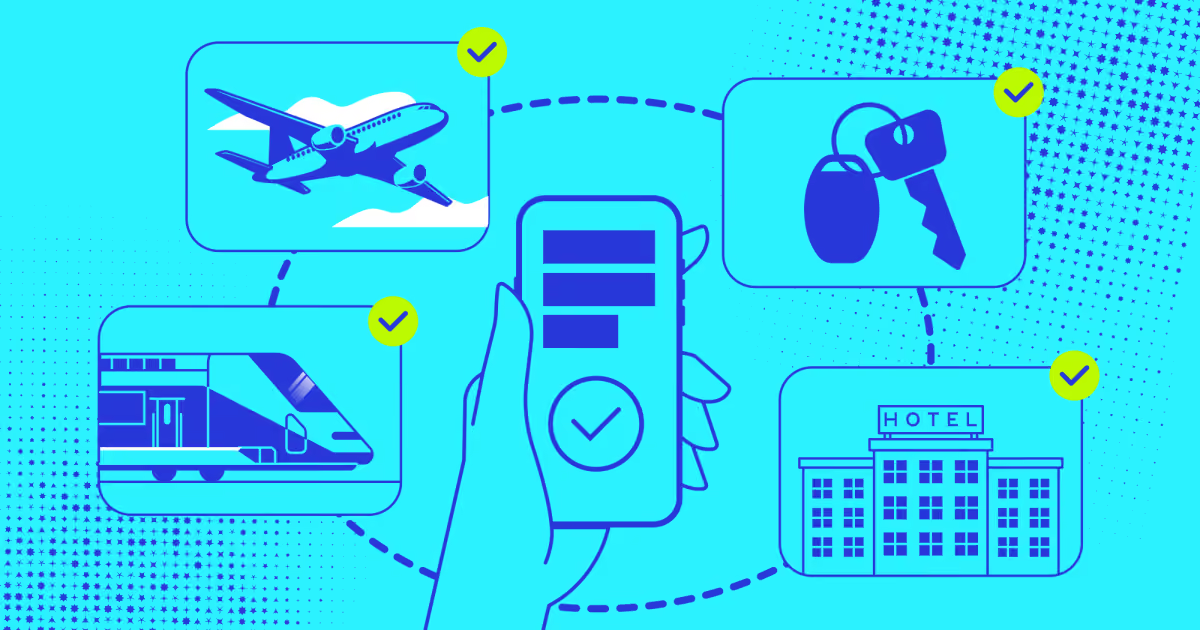
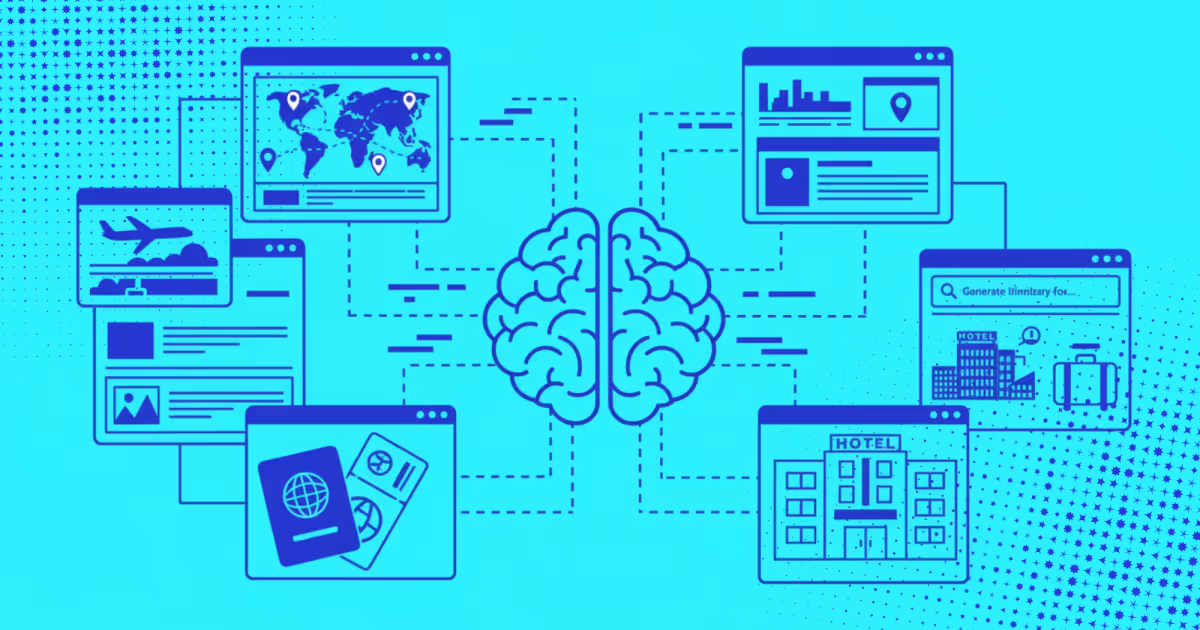
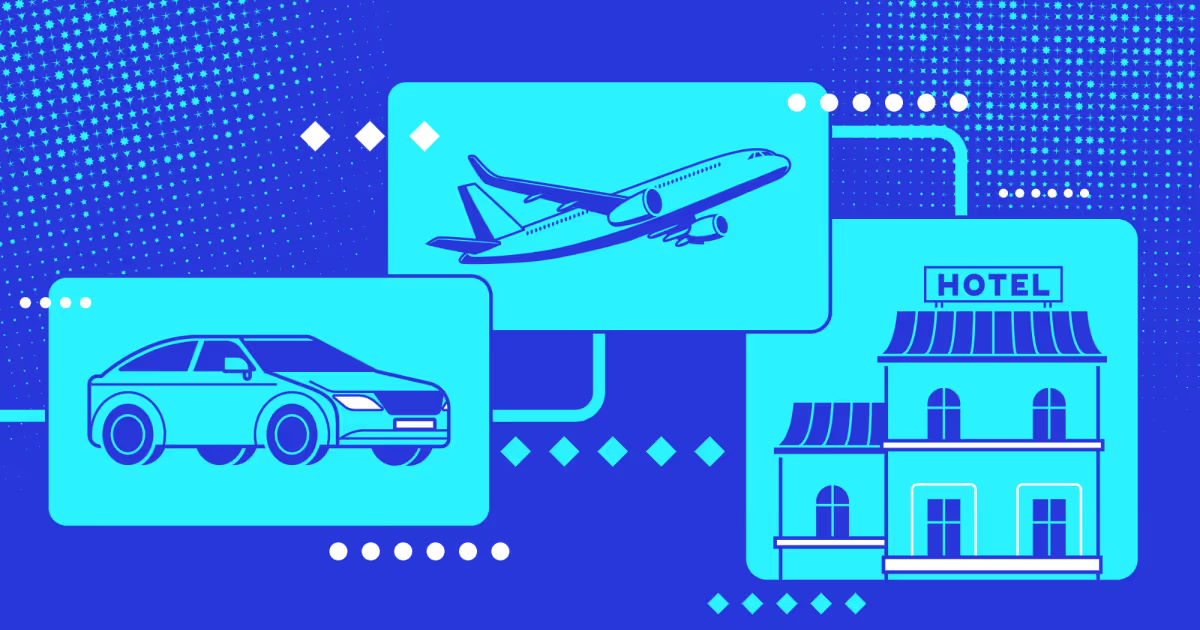
Dedicated platforms for flights, hotels, and car rentals connect into one operational view.
We provide purpose-built tools for corporate groups, leisure tours, conferences, and incentive travel.
A custom build eliminates limitations, saving months of trial and error with ready-made systems.
This guide is your one-stop shop for all the benefits, key feature set, and algorithms for solving challenges with group booking systems. We will break down how to improve your operations and marketing strategy if you’re in the group travel business and help you choose or build a perfect solution.
What are group bookings?
Generally, group bookings are when several people reserve accommodation, transport, or travel services together under one reservation, often at a negotiated rate.
Here's a number worth knowing: research by Aziz and team found that the ideal group size for maximizing hotel revenue is three guests per group, yet most hotels have little say in the matter. They can only accept or reject whatever group size a travel advisor brings to the table.
Group bookings are a greatway to support eco-friendliness, particularly sustainable business travel. When people travel in groups, it means they share rental cars or buses, hotel rooms, and tour activities. This pools resources and cuts down on total emissions, fuel, plastic, and waste.
What’s on the market?
The global group travel market reached $168.7 billion in 2024 and is on track to hit $314.7 billion by 2033. Group bookings are no longer a small part of the market. BCG says that leisure travel will grow from $5 trillion in 2024 to $15 trillion by 2040. This is because of multigenerational trips, bleisure travel, and new markets where group travel is a big part of the culture. These people book their trips together, stay longer, and spend more.
The numbers on the hotel side back up the trend.HEDNA's 2025 report says that group hotel group bookings and walk-ins make up about 19% of all hotel reservations across 21,000 properties. That share will only grow as younger travelers, who plan more trips than any other generation, prefer experiences with others over ones alone.
Your guests are also moving up in the world. SiteMinder's 2026 report says that 58% of travelers now book superior or luxury rooms, which is more than last year. Groups of people going to weddings, corporate retreats, or family reunions are the ones who make this kind of high-value, long-term demand that fills premium inventory.
The way is clear. A lot of people travel in groups. They pay more for each trip. And they book further in advance, which gives hotels a more stable income than individual bookings do.
When you book a trip for yourself, a change is just a change. Here is what often happens when you try to manage a group without a dedicated group booking system.
One person becomes the whole system. The coordinator who built the spreadsheet is the only one who can read it. The person tracking payments is the only one who knows which invoices are outstanding. When they are out sick, the operation stalls. Group travel logistics are run on spreadsheets, inboxes, late nights, and personal memory. You may suddenly find your team working in different versions of reality.
Every update is a manual chain reaction. A flight delay hits 12 participants. The airport transfer was booked for a specific window. The morning guide is waiting. The restaurant needs a final headcount in an hour. To fix this with email and shared files, someone has to send the update, someone has to receive it, someone has to update the master file, and someone has to confirm that every vendor now has the right version.
The data is everywhere except where you need it. One participant registers on your booking form. Pays through a payment processor. Submits dietary requirements by email reply. They now exist as four separate records across four disconnected tools. When a supplier asks for a final manifest, you build it by hand.
Customization makes it worse, not better. 56% of operators report increased interest in custom trips. But as customization grows, so does the coordination behind each trip, from itinerary building and booking management to installment payments and partner vetting. The more tailored the experience, the more moving parts you are tracking.
None of this requires negligence to go wrong. It only requires that the wrong information was in the wrong place at the wrong moment.
A purpose-built group travel booking platform exists because the problem is structural. It replaces the coordinator's memory with a shared system. It replaces the spreadsheet with a live record that updates when data changes. It replaces the inbox with a centralized communication log that every team member can see.
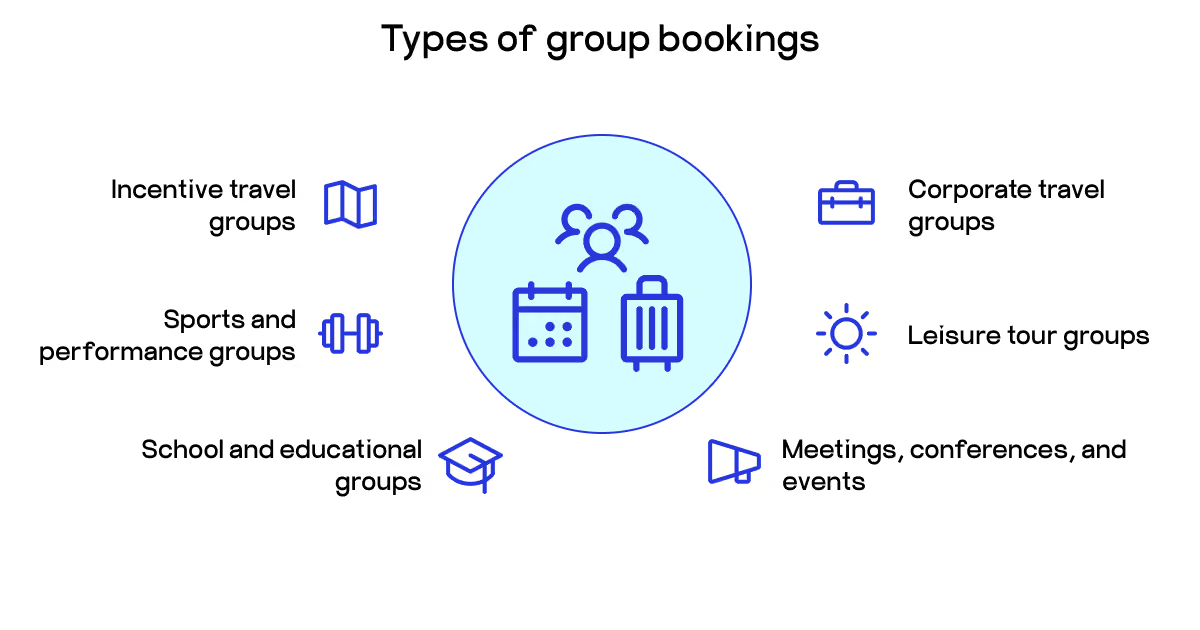
Types of group bookings
A sales team flying to a client meeting has different needs than 30 friends booking a birthday trip to a different city. Yet both need the same thing from a group booking solution: a way to manage multiple people, deadlines, and accommodations. Depending on the key users and cases, let’s distinguish between the main types of group travel booking.
Corporate travel groups. It often includes company off-sites, team retreats, sales kick-offs, or cross-functional teams flying to the same destination from different cities. Nearly 75% of business travelers traveled more as a group in 2025 than the year before. That means corporate group volume is growing and becoming more complex. You are coordinating flight routes from multiple departure cities, applying company travel policies, tracking who has booked and who has not, and reconciling it all against a budget. Group booking software built for corporate travel automatically enforces policies.
Leisure tour groups. This is the classic tour operator model, and it is changing. As noted by McKinsey, the old format of loading 50 tourists onto a coach is giving way to smaller, more active groups seeking deeper cultural experiences, outdoor itineraries, and off-the-beaten-path destinations. Still, the coordination behind each trip is just as demanding. You still need group booking holiday packages that tie flights, accommodation, excursions, and transfers into a single manageable itinerary. When one piece changes, everything connected to it needs to update.
Meetings, conferences, and events. It’s even more complex. A conference with 200 attendees arriving from different countries is a live system of moving parts: hotel room blocks, airport transfers, event schedules, catering requirements, and last-minute registration changes. Group booking for hotels at this scale requires negotiated room blocks, rooming list management, and real-time visibility into who has confirmed and who has not. Without a dedicated system, your coordinator is manually cross-checking hotel confirmations against a registration list, every single day leading up to the event.
School and educational groups. These come with extra layers: parental consent, duty of care obligations, strict budgets, and the kind of documentation that tends to sit in someone's email inbox instead of a shared system. Group ticket booking for attractions, museums, and transport needs to happen early, and changes need to flow through to every vendor simultaneously. A missed update here strands students.
Sports and performance groups. This often includes teams traveling for tournaments, competitions, or training camps, as well as dance troupes, orchestras, and athletic squads. These groups need equipment transport, bulk accommodation close to the venue, flexible meal schedules, and often very tight turnaround times between events. Group booking travel agents who specialize in this niche know that the logistics extend well beyond seats and beds. But even specialists benefit from software that tracks every booking, payment, and document in one place.
Incentive travel groups. Companies reward top performers with group trips to luxury destinations, offering exclusive experiences and curated itineraries. This is where group booking software proves its value most visibly. Because when the incentive trip goes wrong, it does not just disappoint. It undermines the entire reward.
Each of these group types shares the same problem: too many people, too many components, and too many ways for information to end up in the wrong place at the wrong time.
Understanding the challenges of coordinating group travel
Two researchers at the University of Graz once decided to calculate how complicated group travel actually is from a pure math standpoint. They found that with just 12 cities on a route, a traveling group faces almost 40 million possible tour combinations. And that is before anyone asks for a vegetarian meal or misses their connection.
In reality, something goes wrong, and even if it doesn’t, you might face the following challenges.
Everyone starts in a different place. Group flight ticket booking across a large group is rarely straightforward. Participants fly from different cities, on different airlines, arriving at different times. Each arrival needs a transfer. Each transfer connects to an accommodation check-in. When one flight slips, the whole chain shifts. And someone has to manually figure out what changed and who needs to know.
Payment tracking is another issue. Group bookings almost never come with full payment up front. You are managing deposits, installments, outstanding balances, and the occasional dispute, across dozens or hundreds of individuals. Without a system built for this, the payment tracker is either a spreadsheet that someone updates manually or an inbox that nobody fully trusts.
Suppliers get the wrong information. A transfer provider books vehicles for 22 people. Three dropped out last week. Nobody updated the manifest. Now you have two empty seats on a coach that was invoiced for a full group. Multiply this across a catering supplier, a hotel, an activity provider, and a guide, and you face a snowball of troubles.
The data is usually scattered. Some of it is in a registration form. Some is in email replies. A passport photo arrived as a WhatsApp attachment. The dietary restriction came in at the last minute through a different channel. Large group hotel booking requires a complete, accurate rooming list. What most operators hand over is a best guess assembled from three different sources the night before.
Communication gaps surface too late. The vendor who prepared for yesterday's headcount. The two team members who gave conflicting instructions to the same supplier. None of these failures requires anyone to be negligent. They only required that the right information was in the wrong place when it mattered.
Customization multiplies everything. Tour operators are now building programs for smaller, more active groups with varied interests seeking flexible travel options. Every custom request, whether it is a dietary need, a room configuration, or a private experience, adds another data point that has to live somewhere, get communicated to someone, and stay accurate through every change between booking and departure.
Now, with a group booking system, you have one place to manage it all: payments, lists, vendors, and reservations. Let’s see the simple mechanisms that allow these tools to solve your most challenging aspects.
How software can help
A group booking app can’t fully get all the complexity of your work away from you. However, it can simplify and automate many aspects of it.
Travel booking engines built for groups handle group flight ticket booking across multiple origins, flagging conflicts and tracking confirmations in one place rather than across a dozen email threads. When a flight changes, the system identifies the downstream impact automatically instead of waiting for you to notice.
Group booking in hotel management becomes a different experience when your rooming list, payment status, and dietary requirements are all connected. A change to the rooming list does not require you to re-export a spreadsheet and email it to the property. It updates in the system, and the hotel sees the current version. Some platforms now support hotel personalization strategies built directly into the booking flow, so special requests are caught at registration and flow to suppliers right away.
Large group hotel booking at volume, the kind that involves room blocks, negotiated rates, and attrition clauses, needs more than a confirmation email. It needs a live view of pick-up rates, outstanding confirmations, and rooming list accuracy against the contracted block. That visibility separates operators who manage the contract from operators who get surprised by it.
Payment tracking becomes automated rather than manual. Reminders go out without someone having to send them. Failed payments surface immediately. Outstanding balances are visible at a glance.
Communication gets logged. When a supplier claims they were never told about a headcount change, you have a record. When a participant says they never received the updated meeting point, you know whether they opened it.
In the end, when something goes wrong, you spend your time fixing the problem instead of first trying to figure out what the current state of everything actually is. That is the real value of a group booking system - not preventing disruptions but making them manageable.
Benefits of group booking software
Group travel consists of many modes and aspects, so let’s outline the advantages that technology brings to each of them.
For flights
Airline group booking without dedicated software means one person tracking 40 different itineraries across multiple carriers, manually reconciling departures, layovers, and seat assignments.
Good group flight booking software consolidates every traveler's itinerary into one view. When a flight changes, you see who is affected immediately. Notifications go out automatically, and manifests update at once. You stop being the human router and start actually managing the trip.
For hotels
Group hotel bookings depend on the rooming list accuracy. A wrong room type, a missing special request, a mismatched name on a reservation: these are not small errors at scale. They are the first thing participants notice on arrival.
Group travel hotel booking software keeps your rooming list live. Changes made in the system reach the property in real time, while pick-up rates against your contracted room block are visible without calling the hotel.
For car rentals
Booking a group car rental across a large group is where you often get different arrival times, different vehicle categories, and different drivers. Managed through email, it becomes a thread nobody can follow.
Software tracks every rental against the traveler it belongs to, flags conflicts between arrival times and pickup windows, and keeps your transport manifest current. When someone's flight changes, you see the knock-on effect on their ground transport immediately.
When 20 people share a coach instead of renting 20 cars, the amount of CO2 that each person puts out goes down. Sharing resources means less waste, fewer cars on the road, and better use of the infrastructure we already have. Additionally, train group booking produces significantly lower emissions, and more operators are building group itineraries around it for exactly this reason. Besides, group booking software makes sustainable choices easier to select and track.
There is also an effect on the supply side. When you buy in a group, tour operators and hotels give you more power to negotiate. You can use this power to get suppliers to adopt more environmentally friendly practices.
The WTTC states that 40% of the emissions from tourism come from transportation. Groups, by definition, split that cost.
Key features your group booking software should have
Most tools let you book a seat. Group booking software needs to do something harder: keep 50 people, 6 vendors, and a live itinerary synchronized from registration to departure. Here is what to look for in order to have this all simplified and consolidated.
Real-time capacity and availability management.
Your online group booking system should show live availability around the clock. No double bookings. No manual checks. When a spot fills, it fills. When a cancellation opens a slot, the next person in line gets notified automatically. This applies whether you are managing a tour, a hotel group booking, or a multi-day program with capped attendance at each activity.
Multi-participant registration in one flow.
A coordinator booking for 35 people should not have to submit 35 individual forms. Look for a dedicated group registration flow where one organizer can enter the full headcount, assign participant details, and complete the booking in a single session. This is the feature that separates a genuine group booking app from a solo booking tool with a quantity selector bolted on.
Individualized attendee data capture.
Capacity is just the beginning. Your system needs to collect specific data for each participant: passport details, dietary requirements, emergency contacts, room preferences, and accessibility needs. This data should then be directly entered into your supplier manifests without manual re-entry. When the hotel asks for a rooming list or the airline needs passenger names, the answer should take seconds, not hours.
Automated payment processing and tracking.
Group bookings for hotels, flights, and experiences rarely settle in one payment. You need deposits, installment schedules, balance reminders, and failed payment alerts built into the system. Integration with payment gateways like Stripe, Square, or PayPal is standard. What matters more is whether the system tracks each participant's payment status individually and chases outstanding balances automatically, without you sending the reminder manually.
Integrated communication and notifications.
Automated SMS and email reminders can cut no-shows by up to 75%. But reminders are only part of it. Your group booking software should log every communication against every participant, so when someone claims they never received the updated meeting point, you have a record. In-app messaging for itinerary updates and schedule changes keeps everyone working from the same version of reality.
Waitlist management.
Full programs should not mean lost revenue. A proper waitlist automatically fills cancellations and notifies next-in-line participants without your team intervening. For high-demand tours or seasonal departures, this feature alone can recover bookings that would otherwise disappear.
Flight and transport coordination.
Your flight booking software component should handle group itineraries across multiple origins, track each traveler's arrival and departure independently, and flag conflicts between flight times and ground transport windows. When arrivals feed into transfers, which feed into hotel check-ins, one delayed flight should not require you to manually trace every downstream impact.
Rooming list management.
Group travel hotel bookings require more than a reservation confirmation. You need live rooming list management: who is in which room, which special requests are attached to which guest, and how your actual pickup compares to your contracted block. Changes made in the system should reach the property without a separate email.
Reporting and analytics.
You cannot improve what you cannot see. Your system should tell you where registrations drop off, which payment installments fail most often, which departure dates fill fastest, and what your actual revenue looks like against projections. These are not nice-to-have reports. They are how you price the next program better than you priced the last one.
Customizable booking rules.
Minimum group sizes. Maximum capacities. Cancellation notice periods. Lead time requirements before departure. Every operator runs differently, and your group booking app should reflect that. Rigid systems that force you to work around their defaults create workarounds, and workarounds create errors.
Centralized calendar for teams and clients.
Staff see what is confirmed, pending, and available. Clients see open slots without calling to ask. Syncing with Google Calendar or Outlook removes the version control problem entirely. Nobody should be working from a printed schedule when a live calendar exists.
The right group booking software does not just manage bookings. It holds the whole operation together, from the first registration to the final supplier invoice, without requiring one person to carry it all in their head.
Choosing the best group booking software
A tour operator running day trips for 15 people has completely different needs than a corporate event planner filling a 300-room hotel block. The best site for booking group trips depends entirely on what you are running. However, let’s try to find a good option for your needs.
Name
Best for
Starting price
Cvent
Large conferences and enterprise events
$10,000+/year
Tripleseat
Hotels, restaurants, and event venues
~$400/month
Rezdy
Tour and activity operators with OTA distribution
$49/month + fees
Peek Pro
Mid-sized operators needing dynamic pricing
~$199/month + fees
FareHarbor
Experience businesses at lower volume
Commission only
Checkfront
Tours, rentals, and activity operators
$49/month
Xola
Leisure experience providers
Transaction-based
Bookeo
Small to medium tour and class operators
$14.95/month
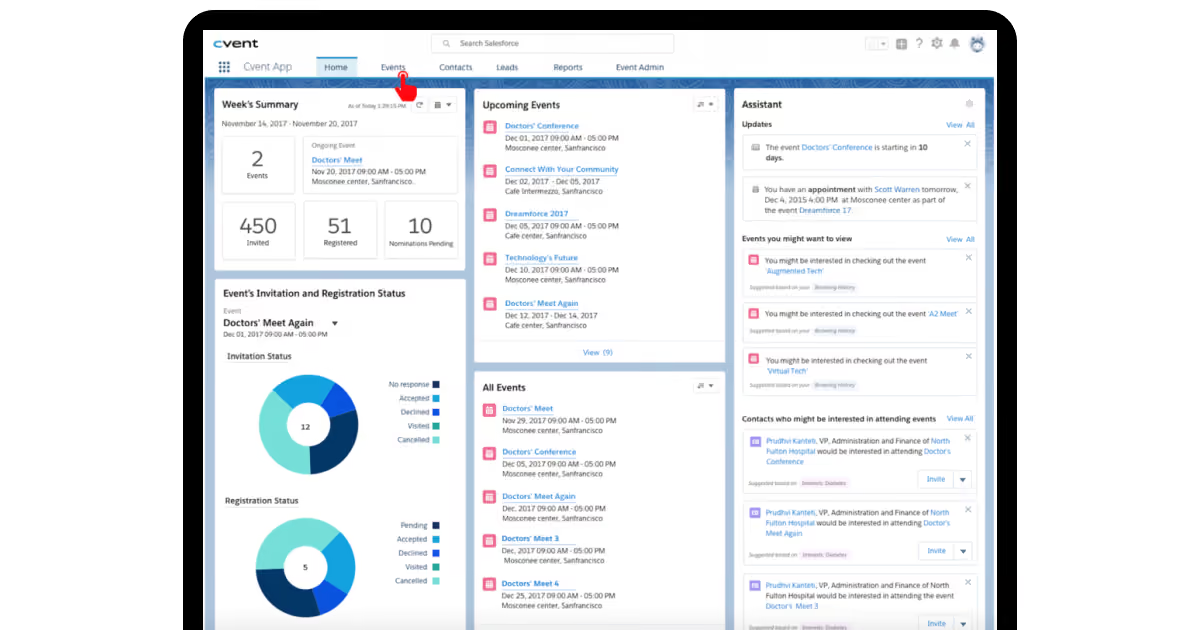
Cvent is the heaviest tool in the category, built for enterprise event planners who need to send RFPs to hundreds of hotels at once, manage room blocks, and handle contracts end to end. Its network covers over 300,000 properties globally. The platform connects attendee registration, housing assignments, payments, and reporting, making it the strongest option for large conferences with complex accommodation needs. The learning curve is steep, and the price reflects the enterprise positioning, so smaller operations will likely find it overkill.
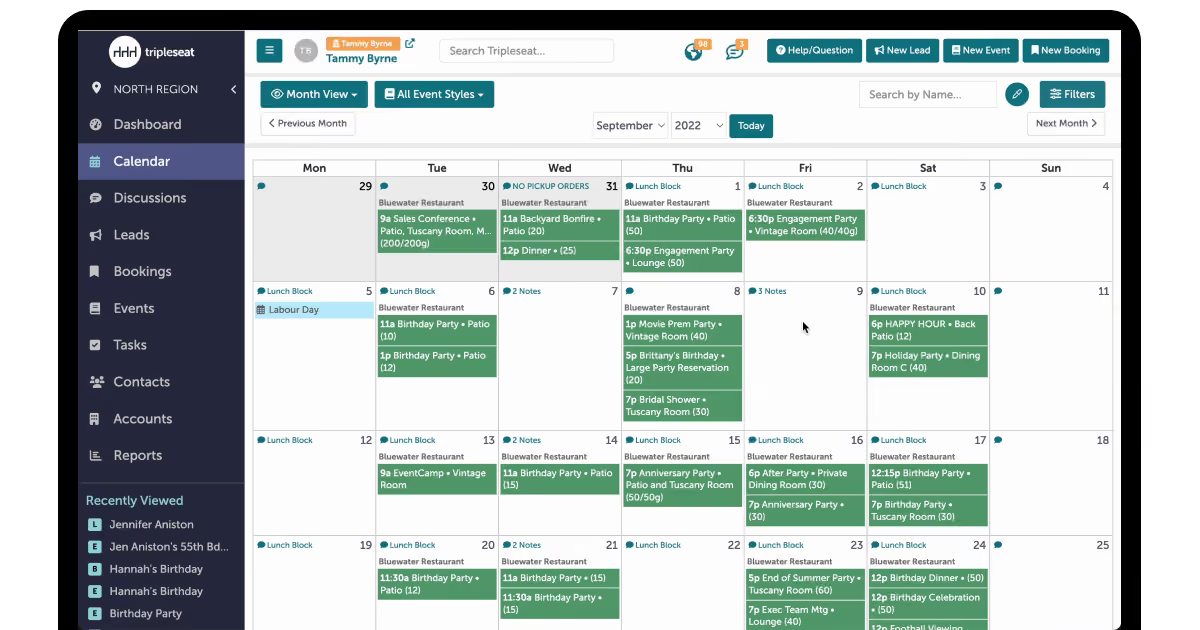
Where Cvent serves the buyer side of group travel, Tripleseat serves the venue side. Hotels, restaurants, and event spaces use it to manage inbound group inquiries, build proposals, generate BEOs, process payments, and track revenue. The built-in Tripleseat Marketplace connects venues with event planners. The pricing is quote-based, starting around $400 to $500 per month. If you run a hospitality venue and need a group booking system that covers your full sales pipeline from first inquiry to final invoice, this is the strongest specialized option available.
Rezdy is built for tour and activity operators who need solid reservation management and strong distribution reach. Its channel manager syncs availability across 100-plus OTAs, so you set your inventory once, and it pushes everywhere from Viator to TripAdvisor. The group-specific tools include passenger manifests, deposit handling, private tour configurations, and the minimum group size rules. Pricing goes from $49 per month plus a 1 to 2 percent booking fee, scaling to $299 or more for enterprise tiers. For operators whose revenue depends on multi-channel visibility, this is one of the best travel booking apps for group bookings in the tour and activity space.
FareHarbor takes a pay-per-booking model rather than a monthly subscription. It suits operators just starting or running lower volumes. It handles group reservations through customizable rates, dedicated coordinator portals, and inventory controls, and its channel distribution covers major platforms, including Booking.com and Google. Features include group coordinator portals, bulk reservations, custom group pricing, waiver management, and channel distribution. The trade-off is cost at scale. For high-volume operations, a commission of 6 to 8 percent per booking adds up fast.
Checkfront is in the middle ground. It’s more capable than a simple booking widget, but less complex than enterprise platforms. It supports travel agent group booking workflows through configurable minimum and maximum group sizes, deposit and payment splitting rules, and real-time availability syncing across websites, social channels, and OTAs. Features include group capacity rules, split deposits, multi-channel distribution, and calendar integrations. The pricing starts from $49 per month for 100 bookings, up to $199 or more per month for unlimited bookings. Customization at the advanced level requires technical knowledge, and costs scale with volume.
Peek Pro is built for mid-sized tour and activity operators who want both strong reservation management and built-in marketing tools. Its dynamic group pricing engine adjusts rates automatically based on group size, season, and demand, which removes the need to manually reprice for every inquiry. The platform covers group reservations, real-time inventory, CRM, automated marketing, and detailed analytics. Pricing is quote-based and can be steep for lower-volume operators, but for businesses managing frequent group departures across multiple channels, the feature depth justifies the cost.
Xola is a clean, transaction-based platform for tours, attractions, and live experiences. For groups, it brings a private request-to-book system, which lets coordinators manage reservations through a dedicated booking link with held inventory. There are no monthly fees, only a per-transaction cost, which keeps entry simple. The platform is straightforward to embed into existing websites and handles payments, promotions, and capacity controls without heavy setup. It is less suited for corporate travel or hotel-side group booking hotel management, but for leisure experience operators handling mid-sized groups, it covers the basics well.
Bookeo is the most accessible option on this list for small to medium-sized businesses. It handles group bookings for tours, classes, rentals, and events with capacity controls, waitlist management, and multi-participant registration built in. Its waitlist system automatically fills cancelled spots and notifies next-in-line participants without manual intervention. Integration with Stripe, PayPal, Google Calendar, and Zapier keeps the operational side simple. Reporting is solid for everyday use but lacks the depth needed for large-scale analytics. For operators who want a reliable, low-friction entry into group management, Bookeo is a great path in.
These options are easy to get - but very often, not easy (or impossible) to customize and adjust to your use case perfectly. Let’s review an entirely different option, too.
When a custom solution makes more sense
Every platform above was built for a broad market, and it’s their strength and limit at the same time. The moment your operation has specific workflows, unique booking logic, or integrations that no off-the-shelf product supports cleanly, you start spending more time working around the software than working with it. That is when custom booking software development becomes the more practical choice, not the more expensive one.
You own your solution fully. No per-booking commissions eat into your margins on every transaction. No monthly fees climbing as your volume grows, and no pricing model built around someone else's revenue goals. A group booking app built specifically for your operation means your cost structure stays fixed while your revenue scales.
You control the brand entirely. White-label platforms let you put your name on someone else's product. A fully custom solution means the booking experience looks, feels, and behaves exactly like your brand, not a slightly reskinned version of a tool your competitors also use.
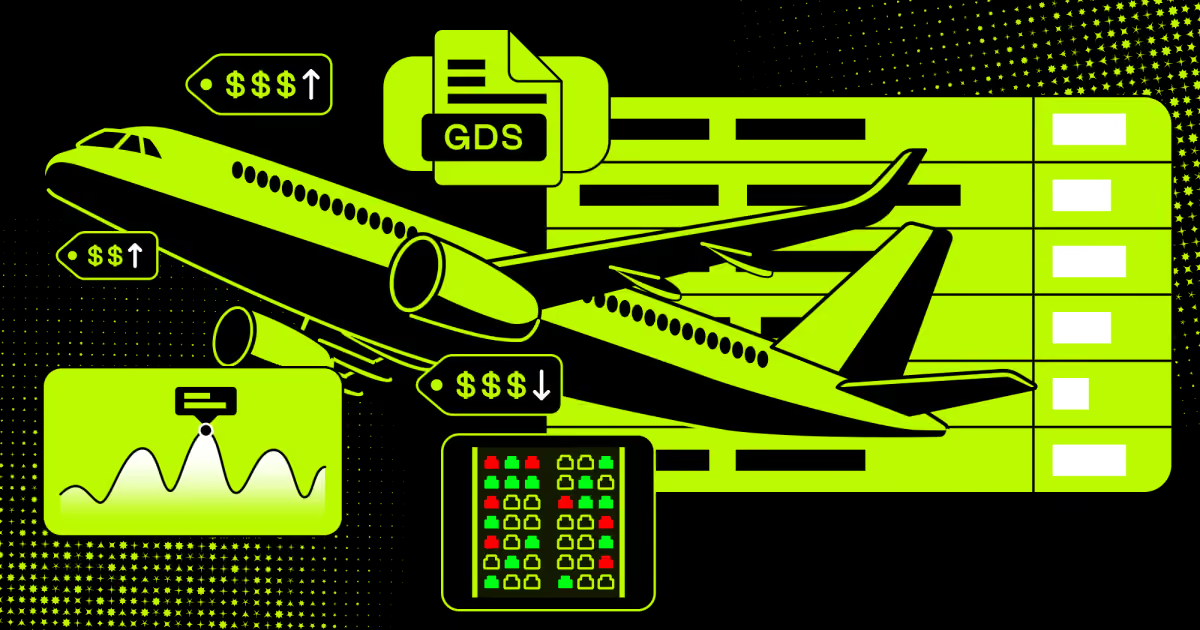
You get the integrations you actually need. Off-the-shelf tools integrate with the systems they chose to support. Custom development connects your booking platform to your specific PMS, your payment processor, your CRM, your supplier APIs, and your internal reporting tools. Group flight booking agents who need live airline data, dynamic pricing feeds, and custom seat allocation logic cannot get that from a standard SaaS product. A custom build can connect to any data source your operation depends on.
You are not locked into someone else's roadmap. When a platform decides to change its pricing, deprecate a feature, or pivot its product focus, your operation absorbs the impact. A custom platform evolves on your timeline, not theirs.
At COAX, we have been building travel technology for 16 years. We’ve seen the disadvantages of the ready-made systems: the group booking hotel workflows that collapse under real volume, the payment flows that fail when installment logic gets complex, the manifest systems that were built for 20 people and get asked to handle 200. We have built solutions for tour operators, travel agencies, hotel groups, and corporate travel programs, and we know where the generic tools stop and the real operational needs begin.
Our process covers the full development cycle: discovery and architecture, UX and interface design, backend development, third-party integrations, testing, and ongoing support after launch. We build systems that connect to the tools you use, whether that is a global distribution system, a property management platform, a payment gateway, or a custom supplier network.
The result is a group booking software that no competitor can replicate, because it was built around how you work. If you would benefit from AI planning trips as a part of your system’s functionality, we can implement this functionality and ensure we do it securely, protecting your and your users’ data.
How travel companies can attract more group bookings
Group bookings aren’t just good for occupancy - they are good for operations. When a group confirms weeks or months in advance, you can prepare staff, inventory, and workflows with precision that individual bookings simply cannot give you. Groups spend more in total, fill rooms and tables during quieter periods, and cancel far less often than solo travelers. Here is what actually works, and how group booking software makes each strategy more effective.
Make the booking process fast and frictionless.
Group organizers are busy people making decisions on behalf of dozens of others. Almost 80% of meeting planners report that booking a group typically takes longer than 30 minutes. Reduce that friction by enabling online group requests directly from your website, with real-time availability, instant rate confirmation for smaller groups, and a single link that participants can use to confirm their own rooms independently. Group hotel booking apps that require back-and-forth emails lose opportunities. Group booking systems handle this by generating shareable booking links, collecting individual participant details, and confirming reservations.
Build pricing structures that reward group size.
Groups expect a better rate. That expectation is reasonable and easy to meet if your pricing logic is set up in advance. Create tiered discount structures tied to room or seat count. Add value through bundled packages rather than pure price cuts: meal vouchers, early check-in, activity credits, or complimentary meeting space. For large group hotel booking, consider separating your net rates for tour operators from your dynamic retail rates. Tour booking software with built-in pricing rules can apply the right rate automatically based on group size, booking channel, and lead time, removing the need for manual rate negotiations.
Target the right decision-maker with the right message.
Make your marketing distinct. A wedding planner needs different information than a corporate travel manager, who needs something different from a school trip coordinator. So diversify it! For corporate groups, reach local business clusters through LinkedIn and direct email. For social groups and reunions, OTA visibility and referral programs matter more. For tour operators, personal relationships that let them experience your property are often what convert. Group booking software with CRM functionality lets you segment your group leads by type, track communication history, and tailor your follow-ups.
Use technology to hold inventory without losing flexibility.
One of the most practical things you can do for group organizers is to let them hold a room block while they finalize numbers. Once the group confirms, invite links go out to participants to collect individual preferences: room type, dietary requirements, arrival times, and accessibility needs. With gateway integrations connecting your group hotel booking platform to your property management system, you don’t have to transfer data manually between tools.
Offer flexible check-in and communal spaces.
Groups arrive in waves. Rigid check-in windows create bottlenecks that leave a poor first impression. Train front desk staff to manage arrivals efficiently, or implement digital check-in and keyless entry systems that allow participants to arrive on their own schedule. Create communal spaces where group members can gather before rooms are ready: flexible meeting areas, outdoor seating, or private dining rooms that serve multiple functions throughout the day.
Incentivize loyalty and referrals.
Group organizers are a potential repeat business. Annual events return to the same property when the experience was nice. Satisfied group leaders recommend their venue to colleagues, family, and professional networks. Use it: offer organizers loyalty points, rate incentives for returning groups, or referral rewards for introducing new business. The acquisition cost of a referred group is much less than what you spend on new marketing. Group booking software tracks organizer history and automates loyalty communications, so you are not relying on a coordinator's memory to follow up with last year's best clients.
Real-world examples of winning with group booking systems
Small and medium businesses in travel and hospitality have a lot to learn from large hotels and chains that have tried and tested many business models and technology options. So, let’s learn from real-life examples of using group booking and specific solutions to get great results.
Marriott manages group business across two distinct tracks.
For smaller meetings of 10 to 25 rooms, their platform via Groups360 enables instant booking with real-time availability and live pricing, which suits planners who need a quick answer without engaging a sales team. For larger, more complex events, dedicated sales managers handle tailored contracts, catering packages, and flexible space configurations.
Their "in-the-year, for-the-year" booking strategy, which encourages groups to confirm within the same calendar year rather than booking 18 months out, generated significant revenue in recent years. Marriott Bonvoy Events points reward organizers for every booking, building loyalty across the planner community. Additionally, meeting spaces are designed with flexibility as a priority, including catering options adapted to wellness and dietary trends.
Hilton's approach to group hotel booking removes uncertainty from the process.
Their most effective differentiator is the ability to instantly confirm connected rooms online, which was previously a manual, unpredictable process. Through their partnership with Groups360 via the GroupSync platform, planners can view real-time inventory and book both group rooms and event spaces online, with on-the-spot confirmation, not a multi-day wait.
For groups up to 25 rooms, the process is digital. The Hilton Honors app extends this into the stay itself, allowing group members to check in digitally and select their own rooms. Organizers earn Hilton Honors Points on group stays, creating a direct incentive for repeat bookings. Finally, targeted digital marketing campaigns reach event planners specifically, with group-friendly spaces showcased across social channels.
IHG's strategy makes it easy for people who book on behalf of others.
IHG Business Rewards awards 3 points per dollar spent on accommodations, meetings, and events booked through the platform, incentivizing the organizer. Dedicated group booking links and group codes let organizers share a direct booking path with participants, keeping the entire group's reservations connected without a coordinator to manage each room individually.
Their GDS marketing strategy positions IHG properties at the top of search for travel agents, which leadsbto a 40% more bookings in targeted campaigns. Approximately 81% of IHG's room revenue comes through direct channels, a result of sustained investment in digital tools and app-based booking. A dedicated sales team handles large event inquiries, while the Business Edge program gives small and midsize enterprises guaranteed rates and flexible options.
The lesson we can learn from these cases is that group bookings for hotels work best when you simultaneously serve the organizer, the individual participant, and the travel agent through tools designed specifically for each of them.
The common thread across all three examples is investment in tools that make the group booking process faster, more transparent, and easier to manage on both sides. None of this happens through manual coordination alone. The right group booking software is what turns a strategy into a repeatable process.
FAQ
What is group booking in flight ticket reservation?
Group flight booking is the process of reserving multiple seats under a single coordinated reservation, typically for 10 or more travelers sharing the same itinerary. Researchers Kim and team confirm that group travel packages are inherently multifaceted, requiring simultaneous coordination of flights, hotels, and activities across individual preferences and shared budget constraints.
What are the key group booking hotels’ challenges?
Key group hotel booking challenges:
Rooming list accuracy across large headcounts
Managing room blocks against contracted inventory
Coordinating staggered arrivals and flexible check-in
Collecting individual dietary and accessibility requirements
Keeping supplier manifests current through last-minute changes
Payment tracking across multiple participants
Communication gaps between organizers, guests, and hotel staff.
What benefits do travel agents get from group train ticket booking?
Key benefits for travel agents booking group train travel:
Access to competitive group rates and built-in commissions
Ability to block entire coaches or large seat sections together
Flexible name amendment policies unavailable to individual bookers
Dedicated group department support lines and specialist contacts
Centralized disruption management across the whole party
Deposit-based payment structures that protect client budgets.
How does COAX develop secure and efficient group booking software?
COAX brings 16 years of travel tech experience with a 90% senior team, ISO 9001 and ISO 27001 certification, and NDA-protected development on every project. One in-house team covers strategy through launch: developers, designers, QA, and DevOps. Agile delivery keeps everything transparent. Systems are architected to scale from 100 to 100,000 users without rebuilding.







































































.avif)

%20for%20hotels.avif)

.avif)
.avif)


.avif)




.avif)
.avif)

.avif)

.avif)

We are interested in your opinion