Get 10 conversion fixes you can ship in under 48 hours
Built for airlines, hotels, tour operators, and booking platforms. Each fix comes with the revenue impact, a step-by-step solution, and a time estimate. Most need no devs.
You don’t need to personalize your hotel experience. Unless you want to succeed in hospitality in 2026 and beyond - otherwise, hotel personalization is a must to fit the needs of modern guests. The urge for tailored experience is driven by some social and technological drivers:
91% of travelers prefer to engage with the brands that can remember them, and 76% of guests get frustrated when a company does not personalize the experience.
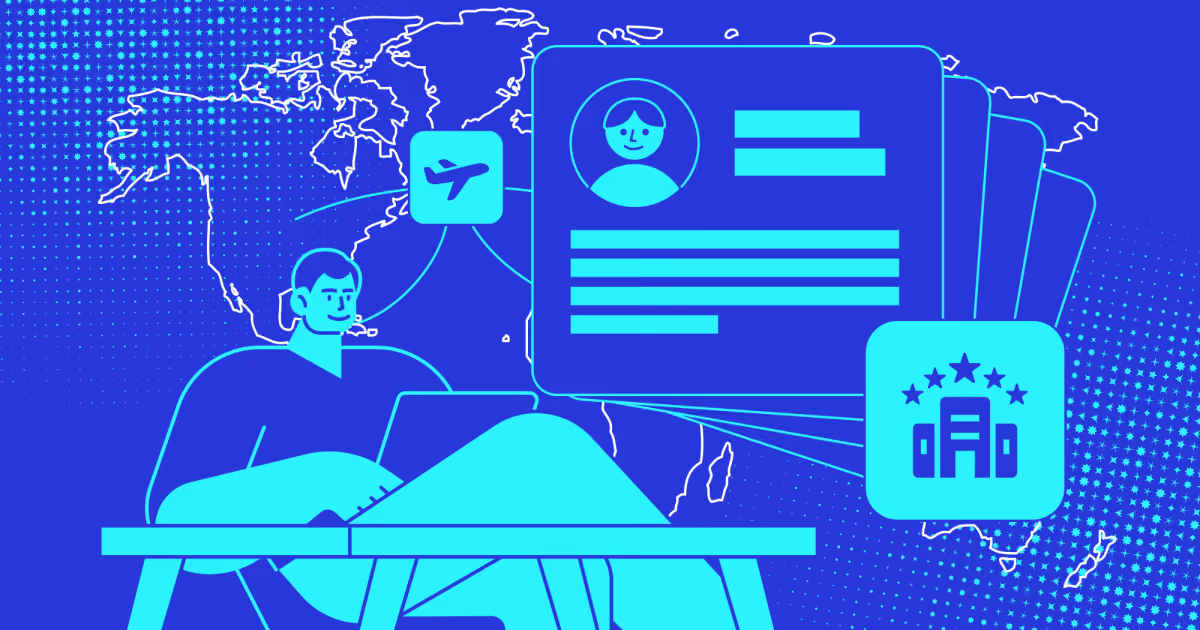
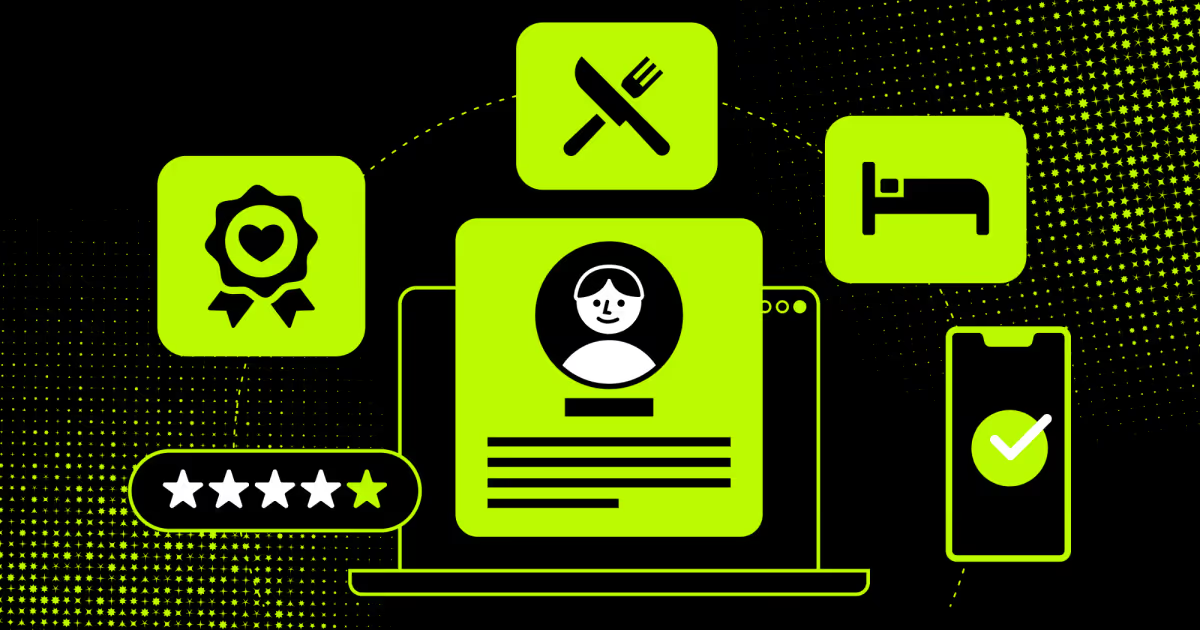
Guest profiles allow for consolidated data on preferences, behaviors, and stay history.
Data collection through a comprehensive CRM and PMS framework allows for personalizing each touchpoint of the customer journey.
Granular inventory enables selling room attributes separately to increase revenue and improve offerings for guests.
Pricing flexibility allows you to set dynamic and personalized packages.
Technology fit unlocks AI and ML, IoT, and predictive analytics implementation to automate the processes.
In this hospitality experience guide, you will find a methodology and technology roadmap for implementing personalized offerings and services.
What does personalization in hospitality mean?
If your guests arrive at a clean, comfortable room, they receive good service. If they arrive at a room with the minibar stashed with their preferred drinks, the lighting set to their preference, and the amenities booked, which are just what they needed, they receive a personalized service.
So, what is it from a technical viewpoint?
Personalization in the hospitality industry is a data-led strategy that focuses on customizing guest experiences according to individual preferences, behavioral patterns, and demographic attributes. It involves using customer intelligence and technology as two cornerstones to personalize offerings, communications, and amenities to meet every need of your guests as best as possible.
According to Guetal’s research, the remarkable recovery and increase in travel after the end of the COVID-19 pandemic have likely sparked a new urge for personalized recommendations. From a data science standpoint, focusing on personalization strategies is extremely relevant to Millennials and Gen Z, as they navigate fluid technology, and 71% of them expect personalization as the bare minimum you can provide. The world of hospitality is changing rapidly - let’s see how.
The changing hospitality landscape
Consumer behaviors are changing to an ever-increasing degree. In fact, 91% of respondents in Accenture's research would happily engage with a brand that recognizes and remembers them for future interactions. But a wide gap still exists between expectations and experience; according to McKinsey, 76% report being frustrated when a company does not deliver on that expectation. The morale of the story is that you don’t want to be a part of these stats, don’t you?
These unmet expectations do have consequences that travelers don’t forgive now. For example, 48% of consumers reported abandoning a website because of insufficiently personalized experiences. For hotels and resorts, the industry statistic shows the lack of effort to personalize their offers: only 23 percent of guests reported high levels of experience personalization. What we take from this is that it’s now a perfect time to make a difference and win with it.
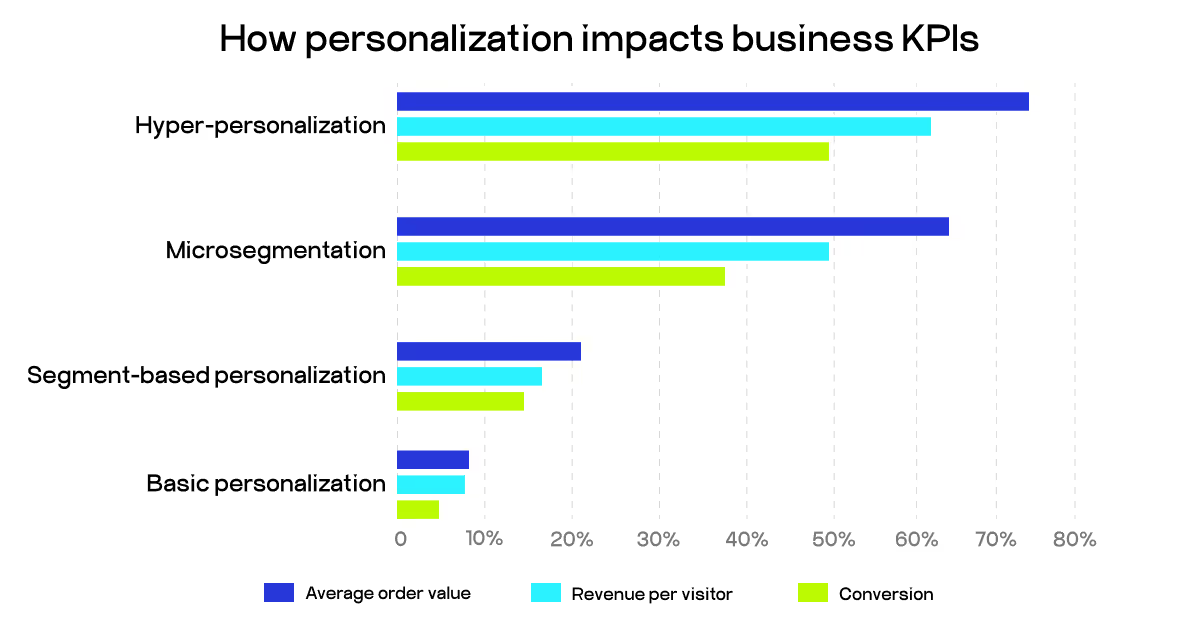
The reason why you need to personalize the hospitality guest experience isn’t just a competitive edge. According to McKinsey, companies that excel in personalization experience 40% greater revenue, and normally receive revenue boosts between 10 to 15%. Furthermore, Medallia focused on 1,749 hotel guests and found that guests, who, when asked to rate their personalized experience from 1 to 10, rated their overall satisfaction at a significantly greater level than less personalized experiences.
The stakes in the new reality are high. To implement personalization successfully, you need to understand what it typically consists of.
Key elements of personalization in the hospitality industry
As we mentioned, personalization is a nuanced mix of modern technology, data, and techniques that allow you to understand the patterns of guests’ behavior and historical information on their stays. It’s represented by several interconnected components.
Guest profiling
Guest profiles are the foundation for hotel personalization. In fact, they are centralized locations for collecting, preserving, and reviewing in-depth guest-related information, communications, demographics, and preferences. Profile details include guest behavior over a length of stays, preferences, amenity spending habits, and browsing activity.
Sarode and Wankhede point out that integration of technology allows hotels to develop these profiles to be as full as possible, which directly impacts satisfaction and loyalty. Guest profiles are especially crucial for hotel chains and international hotel groups, as they allow them to incorporate guest records across multiple properties to trigger remarketing and loyalty programs, no matter which location a guest stays.
Makivić et al. point out that personalized guest profiles can greatly enhance satisfaction since hotels can anticipate needs and provide more tailored service counter to the guest journey. The impact of developing profiles is greatly affected by the quality of the data collected from the hotel’s PMS, CRM, and point-of-sale systems, which leads us to the next element.
Data collection
In order to execute successful hotel guest personalization strategies, it is important to design a data collection infrastructure. To achieve this, you need to put resources into making the CRM and PMS software that collects information about your guests as robust as possible to have it collect extensive details. This information usually includes booking behaviors, preferences, feedback, and the history of interaction with the hotel.
Sarode and Wankhede suggest that the availability of data from multiple touchpoints permits hotels to create periodic, updated, and dynamic profiles. Each data collection system will have to be tied to the hotel guest profiles to capture information from related sources. You need to get the answers to specific questions. For instance, what are their room preferences? What additional services, like SPA or conference rooms, do they book? Additionally, you should set out to obtain the results in an organized and standardized manner to avoid errors.
To enable it, analytics tools based on ML and AI cleanse, aggregate, and analyze data, defining patterns based on assessed unique data sets for each person. Despite the means of collecting information, practicing data privacy is a primary consideration. The best practice is to collect the guests' information transparently, explaining clearly what is collected and what isn’t, and deliver messages through their preferred channels to be compliant with privacy practices.
Personalized services and communication
Personalized services change standard stay to a memorable guest experience in hospitality, allowing hotels to use guest information and preferences to highlight special offers during a specific desired stay. This is an effort well paid off: for instance, McKinsey found that personalization can increase ROI by 10 to 30%.
The technical side is based on API-based integrations between PMS and CRM, as well as analytics. For example, Marriott's Bonvoy program ensures that the guest profiles bring constant value, as it tracks guest requests and preferences at any properties around the world, so that in any place in the world, a guest can get the familiar and personalized comfort of the brand.
Communications that address guests by name and acknowledge previous stays also engage guests more than generic messages. Statista reports that 65% of marketers worldwide incorporate subject line personalization in email campaigns - it’s basically a minimal effort nowadays. To go further, you need advanced technology: for instance, ML can be used by hotels to build automatic offers for returning guests based on previous experiences, whether a discounted private dining experience or a package rate based on things to do and amenities.
Granular inventory
If the previous components can be quite obvious, personalized inventory can be a bit confusing. The thing is, traditional inventory systems in hotels generally only distinguish rooms as either standard, deluxe, or suite (or whatever the system you have within your business). With such a setup, there is typically little visibility into anything that may distinguish one room from another for a guest. Think yourself - the tier system doesn’t give information on the floor level, view, bed type, or any amenity selection.
The reason for this gap is the disconnect of the standard inventory system from hotels’ PMS and central reservation (CRS) systems, but in fact, they are necessary to make hospitality guest experience management automated and personalized at the same time. To close this gap, we meet the phenomenon of Attribute-Based Selling.
Attribute-Based Selling (ABS) breaks the bundle of hotel services apart and enable the selection of smaller sellable units. Rather than purchase a Junior Suite, guests can purchase their amenities (seaside views, the 12th floor, balcony, and a swimming pool) using the self-service from their phones. According to Zhang, personalizing the experience at this level is a powerful hotel loyalty builder. ABS also addresses labor challenges and product inconveniences, as the technology provides the hotel with an automated interface to convey preferences and seamlessly link with PMS systems without the need to put a weight of additional tasks for your staff.
The financial gains are also relevant. Data shows that guest reservations with ABS have a 55% guest upgrade rate to a higher room category, and 32% of upsell revenues from within the same category. This way, the granular management of hotel inventory is a perk both for your guests and your returns and future-proofing your business.
Tailored pricing
Tailored pricing is the most evolved form of revenue optimization that aligns pricing practices with the individual expectations of customers and their willingness to pay.
To understand why this element is important, let’s answer the question: what makes your guests want to pay for your rooms and services? Surely, it’s the need for a place to stay and the demand for this place to stay within their budget. However, it’s not as simple as this. Tomczyk's study shows that willingness to pay (WTP) can change based on specific intrinsic and extrinsic contextual factors, rather than the pure measure of income.
So, what do these factors divide your typical guests' base into?
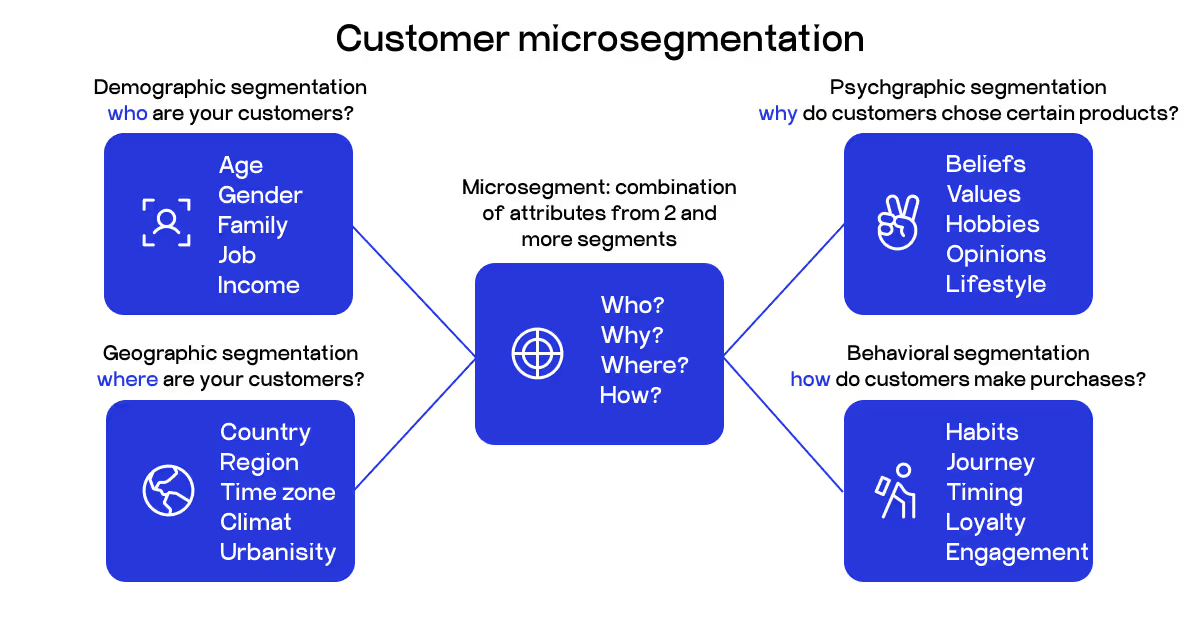
The study illustrates six customer types: Budget Adventurers, Family Explorers, Relaxation Seekers, Relation Seekers, Delight Seekers, and Must-Have Customers. They are categorized based on their lifecycle stage, personal philosophy, and consumption context. This non-linear expectation of a very personal hospitality in pricing and WTP deters traditional methods.
In contrast, this approach treats personalized pricing as centered on the customer as the focal point for the market value. This adds complexity: maintaining the hotel dynamic pricing where every offer is aligned with the market demand and inventory levels, and at the same time, considering the behavioral variables and demographics to create algorithms that uncover their internal drivers and provide the most relevant options and prices at the moment of booking.
So, how to apply it to these customer segments? You usually need to target each cluster of customers at suitable times with relevant offers of rooms and services. Meanwhile, remember the ongoing issue of considering the careful balance of the ongoing trade of marginal costs and non-marginal costs based on initial findings.
Ways to introduce personalization in the hospitality industry
Hotel personalization is much more than just the elements that make it. It’s also about the momentum, the correspondence with your business, and surely, the way you put theory into practice. There are a number of realistic ways you can achieve measurable results for your hotel. Below, you will find the most common approaches. However, the implementation success depends on you - as per Per Liao and Halawi, your implementation efforts should constantly need monitoring and adjustment to recognize what works and what doesn’t.
We divided the common approaches based on the stage of the guest’s journey with your hotel.
Strategies for personalizing guest amenities before arrival
Your guests can (and certainly deserve to) feel special and catered for before their stay. Hotel guest personalization starts the moment you send personalized pre-arrival communications and offerings.
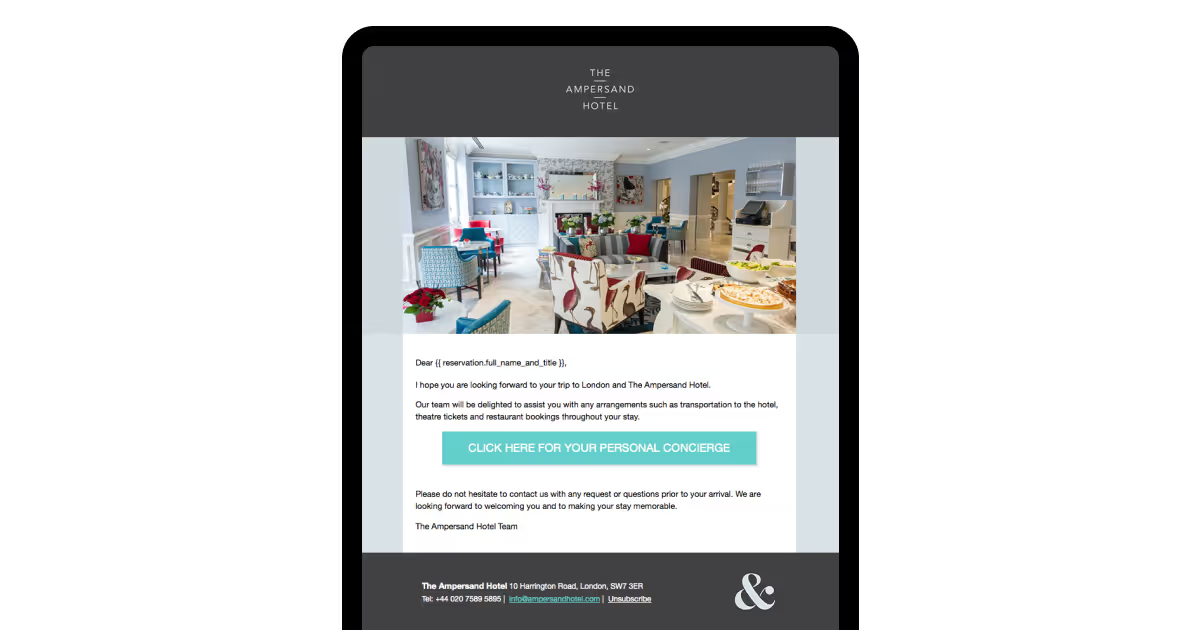
Welcome emails or other messages can use the guest's name, booking information, their preferences for amenities based on their profile, local recommendations according to guest preference, and information about any other special arrangements for celebrating an occasion.
You can also consider enhancing your personalized pre-arrival upselling by recommending add-ons based on guest data. For example, recommend a spa package for leisure guests, an airport transfer from the airport for international guests, a late checkout for weekend guests, or offer complimentary room upgrades for repeat customers - make each relevant and likely desirable.
Additionally, you can create digital welcome guidebooks, either app-based or sent via email, providing local recommendations with personalized information, up-to-date weather forecasts, transportation information based on arrival port information, dining based on dietary restrictions or allergies, or a list of activities based on their travel purpose.
Allowing for mobile check-in opens additional options for hotel personalization, as your guests can have full autonomy after all they have to do it specifying some additional preferences.
Ask for even more preferences - including room location nuances, preferred pillow and bedding arrangements, the temperatures your guest will like, guest room additions, arrival notifications, or a wake-up service if needed.
Welcome email example
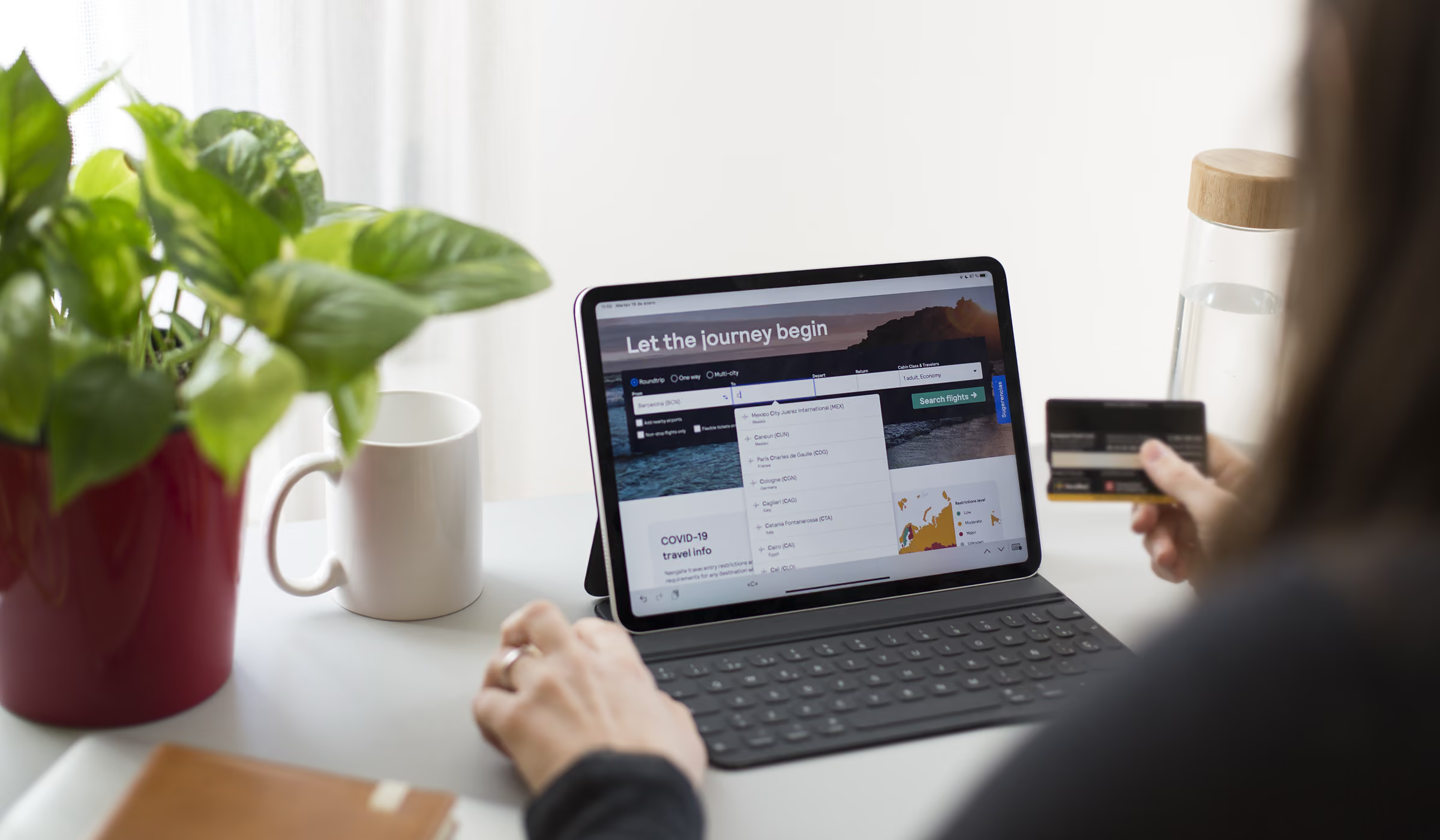
There are several ways to do it technically. Surely, your hotel website can include as many filters before booking as you can fit into the corresponding panel, but it’s doubtfuly a good practice to ask to put a check mark on whether your guests want the room to be hot or cooled down.
Your further email communication can contain these questions in a simple and concise way, asking to fill in a form or respond with a certain number if the service will be needed. However, modern technologies allows you to implement AI-based chatbots and hotel concierge apps that will perform as hospitality experience guides - and collect the needed data securely.
During-stay customized engagement strategies
No doubt, the very core of guest experience in the hospitality industry is during the stay, when the planning translates to execution. Here’s what you can (and should) personalize to make the stay unforgettable.
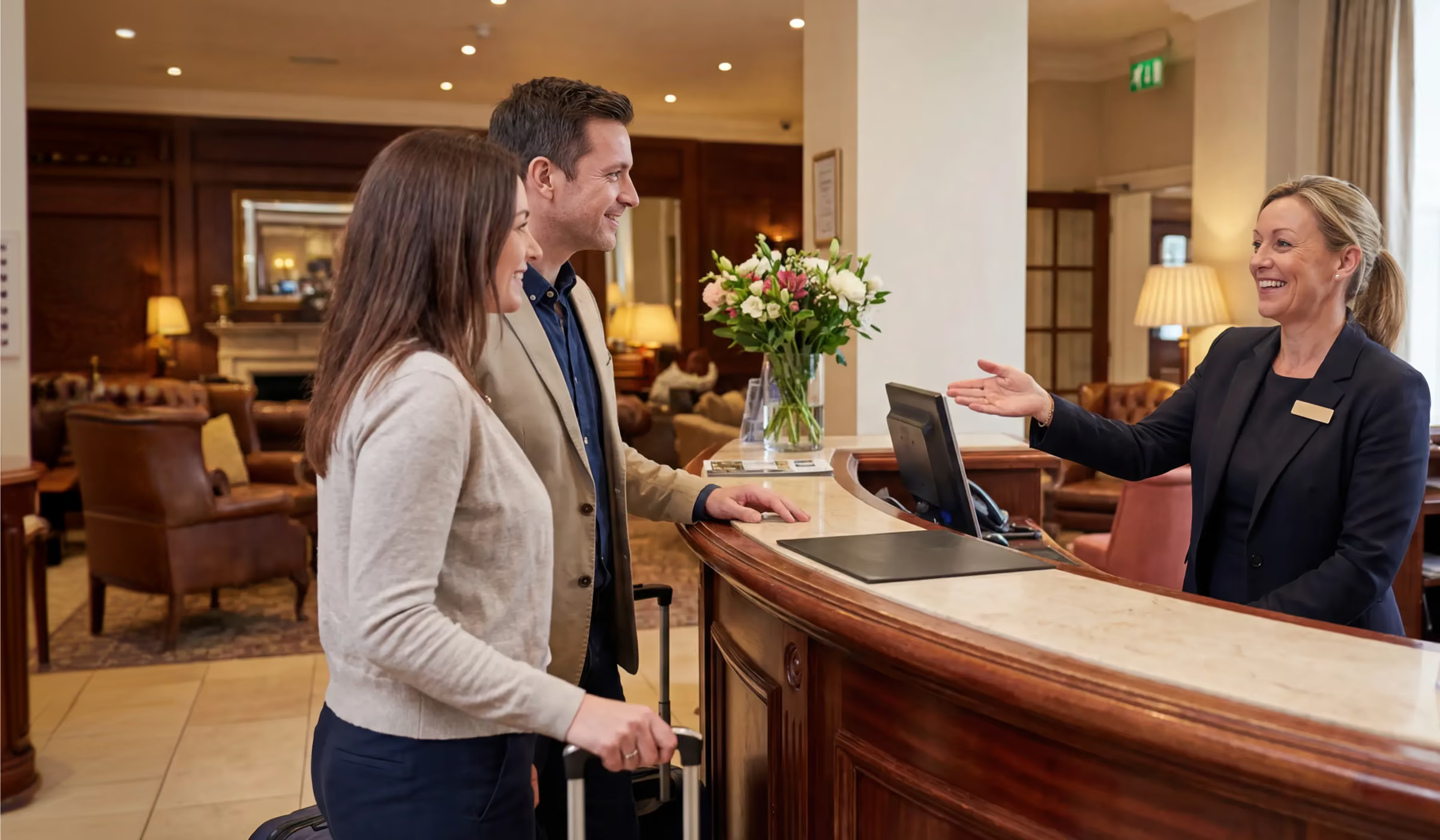
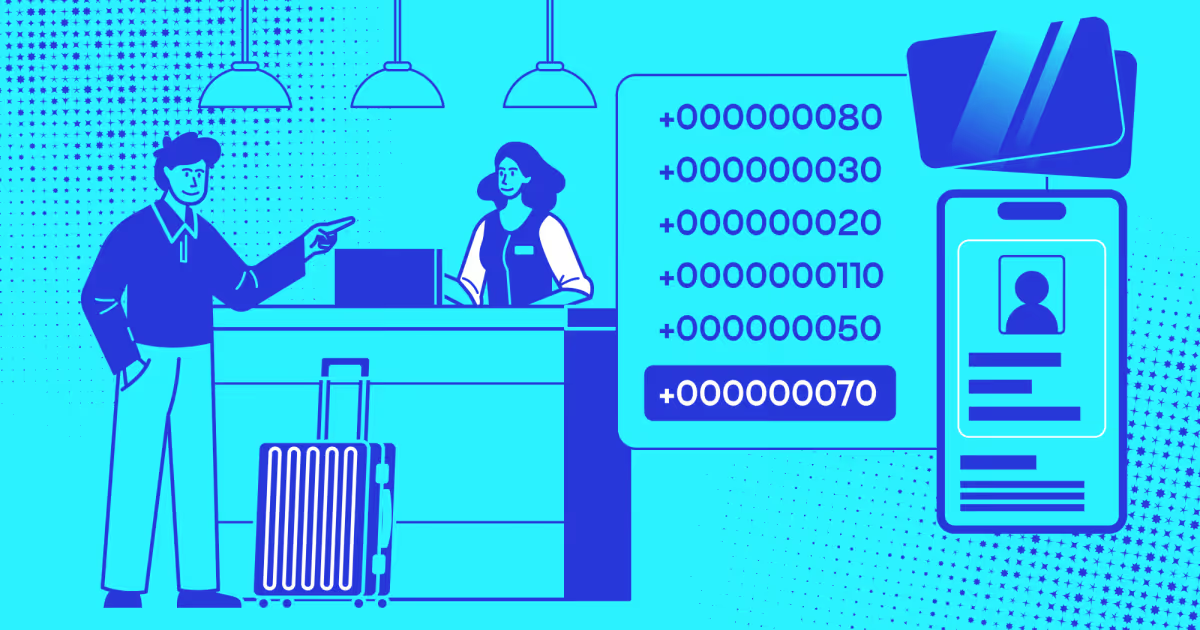
Train your staff on guest acknowledgment. Provide front desk, housekeeping, and restaurant staff with mobile access to guest profiles. Apart from providing exactly what your guests need without asking in the first place, these pieces of knowledge can be conversation starters that reference previous stays and promote proactive service.
Even the setup in the room can be personalized by adjusting the temperature and lighting to the guest's preference and stocking mini-bar items and snacks the guest likes, providing the guest with pillows, bedding, and space to work if traveling for business.
If this won’t disrupt operations or revenue margins, you can make occasional initiatives to build experiences by offering welcome amenities based on guest preferences (for instance, a free room upgrade in celebration of a guest's birthday or providing local treats to thank guests for a repeat visit to a resort).
Dining experiences can be personalized by automatic features that note dietary restrictions, dish recommendations based on ordered menus, seating preferences by room, service pace, or wine recommendations based on previous selections.
One last thing to mention would be the real-time observation of guest sentiment, by using short surveys after satisfied service requests and having an option for guests to text for help, and a personal manager checking in on VIP guests’ in-stay happiness, which allows staff to affect an immediate change in satisfaction rating.
Example of a guest profile
Liao and Halawi discuss that hotel personalization efforts during stay correlate to satisfaction and repeat business opportunities.
Personalization strategies after the guest's stay
The relationship with a guest extends beyond their check-out of your property. Since this moment, you still have opportunities for stimulating long-term guest loyalty. Here are some ideas to enhance the hotel guest experience after their stay is over.
Send personalized 'thank you' messages, including photos from unique events, when applicable. Mention some of the hotel's great staff members by name, and encourage feedback or input about new services or amenities, etc.
Find a way to get feedback through the guests' preferred channels. You can send surveys that are short and mobile-centric, including questions about the personalized services the guest received, and afterwards, make a personal response to the feedback you receive.
Also, use the context of the guest's stay to create personalized remarketing campaigns to appeal to the guest. For instance, if the guest stayed in the prior season, offer new season considered packages, connect with their stay anniversary or birthday with event-based marketing. If they engage with your offering through seasonal service packages, use a seasonal type of marketing to urge the next season visit or the same season revisiting next year.
Use predictive analytics to enhance the guest's experience for their upcoming visit as a result of analyzing their booking patterns and reasoning about when to expect the guest to make their next booking.
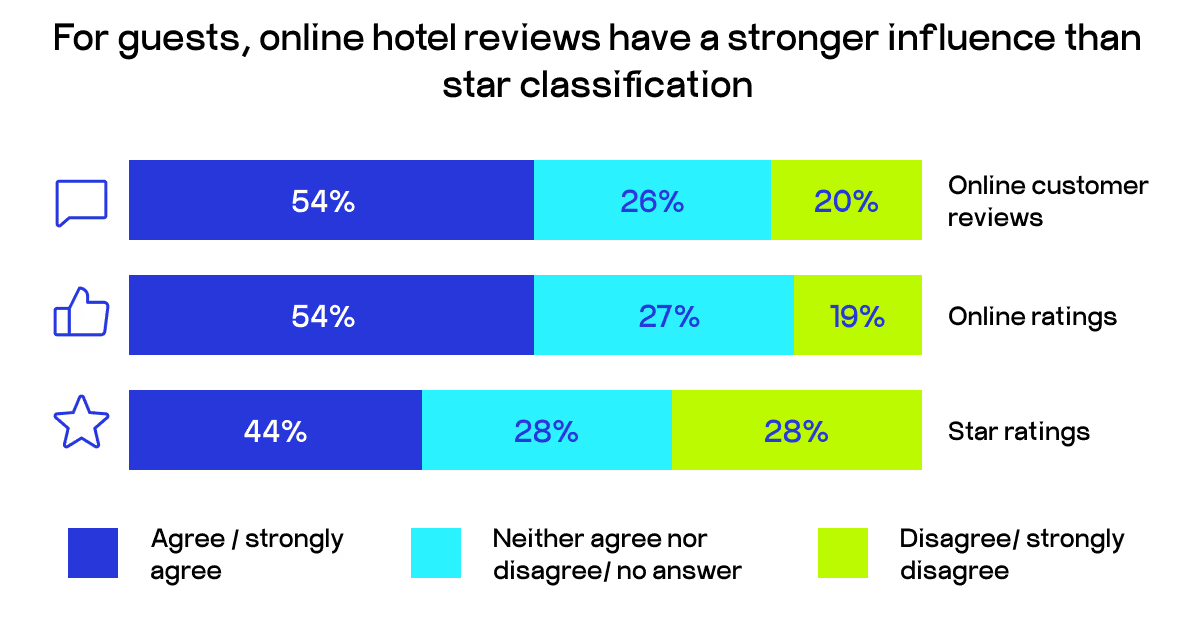
Xu et al. demonstrate how post-stay personalized engagement can positively contribute to hotel ratings. When guests feel like the hotel subtly and intensively knows their wishes and intentions, they treat you as the place to return and share this image with others.
Real-world examples
We’ve discussed how it’s done in theory - now let’s see the ways in which real hotels do it practically. The following businesses are great hotel personalization examples that you can learn from and try and replicate their success.
The Ritz-Carlton offers enterprise-level personalization with a proprietary database system called Mystique that keeps track of guest preferences and history across the company's global properties. If, for example, a guest requested hypoallergenic bedding during their stay at one of the Miami properties, their suites in Tokyo will still come equipped with it unprompted. This type of sophisticated system breaks the boundaries of service within the space and time of next visits, and shows how the centralized management of data creates a system of uniform, memorable experiences that foster loyalty.
Hotel Lugano Dante in Switzerland knows well that the experience starts before the stay. Their "My Page" portal provides guests with 150 options to customize before they even arrive at the hotel. Families traveling with babies can pre-order cribs and changing tables, and business travelers can choose preferred desk configurations. It’s not just about physical amenities, too: guests can also pre-specify duvet weights and mattress firmness. They can even pre-book excursions to local attractions. Guests know they are cared for, and the staff receive the guest's documented preferences well in advance of the guest's arrival, cutting down on emergency runs and guessing failures.
Hilton's Connected Room technology allows visitors to control the temperature, lighting, or entertainment options in hotel rooms via their phone, saving preferences from room to room that can be accessed in real time.
Library Hotels, with boutique properties in North America and Europe, is one of the personalized service examples that is both simple and efficient. Following booking confirmation, guests receive a brief formthat asks them for their reason for traveling. The hotel then uses the responses to make targeted experience packages, for instance, offering complimentary champagne and dining suggestions for romantic couples and express breakfast options and late checkouts for business travelers. Nothing extra, just add-ons that don’t feel pushed or irrelevant - quite the other way around.
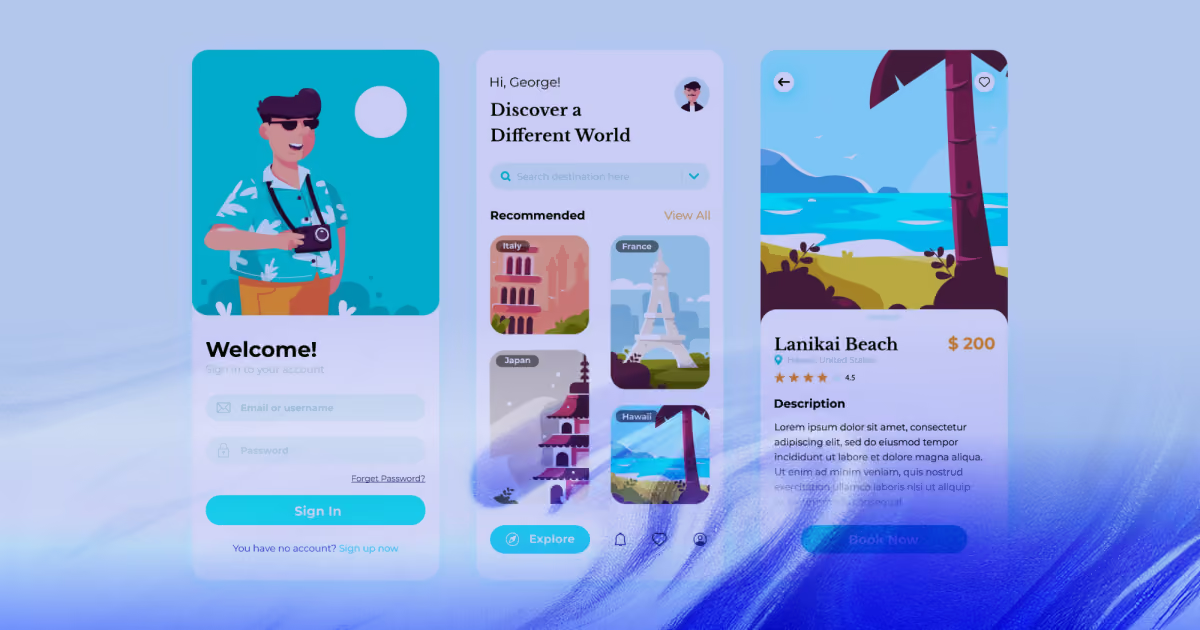
Virgin Hotels started by analyzing their guests’ massive data. What they found was very curious. For instance, they discovered that 40% of travelers were connected on their smartphones during vacation, 29% contacted loved ones on a device, and 24% used their phones for local information. This led Virgin to develop the Lucy mobile app, where guests can now complete mobile check-in, adjust room temperature, make dining reservations, order room service, and access concierge services - all from their phones.
And along with this innovation, Virgin launched The Know preference program, evolving the typical rewards program to replace traditional points with systems of deep personalization. Guests can share information about their food allergies, preferred amenities, and any other needs through this program.
Similarly, research conducted by Marriott showed that personalization makes their offerings more attractive to up to 87% of the guests. For this reason, they expanded their loyalty membership functionality to all 7000 locations they cover, with a deep personalization for guest experience and loyalty satisfaction.
As you can see, the basics of the success of each of these hotels’ efforts are a mix of real-world findings, a good idea, and the technology that enabled it. We’ve covered the basics - now let’s move to the tech.
The role of technology in hotel personalization
We started covering these in the previous sections, but now let’s pay closer attention to the technological basis that enables personalization in the hotel industry.
AI and Machine Learning
AI has greatly changed the hospitality industry. In the case of tailoring experiences, it allows for hyper-personalization - a unique phenomenon that leads to an enhanced brand perception. Using this hotel guest personalization technology, hotels use machine learning algorithms to analyze guest data gathered from various guest touchpoints to identify patterns relative to guest booking behaviors, room preferences, dining habits, and guest feedback to develop and maintain dynamic guest profiles that evolve from the last interaction.
Machine learning can also be applied to develop automated offers for returning guests based on prior stays or experiences. For instance, it can be an automatic discounted private dinner experience or an adventure package rate, predicated on available activities and amenities.
As Awasthi adds, NLP enables AI chatbots to respond to guest inquiries about the hotel and the surrounding area 24/7, while better understanding context and sentiment in order to formulate an enjoyable experience for guests. Text-based chatbots utilize text messaging to respond to consumer inquiries, while voice-to-text chatbots offer clients an elite, custom service.
Businesses can also use AI-based automation to personalize guest recommendations, automate customer support, and improve demand forecasting to elevate overall service levels. For instance, if a guest books spa services during multiple stays, the system could automatically suggest available spa reservations during a guest's next reservation. Additionally, AI can provide sentiment analysis of guest reviews, allowing hotels to scope out potential service issues in order to proactively address guest issues before they escalate to a problem.
IoT
Another technology widely used to personalize guest experiences is IoT. The Internet of Things (IoT) refers to a network of physical objects that have sensors, software, and other technologies embedded in them for the purpose of connecting and exchanging data with other devices and systems over the Internet.
As Sharma et al. also state, IoT-invoked sensors in smart room systems adjust lighting, temperature, and entertainment options based on stored user preferences. In essence, they detect a guest's presence and adjust parameters as predetermined by past preferences. They also help boost hotel accessibility, as they enable personalized control interfaces for guests with disabilities, such as voice-activated commands and automated environmental adjustments.
Discussions by Anjum also address systems applying IoT sensors to enhance guests’ security. For example, facial recognition systems acknowledge guests, and the connected chatbots provide immediate resolutions of escalations for emergencies. Here, you get both personal hospitality and secure hospitality, which is even more important.
This technology doesn’t just help guests. When you consider motion sensors tracking room occupancy to optimize staff schedules, and smart energy management systems that monitor energy usage when rooms are not occupied, you can see the benefits for properties as well. And it’s a reality already - IoT systems are implemented in energy management systems or as part of preventive maintenance sensor systems, such as Crowne Plaza.
Predictive analytics and data intelligence
Predictive analytics is a form of data analytics that employs data, statistical algorithms, and machine learning to determine the likelihood of future results by examining historical data. In hospitality guest experience management, this enables hoteliers to go from a strictly reactive to a proactive operation as it relates to the understanding of guest requirements and market environments. It can work in several important directions:
Predictive models assess historical booking trends, the timing of seasonal trends, local events, and competitive pricing analysis for effective revenue management. For example, analytics may determine that demand is likely to escalate for a specific weekend due to a local concert (if identified that many guests would prefer to visit it based on past stays), triggering the system to autonomously change room rates to maximize revenue.
To enhance the guest experience for their next visit, predictive analytics can analyze booking histories and make considerations on when the guest will next book a visit, identify patterns, and maximize opportunities to re-offer or change offers based on how the guests' tastes may have evolved. Then, hotels send targeted offers to the guest at the appropriate time, such as testing family packages with guests who previously traveled with children.
Predictive maintenance yields operational efficiencies and optimization of resources, which leads to significant cost reduction. By analyzing data on equipment performance, hotels can forecast when to repair the HVAC systems, elevators, or other pieces of infrastructure and schedule them to be repaired during lower occupancy.
These are just a few hotel personalization examples of what you can do with analytics and data science in hospitality. However, the list can continue long past these options if you have a scalable and connected infrastructure.
Integration infrastructure
To provide personalized hospitality guest experiences, a data collection infrastructure must be robust and efficient. Hotels collect information from several touchpoints to develop complete profiles and allow for worthwhile offerings.
Some examples of data sources include:
Direct channels like hotel websites and mobile apps.
Indirect channels like online travel agencies (OTAs).
On-property systems like POS terminals and door lock systems.
Guest communications, like emails or messaging applications.
Feedback sources like surveys and platforms with guest reviews.
How is it done? Application programming interfaces (APIs) allow different systems to communicate so that information flows between your hotel’s PMS, CRM, revenue management systems, and guest-facing applications.
Simply speaking, APIs are the lifelines of any processes and components that make hotel personalization. And at COAX, we establish secure two-way API connections to enable you to establish an efficient data infrastructure.
Also, our hospitality software development unlocks the benefits of custom personalization solutions for you. We can develop a proprietary system, loyalty program, or an IoT-based application - whatever caters to your needs. Moreover, we can analyze your current data sources, goals, and pain points to precisely define the optimal design and implementation for your solution, and provide full support from concept to post-launch support.
Regardless of the ability to collect information, maintaining data privacy is a primary consideration.
Challenges and ethical considerations
Although hotel technology for guest personalization can provide meaningful benefits, there are professional and technical challenges, as well as ethical nuances in embracing it in practice.
The first challenge revolves around being mindful of the use of automated efficiency without rendering the memorable hospitality experience for which your brand is known. 75% of travelers express the importance of talking with a human about a complicated issue. This means that relying on automation excessively for some opportunities presents risks, including diminished brand unique differentiation.
Also, companies have to gain trust for personalization to succeed.Accenture's study reported that 73 percent of consumers say they are sometimes uncomfortable with hotel personalization, with 27% citing hotels using data that they did not knowingly provide as the reason for it. Three-quarters of customers said that they would be willing to create "style profiles" to improve the quality of experience, but suggested that the core should be data transparency and dialogue with the brand.
Another consideration is about a notion called “algorithmic bias”.Kwong et al. identify ethical implications of using AI to personalize the customer journey with regard to occasional discrimination and inclusivity. Pricing related to algorithmic pricing, for example, could charge different rates based on demographic data, while recommendation systems may hinder with the real preferences based on the historical biases. What to do to avoid it? Use diverse datasets, human oversight, regular auditing of AI outputs, and transparent communications about AI decision-making processes.
One of the key challenges of creating a personalized guest experience in the hospitality industry is ensuring data security and regulatory compliance.
Hospitality personalization operates under multiple jurisdictional data protection GDPR (General Data Protection Regulation) in the EU and the CCPA (California Consumer Privacy Act) in the US, as well as state laws in Virginia, Colorado, and Texas.
To adhere to GDPR, opt-in consent must be obtained before any data collection effort in a lawfully, fair, transparent manner, purpose-limited period of time, and only the data necessary for the communicated goals. Furthermore, hotels must inform guests that their data is being collected and what it will be used for, while also enabling them to access their data, and rectify, erase, and/or object to the data collection.
CCPA is an opt-out model as well, while granting transparency through a privacy notice and a Do Not Sell or Share My Personal Information option. Further complicating matters for hotel personalization, hotels must also comply with the Payment Card Industry (PCI) data security standards for credit card payments, and laws enacted by the Federal Trade Commission (FTC) regarding deceptive practices using data.
To help you avoid the fines and reputational damage from violating privacy laws, COAX experts build in the right standards into your infrastructure from day one. With us, you don’t have to find ways to resolve issues - we respect your goals and your guests’ privacy, so you’ll get a fair combination of customized experiences and secure implementation and results.
FAQ
What is guest experience in hospitality?
Guest experience in hospitality, as Pinho et al. outlined, is a multi-dimensional relational process that encompasses warm welcome, personalization, comfort, authenticity, and ethical consideration of the guest. They reiterated that hospitality is more than the providing of a service: hospitality goes beyond the mere act of service to foster an emotional connection, cultural exchange, and loyalty, all of which can influence guest satisfaction and, ultimately, also lead to the hotel having a competitive advantage.
What is the most popular all-in-one off-the-shelf hotel technology for guest personalization?
We can distinguish the following solutions:
Cloudbeds, a platform that combines bookings, front desk, payments, and guest communication, along with a built-in email engine for automated personalized emails.
RoomRaccoon automates all operations, including dynamic pricing and pre-arrival upselling.
Oracle Hospitality’s OPERA PMS is widely used in luxury hotels to create detailed guest profiles.
RMS includes gathering feedback to craft personalized service improvements, pre- and post-stay.
WebRezPro tracks guest preferences and history to enable personalized marketing.
Amadeus is a holistic journey solution to drive personalization through data analytics at every guest touchpoint.
How to enhance guest experience in hotels?
According to Pinho et al., improving guest experiences requires a combination of human warmth with the efficiency of the use of created technology. Some of the tools are the following:
Integrated PMSs provide a streamlined experience across all departments.
CRMs pull together information about guests, their profiles, and preferences.
Contactless check-in solutions provide convenience through mobile apps or kiosks.
Automatic control optimizes environmental settings.
AI and chatbots provide 24/7 guest interaction.
How to implement hotel personalization strategies securely?
Implement these principles:
Abide by GDPR guidelines and local laws while obtaining specific consent from guests for data collection.
When it comes to encryption, utilize TLS/SSL protocols for data in transit and AES-256 encryption while your data is at rest.
Implement role-based access controls.
Train your staff on the basics of cybersecurity and data privacy.
Tokenization will allow for personalization of emails/SMS using tokens.
Use contactless technologies such as secure NFC, Bluetooth Low Energy (BLE), or QR-code-based check-ins.
How does COAX ensure a secure and efficient hotel personalization?
COAX implements best practices in security and quality management. We are certified to ISO/IEC 27001:2022 for holistic risk assessment, governance, and threat monitoring to keep all guest data and systems secure. COAX is also ISO 9001 certified, assuring reliable efficiency with streamlined processes that optimize quality for hotel personalization technology development. This, together with our practices, demonstrates a commitment to secure, reliable, and high-quality hotel personalization technology solutions.




















































.avif)

%20for%20hotels.avif)

.avif)
.avif)


.avif)


.avif)
.avif)

.avif)
.avif)

We are interested in your opinion