The reality of modern hoteliers is lookalike throughout the industry. You offer rooms through various channels, operate multiple systems, try to keep up with the competitors’ pricing, and maintain efficient margins. However, the challenges are very common too. Rates drift out of sync, overbookings surface at the worst moments, and revenue leaks through channels.
If this sounds familiar, you need a central reservation system to turn your operations into one controlled distribution layer:
Centralized inventory eliminates double bookings by syncing availability.
Distribution architecture connects rooms to OTAs, GDS networks, and direct booking.
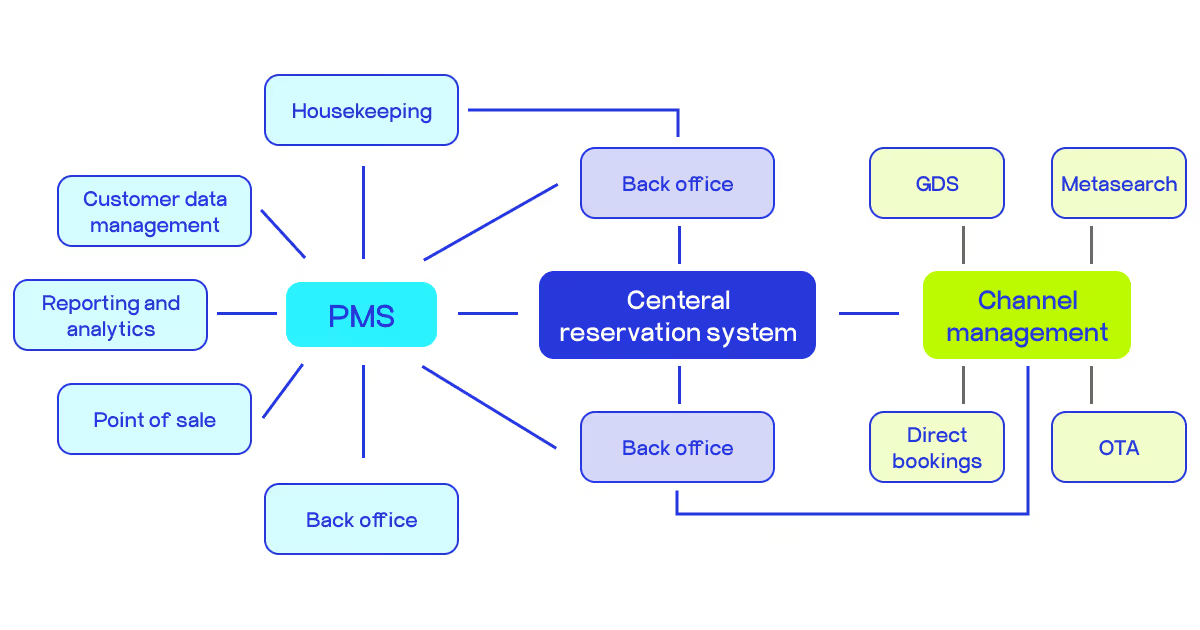
PMS integration creates a data bridge between your reservation layer and front desk.
Revenue optimization adjusts rates against live demand signals and competitor data.
You have an abundance of cloud, integrated, standalone, chain, and GDS-connected CRS software by use case.
Custom development builds a reservation system fitted to your distribution channels, pricing logic, and existing tech stack.
This article will guide you through the main features, types, and integrations your CRS software should have to bring you real results. We also outline the most optimal off-the-shelf solutions, compare them to tailored system creation, and help you build your own custom roadmap.
What is a central reservation system?
A central reservation system (CRS) is a solution that hotel managers use to manage room inventory, rates, and reservations from a single place across every connected channel. This links data from your booking engine, OTAs, global distribution systems, and property management systems. When a room sells on Booking.com, your CRS updates availability everywhere else instantly.
The reservation system definition goes beyond tracking bookings. A CRS also organizes guest data, enforces rate parity across channels, and gives revenue managers the visibility they need to make pricing decisions fast. Dadić and colleagues found that distribution is a key driver of hotel profitability and that CRS software enables hotels to organize teams around a centralized tool to manage inventory and rates across all travel products.
Put simply, a central reservation system is the operational basis that connects where guests book with how your property responds.
Central reservation system market
The hotel CRS market is growing fast, and this rapid expansion shows how seriously the industry has taken digital reservation infrastructure.
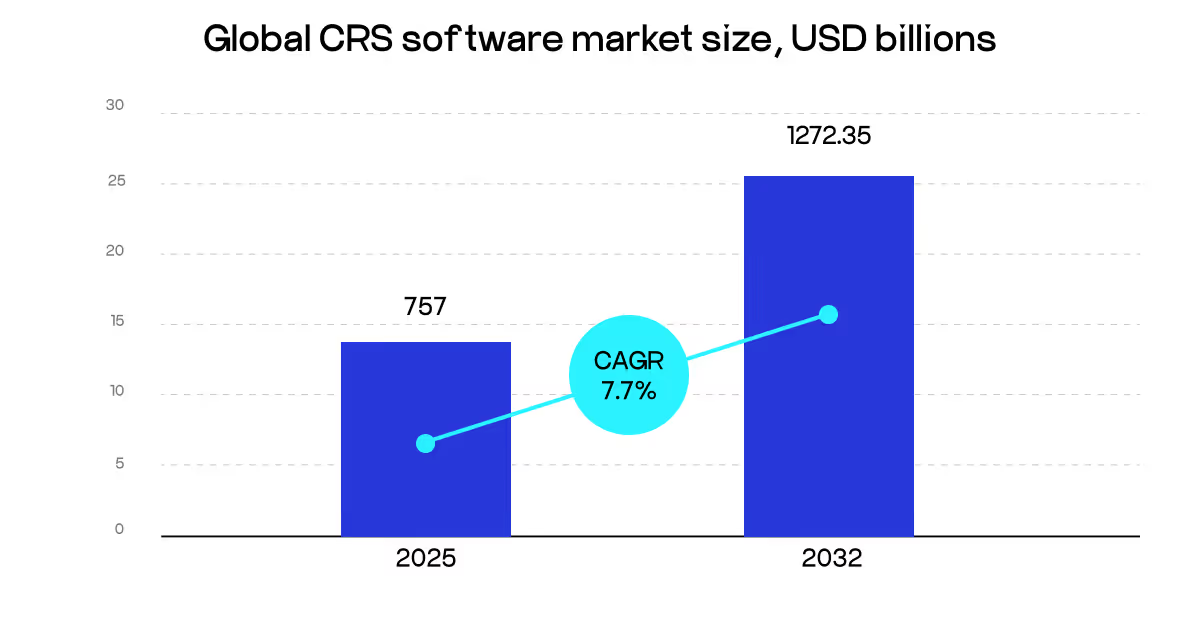
The global CRS software market for hotels was valued at USD 757 million in 2025 and is projected to reach USD 1,292 million by 2034. That growth tracks directly with the broader shift toward online booking as the default traveler behavior.
65% of all travel bookings are made online, with about 35% of those coming from mobile devices. For hotels, that volume of digital transactions requires infrastructure that handles it without manual input. This means that hotels that rely on manual processes or fragmented systems are competing with a massive disadvantage in that environment.
Why hotels need a CRS
For a single booking to happen, travelers move across your direct website, multiple OTAs, and GDS channels before they commit. Each touchpoint needs accurate availability and consistent pricing at the exact same moment. Managing that manually is an issue.
Most hotels today sell rooms through at least five or six different channels: their own website, Booking.com, Expedia, the GDS, phone reservations, and sometimes walk-ins. Without a central reservation system (CRS), rates drift out of parity. Rooms get double-booked. Staff spend hours reconciling data that a CRS would handle in seconds.
Here is what a hotel CRS actually solves.
Every booking, regardless of where it came from, lands in one place. Phone reservations, OTA bookings, direct website sales, and GDS transactions. All of it flows into a single system. Your staff sees one accurate picture of availability at all times. No reconciling between tabs. No calling the front desk to double-check.
Your guest data stops disappearing. Every booking carries data about who booked, at what rate, through which channel, and how far ahead of arrival. A CRS hospitality solution captures that record automatically and builds it over time. You end up with guest profiles, channel performance data, and booking pattern history that inform how you price, where you invest, and who you target. Without a CRS, that data vanishes.
Your hotel pricing strategy applies everywhere, at once. Updating rates manually across six channels means six opportunities for pricing to fall out of sync. A CRS lets you set rates centrally and push changes across every connected channel in one action. Modern CRS platforms with AI-driven pricing pull in real-time demand signals and competitor rates automatically, with early adopters reporting revenue increases of 15 to 20 percent.
Errors stop reaching guests. Double bookings happen when a sold room stays visible on a channel that has not received the update yet. CRS software closes that window. The moment a reservation is confirmed on any channel, inventory updates everywhere else instantly. That is the difference between a guest arriving at a room and a guest arriving at an apology.
The broader context matters here, too. RevPAR across the industry grew 10 to 14% in 2024. The hotels positioned to capture that growth were the ones with clean, centralized data and distribution infrastructure that responds in real time.
A CRS shares functional territory with a channel manager, but it goes further. It typically includes direct booking engine connectivity, GDS access, guest data management, and revenue reporting that a standalone channel manager does not provide. It is not a replacement for a full property management system either. So, how does it work, exactly?
How does a CRS work at a hotel?
A hotel CRS takes data from every channel where guests can book a room and pulls it together. Your property management system, OTAs, GDS connections, direct booking engine, phone reservations, and walk-ins go into a single system. It keeps every channel updated at once.
How does it happen in practice? When a guest books on Booking.com, the CRS registers it, removes the room from available inventory, and updates every other connected channel in real time. As a result, there’s no risk of the same room appearing as available elsewhere.
What is the hotel CRS workflow?
As with many integrated hospitality systems, the workflow runs in two directions.
When a booking comes in from any external channel, the CRS captures it, stores the reservation data, updates your inventory count, and reflects the change across all connected platforms. Your front desk staff can see it, and your PMS records it. Also, your other OTAs lose that room from availability.
Vice versa, when you make changes on the hotel side, those changes push outward. You update a weekend rate or a packaged offer inside the CRS once, and the new rate appears on your direct booking engine, your connected OTAs, and inside your PMS without any additional steps. Myskiv and team describe this as the CRS acting as a hub that stores booking information from all distribution channels, so hotel managers can receive current market information and adjust prices quickly.
The full workflow looks like this:
Step 1. Your revenue manager loads room types, rates, restrictions, and availability into the CRS.
Step 2. The CRS pushes that inventory outward to all connected distribution channels: your website booking engine, OTAs, GDS, and metasearch platforms.
Step 3. A guest books through any of those channels. The reservation data travels back to the CRS instantly.
Step 4. The CRS updates the available inventory across every channel and logs the reservation in the system.
Step 5. The data syncs with your PMS, so the front desk has an accurate picture before the guest arrives.
Step 6. You adjust rates or availability as needed. The CRS pushes those changes to all channels at once.
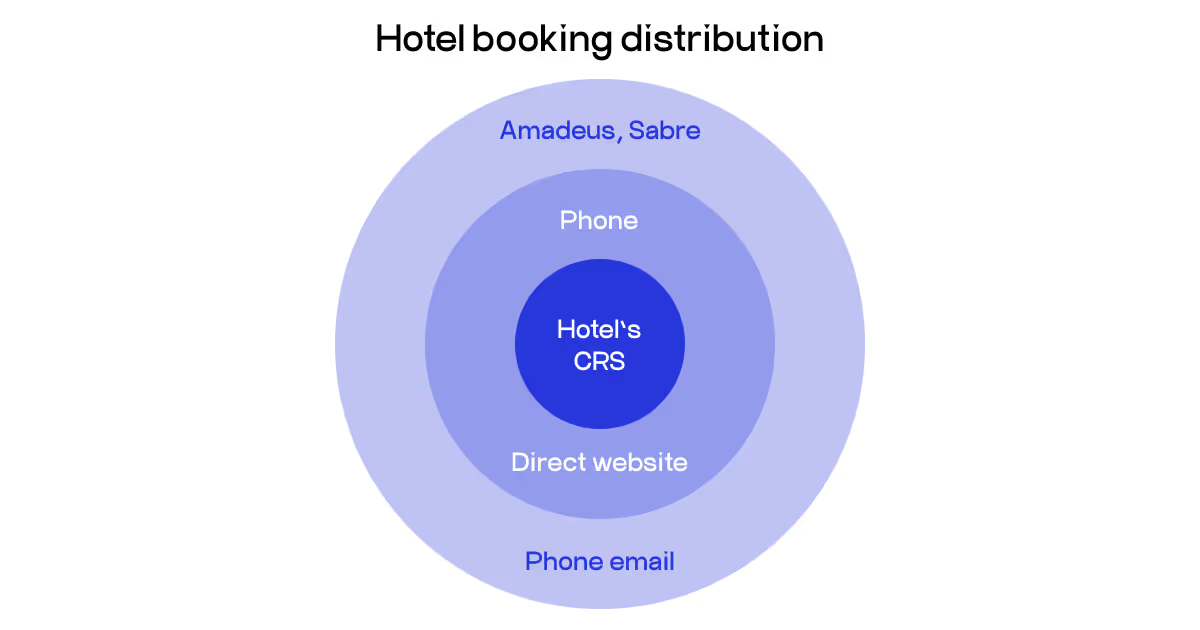
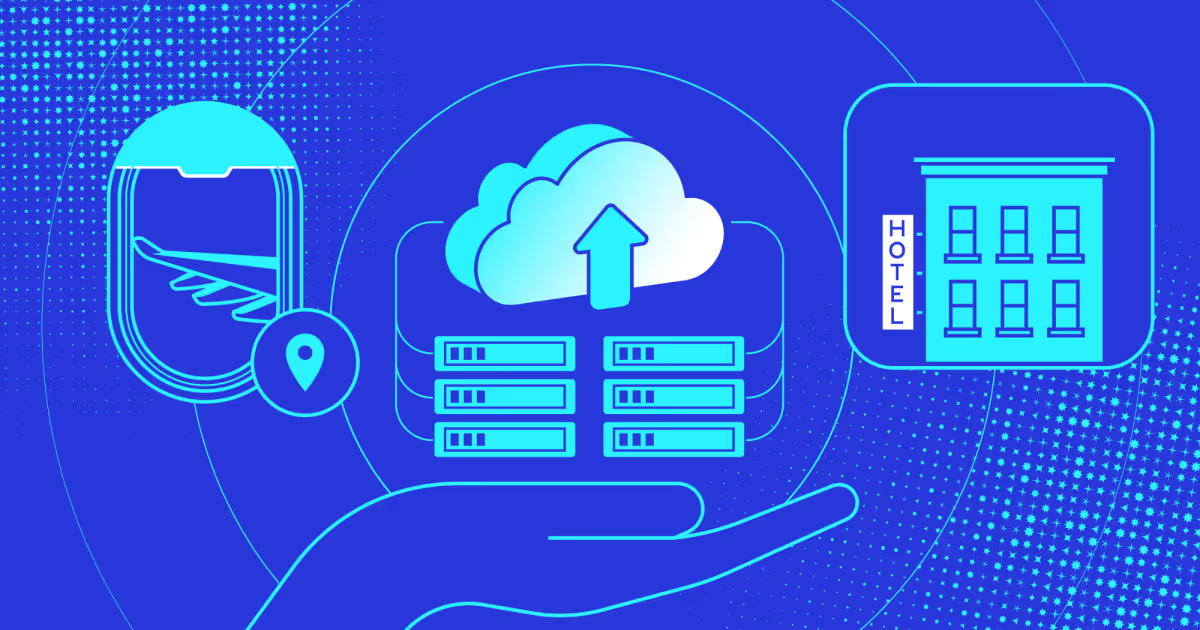
As illustrated in the diagram above, CRS software is at the center of all booking activity, with GDS networks in the outer layer, direct channels like your website and phone in the middle ring, and the CRS itself at the core receiving and distributing everything.
Interaction between front desk, back office, and online channels
The central reservation system in the hotel industry connects three distinct areas of the business that would otherwise operate with separate, often conflicting data.
At the front desk, staff work from a live picture of availability. Every reservation made online appears in the system immediately. Guest profiles store previous stay history, preferences, and contact details, which speeds up check-in and gives staff context before a guest walks through the door. Phone bookings and walk-ins enter through the same interface, so nothing sits outside the system.
In the back office, the CRS software handles the administrative layer. Rate managers set pricing rules, room type configurations, and channel restrictions centrally. Reports pull booking trends, occupancy forecasts, channel performance, and revenue metrics from the same data pool. Channel mapping connects your internal room codes and rate plans to the equivalent categories on each OTA and GDS partner. Payment processing connects to payment gateways directly, so booking validation and card processing run through the same system.
Across online and external distribution, the CRS manages hospitality connectivity at scale. Your own website runs off the CRS booking engine. OTAs like Booking.com and Expedia receive live inventory feeds. GDS networks give your property visibility to corporate travel agents booking through Amadeus or Sabre. Metasearch engines pull current rates directly. Wholesalers and bed banks connect through the same layer.
All three areas work off the same data. That is the operational point of a CRS. When one channel records a change, all three areas update accordingly.
The relationship between CRS and PMS
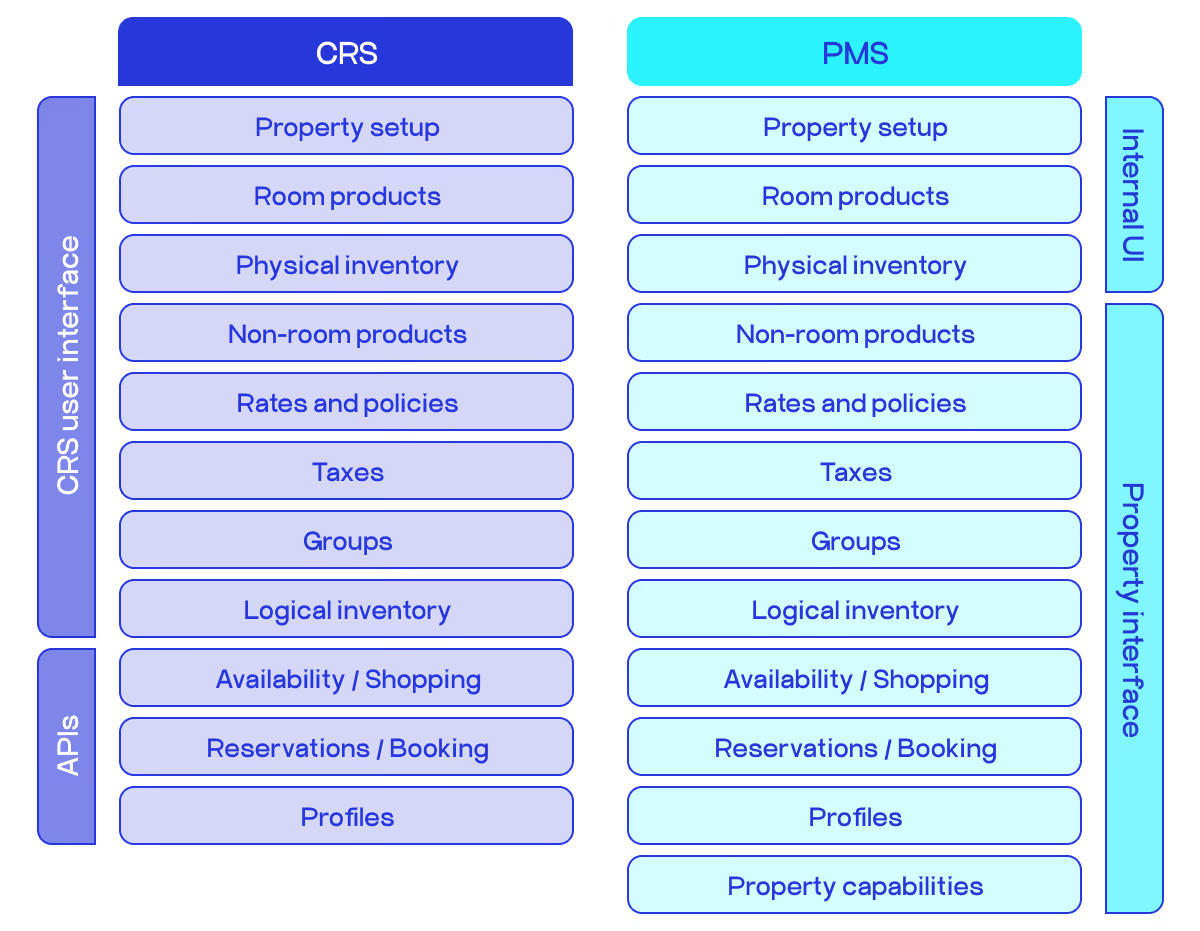
The CRS and PMS overlap significantly in what they handle, but they serve different primary functions. Both systems manage property setup, room products, physical inventory, non-room products, rates and policies, taxes, groups, inventory, availability, shopping, reservations and booking, and guest profiles. That shared territory is what causes confusion between the two.
The difference is orientation. The central reservation system faces outward. It manages how your inventory and rates appear to the world, distributes availability to external channels, and captures incoming reservations from every source. It is the distribution and booking layer.
The PMS faces inward. It manages what happens once a guest is in the building: check-in and check-out, housekeeping status, folio management, billing, and on-property operations. The PMS also carries one additional layer that the CRS does not: property capabilities, which covers the operational specifics of running the physical property daily.
Where they connect is the reservation record. A booking confirmed through the CRS transfers into the PMS, so front desk operations have full visibility. Rate and availability data move from the PMS into the CRS so distribution channels stay current.
In practice, some hotels run a standalone CRS connected to their PMS via API. Others use a combined platform where CRS functionality is inside a broader PMS suite. The advantages of central reservation system integration with a PMS are consistent regardless of architecture: no duplicate data entry, no lag between a booking being made and staff being aware of it, and no inventory discrepancy between what guests see online and what the hotel actually has.
According to Myskiv, the CRS gives hotel finance managers direct insight into the market, allowing them to view prices and bookings across all channels and adapt to conditions quickly. That capability depends entirely on the CRS and PMS sharing data reliably and in real time.
Types of central reservation systems
Not all CRS software solutions serve the same purpose. The right type depends on your property size, how many channels you sell through, whether you run one hotel or several, and how tightly you want your reservation layer connected to the rest of your operations.
Researchers Dadić and team found that CRS hotel software enables hotels to organize teams around a centralized tool and manage most travel products, but the specific architecture matters for how well that actually works in practice.
Cloud-based CRS
A cloud-based central reservation system runs entirely online. You access it through a browser, your staff can log in from anywhere, and updates happen in real time across every connected channel without any local server infrastructure.
This type now dominates the market. The shift away from on-premise systems accelerated as mid-tier and independent hotels needed affordable, scalable solutions without large upfront IT investment.
Key advantages include:
Remote access from any device or location
Automatic software updates without manual installation
Lower entry cost through subscription pricing
Faster setup and onboarding compared to legacy systems
For most hotels considering central reservation system software for the first time, a cloud-based solution is the practical starting point.
Integrated CRS
An integrated CRS system connects directly with your property management system, channel manager, and often your CRM within a single platform. Data moves between these tools automatically, without manual export or API maintenance between separate vendors.
This is the architecture that delivers the cleanest operational experience. A reservation confirmed through any channel updates your PMS, your guest profile database, your availability across all distribution channels, and your revenue reporting simultaneously. No lag, no duplicate entry, no reconciliation work.
The trade-off is cost and complexity. Integrated platforms carry higher price points and longer implementation timelines, which is why they are most common in larger properties and hotel groups with the volume to justify the investment.
Chain and brand CRS
A central reservation system for hotels operating across multiple properties requires a different architecture than a single-property solution. A chain or brand CRS manages inventory across all locations from one platform, allowing corporate teams to set rate strategies, push promotions, and monitor performance across the entire portfolio simultaneously.
This type supports hotel revenue optimization at scale. A group with 20 properties across different markets can adjust pricing strategy centrally, allocate inventory between properties, and maintain brand consistency in how rooms are presented and priced across every distribution channel.
Large brands typically build or license proprietary versions of this architecture. Smaller groups often use mid-market chain CRS platforms that offer multi-property functionality without enterprise price tags.
Standalone CRS
A standalone hotel CRS focuses exclusively on distribution and reservation management. It does not integrate deeply with a PMS or CRM. It handles availability, rates, bookings, and channel distribution, and connects to a PMS separately if at all.
This type suits independent hotels that already have a PMS they want to keep, or properties that operate with simpler distribution needs. The functionality is narrower, but so is the cost and the learning curve.
The limitation is data fragmentation. Without tight integration between your CRS hotel software and your PMS, reservation data requires manual reconciliation at some point in the process, which reintroduces the errors and delays a CRS is supposed to eliminate.
GDS-connected CRS
A GDS-connected central reservation system prioritizes distribution through GDSs. These networks connect your inventory to travel agents worldwide who book on behalf of corporate clients, group travelers, and high-value leisure segments.
According to Myskiv, GDS functions as an intermediary between travel agents and a hotel's CRS, giving agents real-time access to available rooms, current rates, and booking capability without contacting the hotel directly. When an agent makes a reservation through GDS, the system transmits that booking to the hotel's CRS and removes the room from available inventory immediately.
Hotels that serve significant corporate travel, conference groups, or international visitors benefit most from this type. The GDS channel carries commission costs, but it delivers access to booking volumes that direct channels rarely match for those guest segments.
Direct booking engine CRS
Some types of central reservation systems focus mostlyon converting visitors on the hotel's own website into direct bookings, reducing reliance on OTA commissions. This type powers the hotel's direct channel with real-time availability, rate display, and payment processing.
A direct booking engine does not replace a full CRS system. It handles one channel. But as a component of a broader CRS setup, it gives hotels a commission-free booking path that feeds directly into the same inventory and reservation data as every other channel.
What’s the value of this type? With third-party commissions ranging from 15% to 25%, modern OTA software development focuses on multi-channel orchestration. Every direct booking made through the hotel's own engine avoids that cost entirely and still flows through the same central reservation system for hotels that manages everything else.
Key features of modern hotel CRSs
A hotel central reservation system has expanded well past basic booking management. Modern CRS software combines distribution, revenue management, guest data, and operational tools in one platform. Here is what to expect from a current solution.
Centralized reservation management pulls every booking source into one place. Phone reservations, OTA bookings, direct website sales, GDS transactions, and walk-ins all land in a single system. One update pushes everywhere. No channel gets a stale availability count, and no staff member works from a different version of the truth than anyone else.
Real-time inventory control is the feature that prevents overbooking. The moment a room sells on any channel, the reservation system removes it from availability across every other connected platform automatically. This matters most during peak periods when multiple channels are active simultaneously, and manual oversight is not realistic.
Channel management integration connects your inventory to OTAs, GDS networks, metasearch engines, and your direct booking engine from one interface. Rate parity holds across all of them. You set pricing rules once, and every channel reflects the same rates without separate logins or manual updates per platform.
PMS integration creates a two-way sync between your distribution layer and your on-property operations. Reservation data flows into the PMS in real time. Inventory and restriction updates from the PMS push back into the CRS. The result is that front desk staff, housekeeping schedules, and revenue reporting all work from the same live data.
Revenue management tools in modern CRS software go beyond static rate setting. Systems now incorporate demand forecasting, competitor rate monitoring, and length-of-stay controls that adjust pricing based on booking pace and market conditions. Building a successful retailing strategy requires hotels to consider what enhancements beyond the room are in high demand and how to drive total revenue over time, not just room revenue.
AI in hospitalityis now embedded in how CRS platforms handle pricing and personalization. AI-driven recommendation engines analyze historical booking data, guest behavior, and real-time demand signals to suggest rate adjustments and surface upsell opportunities at the right moment. Early adopters report revenue increases of 15 to 20 percent from AI-assisted dynamic pricing alone.
Direct booking engine integration gives guests a way to book on your own website with real-time availability and payment processing built in. Advanced engines support mobile booking, online check-in, and automated modification requests, which reduces front desk workload and gives guests more control before they arrive.
Secure payment processing runs through PCI-compliant gateways that support multiple currencies and payment methods, including digital wallets. This protects guest card data and removes the hotel from handling raw payment credentials directly.
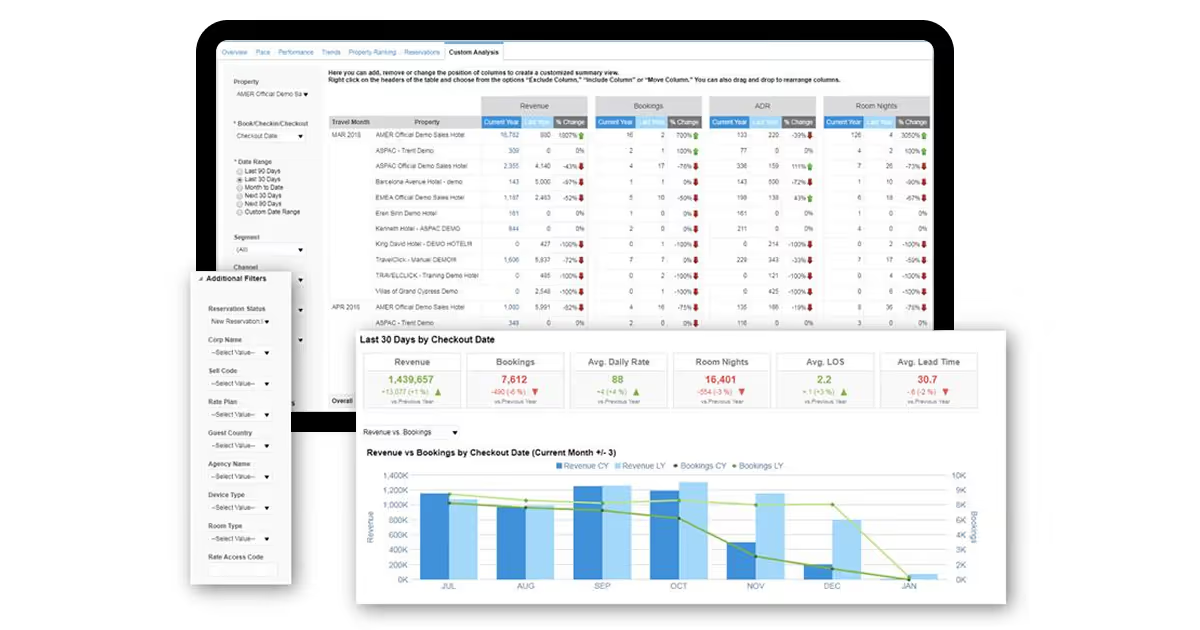
Reporting and analytics surface booking trends, channel performance, occupancy forecasts, and revenue metrics from the same data pool that runs daily operations. You make pricing and marketing decisions based on what the system actually recorded, not estimates.
Guest profile and relationship management tracks booking history, stated preferences, loyalty status, and communication records across stays. That data feeds personalization at check-in, targeted offers between visits, and the kind of service consistency that brings guests back without relying on staff memory.
Now that we understand what features to look at when choosing CRS hotel software, let’s define the best options you have in the market, and how to pick the most optimal one.
Central reservation system examples
The market for central reservation systems for hotels is wide. Let’s discover the platforms that come up most consistently in real-world hotel operations.
Solution
Pricing
Key features
Integrations
Cendyn CRS
On request
Dynamic pricing rules, real-time reporting, rate plan management, cross-sell booking engine, 1,000+ distribution partners
Cendyn CRS runs on a cloud-native serverless architecture and connects to over 1,000 distribution partners. It’s used by Hyatt, Virgin Hotels, and Onyx Hospitality Group. This CRS integrates with PMS, CMS, and CRM and includes dynamic pricing and real-time reporting. The tool features dynamic pricing rules, two-way PMS integration, OTA and GDS distribution, a cross-sell booking engine, and business intelligence reporting. Few companies in hospitality tech cover as much ground.
Amadeus iHotelier CRS is one of the most widely deployed hotel CRS platforms, used by Marriott, IHG, and Pan Pacific. It automates distribution across web, mobile, voice, OTA, GDS, and metasearch from one place. Its key strengths are booking engine conversion performance and revenue analytics. Main features include full ARI management, GDS and consortia connectivity, a direct booking engine, call center support, and metasearch distribution. This tool fits independent hotels and mid-scale chains wanting one vendor to cover most distribution needs.
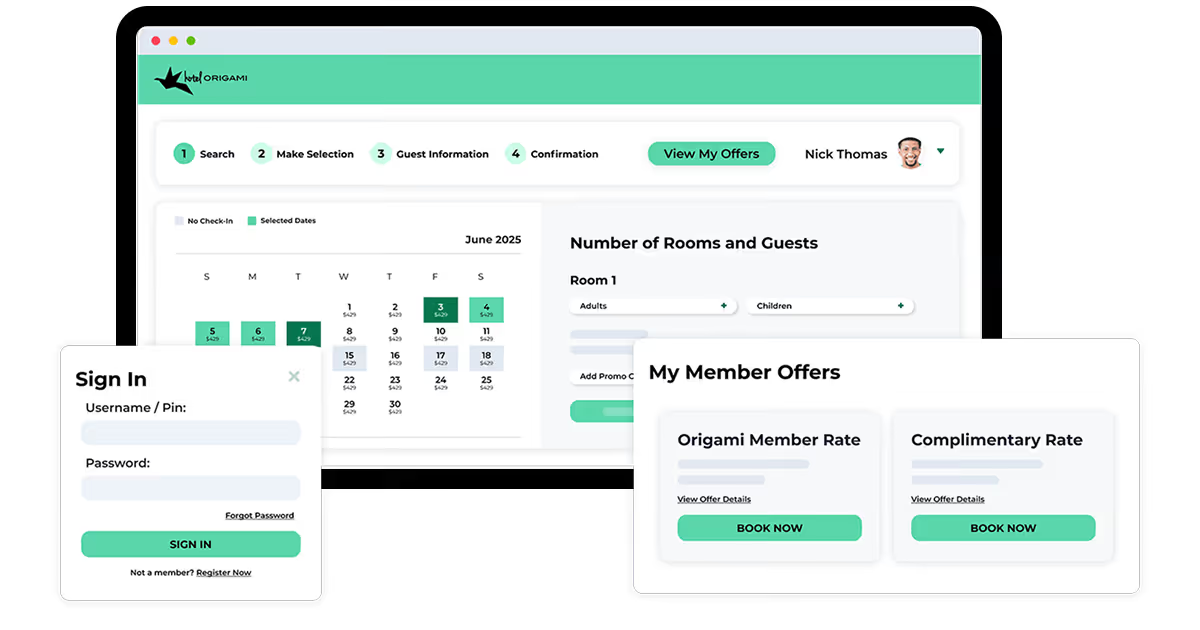
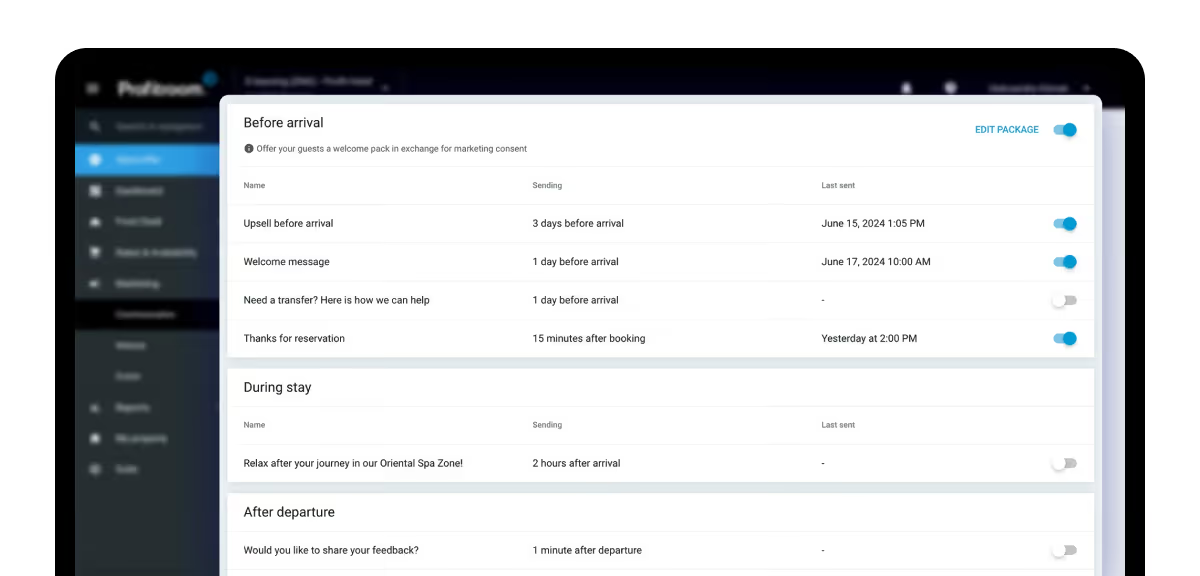
Profitroom Suite focuses on direct booking growth and guest loyalty for hotel groups. It’s used by Dream Hotels and Sun International. Pricing is above average, reflecting the broader feature set. Key features include personalized offer tools, loyalty management, CRM with marketing automation, a channel manager with self-mapping, and metasearch integration. Profitroom is best for leisure hotels and resorts that want to reduce OTA dependency.
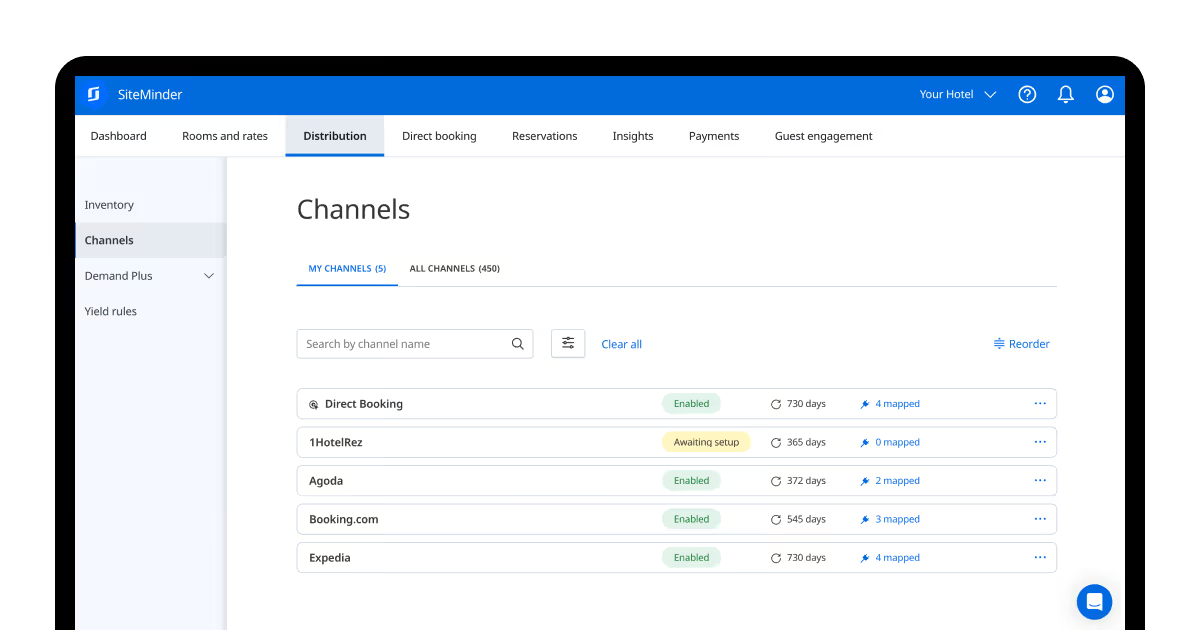
SiteMinder is closer to a distribution and booking performance platform than a traditional CRS system software. Its strength is analytics depth: booking behavior, channel performance, and occupancy trends that most standalone CRS tools don’t match. Includes a channel manager, direct booking engine, and EMV-compliant payment processing. The solution features channel management with real-time sync, a mobile-friendly booking engine, booking performance analytics, and broad international OTA connectivity.
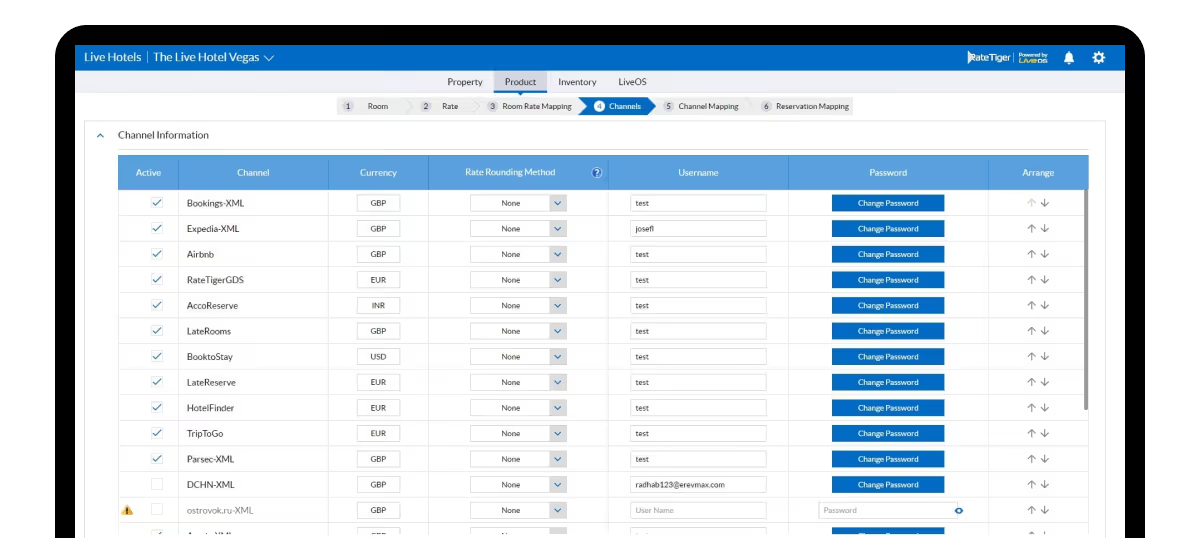
RateTiger CRS by eRevMax focuses on multi-channel, multi-property distribution from a single sign-on platform. It gives hotels access to over 650,000 travel agents through GDS connectivity and manages rates, availability, and content distribution to OTAs, including Booking.com. This tool is perfect for mid-size and large properties with complex OTA connectivity needs across multiple properties. Key features include centralized distribution management, channel management, metasearch connectivity, a direct booking engine with loyalty integration, and OTA content management.
Sirvoy is built for smaller properties, like eco-lodges, hostels, and boutique rentals that need a practical, affordable system. It includes an embeddable booking engine for your website and Facebook page, a website builder, a channel manager, and dynamic pricing. Key features include a multilingual embeddable booking engine, flexible rate plans, seasonal controls, upsell and package customization, and a pause-friendly pricing model.
With such a variety of central reservation systems for hotels of different sizes and niches, it can be challenging to choose the right one. Let’s also break down the main principles of making the best choice.
How to choose the right CRS
After 15 years of building and integrating travel technology, COAX has crystallized the key things that most hospitality businesses need for distribution and winning pricing strategies. Here is what actually matters when evaluating central reservation systems, from our experience.
Start with your distribution reality. Map every channel you currently sell through and every channel you want to reach. Some central reservation system examples cover 1,000-plus distribution partners. Others focus on core OTAs. If your guest mix is primarily corporate travelers, GDS connectivity is non-negotiable. If you run a leisure resort, a direct booking-focused platform makes more sense than a broad distribution tool.
Check how it actually connects to your PMS. The two-way sync between CRS and PMS is where most problems arise. Ask vendors specifically which PMS versions they integrate with and what happens when the connection fails. A smooth demo does not always reflect how the integration behaves under real operating conditions.
Match system complexity to your team's capacity. A CRS system software with 40 features your staff will not use creates more friction than it promises to cut down. Get a detailed total cost breakdown before signing anything, including implementation fees, onboarding, API integration charges, and per-booking transaction fees.
Prioritize support that matches your operating hours. Hotels run around the clock. Check response time commitments and read reviews specifically about support quality during incidents, not just onboarding.
Test rate management with your real-world pricing scenarios. Load your real rate plans and restrictions into a trial environment. Some systems handle straightforward rates cleanly but struggle with group rates, packages, or length-of-stay restrictions.
The truth is, every hotel CRS on the market is built for the average hotel. What does it mean? You pay for features you do not use, work around limitations that do not fit your operations, and depend on the vendor's roadmap for anything that needs to change.
COAX has spent over 15 years building custom travel technology for hotels, OTAs, and hospitality groups. Custom-built central reservation systems give you exactly the distribution channels, pricing logic, PMS integration, and reporting your property needs, without licensing overhead for features you will never touch.
Custom development costs more upfront. However, for hotels with specific operational requirements or properties that have outgrown off-the-shelf tools, a purpose-built system pays for itself through reduced licensing fees and fewer integration workarounds.
How to implement a CRS system successfully?
Implementing a central reservation system in hotel operations is not an overnight task. Most failed implementations come from similar root causes: underestimating data migration complexity, skipping staff training, or going live without testing edge cases.
Here is how to do it properly, based on our experience.
Step 1. Audit your current setup before you touch anything.
Document every system you currently run. Record your PMS, channel manager, booking engine, payment gateway, and any legacy tools still in use. Define every distribution channel, every rate plan, every room type, and every restriction currently active. Skipping this phase might lead to discovering problems after go-live, which will cost you time and money.
Step 2. Define your requirements before evaluating vendors.
List the distribution channels you need, the PMS you are integrating with, the pricing logic your revenue team uses, and any reporting you cannot work without. Why do it? When you go into demos with specific scenarios, you find out fast whether a CRS hotel platform handles your operations or just handles the average case that you might not match entirely.
Step 3. Validate the PMS integration before anything else.
The connection between your CRS reservation system and PMS is the most technically sensitive part. Before you commit to a vendor, get written confirmation of which PMS version they integrate with, whether the sync is two-way and real-time, and what the failover process looks like if the connection drops. Not sure if the vendor provides all the necessary information? Learn from your peers. Ask for a reference from a hotel running your exact PMS configuration.
Step 4. Clean your data before migration.
Rate plans with outdated restrictions, duplicate room type codes, and inconsistent content across channels cause problems when migrated into a new system. Clean your inventory data, consolidate rate structures, and standardize room descriptions before the migration begins.
Step 5. Configure rate plans and test every channel in staging.
Set up your full rate structure in the staging environment before touching production. Test every channel connection individually: confirm that a booking made on each OTA appears correctly in the CRS and flows through to the PMS with the right rate, room type, and guest data. Test your highest-volume scenarios and your most complex rate plans, not just the straightforward cases.
Step 6. Run parallel operations before full cutover.
For at least two weeks before going live, run your old system and the new hotel reservation systems simultaneously. Compare booking data between the two in real time. Any mistakes in inventory counts, rate display, or reservation records point to an integration problem you want to catch before your old system is switched off.
Step 7. Train staff on scenarios, not just features.
Most CRS training covers what each button does. What staff actually need is practice handling real scenarios: a same-day booking through an OTA, a rate change during a high-demand period, or a manual reservation entered by the front desk. Train on those workflows specifically.
Step 8. Set a go-live date with a buffer and a rollback plan.
Pick a lower-occupancy window so any early issues affect fewer reservations. Have a documented rollback procedure ready before you flip the switch. Know exactly what steps your team takes if a critical integration fails in the first 48 hours.
Step 9. Monitor the first 30 days closely.
The first month after go-live reveals what testing did not catch. Monitor inventory accuracy across channels daily. Check that rates push correctly after any manual update. Verify that all reservation data lands in the PMS with complete guest information. Assign one person ownership of post-launch monitoring so issues get caught and escalated quickly.
Step 10. Schedule a 90-day review.
At 90 days, review channel performance data, reservation error rates, staff support tickets, and any workarounds your team has created. Workarounds are a signal that something in the configuration needs fixing. Address them before they become permanent habits built around a system problem.
We also have a few tips that make a consistent difference in integrating CRS software into your processes.
Do not underestimate content management. Room descriptions, photos, and amenity lists need to be consistent across every connected channel from day one. Inconsistent content produces inconsistent guest expectations and more cancellations.
Build your rate logic documentation before you need it. When your revenue manager leaves or your system needs reconfiguring, having written documentation of your rate plan structure, channel restrictions, and pricing rules saves weeks of reverse engineering.
Plan your OTA mapping carefully. Mismatched room type codes between your CRS and an OTA account is one of the most common causes of overbooking. Map every room type and rate plan explicitly and verify each mapping after go-live.
An off-the-shelf central reservation system in hotel software covers most use cases. But if your property has specific distribution requirements, legacy system dependencies, or pricing logic that does not fit standard configurations, you spend more time working around the tool than working with it. COAX builds custom hotel reservation systems from the ground up, covering the full cycle from initial discovery through to post-launch support.
Our hotel management software development starts with a technical audit of your actual operations: how reservations flow, where manual work happens, and what your existing tech stack looks like. Only then, we design and build your CRS hotel platform to consider your distribution channels, pricing model, and operational workflows, incorporating AI-driven pricing modules, demand forecasting, and direct integrations with your PMS, payment gateway, loyalty platform, GDS networks, OTAs, and metasearch channels. Development runs in cycles with regular milestones, load testing against your real rate scenarios, and parallel operation testing before any production deployment.
We stay involved through go-live, managing data migration, channel mapping verification, and staff training, and continue developing your CRS reservation system as your business changes. You are not waiting on a vendor roadmap to get the functionality you need. For hotels with complex requirements or groups managing multiple properties, a purpose-built system consistently delivers better long-term economics than adapting to a non-flexible, rigid tool.
FAQ
What is the central reservation system definition for most SMEs?
A central reservation system is software that manages a hotel's room inventory, rates, and bookings from one place across all connected channels. As Muiruri and colleagues describe, CRSs organize and distribute tourism inventory while maintaining accurate availability across multiple distribution points. For SMEs, it replaces manual processes and prevents overbooking without requiring large operational teams.
What place does a central reservation system take in hotel workflow?
The central reservation system in hotel operations sits between internal systems and external booking channels. It receives reservations from OTAs, GDS, and direct bookings, updates inventory in real time across all channels, and pushes confirmed reservation data to the PMS. Myskiv and team describe it as the hub that gives managers live visibility into prices and bookings across every distribution channel simultaneously.
What are the challenges of implementing hotel reservation system software?
Common challenges include:
Legacy PMS compatibility issues
Complex OTA channel mapping
Staff resistance to new workflows
Data migration errors that carry over into the new system.
Budget constraints hit smaller properties hardest: basic hotel reservation system configurations can exceed $25,000 to implement. Forty percent of implementations also report underutilization due to inadequate training after go-live.
How does COAX develop secure and efficient central reservation system hotel tools?
COAX builds central reservation system hotel solutions under ISO/IEC 27001:2022 certification, covering security management, risk assessment, and ongoing monitoring, alongside ISO 9001 certification, ensuring quality processes throughout development. We apply end-to-end encryption, PCI-compliant payment integration, real-time two-way sync architecture, and iterative delivery cycles with load testing against your actual rate scenarios before any production deployment.














































































.avif)




%20for%20hotels.avif)


.avif)
.avif)


.avif)




.avif)
.avif)




.avif)


.avif)

We are interested in your opinion