To make your hospitality business future-ready with AI, you need to match the right type of solution to your specific operational gaps, from dynamic pricing and guest messaging to revenue forecasting and staff scheduling, and then build the data infrastructure to support it. That’s the short story. However, it’s much longer and more nuanced than that.
87% of hospitality professionals use AI in hotels already. With AI’s power, it might as well mean that nearly 9 out of 10 hotels are becoming the new Hilton. Yet, they don’t. So, what separates a hotel executive simply using AI from one using it transformatively?
As a company with expertise in both AI and hospitality, we conclude that the difference lies in the right application. Each type of hospitality AI solution has its perfect use cases. After 16 years of building advanced hospitality technology, we know the low-hanging fruit applications and long-term optimization strategies for you to use.
This is why you will find all the technical details, perfect use cases, and real-world examples of well-known hotel chains winning with this technology. And surely, at the end, you will find an end-to-end roadmap to implementing one of these for your business.
What is AI in hospitality?
AI in hospitality refers to technology that uses machine learning, natural language processing, and data analytics to automate operations, personalize guest experiences, and improve business decisions across hotel management. Theyautomate processes, customize guest experiences, and enhance business decisions that would take much more time and effort in such a busy environment as hotels.
AI hotel software has three main components: consumer interface, inference engine, and expert domain knowledge. AI systems have the means to manage human-centered problems.The compounding advantage is that AI for hospitality doesn't stay static: every interaction sharpens the model, making the system measurably more accurate over time.
One of the best perks is that AI in hospitality can learn from previous behaviors and further adjust its interpretation, becoming more efficient over time. That said, the gap between deploying AI and deploying it well is significant.
At COAX, we've seen this repeatedly across the hospitality platforms we've built, from the vacation rental platform for Ukrainian small property owners to the booking system spanning 170+ properties across 45 countries. Orest Falchuk, our Head of Engineering, notes:
"Some tools come in very handy. But what separates a hotel that gets real value from one that just has an AI checkbox is how the system understands the specific context of that business: its pricing logic, guest profile, and operational constraints. Generic AI doesn't know any of that."
The market for AI in hospitality is accelerating
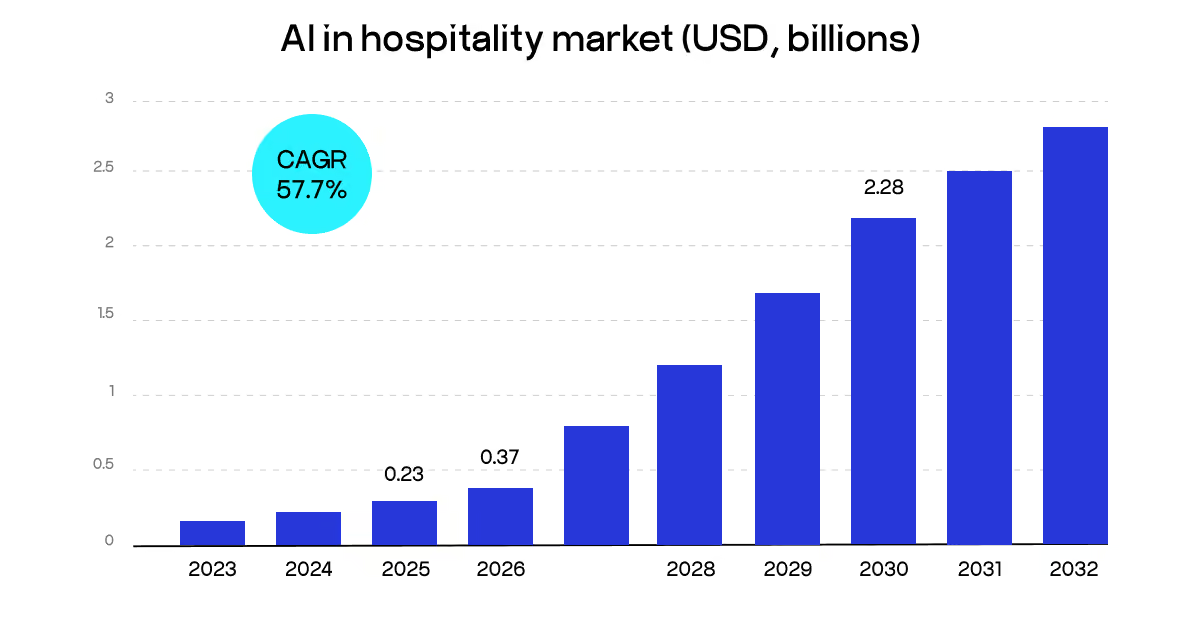
The scale of investment is impressive. The AI hospitality market is growing to a projected $2.28 billion by 2030, and that's the narrowly scoped hotel-specific segment alone. When expanded to include travel and tourism, the global AI market in this space is much larger.
What's driving it is a measurable operational pressure. A survey of over 400 hospitality decision-makers found that 71% of hospitality professionals say AI is already having a significant or transformative impact on the industry, and 85% expect to allocate at least 5% of their IT budget to AI tools this year.
More tellingly, Mews's Hotelier Survey 2026, conducted across more than 500 properties globally, found that 98% of hoteliers have used AI across operations in the last six months, on average across 11 of the 19 most common hotel tasks.
BCG's 2025 global analysis found that fewer than 10% of hospitality companies could be classified as truly "future-built" with cutting-edge AI capabilities generating substantial value, while 25% had an AI strategy beginning to produce real returns across multiple areas. That gap between leaders and laggards is where the future of AI in hospitality will be decided.
What are the benefits of AI in hospitality?
The core benefits of AI in hospitality are reduced operational overhead, dynamic revenue optimization, personalized guest experiences, and connected systems that eliminate manual data entry, when the underlying processes and data architecture are solid first.
The mistake most properties make is deploying it without a clear picture of what they're actually trying to fix. After building hospitality platforms across multi-property chains and international and domestic travel, we've seen the benefits that consistently show up when the implementation is grounded in operational reality:
Eliminating the operational drag that kills productivity. The most underestimated benefit of hospitality AI is the recovery of time lost to repetitive, low-value work that consumes your team's capacity every day. There’s a nuance, though:
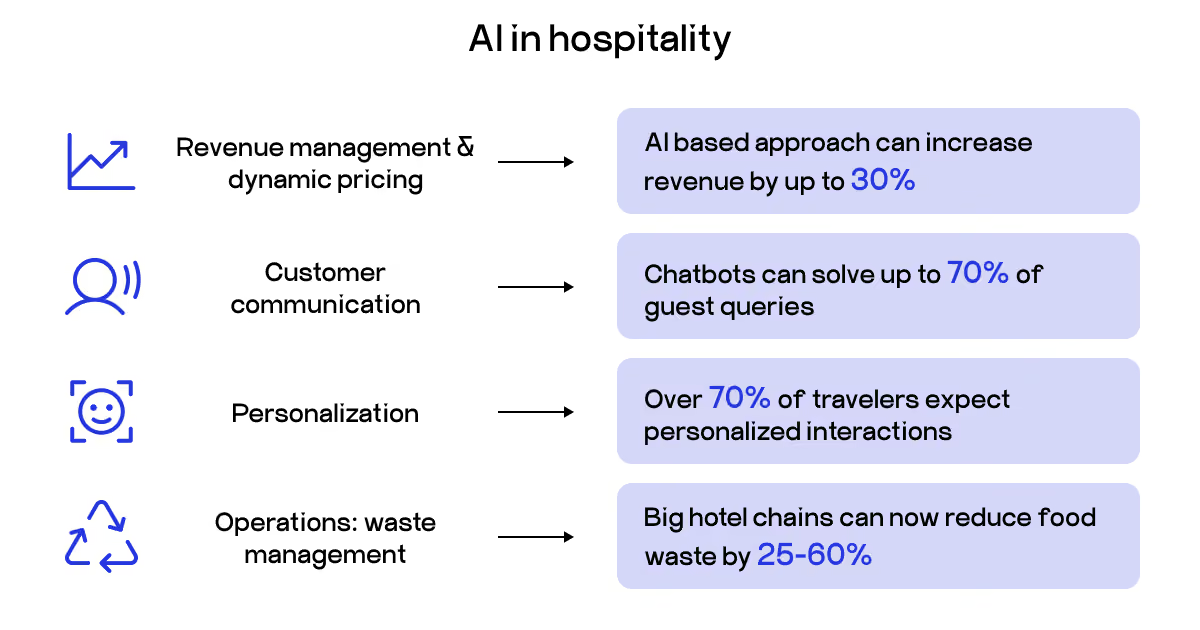
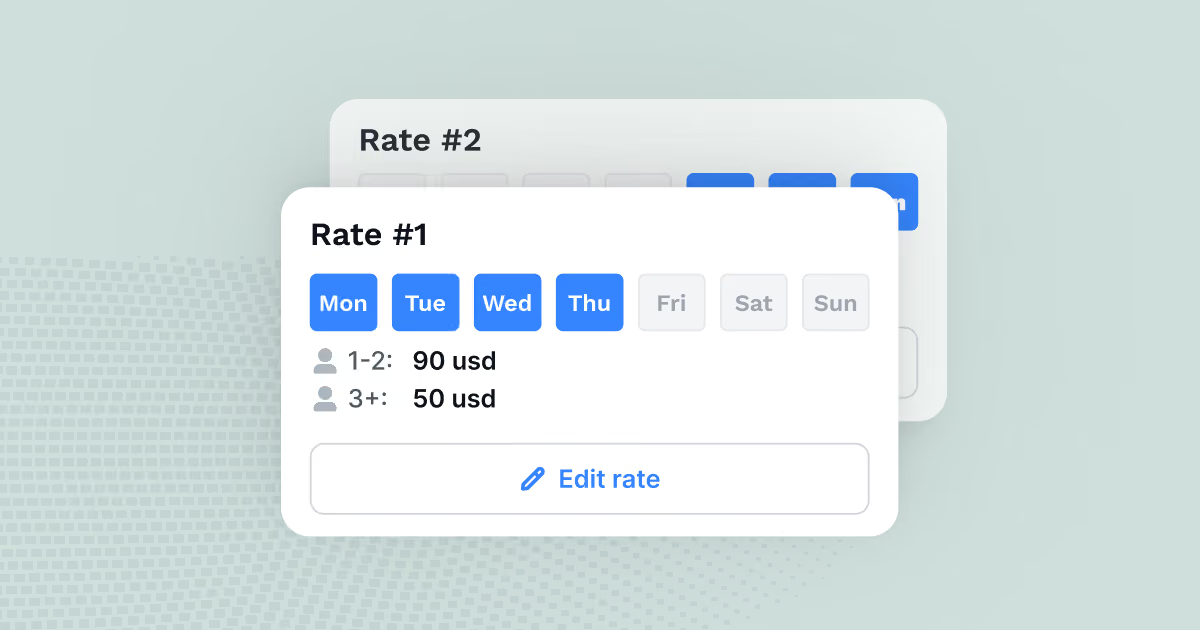
AI also allows for data-driven revenue optimization. AI systems enable dynamic pricing strategies to enhance revenue by engaging in real-time evaluation of competitors, patterns of demand, and market conditions. For instance, when we integrated dynamic seasonal pricing into Hosty, automatically adjusting rates based on dates, guest count, and demand signals, property owners who had been manually updating rates (or more often, forgetting to) saw immediate improvements in revenue per booking without adding any operational overhead.
Advanced predictive maintenance allows for downtime of equipment to be a consideration of the past, while advanced data analytics facilitate a new level of precision for strategic decision-making.
The case for guest experience is also quite compelling. Hospitality AI solutions enable a highly personalized service experience by evaluating preferences, past behaviors, and historical booking information and making accommodation, dining, and activity recommendations for guests. The evidence suggests that 57% of consumers feel that technology has already improved their hospitality experience overall. The AI hospitality industry case for guest experience is a lt about giving your team the context to be genuinely attentive without spending hours digging through booking histories.
The use of voice recognition and intelligent room controls allows for seamless management of amenities and modern hotel amenities, such as AI-based assistants, to offer guests round-the-clock convenience and support without an employee connection.
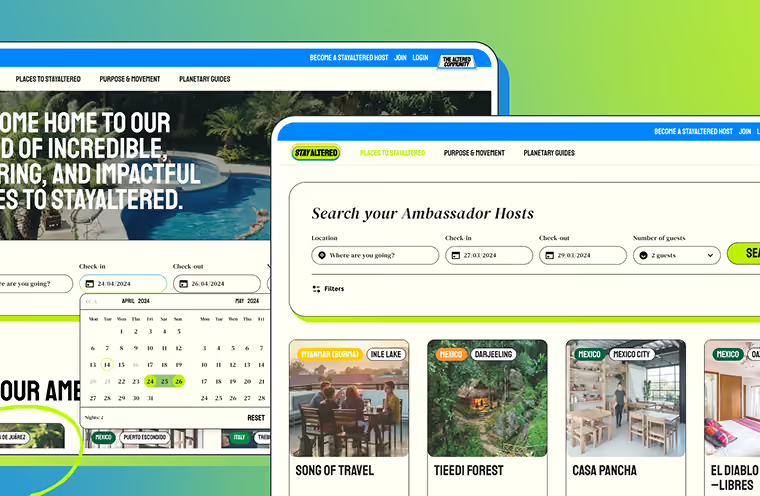
AI-assisted solutions begin to close the gap between disjointed systems to create one seamless platform that allows for disbanding repetitive data entry for multiple data management platforms, streamlining workflow, and creating superior productivity. From our experience, this matters. When we connected Katanox and Hyperguest booking systems into the Stay Altered platform, real-time availability and reservation routing became possible across 170+ properties in 45 countries from one unified backend.
AI-driven solutions enhance security protocols, improve fraud detection, and assist with employee scheduling by predicting changes in demand. On the scheduling side, AI staffing models that account for occupancy forecasts, seasonal patterns, and historical demand stop the chronic problem of overstaffing during slow periods and understaffing during peak times.
"The properties that get the most from AI aren't necessarily the largest ones," says Kostiantyn Lopukh, Senior Developer at COAX. "They're the ones that were honest about where their workflows were breaking down. AI doesn't fix a broken process but only amplifies it. So you need to fix the process first, then let AI accelerate it."
All of this ultimately delivers the much-promised benefits of reduced operational costs with a simultaneous increase in service quality, ending in a better competitive advantage, especially to the companies not using hospitality hotel AI (or doing it as a trial-and-error).
Use cases of AI in hospitality
Now, let’s focus on the practical use cases showing how AI improves efficiency, boosts revenue, and elevates guest experience across hotel operations, revenue management, marketing, sales & MICE, and human resources.
Hotel operations AI
Artificial intelligence in hotels has found some of its strongest early footholds in operations — not because it's the most glamorous application, but because it's where the inefficiency is most measurable, and the ROI is fastest to prove. Operational AI for the hospitality industry is focused on 'back of house' processes, administrative tasks, and operational workflows.
Hotel Investor Apps' ERP system with AI integration
This type of hospitality AI has several areas of use that refer both to the guest experience and hotel efficiency. Here are the most optimal applications:
AI systems are very useful for multi-lingual interaction support for hotels to serve international guests. AI for the hospitality industry's translation layers handles real-time guest communication, document processing, and routing requests to the right department without requiring a human interpreter in the loop.
Check-in and check-out automation is another area of AI application, where the AI system supports guests through registration, room assignment, and payment with minimal staff support. This automation allows front desk staff to focus on personalized service during check-in and address troublesome situations personally.
Coordinating internal workflows is equally beneficial, where the AI system provides staff scheduling based on predicted demand, assists housekeeping, reviews maintenance requests, generates property reports, etc.
Further, document processing automation includes confirmation for reservations, contracts, invoices, and compliance documents with greater accuracy.
So, how to apply this type of artificial intelligence in hotels? The frequent challenge we see is that properties underestimate how many of their "operational" problems are actually data problems. Housekeeping doesn't know which rooms to prioritize because the front desk system isn't synced in real time. Maintenance requests get lost because they're logged in a separate tool that nobody checks consistently. Before AI hotel software can optimize any of these workflows, the underlying data flow has to be clean and connected.
Hotel revenue management AI
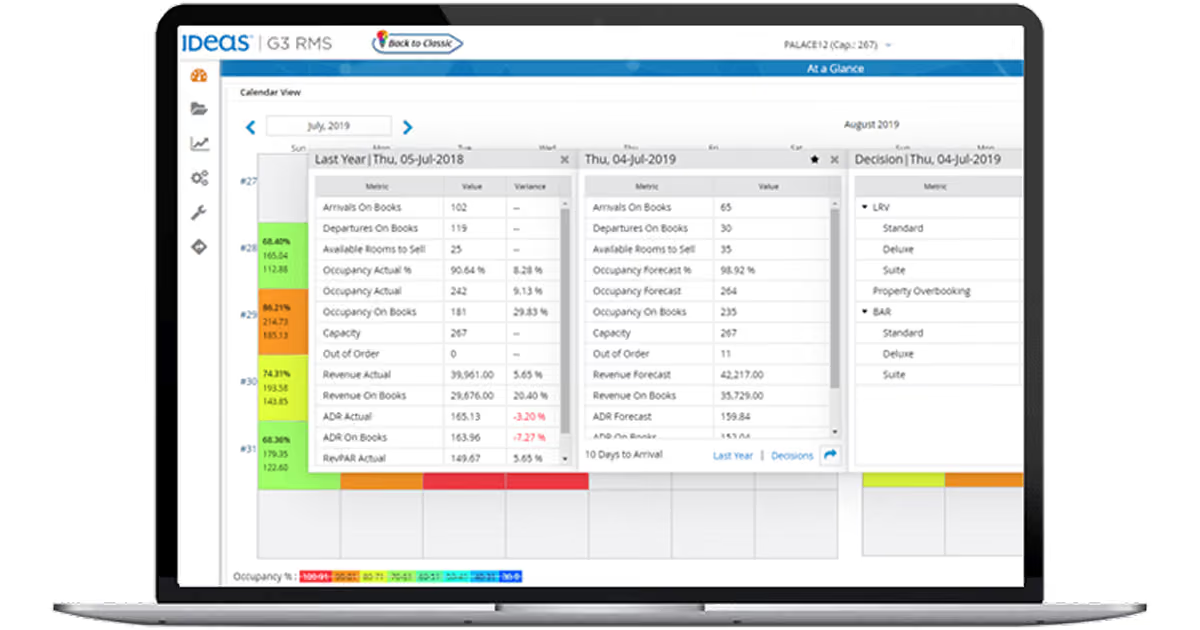
Hotel revenue management AI hospitality solutions are another major area in which this technology is implemented. These specialized systems are designed to optimize pricing, demand forecasting, and identify revenue opportunities across all areas of hotel revenue generation. These systems analyze large amounts of data, including historical performance, competitor pricing, local activities, weather, and social media trends.
IDeaS G3 RMS
The technology considers not only room revenue, but also adds-on income streams from meeting spaces, restaurants, spa, and parking to generate complete financial optimization that aligns pricing to the wider business goal.
The use of AI in the hospitality industry, in terms of improving revenue handling, comes down to several key directions, ranging from having a clearer vision of demand to efficient hotel price optimization.
Improved demand forecasting uses machine learning to predict booking patterns by integrating historical internal data with historical data on external factors such as event calendars, flight trends, weather forecasts, and social media discussions. The challenge with demand forecasting is often the data quality feeding it. When we built a custom CRM and booking engine for 20+ suppliers and 60 affiliates, one of the first things we found was that historical booking data was scattered across spreadsheets with inconsistent date formats. Cleaning and standardizing that data before any AI in a hospitality forecasting model could be applied took weeks, but it's what made the downstream 40% profit increase actually achievable.
Dynamic pricing optimization allows rates to be updated in real time based on multiple factors happening simultaneously. AI identifies demand spikes and can update pricing to maximize earnings. Different aspects of demand (such as booking pace, competitor activities, and business conditions) are continuously evaluated as pricing impact occurs to try to generate higher occupancy rates and revenue per branded room.
Personalized marketing and upselling seek high-value guest segments based on similar booking habits by identifying patterns. Hospitality AI solutions find further connections; for example, guests who book spa services are likely to also book additional nights, and initiate an offer to see if different guests make additional reservations.
Monitoring competitors provides up-to-the-minute insights into pricing and market positioning. Moreover, AI tools seek upsell opportunities and notify managers of each pricing gap that needs urgent repairs, which is especially helpful in variable market conditions.
Cross-department integration that hotel AI brings multiple sources of data together (rooms, food and beverage, events, spa, etc.) to develop large-scale views of performance. Managers can align pricing operations among departments, assess operational performance, and better allocate staff and resources. This is where hospitality AI solutions either prove their value or expose the gaps in a property's underlying infrastructure.
"Cross-department integration sounds like an IT project," says Orest Falchuk. "But operationally, it's the difference between a revenue manager making decisions on yesterday's data and making decisions on what's happening right now.”
As one of the successful AI applications in the hospitality industry, Marriott International has developed a proprietary approach to AI-led revenue optimization with a Group Pricing Optimizer, a machine-learning tool. It is used in combination with massive booking dataset pools to help decision-makers in real-time pricing adjustments for both transient and group business. This Optimizer is a robust price-elasticity model that recommends optimal group rates across Marriott’s vast brand portfolio, disrupting traditional contracting and negotiation processes while creating measurable improvements in profitability.
Hotel marketing AI
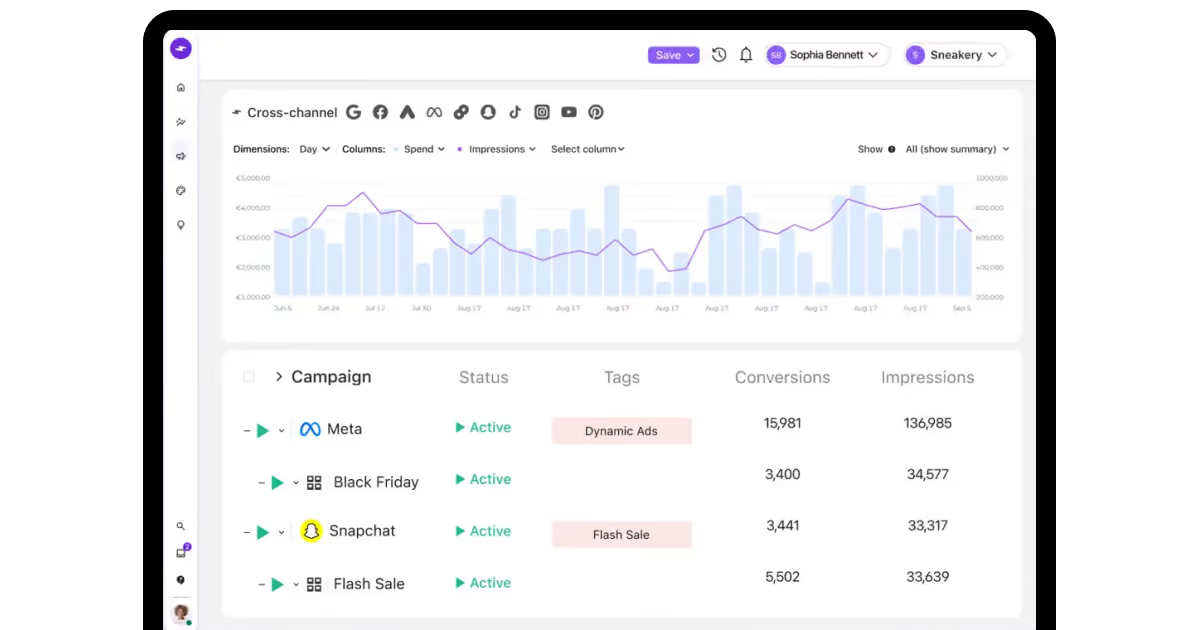
Hotel marketing hospitality artificial intelligence involves smart systems that change how hotels find, engage, and retain guests using data-based personalization and automated campaign management.
Smartly - AI-powered marketing platform
These forms of AI can digest large amounts of guest data, including booking history, browsing history, social media activity, and demographics, to segment guests, predict preferences, and send relevant messages. Oracle and Skift report 51.5% of hotel owners use AI and data analytics for personalized marketing, suggesting it has already reached mass adoption.
AI may have a great field of opportunities in producing new content, participating in social media events, and anticipating stay patterns. However, the shift we observe consistently across hospitality clients is that marketing AI stops being a cost center and starts being a revenue lever the moment it connects to booking behavior data rather than just campaign metrics.
Without doubt, with the growing capabilities of modern systems to generate content and automate and optimize customer touchpoints and the funnel, the artificial intelligence in hospitality presents a great opportunity for hotels:
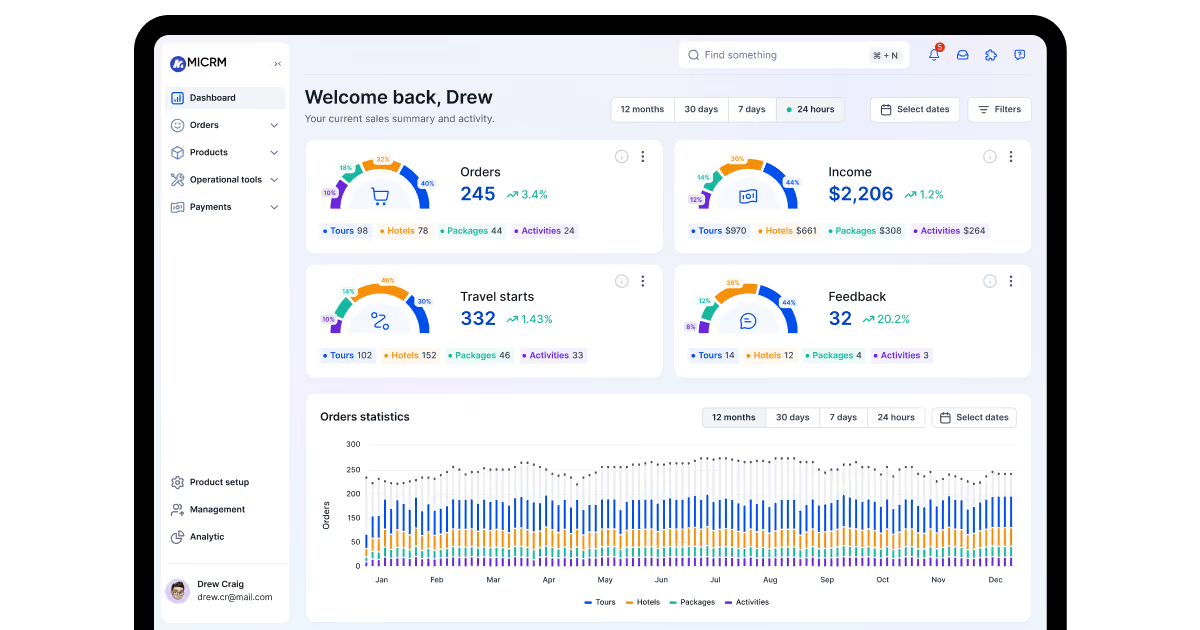
The delivery of hyper-personalized guest experiences is a leading application of marketing AI. In this use case, sophisticated data systems analyze extensive guest data, which helps to personalize all aspects of the guest journey. AI examines guest preferences, behaviors, and travel history patterns in order to enhance room recommendations, food and beverage suggestions, spa services, and activities, while also personalizing outreach across multiple channels. In the MICRM platform we built, personalization was only possible because every interaction with a guest was captured in one place, from first inquiry through post-trip feedback.
MICRM platform
Another use case of predictive analytics in travel is that it allows marketing teams to proactively make decisions related to promotion, using booking data, seasonal trends, local events, and overall market conditions. This allows marketers to apply the right timing and budget allocation to a marketing campaign based on predictions. What we saw building Hosty reinforced this directly. Property owners who understood their seasonal demand patterns could set pricing and promotional rules in advance and let the system execute automatically. Those who couldn't articulate their own demand shape had no foundation for any AI in hospitality promotional logic.
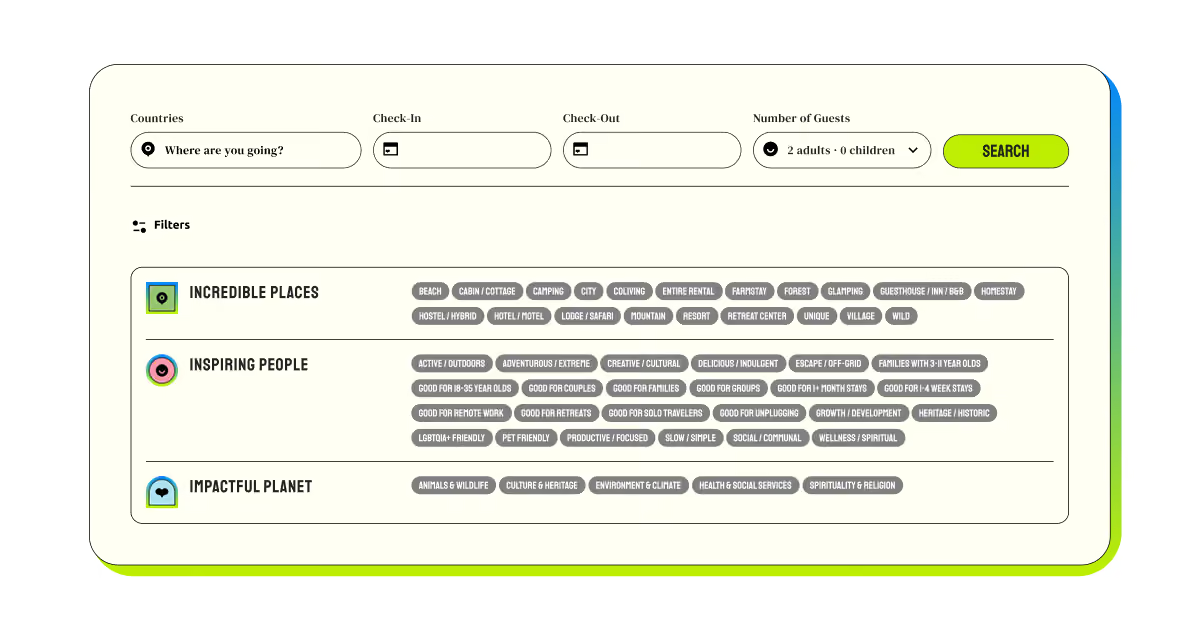
One of the biggest advantages of AI in marketing is customer segmentation and targeted promotion. AI is able to cluster customers based on behavioral metrics, demographic data, spending and income data, and travel intent. This information helps marketers finalize creative personalization requirements and craft campaigns. The segmentation challenge in hotel AI marketing is less about the AI's capability and more about the quality of the audience data. When we built Stay Altered, guests were categorized by their travel values, which gave the platform a segmentation layer that went far beyond standard demographic buckets.
Stay Altered
Automated content generation and social media optimization expedite marketing execution by utilizing AI to produce SEO-friendly website content, email campaigns, social media content, and promotional materials at scale. Not only can AI tools track consumer behavior on social platforms and identify trending topics, but they also identify content with the highest performance and automatically amplify that content.
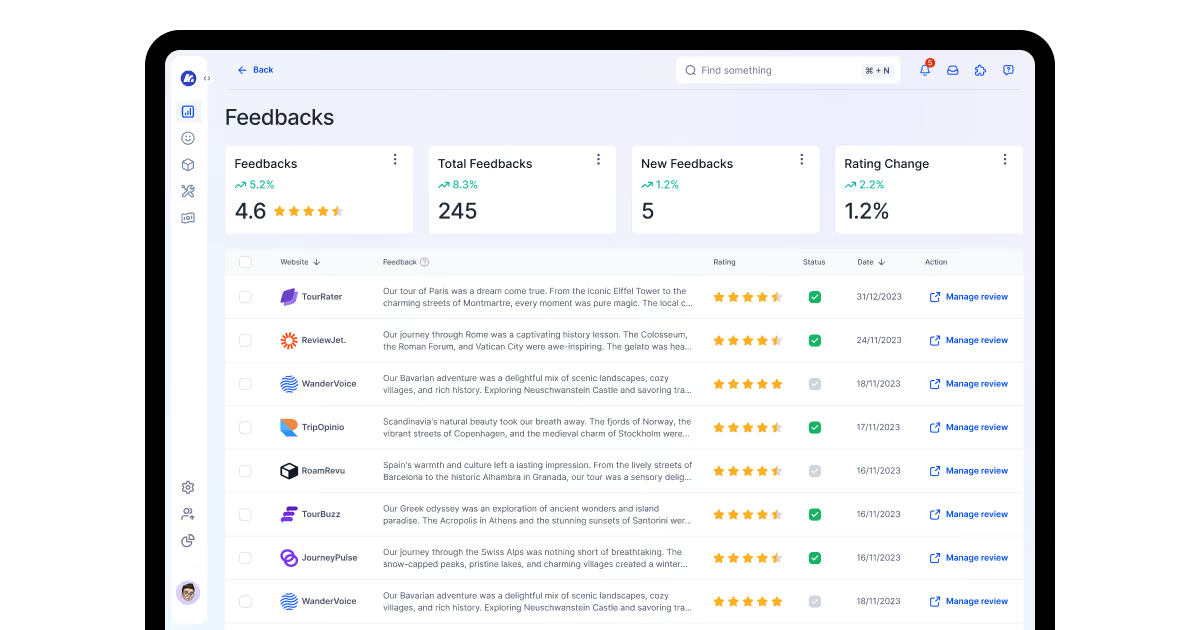
Dynamic reputation management enables hotels to monitor guest reviews across multiple platforms to identify patterns of sentiment and provide targeted responses. When hotels experience recurring issues, AI also alerts the relevant hotel team to resolve the issue.
Conversational AI for upselling enables hotels to provide tailored offers for existing and/or potential guests through varied channels. Based on previous interactions and historical data, AI tools for hospitality provide contextual upsells. One observation from our work: reputation management AI tools for hospitality only improve service quality if there's a feedback loop that reaches the operations team, not just the marketing team.
With all these possibilities, no wonder that this type of AI is actively used by hospitality providers. For example, TUI Group employed AI to transform its social media strategy by segmenting customers, tracking behaviors on platforms, and automatically boosting the best content. An AI-driven segmentation approach produced hyper-targeted campaigns that resonated with specific types of travelers,generating 150% more social media post comments and showing significantly greater audience engagement.
Hotel sales & MICE AI
AI for hospitality sales and MICE (meetings, incentives, conferences, and events) is a niche application focused on enhancing group bookings, events, and corporate sales. Rude and Paul found that AI-driven predictive analytics can greatly improve hotel sales by predicting consumer behavior and improving strategies securely. The technology is designed for the complicated needs of corporate clients by analyzing customer behavior, predicting demand in conference space, and sourcing unique proposals based on the needs of the group's business.
"Group sales have always been relationship-driven," shares Ivan Verkalets, CTO at COAX. "What AI in hospitality adds to that isn't a replacement for the relationship but rather the ability to prioritize which relationships to invest in, and to respond to an RFP with a proposal that actually reflects the client's history with you."
In the area where you need to cater to the specific needs of event organizers and business clients, or increase sales through varied channels, AI hospitality industry solutions perform such functions:
Lead qualification and scoring. AI programs automatically score incoming RFPs (requests for proposals) and inquiries based on probability of booking, available budget, and historical data on booking conversion. This prioritizes the best opportunities for an organization and allows a sales team to focus on customers most likely to convert.
Dynamic pricing for group bookings. Machine learning models assess market demand, competitors' pricing, seasonality, and group size to recommend a pricing strategy for MICE bookings to increase revenue. This also promotes competitive pricing and increases revPAR (revenue per available room) and revPAM (revenue per available meeting space).
Automated proposal generation. AI models create personalized packages suitable for various events by reviewing what the client needs, previous experiences, and available inventory. This means suggestions for hotel room blocks, meeting spaces, catering and available amenities occur once the client has completed their RFP. This automates hours of proposal preparation and keeps personalization alive.
Demand forecasting for event spaces. A great case for AI in the hospitality industry is the ability to apply predictive analytics to understand when conference space and banquet space have the highest booking demand. This is based on the review of historical data, local event calendars, specific industry trends, etc. Following a peak period in events, it allows a hotel to make sufficient staffing, inventory, and marketing decisions to capture maximum utilization of the space.
Customer behavior analysis. AI systems can track clients' communication to determine engagement with corporate clients. This tracks the response rate, time to response, and attendance/engagement with contract renewals and upselling opportunities as they arise. Such a use case ultimately provides improved relationship management and customer retention rates.
The MICRM platform we built for a tour operator with 60+ affiliates included exactly this kind of automated package assembly, pulling from available inventory, client history, and pricing rules to generate tailored proposals without manual construction.
MICRM booking platform
Human resources and labor AI
This particular AI application aims to optimize staffing levels and schedules, reduce labor costs, improve productivity, and address the chronic, unmanageable, and unequal burden of traditional turnover and recruitment for hospitality. Human resources and labor optimization are what happen when you apply AI technology in the hospitality industry to work for your workforce optimization.
Why is it important? Staffing, housekeeping, and workflow improvement are what 44% of hoteliers consider the top priority for implementing AI. The urgency is caused by the rising labor shortages and the need to optimize operations in mentally taxing departments, leading to inefficient turnover.
There are definite areas where you can rely on artificial intelligence for hotels in this use case:
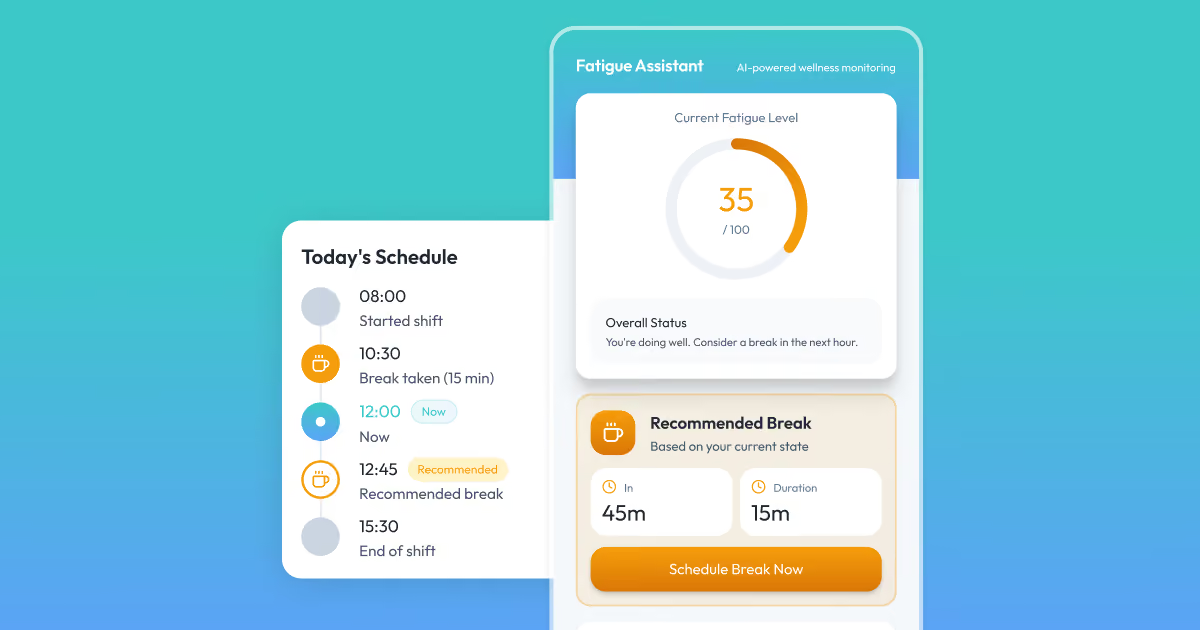
Intelligent scheduling and labor forecasting. AI algorithms analyze occupancy, seasonality, and booking data to estimate staffing requirements by department and create optimal shift schedules. This is particularly essential as part of hotel housekeeping software and the specific workflows of these departments, as demand fluctuates significantly. In an AI system managing 500 vehicles and complex shift scheduling across cross-border routes, we solved a similar labor optimization problem. The principle transfers directly to hotel AI housekeeping and front desk scheduling.
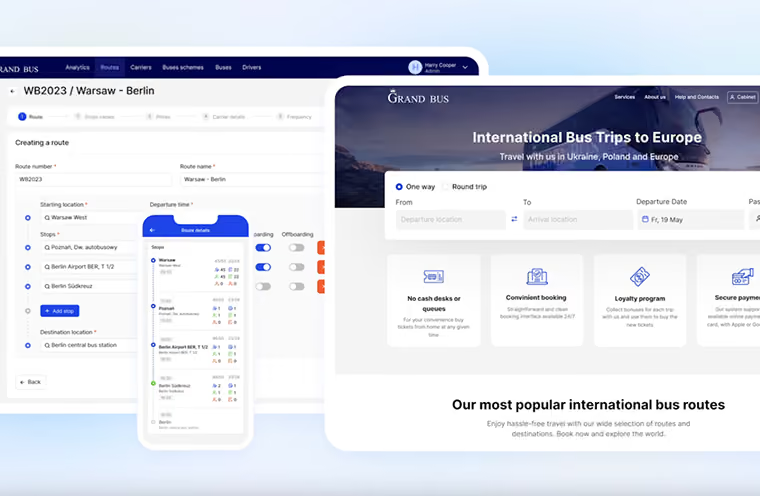
AI booking system
Automated recruitment and candidate screening. ML systems analyze applications, filter resumes, and conduct preliminary assessments to find suitable applicants based on experience, skills, and cultural alignment. AI algorithms and intelligent learning tools assess applicants objectively, minimizing bias, discrimination, and emotional interference while matching qualified applicants with openings in record time.
Employee retention analytics. Predictive models use engagement metrics, performance metrics, and attributes to discover employees at risk of leaving so that prompt retention strategies can be executed.
Training and development personalization. AI learning management systems develop employee-specific learning tracks, which consider their role, skills gap, and learning style. Training and development present a substantial challenge in hospitality, as training needs to be efficient and specific to employees to successfully perform their work duties.
Performance management and productivity monitoring. Real-time monitoring mechanisms are employed to evaluate employee performance metrics, provide immediate feedback, and discover possibilities for operational improvement across units. AI hotel applications are beneficial for managing training and development, performance evaluation, procurement, selection, and employee engagement.
From our experience, the challenge with this type of hospitality AI is capturing the role-specific data that makes any personalization and optimization meaningful. A front desk agent's gaps look entirely different from a housekeeping supervisor's, and solutions that treat all staff through the same lens produce the same generic outcomes as their manual options.
5 examples where AI delivers value in hospitality
The examples below share a common thread that we see consistently in artificial intelligence hospitality implementations that actually deliver: none of them deployed AI in isolation. Each connected a new intelligence layer to existing guest data, operational workflows, or revenue systems, and measured outcomes against specific baselines.
Marriott International has strategically integrated an operations hospitality AI across its organizational framework with a specific focus on internal use cases that support associate productivity and strategic decisions related to operations. The company has implemented an AI-enabled trip planning tool used to coordinate associates’ internal travel time and other resources.
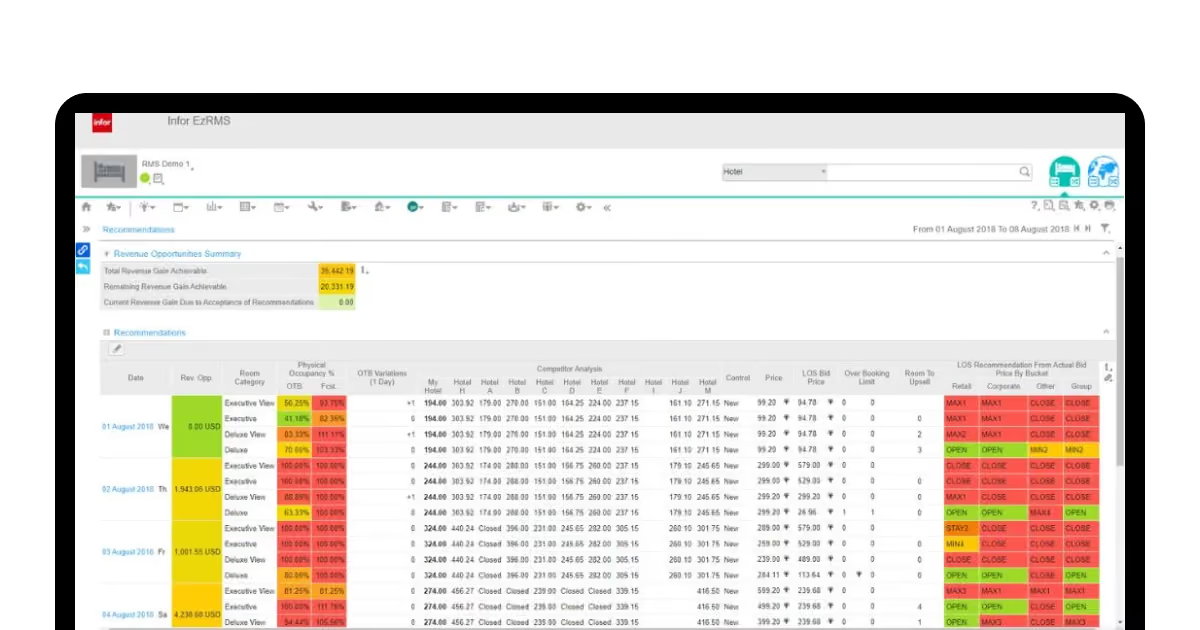
Hilton Hotels & Resorts built Infor's EzRMS platform. Using site data and analyzing millions of Hilton Honors profiles, Hilton was able to create fine-grained segmentation focused on travelers' preferences. Hilton was able to apply these hotel insights by offering personalized pricing to consumers through direct channels. Hilton observed a 5-8% increase in revenue while enhancing guest satisfaction by delivering offers very similar to consumer price preference and travel patterns.
Infor's EzRMS platform
As one of the AI use cases in the hospitality industry, Jumeirah Hotels & Resorts implemented a Predictive Budget Allocation system, powered by AI, across its global portfolio of 28 properties, completing over 1,000 automated optimizations for key KPIs. The AI consistently reviewed performance data, predicting trends and optimally reallocating budgets in real time for 109% greater returns on ad spend, improving cost-per-click by 59%, and saving 372 hours of manual labor by managing media campaigns automatically.
Radisson Hotel Group was the first hotel company to apply AI in travel industry marketing with a customized hotel artificial intelligence tool, Radisson Meetings Dream Machine, designed to empower event professionals to visualize creative meeting and event spaces outside of the box. The platform allows planners to develop beautiful representations of venues and access thought leadership on customizing event experiences, resulting in Radisson properties that function as living spaces where creative ideas come alive.
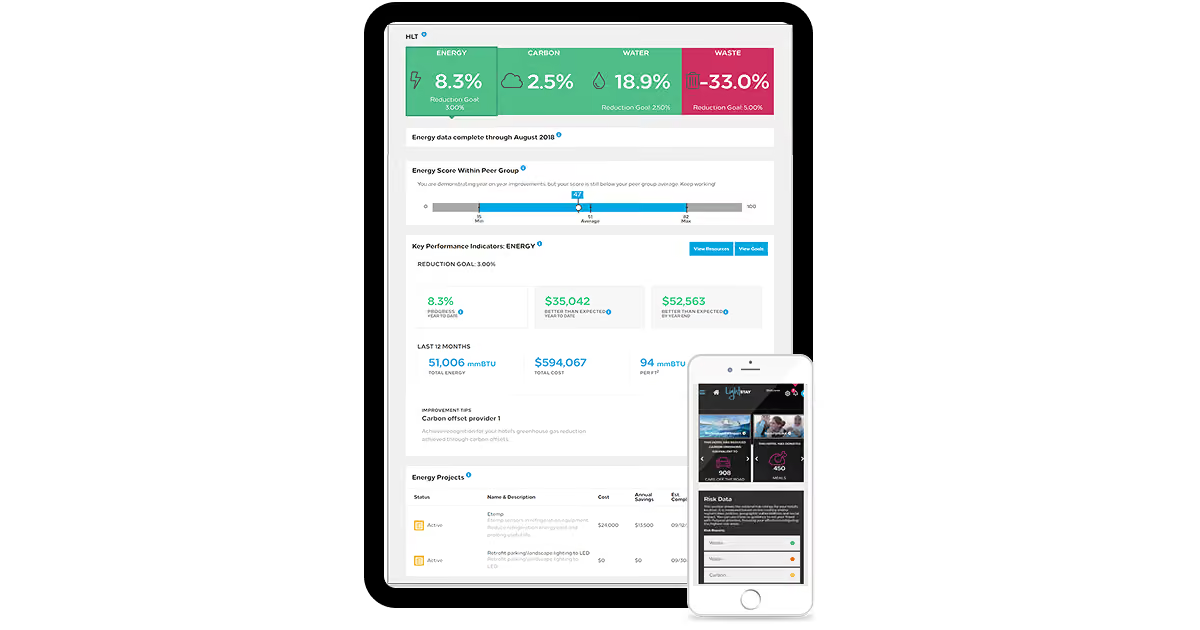
Hilton Hotels uses a property management system, Hilton OnQ, with AI-enabled features for reservation management, customer data management, and system-wide performance monitoring. Hilton’s implementations of an energy management system have generated over $1 billion in savings by optimizing heating, cooling, and lighting based on occupancy and demand forecasts.
Hilton OnQ
What these cases don't show (but we see regularly in practice) is the volume of failed implementations that preceded them. That's why the architecture and vendor selection decisions matter so much upfront as the wrong AI hotel software doesn't just underperform, it creates integration debt that makes the right solution harder to implement later.
Best applications of AI in hospitality
The five AI in hotel management applications with the strongest investment-to-return ratio in hospitality are dynamic pricing, AI-powered guest messaging, revenue forecasting, reputation management, and housekeeping scheduling, each with quantifiable, near-term impact.
These are the five applications where the investment-to-return ratio is most favorable, based on what we've built, integrated, and watched perform in production.
Dynamic pricing automation. This gives the fastest RevPAR lever available. Tools like Duetto, IDeaS, or RoomPriceGenie connect to your PMS and adjust rates continuously based on demand signals. For Hosty, we built seasonal pricing logic directly into the platform, and the owners who had been setting a static rate recovered solid revenue within the first month.
AI-powered guest messaging. Canary AI and Asksuite handle pre-arrival, in-stay, and post-checkout communication with 80%+ resolution rates on routine inquiries. Our marketing team uses similar conversational tools for lead qualification and sees a much higher response rate compared to static email sequences. Staff time saved is immediate and quantifiable.
Revenue forecasting and demand intelligence.Lighthouse and Atomize give revenue managers market-wide demand signals without manual competitor monitoring. When we built MICRM, centralizing booking data into one analytics layer was what made the client's 40% profit growth visible and actionable: the use of AI in hospitality forecasting only works when the historical data underneath it is clean.
Reputation and review management.MARA AI and Revinate monitor sentiment across platforms and generate draft responses. The best AI technology for hotel management here is the one that routes operational feedback to department heads, not just the marketing inbox.
Housekeeping and maintenance scheduling. Optii Solutions and best hotel AI software for the hospitality industry tools like Flexkeeping connect room status to staff task queues in real time. For Stay Altered, syncing operational status across 170+ properties required exactly this kind of live coordination layer. The best AI platforms for hotel industry operations tie directly into your PMS, as anything requiring manual status updates will underperform.
Challenges for AI adoption in hospitality
The biggest barriers to AI adoption in hospitality are not the technology itself but the readiness beneath it: data quality, legacy system integration, staff adoption, ROI timeline expectations, and vendor lock-in risk.
The gap between a compelling artificial intelligence hospitality demo and a production system that actually performs is where most implementations quietly fail. Based on what we've encountered while building and integrating hospitality platforms across multiple property types, here are the challenges worth preparing for.
Implementation costs and ROI timeline.
The upfront investment in AI applications in the hospitality industry is rarely the problem, but the timeline to measurable return is. Most properties underestimate how long data cleaning, staff onboarding, and integration stabilization take before the AI has enough clean signal to perform reliably. Budget for 3–6 months before concluding.
Data privacy and security responsibilities.
AI in the hospitality industry examples that go wrong almost always have a data governance failure somewhere upstream. Guest profiles, payment data, and behavioral history are high-value targets. GDPR and CCPA compliance isn't optional, and it needs to be designed into the architecture from day one. At COAX, our ISO 27001 certification reflects requirements we've seen enforced in production hospitality environments, not just on paper.
Integration with legacy systems.
This is the most consistently underestimated challenge in AI applications in hospitality industry deployments. Most properties run PMS platforms that are years or decades old, with limited API documentation and inconsistent data schemas. When we selected integration intermediaries for Stay Altered rather than connecting directly to dozens of individual PMS systems, it was specifically to avoid this problem at scale. Direct legacy integrations compound maintenance costs every time either system updates.
Staff adoption.
Technology that staff work around is worse than no technology at all as it creates parallel processes and data gaps that corrupt the AI's inputs. Front desk teams and housekeeping supervisors need workflows that feel like less work, not more. Role-specific training under five minutes per feature, with clear "here's what this replaces" framing, consistently outperforms comprehensive onboarding sessions.
Vendor dependency risk.
Locking core revenue operations into a single AI vendor with no data portability is a strategic liability. Always negotiate for data export rights and build on open API architecture where possible.
So whether you want to implement predictive maintenance flagging a failing HVAC unit before it disrupts a guest stay, or dynamic pricing algorithms recalculating room rates in real time, you need to consider several important aspects.
Key considerations when implementing
Successful AI implementation in hospitality requires a unified data pipeline, microservices architecture, governance frameworks built from day one, role-specific staff training, and KPIs tied directly to the operational problems.
The efficiency of AI relates directly to the quality and usability of data. So, build a single pipeline of data that connects your PMS, POS, CRM, and guest communication systems using a standardized schema. If your systems use different identifiers for guests or different formats for bookings, your AI models will fail to work before they even get started. Use a data pipeline that processes in small bits to push to a central data warehouse - keep edge caches for real-time applications like chatbots.
Use a microservices architecture so that AI functions (pricing optimization, sentiment analysis, demand forecasting) can work separately from one another. This sort of architecture keeps problems isolated and scales the processing capacity of computationally intensive individual functions, without overprovisioning computing resources.
Hospitality AI solutions process sensitive information that includes identity documents, payment information, and personal preferences. Start governance of models on day one: keep versioned copies of all datasets, code to train the model, and hyperparameter settings used for training to ensure that models can be reproduced. Record every decision made by the AI system, and use a trace identifier so you can explain why a rate changed, or where a recommendation was produced from.
Consistently evaluate AI models for bias, particularly those affecting guests in a frontline context. A language model trained on reviews cited in some of these articles could inadvertently hurt users who are not native speakers or create biases based on demographic data.
You might experience failure in tech-based product adoption if staff do not use or engage with it correctly. First, understand the nuances for every team. Front desk teams can better tolerate dynamic pricing when they understand the intent and rationality of the rate recommendations. Housekeeping supervisors accept AI-based scheduling when they experimented with comparing predicted vs actual room turnover for several weeks.
Prepare quick, role-specific training that will last less than five minutes per feature, quick and focused. For example, one training video can show how the mobile app can help create optimized cleaning routes. You can also create a video to show how an inventory alert can prevent waste by flagging an upcoming expiration date. Always, stress the importance of transparency and worker involvement to foster acceptance of new solutions.
It’s always a good idea to create measurements of success for specific KPI's focused on your strategic goals:
Metric category
Operational KPIs
Business KPIs
Efficiency
Task automation rate, labor hours saved per department
Quarterly, review your metrics and eliminate any that are not aligned with your original problem statement.
Also, remember that to get the most out of AI in the hospitality industry, you need to understand what type of solution will provide the greatest value. Off-the-shelf AI solutions offer the benefit of speed to deploy, but they often box your workflows into templates that don’t fit your actual processes. Meanwhile, custom travel & hospitality software development yields transformational outcomes based on your specific operations, brand voice, and competitive edge.
At COAX, we create hospitality solutions that embed AI abilities alongside your business model. We begin our approach with rigorous operational discovery to understand your pain points, workflows, and guest expectations that are typically overlooked with generic technology.
We build scalable data infrastructure that allows you to unify your existing systems and not force a migration of costly platforms. Each module integrates with your PMS and the tools you already have in place. In order to ensure governance and compliance, we perform thorough audit trails, bias testing, and apply explainable AI models that meet regulatory requirements. After deployment, we provide long-term optimization through A/B testing, model retraining using your operating data, and feature enhancements based on feedback. With COAX, as your business grows or changes direction, your hotel AI capabilities change along with it.
How to implement AI in the hospitality industry?
So, how do you implement AI in hotels without interruptions to your operations, fighting the data security risks, and avoiding employee resistance? Implementing AI in hotels without operational disruption starts with identifying your highest-impact pain points, auditing your existing systems for integration readiness, running focused pilots in two to three priority areas, and scaling only what the data confirms is working.
Begin by establishing an AI leader or a small task group to lead the charge for digital transformation. Then, do an assessment of your operations to discover high-impact pain points for your business where AI will add value in the highest ways quickly. 44% of business owners see that revenue management and guest messaging are on par in terms of importance. Take the time to interview a range of stakeholder groups across your departments to discover where manual processes create bottlenecks in time, and where you've met guest dissatisfaction the most.
Benchmark your current metrics on performance, labor hours by department, RevPAR, response time to guests, guest satisfaction, operational costs, and other operational metrics will be useful to establish before implementing any hotel AI initiatives. Predictive analytics can provide insight into customer behavior and assist in increasing data-based strategies to minimize risk from vulnerable information.
Develop the AI ecosystem methodically. Conduct an audit of your existing systems, including your PMS, CRM, revenue management software, and guest messaging systems, to clarify their readiness to integrate and use AI-driven data. Reports show that operators using AI tools integrated with their PMS showed 30-50% faster task completion.
Select the best AI platforms for the hotel industry that fit your hotel's size. For instance, independent hotels focusing on modular, cloud-based solutions like Canary Technologies or Duetto, while chains can invest in a proprietary platform, using AI supported by recent guests for high-stakes tasks.
Clean and organize your data, including guest profiles, booking history, and operating data, noting GDPR principles and the security protocols necessary to conduct a safe transfer.
Consider deploying user-friendly AI applications that require minimal employee training. While performing this groundwork, consider devoting time to developing an AI governance framework for your hotel, discussing data privacy initiatives and oversight by staff, in accordance with trusted institutions.
Test pilots of focused areas based on your category prioritization, in 2-3 high-priority impact areas. For example, if you have guest communication in mind, chatbots for hotels will help resolve frequently-repeated scenarios. For revenue management, start with a pricing intelligence platform. Management labor usage will be more difficult to pilot, but try AI scheduling in housekeeping, starting with predictive models that predict staffing needs to clean each room.
With every solution, set clear criteria to determine success. As an example, you can start with a 5 to 15% RevPAR improvement, 20 to 30% faster response times, and 15 to 25% less labor hours. Then, involve each employee throughout the pilot. This might increase the chance of successful adoption by unsettling misconceptions that they would be replaced by the hotel AI, which can be considered threatening and toxic.
Extend successful AI applications derived from pilot studies. Begin developing monitoring dashboards to track key performance indicators such as RevPAR or tRevPAR growth, labor hours saved, response times, forecast accuracy, and NPS movement.
Work out the brand voice for AI response models to ensure AI communications reflect brand principles. Develop feedback loops to facilitate staff reporting of AI limitations to continuously iterate on the models. Invest in ongoing employee training so staff can evolve their roles to high-value interactions that can promote guest loyalty.
It is essential to find a balance between automation and empathy. Artificial intelligence for hospitality is fast and reliable, but it cannot replace the humanity of this industry. Start small, and focus on measurable pilots, celebrate early wins to create momentum, and provide support for the AI capability to both staff and customers.
FAQ
What's the fastest hospitality AI application to show ROI?
Dynamic pricing. Connect an AI revenue tool to your PMS, set your demand rules, and rate optimization starts immediately. Properties we've worked with saw revenue recovery within the first month, before any sophisticated modeling was involved. No complex integration is required to start.
What are the security complexities of implementing artificial intelligence hospitality industry solutions?
AI systems used in hospitality processes highly sensitive information about guests. This generates a high exposure to cyberattacks. Devaraj cites the following solutions to these challenges:
Adherence to GDPR and CCPA.
Robust encryption for the storage and transmission of data
Facial recognition ensures guests' privacy.
Ensuring security and configuration of cloud-based systems.
Transparency of audit trails.
Breach averages exceed $3.86 million, which makes developing proactive cybersecurity frameworks naturally important.
Why should I implement AI for hotels if I'm a small vacation rental owner?
The answer is simple: the more functions AI automates, the less staff you need to have, and the lower the pressure is on your staff. AI allows time-consuming activities to be put on autopilot, such as guest messaging (which resolves 70-80% of guest inquiries), optimizing dynamic pricing, and managing reviews for properties. They also provide faster responses, personalized experiences, and professional management of operations, while saving hotel staff 10-20 hours per week in order to focus on growing your business, and not chase repeated issues.
Can small independent hotels realistically implement artificial intelligence in hotel industry tools?
Yes, and they often see faster returns than chains. Cloud-based AI for hospitality tools like RoomPriceGenie or Canary AI requires no enterprise infrastructure. On Hosty, independent Ukrainian property owners with zero technical background were running automated pricing and guest messaging within days of onboarding.
How do we know if our data is ready for hospitality AI?
Run one test: pull your last 12 months of booking data and check whether cancellation records, source channels, and room types are consistently logged. If they're not, your AI for hospitality forecasting model will learn the wrong patterns. Fix the data pipeline before selecting any tool.
How does COAX develop the best AI technology for hotel management?
COAX delivers our technology using a discovery-first methodology, embedding within your operations to learn your unique workflows before co-creating custom solutions. We build solutions built to work with your existing systems with no forced migration. Importantly, our development work protects your security: COAX is ISO/IEC 27001:2022 certified for security management and risk assessments. Additionally, we have ISO 9001 certification to develop and follow quality processes from the start of development.



































































.avif)



%20for%20hotels.avif)


.avif)
.avif)


.avif)




.avif)
.avif)



.avif)

.avif)

We are interested in your opinion