






















































AI-powered Tripian integration
Tripian's AI engine, integrated and delivered by COAX. No separate vendor search, no rebuild.
Industry leaders we work with



An AI recommendation engine, not a rebuild
Preferences & trip data → Tripian engine → Your product's UI.
Tripian's AI engine builds in-destination itineraries and recommendations. It gives restaurants, activities, and things to do, matched to a traveler's preferences and location in real time. It's delivered through white-label APIs, built to plug into a product that already exists.
Engineering capability map with Tripian ready-made API
Custom-engineered software components, delivered for travel companies, not a packaged SaaS suite but with select components accelerable via Tripian's ready-made API
#
Component
Business value
Revenue leakage if missing
Optimization strategy
Custom-built for for
Acquire supply
1
Supplier Onboarding Module
Faster time-to-revenue;
Lower onboarding cost;
Tscalable supply growth
Slow fleet activation increases onboarding costs and delays time-to-revenue.
Standardized onboarding workflows;
Automated validation;
Self-service onboarding;
API-first integrations
2
Travel API Gateway
Derived from: Travel API Integrations + API Gateway
Fewer integration outages;
Faster search response;
Protected booking conversion
API failures, latency, integration downtime
Centralized API management;
Caching; throttling;
Monitoring & circuit breakers
3
Data Transformation Engine
Derived from: Ingestion + Normalization + Deduplication + Enrichment
Faster onboarding cycles;
Fewer booking errors;
Reliable reporting
Manual ETL, inconsistent data, slow integrations
Automated transformation pipelines;
Schema mapping;
Validation;
Deduplication & enrichment
Orchestr
ate supply
4
Supplier Orchestration
Wider supply coverage;
Fewer abandoned searches;
Fewer lost bookings
Search latency, booking failures, abandoned sessions
Parallel supplier queries;
Response caching;
Circuit breakers;
Supplier scoring

5
Inventory Synchronization Engine
Derived from: Real-Time Sync Layer + Inventory Management
Fewer overbookings;
Protected customer trust;
Less manual reconciliation
Stale inventory, overbookings, booking failures
Event-driven synchronization;
Real-time updates;
Queue processing;
Cache invalidation
6
Pricing & Business Rules Engine
Derived from: Pricing & Inventory Arbitration Engine
Protected margin;
Consistent pricing;
Fewer manual overrides
Margin leakage, incorrect pricing, manual intervention
Configurable pricing rules;
Decision engine;
Dynamic pricing logic
Convert travelers
7
Recommendation Engine
Tripian AI Native
Higher conversion;
Higher ancillary revenue;
Better product fit
Lower conversion, lower ancillary revenue
AI recommendations;
Context-aware ranking
Or: Tripian's AI matchmaking engine — skip custom R&D.

8
Booking Orchestration Service
Marketplace API
Derived from: Booking Module
Fewer failed transactions;
Protected checkout revenue;
Smoother completion
Failed bookings, abandoned transactions, revenue loss
Saga orchestration;
Retry & resilience patterns
Or: Tripian's marketplace API — 300k+ tours & activities.
9
Transaction Lifecycle Engine
Derived from: Transaction Lifecycle + Settlement Module
Fewer refund errors;
Lower reconciliation cost;
Reduced operational overhead
Payment leakage, refund errors, operational overhead
Event-driven lifecycle;
Automated reconciliation;
Exception handling
Grow customer value
10
Central Data Hub
Accurate reporting;
Faster decisions;
Less data reconciliation cost
Fragmented customer data, duplicate information, poor reporting
Unified data model;
Governance
Centralized storage
11
Identity Resolution Engine
Derived from: Identity Resolution (Customer 360)
Accurate customer 360;
Better personalization;
Reliable LTV reporting
Duplicate customers, poor personalization, reporting errors
Identity matching;
Customer 360;
Probabilistic matching
12
Guest Context Engine
Enriched Context
Higher repeat bookings;
Higher CLV;
Real-time personalization
Weak personalization, lower repeat bookings, lower CLV
Unified traveler profile;
Context enrichment
Or: Tripian's persona survey feeds guest context.
13
Guest Engagement Module
Live Engagement
Higher retention;
More repeat purchases;
Lower acquisition dependency
Lower retention, fewer repeat bookings, lower CLV
Journey orchestration;
Personalized communication
Or: Tripian's live routing maps drive daily engagement.
Tripian-ready — this component can be custom-engineered by COAX, or accelerated by integrating Tripian's ready-made API (see Optimization Strategy column).
What each side brings to the table
Tripian, the engine
40 million+
travelers under management
550+
destinations covered
4 million+
points of interest, validated
300,000+
bookable experiences
COAX, the integration partner
15+ years
in travel, logistics, and transport tech
90%
of our engineering team is mid- or senior-level
9001 and ISO 27001
ISO certified
4.9/5
rating on Clutch
What you get by building through COAX

One team for the engine and everything around it
Tripian brings the recommendation engine. COAX brings the frontend, the custom integration, and the delivery around it. We cover design, engineering, QA, and support.

No separate vendor search
Tripian's team is backend-focused. When you need frontend, design, or a custom integration, COAX builds it. Starting with COAX skips that extra step.

One point of contact
Instead of coordinating an engine provider and a development partner separately, one team owns the whole build end to end.

Built around your product, not a template
The engine is the same for everyone. What COAX builds around it (the UI, the integrations, the flow) is shaped around your product specifically.
Who this is for
What you get
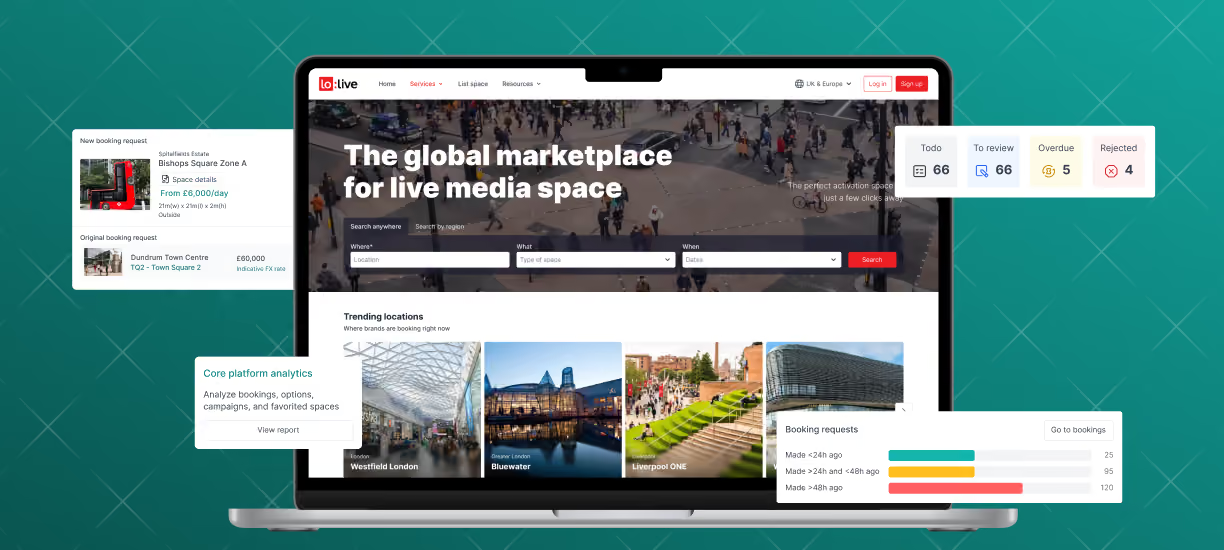
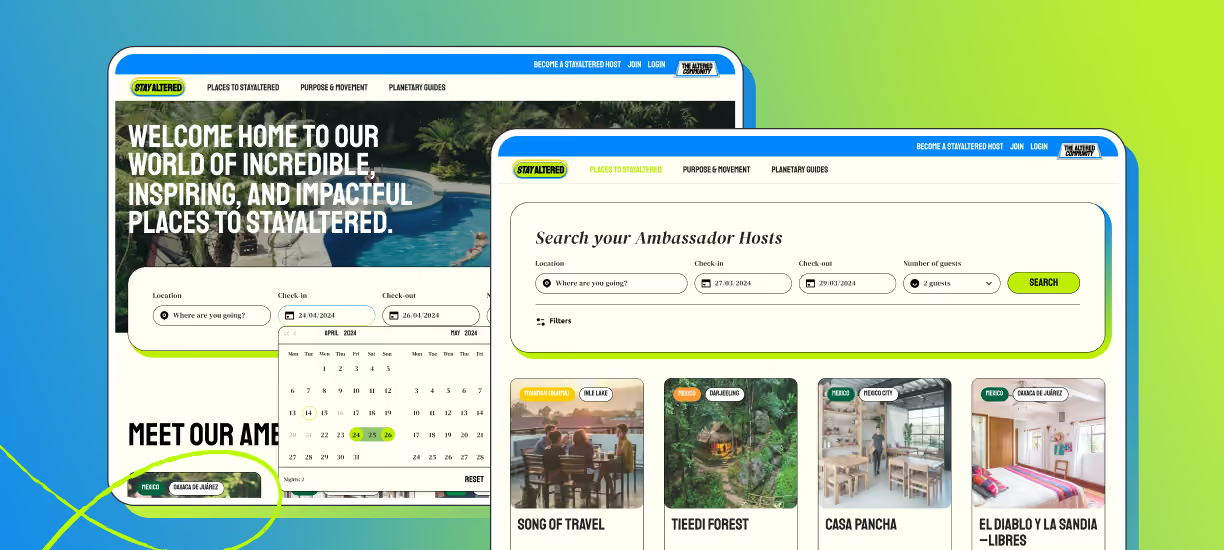
An interface built around the recommendation flow, not awkwardly fitted into.

Tripian's API wired into your product, plus anything else it needs to talk to: booking, maps, payments, ride-hailing.
Tested under real usage, not just a demo environment.
Maintenance and iteration after launch, not a one-time handoff.
Frequently asked questions and answers
COAX and Tripian work closely together on client integrations. COAX handles the frontend, custom integration, and delivery work around Tripian's engine. Reach out, and we'll walk you through exactly how that collaboration works for your project.
Yes. Tripian's engine and COAX's integration work are separate parts of the build. We'll help you scope both as part of the conversation.
Yes, that's most of the work. The recommendation engine is one piece. Wiring it into your existing product and data sources is what COAX builds around it.
You can, but Tripian's team is backend-focused and often brings in a partner for frontend, design, or custom integration work anyway. Starting with COAX means you skip that extra step and start with the same team that would end up doing the build regardless.
It depends on scope. A white-label integration into an existing product can be staged in a matter of weeks. A fuller build, with custom UI and multiple data sources, takes longer. We'll give you a real timeline once we understand your product.
What we’ll do next?
1
Contact you within 24 hours
2
Clarify your expectations, business objectives, and project requirements
3
Develop and accept a proposal
4
After that, we can start our partnership