




















































Predictive analytics for travel
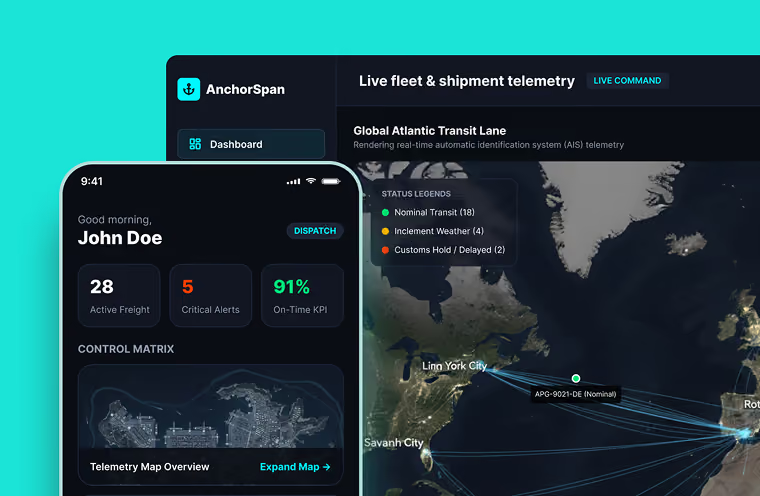
Every delay leaves a trail in your GPS, weather, and traffic data. Your team usually spots it after the complaint. We build models that spot it first. Arrival times update live. Rates track booking velocity and competitor prices. Fatigue risk shows up before anyone breaks duty-time rules. And you own every model outright.
Industry leaders we work with



Predictive analytics services we build for travel

Predictive ETA and delay prevention engines
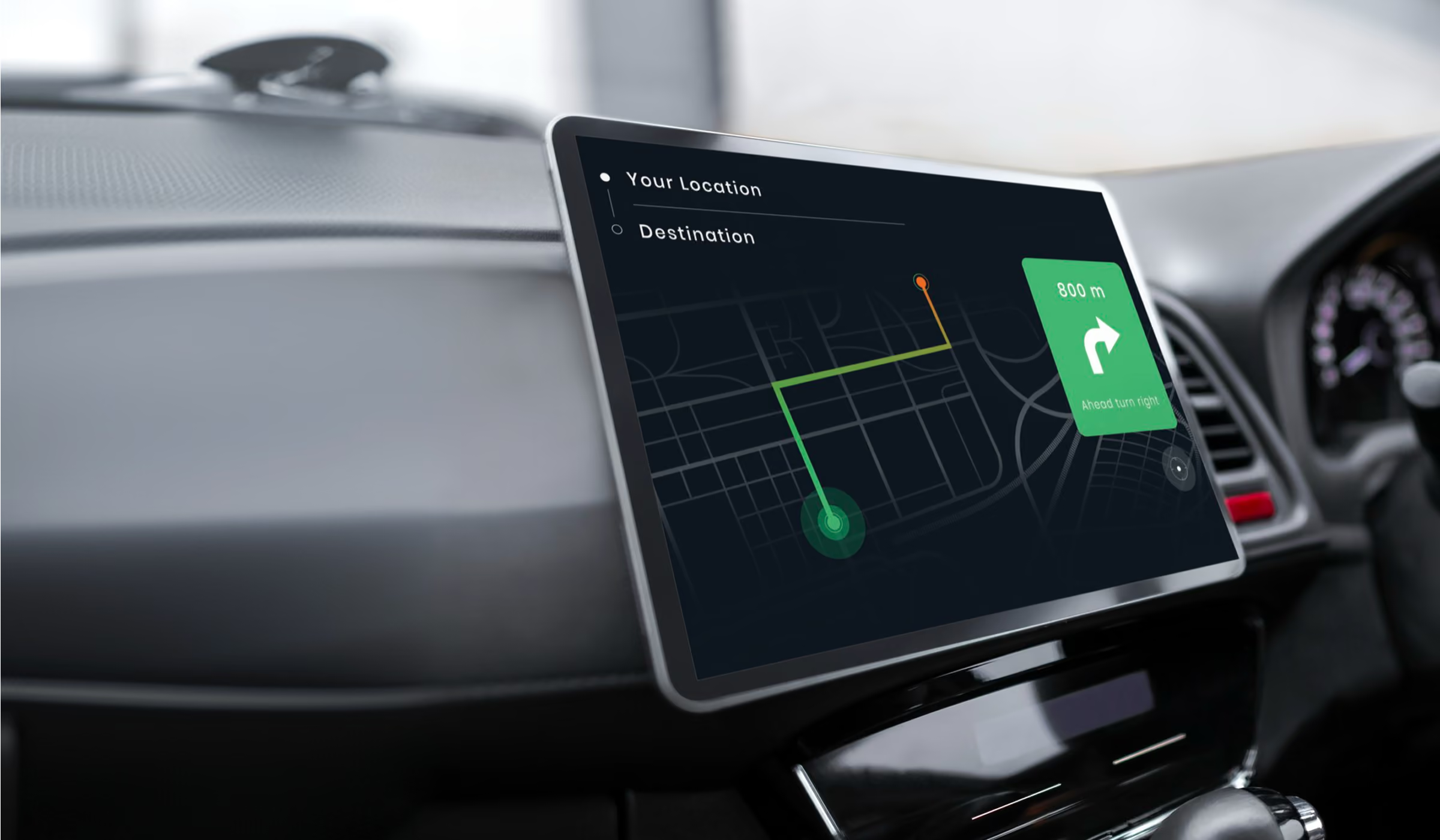
A static timetable can't see a snowstorm coming. Our pipelines combine multi-provider GPS, weather APIs, and live traffic feeds. Each prediction comes with a ±15-minute confidence band, so dispatchers know how much to trust it. That's predictive travel analytics doing its job before a delay even happens.

Dynamic pricing and yield management
Seasonal rate sheets go stale the moment you print them. Our engines track booking pace, local demand, and competitor pricing in real time. Cancellation probability factors into the math too. Built for OTAs, hotel groups, and rental fleets alike.

Predictive maintenance and IoT telematics
Engines and brakes give warning signs long before they fail. We pull in CAN-bus, OBD-II, and IoT sensor data to catch those signs early. Wear patterns and fuel waste show up before they become problems. Maintenance gets scheduled before a breakdown strands anyone.

Fatigue risk and workload optimization
Tired drivers and crews are both a safety risk and a compliance one. We apply biomathematical fatigue models to every shift. Time of day matters. So does shift length. This is predictive analytics in travel industry operations, built to catch risk before a shift even starts.

SLA and operational risk simulators
Promising a delivery window is the easy part. Our simulators let dispatchers and revenue managers stress-test that promise first. Historical probability bands show the real risk behind each commitment, before it's made. Fewer broken promises, fewer surprises later.

Cancellation and resale forecasting
Non-refundable bookings still get cancelled, and someone always eats the cost. Our models read booking patterns and forecast resale demand ahead of time. That lets properties resell at-risk inventory automatically, instead of losing it.

High-performance simulation optimization
Nobody wants to wait 15 seconds for a pricing or routing answer. We rebuild legacy math engines to run in a fraction of a second. The result: calculations that once took seconds now return almost instantly, keeping pricing and routing decisions fast enough to act on in real time.
Our predictive analytics delivery roadmap
Messy data is normal. We start there.Telemetry, EDI feeds, and PMS or TMS logs mapped by source and quality. Gaps and outdated API docs flagged before modeling starts.
Deliverable: data readiness report, use case shortlist
Models fail on dirty inputs, so pipelines come first. Kafka, SSE, and WebSocket ingestion for live GPS and sensor streams.Normalization that turns unstandardized logs into ML-ready datasets.
Deliverable: production data pipeline, data dictionary
We pick the model that fits the question. ETA, pricing, maintenance, or fatigue models in scikit-learn, PyTorch, or TensorFlow. Backtesting on your historical routes, bookings, or shifts.
Deliverable: validated models, accuracy benchmarks
A forecast nobody trusts is a wasted forecast. Confidence scores and transparent risk bands on every recommendation. One-click actions for dispatchers and revenue managers.
Deliverable: dashboard designs, interaction specs
One route, hotel, or depot goes live first. Predictions run beside current decisions to measure the gap. Baselines for late arrivals, SLA breaches, and rate performance.
Deliverable: pilot report, metrics baseline
Demand shifts. Routes change. Models drift.Accuracy tracked weekly against real outcomes. Retraining scheduled before drift shows up in revenue.
Deliverable: model monitoring dashboard, retraining plan
Predictive travel analytics results in production
89%
ETA accuracy within ±15 minutes on a 500-vehicle fleet
18% → 7%
Late deliveries after the DriveIQ AI predictive ETA engine launched
28%
Fewer SLA breaches with route risk simulation before booking
40+
HOS violations prevented in one quarter by fatigue modeling
38%
Drop in safety incidents after fatigue and HOS optimization
22%
Less overtime after predictive auto-recovery and risk clustering
15 s → 0.3 s
Simulation run time after re-engineering the Peercents math engine
Stack we use for predictive analytics in travel
Machine learning and analytics

Python

scikit-learn

PyTorch

TensorFlow

Pandas

NumPy

R
Data pipelines and cloud

Kafka

WebSockets

GraphQL

Docker

AWS Lambda
AWS S3
AWS CloudWatch
Spatial and telematics

Mapbox

Google Maps Platform

CAN-bus

OBD-II
Front-End and dashboards

React.js

Webflow

Lottie
Enterprise and payment integrations

Stripe

Xero

Mailjet

Twilio

HubSpot

Katanox

Hyperguest
What powers our predictive analytics for travel projects
Why choose COAX Software for predictive analytics in travel?
Models that cross verticals
Our shift-scheduling and route-recovery models started in a 500-vehicle fleet. We apply them to hotel housekeeping and front-desk staffing. Transit workforce planning gets the same math.

Forecasts people actually use
Dispatchers ignore predictions they can't explain. We show confidence scores and risk bands beside every recommendation. One click accepts it.

Built for live data
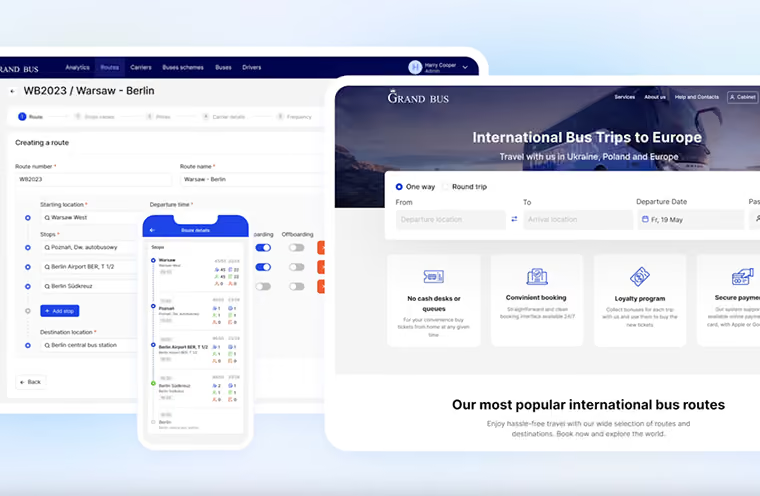
Webhooks-plus-polling, Kafka, and SSE keep predictions fed in real time. GrandBus and DrivenBus refresh vehicle positions every 10 seconds. A forecast is only as fresh as its last ping.

One team from pipeline to dashboard
Data engineers, ML specialists, and UX designers work as one unit. The pipeline, the model, and the dispatcher screen get built together. Nothing gets lost in a handoff.
FAQ
It depends on your data, but here's a real number. DriveIQ AI hit 89% accuracy within a ±15-minute window. Late deliveries dropped from 18% to 7% as a result.
Yes. Messy telemetry, outdated API docs, and unreliable EDI feeds are our starting point. We clean and normalize everything into ML-ready pipelines first. Modeling comes after.
Fully. Every model is custom-built and sits on your balance sheet as amortizable IP. You get the code, the weights, and the logic. There's no SaaS subscription to renew.
We show our work. Every recommendation carries a confidence score and a risk band. Accepting it takes one click. People stay in control of the final call.
Yes. Our engines factor in competitor pricing, booking pace, and cancellation probability. We connect through your existing APIs, including Katanox and Hyperguest, as part of our broader predictive analytics for travel.
Biomathematical SAFE and CARE models score each shift for fatigue risk. Dispatchers see the danger before assigning a route. For instance, DriveIQ AI prevented 40+ HOS violations in a single quarter. Safety incidents dropped 38%.
That's what our SLA and risk simulators do. Dispatchers and sales teams run scenarios against historical probability bands. You see cost and reliability before signing the contract for predictive travel analytics with COAX Software.










What we’ll do next?
1
Contact you within 24 hours
2
Clarify your expectations, business objectives, and project requirements
3
Develop and accept a proposal
4
After that, we can start our partnership