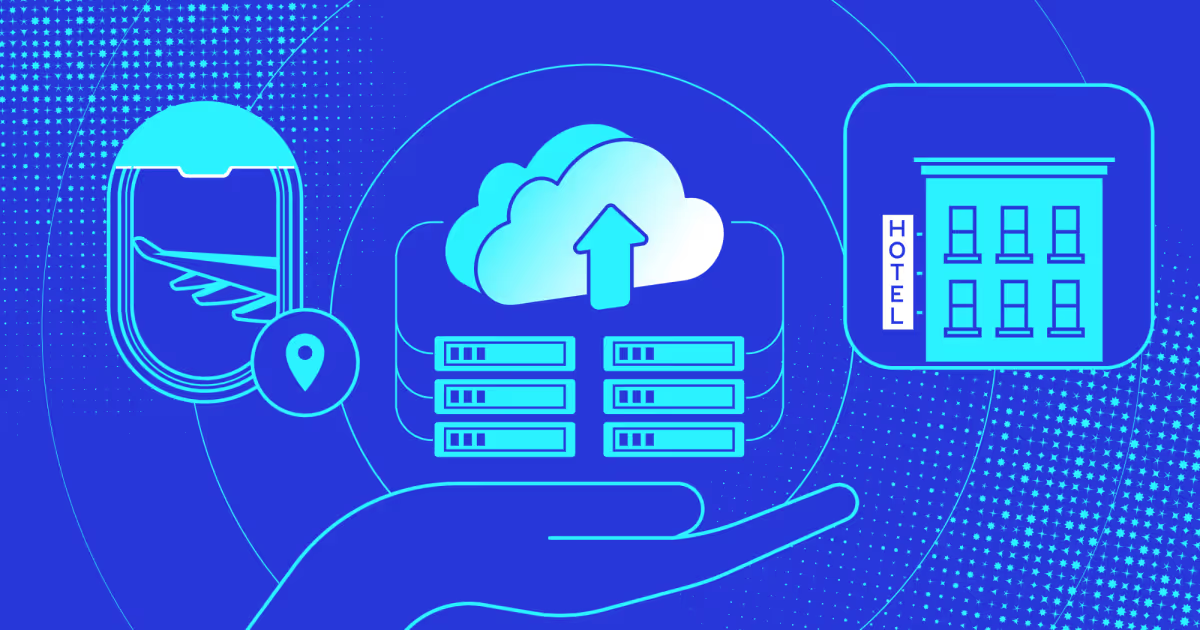
Cloud hotel software hosts your PMS, channel manager, and booking engine on remote servers instead of local hardware.
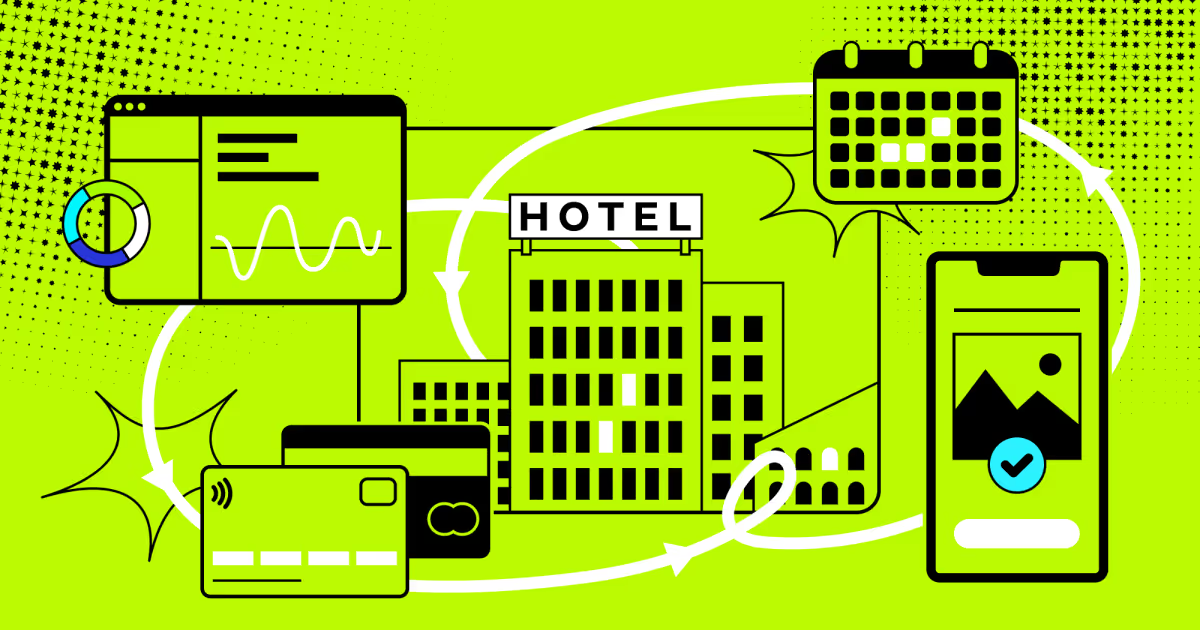
It runs one loop: booking, check-in, room assignment, billing, reporting, integrations.
Versus on-premises, cloud wins on deployment speed, cost structure, and zero IT overhead. On-premises wins only on total local control.
We tested ten platforms on native coverage, integration flexibility, scalability, onboarding speed, and true cost of ownership.
Cloudbeds leads for independent hotels, Mews for design-forward boutiques, Oracle OPERA Cloud for large chains, Little Hotelier for micro-properties under 20 rooms.
Choosing the right one means checking data architecture, deployment model, reporting depth, and growth handling, not the demo alone.
With cloud hotel solutions, you get real-time coordination that grows guest satisfaction, retention, and ROI in the long run. The benefits show up when a front desk manager doesn’t need to handle three browser tabs anymore. No more separate sheets for tonight's bookings, guest complaint messages, and a frozen sync error between the PMS and billing on the third.
Unlike on-premises systems, a cloud hotel management system requires no local server, no manual updates, and no dedicated IT staff to keep it running. The vendor manages hosting, security, and maintenance remotely.
This guide breaks down what cloud based hotel software does, who needs it, and how to choose the right one for your business.
What is cloud hotel software and why does it matter so much?
Cloud hotel software is a property management system hosted on remote servers instead of local hardware. It handles reservations, guest data, billing, and daily operations through a browser or app, accessible from any device with an internet connection.
A cloud hotel system typically bundles PMS, channel management, and payments. Everything lives in one dashboard. For growing chains, cloud based hotel management software scales without new hardware.
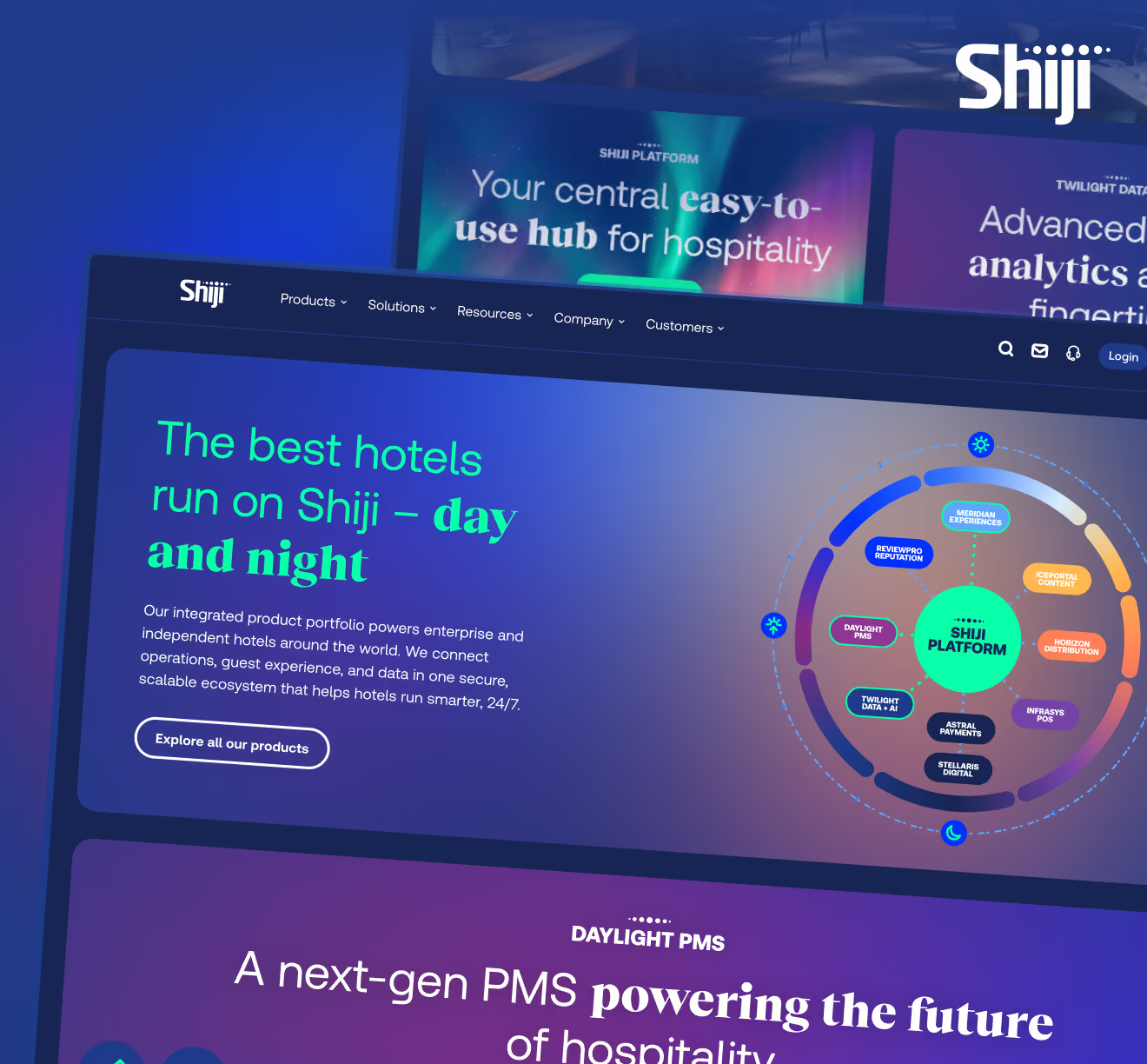
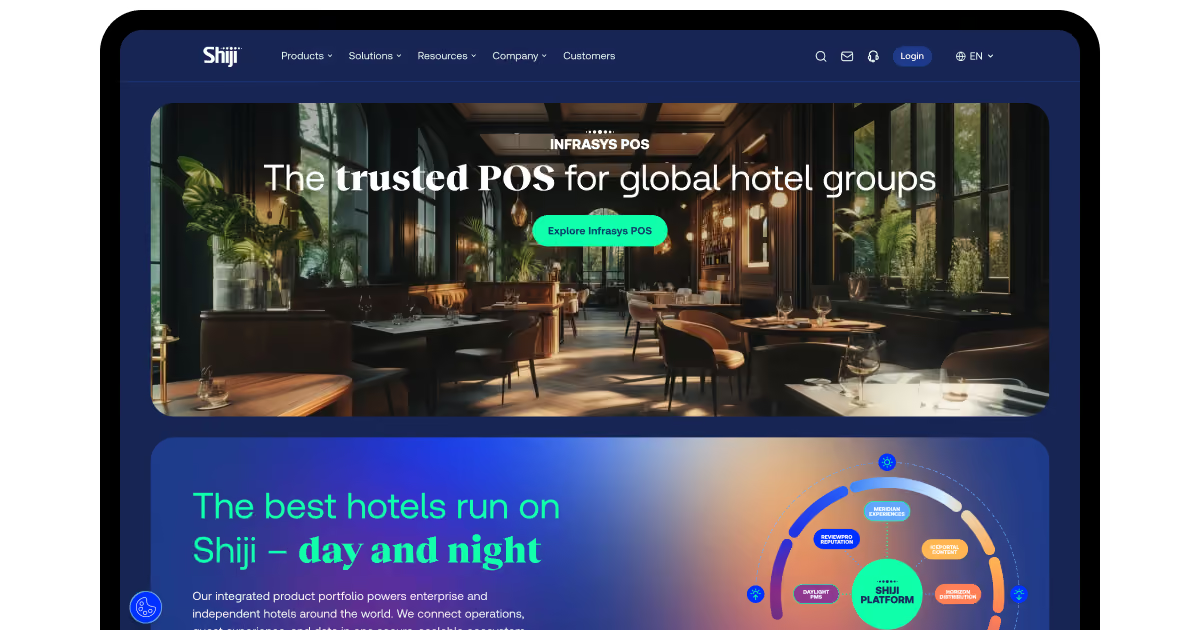
Take Shiji. It's a hospitality technology company we've partnered with. Their cloud suite covers PMS, POS, guest engagement, and payments. It supports over 91,000 hotels worldwide. COAX built the CMS behind their website redesign. It's flexible enough for their team to manage every product line alone. Same goes for cloud hotel solutions: they give you the independence that fuels your growth.
That scale is exactly why the market's expanding so fast. The global hospitality management software market hit $4.26 billion in 2025. It's projected to reach $8.04 billion by 2034.
Europe's market goes along with this growth significantly. It'll grow from $1.18 billion in 2025 to $2.31 billion by 2035. Rising adoption of cloud based hotel software drives that upward trend. So does growing focus on customer experience and efficiency. AI and big data analytics now reshape guest experience too.
How do cloud hotel solutions work?
At its core, hotel cloud software runs one continuous loop. A booking comes in, a room gets assigned, a guest checks in, and money changes hands. Every stage feeds the next automatically. The exact shape of that loop shifts by business type, though. A 400-room chain and a two-property host run very different versions of the same logic.
The workflow itself breaks into six connected stages:
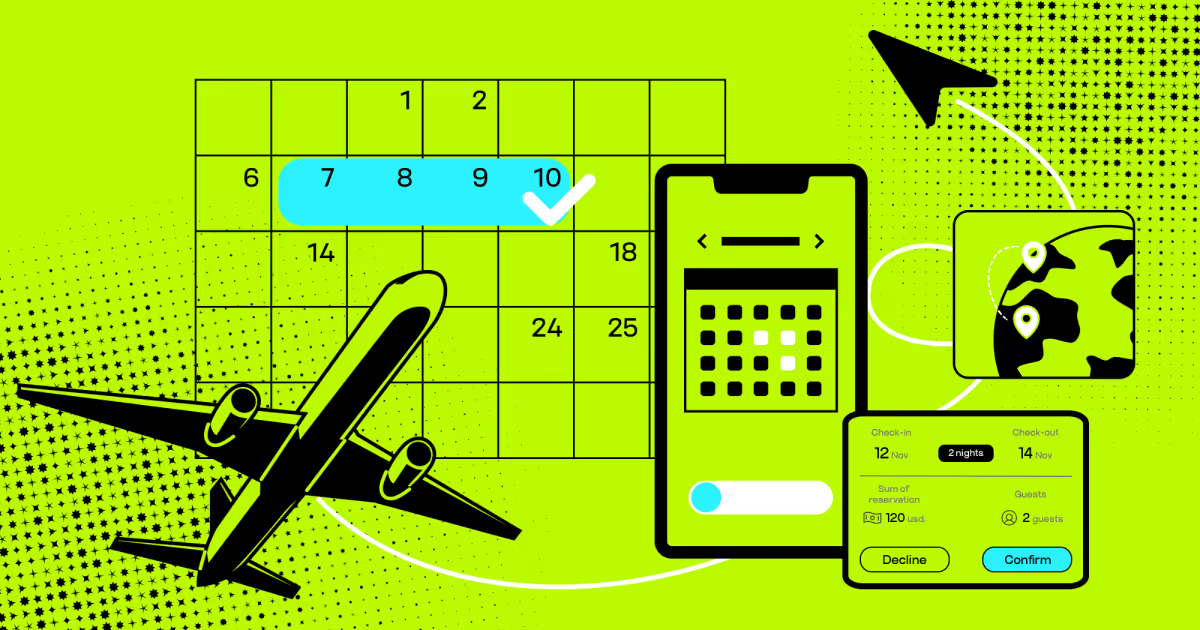
Bookings arrive through the hotel's site, an OTA, or a travel agent. A cloud hotel reservation system consolidates every channel into one calendar.
Check-in happens digitally, whether at a lobby kiosk or a guest's phone. Profiles populate instantly across every linked module.
Room assignment runs on live availability and guest preference. Housekeeping sees status changes the moment they happen.
Reporting turns occupancy and revenue data into dashboards. Managers see trends without pulling a single spreadsheet.
Integrations connect the PMS to POS, marketing tools, and channel managers. One update ripples through the whole stack.
That loop repeats for every guest, every stay, every property. What differs is scale and complexity.
Take Hosty, a vacation rental platform COAX built from scratch for the Ukrainian market. It skips the lobby-desk model. The cloud solutions for travel angle here is mobile-first by design. There's no front-office software running the show. Just a calendar, a CRM, and instant sync across every property an owner manages, all commission-free.
"The businesses that get the most out of this technology aren't the ones with the fanciest dashboard. They're the ones where every module actually talks to every other one," says Orest Falchuk, Head of Engineering at COAX Software.
That's the real distinction between cloud-based hotel software built for a boutique operator and one built for an enterprise chain. Both run on the same architecture underneath: remote hosting, browser access, and a centralized database updated live. Neither needs a server closet or an overnight IT call.
How does cloud hotel software differ from on-premises solutions?
The gap comes down to where your data lives. Hotel cloud software runs on remote servers a vendor manages for you. On-premises systems sit on hardware inside your own building. Everything else (like cost, security, speed) flows from that one decision.
Feature
Cloud hotel software
On-premises solutions
Infrastructure & deployment
Hosted on remote vendor servers; live in hours via an internet connection.
Requires physical servers and networking gear on-site; deployment takes months.
Data storage & security
Data stored in secure off-site data centers; vendor manages encryption, patches, and backups.
Data kept on local drives; property is solely responsible for backups, hardware failures, and security.
Cost structure
Subscription-based (predictable monthly fee per room); low initial investment.
Large upfront capital expenditure (hardware, licenses); ongoing annual maintenance fees.
Maintenance & updates
Automatic, hands-free updates with zero downtime; all properties stay on the latest version.
Manual updates handled by IT staff; requires scheduling, testing, and potential system downtime.
Accessibility & mobility
Accessible from any device or location with an internet connection.
Restricted to specific workstations wired directly to the local on-site server.
Deployment and infrastructure
Deployment defines everything that follows. Cloud platforms need nothing but a login and an internet connection.
On-premises setups need physical servers, networking gear, and dedicated space on-site. Your team installs it, configures it, and keeps it running.
A hotel cloud PMS typically goes live in hours, not weeks. The vendor handles hosting, capacity, and scaling behind the scenes. On-premises deployment can take months, and every upgrade means new hardware.
That gap alone pushes many properties toward the cloud.
Data storage and security
Data storage splits along the same line as deployment. Cloud systems store guest and booking records off-site, spread across secure data centers.
Cloud based hotel software relies on a shared responsibility model. The vendor handles encryption, patching, and threat monitoring around the clock. Your team just needs a stable connection to reach it.
On-premises security depends entirely on your own team's diligence. A hard drive failure or break-in can mean permanent data loss. There's no vendor backup layer catching that mistake for you.
On-premises systems keep everything local, on drives you own and manage. That's real control, but real responsibility too.
Cost structure and setup
Cost is where the two models diverge fastest. Cloud tools run on subscriptions, usually billed per room monthly.
On-premises tools front-load cost into hardware, licenses, and installation labor.
Cloud pricing spreads expense over time, with minimal upfront investment required.
On-premises pricing demands capital before a single reservation gets processed.
Cloud contracts typically bundle support, updates, and hosting into one fee.
On-premises contracts separate licensing from the annual maintenance fee you'll still owe.
That structural difference shapes which properties each model actually suits.
Maintenance and updates
Maintenance is the recurring cost nobody budgets for properly. Cloud vendors push updates automatically, with zero downtime for staff.
On-premises teams schedule updates manually, often during off-peak hours to limit disruption.
A cloud based hotel booking software platform stays current without anyone lifting a finger.
With cloud solutions, a property on the system runs the same version, always.
On-premises upgrades require IT involvement, testing, and sometimes a service interruption.
Skip an update on the on-premises tool for too long, and security gaps start piling up quietly.
Accessibility and staff efficiency
Accessibility changes how your team actually works day to day. Cloud platforms run on any device, from any location.
On-premises systems tie staff to specific terminals wired to the local server.
Cloud based hotel management lets a manager approve a rate change from their phone.
Front desk staff can pull up a guest profile from a tablet mid-lobby. On-premises staff wait for the right workstation to free up. That friction adds minutes to tasks that should take seconds.
Who needs cloud hotel management software?
Any property that takes bookings benefits from cloud hotel software. But some business types feel the difference immediately, and it's worth breaking down why.
Independent boutique hotels
Small properties run lean, often with one person covering three roles at once. A hotel PMS built for the cloud removes the need for dedicated IT staff. Owners manage reservations, rates, and guest messages from a single tablet. There's no server to maintain and no upfront hardware budget required. For a ten-room property, that's the difference between profit and breakeven.
Multi-property hotel groups and franchises
Chains juggling several locations need one dashboard, not ten separate systems. Cloud based hotel property management systems centralize rates, availability, and reporting across every property. Managers see performance side by side instead of chasing spreadsheets from each site.
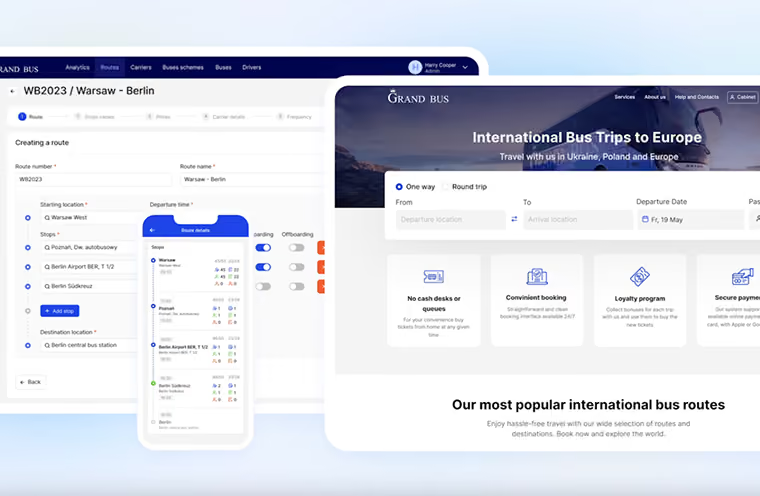
COAX Software built a similar structure for lo:live, a marketplace connecting hirers with venue owners. Its campaign management system let users coordinate multiple locations under one unified dashboard. That same centralized logic is what a multi-property hotel group needs: one login, every property visible, no reconciliation between sites.
Extended-stay and serviced apartments
Guests staying weeks or months need billing that adjusts automatically. Cloud systems handle recurring charges, mid-stay rate changes, and rolling folios cleanly. Manual tracking breaks down fast once stays stretch past a few nights. Automated invoicing keeps finance accurate without someone auditing every folio by hand.
Hostels and budget properties
Margins are quite thin here, so every operational hour matters. Cloud based hotel software cuts front-desk time through digital check-in and automated housekeeping updates. Staff turnover tends to run high in this segment too. A cloud system with a simple interface trains new hires in minutes, not days.
Resorts and full-service complexes
Resorts juggle rooms, restaurants, spas, and activities under one roof. Cloud platforms unify all these departments into a single operational view. Housekeeping, front office, and F&O sync in real time across every module. That coordination prevents the gaps that cost resorts revenue during peak season.
Short-term rental hosts and small property owners
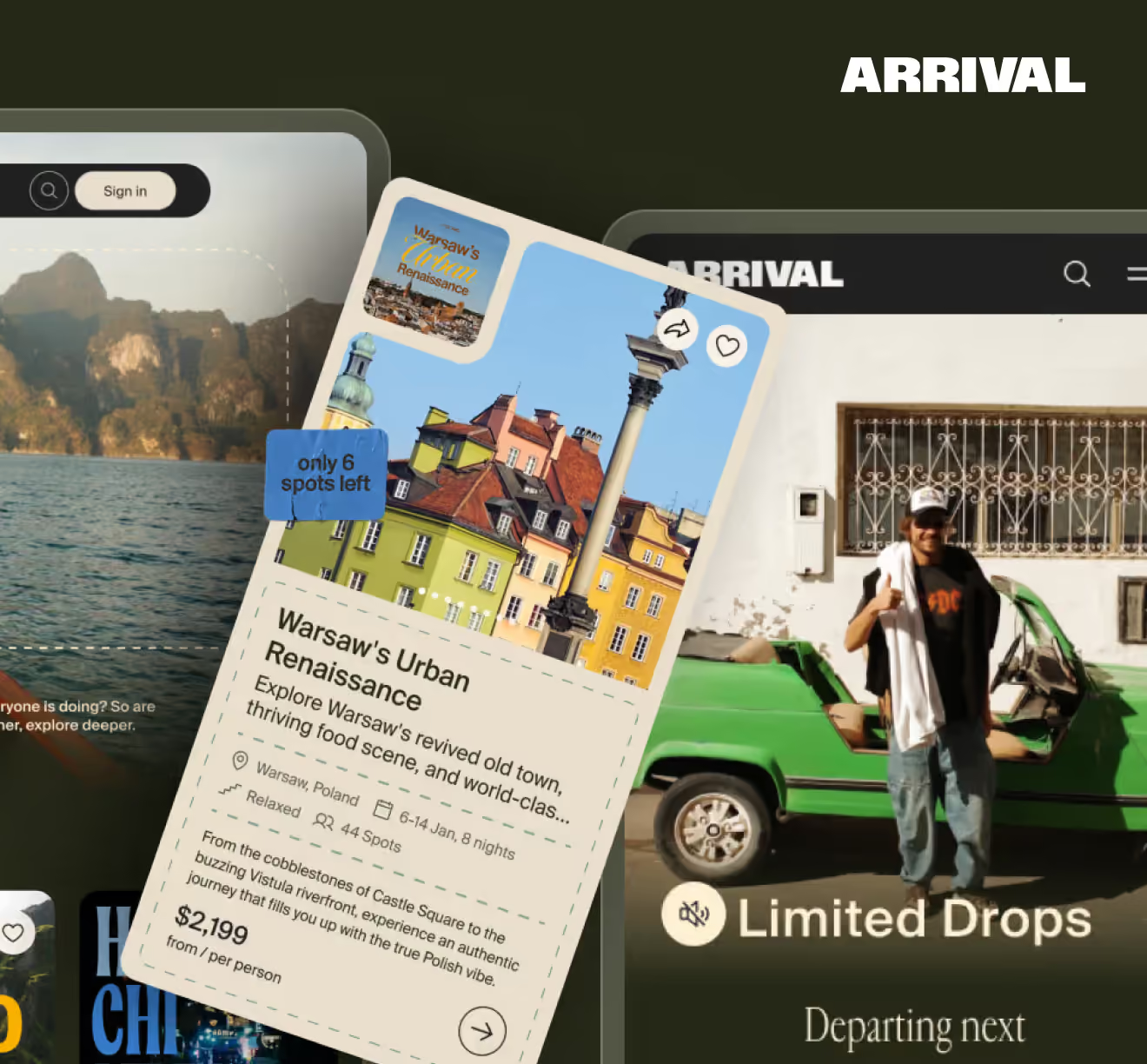
Individual hosts managing a handful of units face a different problem: staying visible without paying commission. Hosty, a vacation rental platform we built, solves this. Owners get a booking widget for Instagram or TikTok, and guests book directly. That single feature illustrates that cloud tools let small operators compete without an OTA cut eating their margin.
Whatever the property type, the underlying need stays consistent. Staff want one system, accessible anywhere, that doesn't demand a server room to run.
What to look for in cloud hotel solutions?
Feature lists all look similar on paper. What separates one cloud hotel software vendor from many others is whether the features it provides actually connect. Here's what matters most.
Key solution / Feature area
What benefit it brings
Essential system integrations
PMS & Front desk Operations
Centralizes room status and billing. Enables one-click check-ins. Unlocks guest preferences across stays.
Housekeeping, billing, POS, CRM
Reservation engine & Distribution
Centralizes bookings from all channels. Maximizes website bookings. Applies dynamic, duration-based rates.
Property website, OTAs, GDS, metasearch engines
Channel management
Updates inventory in real time. Enforces automatic rate parity. Connects directly to global OTAs.
Core PMS, CRS, OTAs, travel agencies
Revenue management & Dynamic pricing
Adjusts rates based on live demand. Projects future occupancy trends. Replaces static manual pricing.
Core PMS, channel managers, rate shoppers
Guest experience & CRM
Eliminates departmental data silos. Powers targeted pre-/post-stay messaging. Converts one-time guests into repeat stayers.
Your PMS is the operational core. Every check-in, room status change, and guest note should feed the rest of your system instantly. Look for one-click check-in, live room status, and guest profiles that carry history across every stay. If your front desk tool sits isolated from housekeeping and billing, you've bought a scheduler, not a cloud PMS hotel software platform.
Reservation management and booking engine
A strong reservation system captures demand from every channel at once. It should sync availability across your website, OTAs, and travel agents within seconds. Rate and room-type flexibility matters too. You need to set different prices by date, channel, or length of stay, without touching each channel manually.
Channel management and distribution
Your channel manager keeps you visible everywhere guests actually search. It should distribute inventory across OTAs, GDS, and metasearch engines in real time. Rate parity has to hold automatically, or you'll undercut your own direct bookings without realizing it.
"The moment you're running more than one department, or more than one location, the absence of a shared context layer starts costing you. You can't fix that with better spreadsheets. You fix it with infrastructure," says Orest Falchuk, Head of Engineering at COAX Software.
Revenue management and dynamic pricing
Static rates leave money on the table every single day. A cloud based hotel system should adjust pricing continuously, based on demand, booking pace, and competitor rates. Forecasting matters as much as the pricing engine itself. You want visibility into where occupancy is heading, not just where it's been.
Guest experience and CRM
Guest data should follow the guest, not sit trapped in one department. Pre-arrival messaging, in-stay requests, and post-stay follow-ups all need to draw from the same profile. That's what turns a one-time booking into a repeat guest.
Payments and reporting
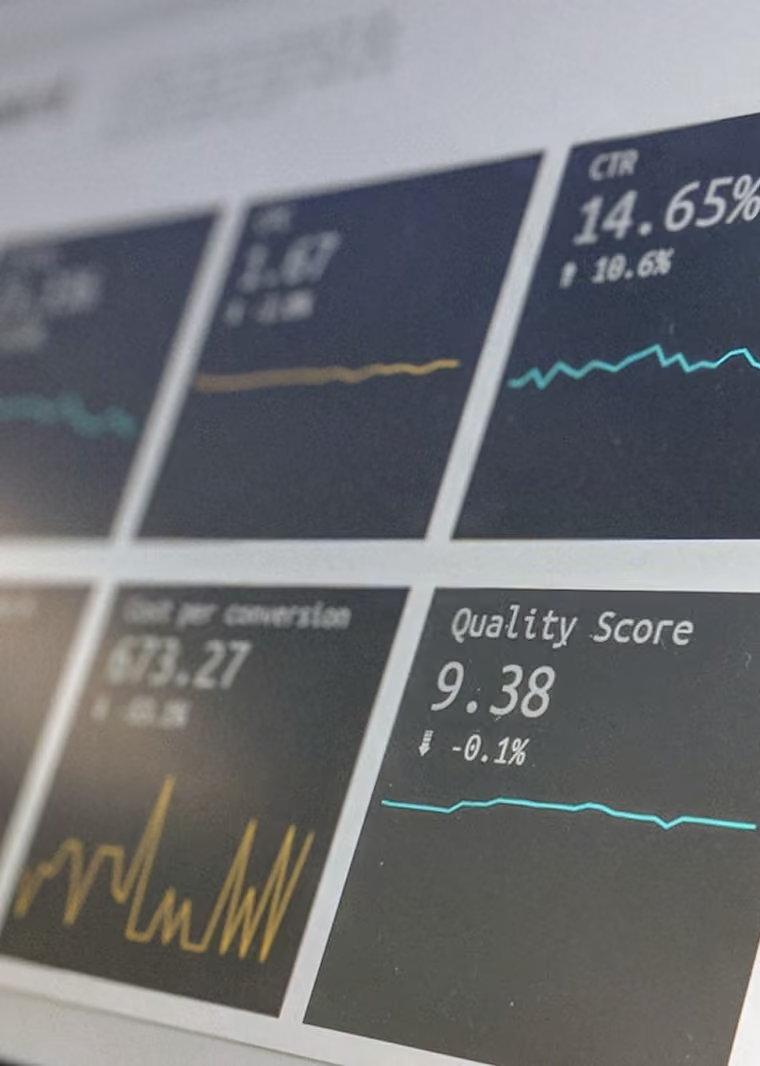
Payment processing should route charges automatically, from room rate to spa to room service. Nobody should be reconciling folios by hand at month-end. On the reporting side, look for real-time dashboards covering occupancy, ADR, and RevPAR, not static reports pulled once a week.
Integrations and API access
No platform does everything a property needs. Cloud based hotel management software worth choosing ships with an open API and a real integrations marketplace. That's what lets you connect a POS system, accounting software, or a proprietary tool without breaking your data model.
Off-the-shelf platforms rarely fit every workflow perfectly. That's where our cloud software development services come in. We build custom features, connect new integrations, and design APIs that link your system to the providers you already rely on.
Whether you're building a fully new solution or accelerating a legacy renovation, we don't start from zero. Years of solving similar challenges across travel and hospitality mean proven architecture patterns and reusable accelerators are already in place. That typically cuts delivery time by 50 to 60% compared to a generalist dev shop, so you go digital faster, without the usual rebuild pain.
Why do you need a cloud hotel management system?
Features only matter if they change outcomes. Here's what the right cloud hotel software actually delivers, backed by numbers from operators already running it.
Reduced operational complexity.
Automation absorbs the manual grind: rate updates, channel syncs, guest messages, financial logging. Your team spends time on hospitality, not admin work.
The payoff shows up in hours saved. 89% of hoteliers say their PMS saves the team two to ten hours weekly. 17% save over ten hours weekly, which adds up to 500 hours a year per property. Onboarding shrinks too. 92% say modern interfaces cut staff training from weeks to days.
More direct bookings, less OTA dependence.
A strong booking engine paired with smart distribution captures demand on your terms. You keep more margin per reservation and own the guest relationship directly.
COAX built exactly this logic into Re:Plan, a platform for reselling non-refundable hotel reservations. It turns unsold inventory into recovered revenue instead of a write-off. That same principle, capturing demand your system would otherwise lose to a third party, applies whether you're monetizing empty rooms or steering guests away from OTA commissions.
Smarter pricing and stronger RevPAR.
Dynamic pricing tied to real-time demand consistently beats manual rate-setting. The more data feeding the system, the sharper its pricing recommendations get.
That shift changes how operators view their platform entirely. 91% say their hotel cloud PMS directly drives revenue growth through upsells, direct bookings, and rate optimization. 88% report measurable cost savings, and 42% call those savings significant.
Better guest experiences at scale.
Personalized messaging, faster check-in, and timely upsell offers all depend on one thing: centralized guest data. Automated workflows make that data usable in the moment, not after the fact.
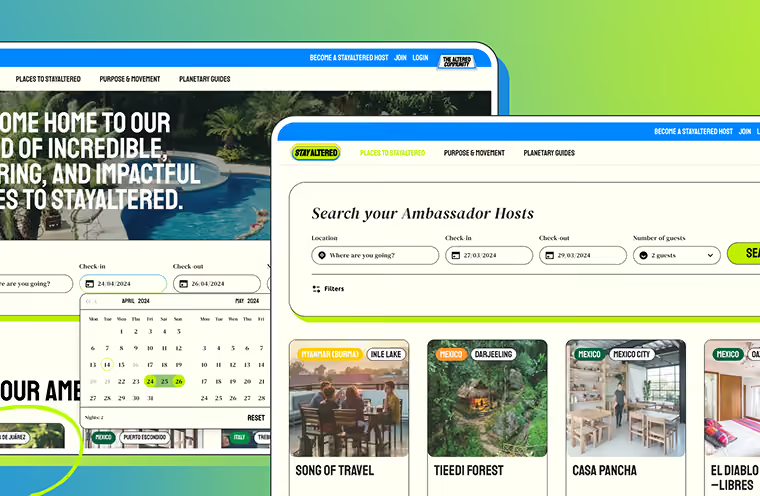
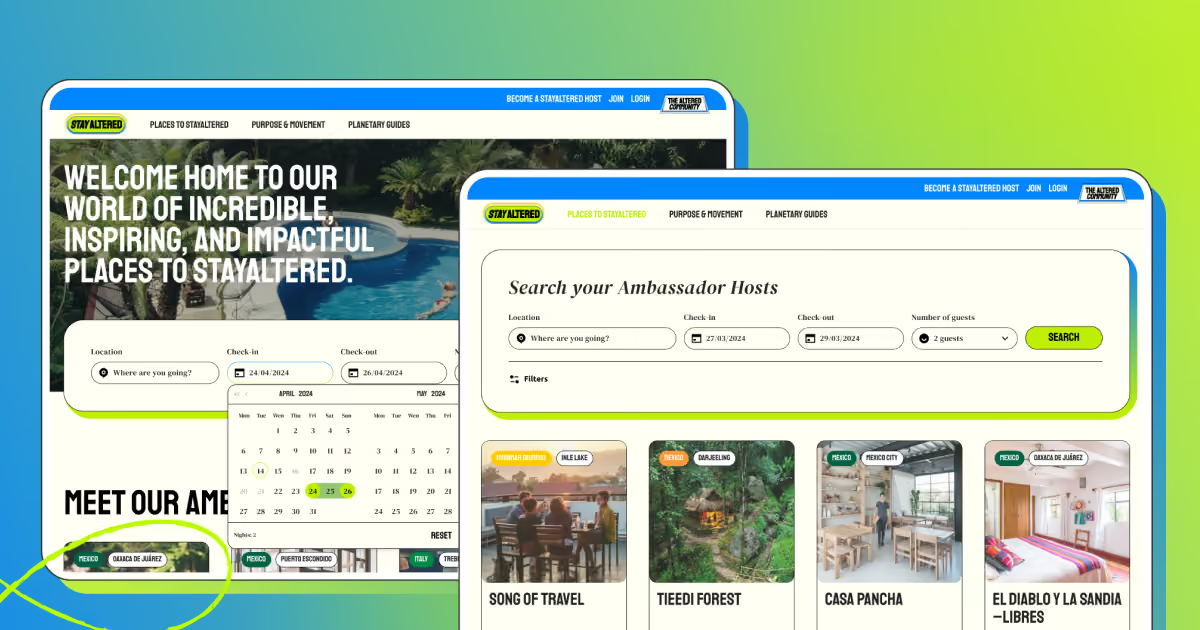
StayAltered shows a different version of this principle. Its platform connects independent hosts and conscious travelers through cloud based hotel property management system-style integrations, pulling real-time availability from Katanox and Hyperguest. Guests see one consistent booking experience regardless of which host or PMS sits behind it. That consistency is what centralized data makes possible, at any scale.
Faster, more confident decision-making.
When KPIs, channel performance, and forecasts live in one dashboard, guesswork disappears. You act on real-time data, not last week's manual report.
Operators increasingly treat their PMS as a control tower, not a collection of disconnected apps. 48% prioritize reporting and business intelligence. 44% value cloud access and remote management directly.
That's the real argument for a cloud based hotel software piece. It's not one feature doing one job. It's every department pulling from the same live picture, so decisions get faster and cheaper the longer you run on it.
Best cloud hotel software
Picking the right cloud hotel management software means testing against real operational strain, not a feature checklist. We built five criteria specifically for this evaluation:
Depth of native coverage: does the platform run PMS, channel manager, and booking engine on one data layer, or bolt them together?
Integration flexibility: does it ship an open API, or lock you into a closed vendor ecosystem?
Scalability curve: does the system stay usable at 5 properties and at 50?
Onboarding speed: how many days from signup to a functioning front desk?
True cost of ownership: what does the platform actually cost once modules, rooms, and support tiers scale up?
Platform
Best for
Deployment speed
Pricing model
Open API
Cloudbeds
Independent hotels wanting one unified system
Days
Predictable, tiered
Yes
Mews
Boutique and lifestyle properties
One to two weeks
Modular, scales with usage
Yes
Oracle OPERA Cloud
Large chains and full-service resorts
Months
Custom enterprise
Yes, extensive
HotelRunner
Hotels wanting deep OTA connectivity
Days
Modular, adaptive
Yes
Hotelogix
Budget-conscious small to mid-size hotels
Days
Low, subscription-based
Limited
Stayntouch
Guest-profile-driven boutique properties
One to two weeks
Custom
Moderate
Little Hotelier
Micro-properties and B&Bs under 20 rooms
Days
Low, bundled
Limited
InnRoad
Small independent hotels wanting simplicity
Days
Low, flat-rate
Limited
Infor HMS
Mid-scale groups needing built-in revenue management
Weeks
Enterprise-oriented
Moderate
Hostaway
Hybrid vacation rental and boutique hotel portfolios
One to two weeks
Tiered, per-unit
Yes
That table gives you the shape. The detail underneath is where the real decision gets made.
1. Cloudbeds: best cloud hotel PMS for independent operators
Cloudbeds bundles PMS, channel manager, booking engine, and reporting into one cloud based hotel software system. That tight integration is its biggest strength, and it cuts your dependence on third-party add-ons.
Features: front desk operations, real-time channel sync, integrated payments, and a built-in booking engine ship natively.
Pricing: transparent and predictable, though it's not the cheapest fit for a tiny property with minimal needs.
Integrations: strong OTA connectivity and a growing marketplace of add-ons.
Our evaluation: fast onboarding, clean interface, and solid depth for single-property or small-group operators. Advanced customization stays limited compared to enterprise systems.
2. Mews: best hotel cloud software for design-forward properties
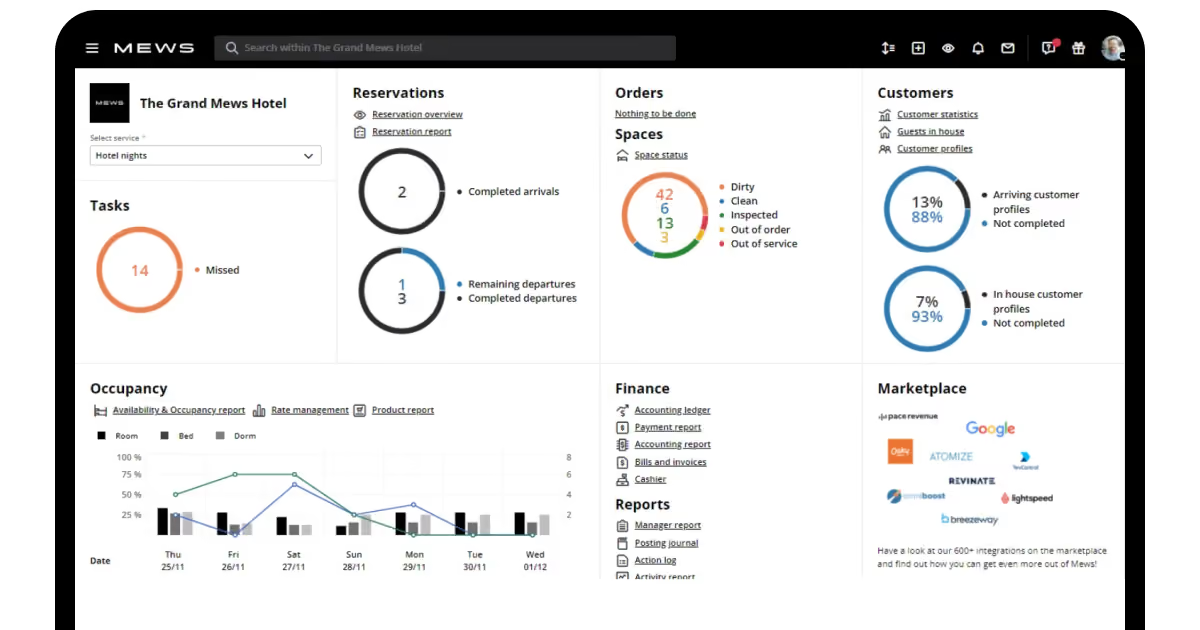
Mews leans hard into automation and an open API. Contactless check-in, digital keys, and self-service workflows are native, and it shows in every feature.
Features: automated check-in, payments, housekeeping coordination, and an extensive integration marketplace.
Pricing: modular, and costs can climb fast once you add integrations and usage-based features.
Integrations: one of the most flexible on this list, built for hotels that connect proprietary tools.
Our evaluation: modern interface, strong automation defaults, but initial configuration takes real setup time. Boutique operators looking for a genuinely modern cloud hotel PMS should shortlist this one.
3. Oracle OPERA Cloud: best for large chains and resorts
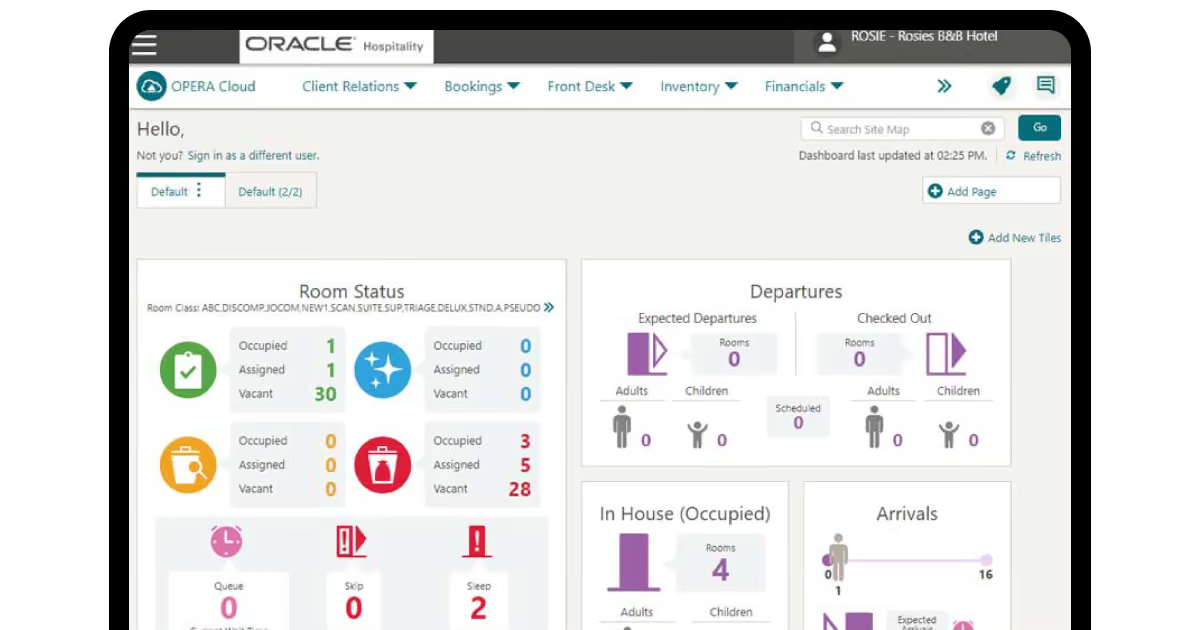
Oracle OPERA Cloud handles the operational complexity that breaks smaller systems. Multi-property management, deep reporting, and role-based access all run at enterprise depth.
Features: advanced configuration, audit trails, and compliance tooling built for global chains.
Pricing: custom enterprise, typically well above mid-market platforms once implementation costs get factored in.
Integrations: extensive, built for large IT teams managing dozens of connected systems.
Our evaluation: unmatched depth for full-service resorts. It's arguably the best cloud based hotel system for chains crossing 150-plus rooms, but overkill below that line.
4. HotelRunner: best for OTA-heavy distribution strategies
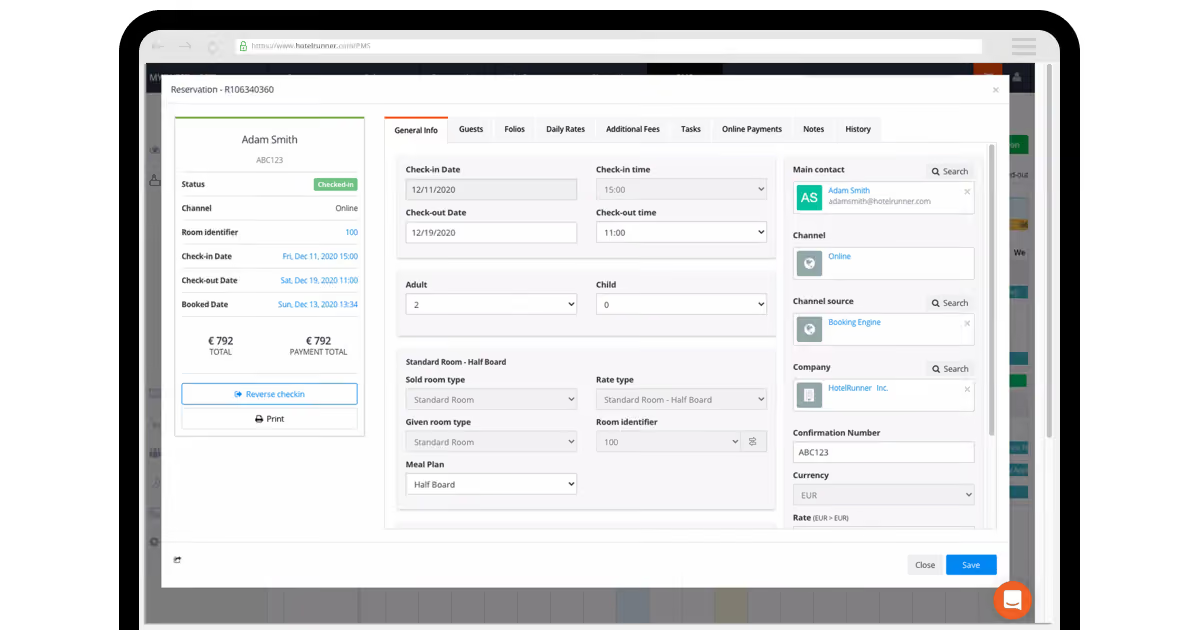
HotelRunner centers its whole architecture around distribution reach. PMS, channel manager, and booking engine connect natively to a wide OTA network.
Features: intelligent automation tools, centralized dashboard, and strong global marketplace connectivity.
Pricing: modular and cost-adaptive, letting smaller properties start lean and expand later.
Integrations: broad OTA and travel-marketplace coverage out of the box.
Our evaluation: intuitive for teams juggling multiple channels daily. This cloud hotel management software option suits hotels that prioritize distribution reach over deep customization.
5. Hotelogix: best budget cloud based hotel software
Hotelogix targets small to mid-size hotels moving off legacy tools for the first time. Core PMS functions ship alongside basic channel management and reporting.
Features: essential front-desk operations, channel connectivity, and straightforward booking management.
Pricing: one of the most affordable subscription models in this list.
Integrations: functional but lighter than mid-market competitors.
Our evaluation: easy to learn fast. The interface feels dated next to newer platforms, and automation stays basic.
6. Stayntouch: best guest-profile-driven PMS
Stayntouch builds its entire system around the guest profile, not the room record. That shift speeds up upsells and personalized service.
Features: mobile-first check-in, guest-centric workflows, and fast service recovery tools.
Pricing: custom, scaled to property complexity.
Integrations: moderate, strongest on guest-facing tools rather than back-office finance.
Our evaluation: excellent for boutique and upscale properties. Complex group billing needs a supplemental tool.
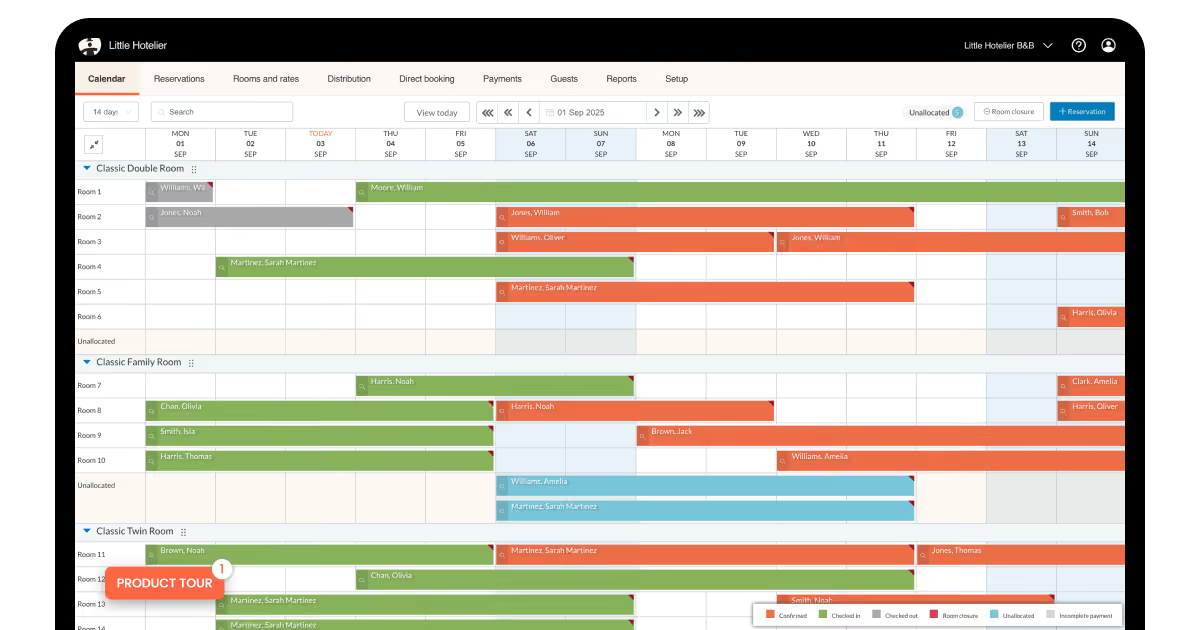
7. Little Hotelier: best all-in-one for micro-properties
Little Hotelier serves properties under 20 rooms where the owner often runs every department. Bundled PMS, channel manager, and booking engine cut down on vendor sprawl.
Features: unified dashboard covering reservations, distribution, and basic reporting.
Pricing: low and bundled, built for solo or two-person operations.
Integrations: limited but sufficient at this property size.
Our evaluation: strong fit for B&Bs and guesthouses running lean hotel cloud software. Multi-property owners will hit reporting gaps quickly.
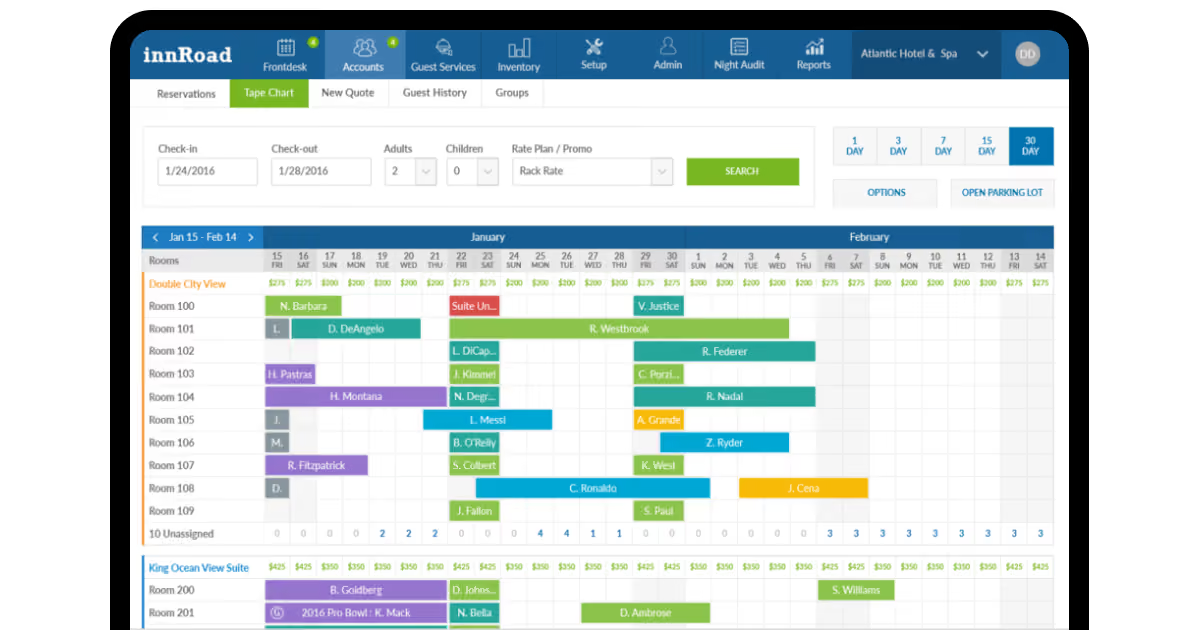
8. InnRoad: best cloud hotel PMS for simplicity
InnRoad strips out configuration overhead for small independent hotels. Onboarding stays fast, and the interface needs no technical background.
Features: core PMS, basic channel connectivity, and streamlined booking flows.
Pricing: flat-rate and predictable, ideal for lean budgets.
Integrations: limited compared to platforms built for scale.
Our evaluation: reliable for a first cloud migration. Growth-minded properties will outgrow it faster than expected.
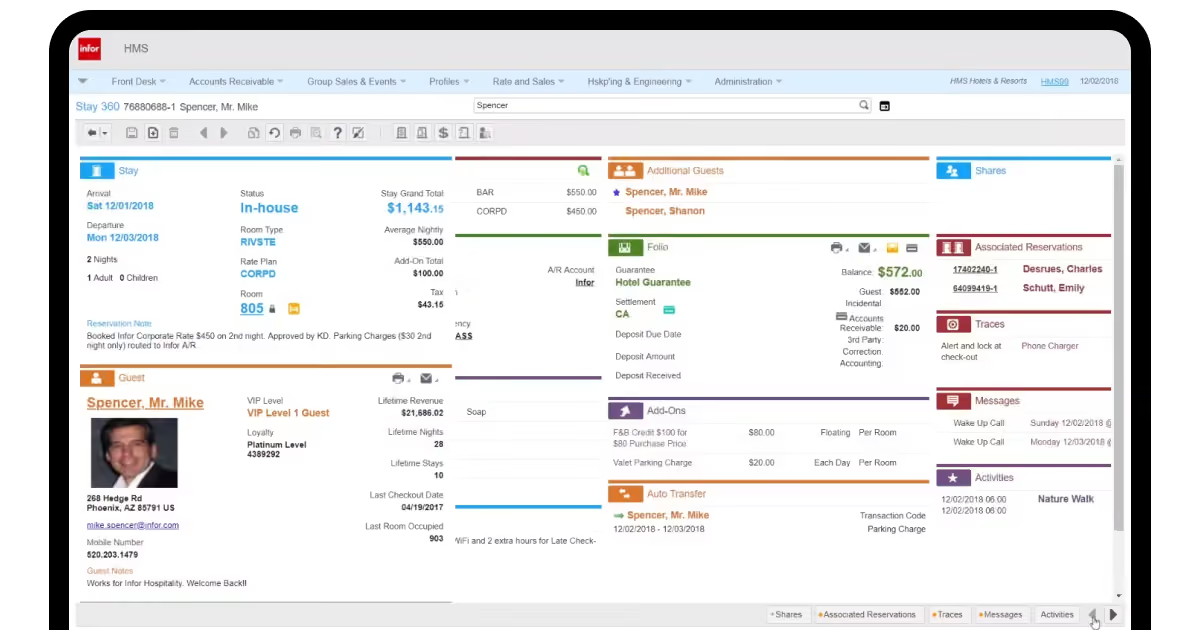
9. Infor HMS: best for revenue-integrated mid-scale groups
Infor HMS embeds revenue management logic directly into the PMS. That removes the manual handoff between rate strategy and daily operations.
Features: native revenue tools, multi-property coordination, and tighter rate-decision cycles.
Pricing: enterprise-oriented, with support costs that can climb for smaller teams.
Integrations: moderate, sufficient for groups running five to twenty properties.
Our evaluation: strong pick where pricing strategy needs to live inside daily operations. Support can feel slow for fast-moving teams.
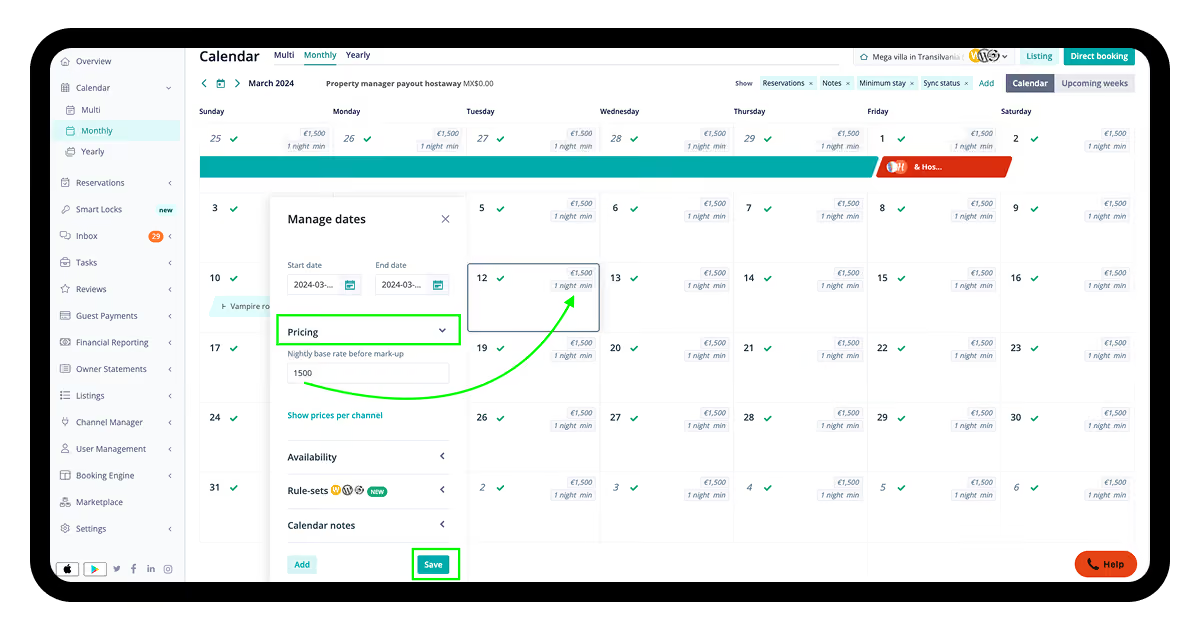
10. Hostaway: best hybrid vacation rental and hotel platform
Hostaway bridges vacation rental units and boutique hotel inventory under one system. That hybrid coverage is rare among pure-play cloud based hotel software platforms.
Features: unified inbox, dual-category channel management, and cross-portfolio booking coordination.
Pricing: tiered, scaling per unit managed.
Integrations: solid OTA coverage across both rental and hotel categories.
Our evaluation: ideal for operators expanding from short-term rentals into hotel flags. Full-service hotel depth stays lighter than dedicated PMS platforms.
Every platform above clears the baseline: real-time sync, remote access, automatic updates. Even the best cloud base hotel software on this list, though, was built for a general use case, not your exact one.
A 40-property asset manager, a viral travel brand, and a commission-free rental host all need different things from the same category of tool. Sometimes the gap between what a vendor ships and what your operation actually runs on is wide enough that no plan tier closes it.
That's where COAX comes in. We've spent nearly 20 years focused on travel, transportation, logistics, and mobility technology, building booking platforms, reservation systems, marketplaces, concierge tools, payments infrastructure, revenue optimization, operational automation, and supplier connectivity along the way.
That depth doesn't rotate out the door either. Our median engineering tenure is 6.5 years, well above the company median of 3.1 years. Engineers who've solved your kind of integration problem before tend to still be here when you need them again. That's accumulated knowledge working for you, not a new developer relearning your stack from scratch.
How to choose the right hotel cloud software?
Choosing the right one comes down to five questions. Ask whether functions run natively on one data layer, whether the platform is genuinely cloud-based, whether reporting consolidates automatically, whether it scales without a rebuild, and where AI actually touches your data. Answer those honestly, and most vendor pitches sort themselves out fast.
Are the capabilities native or stitched together?
Features built on a single backend talk to each other instantly. Features bolted on through acquisitions or third-party plug-ins introduce lag, mismatched records, and vendor finger-pointing when something breaks.
Ask directly: does your cloud based hotel PMS, channel manager, and booking engine share one database, or does "all-in-one" just mean four logins behind one homepage?
Is the platform actually cloud-based?
A genuine cloud-based hotel management system means updates push automatically, staff log in from any device, and there's no server closet to maintain. That matters most for lean teams without a dedicated IT hire. Confirm the vendor isn't running a hosted version of an on-premises product, since that hybrid setup often keeps the maintenance burden while losing the local control.
How strong is the reporting layer?
A dashboard pulling occupancy, revenue, and guest data into one live view separates a real platform from a pile of disconnected modules. If your team still exports CSVs from three systems to build a Monday report, the software isn't doing its job. Ask to see the reporting screen live during a demo, not a screenshot in a slide deck.
Does it scale without forcing a rebuild?
The right cloud hotel software handles more properties, more channels, and sharper revenue logic without a platform swap. Growth shouldn't mean starting over. Ask what happens operationally at double your current room count, not just what the pricing page says.
How is AI actually applied, and on what data?
AI earns its place in demand forecasting and dynamic pricing right now, but only when it runs on unified data. A system pulling from one connected backend can apply AI across your whole operation. A fragmented stack can only apply it to whatever slice of data happens to sit in one place.
Run every shortlisted platform through the same five checks before you sign anything.
Step
What to check
Red flag
Data architecture
Ask for the backend diagram, not the sales pitch
Vendor can't explain how modules share data
Deployment model
Confirm true cloud hosting, not a hosted legacy build
Mentions "on-premise version, hosted for you"
Reporting demo
Watch a live dashboard pull cross-department data
Reports still require manual CSV exports
Growth scenario
Ask what changes at double your current scale
Vendor can't answer without a new sales call
AI data source
Ask which data feeds the AI pricing or forecasting tools
AI runs on a narrow, siloed dataset
That table isn't exhaustive. It's the minimum bar before a contract gets signed.
"Many businesses evaluate software by what it shows them in a demo. The better question is what happens to your data the day you outgrow the plan you bought," says Orest Falchuk, Head of Engineering at COAX Software.
We've worked with plenty of clients who tried the packaged route first, and we know the failure pattern well. The tool goes live, then the legacy integration needs workarounds nobody budgeted for. Reporting doesn't match how the business actually tracks performance. Within months, the ops team rebuilds the missing logic in spreadsheets, running parallel to the platform they paid for.
Hotel and guest data is sensitive by nature. We're ISO 9001 and ISO 27001 certified, sign an NDA on every engagement, and apply the same data protection standard to a single boutique property as we do to a hundred-hotel chain.
A system built for your operation today needs to hold up at twice the scale two years out. COAX Software designs with that curve in mind from the start, so you're not tearing out core infrastructure the moment volume catches up with you.
Final words
Cloud hotel software replaces server closets and disconnected spreadsheets with one live system. It cuts deployment time from months to days and shifts cost from hardware to predictable subscriptions. Cloudbeds, Mews, and Oracle OPERA Cloud lead for different scales; Little Hotelier and InnRoad fit lean, small-property budgets best.
No platform fits every operation perfectly. Match the tool to your property size, distribution needs, and growth curve. Once your operation outgrows what any plan tier offers, custom development is what closes that gap.
FAQ
Is hotel management software cloud based worth it for a single independent property?
Yes, even at ten rooms. Hotel cloud software removes the server cost and IT overhead that used to make cloud feel like an enterprise-only option. You get automatic updates and remote access from day one. COAX has seen small operators recover the subscription cost within months just from fewer missed bookings and faster check-ins.
What happens to my data if my internet goes down with cloud based hotel management software?
Most platforms cache recent data locally, so front desk basics keep working briefly. Full sync resumes once connectivity returns. That said, a stable connection matters more here than with on-premises tools. Ask any vendor specifically how their system behaves during an outage, not just how it performs when everything's running normally.
How long does switching to hotel software cloud actually take?
Timelines vary by data volume and integration count. A small property can migrate in days. A multi-property group with existing OTA connections and legacy PMS records often needs several weeks. Budget for a parallel-run period where both systems operate together. Rushing that step is the most common cause of post-migration booking errors we've seen.
What is cloud hotel management software, versus a booking engine?
Cloud hotel management software is the full operational system: reservations, front desk, housekeeping, billing, and reporting, all connected. A booking engine only captures the reservation itself. Confusing the two leads properties to buy a booking tool expecting PMS functionality, then discover mid-implementation that core operations still need a separate system entirely.
Can cloud based hotel management system pricing spike unexpectedly as I grow?
It can, particularly with modular platforms charging per feature or per integration. Read the pricing tiers past the entry point before signing. Ask specifically what triggers a plan upgrade, not just what the current tier costs. COAX has audited platforms where "starter" pricing tripled once a client added a second property and basic reporting.
Does cloud based hotel software work for properties with weak internet infrastructure?
It's harder, but not impossible. Look for platforms with offline-mode caching and lightweight mobile apps built for low bandwidth. Some markets still face unreliable connectivity outside major cities. A vendor who can't answer specifics about offline behavior likely hasn't tested it seriously. That gap becomes obvious fast during peak season.





























































.avif)


%20for%20hotels.avif)

.avif)
.avif)


.avif)




.avif)
.avif)


.avif)

.avif)

We are interested in your opinion