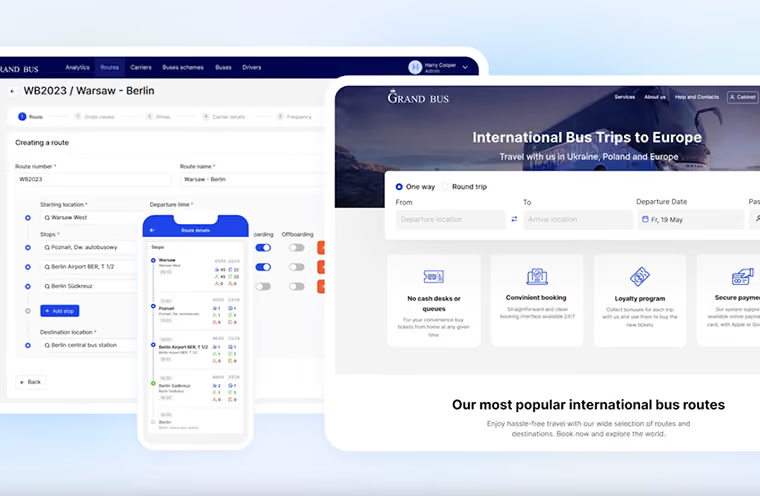
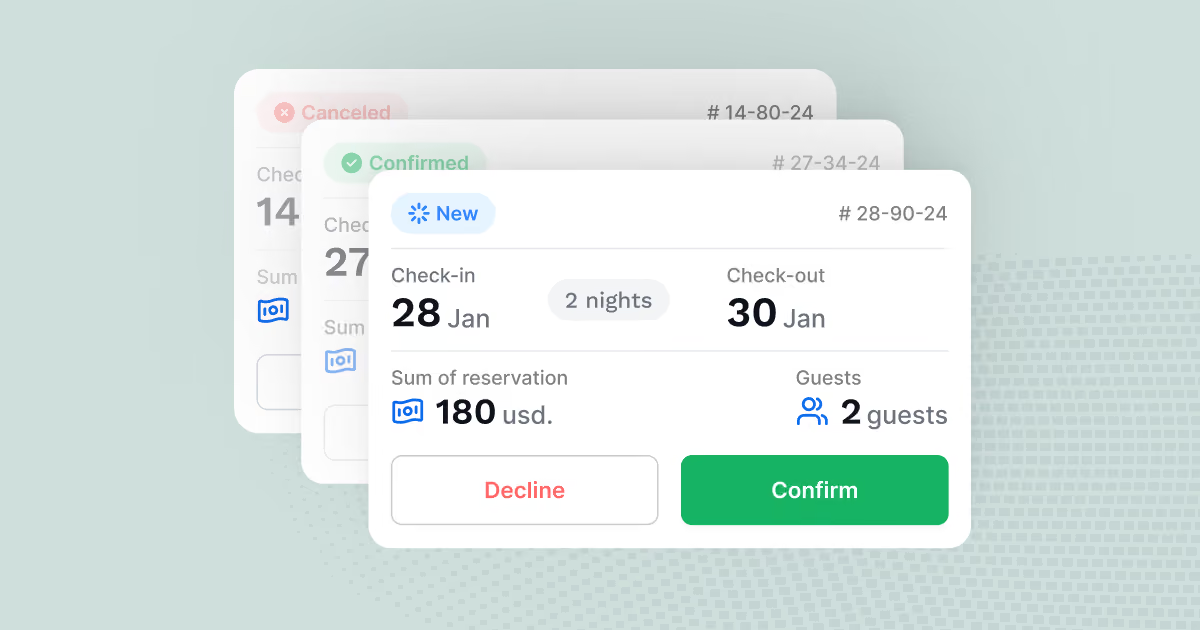
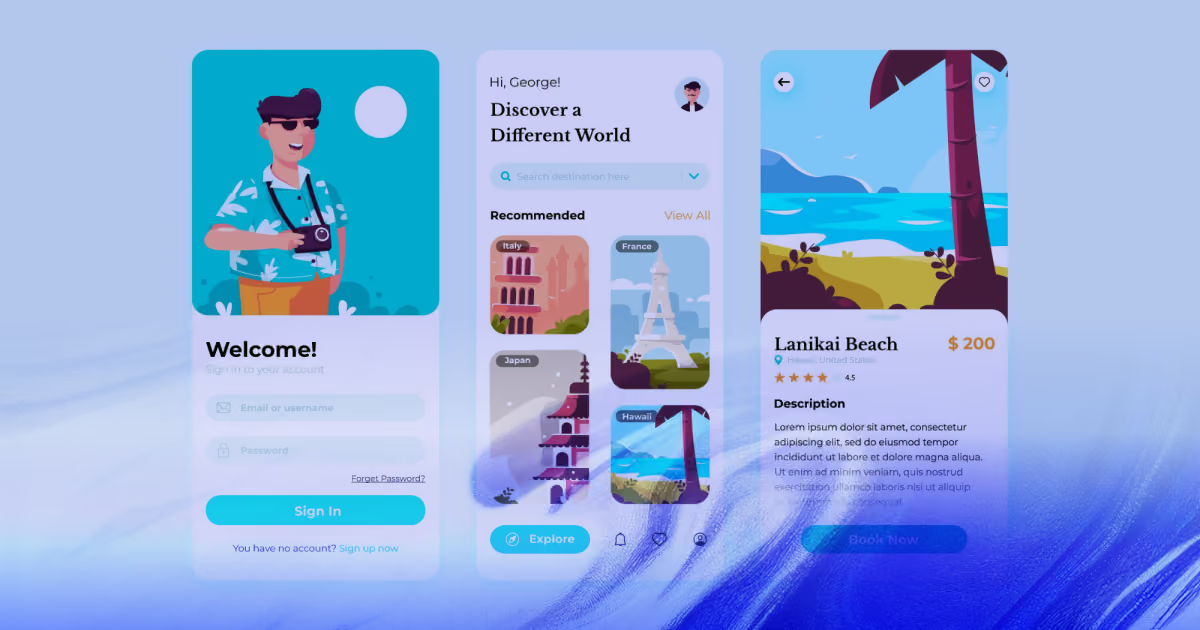
Our partners at Re:Plan wanted to create a booking service for reselling non-refundable hotel reservations. On the surface, the task seemed simple. We just needed to connect users declining reservations with those who wanted to take them.
But as we knew, the hospitality market wasn’t that simple. Reservations depend on a vast network of software integrations. GDS systems like Amadeus manage millions of bookings worldwide. Hotels also depend on CRM and PMS systems. Changes in reservations require integration with those systems. Our app had to automate communication with managers who work with those databases.
Does your hotel still use separate systems for booking, payment, and customer relationship management? Lack of integration between POS and other systems is where revenue quietly leaks out.
In this article, we show why hotel POS systems are unique and how they close these revenue leaks. Our goal is also to explain how to find the best POS system for hospitality.
What is a hotel POS system?
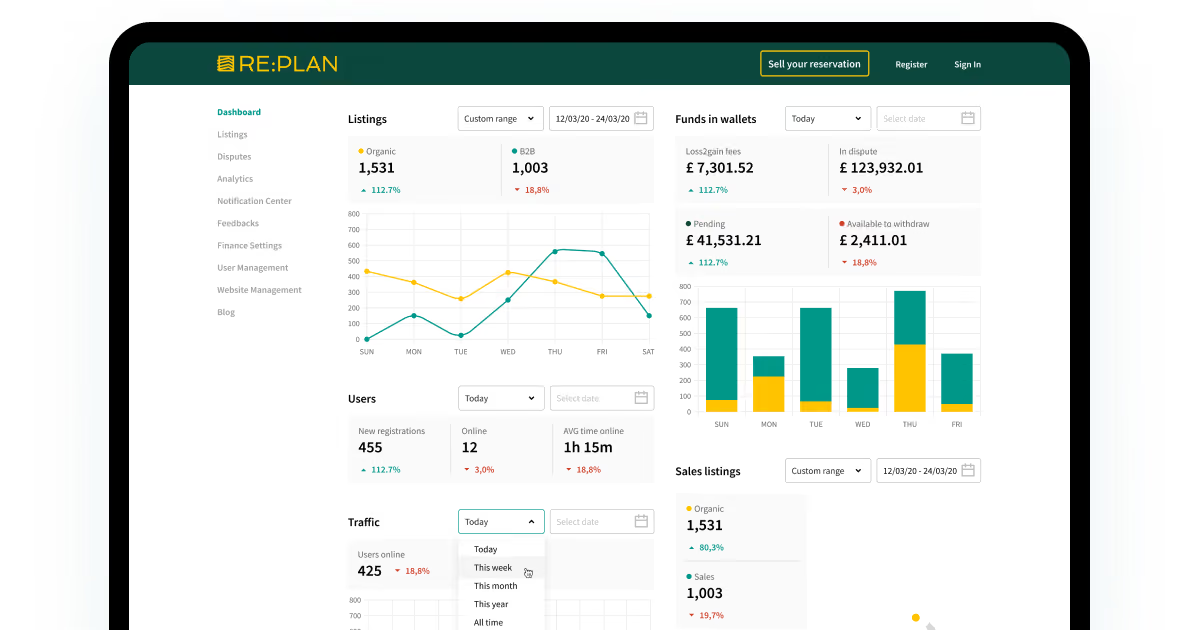
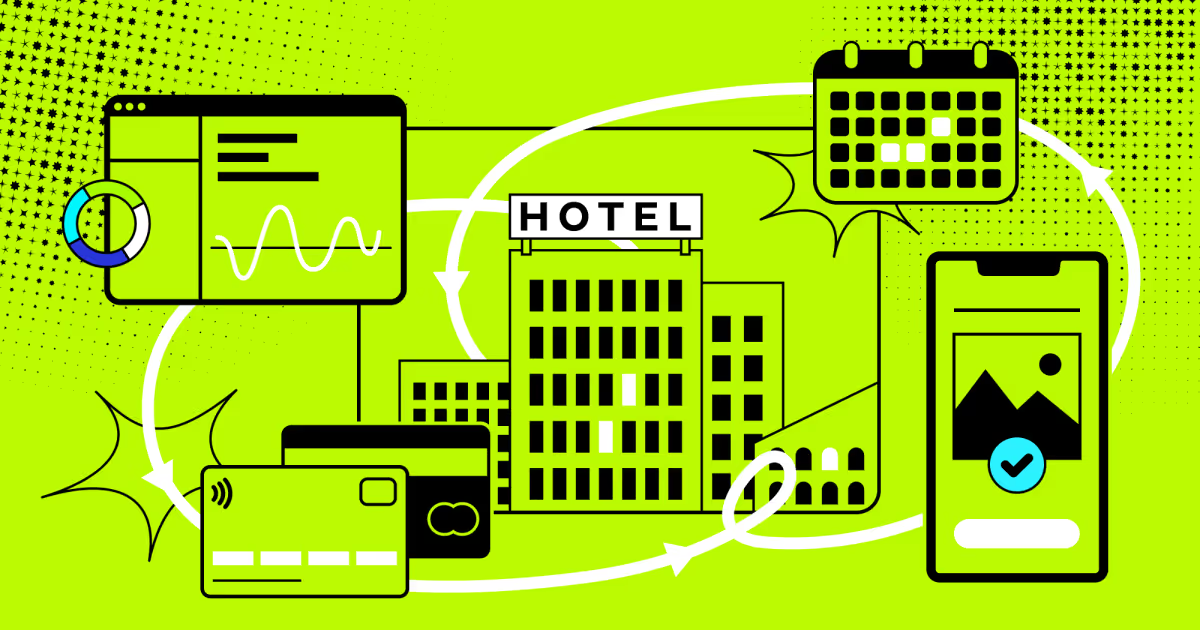
A hotel POS system processes payments, tracks sales, and helps manage orders in hotels. Hotel POS takes two forms: manual and software-based. A POS system we've developed for Re:Plan is a good showcase of its functions. It contains tools for system accounts, dashboards, booking interfaces, invoicing, and payment gateway integration.
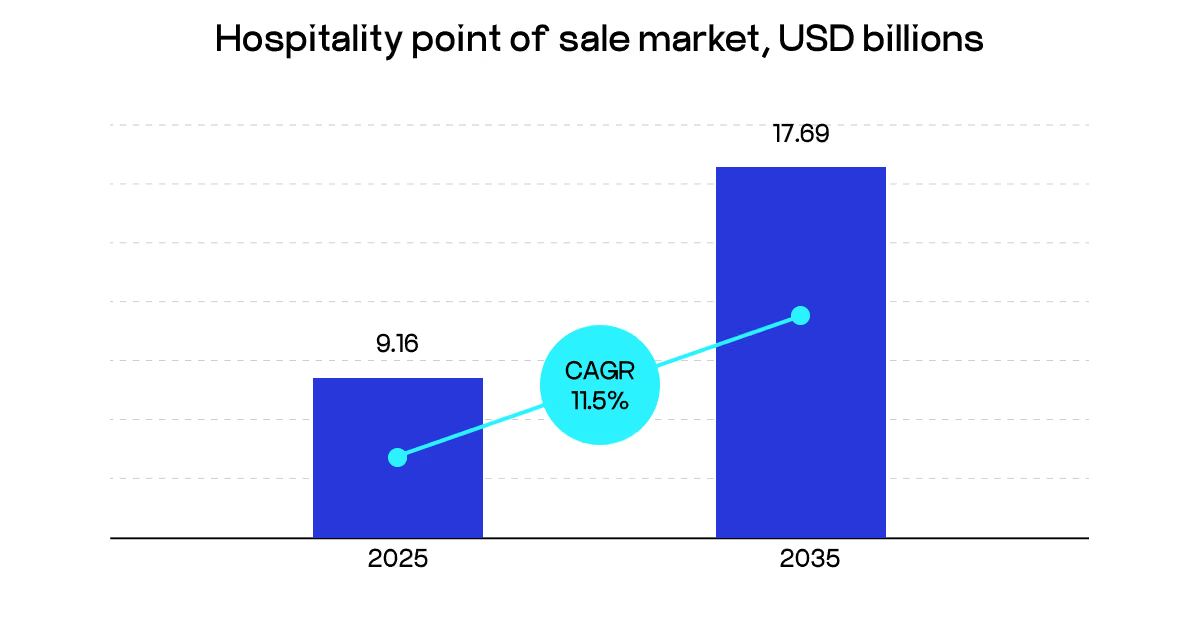
The market for hospitality Point of Sales software is large and continues growing today.Research and Markets reports that it amounted to $9.16 billion in 2026. By 2032, the hotel POS market will grow to $17.69 billion. In short, it will almost double in size compared to 2026.
These impressive growth figures result from changing consumer preferences and unique challenges of hotel POS. Hospitality Net reports that half of guests prefer smartphone checkout. No wonder, since most government services and businesses depend on smartphone apps.
If your hotel doesn't have a smartphone checkout, customers are likely to complain. This is especially likely for younger generations. Convenient POS systems often change hotel reputations overnight. Seamless mobile payments and payment app integration also show that your hotel follows the latest tech trends.
How hotel POS differs from traditional retail POS
Businesses in the hospitality sector also have serious organizational reasons to use software. Hotel POS is much more complex than retail POS. Where retail companies can sometimes use traditional systems, hotels will face management issues. Here are the key differences:
Complexity of products. Retail POS focuses on checkout for individual transactions. These systems deal with consumables. They include perishable items like food or hygiene products. Hotels work with multiple types of products and services. These systems automate booking for rooms, gyms and spas, and perishable items from restaurants.
Time of operation. Retail POS focuses on immediate one-time transactions. Customers go to a store, pick some items, and then pay for them. Operations are linear and predictable. With hotel POS, processes are far more complex. Users pay not only for rooms but also for other services. They order additional food and participate in entertainment (movies or sports). In many cases, it's not convenient to pay for those services immediately. Hotels process payments for them after checkout.
Software integration. Retail POS doesn’t integrate well with hotel systems. A non-specialized POS simply can’t share data with your PMS or hotel CRM. You will have to manually transfer all sales data. Errors are inevitable here: hotels process thousands of transactions every month.
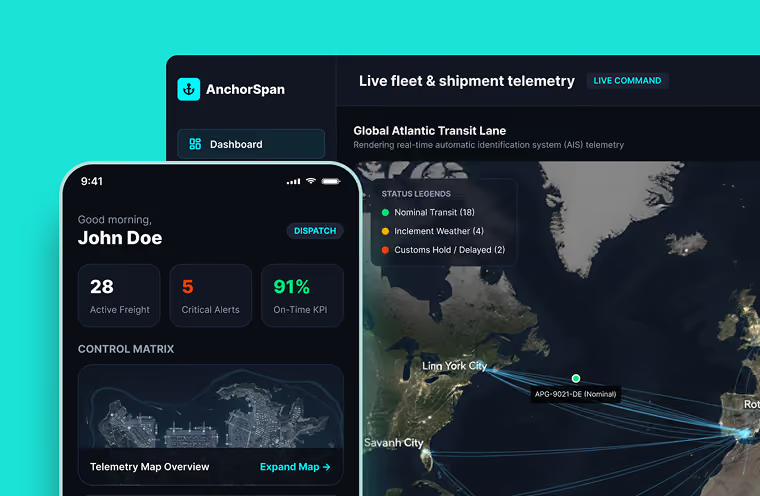
A specialized hotel POS doesn’t suffer from these problems. In our Re Plan case, one of the greatest difficulties was GDS (Global Distribution System) integration. We created a custom POS solution to overcome this problem. It automatically unifies all important financial and GDS data in manager dashboards. Thanks to systems like this, decision-makers can actually make decisions instead of organizing spreadsheets.
Why does every modern hotel need a POS system?
Modern hotels can't function without a strong POS system. As our Hosty and Re Plan cases show, reservations and payments require integration with international hotel databases. Younger users also expect immediate compatibility with mobile and Internet services.
Operational challenges without a POS system
Here are some of the key operational challenges that you can face without POS system in hotel:
Data fragmentation. Without a centralized POS framework, you risk losing vital information. 47% of hotels across Europe use between 2 and 4 payment and data collection systems. 25% of them use more than 5 systems of this kind. Without a POS, your staff has to manually collect data from paper and software sources. Even a simple hotel POS changes everything. With these systems, your staff doesn’t have to constantly think about twenty data points. Instead, employees can focus on delivering great service; meanwhile, a POS in a hotel will handle the records.
Delays in revenue and billing. Hotels usually target two key demographics: vacationers and professionals on business trips. Vacationers want to avoid stress as much as possible. Professionals typically have very tight schedules. Any small delay can undermine important meetings. If some service goes offline for technical reasons, guests won't be able to pay. Hotel POS systems are immune to those issues. They offer offline payment processing and integrate with multiple gateways.
Inability to capture revenue. Delays in processing or problems with accessing payments aren't only frustrating. Hotels often build their business models around additional services. Apart from offering rooms, they also provide restaurants, bars, poolside areas, and sports facilities. 74% of hotel customers cancel bookings if they can’t pay fast. This problem also strengthens competitors. Guests will seek similar services from other companies if available. That's why a centralized POS with multiple payment methods is so powerful. POS for a hotel means fast payments. Fast payments help your hotel outpace competitors by doubling or even tripling engagement.
Problems with inventory tracking. Lack of centralized POS systems is also bad for hotel logistics. Hotels need to keep track of large inventories of perishable goods. Kitchen workers require various ingredients to prepare dishes. Janitors won't be able to work if they don't receive detergents and disinfectants. With paper-based records, you simply run the risk of underestimating consumption levels. Researchers indicate that food waste is 5-10% higher for companies without POS and inventory tracking. A centralized hotel POS means that your staff won’t face unexpected shortages.
We already started breaking down how hotel POS systems help overcome these issues. Now, let’s focus on their advantages in more detail.
Key benefits of a centralized POS system
Centralized POS systems help overcome issues with data collection and delays. In our Re Plan case, POS and GDS integration helped our partners capture a strong market niche. The company created a product for reselling non-refundable hotel reservations. One of its key advantages is the simplicity of reselling and a simple checkout for users.
Among the benefits of hotel POS systems are:
Unified accounts for guests. POS systems centralize all data about payments from particular guests. You don't need to combine multiple paper records or software reports. Managers see everything from a centralized dashboard and can offer customized services. According to Target Everest, 61% of consumers are ready to spend more in hotels with personalization. A POS system for hotels offers a powerful opportunity for improving customer service.
Real-time data tracking. POS systems help you understand what products and services are popular at a particular moment. Indeed, manual systems can show demand/supply, too. A 30% jump in seafood orders will register there. But there’s a catch: it will appear in your records two or even three months later. Solutions like our Hosty give real-time reports. If guests book 20% more rooms, you’ll know in 2 minutes rather than in 2 months.
Faster service. POS systems make payments faster. They simplify payment processing for your workers. Managers no longer have to carry paper notebooks or sticky notes. Staff members have to learn only one system instead of 5. Moreover, digital solutions offer flexibility in choosing payment providers. You won’t have to fear that a random bug in PayPal or Revolut will paralyze everything.
With the pros evident, let’s move to the main types of POS systems currently found in the market.
What are the types of hotel POS systems?
There are multiple ways to categorize hotel POS systems. As our Re Plan and Hosty cases show, hotel POS software needs to target multiple scenarios. They vary based on hardware/software and service category:
POS by hardware types:
Mobile POS (mPOS).
These are portable terminals that can accept payments anywhere on your property. The terminals can be based on smartphones with POS software or dedicated hardware. They’re necessary for smaller services: bars, pools, or entertainment events. With mobile POS terminals and software, your guests can pay for services immediately. 70% of travelers are worried about payment issues, such as unexpected charges. POS solutions make travel and expense management transparent. Where manual systems create distrust, mobile POS helps you build a stellar reputation.
Terminal/desktop POS.
This type of POS system targets larger payments. Hardware for it consists of desktop PCs, laptops, or dedicated fixed terminals. These POS systems often integrate storage for cash and receipt printers. 3 in 10 Americans still prefer cash payments. Card-or-mobile-only desks turn 30% of customers away. That’s why our team at COAX Software always focuses on maximal hardware compatibility. Our Hosty widget works well both on desktop and mobile.
Self-service POS.
POS software displays available products/services and integrates payments. 59% of users between 18 and 34 years old prefer to use self-service. Even hotels with hundreds of employees can’t process every request immediately. With self-service kiosks, your guests don’t have to wait anymore. If they want to order a room-service breakfast “right now,” they won’t have to listen to hold music. With these systems, “now” means “now,” and not in 20 minutes.
Cloud-based POS.
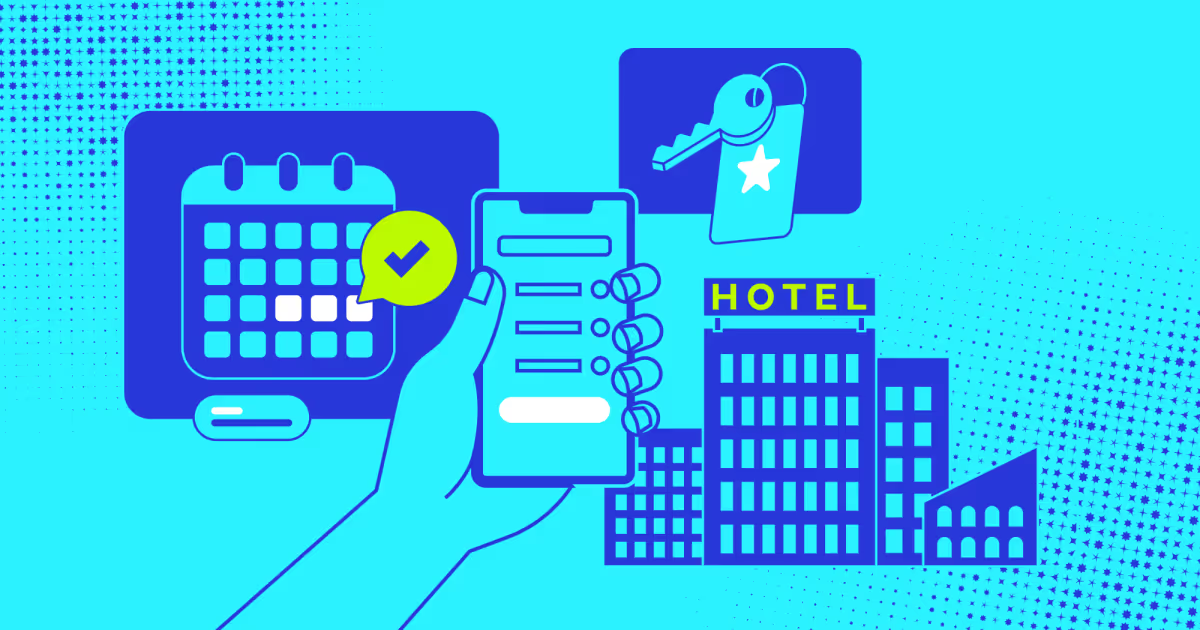
While previous types of POS are on-premises, this type relies on the Internet. It hosts all key data in the cloud, collecting supply/demand information and processing data there. Cloud POS in hospitality is the most flexible system of this type. Cloud POS enables customers to book rooms and pay for them online. In our Hosty case, the users have access to a payment widget that integrates multiple services. Guests see everything on their phones. If they want to order spa services, they don’t have to write or call their hotel. Everything is visible in their calendar.
POS by service type:
Central/booking POS.
This type of POS processes payments for room bookings. These systems are the most complex due to the diversity of payment methods. Users book rooms both online and on-premises (if available). Thus, you need to combine both cash and cashless options with on-premise and online payments. Without a physical booking frontend and a cash-paying walk-in, up to 30% of customers won’t be able to pay. The best combination for a hotel point of sale here is a cloud service with a desktop frontend. Smaller facilities can use a mobile frontend.
Food & Beverage/Service POS.
Today, guests expect you to offer food and beverage services. Moreover, facilities that capitalize on food and beverage services earn up to 32% of their revenue there. And it doesn’t end at food. Your guests likely want entertainment, such as concerts, or wellness services, as part of their experience. For instance, spas generate up to 4% of hotel revenues. That's why we enabled compatibility with more than 20 service types in Hosty. Modern hospitality services need to be as diverse as possible. Well-prepared templates remove the need to manually enter order information. A portable POS enables customers to pay anywhere on-premises.
All in all, modern POS options are very diverse. The most powerful solutions integrate well with both cloud and on-premise hardware.
How does a hotel POS integrate with other hotel systems?
Modern hotels rely on a large number of software solutions. PMS, hotel CRS, and accounting systems are a must today. A hotel POS system generates a lot of useful data for them. Managers can find data on supply and demand, sales volume, and revenue there. That’s why integration is so important.
The best way to use hospitality point-of-sale software is to integrate it with hotel databases. PMS and travel CRM systems collect large amounts of data about bookings or bonuses for customers. Without POS integration, your managers have to confirm payments manually. After that, they must re-key the exact data into the CRM. Even on a monthly scale, your hotel can lose dozens of hours a week this way. A unified database for CRMs and POS helps overcome this problem. Your managers can autofill bookings based on payment data with one click. CRMs automatically calculate bonuses based on payments.
Off-the-shelf POS solutions typically use APIs to connect with other systems. The main problem with this approach is compatibility. There are many API standards; most CRM or PMS systems don’t support everything.
For a custom solution, the best option is to use interconnected or even unified databases. This approach is seamless and ensures complete compatibility. The COAX Software team has been developing hospitality software for more than 15 years. We have ISO 9001 and ISO 27001 certifications. Our experts know how to create well-integrated hospitality systems for payments and resource management.
Which features to look for in hotel POS software?
There are 5 features that all hospitality POS systems need. They include integrations, communication, and analytics:
Integration with supporting software. POS software collects a lot of information that is vital for PMS and CRM. These systems, in turn, also provide a lot of important data. If connected in one dashboard, they synergize and produce new insights. For example, we added previous transaction tracking in Hosty. This tracking helps resolve disputes, offer bonuses for guests, and target advertisements.
Integration with numerous payment systems. The market for payment services is very large. There are multiple large players, such as Revolut. Some customers like paying with cash. Cryptocurrency payments are also growing in popularity. The more options you have, the better. Incompatibilities with payment systems waste everyone's time. Customers get frustrated by slow service. Managers have to spend time finding a solution. That's why we added integration with multiple gateways in Re Plan. Easy payment increases engagement and ensures user loyalty.
Cloud-based approach. The best hotel POS today is based on cloud technologies. Their main advantage is compatibility with a large number of devices. Since all data is processed in the cloud, any device can become a POS. All you need is a frontend, such as a widget or a mobile app.
Real-time service communication and tracking. Bad communication undermines customer reviews regardless of actual service quality. The best way to avoid this problem is to have a communication system for services. With real-time tracking, your servers and managers always know what’s available. If you run out of soda, they won’t have to personally go to the kitchen and ask. Dashboards visualize everything, including alternatives that service workers can immediately offer their clients.
Detailed reporting dashboard. The best hotel point of sale software also helps analyze data. Every transaction offers information on supply and demand. Decision-makers need this information to understand what services are the most popular. Strong POS hotel software not only collects this data but visualizes it. In our Re Plan case, administrators have access to multiple financial metrics. They enable them to understand which locations and services are the most popular. Thanks to this feature, they can shift their support teams to priority areas and plan advertisements.
All in all, a powerful POS system for hotels needs to be easy-to-use and convenient. Now that we know the necessary features to look for, let’s shortlist the top solutions to choose from.
10 best hotel POS systems
Managers have access to multiple hotel POS systems today. This extensive choice is very confusing. Moreover, users have access not only to off-the-shelf but also custom solutions. Our goal is to help you understand the main features of leading POS hotel software.
For our reviews, we simulate a medium-sized hotel in a well-populated area. We also test those tools against a small facility located in a remote area. The key criteria for our assessments are speed, convenience, mobile/cloud integration, and autonomy.
POS System
Key features
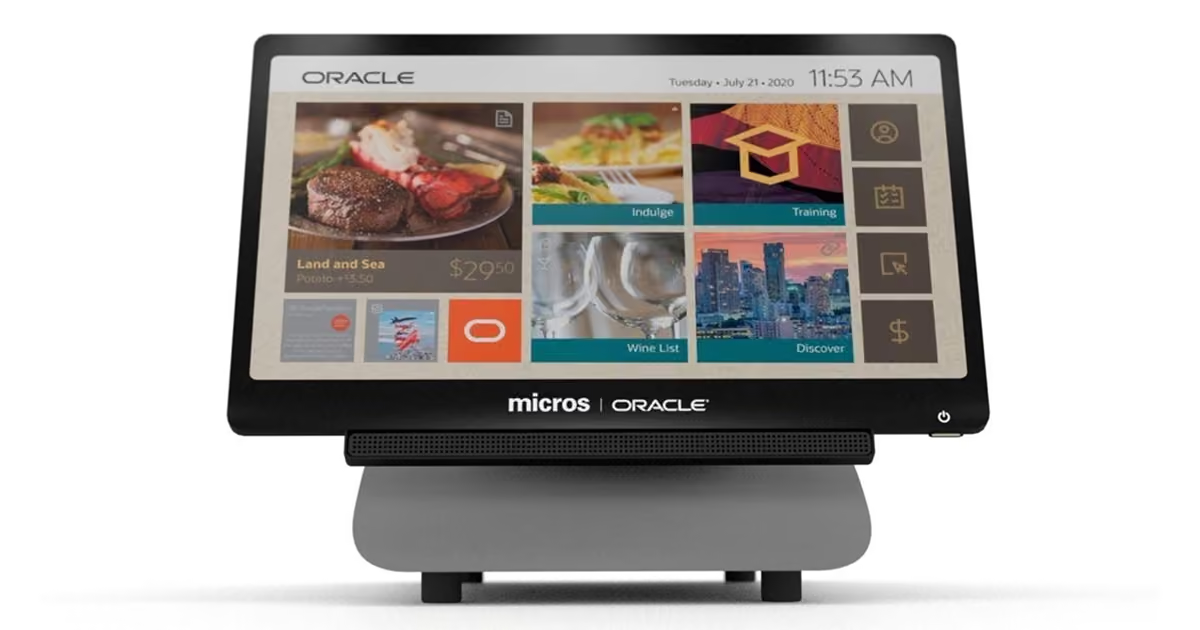
Oracle MICROS Simphony
Support for long-term autonomous payment processing for large facilities
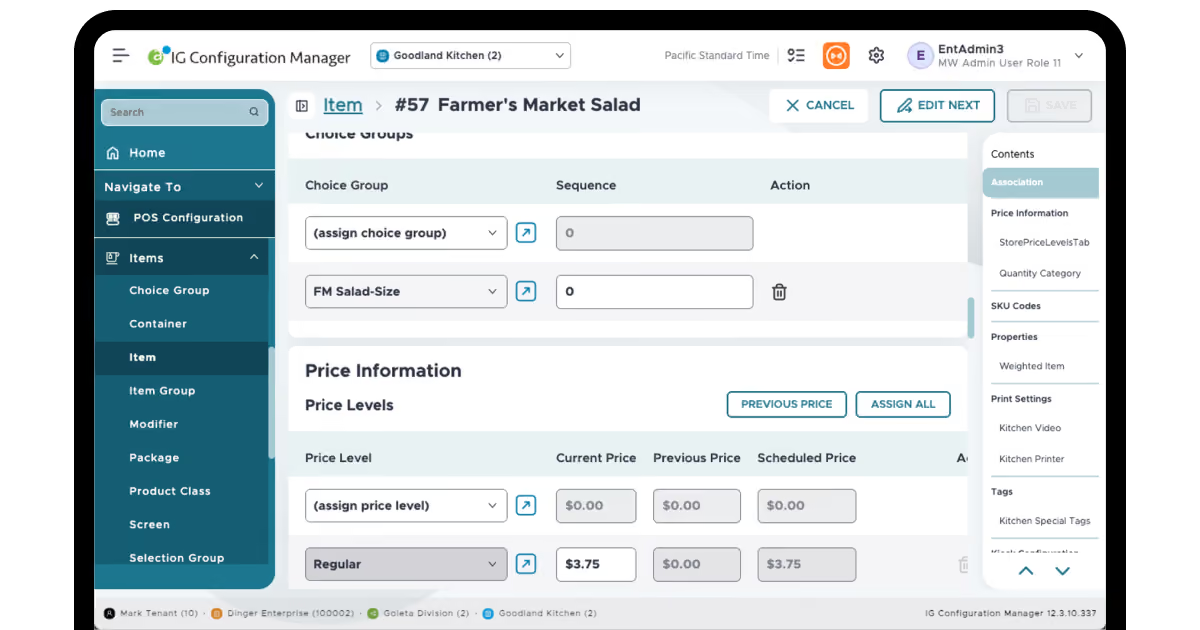
Agilysys InfoGenesis
Protection against connectivity issues and integration with AI analytics
TCPOS (Zucchetti)
Automated configuration of the most popular services; strong customization.
Mews POS
Seamless integration with Mews PMS
Cloudbeds POS
Fast deployment of hospitality point of sale systems via mobile apps
SHIJI Infrasys POS
Cloud-managed architecture, Open API integration, compatibility with existing devices
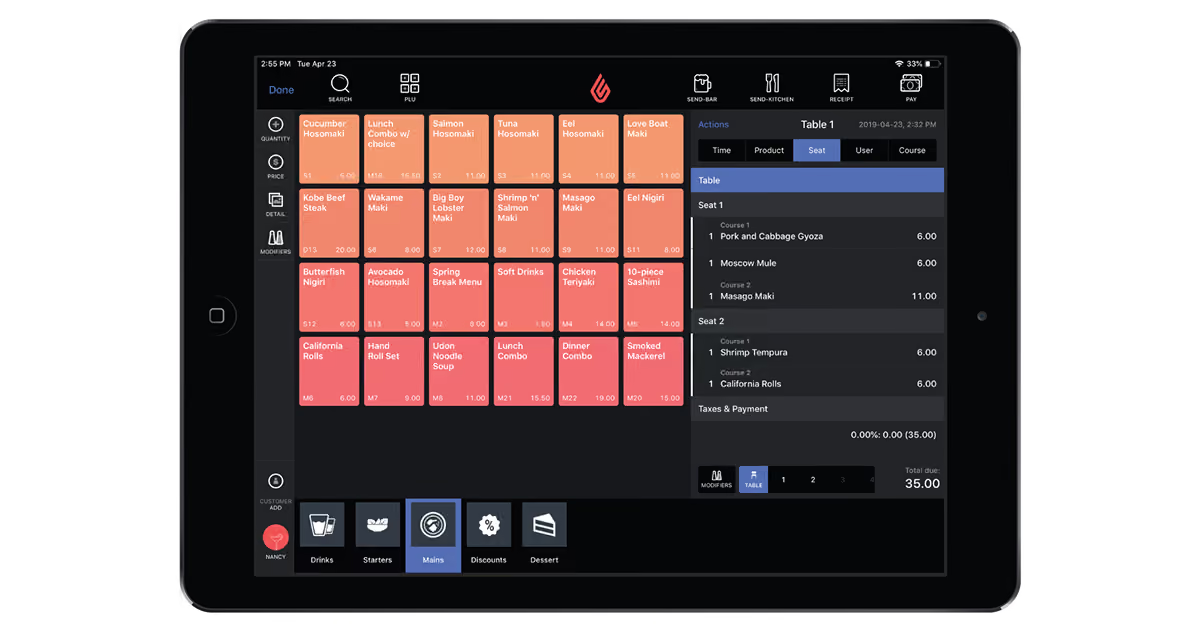
Lightspeed Restaurant
PMS integration, online orders, on-site payments, QR-code payments, and support for multiple locations
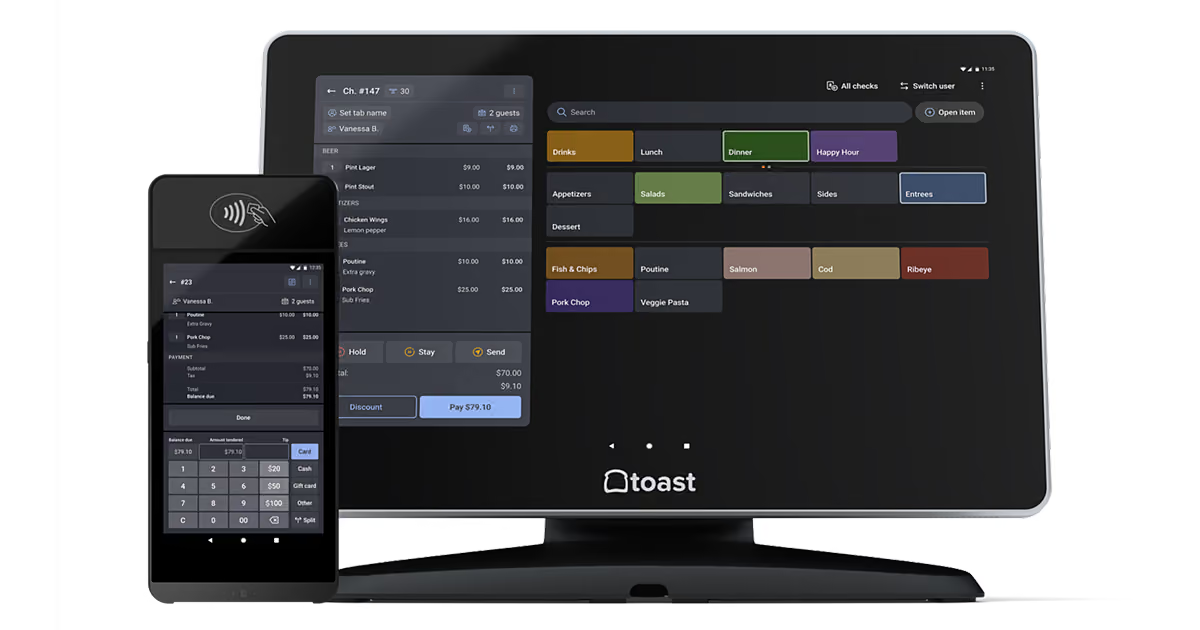
Toast POS
Powerful AI analytics and offline capabilities
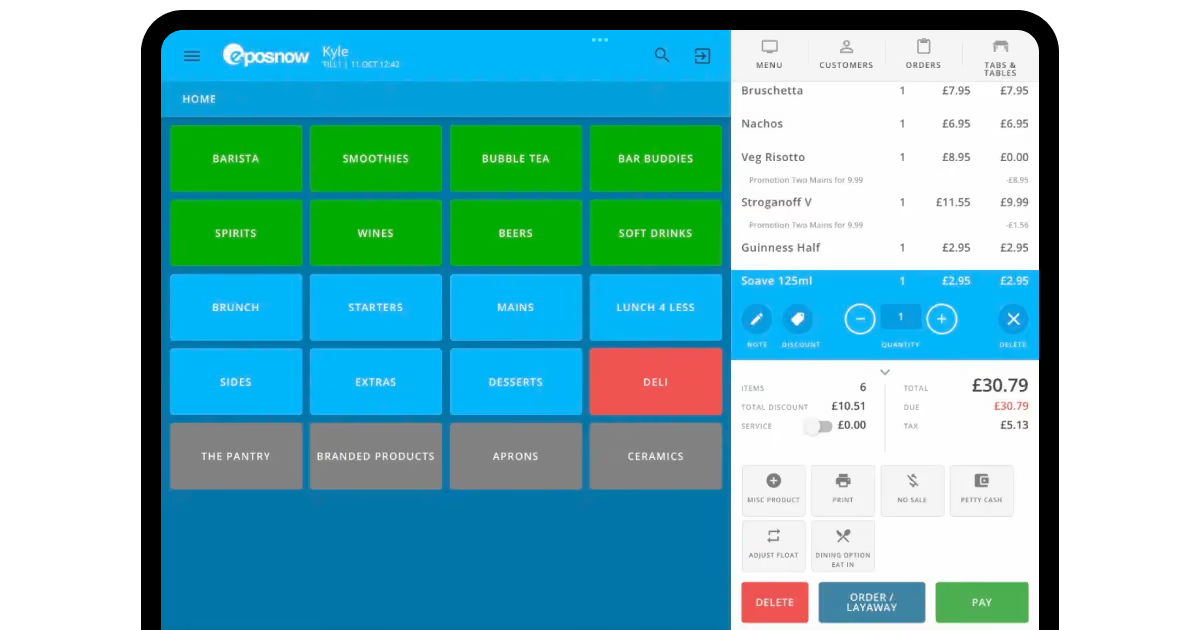
Epos Now
Strong integration between internal POS hardware and software
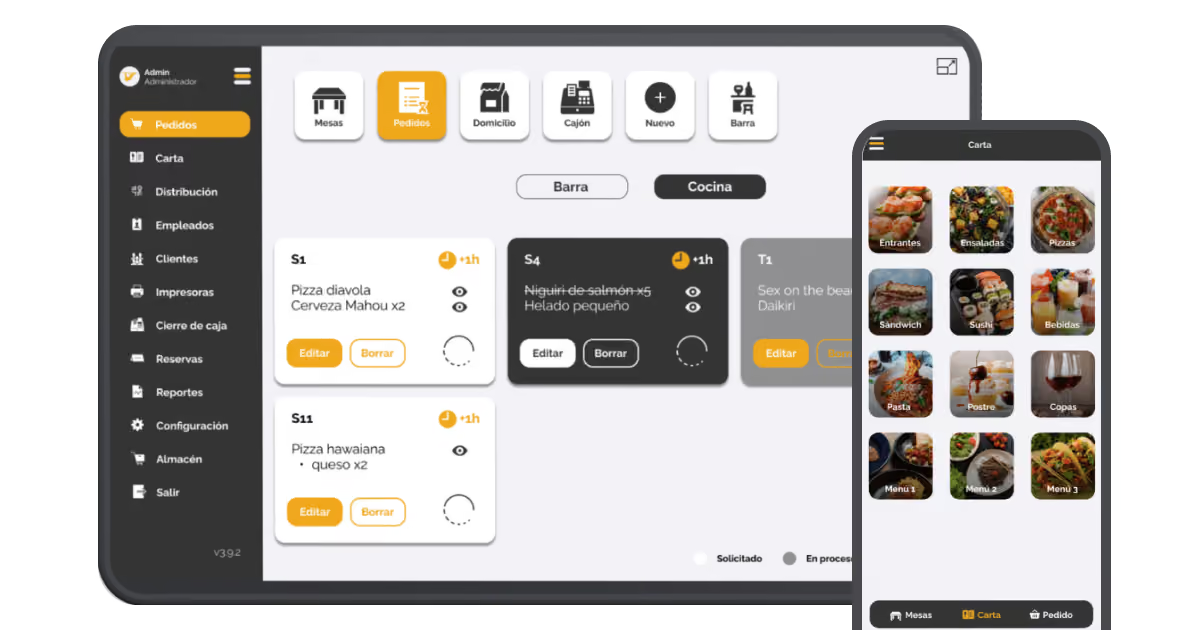
Foodeo
Powerful tools for controlling available resources in hotel restaurants
MICROS Simphony leads on two key metrics. Firstly, it can process an impressive amount of data. The system works well with hundreds of records. It integrates dozens of services and simultaneously processes thousands of orders. Secondly, it works very well in offline settings. In our simulation, MICROS Simphony correctly recorded dozens of transactions without the Internet.
Best for: large hospitality companies that need strong processing; hotels that need good offline connectivity.
This POS for hotels offers a good balance of reliability and high-volume processing. During our load tests with dozens of customers, the system had no problems processing everything. Moreover, it worked well even during sudden Internet disconnects. InfoGenesis has tools for recording data offline and autocorrecting issues. One more feature that impressed us was AI integration. The system collected our payment data and offered recommendations for optimizing menus and services.
Best for: hotels processing a high volume of transactions that need AI analytics.
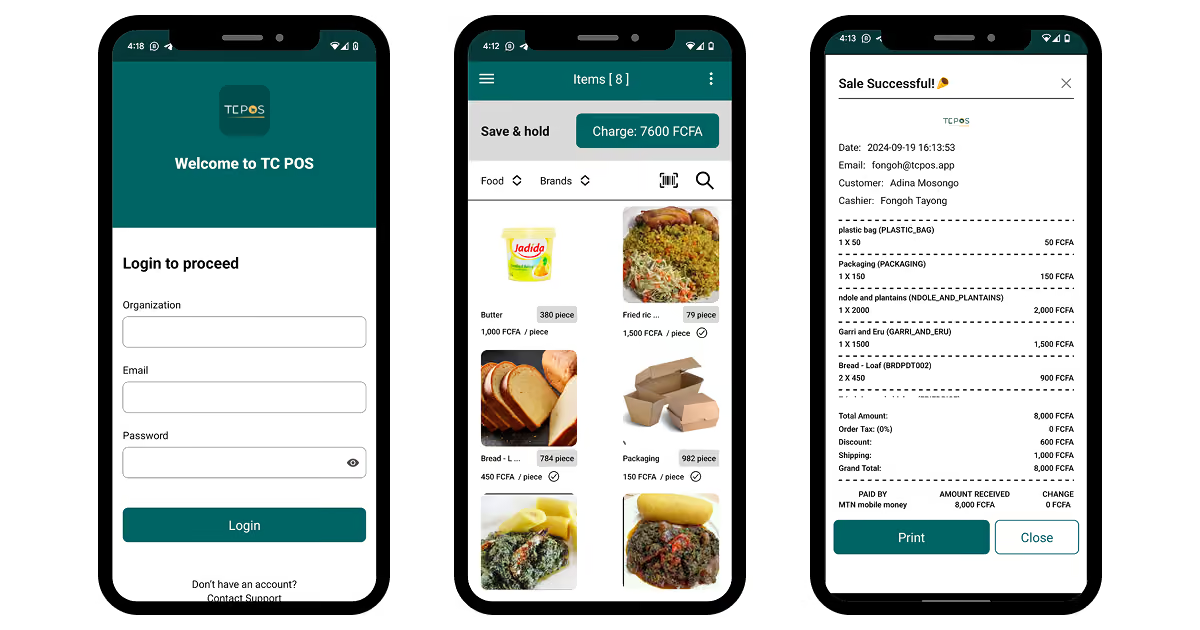
TCPOS offers the most flexible tools for integrating additional services. In our tests, we managed to seamlessly set up food menus with rare and complex recipes. The system even provides AI integration for recognizing items. Our testers also managed to set up non-conventional custom services like video game rooms.
Best for: hotels that focus on offering unique and diverse services
Mews POS offers the best integration capabilities in our list. It's a part of a larger Mews PMS ecosystem. Most features in this app are quite standard for hospitality POS software. It works well with dozens of orders but doesn't function offline. What stands out is integration with Mews PMS. In our tests, all transaction data seamlessly transitioned into relevant databases. We managed to set up integration here in a matter of minutes.
Best for: hotels that need fast integration between POS and PMS
This POS for hospitality showed the best result for mobile integration. Cloudbeds POS focuses on simplicity. It targets hotels that need to quickly deploy a small number of terminals. During our tests, we managed to easily install it on our smartphones and tablets. Cloudbeds software helped turn them into simple hotel point-of-sale terminals. At the same time, the system doesn't have offline capabilities. The simplicity of deployment leads to strong reliance on online services.
Best for: small hotels that need 1-3 makeshift hotel POS systems
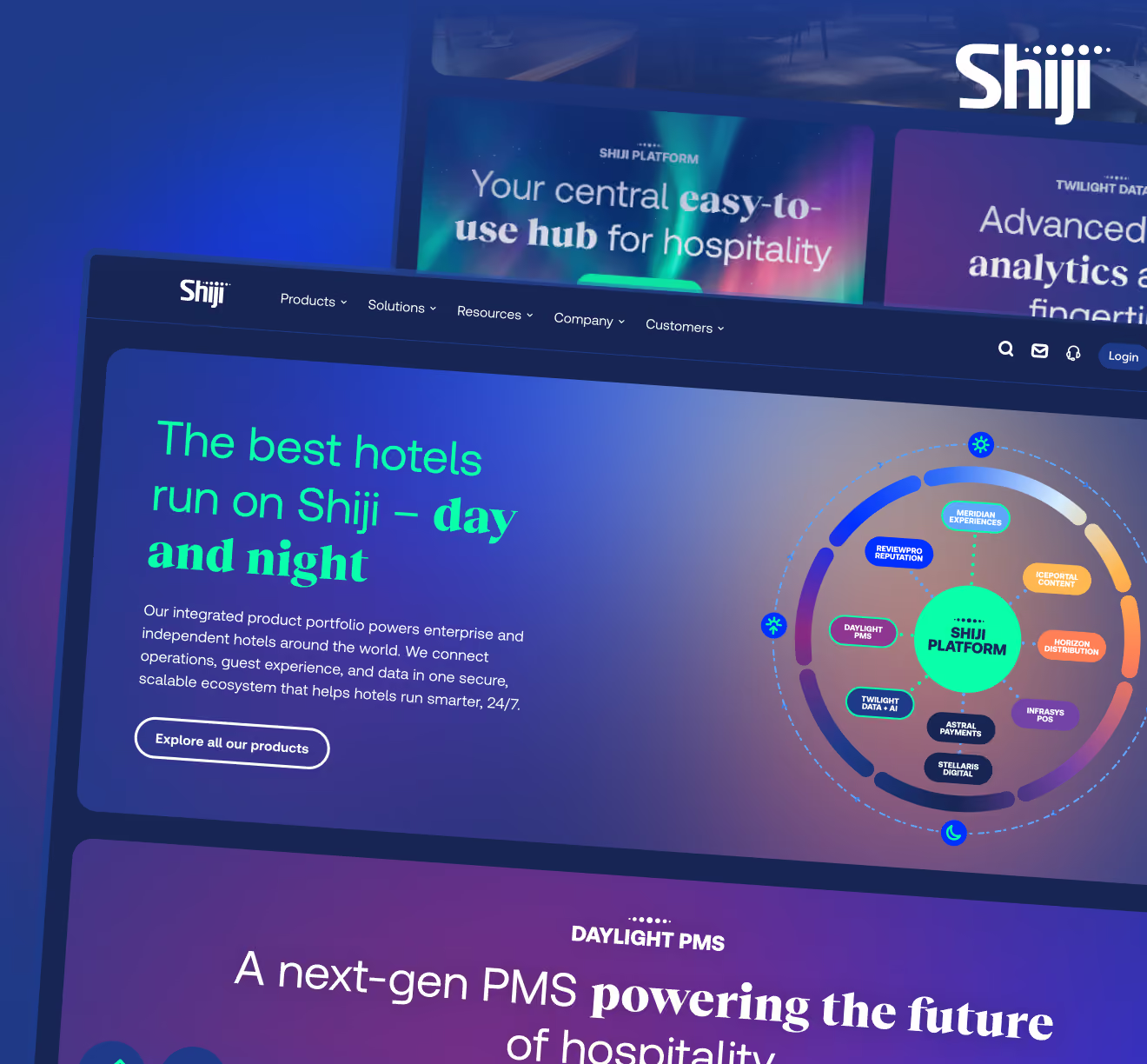
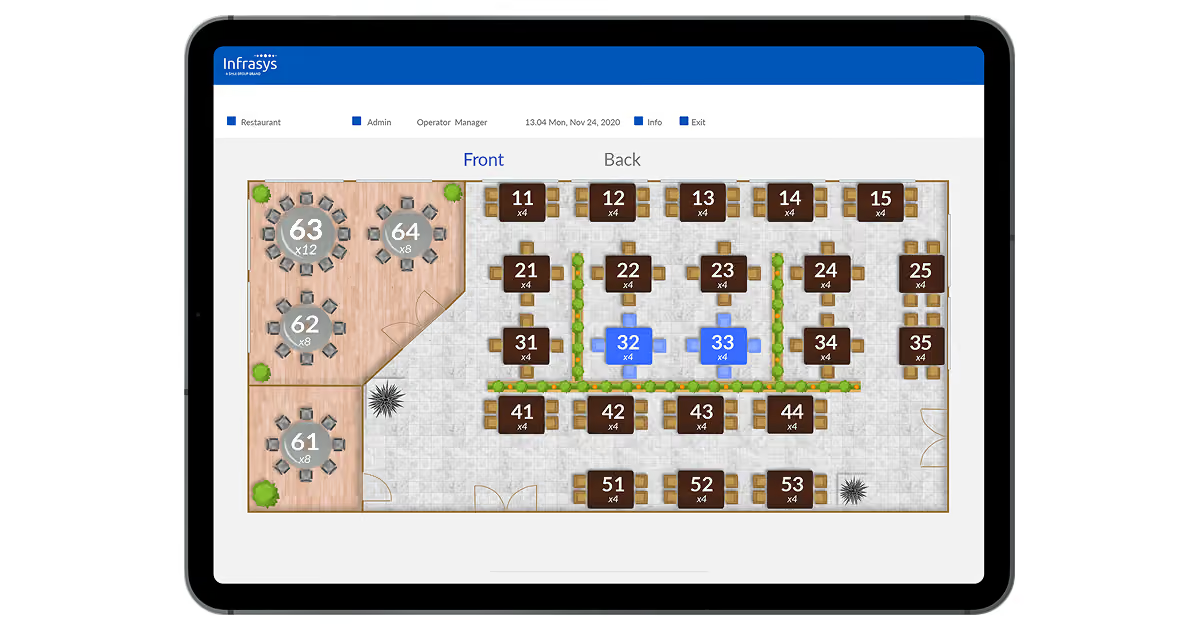
Infrasys POS by Shiji Group takes a hospitality-first approach, purpose-built for hotels and resorts. It plugs into a hotel's broader tech stack via an open API, syncing with PMS, KDS, and payment systems, and stays cloud-managed without being cloud-dependent. A standout is Infrasys POS Move, a mobile extension that lets staff take orders and payments tableside, poolside, or anywhere on the property. This keeps the full POS in hand, not tied to a counter.
Best for: companies that need an all-in-one solution with strong data processing tools.
Lightspeed Restaurant is among the leading hotel restaurant POS systems. This system primarily targets restaurants rather than hotels. Still, we had a great experience despite this focus. Thanks to the internal API, we managed to quickly connect it to our test hotel PMS system. We also set up online orders, QR code payments, and multiple locations in just a few clicks. One more feature that we liked was speed. Lightspeed processes most payments up to 40% faster than competitors.
Best for: hotels that focus on delivering food and beverage services
This solution is great for both hotel and restaurant POS systems. It offers offline capabilities, real-time visibility, and AI analytics. During our tests, it integrated well with different hotel PMS apps like Mews or Cloudbeds. What impressed us the most was the AI. Toast offers an internal AI chat. It analyzes your sales data and offers auto-optimization recommendations. What's more, you can ask it to perform custom analytical tasks. We asked it to give us five optimization tips for our test hotel case. This assistant immediately offered us recommendations on new food offerings and additional services.
Best for: hotels that focus on food & beverage services and need strong analytics
Most solutions on our list concentrate on offering POS software. Epos Now is notable for offering both software and hardware solutions. Customers can purchase various terminals and integrate them with various software systems. Epos Now provides rather standard features for hotel POS systems. Where it shines is reliability. Epos Now terminals can independently store transaction information in an offline mode. Thanks to this feature, the solution was the most resilient in our offline test. It works well even without computer/laptop support.
Best for: hotels that need both POS software and hardware
Foodeo offers an integrated system for managing food and beverage services in hospitality. It provides payment processing, kitchen monitoring, and menu creation tools. In our tests, we used the system to quickly create a basic restaurant menu. The system gave us an overview of available stock and configurations for delivery. We used this feature to optimize food offerings based on our real resources. It worked best in scenarios with difficult logistical routes.
Best for: hotels that need to actively manage resources for their food and beverage services to avoid shortages
How to choose and implement a hotel POS system?
We've helped implement multiple types of POS in hotel facilities. You can read more in our Shiji, Re Plan, and Hosty cases. Here are four steps for implementing POS in hotel:
Understanding your goal
First and foremost, you need to clearly outline why you need a POS system. Reasons for installing one can be different. Do you want to make your services more accessible? Is it necessary to improve data analytics? How many payment gateways do you need? What additional services do you plan to add?
Your goal is to clearly explain what problem you want to solve and how POS solves it. From here, move to choosing the POS to fit your objectives.
Selecting appropriate solutions
Once you understand your goal, it's time to choose a solution. Off-the-shelf options like Oracle MICROS work best for hotels that target typical use cases. This type of hospitality point-of-sale software tries to cover as many use cases as possible. If your use case is standard, then it's optimal.
But what if you work in a niche? In the Hosty case, our goal was to help small property owners. Many homeowners in locations popular among tourists monetize their properties. They offer rooms for rent to vacationers and even sell additional services.
You must also evaluate native PMS integrations to avoid manually re-entering guest billing data. Mobile compatibility and multi-outlet tracking ensure your staff takes payments smoothly across all property areas.
You should check offline mode capabilities so internet outages never freeze guest checkouts. Strict PCI DSS compliance keeps sensitive guest payment data secure at all times.
Developing or setting up the solution
Your goal here is to integrate an off-the-shelf solution or do POS system development for a custom one. Off-the-shelf integration usually requires an API connection. Sometimes, you may need to add some custom software for legacy integration. In custom development, experts create key features and integrate them into PMS or hotel accounting software.
Sprint-based development works best here, since billing logic touches so many other systems that waiting until the end to test integration usually surfaces problems too late to fix cheaply. We typically start with the highest-risk connection first, whether that's a legacy PMS with no public API or a POS terminal that's never synced with anything before, since that's where timelines tend to slip.
If some features don't work as well in reality as on paper, you can remove them. Our experts regularly report on development progress and adjust features based on feedback.
Testing and launch
After development or API connection, it's time to test everything. The best practice is to work with dedicated testing specialists. QA teams at COAX Software perform manual and automated tests. We also do stress tests to ensure our systems work even in difficult conditions.
Once all potential problems are removed, you can launch your hospitality POS. Here, our team leverages not only hospitality but also logistics expertise. We know how to optimize for issues like bad weather or slow resource deliveries.
Our team has well-organized procedures for implementing hospitality point-of-sale software. We've developed multiple projects with POS integrations and have relevant certifications, such as ISO 9001. You can rely on our team when developing your own solution for hotels.
A launch date is just a milestone, not proof the system holds up when a Friday night rush and three POS terminals hit it at once. That's the gap our testing process is built to close.
FAQ
What types of POS solutions for hotels exist on the market?
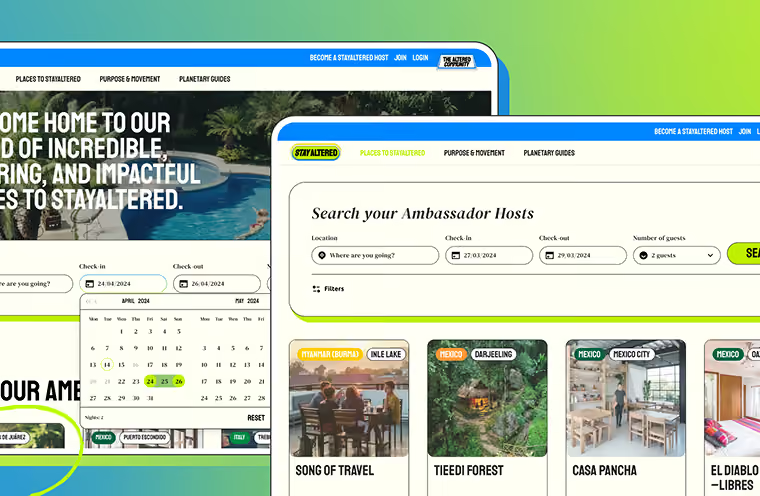
POS for hospitality exists in many diverse formats. It can be on-premises or online (cloud). Some systems target bookings. Others help with additional services like restaurants or entertainment. Many solutions like Hosty integrate multiple types at once. The widget we've developed offers online assistance with booking and additional services.
How to choose the best POS for hotels?
The best method for choosing hotel POS systems is understanding the "why." We recommend looking at your specific needs first. Do you need a standard solution? Or does your business need something unique and flexible? Depending on the answer, you can choose between standardized off-the-shelf or unique custom solutions. Our team specializes in custom development. In our Re Plan and Hosty cases, we show how custom POS for hotel facilities can transform services.
What are the main benefits of installing a hotel POS system?
Above all, a hotel point of sale system enables faster payments. Hosty, a widget we've developed, processes bookings in 60 seconds. POS for hospitality also helps centralize information on demand and supply. It's essential for improving analytics and hotel yield management.
What are the key challenges in installing a hotel POS system?
Based on our experience, integration is the most difficult aspect. In our Hosty and Re Plan cases, we had to integrate multiple payment gateways. We often have to think about PMS and CRM integration, too. POS systems require regular monitoring of integration APIs. Since there are many payment systems, it's vital to train your staff. Besides, POS implementation often requires specific hardware. Centralized terminals for cash payments use separate devices.














































































.avif)




%20for%20hotels.avif)

.avif)
.avif)


.avif)





.avif)
.avif)




.avif)


.avif)

We are interested in your opinion