At COAX Software, we’ve spent years building infrastructures, booking engines, and integrations that keep travel and hospitality solutions running. If there is one thing we’ve learned, it’s that the travel industry is held back by the same old headaches. These are disconnected systems, slow payments, and endless identity checks. Blockchain in travel is a good answer here. From what we’ve seen, if you strip away the hype, it is simply a better foundation for the industry.
In this article, we break down the key drivers of travel blockchain adoption, its main use cases, and successful examples of implementation. Then, we list the top blockchain software in the industry (like LockTrip and Travala, but more than these) based on our practical testing and experience.
What is blockchain technology?
Blockchain technology is a distributed digital ledger that records transactions across a network of computers. No single party controls the data, and no record can be altered once written. Every entry is permanent, transparent, and verifiable by anyone with access to the chain.
Blockchain technology in the tourism industry is moving fast. The global market was valued at USD 55.05 billion in 2026 and is projected to reach USD 5,111 billion by 2035. That growth is driven by demand for fraud prevention, digital payments, and supply chain transparency across industries. As a result, travel blockchain applications are among the fastest-moving segments.
Over 80% of crypto platform users made crypto purchases at least once a month in 2024, with travel among the fastest-growing segments. In 2026 and beyond. These numbers are just growing. Airlines, hotels, OTAs, and loyalty programs are all actively running pilots or deploying production systems today.
How does blockchain work?
A blockchain in travel and hotel sector follows the same mechanics as any other blockchain. However, the stakes and nuances of each step are distinctly flavored for this type of industry. After years of experience building travel tech and integrating advanced technologies, COAX Software experts can share these distinct aspects.
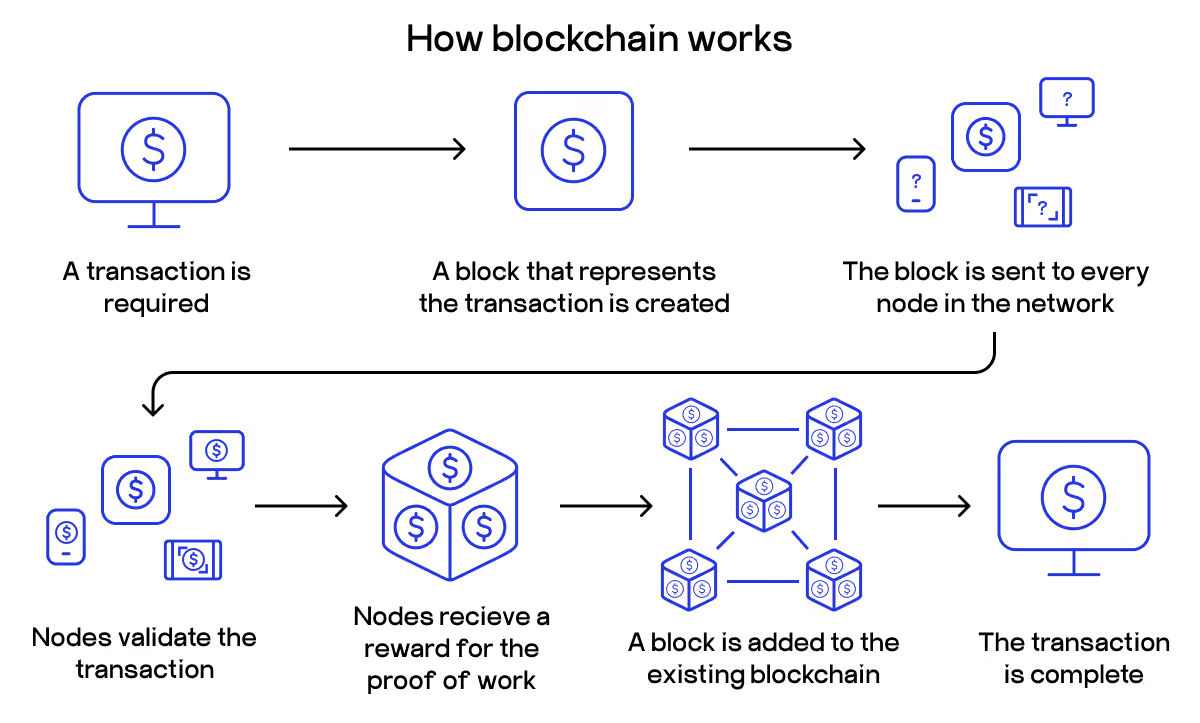
At the first step, the transaction is requested. It can be a hotel booking, a passenger identity check, or a loyalty redemption.
That request is bundled into a data block containing a timestamp, transaction details, and a cryptographic link to the previous block.
The new block is then broadcast to every node in the network simultaneously. Each node independently verifies the transaction against the network's consensus rules.
Once a majority of nodes agree it is valid, the block is added to the chain. From that moment, the transaction is permanent.
The diagram above shows the full cycle. Once a block is added, editing it would require altering every subsequent block across every node at once. That is computationally impossible in practice. No administrator, no OTA, and no payment processor can go back and change what was agreed. That immutability is precisely what makes the technology valuable for an industry built on trust between strangers across dozens of countries and currencies.
At COAX Software, we have seen a close parallel in how we built an AI logistics platform for a company managing 500 vehicles. The challenge was identical to what blockchain solves. It was that dispatchers, drivers, customers, and fleet managers all needed to trust the same operational data in real time, with no single gatekeeper. DriveIQ used a centralized AI layer to achieve this goal. Blockchain takes that principle further by removing even the central orchestrator. In travel blockchain, where a single journey touches airlines, hotels, transfers, and insurers running completely separate systems, that matters a lot.
Key principles of blockchain, and why each matters for travel
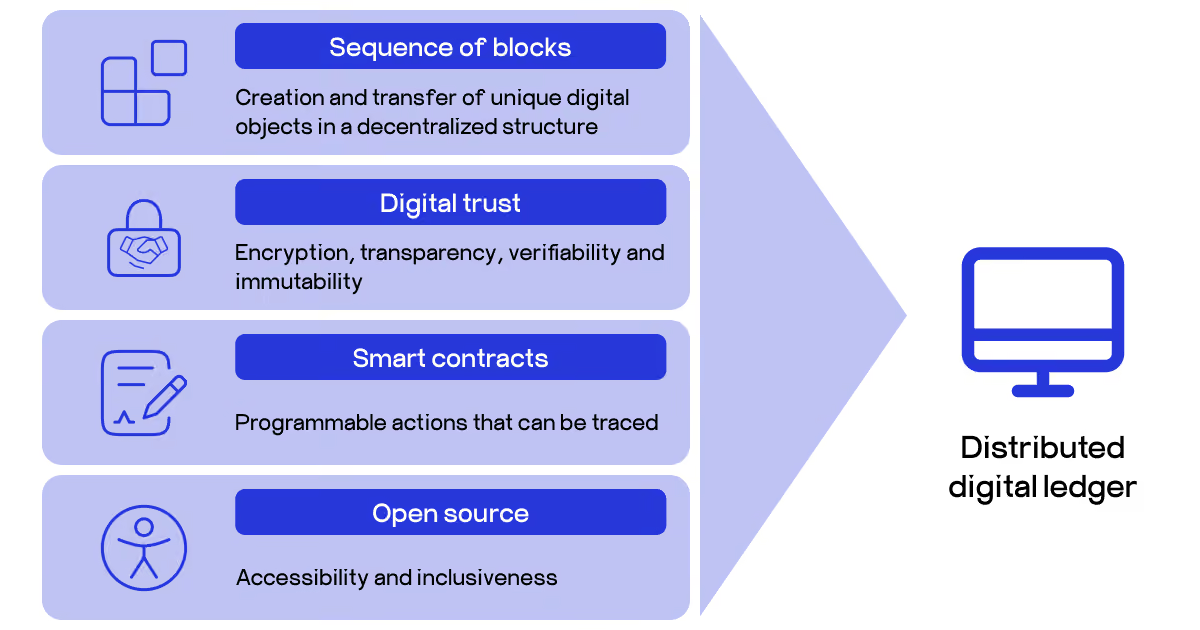
Blockchain relies on a sequence of traceable blocks, digital trust, smart contracts, and open-source infrastructure. The following diagram maps blockchain to four foundational principles. Each one addresses a specific, long-standing pain point in hospitality.
"Sequence of blocks" means every booking, payment, and loyalty point exists as a discrete, traceable unit in a decentralized structure. In blockchain technology travel use cases, this directly solves fragmentation. A traveler's journey crosses multiple providers, each running separate systems that rarely communicate. A sequential, shared ledger ties every touchpoint (flight, hotel, transfer, or activity) into one auditable thread that every party can read.
Digital trust is built from encryption, transparency, verifiability, and immutability. It removes the need for expensive intermediaries to vouch for transactions. When a hotel confirms a room on-chain, the guest can verify that commitment independently, without relying on a third-party platform to hold both sides accountable. Chargebacks, disputed commissions, and overbooking claims become far harder to fabricate or contest. For B2B settlement between airlines, GDSs, and travel agencies, this approach is a significant improvement.
Smart contracts automatically execute programmable, traceable actions when predefined conditions are met. They automate the logic that currently requires human intervention at every handoff. If a flight is delayed beyond a threshold, a smart contract can instantly trigger a hotel booking extension, notify ground transport, and adjust the loyalty points balance. For the blockchain travel industry applications, this is where the cost savings are. Manual reconciliation, dispute resolution, and inter-supplier coordination are expensive at scale.
Open source means accessibility and inclusiveness at the infrastructure level. No single vendor can hold the network hostage or extract rent from every transaction. For independent hotels, small tour operators, and regional carriers that cannot afford enterprise GDS contracts, open blockchain infrastructure offers a route to the same global distribution rails that large chains access through expensive proprietary systems. Blockchain travel has the potential to democratize connectivity in ways legacy technology never managed.
"Context is what we can really influence," says Orest Falchuk, Head of Engineering at COAX. "So every tool produces consistent, trustworthy output. Blockchain encodes the rules of a transaction into the chain itself. The trust is built into the protocol. For personalization in hospitality, that changes everything. When a guest's preferences, history, and loyalty status are on a chain, every provider in the network can personalize the experience separately."
The four principles reinforce each other. A sequence of immutable blocks creates the foundation. Digital trust makes the contents of those blocks worth relying on. Smart contracts automate decisions based on what the blocks record. And open-source access ensures the network grows without gatekeepers deciding who participates.
Why does the travel industry need blockchain solutions?
The travel industry moves fast and needs a similarly fast, innovative, and secure solution. This is why the sector needs blockchain now. A single booking touches airlines, hotels, transfer providers, payment processors, OTAs, and loyalty platforms. It’s often simultaneous, often across different countries and currencies.
Each of those parties runs its own systems, speaks its own data language, and operates on its own settlement timeline. Blockchain in travel and tourism addresses the structural inefficiencies that emerge when so many disconnected parties try to serve one traveler.
Common challenges in travel and hospitality that blockchain can solve
The problems are not new in the industry. But from what we’ve seen with what our clients came to us, these issues are expensive, and they compound at scale.
Fragmented data and no single source of truth. Every party in a travel transaction holds its own version of the same information. A hotel confirms a room. An OTA records the booking. A channel manager syncs availability. A payment processor logs the charge.
As a result, when something goes wrong (like a double-booking, a disputed charge, a missed cancellation), untangling who said what and when can take days. As COAX Software teams share internally, many hospitality companies have accumulated a collection of point solutions over the years that encumber their ability to respond nimbly to market shifts. That is not often an IT problem but a revenue problem.
Payment inefficiencies and high transaction costs.
Travel companies spend millions each year on payment processing. Settlement times are long, partly because of the global nature of the industry and the number of payment methods involved. Also, currency conversion fees add another layer. Cross-border B2B settlements between airlines, GDSs, and agencies can take weeks. The travel industry processes more than $11 trillion annually, and could save an estimated $270 billion per year by cutting transaction fees to 0.1% with travel blockchain-based settlement rails.
Trust deficits between strangers.
A traveler books a property they have never seen, run by a host they have never met, through a platform that takes a cut from both sides. A tour operator sends a deposit to a ground handler in another country and hopes the service shows up as described. The entire industry runs on trust extended across parties with no shared accountability mechanism. When that trust breaks down, the costs fall on the traveler and on reputation.
Identity verification friction.
Checking in at a hotel, boarding a flight, or crossing a border still requires physical documents, and multiple manual checks. For travelers who need to complete a new passport application before an international trip, getting the required documentation in order early can help prevent delays before these identity checks even begin. Travelers repeat the same identity verification process at every touchpoint of a single trip. The data shared at each step, such as passport numbers, health records, and payment details, runs in siloed databases with inconsistent security standards. Meanwhile, breaches are common. Cybersecurity attacks in hospitality cost hotel businesses hundreds of millions of dollars. The volume of personal and payment data makes them a high-value target.
Loyalty program fragmentation.
Most hotel and airline loyalty programs are closed ecosystems. Points earned with one carrier cannot be used with a partner hotel. Additionally, points expire, and fraud is hard to detect when every program keeps its own ledger. Consequently, without blockchain software that enables this ability, operators often lose the relationship depth that loyalty programs were meant to build.
Overtourism and sustainability pressure.
It’s not just a cultural challenge. It’s also a growing operational challenge. Popular destinations are struggling with overcrowding, and the pressure is shifting regulatory expectations fast. For instance, Barcelona recorded 12 million annual visitors against a resident population of 1.7 million. The demand is there, too. 76% of travelers say they want to travel more sustainably. Destinations need tools to manage visitor flows, verify sustainability credentials across supply chains, and report on environmental impact. Manual systems cannot do this at scale, but from our experience, blockchain can.
As the industry scales, relying on a patchwork of legacy point solutions only compounds these inefficiencies and weakens a brand's ability to adapt.
How does travel blockchain solve these challenges?
Unified, blockchain-backed infrastructure replaces fractured databases. This way, travel companies can eliminate the costly middlemen, automate complex B2B settlements, and secure passenger data.
Blockchain in travel introduces a shared layer that multiple parties can read and write to simultaneously. No single party controls the data. That shift resolves most of the problems above at the architectural level. It does it by using these mechanisms:
A single source of truth for transactions.
When a booking, a payment, or a service confirmation is recorded on-chain, every authorized party sees the same data at the same time. There is no reconciliation lag. There is no disputed version. From COAX’s perspective, we solved a similar issue when we built a custom CRM and booking engine for a travel company. The obstacle was giving agents, suppliers, and customers a unified view across a network of 20+ vendors. The approach that made it work was building a single data layer that all parties accessed in real time. Blockchain takes that principle and makes it trustless. No party needs to rely on another party's database being accurate.
Faster, cheaper blockchain payments for the travel industry.
Stablecoin transactions on high-speed networks now deliver fees below one cent, near-instant confirmations, no chargebacks, and 24/7 settlement. As an example, in B2B travel payments, an OTA might owe a hotel chain settlements across 15 currencies and three continents. Blockchain is a step-up here. SWIFT-based wire transfers with 2–5 day clearing windows. Travala, a crypto-focused OTA, processed over $100 million in booking revenue in 2024, with $80 million of it in cryptocurrency. Airlines that have added crypto payment options have seen bookings rise by 40%, with crypto users spending 2.5 times more per booking.
Automated trust through smart contracts.
If a flight is delayed beyond a defined threshold, the smart contract triggers a hotel rebooking, a transfer notification, and a refund calculation. It happens automatically, without a customer service team in the loop. AirAsia uses Freightchain, a blockchain-based platform, to match airlines with shippers through digital contracts. Or Deepair uses smart contracts to let airlines cross-sell interline ancillary content with personalized offers, without any manual coordination.
Portable, self-sovereign identity.
Rather than re-entering passport details at every hotel front desk and border control, a traveler's verified identity can live on a blockchain they control. IATA's TravelPass is already being used by Etihad Airways. Additionally, Amadeus integrated IBM's Digital Health Pass for secure health data verification. The infrastructure direction is clear, as the need is high.
Transparent, interoperable loyalty programs.
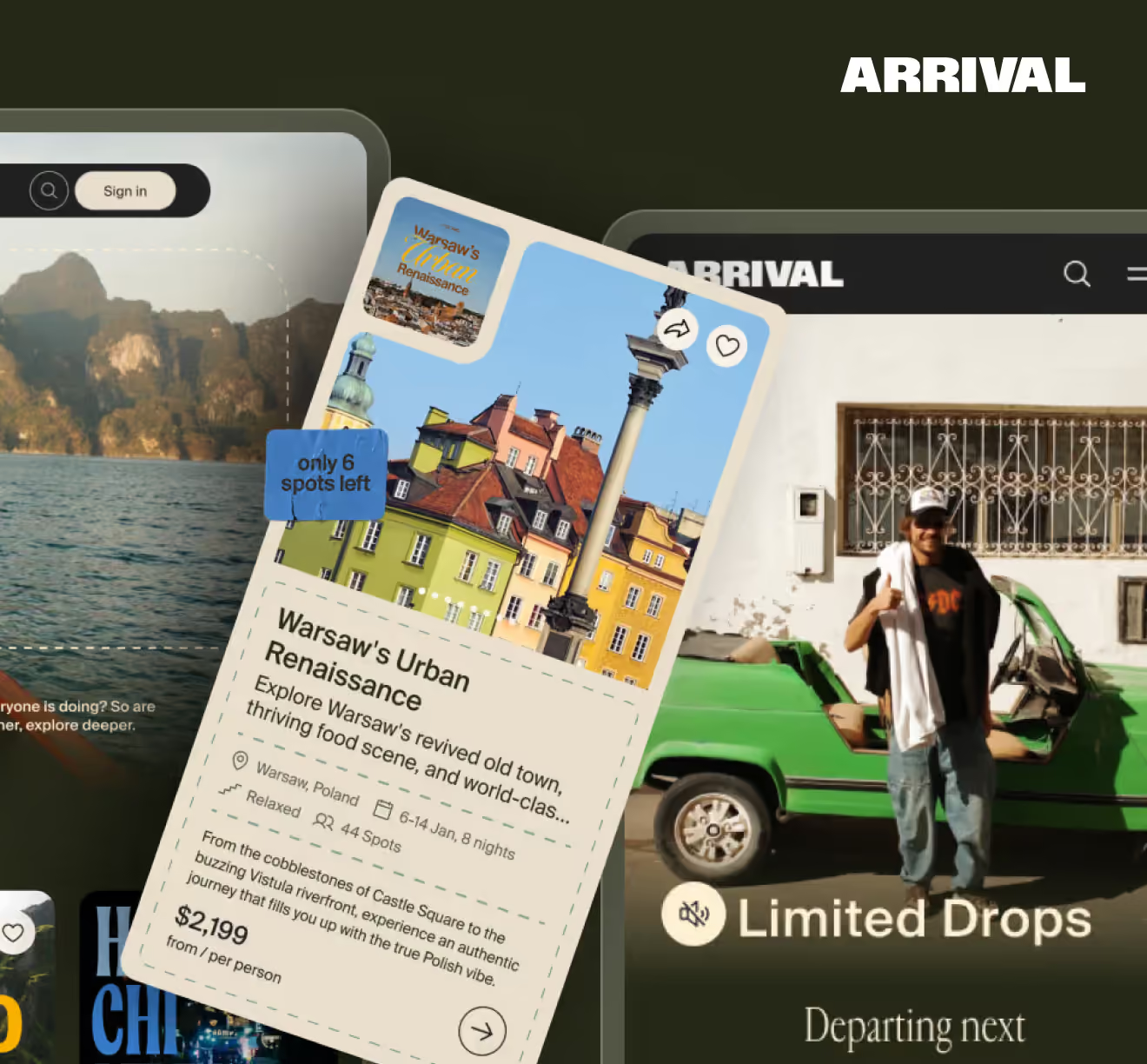
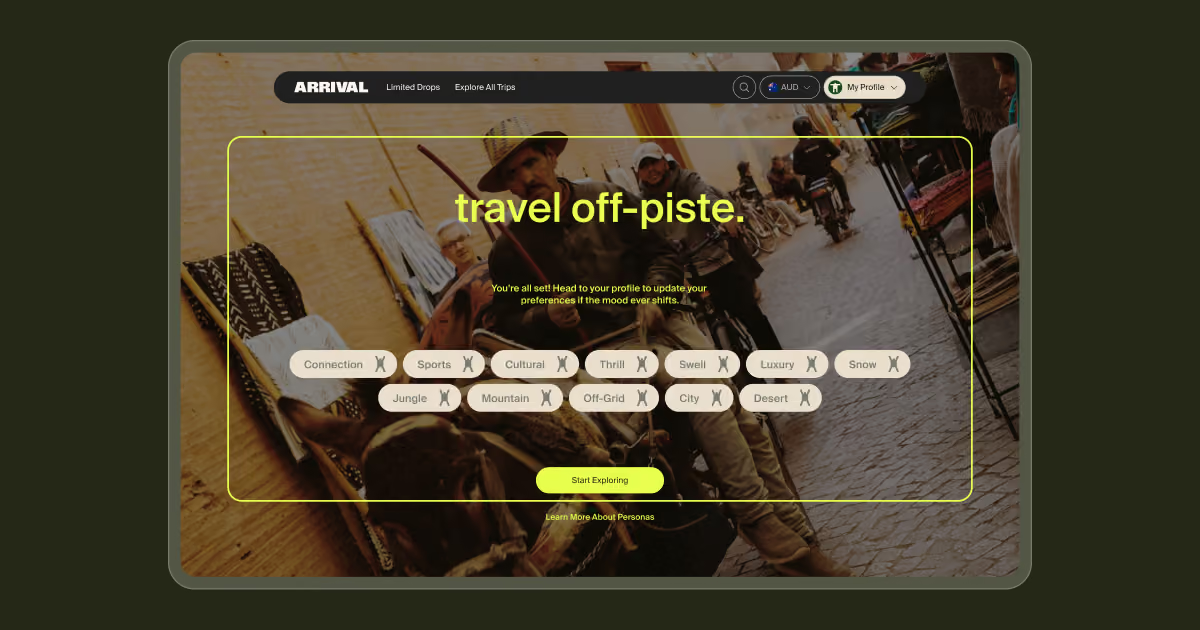
Blockchain travel loyalty tokens do not expire and can be designed to work across an ecosystem of partners from a single wallet. For instance, the travel brand ARRIVAL, whose platform we built, took a philosophically similar approach. Rather than routing bookings through OTAs where the brand relationship disappears into commission structures, they built a platform their audience owns directly, with a CRM that captures every customer interaction. Blockchain loyalty takes this a step up. Every reward earned becomes a verifiable, portable asset the traveler controls rather than a point sitting in a database the operator controls.
Verifiable sustainability credentials.
Carbon emissions data, supplier certifications, and environmental compliance records can be stored on-chain and verified by any party in the supply chain. This also includes the traveler. For destinations managing visitor pressure, blockchain-based access systems can enforce reservation quotas, distribute visitor flows across time windows, and generate transparent occupancy reports for regulators and residents.
Ultimately, encoding trust into the network protocol gives new opportunities. Travel brands to reduce overhead, protect passenger identity, and build a more transparent, highly resilient ecosystem that scales effortlessly.
Key benefits of blockchain for travel businesses
The core benefits of blockchain in travel are verifiable data, reduced friction, and lower operational costs. Here is how that plays out in practice, from our track record of working with travel client products’ infrastructures.
Transparency cannot be faked
Every transaction on a blockchain is timestamped, immutable, and visible to all permissioned participants. For travel businesses, this means booking records, payments, and contract terms exist in a single verifiable chain. You need no supplier spreadsheets and agency intranets.
This mirrors what we built for a cross-border logistics client with DriveIQ. Their operation ran on GPS pings from five different telematics providers, manual truck logs, and EDI feeds with mismatched timestamps. Before predictive models could work, the data had to be unified and trustworthy. The moment it was, dispatchers could act on AI recommendations in real time, cutting late deliveries from 18% to 7% of total stops within 90 days. Blockchain technology and travel create that same foundation: clean, trusted data for every stakeholder.
"What kills operational efficiency is the invisible gaps between systems. When a driver's GPS data, route history, and performance record all live in one verifiable ledger, every decision downstream gets sharper. Blockchain does the same thing for travel," says Orest Falchuk, Head of Engineering at COAX Software.
Faster, cheaper payments across borders
Travel transactions are cross-border. Traditional payment rails add fees, introduce currency conversion delays, and create reconciliation headaches. Blockchain-native payments settle directly between parties in minutes, with a permanent audit trail.
For the travel CRM platform we built, payment accuracy was the difference between protected and lost revenue. A single invoicing error on a non-refundable transaction had real financial consequences. Automated billing with multiple gateway integrations reduced those errors to near zero and contributed directly to a 40% increase in profits. Blockchain for travel does even more. It removes the intermediary layer entirely.
Smarter hotel data management
Hotel data management is one of the most persistent operational problems in hospitality. Guest profiles, room status, housekeeping records, and billing data often live in separate systems.
Blockchain gives each data point a single authoritative record that every connected system reads without duplication or conflict. When a guest checks in, their profile, payment authorization, and room assignment update once and propagate everywhere. When they check out, billing closes automatically against the same ledger. Staff stop chasing reconciliation. Errors at the front desk, housekeeping, or accounting drop sharply.
Loyalty programs that guests actually trust
Most hotel loyalty points are opaque. Guests don't know the real value of what they've earned, and program terms change without notice. Blockchain-tokenized loyalty fixes this by making rewards a real asset: portable, transferable, and redeemable at transparent rates.
This matters commercially. In the ARRIVAL platform we built, the entire booking relationship was designed to be direct and owned. There are no OTA commissions, and no algorithm deciding visibility. Blockchain loyalty extends that philosophy. The reward the guest earns is provably theirs, not a line item a program manager can quietly devalue.
Reduced fraud and compliance risk
Blockchain in travel creates an audit trail that is extremely difficult to manipulate. Every booking modification, refund, or price change is recorded with a timestamp and a participant ID. For enterprises managing multi-property portfolios across jurisdictions, this matters both for fraud prevention and for regulatory compliance.
The same principle applies in DriveIQ for HOS (hours of service) compliance. The system logged driver activity, break patterns, and route deviations in real time. That verifiable record helped prevent more than 40 regulatory violations in the first quarter alone. Travel businesses face equivalent compliance pressure around refund policies, pricing parity, and data protection. A blockchain record makes compliance auditable without manual effort.
Lower dependency on intermediaries
Every OTA, GDS, and payment processor in the traditional travel stack takes a margin. Blockchain-based direct booking and smart contracts allow suppliers and guests to transact without a platform taking a cut of every transaction.
For a vacation rental management platform we built, the goal was to reduce property owners' dependence on Airbnb and Booking.com by giving them a direct booking tool. In travel blockchain, similarly, smart contracts can automate the entire agreement between host and guest. This lets you release payment on check-in, trigger refunds on cancellation, and record both without a third party in the loop.
The benefits compound. Better hotel data management feeds better pricing decisions. Verifiable loyalty means higher retention. None of these outcomes require a wholesale infrastructure replacement. Blockchain layers onto existing systems through API connectors, the same architecture that makes every platform we build at COAX extensible from day one.
Use cases of blockchain in travel
When we talk about blockchain in the travel industry, its main use cases are self-executing contracts, decentralized IDs, unified tracking, and open marketplaces. They allow you to eliminate expensive middlemen, automate payments, stop fraud, and give airlines, hotels, and travelers a single, real-time source of truth for every part of their journey.
Smart contracts.
A smart contract is a self-executing agreement written directly into code on a blockchain. When conditions are met, the contract executes automatically. As we discussed already, in travel, smart contracts handle the transactions that currently depend on trust between strangers. Today, that process runs through Airbnb or Booking.com, which charges a commission for being the trusted third party. A smart contract removes it all.
The same logic applies to B2B relationships. Tour operators contracting with hotels, ground transport companies, and activity providers currently manage those agreements through email chains and PDF contracts that no system can read. A smart contract makes the terms machine-readable and self-enforcing.
Digital traveler IDs.
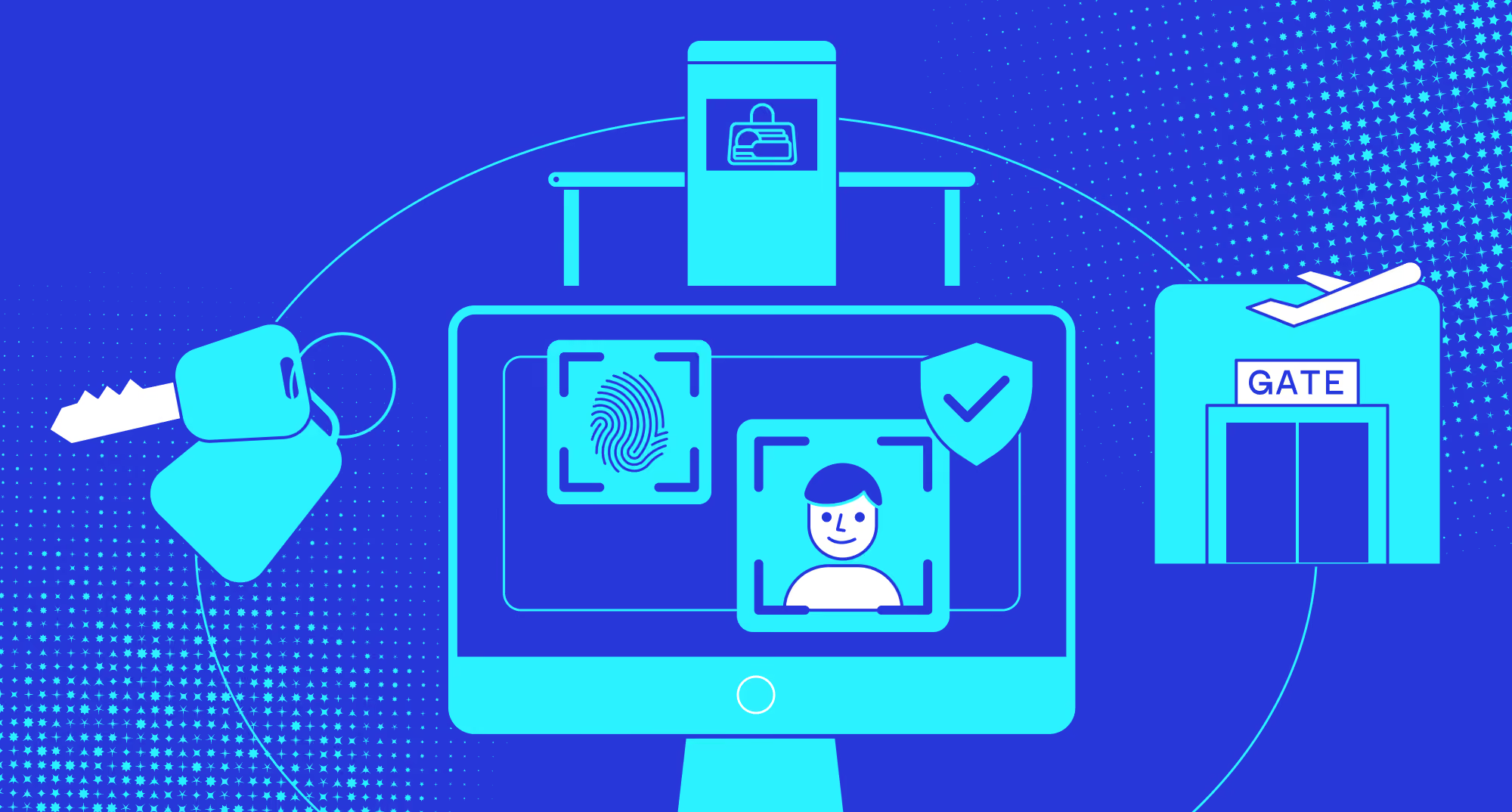
Every international traveler repeats the same process dozens of times per trip. Each checkpoint stores a copy of that identity data in a different system with different security standards. Blockchain in travel solves this by creating a single verified digital identity that the traveler controls. Airlines, hotels, border agencies, and car rental desks all read from the same credential. Every subsequent verification is a confirmation, not a new data collection event.
For hotels, digital IDs connect directly to check-in. A guest whose identity is already verified on-chain arrives. The system confirms the credentials, and the room is assigned. No queue. No manual document check. No data re-entry. This is the operational direction the industry is moving toward, and travel blockchain infrastructure is what makes it possible at scale.
Baggage tracking.
Lost and delayed baggage costs airlines over $2 billion annually. How does it happen? Typically, one system says the bag was transferred, another system never received the confirmation, and by the time anyone notices, the bag is in a different country. A blockchain ledger gives every bag a permanent, real-time chain of custody. Each scan at each checkpoint appends to the same record that every party in the journey can read. Airlines, ground handlers, and destination airports all see the same data simultaneously. For travelers, this means clear live tracking.
Tokenized loyalty programs.
Traditional loyalty points are liabilities on a hotel's balance sheet and assets that guests can rarely use flexibly. Points expire, programs change terms, and redemption options are limited to what the issuing brand allows. Meanwhile, with tokenized loyalty on a blockchain, rewards become transferable digital assets. They are tradeable, combinable across programs, and redeemable at a transparent rate the program cannot adjust. A guest earns tokens at one hotel group and applies them at a partner airline or a local restaurant. The value is real and verifiable.
This is where blockchain software intersects directly with guest retention strategy.
Decentralized booking and distribution.
Blockchain in the travel industry enables a useful and profitable distribution model. Properties are listed directly on a decentralized marketplace, smart contracts handle the transaction, and no platform takes a margin from every booking. For small and independent properties, this changes the unit economics of direct bookings.
When we built Hosty, we used a similar principle of pain-free direct reservation. The COAX team created a booking widget that loads in under one second and completes checkout in under 60 seconds. A blockchain-native distribution layer would enhance it even more, removing the commission structure of OTAs in the first place.
Automated fraud prevention.
Payment fraud, fake reviews, and chargeback abuse are chronic problems in online travel. Travel blockchain addresses all three at the structural level. Every transaction has a verified origin. Every review can be tied to a confirmed stay. Every chargeback dispute has an immutable record of what was agreed and what was delivered.
For platforms handling high-value bookings, this matters enormously. A single fraudulent chargeback on a non-refundable booking can erase the margin on an entire week of occupancy. Blockchain-verified booking records give the property an audit trail that card networks and courts recognize.
Hotel chatbots and AI-powered guest services on verified data.
This use case is underappreciated from our point of view. Hotel chatbots can answer booking questions, process requests, and handle pre-arrival communication. But their accuracy depends on the quality of the data they read from. If guest records are inconsistent across systems, the chatbot gives inconsistent answers. Blockchain software gives AI-powered hotel services a clean, real-time data layer to operate on. When a chatbot retrieves a guest's loyalty balance, their room preference, or their outstanding service requests, it reads from a single verified record. The result is a guest interaction that feels personalized and reliable.
This is the same principle that drove the data architecture on the logistics platform we built. The predictive ETA engine achieved 89% accuracy within 15 minutes. However, only after GPS pings, weather feeds, and driver history were unified into a single trustworthy data layer. Hotel chatbots on blockchain-verified guest data work the same. Better input, better output, each time.
Supplier and partner transparency.
Large hotel groups and tour operators work with hundreds of suppliers. Managing those involves purchase orders, delivery confirmations, invoices, and payments across disparate systems. A travel blockchain ledger gives every party in the network a shared view of what was ordered, delivered, and paid. As a result, payments are released automatically when delivery is confirmed, and suppliers get paid faster. Also, operators spend less time on reconciliation.
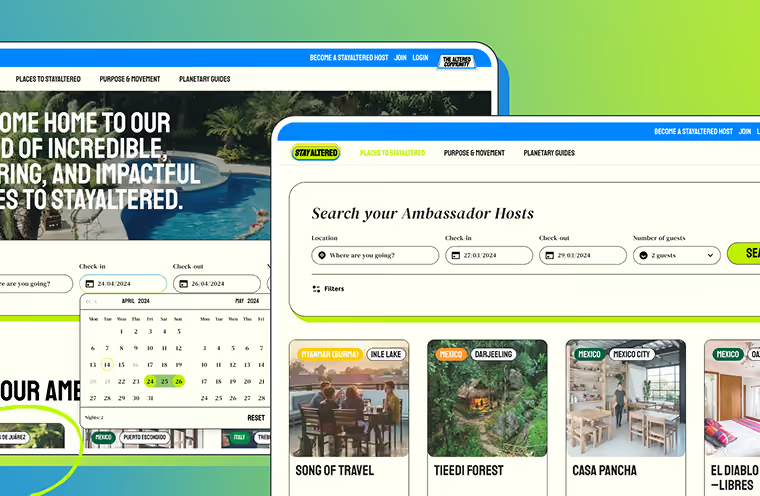
When we integrated Katanox and Hyperguest into the Stay Altered platform. COAX engineers met the challenge of getting every party reading the same availability and pricing data in real time. Blockchain in travel makes that kind of network-wide data consistency a structural feature rather than an integration problem to solve on a case-by-case basis.
Examples of blockchain technology in the travel industry in action
From what we’ve seen, the companies getting real returns from blockchain technology in the travel industry are usually the ones that identified a specific trust gap in their operation and built toward it. Every live implementation in this section solves one problem. There are too many parties, too many conflicting records, and too much money lost in the gap between them.
Singapore Airlines with loyalty points on-chain.
Singapore Airlines launched KrisPay, a blockchain-based digital wallet that lets frequent flyers convert KrisFlyer miles into a digital currency and spend them at partner merchants in real time. Before KrisPay, miles sat idle in accounts until a passenger had enough for a flight redemption. After the same miles could pay for a coffee, a taxi, or a retail purchase. The result is a loyalty program that felt like a real asset. Singapore Airlines KrisFlyer used a travel blockchain to streamline the redemption of points and unlock new partner benefits. For hotel groups watching loyalty program disengagement numbers climb, this is the model worth studying.
TravelLedger and a way out of the reconciliation problem.
Reconciliation between travel agents, airlines, and hotels is one of the most costly processes. TravelLedger uses a shared database accessible to all stakeholders, cutting processing time and enabling near-real-time updates and secure transactions. The principle is identical to what we solved on the financial layer of MICRM. Every invoice error on a non-refundable transaction was a direct revenue loss. Automated billing with a shared record eliminated the manual back-and-forth. Blockchain software achieves the same fix across the network.
LockTrip and zero-commission hotel booking.
LockTrip is a blockchain-based booking service where hotels upload their offerings directly to the platform. This enables cheaper reservations by cutting commissions to middlemen. Cryptocurrency and smart contracts provide transparent transactions. This way, users earn rewards in native tokens. For independent hotels and boutique properties, commission elimination is not a marginal saving. Blockchain technology in travel industry platforms like LockTrip returns that margin directly to the property, or allows them to price more competitively.
The token reward layer also creates an incentive structure that keeps guests returning.
Travala and cryptocurrency-native travel booking.
Travala operates a comprehensive booking portal that accepts cryptocurrency payments. It uses blockchain integration to ensure transaction transparency and security. Customers book hotels, flights, and activities and earn loyalty rewards in AVA tokens. What makes Travala significant is that the platform demonstrates blockchain in tourism, handling the full booking stack. This covers search, availability, payment, and loyalty, all on a single verifiable ledger. For the hospitality industry, the lesson is that platforms that accept only traditional payment rails will leave a growing segment of high-spend travelers without a native experience.
Brussels Airport and data sharing across the airside ecosystem.
Brussels Airport launched a blockchain application on its BRUcloud open data sharing platform. This created a shared infrastructure for data exchange across all parties operating within the airport ecosystem. Airports are a useful analogy for what blockchain technology in the travel industry can do for large hotel groups and resort operators running multiple revenue centers.
From our experience solving the industry challenges, every one of these cases solves the same underlying problem. The issue is in the multiple parties who need to share data and value, but do not fully trust each other, and do not want a single intermediary holding the master record. Travel blockchain removes the need for that intermediary by making the record the trusted party.
Best blockchain software for travel
We evaluated these platforms the same way we approach any third-party integration decision at COAX. We assume nothing and verify everything. Our experts looked at four dimensions:
Integration depth with existing travel stacks
Transaction transparency in production conditions
Scalability under real booking volumes
The actual engineering effort required to go from demo to live.
Camino Network is a Layer-1 blockchain built specifically for travel. It’s one of very few purpose-built options in the space. It tokenizes real-world travel assets and automates ticket management through smart contracts, with native support for Web3. In our assessment, it is the most technically mature travel blockchain protocol available for operators who want to build on a network designed for their industry. Best for travel businesses already exploring Web3 or looking to tokenize loyalty, inventory, or contracts.
Blockskye targets corporate travel specifically. It replaces credit card infrastructure with real-time blockchain-based payment and settlement. It supports GDS, NDC, and direct bookings with fully auditable transaction records and eliminates credit card interchange fees in the process. For large enterprises running structured travel programs, the cost reduction on payment processing alone can justify implementation. Less relevant for leisure or SME operators, as we see it, though.
LockTrip is a direct hotel and travel marketplace where properties list without paying commissions to intermediaries. Users book with cryptocurrency, and the platform runs an NFT system where tokens function as travel vouchers. For blockchain technology hospitality use cases involving crypto-native audiences, LockTrip offers genuine price advantages and a transparent booking record. Less suited for operators whose guests are not yet comfortable with crypto payments.
Travala describes itself as the leading cryptocurrency-friendly accommodation booking platform. The inventory backs that claim with over three million travel products, bookable in all major cryptocurrencies with a loyalty program that pays rewards in AVA tokens. NFT holders receive additional platform benefits. Testing showed strong booking flow completion for crypto-native users and competitive pricing on accommodation. The gap is that blockchain technology travel integration with existing non-crypto hotel stacks requires additional API work.
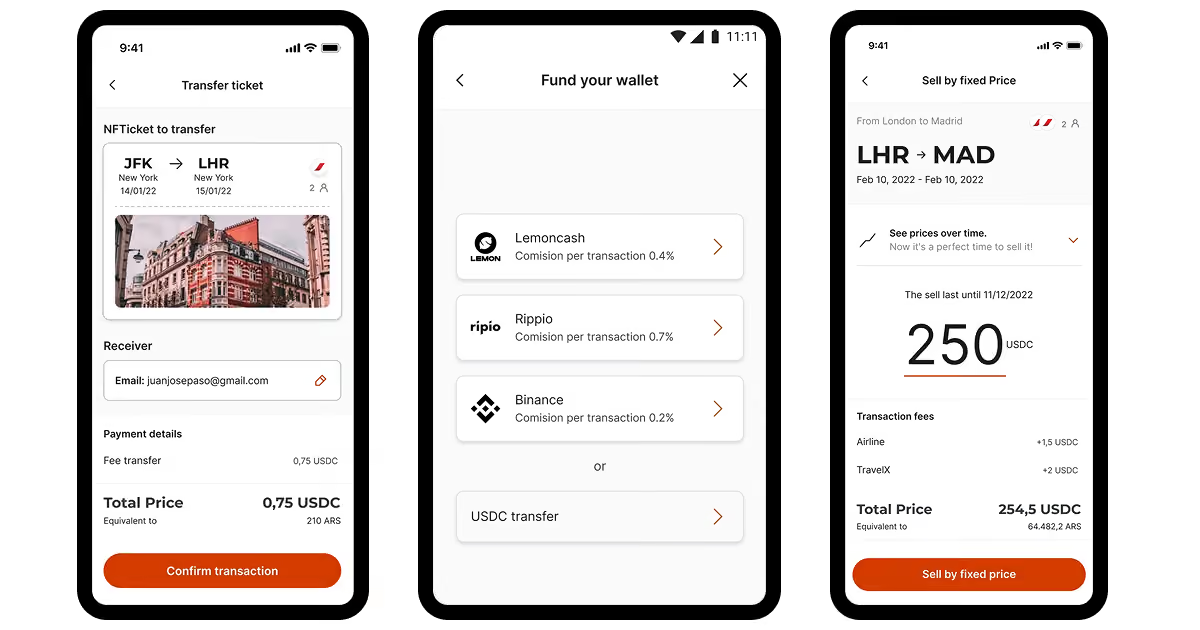
TravelX brings blockchain to the travel industry, specifically to airline ticketing through NFT-based tickets. When a traveler's plans change, they can resell the NFT on a secondary marketplace and recoup the cost. Airlines receive smart contract royalties on each resale. This solves the issue of the non-refundable ticket that has zero resale value under the current system. For airlines willing to experiment with distribution innovation, TravelX is the most interesting model in this list.
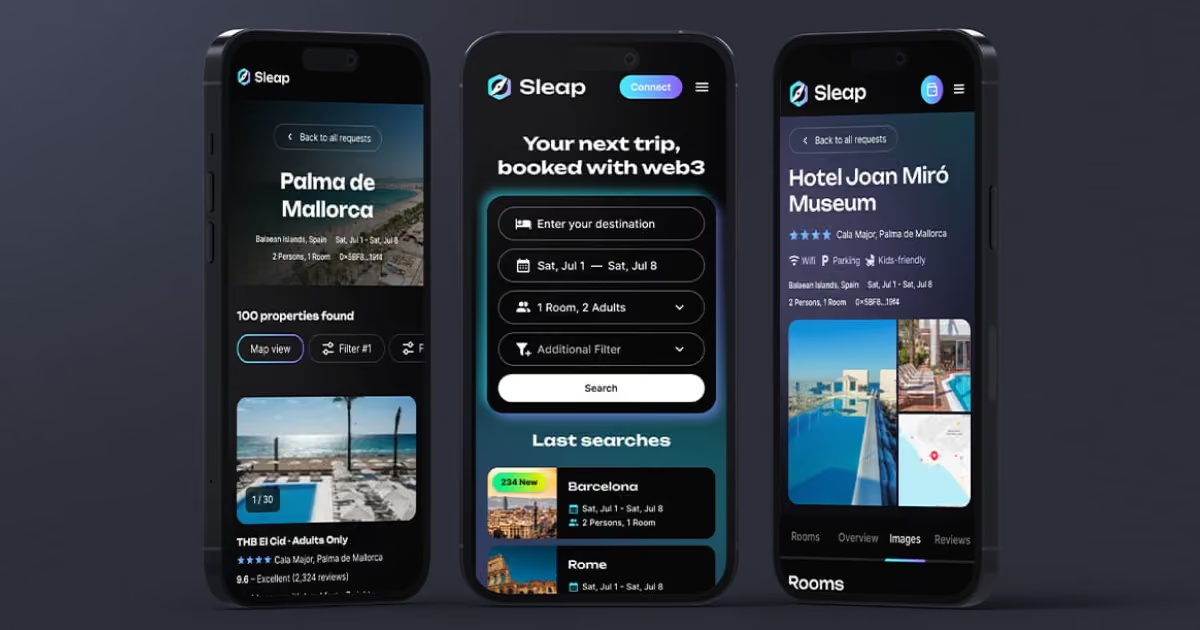
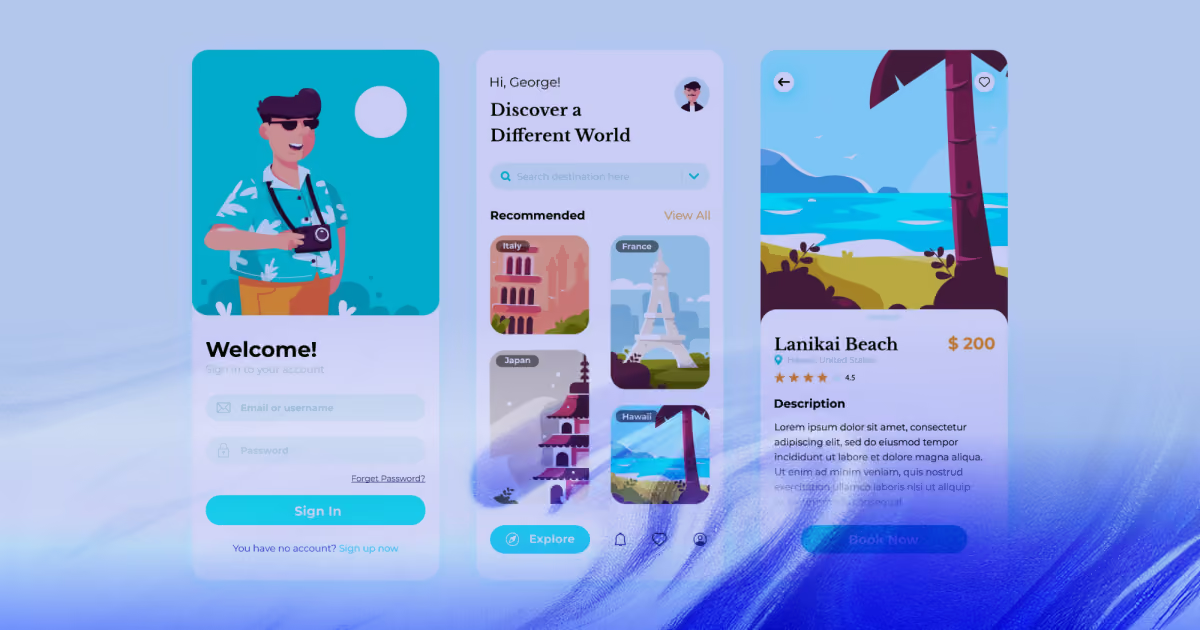
Sleap.io is a Web3-native hotel booking platform covering over one million properties. It accepts 300+ cryptocurrencies alongside traditional card payments and offers rates up to 40% lower through Web3 pricing access. A City NFT collection creates an additional reward layer for frequent users. It is consumer-facing and relatively simple to understand, which makes it the most accessible entry point into blockchain technology hospitality for travelers who are curious about crypto payments but not deeply technical.
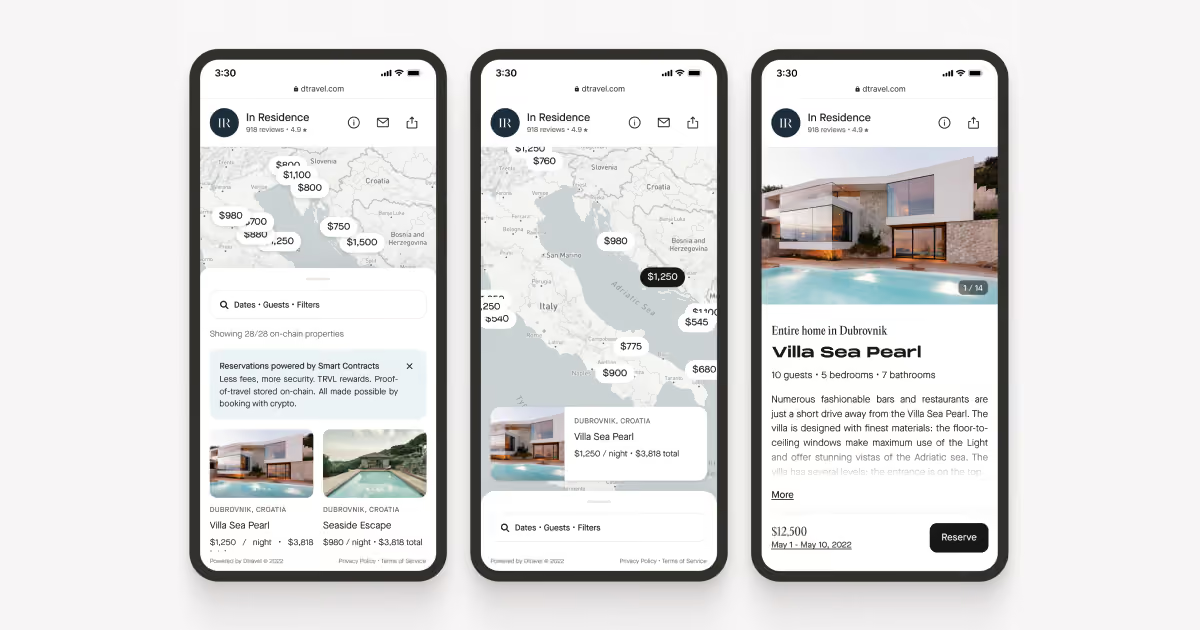
Dtravel is a decentralized peer-to-peer vacation rental marketplace built on the open Nite Protocol. It connects hosts and travelers directly to reduce platform fees. Hosts import existing Airbnb listings, and guests can pay in fiat or cryptocurrency. The TRVL token powers the reward system. For vacation rental operators frustrated by OTA commission structures, it is the most direct analog to what we built with Hosty, a direct booking channel that keeps earnings on the operator side rather than the platform side.
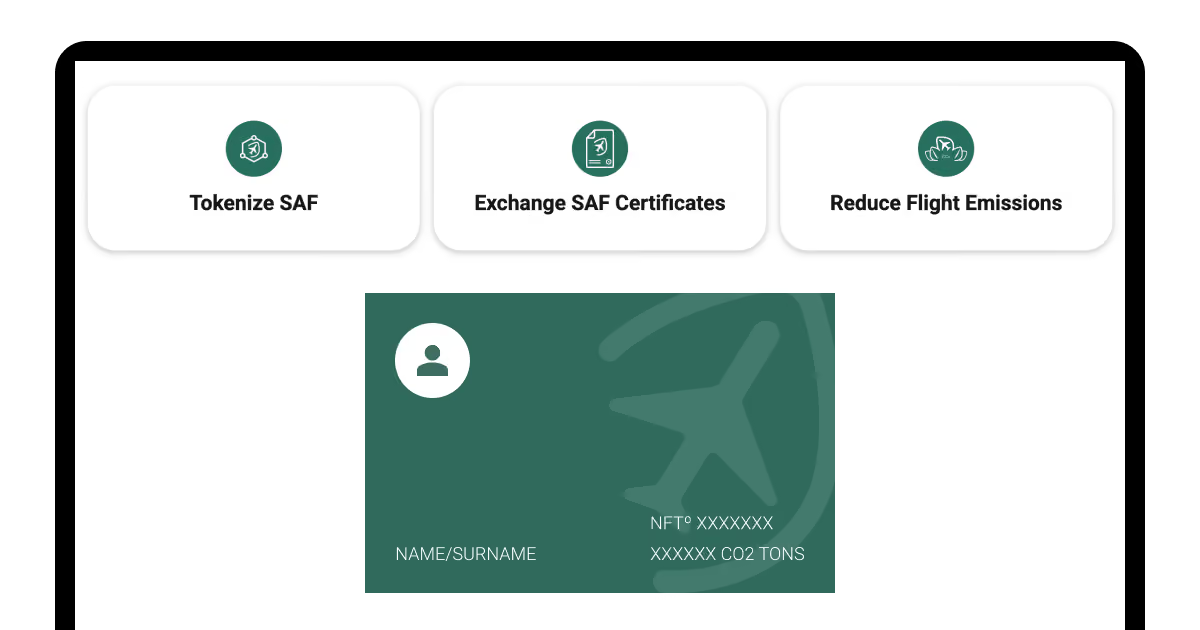
CarbonFly occupies a specific but growing niche of blockchain-verified Sustainable Aviation Fuel certificates. It tokenizes SAF environmental attributes, lets airlines and travel companies address Scope 3 emissions, and enables passengers to purchase SAF tokens directly. Worth watching for any operator with ESG commitments.
Blockchain in travel tools splits into two categories. The first one is a ready-to-use platform you can plug into existing operations. The other one is custom-built solutions designed around your specific workflow.
When is off-the-shelf not the right answer?
"Every off-the-shelf platform is built around someone else's assumptions. The moment your operation has supplier relationships, pricing logic, or loyalty rules that don't fit the template, you're spending engineering time bending the tool to your workflow rather than building the workflow itself," says Orest Falchuk, Head of Engineering at COAX.
Ready-to-use blockchain software platforms deliver real value inside their designed parameters. The problem is that most serious travel operations don't fit neatly inside anyone else's parameters. Supplier networks with custom rate agreements, loyalty programs with non-standard redemption logic, multi-currency settlement across jurisdictions. These are exactly the cases where a platform's constraints become the bottleneck.
Blockchain technology in tourism industry implementations that genuinely transform operations tend to be custom-built. Not because the off-the-shelf options are poor, but because the competitive advantage comes from what is specific to your operation.
This is the pattern we saw with MICRM, the custom CRM and booking engine we built for a tour operator across a growing network. No standard CRM handled the combination of booking workflows, supplier payment logic, and real-time analytics that the client's operation required. Custom development added 60 new affiliates. Outcomes a generic platform could not have produced because the logic driving those outcomes was specific to that business.
The same principle applies to blockchain in the travel industry. A tokenized loyalty program that integrates with your existing PMS, your channel manager, and your guest CRM is a different engineering problem from a generic loyalty token. A smart contract layer that handles your specific supplier payment terms is not something you configure in a platform UI. It is typically something you build.
Travel blockchain custom development is the right choice when:
The operation involves supplier networks, affiliate structures, or pricing logic too complex for standard platforms to handle.
The loyalty or rewards program needs to integrate with existing guest data rather than starting from scratch.
The regulatory environment across your operating jurisdictions requires specific compliance architecture.
The long-term goal is a proprietary capability, something competitors cannot replicate by subscribing to the same tool.
At COAX, our hospitality and travel booking software development, as well as other industry implementations, spans the full blockchain development lifecycle. Smart contract architecture, tokenized loyalty systems, crypto payment gateway integration, and API connectors that tie blockchain layers into existing travel stacks.
We are AWS-certified, ISO 9001 and ISO 27001 certified, and 90% of our team are mid- and senior-level engineers who have solved production-scale travel problems before. We handle strategy, design, development, QA, DevOps, and ongoing support. The gap between prototype and live system does not widen on your timeline.
If your operation has outgrown what existing platforms can offer, or if the competitive advantage you are building depends on something no platform will ever build for you, custom blockchain in tourism development is where that advantage gets built.
Blockchain development costs and future outlook
Budgeting for blockchain technology travel projects is not like budgeting for standard software. The cost variables are wider, the security requirements are stricter, and the ongoing maintenance commitment is a must. Here is what drives costs.
Project complexity is the biggest cost driver in blockchain in travel settings. Complexity includes the number of stakeholders who need to interact with the system, the sophistication of the smart contract logic, and whether you need a custom consensus mechanism or can build on an existing network.
Platform choice shapes both cost and long-term flexibility. Deploying on established networks like Ethereum or Solana is faster and cheaper upfront than building a custom Layer-1 or Layer-2 network, but comes with gas fee exposure and the constraints of the platform's own roadmap. For blockchain technology travel implementations at enterprise scale, some operators choose to build private or permissioned chains to maintain full control.
Integration depth determines how much of your existing infrastructure needs to be rewired. Connecting your blockchain layer to real-world data sources requires Oracle integrations like Chainlink. Connecting it to other blockchains requires cross-chain bridge development. Connecting it to your existing PMS, channel manager, or GDS adds another integration layer on top. Each connection adds engineering time.
Team location has a material impact on hourly rates and therefore total budget. Development rates vary significantly by region: US and Western European teams run $150–$300 per hour, Eastern European teams $50–$100 per hour, and Asian and offshore teams $25–$75 per hour. The quality gap between these tiers is not as wide as the price gap — what matters more is the team's specific experience with production-scale blockchain systems, not their geography.
Smart contract security is a non-negotiable budget line that teams frequently underestimate. A smart contract vulnerability is not a bug you patch in a hotfix. It can mean permanent loss of funds or data. Independent security audits cost $5,000 to $50,000 depending on code complexity and are required before any production deployment involving financial transactions.
Ongoing maintenance also adds 15–20% of the initial development budget annually. Blockchain systems require network monitoring, protocol upgrades, gas optimization, and security patch management.
Cost overview
Blockchain development costs range from $30,000 for a basic MVP to $500,000+ for enterprise platforms. The table below gives realistic ranges by project type.
Project type
Estimated cost range
Basic dApp or token
$15,000 – $50,000
Cryptocurrency wallet
$30,000 – $120,000
NFT marketplace or staking platform
$50,000 – $150,000
DeFi protocol or decentralized exchange
$150,000 – $400,000+
Enterprise blockchain solution
$120,000 – $5,000,000+
For blockchain in travel specifically, most serious implementations fall in the $80,000 to $300,000 range for initial development, before smart contract audits, deployment costs, and annual maintenance are factored in.
A few cost lines that frequently appear after the initial estimate is signed:
Smart contract audits run $5,000 to $50,000 depending on code volume and complexity.
Gas fees for deploying contracts on networks like Ethereum vary with network congestion and cannot be fixed in advance.
Third-party Oracle integrations for real-world data feeds carry both setup and per-call costs. Annual maintenance (monitoring, upgrades, security patches) should be budgeted at 15–20% of development cost from year one.
The clearest way to control cost is to define the scope tightly before development begins. The most expensive blockchain technology travel projects are the ones that started with an unclear brief and an accumulating scope as the build progressed. A well-defined architecture decision upfront determines 60–70% of the final cost.
The future of blockchain in tourism
"The next five years in travel technology will be defined by trust infrastructure — who owns the data, who verifies the identity, and who holds the payment in escrow. Blockchain is not a feature in that future. It is the foundation," shares Orest Falchuk, Head of Engineering at COAX
The future of blockchain in travel runs on three structural shifts: decentralized identity, AI-driven autonomous booking, and frictionless blockchain payments for travel industry transactions. Together, these are moving travel from a fragmented ecosystem of intermediaries toward a connected, decentralized network where the trust layer is built into the infrastructure.
Decentralized digital identities and passports are the closest to mainstream adoption. Just present a credential (biometric scan or QR code) at every touchpoint. Check-in, border control, hotel arrival, car rental pickup. No repeated document presentation, no siloed data copies, no queue. For hospitality operators, this cuts friction in the arrival experience and reduces the data liability of storing guest identity internally.
AI agent delegation is the use case that will define the next five years of travel blockchain development. Autonomous AI travel agents need a secure, verifiable infrastructure to execute bookings, process payments, and manage escrow on behalf of users. Blockchain provides the trust layer that allows a traveler to delegate bookings to an AI agent within strict, on-chain enforceable spending boundaries. The agent cannot overspend, cannot book outside policy, and produces an immutable audit trail of every decision. We are already seeing this pattern emerge in how corporate travel platforms like Navan enforce expense policy in real time.
Travelers using peer-to-peer crypto payments avoid foreign exchange fees and multi-day settlement delays. Countries are already capitalizing on this: Bhutan launched a fully cashless national cryptocurrency tourism payment system, making it the first country to implement blockchain-native payments at a national tourism level. As more destinations follow, operators who cannot accept crypto or on-chain payments will face a growing gap with competitors who can.
Universal, interoperable loyalty is where blockchain in tourism creates an immediate opportunity. Today's loyalty points are locked in silos. Airline miles that cannot become hotel nights, hotel points that expire unused. Blockchain-tokenized rewards become tradeable, combinable assets. The guest who can use their hotel tokens at a partner airline, a local restaurant, or on a future trip has a stronger reason to stay loyal.
Sustainable and ethical tourism will move from a marketing claim to a verifiable record. On-chain carbon offset certificates and eco-certification records cannot be altered or fabricated. Travelers who want to make informed sustainability choices will increasingly demand that evidence. The properties and operators who build that audit trail now will have a verifiable advantage when disclosure becomes mandatory.
The platforms building the foundational infrastructure for all of this, like Camino Network's travel-native Layer-1, SITA's shared aviation ledger, and TravelX's NFT ticketing rails, are establishing the standards that the industry will operate on for the next decade. The travel blockchain operators who engage with that infrastructure during the build phase will shape it. Those who arrive after the standards are set will adapt to someone else's architecture.
At COAX Software, we create the highly secure, scalable backends and custom integrations needed to power this next era. Whether it is integrating distributed ledger technology (DLT) with existing property management systems, engineering secure data pipelines for decentralized identity, or building the robust APIs that allow AI agents to securely execute transactions, we bridge the gap between complex blockchain protocols and seamless consumer experiences.
The industry standards for the next decade are being written right now. With us, you get a reliable partner to prepare for the future.
FAQ
What are the biggest challenges of implementing blockchain in the travel industry?
The main barriers are integration complexity with legacy systems, scalability limitations on public networks, and the cost of smart contract audits. Adoption also requires buy-in across multiple stakeholders (airlines, hotels, and agents) who all need to read from the same ledger. Starting with a single high-value use case, like supplier payments or loyalty, reduces implementation risk significantly.
How do you secure blockchain technology hospitality implementations against attacks?
Smart contract audits before deployment are non-negotiable. Beyond that: use permissioned networks for sensitive guest data, implement multi-signature authorization for high-value transactions, and build monitoring for anomalous on-chain activity. The immutability that makes blockchain trustworthy also means a vulnerability cannot be quietly patched — security must be designed in from architecture, not added after.
Does blockchain in travel and tourism require guests to understand or use cryptocurrency?
No. Most blockchain implementations in travel and tourism are invisible to guests. The blockchain operates as backend infrastructure (handling loyalty tokenization, payment settlement, or identity verification) while guests interact with a normal booking interface. Crypto payment options can be offered as an additional layer, but they are never a requirement for guests to benefit from blockchain-powered systems.
How long does it realistically take to integrate blockchain into a travel solution?
A basic MVP like a tokenized loyalty program or a simple smart contract payment layer typically takes three to five months. A full enterprise blockchain in a travel platform integrating with existing PMS, channel managers, and supplier networks runs six to eighteen months, depending on integration complexity. Defining the scope tightly before development begins is what keeps timelines from expanding.
Can small and independent hotels benefit from blockchain technology hospitality tools, or is it only for large chains?
Independent properties benefit most from commission elimination and direct booking infrastructure. Platforms like LockTrip and Dtravel already serve independent operators. Custom development becomes worthwhile when the property has a supplier network, a loyalty program, or a guest volume where the savings on OTA commission or payment reconciliation justify the build cost.
What is the difference between building on an existing blockchain network versus a custom chain for blockchain in the travel industry?
Building on Ethereum or Solana is faster and cheaper upfront, but exposes you to gas fee volatility and the platform's own constraints. A custom or private chain gives full control over governance, data privacy, and transaction costs, but requires significantly more engineering investment. For most blockchain use cases in the travel industry, building on an established network with a well-defined integration layer is the faster path to production.

















































































































.avif)




%20for%20hotels.avif)


.avif)
.avif)


.avif)





.avif)

.avif)




.avif)


.avif)

We are interested in your opinion