As a hotelier, you might face an uncomfortable truth. Your guest’s data is often scattered between OTAs, direct bookings, website reservations, front desk communications, amenities payment data, and probably a dozen more sources. This makes proper hotel data management more important than ever to adopt. The truth is, we’re not even understanding the importance of unifying, cleaning, and analyzing data, and putting it into practice:
Disconnected systems cost you guests you already earned.
OTA bookings leave you with data you cannot use.
Clean guest profiles turn one-time visitors into regulars.
Dynamic pricing without real demand signals is guesswork.
ETL pipelines move scattered data into decisions.
GDPR and encryption protect what guests trust you with.
Business intelligence closes the gap between numbers and action.
Identity resolution recovers anonymous OTA relationships.
Procurement analytics cut costs without touching quality.
Reputation data surfaces operational problems before reviews do.
Revenue management systems turn demand signals into revenue.
A single source of truth replaces disconnected reporting.
This guide walks you through the concept and best practices of hotel data optimization. We’ll break down how to collect data (and where), how to define the key KPIs for it, and how to store and protect it. You’ll also find some useful tools and the most optimal ways to use your data.
What is hotel data management?
Hotel data management is the practice of collecting, organizing, storing, protecting, and using information your property generates every day. The goal is not just to store data, but to turn it into decisions that improve operations and revenue.
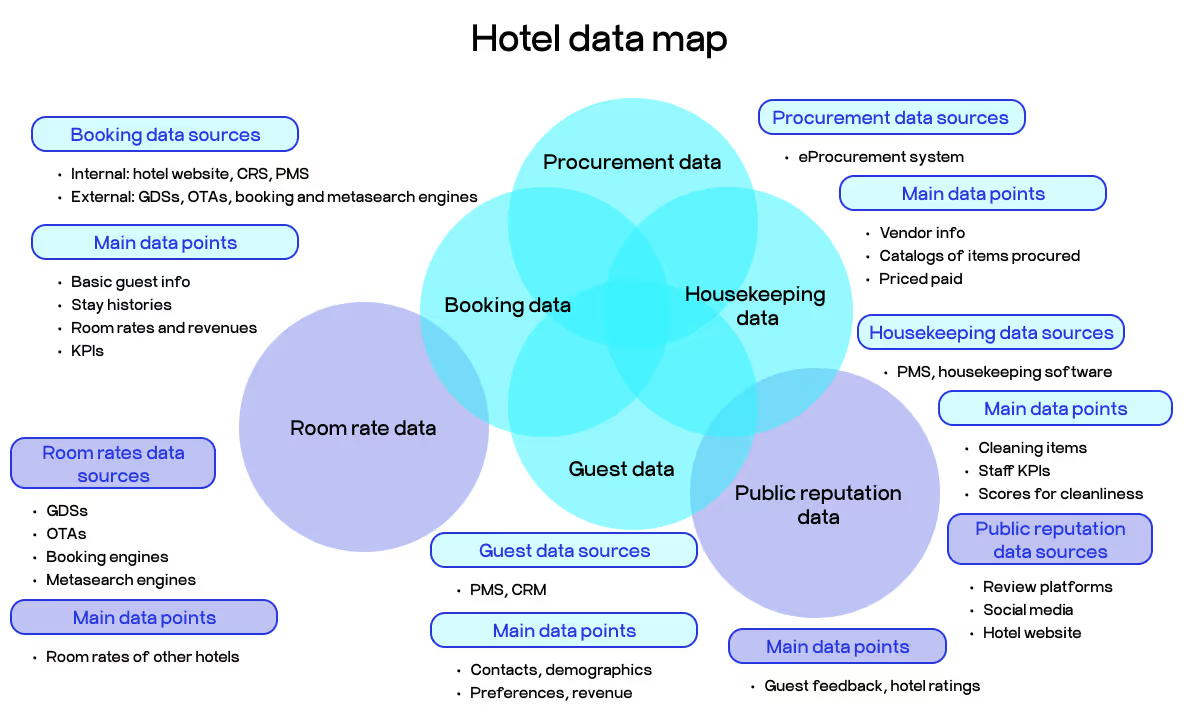
Data analytics in the hotel industry starts with understanding what you have. Every guest interaction leaves a record: a reservation, a complaint, a spa booking, a loyalty redemption. Hotel guest data falls into several categories. Profile data covers the basics (names, emails, contact details). Preference data captures room types, dietary needs, and special requests. Behavioral data shows booking frequency, length of stay, and spending habits. Engagement data tracks communication history. We will touch on the data types in more detail later on.
Hotel data management as a discipline covers the full lifecycle:
Collection from every guest touchpoint
Organizing it into clean records
Secure storage
Error correction and deduplication
System integration
Trend analysis,
Activation (putting insights to work in operations, marketing, and guest experience).
If you skip any of these steps, you probably repeat the same mistake: you collect plenty of data but lack the infrastructure to use it. Is it really that important? Let’s see.
Data management market in hospitality
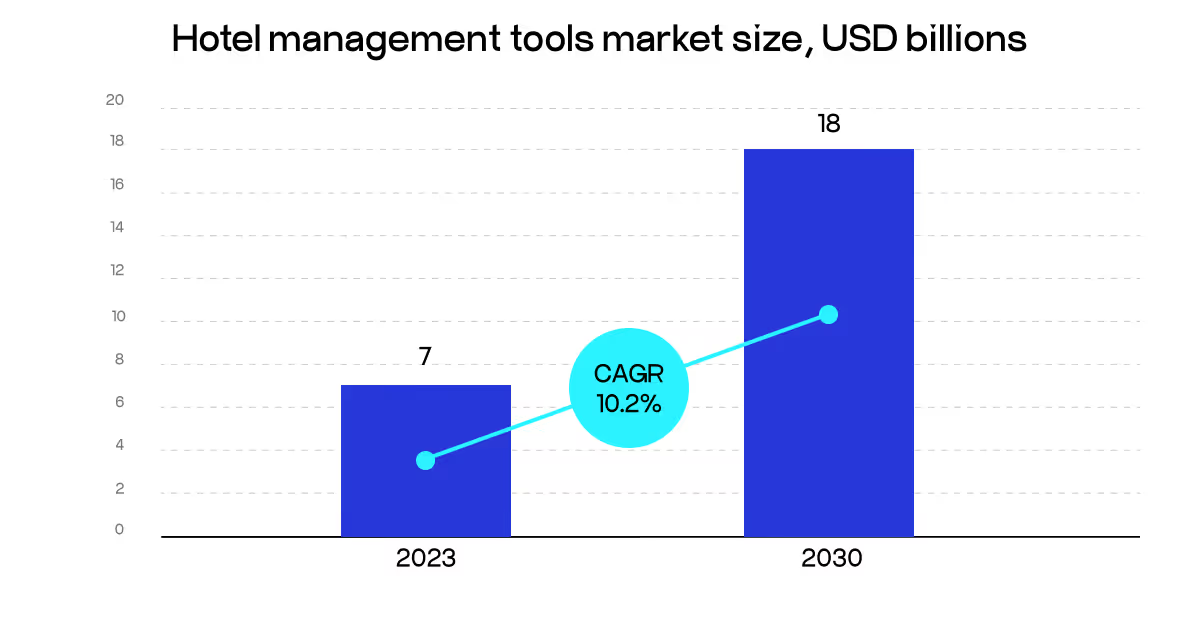
The hotel management tools market is projected to reach $18 billion by 2030, growing at a compound annual rate of 10.2%. That growth is not driven by novelty or fleeting trends. It reflects a real operational need that we can bet you have too.
Hotel data optimization has become a core priority as properties face pressure from online travel agencies, rising guest expectations, and increasingly complex distribution environments. Two-thirds of hotel reservations currently flow through OTAs and hotel websites, which means properties are often collecting guest data they do not own and cannot fully act on.
The demand for better hotel guest data analytics is running into a structural problem. Nearly half of hospitality professionals report they cannot access the data they need for revenue and operational decisions. The biggest obstacle, cited by 40% of hoteliers, is disconnected systems. When your PMS doesn’t share data correctly with your POS, your CRM, or your booking engine, you end up with partial guest records spread across platforms that bring no value.
The challenge the market is trying to solve isn’t that easy: hotels are piling up enormous amounts of guest data, but the technology infrastructure to connect and use that data hasn’t kept pace with how quickly that data is being generated.
However, with data management practices and tools, it’s becoming more possible - and here’s why.
Why hotel data management matters
You already know your guests have options. What you may not know is how directly your data practices affect whether they come back.
The modern guest journey is fragmented. A traveler researching a trip might compare rates on three OTAs, visit your website, read 15 reviews, and book through a fourth channel. Each of those touchpoints generates data. Without a system to unify it, you end up with a loyal guest who checks in and gets asked, "Is this your first time with us?" That moment costs you more than it seems - the guest doesn’t feel like an always welcome one.
Hotel analytics gives you the ability to recognize that guest, know their preferences, and act on them before they have to ask. 75% of travelers say they want personalized experiences. The hotels delivering those experiences are working from clean, connected data.
Here is what poor data management actually costs you, and what solving it gets you:
Challenge
Real cost
Benefit of data management
Disconnected systems
Incomplete guest profiles, manual reconciliation
Unified view across all touchpoints
Inaccurate or duplicate records
Wrong communications, failed personalization
Clean profiles that power relevant outreach
OTA bookings without guest data
OTA bookings without guest data
Identity resolution to recapture guest ownership
No visibility into spending patterns
Missed upsell opportunities
Targeted offers based on actual behavior
Communication lag from data silos
Service delays, guest frustration
Real-time information across departments
The OTA problem is worth noting. When a guest books through an OTA, you often receive an anonymized email. You complete the stay, but you have no direct line to that guest afterward. Hotel business intelligence tools match those anonymous profiles with real guest identities. Research shows North American properties successfully resolved 12% of their database profiles that previously had anonymous OTA emails, each one a direct revenue opportunity.
Operationally, CRM and loyalty systems are where 46% of hoteliers say data quality improvements matter most. Those systems are where guest relationships live. When the data feeding them is messy, your loyalty program sends the wrong offers, your marketing campaigns underperform, and your front desk staff have no useful context when a guest arrives.
The properties gaining ground right now are not the ones with the most data. They are the ones who have built the infrastructure to use it well. Hotel data analytics helps with it, but first, you need to know how to collect your data right.
How hotels collect data
Every guest action generates a data point. A search on your website, a room preference noted at check-in, a spa booking, a post-stay review. The question is not whether your hotel is collecting data. It is whether you have the systems in place to capture it consistently, connect it across sources, and actually use it.
Hotel data and analytics work only when the collection process is deliberate. That means knowing exactly where your data comes from and what each source can and cannot tell you.
Channel
Data collected
Ownership
Limitation
PMS
Reservations, payments, preferences, stay history
Full
Only as good as integrations with other systems
Direct booking / website
Visitor behavior, contact info, room preferences
Full
Requires traffic to the direct channel
OTAs
Name, dates, room type, anonymized contact
Partial
Limited guest identity, no direct relationship
Mobile app
In-stay behavior, requests, spending, messaging
Full
Requires guest app adoption
On-property POS
Spending at F&B, spa, ancillary services
Full
Often siloed from the central guest profile
Pre-arrival email
Open rates, click behavior, preferences indicated
Full
Only covers guests who opt into communication
Post-stay surveys and reviews
Satisfaction scores, specific feedback, loyalty signals
Full
Response rates vary; not all guests participate
Data collection starts the moment someone lands on your website. Page visits, search queries, time spent on room category pages, chatbot conversations, and email inquiries tell you what a potential guest is considering before they make a decision. This pre-booking behavioral data is often underused, but it is some of the most actionable information you have for targeted outreach and conversion.
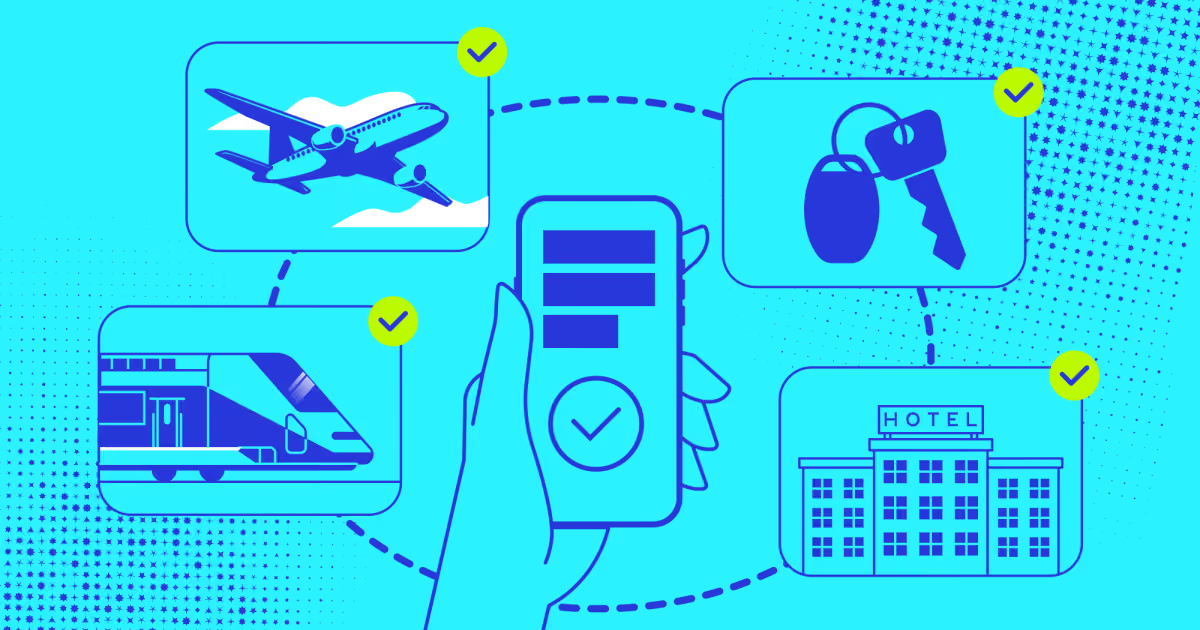
Once a guest enters the booking process, the volume increases. Reservation details, room type preferences, special requests, dates, group size, and rate selected flow into your system regardless of whether the booking comes directly or through a third party.
The PMS is the operational center of your data management strategy. It logs every reservation, processes payments, tracks room assignments, records guest preferences, and shares relevant information across departments. When a guest books a room with a king bed and a high floor, that preference lives in the PMS. The PMS works best when it is fully integrated with your other systems. 64% of hotels have PMS systems fully integrated with a central guest profile.
Direct bookings and your booking engine are another vital source. When a guest books through your website, you capture first-party data you own outright. Website analytics tools show you visitor location, device type, pages visited, and booking behavior. Your booking engine captures contact details, payment information, room preferences, and any additional requests. This channel gives you the clearest, most complete picture of who is booking and why.
OTAs send you the booking. However, the data you receive through OTA channels is limited by design: a name, a contact email (often anonymized), dates, room type, and payment details. You can complete the stay, but you typically cannot build a direct communication history. This is a structural problem for data management and analytics at properties where OTA volume is high. This partial data makes recovering direct relationships much more difficult.
Hotel apps collect behavioral data throughout the entire stay. Check-in and check-out activity, service requests submitted through the app, restaurant reservations, spa bookings, and in-app messaging data is tied directly to an identified guest. Properties with active mobile app adoption get a richer, more continuous data stream.
On-property interactions. Point-of-sale systems at your restaurant, bar, and spa record spending behavior that builds a picture of preferences and average spend per stay. Front desk exchanges, housekeeping requests, and concierge interactions add qualitative detail. Manual data capture also fills gaps that automated systems miss. The goal across all on-property touchpoints is what some operators call a "Golden Record": one clean, complete guest profile that consolidates every interaction from every department.
Post-stay engagement. Survey responses, review platform activity, and post-stay email engagement close the loop on each guest visit. Response rates, satisfaction scores, and specific comments add feedback data to the profile. Whether a guest opens your post-stay email, clicks through to a loyalty offer, or ignores it - that behavior is also data that informs how you communicate with them next time.
Research by Carneiro and team confirms that companies that use hotel data management across these touchpoints see measurable improvements in financial performance, customer retention, and hotel reputation. The collection infrastructure is what makes that possible.
Hotel data collection: What to look for
Not all data is equally useful. Hotels generate enormous amounts of information daily, and without a clear framework, you end up collecting everything and acting on nothing. Here are the categories that drive hotel data optimization.
Data type
Source
Key metrics
Main use
Guest profiles
PMS, CRM, loyalty program
Preferences, stay history, spend
Personalization, targeted marketing
Booking and property
PMS, channel manager
ADR, RevPAR, occupancy, lead time
ADR, RevPAR, occupancy, lead time
Competitor rates
Rate shopping tools
Competitor ADR, rate positioning
Dynamic pricing decisions
Housekeeping operations
Housekeeping software, POS
Turnover time, cost per room, scores
Efficiency, cost reduction
Procurement
E-procurement systems
Order costs, invoice accuracy, spend by category
Cost control, supplier management
Reputation and reviews
OTAs, Google, TripAdvisor, social
Sentiment scores, rating trends, complaint topics
Reputation management, service improvement
Guest data
This is where hotel customer data analytics starts. Guest information is scattered across PMS, CRM, loyalty accounts, check-in forms, POS terminals, and WiFi logs. A complete guest profile covers contact details, booking history, channel preferences, room and amenity preferences, F&B notes, ancillary service usage, and loyalty status. Advanced CRM platforms automate the assembly. When a repeat guest calls, the system surfaces their full profile before the conversation ends. That is how hospitality AI solutions do the practical work.
Booking and property data
Your PMS holds everything reservation-related:
Guest details
Distribution channel
Lead time
Length of stay
Room pricing
Core KPIs: ADR, occupancy rate, and RevPAR.
For hotel industry data analytics, what matters is connecting these figures across sources. Bookings from your direct website, OTAs, GDS, and metasearch all flow in through a channel manager. That data multiplies in value when the PMS integrates with your RMS, CRM, housekeeping software, and POS.
Room rate and competitor data
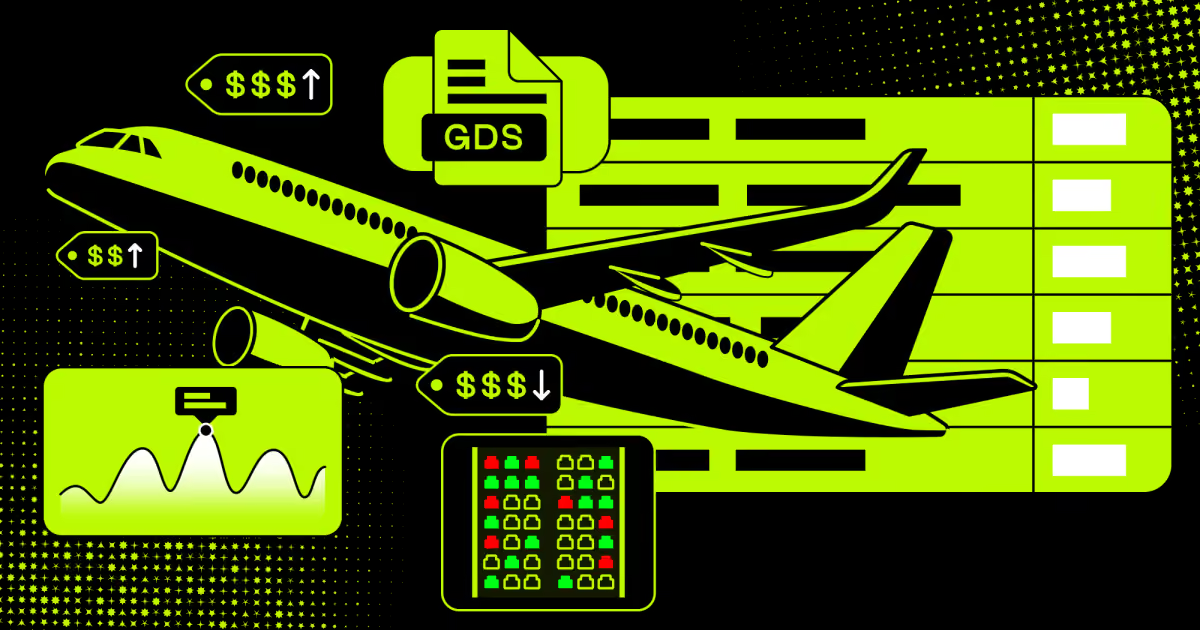
Pricing without market context is very uncertain. Rate shopping tools pull competitor pricing from hundreds of sources continuously. For instance, Marriott's Rate 360 connects to over 600 sources and processes more than 10 billion rate data points monthly. This feeds directly into hotel data management at the revenue level, showing where your rates sit and where you are leaving occupancy on the table.
Housekeeping and operations data
Operational data is underused at most properties. Tracking staff headcount, room turnover times, cleaning performance, linen usage, amenity costs, and guest cleanliness scores shows exactly where efficiency breaks down. Research across 15 major hotel brands found that higher cleaning budgets do not automatically produce better guest scores. Properties that improved did so by analyzing patterns and adjusting workflows, not increasing spend.
Procurement data
Procurement is where data management strategies often delivers the most direct cost impact, covering food and beverage, fixtures, linen, uniforms, and services. E-procurement systems track purchasing in real time and flag invoice discrepancies automatically. Hilton has used BirchStreet's platform for 17 years, cutting grocery order processing from three days to one.
Reputation and review data
95% of travelers read reviews before booking. Reputation management systems use natural language processing to collect and classify guest feedback from Google, TripAdvisor, OTA platforms, and social media. This is AI data management with a direct operational output: automated monitoring that identifies recurring complaints, tracks rating trends, and flags negative comments for immediate response.
Hotel data storage and protection
Collecting data is only half the job. Raw information scattered across your PMS, CRM, booking engine, and POS needs to move into a unified repository before it can do anything useful.
Security layer
What it covers
Key action
ETL and data warehousing
Data consolidation and standardization
Clean pipelines with deduplication
PMS security
Guest and transaction data
Encryption, updates, compliance
Regulatory compliance
GDPR, local data laws
Consent management, breach protocols
Internal protocols
Human error and access risk
Staff training, password policies
Encryption
Payments and personal data in transit
TLS and AES on all transactional systems
Regular audits
Vulnerabilities and compliance gaps
Internal reviews plus external inspections
The process that moves data from source systems to a central warehouse is called ETL: Extract, Transform, and Load. It is one of the core data management best practices. ETL tools pull data from every connected system, clean and sort it, remove duplicates, convert into a standardized format, and load it into the target warehouse.
Without this step, you end up with conflicting records, duplicate guest profiles, and incomplete data. That’s where you benefit from ETL pipelines suited to your specific tech stack. Once data is clean and centralized, you still need analytics tools applied to it. A warehouse full of clean data that nobody analyzes is just expensive storage.
Why are these practices important? Hotel data management carries legal obligations. GDPR requires explicit guest consent for data use, gives guests the right to access or delete their information, and mandates breach notification. Spain's Royal Decree 933/2021 adds a traceability demand: hotels must log who accessed guest data and when, while protecting guest privacy. Clear privacy policies, staff training, and compliant systems are the baseline.
Data management in hotel environments faces risks at multiple points. Your PMS is the highest priority. It should use advanced encryption, receive regular security updates, and comply with local and international regulations. Encryption protocols like TLS and AES convert sensitive data like card numbers, personal details, reservations into formats that are unreadable if intercepted. This directly affects guest trust during online transactions.
Internal protocols matter just as much. Human error causes more breaches than most operators expect. Regular password changes, restricted sharing of confidential information, and clear staff policies reduce that risk. Revenue management in hotel industry systems handling financial data need their own access controls.
Regular audits close the loop. Internal reviews catch software vulnerabilities early. External inspections verify actual regulatory compliance. Properties that audit proactively fix problems before they become incidents.
Hotel data analysis and optimization
Your PMS tells you occupancy is down. It does not tell you why or what to do about it. That gap is where data management systems and business intelligence tools earn their place.
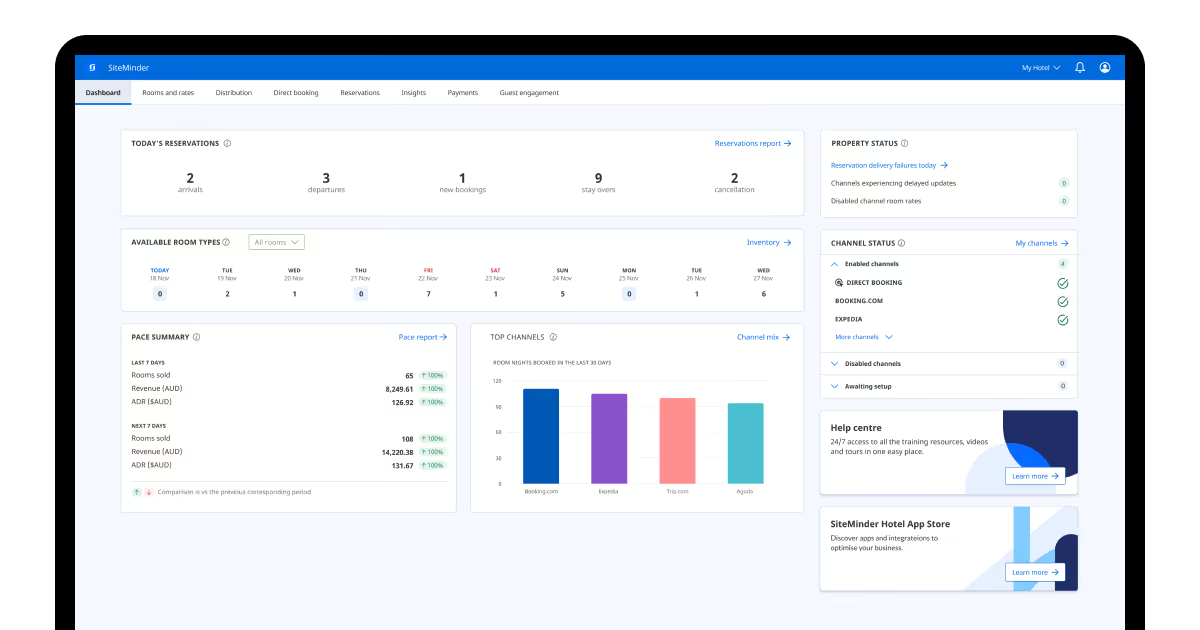
The core processes here are deduplication, enrichment, and identity resolution. The same guest who booked direct once, via corporate account once, and through an OTA once should be one record. When profiles are clean, marketing becomes precise. SiteMinder Insights supports this with real-time channel and country mix analysis, showing which sources generate the most revenue and where your distribution strategy needs work. For properties focused on direct bookings, BenchDirect benchmarks your direct channel against competitors, runs A/B testing on your booking funnel, and monitors rate parity.
SiteMinder Insights
The highest-value application is demand forecasting and pricing.
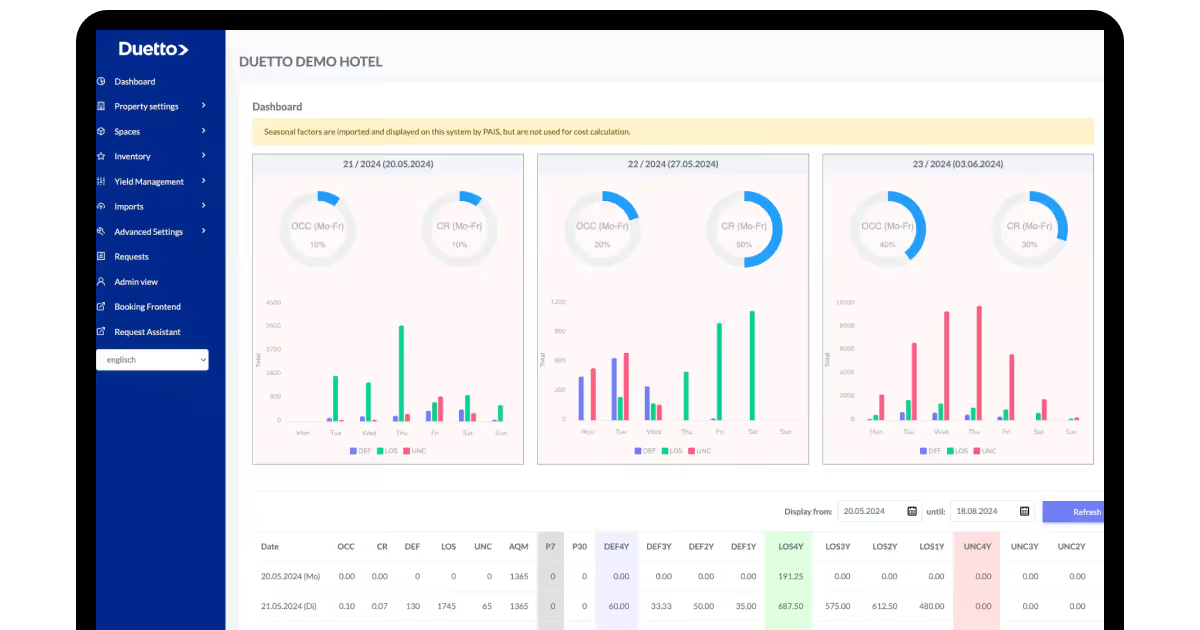
A proper data management approach to revenue means accounting for local events, seasonal patterns, competitor rates, and booking pace at once. Tools that support dynamic pricing adjust rates in real time as demand shifts. Two platforms built for this are Duetto and Hotel Cloud. Duetto uses machine learning for precise demand forecasts and dynamic pricing, with folio-level historical and forward-looking data built for revenue teams that need detail. Hotel Cloud adds real-time rate management and multi-property marketing campaign automation, making it practical for larger portfolios.
Duetto
Data management tools apply to operations, too.
For example, Lighthouse Business Intelligence gives commercial teams instant clarity across properties, with AI-powered Smart Summaries that convert complex data into daily performance briefings. It integrates directly with your PMS, so reporting happens automatically rather than through manual exports.
Built-in analytics in most hotel software covers basic KPIs and stops there. A dedicated hotel data management platform pulls from multiple data sources, identifies patterns, and presents findings in a format your team can act on without a data science degree.
Tool
Best for
Standout feature
Lighthouse
Portfolio and commercial performance
AI Smart Summaries, PMS integration
Duetto
Dynamic pricing and demand forecasting
Open Pricing automation, folio-level data
SiteMinder Insights
Channel and distribution optimization
Channel mix analysis, pace intelligence
The Hotels Network
Direct booking growth
BenchDirect benchmarking, A/B testing
Hotel Cloud
Multi-property revenue management
Automated marketing, real-time rate tools
How to use hotel data to get results
Collecting and storing data correctly gets you to the starting line. What happens next determines whether it translates into revenue, better guest experiences, or just well-organized files nobody acts on. Here are some efficient practices, based on what the industry's best operators do and what 15+ years of hotel technology work has taught us.
Start with one source of truth.
The most common reason hotel data analytics fails in practice is data distributed throughout too many places. Your team makes decisions from whichever system they happen to be in at the time, and those systems rarely agree with each other.
Hilton solved this by consolidating dozens of legacy BI and reporting systems into a single centralized reporting hub. The result was consistent, governed data reaching the right people across global operations, from property-level managers to executive teams. IHG took a similar approach, building a centralized data architecture on Google Cloud and BigQuery that connects revenue management, guest insights, and marketing into one environment.
The practical version of this for most properties: pick your central system, integrate everything into it, and stop tolerating disconnected reporting.
Let revenue management run on data
Static pricing is one of the most expensive habits in hospitality. Hotel data optimization in revenue management means feeding your system real demand signals: local events, competitor rate movements, booking pace, cancellation patterns, and channel mix, all at once.
IHG's PERFORM revenue management system, built on this principle, generated over $145 million in incremental revenue. Additionally, Choice Hotels deployed ChoiceROCS, an AI-driven revenue management tool combined with real-time demand-based bidding through Google Hotel Ads, achieving a 40% improvement in cost efficiency and cutting reporting time from days to minutes across more than 5,000 properties.
Red Roof Inn demonstrated the same logic at a smaller scale. By cross-referencing weather data and flight cancellation rates, their team identified that when cancellations hit 3%, roughly 90,000 passengers would be stranded near their properties. They launched a targeted mobile campaign in those geographic areas and saw a 10% revenue increase in affected regions.
The lesson: the inputs for smarter pricing are often already available. You need the system to connect them.
Use guest data to find your most valuable customers
Some guests book a room and leave. Others spend on dining, spa, activities, and return year after year. Hotel data management systems lets you identify which guests fall into which category and treat them accordingly.
Marriott's Revenue Optimizing System integrates internal and external data to adjust pricing and staffing in real time, while its Bonvoy platform uses AI to enable targeted marketing and A/B testing at scale across 260 million members.
For properties without that scale, the same principle applies at a smaller level. Identify guests whose total spend across rooms, F&B, and ancillary services makes them noticeably valuable. Build offers and communications around their behavior, not their room category.
Fix the data before you analyze it
Denihan Hospitality, an owner of luxury and boutique hotels across the US, used an IBM analytics tool to extract insights from internal guest data and external review platforms. The analysis revealed that noise was the top complaint across their 11 New York properties. Their response, the "Put NYC on Mute" initiative, providing free earplugs, delivered a 30x return on the data investment.
That result came from clean, connected data. If Denihan's guest feedback had been scattered across unconnected systems, the pattern would never have surfaced. Data management solutions that deduplicate profiles, resolve identities across booking channels, and standardize formats are what make this kind of analysis possible. Without them, you are pattern-matching on incomplete information.
Practical tips from 15+ years in hotel technology
Apart from the data management tools, you can use some experience-proven tips that we collected. They are what we see work consistently across properties of different sizes and markets.
Don’t collect more than you will use. Every data point you capture requires storage, maintenance, and governance. Decide what decisions each data set supports before you start collecting it.
Integrate before you analyze. Isolated systems produce isolated insights. Your PMS, CRM, RMS, POS, and reputation management tools need to communicate. Analysis of any single system in isolation will mislead you.
Train the people, not just the systems. Hotel data management services fail when staff do not know how to enter data consistently or interpret what the dashboards are showing. Investment in training returns more than investment in additional tools.
Visualize outputs for the people making decisions. Complex algorithms need simple outputs. A revenue manager should see actionable rate recommendations. A front desk team should see guest preferences. The data should make their jobs easier, not add cognitive load.
Audit regularly. Choice Hotels reduced database refresh times by 40% after moving to AWS and restructuring its data architecture. That kind of efficiency gain comes from treating your data infrastructure as something that needs ongoing maintenance.
Understanding efficient practices and finding the best software for hotel data analytics is one thing. Building the infrastructure that makes it work for your specific property stack is another.
At COAX, we work with hotels and hospitality groups to design and develop software that integrates hotel data analytics across the full technology stack. This includes PMS integrations, custom BI dashboards, CRM connectivity, and data pipeline architecture that moves information from source systems into centralized, analysis-ready environments.
Our hotel software development services aim at uniting your tech infrastructure and operational reality. If your current tech stack produces disconnected reporting, duplicate guest profiles, or revenue decisions made without reliable data, that is a solvable engineering problem.
If you want to understand what a connected data architecture would look like for your property, our team can walk you through it.
FAQ
What is data management in terms of hospitality competitiveness and revenue management?
Hotel data analytics is what separates reactive operations from strategic ones. Carneiro and colleagues confirm that hotels using big data analytics see measurable gains in financial performance, customer retention, and reputation. In revenue management specifically, connected data enables dynamic pricing, demand forecasting, and channel optimization, directly affecting RevPAR and reducing dependence on OTAs.
Do SMEs need data management systems to grow?
Yes. 91% of hoteliers say their PMS directly drives revenue growth. Meanwhile, 49% struggle to access critical operational data without proper systems in place. Smaller properties lose the most to disconnected data because they have fewer margins to absorb the cost of bad decisions. The right system levels the playing field against larger chains.
How do I choose the right data management platform?
Ask these questions before deciding:
Does it integrate with your existing PMS, CRM, and POS?
Does it support real-time reporting or only historical data?
Can non-technical staff actually use the dashboards?
Does it scale with your property count?
What are the data ownership and export terms?
Is it compliant with GDPR and relevant local regulations?
How does COAX build secure and efficient data management platforms?
We build to certified standards. COAX holds ISO/IEC 27001:2022 certification covering security management, risk assessment, and threat monitoring, plus ISO 9001 certification ensuring consistent, quality-controlled development processes. Every platform we deliver is architected for integration, performance, and long-term regulatory compliance from day one.

















































































.avif)




%20for%20hotels.avif)

.avif)
.avif)


.avif)




.avif)
.avif)



.avif)

.avif)

We are interested in your opinion