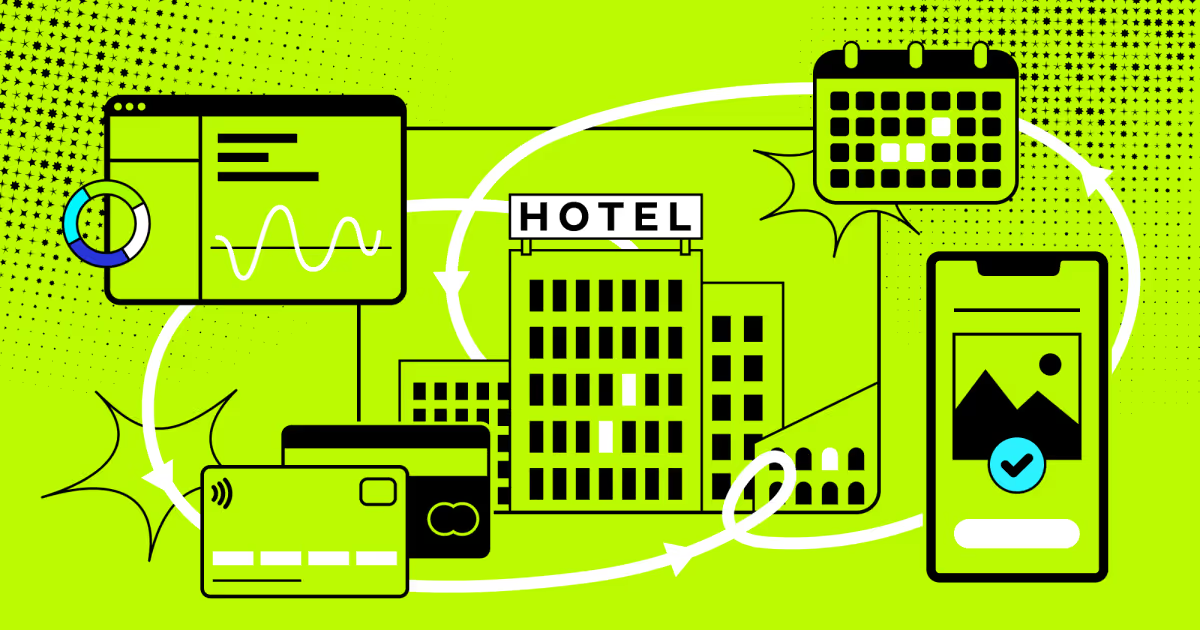
If you still think that business intelligence is peeking through the keyhole at what your competitors are doing, and you don’t really need it for your hospitality business, you’re wrong. The industry runs on data - and to keep up with its pace, you need to unify your real-time knowledge of market trends, competitor pricing strategies, and your own operations in a way that produces insights fast, efficiently, and visually. Here’s how hospitality business intelligence makes it possible:
Unifying data intelligence from PMS, RMS, channel managers, OTAs, POS, and financial systems breaks down silos across all departments.
Decision support for revenue (pricing, inventory, and marketing ROI), guest experience, and operations (scheduling and resource allocation) optimizes your strategy.
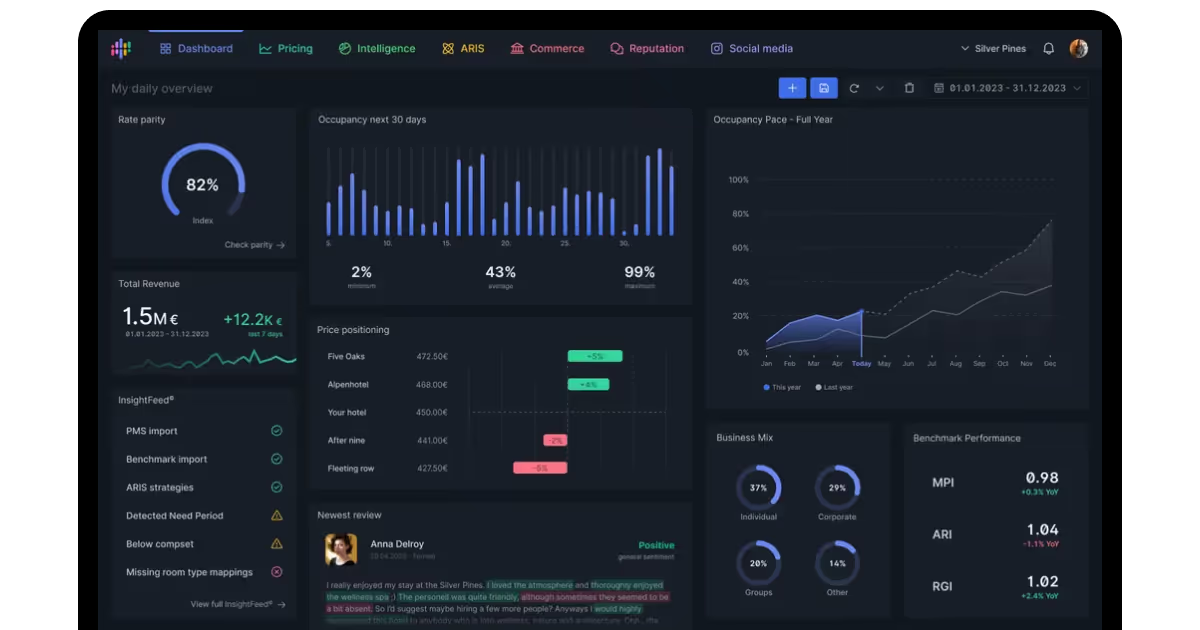
Advanced analytics with interactive dashboards, predictive forecasting, and AI summarization allows you to unify scattered information.
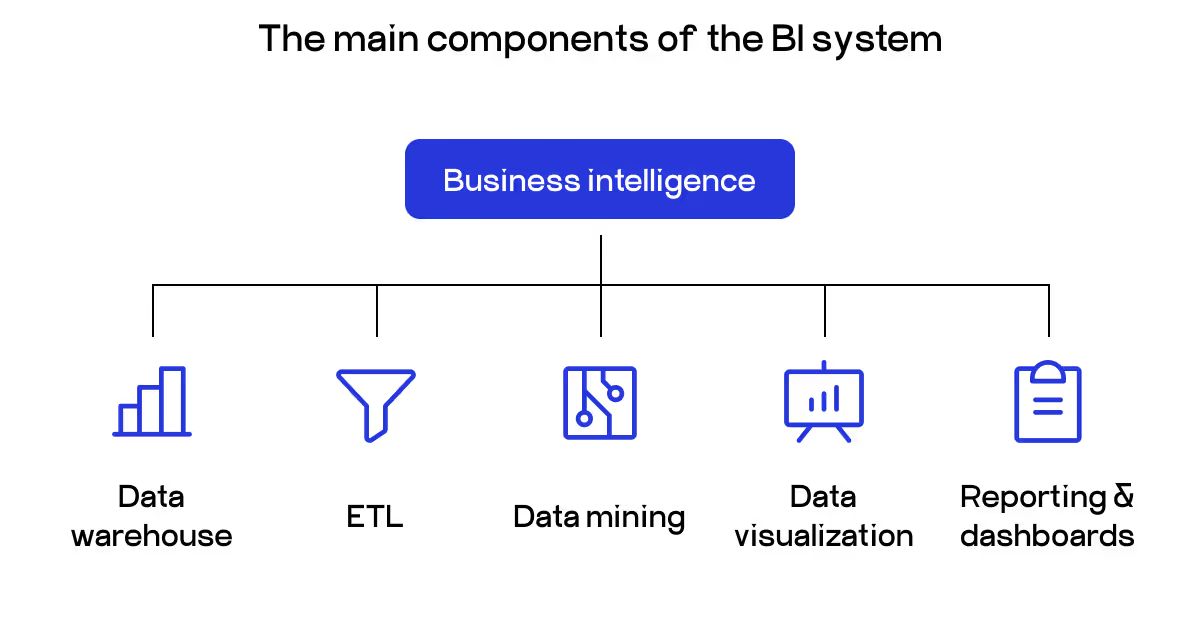
Core components include data warehouses, ETL tools for automation, data mining to discover patterns, and real-time KPI dashboards that visualize your insights.
Integrating data from internal sources (reservations, financials, operations, feedback) and external sources (competitor rates, social media, benchmarking, economic indicators) helps you connect all the dots.
Ready platforms like Lighthouse, ProfitSword, The Hotels Network, Shiji Twilight Data + AI, and Hotellistat provide a basis for establishing your intelligence workflows.
Custom development offering unique data models, proprietary algorithms, customized dashboards, flexible APIs, scaled infrastructure, and specialty analytics.
In this guide, we will help you understand the key components, features, and the most fitting use cases for business intelligence in the hotel industry, and outline the greatest options you have.
What is business intelligence in hospitality?
Generally speaking, business intelligence (BI) is identified as the collection, analysis, and visualization of business data to assist in decision-making. It consists of a complete range of systems, activities, applications, and technologies. Mariani from the University of Reading states that BI consists of data warehousing, data mining, reporting, and online analytical processing (OLAP).
The business intelligence hospitality industry definition is a bit narrower: it applies to data analytics methods and solutions that help hotels make informed decisions.
Modern BI tools are cloud-based, user-friendly solutions that can offer high-value, real-time updates, support advanced analytics, and provide great visualization. What they do is convert raw data into insights and expose it to non-technical users through mobile and self-service tools.
How does hotel BI differ from regular reporting tools?
Since hospitality business owners and managers are pretty much used to reporting and analytics tools in their operations, they often confuse them with targeted hotel business intelligence software. However, they are quite different from one another:
Scope and purpose. Reporting tools provide a fixed and predefined dataset that specifies previously determined questions, such as "What were last month's sales?", while BI includes all activities defined in this mode. They include the collection, analysis, and interpretation of data in order to assist and inform strategic decision-making, as Bustami and his colleagues describe.
Interactivity. Reporting typically offers static, fixed views of data. BI tools offer interactive dashboards that allow near fluid access to drill down information, filter data, and manipulate the visualization to gain their better understanding of the data.
Time sensitivity. Regular reporting is focused on historical snapshots of data. BI, in turn, shows real-time data, so you can quickly respond to changes in market conditions.
Data exploration. Reporting focuses on established indicators and metrics that present information organized in a structured, standardized format. Meanwhile, hotel industry business intelligence offers the flexibility to further explore the data without predefined metrics indicating trends, correlations, and patterns, as well as ask several ad-hoc questions for insights that would not have otherwise been discovered.
Analytical depth. While reporting presents results as to what occurred, BI provides multi-dimensional analytics explaining why the event occurred. For example, if your hotel occupancy rates dropped, BI can analyze the relationships between data points to provide answers as to why.
Integration capabilities. According to Mariani and others, BI systems and applications incorporate data warehousing systems, data mining, and online analytical processing from multiple sources into one view that supports you in revenue optimization and forecasting.
Complexity and customization. Reporting provides easy-to-understand and standardized data outputs, while BI is a more complex data mode and higher-level analysis of techniques that provides you the flexibility to create strategies to provide you with a competitive advantage.
As you see, the ultimate goal of hotel BI is to help you make better decisions regarding your hospitality business. So, what exactly are the decisions you make better with these solutions?
Types of decisions BI helps with
There are several areas where each of your decisions bears a great impact - revenue decisions, guest experience decisions, and operational decisions, so making informed choices is a big deal here. Here’s how hotel business analytics and intelligence help with them:
Revenue decisions. BI can inform decisions related to the optimal price for each room by measuring competitor pricing and evaluating market conditions. BI also informs decisions about how to allocate room inventory to channels by projecting demand based on booking patterns, local events, and other factors. Additionally, BI can also be used to evaluate data sources to determine the best marketing decisions for increasing revenues, including evaluation of customer spending behavior, loyalty program utilization, and success based on other metrics, including occupancy and RevPAR.
Guest experience decisions. BI can help inform decisions related to how to personalize services for guests by measuring guest preferences along with booking activity. In addition, BI provides insight into the best service improvement decisions by evaluating guest feedback and satisfaction score data, which allows for personalizing recommendations through guest preferences.
Operational decisions. BI can also help make decisions on how to optimize hotel processes by pinpointing inefficiencies to increase cost savings. BI can also provide insight to improve staff scheduling decisions at hotels by evaluating occupancy forecasts and other demand patterns.
As you see, the scope of the everyday choices you can take in your work are wide, and many of them can and should be improved and informed by hotel business intelligence. But to implement them, you need to understand their key components and data sources.
Core components & data sources in hotel BI
The BI systems within hotels have several dual-text models containing interrelated components that provide actionable intelligence from raw data. Specifically, professor Sequeira talks about five major components found within BI systems working as a sequence:
A data warehouse refers to a central repository that houses integrated data from various sources that providing a single view of hotel operational and guest data.
ETL (Extract, Transform, Load) is a series of tools that automatically extract data from varied systems, cleanse/structure it, and load it into the warehouse for analysis.
Data mining is the process that discovers patterns, trends, and relationships in stored data, revealing hidden insights about guest behavior and operational efficiencies.
Data visualization organizes complex datasets into charts, graphs, and visual representations to make insights immediately readable to decision-makers.
Reporting and dashboards provide space that displays KPI’s and metrics in real-time, allowing managers to feel and assess their operational management and achievements on strategic goals.
To understand how these components operate, let’s break down the main types of data sources they use.
Internal sources
The market around you isn’t the only valuable source of information. Hotels produce significant data across various departments and systems. Let’s see what you have in your systems daily:
PMSs collect information about booking behavior, occupancy patterns, guest profiles and demographics, preferred methods of communication, and loyalty-program status.
The financial and accounting systems track revenue sources, department spending, cash flows, and budget allocations to ensure gradual revenue increases yearly while identifying potential areas for cost improvement.
Operational data encompasses housekeeping schedules, maintenance logs, staffing allocation, and the ability to review daily actions in real time.
The data guests provide when filling out surveys, using review sites, or via direct contact reveal a sentiment analysis around service, including perceived service quality and areas that need potential attention and improvement.
Direct engagement with guests is a potential source to inform marketing decisions that include booking performance data regarding the likelihood of a customer actually following through with a booking when replying to marketing campaigns.
The main goal of business intelligence in the hospitality industry is not to let any bit of this data go unnoticed, and use it to inform you on important factors that help you make choices based on them.
External sources
Market intelligence comes from a variety of external channels regarding competitive context and seasonality demand forecasting.
Rate shopping for competitors' rates presents information regarding pricing strategies at comparable hotels and the potential actual cost to acquire each customer booking from an online travel agency.
Social media listening and monitoring provide data on customer engagement and mentions of the brand, customer experience with hotels, and travel customer trends.
Industry benchmarking reports offer performance metrics, including Average Daily Rate, Revenue Per Available Room, and occupancy rates, comparing against general regional competitors and segment-specific comparison to other hotels in competitive segments.
Economic indicators, such as tourism volume statistics, local employment rates, consumer spending, etc., provide insights for demand forecasting.
Event calendars to track future conferences, festivals, and seasonal attractions can help hotels anticipate demand increase periods to better allocate rooms in the future.
This makes using business intelligence in hotels very beneficial - you keep a bird's eye view on the market and your direct competitors, adjusting your strategy accordingly.
The property's PMS acts as the central nervous system, interoperating with hotel revenue management systems for dynamic pricing, Central Reservation Systems that facilitate multi-channel bookings, and channel managers that distribute inventory to online travel agents.
Finally, website analytics software tracks and catalogs visitor behavior and conversion funnels, and Customer Relations Management systems centralize the guest history of interaction.
This interoperability allows hotel business intelligence solutions to aggregate, analyze, and present data in its entirety across multiple platforms to have fragmented data become cohesive strategic intelligence. The ETL practices ensure an automated workflow of data between these systems to ensure the decision-maker has a timely, accurate, and actionable insight that supports operational effectiveness and strategic decision-making across all operational levels.
Key features to look for in hotel business intelligence software
With possibilities wide and promising, the major decision is to find the solution that will fit your processes and data sources like a glove. To do it, you need to grasp the main features that your tool should have.
Analytics features. Look for tools that offer predictive analytics that forecast demand at a detailed market segment level by studying historical information and outputting data using statistical algorithms. You can use the provided information to inform pricing decisions, promotional timings, and resource allocation.
Seamless data aggregation. Professor Sequeira outlines that BI is often dependent upon integrating data across the hotel's technology ecosystem. The basis of effective hotel business intelligence and analytics is, without question, aggregating information from various sources (PMSs, RMSs, channel managers, OTAs, etc) into a single data platform.
Highly visual and customizable reporting. While user-friendly dashboards that allow quick decision making are ideal, it is also smart to consider the technology's reports or charts that can be customized (segmented views by demographics, booking pattern, length of stay, for instance). You should also look for tools that allow you to cut to the chase with insights at a glance.
Artificial Intelligence enabled. The modern BI tools with advanced analytics use generative AI to convert complex data sets into simple performance summaries. AI-enabled chatbots in the hospitality industry increasingly manage guest communications and inquiries, which can gather valuable data from those interactions, which can greatly enhance the delivery of service.
Automated reporting and continuous updates. With automation, you get rid of manual spreadsheet work, as reports update performance metrics continuously. Your team can access cloud-based reports on any device, which improves collaboration between properties as well as between the ownership group and management companies.
Segmented analysis. Highly effective hotel business intelligence tools allow you to view your data from many perspectives: by guest demographics, booking sources, loyalty status, and duration of stay. All of these views yield an overall view of guest behaviors and top-line areas to capture revenue.
Security and support. Look for solutions that have hard data protection certifications and a customer support team that responds to your inquiries quickly. Solutions that offer in-depth onboarding and constant support can ensure you maximize the value of your investment as well.
The best thing about these features is that you can apply them to varied business cases and needs. Let’s review the most typical ones you need BI for.
Use cases of BI in hospitality
According to the Future of Hotel Data Report, half of hoteliers cannot access critical data, constraining revenue growth and strategic planning. With BI, you have this important access - and apply it to the following processes.
Customer segmentation
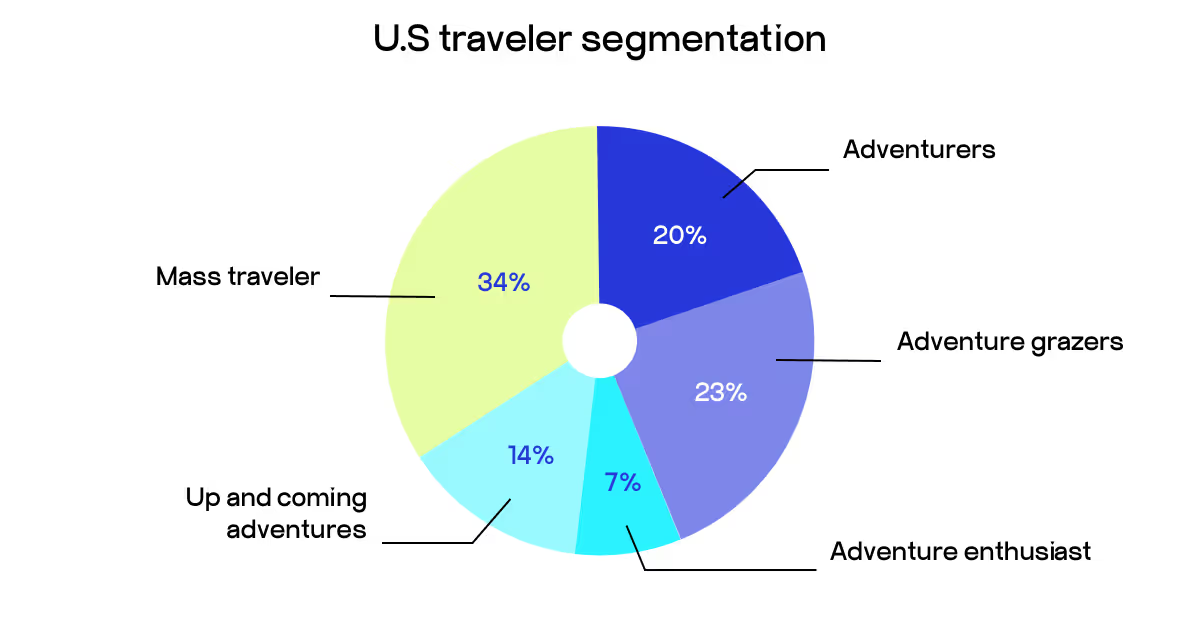
The hospitality industry demands individualized experiences for each guest. As Feng illustrates, customer segmentation consists of demographic data (age, gender, education level), geographic origin, behavior patterns (booking frequency or purchasing habits), and finally, psychographic characteristics (lifestyle or interest). For instance, the U. S. traveler segmentation diagram the researcher provided displays travelers divided into five segments:
These segments reflect data collected from consumers using hotel websites, point of sale (POS) systems, and travel CRM software that details their personal preferences. Demographic approaches wired into the workflows of business intelligence hospitality solutions help you provide adequate room configurations for families or for package deals based on age. Additionally, spending behavior exposes guests’ patterns that you can use to adjust your pricing strategies. Within the BI software, the purpose of customer segmentation is to enable personalized offers, targeted loyalty program marketing, and identify new opportunities to enhance guest experience and satisfaction.
Booking analysis
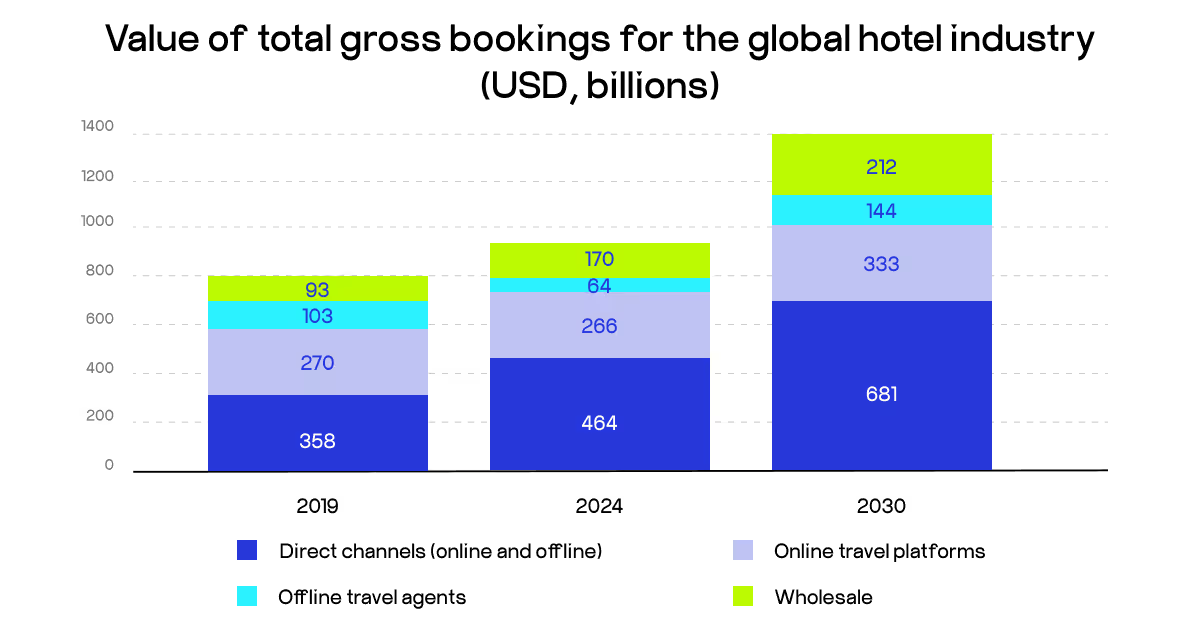
Within the area of evaluating reservation patterns, there are several key metrics to follow. Occupancy rate measures the number of occupied rooms as a percentage during distinct periods. For instance, in their research on business intelligence per hotel, Adipratama and his colleagues evaluated reservations from OTA, offline travel agents, and direct reservations to predict room sales performance.
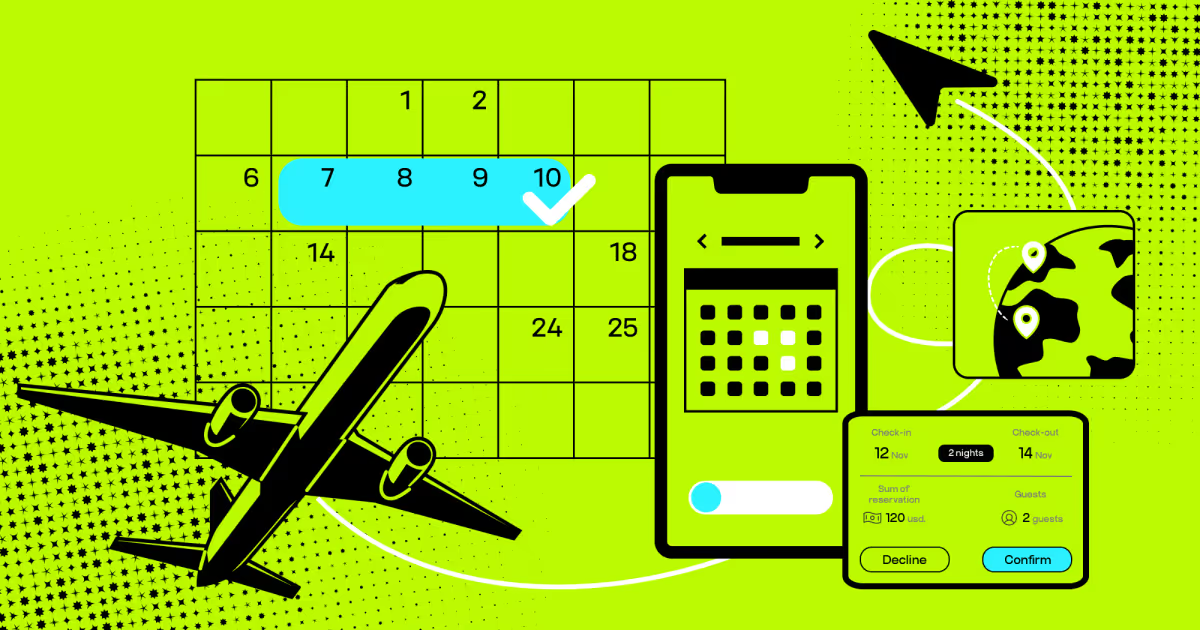
Historical PMS data provides insights into factors that impact occupancy, such as seasonality, local activities, competitors' pricing, and advertising campaigns. For instance, looking back to a similar week or month in a previous year can highlight repeating patterns or strategies of action. Looking at the reservation source also determines which channels produce the highest number of bookings, allowing hotels to structure their commission and partnerships effectively. This analysis can help provide history for demand forecasting, inventory allocation, and dynamic pricing strategies to maximize revenue.
Analysis of distribution channels
We touched on this use case in the previous section, but it’s worth describing it as a separate capability. Hotels often collaborate with hundreds of distributors such as OTAs, GDSs, and bed banks, linked through channel management systems. In the rapidly changing market, the variety and value of different channels are constantly evolving. Doctor Kang and her fellow researchers found that different distribution channels have vast differences in profitability and survivability. For example, their perceptual map analysis determined that call-in, central reservation systems, and hotels' websites received the highest profitability and survivability scores.
Business intelligence for the hotel industry assesses the revenue generated by various channels relative to distribution costs associated with commissions and taxes, giving you a solid grasp on what partnerships offer real value. Business Intelligence can automatically find rate parity agreement violations and alert hotel managers with rate disparity alerts. This can stop revenue leakage caused by hotel intermediaries that break their pricing agreements.
Probably the best thing about this use case is the differentiation to make strategic business decisions about partnerships based on actual profitability data, not just volume of bookings.
Competitor overview
This use case is likely the most common you have in mind when thinking about hotel business intelligence. Hotels compete in highly competitive environments, and knowing how one's competitors will react is critical to success. Hotel BI tools can access market data from consolidators, such as STR or HotelMarketData, or directly scrape your competitors' pricing for your market.
How exactly does this happen? BI tracks the occupancy rate of the overall market, as well as the "pace" of bookings compared to prior periods and demand based on historical patterns and local events. Performance metrics such as ADR or RevPAR will help you compare your hotel's performance against competitors.
BI also shows how competitors are performing across the various online distribution platforms you use to distribute your hotel rooms and rates, as well as things like cancellations. Guest behavior analysis, which shows competitor review and demographics, helps you understand their strengths and the market segments they are targeting. This gives you an advantage - you are able to avoid repeating their typical mistakes and replicate their success.
Revenue management and pricing strategies
In the words of Korzh and Onyshchuk, revenue management is a practice to maximize profit generated from fixed perishable inventory through understanding, forecasting, and using a strategy to influence consumer behavior. This practice employs the same metrics as in the previous use case (ADR or RevPAR), but also tracks the Total Revenue Per Available Room (TRevPAR).
When you implement business Intelligence for a hotel, it can help you in managing revenue by using information and data analysis to maximize revenue, forecast demand, and optimize profitability. Advanced demand forecasting methods apply search engine data and other publicly available data sources to project demand. Algorithms utilize machine learning processes and the analysis of historical data to track patterns, suggest optimal prices, automate rates for specific periods, and contribute to dynamic pricing.
These systems utilize bi-directional communication to integrate seamlessly with CRM software and hotel PMS, forming collaborative ecosystems that track guest behaviors, preferences, and spending.
Staffing and labor forecasting
Labor is one of the biggest operating expenses for hotels - so if you want your business to bring profits, you need to get it right. Business intelligence hotel management tools rely on past occupancy numbers, reservation histories, seasonal indicators, and even local events and other parameters to forecast demand fluctuations. Then, these systems can plan for peak times that require additional staff and the slowest times that allow for less coverage.
The software also takes into consideration guests' arrival patterns, changes in housekeeping needs, restaurant reservations, and events/unique gatherings. This all helps in avoiding over-staffing during slow periods and avoiding being understaffed and unable to service guests during peak times. Automated forecasting of staffing levels takes the guesswork out of manual scheduling by allowing for proactive staffing decisions to be made employment weeks in advance.
Energy and resource optimization
Hotels are real spenders: they use a lot of energy heating and cooling the rooms and amenities, providing lighting, and build systems that consume lots of water. To optimize this spending, hotel business intelligence software monitors real-time consumption of energy throughout the property and by department, identifying waste trajectories. They also analyze energy consumption data by occupancy status, time of day, and seasonality, among other variables.
Apart from this, smart building integration can control energy use by adjusting climate control areas that are unoccupied and keeping occupied areas comfortable. Moreover, energy optimization supports environmental responsibility goals that are important to the underlying hospitality consumer markets. It doesn’t just help you save expenses - it also shows your corporate environmental responsibility commitments through measurable carbon reduction.
Best BI software for hotels
The appeal to save on your operating expenses, exceed the competitors’ performance, and maximize occupancy and guest satisfaction with BI tools is great. However, you need the right solution to achieve it. This is why we have compiled a list and an end-to-end hotel business intelligence tools comparison to help you make an in informed decision.
Lighthouse
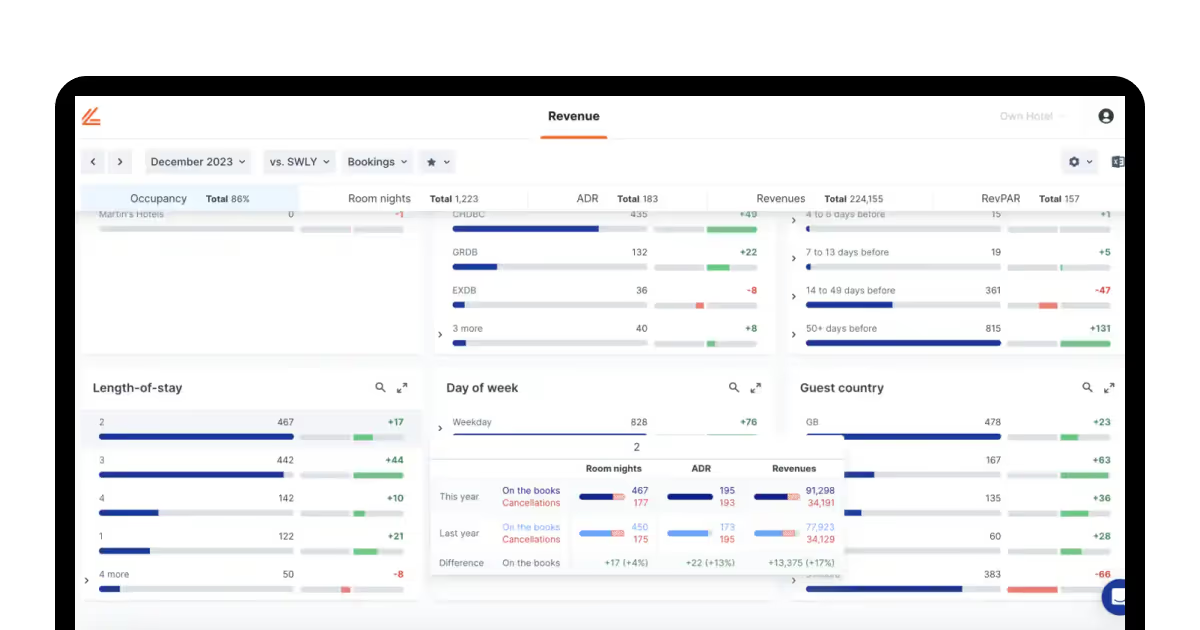
Lighthouse holds the top spot, providing the best business intelligence tools for hospitality with a rating of 4.8 stars, and serves over 1400 hotels worldwide. The platform offers integrated analytics, forecasting capabilities, AI-generated Smart Summaries, and real-time competitive rates through dynamic dashboards.
Lighthouse integrates with over 70 property management systems, so your data from RMS, channel managers, and OTAs can be put into a single report. Pricing is tailored to each hotel and is not listed publicly, although their separate Pricing Manager product starts at €149/month. The platform serves to make the easy things easier, helping you to better forecast valuable revenue.
ProfitSword by Actabl
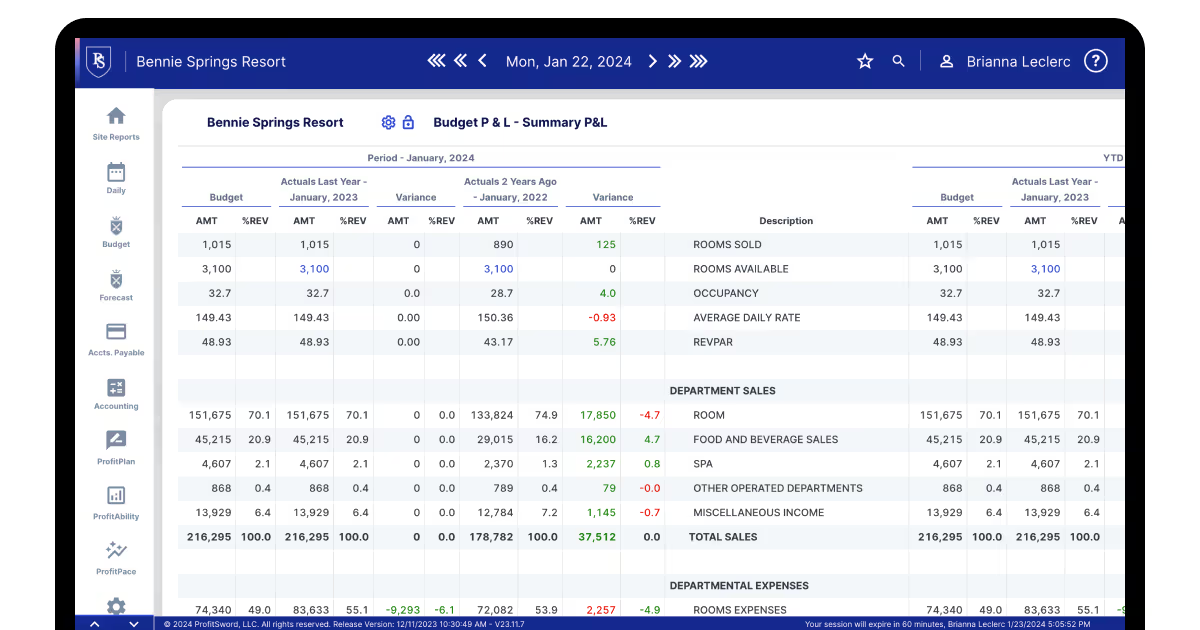
ProfitSword is Actabl's brand that holds a second-place ranking in Business Intelligence, again with a rating of 7.7 stars and serving over 1600 hotels. The platform provides analytics, forecasting, and budgeting tools, a data management solution, enterprise dashboards, and labor optimization, and also provides premium add-ons, such as PerfectLabor and PerfectWage.
ProfitSword integrates with property management systems, POS systems, and financial platforms, so you don't have to manually input data, and enables an information flow in real time across both departments and the entire hotel. Pricing is customized based on the property's size and specific needs, along with what features they would like. The platform helps you cut down on data silos and streamlines processes through customizable reports.
Hotels Network
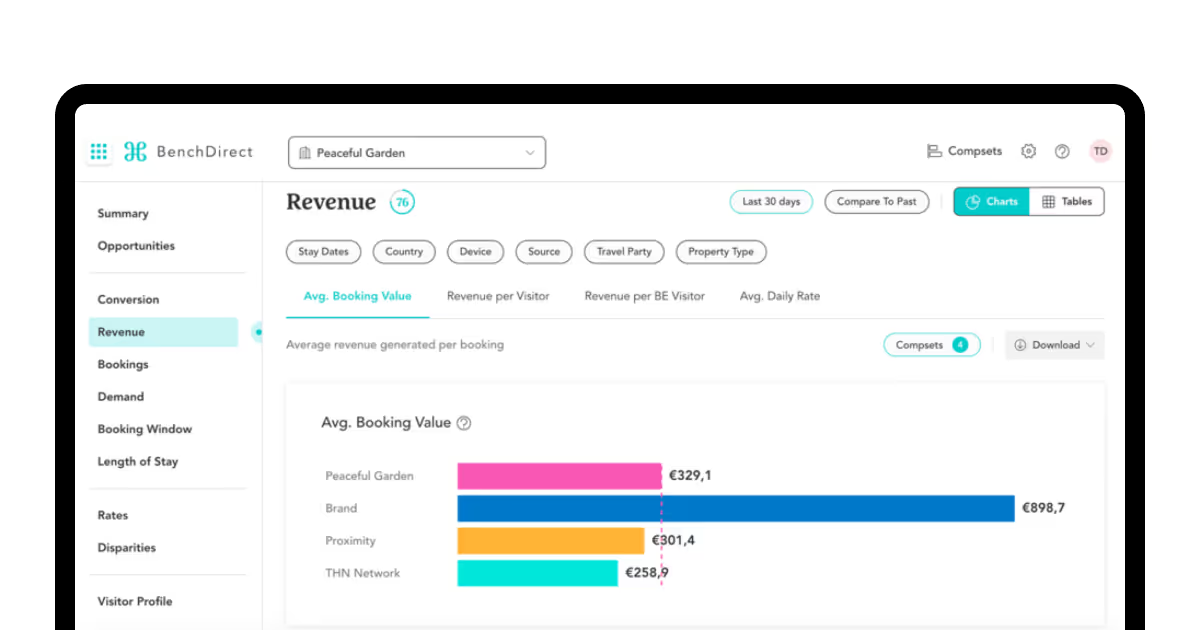
The Hotels Network ranks very highly with a 4.8-star rating and 95% recommendation from hotels using it, with 373 hotels using this platform. They have capabilities of analytics, forecasting for hotels, data management, rate parity monitoring, A/B testing, and tracking Direct Booking Index rates to improve conversion.
The Network’s BenchDirect hotel business intelligence tools connect with PMS software and booking engines, and channel managers to provide a holistic level of competitive benchmarking. The platform is a free payment tool for hotels to use, but The Hotels Network provides premium services for revenue management purposes for a lower price available upon request.
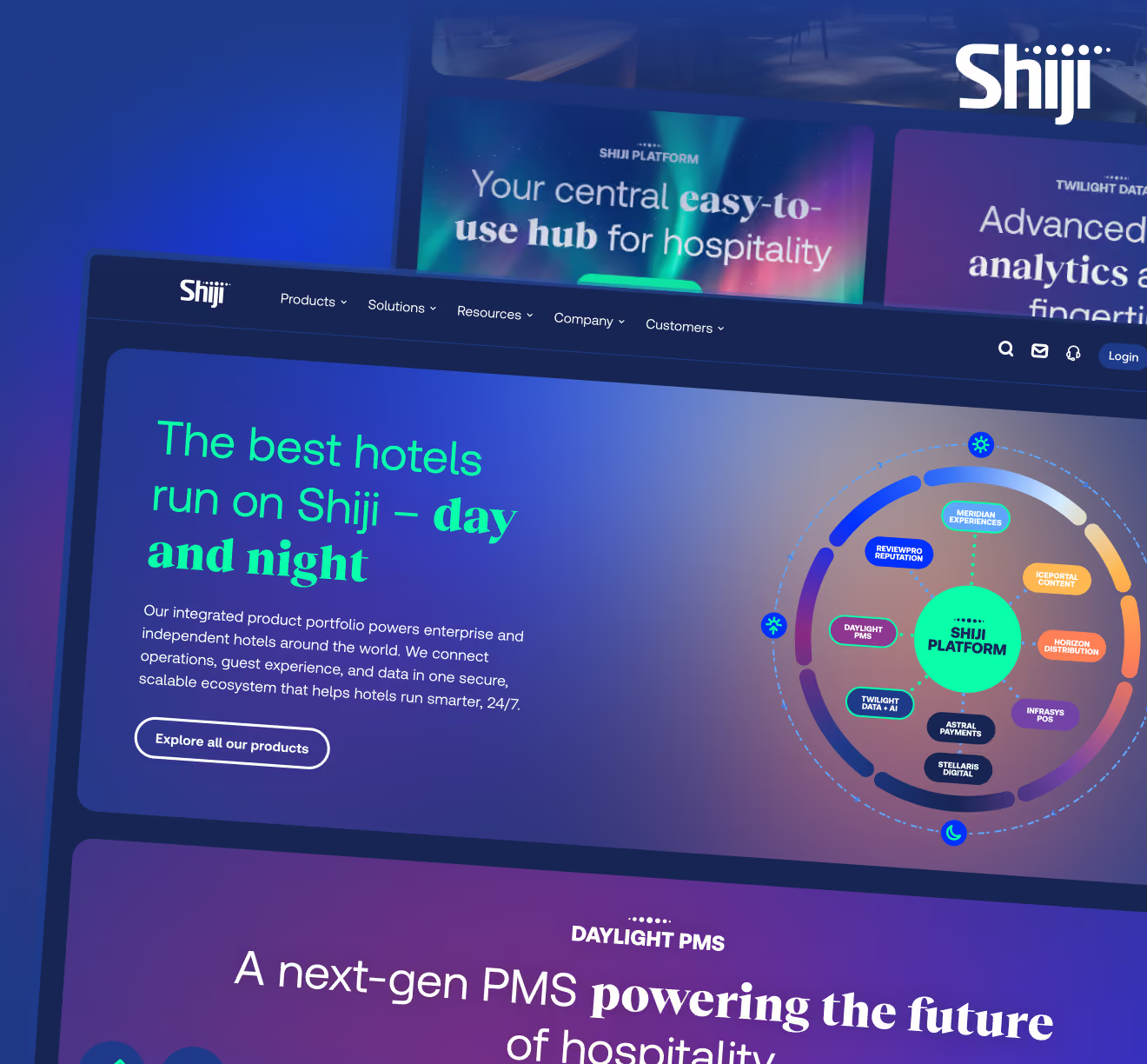
Shiji Twilight Data + AI
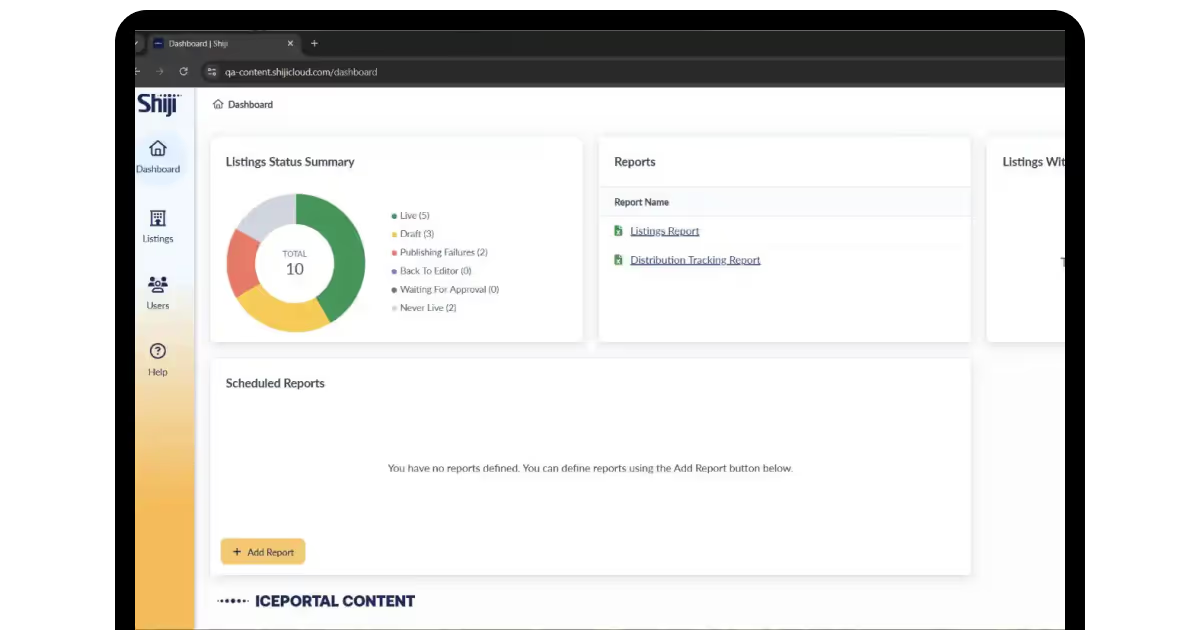
Shiji Twilight Data + AI is a provider of one of the most modern hotel industry business intelligence systems, offering storage, transformation tools, and analytics interfaces with integration through Amadeus Property Management. The system offers cloud based PMS integration, Infrasys F&B connectivity, Shiji distribution system support, integrated payment processing, visualization tools, as well as existing cloud based hospitality systems.
Twilight Data + AI natively integrates with all Shiji Group products either in cloud based PMS, food & beverage systems, distribution systems, processing payment, and many others. Pricing varies based on all products and services, and there is no reliance on standard public pricing. The platform gives you the multi-source derived data, transformed into dashboards with AI, that suit your operational and reporting needs.
Hotellistat
Hotellistat is an all-in-one business intelligence vendor providing data analytics, business intelligence, revenue management, rate shopping, web analytics, review management, and social media monitoring in one interface. The tool offers three tiers, capabilities including BI dashboards, market analytics, reputation management, revenue recommendations based on ARIS, rate shopping (for up to 4 OTAs), historical data usage (60-120 days), and AI-assisted forecasting functions in the upper tiers.
Hotellistat integrates with various OTAs, PMS, channel managers, reputation management, social media platforms, and revenue management. Pricing offers three tiers to ensure transparency: Smart (€469/month), Clever (€649/month), and Intelligent (€899/month); each tier has an independent set of capabilities in each tier and builds upon the prior tier.
This list, based on the business intelligence software reviews, research, and experience of use, provides the best options for you to try. However, even with the top-tier systems, you might face some challenges.
Key challenges in business intelligence integration
As expressed by Professor Mendoza, the tourism and hospitality industry encounters three key categories of challenges when adopting business analytics: data difficulties, skill and resource shortfalls, and organizational issues. These challenges arise due to the complicated operational environment and the increasing volume of customer data being captured within the industry.
Hotels have many data sources, with each source having its own separately held information, in multiple formats, and across different systems. The first step to overcome this challenge is to determine what data is going to be analyzed and for what purpose. Many properties have different infrastructure and data storage types, so selecting the right data source is dependent on the analytic objectives, introducing another layer of complexity.
A gap in skills and resources poses another challenge. The absence of qualified personnel who can interpret complex analytics and take data-driven actions still represents a chronic obstacle to the successful adoption of BI in hospitality. Biadora recommends that resolving these issues may require investments in staff training, evidence from research, and ethical usage of the data.
Integration between existing hotel systems and BI tools is reliant on APIs that allow software to share data. Unfortunately, many hotels still work with legacy software without closed APIs or those from vendors that don't exist, so business intelligence software solutions can't be integrated seamlessly. New PMSs also typically have a limited API interface that still forces hotels to rely on the vendor's analytics tool or change to a new vendor. This is a huge obstacle to being able to consolidate data from different sources into a unified dashboard.
Most of these challenges are solved with custom hotel business intelligence software. We’ve seen and implemented it at COAX: from carefully assessing and linking your data sources to integrating your enterprise systems through secure APIs, and to helping you with knowledge transfers and learning materials, we help you overcome any issues and achieve success.
The custom hotel software development we provide ensures you have the best out of all possible options. We can perform integration to your hotel booking systems, financial solutions, or any other tools, modernize your existing BI software, or build a completely new system from scratch using your unique data sources and adhering to your strict requirements. Whatever you need, we will stick with you every step of the way, providing ongoing support and monitoring to give you a system that truly grows with you.
FAQ
What is hotel business intelligence?
The hotel business intelligence encompasses the instruments, means, and integrated, multi-functional strategies making it possible for hospitality organizations to capture, organize, analyze, and display hotel data information to support the decision-making process. BI systems can integrate data from PMSs, POS systems, RMS solutions, and CRMs, analyzing information to provide knowledge about guests' behaviors, booking trends, and market circumstances, as described by Praba et al..
Why do small hospitality businesses need business intelligence hotel solutions?
BI provides hotels opportunities to improve revenue management activities, personalize guest experiences, drive operating efficiencies, and engage better marketing decision-making processes. Small hotels can offer differentiated value over larger chains through data-driven pricing strategies, accurate demand forecasting, and timely customer service scoring. Hotels employing BI tools will experience impressive ROI strategies, with some properties reporting returns over 500% while subsequently achieving improvements in ADR.
What are the security challenges of implementing hotel business intelligence software solutions?
The key security-related barriers are a lack of data integration, insufficient data accuracy, a lack of trust, and compliance with regulations. GDPR and data privacy legislation require that BI systems use secure frameworks to manage guest information, as stated by Ibrahim & Handayani. Practitioners must establish regulatory policies on data collection and maintain a secure environment through data aggregation, assuring secure authentication and access management within the integrated hotel systems.
How does COAX ensure secure and efficient hospitality business intelligence tools?
While creating hotel BI software, COAX ensures that all customer-sensitive information is integrated securely by guaranteeing compliance with GDPR and providing secure, encrypted data aggregation and access protocols to maintain appropriate control of customer data between PMS, CRM, and booking systems. COAX teams hold ISO/IEC 27001:2022 certification, encompassing comprehensive security management, risk assessment, and security risk monitoring, and we are also ISO 9001 certified to verify quality processes.





























































.avif)




%20for%20hotels.avif)

.avif)
.avif)


.avif)




.avif)
.avif)



.avif)

.avif)

We are interested in your opinion