















































DriveIQ AI
DriveIQ AI for predictive delivery & driver safety

Logistics & Transportation
Services:
The team
8
ML Engineer
Backend developer (Python)
Frontend Developer (React.js)
Mobile Developer (React Native)
Data engineer
QA engineer
UI/UX designer
Project manager
Technologies
Integrations
TMS (McLeod)
Telematics (Samsara, Geotab)
Google maps API
OpenWeather API
EDI 214/204
Timeline: 8 months
Share:
Customer profile
Our client is a medium-sized logistics company providing cross-border services between the United States and Canada. The company serves manufacturing, retail, and e-commerce customers across North America. The company was founded five years ago and grew to manage a fleet of 500 vehicles.
However, over time, their operational model began to show instability. Dispatchers kept troubleshooting missed deliveries, drivers were frustrated with late changes to agreed-upon pick-up and drop-off routes, and customer service call lines were constantly jammed with questions about late deliveries. The company had reached a 45% annual turnover rate with drivers in a market already complicated by logistics issues and driver shortages.
They knew they needed to advance to proactive operations and wanted to create a solution that was viable for their drivers, dispatchers, and clients. After careful consideration, they decided to build their own custom AI-based platform that connected delivery predictability, driver performance, and fuel optimization in one system.
Logistics companies generate a lot of data, but very rarely in a format that's ready to be useful. So did our client’s system: they had GPS pings from multiple telematics providers, outdated API documents, unreliable EDI feeds, TMS records with different timestamps, manual truck logs, and hundreds of spreadsheets. Additionally, matching weather and traffic data from the prior year to historical routes was a great challenge. The data needed to be cleaned and standardized before we could build predictive models.
The technical requirements for the planned solution were also intense. Our team needed to ingest and apply real-time GPS streams from 500 vehicles and actuate predictions fast enough for a dispatcher to act on them in advance. The timeline was also a challenge, as we had to build models that could still function based on limited historical data, and deliver a working prototype while also working to clean the dataset in the background.
The driver coaching piece brought out some human factors to consider, as any in-cab system was going to feel very much like surveillance. We needed to provide real-time feedback, both helpful and respectful, and a mobile interface that wouldn’t distract while driving. We also recognized early that the platform needed to convert skeptical users into habitual ones: dispatchers who trusted the AI recommendations enough to act on them, and drivers who engaged with coaching rather than ignoring it. That meant designing every critical workflow around the moment a user decides whether to trust the system or override it.
We set out to target the 20% of routes that caused 80% of the issues, rule-based alerts, while we trained better models, and went live in a phased approach that would deliver the immediate ROI for the platform that, symbolically, was named DriveIQ for intelligent optimization and driver coaching combined.
In January 2025, we kicked off the project with a 10-week pilot that included the client's busiest hub, consisting of 50 drivers. The first month was focused on connecting to their existing TMS, telematics feeds, and EDI, and then cleaning and normalizing historical route data. By week six, we had a functioning ETA prediction model and a dispatcher dashboard featuring the display of real-time risk alerts.
In week eight, we launched the driver coaching app with just five primary alerts and a minimal scoring system. Starting lean was also a deliberate CRO decision, as a simpler first version let us observe real user behavior early without building complexity that users would quietly avoid. After some initial validation on real routes, we expanded the deployment to all hubs by mid-year, in parallel to continued model improvement and feature enhancement.
The AI-based DriveIQ platform we delivered consists of the following components:
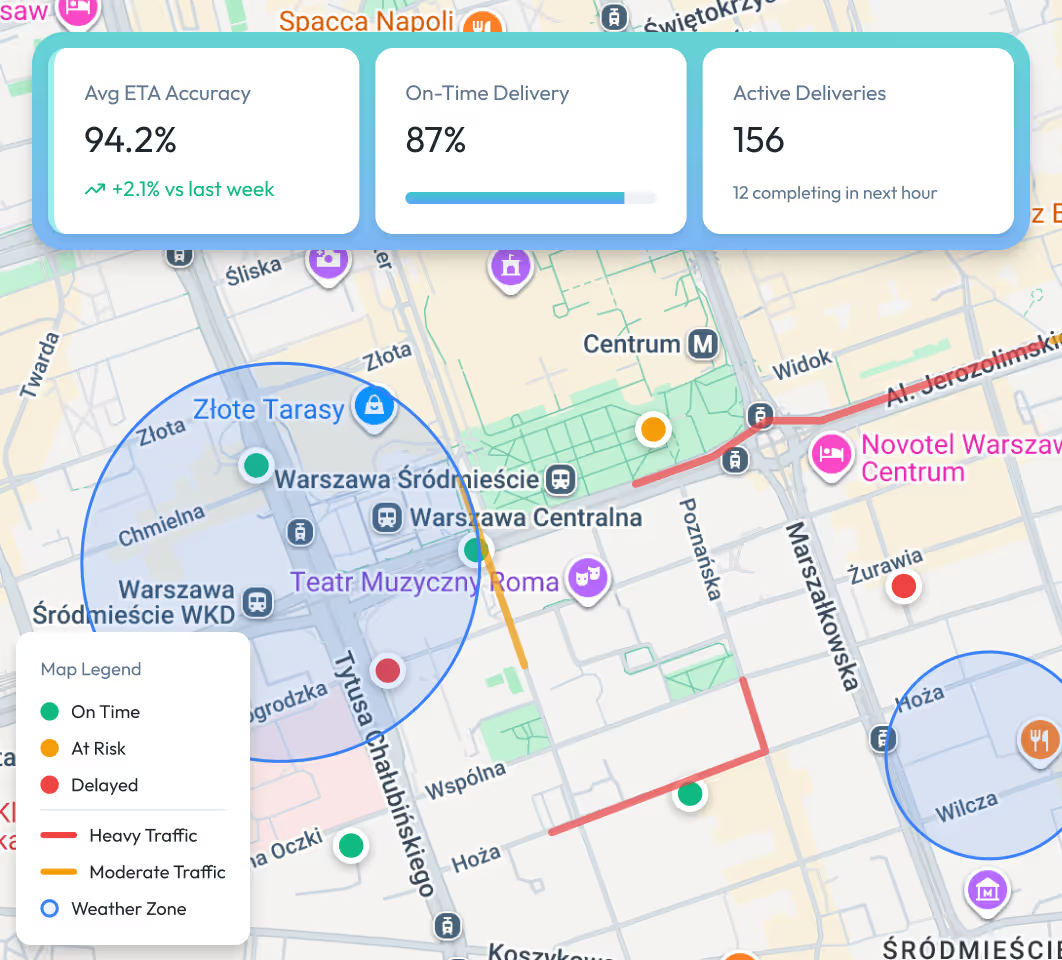
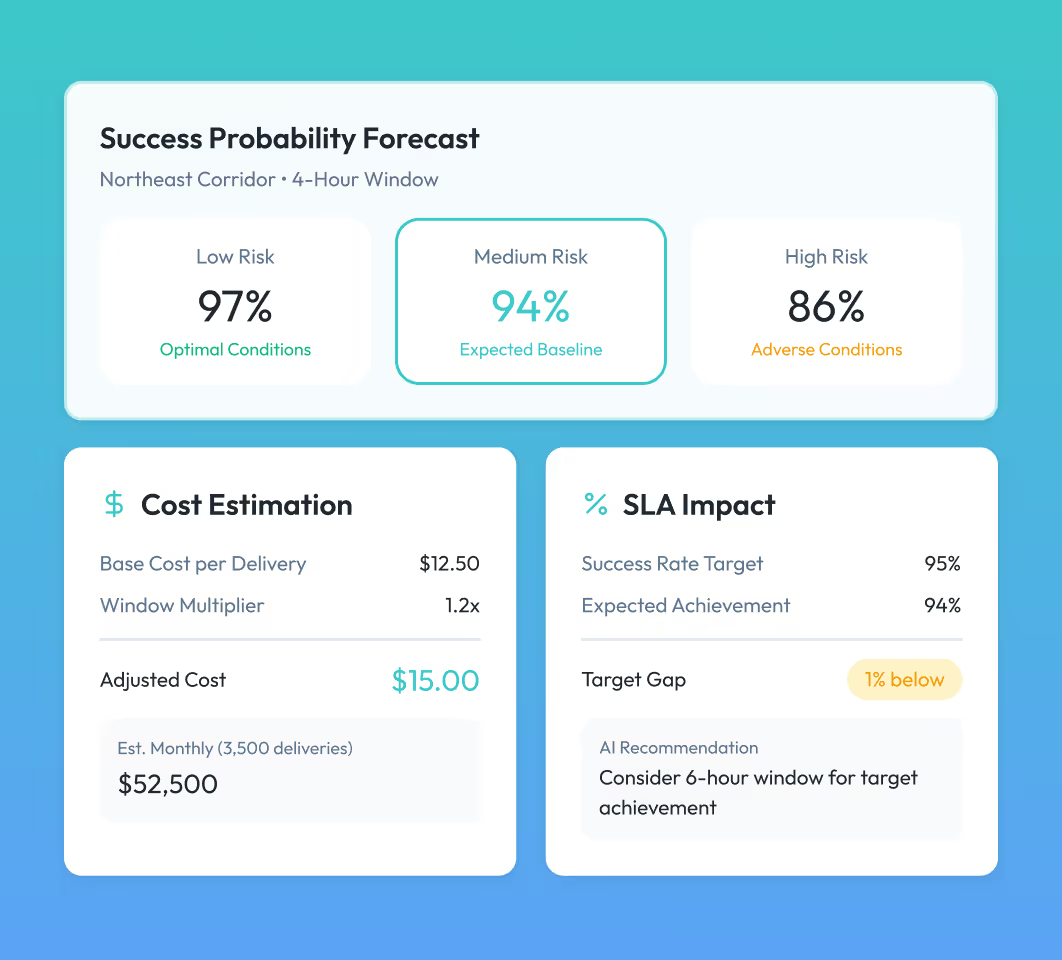
- Predictive ETA Engine, the XGBoosted (eXtreme Gradient Boosted) model trained on historically observed routes, live traffic feeds (obtained through Google Maps API), weather data (through OpenWeather), and driver performance patterns. It provides ETAs with confidence scores, updated every 15 minutes.
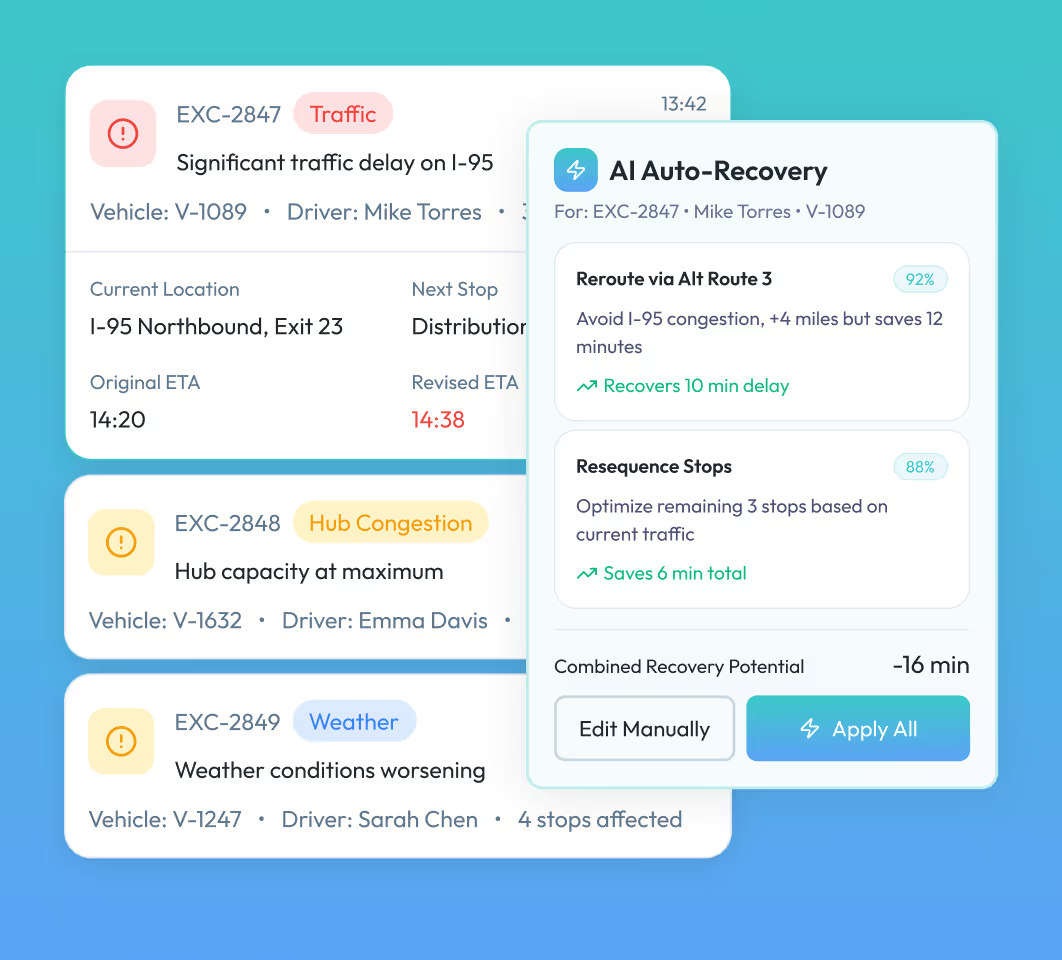
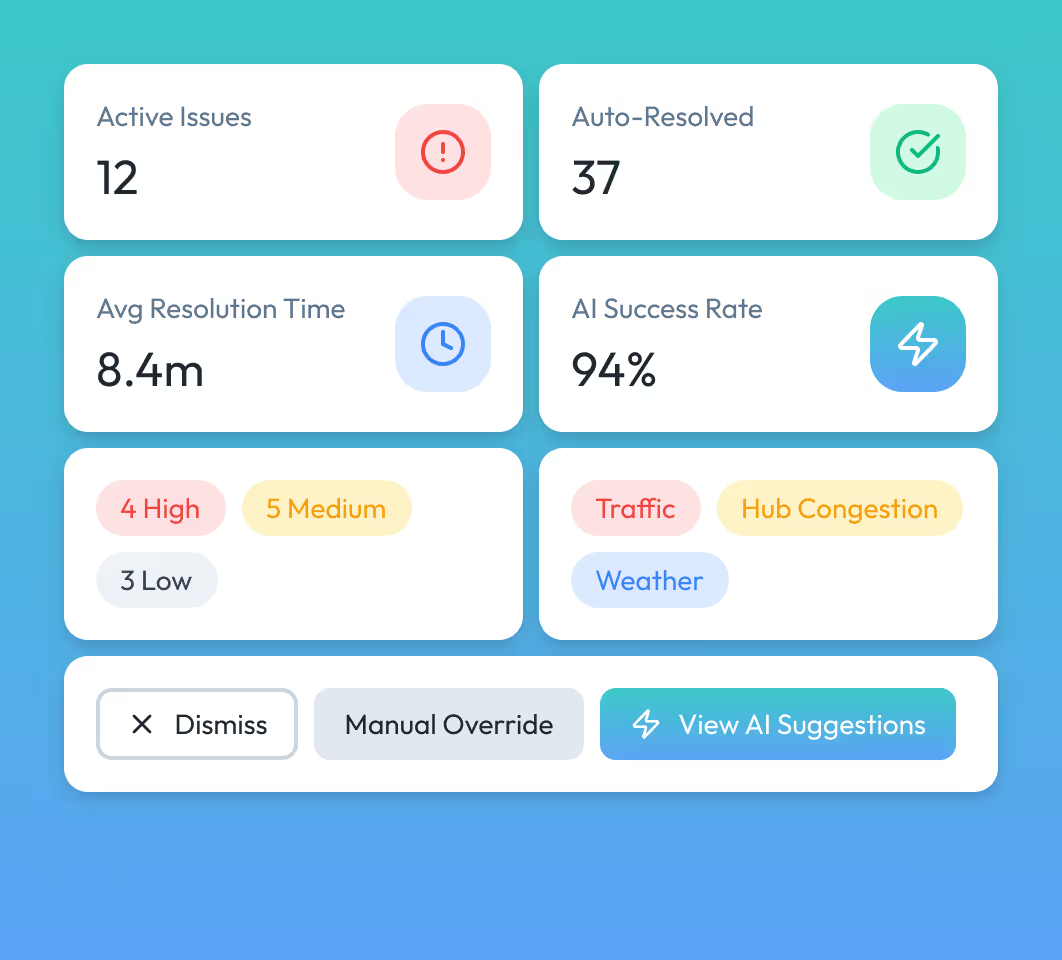
- Risk detection algorithm, a real-time monitoring layer that alerts the dispatcher to possible delays 2-6 hours in advance, by clustering exceptions by root cause (traffic incident, weather event, or hub congestion). Exceptions may be prioritized based on the severity of the customer SLA.
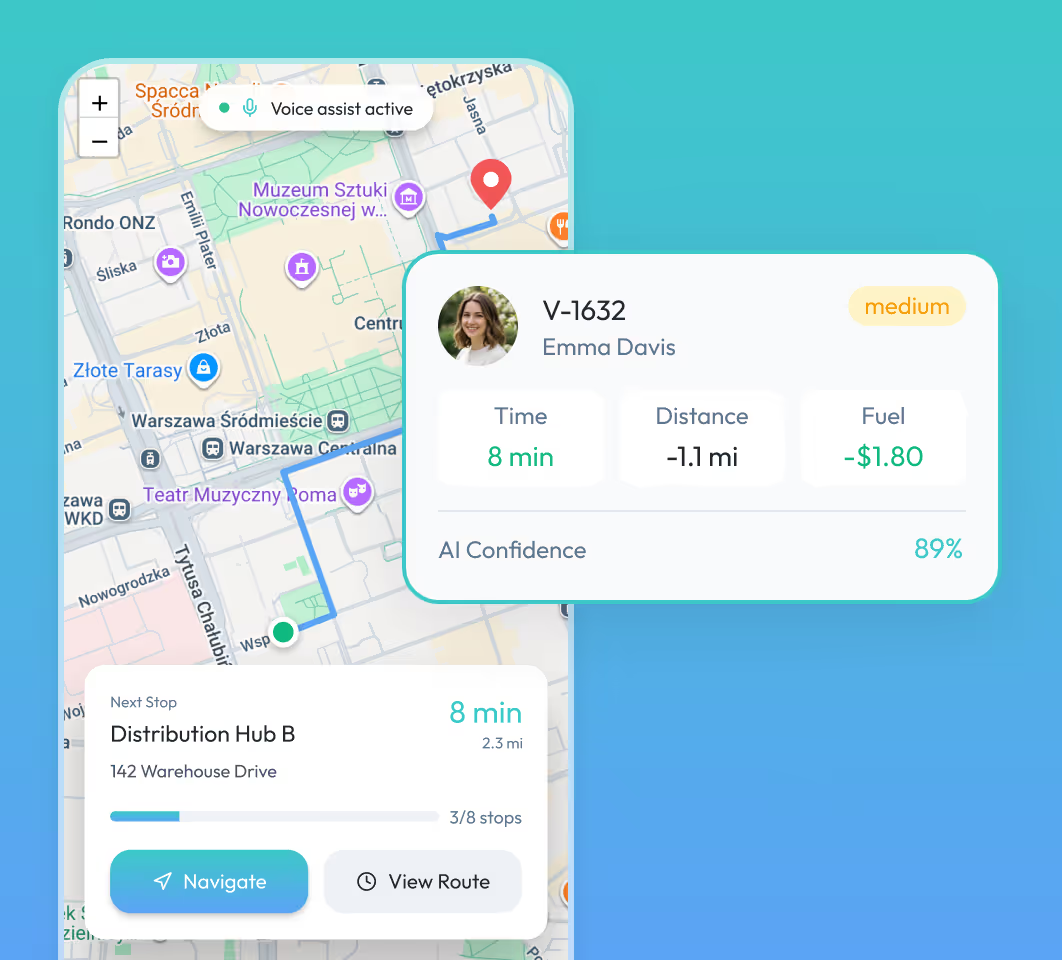
- Auto-recovery optimizer, a route re-planning engine based on a Google OR-Tools CP-SAT solver. When delays are detected, the algorithm assesses potential alternatives against multiple functions (cost, ETA impact, driver fatigue), and proposes alternatives by re-sequencing stops or reassigning loads to nearby drivers.
- An LLM-powered messaging generator built upon Azure OpenAI GPT-4 based on the client's approved messaging templates. It creates automatic drafts for delay notifications, ETA revisions, and service recovery offers. It incorporates a human-in-the-loop workflow to reroute communications related to SLAs that may cause issues to dispatchers.
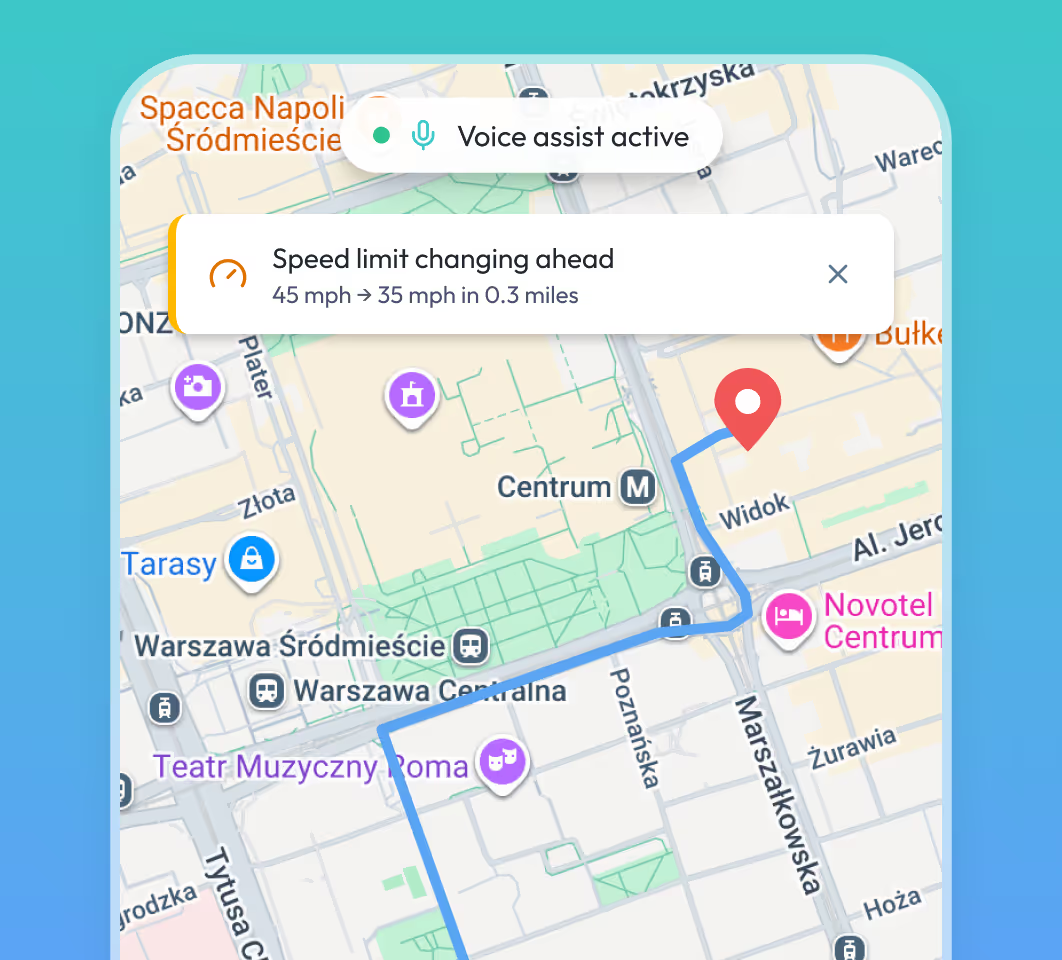
- Driver mobile app with coaching alerts, a React Native app which provides real-time alerts for risk (sharp turns, brake zones), encouragement for changes in speed limits, and alerts for idle time. These can be delivered through voice narration so the driver can remain focused.
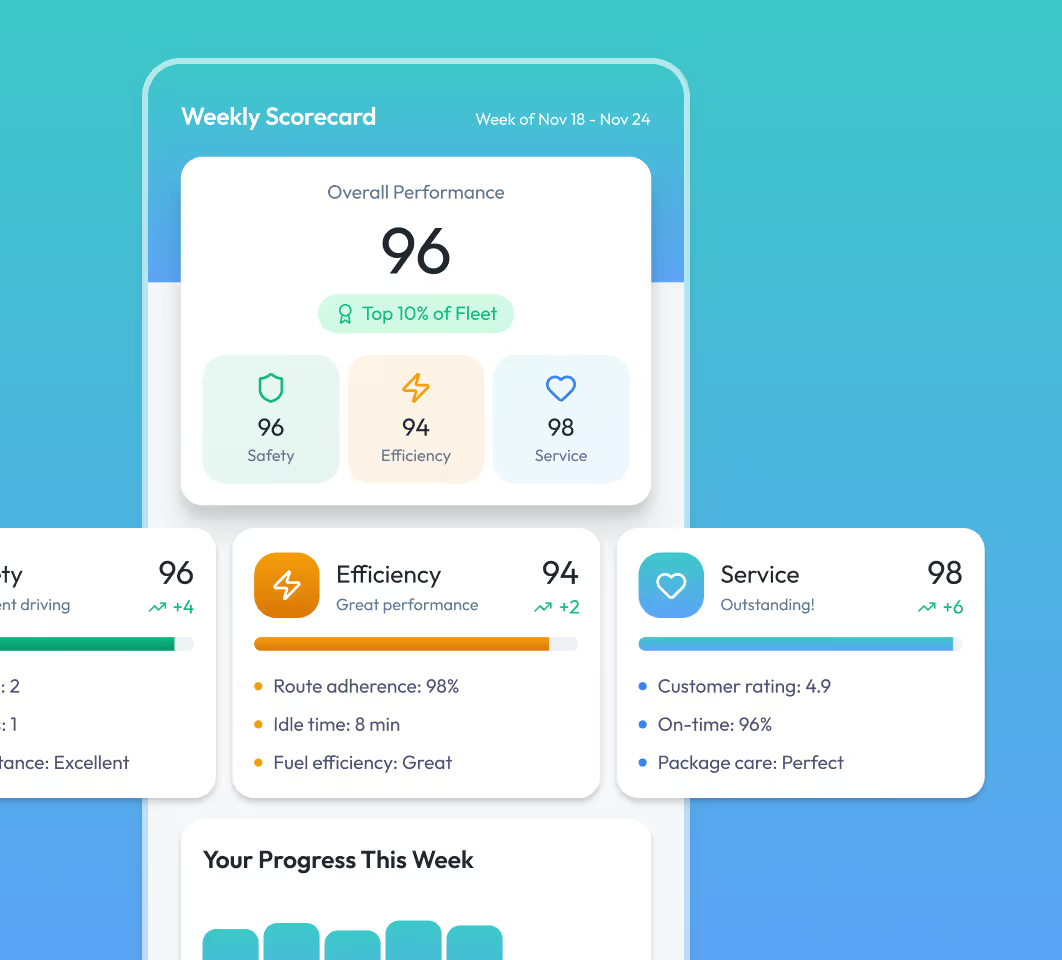
- Weekly scorecards that track three dimensions: Safety (harsh events per 100 miles, speed compliance), Efficiency (fuel economy against fleet average, idle time, route adherence), and Service (on-time delivery rate, customer ratings).
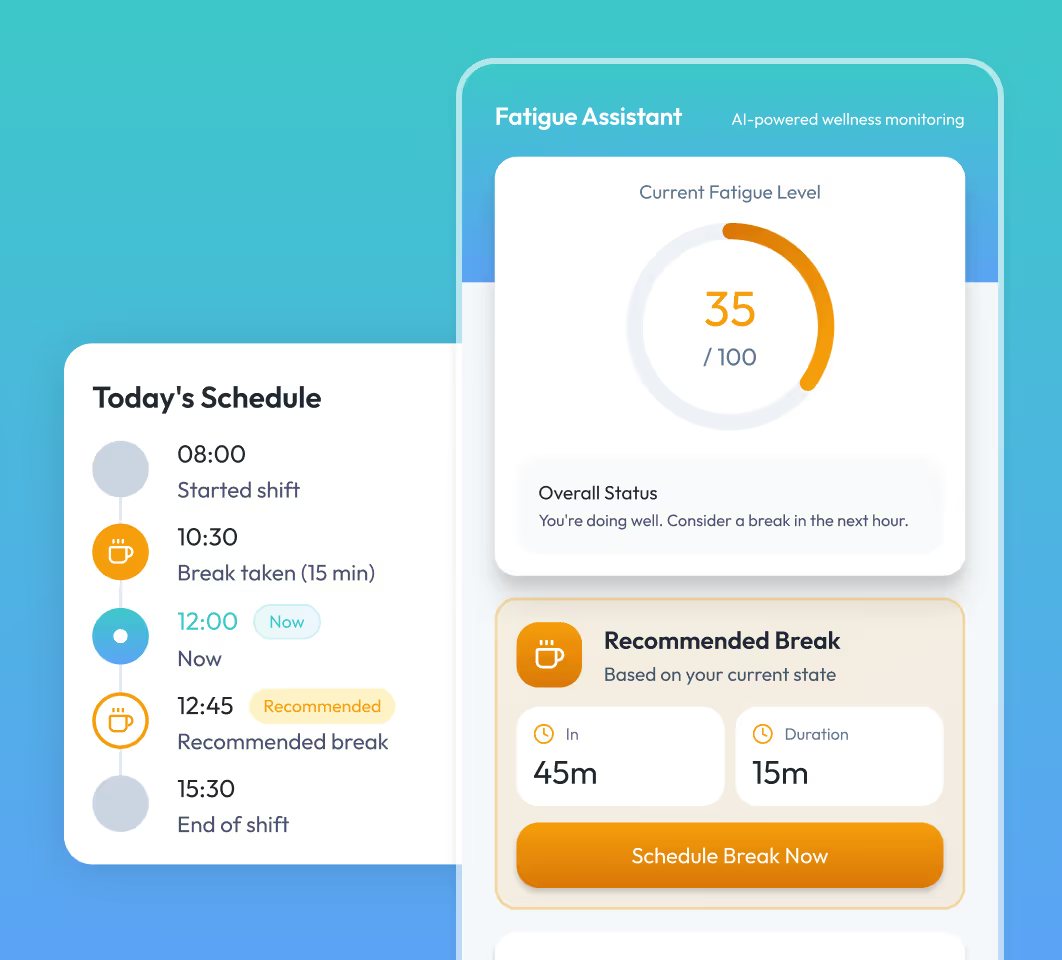
- Fatigue and HOS optimizer, a model that uses LSTM to predict driver alertness from shift duration and historical incident correlations. It recommends optimal break timing and alerts dispatchers to high-risk fatigue states in advance.
- Data integration layer, a streaming pipeline ingesting GPS pings, TMS events as they happen, EDI status updates, and manual driver inputs. The feature store, built in BigQuery, can handle real-time features (current location, traffic conditions) and pilot batch features (for instance, historical lane performance & driver behavior patterns).
The driver app is connected with web sockets to support sub-second alert delivery, but also can operate offline for areas of poor connectivity. As of Oct 2025, the system was processing 2 million GPS events per day, producing more than 200 proactive customer notifications per week, and delivering more than 4000 coaching alerts.
User roles
Dispatcher
Dispatchers use the dashboard to manage real-time delivery risk, see any AI-generated route recovery options, and approve proactive notifications to customers as necessary. They can also override automated decisions, reassign routes based on business priorities, and review historical analyses to highlight historical re-occurring bottlenecks in the hub or lanes.
Fleet manager
Fleet managers perform system configuration, administer driver accounts, and conduct analysis of performance trends related to safety, efficiency, and service metrics. They establish coaching alert triggers, configure the criteria for bonus calculations tied to scorecards, and produce compliance reports for insurance audits and regulatory requirements.
Driver
Drivers use the mobile app to receive navigation with real-time coaching alerts, view weekly performance scorecards, and track progress towards their safety and fuel efficiency bonuses. They may also provide feedback on the usefulness of alerts, log breaks, and incidents, and review route information, including customer delivery instructions and estimated arrival times.
Customer
Customers with portal access receive ETA notifications and alerts of any delays, real-time visibility to their shipment with live map views, and access to proof of delivery documents (photos, signatures, and timestamps). They can also provide feedback on delivery experience, which feeds into driver and fleet manager evaluations.
Key features
Business outcomes
With an integrated AI platform, the client was able to shift its approach to proactively managing its operations, translating into significant gains in delivery performance, cost, and workforce stabilization. Within 90 days of the full rollout, dispatchers were able to manage 31% more daily routes without additional headcount. Additionally, the improved reliability helped the company reduce customer churn and improve trust due to proactive outreach and reliable ETA updates.
A measurable share of these gains came from CRO-level decisions made throughout the build that made sure the platform worked with the people using it:
- Reducing friction in dispatcher workflows.
- Designing trust into the AI recommendation loop.
- Making driver-facing tools truly worth opening.
Driver acceptance of the DriveIQ platform was also higher than management anticipated. The transparent KPI performance metrics, combined with a coaching approach, greatly lowered recruitment and training costs, and the increased driver satisfaction lowered the turnover by 22%. In addition to the direct cost impacts, the platform has also helped the company reposition itself as a technology-forward logistics provider, which has allowed for initial talks regarding strategic partnerships with two major retail chains that previously required their own tracking system.
Why partner with COAX?

Flexibility & adaptability
Our team understands the importance of flexibility in the construction industry, which is why we work around your schedule to provide services at a time that's convenient for you.

Skilled and dedicated team
The COAX team consists of pioneering industry experts and experienced professionals who meet high proficiency standards. We stick to our ethos and are dedicated to delivering high-quality solutions that can lead the future of digital solutions.

Ongoing support
We're committed to providing excellent support throughout the entire project lifecycle. That's why we don't just focus on our technical specialists but also pay close attention to the professional skills of our project managers to ensure seamless cooperation.

Security and confidentiality
At COAX Software, we take data privacy and security very seriously. We sign a non-disclosure agreement (NDA) and guarantee to keep all project information safe and establish trust.

Growth-focused approach
In the construction industry, businesses need to constantly adapt and grow. That's why we don't just develop custom software solutions, we implement cutting-edge tools that help your business and technology scale for long-term success.

Agile methodology
At COAX Software, we value transparency and efficiency. That's why we follow a truly agile approach when providing IT services for construction companies. We aim to remain flexible and responsive to your needs at all times to ensure project success.
What we’ll do next?
1
Contact you within 24 hours
2
Clarify your expectations, business objectives, and project requirements
3
Develop and accept a proposal
4
After that, we can start our partnership