To make your business more effortless and profitable, you can use B2B travel software that centralizes bookings, automates expense tracking, enforces travel policy, and gives finance teams real-time visibility, all within one platform. In 2026 and beyond, businesses simply can't afford to have their corporate travel management operating in a fragmented manner. That's why a B2B travel solution is a must to ensure your company’s success
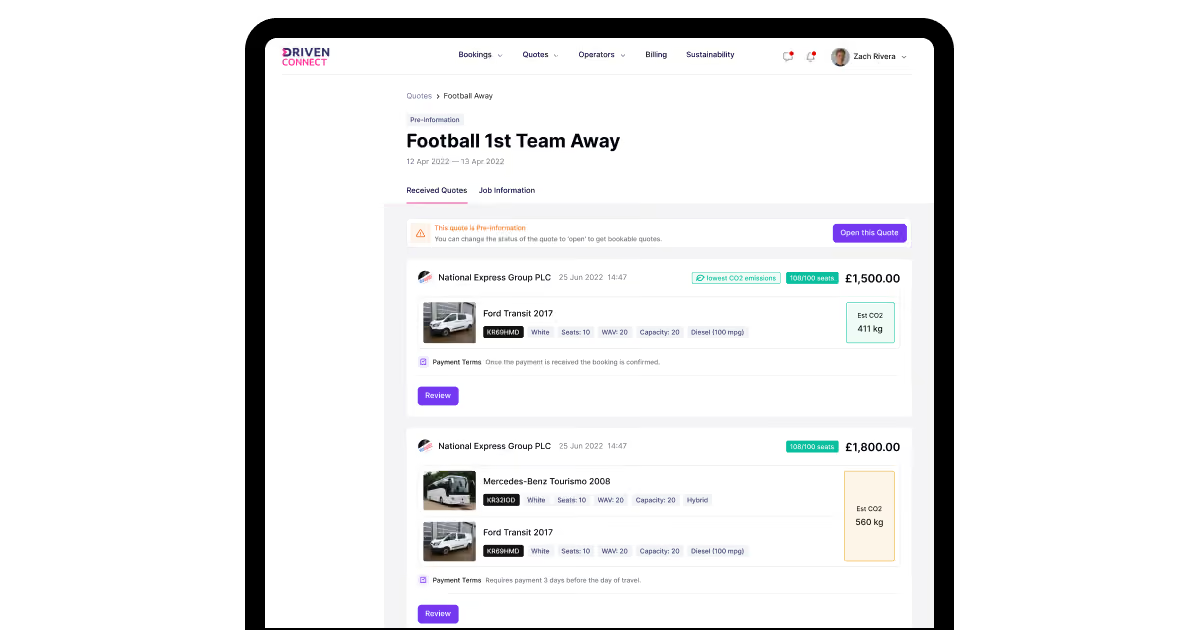
Our B2B travel app building experience ranges from a complex multi-year reservation and installment payment system to a quote-and-dispatch platform connecting 400+ coach operators with corporate buyers. With this proven expertise, we decided to share the main principles, features, and best options of this technology.
In this article, you’ll explore the market and discover compelling reasons to invest in a comprehensive B2B travel platform. We'll unpack the key benefits and help you advance your corporate travel strategy.
What is B2B travel software?
B2B travel software is a category of purpose-built technology that manages the full lifecycle of corporate travel, from policy-compliant booking and itinerary management to expense tracking, duty of care, and supplier integrations. This is made specifically for businesses, travel agencies, and operators transacting with other organizations. Unlike consumer booking tools, B2B travel software is architected around organizational workflows.
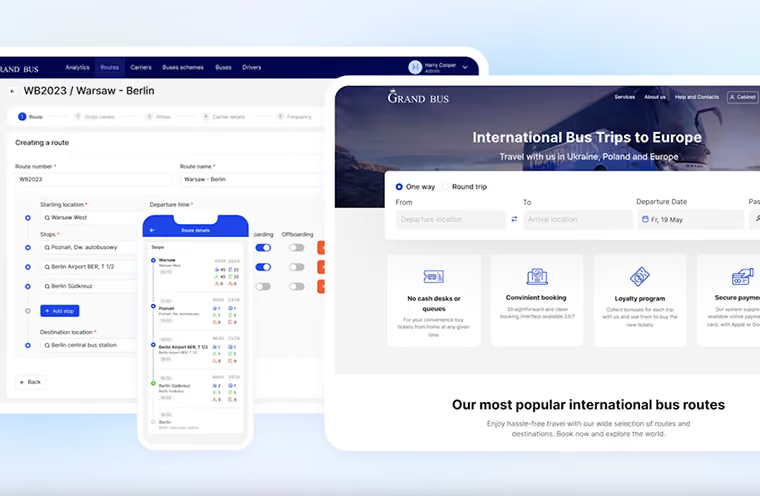
At COAX, we've built on both sides of this equation. For a platform serving coach and minibus operators, we engineered a system where transport providers manage fleets, quotes, and bookings through one backend while buyer organizations, corporate clients needing group travel, interact through a clean procurement interface. The practical definition of B2B travel solutions becomes clear when you build it: it's infrastructure for the handshake between supply and demand at an organizational scale.
What’s on the B2B travel market?
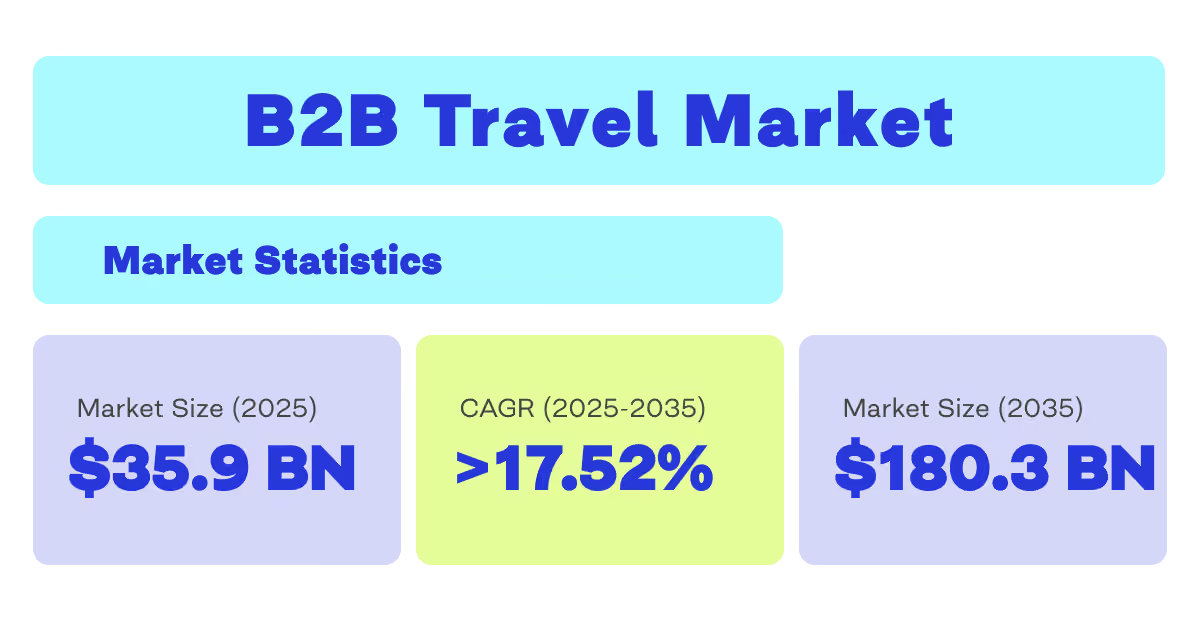
The B2B travel market is large and getting larger fast. Global business travel spending is projected to reach $180 billion in dedicated B2B travel management software and platforms alone by 2035. This alone shows a change in how businesses treat travel as a managed business function rather than an uncontrolled cost.
The top reasons companies are increasing travel budgets are market expansion (47%) and conference attendance (45%), both tied to revenue generation. Research consistently shows that for SMBs, every dollar spent on B2B travel returns roughly $12 in revenue, mostly through new customer acquisition. Travel here is a sales channel with a measurable multiplier.
The urgency for better software follows from that math. 90% of travel decision-makers say they want automated policy enforcement, while most companies are still patching together consumer booking tools, spreadsheets, and manual workflows. The gap between what the B2B travel market demands and what most companies really do have is where specific tools create value.
87% of travelers and travel managers get frustrated with complicated booking processes. Who wants to deal with clunky, outdated systems when there are so many modern B2B travel apps available? Whether it's online business travel booking systems or comprehensive travel management platforms, everyone wants technology that just works.
Main components of a modern B2B travel ecosystem
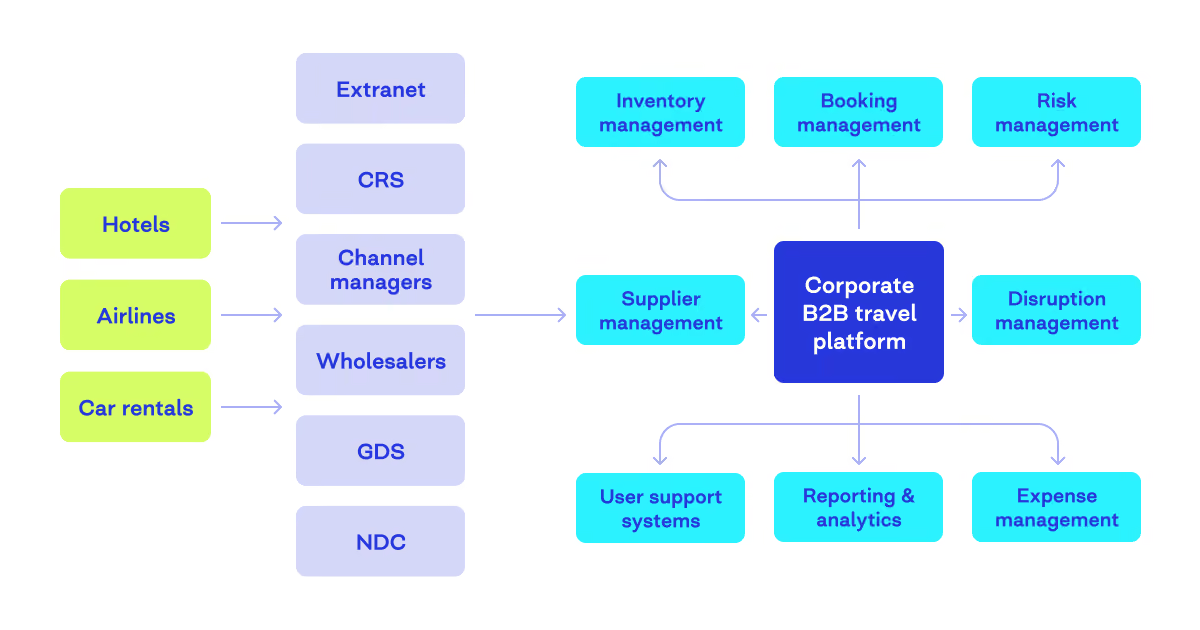
A B2B travel ecosystem isn't a single platform but a set of interconnected layers that each handle a distinct operational domain.
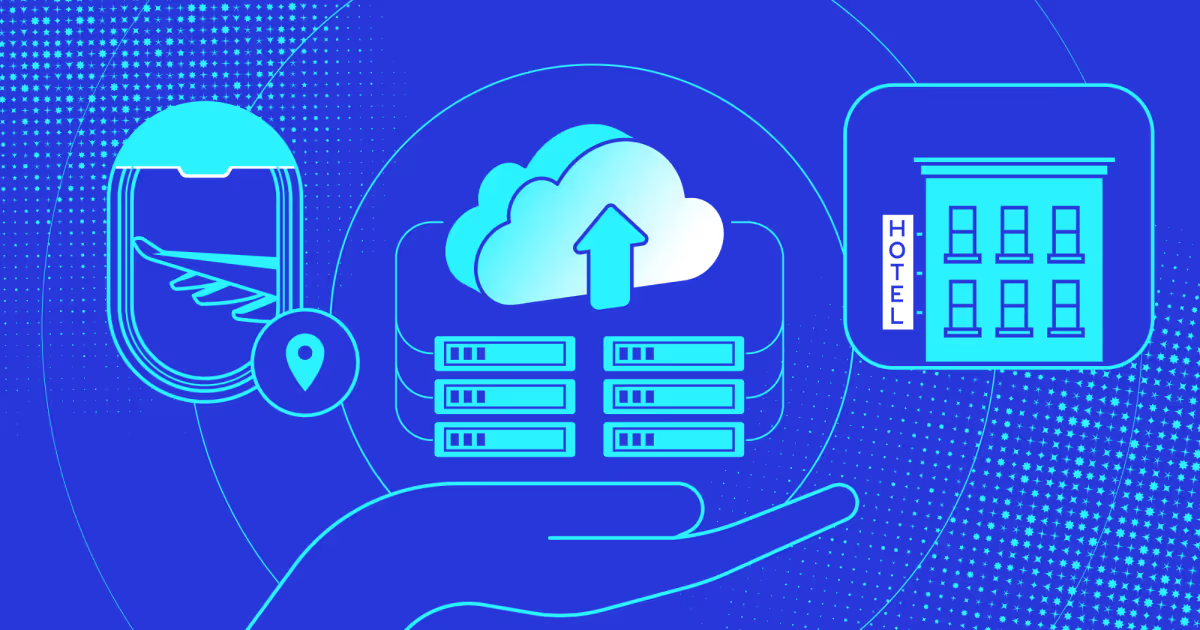
At the foundation of any enterprise travel ecosystem lies robust booking orchestration platform development. This layer unifies disparate supplier APIs—from flight GDS feeds to hotel bedbanks—into a single normalized data stream while applying complex corporate policies and margin rules in real time.
Booking & inventory management goes next. GDS aggregators like Amadeus and Sabre, wholesalers, and direct supplier feeds push flight, hotel, and ground transport inventory into a unified portal. Critically, this layer also surfaces negotiated rates, which are typically 15–40% below public pricing, that neither a consumer OTA nor a spreadsheet-driven B2B travel agent can reliably access or enforce at scale.
Corporate policy and expense software sit above that. Compliance engines automatically flag or block bookings that violate internal travel policies before they're ticketed. Approval workflows route out-of-policy requests up the management chain, and expense tracking ties directly into accounting or ERP systems, eliminating the manual receipt-wrangling that consumes finance teams after every trip cycle.
Financial and revenue management handles the commercial layer: markup and commission rules for agencies working on net rates, virtual credit card and centralized billing support, and analytics dashboards that surface spending patterns and vendor performance data worth acting on in rate negotiations.
Servicing and support closes the loop: automated voucher and e-ticket generation, itinerary delivery, and 24/7 emergency coverage for delays and disruptions.
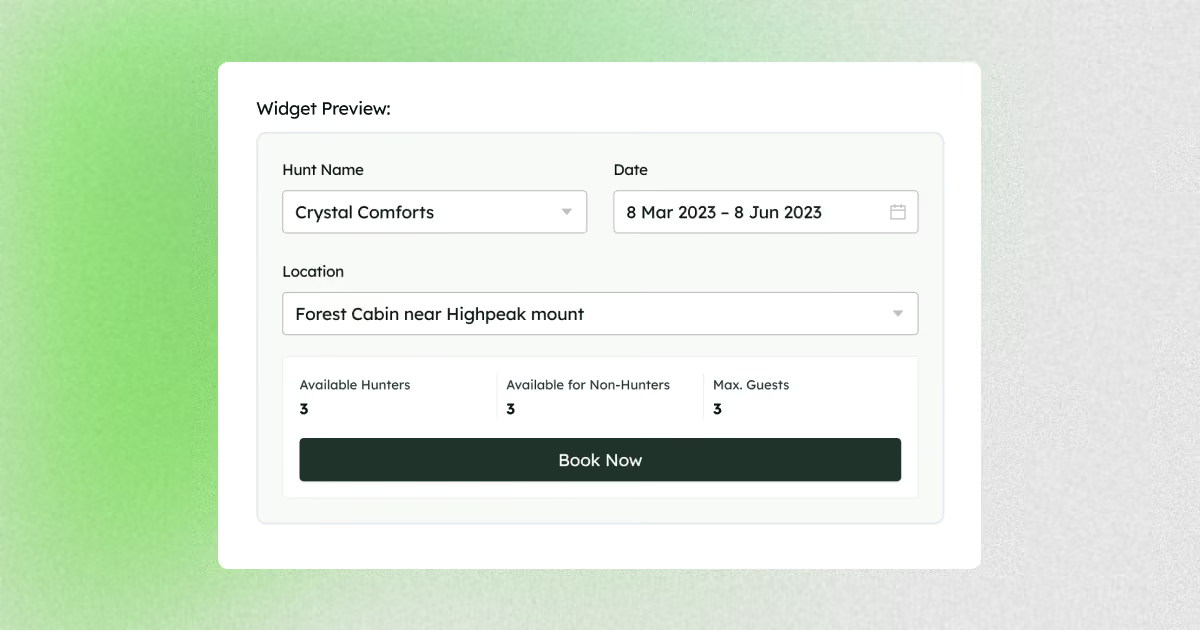
For instance, when we built Krytter, a booking system for guided hunting trips, the same logic applied in a specialized context. The financial layer alone required cash, bank transfer, virtual, and check payment methods on a single invoice, with installment splitting and multi-jurisdiction tax compliance. Outfitters functioned as a B2B travel company intermediary between the platform admin and end customers, each with distinct access, permissions, and booking authority. Getting those layers cleanly separated and connected was what made the system actually usable rather than just technically complete.
Why do you need B2B travel software?
You need B2B travel software to eliminate fragmented booking, enforce travel policy automatically, reduce manual expense reconciliation, and give your finance team accurate, real-time data, without relying on spreadsheets or consumer tools. A sophisticated B2B travel portal can streamline travel management processes, from booking and expense tracking to compliance and risk management. Here’s what you need it for:
Centralized travel management.
Whether you're booking flights, planning trips, or handling expenses for voyage B2B, it's all right at your fingertips. It's amazing how much time and money this saves.
Compliance and policy enforcement.
Modern B2B software solutions do more than just handle reservations. It's smart enough to know your company's rules and keep everyone in line.
Improved traveler experience.
Using a good app can actually make business trips enjoyable. With instant updates, backup options when things go wrong, and easy expense tracking, your team can focus on what matters: getting business done.
Data-driven insights.
Here's where B2B travel apps really shine, as they track spending patterns, spot saving opportunities, and help you make smarter decisions about your travel budget.
Enhanced risk management.
When you manage travel properly, safety comes first. The best B2B travel solutions include features that keep your team safe, from real-time alerts about travel risks to instant access to emergency support. It's like having a security team in your pocket.
The cost of not having it shows up in predictable places. Hotels are the most frequently booked category outside approved channels, with 46% of employees bypassing corporate tools for consumer sites in search of better prices, undermining negotiated rates the company secured.
The benefits of B2B travel software
B2B travel software delivers measurable returns on both sides of the transaction: organizations cut costs through negotiated rates and automated compliance, while agencies and operators gain margin control and centralized inventory management.
Cost savings through bulk rates. The platform infrastructure includes pre-negotiated pricing with airlines, hotels, and ground transport. For agencies, this same layer enables configurable markup and commission rules that protect margins without manual rate management.
Centralized inventory and expense tracking. We consolidate all supplier inventory, invoices, itineraries, and receipts in a single environment. Hotel data management becomes a byproduct of normal operations rather than a quarterly reconciliation exercise. Agencies stop toggling between supplier portals; corporate buyers stop chasing expense reports.
Automated policy compliance. B2B software enforces travel guidelines at the point of booking, before the ticket is issued, not after the expense lands. Employees see only authorized options. Agencies configure markup rules, approval hierarchies, and access permissions once, and the system holds them consistently across every transaction.
Streamlined operations. Booking confirmations, invoicing, refunds, and approval routing run without manual intervention. B2B travel booking software removes the administrative overhead that accumulates when each trip requires coordination across multiple disconnected tools.
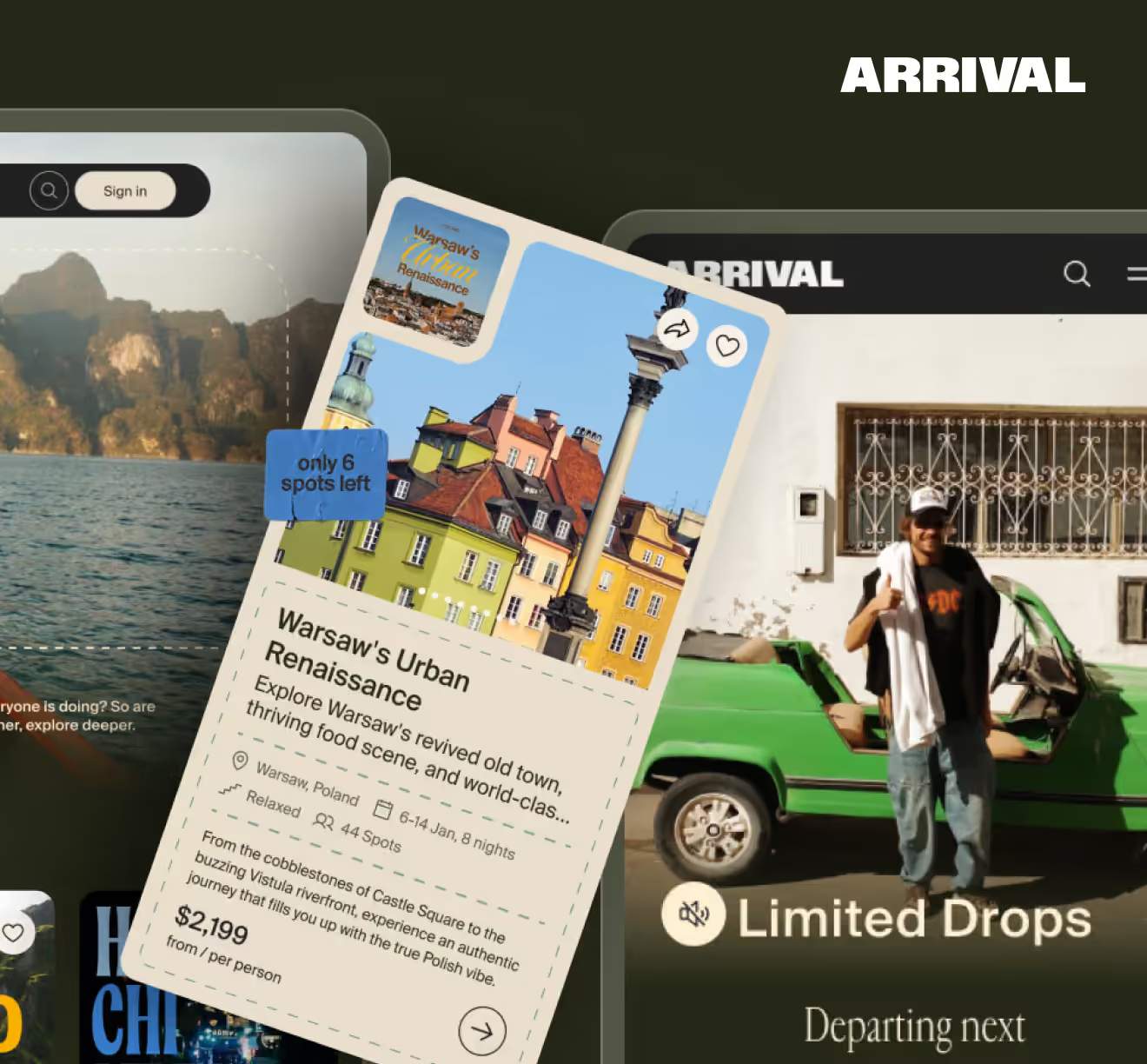
API integrations that actually connect the business. Payment gateways, CRMs, HR systems, and accounting software link directly into the platform. When we built ARRIVAL, HubSpot received every order and booking automatically, with no manual order tracking or reconciliation backlog. That's what integration architecture delivers in practice, whether you're a corporate travel buyer or a platform operator.
Additionally, round-the-clock coverage for cancellations, rebookings, and emergencies keeps traveling staff supported and agencies responsive without burdening internal teams.
What's the difference between a B2C and a B2B travel system?
In short, B2C travel tools are built around individual choice and flexible booking; B2B systems are built around organizational control, enforcing who can book what, at what price, under which policy, with full reporting to finance.
The gap between the two is wider than most people assume. B2C travel tools are built around individual choice: flexible search, personal loyalty programs, consumer payment methods, and conversion-optimized checkout. B2B online travel software is built around organizational control: who can book what, at what price, under which policy, with what approval, and reportable to which cost center.
Cloud travel software in the B2B context carries additional weight. It adds a multi-user environment where a travel manager in one location sets policy constraints that automatically govern bookings made by employees across five countries. A corporate travel app needs to hold role-based permissions, approval routing logic, negotiated rate access, and duty-of-care tracking simultaneously.
Here's what makes business travel unique:
Booking policies and compliance: Corporate travel booking solutions are like having a built-in rulebook. They make sure employees follow company guidelines: no accidental luxury suite bookings here! Compare that to regular travel sites, where you can book whatever interests you.
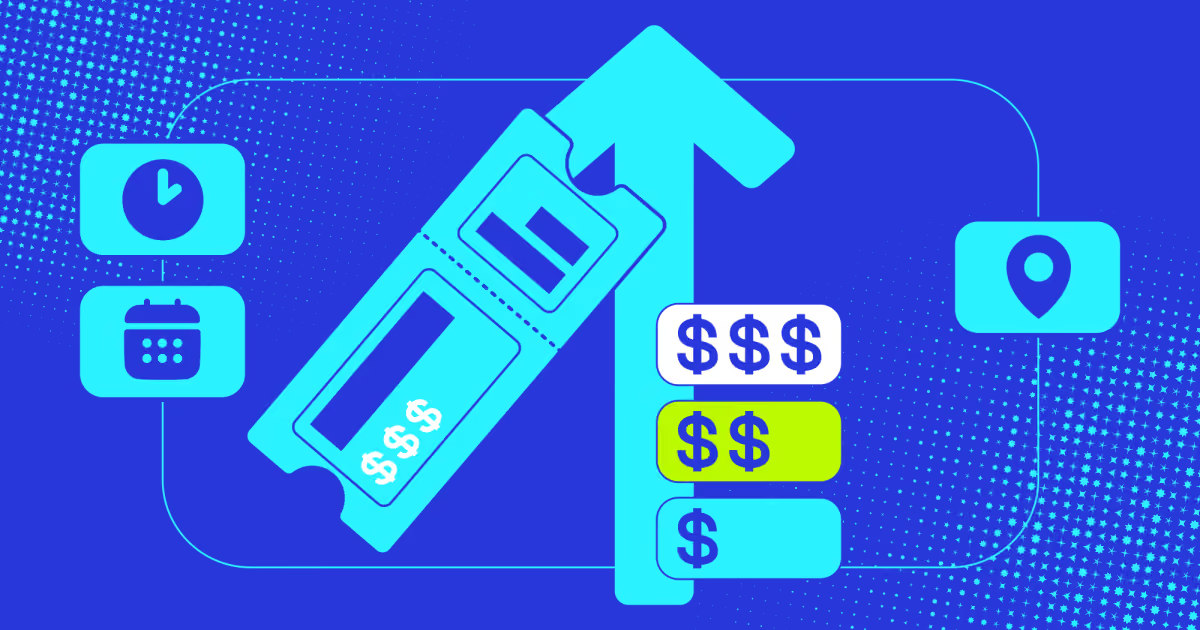
Volume and negotiated rates: Here's where having a proper travel booking engine really pays off. How does it work? Companies score good deals because they're booking many trips. Your average vacation traveler just doesn't have that kind of buying power.
Duty of care: When you're using a B2B travel solution, it's like having a safety net for your employees. These systems can track where everyone is and help out if there's an emergency. Regular travel websites? They wave goodbye once you've booked.
Expense management: With a good business travel booking platform, expense reports practically write themselves! Everything's connected and automated, unlike personal travel, where you're stuck keeping track of all those receipts yourself.
The main difference between these solutions is standardization. For B2C travel software, it’s all about tailoring to the unique whims and desires of a traveler. On the flip side, a business tripper should have everything in check, with limited options and stricter rules but easier tracking.
Aspect
B2C Travel
B2B Travel
Pricing
Public rates
Negotiated/wholesale rates
Policy enforcement
None
Automated, pre-booking
Approval workflows
None
Configurable hierarchies
Expense integration
Manual
ERP/accounting-connected
User management
Individual accounts
Role-based, multi-department
Duty of care
Minimal
Real-time traveler tracking
Support
Standard
24/7, dedicated
When should you use which?
Use B2C tools when travel is genuinely individual and occasional: for a founder taking one trip a quarter or a freelancer booking their own conference flight. Regular travel platforms usually have:
Simple booking tools for flights, hotels, and cars
User reviews and ratings
Personal travel history tracking
Vacation package deals
Flexible cancellation options
Individual loyalty programs
Basic price comparisons
The flexibility and familiarity are real advantages at that scale. However, you should switch to B2B travel software when any of the following are true:
Multiple employees travel regularly.
The company has a travel policy that actually needs to be enforced.
Expense reconciliation is consuming meaningful finance team time
Negotiated vendor rates are on the table but inaccessible through current tooling.
The crossover point is lower than most companies expect: typically somewhere around 10–15 travelers or $50K in annual travel spend. This is much because the compliance and reporting benefits start compounding well before enterprise scale.
Types of B2B travel solutions by category
B2B travel solutions fall into distinct categories, from corporate T&E platforms and TMCs to booking engines, OTAs, wholesalers, and GDS infrastructure, each serving a different layer of how travel is bought, sold, and distributed at scale.
Corporate travel & expense management (T&E) is the category most companies encounter first. These platforms manage employee travel end-to-end: booking, policy enforcement, and expense reconciliation in one environment.
Travel Management Companies (TMCs) like American Express Global Business Travel and CWT combine centralized booking portals with 24/7 human support, the right fit when travel complexity or traveler volume justifies dedicated account management alongside the software.
All-in-one SaaS platforms like Navan, Egencia, and SAP Concur take a self-serve approach, layering travel AI solutions: predictive pricing, automated policy flagging, and smart itinerary suggestions. These dominate mid-market adoption because they reduce IT overhead while covering the full T&E workflow.
B2B booking & reservation systems are where the B2B travel agency and operator world lives. These platforms give agencies, sub-agents, and event planners access to bulk inventory with configurable markups and itinerary management tools built in.
OTAs and consolidators like RateHawk surface negotiated airfares and hotel deals through dashboards or direct APIs, giving smaller agencies access to inventory depth that would otherwise require direct supplier contracts they can't negotiate independently.
Tour operators sit adjacent, building structured packages, coordinating guides, and distributing itineraries through partner agency networks. The B2B travel platform here is less about individual booking and more about package lifecycle management at volume.
Travel distribution & inventory (backend systems) are the infrastructure layer that most end users never see, but every booking touches. Travel B2B at this level is about aggregation, distribution, and settlement between suppliers and the platforms above.
Wholesalers and bed banks like HBX Group (formerly Hotelbeds) purchase hotel room blocks at deep discounts and redistribute them to agencies that couldn't access those rates directly. The margin logic of a large portion of the agency ecosystem runs through this layer invisibly.
Global Distribution Systems, like Amadeus, Sabre, and Travelport, are the foundational pipes: real-time flight, car, and hotel availability feeding every booking tool above them, consumer or corporate.
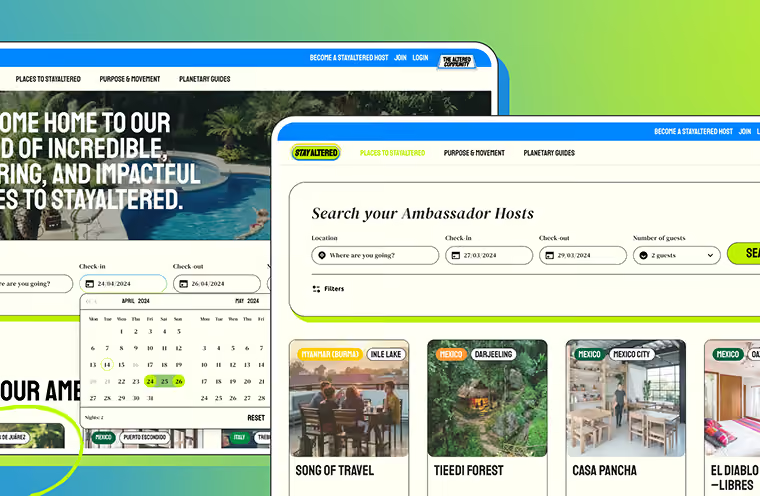
Similar to this principle, when we built Stay Altered, rather than attempting direct PMS integrations across dozens of independent property systems, we connected through Katanox and Hyperguest as intermediaries. Choosing the right layer of the distribution stack is often the most consequential technical decision in any B2B travel build.
Core features every B2B travel platform should include
B2B travel technology is well-suited for organizations seeking to streamline their corporate travel programs, enhance employee productivity, and achieve greater cost efficiencies. Let's break down their key features and possible components:
Comprehensive travel booking engine featuring multi-passenger and group booking capabilities, real-time availability across flights, hotels, and car rentals, emergency rebooking options, preferred vendor management, automated approval workflows, and policy violation alerts with alternative suggestions.
Integrated corporate travel expense management system offering automated receipt capture, real-time budget tracking across multiple currencies, automated expense report generation, cost center allocation, customizable spending limits, and digital payment integration.
Centralized B2B travel portal with a dashboard for travel managers, real-time visibility of all travel activities, quick access to all critical travel data, and a unified booking and management experience.
Advanced risk management suite providing real-time traveler location tracking, global risk assessment alerts, emergency notification system, health and safety protocol updates, automated travel insurance management, and 24/7 emergency support access.
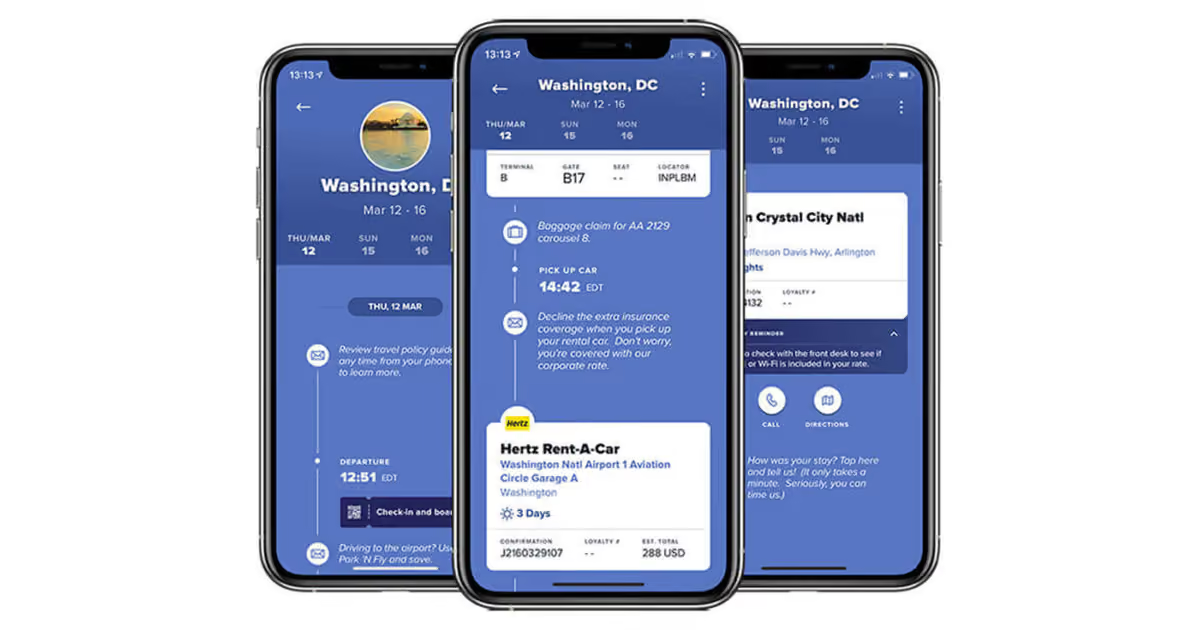
Mobile-first corporate travel management app with on-the-go booking abilities, digital travel document storage, real-time updates, expense receipt scanning, offline access to travel details, push notifications, in-app emergency assistance, mobile check-in, and location-based services.
Enterprise-grade integration framework supporting connections with HR systems, accounting software, expense management tools, calendar applications, CRM systems, and custom APIs, along with Single Sign-On capabilities and automated email notifications.
Comprehensive administration console enabling role-based access control, policy management, approval workflow configuration, user permissions, audit trail tracking, compliance reporting, and centralized document management with training materials.
Businesses seeking to optimize their corporate travel management will find a B2B solution more suitable, while individual travelers may prefer the flexibility and personalization offered by B2C platforms.
Top 10 B2B travel solutions
Modern travel technology has evolved far beyond simple booking systems, incorporating everything from expense tracking to duty-of-care features. Choosing the right platform depends on your organization's size, travel volume, and operational complexity. Here's how the leading options compare.
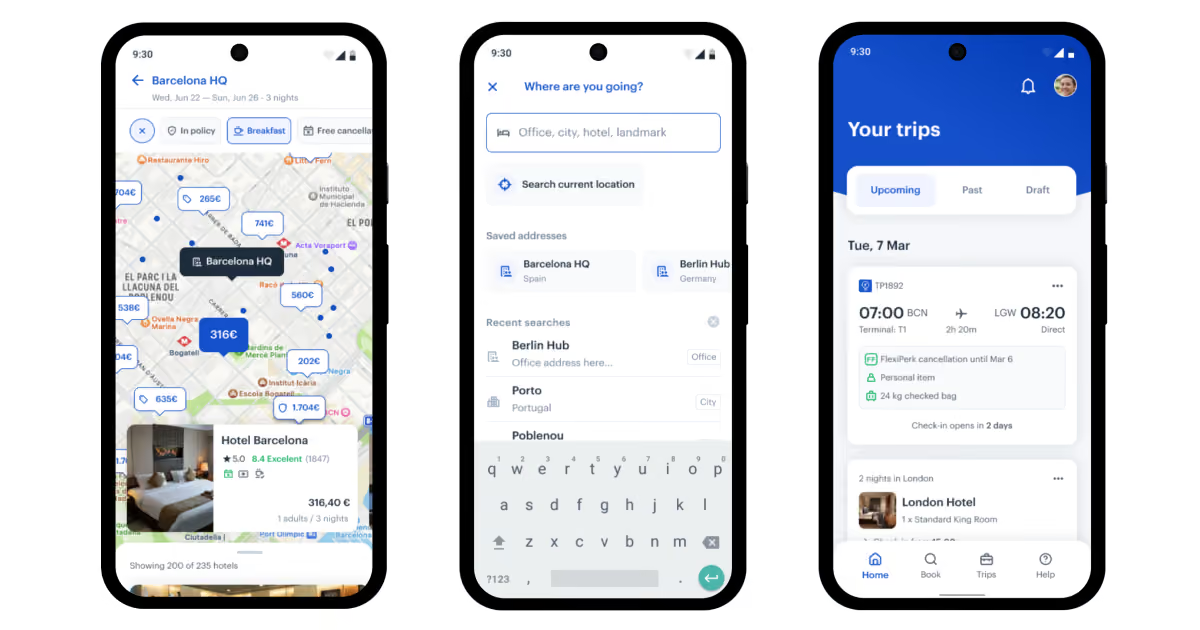
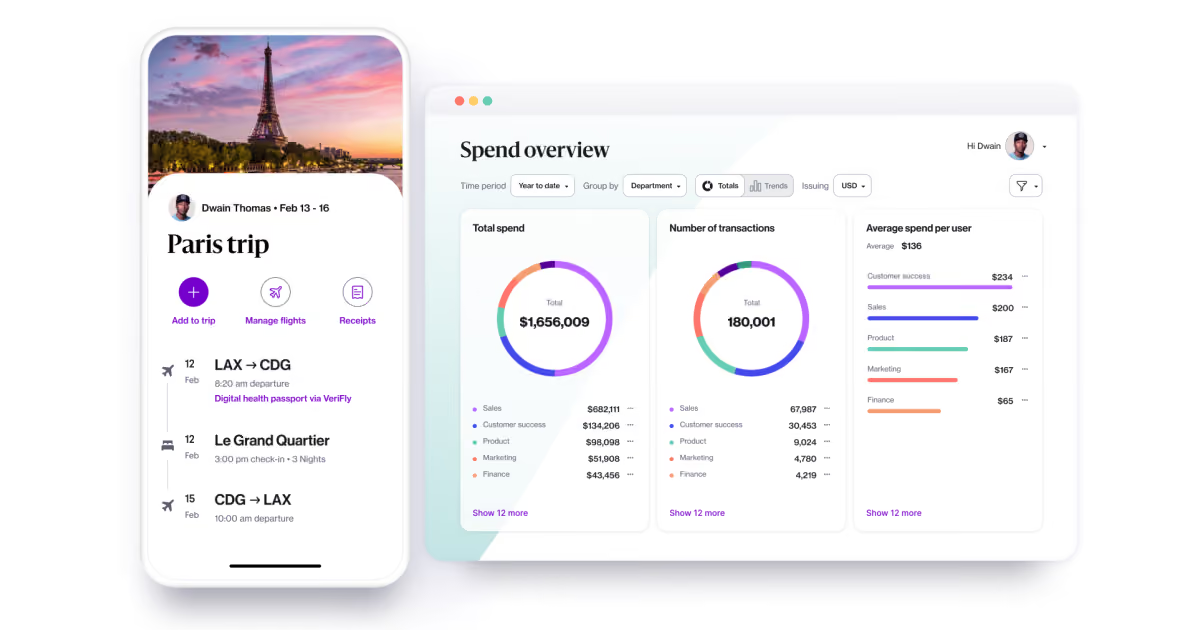
1. TravelPerk
If you're looking for top-notch corporate travel management software, TravelPerk is crushing it with one of the best B2B travel software. This platform stands out for its modern approach to business travel operations and comprehensive feature set. Here are their features:
They compare prices in real-time
Super flexible cancellation policies (we all learned how important that is!)
They help you go green with carbon offsetting
Works great with other business tools you're already using
Handles all your expense tracking automatically
Pricing: TravelPerk offers four tiers: a free Starter plan for basic booking (5 free trips/month), Premium ($99/m + 3%) for mid-size teams with more controls, Pro ($299/m + 3%) for advanced features and unlimited workflows, and Enterprise (custom pricing) for large organizations with specific needs, all including 24/7 support and unlimited users.
What sets TravelPerk apart is its intuitive travel portal design, making it especially attractive for companies transitioning from traditional booking methods to a digital-first approach. If your company's still doing things the old-school way, TravelPerk makes it super easy to go digital.
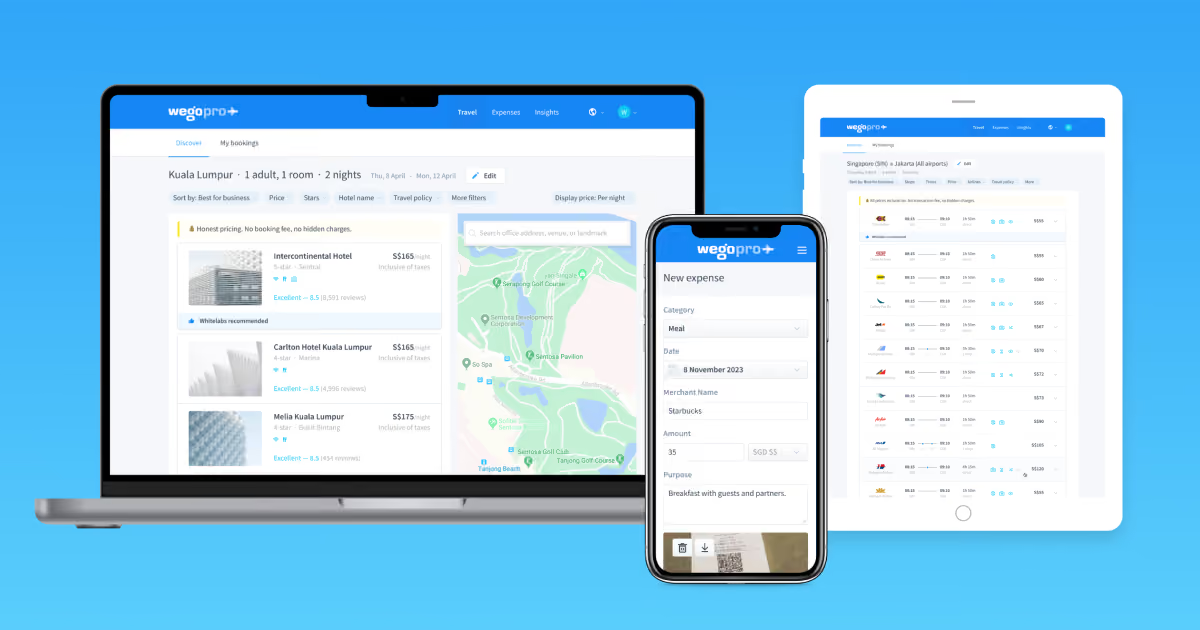
2. WegoPro
As a leading B2B travel company, WegoPro is all about using AI to make travel booking smarter and combining it with traditional corporate travel management capabilities. They're perfect for companies that want to stay ahead of the curve.
Their system includes:
AI-driven booking recommendations that learn from company preferences
Sophisticated price tracking algorithms
Dynamic policy compliance tools
Comprehensive mobile capabilities
Round-the-clock support infrastructure
Pricing: Two travel tiers (Standard at $10/booking with basic features and Premium with custom pricing for enhanced support) plus an optional Expenses plan at $3/month for expense management, with the ability to bundle travel and expenses together.
The platform's innovative approach to B2B travel technology makes it particularly valuable if you want to modernize your travel programs while maintaining strict control over costs and compliance.
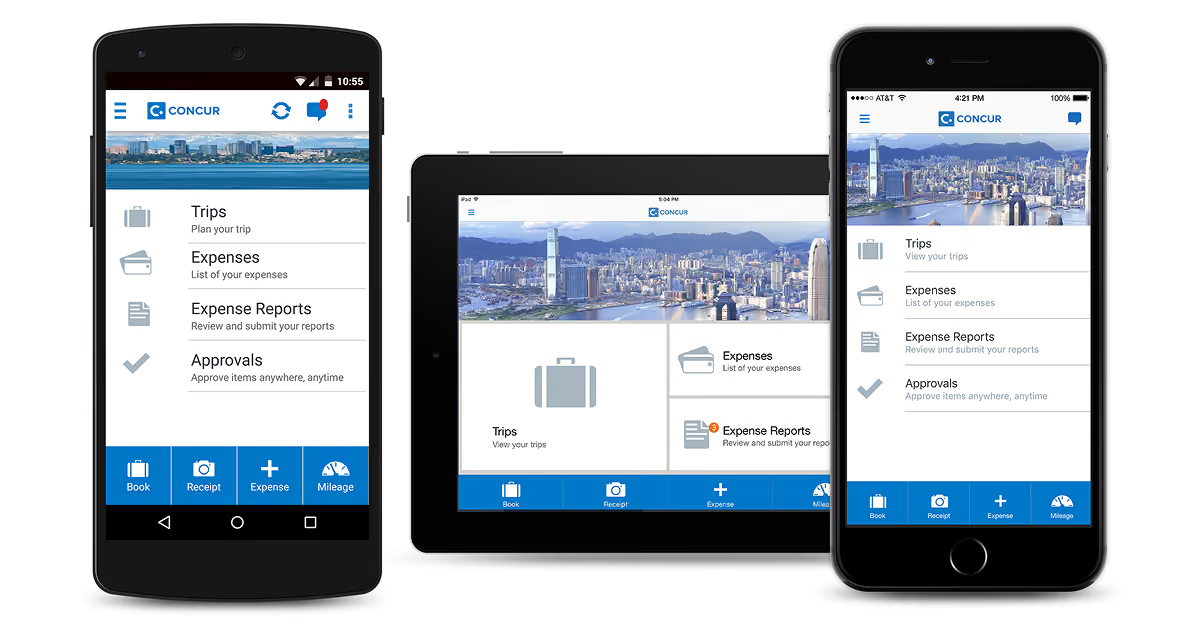
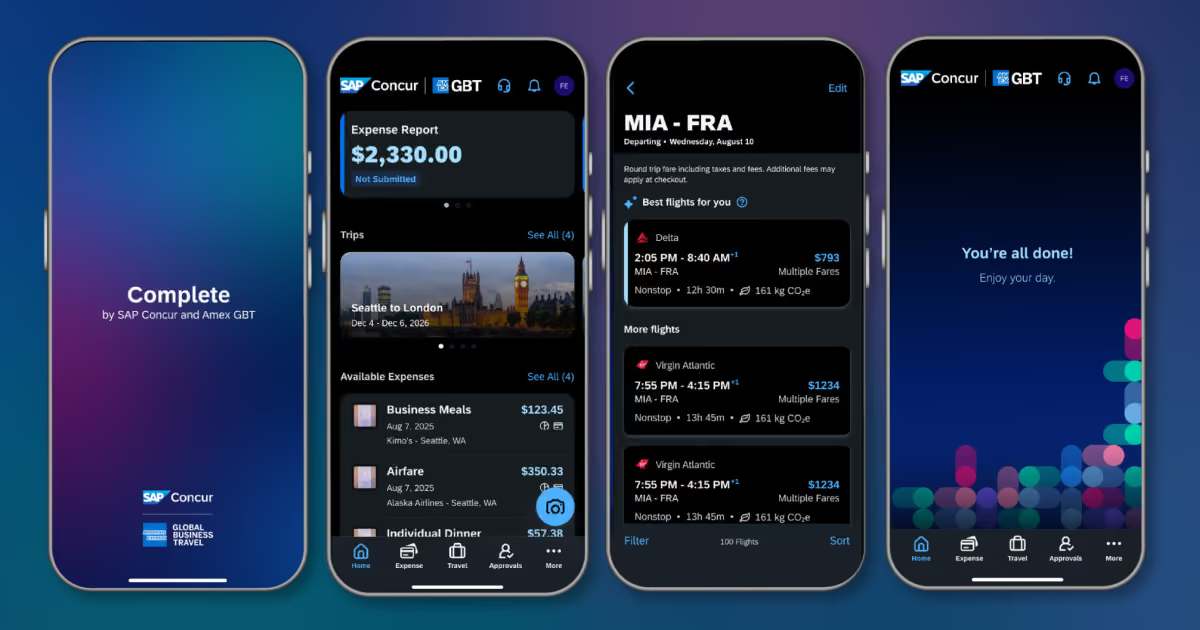
3. SAP Concur
SAP Concur is the heavyweight champion for big companies. It established itself as the go-to solution for enterprise-level organizations. Their platform is packed with features like:
Cloud-based service
Deep integration capabilities with existing enterprise systems
Comprehensive expense management features
Sophisticated approval workflows
Advanced analytics and reporting
Global 24/7 support
Pricing is custom and allows you to receive a custom quote on your email, based on the product features you need, the size of your company, report volume, and your industry.
What distinguishes SAP Concur is its ability to handle complex business requirements while maintaining user-friendly interfaces. The platform's extensive experience in corporate travel management makes it particularly valuable for large organizations with diverse travel needs.
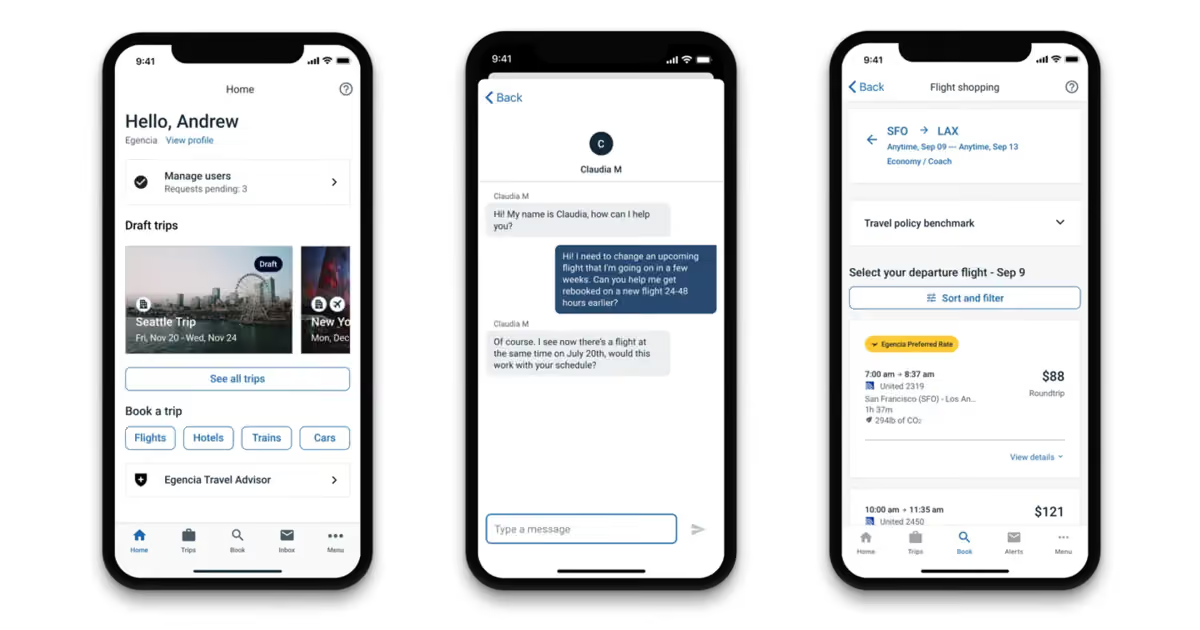
4. Egencia
As a trusted name among B2B travel companies, Egencia bridges old-school reliability with new-school features. The company successfully positioned itself as a bridge between traditional travel management solutions and modern requirements. As a B2B travel portal software company, they offer:
Extensive global supplier networks
Advanced duty of care capabilities
Personalized travel recommendations
Comprehensive support systems
Innovative mobile solutions
Pricing is by request, the company doesn’t disclose its plans for any products.
The platform particularly excels in providing solutions that cater to any B2B travel agency requiring both traditional travel management capabilities and modern features.
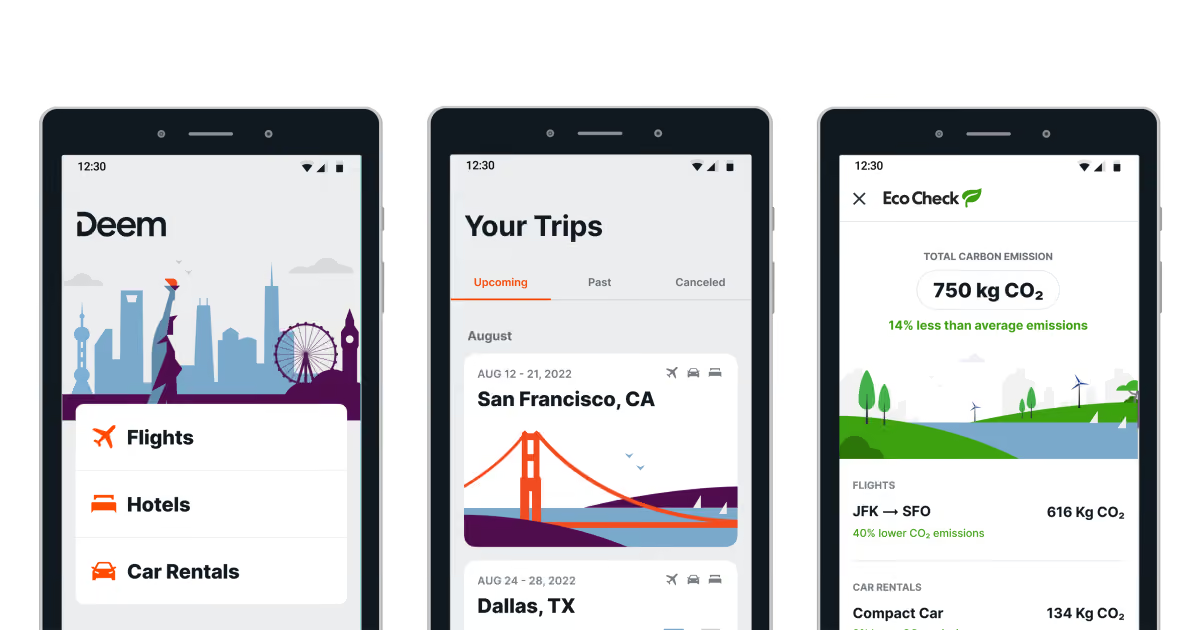
5. Deem
Looking for cutting-edge corporate travel tools? Deem is making waves with its cloud platform that makes travel booking a breeze. Their travel business management software is all about making your life easier.
Key featuresinclude:
Integrated expense management capabilities
Advanced travel analytics dashboard
Corporate carbon emissions tracking
Mobile-first trip management
Pricing: Simple single-tier pricing starting at $20.00 with a free trial available but no free version.
What really makes Deem shine is how they've built their booking system. It's super efficient but also really easy to use and caters to the needs for carbon reporting and showcasing your sustainable efforts.
6. Navan
Navan (you might remember them as TripActions) is shaking things up. They've taken traditional travel management technology and added some serious spend management muscle. This travel management platform has gained recognition for its fresh approach to corporate travel.
Standout capabilities include:
Real-time pricing intelligence
Integrated corporate card solutions
Automated expense management
Seamless accounting system integration
User-friendly mobile interface
Pricing: Navan offers two pricing plans: Navan Business for companies up to 200 employees with a free option, and Navan Enterprise for large organizations with custom pricing, both providing comprehensive travel booking and expense management features.
What makes them stand out in the best business travel apps crowd is how they handle everything about business travel spending. If you're looking to modernize your company's travel program while keeping a tight grip on expenses, Navan's B2B travel app might be just what you need.
7. Amex Global Business Travel (GBT)
Amex GBT has earned its place as one of the most trusted names in enterprise B2B travel agency software. Operating across 140+ countries, it combines the negotiating power of a global TMC with AI-driven booking tools built for complex travel programs with these features:
AI-powered personalized travel recommendations and real-time updates
Airline credit reporting for canceled and unused tickets
Risk management and traveler safety tracking
Destination event venue sourcing with negotiated rates
TravelVitals™ tools for at-a-glance trip visibility
Pricing is custom. Contact Amex GBT directly for a quote based on company size and travel volume.
What sets Amex GBT apart is its combination of global reach and enterprise-grade compliance tooling, particularly valuable for organizations with frequent international travelers who need both negotiated inventory depth and 24/7 human support.
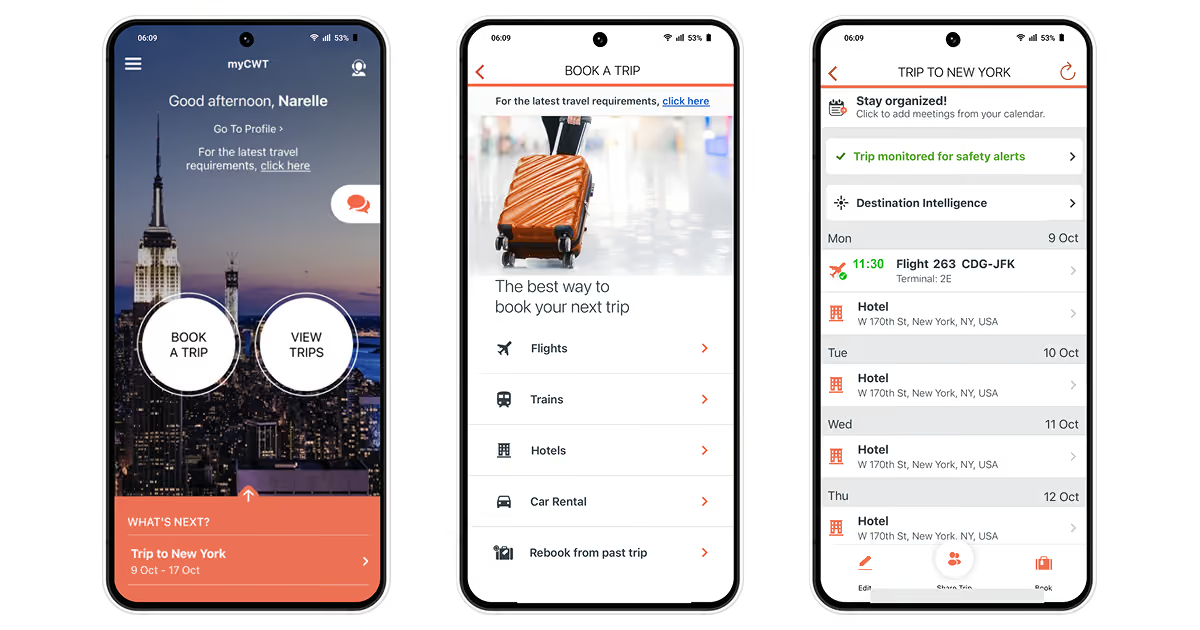
8. CWT (formerly Carlson Wagonlit Travel)
CWT is a well-established corporate travel apps provider that modernized its offering through the myCWT platform, giving travelers self-serve booking while keeping travel managers in full control of duty of care and policy enforcement. Key features include:
myCWT platform for streamlined trip booking and itinerary management
Real-time risk assessments and traveler location tracking
Duty of care tools with emergency notification and support
Expense management and consolidated reporting
Role-based access for travel managers and travelers
Pricing is also by request. CWT does not publicly disclose pricing plans.
CWT keeps a practical balance between TMC-level support and modern self-serve UX as a solid fit for enterprises that want human backup available without sacrificing booking autonomy.
9. BCD Travel
BCD Travel is a global TMC built around the TripSource platform, which unifies booking, itinerary management, and expense tracking with a consistent focus on traveler well-being alongside cost control. Key features include:
TripSource platform for end-to-end trip and itinerary management
Expense tracking is integrated directly into the booking flow
Global policy enforcement across multiple regions and currencies
Sustainability and carbon footprint reporting tools
24/7 traveler support with dedicated account management
Pricing is custom and is determined by travel volume and organizational requirements.
What makes BCD Travel a strong contender among B2B software examples for large organizations is its consistency across regions, very useful for multinationals.
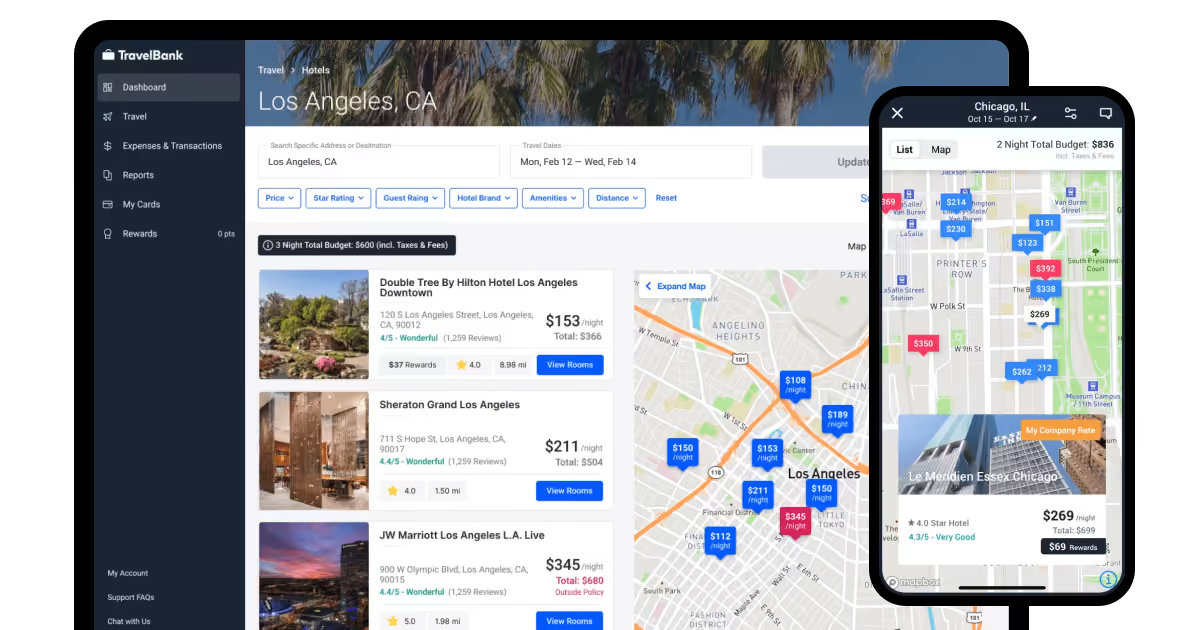
10. TravelBank
TravelBank takes a clean, all-in-one approach to corporate travel: policy-compliant booking, expense tracking, and traveler profile management in a single dashboard. It's a dependable option for teams that want predictable tooling without enterprise complexity. It offers:
Policy-based booking with configurable travel parameters
Expense tracker with granular spend breakdown by category
Individual traveler profiles for personalized management
Rewards for employees who book within budget
24/7 travel support via phone, chat, and email
Pricing is a monthly per-user fee. Unlike per-trip platforms, TravelBank charges based on total users.
TravelBank is a reliable choice within corporate travel apps for teams with consistent, predictable travel volume, where a flat monthly structure makes financial sense.
How to choose the right B2B travel software
Choosing the right B2B travel software comes down to matching pricing structure and core capabilities, like inventory depth, policy enforcement, mobile experience, duty of care, and integration quality, to the specific gaps in your current travel process.
Per-trip or per-booking fees are charged only when travel happens, making costs directly proportional to usage. This suits companies with variable travel volume, like Navan's free tier or WegoPro's $10/booking model, where slow months don't generate idle software spend.
Per-user monthly subscriptions charge a flat rate regardless of how much each user travels. Predictable for budgeting, but potentially expensive if a portion of licensed users travel infrequently. It’s the model TravelBank uses.
Custom enterprise pricing is standard among TMCs and larger platforms like SAP Concur, Amex GBT, and Egencia. Quotes are based on headcount, travel volume, and feature scope, giving large organizations room to negotiate but making quick comparisons difficult.
White-label solution for travel agents typically carries a platform licensing fee plus a revenue-share or per-booking margin on top. B2B travel agencies reselling inventory under their own brand need to factor both layers into their margin calculations before committing.
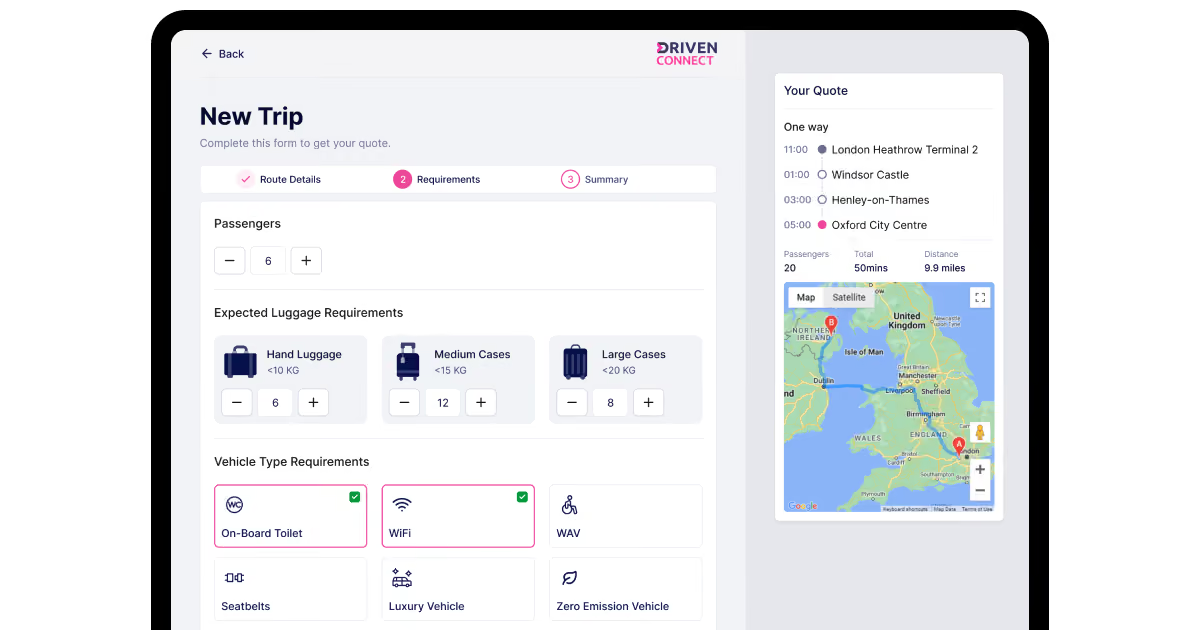
When we built Driven Connect, the pricing architecture for carrier operators followed a subscription model with premium feature tiers. It’s a deliberate choice that kept the barrier to entry low for the 400+ operators who joined, while creating a sustainable revenue base for the platform owner.
Key criteria for choosing B2B travel software
The market is crowded enough that every platform claims to do everything. These are the criteria that actually separate them in practice.
Inventory depth. A B2B travel portal software is only as useful as the flights, hotels, and ground transport it can actually surface. Check whether inventory pulls from GDS, NDC, direct connections, and OTAs.
Policy enforcement capability. The compliance layer needs to work at the point of booking, not after. If a B2B travel app can't automatically flag or block out-of-policy selections before the ticket is issued, it's a reporting tool, not a compliance tool.
Mobile experience. Business travel happens away from desks. If the platform's mobile interface is a stripped-down version of the desktop, adoption will suffer, especially among younger travelers who expect a consumer-grade app experience.
Duty of care features. Real-time traveler location tracking and emergency support aren't optional for organizations with frequent international travel. Verify these are native, not bolted on through a third-party add-on.
Integration with existing systems. Your B2B travel solution needs to connect cleanly to your ERP, HR, and accounting stack. Poor API architecture here means manual reconciliation survives the implementation, which defeats the purpose.
Scalability. A platform that handles 50 travelers cleanly should handle 500 without a rebuild. When we built Stay Altered, we deliberately selected integration intermediaries that could scale to new properties without proportional increases in development overhead, which is similar to this logic of software selection.
The right choice ultimately comes down to an assessment of where your current process actually breaks. Match the platform's strengths to those gaps, not to a feature checklist.
Custom B2B travel solutions: when does off-the-shelf stop working?
Off-the-shelf B2B travel platforms stop working when your booking logic, compliance requirements, or supplier relationships exceed what a generic product was designed to handle. At that point, custom development becomes the more cost-effective path.
For example, a large enterprise with global operations and a rigid expense-tracking policy struggles to fit its processes into a generic booking system. Or a travel agency serving niche markets finds its offerings limited by existing tools. In these cases, a custom platform is essential for delivering a seamless experience and competitive edge.
B2B software solutions built for your specific workflows eliminate the constant workaround tax: the manual steps, spreadsheet patches, and process exceptions. Custom travel software development means the system reflects your business logic from day one:
Fits your workflow like a glove, so there should be no more adapting to rigid systems
Grows smoothly as your business expands
Connects effortlessly with your favorite travel tools
Keeps payments secure and simple
Makes booking a breeze with smart automation
Shows you exactly how your business is performing
Helps you stand out in a crowded market
Cuts costs by working smarter.
By investing in a custom B2B travel platform, you gain a powerful tool that elevates your business operations and strengthens your market position. At COAX, we've built across the full spectrum of travel technology over 15 years: booking engines, PMS platforms, GDS integrations, CRM layers, and operator management systems. For example, for the travel mobile app development, the driver app replaced paper-based ticketing with QR validation and live route updates purpose-built functionality in the bus ticket booking solution we built.
Additionally, the COAX team is 90% mid- and senior-level engineers, ISO 9001 and ISO 27001 certified, and experienced across the full delivery lifecycle. If your travel operation has outgrown what available B2B travel software can offer, we build the alternative.
We help transportation companies as well, like we did for our client, Driven Connect. The platform simplifies operations for transport providers and their customers, which are typically organizaions that need B2B travel. Over 400 coach and minibus operators have signed up, and more than 30 organizations use the platform for corporate travel.
Our custom B2B travel solutions empower companies to stand out, cut costs, and capitalize on growth opportunities. Whether you're a small agency or a large corporate travel management company, we're here to build the perfect platform to push your business forward.
FAQ
What's the difference between how B2B travel agencies and consumer OTAs access inventory?
B2B travel agencies access wholesale and negotiated rates through GDS connections, bed banks, and direct supplier contracts: inventory tiers that consumer OTAs can't reach. This means lower base prices, configurable markups, and volume-based deals. Consumer platforms show public rates with no margin control and no policy layer on top.
How does a B2B travel company typically handle duty of care?
A B2B travel company embeds duty of care directly into its platform: real-time traveler location tracking, automated risk alerts, and 24/7 emergency support that activates the moment a disruption hits. Unlike consumer tools that end at booking confirmation, corporate platforms maintain visibility throughout the entire trip.
What should I look for in a B2B travel app for a team that travels internationally?
Your B2B travel app needs multi-currency support, global inventory across GDS and direct connections, offline access to itineraries, and real-time disruption alerts. Duty of care features (traveler tracking and emergency contacts) become non-negotiable at an international scale. Verify these are native features, not third-party add-ons requiring separate activation.
When does B2B travel management software stop being enough and custom development become necessary?
B2B travel management software reaches its limit when your booking logic, compliance requirements, or supplier relationships fall outside standard configurations. If you're maintaining spreadsheets alongside your platform to cover gaps, that's the signal. Custom development becomes the more cost-effective path once workarounds consume more operational time than the software saves.
How much does building a custom B2B travel app typically cost compared to licensing an off-the-shelf platform?
Upfront, a custom B2B travel app costs more than a SaaS license. Over three to five years, the math often reverses: no per-seat fees, no forced upgrades, no workaround overhead. For platforms with unique distribution logic or high transaction volume, custom builds consistently deliver stronger unit economics at scale.




























































































.avif)




%20for%20hotels.avif)

.avif)
.avif)


.avif)




.avif)
.avif)


.avif)

.avif)

We are interested in your opinion