When Accor became the Premium Partner of the Paris 2024 Olympic and Paralympic Games, they sent 40,000 employees to 1,700 French hotels to work on one idea: making every guest stay a memory that would last. The campaign made the whole hospitality group seem like the emotional host of a once-in-a-lifetime global event. The result was reaching audiences that no paid search budget could ever reach. This single example shows the power of hotel marketing. With the typical challenges of marketing for hotels present (and even growing), these efforts can still make a difference for your business:
Strategic marketing turns empty beds into consistent occupancy.
Direct bookings reward ownership over intermediaries.
Search intent converts when destination content meets it precisely.
Paid campaigns capture demand at its sharpest moment.
Social platforms cultivate desire before travelers start comparing.
Influencer credibility outlasts any branded advertisement.
Funnel alignment transforms isolated tactics into revenue systems.
First-party data compounds where OTA relationships cannot.
Reputation signals shape AI recommendations before humans intervene.
Shoulder seasons reward segmentation over discounting.
The right tech stack connects data, decisions, and direct revenue.
In this guide, we break down the concept, components, and best practices of digital hotel marketing. To give you all the right equipment, we distinguish between the different types of hotel marketing solutions and help you build a working roadmap with insider tips and tricks.
What is hotel marketing?
Let’s suppose you're running a beautiful 40-room boutique hotel in Lisbon. You prepared impeccably perfect rooms, amenities, and meals. However, on Tuesday nights in November, you're having a 25% occupancy, watching empty beds and wondering where things went wrong. Your marketing problem is more of a visibility problem. The thing is, in the hotel industry, they're the same thing.
Hotel marketing is the full system of strategies, channels, and messages a property uses to attract guests, drive bookings, and build the kind of brand that people remember and return to. It covers everything from how your hotel shows up in a Google search to what an influencer posts about their stay to whether a guest who booked through Booking.com ever books directly with you next time.
The textbooks will tell you it's about the "4 Ps" or the "marketing mix." And technically, they're right. But in practice, hotel marketing is the ongoing answer to one question: why should a traveler choose your property over the hundreds of alternatives they'll see in the same search?
What’s on the market?
Here's a question the industry rarely asks out loud: if a hotel fills its rooms every night, does it actually need to spend money on marketing?
The answer is yes, and some industry stats explain why.
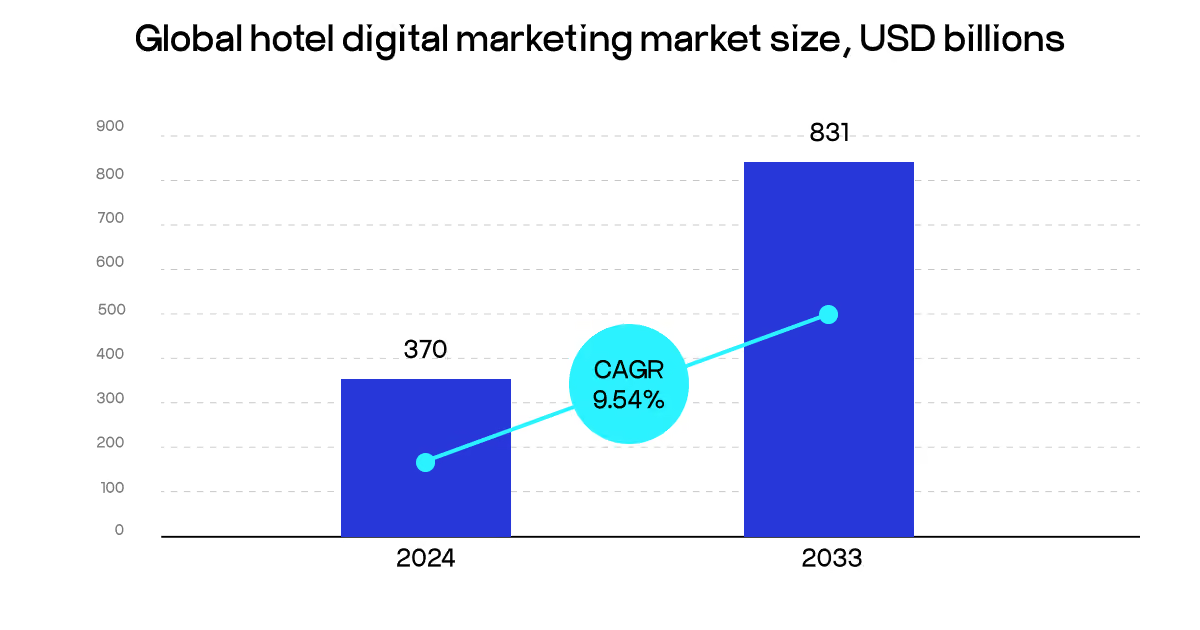
The global hotel digital marketing market is projected to reach $831 billion by 2033, growing at nearly 10% annually. That's an industry-wide recognition that demand doesn't manage itself.
What changed is where travelers make decisions. Today, 26% of hotel searches start on Booking.com, overtaking Google for the first time. More than a third of leisure travelers now use generative AI to plan trips. Mobile bookings are on track to represent 75% of all reservations by 2026. The entire discovery-to-booking journey has moved online, and marketing for hotels has had to move with it.
The result is a highly competitive digital environment where hospitality online marketing isn't optional infrastructure. It's the primary battleground. A property without a digital presence isn't just invisible. It's actively losing revenue to properties that are investing.
Why hotel marketing matters
In 2012, a hostel in Amsterdam did something no one in hospitality had tried before. The Hans Brinker Budget Hotel ran a campaign proudly declaring itself the worst hotel in the world. No hot water. Guests are encouraged to use the shower curtain as a towel. The ads warned: "It doesn't get much worse." The campaign went viral. The hotel was fully booked.
The lesson isn't that bad hotels win. It was that a clear, well-executed idea reaches the right audience and converts. Marketing works when it's honest, specific, and built around what your guest actually wants.
For most hotels, the stakes are more conventional, but the principle is the same. Here's why hotel internet marketing is tied directly to revenue and survival:
It fills the rooms that would otherwise sit empty. Strategic campaigns targeting specific segments, early-bird windows, or low-occupancy periods directly affect the bottom line. Occupancy and revenue don't optimize themselves.
It makes the hotel findable in the first place. Today's traveler researches extensively before booking. Without visibility through SEO, paid ads, and OTA listings, a property simply doesn't exist in the consideration set. 75% of travelers use metasearch platforms before booking. If you're not there, someone else is.
It turns one stay into many. Consistently engaging with guests through post-stay email, social media, and review responses builds the kind of trust that creates repeat visitors. And repeat visitors cost far less to acquire than new ones. Word of mouth referrals as a hotel search starting point have doubled to 14%, which means the investment in guest experience and communication compounds over time.
It builds direct revenue while reducing dependency on OTAs. Hotels retain 95.82% of guest-paid revenue from direct bookings, compared to just 82% from OTA channels, where commissions run 15 to 30%. A $1 investment in a first-party data strategy has been shown to return a 2.9x revenue lift with 1.5x cost savings. That math makes digital hotel marketing one of the highest-return investments a property can make.
It separates you from properties that offer the same rooms at the same price. 58% of guests now choose superior or luxury room categories, up four percentage points in recent years. That shift is driven by perception. Experiential storytelling, local partnerships, wellness positioning, and authentic social content create emotional differentiation that rate parity can't compete with.
It builds credibility before the guest walks in. 84% of travelers act on AI-generated travel recommendations, and those AI systems weigh reviews and user-generated content more heavily than hotel website copy. Social proof, actively managed, does heavy lifting that paid advertising can't replicate at the same cost.
Now that the value is clear, let’s break down the components and channels that make it work.
How hotel marketing works
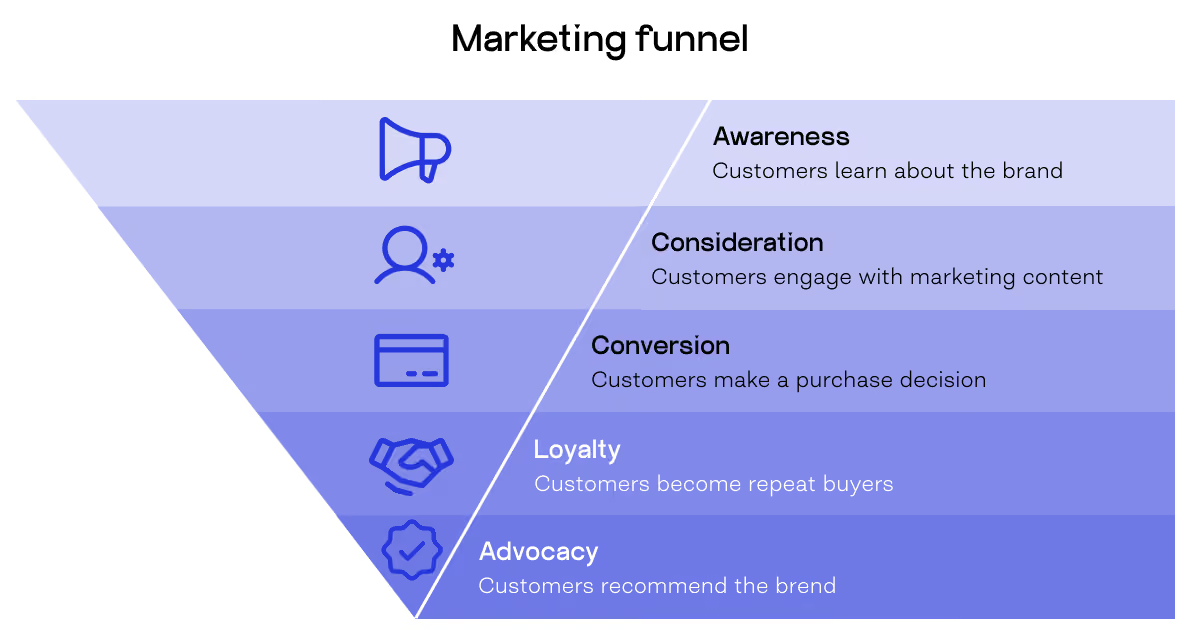
Two hotels, same street, same price, same amenities. One is fully booked three months out. The other runs last-minute flash sales just to cover expenses. The difference often comes down to what happens before the guest walks in the door. That's the marketing funnel - the path from a stranger seeing your property for the first time to a loyal guest who books direct and brings friends. Every hotel marketing campaign that actually works is built around this journey.
Awareness is where someone who has never heard of you first encounters your property, through a search result, a social post, or a friend's recommendation. Hilton's "It Matters Where You Stay" campaign with Deepika Padukone hit 5 billion views in eight weeks, not because it was a hard sell, but because it was a cultural moment. It reached people who weren't actively searching for a hotel at all. That's top-of-funnel hospitality digital marketing done right.
Consideration is where interest becomes intent. The guest starts comparing. They read your reviews, browse your website, and check if your rates match Booking.com. This is where personalization starts to matter. Jason Pirock, Head of Marketing at Springboard Hospitality, said it clearly: "The effectiveness of that call to action is ultimately determined by the data you've collected on your guest so far." Generic "book now" buttons don't do the work that a targeted retargeting ad or a personalized email does.
Conversion is where most hotels leak revenue. 85% of hotel website visitors abandon before booking. The friction is rarely just price. It's trust, confusion, or a slow mobile experience. The Meritage Resort fixed this with personalized cart abandonment emails that turned warm leads into confirmed reservations. Your hotel marketing ideas at the top of the funnel mean nothing if the booking experience breaks down at the bottom.
Loyalty is where the economics of hotel marketing completely change. Repeat guests cost less to acquire, book more directly, and refer others. Word-of-mouth has doubled to 14% as a hotel search starting point. That's not luck. It's the output of deliberate post-stay communication and genuine relationship building. It continues past checkout.
One last thing: the funnel only works when every team understands its role in it. Getting sales, marketing, and revenue aligned around the same funnel model was the foundation of making any of it work. Siloed departments produce siloed results.
Key digital marketing channels for hotels
The question is which channels belong in your digital marketing plan for hotel operations at your scale. Here's what each one actually does.
Your website is where every other channel points. It's the only one you fully own. It needs to be fast, mobile-first, and make booking obvious. If your website loses to your OTA listing on speed or trust, guests book there, and you pay the commission.
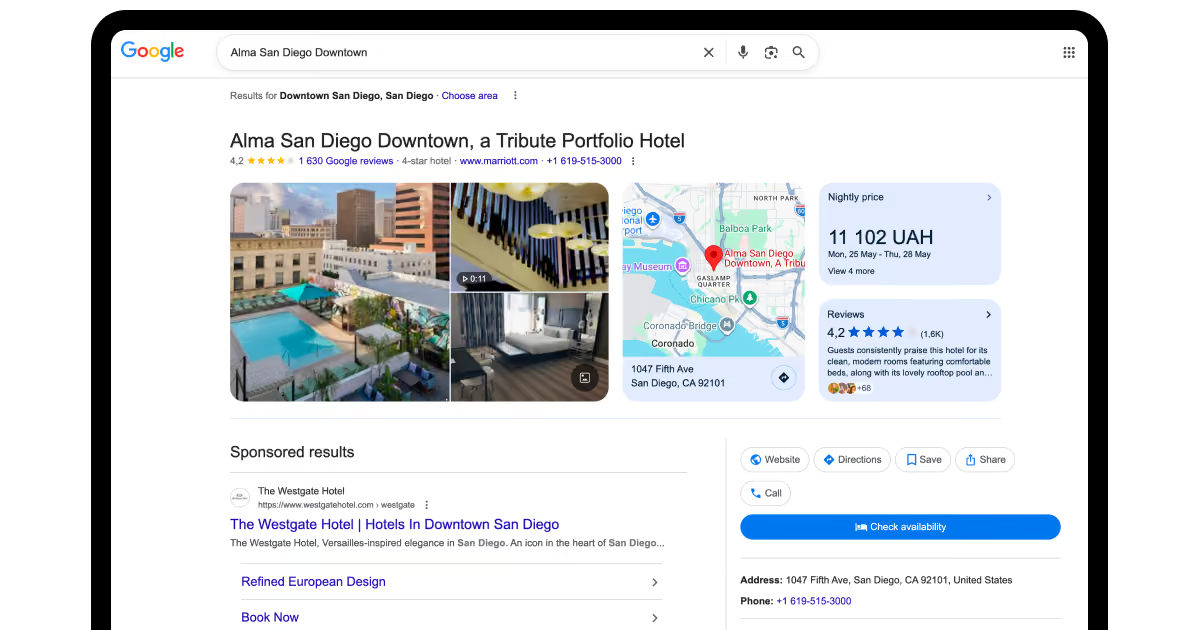
Paid search and Google Hotel Ads capture immediate demand. Your rates and a direct booking link appear the moment someone is searching for hotels in your location. Rate integrity is critical here. Hotels that let OTAs undercut their direct rate pay an estimated $3,500 extra per 10,000 clicks compared to properties that hold parity.
Metasearch platforms like Google Hotel Ads, Trivago, and Kayak let travelers compare rates from multiple sources in one place. 75% of travelers use them before booking. Your direct link competes head-to-head against Booking.com. Any serious digital marketing for hospitality strategy has to include this channel.
Social media serves different roles depending on the platform. Instagram builds aspiration. TikTok reaches younger travelers who use it for discovery and increasingly for research. Facebook enables precise paid targeting by age, location, and behavior. Across all three, authentic content outperforms polished advertising. Real staff, real guests, real moments.
SEO builds long-term visibility at no cost per click. When someone searches "boutique hotel in [your city]" and you rank organically, that traffic compounds over time. For hotel marketing campaigns with limited budgets, SEO often delivers the highest ROI over any twelve-month window.
Email remains one of the highest-return channels available. It works across the entire funnel: pre-arrival upsells, post-stay reviews, re-engagement campaigns, and loyalty offers. It requires first-party data, meaning you need the guest's email address and their permission to use it. Hotels that built strong CRM-connected email databases are seeing 2.9x revenue lifts. Hotels that didn't are competing without their most valuable asset.
OTAs are discovery channels with enormous reach, not purely competitors. 18% of travelers who start on an OTA ultimately book direct. Use them for visibility, especially in new markets, while protecting your direct channel with better rates and a stronger booking experience.
Influencer partnerships have matured past follower count. Audience fit matters more than reach. A travel micro-influencer with 40,000 engaged followers in your target market will outperform a celebrity account with 2 million passive ones.
These channels aren't a menu. They're a system. A guest might discover you on TikTok, check Instagram, Google your name, visit your website, abandon the booking engine, see a retargeting ad, then book via email. Digital marketing for the hotel industry that treats each channel as separate will misread what's working. The ones that connect them, with shared data and consistent messaging, capture the bookings that fragmented approaches miss.
Hotel marketing tactics explained
We touched on the channels and components of the workflow. However, success in the modern hospitality market depends on how you synchronize these six core tactics to turn passive browsers into loyal guests.
Hotel SEO
Most hotel bookings start with a search. Someone types "family resort near the mountains" and books from the first page of results. If you're not there, you don't exist in that moment. Hotel digital marketing strategies mean you're earning it, and once you have it, it compounds. A well-optimized page keeps attracting traffic for months without additional spend.
How to use it: Start with your Google Business Profile. It's free, it feeds directly into local search results and Google Maps, and most hotels neglect it. Add accurate hours, fresh photos, and updated amenities, and respond to every review. Then build content around the questions your guests are already searching, such as "things to do near [your city]," "best time to visit [destination]," "hotels with [specific amenity]." Your hotel website marketing should answer those questions better than anyone else.
Technical SEO matters too. Page speed, mobile optimization, and structured data markup that tells Google exactly what your property is and where it is. These aren't glamorous, but they determine whether your content gets indexed and ranked at all. For hotel groups or properties with complex site structures, working with B2B SEO solutions that specialize in hospitality can close the gap faster than general agencies.
Marriott consistently dominates organic search, not through advertising spend but through destination content. Pages about "things to do in [city]" and "best neighborhoods to stay in [destination]" bring in travelers at the research stage, before they've decided on a hotel. By the time those visitors start comparing options, Marriott is already the familiar brand.
Paid advertising
SEO builds long-term presence, but paid advertising fills rooms right now. Hotel paid search captures demand at its peak moment. Someone searching "hotels in Prague this weekend" is hours or days away from booking. Google Hotel Ads puts your rates and a direct booking link in front of them at exactly that moment. Google controls 90% of the search engine market share, which means this is where your guests are when they have their wallets out.
How to use it: Run brand campaigns to protect your name from OTA bidding. Run location campaigns for high-intent searches. Use retargeting to bring back the 85% of visitors who left your website without booking. Retargeting ads produce ten times more click-throughs than standard display ads, and the audience has shown interest, so you're not starting from zero.
Hotel PPC marketing only works if your direct rate is competitive. Hotels that allow OTAs to undercut their website pricing pay an estimated $3,500 extra for every 10,000 paid clicks. You're essentially paying to send guests to a more expensive version of your property on someone else's platform.
For instance, when IHG relaunched its "Book Direct" campaign, it paired paid search with a rate guarantee, promising guests the lowest price on its own website. The campaign directly addressed the reason guests default to OTAs and turned it into a reason to book direct instead. PPC drove the traffic; the rate promise closed the conversion.
Social media marketing
Social media sells the idea of staying at your hotel long before someone is ready to book. Digital hotel marketing on social media is fundamentally a trust and aspiration channel. A potential guest who has seen your property on Instagram six times before searching for hotels is far more likely to click your listing and book than a complete stranger who stumbles across a paid ad.
Instagram is where travel decisions begin emotionally.67% of travel enthusiasts use it to research trips. Your content here should make people feel something about your property, not just show what it looks like. Behind-the-scenes moments, genuine guest experiences, and local atmosphere outperform polished promotional imagery.
TikTok is where younger travelers discover places they didn't know they wanted to visit. The format rewards authenticity over production value. A front desk staff member giving a genuine property tour, a chef showing what goes into the breakfast, and a time-lapse of a view from your best room. These perform better than scripted advertising.
Facebook still drives meaningful ROI for paid targeting. The platform's ability to reach specific age groups, locations, interests, and travel behaviors makes it particularly effective for promoting packages and seasonal offers to defined guest segments. Each platform plays a different role in your online hotel marketing mix.
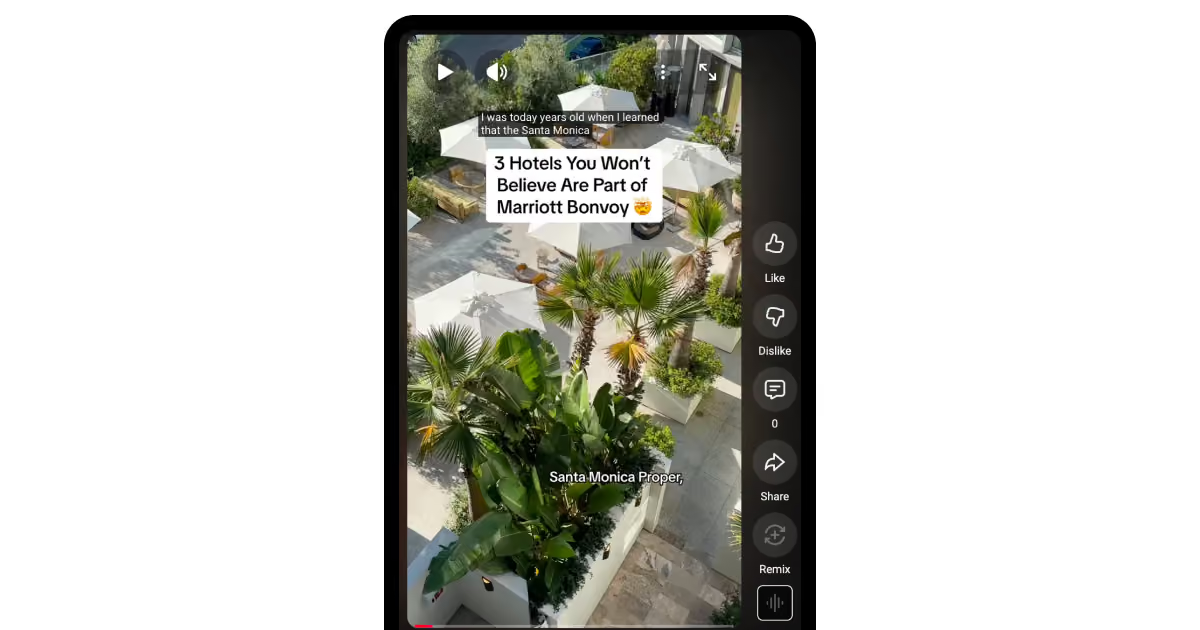
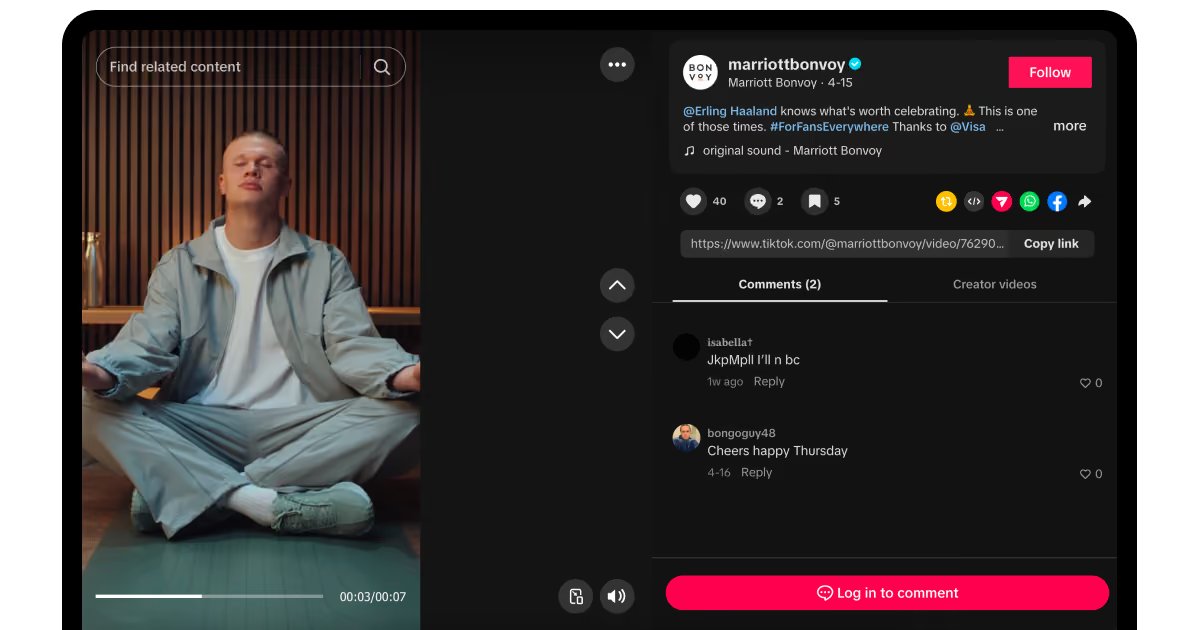
For instance, Marriott Bonvoy wanted to reach Gen Z travelers who associated the brand with their parents' business trips. Rather than running polished brand ads on TikTok, they partnered with four TikTok-native creators who made content around themes like "three hotels I couldn't believe were part of Marriott Bonvoy." The creator content outperformed brand ads across every major metric. Brand awareness lifted 3.8% against a 2.5% industry norm. One creator's two videos generated 1.1 million organic views without any paid promotion.
Marriott Bonvoy TikkTok
Metasearch marketing
Metasearch is in an unusual position in hospitality advertising. It's not quite search, not quite OTA, and most hotels either over-rely on it or ignore it. But platforms like Google Hotel Ads, Trivago, and Kayak pull rates from multiple sources and display them side by side. 75% of travelers use them before booking. When a guest clicks your direct rate in a metasearch result and lands on your booking engine, you've acquired a direct booking at a fraction of the OTA commission.
How to use it: Treat metasearch as a bidding environment for your own guests. Your digital marketing strategy development here has one job: make your direct rate the most attractive option in the comparison. That means rate parity or better, a clean direct booking page, and a compelling reason to book with you rather than through an intermediary. Exclusive perks for direct bookers, a best-rate guarantee, or flexible cancellation terms that OTAs can't match all make a material difference.
Bid management matters too when you’re marketing for hotels. Sophisticated properties adjust metasearch bids based on seasonality, occupancy targets, and competitive positioning. A flat bid strategy loses revenue during demand periods and wastes budget during low ones.
Email marketing
Email is the most underrated channel in the digital marketing strategy for hotels. It's not as visible as a TikTok campaign or as immediate as paid search. But it consistently delivers some of the highest returns of any channel in the mix as you're addressing the people who know you.
Your email list is a first-party asset. No algorithm, no platform policy, no OTA contract controls your access to it.
How to use it: Segment before you send. A past guest who stayed in a suite for an anniversary has completely different triggers than a business traveler who booked the cheapest room. Personalized emails built around guest history and behavior perform measurably better.
Key email types that drive direct revenue:
Pre-arrival sequences that confirm the booking, build anticipation, and offer upgrades or add-ons. These convert because the guest is already committed and in a planning mindset.
Cart abandonment emails for visitors who started a booking and didn't complete it. The Meritage Resort used this tactic to recover bookings from guests who had entered the booking engine and left. The emails were personalized to the specific dates and room types the guest had viewed.
Post-stay review requests are sent within 24 to 48 hours of checkout, when the experience is fresh. More reviews mean better visibility on OTAs, better signals for AI recommendation engines, and stronger social proof for future guests.
Re-engagement campaigns for guests who haven't returned in 12 or more months. A well-timed offer tied to something relevant, an anniversary date, a returning season, or a new property feature, brings a portion of dormant guests back.
Hotel search engine marketing and email work well together. A guest who clicks a paid ad, doesn't book, gets added to a nurture sequence, and books three weeks later via email represents a conversion that most attribution models incorrectly give entirely to the paid channel. Understanding the full path matters.
Influencer and partnership marketing
Influencer marketing has matured. What works now is a deliberate, more targeted, and significantly more effective approach when done right. Hotel online marketing strategy built around influencer partnerships works because third-party credibility converts differently than brand advertising. A travel creator's audience trusts their recommendations in a way no hotel's own marketing can replicate. So, how to find the right partner?
Reach is the wrong metric to optimize. A micro-influencer with 30,000 deeply engaged followers in your target market, say, wellness travelers in their 30s based in Germany, will outperform a celebrity with 3 million passive followers who happen to include some travelers. Look for:
Audience location and demographics that match your guest profile
Genuine engagement rather than inflated follower counts
A content style that fits your brand
A history of authentic rather than purely transactional content.
Marriott Bonvoy's TikTok campaign that we mentioned showed this clearly. They partnered with both macro and mid-tier creators and found that macro creators drove higher average view volume per post, while mid-tier creators generated stronger engagement rates. The most effective influencer marketing arrangements involve multiple content pieces across a stay or partnership period, covering arrival, the property experience, local exploration, and departure. This creates a narrative arc that an audience can follow.
Contracts should specify the number and type of deliverables, usage rights for the content, disclosure requirements, and what the hotel can and can't approve. Giving creators genuine creative freedom produces more authentic content. Asking them to hit a checklist of branded talking points produces obvious advertising that audiences scroll past.
The marketing hotel equation extends beyond creators. Strategic partnerships with airlines, car rental companies, local attractions, and event organizers create distribution channels that no single hotel could build alone. A hotel partnering with a nearby winery to offer exclusive guest experiences gives both parties something to promote. A corporate travel partnership with a major employer in your city provides a steady occupancy floor. These arrangements work because they align incentives and reach audiences that paid advertising misses entirely.
Building an effective hotel marketing strategy
After 16 years working in travel and hospitality, we've seen the same pattern repeat itself. Hotels invest in tactics before they have a strategy. They run Instagram ads before they know who they're targeting. They write blog posts before they've mapped what their guest is actually searching for. They build loyalty programs before fixing the booking engine that's losing them 85% of their visitors.
Instead, we have compiled a list of actions that can help you reach success.
Step 1: Know your guest better than they know themselves. What does your ideal guest search for before they find you? What made them choose you over the property down the street last time? Talk to your front desk staff. They have more useful marketing intelligence than any agency report. Build a real guest profile around real answers. This is the foundation of any solid hotel marketing guide. Without it, every decision is a guess.
Step 2: Audit what you already have. Pull your top organic landing pages. Check your Google Business Profile. Look at your booking engine drop-off rate. Find where guests are leaving and why. Most hotels are sitting on fixable revenue leaks before they even need a new campaign. A good audit often surfaces 20 to 30% more conversion potential from existing traffic.
Step 3: Fix your direct channel first. Your website and booking engine are the foundation. If they're slow, unclear, or not mobile-optimized, every marketing dollar you spend sends guests to a leaky bucket. Your direct rate needs to beat or match your OTA rate. Your booking page needs to load in under three seconds. Your cancellation policy needs to be visible before the checkout step, not buried in terms. Fix these before running any hotel marketing campaigns.
Step 4: Build your content foundation. Hotel content marketing starts with answering the questions your guests are actually searching. Destination guides. Local experience content. Seasonal travel advice tied to your property. Pages that rank for "family hotels near [landmark]" or "boutique hotel with rooftop [city]."One piece of well-researched content can drive qualified traffic for three years.
Step 5: Choose channels based on your guests, not trends. TikTok is not for every hotel. LinkedIn is genuinely useful if you're chasing corporate travel. Pinterest still drives significant traffic for wedding and honeymoon properties. The mistake most hotels make is trying to be everywhere at once and doing nothing well. Pick two or three channels where your guest actually spends time, and dominate them before expanding.
Step 6: Map your campaigns to the funnel. Every piece of content and every paid placement should have a clear funnel stage. Awareness content builds reach. Consideration content builds trust. Conversion content removes friction. Loyalty content deepens relationships. When you plan advertising for hotels this way, you stop running campaigns that feel busy but don't move the needle.
Step 7: Set up tracking before you spend. Hotels run campaigns for three months and then can't tell you which channel drove which booking. Set up proper attribution before you launch anything. Know your cost per acquisition by channel. Know your revenue per booking by source. Without this, you can't optimize. You're flying blind with a budget.
Step 8: Review and adjust monthly, not quarterly. The marketing strategy in the hotel industry that wins isn't the most sophisticated one at launch. It's the one that gets adjusted fastest based on real data. Monthly reviews of channel performance, conversion rates, and booking source mix let you reallocate budget before you've wasted it. Quarterly reviews are too slow for a market that moves week by week.
This guide is a starting point. For professional, efficient strategies, you sometimes need skilled external help. Here’s where you might need COAX Software.
We are a content marketing and digital strategy team that has spent 16 years working specifically in travel, transport, and hospitality. We know what a hotel's attribution model actually looks like. We know where guest journeys break. We also know the difference between content that ranks and content that converts, and we know how those two things sometimes conflict and how to resolve them.
Our hospitality marketing services cover two core areas.
We build the content infrastructure that drives qualified organic traffic and keeps it. That means blog architecture that feeds the full funnel from awareness to conversion and local SEO content that puts your property in front of travelers at the exact moment they're deciding where to stay. And brand content that builds the kind of trust that makes guests choose your direct channel over an OTA. Our content marketing services are designed around one outcome: guests who find you, trust you, and book with you directly.
Additionally, we know well that many hotels lose guests because the journey between interest and booking has too much friction. Our customer journey optimization services map every touchpoint from first search to post-stay communication and find where guests drop off, disengage, or get pushed toward a competitor. We fix the moments that matter: the website experience, the booking flow, the pre-arrival communication, and the post-stay sequence that turns a one-time guest into a returning one.
Hotel marketing tools and technology
The challenge with applying technology to your hotel marketing ideas and initiatives is that you’ll most likely need more than one tool to implement them. The marketing digital set is divided into some categories, each serving a specific purpose. Let’s break each one down.
Marketing automation tools
The first wider category of tools for hotel digital marketing is aimed at putting your typical processes on autopilot. It requires connections to your other systems and lead/ client data, so let’s start with the technology that deals with these connections in the purest way.
Guest relationship management ( or CRM) systems.
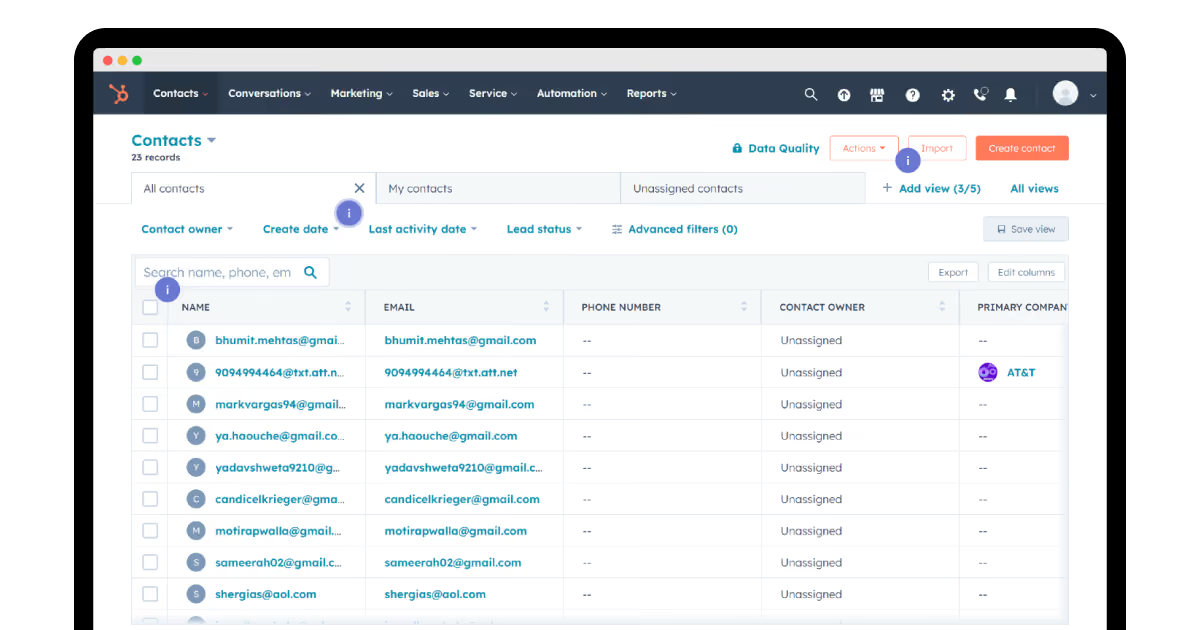
A CRM pulls guest data from every touchpoint, booking history, stay preferences, communication records, dietary notes, special occasions, and turns them into profiles you can actually act on. CRM systems integrate with your booking engine and PMS, so data flows automatically. The most widely used CRMs for hospitality are Revinate (specific hotel focus) and Salesforce (also used for full-lifecycle guest management). For independent properties, HubSpot offers an accessible entry point with strong automation.
HubSpot
Email marketing and automation platforms.
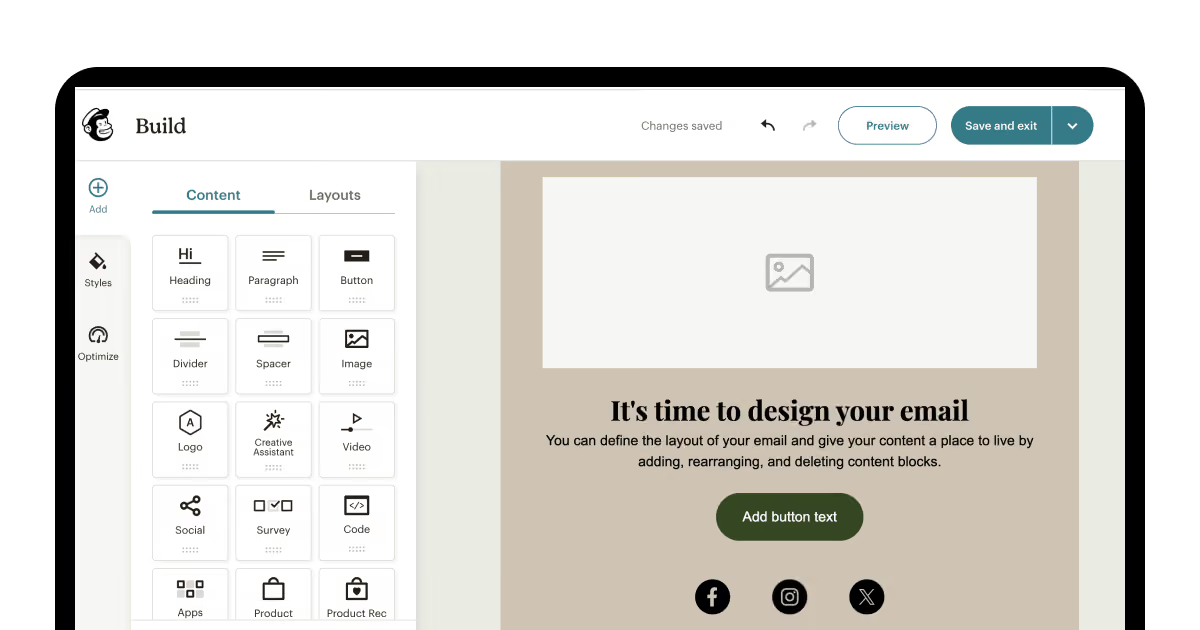
An email with automation is a revenue channel. Automated sequences trigger based on real guest behavior, like an abandoned booking or a returning guest's anniversary. Online marketing for hotels built on email automation can cut manual response time by up to 85%. The critical requirement is that your email platform connects to your CRM data. Mailchimp remains the most accessible option for smaller properties, with solid segmentation and automation. Klaviyo offers deeper behavioral triggers and is strong for properties with e-commerce-style booking patterns. Brevo is the best budget option for contact-based pricing without sacrificing core features.
Mailchimp
For connecting your email platform to everything else, Zapier is the tool most hotels win with. When a guest completes a booking, Zapier can simultaneously update the CRM, trigger a confirmation email, add the guest to a loyalty segment, and schedule a pre-arrival message.
Booking engines
Over 52% of travelers abandon bookings mid-process due to a frustrating website experience. The fix is a better booking engine. A booking engine is your primary revenue infrastructure. Everything your hotel marketing solution builds, from awareness campaigns to email nurture sequences to retargeting ads, ends here.
Hotels using well-integrated direct booking engines report average booking values 60% higher than OTA bookings, partly because the direct channel enables upselling that OTAs don't.
What a good booking engine does:
Updates availability in real time across all channels
Integrates directly with your PMS to prevent double bookings
Supports mobile-first checkout in three to four steps
Enables upselling of add-ons during the booking flow
Keeps the guest on your domain rather than redirecting to a third-party page.
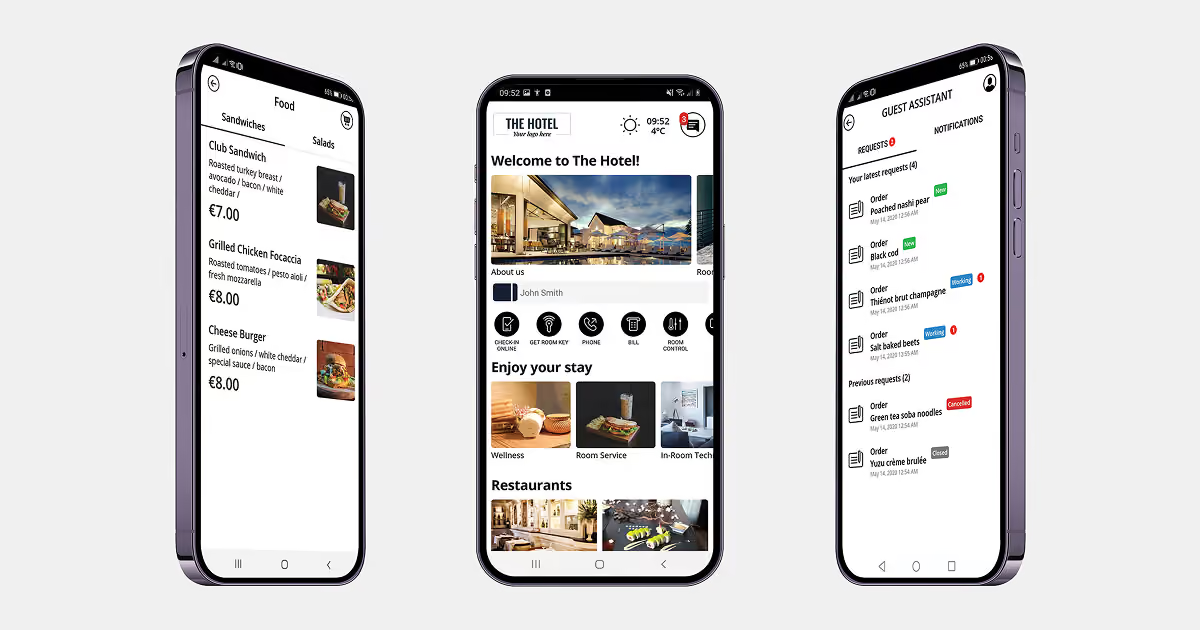
What about the tools used for marketing in the hotel industry in this category? Roommaster combines a booking engine with PMS integration, a channel manager, and metasearch connectivity. It's made for properties that want unified data without managing multiple vendor relationships. Also, SiteMinder offers a three-step mobile booking flow with dynamic pricing tools and 20-plus language and currency options. It's strong for properties with international guest mixes.
SiteMinder
For independent properties on tighter budgets, eZee Reservation supports over 60 payment gateway integrations, multilingual interfaces, and automated pre- and post-stay communication, all with zero commission on direct bookings.
Social media management and content creation tools
Social media presence isn’t easy. The hotels that show up consistently are doing it through content calendars, scheduled posts, batched visual creation, and performance reviews. Mobile marketing for hotels is increasingly central here. Most guests discover properties on their phones, which means your visual content needs to look right on a five-inch screen. To ensure both consistency and a perfect visual experience, several tool groups are needed.
Tools for scheduling and management.
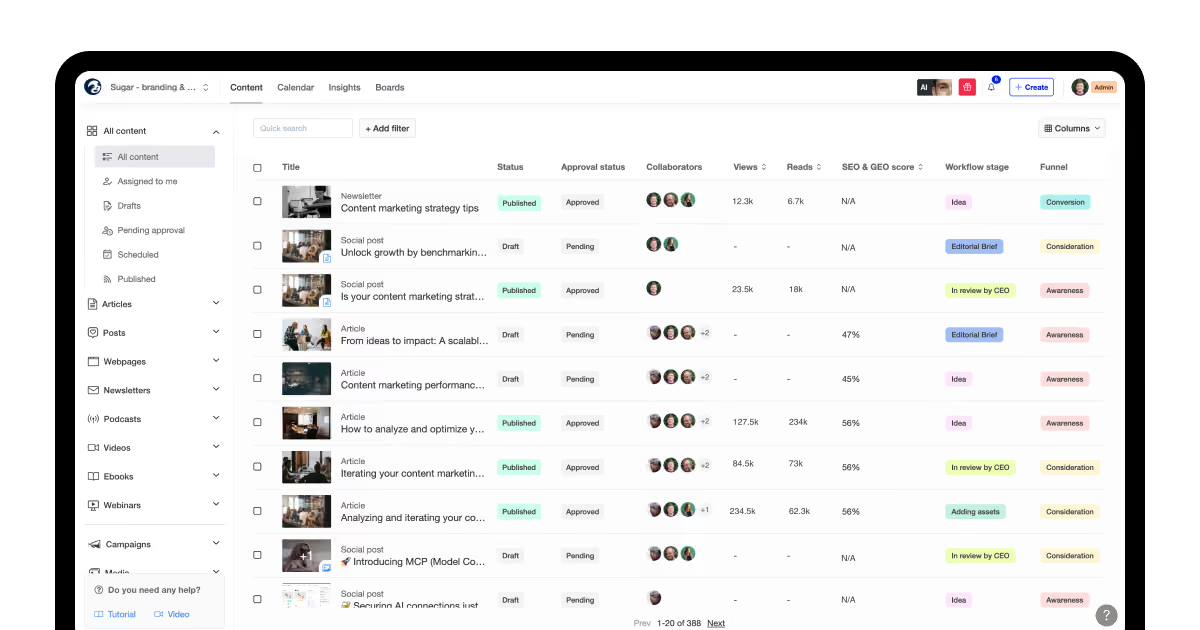
Hootsuite and Buffer handle multi-platform scheduling from a single dashboard, letting you plan and publish across Instagram, Facebook, and TikTok without switching between apps. Hootsuite also includes analytics that show you which posts drive engagement. StoryChief goes further by generating content calendars, identifying audience segments, and automating publishing across channels, so it’s great if you need AI-assisted content planning without a social media manager.
StoryChief
Tools for visual content creation.
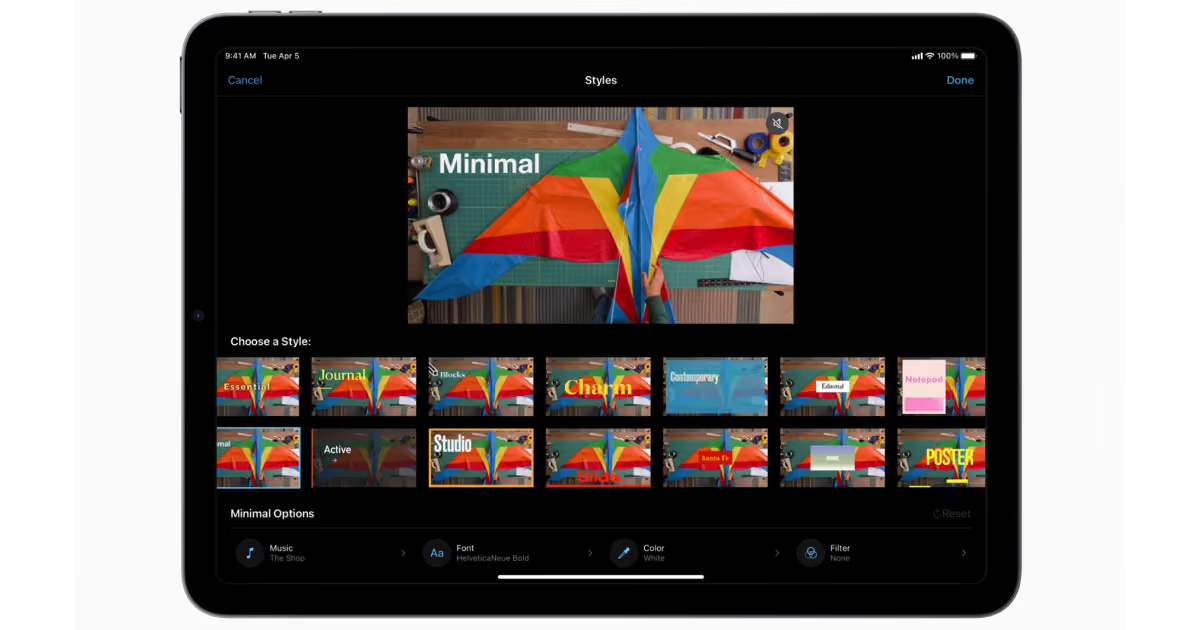
Canva is the standard for in-house online hotel marketing. It provides templates pre-sized for every platform, brand kit functionality that keeps your colors and fonts consistent, and a simple interface. For video, InShot and iMovie are solid mobile-first options for editing Reels and TikTok content. Pika Labs is a new AI tool that generates short videos from text prompts, useful for creating animated room previews or destination content without a film crew.
iMovie
Tools for writing and content quality.
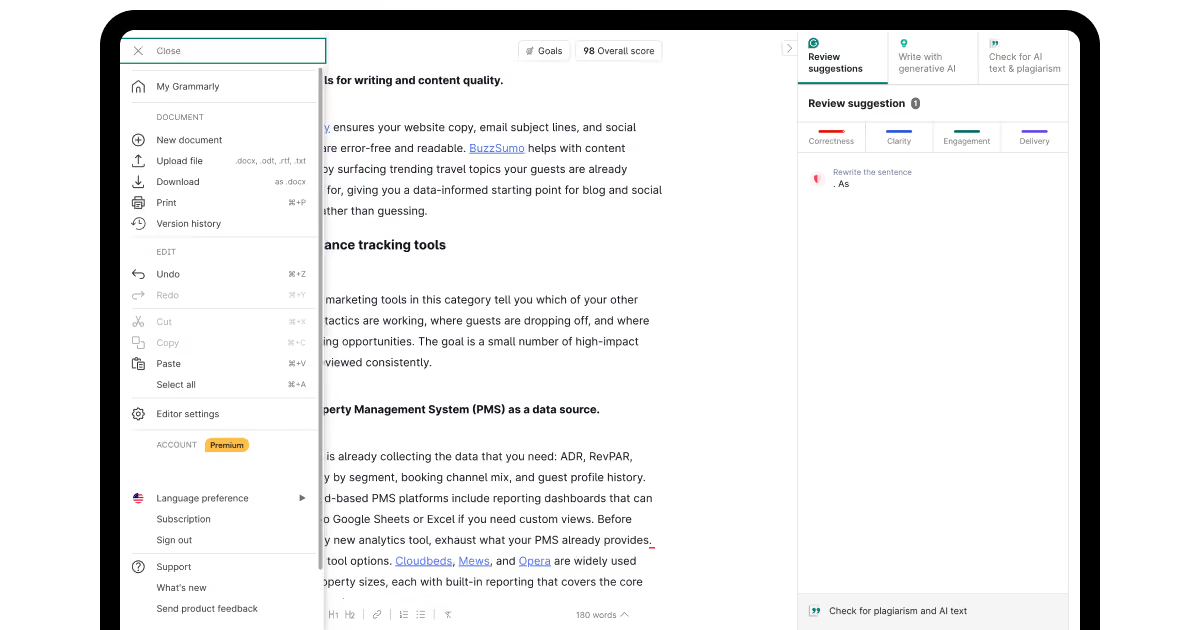
Grammarly ensures your website copy, email subject lines, and social captions are error-free and readable. BuzzSumo helps with content research by surfacing trending travel topics your guests are already searching for, giving you a data-informed starting point for blog and social content rather than guessing.
Grammarly
Performance tracking tools
The hotel marketing tools in this category tell you which of your other tools and tactics are working, where guests are dropping off, and where you're losing opportunities. The goal is a small number of high-impact metrics reviewed consistently.
Property Management System (PMS) as a data source.
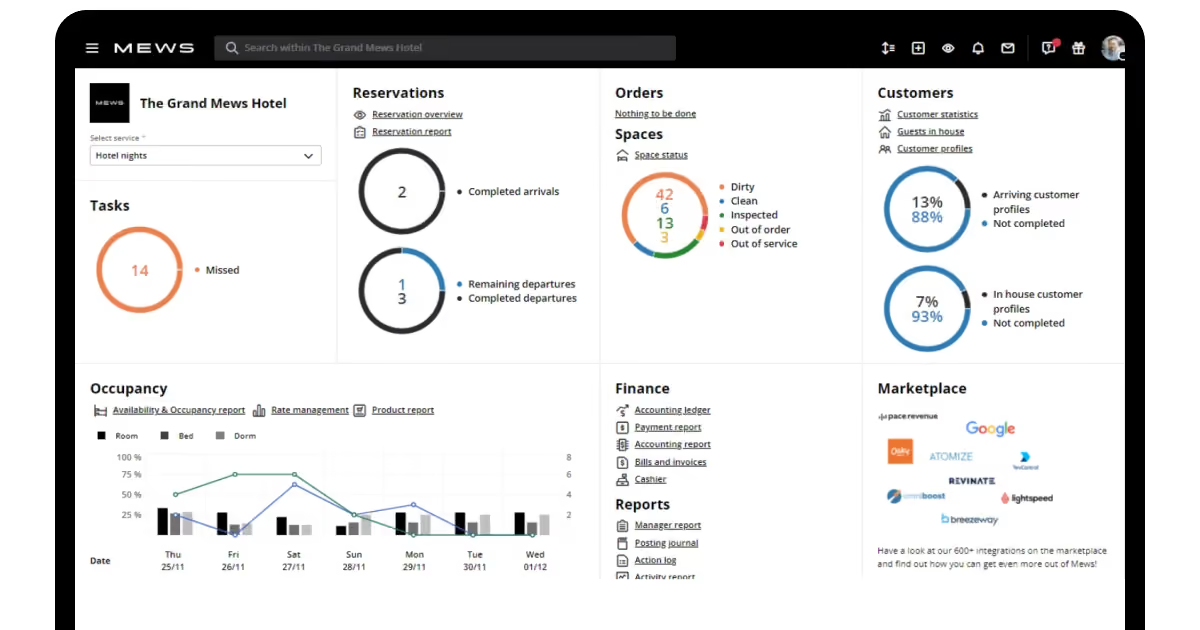
Your PMS is already collecting the data that you need: ADR, RevPAR, occupancy by segment, booking channel mix, and guest profile history. Most cloud-based PMS platforms include reporting dashboards that can export into Google Sheets or Excel if you need custom views. Before adding any new analytics tool, exhaust what your PMS already provides. As for the tool options. Cloudbeds, Mews, and Opera are widely used across property sizes, each with built-in reporting that covers the core revenue metrics.
Mews
Website and conversion analytics.
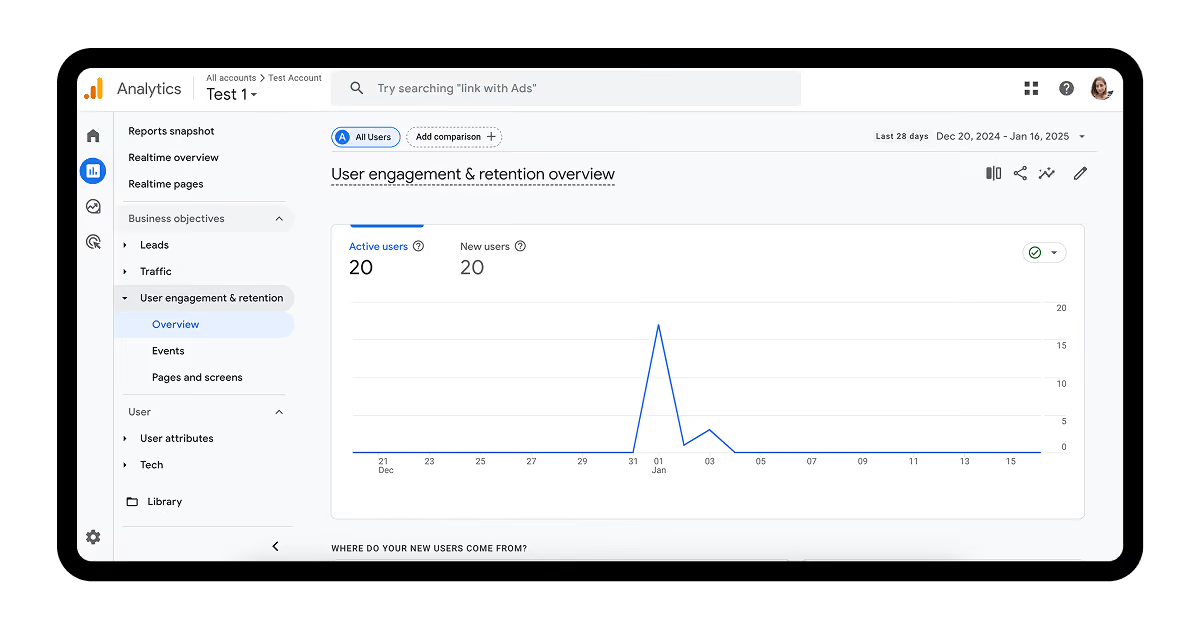
Google Analytics 4 is the foundation of hotel digital marketing measurement. It tells you where your traffic comes from, which pages convert visitors, where guests drop off in the funnel, and which campaigns are actually driving revenue rather than just clicks. Setting up event tracking in GA4 lets you see how users move through your booking flow, and where they abandon. Also, Microsoft Clarity complements GA4 by showing the behavior behind the numbers. Heatmaps reveal where guests click and where they stop scrolling. Session recordings let you watch, anonymously, exactly how a visitor navigated your booking page. Both tools are free.
Google Analytics 4
SEO and competitive visibility tools.
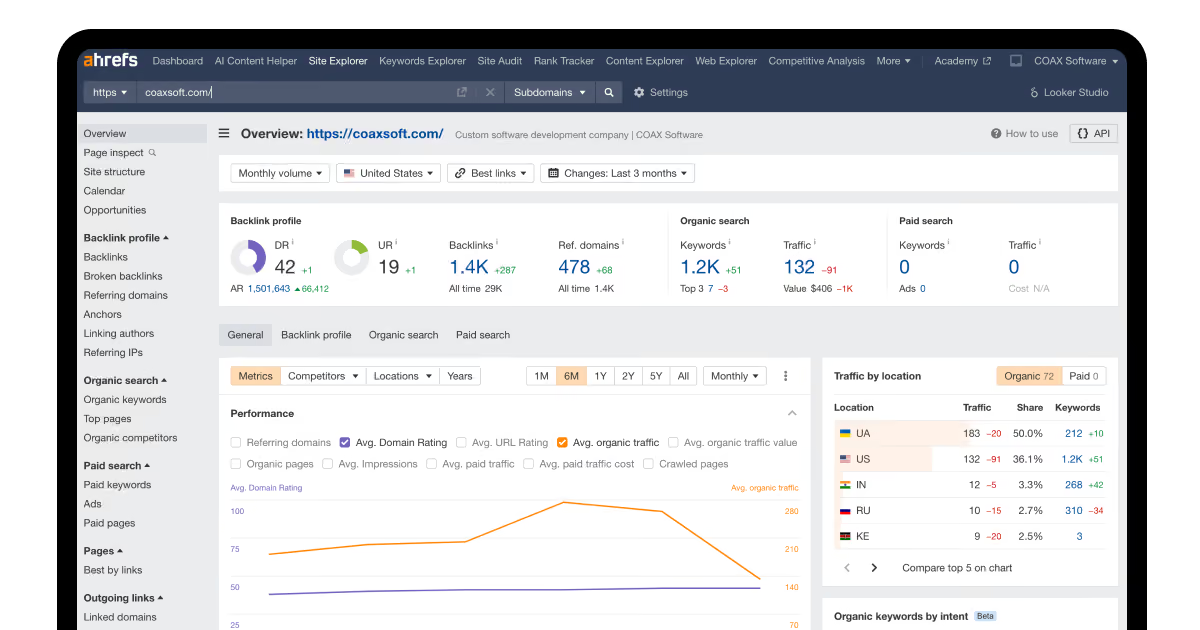
SEMrush and Ahrefs track your organic keyword rankings, identify gaps in your content coverage, and show you what your competitors are ranking for that you aren't. For the best hotel marketing campaigns to generate sustainable organic traffic, these tools tell you which content to create. Google Search Console is the free alternative for core keyword and ranking data. It shows which queries bring to your site and which pages are gaining or losing visibility over time.
Ahrefs
Reputation and review management.
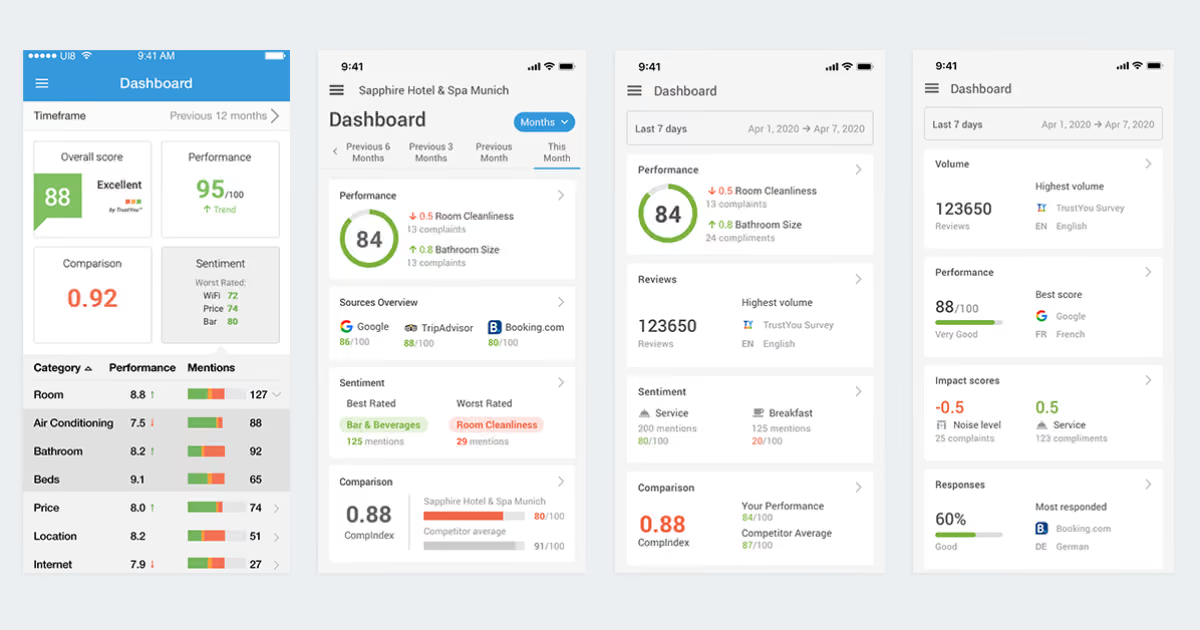
Your online reputation affects your search visibility, your OTA ranking, and the conversion rates. More than 80% of travelers read reviews before booking. Tools like Revinate, TrustYou, and ReviewPro aggregate reviews from Booking.com, Google, and TripAdvisor, track sentiment trends over time, and flag recurring complaints. However, the operational habit matters as much as the tool. Responding to reviews weekly, not monthly, signals active management to both guests and the AI systems that increasingly determine which hotels get recommended.
TrustYou
Practical tips from the COAX team
16 years in travel and hospitality marketing teach you where the real problems that cost hotels revenue every single week are. Here are the specific fixes we give clients to improve their marketing plan for a hotel.
Fix your conversion baseline. Most hotels invest in campaigns before they know their booking engine conversion rate. Set up GA4 conversion tracking first. Know your current rate (industry average is between 1.5% and 3%). Doubling it through booking flow improvements costs less than any campaign and the results are permanent.
Use your Google Business Profile. Update photos monthly and respond to every review within 48 hours. Keep your amenity list current and your direct booking link visible. Hotels that do this outperform properties with larger paid budgets in local search because GBP feeds directly into Google Maps and AI recommendations.
Protect your brand keywords first. The most reliable hotel digital advertising investment for most properties is bidding on your own name. If OTAs are bidding on your brand keyword and you're not, you're paying them to intercept guests who were already searching for you. Run the brand campaign before anything else.
Destination content beats hotel content for organic traffic. This is one of the most consistent wins in our B2B SEO solutions for hospitality clients. The pages that rank and convert are more about your destination. "Best restaurants near [area]," "weekend itinerary for [city]," "things to do in [destination] in winter." Hotels with 20 to 30 well-researched destination pages outrank their competitors without additional spend.
Send your post-stay review request within 24 hoursof checkout, while the experience is fresh. Response rates drop sharply after the first day. It runs permanently and improves review volume, OTA ranking, and AI recommendation signals.
Turn amenities into experiences. This is a core product marketing strategy fix that costs nothing. "Heated outdoor pool" is a feature. "Swim outdoors in November while the rest of the city is inside" is a reason to book. Rewriting every amenity on your website from the guest's perspective changes how your property performs at consideration.
Shoulder season is a targeting problem. Most hotels respond to low occupancy by discounting. One of the smarter hotel strategies to attract customers we apply is to identify who travels during your slow periods, such as remote workers, staycation seekers, quiet-travel couples, and build dedicated campaigns for each segment with messaging that speaks directly to them.
Social content needs the next step. The content that drives direct consideration combines authentic property moments with specific, actionable information. "Available as a direct-book add-on for $18" converts better than a beautiful caption with no call to action. Every post should have one clear next step.
These hotel marketing tips work with standard off-the-shelf tools for most properties. But standard tools have a ceiling.
Hotel groups managing multiple properties, resorts with complex package logic, or operations with specific compliance requirements in particular markets will eventually find that generic SaaS platforms were built for someone else's operation. With us, it’s just the other way around.
Our hotel software development services are built for that gap. We build booking engines, CRM integrations, loyalty platforms, and marketing automation systems for travel and hospitality clients who need something that fits their work. Our team is 90% mid- and senior-level and signs a strict NDA on every project. If your current stack has stopped keeping up with your operation, that is the conversation we are built for.
FAQ
What is hospitality marketing's main goal, and what principles help reach it?
According to Buttle and Bowie, the core goal is creating value at every stage of the guest journey: pre-encounter, encounter, and post-encounter. The principles center on understanding guest needs, building relationships over transactions, and integrating the full marketing mix around the customer experience rather than the product itself.
How do you know it's time to hire an SEO agency for hotels?
Three clear signals: your organic traffic has been flat or declining for two consecutive quarters, your competitors consistently outrank you for destination searches you should own, or you've published content regularly but conversions haven't moved. If your team is executing tactics without a keyword strategy behind them, you're producing content for no audience. That's when outside expertise pays for itself.
What are the challenges of hotel marketing online implementation?
The biggest ones in practice are:
Disconnected systems that prevent data from flowing between your PMS, CRM, and email platform.
Attribution gaps that make it impossible to know which channel drove which booking.
Rate inconsistency across OTAs that undermines paid search ROI.
Content that ranks but doesn't convert because it wasn't built around booking intent.
How to market a hotel with a limited budget?
Prioritize owned channels first. Then, fix your Google Business Profile, activate post-stay email automation, and protect your brand keyword in paid search. These three combined cost almost nothing and recover revenue that's already leaking. Afterwards, build destination content that compounds over time. Paid campaigns come last, only after your conversion baseline is solid enough to make the spend worthwhile.
How does COAX deliver efficient digital marketing for hotels?
We've spent 16 years in travel and hospitality, so we don't need to learn the industry on your budget. Our team is 90% mid and senior level, ISO 27001 certified, and structured so strategy, execution, and QA sit under one roof with no handoff gaps. You get transparent agile delivery, solutions built to scale, and a 4.9/5 Clutch rating from clients who stayed.
























































.avif)

%20for%20hotels.avif)

.avif)
.avif)


.avif)

.avif)
.avif)

.avif)

.avif)

We are interested in your opinion