The airline industry has margins so thin that you can lose them in the blink of an eye. With pricing competition and the complexity of overbooking management, you just can’t expect to handle it all manually. Airline revenue management software is an absolute must, and for many reasons:
Demand forecasting predicts seat demand weeks before departure.
Dynamic pricing engines adjust fares within minutes of a competitor's move.
Inventory control opens and closes fare classes right when booking pace shifts.
Origin-destination optimization balances revenue across connecting itineraries.
Ancillary pricing modules treat baggage, seat selection, and upgrades as one total revenue equation.
GDS and NDC integrations push pricing decisions to every distribution channel.
Competitive intelligence feeds monitor rival fares across shared routes in near real-time.
AI forecasting adapts to demand pattern breaks.
Performance dashboards surface underperforming flights and fare classes.
Custom development paths serve carriers whose pricing logic or compliance requirements fall outside standard vendor coverage.
In this guide, we will break down the concept, workflows, and techniques of modern airline revenue management. Then, we’ll dissect the architecture of airline revenue management systems, outline the key components and integrations, and give you a structured overview of the best vendors. Finally, we’ll help you understand if you need a custom tool (and how much it will cost if you do).
What is a revenue management system?
An airline revenue management system is a digital solution that decides which seats to sell, at what price, and to whom, before a single passenger boards. It processes demand signals, competitor fares, booking pace, and historical patterns to set prices across hundreds of fare classes in real time.
The goal is simple: fill the plane at the highest achievable revenue, not just the highest price. Every unsold seat at departure is revenue that never comes back. Kevin Pak and Nanda Piersma define it like this: revenue management is about selling the right product to the right customer at the right time.
What does the airline revenue management market tell us?
Revenue management in the airline industry runs on razor-thin margins. McKinsey reports that even in the relatively strong years of 2023 and 2024, only 41 percent of tracked airline carriers earned their cost of capital. That context explains why pricing software is a survival solution.
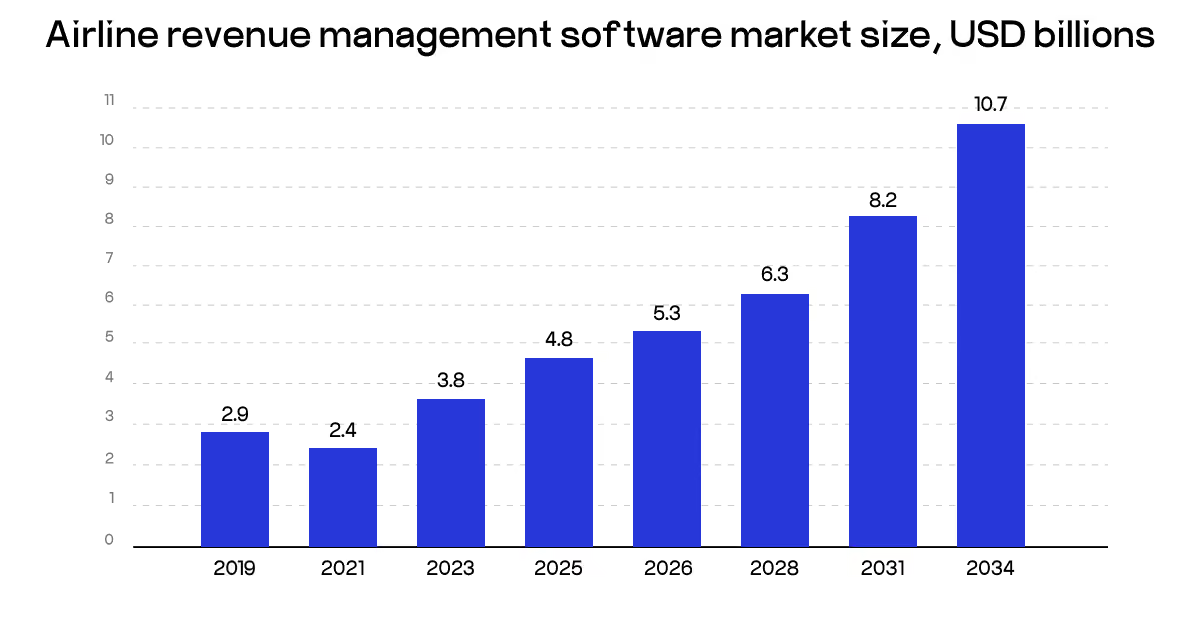
The market around it reflects that pressure. The global airline revenue management software market was valued at $4.8 billion in 2025 and is projected to reach $10.7 billion by 2034. North America holds the largest share at 35%, driven by carriers like Delta, United, and American. Asia Pacific is the fastest-growing region at 11.2% annually, fueled by the explosion of low-cost carriers across India, China, and Southeast Asia.
What is pushing investment? Post-pandemic recovery brought passenger volumes back above 2019 levels. Airlines now operate across more fragmented booking channels than ever. And the shift from legacy on-premises systems to cloud-based platforms has made sophisticated pricing tools accessible even to carriers with fewer than 20 aircraft.
What is the goal of revenue management for airlines?
Pak and Piersma traced the discipline back to Littlewood's 1972 model, the first formal attempt to solve the seat pricing problem mathematically. The core challenge has not changed since: a flight is a perishable asset. Once it departs, every empty seat is a permanent loss.
Revenue management in aviation exists to prevent that loss systematically. It does this by solving three problems at once.
First, flight price prediction - forecasting how many passengers will want a seat, at what price, and how that demand shifts as departure approaches.
Second, inventory control - deciding how many seats to protect for high-paying late bookers versus releasing to budget-conscious early buyers.
Third, optimization - finding the price point where total revenue across the whole flight is maximized, not just individual transactions.
Aviator revenue management handles what no human team could do manually. A single mid-size airline may manage hundreds of routes, each with dozens of fare classes, changing by the hour. Without automated systems processing historical booking curves, competitor pricing, and real-time demand signals simultaneously, pricing decisions become guesswork.
Pak and Piersma documented over two decades of operations research techniques built to solve exactly this problem. The math has grown more complex, but the key purpose has not.
Core pricing and optimization techniques in airline revenue management
Pricing in aviation is a structured system of interconnected techniques. Each is solving a piece of the same problem: how to extract maximum value from a fixed, perishable inventory before the flight door closes. Concas puts it this way: revenue management in aviation is at the crossroads of pricing, assortment, and customer choice modeling. Here’s what it all includes.
Fare class management isthe foundation of airline revenue management as we know it. Airlines divide each flight's seats into discrete booking classes, each carrying a different price and set of restrictions. The analyst at American Airlines in the 1980s, managing a single geographic zone, was doing this manually, route by route. Today, airline revenue management software automates it across thousands of routes. The logic is unchanged: open cheap fare classes early to stimulate demand, close them as the flight fills, and protect seats for higher-paying late bookers.
Overbooking is an uncomfortable truth that works mathematically. Airlines sell more tickets than available seats because historical data tells them a predictable percentage of passengers will cancel or no-show. If 5% of passengers typically do not show on a given route, selling to 105% capacity fills the plane rather than flying 95% full. The system behind it requires accurate no-show forecasting built into the broader revenue management in the airline's workflow.
Dynamic pricing is the evolution beyond static fare classes. It adjusts fares continuously based on real-time demand signals, booking pace, competitor moves, and remaining inventory. 75% of airline executives identify dynamic pricing as their top revenue growth priority. Concas distinguishes three variants: static pricing (fixed class buckets), laddered pricing (price adjusted at intervals), and continuous pricing, where fares change with every request. The last is what IATA now calls Dynamic Offer.
Yield management is the original discipline that spawned modern revenue management for airlines. Yield management focuses on revenue per available seat rather than seat occupancy alone. An airline that fills every seat at bargain fares earns less than one that carries 80% of seats at optimal prices. The technique uses historical booking curves to decide when to release discounted seats and when to hold them back.
Bid price optimization is a concept central to how modern airline revenue management software makes accept-or-reject decisions on bookings. The bid price represents the minimum revenue a seat must generate at a given moment to be worth selling. A bid price of zero signals no capacity constraint; the price should reflect only what demand will bear. A positive bid price means the seat has scarcity value. The system uses this number to evaluate every incoming booking request automatically.
Origin-destination network optimization considers that a passenger flying from Paris to New York via London occupies seats on two legs and competes with passengers flying only from Paris to London. Allocating too many cheap seats on the short leg starves the long-haul connection of revenue. Only with modern cloud infrastructure and machine learning has full O&D optimization become feasible for mid-size carriers.
Demand forecasting is important. Every pricing decision in revenue management in aviation depends on knowing what demand will look like tomorrow, next week, and three months from now. Forecasting models ingest historical booking curves, seasonality patterns, competitor pricing signals, external events, and increasingly, search query volumes and macroeconomic indicators. A 2023 McKinsey report found that AI-driven RMS systems improve airline revenues by 5 to 10% through better forecasting alone.
Ancillary revenue optimization is the next step. Baggage fees, seat selection, lounge access, Wi-Fi, and branded fare bundles now account for roughly 15% of total airline industry revenue. Concas documents the academic gap here: most traditional airline revenue management models treat ticket pricing and ancillary pricing as separate problems. His 2025 thesis is one of the first to propose joint optimization of both simultaneously, using customer choice models to price bundles that include the seat and ancillaries as a single offer.
Seat protection and nested fare classes structure pricing so that as lower classes sell out, only more expensive options remain available, encouraging early bookers to commit and preserving high-yield seats for those who must travel at the last minute. Both techniques require real-time inventory tracking connected through airlines API integrations to booking systems, GDS channels, and direct booking platforms.
Continuous pricing and AI-driven optimization is where the industry is heading. Traditional class-based systems set discrete price points. Continuous pricing generates a unique optimal price for every customer interaction based on that customer's inferred willingness to pay and the current inventory state. The difference today is computational power. The math has existed for years. Only now can it run at the speed and scale that revenue management in airlines actually demands.
These techniques are varied but connected at the same time. They connect different systems you have through data in an interconnected workflow. Let’s outline how it works.
How airline RMS works
An airline revenue management system doesn't make pricing decisions in a vacuum. It's only as good as the data feeding it. Modern RMS platforms ingest data from dozens of sources, turning raw signals into pricing decisions across hundreds of routes in real time. Understanding the airline revenue management basics starts with knowing what actually goes into that loop.
Historical data is the baseline. Past booking curves tell the system how quickly seats on similar routes are filled at similar points before departure. Historical demand data captures seasonal patterns, load factors from previous years, and how different fare classes performed. No-show and cancellation rates feed overbooking models.
Real-time market data like booking velocity tells the RMS whether a flight is selling faster or slower than the historical average for that same departure window. If a March flight to Miami is booking 30% ahead of pace, the system tightens inventory on lower fare classes automatically. Competitor fare monitoring runs continuously. Search data adds another signal: passengers looking at a route but not yet booking indicate latent demand that the system can price ahead of.
Operational and inventory data add the hard constraints. Flight schedules, aircraft type, and remaining seat counts define what is actually available to sell. The fare class structure, the alphabet of booking codes from Y down through Q and beyond, determines which price points are open or closed at any moment. This is the inventory layer that pricing and revenue management in the airline industry ultimately controls.
External data are events that break normal patterns. Major events cause airlines to adjust pricing months in advance. Weather disruptions feed into short-term demand adjustments. Economic indicators, GDP growth, consumer confidence, and exchange rates shape longer-horizon forecasting models.
Customer behavioral data is the segmentation layer. Business travelers and leisure travelers behave differently, book at different lead times, and respond differently to price changes. Loyalty program data adds another dimension, revealing which customers have high lifetime value and how that should influence what they are shown and when. Customer segmentation data is among the most critical inputs for accurate demand forecasting and pricing optimization in airline revenue management.
Raw data alone solves nothing. Modern airline revenue management systems apply AI and machine learning to transform inputs into decisions. The system generates bid prices, the minimum value a seat must produce to be worth selling at a given moment, and recalculates them continuously across all flights and fare classes. What used to require a room of analysts reviewing individual routes now runs autonomously at scale.
What is the revenue management airline workflow?
Revenue management in the airline industry runs as a continuous loop. It’s a repeating cycle with three interdependent stages.
Forecasting.
Everything starts here. The system looks at how a flight is booking today and compares it against historical curves for the same route, season, and departure window. If a flight six months out has sold 10% of seats, is that ahead of pace or behind it? The answer determines what comes next. Forecasting models now incorporate not just booking data but search queries, news sentiment, competitor schedules, and macroeconomic signals. The industry shift toward machine learning models that adapt to pattern breaks rather than assuming historical stability is a direct response to that failure.
Inventory control.
Once the forecast produces a demand estimate, the system decides how many seats to make available at each fare class. This is the opening and closing of booking classes that IATA describes as a core function of revenue management in airlines. If demand is forecast to be strong, the system closes cheap fare classes early, protecting seats for higher-paying late bookers. If demand is weak, it opens lower classes to stimulate bookings and improve load factor. The goal is to fill the plane at the highest achievable total revenue.
Pricing.
Inventory control and pricing aren't the same decision, though they work together. The pricing team, or the automated pricing engine in modern systems, sets the actual fare amounts attached to each fare class. Dynamic pricing adjusts these continuously based on booking pace, competitor moves, and remaining inventory. The system calculates the optimal point on the demand curve where revenue is maximized, accounting for how many passengers will book at each price and how much inventory remains. Concas models this mathematically as the core optimization problem: find the assortment and price combination that maximizes expected revenue given current inventory and customer choice probabilities.
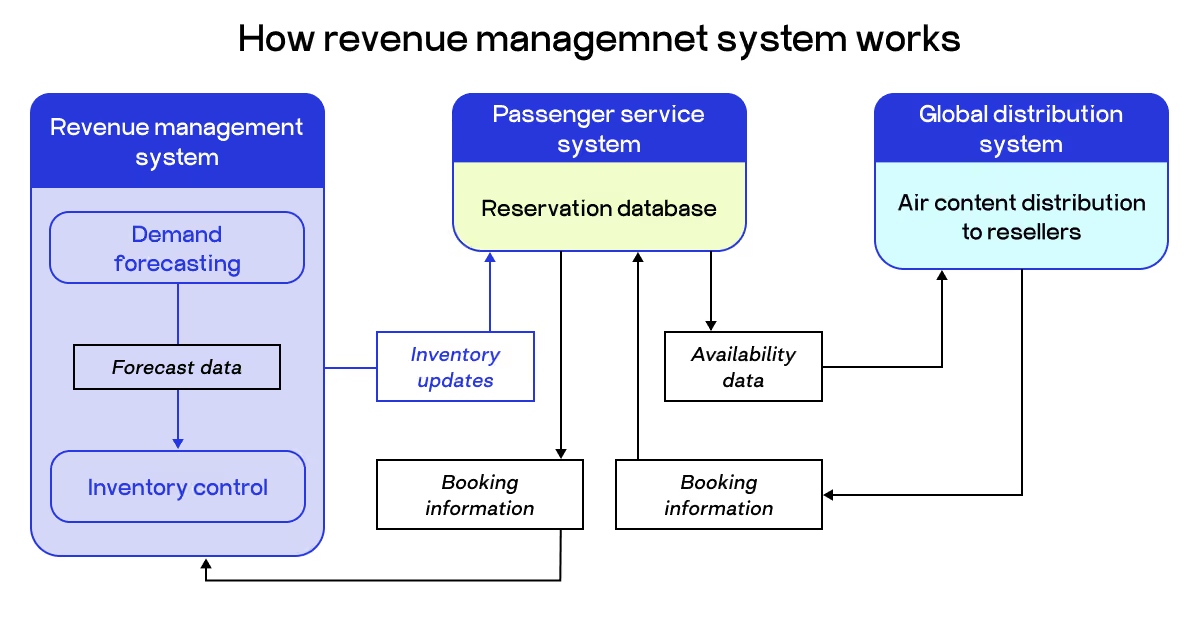
These three stages feed each other constantly. New bookings update the inventory position, which triggers a revised forecast, which may prompt a pricing adjustment, which influences who books next.
There’s another nuance - the human layer. Automation handles the routine. Analysts handle the exceptions. A sporting event, a competitor route cancellation, or an unexpected demand spike from a viral travel trend won't fit neatly into any algorithm's historical training data. Pricing and revenue management in the airline industry still depend on human analysts identifying these outliers and overriding automated decisions when the situation demands.
Integrations you need for airline revenue management to work
An airline revenue management platform that cannot talk to the rest of the airline's technology stack is a forecasting spreadsheet. The value of the RMS depends entirely on how tightly it connects to the systems that control bookings, inventory, fares, and distribution.
Passenger service system.
The PSS is the core. It holds the reservation database, manages ticketing, and controls seat inventory. The airline revenue management system connects to the PSS to receive real-time information on seats sold, booking segments, and available inventory. When a seat sells, the RMS knows it and can recalculate availability and pricing without waiting for a batch update.
Global distribution systems.
GDSs are between the airline and travel agencies, distributing availability and fare data to resellers globally. The RMS feeds pricing decisions into the GDS so that agents and online travel agencies see current fares. As IATA documents, traditional RMS architecture was built around GDS constraints. Fare changes could only be pushed a few times per day. NDC changes this by enabling real-time pricing updates, a fundamental shift in how the distribution integration works. Airlines moving to NDC-compatible RMS gain the ability to offer continuous pricing rather than discrete fare buckets across all distribution channels.
Competitive data providers.
The RMS needs to know what competitors are charging in real time. Integrations with competitive intelligence providers feed rival fare data directly into the pricing engine. They can detect and respond to a competitor's price move within minutes on shared routes. This integration turns competitor monitoring into an automated pricing input.
Revenue accounting systems.
Revenue accounting integrations reconcile what the RMS sold against what was actually flown and billed, closing the loop between pricing decisions and financial outcomes. This connection is critical for measuring yield accurately and validating whether the RMS's pricing strategy is producing the financial results it predicted.
Ancillary systems.
This includes luggage, seat selection, upgrades, and lounge access. The airline AI layer in modern RMS platforms integrates ancillary pricing into the same optimization framework as seat pricing. Rather than treating a bag fee and a ticket price as separate decisions, integrated systems optimize total passenger revenue across both. For instance, Ryanair's reported 40% ancillary revenue increase through integrated personalized offers.
AI and analytics platforms.
The AI in airline revenue management integration layer is where systems connect internal airline data with external signals including social media trends, event calendars, macroeconomic feeds, and competitor analytics. This isn't a single integration but an ecosystem of data connections that feeds the machine learning models running underneath the pricing engine.
All these integrations prepare the ground for the main components that create any RMS. Let’s break down each of these elements in the next chapter.
Key components of an airline revenue management system
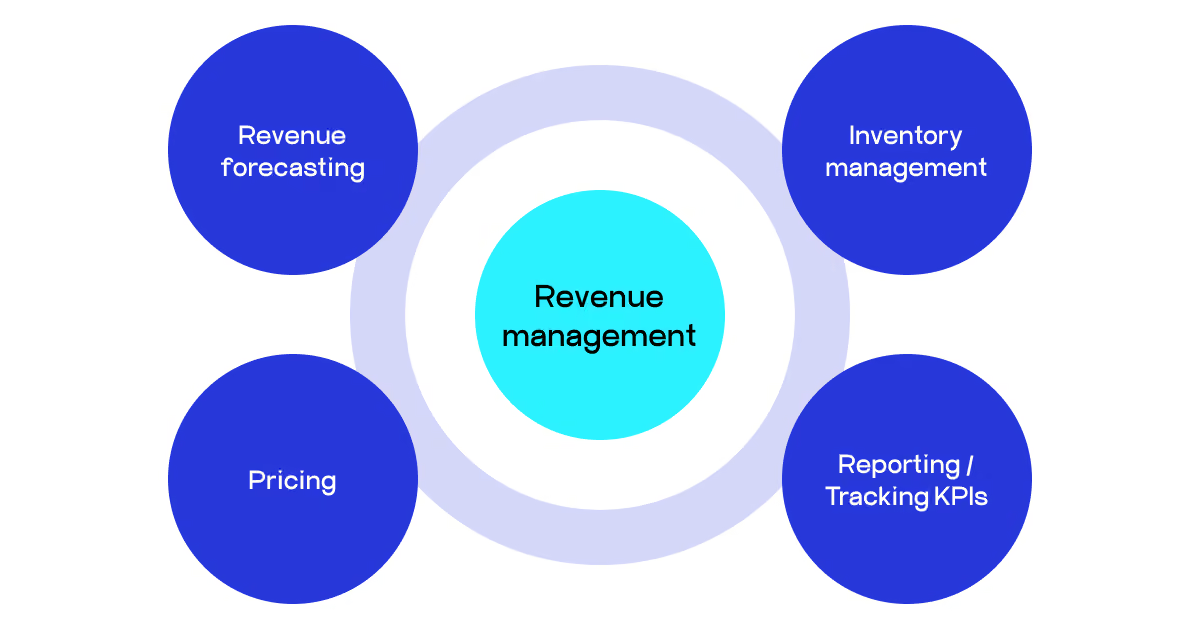
Revenue management isn't a single function. It's four interconnected disciplines, forecasting, pricing, inventory management, and KPI tracking, orbiting a common center. Together, they form what makes airline revenue management strategies work in practice.
Demand forecasting takes historical booking data, seasonality patterns, market trends, competitor behavior, and external signals like events and economic conditions, and produces a probability distribution of how many passengers will want a seat on a given flight at a given price. Modern aviation revenue management platforms layer AI and machine learning on top of this to detect patterns that rule-based models miss, including micro-demand spikes from viral travel content or signals of a corporate travel slowdown.
Dynamic pricing decides what to charge given any forecast. Prices change in response to booking pace, remaining inventory, competitor fares, and time to departure. Each adjustment follows an optimization calculation balancing revenue per seat against the probability of selling it at all. Most airline revenue management systems still operate on laddered pricing, adjusting fares at intervals rather than continuously. The direction of travel is clear, even if the industry has not fully arrived.
Inventory control decides how many seats to make available at that price. These are different decisions. An airline might set a $199 fare class but only open 10 seats in it. Once those sell, the next available price is $279. This is the mechanism through which aviation revenue management protects high-yield seats for late-booking business travelers while still capturing early leisure demand at lower fares.
Overbooking management calculation is never simple. No-show rates vary by fare class, booking lead time, day of week, season, and whether the booking came through a codeshare partner or direct channel. Overbooking algorithms in partnership networks must account for different show-up rates across carriers, adding complexity that single-carrier models do not face. When the model miscalculates, and the flight is genuinely oversold, the cost is compensating bumped passengers. The system is designed to make that outcome rare, not impossible.
Airline revenue management software now treats ancillary optimization as an integrated component rather than a bolt-on. Rather than pricing baggage fees independently of seat prices, advanced platforms optimize total passenger revenue across both simultaneously. The right ancillary offer at the right moment to the right passenger, delivered through the booking flow, generates more than any fee schedule.
Performance monitoring and reporting close the loop. Revenue per Available Seat Kilometer (RASK), load factor, yield, booking pace against forecast, and fare class performance tell the airline whether its airline revenue management strategies are working or whether the system needs recalibration. An airline that tracks RASK but doesn't route that data back into its RMS is measuring performance without improving it.
Reporting isn't the end of the process. It feeds back into forecasting and starts the cycle again.
Airline RMS features
A production-grade RMS translates each of the components we discussed into specific functional capabilities. What follows is what those capabilities actually look like inside modern revenue management airlines platforms, and what the research says about their impact.
AI-driven demand forecasting
If the demand forecast is wrong, pricing will be wrong, inventory allocation will be wrong, and overbooking levels will be wrong. The cascading effect of a bad forecast touches the entire system. A 20% reduction in forecasting bias can increase revenue by up to 4%. The implication for revenue management airline industry practice is clear: static models updated weekly aren't enough. The competitive advantage lies in continuous updating.
Modern forecasting modules ingest historical booking curves, booking pace relative to prior periods, competitor fare changes, search data, seasonal indices, and external event calendars simultaneously. Machine learning layers identify demand patterns that rule-based systems miss.
Dynamic pricing
Once the forecast tells the system what demand will look like, dynamic pricing translates that forecast into a calculated fare that reflects the current inventory position, the current booking pace, what competitors are charging right now, and how much time remains before departure.
Modern revenue management software responds to competitor pricing changes within minutes on contested routes. The system monitors rival fares continuously and adjusts booking class availability and price points automatically, without waiting for an analyst to notice the change and react. On high-frequency, competitive routes where dozens of price changes happen daily across competing carriers, manual monitoring is practically impossible at the scale required.
The spectrum of dynamic pricing runs from laddered pricing, where fares step up or down at intervals, to continuous pricing, where every customer query could theoretically return a unique price calibrated to their inferred willingness to pay and the current inventory state.
Inventory control and overbooking
Inventory control and overbooking management aren't the same decision, but they are connected. The overbooking model calculates the optimal number of excess bookings to accept based on historical no-show rates by route, fare class, booking lead time, day of week, and partnership channel. The inventory control model then allocates the resulting available capacity across fare classes in a way that maximizes expected yield.
Wang and colleagues found that, in the unconstraining demand case, the process of estimating true demand, even when sales were capped by inventory, is a necessary prerequisite for accurate overbooking and allocation decisions. Research cited in their paper shows that skipping the unconstraining step and using raw sales data directly for forecasting can cost up to 3% of total revenue management system output. In a margin-thin industry where $7 per passenger represents a reasonable profit, 3% isn't a rounding error.
Network optimization
Single-flight optimization looks at one departure and maximizes revenue for that aircraft on that route. Network optimization recognizes that a passenger flying from a spoke city to a hub and then onward to a long-haul destination occupies two flight segments. Allocating too many cheap fares on the feeder leg may fill it, but starve the connecting itinerary of high-yield passengers.
This is the O&D problem that Talluri and team addressed mathematically. The challenge is computational: the state space of a full airline network is enormous. A legacy RMS might optimize leg by leg. A modern platform optimizes across the entire network simultaneously, accounting for shared seat inventories, connecting traffic flows, codeshare allocations, and partner-channel no-show rates. A 2025 market research confirms that network-level O&D optimization is now one of the primary differentiators between enterprise-grade airline revenue management systems and mid-market solutions.
Ancillary revenue management
This feature has gone from optional to central in under a decade. For some carriers, it almost reaches half of the total revenue. An RMS that only optimizes seat pricing while treating baggage fees and upgrades as fixed-price catalog items is leaving a significant share of passenger value uncaptured.
Modern ancillary modules dynamically price seat selection, baggage, priority boarding, lounge access, and bundled fare families based on the same demand signals that drive ticket pricing. An airline that prices the ticket and the bag separately may undercharge for the bundle and overcharge for either component in isolation.
Competitive intelligence
A standalone feature in platforms that take competitive monitoring seriously. The RMS connects to external fare databases, scrapes GDS fare data, and monitors online travel agency listings to track what every competitor is charging on every shared route in near real-time. Pricing responses are triggered automatically when competitor moves exceed defined thresholds.
This matters because revenue management airlines operate in a market where price visibility is nearly perfect from the customer's side. Google Flights, Skyscanner, and metasearch engines show passengers multiple carriers' fares simultaneously. An airline that is slow to respond to a competitor's discount loses bookings in the time it takes a human analyst to notice the change and approve a response. Automated competitive intelligence closes that gap.
Reporting and analytics
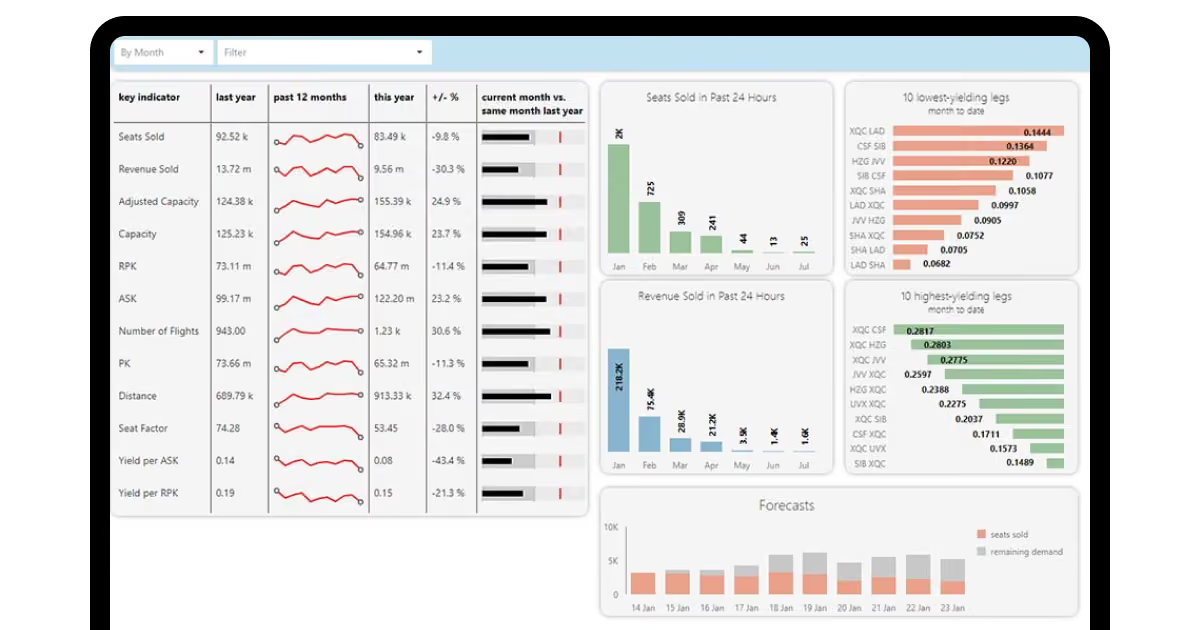
The measurement layer that makes every other feature accountable. Key metrics include:
Revenue per Available Seat Kilometer (RASK)
Load factor
Yield by fare class
Booking pace against forecast
Ancillary attach rates
Overbooking resolution costs.
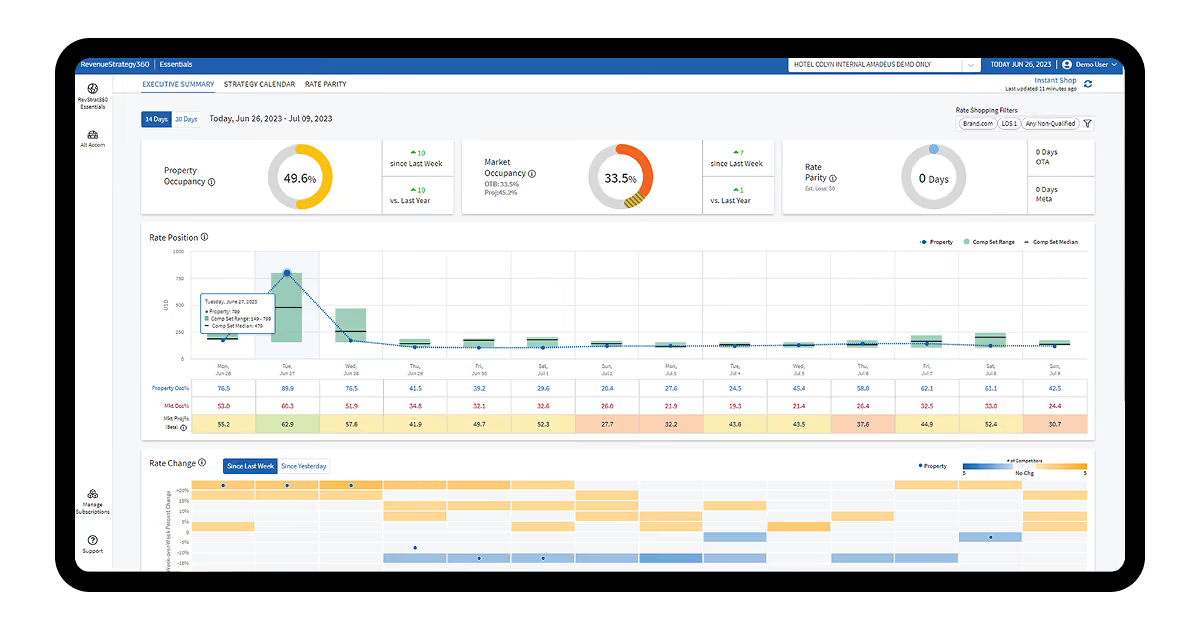
The distinction between reporting and analytics matters here. Reporting tells you what happened. Analytics tells you why it happened and what to do differently. Modern revenue management airline industry platforms embed both into real-time dashboards that surface anomalies automatically: a flight booking faster than forecast, a fare class performing below yield target, a competitor who has just undercut by 15% on a high-value route.
Comparing the top airline revenue management platform vendors
The airline revenue management software market splits into two camps: legacy vendors who built the mathematical foundations of modern RM and are now modernizing toward continuous pricing, and AI-native newcomers who built cloud-first from day one. Neither camp wins on every dimension. The right choice depends entirely on what your airline needs.
Platform
Best for
Core strength
Pricing approach
PSS dependency
Notable clients
Amadeus
Full-service and LCC carriers of all sizes
Broadest modular portfolio
Fare-class to continuous
Altéa / Navitaire
Singapore Airlines, Qantas, IndiGo
Sabre
Carriers already in Sabre ecosystem
Distribution-native RM with CRO
Fare-class to classless
SabreSonic (optional)
SabreSonic (optional)
PROS
Network carriers needing O&D precision
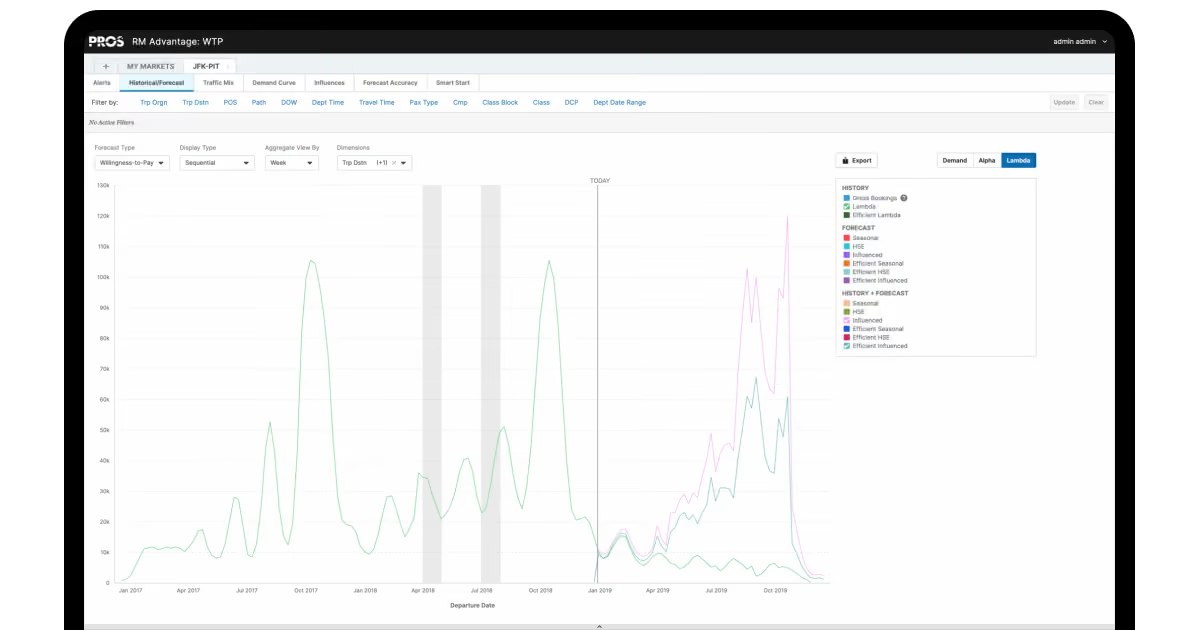
Willingness-to-pay science
Continuous demand curve
PSS-agnostic
Lufthansa Group, Etihad, JAL
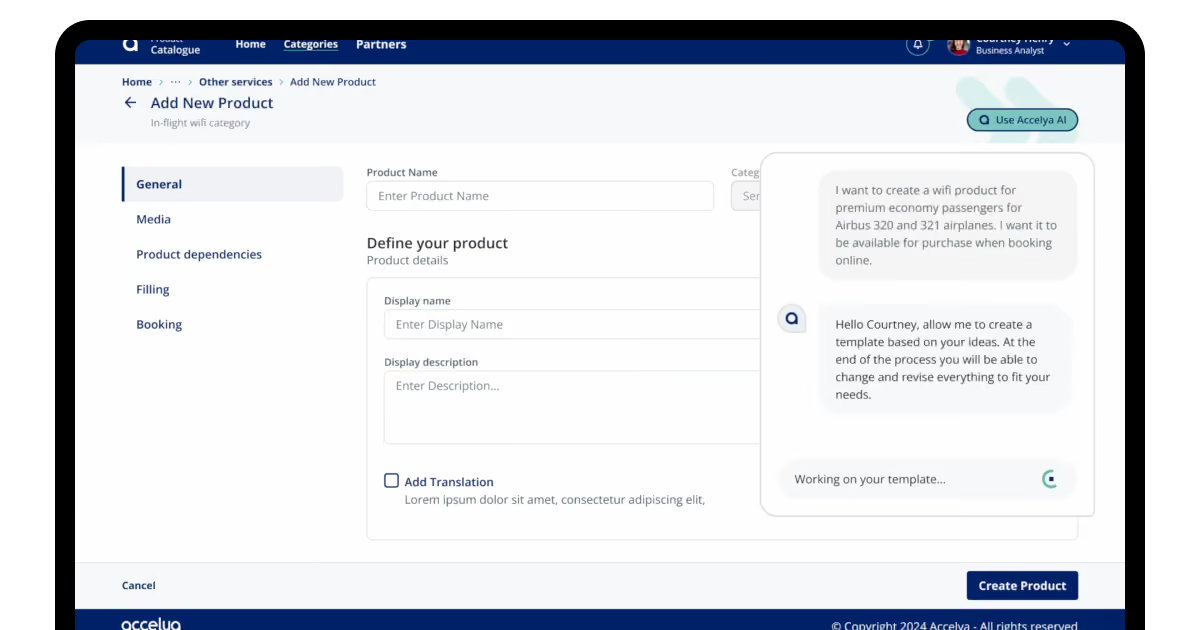
Accelya FLX ONE
Airlines modernizing gradually
Modular, PSS-agnostic retailing
ATPCO-stacked dynamic
28+ system integrations
Iberia, Frontier, Cebu Pacific
FLYR
Airlines pursuing full commercial modernization
Unified AI retailing and RM
Continuous, NDC-native
PSS-agnostic
Avianca, Virgin Atlantic, Azul
Aviator by Maxamation
Regional and emerging market carriers
Analyst-friendly, explainable RM
Classical bid-price
PSS-agnostic
Fiji Airways, VietJet, Air Senegal
Fetcherr
Innovation-oriented carriers
Reinforcement learning pricing
Fully continuous, Gen AI
PSS-agnostic
Undisclosed
Lufthansa Systems
Lufthansa Group and select partners
Revenue integrity and fare management
Support tools only
Internal LH stack
Lufthansa Group, RwandAir
Amadeus is the dominant player among full-service carriers, offering a modular portfolio that spans classical network RM through its Altéa-integrated Network Revenue Management, leg-based Segment Revenue Management, cloud-native SRM Flex for low-cost and hybrid carriers, and AI-driven Air Dynamic Pricing for continuous offer construction. Its breadth makes it one of the most comprehensive top airline revenue management software companies for carriers of any complexity level.
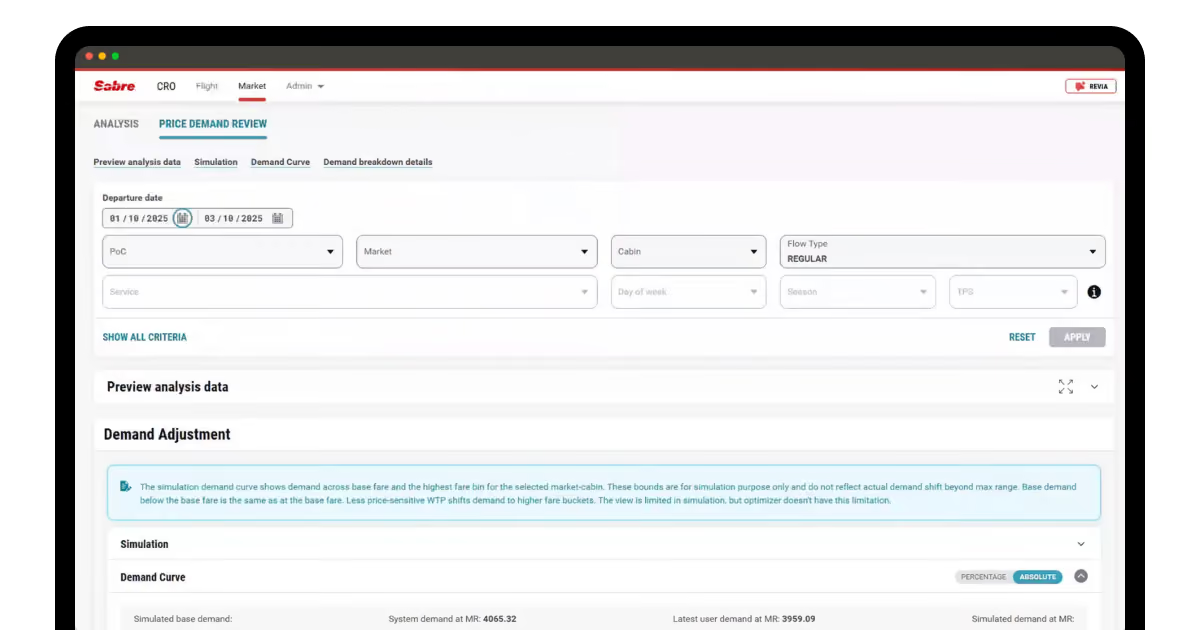
Sabre's Revenue Optimizer handles demand forecasting and network-level inventory optimization integrated with SabreSonic PSS, while its newer SabreMosaic layer adds Air Price IQ for dynamic shopping-time pricing and Continuous Revenue Optimizer for classless pricing built in partnership with Riyadh Air. LATAM, Virgin Australia, GOL, and Hainan Airlines are among carriers using Sabre revenue management aviation tools.
PROS originated from airline optimization research conducted alongside American Airlines in the 1980s and remains the most mathematically mature vendor. Its two core modules, PROS Revenue Management and PROS Real-Time Dynamic Pricing, work together to generate bid prices and inventory controls that reflect actual price sensitivity rather than historical booking curves alone. With 130+ airline clients, PROS is one of the most established top airline revenue management platform vendors globally.
Accelya FLX ONE is a PSS-agnostic, modular platform connecting revenue management, dynamic pricing, and shop-and-price execution across 28+ reservation systems, making it particularly accessible for airlines that want to adopt airline revenue management software capabilities without replacing existing infrastructure. FLX Dynamic Pricing stacks real-time price adjustments on top of ATPCO-filed fares, offering a transition path toward continuous pricing at a pace the airline controls. With 70+ carrier clients, including Iberia, Frontier, and Cebu Pacific, Accelya's reported revenue uplift potential reaches 20% depending on implementation scope.
FLYR is an AI-native platform built around IATA's NDC and ONE Order principles from the ground up, combining forecasting, dynamic pricing, and ancillary retailing into a single unified commercial flow rather than separate modules that require integration. Its standout differentiator is live A/B testing: airlines can run controlled experiments on pricing strategies, bundle compositions, and offer structures in production, with over 150 performance metrics exposed through the analyst interface.
Aviator by Maxamation was founded in 1997 by former Qantas and British Airways RM specialists, giving Aviator a foundation that prioritizes analyst transparency and explainability. It was the first airline revenue management software to optimize every future flight in a carrier's schedule nightly, and the first to fully incorporate competitive fare data directly into optimization logic. With 60+ airline clients mostly in regional and emerging markets, Maxamation reports revenue improvements of 4 to 20%.
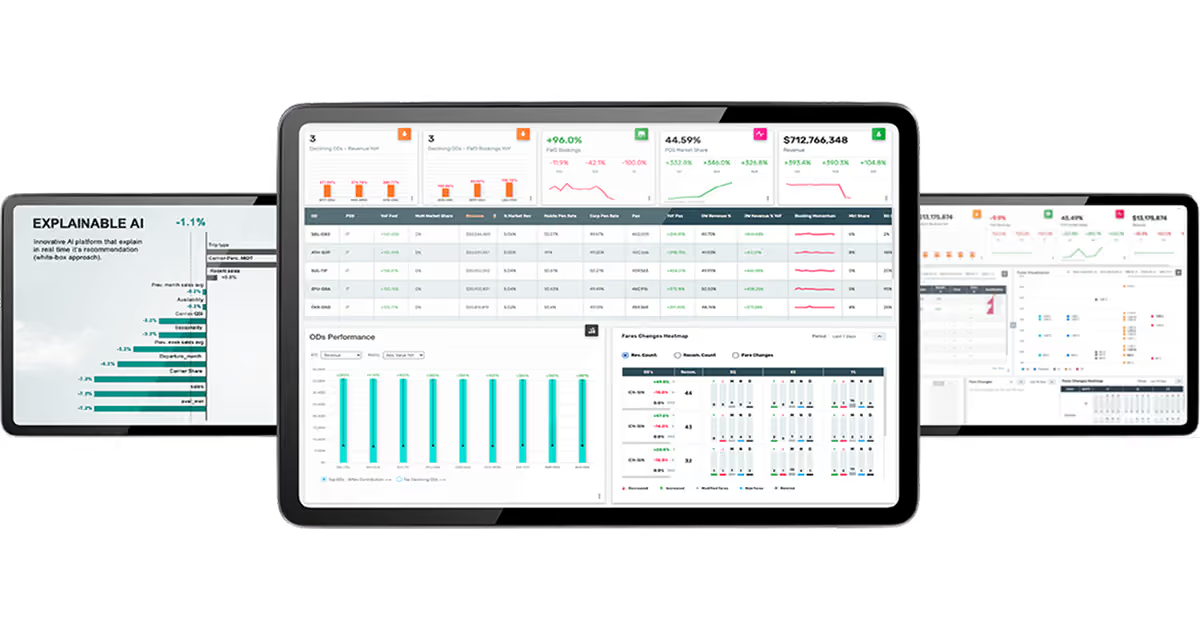
Fetcherr is an Israeli AI startup using a proprietary Large Market Model trained on public and proprietary market data, including pricing dynamics, demand elasticity, competitor behavior, and inventory constraints, applying reinforcement learning for continuous pricing. Its "Glass Box" capability explains why the system recommends specific prices, giving revenue teams visibility that most AI pricing engines deliberately withhold. The platform is for airlines that want adaptive, non-static pricing strategies.
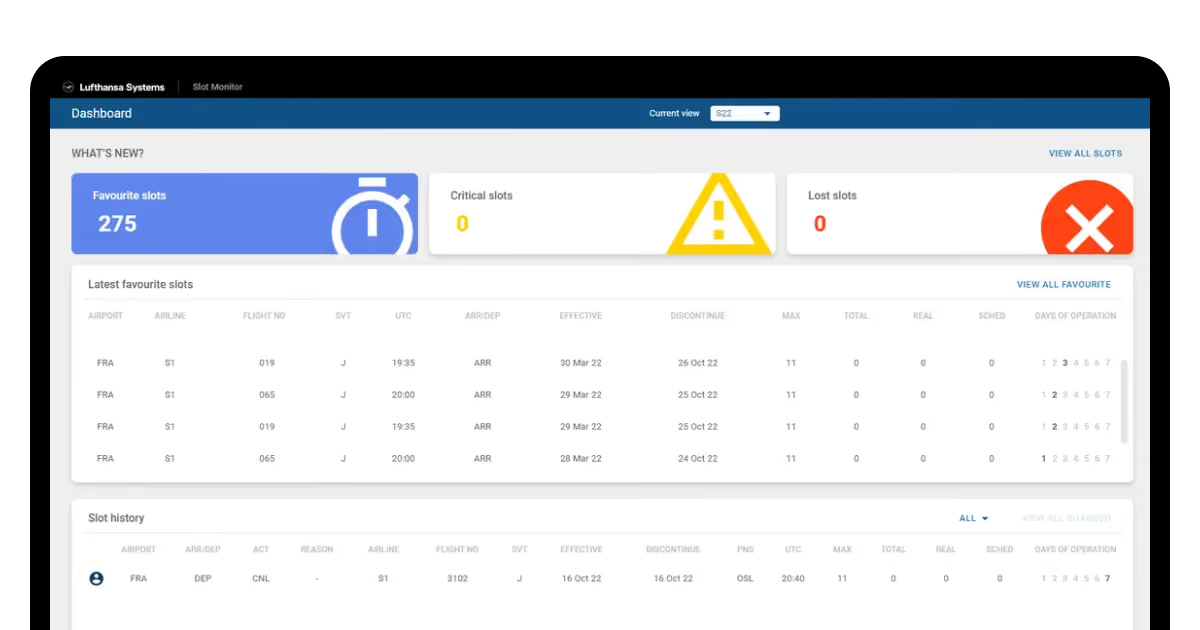
Lufthansa Systems no longer offers a full RM suite to external carriers but provides targeted supporting tools:Revenue Integrity for cleaning unproductive bookings before the RM engine runs, ProfitLine/Price for competitive fare monitoring and automated ATPCO filing, and a Group Sales Tool that pulls bid prices from the core RM engine to evaluate group requests against individual displacement cost. Its primary revenue management aviation relevance today is within the Lufthansa Group itself, serving Lufthansa, SWISS, Austrian Airlines, Brussels Airlines, and Eurowings, plus a small set of external clients.
The list is varied, with some carriers providing modular options, some offerine enterprise suites, and some have supporting tooling as part of their main offerings. Let’s figure out your best way for you to choose the one you need.
How do you choose the right airline revenue management system?
The variety is wide, but the choice is personal. To find the sweet spot between an underutilized enterprise suite and a system that leaves revenue on the table, use these benchmarks to filter your options.
Start with the network structure. A point-to-point LCC and a hub-and-spoke network carrier have fundamentally different optimization problems. An airline pricing and revenue management solution built for O&D network flows will be expensive and underutilized on a simple network. A leg-based system will leave revenue on the table for a carrier with complex connecting itineraries.
Then assess your PSS situation. If you run Navitaire, Amadeus SRM Flex is an obvious starting point. If you are on SabreSonic, Sabre's suite integrates without custom middleware. If you are PSS-agnostic or planning a switch, PROS, FLYR, Accelya, and Aviator all connect to 20 or more reservation systems.
Consider where you are on the pricing maturity curve. If your analysts still manage by fare bucket and manual override, a system that forces continuous classless pricing will cause more disruption than revenue gain. Gradual transition paths from Accelya and Sabre exist for a reason.
Factor in airport revenue management and airport management technology dependencies if you operate multiple bases or control ground retail. Systems that integrate ancillary pricing with gate-level upsell touchpoints deliver more total passenger value than those optimizing only the ticket.
Finally, look at team size. Aviator exists because not every carrier has 20 RM analysts. Match the platform's workflow complexity to the headcount actually available to operate it.
And yet, even if you find a platform that checks every box on this list, you may still encounter a performance ceiling. The most sophisticated suites are designed for the majority of use cases, not the exceptions. So, when will you truly benefit from a tailored-made RMS instead?
When should you opt for a custom solution?
Most airlines evaluating airline pricing and revenue management platforms will find that existing vendors cover the core use cases well enough. Amadeus, PROS, Sabre, and Accelya collectively serve hundreds of carriers across every operating model. The starting point isn't "should we build?" but "where exactly does every available platform fall short of what we actually need?"
16 years of building travel and logistics technology has taught us that custom development earns its cost in a narrow but real set of situations.
Your pricing logic is genuinely proprietary. Some carriers have built a competitive advantage around fare structures, loyalty bundle combinations, or personalized offer logic that they cannot expose to a shared vendor platform without eroding that advantage. If your pricing rules constitute real intellectual property, a vendor SaaS product that standardizes those rules across 200 airline clients is the wrong architecture.
You need the speed that the vendor roadmap won't provide. Enterprise platforms move on 12 to 24-month release cycles. If your competitive situation requires continuous pricing, real-time ancillary optimization, or AI-driven demand sensing that the vendors on your shortlist have on their roadmap but not yet in production, waiting is a revenue decision. Building closes that gap on your timeline rather than theirs.
Your data doesn't fit standard models. Generic airline revenue management system options are trained and optimized for conventional booking patterns. If your airline operates charter blocks, unconventional codeshare structures, highly seasonal thin routes, or markets with sparse historical data, the forecasting modules in off-the-shelf platforms will underperform systematically. The issue is that their models were not built for your specific signal noise profile.
You have data control requirements that vendors cannot meet. Flag carriers operating under strict data sovereignty regulations, airlines handling sensitive government contracts, or carriers with specific compliance obligations around passenger data sometimes face integration constraints that cloud-native SaaS platforms cannot accommodate, regardless of their security certifications. On-premises or hybrid deployments with custom governance frameworks address requirements that vendor standard contracts do not.
You have the internal AI maturity to outperform rule-based systems. Standard platforms apply well-tested but generalized optimization logic. If your data science team has the domain knowledge and data depth to build willingness-to-pay models, reinforcement learning pricing engines, or demand sensing algorithms calibrated to your specific markets, custom development can make a real difference.
With COAX, we know how to cover each of these cases successfully. We build airline revenue management and travel technology systems end-to-end, from initial architecture through post-launch iteration. Our work in custom software development for travel covers the full technical stack:
Demand forecasting modules using machine learning
Dynamic pricing engines integrated with PSS and GDS environments
Ancillary optimization layers
Competitive intelligence feeds
API integration frameworks connecting to ATPCO, NDC-compliant distribution channels, booking engines, and revenue accounting systems.
We have worked across legacy infrastructure that needs modern capabilities added to it, and new builds where the architecture can be designed the way you need from the start. What makes us different is domain knowledge applied at the right moments: knowing which forecasting assumptions break down on thin routes.
We provide that expertise across the lifecycle and stay involved through post-launch. Revenue management systems need tuning as market conditions shift, and the teams operating them need support that goes beyond a ticket queue.
How much will it cost to build a tailored RMS?
Custom airline revenue management software is a significant investment. The scope differences between a basic leg-based inventory control system and a full AI-driven continuous pricing platform with network optimization are enormous. A realistic budget framework differs a lot, too.
A foundational system covering demand forecasting, fare class inventory control, overbooking management, and basic reporting, integrated with one PSS and one competitive data feed, typically requires 6 to 12 months of development and lands between $300,000 and $800,000, depending on the team and integration complexity.
A mid-tier platform adding dynamic pricing, ancillary optimization, O&D network logic, and multi-channel distribution integration, built on cloud infrastructure with ML-based forecasting, runs 12 to 24 months and typically costs between $1.5 million and $4 million.
An enterprise-grade revenue management system airline industry platform incorporating continuous pricing, reinforcement learning demand modeling, real-time competitive intelligence, full network optimization across codeshare partnerships, and custom analyst workflow interfaces is a multi-year project. Total investment ranges from $5 million to $10 million or beyond, depending on the scale of data infrastructure.
The standard cost calculation applies: total budget equals estimated development hours multiplied by team hourly rates, plus 20% for testing, QA, and contingency. In practice, the contingency tends to get consumed, not preserved.
Component
Complexity driver
Cost contribution
AI/ML demand forecasting
Algorithm sophistication, training data volume
High: $150K to $600K
Dynamic pricing engine
Continuous vs. laddered, real-time latency requirements
High: $200K to $800K
PSS integration
Number of systems, legacy API constraints
Medium: $80K to $250K
GDS/NDC distribution layer
Channel count, continuous pricing compatibility
Medium: $100K to $300K
Ancillary optimization
Integration with booking flow, bundle logic complexity
Medium: $100K to $400K
Network O&D optimization
Number of routes, codeshare logic, bid price calculation
High: $300K to $1M+
Competitive intelligence feed
Data provider integrations, response automation
Low to medium: $50K to $150K
Infrastructure and security
Cloud architecture, compliance, data sovereignty
Variable: $50K to $500K+
Post-launch support and tuning
Model drift correction, market condition updates
Ongoing: $100K to $400K/year
The components that most consistently exceed initial estimates are PSS integration, particularly with legacy systems that have undocumented constraints, and the AI forecasting layer.
At COAX, we bridge the gap between enterprise ambition and technical reality by building only the high-impact custom components you actually need, ensuring your budget is spent on proprietary competitive advantages rather than over-engineered features.
FAQ
What is airline revenue management from a financial perspective?
From a financial standpoint, airline revenue management is the discipline of maximizing revenue from a fixed, perishable asset before it loses all value at departure. As Muthusamy and Kalpana describe it, airlines face intensifying competition and economic pressure that make revenue optimization essential for survival, not just profitability. The core financial objective is to extract maximum yield per available seat.
How is aviation revenue management different from yield management?
Yield management, the original term, focused narrowly on revenue per passenger mile through inventory control. Aviation revenue management is broader: it encompasses dynamic pricing, ancillary optimization, network-level decisions, and customer segmentation. Wittman and Belobaba frame modern RM as a fusion of assortment optimization and dynamic pricing, a scope far beyond what traditional yield management addressed.
What are the challenges of implementing airline revenue management?
You might face these:
Inaccurate demand forecasting from noisy or sparse historical data
Legacy PSS integration complexity
Codeshare and interline revenue sharing coordination
Real-time competitive pricing response at scale
Passenger segmentation and willingness-to-pay estimation
Overbooking model calibration across partner channels
Regulatory compliance around dynamic pricing transparency
Analyst adoption of automated recommendations
Data quality and unconstraining issues.
How does COAX develop secure and efficient airline revenue management software?
We are ISO 9001 and ISO 27001 certified and sign NDAs on every engagement. Our full-cycle team covers strategy, development, QA, and DevOps under one roof, rated 4.9/5 on Clutch. We build airline revenue management systems to scale from day one, with agile delivery and transparent communication at every level, no surprises, no handoff gaps.
















































































































.avif)




%20for%20hotels.avif)


.avif)
.avif)


.avif)





.avif)

.avif)





.avif)


.avif)

We are interested in your opinion