In September 2025, ransomware targeting Collins Aerospace's Muse check-in platform disrupted automatic boarding systems across Heathrow, Brussels, and Berlin, forcing hundreds of flight cancellations. Even this one major event shows how much modern airport technology management depends on the security of its digital infrastructure.
With the right solutions and practices, you avoid such costly and risky scenarios, bring operational improvements, boost speed, and passenger safety and experience:
Digital infrastructure converts fragmented airport data into coordinated real-time decisions.
Stakeholder alignment gives airlines, ground handlers, and regulators one shared operational picture.
Passenger flow management cuts queues before they form using AI and sensor data.
Airside coordination tracks every aircraft, vehicle, and stand assignment simultaneously.
Baggage intelligence connects check-in tags to carousel delivery with near-zero loss rates.
Revenue protection ties commercial management to operational data so nothing leaks through billing gaps.
Custom development builds airport systems around your workflows, integrations, and compliance requirements.
In this article, we break down the concept of airport management technology and define its key stakeholders and modules. Also, this guide covers the best solutions and ponders on the main aspects that define whether you need an off-the-shelf platform or a tailored solution.
What is airport technology management?
Airport technology management is the set of practices of how airports use digital systems to keep operations running. Each component, such as check-in kiosks, baggage tracking, security screening, gate assignments, or runway coordination, relies on software that must be planned, deployed, and maintained.
Dias and Silva put it this way: smart airports use technology to ease travelling processes and ensure safe and secure operations. Their framing ties this to the fourth industrial revolution - the moment when physical airport infrastructure and digital systems stopped being separate things.
It’s not a single platform to manage. Airport management technology is a connected layer of tools (passenger processing software, airside operations platforms, security tools, and resource management systems) exchanging data in real time. The value comes from integration.
Airport technology management market
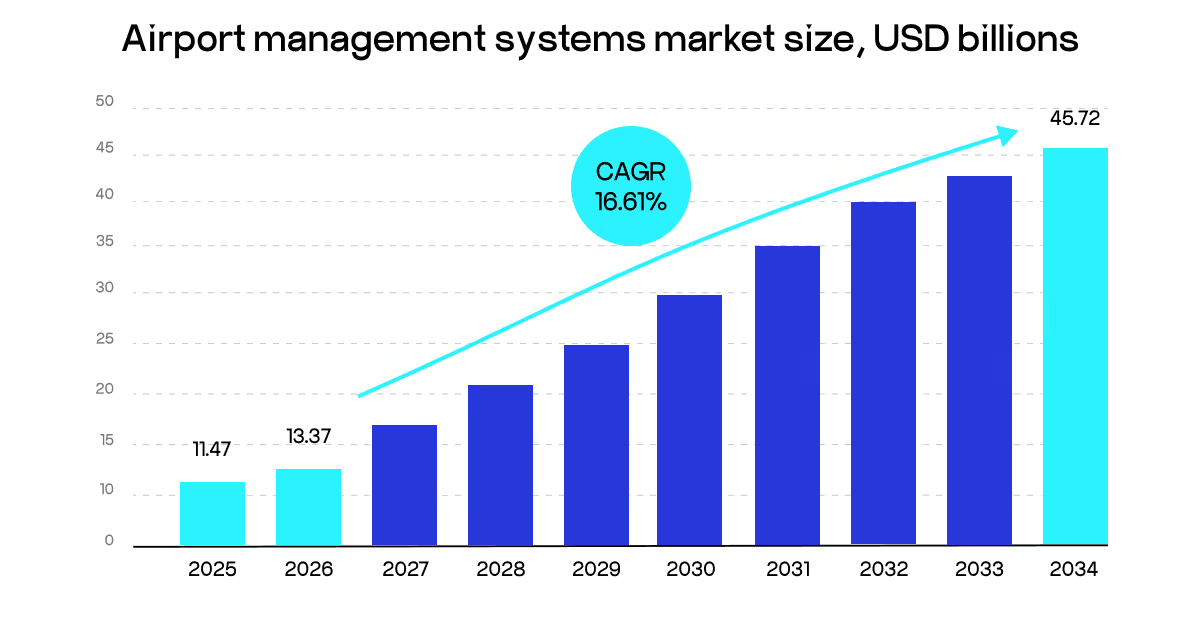
The global airport management systems market was valued at USD 11.47 billion in 2025. By 2034, it is projected to hit USD 45.72 billion. The growth is connected to the equally growing risks. Neglecting real-time digital connections means grounded aircraft, missed connections, and disruptions that ripple across the network. Efthymiou and team add a layer to this. Their research shows airports work under what they call VUCA (volatile, uncertain, complex, and ambiguous) conditions shaped by geopolitical events, pandemics, and shifting demand patterns.
In that context, airports need systems that hold up when conditions fall apart.
Software holds a 63% share of total market revenues. It is the core. Services — implementation, integration, training, support — account for the other 37%. Among application types, security leads at 19%, followed by logistics at 14%, gate management at 12%, and content management and business applications at 11% each.
OAG data shows 718 airlines operating across 3,920 airports worldwide, with global capacity reaching 459.4 million seats in one month alone. American Airlines ran 171,121 flights in February 2026. That volume just can’t be coordinated manually. It requires airport operation management platforms running at scale, in real time, across every function, all at once.
Class A airports (the large international hubs) drive 41% of application adoption due to their complexity. But the fastest-growing demand is coming from Class B and Class C airports where regional air travel is expanding and modernization programs are accelerating. The next decade of market growth won’t come only from major hubs catching up on upgrades. It will most likely come from mid-size airports that are building their digital infrastructure.
It’s time for you to catch up. Next are some reasons why.
The importance of digital transformation in airports
Aviation has survived a lot. Over the past 50 years, the industry has gone through oil shocks, terrorism, and a global pandemic, and has kept growing. These days, as Efthymiou and team defined, airports that invest in digital processes and stronger stakeholder coordination are measurably more resilient. Airports that don’t are exposed.
Here is what that means in practice across the major pressure points.
Congestion and capacity.Aven-Hen notes that global air travel, growing at roughly 4% per year, puts sustained strain on airport infrastructure, especially at major hub airports. But better sequencing software, smarter gate management, and real-time coordination between airlines and ground handlers can extract significantly more capacity from existing infrastructure. Airport technology management applied to this problem buys airports years before a physical expansion becomes unavoidable.
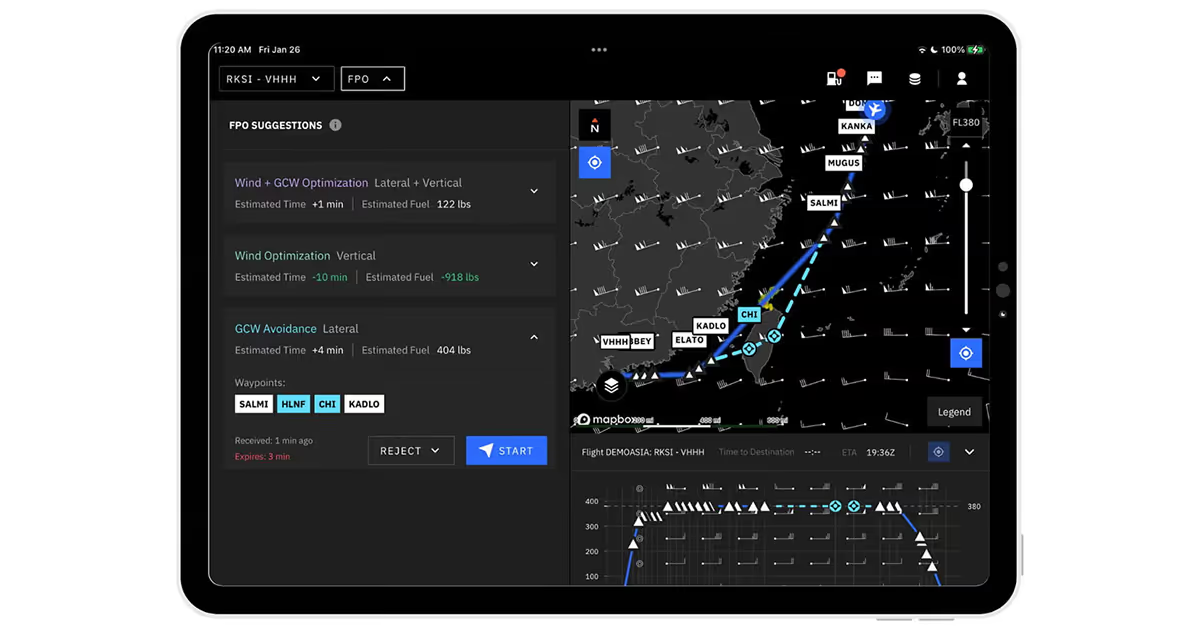
Environmental pressure. NATS Chief Executive Martin Rolfe points out that deploying intelligent approach systems and modernising airspace design could cut aviation greenhouse gas emissions by 5 to 6%. The airline industry digital transformation in airspace management is not waiting for hydrogen aircraft or SAF at scale. It is already producing measurable reductions using optimised flight paths and coordinated procedures.
Safety and security. Smart screening and live passenger tracking reduce both security risk and processing time simultaneously. The technology handles both at once. As airports handle higher volumes, manual security processes become bottlenecks and risk points. Digital screening platforms address both problems at the same time.
Operational visibility. Rolfe describes what happens when a control tower goes digital at Hong Kong International Airport: stand plan optimisation, traffic light automation, collaborative decision-making integration, and a fully digital Airport Performance Operation Cell all become possible on one platform. The cameras generate data that every department can act on. That shift from analogue observation to digital data changes what airport management teams can actually do in real time.
Revenue and survival for smaller airports.Efthymiou and team found that smaller airports face compounding financial pressure. State aid (which many smaller airports depend on) is tied to decarbonisation and digitalisation milestones. For these airports, digital transformation is often the condition attached to public funding.
The pattern is the same. The airports that treat technology as infrastructure are the ones that scale, adapt, and recover faster.
How airport management works
Before we move to the key features and best practices of airport technology management, we need to understand the main users of these tools and solutions, and define the connecting links of what management actually means.
Key stakeholders
An airport is a complex collection of organizations that have to act like one. On any given day, dozens of separate entities share the same physical space, the same data, and the same responsibility for keeping operations safe and on time. When that coordination works, passengers barely notice it. When it breaks down, everyone does.
Airport management solutions exist because the stakeholder mix is too complex to manage through phone calls and spreadsheets. The groups involved fall into three broad clusters.
Core operations and safety is the inner ring.
The airport operator or authority sits at the center, managing infrastructure, daily operations, and long-term direction.
Airlines are the primary commercial users, focused on capacity, turnaround times, and cost control.
Air traffic control manages the airspace and keeps aircraft separated. Ground handlers cover baggage, fueling, towing, and cargo.
Security and police teams manage access and passenger safety.
These groups interact dozens of times per flight. Their coordination is the product.
Government and regulatory bodies set the rules everyone else works within.
Civil aviation authorities like the FAA in the US and EASA in Europe define safety standards and certification requirements.
Local and federal governments influence funding decisions, land use, and infrastructure investment.
Environmental agencies enforce protocols around noise, air quality, and waste.
Their oversight is constant, and compliance with it is non-negotiable.
Commercial and public stakeholders round out the picture.
Passengers are the end users that every other group ultimately serves.
Concessionaires and retailers operate within the terminal under commercial agreements with the airport operator.
Local communities deal with noise and traffic and carry real political weight in planning decisions.
Airport operations management across all these groups requires a shared data layer. When airlines, ground handlers, and operations teams work from the same real-time information, decisions are faster, and conflicts are fewer.
Operational vs. commercial management
Two parallel management tracks run through every airport. They serve different goals, respond to different frameworks, and use different tools. But they share the same physical space, and their performance is interconnected.
Dimension
Operational management
Commercial management
Primary goal
Safety, punctuality, compliance
Revenue generation, passenger spend
Regulatory framework
EASA, FAA, national CAAs
Lease agreements, consumer law
Key tools
Flight data systems, ATC feeds, resource scheduling
POS systems, BI platforms, and e-commerce
Main stakeholders
Airlines, ATC, ground handlers, security
Retailers, passengers, advertisers
Technology driver
Airport operations management software
CRM, loyalty platforms, data analytics
Performance metrics
On-time performance, turnaround time, and incident rate
Revenue per passenger, dwell time, and spend per head
Personalized offers, demand forecasting, and dynamic pricing
Operational management covers everything required to move aircraft and passengers safely and on time. Gate assignments, runway sequencing, ground handling coordination, security screening, and incident response all fall into the key focus of airport operations management software and practices. The governing framework comes from aviation regulation.
EASA defines this through Regulation (EU) No 965/2012, which distinguishes between commercial air transport operations and broader commercial operations (any aircraft operation in return for valuable consideration, available to the public or performed under an operator-customer contract). The distinction matters for compliance, certification, and liability. An airport operations management system has to account for both.
Commercial management covers non-aeronautical revenue. Retail, food and beverage, parking, lounges, fast-track security, advertising, and event spaces belong to this group. Non-aeronautical revenue already accounts for up to 40% of total airport income globally. Retail accounts for around 21%. These are not side businesses. They are structural components of airport finances.
The airports that perform best do not manage these tracks in isolation. From commercial management systems to implementing airline AI applications for upselling, they use a shared data infrastructure so operational events feed commercial decisions automatically.
Coordination between departments
The coordination challenge at an airport is simple in theory. Everyone needs the same data at the same time. In practice, getting there requires deliberate system design. Here is how a typical flight event flows across departments and where technology does the work.
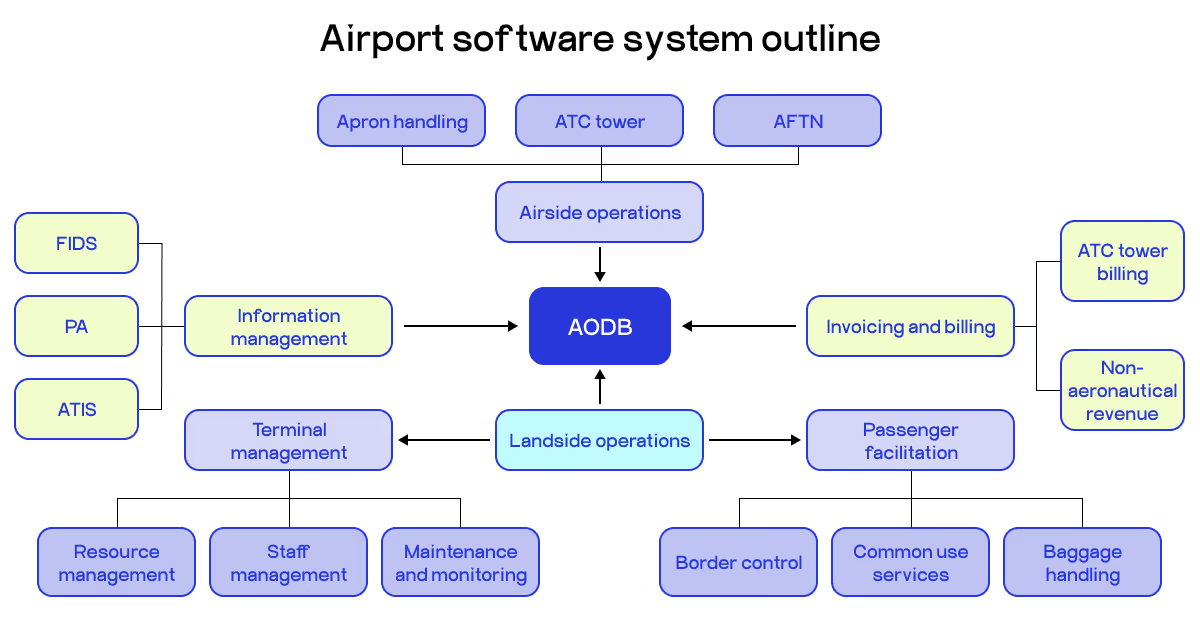
An aircraft lands. Air traffic control logs the runway-off time. That data enters the airport operation management system, which triggers a chain of updates across every connected department simultaneously.
Operations assigns a gate and notifies ground handlers. The baggage system activates the correct belt. The airport database management system records the actual arrival time against the scheduled one.
Finance is notified to calculate landing fees. Passenger displays update across the terminal. The airline's own systems receive a status confirmation.
Without integration, each of those steps requires a manual handoff. With integration, the gap is seconds. The system does the handoff.
AFIDS collects real-time flight data from ATC, ground handlers, and fuel systems.
ALDIS pulls that data to calculate charges automatically.
FIDSnet pushes updates to passenger displays.
The coordination workflow in modern airports follows a consistent pattern: a shared operational record at the center, departmental systems feeding into it and reading from it, and automated triggers that eliminate manual relay. The airport management solutions aren’t just tools. It is the coordination layer that makes the whole organization function as one.
Core airport operations and technology support
To get the full picture of how technology shapes modern airport management, let’s break it down into specific processes and see how software supports it.
Passenger processing
Passenger processing is everything that happens between the moment you walk through the terminal doors and the moment you sit in your seat. It’s the part of airport operations most passengers experience, which makes it the most visible measure of whether airport technology management is working. Here’s how the tech is shaping this workflow.
Check-in and bag drop have moved decisively toward self-service. Self-service kiosks, automated bag tag printing, and auto drop-off stations handle the bulk of check-in volume at most major airports. IATA's Fast Travel program sets the standard here. The underlying infrastructure runs on CUPPS, the Common Use Passenger Processing System, which allows different airlines to share the same workstations and check-in hardware. With it, the airport allocates infrastructure dynamically based on demand.
Security screening is where AI and flow monitoring produce the most immediate operational impact. McKinsey found that legacy planning systems relying on isolated data create bottlenecks at security checkpoints and result in staff being deployed to the wrong areas. AI algorithms that draw on comprehensive real-time data sets can reallocate staff and open or close lanes based on actual passenger flow. The result is shorter queues and better use of the workforce already on the floor.
Biometrics and single-token travel are changing how identity checks work across every touchpoint. Facial recognition systems capture biometric data at check-in and use it to verify identity at security, at the gate, and at border control. Adoption is accelerating at major international hubs and is increasingly embedded in airport information management system architecture as a core function.
Boarding is where automated gates and biometric verification remove the final manual bottleneck. McKinsey notes that automated boarding reduces errors, speeds throughput, and frees staff to handle exceptions rather than routine scans.
Arrivals close the loop. Passport control, baggage claim, and customs all generate data that feeds back into the airport management solution, contributing to the operational picture used for the next wave of incoming flights.
Cloud-based deployment is reducing the IT cost of running all of this. Instead of on-premise servers that require dedicated maintenance teams, airports are shifting check-in and passenger processing platforms to cloud infrastructure, which cuts deployment time and lets smaller airports access the same functionality as major hubs.
Airside operations
Airside operations cover everything that happens on the other side of the terminal wall. Runways, taxiways, aprons, stands, ground vehicles, and every aircraft movement between landing and takeoff all fall within this domain.
The core challenge is density. A busy hub has dozens of aircraft moving simultaneously, hundreds of ground vehicles operating in the same space, and multiple ground handlers, fuel teams, catering crews, and airline staff working around each aircraft at the same time.
Coordinating that without a centralized system is slow and a safety risk.
Apron management is at the center of airside operations. Stand allocation, aircraft marshalling, ground handling coordination, and turnaround management all flow through this function. An airport operation management system used for apron management tracks which stands are occupied, which are being cleaned and serviced, and which are ready for the next aircraft. When that data is current and shared, ground handlers can pre-position equipment and crews before an aircraft arrives.
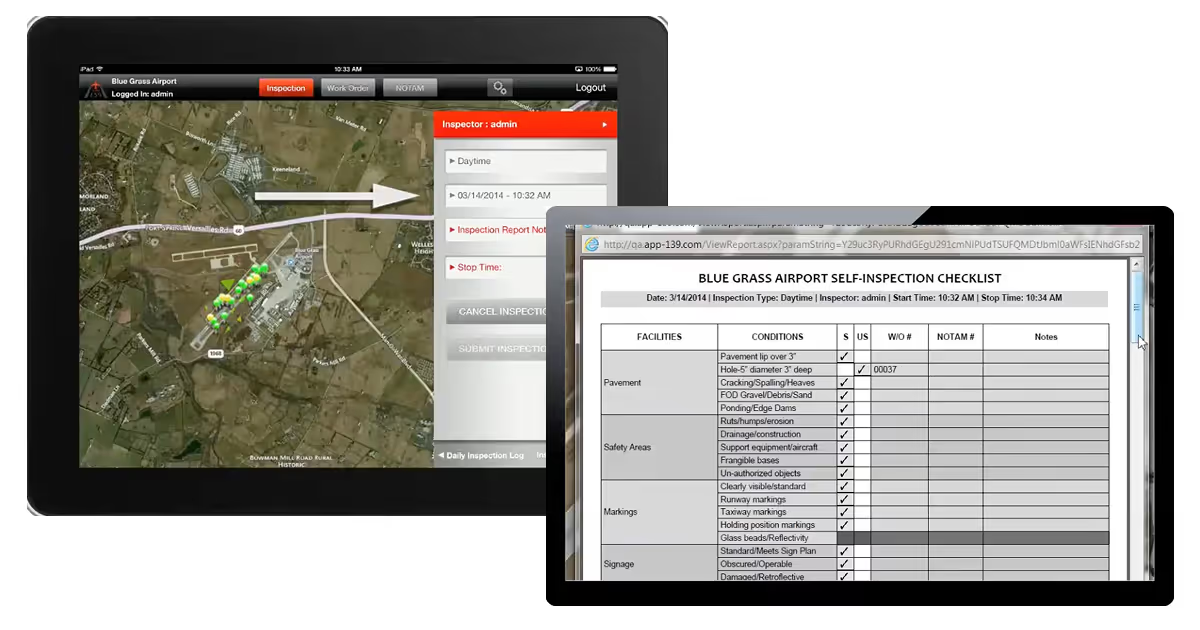
Safety and maintenance on the airside requires daily inspections of runways and taxiways for foreign object debris, surface damage, lighting faults, and signage failures. An airport safety management system software platform manages inspection schedules, logs findings, tracks corrective actions, and maintains the audit trail that regulators require. Without it, compliance depends entirely on paper records.
Vehicle management on the airside is its own operational discipline. Every vehicle operating on the apron must follow strict routing procedures and right-of-way rules. Digital vehicle tracking systems monitor position and speed in real time, flag unauthorized movements, and support incident investigations.
Weather and environmental management affect airside operations directly. De-icing operations in winter require coordinated scheduling between the aircraft operator, the de-icing provider, and ATC to maintain sequence integrity. Wildlife management, low-visibility procedures, and wind shear protocols all require real-time data feeds and pre-defined response workflows built into the operations platform.
McKinsey describes digital twins as one of the most impactful technologies available for airside coordination. A digital twin provides a virtual replica of the entire airside environment, updated in real time via sensor data. Operators can see gate allocations, aircraft positions, ground vehicle movements, and equipment status simultaneously, run simulations of disruption scenarios, and trigger responses before congestion develops.
Airport Collaborative Decision Making (A-CDM) is the framework that ties airside coordination together across organizations. A-CDM gives ATC, airlines, ground handlers, and airport operations teams access to the same real-time data and a shared timeline for each flight. The result is fewer surprises, faster recoveries from disruptions, and better on-time performance.
Baggage handling
Baggage handling is a closed-loop physical system that has to keep pace with the flight schedule, run with near-zero error rates, and stay invisible to passengers.
The system starts at check-in. When a bag is tagged, it receives a unique identifier, typically a barcode or an RFID chip, that travels with it through every stage of the process. That tag is the link between the physical bag and the airport management technology platform tracking it. From that point, the system handles the rest.
Screening and security runs every bag through multi-level inspection processes integrated directly into the conveyor system. Automated scanners check for threats at speed. Bags that trigger alerts are diverted to secondary inspection without disrupting the main flow. The entire process feeds into the airport information management system, creating a security record for each item.
Sorting and routing is where the engineering becomes visible. Automated conveyor systems, tilt-tray loops, and destination-coded vehicles move bags to the correct aircraft stand at the correct time. Modern Individual Carrier Systems place each bag in a dedicated tote, enabling 100% tracking at every point in the journey and delivering energy savings of up to 60% compared to older belt systems. RFID technology enables real-time tracking updates that feed passenger-facing apps so you can see where your bag is before you reach the carousel.
Loading and transfer connects the baggage system to ground operations. Containers are built and delivered to the aircraft stand on a schedule tied to the flight's departure sequence. When the baggage system and the airside operations platform share data, ground handlers know exactly when containers will arrive and can plan their loading crews accordingly. When those systems do not talk to each other, crews wait and flights delay.
Arrivals and reclaim closes the loop. Bags are delivered to the correct carousel and the system logs final delivery. While 99% of bags are handled without incident, dedicated tracing services can locate most lost items within 48 hours when RFID tracking data is available throughout the journey.
Airport management technology and airline reservation systems plays a role here. Baggage data linked to reservation records allows airports to anticipate load volumes per flight, adjust carousel assignments based on incoming aircraft size, and manage transfer baggage timing for connecting passengers. When reservation data, baggage tracking, and ground operations run through an integrated platform, the whole system runs with less slack and fewer failures.
Airport operations control center
The Airport Operations Control Center, or AOCC, is the nerve center. The AOCC is where that data comes together into a single operational picture.
Controllers in the AOCC monitor air traffic status, ground handling progress, security incidents, facility management alerts, and weather conditions simultaneously. The airport database management system at the center of this function collects feeds from baggage systems, gate management platforms, and sensor networks and presents them through dashboards. When something goes wrong anywhere in the operation, the AOCC coordinates the response.
The Airport Operational Database, or AODB, is the technical basis. It holds the master record for every flight, resource allocation, gate assignment, and service event. When a flight is delayed, the AODB updates, and every connected system adjusts automatically. Gate displays change. Ground handler schedules update. Finance systems record the new arrival time for billing purposes, and passenger apps refresh.
Why is it so important? McKinsey defined that without shared, real-time data, teams are left reacting instead of anticipating. The AOCC, with a well-maintained AODB at its center, is what makes proactive operations. Airports that have built this infrastructure forecast demand spikes, adjust staffing before queues form, and reroute passenger flows before congestion develops.
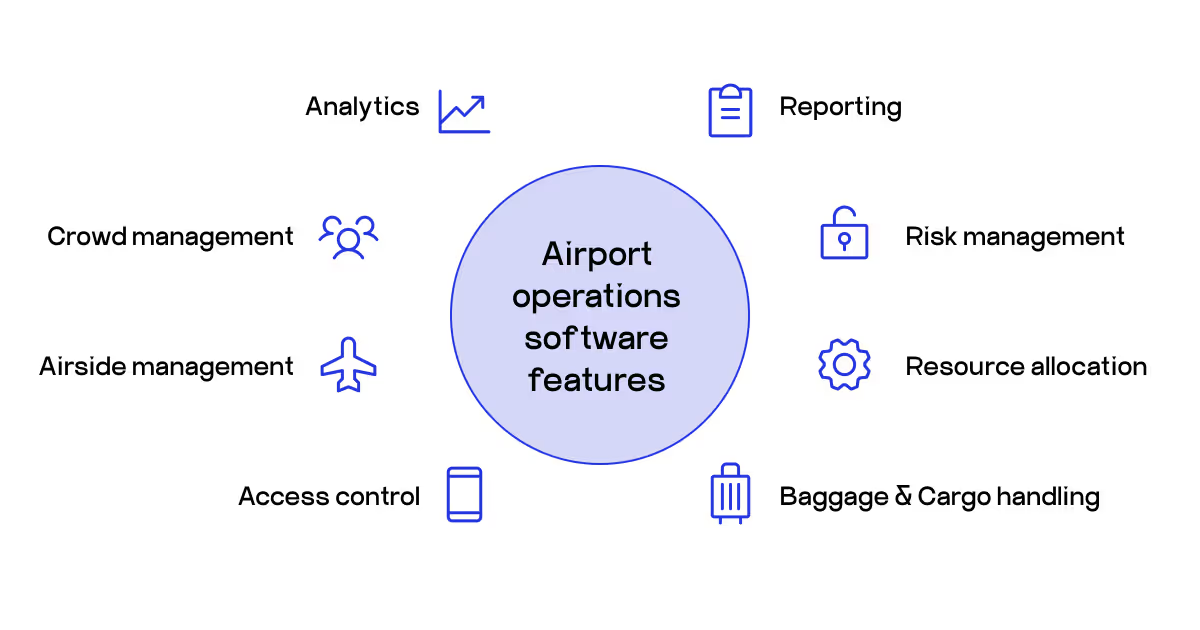
Key modules of airport management software
Good airport management solutions are not monolithic. They are built from specialized modules that each handle one function well and share data with everything else. Let’s outline the key parts and their functions.
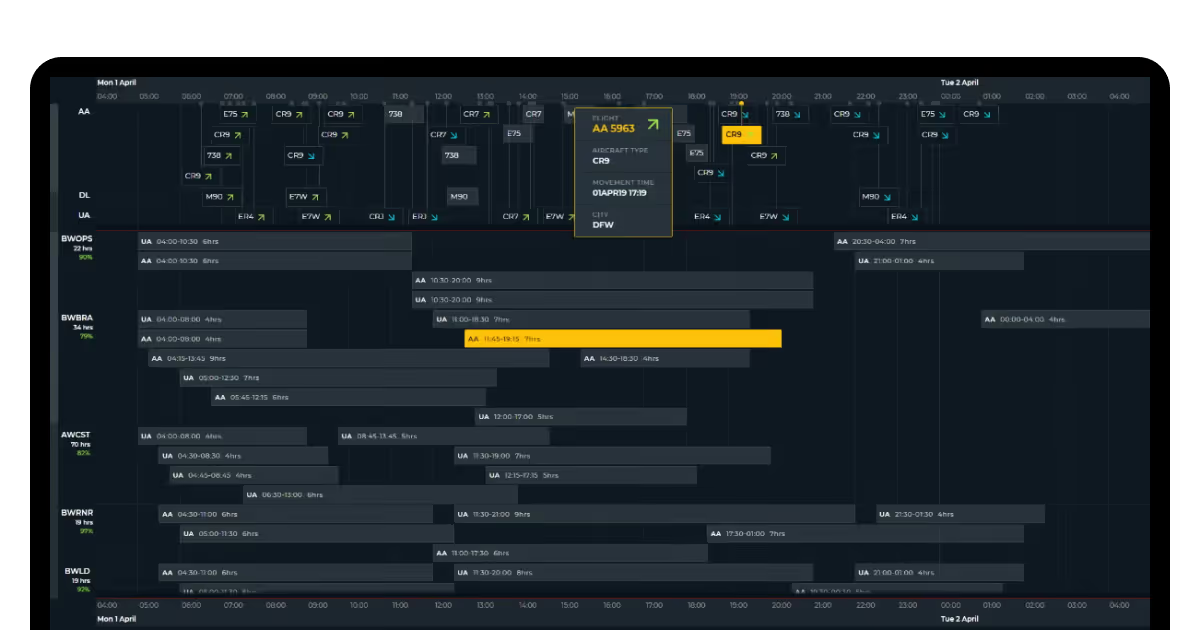
Airside management. This module tracks every aircraft movement on the ground, such as stand allocation, taxiway sequencing, turnaround progress, and apron vehicle coordination. It connects directly to ATC data feeds and the AODB so that gate assignments and departure sequences update in real time. This approach lets operators trigger responses to congestion before it develops rather than after. Without this module, apron coordination runs on radio calls and whiteboards.
Resource allocation. Gates, check-in counters, staff, and ground equipment needs to be in the right place at the right time. The resource allocation module pulls flight schedule data and passenger volume forecasts and assigns assets based on configurable rules. When a flight is delayed, the system recalculates and redistributes without manual intervention. This is one of the core airport management system features that separates modern platforms from legacy systems.
Baggage and cargo handling. This module connects the check-in system, conveyor, and sorting infrastructure, stand assignments, and passenger-facing tracking. Every bag logged at drop-off gets tracked through screening, sorting, loading, and delivery to the carousel. RFID tags feed location updates back into the system. The module also manages cargo scheduling, coordinating load plans. When this integrates with the airline booking API, passenger reservation data can pre-populate baggage expectations per flight so the system anticipates load.
Access controls. Airport access control is a layered system of airside boundaries, restricted zones, staff credentialing, and vehicle authorization. This module manages who can go where and when, logs every entry and exit, and triggers alerts for unauthorized access attempts. It feeds the airport safety management system software with access event data. Integration with biometric identity platforms means staff and vehicle access can be verified without physical cards or manual checks.
Crowd management. Peak boarding waves, delayed inbound banks, and security lane closures all create surges that, unmanaged, become queues that delay flights. The crowd management module uses sensor data, camera feeds, and AI-based forecasting to monitor passenger density in real time and push recommendations to staff. McKinsey sees this as one of the highest-value applications of AI in airports.
Reporting. The reporting module aggregates data into structured outputs that different stakeholders actually use. Operations teams get on-time performance breakdowns and turnaround analysis. Finance gets service usage data for billing and revenue reporting. Regulators get compliance records and incident logs. The value here is that reports draw from the same live database that runs operations, so the numbers in a finance report match the numbers an operations manager saw on their dashboard two hours earlier.
Analytics. Where the reporting module handles structured outputs, the analytics layer handles open-ended questions. This is where airport management services teams investigate on-time performance drop reasons, or how passenger flow changes after a security lane is added. It connects to the airport information management system database and surfaces patterns that scheduled reports would not catch.
Risk management. Incidents happen. The risk management module gives airports the tools to prepare for them, respond to them, and document them properly. It holds emergency response plans, coordinates incident workflows across departments, and maintains the audit trail that aviation regulators require. It also connects to predictive maintenance data, so infrastructure risks can be flagged early. The risk management module is where predictive maintenance data becomes an actionable risk record.
Now that we’ve covered the theory of how all these processes and solutions work and connect to each other, let’s get to the practice. Next, we break down the key tools for airport management technology and describe their implementation nuances.
Airport management software solutions
The airport management software solutions have a lot to offer, so you don’t actually have to choose between "good" and "bad" platforms. You are choosing between platforms built for different contexts, different scales, and different operational priorities.
Platform
Best for
Key strength
Deployment
Pricing
AeroCloud
Mid-size to large airports
AI-driven, modular, cloud-native
Cloud
Modular subscription
SafetyCulture
All sizes, safety-first ops
Compliance, inspections, checklists
Cloud / Mobile
From $24/month
Damarel
Mid to large commercial
Ground handling, passenger processing
Web / Mobile
On request
Collins Aerospace
Large international hubs
Enterprise scale, biometrics, MRO integration
Web / On-premise
Enterprise contract
SITA Smart Path
Major international hubs
Biometric throughput, baggage integration
Biometric throughput, baggage integration
Enterprise contract
GateKeeper
Regional to mid-size
Airfield inspections, GIS, compliance
Web
On request
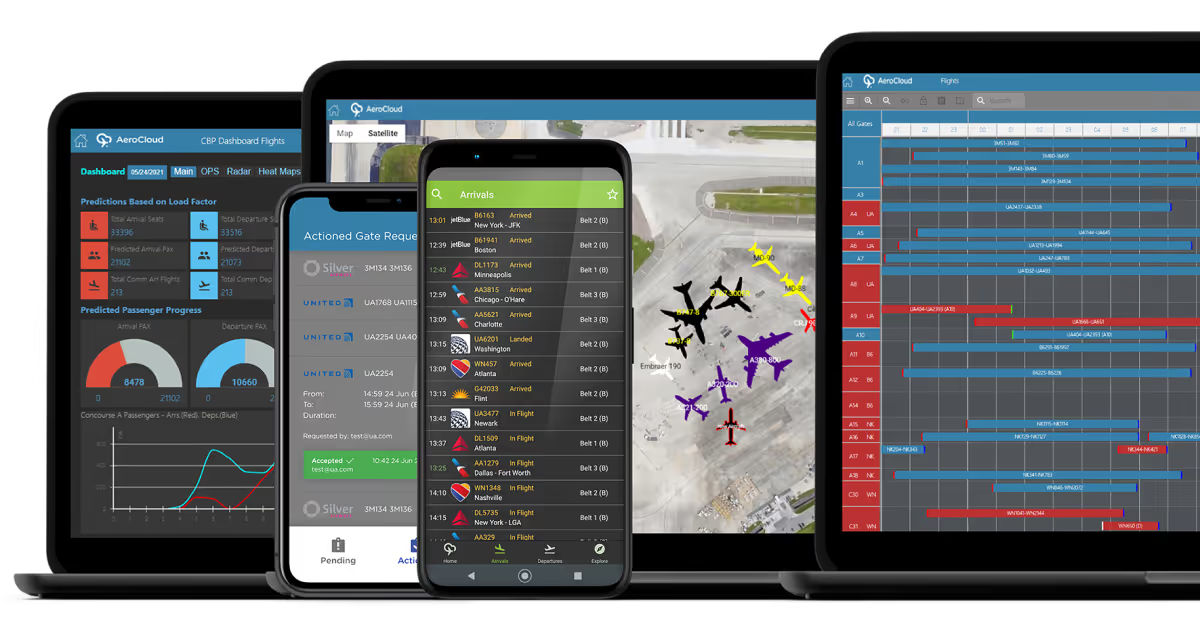
AeroCloud is a cloud-native, modular airport technology management platform built around AI and machine learning. It covers flight management, gate management, FIDS, inspection and asset management, airfield works, passenger processing with common-use departure control, self-service kiosks, and AeroCloud Optic for passenger tracking and counting. Airports pay only for the modules they need, which makes it one of the more practical options for mid-size and regional airports. The pricing is subscription-based and module-dependent.
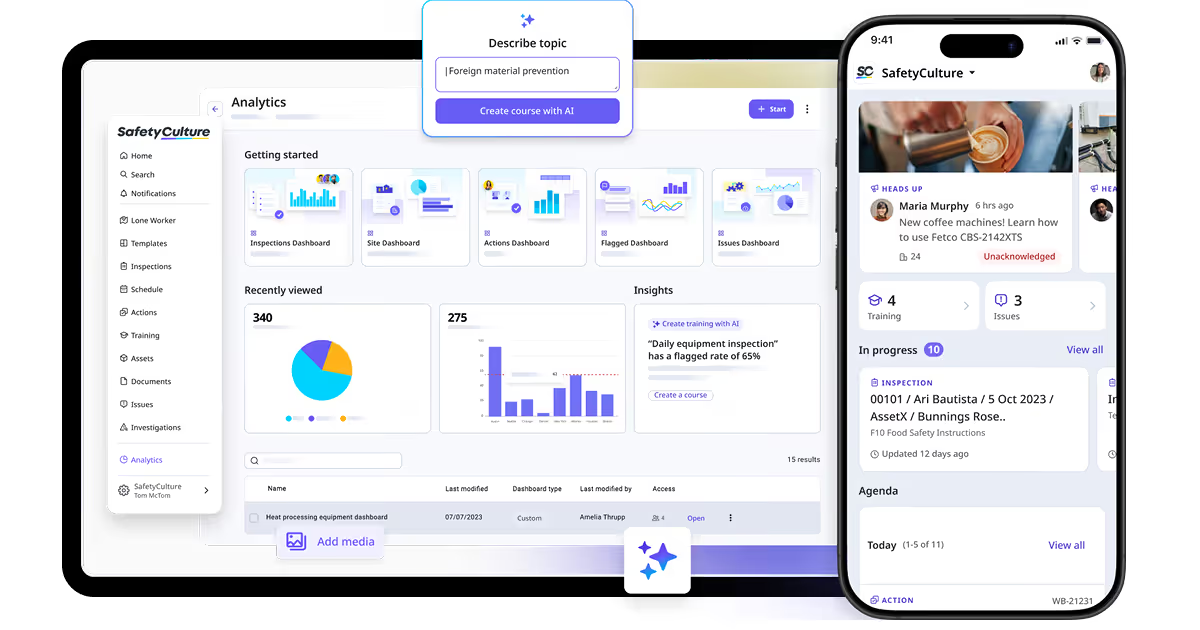
SafetyCulture is a compliance and operations platform that works for airports prioritizing safety management, inspections, and workforce accountability. It replaces paper checklists with digital templates covering ground equipment maintenance, facility inspections, security checks, and staff competence tracking, and it adds geo-tagging, access sensor documentation, and real-time alerts. It’s one of the few platforms with a free tier for teams of up to 10 and a premium plan starting at $24 per month.
Damarel is a veteran aviation solutions provider whose airport operations management platform covers passenger handling with mobile boarding, ground handling, and airport security management. This web-based system with iOS and Android availability, is built for airports that need a proven, full-featured platform. Best suited for mid-size to large commercial airports that want deep ground handling functionality alongside passenger processing. Pricing is available on request.
Collins Aerospace holds 12% of the global airport management systems market and brings enterprise infrastructure to large international hubs. Its platform includes AirPlan data management, Touchpoint biometrics for passenger identity verification across the terminal journey, and luggage scanning integration. It’s built for complexity, scale, and deep integration with national aviation infrastructure. Pricing is enterprise-tier and negotiated directly. Collins Aerospace also integrates with its own InteliSight and Ascentia predictive maintenance suite.
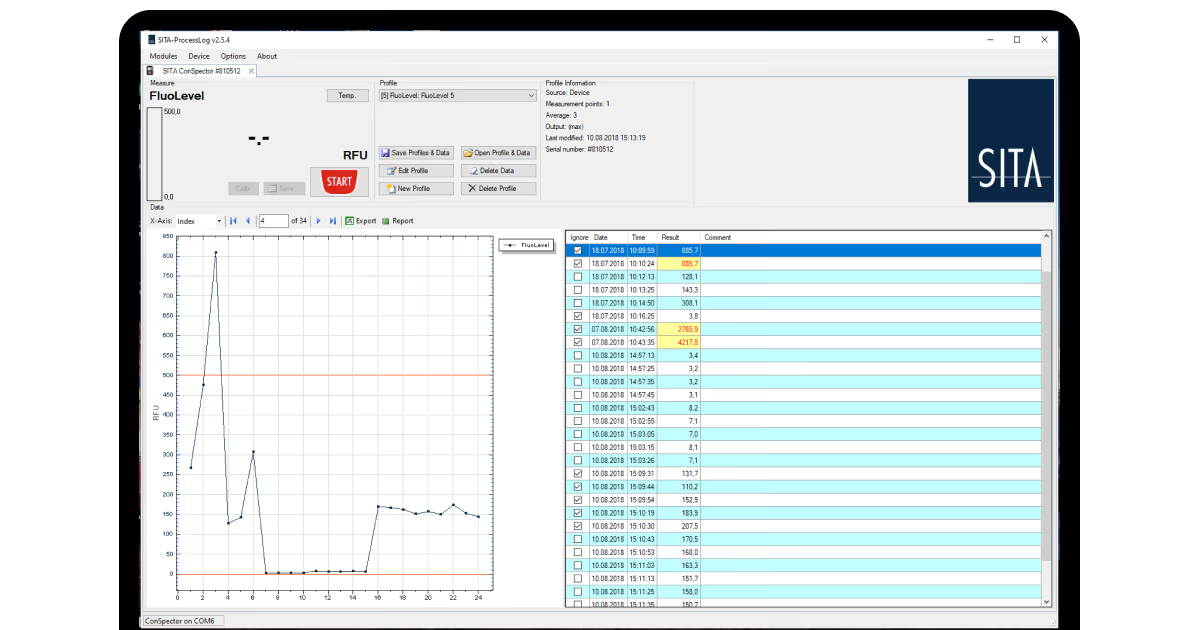
SITA's Smart Path is a biometric and baggage-integrated passenger processing platform deployed across more than 1,000 airports. Live trials at Istanbul Airport showed approximately a 30% reduction in boarding times. It links identity verification, baggage reconciliation, and gate control into one flow so passengers move from check-in to boarding with fewer manual interventions. SITA is the infrastructure choice for large international hubs where biometric throughput at scale is the primary requirement. Pricing is enterprise contract-based.
GateKeeper Systems is deployed in over 100 airports across 41 states and three countries, built around airfield inspection workflows, GIS imaging with GPS tracking, and TNC analysis. It prioritizes data security and compliance with aviation guidelines across multiple jurisdictions. Best for airports that need strong airfield inspection tooling and geographic tracking rather than a full operational suite. Pricing is on request.
To define the most optimal option of a solution for airport operation management, you need to consider several important factors.
How to choose the right solution
Many airports pick the software the wrong way. They start with a vendor demo, get impressed by the interface, and then discover six months into implementation that the system does’t share data correctly with their existing ATC feed or requires a full data migration from a legacy platform that nobody documented properly.
Here is a more useful sequence.
Start with the problem that needs to be solved. If your issue is billing disputes with airlines, you need an airport operation management system with a strong aeronautical billing module and shared data access for airline partners. If your problem is passenger queues at security, you need AI-driven flow monitoring and crowd management. Match the tool to the specific failure.
Define your integration environment. What ATC data feeds do you receive and in what format? What does your existing baggage system export? Do your airline partners' departure control systems support standard CUPPS interfaces? A platform that cannot connect to your existing data sources requires either custom integration work or parallel manual processes. Ask every vendor, early, what their standard integrations are.
Size and growth plans matter more than current needs. A modular cloud-native platform like AeroCloud makes sense for a regional airport that expects to add terminals and routes over the next five years. An enterprise contract with Collins Aerospace makes sense for a hub that already handles 30 million passengers and needs proven infrastructure at that scale. Buying enterprise software for a 2-million-passenger airport wastes budget. Buying a lightweight platform for a 20-million-passenger hub creates operational gaps that compound fast.
Evaluate the vendor's implementation track record. A platform that works at one airport does not automatically work at yours. Ask for references from airports of similar size and operational model. Ask specifically how long implementation took, what the main integration challenges were, and what ongoing support looks like after go-live. The software is only as useful as the implementation behind it.
Total cost of ownership is the thing to pay attention to. The license or subscription fee is not the real number. Add implementation costs, integration development, staff training, ongoing support contracts, and the cost of parallel operations during the transition period. An enterprise platform at a major hub might total several million dollars over five years before you count staff time.
And even if the choice seems more or less fine, you often find that the airport information management system you get from the vendor doesn’t cover your needs fully. Let’s see how to handle this scenario.
Custom vs off-the-shelf solutions
The choice between buying a platform and building one comes down to what your airport does, how different that is from what everyone else does, and how much that difference matters to your operations and revenue.
Let’s break this choice down, aspect by aspect.
Fit to your operation. Off-the-shelf platforms’ feature set covers what most airports need. But often, the gaps show up in edge cases: a non-standard ground handling workflow, a commercial agreement structure that does not match the billing module's logic, a regulatory reporting requirement specific to your jurisdiction. Those gaps get handled through workarounds, manual processes, or expensive customization. Meanwhile, custom airport management technology is built around your exact workflows. If your airport has unusual stakeholder arrangements, or a specific mix of airline partners with different data exchange requirements, a custom system is what you might need.
Integration with existing systems. This is where off-the-shelf platforms most frequently disappoint. Your baggage system might have its own API. Your airline partners often use different departure control platforms. Also, your financial system can be something the platform vendor has never heard of. In this case, keep in mind that custom development handles integration as a design requirement from the start. When it comes to airport technology management at scale, the integration layer is often where more value is created or destroyed than in the core platform features.
Speed to deploy. Off-the-shelf wins on initial deployment speed. Configuration, not development, is the main task. A well-resourced implementation of a standard platform can go live in months, while custom development takes longer upfront. However, the calculus changes when you account for the time spent working around platform limitations after go-live. Manual processes that compensate for gaps in an off-the-shelf system don’t show up in the implementation timeline, but they show up in operational costs every day afterward.
Scalability and ownership. Off-the-shelf platforms scale on the vendor's roadmap. When you need a new module or a new integration, you wait for the vendor to build it or pay for a customization. When the vendor is acquired, discontinues a product line, or changes their pricing model, your options are limited. Meanwhile, with a custom platform, scaling just means adding to what you have rather than negotiating with a vendor. When your operation changes, the system changes with it because the people who built it understand what it does and why.
So, where is custom clearly the better answer? It makes the most sense:
When your airport has unique operational requirements.
When you need deep integration across a specific set of existing systems.
When you are building airport management technology that needs to connect with proprietary airline systems or government data infrastructure.
When long-term platform ownership and independence from vendor roadmaps are a strategic priority.
When you need capabilities that the off-the-shelf market has not yet productized well, including advanced AI-driven analytics, custom passenger flow modeling, or specialized airport safety management system software built around your regulatory environment.
Not every software team can build airport systems. The domain is specific enough that general-purpose development shops run into problems. Here, COAX brings over 15 years of custom travel software development to this work. That experience covers the full cycle: requirement analysis, system architecture, development, integration, testing, deployment, and ongoing support. It’s a continuous involvement throughout the life of the system.
On the integration side, our team handles connections to GDS platforms, airline inventory systems, ATC data feeds, baggage tracking, and third-party airport technology management platforms. Flight booking software, including airline booking API integration and custom reservation flows, is part of the standard capability set, not a specialist request.
The AI and analytics work we provide also covers passenger flow forecasting, predictive maintenance data pipelines, operational anomaly detection, and commercial performance dashboards built around your real data sources.
FAQ
What is airport management in terms of modern technology trends?
AI-driven capacity planning is the headline trend. McKinsey found that airports using the right technologies can boost EBITDA by 6 to 8 percent. Digital twins, predictive maintenance sensors on baggage belts and HVAC systems, biometric single-token travel, and cloud-native modular platforms are the core investments.
What are the challenges of implementing airport management system software?
Efthymiou and team add VUCA conditions: volatile environments where implementation timelines get disrupted by external events before rollout completes. McKinsey confirms fragmented legacy data is the deepest structural problem. When systems cannot share data, even well-funded implementations stall at the integration layer.
Where to start implementing airport management software to get the quickest wins?
Start with the module that touches the most departments simultaneously. Billing and flight data integration eliminates disputes immediately. Also, passenger flow monitoring with AI produces visible queue reductions fast. McKinsey recommends one scalable initiative within six to twelve months rather than a broad simultaneous rollout. Pick the operational failure costing you the most today and fix that first.
How does COAX develop secure and efficient airport management solutions?
COAX is ISO/IEC 27001:2022 certified for security management, risk assessment, and threat monitoring, and ISO 9001 certified for quality processes. Every build follows a full cycle: architecture, development, integration, testing, and ongoing support. Security is designed in from the requirements stage. The result is airport management technology that meets aviation-grade compliance standards from day one.








































































































.avif)




%20for%20hotels.avif)


.avif)
.avif)



.avif)





.avif)
.avif)



.avif)


.avif)

We are interested in your opinion