Warehouse slotting places every SKU based on demand data, not guesswork, and shrinks picker travel distance.
Six data sets power any real slotting project: order history, SKU master data, location maps, layout, replenishment patterns, and current assignments.
Algorithms range from simple ABC tiering to AI models that reslot continuously as demand shifts.
Five habits separate a working slotting program from a stalled one: clean data, velocity ranking, affinity grouping, the right software, and ongoing review.
The best warehouse slotting software splits into two camps: specialist tools like Pulse and OptiSlot DC, and slotting modules bundled inside a full WMS.
Choosing a warehouse slotting tool comes down to your bottleneck, your existing WMS, your timeline, and your budget, not feature count.
Success shows up in six numbers: travel time, travel distance, pick rate, order cycle time, picking accuracy, and inventory accuracy.
Every extra step a picker takes costs you money and time. Warehouse slotting fixes that. It puts each SKU where your team can grab it fastest. Smart placement shrinks travel distance, speeds up orders, and trims labor hours. The strategy hinges on demand-based rules that place fast movers up front.
This guide breaks down warehouse slotting optimization from the ground up. You'll learn the main strategies and the data you need. You'll also see the algorithms behind smart placement. We'll cover best practices, top software options, and how to measure results.
What is slotting in a warehouse?
Warehouse slotting assigns every SKU a spot in your facility. Placement decisions run on demand data, order patterns, and item size. Done well, it turns messy shelves into a fast pick path.
The practice covers more than shelf assignment. Slotting in warehouse management also sets zone layout and pick sequence. It also shapes replenishment paths and restock timing. Fast-moving items sit near packing stations. Slow movers shift to upper racks or back zones.
This matters for one big reason. Smart placement means pickers walk fewer aisles. Poor slotting adds wasted steps to every shift.
The market reflects this shift. Spending on AI-driven slotting tools hit $1.42 billion in 2024. Analysts project $10.56 billion by 2033, a 23.6% annual growth rate.
Why is warehouse slotting important?
Warehouse slotting matters because bad placement drains time and money. It touches inventory accuracy, space, labor, and delivery speed. A recent survey of over 100 warehouse leaders confirms this. Every top challenge they named ties back to shelf placement.
Inventory control tops the list of warehouse pain points. The survey confirms it. 62.3% named inventory control their top challenge. Another 30.2% pointed to poor inventory visibility. Both problems trace back to the same root cause. Structured slotting in warehouse settings fixes that at the source. Every bin gets a known, trackable spot. At COAX, we built a real-time slotting dashboard for a logistics client. Misplaced-pallet incidents fell by 34% in the first quarter.
Space is the next major pressure point. 46.2% of warehouse leaders call it a top challenge. Lease rates keep climbing, and most facilities still use only two dimensions. Vertical, zone-based slotting reclaims that wasted height. Our same client's dwell time fell from 11 hours to 6.4 hours.
Picking accuracy is another top concern.41.5% of leaders rank it among their top three challenges. Confusing layouts and inconsistent slotting rules are common causes. Fixed pick faces for fast movers cut mis-picks fast. Clear zone logic also shortens new-hire training time.
Demand doesn't stay flat all year. 17% of leaders named surge management a top challenge. Another 16% pointed to replenishment gaps. Manual reslotting can't keep pace with sudden volume. Dynamic warehouse slotting rules absorb spikes without adding temp staff.
Labor remains the toughest line item to control. Average annual turnover runs near 43% industry-wide. Automated, slotting-driven placement can cut labor costs by 25% to 30%. Shorter travel paths also mean faster ramp-up for new hires.
Challenge
How slotting helps
Inventory control (62.3% top challenge)
Fixed, trackable bins remove guesswork
Inventory visibility (30.2%)
Real-time slot data shows exact SKU location
Space constraints (46.2%)
Vertical, zone-based slotting reclaims floor space
Picking accuracy (41.5%)
Fixed pick faces cut mis-picks and confusion
Demand spikes (17%)
Dynamic reslotting absorbs surges without new hires
Replenishment gaps (16%)
Slot-level data triggers restock before stockouts
Rising labor costs (43% turnover)
Shorter travel paths speed up new-hire ramp-up
Solving this challenge starts with picking the right strategy. Let’s break down the two key strategy types, as well as some purpose-driven best practices.
What are the main warehouse slotting strategies?
The right strategy shapes everything downstream. Most warehouses layer several approaches at once. Fixed or random placement sets the baseline.
Macro and micro slotting refine it further. Velocity, family grouping, ergonomics, and seasonality add precision on top. Warehouse slotting strategies rarely work in isolation. The best setups combine two or more.
Strategy
How it works
Best for
Random slotting
Items go into any open, right-sized bin
High SKU turnover, short-lived catalogs
Fixed slotting
Every SKU keeps one permanent bin
Stable, fast-moving pick lines
Macro slotting
Groups inventory into broad zones
Setting the big-picture layout
Micro slotting
Fine-tunes placement within a zone
Squeezing out extra pick-path savings
ABC / velocity slotting
Ranks SKUs by pick frequency
Prioritizing fast movers near docks
Product family grouping
Places co-ordered items together
Kitting and multi-item orders
Ergonomic golden zone
Positions items by weight and reach
Worker safety and pick speed
Seasonality and adaptability
Shifts layout with demand cycles
Peak seasons and new launches
Random vs. fixed slotting
Two basic methods exist for assigning items to bins. Fixed slotting gives every SKU a permanent spot. Every replenishment goes back to that same bin. Random slotting drops items into any open, appropriately sized bin. A system or worker decides the spot on the fly. Either way, the inventory system logs exact quantity per location.
Fixed warehouse slotting strategy wins on pick speed. Workers memorize locations and move faster over time. It also lets you sequence items to protect fragile stock during packing.
Random slotting wins on put-away speed. Items go wherever space opens up fastest. There's no overhead from re-binning products as volume shifts.
Neither system beats the other outright. Fast fashion retailers juggle thousands of short-lived SKUs. Random slotting fits that chaos best. A grocery DC's fast-moving section benefits from fixed pick faces instead. Slow movers in that same DC rarely justify a set location. Random slotting fits there too.
Macro vs. micro slotting
Macro and micro slotting warehouse slotting strategies work at different zoom levels.
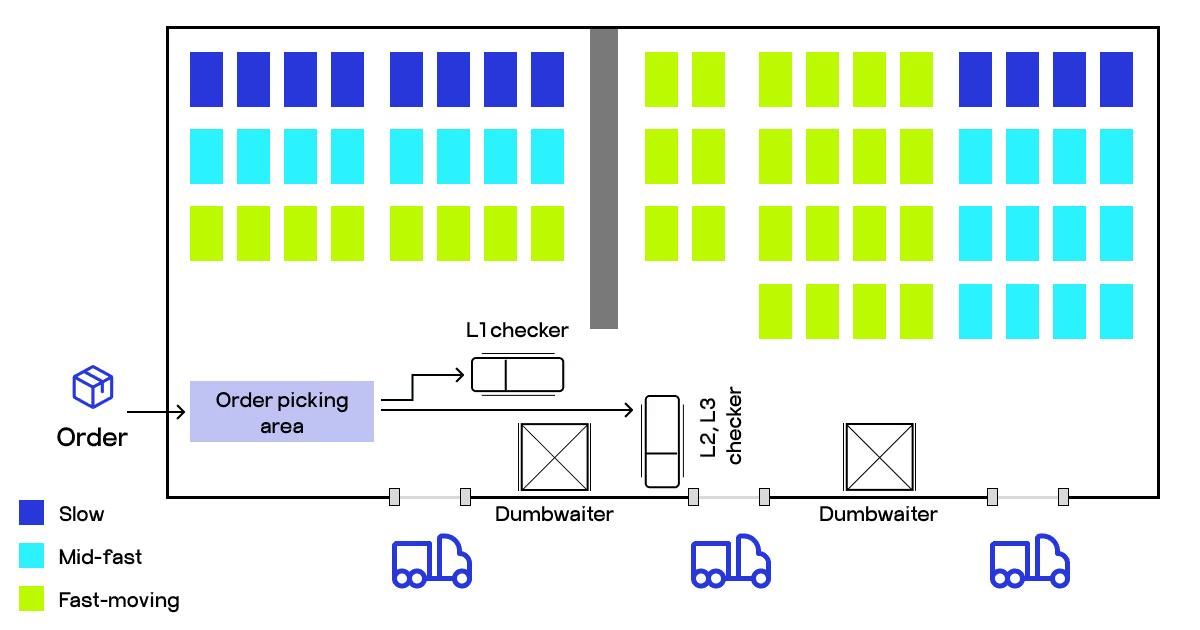
Macro slotting groups inventory into logical zones. Think fast-movers, bulk storage, or hazmat areas. Micro slotting fine-tunes placement inside each zone.
Picture a macro-slotted fast-moving zone. Micro slotting would push top sellers right next to the packing stations. That shaves seconds off every pick. Seconds add up fast at scale.
Most mature operations run both layers together. Macro slotting sets the big-picture map. Micro slotting adjusts individual bins as demand shifts week to week.
Modern WMS platforms with visual layout tools make this easier to maintain. Add both strategies to your warehouse automation process. That keeps zones logical and bins current. The layout adapts without a full re-slot every quarter.
Intelligent, purpose-driven slotting strategies
These four strategies add intelligence on top of the basics. Think of them as purpose-driven refinements, not replacements.
ABC analysis (velocity slotting): This method ranks SKUs by how often they move. A items, roughly 20% of SKUs, drive about 80% of picks. Those go closest to shipping docks. B items sit in secondary space. C items move to remote or upper zones. In systems we've built, teams get live alerts. They flag when a SKU's velocity shifts. That means a fast mover never drifts into a slow zone unnoticed. Early fixes save a full shift of extra walking.
Product family grouping: This strategy stores frequently co-ordered items next to each other. Think phone cases and screen protectors, usually bought together. Slot them in adjacent bins. One picker then grabs both in a single pass. We've seen this cut pick-path length in kitting-heavy operations. One order there might pull five or six different SKUs.
Ergonomic golden zone placement: This warehouse slotting approach puts fast, mid-weight items between knee and shoulder height. That's the zone a worker can reach without bending or stretching. Heavy or bulky items go lower, near the floor. Lifting strain is easier to manage down there. It's a small layout change with an outsized safety payoff. Fewer awkward reaches mean fewer strain injuries and less lost time.
Seasonality and adaptability: Demand doesn't stay still through the year. Holiday SKUs, promotional bundles, and new launches all shift demand. A good slotting plan adapts before the rush hits, not during it. Some teams re-slot entire zones ahead of peak season. They plan the shift around forecast data. Others rely on software that reslots continuously as sell-through data comes in.
For these approaches to slotting optimization in warehouses, you need something more than just picking based on size or randomness level. You need the right data.
What data do you need to optimize warehouse slotting?
Every warehouse slotting optimization project runs on six data sets. Order history tells you what moves. SKU and location data tell you where it fits. Facility layout, replenishment patterns, and current assignments round out the picture. Skip one, and the recommendations skew.
Order and pick history
This is the foundation. Pull twelve months of order lines from your order management software. Each line needs an order number, item, quantity, and date. Here are some practical tips based on our clients’ process optimization efforts.
Twelve months matters more than ninety days. A holiday-only SKU looks dead in March. It gets slotted wrong for the rest of the year.
Use picked lines, not ordered lines. Cancelled orders and returns aren't real work.
Watch the unit of measure too. A case and two dozen eaches count as one line each. But they're very different amounts of walking.
And here’s a final important thing to track. Keep the order number. Velocity tells you how far one pick travels. Order number reveals affinity, which items ship together. A warehouse slotting analysis without order numbers is incomplete. It only answers half the question.
SKU master data
Every SKU needs a profile. That means cube, weight, unit of measure, and handling rules. Think refrigeration needs or hazmat status. Cube and weight matter more than they look. They decide how much of an item fits in a forward slot.
That's the detail teams skip, and it's the one that kills projects. A smaller, closer slot holds less stock. It runs out faster, and someone has to refill it. If restocking costs more than the time it saves, the move backfires. You can't judge a placement change without knowing what fits.
Location and storage-mode data
You also need a full location map. That means bay, aisle, level, and pick-face capacity for every slot. A location code alone is just a label. Something has to say where aisle A actually sits.
For warehouse slotting, storage type matters just as much as position. Pallet rack, flow rack, and bin shelving aren't interchangeable.
Pick rates in flow rack can run several times higher. Bin shelving runs much slower. Optimize purely for distance, and you can get it wrong. A fast item might land in a slower storage type.
The walk gets shorter, but the pick gets slower. Tag every location with its storage mode before you rank anything.
Facility layout and travel distance
Distance needs a starting point. Usually that's the pack station or the dispatch dock. Some facilities route different orders to different docks. So the analysis needs to know which one applies.
Floor plans matter here too. Think aisle paths, staging zones, and travel routes between them. Without real geometry, distance is just a guess. A rough grid can substitute when true coordinates don't exist. Just label it as an estimate. A guess reported as an exact measurement erodes trust fast.
Replenishment and seasonality data
Track how often stock moves from reserve to forward pick slots. That frequency tells you if a location is sized right. Too small, and pickers run dry mid-shift.
Layer in seasonal demand on top to ensure efficient warehouse slotting optimisation. A flat, average-year plan misses the holiday rush entirely. Items that spike for six weeks need a different plan. Steady sellers don't. Flag them separately so the model doesn't average them into obscurity.
Current assignments and operational constraints
You also need your current SKU-to-bin map. It's the baseline every recommendation gets measured against. Add operational constraints on top. Think temperature zones, hazmat separation rules, and crush weight limits.
This data rarely lives in one clean system. When we built a cargo visibility platform, we saw this firsthand. Warehouse, port, and trucking data all sat in separate tools. Nothing tracked a shipment end to end. We solved it with one event stream. It merged RFID scans, vessel pings, and telematics into one record.
We've also seen this on when building a fleet platform too. GPS pings, EDI feeds, and TMS records rarely lined up. All of it needed cleaning before any model could trust it. Expect the same with slotting data. Budget time to standardize it before you optimize anything.
Feed all six data sets into your warehouse slotting software. The recommendations only get as sharp as the data behind them. With the inputs ready, the next question is the algorithm behind them.
What are warehouse slotting algorithms?
Warehouse slotting algorithms turn raw data into bin assignments. Some rank items by simple math. Others use search techniques or machine learning. Most warehouse slotting software bundles a few of these under one hood. Complexity should match the problem, not the hype.
ABC analysis.
ABC analysis is the simplest algorithm on this list. Feed it one number per SKU: picks per period. The formula sorts SKUs high to low, then runs a cumulative cutoff. Items above the cutoff land near the dock. The middle band gets secondary space. The bottom band goes remote. Most WMS platforms can run this overnight. It flags which SKUs crossed a tier and need a move.
Cube-per-order index (COI).
COI goes a step further than raw velocity. It divides an item's cube by its pick frequency. A low COI means high demand relative to size. You need two inputs for this type of warehouse slotting: pick counts and cubic dimensions. Run the ratio and rank low to high. Assign the lowest scores to the closest, most accessible slots.
Greedy assignment algorithms.
Greedy assignment works like a fast, one-pass sorting job. It orders SKUs by velocity or priority first. Then it walks the list, one item at a time. Each SKU gets the best open slot available. Size compatibility and product grouping filter the options at each step.
It won't find the mathematically perfect layout. But it runs fast, even on tens of thousands of SKUs. That makes it a solid first pass before finer tuning.
Heuristic and metaheuristic approaches.
These methods trade perfect answers for practical speed. Rule-of-thumb heuristics apply hand-built logic. Think slotting affinity pairs close together. Metaheuristics go further. Genetic algorithms and clustering methods like K-medoids search thousands of layout combinations.
The data need is heavier here. You need order-level affinity data, not just SKU counts. The payoff is a layout tuned for whole trips, not single picks, without testing every possible arrangement.
AI and machine learning models.
AI models push past static rules entirely. They learn from historical picks, order affinity, and seasonal swings at once. The output isn't a one-time layout. It's a continuously updated recommendation feed.
This mirrors dynamic slotting in warehouse operations we've built for other prediction problems. On one fleet platform, we trained a model to predict delivery ETAs. It used live traffic and driver patterns. Accuracy reached 89% within a tight time window. The same pattern-learning approach applies here. Feed the model enough history, and it flags layout drift early.
Algorithm
Core data needed
Best for
ABC analysis
Pick counts per SKU
Fast, simple tiering
Cube-per-order index
Pick counts, item cube
Prioritizing small, high-demand items
Greedy assignment
Velocity ranking, slot sizes
Large catalogs, fast first pass
Heuristic / metaheuristic
Order-level affinity data
Optimizing whole pick trips
AI / machine learning
Full order history, seasonality
Continuous, self-adjusting layouts
This is the kind of engineering COAX builds day to day. We connect robotic process automation, data pipelines, and prediction models. We build them into one working system. The goal might be warehouse slotting optimization. Or it might be fleet-wide ETA accuracy. Either way, the discipline stays the same. Clean data goes in. A tested model sits in the middle. The result is a workflow people trust enough to use.
What are the warehouse slotting best practices?
Warehouse slotting best practices come down to five habits. Clean data, velocity-based placement, affinity grouping, the right software, and constant review. Get those right, and picking gets faster on its own. Skip any one, and the other four can't fully compensate. Here's what each looks like in practice.
Start with clean, deep data.
Bad data produces confident, wrong recommendations. Pull at least twelve months of pick history first. Include seasonality, growth trends, and item-level cube and weight. A warehouse slotting analysis built on thin data misleads you.
Slot by velocity, not guesswork.
Rank every SKU by pick frequency, not gut feel. Fast movers, your A items, belong in the golden zone. That's the waist-to-chest band pickers reach without bending. B items go to secondary space, and C items go remote.
Group by product affinity.
This is a logical but often missed warehouse slotting optimization method. Items bought together should be placed closed together. Printers and ink cartridges are the classic example. Research shows this kind of regrouping can cut travel distance by 32%. It can also cut congestion-related wait time by 85%.
Match item profile to storage medium.
Pick method changes what a slot should look like. Pallet-level items need forklift clearance, while piece-picks don't. Keep heavy items low and within easy reach. Oversized items belong near the shipping dock, not a back aisle.
Let technology do the heavy lifting.
Manual slotting stops scaling past a few thousand SKUs. Most modern warehouse management solutions include warehouse slotting software. On one platform we built, alerts flagged bin conflicts early. That kind of automated tracking catches problems spreadsheets miss.
Build in continuous review.
Slotting is never really finished. Run structured reviews monthly or quarterly, and pull in picker feedback. Many operations land on a hybrid model. Fixed slots handle stable core SKUs; dynamic ones handle the rest.
Sometimes, to improve your warehouse slotting, you need an outside push the first time. COAX Software handles the full cycle, from consultation to post-launch support. We've spent close to twenty years on travel and logistics technology. Booking platforms, supplier connectivity, and automation all sit in that track record.
Best warehouse slotting software
We tested each platform the way we'd scope a warehouse slotting software rollout for a client. Five questions mattered most, and each one traces back to a project we've shipped.
Optimization depth: does it run AI or digital twin modeling, or just static rules?
Re-slotting cadence: does it update placement continuously, or only when someone asks?
Integration overhead: can it run standalone, or does it demand a full WMS tie-in?
Implementation timeline: does it show results in days, or take months of consulting?
Cost transparency: does pricing show up front, or hide behind a sales call?
Two of these criteria came straight out of our own work.
Picture a Tuesday afternoon on your floor. Pick rates dip, and nobody can say why. A supervisor checks three different screens for one answer. That's the gap the right warehouse slotting optimization software closes.
Ten platforms make this list, split into two groups. The first group specializes in slotting itself. The second bundles slotting inside a larger warehouse system. Let’s start with the first one.
Platform
Optimization approach
Re-slotting cadence
Best for
Pulse (Optioryx)
Combined pick and slot optimization on a digital twin
On-demand simulation
Capacity-constrained DCs with ten or more pickers
FORTNA OptiSlot DC
Combinatorial optimization with digital twin scenarios
Consulting-led
Enterprises running complex re-slotting projects
Lucasware
AI orchestration tied to voice and multi-modal picking
Continuous
DCs running voice-directed or robotic execution
Dynamic Slotting (Lucas Systems)
ML-driven re-slotting inside the Lucas picking engine
Continuous
Large operations already on Lucas voice-picking
JASCI AI Dynamic Slotting
Real-time AI reassignment inside a cloud WMS
Continuous
Warehouses wanting AI slotting with rule-based guardrails
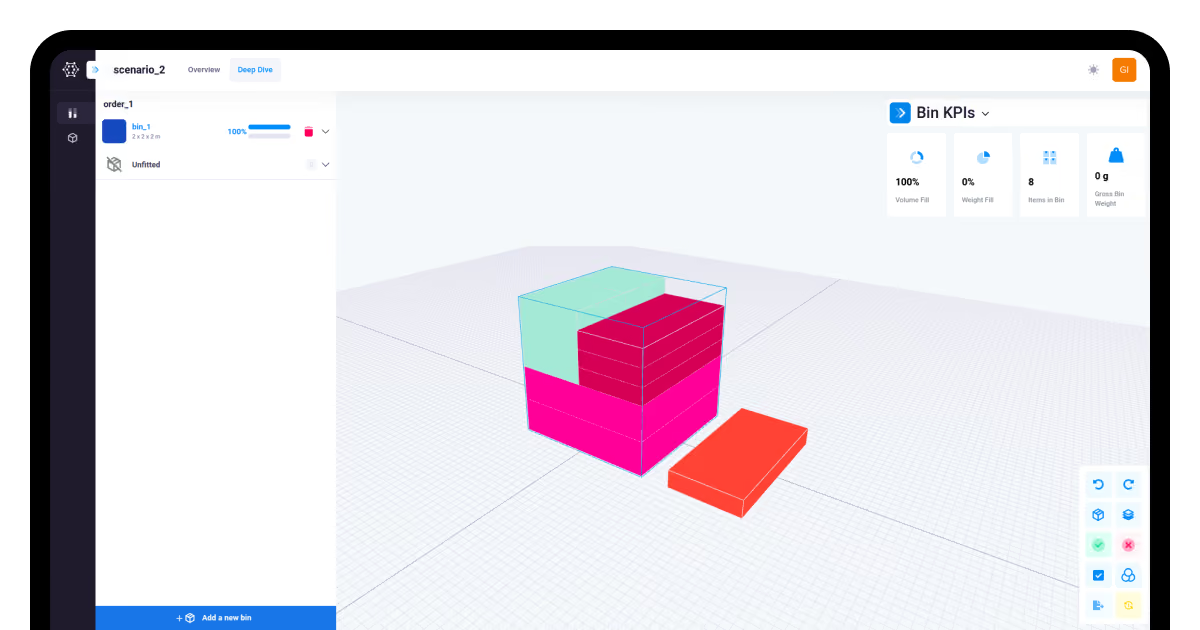
Pulse, from Optioryx, treats picking and slotting as one problem. It builds a digital twin of your warehouse first. AI algorithms then weigh pick frequency, product affinity, and compliance rules together. Cartonization and pallet building sit on that same platform. Pulse Studio needs no WMS integration to start, so results land in days. It suits capacity-constrained DCs running ten or more pickers. One catch remains: it needs a clean, structured export of your order data.
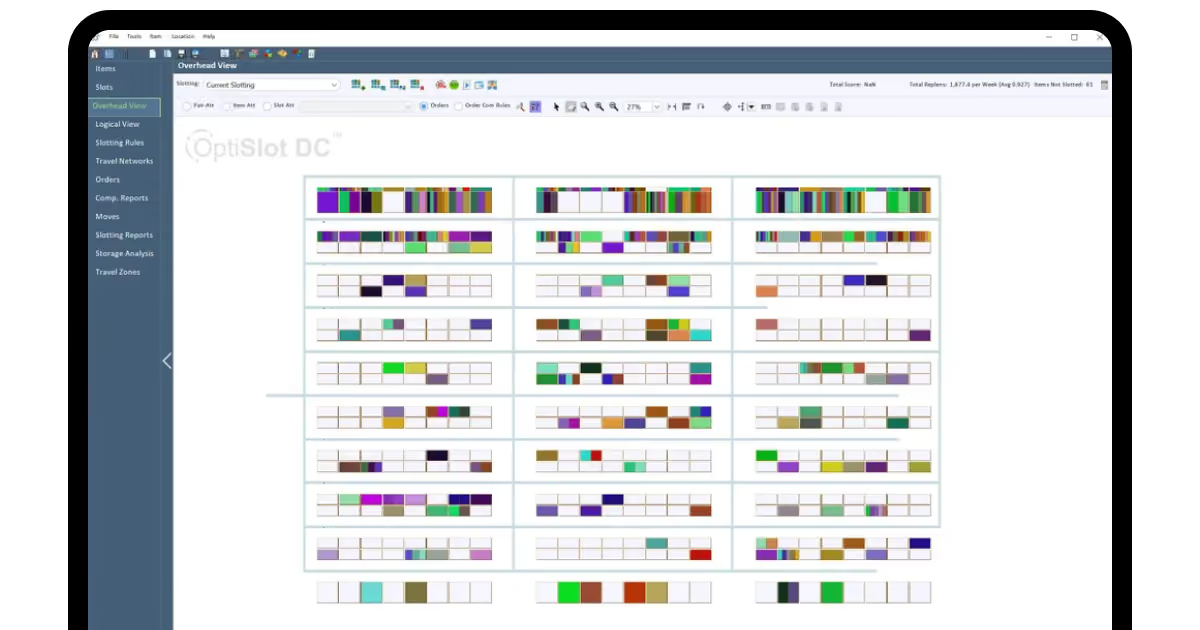
FORTNA OptiSlot DC started life as Optricity before FORTNA acquired it in 2022. It runs combinatorial optimization across velocity, weight, dimensions, and pick paths at once. Digital twin scenarios let you preview a layout change before moving a single pallet. Published results show 20 to 30% fewer replenishment movements. The catch is delivery: everything runs through FORTNA consultants, over twelve to twenty weeks. Pricing stays undisclosed until you're deep in that process.
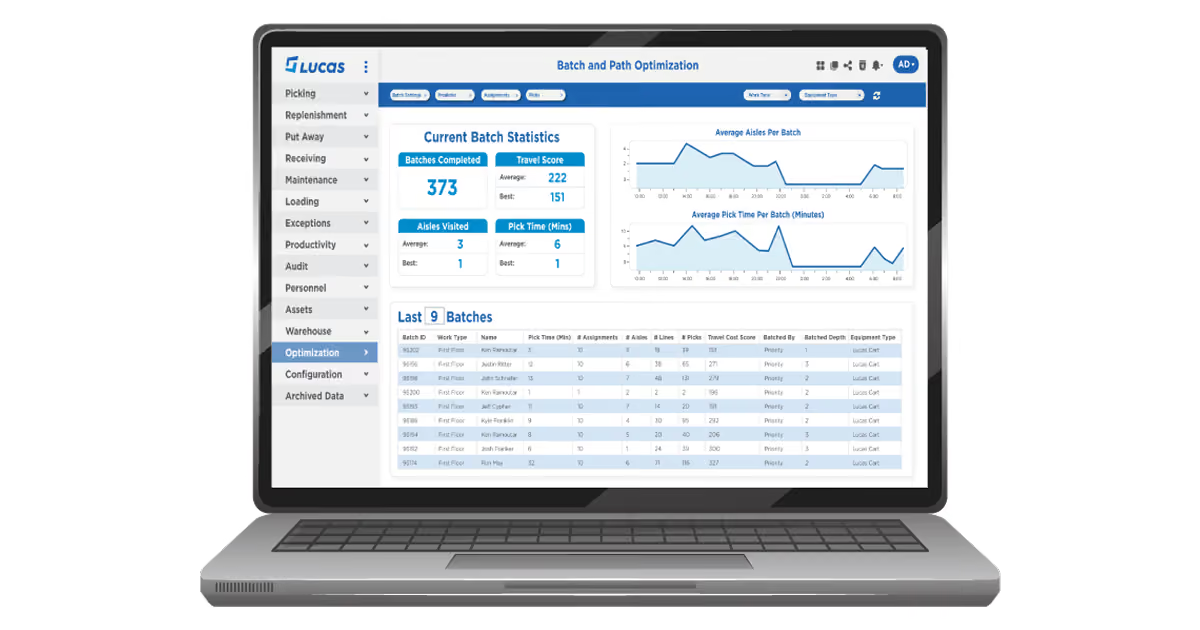
Lucasware ties AI-driven orchestration to voice-directed and multi-modal picking workflows. Placement decisions here reflect how work actually flows on the floor, not just static velocity. It also connects to robots and broader enterprise systems out of the box. That makes it a fit for DCs that already run automated or semi-automated fulfillment.
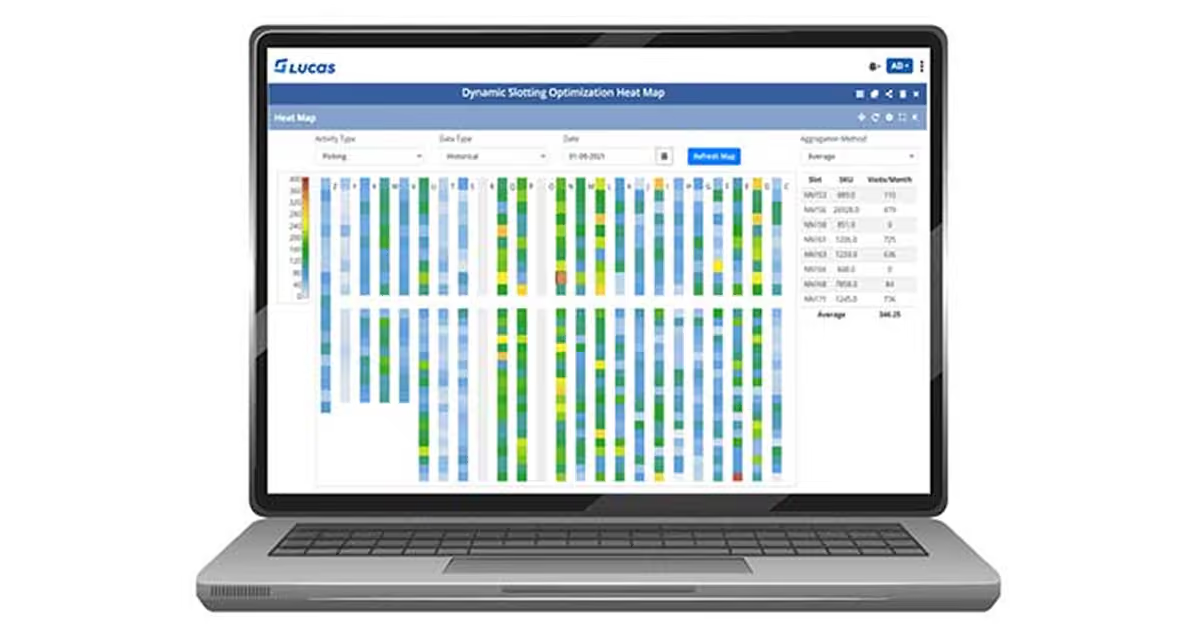
Dynamic Slotting, also from Lucas Systems, is a narrower warehouse slotting tool. It's the module that feeds the company's voice-picking engine specifically. ML continuously reassigns slots as demand shifts, with no manual re-slotting project needed. Similarity detection also flags look-alike items to cut mispicks. Claimed gains run 20 to 40% on throughput. Outside the Lucas ecosystem, though, this module loses most of its value.
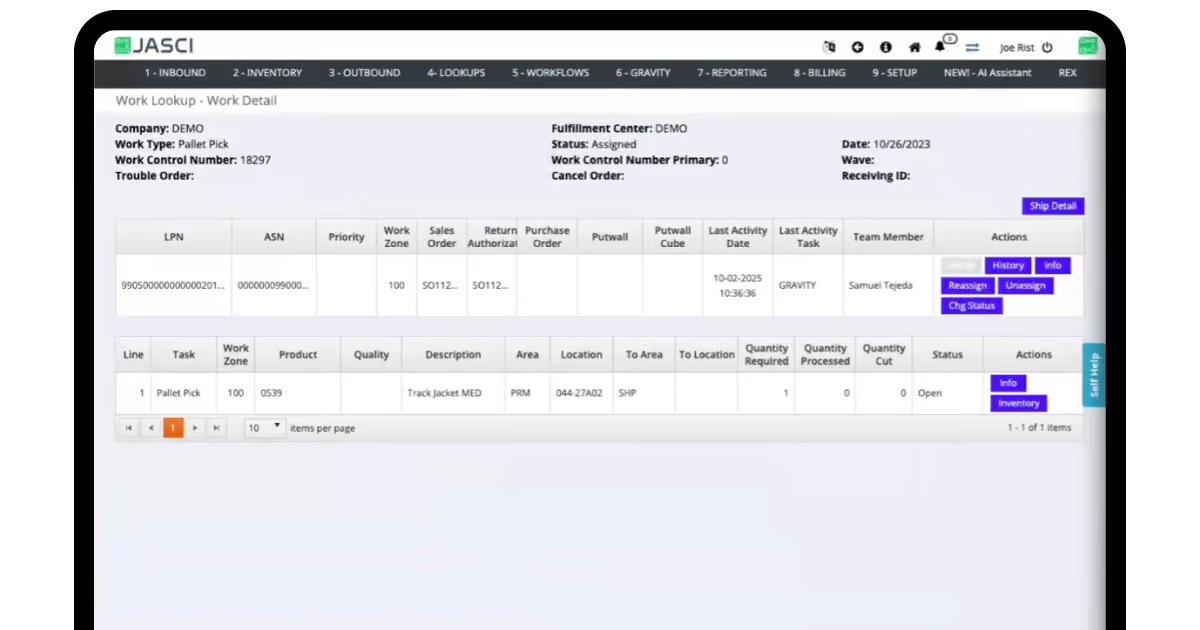
JASCI AI Dynamic Slotting lives inside JASCI's cloud WMS and reassigns SKUs in real time. AI Slotting Controls keep those automated moves inside rules you define yourself. It also connects to AMRs, AGVs, and goods-to-person systems directly. Pricing starts at $2,295 a month for the Brand WMS plan. That transparency is rare among the platforms on this list.
This closes the list of the more specific and focused solution shortlist. Now, let’s move to the next wider group of warehouse slotting optimization software.
Platform
Optimization approach
Re-slotting cadence
Best for
Manhattan Active WM
Rules-based slotting module inside a full WMS
Native to Manhattan
Enterprises already standardized on Manhattan
Blue Yonder WMS
Slotting informed by network-level demand forecasting
Native to Blue Yonder or SAP
Multi-site enterprises on Blue Yonder or SAP
Körber
Slotting inside multi-site automation and intralogistics
Native to Körber's platform
Enterprises running cross-site automation
Made4net
Slotting inside a configurable cloud WMS
Native to Made4net
Mid-market teams wanting execution and slotting together
ASC Software
Slotting inside a broader supply chain suite
Native to ASC's platform
Teams standardizing WMS, MES, and WCS together
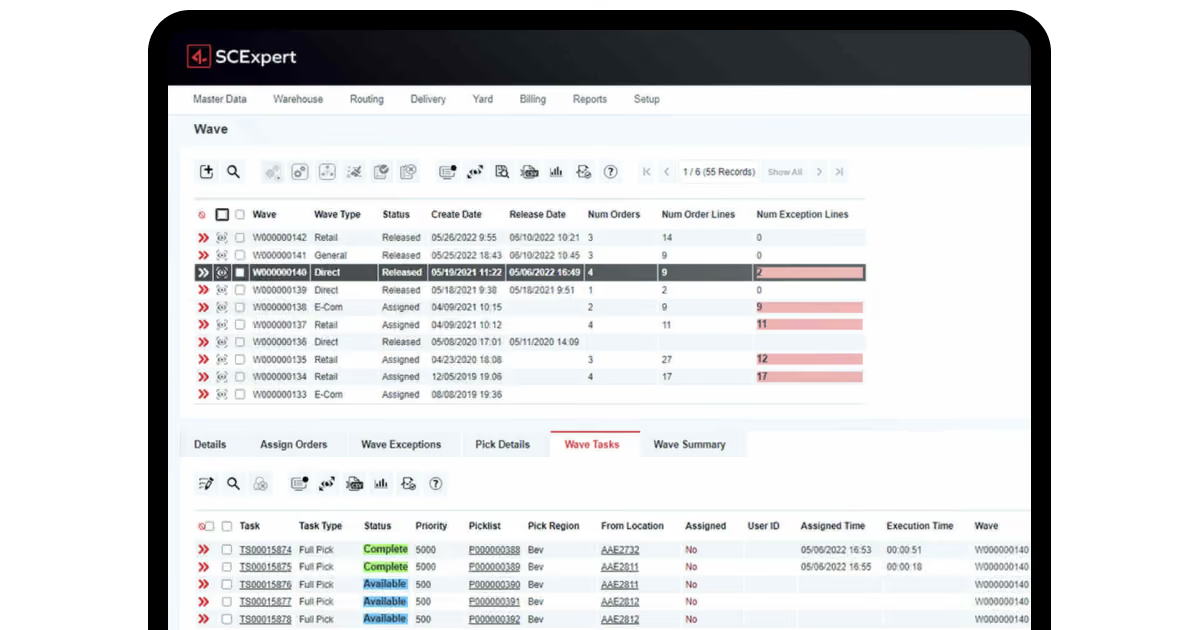
Manhattan Active WM bundles slotting into a full warehouse execution platform. Placement decisions here feed directly into labor and order management. Optimization stays rules-based, and re-slotting requires a manual trigger. It suits large teams already standardized on Manhattan's ecosystem that need basic warehouse slotting tools within it.
Blue Yonder WMS places slotting inside a much bigger AI-driven supply chain stack. Its real edge is demand forecasting that feeds placement decisions before a spike hits. That fits multi-site enterprises already running Blue Yonder or SAP. Scenario testing stays limited, and re-slotting still needs a manual trigger.
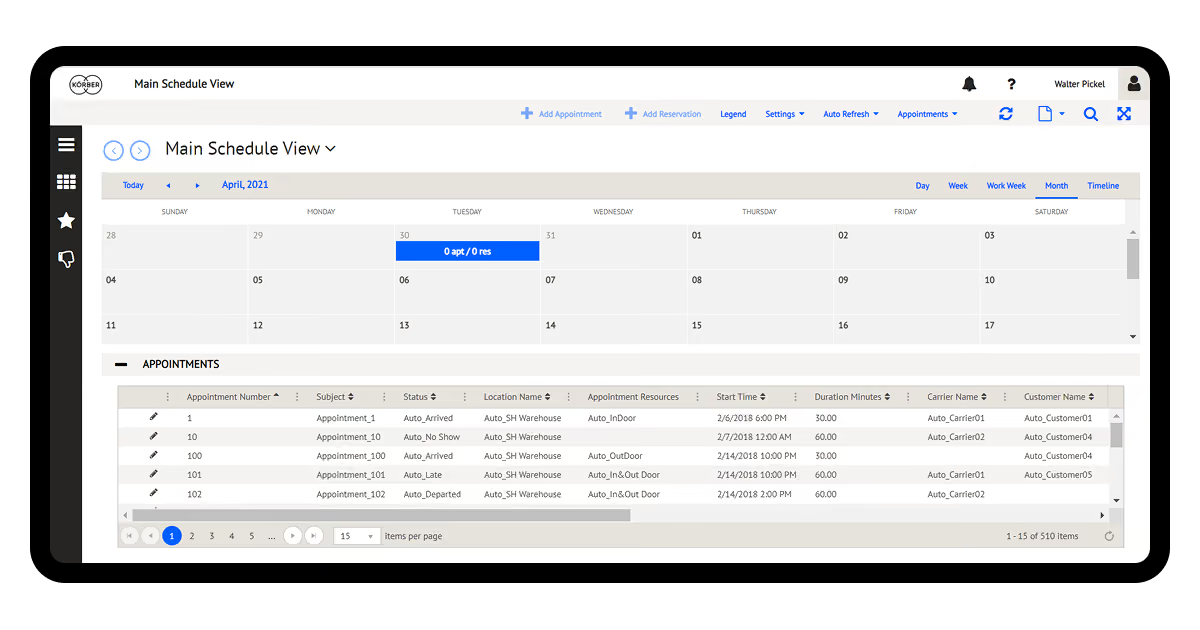
Körber folds slotting into a much wider industrial automation footprint. Placement decisions here connect directly to the physical automation moving inventory. Pharma and life sciences operations get particular depth from this vendor. It fits enterprises with cross-site automation already on the roadmap. Pricing stays quote-based, scoped to each deployment.
Made4net runs slotting inside a configurable, cloud-based warehouse execution system. Placement recommendations connect straight to labor data, so you can measure real impact. Yard management and appointment scheduling extend its reach past the four walls ot a typical warehouse slotting software.
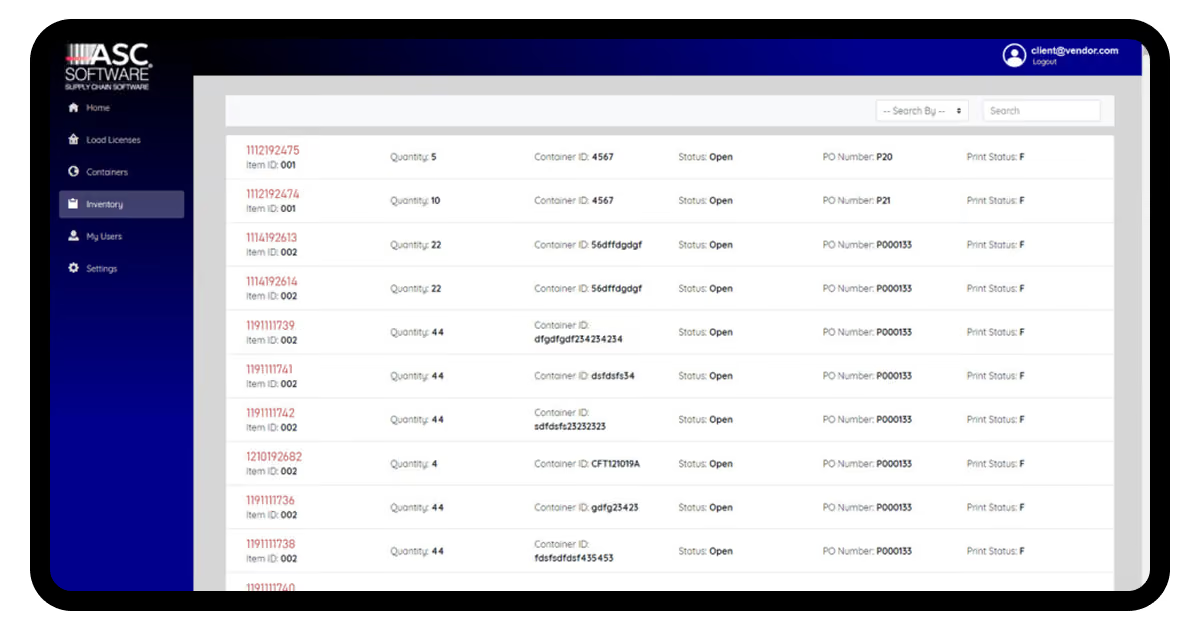
ASC Software treats slotting as one piece of a broader supply chain suite. Inventory, order management, and warehouse metrics all sit in the same system. That fits teams standardizing warehouse, manufacturing, and distribution operations together. Depth here favors context and measurement over raw optimization power.
Every platform here does something well. None fits every warehouse equally, which is exactly why testing mattered.
How to choose the right solution?
The right pick depends on what's actually broken on your floor, not a feature count. Get those five right, and the software choice mostly makes itself.
Match the tool to your bottleneck: a specialist like Pulse or OptiSlot DC goes deeper than a WMS module ever will.
Weigh ecosystem lock-in: if you're already on Manhattan or Blue Yonder, their built-in modules are the fastest path to activate.
Size the implementation to your timeline: self-service tools deliver in days, while consulting-led ones run twelve weeks or more.
Price out the total cost: WMS-native slotting rides on your existing license, while specialist tools are a separate contract.
Check your data readiness: every one of these platforms needs clean order history, SKU dimensions, and location maps before it can help.
Off-the-shelf warehouse slotting optimization works well until your operation stops matching the demo. Compliance rules, non-standard storage types, or a legacy WMS with no clean export can all break a standard tool fast. At that point, more configuration inside the vendor's platform rarely fixes the gap. What closes it is custom inventory management software development built around your actual data and constraints.
We've built that bridge before, connecting legacy WMS platforms to modern slotting logic without breaking a live pick flow. Because our teams have solved versions of these integration problems already, builds move 50 to 60% faster than a generalist firm starting from zero.
Our ISO 9001 and ISO 27001 certifications carry over too, since slot-level inventory data needs that governance regardless of warehouse size. If off-the-shelf warehouse slotting tools won't cover a rule your operation needs, we build the missing piece instead of forcing a workaround.
How to measure the success of warehouse slotting optimization?
Numbers tell you whether warehouse slotting actually worked. Track travel time, pick rate, accuracy, and inventory match rate together. Each metric catches a different failure mode alone.
Metric
What it measures
Signals success when
Travel time per pick
Minutes walked between locations
Trending down over time
Travel distance per pick
Physical distance per pick
Shorter than baseline layout
Pick rate
Order lines picked per hour
Rising without added headcount
Order cycle time
Order intake to packed and ready
Shrinking alongside pick rate
Picking accuracy rate
Percentage of correct picks
Holding at 99% or higher
Inventory accuracy
Physical stock versus system records
Matching consistently across cycle counts
Travel time per pick.
This tracks the average minutes a worker spends walking between pick locations. Lower times mean fast-moving items sit in accessible spots. Most warehouse slotting software platforms log this automatically from scan timestamps.
Travel distance per pick.
This measures the physical distance covered for a single pick. Shorter paths cut fatigue and reduce aisle congestion. A rising trend here usually signals slotting has drifted out of sync with demand.
Pick rate.
This counts order lines or items picked per hour. Higher rates mean pickers spend less time searching for stock. It's the single clearest signal that warehouse slotting tools are earning their keep.
Order cycle time.
This spans from order intake to a packed, ship-ready box. Slotting affects only one leg of that clock. Still, a shrinking cycle time usually traces back to faster, cleaner picks.
Picking accuracy rate.
This is the share of orders picked correctly, with zero errors. Good slotting keeps visually similar SKUs apart on purpose. Mixing up two lookalike products costs far more than the extra walk to separate them would have.
Inventory accuracy.
This compares physical stock counts against system records. Fixed, trackable bins make that match easier to hold. Regular cycle counts and clean location data keep this number close to 100%.
None of these metrics means much in isolation. A warehouse chasing faster pick rates alone can still bleed money through errors. The real test is whether every number above moves in the right direction together, and whether the investment behind that movement pays for itself.
How to calculate the ROI of your warehouse slotting optimization?
Warehouse slotting optimization ROI follows one core formula:
Most operations see positive ROI within three to six months. Picker travel time typically drops 15% to 40% after a re-slot.
There are several key drivers of ROI that you can use to define the actual savings that your warehouse slotting software implementation brings:
Labor savings: Travel eats up to half of every picking hour. Golden-zone placement near packing stations cuts that walking time fast.
Higher throughput: Logical placement raises picks per hour. You get more output without adding staff.
Space utilization: Smart grouping frees up prime slots. That delays a costly warehouse expansion by years, not months.
Fewer errors: Organized stock reduces mis-picks and returns. Each avoided error saves the relabel, the reship, and the customer complaint.
Static layouts lose accuracy the moment demand shifts. That's where dynamic slotting in warehouse operations pays off. It reslots continuously instead of waiting for the next scheduled review. Here’s a checklist to calculate the ROI at every stage:
Rank SKUs by velocity. Run an ABC analysis on twelve months of pick data.
Map your zones. Define primary pick paths and ergonomic reach heights.
Measure the gap. Compare current travel distance against an optimized layout.
Project the savings. Multiply saved labor hours by your hourly wage rate.
Software gets you most of the way there. Consistently following warehouse slotting best practices gets you the rest. Neither replaces the other.
If your current WMS can't track these metrics, that's usually a data or integration gap. COAX Software can extend or improve what you already run, build a custom web or mobile app for slotting specifically, or connect your system to inventory suppliers through APIs. We've solved versions of this before, and we know how to fix the gap then.
Closing thoughts
Warehouse slotting isn't a one-time project you finish and forget. It's a discipline built on clean data, the right strategy mix, and software that keeps pace as demand shifts. The warehouses that get this right don't just move products faster. They cut labor costs, reclaim wasted space, and catch errors before they reach a customer.
Whether you land on an off-the-shelf platform from this list or need something built around your specific supplier network, the goal stays the same: turn your floor plan into a system that works for your pickers, not against them. At COAX Software, we've spent close to twenty years solving exactly these problems in travel, transportation, and logistics technology. If your operation has outgrown a standard tool, we're ready to build the piece that's missing
FAQ
What is warehouse slotting’s implementation roadmap?
Start with twelve months of clean pick data, then rank SKUs by velocity, not gut feel. Group items that ship together so one pass covers multiple picks. In our client work, pairing velocity ranking with continuous review, not a one-time project, is what keeps a slotting plan from decaying within a season.
How does ABC analysis work in warehouse slotting?
ABC analysis ranks SKUs by pick frequency, then splits them into three tiers. A items, roughly 20% of your catalog, drive about 80% of picks and sit closest to shipping. B items take secondary space, and C items move to remote zones. It's the simplest algorithm here, and most WMS platforms can run it overnight.
What's the best warehouse slotting software for a mid-size distribution center?
It depends on whether slotting is your main bottleneck or a secondary concern. Specialist tools like Pulse or OptiSlot DC go deeper on optimization than a bundled WMS module ever will. We've seen teams overpay for enterprise depth they don't need. Match the tool's depth to the actual gap in your operation, not to the vendor with the longest feature list.
What data do I need before running a warehouse slotting analysis?
You need twelve months of picked order lines, SKU cube and weight, a full location map, and current bin assignments. Skip any one of those, and recommendations will skew. On real projects, the data rarely lives in one clean system, so budget time to standardize it before optimizing anything.
How much warehouse slotting ROI can I expect, and how fast?
Most operations see positive ROI within three to six months, with picker travel time dropping 15% to 40%. Savings come mainly from labor, since travel eats up to half of every picking hour. Run the math on saved hours times your hourly wage before committing budget, so the business case holds up past the pilot.
Is a step-by-step warehouse re-slotting process something we can run ourselves, or do we need software?
Small operations can start with a spreadsheet: rank velocity, map zones, compare travel distances, project savings. That works until your SKU count or supplier network outgrows manual updates. At that point, dynamic slotting in warehouse software that reslots continuously beats a quarterly manual pass every time, especially with seasonal demand swings.
























































































































_.avif)














%2520explained.avif)

We are interested in your opinion