






















































Website security audit
See your site the way an attackers do. One free scan checks your open ports, missing headers, and leaked credentials: the same things attackers look for first. You get a plain-English report and a team that's spent 16 years hardening travel and payment platforms to help you fix what it finds if you need us to.
Industry leaders we work with



What we analyze

Public exposure
Open ports, live services, exposed subdomains, and leaked credentials or emails found across your accounts.

Technology stack
DNS records, SSL certificate strength, and hosting configuration, plus the CMS, framework, and plugin versions visible to anyone who looks.

Website security
Missing security headers, weak TLS settings, and email spoofing gaps like unset DMARC.

Reputation
Blacklist status and threat intelligence flags tied to your domain.
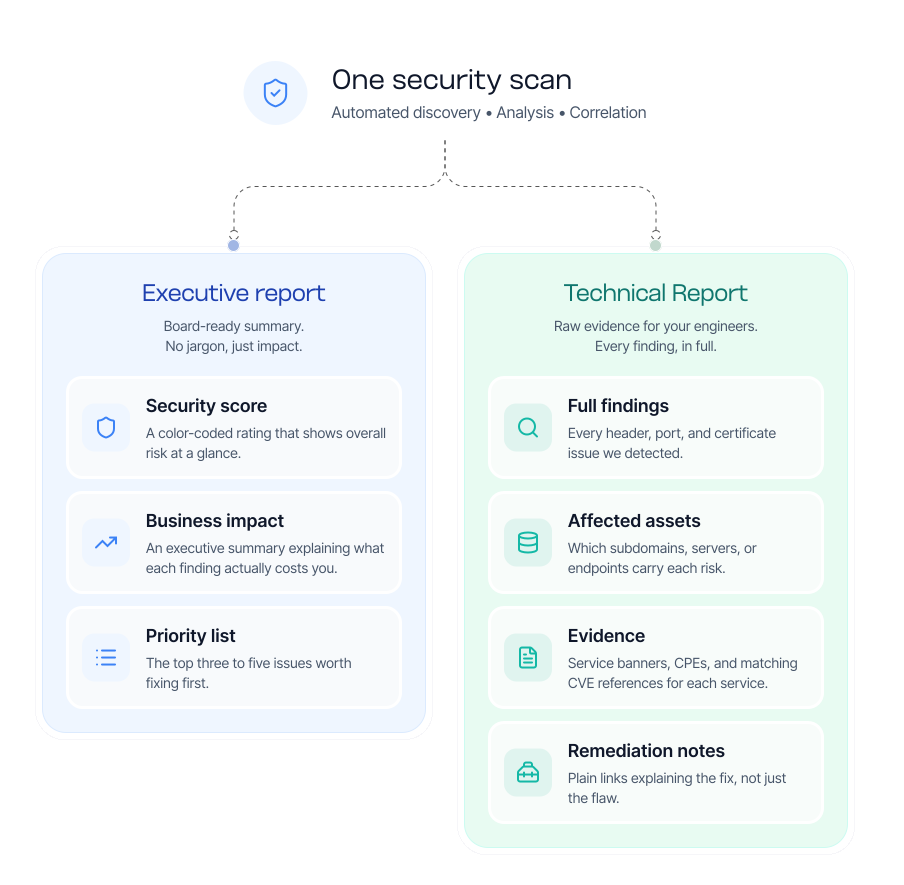
Dual-format reporting: built for teams and executives
What the free scan does (self-serve)
Start your scan
Enter your domain and launch a scan in seconds. You need no installation, configuration, or an intrusive sales call.
Collect exposure data
The scan checks the same signals attackers look at first: HTTP headers, SSL/TLS certificates, open ports, DNS records, and other public-facing services. All of it uses non-intrusive methods that never touch your production environment.
Cross-check threat intelligence
Findings are compared against known CVEs, outdated software versions, and weak configurations, so you get more context than a standalone port scanner would give you.
Get two ready reports
One scan produces two outputs: an executive summary with a risk score and priorities, and a technical report with full evidence and remediation notes for your engineers.
On request
Where COAX comes in (on request)
We walk through the findings with you
Not every flag is a real threat. If you need, we can help you separate what's urgent from what's informational. It’s discussed over a quick call.
We prioritize by business impact
We help you weigh each finding against what it would actually cost you if exploited, so the fix list reflects risk.
We fix what the scan finds
Our engineers can harden your site directly. We cover the full improvement cycle: patch configurations, tighten headers, close the gaps the report surfaces. If you'd rather your own team handle it, we hand off a clear remediation plan instead.
Why teams trust our security audit for website protection
Trusted by our clients


Dan Brooks

President, Krytter
View showcase


Bohdan Zabawskyj
Co-founder and CPO at Fortay.ai


Neil Winkworth

ex-CTPO, Location Live
View showcase


Joseph Heenan

CEO, Proteineer
View showcase


Mykola Bronitskyy

Co-founder, GrandBus
View showcase

FAQ
No. The scan only uses non-intrusive public data. It never attempts login bypasses, active exploitation, or anything that could disrupt your site. A full penetration test needs written authorization and a different scope. If you need one, we can bring in a vetted third party.
Monthly works for most static or low-churn sites. High-traffic checkout flows and fast-moving apps benefit from weekly runs, so you catch newly disclosed CVEs and configuration drift quickly.
No. It only looks at what's publicly visible: headers, certificates, ports, DNS records, and exposed services. Your source code, staging servers, and internal network stay untouched.
You can read the report yourself. The executive summary and technical report are both self-contained. If you want help acting on it, you can book a call with our team: we'll walk through the findings, help you prioritize by business impact, and either fix the issues directly or hand off a clear plan to your own team.
No. Every scan report remains strictly confidential and isolated within your secure account, accessible only to explicit users you approve under NDA. Unlike a basic free website vulnerability scanner that may harvest asset data or expose findings to third parties, we safeguard your audit metrics.









What we’ll do next?
1
Contact you within 24 hours
2
Clarify your expectations, business objectives, and project requirements
3
Develop and accept a proposal
4
After that, we can start our partnership