Samsara and Motive suit large, safety-focused fleets; Fleetio and Whip Around suit maintenance-first operations.
Privacy essentials: Clear data ownership, role-based access, and documented driver consent before rollout, not after.
For workflows too specific for off-the-shelf software, custom integration is often the more reliable path.
Fleet telematics software turns raw vehicle data into decisions you can act on. It pulls location, engine health, fuel use, and driver behavior into one dashboard. That visibility replaces guesswork with facts. You catch a problem before it costs you a route, a customer, or a truck.
This guide breaks down how fleet telematics works and how to get noticeable benefits with it. You'll see its key features and workflows, who uses it, and which integrations matter most. We'll also cover the top platforms you can adopt. By the end, you'll know exactly what to look for.
What is fleet telematics?
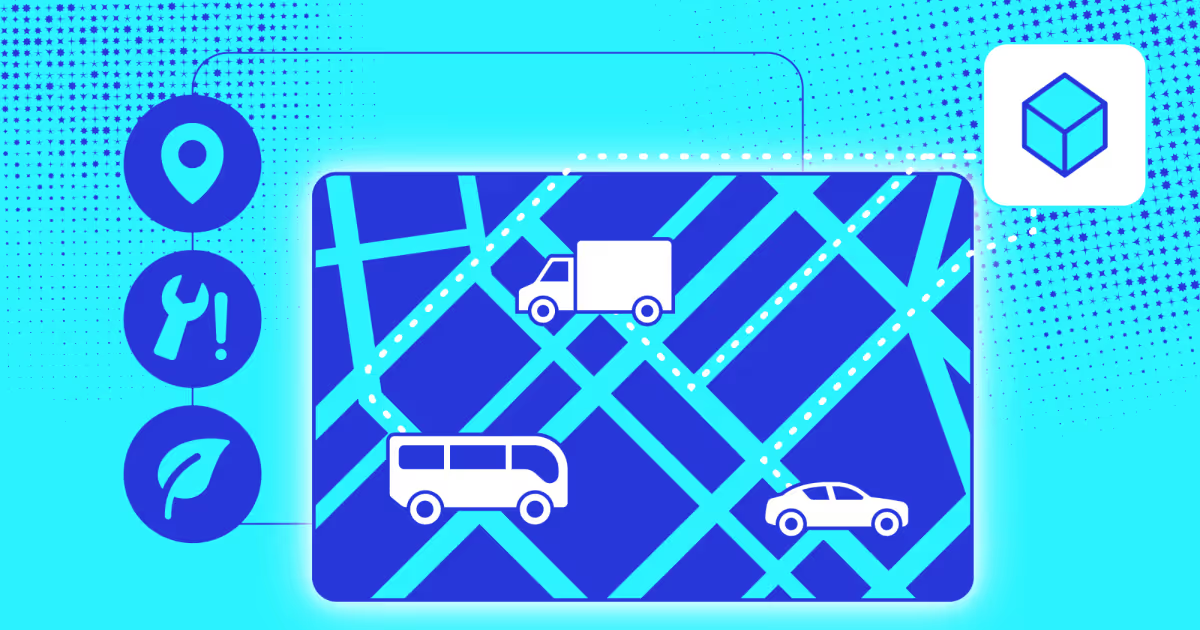
Fleet telematics combines GPS tracking, onboard sensors, and cloud software into one system. It reports where your vehicles are and how they're running. The category covers everything from basic location pings to full diagnostic and driver-coaching platforms. Adoption is uneven across use cases, and the data backs that up.
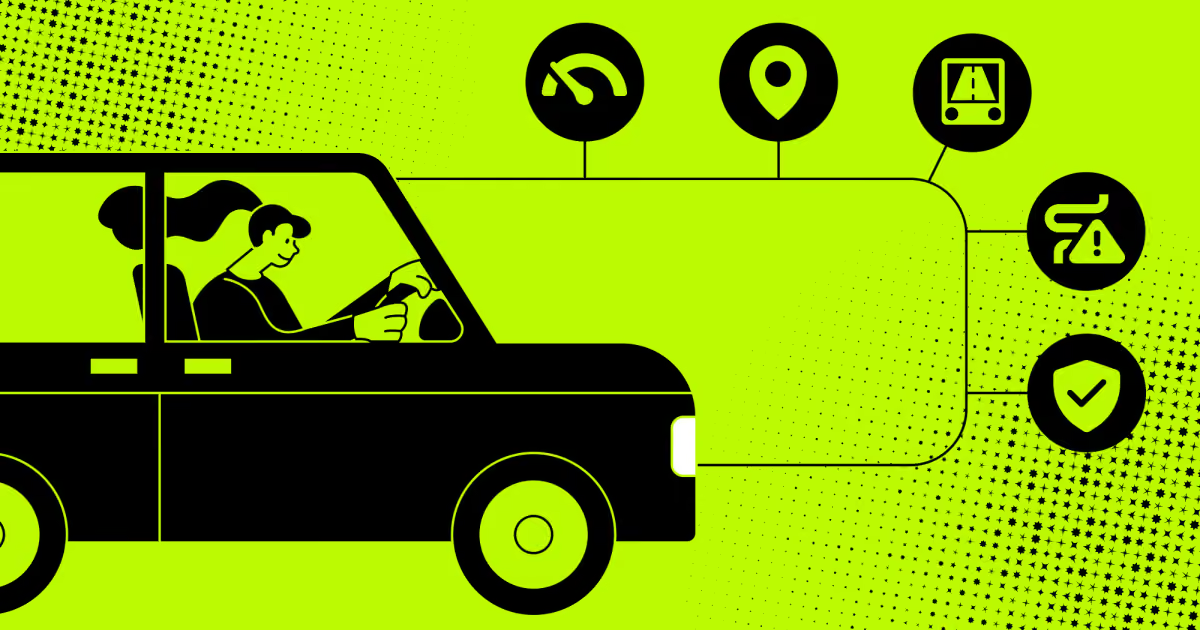
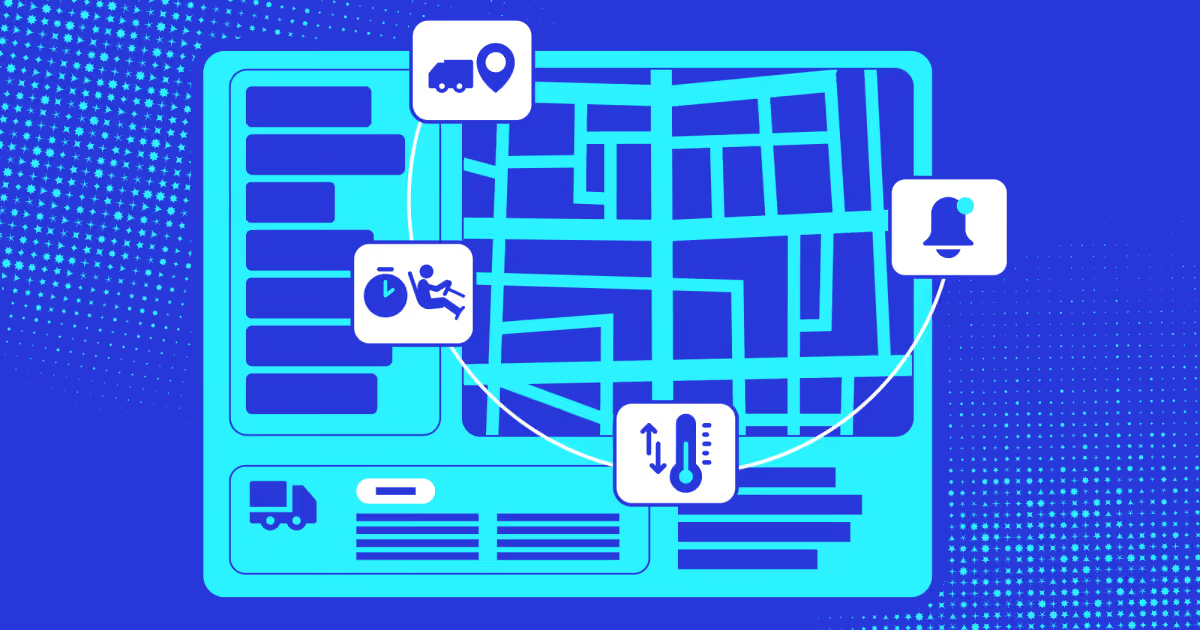
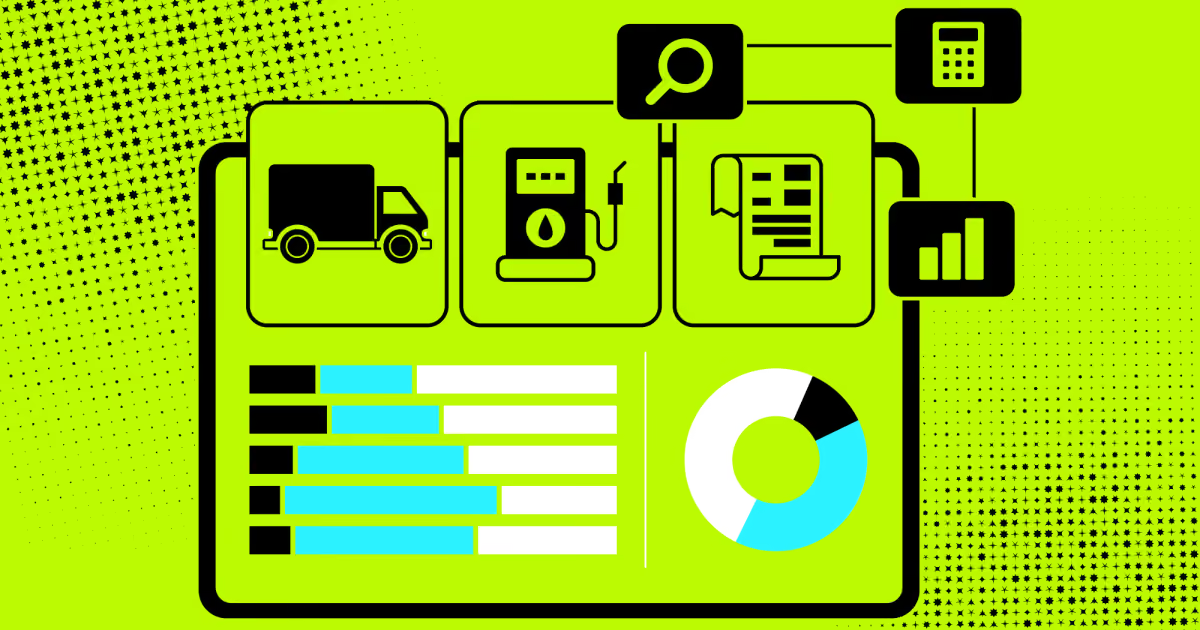
At its core, telematics turns a vehicle into a data source. Hardware units pull GPS, engine, and diagnostic signals. Software then converts that stream into dashboards, alerts, and reports. The result is telematics in fleet management: live oversight instead of end-of-day guesswork.
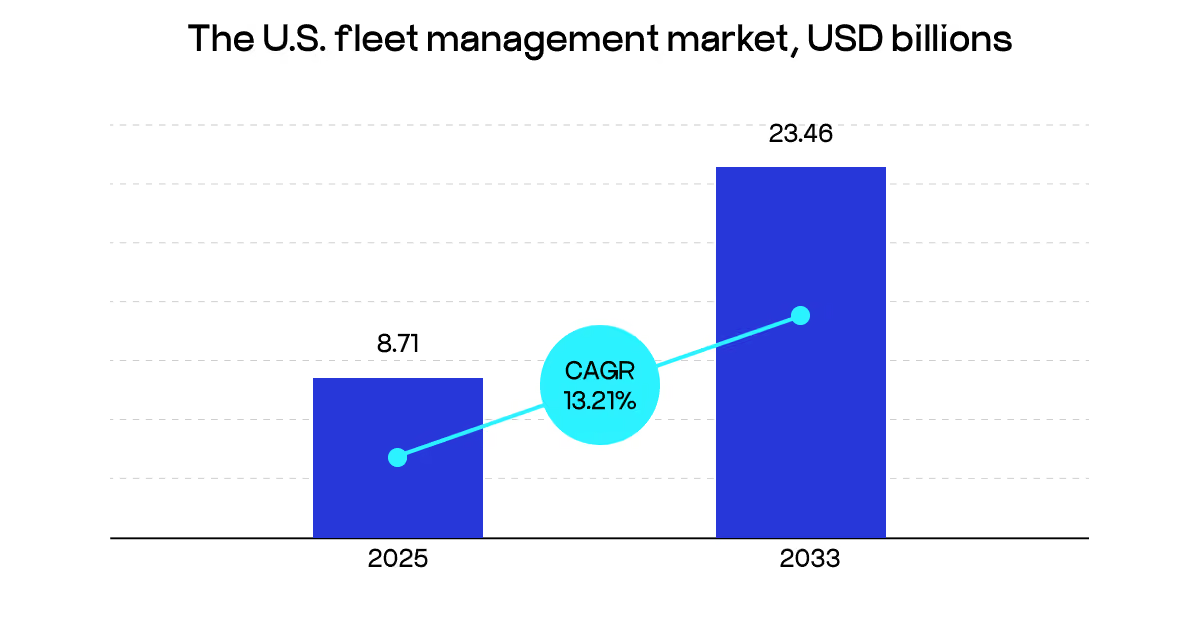
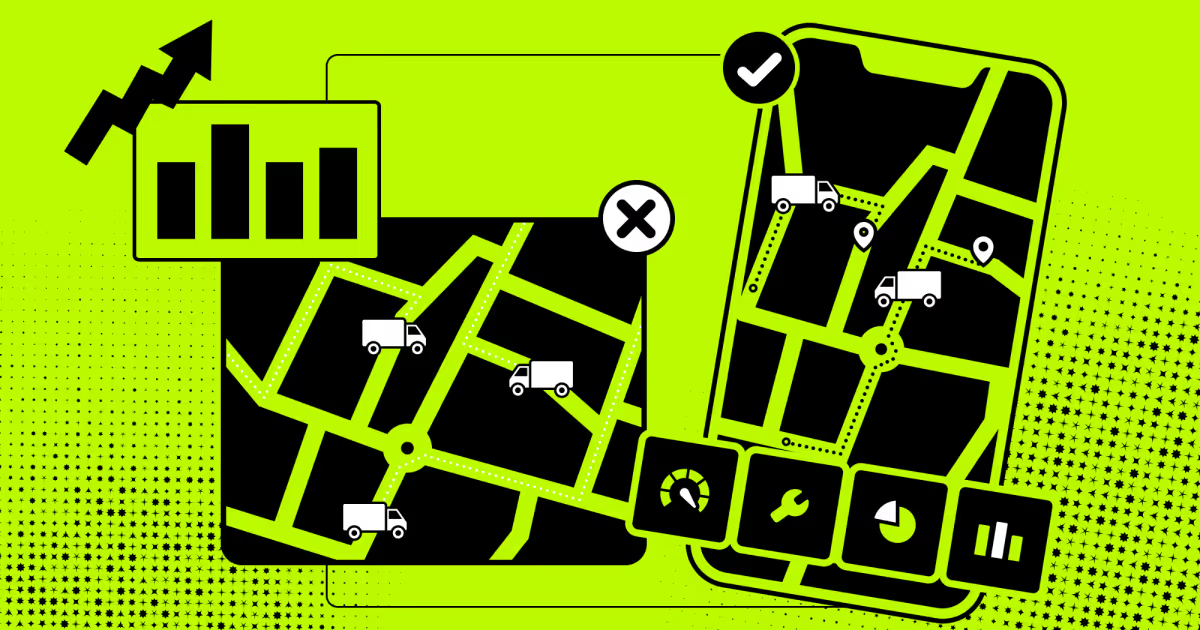
The market reflects how fast this shift is moving. Adjacent remote fleet management technology is projected to hit $23.46 billion by 2033, growing at 18.5% a year. Adoption isn't evenly spread, though. Recent ATRI research surveyed 111 fleets and found safety telematics leads at 73 to 92.8% utilization. Maintenance telematics lags far behind: 48% of fleets don't integrate it with maintenance software at all.
That gap matters for your budget. A Forbes Finance Council piece on fleet monitoring found traditional systems cut operating costs by five to ten percent. Predictive AI on top of that data could double those savings. The author noted a one-mile-per-gallon fuel gain alone can hit seven figures annually across a large fleet.
What are the latest advances in fleet telematics?
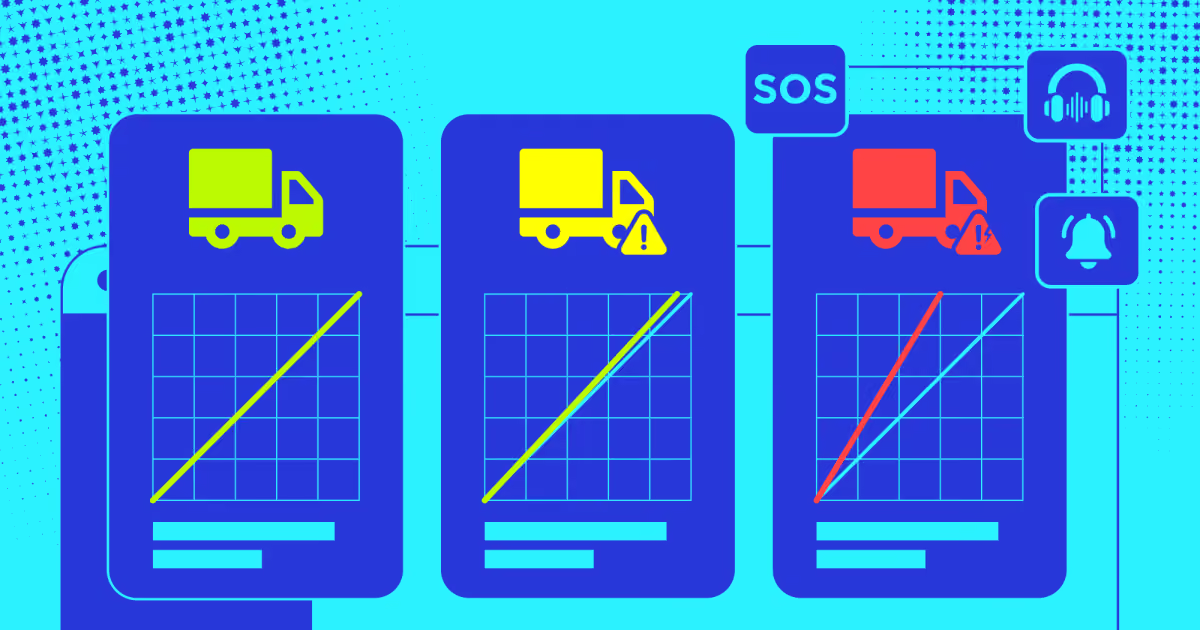
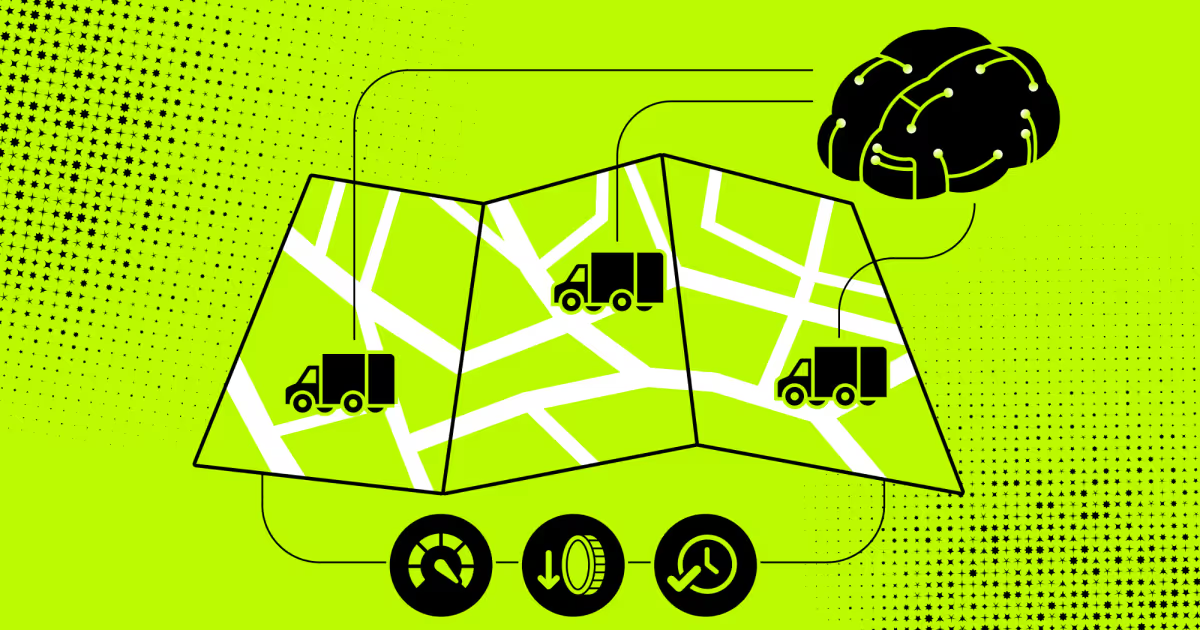
Fleet telematics management is shifting from reporting to prediction. Older systems told you a truck broke down. Newer platforms flag the failure before it happens. That shift relies on AI models trained on sensor data, not just GPS pings.
Predictive maintenance is the clearest example.
Instead of waiting for a fault code, the system reads vibration and temperature trends. It schedules service before a breakdown strands a driver. Coaching has moved in the same direction: alerts now adapt to how each driver actually responds, not a fixed rule set.
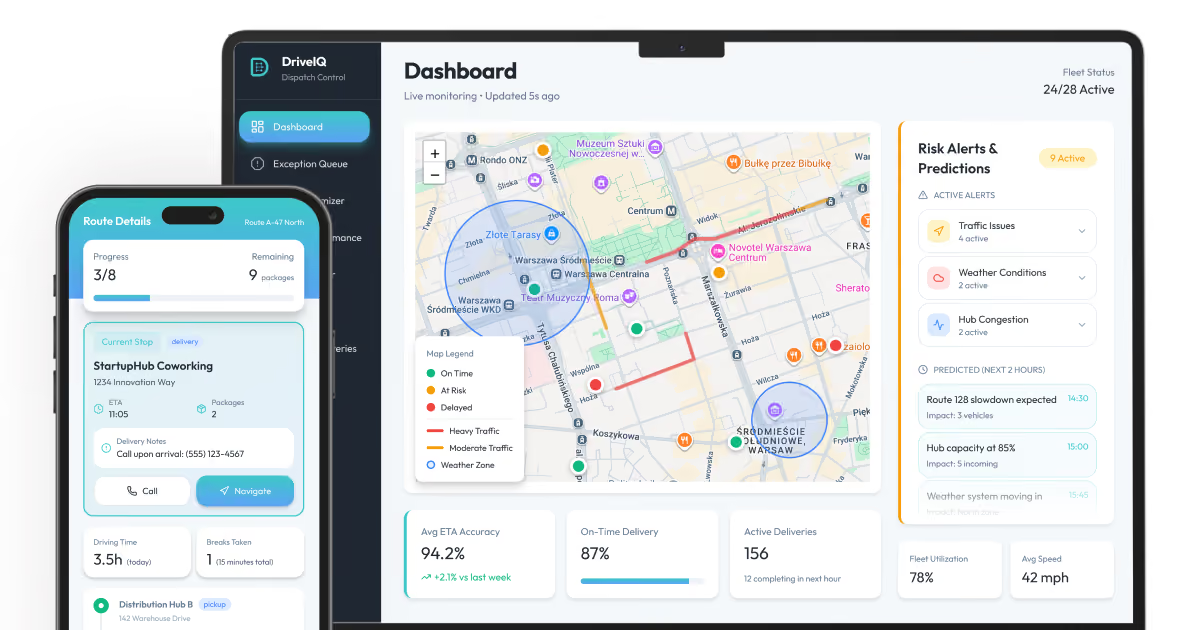
"Predictive alerts only help if dispatchers trust them enough to act. On DriveIQ, we cut exception diagnosis time from twelve minutes to under three by clustering root causes instead of dumping raw alerts on one screen," says Orest Falchuk, Head of Engineering at COAX Software.
Contextual video telematics is the second promising area.
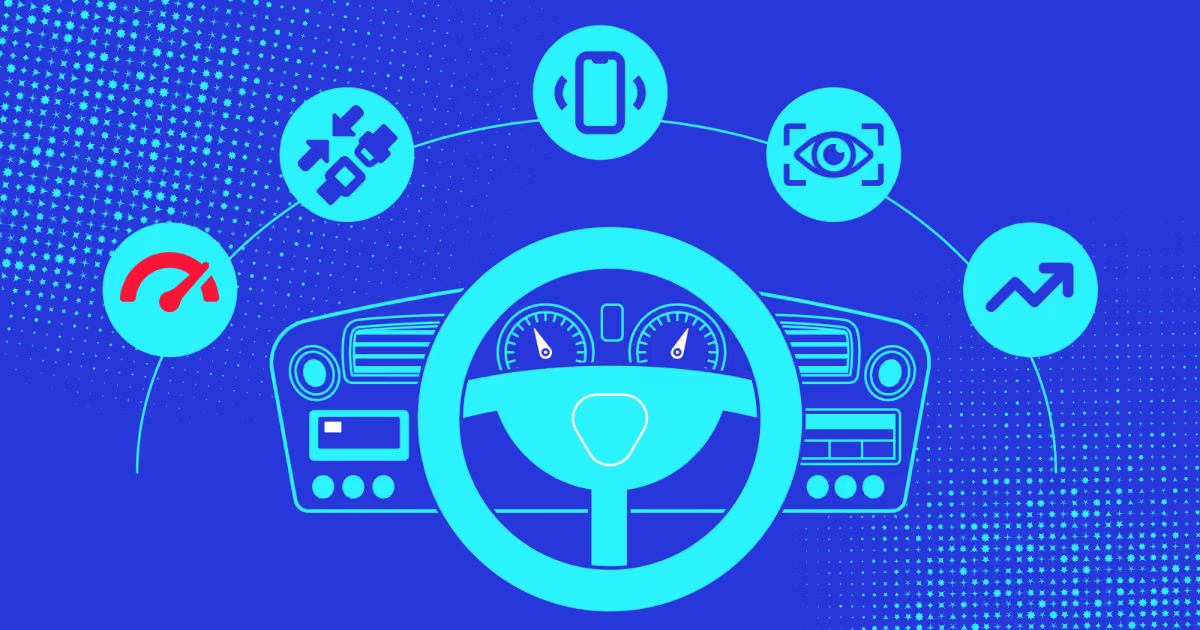
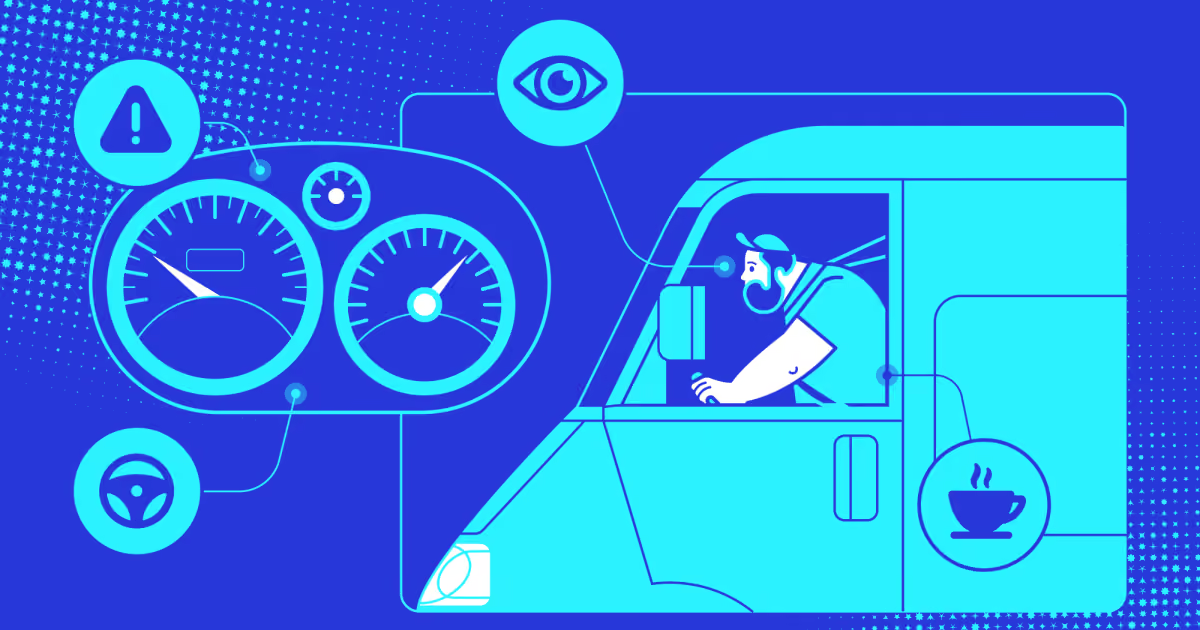
Single-event alerts (like harsh braking) are paired with integrated video triggers. Rather than flagging isolated metrics, modern platforms combine accelerometer triggers, CANBUS data, and video streams to determine whether a driver was reacting to a hazard or engaging in risky behavior. Now a driver monitoring system pairs video triggers with accelerometer data and event classification. Combine that with telematics fleet tracking, and a fleet manager sees why a truck braked hard, not just that it did. This provides unambiguous evidence for safety coaching and insurance claims.
Integration via APIs turns fleet data into an ecosystem.
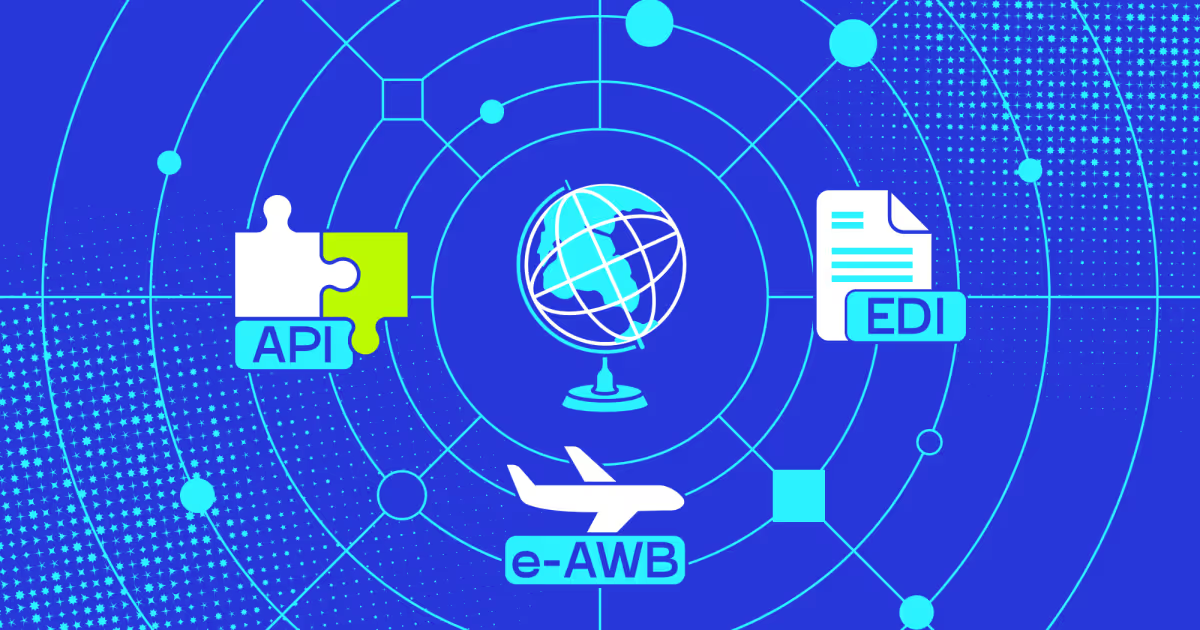
Location and diagnostic data are no longer isolated inside standalone dashboards. Telematics infrastructure is now built to stream normalized data directly into dispatch tools, ERP platforms, and maintenance systems via flexible APIs, making enterprise-wide integration a baseline requirement.
EV and mixed-fleet data normalization brings benefits, too.
Electric vehicles introduce metrics that traditional internal combustion engine (ICE) systems ignore, such as battery state of charge, charging cycles, and real-time range forecasting. Fleet telematics solutions now normalize data streams across hybrid fleets, allowing operators to run ICE and EV assets through unified workflows without fragmenting route planning or maintenance schedules.
Modular, specialized sensor integration is another important direction.
Telematics hardware is moving toward modular architectures capable of reading niche operational inputs. This covers everything from trailer door sensors and cargo temperature monitors to Power Take-Off (PTO) status and fuel theft indicators. It requires no custom software overhauls for every use case.
Domain
Legacy telematics
Next-gen telematics
Data scope
Basic GPS location & simple fault codes
CANBUS diagnostics, EV battery health, sensor arrays
API-first integration into ERP, dispatch, & maintenance
Who needs fleet telematics?
Any business running vehicles or heavy equipment can use fleet telematics. The value shifts by industry: some chase route efficiency, others chase asset security. Below, you'll find the main sectors, their core use case, and the benefit each one gets first.
Industry
Primary use case
Key benefit
Logistics and delivery
Route optimization, hours-of-service logging
Lower fuel cost, fewer compliance fines
Construction
Equipment geofencing, theft prevention
Fewer stolen assets, better utilization
Field service and utilities
Dispatching the nearest technician
Faster response, more jobs per day
Government and public sector
Coordinating public works and emergency units
Faster deployment, clearer accountability
Car rental and leasing
Odometer, location, and diagnostic tracking
Accurate billing, faster vehicle recovery
Agriculture and mining
Remote asset monitoring in hard-to-reach sites
Predictive maintenance, lower downtime
Small businesses
Basic vehicle tracking on a handful of vans
Lower daily operating expense
Each industry pulls a different value out of the same core data. Here's how the main sectors put it to work, from general vehicle tracking to more advanced uses.
Service companies. Plumbers, electricians, and HVAC crews dispatch the nearest van first. That single change cuts drive time across a whole day.
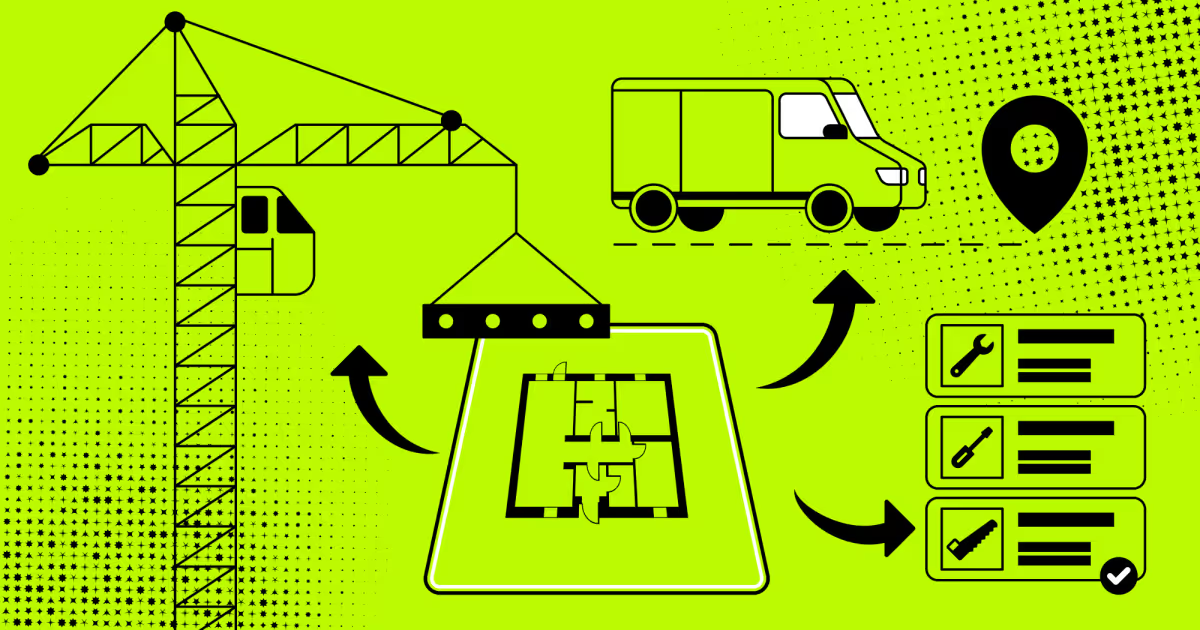
Construction and heavy equipment operators. Cranes, bulldozers, and site trucks get geofenced. Operators catch theft and idle equipment before it costs a project.
Government and public sector fleets. Municipalities coordinate waste, public works, and emergency vehicles from one dashboard. Dispatch gets faster and easier to audit.
Logistics and delivery companies. Freight and last-mile fleets optimize routes and cut idling. Automated hours-of-service logs and fleet telematics dashboards remove a stack of paperwork.
Small businesses. Operations with as few as three vehicles use low-cost plans. Even a small fleet trims fuel and maintenance spend fast.
Field service and utility providers. Technicians get routed to the closest job automatically. Mobile inspections and maintenance alerts replace paper checklists.
Car rental and leasing companies. Operators track odometer readings, location, and diagnostics live. That data drives usage-based billing and faster vehicle recovery.
Agriculture and mining operations. Off-road machinery gets monitored remotely, often with no cell signal nearby. Predictive maintenance matters most where a breakdown is hardest to reach.
That range shows why fleet telematics software rarely ships as one fixed product. The next section breaks down how COAX has built it for a few of these industries directly.
Proven by experience: how COAX Software has applied fleet telematics
Numbers from a vendor pitch are easy to write. Numbers from a shipped platform are harder to fake. Here's what happened across a few of our own logistics and transit builds.
Project
Industry
Telematics application
Measured result
DriveIQ
Cross-border trucking
Predictive ETA and driver coaching
Late deliveries dropped from 18% to 7%
Driven Connect
Coach and minibus hire (UK)
Route planning and emissions tracking
400+ operators onboarded to date
DrivenBus
Passenger transit (Dubai)
Real-time GPS and QR boarding
Schedule adherence reached 91%
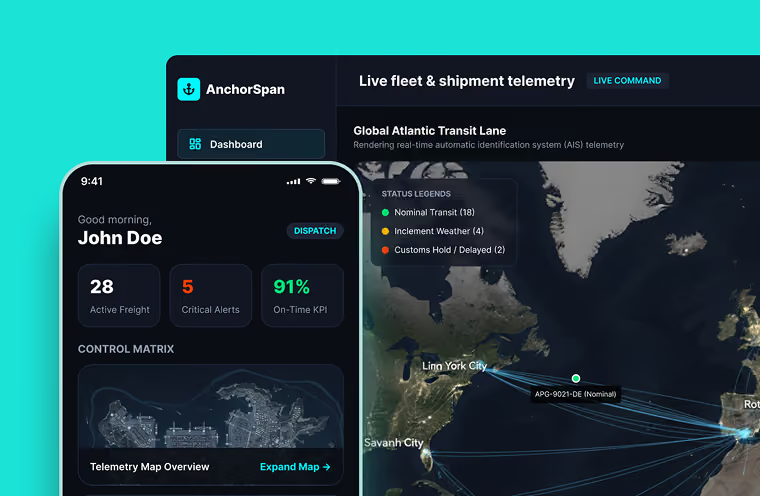
AnchorSpan
Port and warehouse logistics
Trucking telematics merged with RFID and vessel feeds
Late shipments fell from 19% to 8%
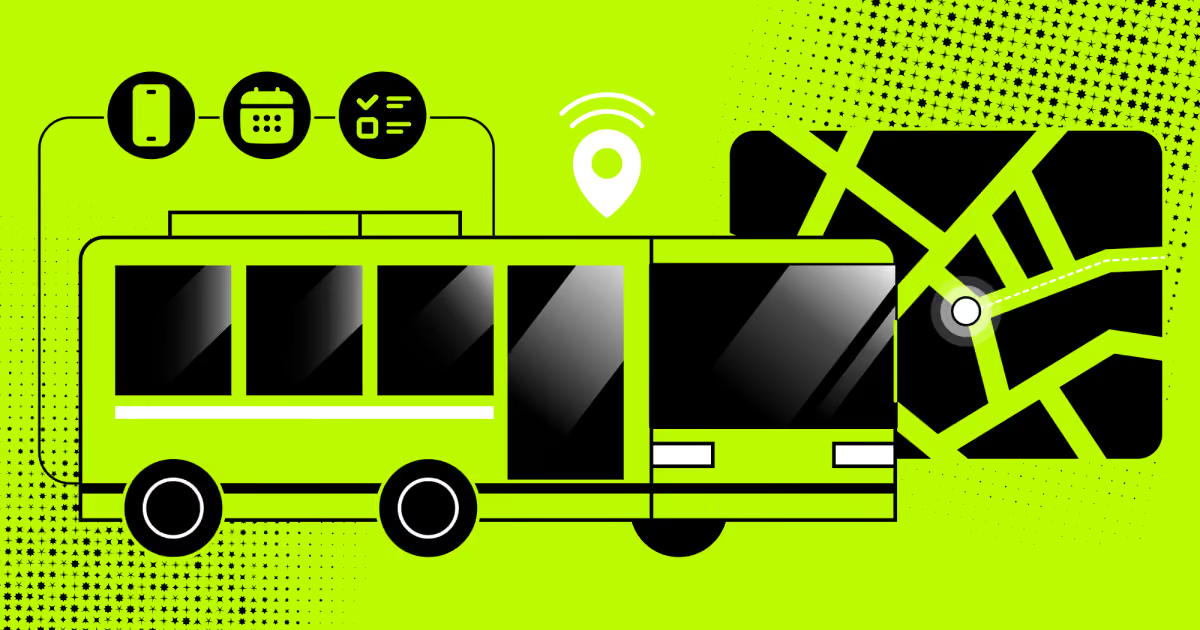
DrivenBus is a clear case of real-time data done right. The client needed passengers to see a bus approaching, live, on a map. Drivers' phones sent GPS coordinates every 10 seconds during an active route. That steady feed is what schedule adherence actually depends on. Buses now depart within two minutes of plan in 91% of cases. The tracking wasn't the hard part. Keeping it accurate at 10-second intervals across a growing fleet was.
DriveIQ shows the same pattern from a different angle. Rather than build a new tracker from scratch, we wrapped fleet telematics tracking data from the client's existing providers. Normalizing that data mattered more than any single feature. That's usually where the real engineering work lives.
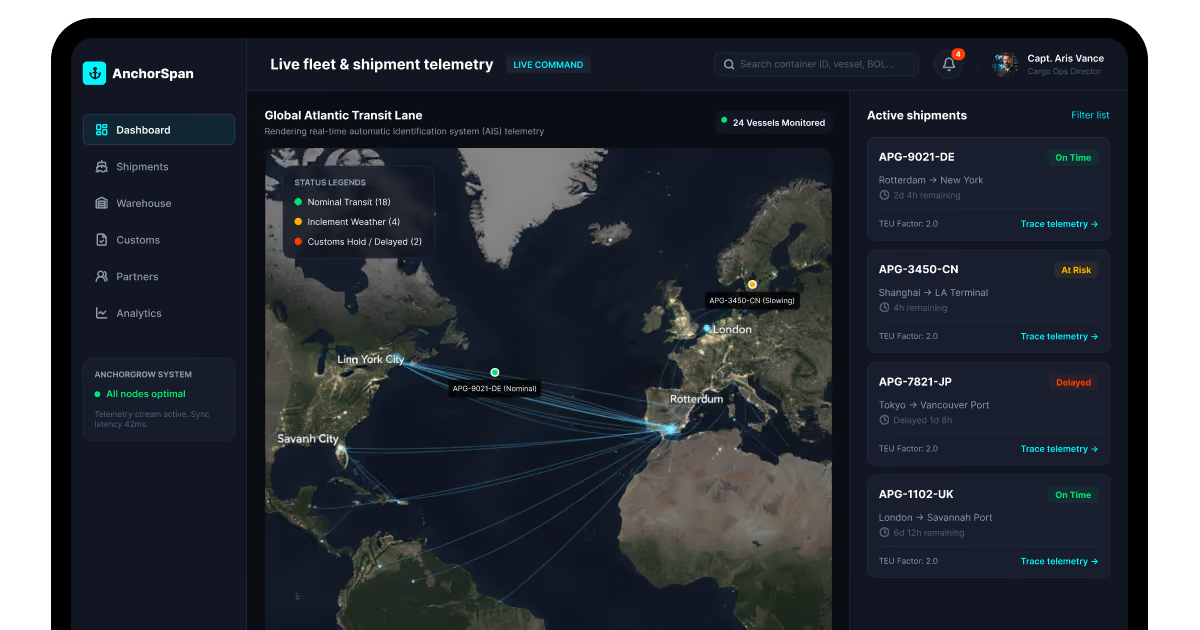
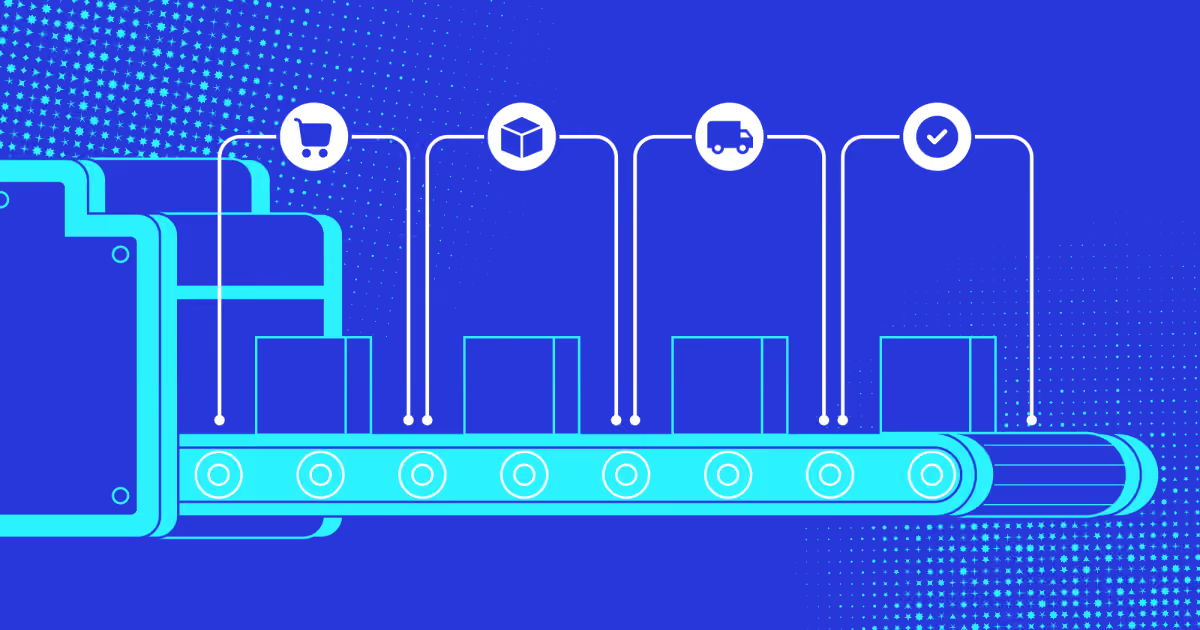
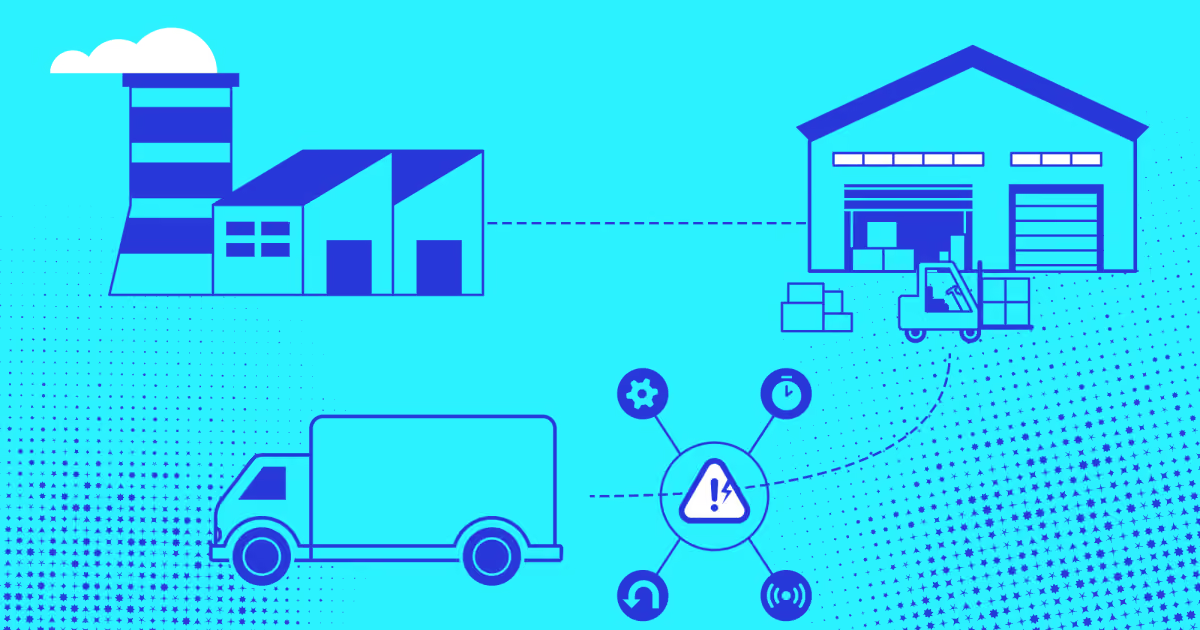
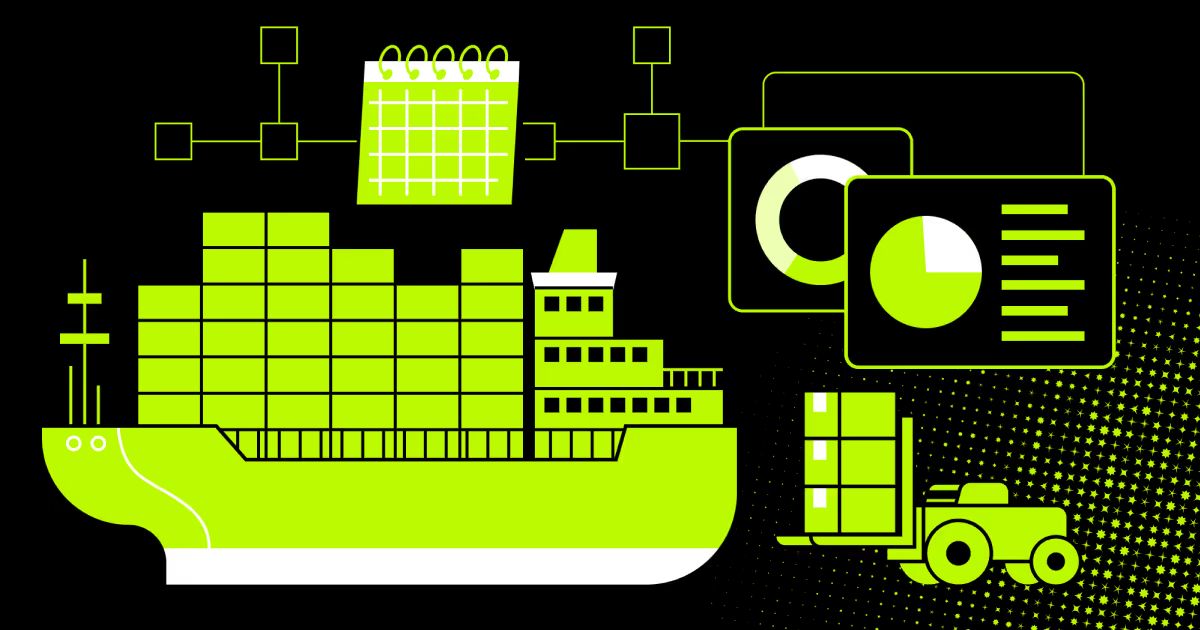
AnchorSpan confirms it again in a different setting. RFID scans, vessel pings, and trucking telematics all landed in separate systems before. We merged them into one event stream instead of building three new trackers. Average time to locate a shipment dropped from 20 minutes to 90 seconds. The win came from connecting existing data.
AnchorSpan
Now that we’ve seen the examples from the market and our own experience, let’s focus on the essential elements of telematics and fleet management.
How does fleet telematics work?
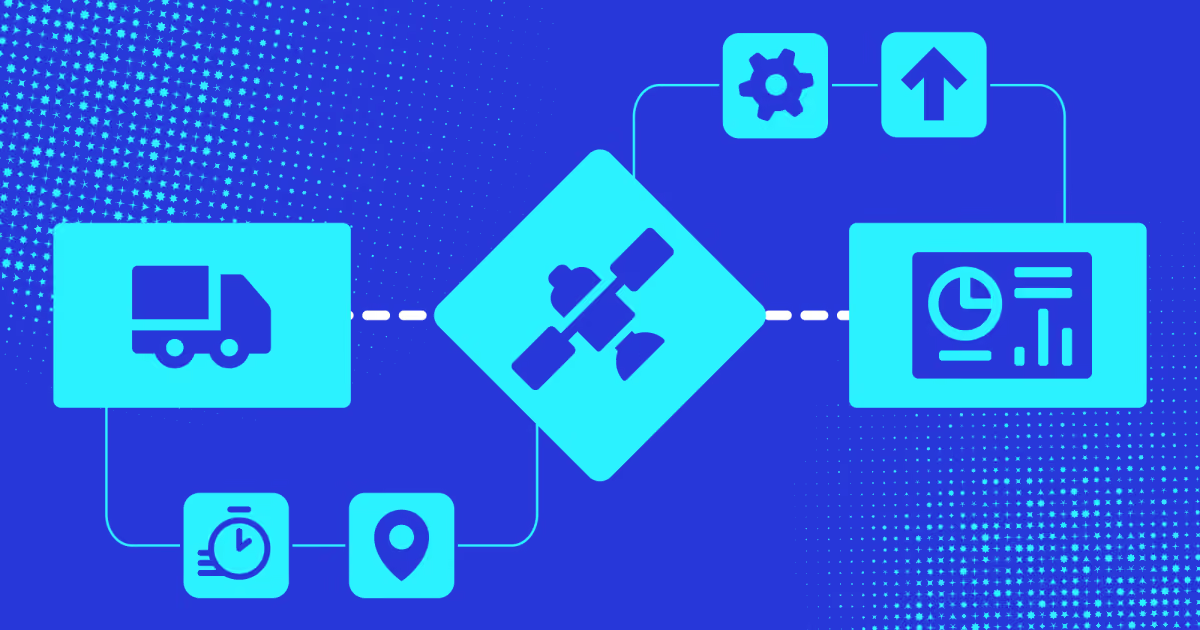
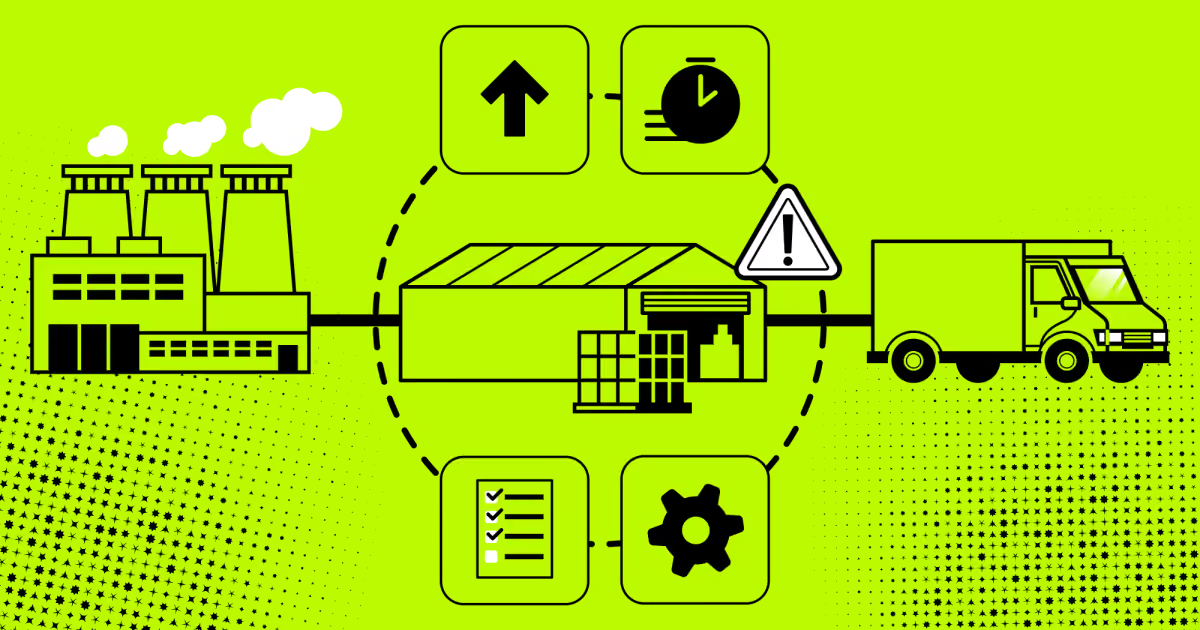
A telematics based fleet management system runs on four layers: hardware, connectivity, cloud processing, and a dashboard. Strip away the marketing language, and it's a chain. Each link depends on the one before it. Break one, and the whole picture goes dark or drifts out of sync.
The onboard device. This is the physical anchor: a fleet telematics device wired into the vehicle's diagnostic port or CAN bus. It reads engine RPM, fuel level, battery voltage, and GPS coordinates continuously. On older trucks, we've had to pair it with an adapter harness since the OBD-II port wasn't standard yet. Get this piece wrong during install, and every downstream report inherits the error.
Sensors and peripherals. Beyond the core unit, most fleets bolt on extras: accelerometers, dashcams, temperature probes, tire-pressure sensors. Each one feeds a narrow slice of context the base device can't capture alone. A refrigerated truck needs cargo temperature logged separately from engine data. Skip that layer, and you're flying blind on the one metric that actually protects the load.
Connectivity module. Data has to leave the vehicle somehow, and that's where cellular or satellite radios come in. Most fleet telematics solutions default to 4G with a satellite fallback for dead zones. We've built cross-border builds where the connection swapped networks mid-route without dropping a single ping. That handoff has to be invisible, or dispatchers start second-guessing every location update.
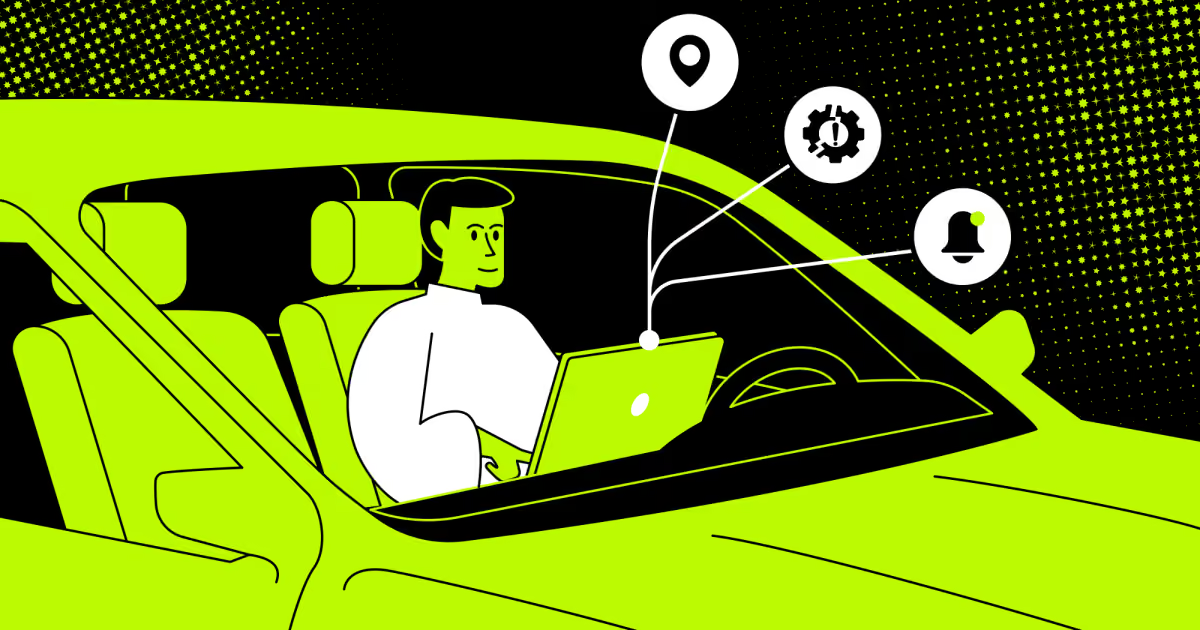
Cloud backend. Raw signals land on a server that decodes, timestamps, and stores them. This is where fleet telematics analytics actually happens: pattern detection, anomaly flags, historical comparisons. A dashboard is only as trustworthy as the pipeline feeding it. We've spent more hours cleaning mismatched timestamps here than building any single visible feature.
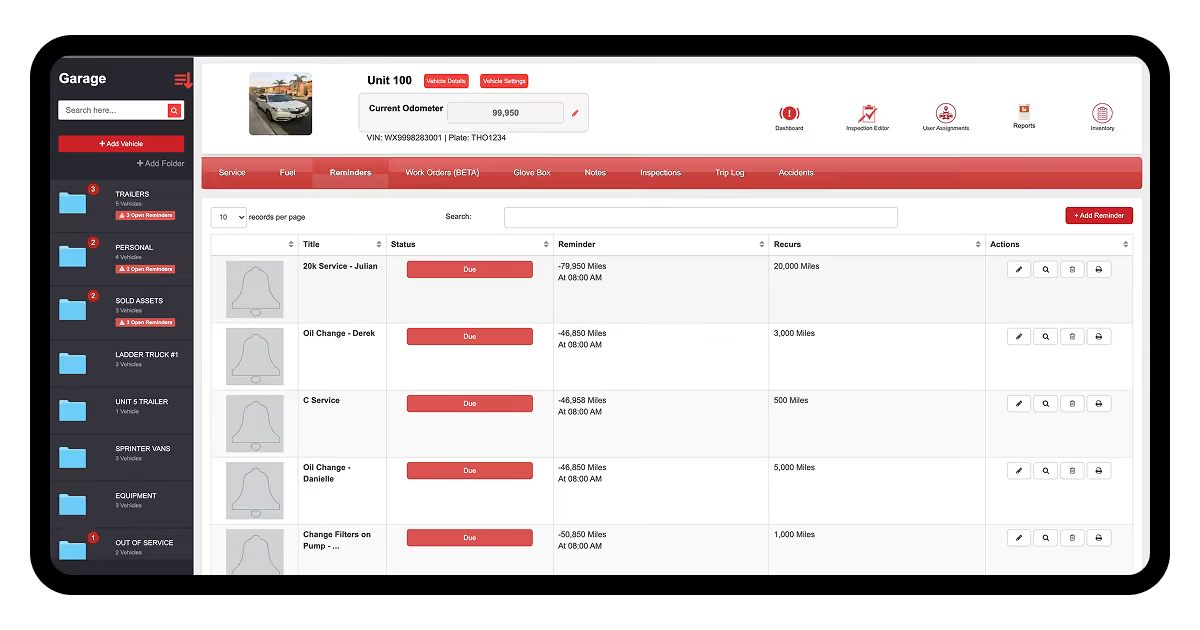
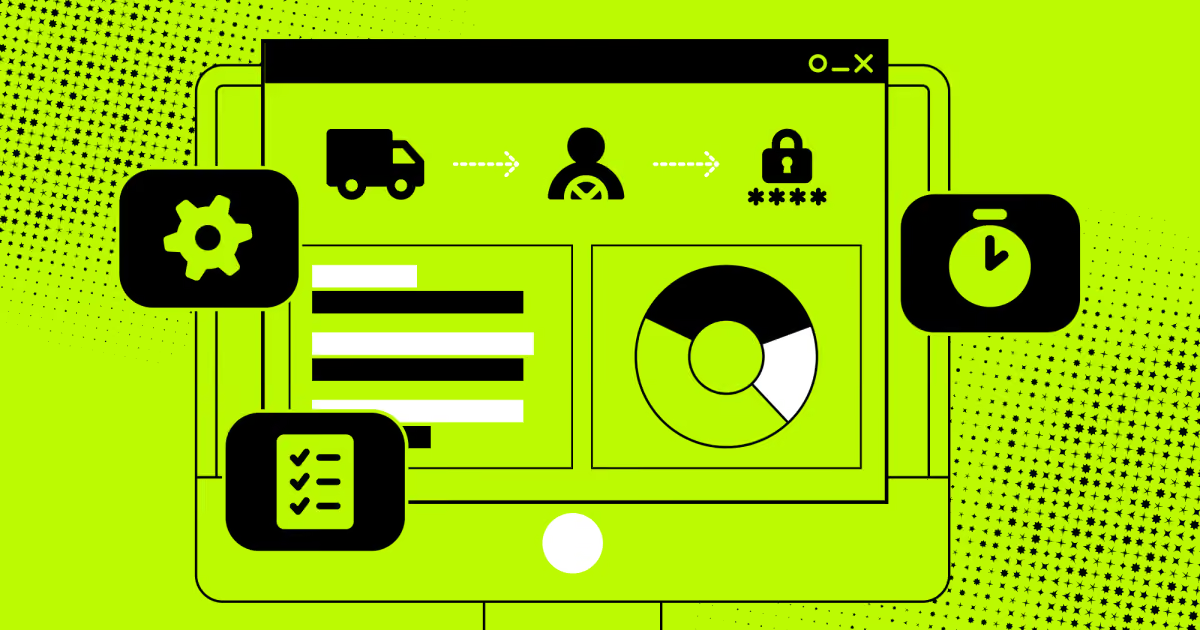
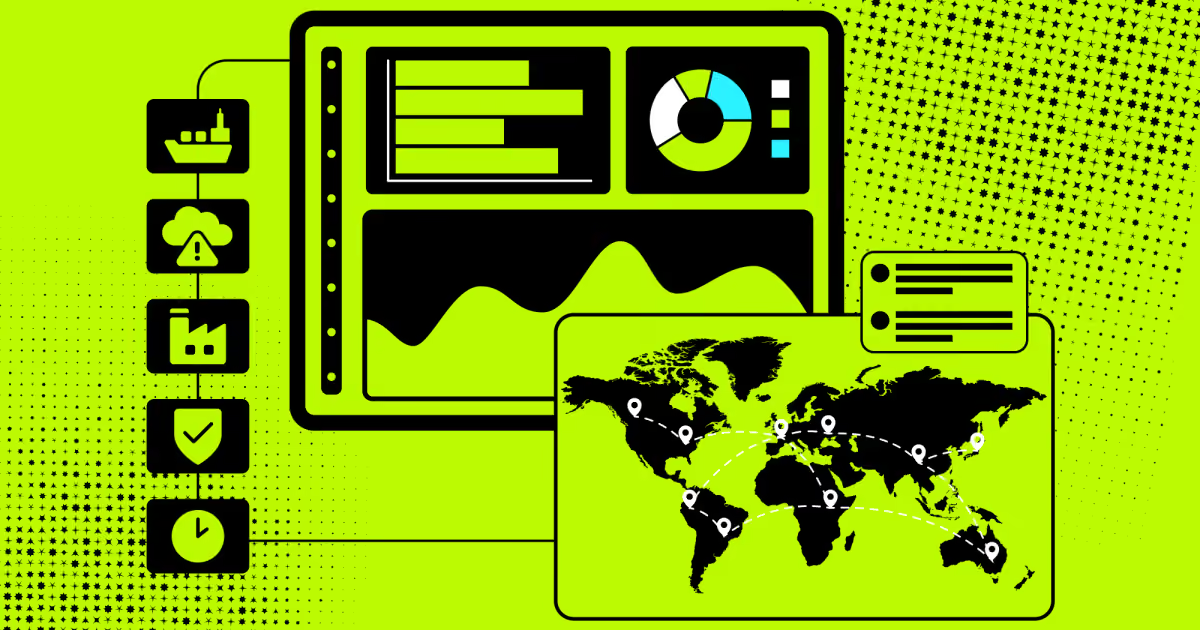
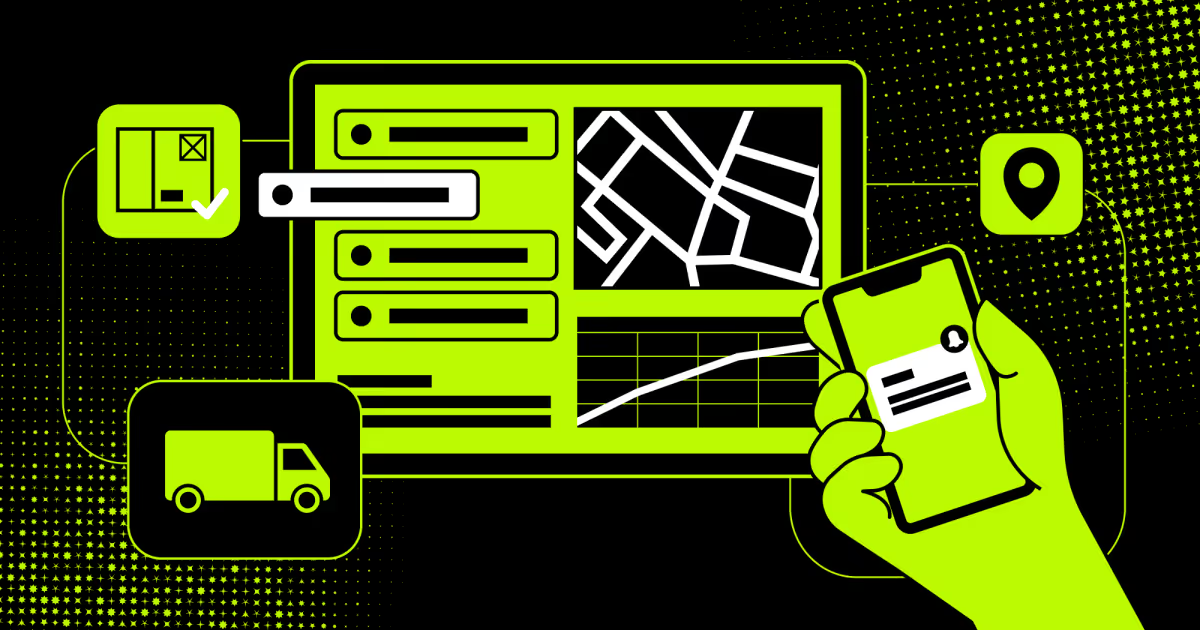
Dashboard and alerts. The last layer is what a fleet manager actually touches: maps, scorecards, maintenance flags. Good fleet management telematics dashboards filter noise by role, so a dispatcher doesn't drown in maintenance alerts meant for a mechanic. Everything upstream exists to make this screen worth checking every morning.
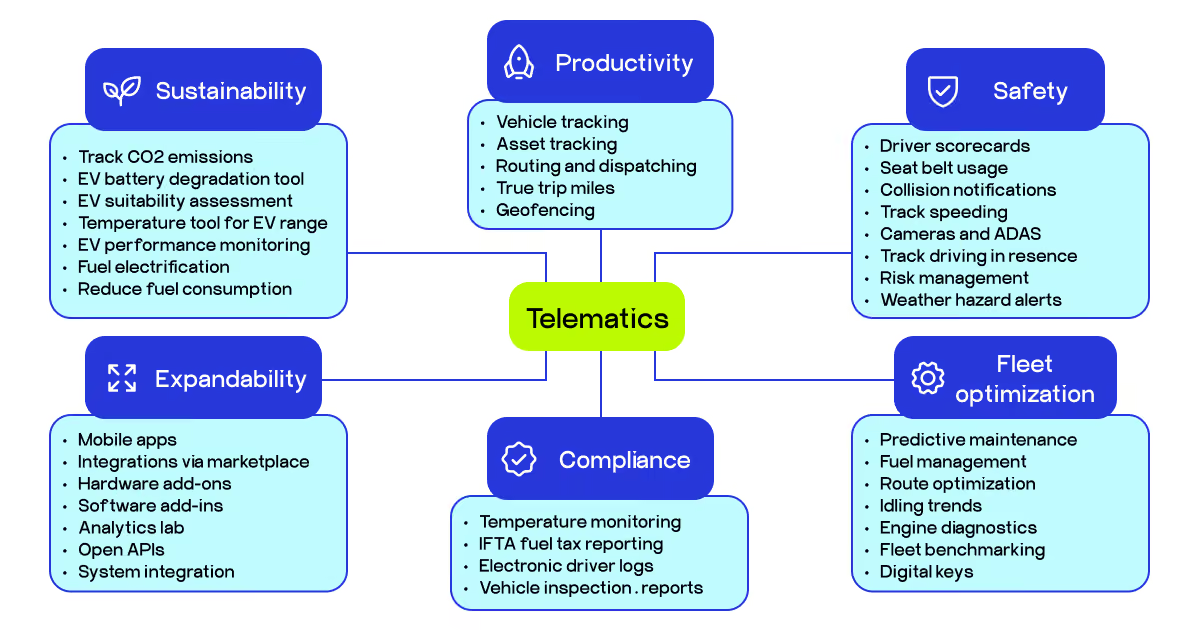
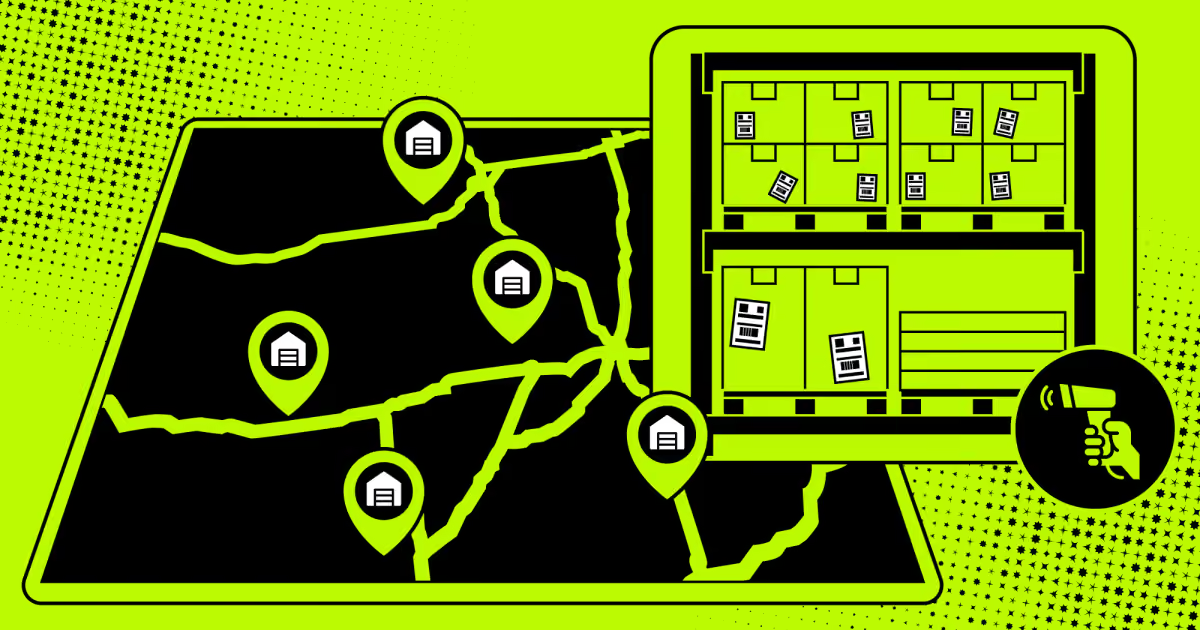
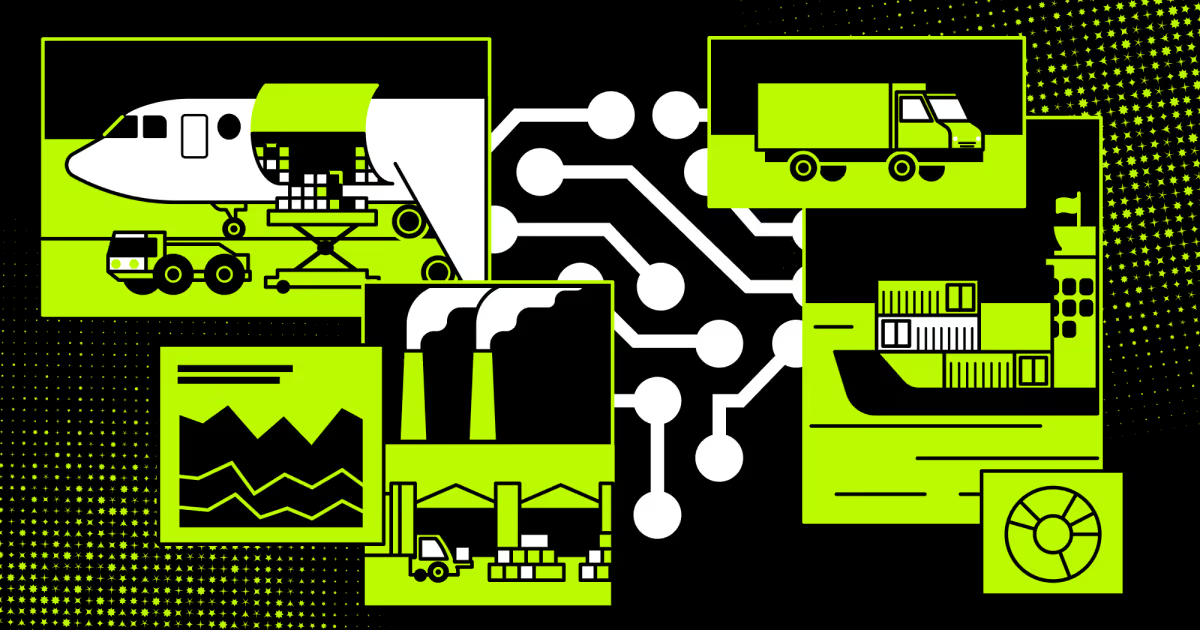
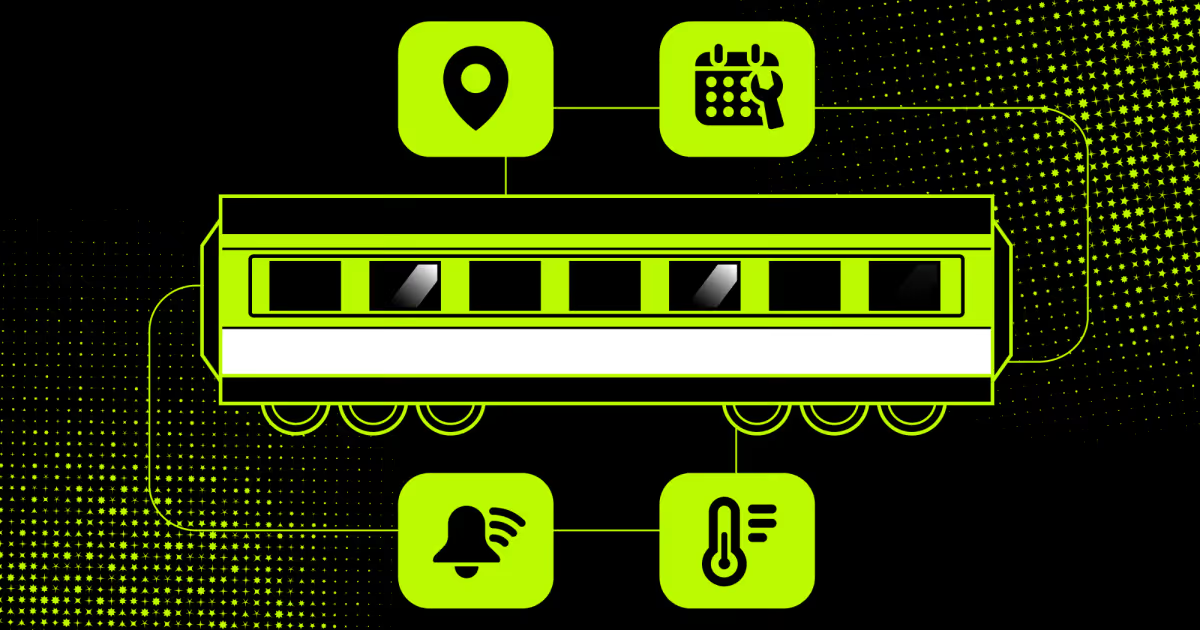
Each component has interconnected nodes that together make an integrated infrastructure. You can see their connections in the following image. Also, this infrastructure relies on the predefined algorithms. Let’s break them down, step by step.
Workflow: how fleet telematics data moves from truck to decision
Telematics data flows through five stages before it becomes a decision anyone acts on. Each stage hands off to the next, and a weak link anywhere slows the whole pipeline down.
Stage one: collection. The onboard unit pulls engine data through the CAN bus while GPS chips fix position and speed. Cameras and accelerometers add behavioral context: harsh braking, sharp cornering, extended idling. On one cross-border build, we paired this with fatigue sensors that flagged high-risk shift patterns before a driver ever hit a legal limit.
Stage two: transmission. Once captured, data moves off the vehicle over cellular or satellite links. Coverage gaps happen constantly on rural routes or at border crossings. The device caches readings locally during a dropout, then pushes everything once signal returns. We've seen this caching layer save entire shifts of data during multi-hour tunnel and mountain-pass stretches.
Stage three: processing. Servers decode the raw stream and stitch related events together. A hard-braking flag gets matched to its video clip and any active fault code from the same second. Without that sync, an operations team sees three disconnected alerts instead of one clear incident. Getting this normalization right took longer on our own builds than any front-end feature.
Stage four: analysis and alerting. Processed data feeds dashboards, scorecards, and automated triggers. Ai fleet telematics models increasingly handle this layer, flagging a likely brake failure before a fault code even fires. Telematics for fleet management teams rely on these alerts to catch problems while they're still cheap to fix. A missed DVIR or a compliance gap surfaces here, not after an inspector finds it first.
Stage five: action. This is where the data earns its keep. Dispatchers reroute around a flagged risk. Fleet managers schedule service before a part actually fails. Driver risk management programs use scorecards to coach specific habits instead of issuing blanket warnings. On our own dispatcher-facing builds, this final step is what convinced skeptical users to trust the system at all.
Stage
What happens
Depends on
Collection
Device reads engine, GPS, and sensor data from the vehicle
Correct hardware install, wiring, and sensor calibration
Transmission
Data moves off the vehicle over cellular or satellite links
Network coverage and local caching during dropouts
Processing
Cloud servers decode, timestamp, and sync related events
Consistent formatting across devices and providers
Analysis and alerting
Dashboards and models flag risks, faults, or violations
Clean, normalized data from the processing stage
Action
Teams reroute, schedule service, or coach drivers
Alerts that are accurate enough to act on without checking twice
Telematics fleet management only pays off when every one of these stages holds together. A gap in transmission undercuts analysis. Weak analysis undercuts the action stage entirely. That chain, more than any single feature, decides whether a platform actually changes daily operations.
What are the main benefits of fleet telematics?
On DriveIQ, in-cab coaching cut fuel consumption by 12% fleet-wide. That single number shows what the benefits of fleet telematics actually mean in practice. Fuel already eats over 30% of most fleets' operating costs. A fleet telematics system attacks that cost from several angles at once, not just one.
Fuel cost reduction.
Telematics tracks idling, harsh braking, and rapid acceleration in real time. Managers use that data to optimize routes and cut waste. The U.S. Department of Energy found better driving habits save 10 to 15% on fuel. How does telematics improve fleet management here? It turns invisible habits into visible, fixable patterns.
Enhanced driver safety.
Fleet telematics systems flag speeding, fatigue, and harsh cornering as they happen. Real-time alerts and in-cab feedback coach drivers before a habit turns dangerous. On DriveIQ, this approach contributed to a 38% drop in safety incidents. Fewer incidents mean fewer claims and lower insurance premiums over time.
Proactive vehicle maintenance.
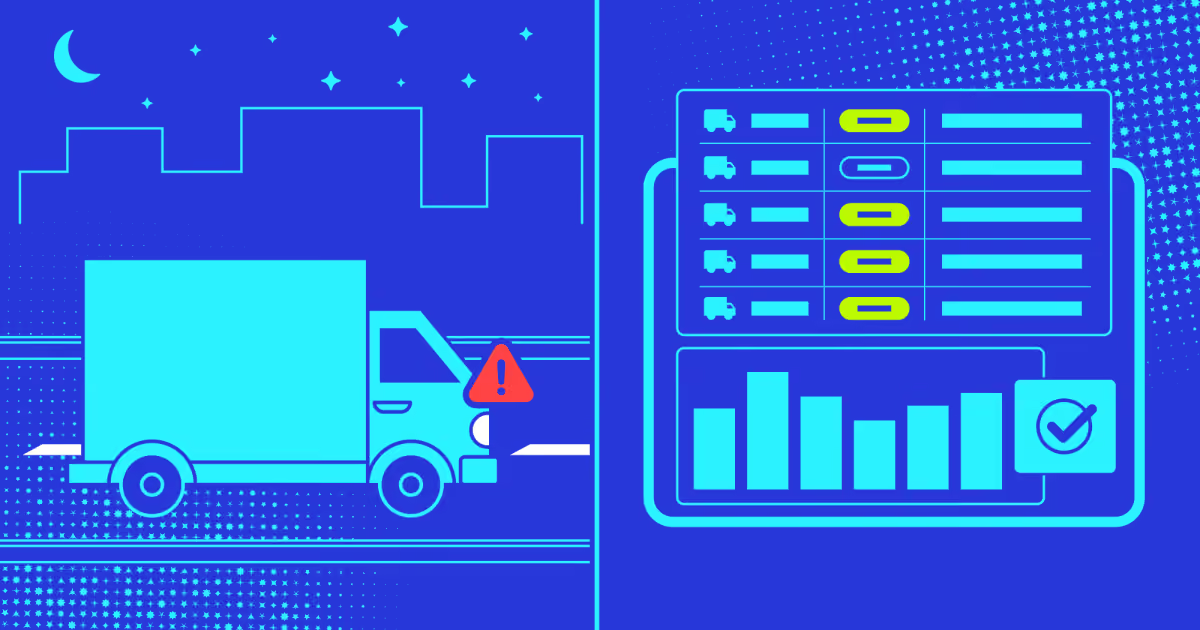
Onboard diagnostics catch engine trouble before it strands a truck. Fleet telematics flags fault codes early, well before a dashboard light forces a stop. That shift moves maintenance spend from emergency repair to scheduled service. Vehicles last longer, and downtime drops as a direct result.
Improved operational efficiency.
Real-time GPS and dispatch tools sharpen routing accuracy across a fleet. Dispatchers give customers ETAs they can actually trust. Fleet telematics software replaces guesswork with live traffic and location data. On DriveIQ, this contributed to dispatchers managing 31% more routes without adding headcount.
Regulatory compliance.
Automated logs handle driving hours, rest breaks, and fuel tax reporting. That removes hours of manual paperwork before every audit cycle. A missed log used to mean a fine discovered too late. Now the system flags a gap before an inspector ever asks.
Vehicle security and fraud prevention.
Tracking tools alert managers to unauthorized vehicle use immediately. They also help recover stolen vehicles faster than a police report alone. Matching location data against fuel card charges catches fraud early. That cross-check turns two disconnected records into one reliable audit trail.
There’s one short conclusion about telematics technology: fleets that measure more, waste less. Next, let's look at the specific features that make these gains possible.
What are the features of fleet telematics solutions?
Fleet telematics solutions bundle a dozen or so core capabilities into one platform. Some fleets need all of them from day one. Others start with two or three and expand later. Here's what actually shows up inside a working system.
Feature
What it includes
Real-time tracking
Live GPS location, speed, direction, and route history
Consumption tracking, idle alerts, carbon or tax reporting
Driver behavior analysis
Harsh braking, speeding, idling, and driver scorecards
Maintenance scheduling
Engine diagnostics, fault codes, automated service reminders
Geofencing and asset tracking
Zone alerts, theft prevention, equipment location history
Compliance and reporting
Hours-of-service logs, inspection records, tax and audit reports
Real-time vehicle tracking.
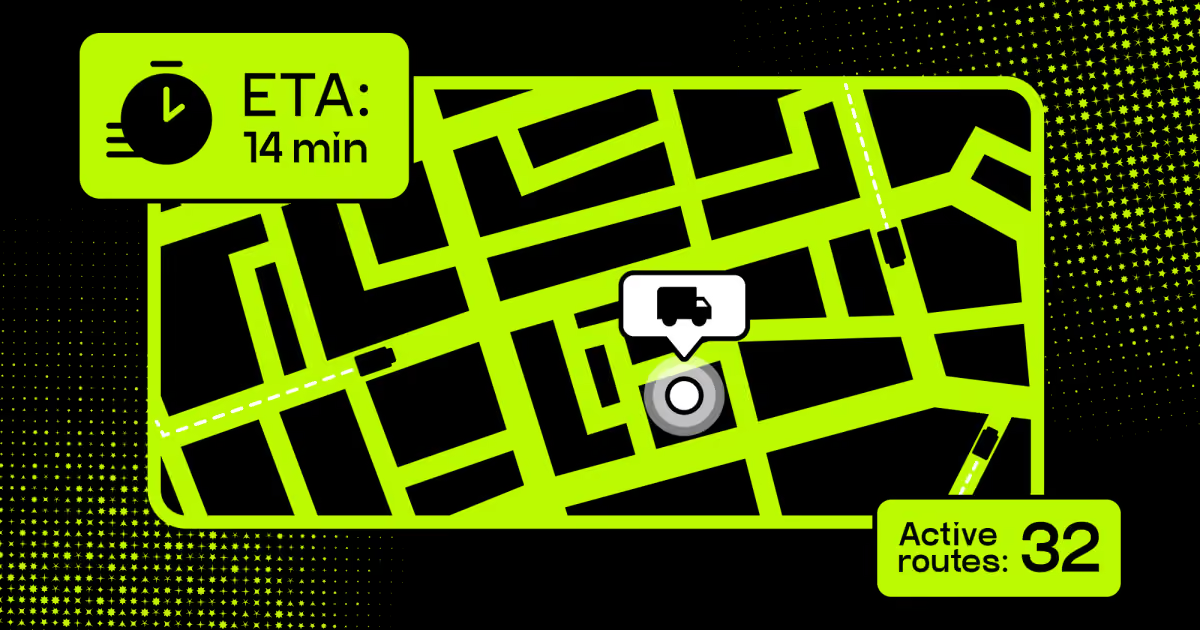
Live GPS positioning is the baseline every fleet monitoring software platform builds on. Managers see every vehicle's location, speed, and direction on a map. This alone replaces a dozen daily phone calls asking "where's the truck?" Everything else in the platform layers on top of this feed.
Route planning and optimization.
The system calculates the fastest path using live traffic and road data. Dispatchers adjust routes mid-shift when conditions change unexpectedly. On DrivenBus, this logic helped operators build new routes in an average of 12 minutes. Faster planning means less time lost before a vehicle even leaves the yard.
Fuel and emissions monitoring.
This feature tracks consumption, flags waste, and often calculates environmental impact too. Fleet management and telematics platforms increasingly bundle emissions reporting alongside basic fuel tracking. Regulatory pressure is pushing this feature from optional to standard fast.
"Emissions tracking sounds like a compliance checkbox until a client actually has to pay a carbon tax per route. On Driven Connect, we built that calculation straight into the booking flow, so operators see the cost before they commit, not after," says Orest Falchuk, Head of Engineering at COAX Software.
Driver behavior analysis.
Sensors log harsh braking, speeding, and excessive idling automatically. Scorecards turn that raw data into something a driver can actually act on. Fleet telematics vendors increasingly pair this with video for added context. A number alone rarely changes behavior. Context usually does.
Maintenance scheduling and diagnostics.
Onboard sensors read engine health and flag issues before failure. The system schedules service automatically instead of waiting for a manual check. That shift alone prevents most of the roadside breakdowns fleets used to treat as routine.
Geofencing and asset tracking.
Virtual boundaries trigger alerts the moment a vehicle leaves an approved zone. This matters most for high-value cargo or equipment left at remote sites. Fleet telematics software built for construction or logistics leans on this feature heavily.
Compliance and reporting tools.
Automated logs cover hours of service, inspection records, and fuel tax filings. Reports generate on a schedule instead of getting assembled manually before an audit. That automation is often the single feature that pays for the platform fastest.
Together, these features turn a fleet telematics platform into something closer to a control center. The next section compares how the top vendors handle each one differently.
What is the best fleet telematics solution?
Picking the best fleet telematics platform depends on your fleet size and priority. A ten-van service company doesn't need what a 500-truck carrier needs. Below, you'll find ten platforms worth evaluating, how they compare, and how to choose between them.
Platform
Core strength
Pricing model
Deployment speed
Best fit
Samsara
AI dashcams, predictive alerts
~$27 to $33/vehicle/mo, 36-month contract
Moderate, hardware-dependent
Large fleets prioritizing safety data
Geotab
Open API, deep diagnostics
~$10 to $15/vehicle/mo, quote-based
Moderate
Fleets wanting custom analytics
Motive
ELD compliance, AI dashcams
Mid-$20s/vehicle/mo, quote-based
Requires onboarding
Large transportation and delivery fleets
Verizon Connect
Enterprise-scale telematics backbone
$20 to $45/vehicle/mo
Slow, multi-week setup
Enterprises needing carrier-grade reliability
Fleetio
Maintenance and cost tracking
$4 to $10/vehicle/mo, public pricing
Fast
Fleets prioritizing maintenance over GPS
Azuga
SMB-friendly GPS and fuel reporting
$25 to $35/vehicle/mo, 36-month term
Fast
Small to mid-size fleets under 500 vehicles
EROAD
Compliance and fuel-tax reporting
~$25 to $35/vehicle/mo plus setup
Moderate
Fleets with heavy compliance exposure
Whip Around
Inspections and maintenance, no GPS
Free to $9/asset/mo
Fast
Fleets needing compliance, not live tracking
AUTOsist
Budget-friendly service reminders
$6 to $28/vehicle/mo
Fast
Small fleets moving off spreadsheets
Opsima
Custom build for mixed or industrial fleets
Quote-based, no self-serve signup
Weeks, not months
Fleets with heavy or mixed asset classes
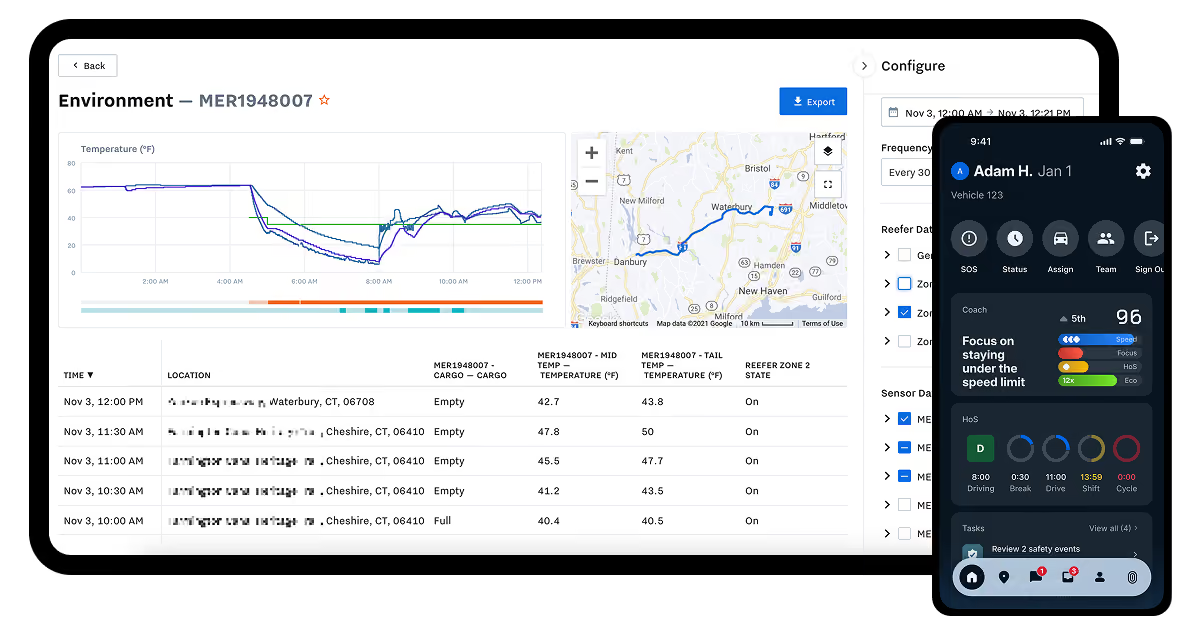
Samsara ranks among the top fleet telematics companies for safety-focused fleets. Its AI dashcams flag distracted driving with strong accuracy across mixed conditions. The catch: pricing climbs fast once you add video, and the contract term locks you in for three years.
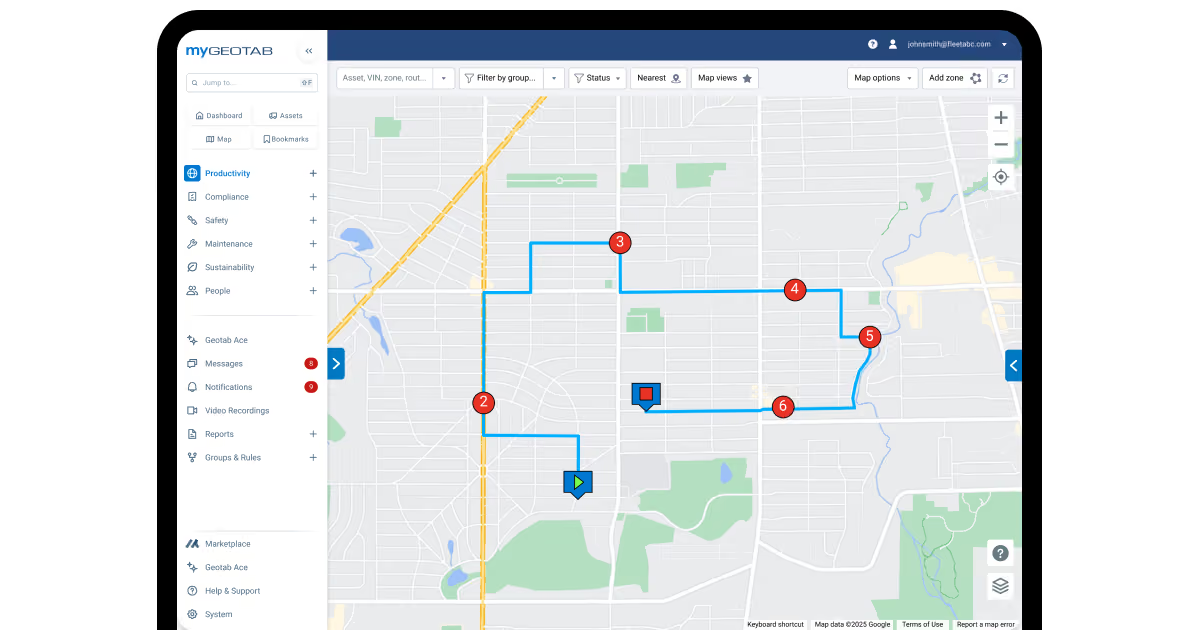
Geotab stands out as a telematics fleet management system built around openness. Its API and add-in marketplace let teams build custom reports without vendor tickets. Driver coaching feels secondary here. Teams chasing raw data depth get more value than teams chasing polish.
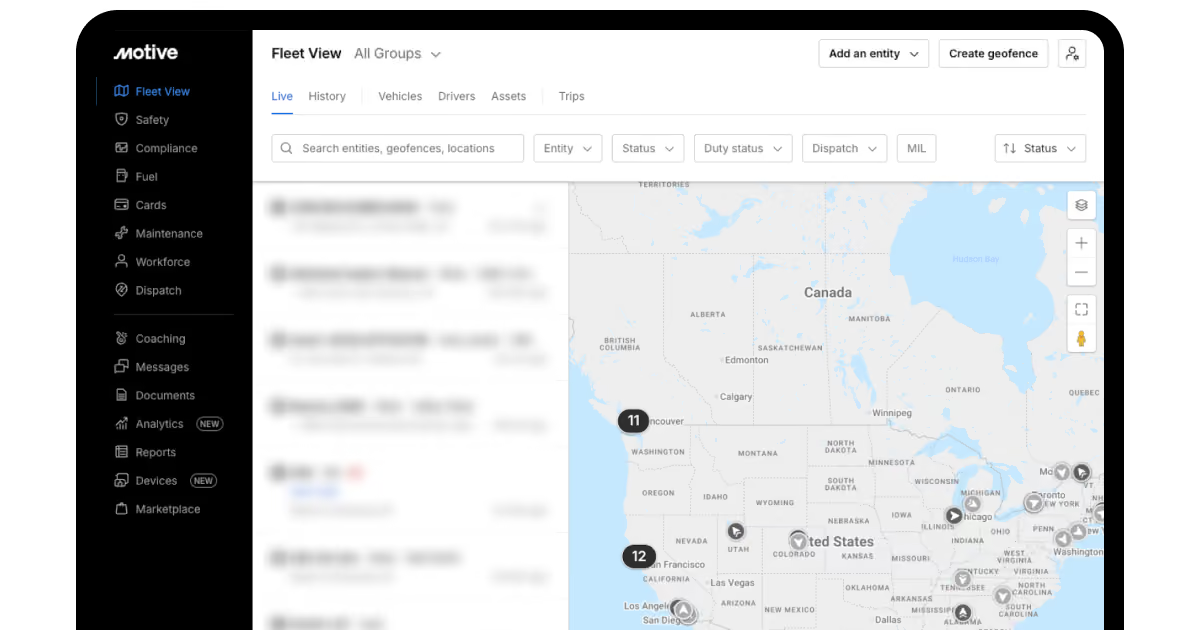
Motive earns its spot among the best fleet tracking telematics options for large transport operations. ELD compliance and AI dashcams ship built-in, not bolted on. It's a strong fit at scale, but the price tag makes it a stretch for a five-truck operation.
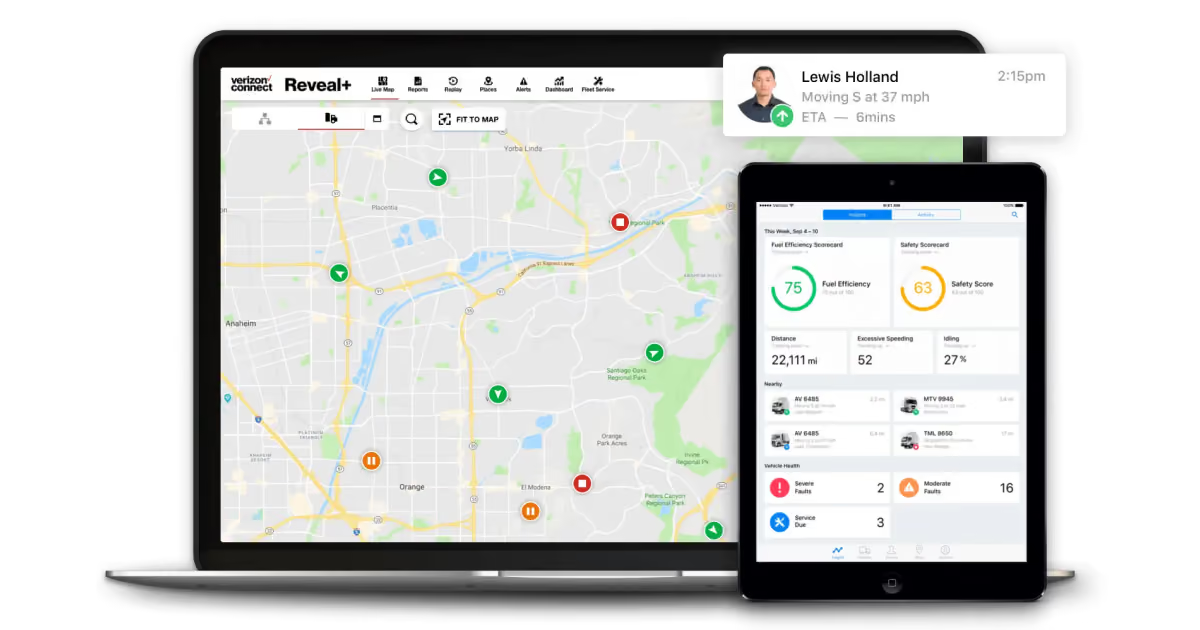
Verizon Connect is the best telematics provider for fleet tracking at genuine enterprise scale. Dispatch holds steady across multiple depots without lag. Configuration takes longer than any competitor here, often two full weeks before go-live.
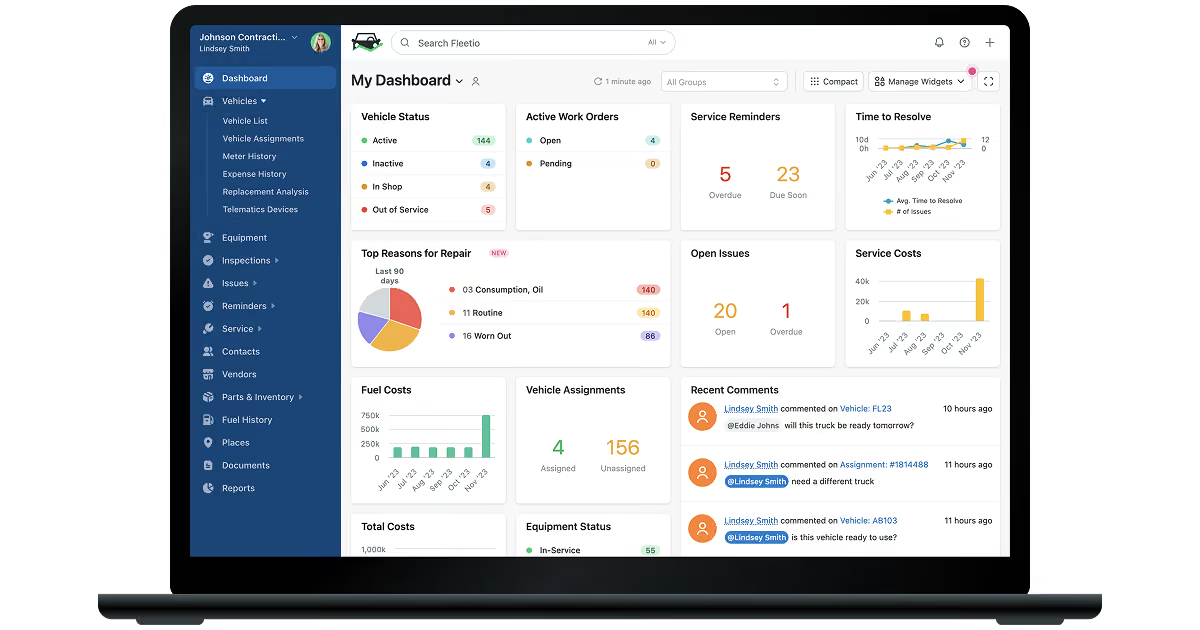
Fleetio flips the priority order: maintenance first, GPS second. It integrates with telematics you already own instead of selling new hardware. That makes it a lean, low-cost add for a fleet with tracking covered already.
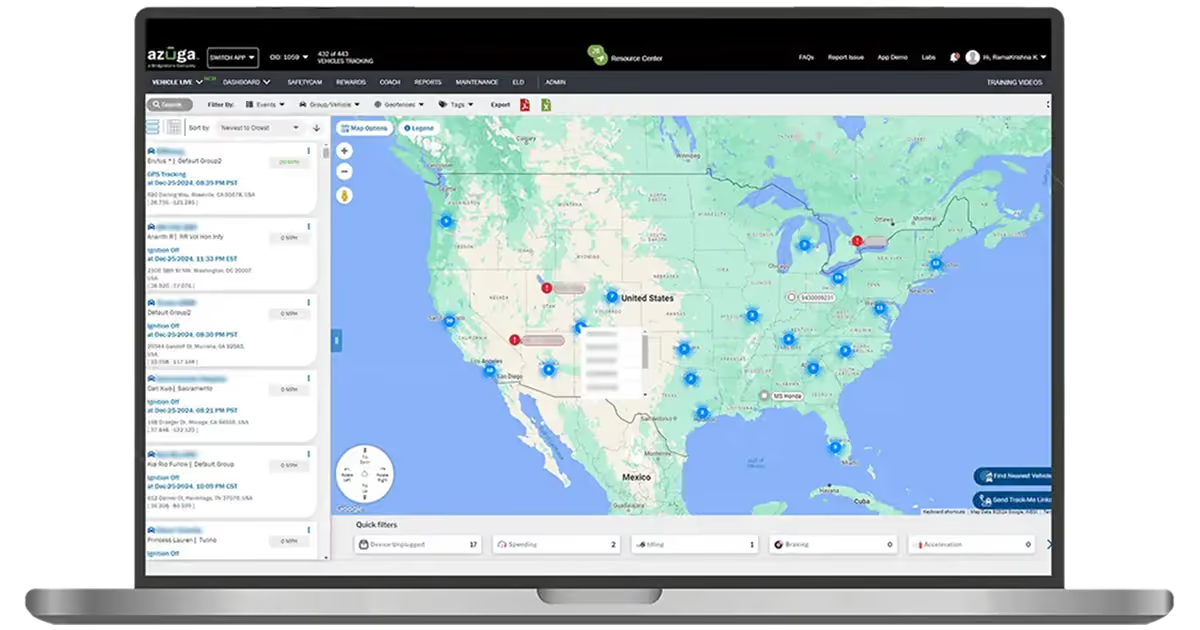
Azuga wins on speed for smaller fleets. Setup finishes in under a day, faster than anything else on this list. Its API access is the most limited of the group, which matters less if you're not building custom integrations.
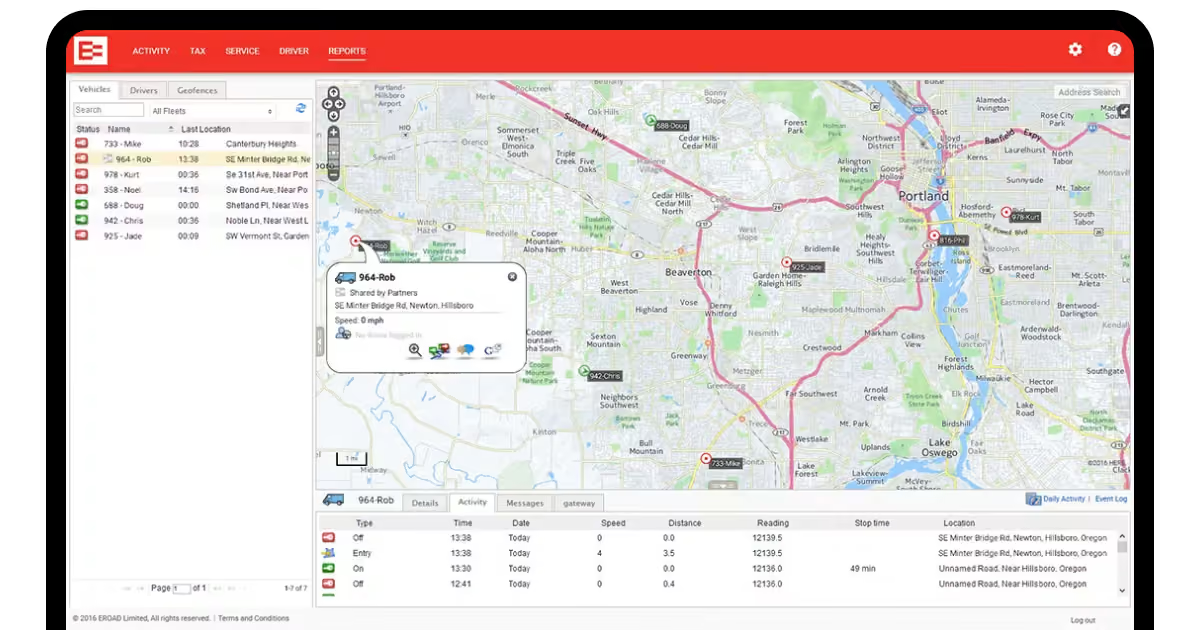
EROAD leads on compliance depth: ELD, fuel-tax reporting, and safety bundled into one subscription. Maintenance workflows stay shallow, though. It suits fleets where regulatory exposure outweighs asset-heavy operations.
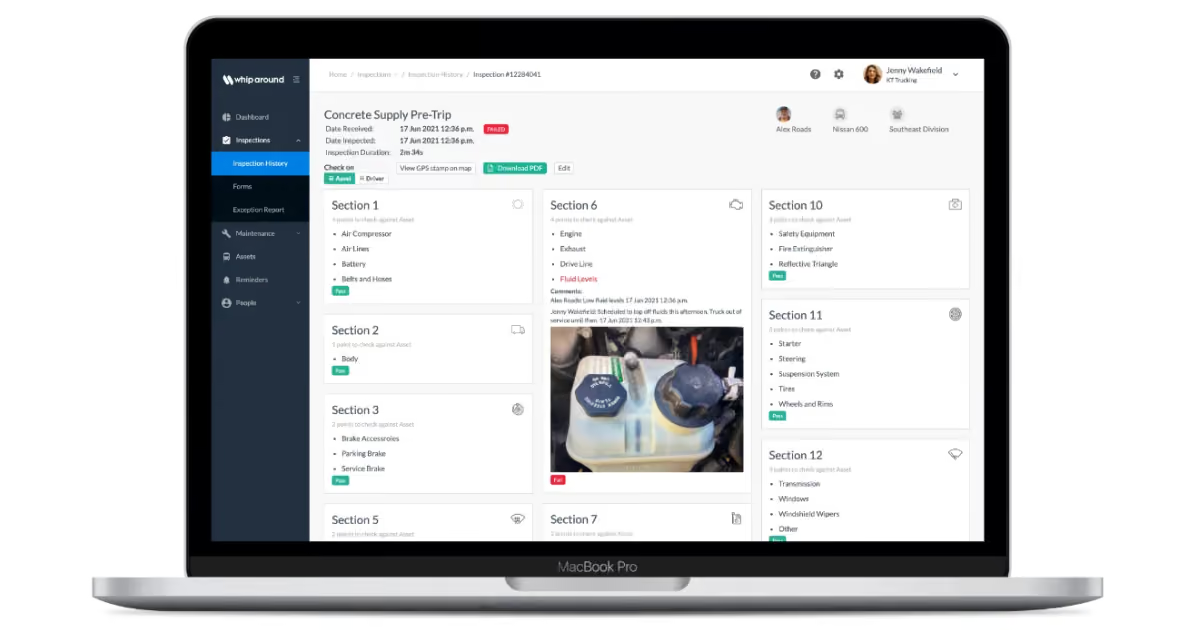
Whip Around skips GPS entirely and focuses on inspections. Mechanics complete jobs offline, and photo capture builds a clean audit trail. Drivers lose real-time location updates, which rules it out for dispatch-heavy fleets.
AUTOsist fits small fleets moving off spreadsheets for the first time. The base tier has no GPS at all; you pay more for that layer separately. It's the gentlest onboarding curve of any tool tested here.
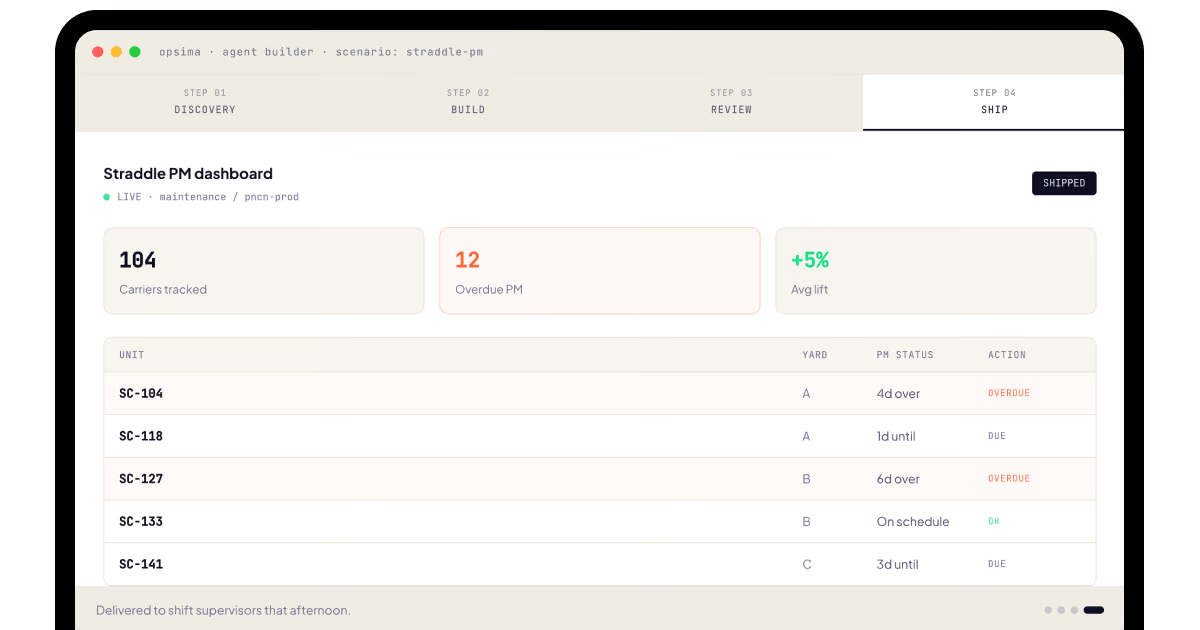
Opsima takes a different approach. Instead of forcing a fleet into a fixed template, it builds around existing operations. At one 100-plus straddle carrier terminal, this model lifted fleet availability by 5% and cut breakdowns by roughly 15%. There's no self-serve signup or published price, so it suits teams ready for a real scoping conversation, not a same-day trial.
Each fleet telematics solution on this list solves a slightly different problem. Reading the spec sheet only gets you halfway. Here's what stood out once we weighed general market data against how each platform actually performs in the field.
How to choose the best fleet telematics software for your business?
Choosing the right fleet telematics software starts with matching the tool to your actual operation, not a feature checklist. These criteria differ from raw spec comparisons. They focus on what breaks a rollout in practice.
Data normalization effort. Ask how much custom work connects the platform to your existing TMS or ERP. A vendor that dodges this question is hiding real integration cost.
Asset diversity. A van-only fleet and a mixed fleet with heavy equipment need different maintenance logic. Forcing one workflow onto both wastes half the platform's value.
Contract flexibility. Some platforms lock you in for 36 months before you've proven fit. Others, like Fleetio, let you test with existing hardware first.
Driver-facing adoption. A dispatcher demo tells you nothing about shift-three engagement. Pilot any telematics fleet management system with real drivers before signing.
Scale-down performance. A platform built for 500 vehicles can collapse under its own weight at twenty. Check whether the vendor still fits your current size, not just your future one.
That last point after considered, off-the-shelf software isn't always the right call. At COAX Software, we've spent close to twenty years in travel, transportation, and logistics technology specifically. Booking platforms, supplier connectivity tools, and operational automation systems make up most of that work. This diverse and deep vertical experience powers our fleet management software development services.
Because our teams have solved versions of these integration problems before, builds move faster, often 50 to 60% faster than a generalist firm starting from zero. If a piece of fleet telematics solution doesn't cover a rule your fleet actually needs, we build the missing piece instead of forcing a workaround.
Legacy infrastructure gets modernized in place, not ripped out overnight. Whether you need one integration done cleanly or a full logistics management software build around your real workflow, that's where we come in.
Privacy and security concerns around fleet telematics
Fleet telematics collects a lot of sensitive data by design. That's the whole point: visibility drives better decisions. But visibility cuts both ways. Drivers, dispatchers, and IT teams all need clear answers about what's tracked, who sees it, and how it's protected.
What driver and vehicle data is collected
A typical fleet telematics solution stack pulls location, speed, engine diagnostics, and driver behavior continuously. Video systems add footage of both the road and the cab. Fuel card data, HOS logs, and maintenance history often flow into the same platform. That's a wide range of personal and operational data in one place.
Practical tip: Audit exactly what each sensor and integration captures before rollout. If a data point doesn't serve a clear operational purpose, don't collect it.
Data ownership and access
Ownership sounds simple until a contract dispute or vendor switch happens. Many fleet telematics providers claim broad rights to aggregated or anonymized data. Fleets rarely read that clause closely at signup. Once data sits inside a closed vendor schema, exporting it later gets expensive and slow.
Practical tip: Get data ownership and export rights written into the contract. Ask for a sample export before you sign anything.
User permissions and role-based access
Not every user needs to see everything. A dispatcher doesn't need payroll-linked driver scores. A driver doesn't need fleet-wide financial reports. Fleet management telematics solutions should enforce role-based access by default, not as an afterthought. Loose permissions turn one compromised login into full data exposure.
Practical tip: Review access levels quarterly. Remove permissions the moment a role changes, or someone leaves.
Third-party data sharing and vendor risk
Telematics data rarely stays inside one system. It often feeds insurance platforms, fuel card providers, and maintenance vendors. Each connection is a new point of exposure. Fleet telematics software with a long integration list needs equally long vendor vetting.
Practical tip: List every third party with data access. Confirm each one meets your own security baseline, not just theirs.
Data retention and storage practices
Video and GPS logs pile up fast across a large fleet. Some platforms keep everything indefinitely by default. That's a liability, not a feature: old data is a bigger target with less operational value. Clear retention windows limit exposure without losing what actually matters.
Practical tip: Set retention limits by data type. Delete video footage automatically once its investigative window closes.
Cybersecurity exposure and breach risk
Connecting TMS, telematics, and carrier portals widens the attack surface fast. Phishing drives most attacks on transport companies today. Ransomware alone accounts for the majority of transport-sector incidents in some regions. A single compromised login can freeze dispatch or billing entirely.
Practical tip: Require multi-factor authentication on every telematics login, no exceptions. Patch firmware on devices as soon as updates ship.
Driver consent and privacy compliance
Drivers often feel monitored rather than supported, especially with video. Consent laws vary by state and country, and ignoring them invites legal risk. Fleet track telematics solutions that skip clear consent processes erode trust fast, even when the tracking itself is legitimate.
Practical tip: Document consent in writing before activating driver-facing monitoring. Explain what's tracked and why, in plain language.
Concern area
Common sources
Actions to take
Data collection scope
Sensors, cameras, fuel cards, HOS logs
Audit data points, remove anything without a clear use
Ownership and access
Vendor contracts, closed data schemas
Negotiate export rights, request a sample export upfront
User permissions
Shared logins, stale role assignments
Enforce role-based access, review quarterly
Third-party sharing
Insurance, fuel, and maintenance integrations
Vet every connected vendor's security standards
Data retention
Video archives, historical GPS logs
Set retention limits, auto-delete outdated footage
Cybersecurity exposure
Phishing, unpatched firmware, weak logins
Require MFA, patch devices on a fixed schedule
Driver consent
Video monitoring, behavior scoring
Document consent, explain tracking in plain terms
Bonus: Quick fleet telematics security checklist
Fleet telematics governance isn't a one-time setup. It's an ongoing discipline, closer to security hygiene than a checkbox. However, following a standardized workflow is important to keep your solution secure:
Confirm what data each device and sensor actually collects.
Negotiate data ownership and export rights before signing.
Enforce role-based access across every user type.
Vet every third-party integration for its own security posture.
Set clear retention limits by data category.
Require multi-factor authentication on all telematics accounts.
Document driver consent before activating any monitoring feature.
This checklist is the breakbone of our common practices. However, it’s just the beginning of the much greater effort. COAX Software operates under ISO 27001 and ISO 9001 frameworks. Those processes matter when shipment data and commercial contracts require strong governance.
Most logistics companies shouldn't build software from scratch. But when the business itself depends on unique workflows, custom systems often become the simpler option. We've covered the full cycle before: research, architecture, integration, and support long after launch. That range is what lets a fleet telematics solution actually hold up under real operating pressure.
Key takeaways
Fleet telematics combines GPS tracking, onboard vehicle sensors, and cloud software to deliver real-time visibility into location, engine health, and driver behavior. By shifting operations from reactive reporting to AI-driven predictive insights, these platforms enable managers to optimize routes, prevent breakdowns before they occur, and cut fuel costs by 10% to 15%.
Specialized features like contextual video tracking, EV data normalization, and API integrations streamline daily dispatching while automating compliance and maintenance workflows.
Ultimately, adoption hinges on selecting platforms that fit specific fleet assets, ensuring strict data security, and maintaining transparent driver privacy standards.
FAQ
Which fleet telematics system best predicts vehicle engine failures?
No single fleet telematics system wins this outright. It depends on data quality more than brand. Systems that read live vibration, temperature, and fault codes outperform ones relying on mileage alone. On DriveIQ, we built predictive alerts around exactly this mix. Accuracy came from clean sensor data, not a fancier model.
How does AI use OBD-II diagnostic data to prevent roadside breakdowns?
AI fleet telematics reads OBD-II fault codes alongside historical service patterns. It spots a drifting metric, like rising engine temperature, before a warning light fires. The system then flags the vehicle for service ahead of failure. That shift moves repairs from emergency to scheduled. Fewer trucks get stranded on the shoulder.
What's the best predictive maintenance software for commercial truck fleets?
Look for fleet telematics software that ties diagnostics directly to work orders, not just alerts. Platforms like Samsara and Geotab both handle this well, though their strengths differ. Samsara leans on AI-driven fault detection. Geotab leans on open data access for custom models. Test both against your actual fault history before choosing.
Which video telematics solutions use computer vision for in-cab driver coaching?
Samsara and Motive both use computer vision to classify driver events in real time. Distraction, drowsiness, and following distance all get flagged automatically. The harder part isn't detection. It's getting drivers to trust the coaching instead of ignoring it. On DriveIQ, peer benchmarking worked better than raw scores for that reason.
How do I balance AI dashcam safety monitoring with driver privacy laws like GDPR?
Start with written consent and clear scope. Tell drivers exactly what's recorded and why, before the camera activates. GDPR and similar laws require a documented legal basis for that data. Retention limits matter too. Keep footage only as long as it serves a real investigative purpose, then delete it automatically.
What's the top fleet safety software for real-time harsh braking and distraction alerts?
Samsara and Lytx both lead here, each for a different reason. Samsara's dashcams flagged distracted driving accurately across mixed conditions in independent testing. Lytx focuses more narrowly on video-based coaching workflows for safety managers. Either fits, depending on whether you want broad fleet telematics management or safety-specific depth.








































































_.avif)








%2520explained.avif)

We are interested in your opinion