We've spent 16+ years building logistics and transport tech at COAX Software. Our team has learned that the gap between a working delivery operation and a broken one often comes down to one unresolved question: where does the parcel go when nobody's home?
We've seen this failure mode repeatedly across fleet management, last-mile routing, and asset tracking builds. The fix is the same each time: remove the human handoff. A smart locker system is how operators do that.
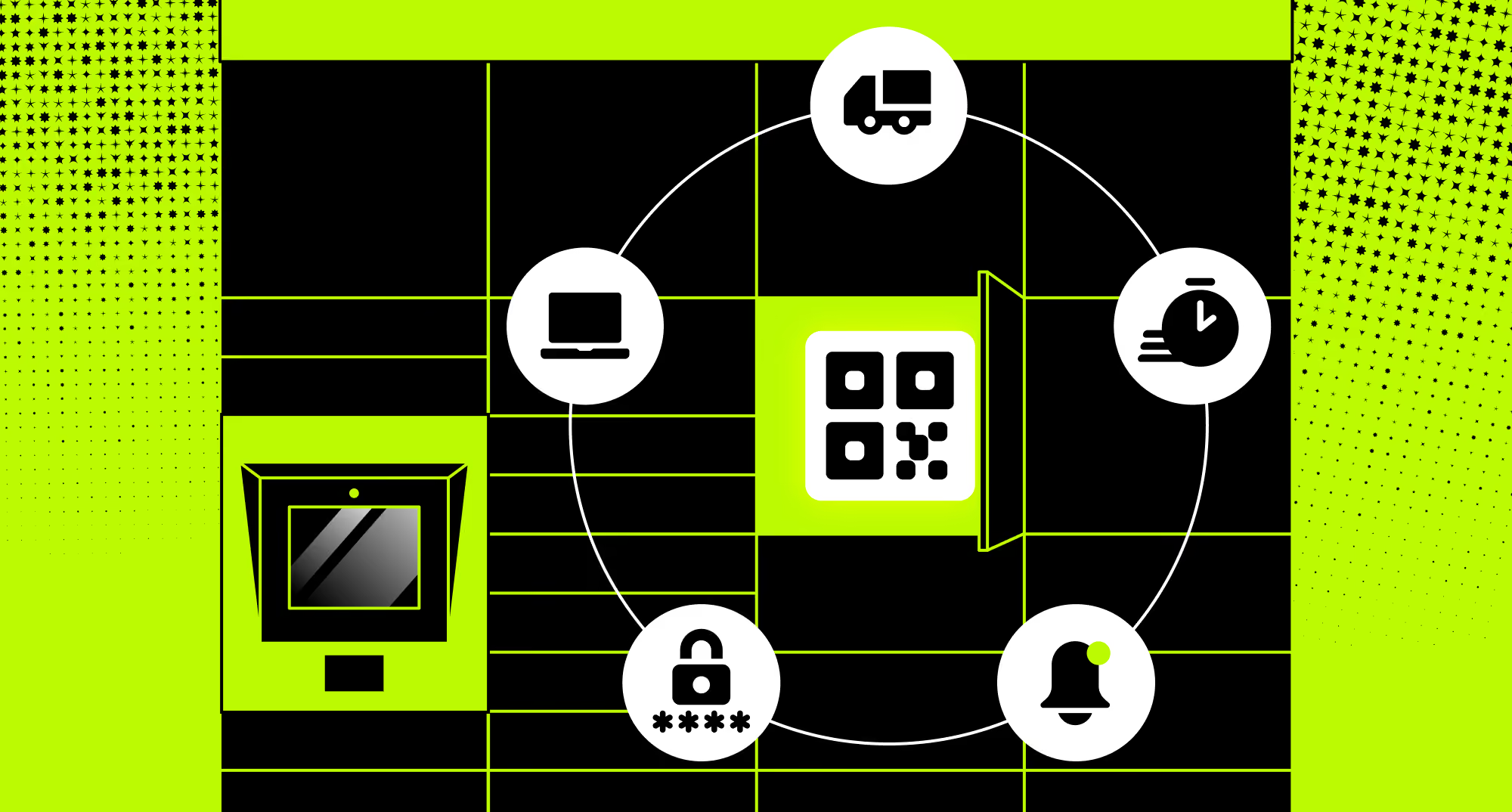
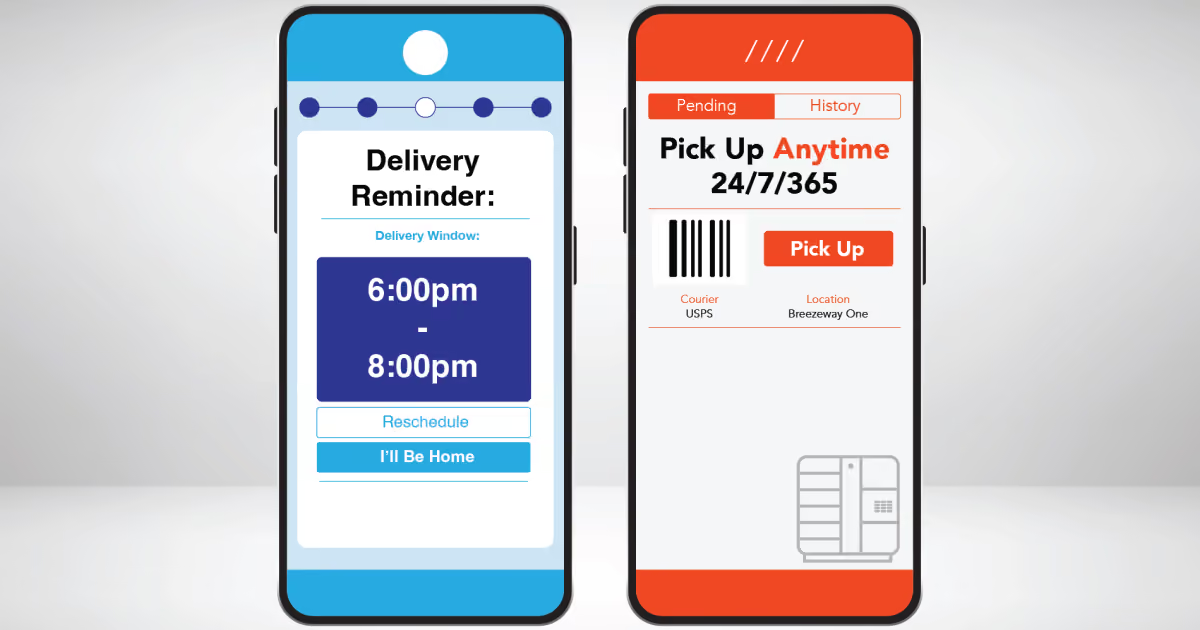
Here's how a smart locker works at its core. A package arrives. The carrier scans it into a secured, networked compartment. The recipient gets a one-time PIN or QR code by SMS or email. They collect the parcel at their convenience. The system logs every event with a timestamp. Nobody waits. Nobody misses a handoff. The audit trail is automatic.
This article covers how smart locker software works, why adoption is accelerating, what the market numbers mean, and where custom development beats an off-the-shelf install.
Why are smart locker solutions growing so quickly?
Smart locker solutions are spreading fast. The cost of not having them is measurable, public, and embarrassing. Failed deliveries, idle IT assets, and untracked parcels aren't operational inconveniences anymore. They're line items that CFOs can point to.
Picture the alternative to the neat workflow we described at the beginning. It's a Tuesday afternoon. Your logistics coordinator gets a call. A $340 medical device shipment was left on a loading dock at 6:00 AM. No signature. No photo. No record of who moved it or when. By noon, it's gone. The re-shipment costs $340 plus $17.20 in failed delivery fees. The supplier gets a chargeback. The driver gets a disciplinary note. The customer churns.
That scenario isn't the worst case. It's a Tuesday.
Here's why businesses across sectors are moving quickly on this:
Delivery failure costs are concrete. Failed deliveries cost $17.20 per parcel in the US. And 70% of shoppers won't return after one failed delivery attempt.
Consumer expectations have outpaced infrastructure. Only 45% of digital retailers meet delivery speed expectations. And the speed of delivery costs you customers even before purchase. 22% of shoppers abandon carts because shipping is too slow.
Out-of-home delivery is becoming the default. Nearly 35% of Europeans already use lockers or pickup points. By 2030, projections put 80% of European parcels through out-of-home channels.
Reliability drives vendor choice. 72% of consumers rank reliability as a top factor when choosing where to shop.
The stakes compound fast. A 500-vehicle fleet running at a 3% failed delivery rate, at $17.20 per failure, loses $250,000 annually before accounting for customer churn.
"Most companies still treat smart locker technology as a hardware purchase," says Orest Falchuk, Head of Engineering at COAX Software. "But the locker is just the endpoint. The real value lives in the software layer. It’s in the access logic, the integrations, the event data, and the dashboards. They turn a box on a wall into a traceable, optimizable workflow."
The smart locker market in numbers
The smart locker market is growing because the problems it solves are getting more expensive to ignore. The global market is already large and accelerating.
The urgency is real. Every quarter that logistics, healthcare, and workplace operations run without automated handoff infrastructure, the gap between their costs and their competitors' widens.
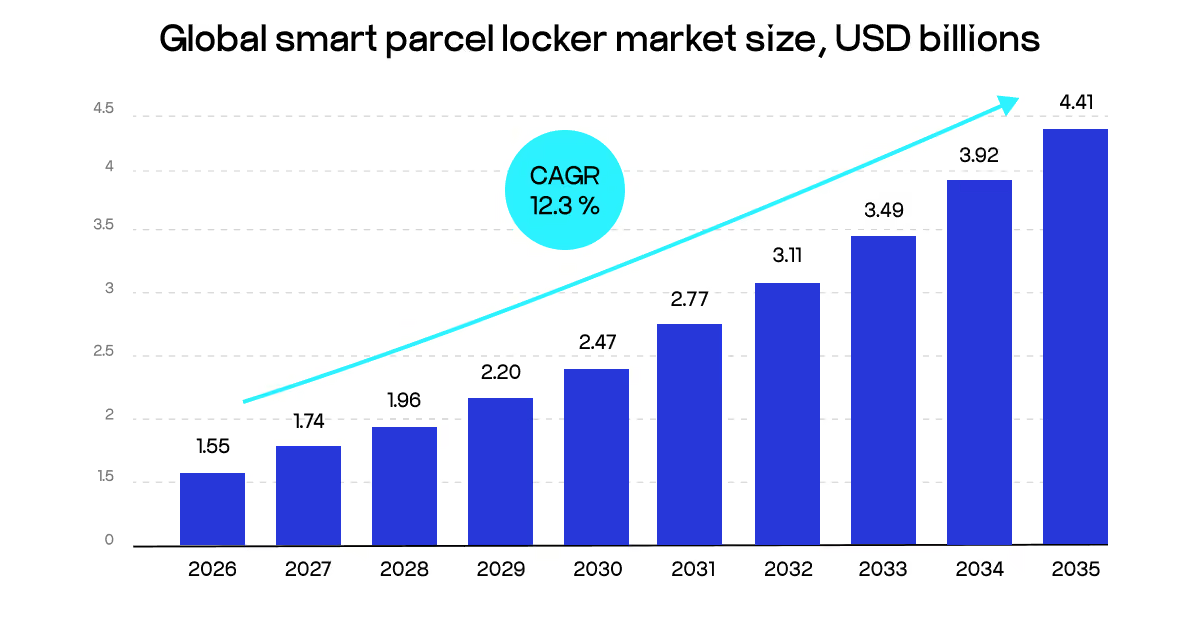
The global smart parcel locker market is projected to reach $4.41 billion by 2035, growing at a CAGR of 12.3%. That's not a niche technology finding its footing. That's infrastructure adoption at scale.
The market spans logistics, corporate IT, healthcare, retail, and universities. Each segment has distinct integration requirements. Healthcare needs HIPAA-compliant audit trails. Universities need Azure AD. The software architecture changes with the use case.
These segments aren't independent. A healthcare facility running a parcel locker solution for specimen transit also needs access control, audit logging, and HIPAA-compliant reporting. A university deploying lockers for IT asset returns needs Azure AD integration and utilization dashboards. The segmentation reflects how different the technical requirements are.
Workplace deployments are a strong growth segment. The problem they solve is both widespread and underestimated. Shared devices, hybrid work schedules, and IT support bottlenecks combine into a slow operational drain. Consider what Intel's research surfaced in a survey of 2,500 professionals. 86% of respondents spent more than three hours daily online for work purposes while at the office. 65% used personal smartphones for professional tasks. 49% connected company laptops to Wi-Fi networks without knowing whether those were secure.
Shared devices moving without a logged chain of custody are a live security liability. Smart lockers close that gap automatically.
Smart lockers in these environments enable self-service pickup and return of IT assets. They merge charging, identity-based access, and real-time tracking into one automated system. The human handoff disappears. And this matters. 70% of employees say they're concerned about information security when working outside the office. Moreover, 72% consider most of their work to be confidential or private, which only adds to the stress.
Last-mile delivery is the most expensive, most visible, and least predictable segment of any operation. It's also where smart delivery lockers are producing the clearest ROI. 68% of consumers want shorter delivery windows. 30% prefer same-day. A French construction CEO tried to beat these metrics by launching a materials startup, expecting standard logistics software to handle the heavy lifting. COAX rebuilt the infrastructure to process complex inventory checks in under one second. This upgrade reduced manual delivery routing time by 60%, allowing the company to successfully launch in France.
How to evaluate smart locker systems?
Choosing a smart locker system isn't a procurement decision. It's an architectural one. The wrong criteria lead to integrations that work in demos and fail in production.
Many operators evaluate lockers on hardware specs and price. They miss the software layer entirely. That's where the real complexity lives. It’s in the access logic, event data pipelines, API surface, and WMS/HR/ERP integrations.
Here's the pattern we see consistently. An operator buys a well-reviewed smart locker storage solution. It handles basic access and PIN delivery well. Then they try to connect it to their inventory system. The API covers 60% of the entity model. The rest requires custom middleware. Six months later, the team maintains two parallel systems and a spreadsheet.
Our client, SmartBat, assumed local suppliers would quickly adjust to multi-category, same-day delivery schedules. Instead, supplier lead times wildly conflicted with real-time site demands. It ended up paralyzing the supply chain even further. COAX engineered custom multi-parameter filters to synchronize inventory across 12 distinct product categories. The new architecture automated scheduling, slashing standard reorder times by 75 percent for field managers.
It was that no off-the-shelf platform modeled construction materials correctly. Each product had project-level attribution, condition states (new or used), and supplier lead times. Standard eCommerce delivery management tools don't carry that data model. The middleware would have cost more than a custom build.
These are the criteria we apply to every client project that hits (or risks hitting) such a bottleneck.
Software integration depth.
Smart locker software must connect to systems you already run. Evaluate the API first, not the locker itself. Ask every vendor these specific questions before a demo:
API entity coverage: Does the API expose all core entities, or just a subset? Specifically: access events, compartment states, user identities, and delivery records.
Webhook reliability: Does the system support retry logic on failed webhook deliveries?
Conflict resolution: What happens when locker state and your WMS disagree?
That last question is the one most vendors dodge. It separates platforms built for integration from platforms that added an API endpoint later.
On the DriveIQ project, we ingested GPS streams from multiple telematics providers simultaneously. Each provider used different timestamp formats and update frequencies. The integration layer was harder than every individual feature combined. Smart locker companies face exactly the same problem at the access-event level.
Access control architecture.
Smart locker access control is not just PIN management. It's identity, authorization, and audit in one layer. Evaluate it across three axes:
Identity provider support: Does it integrate with Azure AD, Okta, or LDAP natively?
Role granularity: Can you define access by user role, time window, and compartment type independently?
Audit log completeness: Does every access event log user identity, timestamp, compartment ID, and outcome?
A locker network without complete audit logs creates compliance gaps. Healthcare deployments require this for chain-of-custody. IT asset management requires it for security policy enforcement. Logistics requires it for proof-of-delivery integrity.
Hardware-software coupling risk.
Some smart locker providers lock you into proprietary hardware. The software only runs on their units. Switching hardware means replacing the platform entirely. Evaluate coupling risk directly:
Open protocol support: Does the software support MQTT or HTTP for device communication?
Multi-vendor hardware: Can the platform manage units from more than one hardware manufacturer?
Offline resilience: What happens when the locker loses connectivity mid-transaction?
On the SyncMatix telematics project, we had to connect vehicle GPS streams from multiple hardware manufacturers under one unified data model. Vendors that only support their own devices created the same fragmentation problem the client was trying to escape. The same risk applies to locker deployments at scale.
Reporting and analytics surface.
Intelligent parcel lockers generate event data continuously. Dwell time, access frequency, compartment utilization, failure events. That data has operational value only if the platform surfaces it usably. Evaluate the analytics layer on specificity:
Utilization dashboards: Can you see compartment-level usage, not just fleet-level averages?
Export flexibility: Does the platform support scheduled exports to your BI tool of choice?
Alerting granularity: Can you configure alerts by compartment, location, user role, and event type independently?
Many standard smart locker storage deployments don't configure analytics beyond basic occupancy rates. That leaves operational intelligence on the table.
Smart locker system cost and total ownership.
Smart locker system cost calculations that stop at hardware plus license miss the real number. Total cost of ownership includes integration labor, ongoing API maintenance, compliance auditing, and support SLA gaps. Evaluate cost across the full surface:
Integration labor: How many engineering hours does a WMS integration realistically require?
License model: Is pricing per unit, per user, or per transaction? Which scales worse with your growth path?
Support SLA: What's the vendor's committed response time for a compartment failure during a peak delivery window?
This hidden complexity became clear when COAX integrated a new IoT wearable into a martial arts electronic scoring system. We had to build a dedicated module just to align fluctuating hardware firmware with the cross-platform apps. Unbudgeted IoT maintenance drains your ROI.
How we ranked these smart locker solutions
We evaluated each platform the way we approach integration decisions on real client work: structured criteria, scored against operational load. Marketing claims aren't the input. Production behavior is.
Our experience building IoT-connected systems matters here directly. On the 2020 Armor platform, we used Bluetooth Low Energy as the wearable sent event streams. The app had to interpret them, animate results, and record video simultaneously. The IoT layer wasn't peripheral to the product. It was the product. That experience shapes how we evaluate smart locker companies: we look at the event pipeline first, not the UI.
Smart locker solutions fail in production for predictable reasons. The scoring system below reflects those failure modes, not feature checklists.
We scored each platform across five dimensions. Each dimension scores on a scale of one to five. A score of five means the platform handles that dimension without custom engineering. A score of one means it requires significant additional work.
Here's what each score level means in practice:
Score
Data model flexibility
Access control depth
Exception handling & offline resilience
Integration complexity
Scalability ceiling
5
Full entity model exposed via API. Custom fields supported natively. No undocumented entities.
Native IdP integration (Azure AD, Okta, LDAP). Role, time, and compartment-level granularity. Full audit trail.
Graceful offline mode. Transaction queue with retry. Conflict resolution documented.
Certified integrations with major WMS, HR, and IdP platforms. Documented conflict handling.
Multi-tenant architecture native. Supports thousands of units across locations. Tested at enterprise scale.
4
Core entities exposed. Custom fields require configuration, not code.
IdP integration via SAML or OAuth. Partial granularity. Audit log complete.
Most entities accessible. Some require webhook workarounds.
Basic user management. No IdP integration without custom connector.
Partial offline support. Manual reconciliation needed after reconnection.
REST API documented for core entities. Middleware needed for edge cases.
Multi-location via configuration. Performance untested above 200 units.
2
Partial API coverage. Integration requires middleware for missing entities.
PIN and QR only. No role-based access. Partial audit logging.
No offline mode. Transactions fail silently on disconnection.
Webhook-only integration. No SDK. Documentation incomplete.
Single-location design. Multi-location requires separate instances.
1
Closed or proprietary model. Integration requires reverse engineering.
Static access codes. No audit trail. No identity management.
No documented behavior on connectivity loss.
No public API. CSV export only.
Single-site, single-tenant. No documented path to scale.
The dimensions aren't arbitrary. Each maps to a failure mode we've seen directly.
Data model flexibility maps to SmartBat. Their standard e-commerce platform couldn't model construction materials with project-level attribution. Smart locker software faces the same risk when the platform's entity model doesn't match the operator's actual workflow.
Exception handling maps to IoT production reality. On the SyncMatix project, vehicle GPS streams from different providers sent data at different frequencies. When a stream dropped, the platform needed defined behavior. Lockers go offline too. Platforms with no documented offline behavior score a one for a reason.
Integration complexity maps directly to total cost. A platform scoring two on integration complexity adds engineering weeks to every new system connection. At enterprise scale, across multiple locker networks, that cost compounds annually.
Off-the-shelf platforms score well on standard deployments. They score poorly when the operational model falls outside their designed use case. Custom software development for logistics wins in four specific situations:
Mixed access model: Your lockers serve multiple user populations with different identity providers and authorization rules simultaneously.
Proprietary data integration: Your WMS, ERP, or HR system requires entity mapping that no standard connector covers.
White-label distribution: Partners need branded locker interfaces with isolated data environments under one platform.
Regulated industry requirements: Healthcare chain-of-custody, government security clearance, or financial audit requirements exceed what standard smart locker access control platforms support.
The pattern in our project history is consistent. Operators don't come to us first. They come after the off-the-shelf platform failed to map to their compliance model. Or after the integration with their dispatch system required three months of middleware nobody budgeted for. The evaluation criteria above exist to make that tradeoff visible before the contract is signed.
10 best smart locker software options
Every platform below was evaluated against the same five criteria. Data model flexibility, access control depth, exception handling, integration complexity, and scalability ceiling. Scores run from one to five. Five means production-ready without custom engineering. One means significant work ahead.
The list covers enterprise IT asset management, parcel locker companies, last-mile delivery networks, and flexible workplace deployments. No single platform wins across all categories. The right choice depends on your operational model.
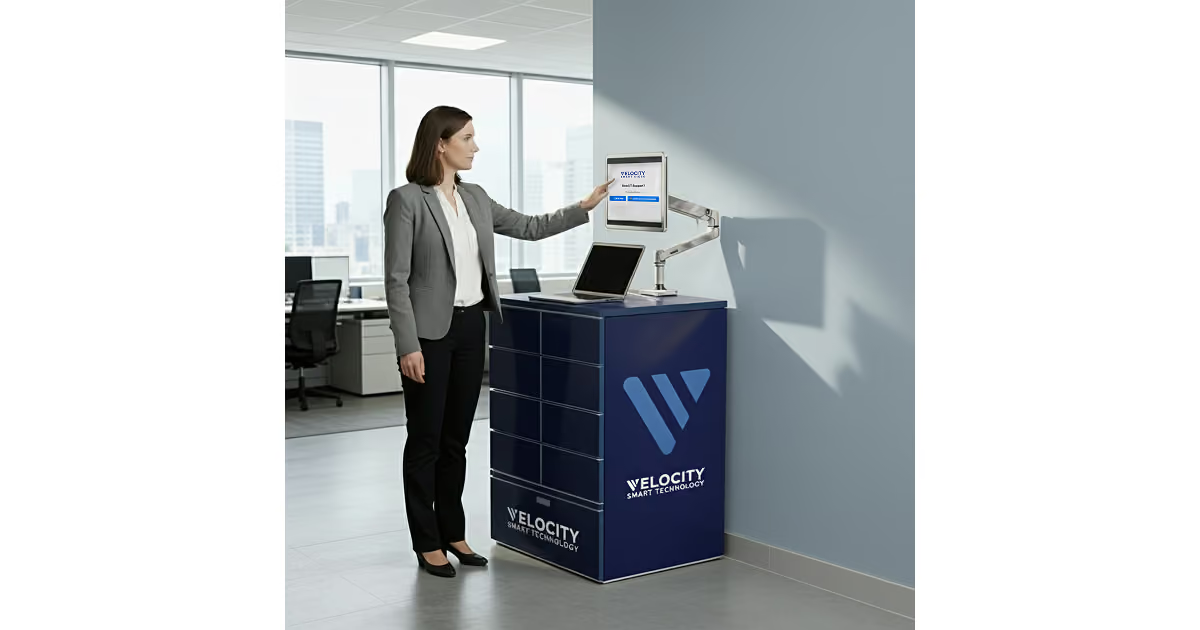
Velocity is the only platform with a ServiceNow-certified native integration. Its API exposes hardware requests, asset lifecycle states, and user identities as fully documented entities. Azure AD, Okta, and LDAP integration is native, with compartment-level access rules and complete audit trails.
The "Element Spark" lockers maintain power and network connectivity inside each compartment for remote device patching. Global rollout, ISO-certified security, and carbon-neutral manufacturing are all in-product. No other smart locker system on this list matches its IT asset management depth.
Bottom line: The practical choice for enterprise IT asset distribution at scale.
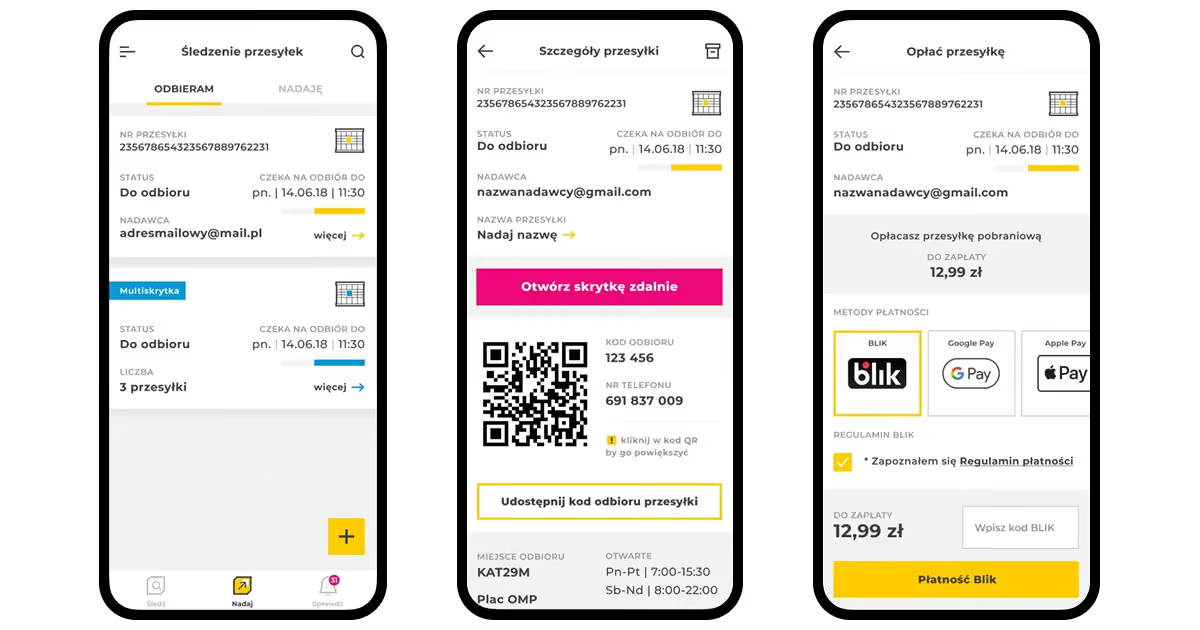
The unified Global REST API replaced fragmented regional systems with a single, documented integration surface. Merchants access Shipping, Tracking, and Geowidget APIs to automate fulfillment end to end. AI algorithms guarantee next-day delivery for 98% of shipments through dynamic compartment allocation. Battery-powered, solar-capable hardware operates permanently off-grid.
Among parcel locker companies, InPost has the most complete developer integration surface at network scale. Consumer access runs through smartphone, QR code, and PIN: there's no enterprise IdP layer.
Bottom line: The right choice for e-commerce operators building or joining a national out-of-home delivery network.
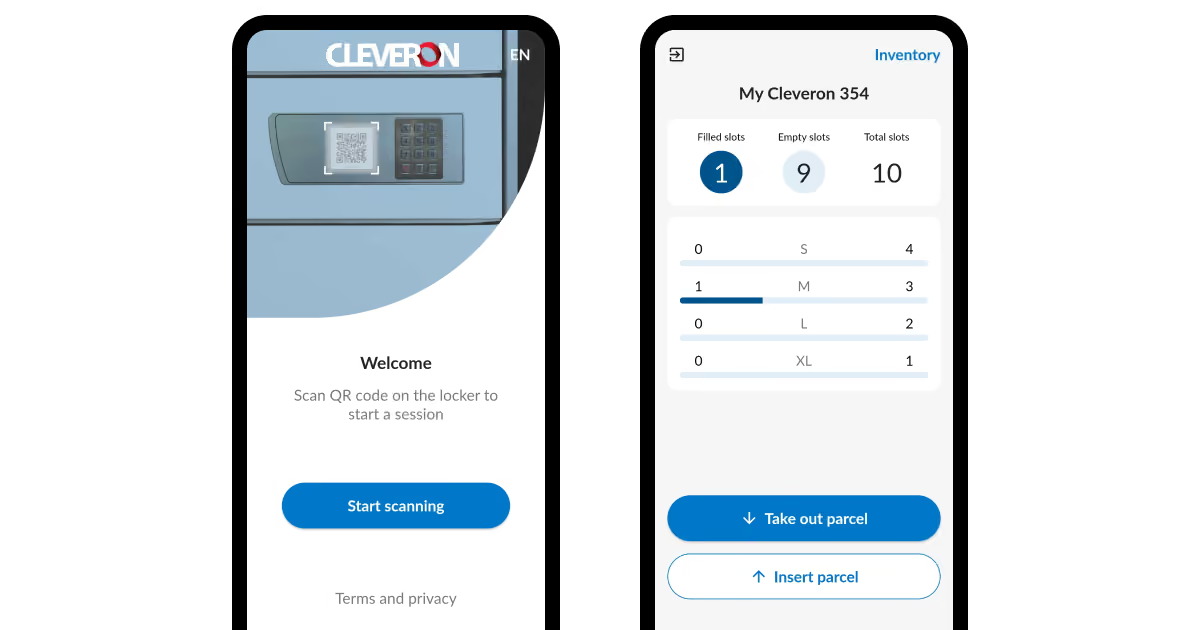
The robotic tier (Cleveron 401, 402, 403) assigns and stores incoming parcels in under ten seconds without courier sorting. CleverOffice orchestrates multiple retailers and carriers sharing the same physical locker network. The Lifecycle Engine resolves 84% to 85% of software and hardware errors remotely, without on-site technicians.
The Cleveron 355 handles loads up to 200 kg and forklift-loaded Euro pallets for heavy goods. The Cleveron 354 runs on cellular connectivity in temperatures down to -20°C with up to eight years of battery life. Customers include Zara and Walmart.
Bottom line: The right choice for high-volume click-and-collect retailers that need automated physical sorting, not just secure compartment storage.
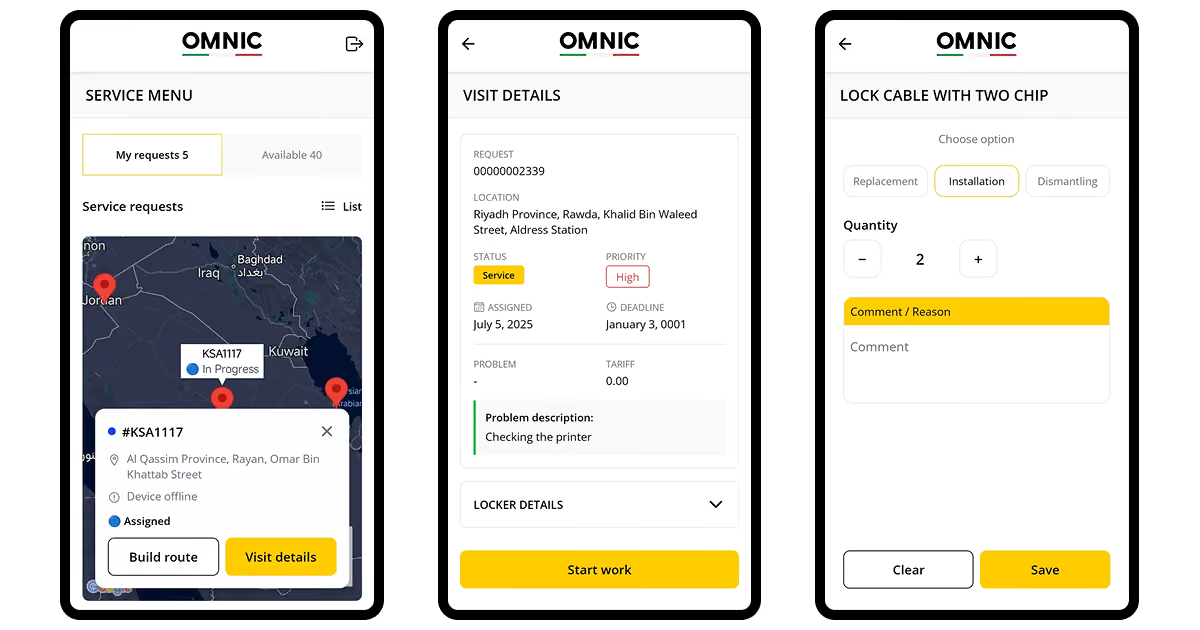
The LogOS platform manages predictive analytics, network health, and route optimization across entire locker networks. A base unit connects with up to 19 additional modules, scaling from a single location to a large multi-site network. Intel-collaborated QPro chips handle surge protection and energy efficiency at the hardware level. The OMNI Solar configuration runs 100% on photovoltaic power with no grid dependency.
Compartment customization supports envelopes, temperature-controlled storage, dry cleaning, and bulky packages in the same network. Consolidating deliveries to OMNIC networks is documented as up to 14 times more cost-effective than doorstep couriers.
Bottom line: The right choice for last-mile network operators and municipalities needing off-grid deployment flexibility.
Double-reinforced 18-gauge steel construction operates reliably from -13°F to 122°F. Infrared sensors detect package presence and update the inventory system instantly. The smart parcel locker software connects to major property management systems and third-party logistics platforms via flexible API. Returns processing runs in under 30 seconds: scan, print label, deposit.
There's no native enterprise IdP integration, which limits regulated or corporate deployments. The modular design and Drop Box configurations handle bulk returns and label printing without staff involvement.
Bottom line: The right choice for property managers and retailers handling high residential or retail parcel volumes.
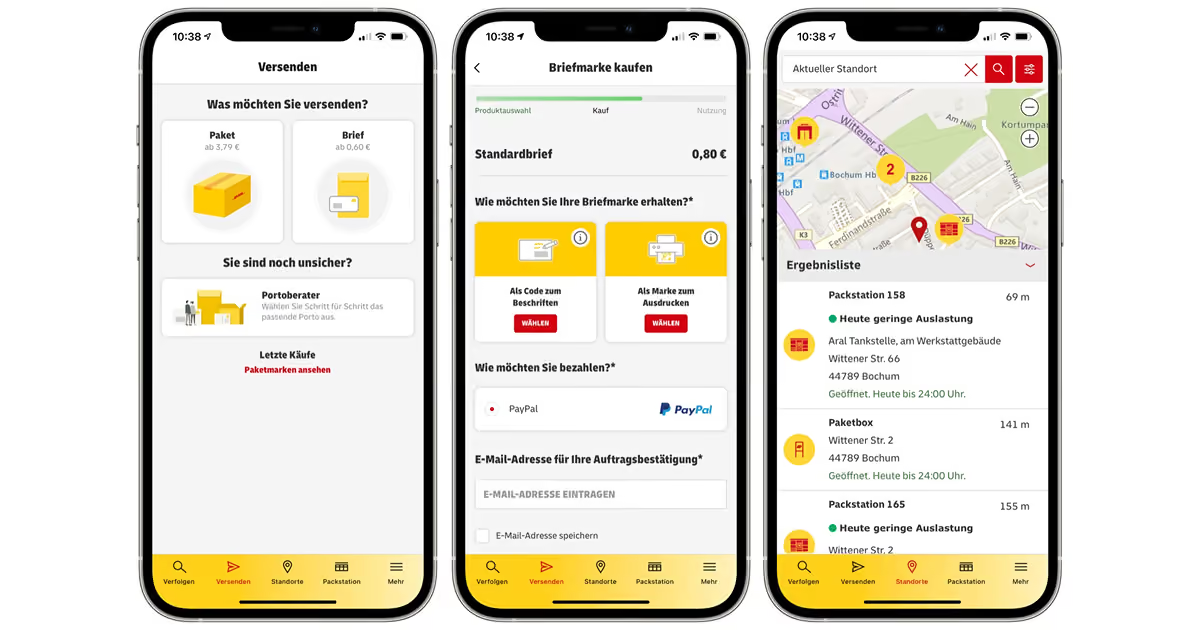
An embedded Linux-based industrial PC connects each locker to DHL's global databases via 4G/5G or fiber. Motorized electromechanical solenoids with HALL-effect sensors verify compartment door state at the hardware level. An optimization algorithm selects compartment size based on package dimensions automatically. Reverse logistics uses the same API endpoints as forward delivery, with no separate returns infrastructure needed.
Third-party integration outside DHL's carrier ecosystem requires working through controlled API access. The network scales to national and international volumes without a practical ceiling.
Bottom line: The right choice if DHL is your primary carrier and your customers need access to a pre-existing, nationally scaled locker network.
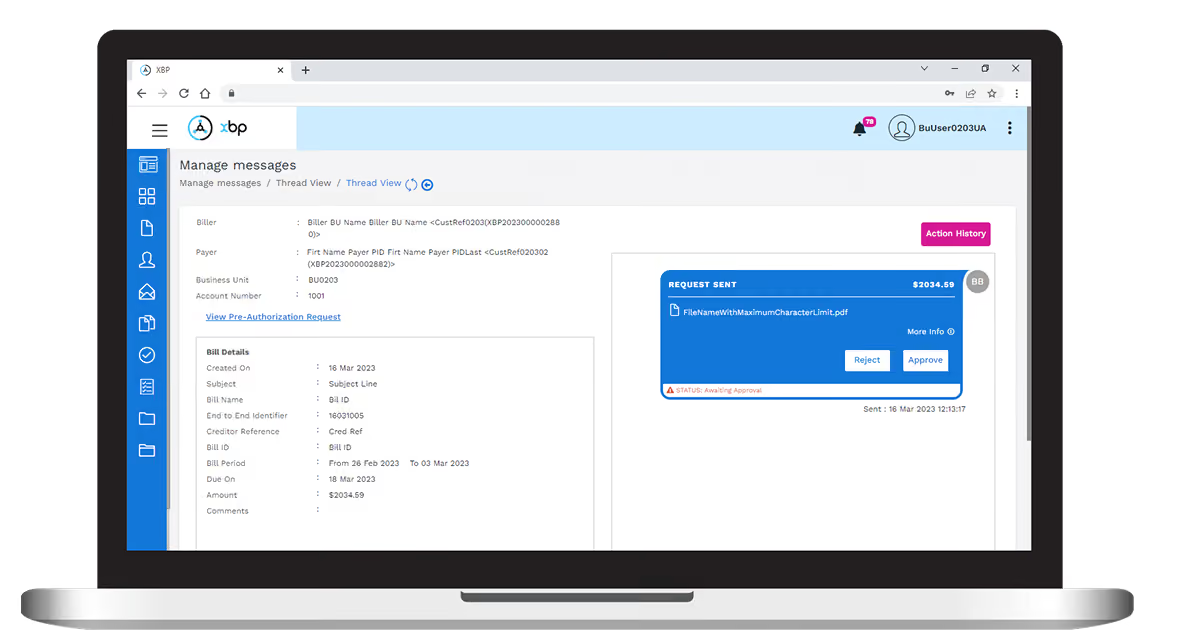
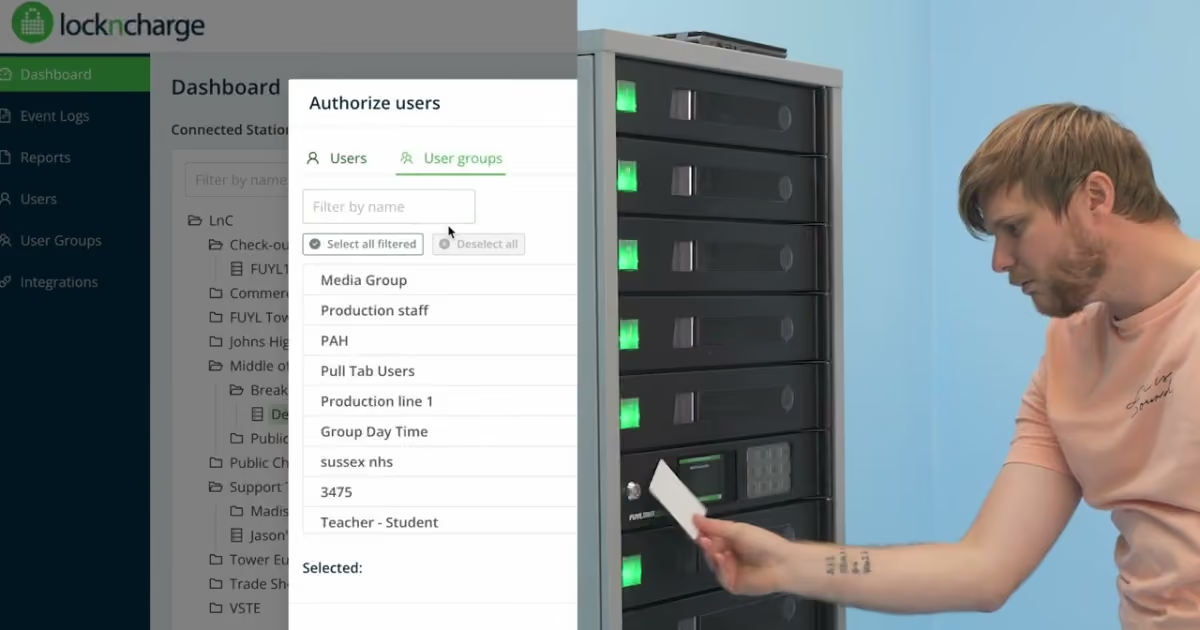
The platform connects parcel delivery, IT asset management, and digital mailroom processing in one cloud dashboard. RFID, badge readers, Bluetooth/NFC, touchscreen, and OTP/PIN access are all supported natively. Dynamic OTP generation ensures every compartment authorization is single-use. Redundant networking (Wi-Fi, Ethernet, cellular LTE/4G backup) protects uptime in hybrid workplace environments.
Integration outside the XBP Digital Mailroom ecosystem requires custom middleware. The locker management software layer performs strongest within its own product suite.
Bottom line: The right choice for hybrid workplaces that need parcel, asset, and mailroom workflows in one system.
Built-in 36W USB-C PD charging in every bay returns devices powered and ready for the next user. Self-service checkout, return, and issue reporting run without IT staff involvement. Badge scanning and existing system logins are supported as optional add-ons. Workflow-status lighting gives IT teams passive visibility into compartment state.
Enterprise IdP integration and multi-site network management aren't documented native features. The compact 8-bay and 23-bay tower formats are optimized for single-location indoor environments.
Bottom line: The right choice for schools and healthcare organizations managing shared device fleets in one location.
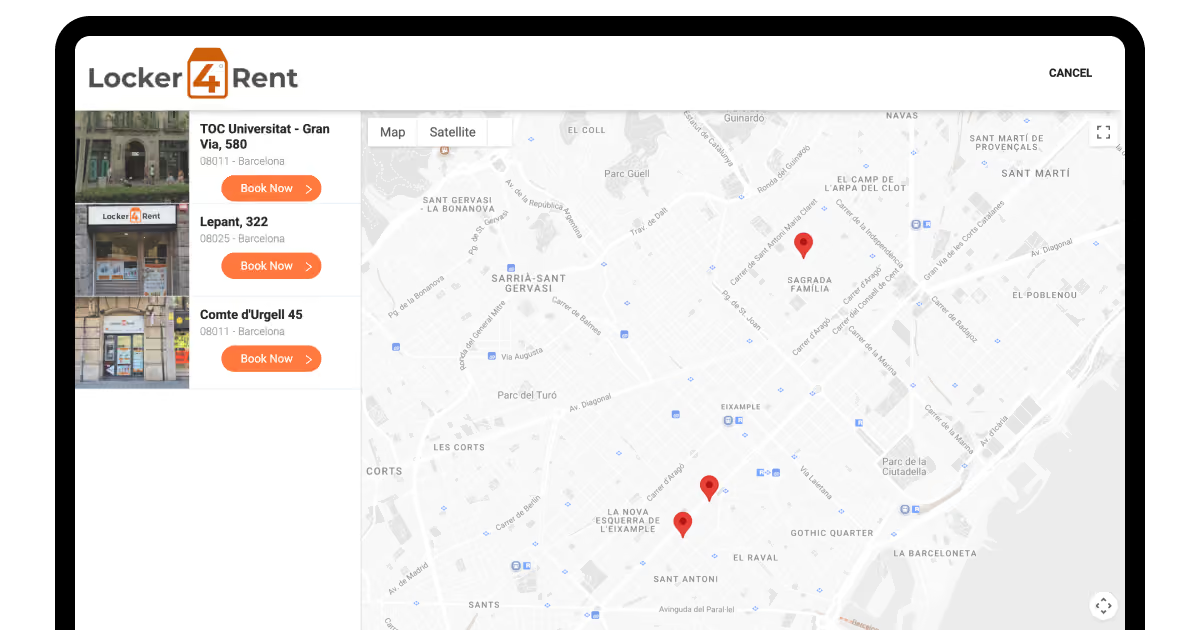
The cloud booking engine covers duration selection, compartment sizing, and payment in one flow. Dynamic, single-use PINs or QR codes expire automatically at rental end. IoT-enabled controllers communicate directly with central cloud servers for real-time compartment state. Tamper sensors detect forced entry, ajar doors, and occupied compartments continuously. API documentation beyond the rental workflow isn't publicly detailed.
The platform is designed for consumer short-term storage, not enterprise logistics or regulated asset workflows.
Bottom line: The right choice for hostels, tourist hubs, and transport locations needing simple automated short-term storage.
Wireless smart locks retrofit existing locker hardware without full capital replacement. Cloud-based management handles access events, compartment states, and real-time usage visibility. Smartphone and access card entry replace physical keys across existing infrastructure. Offline behavior documentation is limited, which creates gaps in high-availability or regulated deployments.
API documentation for enterprise integrations beyond the retrofit layer isn't publicly detailed. The platform scales with existing hardware, not beyond it.
Bottom line: The right choice for organizations with existing locker banks that want digital access without a full replacement cycle.
"The platforms at the top of this list didn't get there by having the most features," says Orest Falchuk, Head of Engineering at COAX Software. "They got there by having a clear opinion about who they're for and building integrations the audience needs. A developer evaluating smart parcel lockers for last-mile delivery requires a public routing scale. If you are building for enterprise IT asset management instead, you need tight internal identity governance. Both could read the same review and draw opposite conclusions, correctly."
Most common smart locker use cases
Smart lockers solve different problems depending on who's running them. The hardware is almost identical across deployments. The software layer, the data model, and the integration surface are what separate a working system from an expensive cabinet on a wall.
Here's where operators are putting them to work.
Last-mile and residential delivery.
Residential and commercial buildings deploy smart locker solutions to eliminate that failure mode. Carriers deposit parcels 24/7. Residents collect on their own schedule. Nobody waits. Nobody misses a handoff. The building's management system gets a timestamped audit trail automatically.
The smart locker management system layer does the real work here. Compartment allocation, notification triggers, carrier authentication, and chain-of-custody logging all run without staff involvement. When that layer connects to courier management software, route optimization and first-attempt delivery rates improve together.
E-commerce returns and click-and-collect.
Returns are the expensive side of e-commerce that most delivery dashboards undercount. A customer drives to a drop-off point. It's closed. They try again. The parcel sits in their car for a week.
Intelligent locker systems solve this by making the return as simple as the original delivery. Scan a code. Open a compartment. Walk away. The system logs the return, triggers a refund workflow, and notifies the warehouse. No staff. No queues. No failed attempts.
Click-and-collect deployments run the same workflow in reverse. Retailers place fulfilled orders in assigned compartments. Customers collect with a PIN or QR code. Dwell-time data feeds back into slot allocation logic. The system learns which locations and time windows are busiest and adjusts compartment assignment accordingly.
IT asset management in corporate environments.
A procurement manager at a 3,000-person company orders 200 replacement laptops. They arrive on a Tuesday. By Friday, 60 are still sitting in a storage room because the IT team can't reach every employee for a manual handoff.
A smart locker app removes that bottleneck. Devices are staged in assigned compartments. Employees receive a notification and collect at any time. The system logs who collected which device, at what time, and from which location. Returns follow the same workflow in reverse.
The integration surface matters most here. A locker platform without native ServiceNow or Azure AD connectivity creates a manual reconciliation step that defeats the automation. We covered this in the evaluation criteria above: access control depth and integration complexity are the two dimensions that separate IT asset deployments that work from ones that create new administrative overhead.
Healthcare and chain-of-custody workflows.
Specimen transit between a clinic and a lab sounds like a simple logistics problem. It isn't.
Chain-of-custody requirements mean every handoff must be logged with identity, timestamp, and compartment ID. Temperature-controlled compartments must maintain validated ranges throughout transit. Audit logs must be exportable for compliance review on demand.
Standard delivery management software development doesn't model this. Healthcare deployments need a data layer that treats every access event as a compliance record, not just an operational log. Platforms that score below four on access control depth in our evaluation framework create gaps here that surface during audits, not during demos.
Workplace hot-desking and hybrid employee storage.
Hybrid teams share desks. They also share devices, equipment, and personal storage. Managing that without a smart locker solution means keys, manual logs, and a facilities manager fielding queries all day.
Smart lockers convert that workflow into a self-service system. Employees book a compartment through an app. They access it with their badge or phone. The system tracks utilization by location, day, and time window. Facilities teams use that data to right-size locker deployments across office locations.
Smart locker software uses IoT architectures to automate physical workplace asset tracking. However, IoT-connected systems don't stay in urban logistics. Our connected farming project collected environmental data. Sensors transmitted temperature, humidity, and soil moisture via LPWAN to a cloud processing layer. 70% of operational data was collected automatically. The architecture is parallel to a distributed locker network. IoT nodes. Connectivity layer. Cloud aggregation. Application layer with dashboards and alerts. The problems are similar.
That project reduced resource waste by 25% and increased yield by 15%. The owners managed the facility remotely without visiting the site. The same remote-monitoring logic applies to a smart locker management system running across 40 locations: you need real-time compartment state, failure alerts, and utilization data without sending a technician to check.
An automated locker system deployed in a warehouse basement, a rural pickup point, or an underground parking structure faces exactly the same offline resilience question. What does the system do when connectivity drops mid-transaction? Does it queue the access event and sync on reconnect? Does it fail closed or open? Is the offline behavior documented?
Most platforms don't answer that question clearly until you're in production.
With COAX, you get no surprises. We've built across most of these use cases. This gave us the practical context for what changes in a scoping conversation when the team has seen the failure modes firsthand.
We handle everything from product discovery to smart locker management system architecture. Our team builds the mobile and web apps while managing third-party integrations. We also provide thorough QA and ongoing support. No gap between the team that scoped the integration and the team that builds it.
Key features to look for in smart locker software
The software layer is where package locker solutions either earn their place or become expensive furniture. The hardware is largely commoditized. The features that separate a working system from a liability are all in the code.
Start with the basics. Then look at what separates a functional deployment from an operationally intelligent one.
Basic features every platform must have
These aren't differentiators. They're the floor. Any smart locker software that can't deliver all of these reliably isn't ready for production.
Compartment access management: PIN, QR code, RFID, and app-based entry. Every access event must log user identity, timestamp, and outcome automatically.
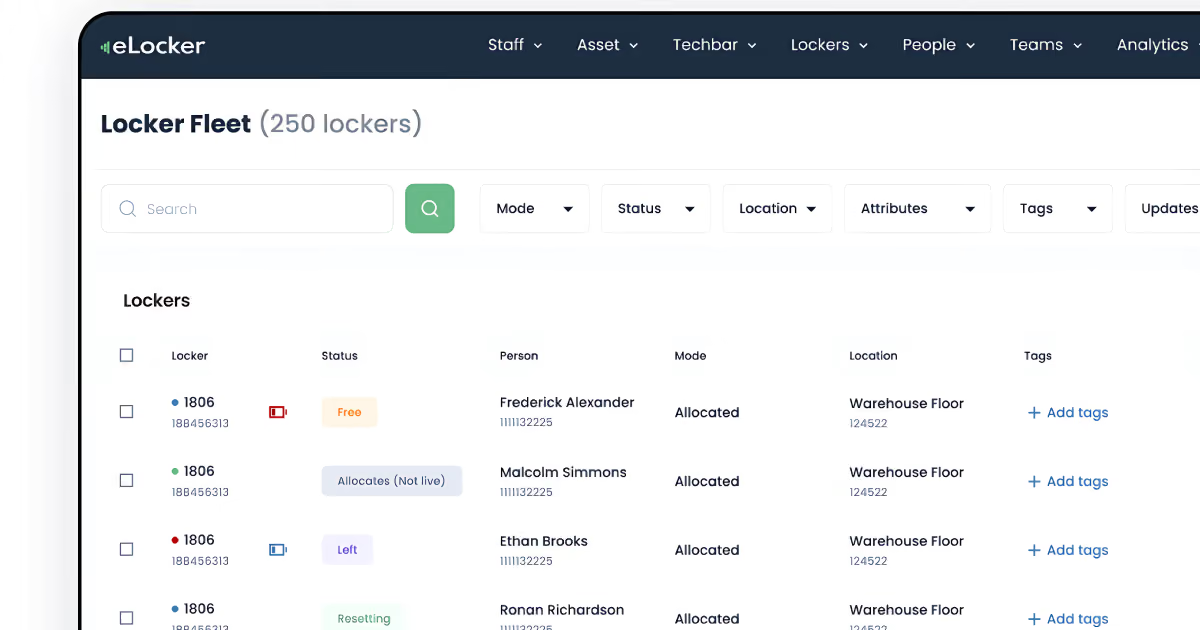
Real-time availability tracking: Compartment state (occupied, available, reserved, faulted) must update instantly across the management dashboard.
Automated user notifications: Delivery confirmation, access credentials, and expiry warnings must trigger without staff involvement.
Audit trail and reporting: Every access event, failed attempt, and system error must be logged with enough detail for compliance review.
Remote administration: Administrators must be able to unlock compartments, reset credentials, and run diagnostics without visiting the physical unit.
Multi-size compartment support: A system that can't differentiate between an envelope and a laptop creates allocation problems immediately.
If a platform can't demo all six of these clearly, the conversation ends there. "Otherwise, you might end up bypassing a native, multi-size compartment validation routine during a deployment. The system will immediately try to cram a massive enterprise laptop into an envelope-sized locker. It will probably force the physical door mechanism and lock out every delivery for the rest of the day," says Orest Falchuk, Head of Engineering at COAX Software.
Basic features keep the lights on. Advanced features are where smart locker software starts paying back its cost through measurable operational gains.
Predictive analytics and utilization intelligence
A smart locker management system that reports what happened is useful. One that predicts what's about to happen is operationally valuable.
Utilization dashboards should show dwell time by compartment, peak demand by location and time window, and compartment turnover rates. That data should feed slot allocation logic automatically, not sit in a report someone reads once a month.
This is directly parallel to what DriveIQ's predictive ETA engine did for a 500-vehicle fleet. The system updated delivery predictions every 15 minutes using live traffic, weather, and driver performance data. After 60 days of tuning, it hit 89% predictive accuracy within ±15 minutes. Dispatchers could act on problems before customers noticed them. The late delivery rate dropped from 18% to 7%.
A smart locker management system with the same predictive layer does the same thing at the compartment level. It tells you that three locker clusters will hit full capacity by 6:00 PM on Friday before it happens. That's the difference between proactive reallocation and a queue of frustrated recipients.
AI-powered workflow automation
Order management software connected to a locker network can eliminate entire categories of manual work. The question is how deeply the AI layer integrates with the operational workflow.
On the DrivenPeople platform we build, OpenAI integration generated job descriptions based on operator inputs. That reduced job post creation time while maintaining consistency. The same logic applies to a smart locker solution with an AI layer. Automated notification drafting, anomaly detection on access patterns, and intelligent compartment assignment and recipient history remove manual steps from daily operations.
The AI features worth evaluating aren't the ones in the marketing deck. They're the ones that reduce a manual action a staff member currently performs ten times a day.
Integration with delivery systems
A locker that doesn't connect to your other systems creates a parallel data environment. Staff reconcile two systems manually. Errors accumulate. Audit trails have gaps.
The integration surface to evaluate:
WMS and OMS connectivity: Does the locker platform receive inbound delivery data automatically, or does someone manually assign a compartment per order?
Carrier API support: Can the platform accept drop-off confirmation from multiple carriers without manual logging?
ERP and HR system integration: For IT asset deployments, can the platform pull employee identity and device assignment data from your existing directory?
On the SyncMatix telematics project, we consolidated GPS streams from multiple hardware vendors under one unified data model. The integration layer was harder than every individual feature. The same principle holds for locker platforms: the integration surface is where production complexity lives, not the feature list.
A virtual locker layer for pre-arrival management
A virtual locker is a reservation held in the system before a physical compartment is assigned. The recipient selects a location and time window at checkout. The system reserves capacity. The physical compartment is assigned at the moment of drop-off.
This matters for high-volume deployments. Without a virtual layer, carriers arrive and compete for available space. With it, capacity is visible and pre-allocated across the entire delivery window. For e-commerce operators managing hundreds of daily deliveries across a locker network, the difference in first-attempt placement rates is significant.
Exception handling and offline resilience
This is where most platforms show their real quality. Normal operation is easy. Exception handling is where the engineering decisions matter.
What happens when a compartment sensor fails mid-transaction? What does the system do when cellular connectivity drops during a drop-off? Does the access event queue and sync on reconnect, or does it fail silently?
Our Road&Rally project surfaced exactly this problem type in a different domain. The standard location polling interval that worked at 40 mph became unreliable at 90 mph. The offline behavior that passed in testing failed under real operating conditions. The fix required dynamic polling that adjusted to velocity in real time.
A smart locker system in a basement warehouse or a rural pickup location faces the same question. The answer has to be documented before production, not discovered during an audit.
Role-based access and multi-tenant architecture
For organizations managing multiple locations, departments, or client accounts, role-based access isn't just a security feature. It's the architectural foundation for how the system scales.
Administrators, fleet managers, facility operators, and end users need different views, different permissions, and different alert routing. A smart locker management system that collapses those into a single access tier creates either security gaps or administrative bottlenecks.
For platform businesses (operators selling locker services to other companies), multi-tenant architecture is non-negotiable. Each client account needs data isolation, independent configuration, and its own reporting view. SyncMatix required this specifically because the client's revenue model was selling telematics subscriptions. The architecture had to support it from day one, not as an add-on.
A unified delivery to locker management workflow
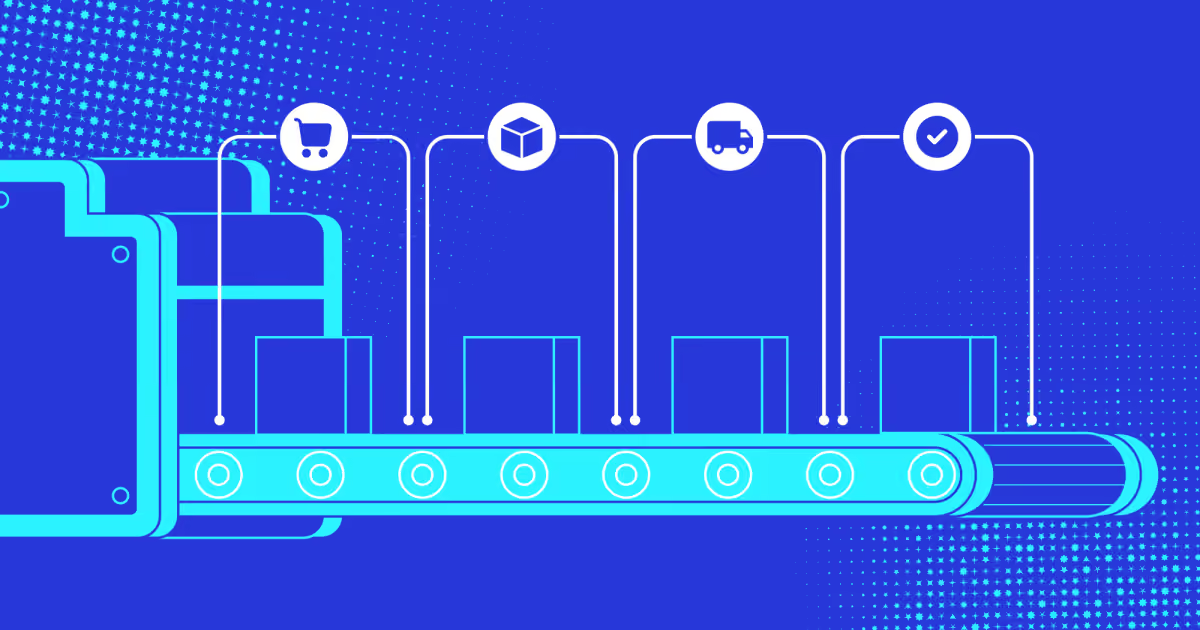
The full workflow from carrier drop-off to recipient pickup involves more systems than the locker platform itself. Here's where the connections have to hold:
Carrier integration confirms drop-off and triggers the compartment assignment.
The locker platform assigns the compartment, logs the event, and generates access credentials.
The notification layer delivers credentials to the recipient via SMS, email, or app push.
The recipient retrieves the item. The system logs the pickup and closes the transaction.
The reporting layer aggregates dwell time, utilization, and exception data for the operations team.
The OMS or WMS receives the confirmed delivery event and updates order status automatically.
Each connection in that chain is a potential failure point. The platforms that score highest on integration complexity in our evaluation framework are the ones where that full chain is documented, tested, and supported. Not the ones where it's theoretically possible via webhook.
"The features buyers ask about in demos are almost never the ones that determine success in production," says Orest Falchuk, Head of Engineering at COAX Software. "They ask about the dashboard and the mobile app. What actually matters is what the system does at 2:00 AM when a carrier drops off 40 parcels, the connection to the WMS drops for 90 seconds, and the compartment sensor on unit 12 sends a false-positive fault. If that scenario isn't in the vendor's documentation, it will be in your incident log."
The features above aren't abstract for COAX Software. They're a checklist drawn from projects where the gaps showed up in production. We've built workforce platforms where automated invoice generation and credential verification had to work without error across thousands of transactions. We've built IoT systems where the data pipeline from sensor to dashboard had to function in low-connectivity environments without data loss.
Advanced analytics, AI automation, and deep logistics integrations aren't new problem types for our team. The domain changes. The engineering patterns don't. The domain changes. The engineering patterns don't.
ISO 9001 and ISO 27001 certification covers the compliance requirements that regulated deployments need before a single line of code is written. If the operational model maps cleanly to a platform on the list above, use it. If it doesn't, we should probably discuss it.
FAQ
What is a smart locker?
A smart locker is a networked storage compartment that controls access digitally rather than with a physical key. A user receives a PIN, QR code, or app credential. The locker logs who accessed which compartment, when, and for how long. The management platform aggregates those events in real time. It's the audit trail and the access control working as one system.
Can smart locker software integrate with our existing delivery or HR systems?
It depends entirely on the platform's API surface, not its feature list. Some platforms expose full entity models with documented conflict resolution. Others have a webhook and call it an integration. From our work building logistics platforms like DriveIQ and SyncMatix, the integration layer is consistently harder than any individual feature. Before committing to a platform, ask specifically which entities the API covers. You should also check how it handles external data conflicts and your existing stack integrations.
How much does a smart locker cost?
Smart locker cost varies significantly depending on hardware tier, software model, and integration scope. A basic indoor unit with cloud software typically runs $1,500 to $4,000 per compartment installed. Enterprise platforms with ServiceNow integration, custom access control, and multi-site dashboards add software licensing on top. The number most buyers underestimate is integration labor. Connecting lockers to an existing WMS or HR system often costs as much as the hardware itself.
What is parcel locker software and what does it actually do?
Parcel locker software is the management layer that runs on top of the physical hardware. It handles compartment assignment, user authentication, notification delivery, access logging, and reporting. The software is what makes it a traceable, automatable workflow. We've built similar event-driven pipelines for logistics platforms processing GPS streams across 500 vehicles simultaneously. The architectural pattern is identical: IoT nodes, a connectivity layer, cloud aggregation, and a dashboard that turns raw events into operational decisions.
What does smart locker management actually involve day to day?
Smart locker management in production means monitoring compartment availability, handling exception events, managing user credentials, and pulling utilization reports. On a well-integrated platform, most of this is automated. Administrators handle edge cases. Like a compartment sensor fault, an expired credential that didn't trigger correctly, or a carrier drop-off that didn't sync to the WMS. When we built DriveIQ, dispatchers went from diagnosing exceptions in 12 minutes to under three. The same principle applies here. The daily workload shrinks proportionally to how well the software surfaces the right context at the right moment.
What is the difference between a virtual locker and a physical one?
A virtual locker is a system-held reservation before a physical compartment is assigned. The recipient selects a location at checkout. The platform reserves capacity in the network. The compartment assigns at drop-off. Without this layer, carriers arrive and compete for available space in real time. It's the same pre-allocation logic we use in route and slot planning for delivery platforms: commit capacity before the event, not during it. High-volume e-commerce operators see measurable improvements in first-attempt placement rates once a virtual reservation layer is in place.




























































_.avif)







%2520explained.avif)

We are interested in your opinion