With customers demanding speed, transparency, and reliability, implementing comprehensive courier management software helps you reduce operational chaos, optimize delivery efficiency, and build customer loyalty. For your convenience, we compiled a list of the best courier management systems for 2026:
Routific - AI-powered route optimization with minimal crossovers, live customer tracking, and e-commerce integrations.
OptimoRoute - Handles depot reloads mid-route with detailed driver profiles and shift scheduling up to five weeks out.
Route4Me - Extensive customization through marketplace add-ons, commercial vehicle routing for trucks with restrictions, and territory assignment.
Onfleet - On-demand dispatch with auto-assign, in-app chat between all parties, and age verification capabilities.
OnTime 360 - All-in-one system handling order taking, label printing, billing, and customer portal.
Track-POD - Simple yet fully integrated solution with route planning, live tracking, and electronic proof of delivery.
ClickPost - Multi-carrier tool supporting 500+ carrier integrations with AI suggestions.
FarEye - Enterprise-grade AI-powered optimization with predictive analytics.
In this guide, we define the key features of carrier management, break down the key solutions, and help you choose the right solution or build your own custom tool.
What is courier management?
Courier management is the process of organizing, tracking, and controlling parcel deliveries from pickup to final destination. It handles everything: route planning, driver assignments, real-time tracking, proof of delivery, and customer notifications.
According to research by Čižiūnienė and team, courier management involves coordinating multiple operational steps, including terminal operations, transportation between hubs, and last-mile delivery. The system manages both the physical movement of parcels and the data flow that keeps customers informed.
Overall, it’s the common ground that connects your warehouse to your customer's doorstep. Without it, you're manually handling customer addresses, driver schedules, and delivery confirmations across spreadsheets and phone calls.
Why is courier management important?
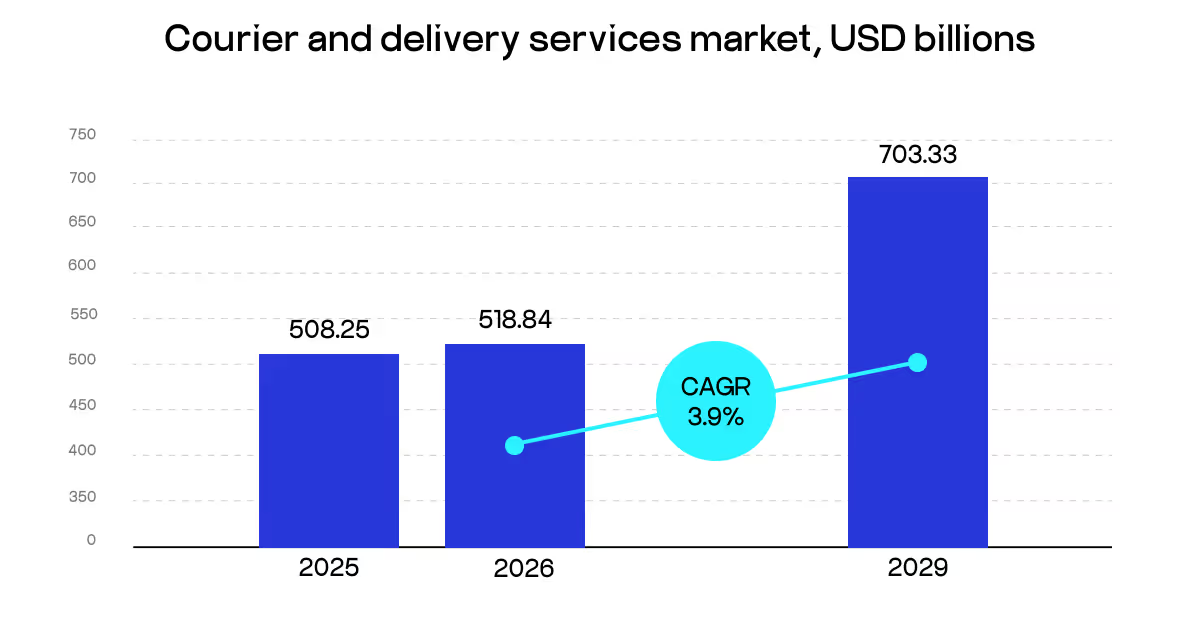
There’s one undeniable truth - people need goods delivered to them, and need this service increasingly more. With an annual growth rate of 8.5%, the courier and delivery services sector will surpass $703.33 billion by 2029, having reached $508.25 billion in 2025. According to Gartner, parcel volumes will increase by more than 100% by 2026.
The changes in customer expectations easily explain this growth. They don’t tolerate any faults today - after a bad delivery experience, more than 67% of consumers won't place another order. Additionally, 96% of consumers assume same-day delivery when they hear the term "fast delivery." Another 49% claim that same-day options increase their likelihood of making an online purchase.
What’s the result? The technology industry responds eagerly. By 2031, the courier management software market is expected to reach $1,691.57 billion, growing at an annual rate of 11.2%.
And customer demand isn’t the only driver of this growth. Čižiūnienė found that sustainability is another important factor, and companies investing in route optimization and automated delivery technologies see better efficiency while cutting carbon emissions. Their research showed that combining customer satisfaction with environmental goals creates the best competitive advantage.
To sum up, you need solid courier management because your customers demand speed, transparency, and reliability. Miss any of these, and they'll find someone else.
Key aspects of courier management
There are many moving parts in what makes courier delivery business successful and uninterrupted. This is why courier management technology should also be multifaceted - let’s break down all these aspects, one by one.
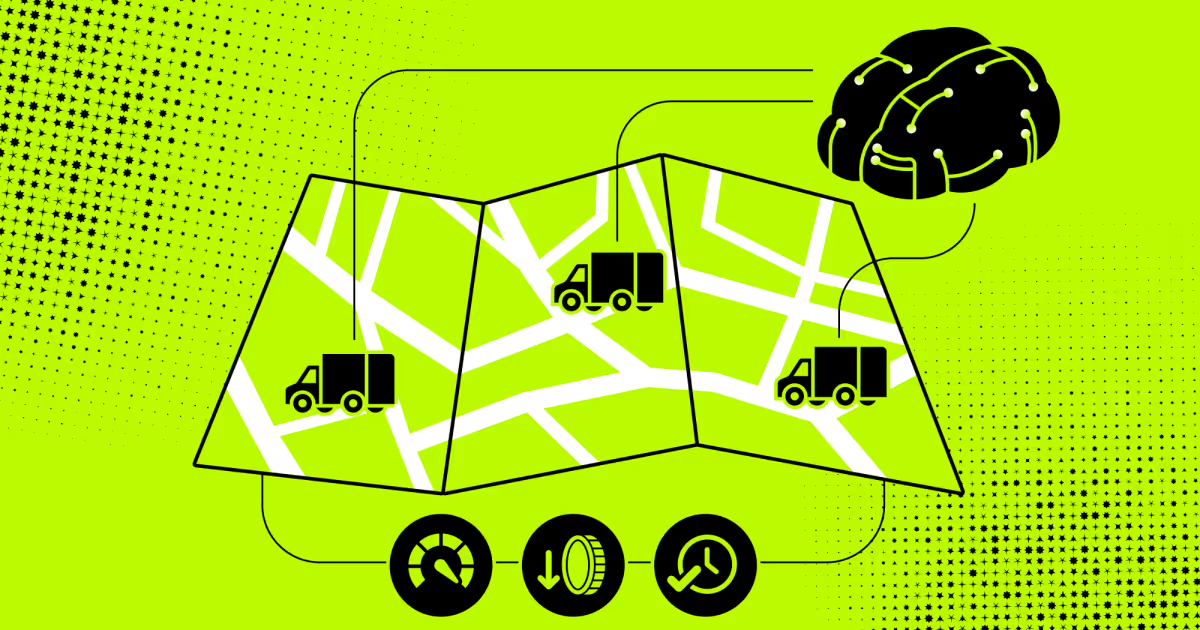
At the center are route planning and optimization. Courier route optimization software determines the most effective routes in a matter of seconds, whereas manual route calculations are laborious and prone to error. Improved routes result in more daily stops, cheaper fuel, and quicker deliveries.
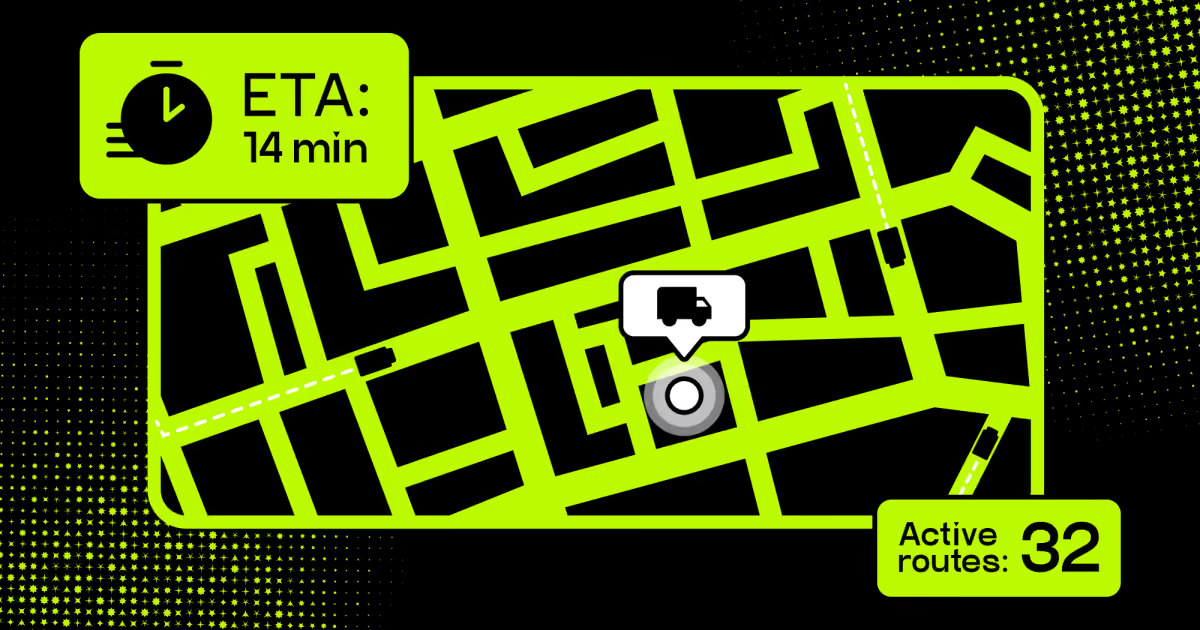
Everyone is kept informed through real-time monitoring.Okemiri discovered that customers who are anticipating deliveries are frustrated because manual systems do not allow them to track progress in real time. GPS is used by contemporary courier tracking softwareto display parcel locations and provide precise delivery windows.
Fleet and driver management aspects keep operations smooth. This entails planning shifts well in advance, legally controlling driver breaks, and providing couriers with precise routing instructions via mobile applications. Last-minute absences and sick calls are decreased when drivers are given schedules up to five weeks in advance.
Customer communication shapes the delivery experience. Customers want delivery status updates via SMS or email. Automated notifications about delays, delivery attempts, and successful drop-offs keep customers happy without adding manual work.
Performance analytics drive improvement. Tracking metrics like on-time delivery rates, individual driver performance, and overall efficiency reveals what works and what needs fixing. The longer you collect data, the clearer patterns become for making smarter operational decisions.
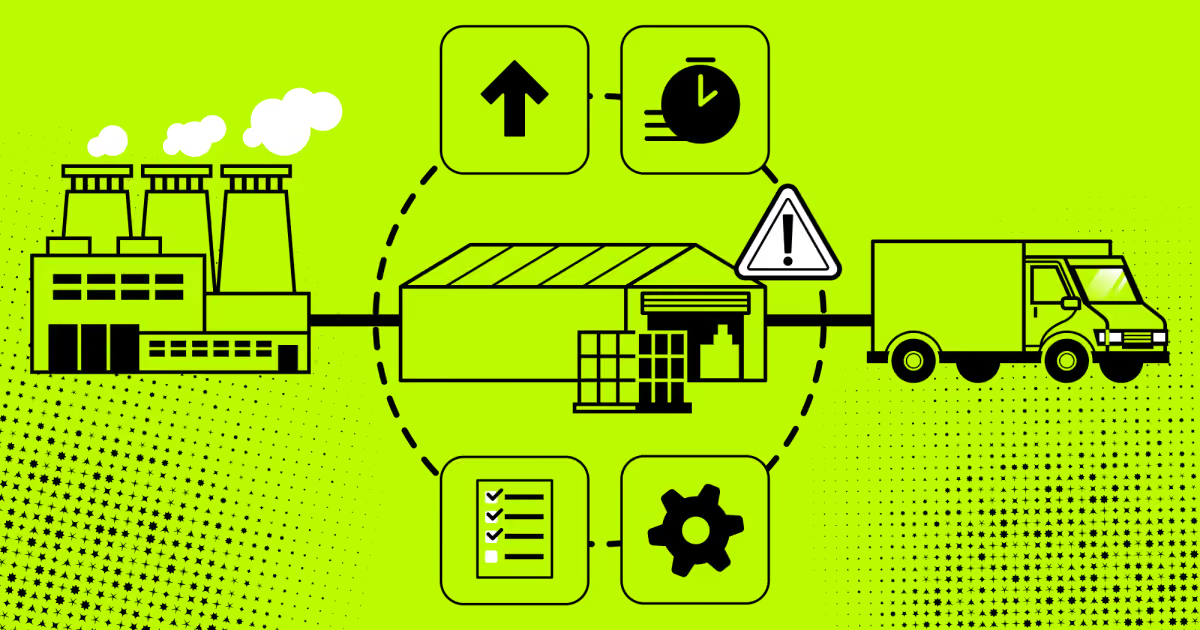
These aspects work together as a circle. Good route planning supports driver productivity, real-time tracking enables better customer communication, and performance data feeds back into route optimization.
What is a courier management system?
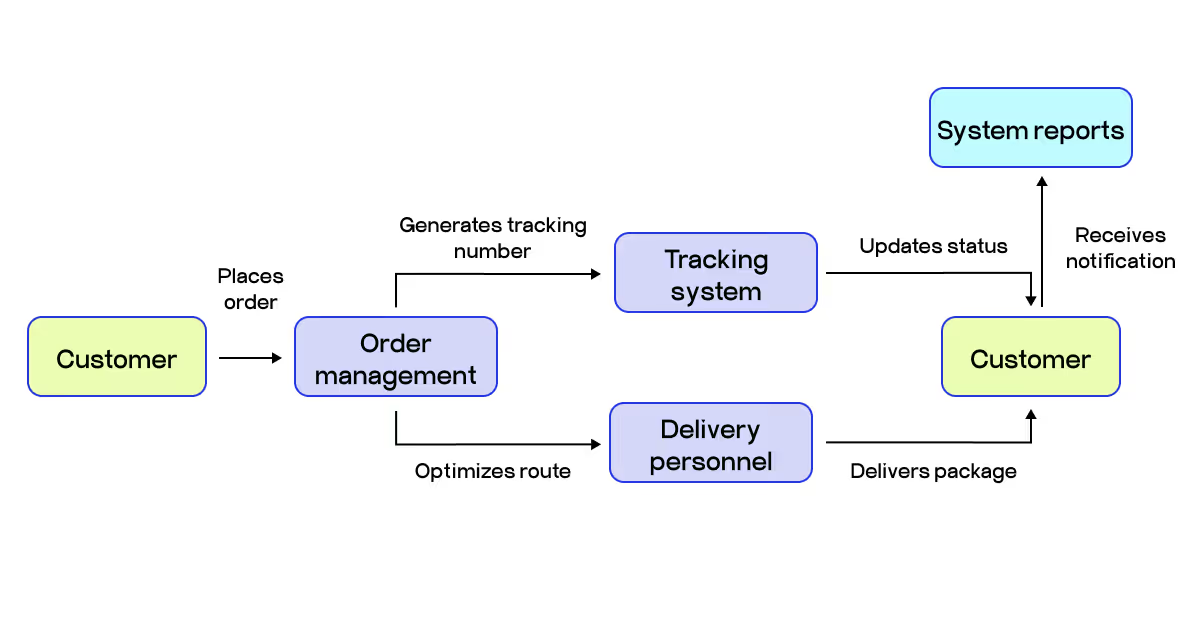
A courier service management system is software that automates and coordinates every step of the delivery process. It handles order intake, courier assignment, route optimization, real-time tracking, proof of delivery, and customer notifications all in one platform.
Asika claims that by substituting automated workflows for manual tracking and record keeping, courier management systems improve flexibility, accountability, efficiency, and dependability. Through a single digital interface, the system links dispatchers, couriers, and clients.
Eliminating the chaos of manual coordination is the straightforward, achievable goal of this software. Dispatchers assign deliveries instantly rather than with multiple spreadsheets and phone calls. Couriers take optimized routes rather than haphazard ones. Customers receive real-time updates rather than wondering where their package is.
Modern courier management systems solve these problems by digitizing the entire workflow from pickup request to final delivery confirmation.
Why does your business need it?
If you’re still coordinating your couriers through phone calls and have bookkeeping and assignments in documents and spreadsheets, you might be confused as to why you need an online courier management system at all. Let’s outline some reasons.
You're losing money on manual assignment.Okemiri's research outlined that manual tracking requires a great deal of work, keeping physical files costs money, and searching through paper records for delivery information wastes time. Dispatchers waste hours on phone calls and spreadsheets while available couriers sit idle. That coordination time should go toward performance management and strategic planning instead.
Your routes are damaging productivity. When couriers choose their own paths or switch between apps, they waste time and fuel. Without optimized routes, your fleet completes 15 to 20% fewer deliveries per shift, running your profits.
You have zero field visibility. Route deviations, extended breaks, and delivery shortcuts go unnoticed until angry customers call. You can't manage what you can't see, and manual tracking misses both your top performers and your problem cases.
Your coordination is broken. Without courier delivery fleet management, multiple couriers showing up at the same pickup point, missed handoffs, and poor communication between riders and dispatch create operational chaos that compounds throughout the day.
Ivanišević states that delivery personnel face constant pressure from traffic jams, unclear addresses, and customers who aren't home. Their research showed that 43.9% of couriers rated road safety as only moderate, and 30.2% said traffic jams strongly affect delivery time and quality. These operational stresses directly impact your bottom line. Meanwhile, businesses implementing AI and machine learning in courier services achieve 20% higher delivery efficiency. Operational costs drop up to 30%, and courier capacity jumps 43%.
Giving customers what they truly want - accurate ETAs and real visibility into where their package is - reduces customer complaints by 50%, and these customers are willing to reorder - it’s a solid future investment into your long-term success.
In short, automated route optimization, instant courier assignment, and real-time customer tracking are all superior to manual operations. Without it, you have to pay for deliveries every day, spend money, and drive clients to quicker options.
Core features of courier management software
If the previous part convinced you that a good courier management system will improve your business greatly, let’s move to defining what functionality actually makes it good.
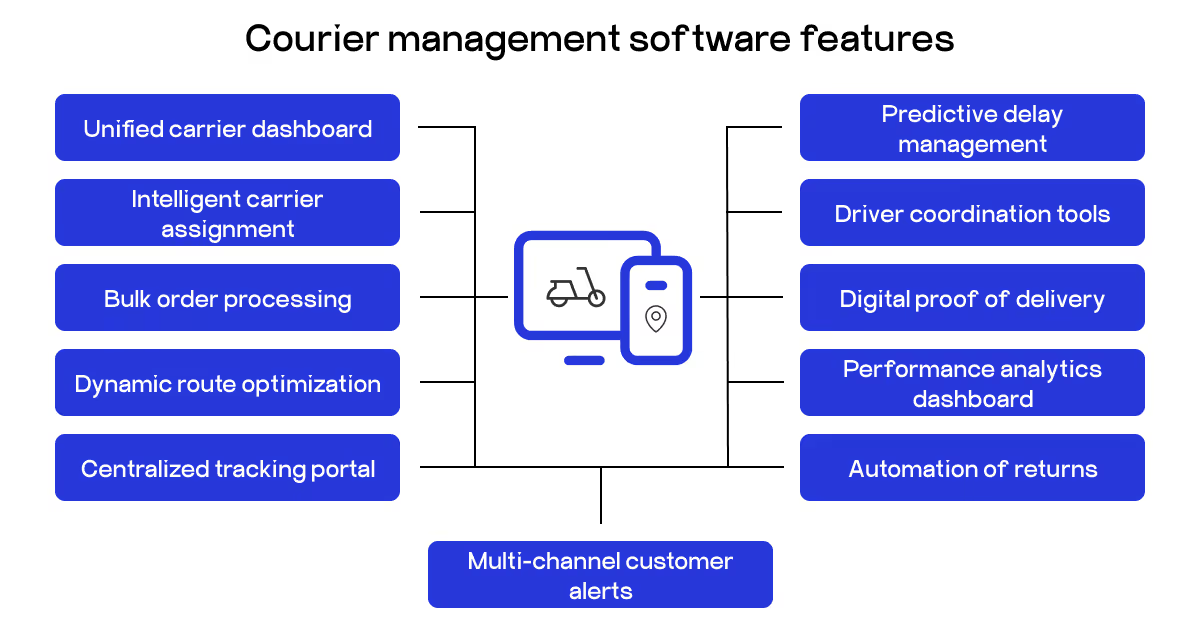
Unified carrier dashboard
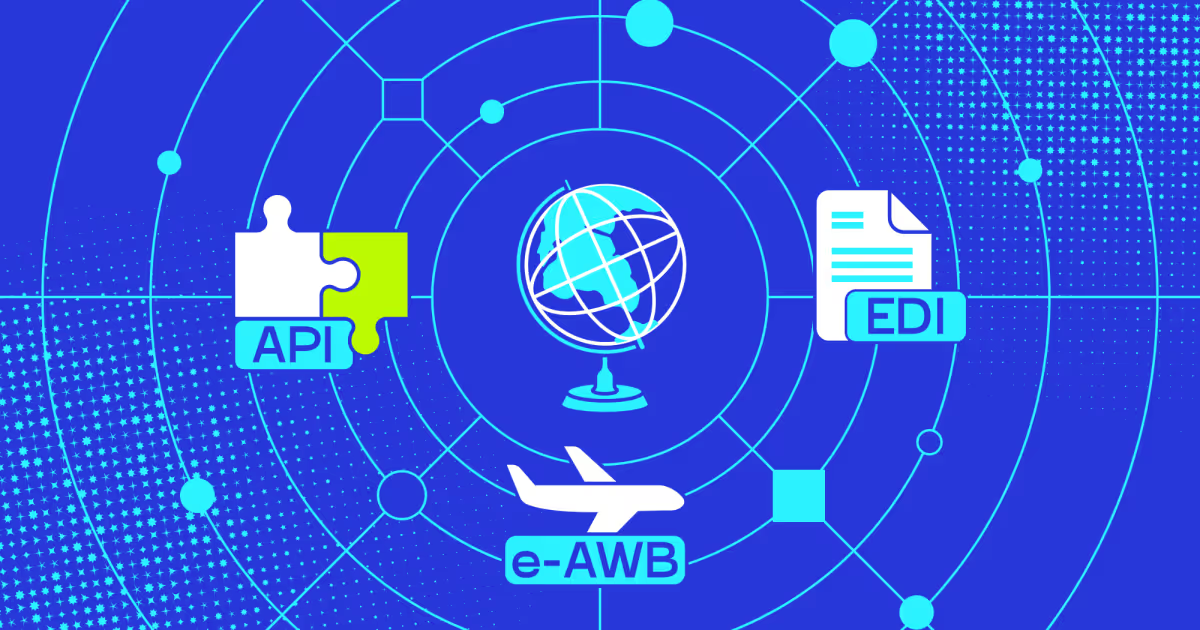
It’s very time-consuming and confusing to manage several delivery partners on different platforms. By centralizing everything onto a single dashboard, multi-carrier integration enables you to keep an eye on every package, regardless of which courier service handles it.
Santhoshkumar claims that linking every branch to a central database guarantees information consistency, boosting productivity and client satisfaction. With a unified software for couriers, you can activate new delivery partners in a matter of seconds thanks to pre-integrated connections with carriers across the globe. For effective stock management, the system automatically tracks moving inventory. You stop handling multiple logins back-and-forth and searching various websites for tracking numbers.
Intelligent carrier assignment
Each carrier excels at different things. Some handle express deliveries best, others minimize returns, and some specialize in time-sensitive shipments. Smart carrier allocation engines analyze your predefined priorities and automatically match each shipment with the most suitable carrier. You set the parameters once, then the system picks the optimal partner for every delivery. This improves delivery efficiency without you manually researching which carrier works best for each parcel type.
Bulk order processing
Under volume, manual order creation breaks down. You enter incorrect information, produce duplicate shipping labels, waste time, and make mistakes. Bulk shipping labels and AWB numbers are generated automatically by automated order manifestation. According to Okemiri, manual database maintenance is time-consuming and prone to errors, which delays the creation of reports and record verification.
These bottlenecks are simply removed by automation once and for all in your courier software. Orders are shipped out fast, which expedites the fulfillment process and keeps your courier operations running smoothly.
Dynamic route optimization
Delivery timing separates successful businesses from struggling ones. Courier management system features for route optimization analyze historical data, GPS tracking, machine learning algorithms, and predictive analytics. The system examines real-time variables like traffic, weather, and road closures through live driver tracking. Based on these factors, it calculates the most efficient routes.
Optimized paths mean timely deliveries, enhanced driver performance, and reduced fuel costs. Your couriers complete more stops per shift instead of sitting in traffic following inefficient routes.
Centralized tracking portal
It takes extra effort to keep track of order status across several carriers. No matter how many carriers you use or how many orders you send out, modern systems offer unified portals that display real-time delivery statuses for all shipments. You quit visiting different carrier websites in search of updates.
Additionally, courier delivery tracking software provides white-labeled tracking portals so users can keep an eye on their own orders. Your support team will receive fewer "where is my order" calls as a result of this transparency.
Multi-channel customer alerts
Customers want updates without having to ask. Push APIs send automatic notifications each time a shipment hits a milestone. The system uses multichannel strategies, including WhatsApp, SMS, and email, to reach customers on their preferred platforms. You customize these notifications with your brand details and translate them into customers' local languages. Proactive communication keeps people informed and builds trust in your service.
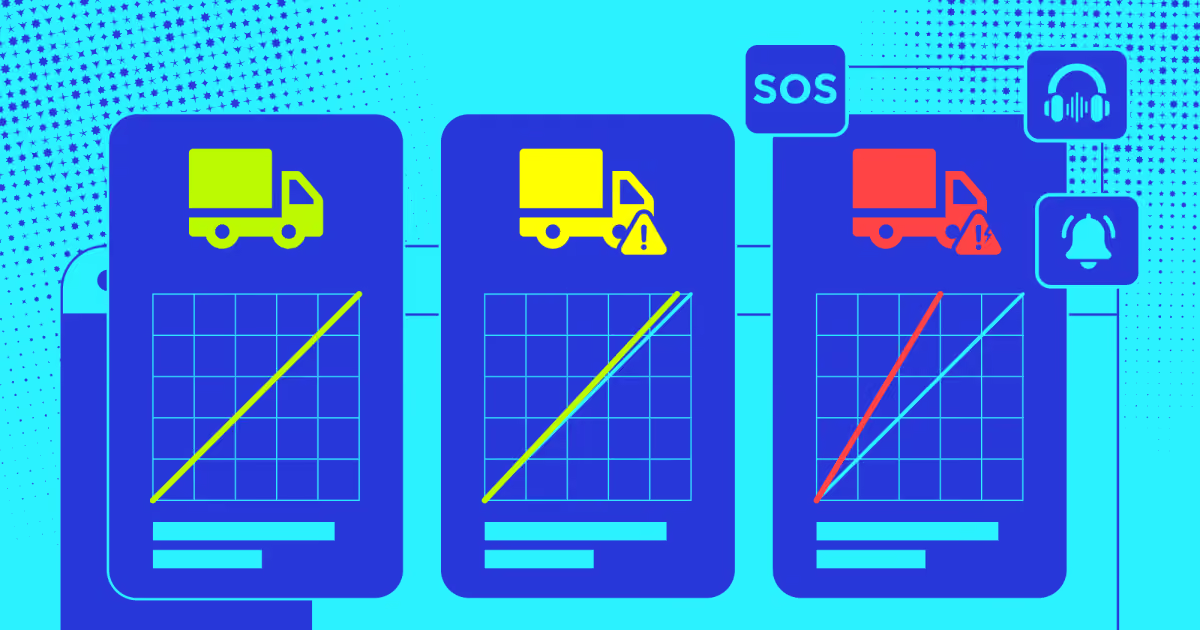
Predictive delay management
More than anything else, customers are irritated by delivery delays. Delivery times always depend on uncontrollable factors like traffic and weather. Before they occur, potential bottlenecks like shipping delays and SLA violations are detected by predictive analytics.
In order to prevent customers from wondering why their package is delayed, your courier delivery management software should automatically notifies them of delays in advance. This openness increases consumer trust in your brand and distinguishes you from rivals who leave them in the dark.
Driver coordination tools
Most software for courier management include dedicated driver coordination features and mobile apps. You coordinate with drivers and monitor operations in real time through centralized portals. The system optimizes routes, automates schedules based on driver availability and demand, and sends automatic notifications about new tasks.
Additionally, real-time driver performance tracking shows you who excels and who struggles, letting you support your team effectively instead of managing blindly.
Digital proof of delivery
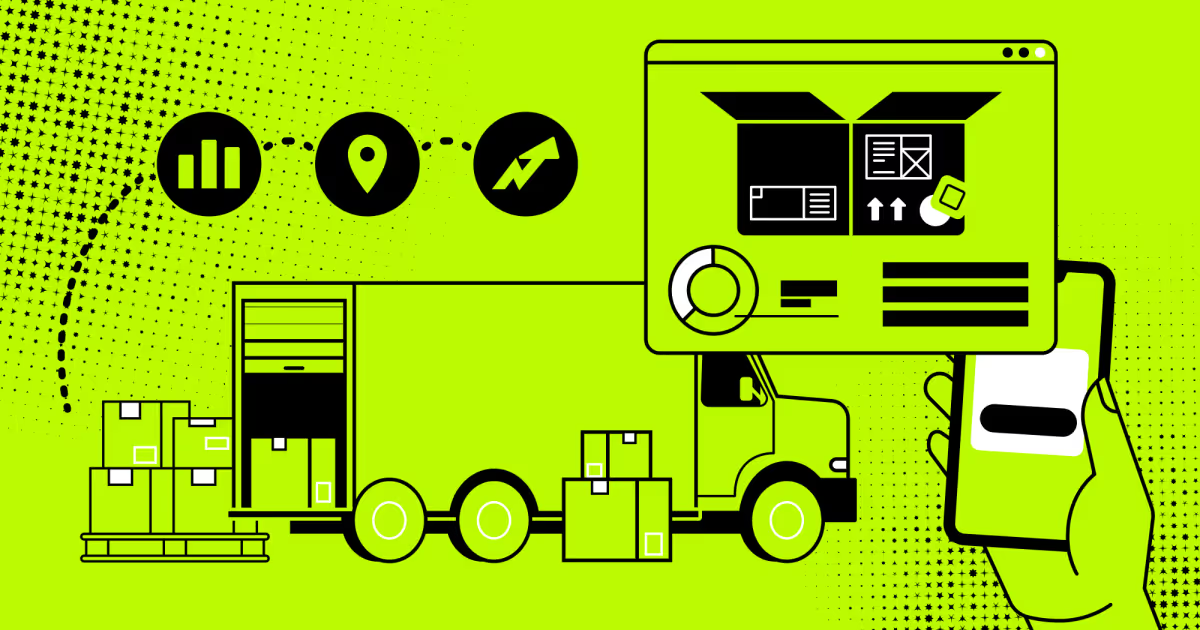
Proof of delivery based on paper is clunky, as it takes longer to process, and it is challenging to track. The digital proof of delivery (e-signatures, photos, and GPS data) coordinates directly from mobile devices. With electronic POD, immediate delivery verification is possible for both the customer and the business), as digital records simply can’t get lost.
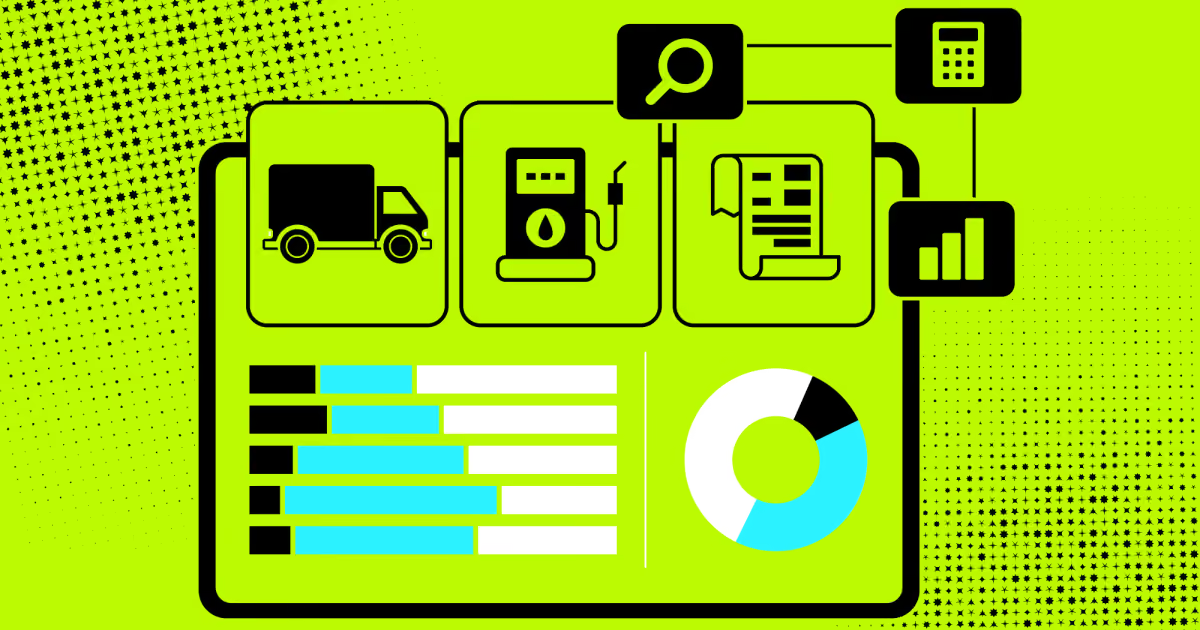
Performance analytics dashboard
Modern courier management systems provide deep insights into every delivery aspect. You get carrier performance analytics, delivery time analysis, non-delivery reports, customer notification analysis, and NPS score tracking.
These comprehensive analytics reveal process bottlenecks and help you strategize better logistics approaches. Data-driven decisions replace guesswork, improving operations based on what actually happens in the field rather than assumptions about what should work.
Automation of returns
Returns drain your resources, and the customers have a poor perception of your service if they are handled poorly. They can’t be avoided, but you can manage the way you manage them.
Dynamic courier service software includes return management functionality through self-service return portals, automated approval of return requests, optimized return policies and rules, return order tracking, and initiation of refunds that continue to build your customers' trust during the difficult and frustrating return process.
Best courier software
Looking for courier software? We have compiled the solutions that work best in 2026. The right platform depends on your delivery model. Route optimization tools work for planned deliveries. Courier dispatch software handles on-demand orders. Some do both.
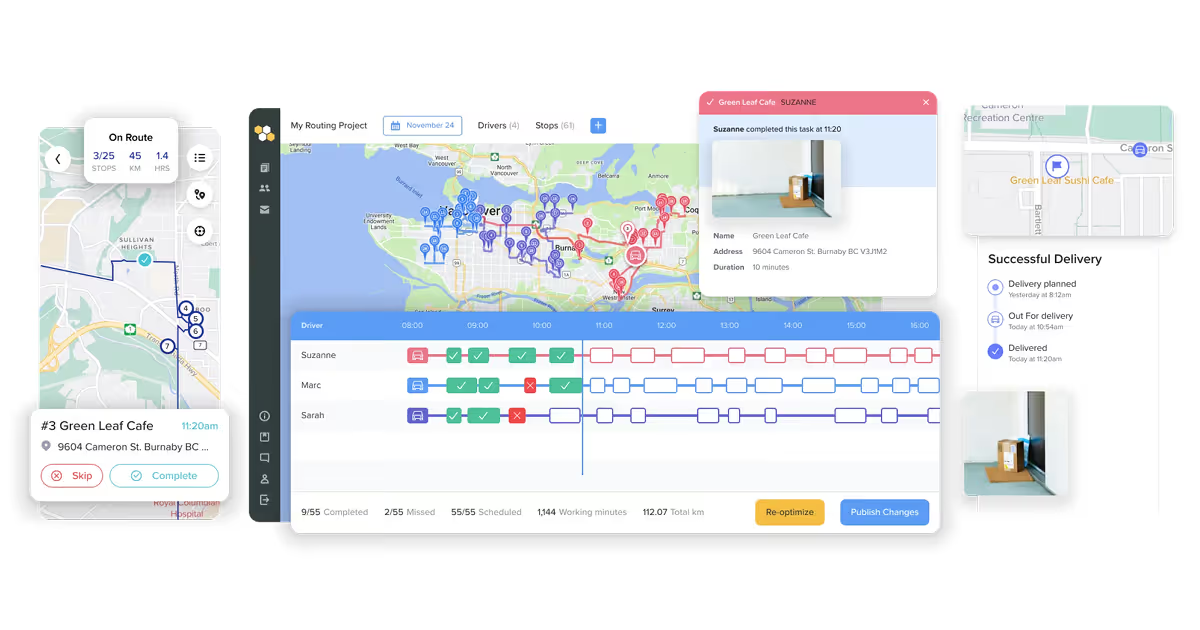
This courier routing software is amazing at optimizing your driver’s routes. Their algorithm uses AI and machine learning to create driver-friendly routes with minimal crossovers. You get accurate traffic predictions, real-time ETAs, and simple drag-and-drop editing when changes are needed.
Key features of this tool:
Map and timeline views for route planning
Live tracking links for customers
Batch editing capabilities
Two-way integration with e-commerce platforms
Platform API and Engine API for custom builds
Where it falls short: The solution has no barcode scanning, in-app chat, label printing, or customer portal. Also, it provides no built-in order management.
It’s best for courier services with 1 to 50 vehicles that can batch deliveries and plan routes ahead, and integrates well with Shopify, WooCommerce, Magento, Zoho, and BigCommerce through Platform API. Engine API is also available for custom integrations.
Pricing is free for the first 100 orders monthly. Then $150/month for 100 to 1,500 orders. Above that, 15¢ per stop (2,000 orders) down to 3¢ per stop (20,000+ orders).
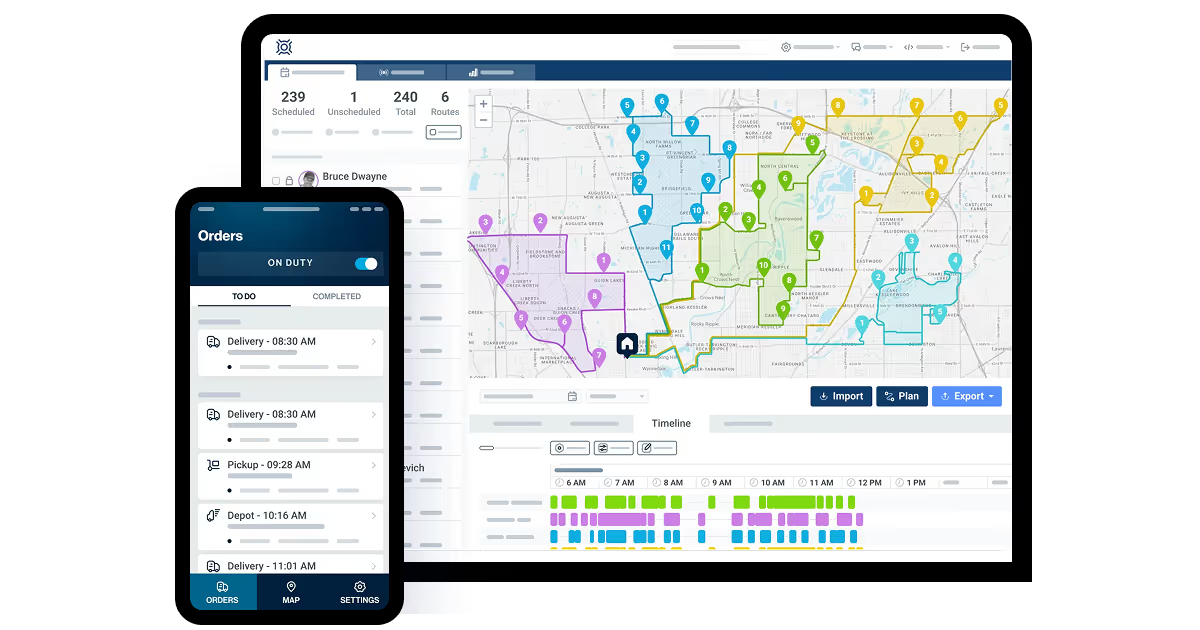
This courier's software is great for handling depot reloads. With it, drivers can return mid-route to pick up more packages. It’s also strong on driver profiles with detailed shift schedules, breaks, vehicle specs, and service areas.
Key features of this tool:
Return to depot scheduling
Customer feedback collection
Breadcrumb trails (actual vs planned routes)
Barcode and QR code scanning
Weekly planning up to five weeks out
Auto-allocation to optimal days and times
Where it falls short: Routes sometimes show excessive crossovers and overlaps, and the solution is difficult to edit after optimization. Start locations are inflexible, which might create problems for contract drivers with changing route origins.
It’s best for field service and sales teams, as well as businesses needing mid-day depot returns. It links excellently to e-commerce platforms, including Shopify, WooCommerce, and Magento.
Pricing is $35/vehicle/month (700 order limit), and $44/month for 1,000 orders with real-time tracking and proof of delivery. Note that an annual commitment is required and a 30-day free trial limited to 250 stops.
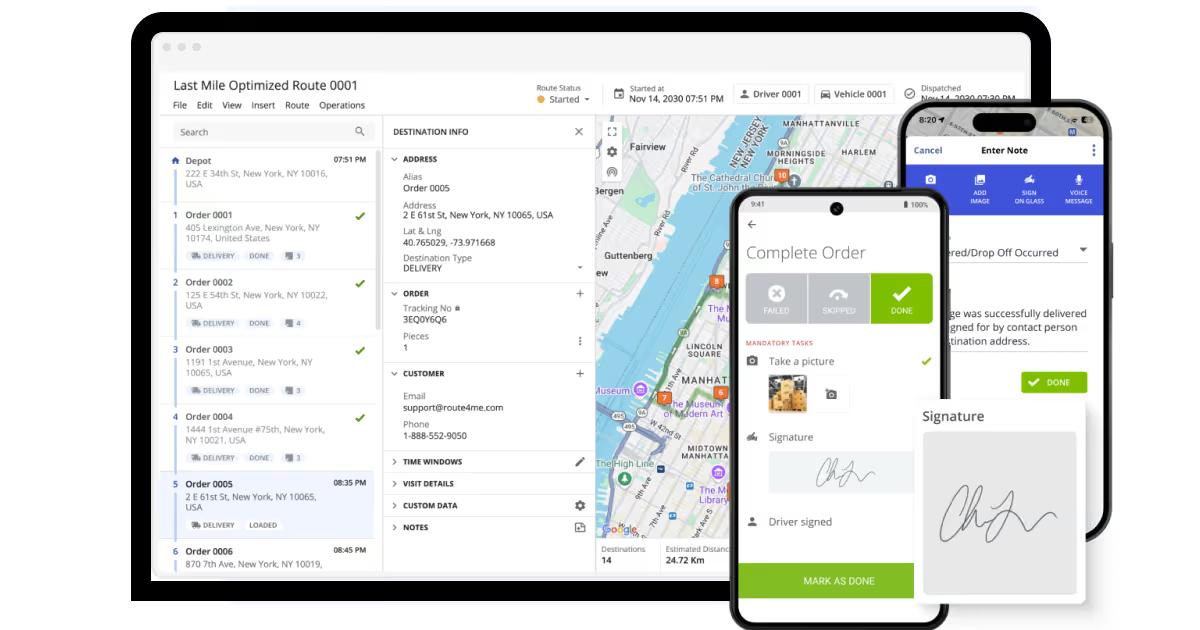
Route4Me is one of the best courier management software solutions due to its extensive customization through marketplace add-ons. It’s also strong on truck routing for vehicles with height or weight restrictions. The solution also provides territory assignment that lets drivers become familiar with regular zones.
Key features of this tool:
Mixed vehicle routing add-on
Commercial vehicle routing for trucks
Territory assignment by zone
Recurring route add-on
Where it falls short: It’s more expensive than other similar tools. Aside from that, add-ons increase costs fast (curbside delivery is $799/month). Some users also face inaccurate ETAs (estimated 10 minutes, where Google Maps showed 18-19).
It’s best forlarge operations with complex needs and a budget for add-ons. The solution also provides strong integrations with Shopify, WooCommerce, and Magento, with an extensive marketplace of add-on modules.
Pricing is $400/month for basic single-driver optimization, and $600/month for multi-driver and multi-depot. It also offers custom enterprise pricing, and add-ons cost extra. Importantly, you can get a 7-day unlimited free trial before committing to this higher-priced option.
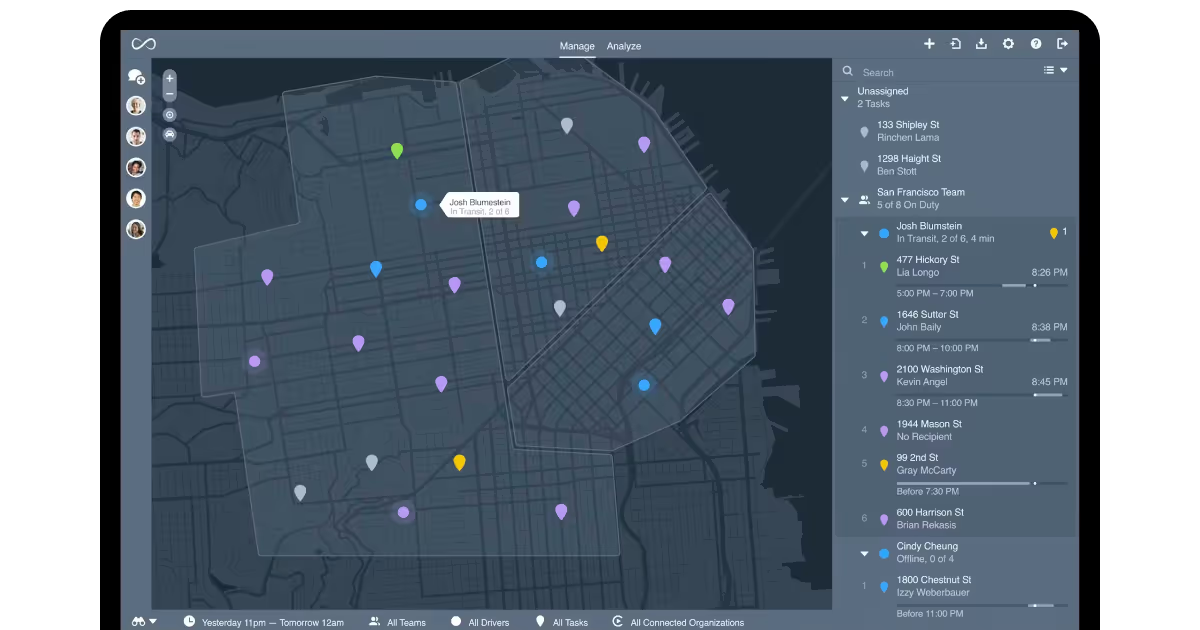
This tool can be used as a great courier dispatch software due to its on-demand dispatch with an auto-assign feature. It also provides an in-app chat between dispatchers, drivers, and customers, and age verification at delivery for particular types of goods.
Key features of this tool:
Automated driver assignment and dispatch
Team chat inside the driver app
Barcode scanning
Age verification
Customer feedback collection
Driver analytics (on-time vs delayed)
Where it falls short: Sometimes, it’s hard to edit routes, as the interface only shows location pins, not actual routes. Also, you can view one route at a time, not the full day, as it provides no timeline view. The solution is also not user-friendly without training.
It’s best formid-market and enterprise operations with on-demand delivery needs. The tool integrates well with Zapier, Shopify, Square, GigSmart, and other e-commerce platforms.
Pricing is $599/month (for 2,500 tasks) and $1,299/month with barcode scanning and age verification (5,000 tasks). There’s also a $2,999/month tier for enterprise (for 10,000+ tasks).
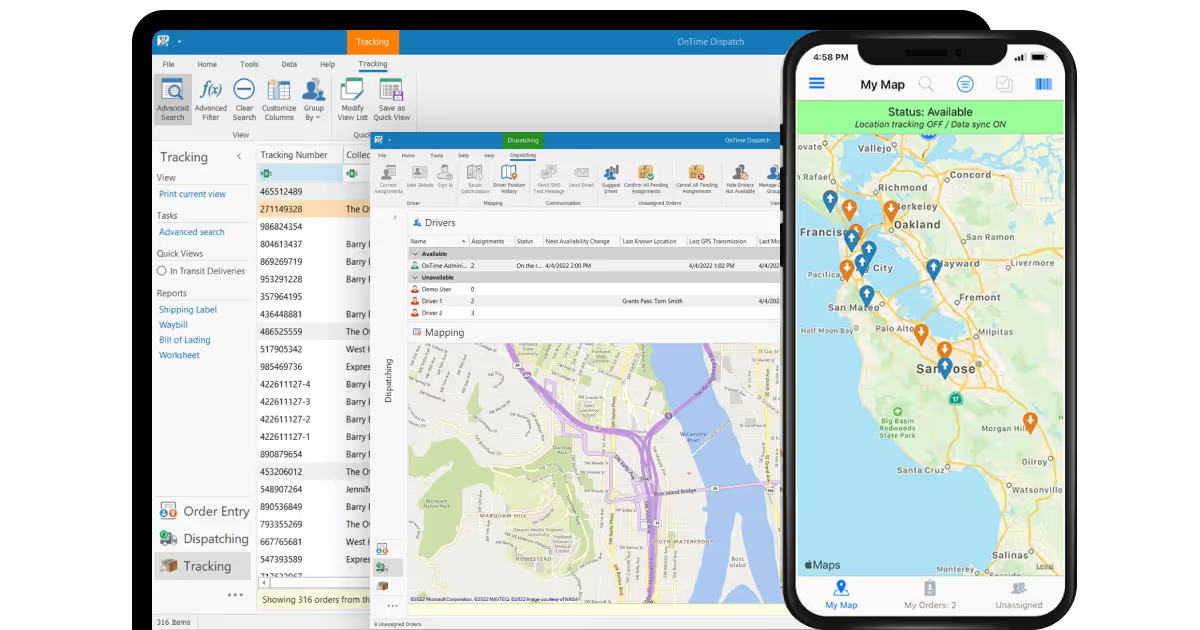
This is an option for an all-in-one courier delivery management system. It easily handles order taking, label printing, barcode scanning, billing/invoicing, and offers a comprehensive customer portal.
Key features of this tool:
Complete order management
Label and barcode systems
Billing and invoicing
Customer web portal for self-service
Where it falls short: This solution has a quire expensive per-shipment pricing. Users often pay for unused features, and it mostly provides a basic routing functionality. Additionally, it’s not cloud-based (as it requires download and installation).
It’s best forWindows users wanting complete courier management in one system. The tool has strong integrations with QuickBooks, but only for the Grow plan and higher).
Pricing is divided into three tiers: Start costs $99/month (250 shipments) plus 40¢ each additional, Grow costs $249/month (700 shipments) plus 35¢ each, and Scale costs $499/month (1,600 shipments) plus 30¢ each. OnTime 360 also provides custom pricing for high volumes.
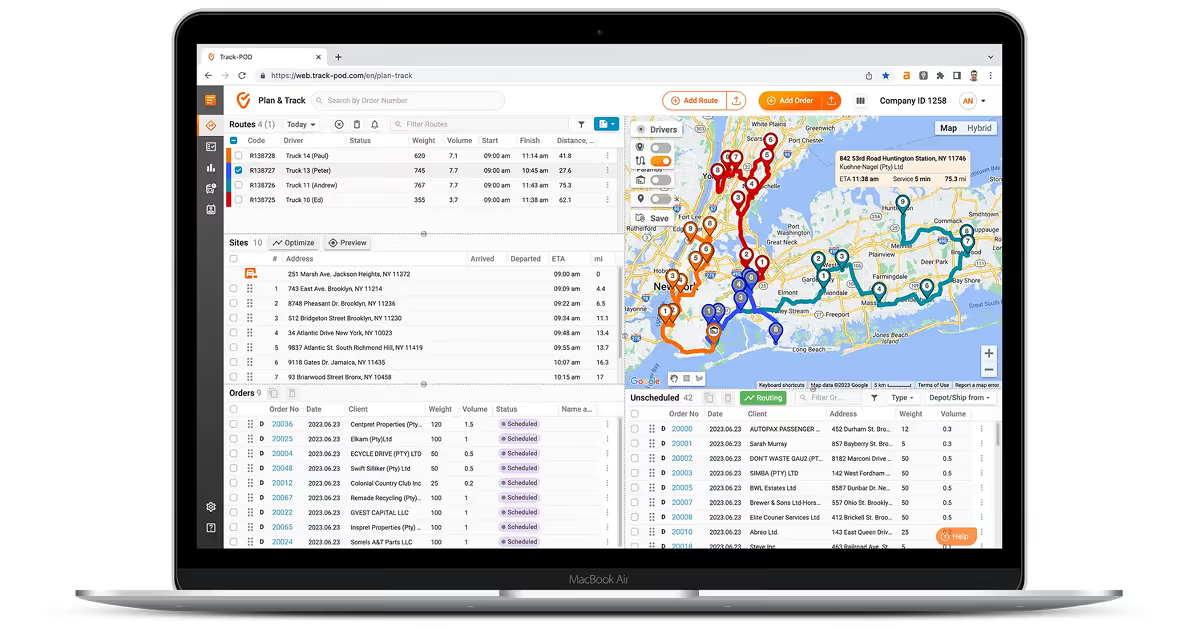
This solution is a solid courier software for small businesses, as it’s both simple and fully integrated. It offers everything except for billing/invoicing. For example, it’s a better ease of use and value compared to our previously described OnTime 360.
Key features of this tool:
Route visibility and planning
Real-time notifications
Live tracking
Proof of delivery with ePOD, geotags, timestamps
Electronic proof of delivery
Driver app with performance analytics
Barcode scanning
Where it falls short: It’s not easy to edit routes, and driver apps differ between Android and iOS, causing confusion. Courier management apps for drivers also cost extra (while competitors include them free).
It’s best forsmall courier companies needing on-demand dispatch and automated workflows.
Integrations of this tool include various e-commerce and logistics platforms.
Pricing offers two models available. Per-driver is Advanced Plus $207/month (3 drivers minimum) plus $69 per extra driver. Ultimate is $267/month (3 drivers) plus $89 extra. Meanwhile, per-order offers an S Plan $285/month (1,500 orders) plus 19¢ each, an M Plan $510/month (3,000 orders) plus 17¢ each, and an L Plan $900/month (6,000 orders) plus 15¢ each. XL Plan offers $1,440/month (12,000 orders) plus 12¢ each.
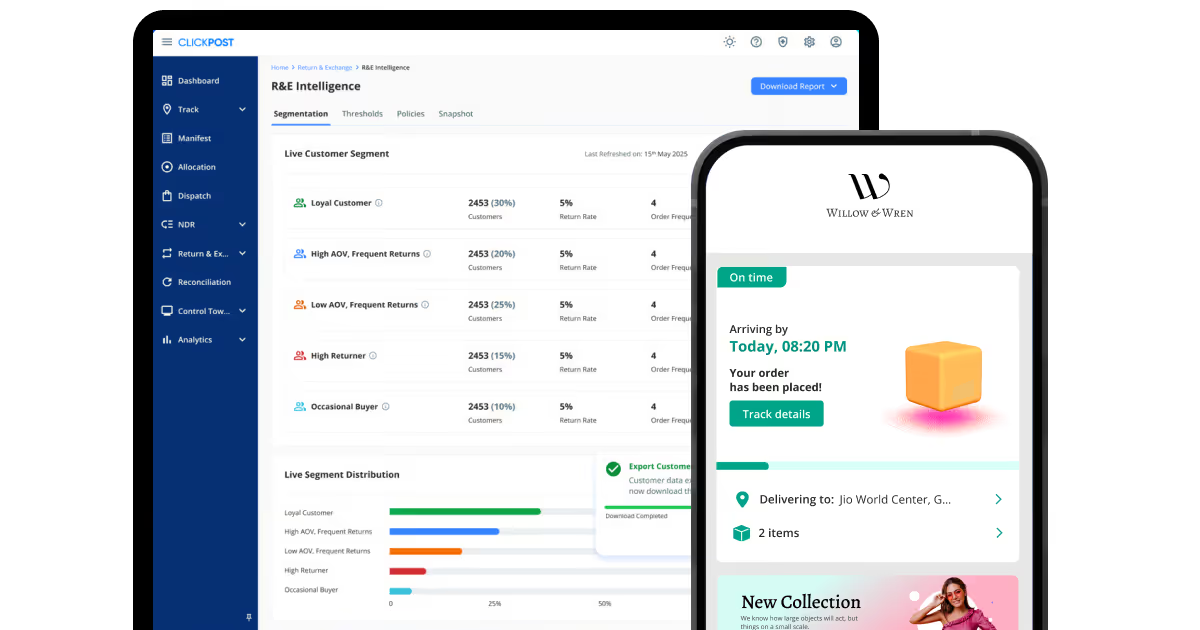
Among various courier systems, this tool offers end-to-end multi-carrier shipping with deep tracking and supports 500+ carrier integrations, AI-based carrier recommendations, and an NDR (Non-Delivery Report) suite for quick customer communication.
Key features of this tool:
AI-driven carrier selection
Accurate estimated delivery dates on product pages
Seamless e-commerce integrations and API workflows
NDR management
Returns Pro suite (encourages exchanges over refunds)
Predictive analytics and real-time alerts
Branded tracking pages
Where it falls short: It sometimes gives reporting inconsistency, and the user experience might be difficult for new users.
It’s best for large-scale logistics operations managing multiple carriers. It also offers integrations with e-commerce platforms via API and supports 500+ carrier integrations.
Pricing starts around $300 per month, with no free version, but the tool offers access to all features without tier restrictions
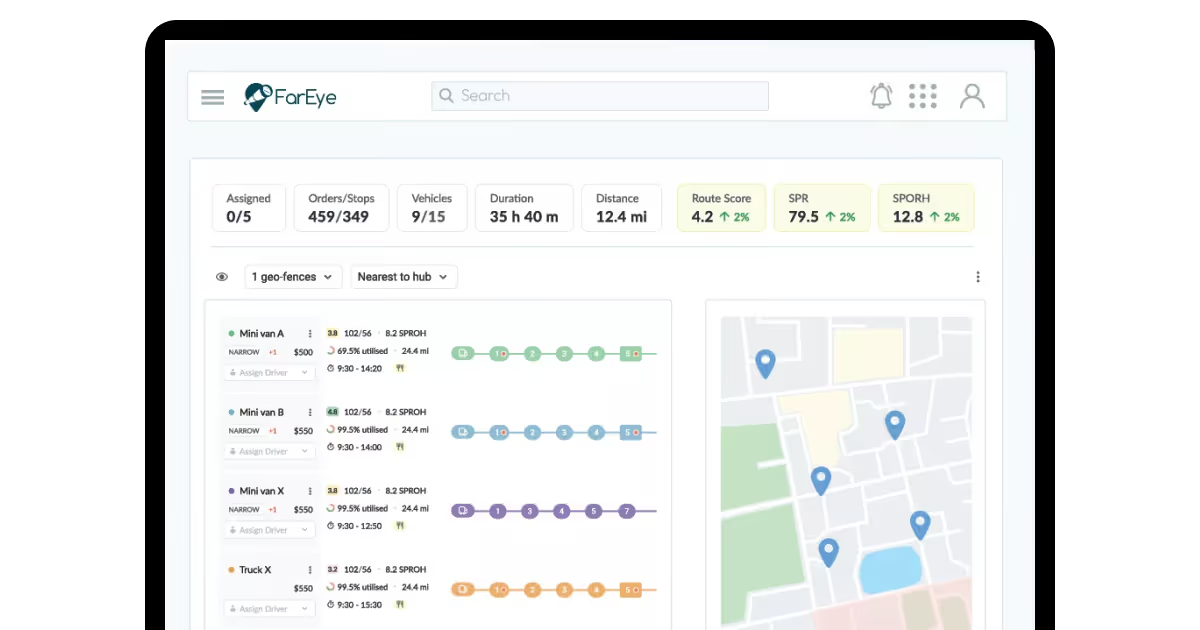
If you need the best courier software for AI-powered route optimization and predictive analytics up to enterprise scale, this is a good pick. Sustainability tracking and carbon emission monitoring.
Key features of this tool:
Machine learning algorithms using real-time traffic and weather data
Loop optimization to minimize vehicle mileage
SLA monitoring
Carbon emission tracking
Digital proof of delivery
ETA accuracy
White-labeled tracking and proactive alerts
Where it falls short: Integrations with legacy systems can be complex, and there might be challenges in scaling for extreme peak loads.
It’s best for large enterprises seeking comprehensive logistics control and sustainability goals. The tool also provides useful integrations with electric vehicle initiatives, as well as green packaging solutions.
Pricing is fully custom, and you can request a demo.
How to choose the right courier management software
The market for delivery systems is diverse, but finding an ideal one for your business case and pain points isn’t that easy. When evaluating online courier management software, consider the following factors.
The delivery model should be aligned with the type of software you use. For daily route planning and batch delivery order processing, optimization algorithms should be a central aspect. However, for urgent on-demand delivery requests, the focus should be on dispatch automation and assignment of drivers.
Estimate available features vs. add-ons. Some software platforms may charge for certain features (such as barcode scanning and driver applications, or some functionality for courier accounting software), while others may include those features as standard. Therefore, look for platforms that have the features you require without requiring you to pay for add-ons.
The solutions available to you based on your fleet size may vary significantly. For example, there are software solutions designed for fleets that operate with a maximum of 1-50 vehicles or for fleets that operate with hundreds of drivers through enterprise operations.
Pay close attention to the quality of routing produced by the software solutions you are considering. If routing is of low quality, it can lead to frustration for drivers, wasted fuel, and added inefficiency in the operation of a delivery service. Therefore, look for routing that minimizes crossovers and provides a logical sequence to the delivery locations.
Consider integration capabilities. If you use tools such as Shopify, WooCommerce, or QuickBooks, you should ensure that the software solution you are evaluating has native integrations with them.
Having functional mobile applications available to both drivers and dispatchers is essential. Therefore, drivers must have access to functional mobile applications for communicating with dispatchers, and dispatchers must have the ability to make changes on-the-fly with functional mobile applications.
With these aspects considered, you can simplify the process of choosing your optimal courier management system. However, off-the-shelf solutions don’t always fit your business.
When to opt for a custom solution?
Most delivery businesses can use off-the-shelf courier services software. However, there are instances when you need something made specifically for you.
Standard platforms provide a wide range of features. However, with custom solutions, your operations are perfectly aligned and considered, so there’s no need to try to fit into vendor’s plans. Additionally, Kidwai's research indicates that the courier industry is changing a lot as businesses create specialized services using new technologies to satisfy particular client needs.
When your needs are specific, a custom tool offers efficiency and cost savings. So if your business ticks off boxes in this checklist, a tailored-made solution is what you need:
Your company uses proprietary workflows that are incompatible with standard software.
You have specialized deliveries such as medical transport, high-security items, or particular regulatory compliance requirements fall under this category.
You have deep and more specific integration needs like connection with existing Enterprise Resource Planning (ERP), Customer Relationship Management (CRM), or e-commerce platforms, or some legacy driver management software you already have.
You’re in a regulated industry or need a full data ownership. Custom systems give you total control over how data flows between systems.
You are growing fast and need specific features that third-party vendors do not have on their roadmap. Custom systems grow with you without hitting vendor limitations.
With a custom courier delivery software, each part supports your particular operations. You allocate funds as efficiently as possible, and provide experiences that are difficult for any rivals to imitate with truly unique features - like interfaces for specialized tracking, personalized alerts, or distinctive pricing strategies suited to your industry.
Specialized courier management software development is also cost-effective for companies with genuinely unique requirements and bring additional value as they eliminate the possible future workarounds, extra costs, or data limitations that ready-made tools often cause.
With COAX, you get flexibility and reliability backed by 15 years of experience in logistics app development. Our team handles everything from API integrations with your existing systems to building custom features that solve your specific challenges. Whether you need an all-in-one platform or want to add advanced capabilities like AI-powered route optimization and demand forecasting, we develop solutions that actually work for your operations.
FAQ
Is software for the courier business all the same?
No. Different types serve specific needs:
Delivery management software manages the entire lifecycle from order intake to final delivery, featuring routing, dispatch, and tracking.
Route optimization software specializes in creating efficient routes, reducing fuel costs and time.
Shipment tracking software focuses on real-time tracking and status updates, integrating with carriers.
Fleet management software manages vehicle fleets, including maintenance, fuel, and driver behavior, with courier functions.
E-commerce shipping platforms streamline shipping for online retailers, offering multi-carrier rates and label printing.
Last-mile delivery apps feature driver apps, proof of delivery (ePOD), and customer communication.
Can a small delivery business benefit from a courier management system software?
Yes. Research by Yao and team found courier software enables systematic knowledge management, driving creative service development and operational efficiency. Small businesses gain route optimization, automated dispatch, real-time tracking, and customer notifications. Track-POD and Routific offer affordable entry points. Benefits include reduced manual work, faster deliveries, better customer experience, and competitive positioning against larger players.
What are the challenges of implementing a courier management system?
You may face these obstacles:
High upfront investment and recurrence subscriptions
Need for staff to be trained and also, generally resistance to adopting them
Complexity of integrating existing systems with new systems
Migration of legacy data into the new system
Customizing the new system for different workflows
Connectivity to the internet when using the cloud-based system
Changing the way people across departments handle change
Protecting against locking yourself into a vendor's product
Increased demands on infrastructure as you grow
Compliance with security and privacy regulations for stored data
How does COAX create secure and efficient courier management software?
We implement end-to-end encryption, role-based access controls, automated backups, and regular security audits. COAX also holds ISO/IEC 27001:2022 certification for comprehensive security management, risk assessment, and monitoring. ISO 9001 certification ensures optimal quality processes. Our development follows secure coding standards with continuous vulnerability testing. Infrastructure uses redundant systems for reliability while maintaining strict data protection compliance.

























































































_.avif)











%2520explained.avif)

We are interested in your opinion