Integrated logistics is the practice of connecting every function in your supply chain. The complexity starts the moment you try to actually do it. At COAX Software, we've spent 16 years building logistics and transportation platforms. We've seen integrated logistics management work well, and inherited projects where it didn't. Based on this experience, we’re sharing the difference between these two and explaining what to do to make the transition work.
This guide covers the key components, the principles behind them, the software that enforces them, and typical mistakes and challenges. Then we share some insights and practical tips. Evaluating whether to integrate your logistics operation or figuring out why a previous attempt didn't hold? This guide is for you.
What is integrated logistics?
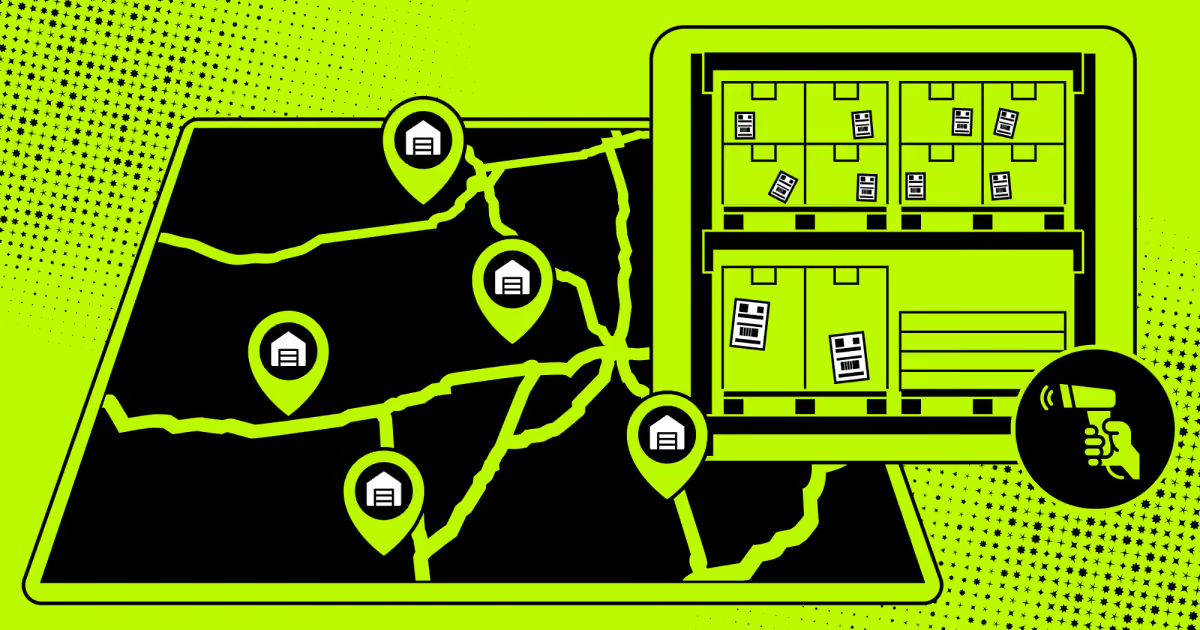
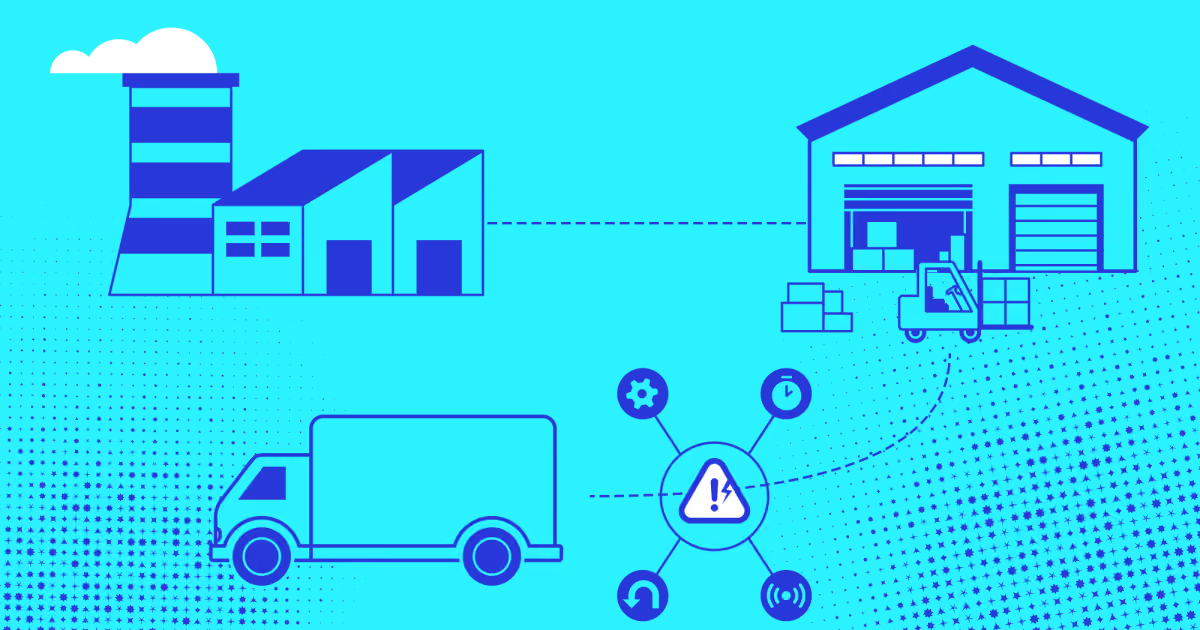
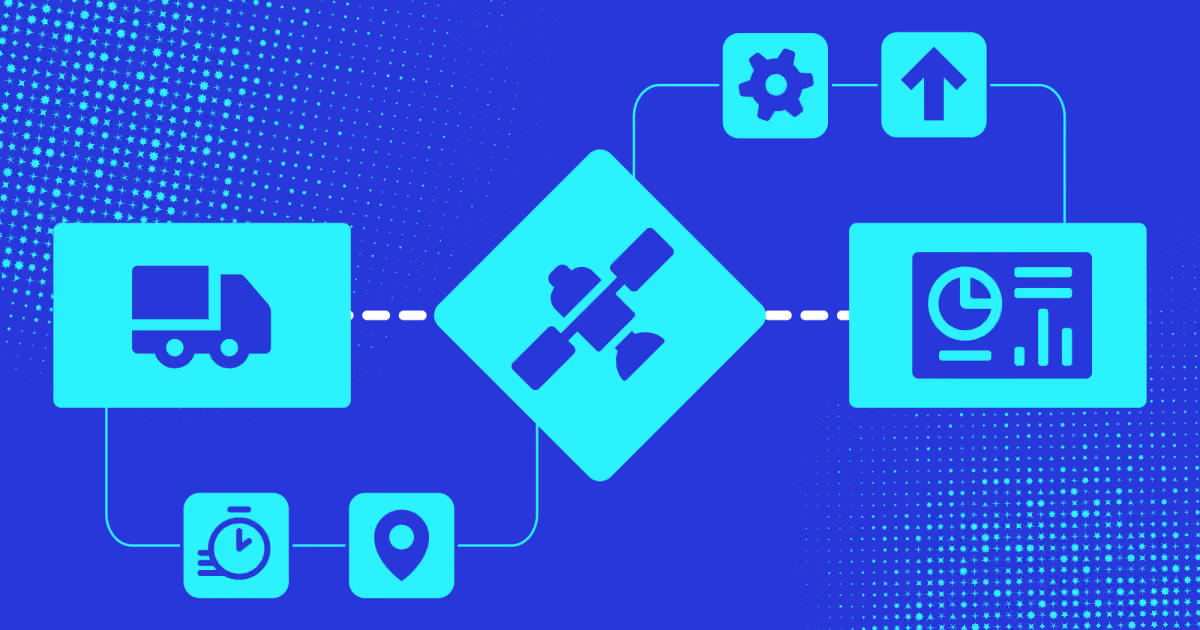
Integrated logistics is the coordination of all supply chain functions inside one connected system. This includes transport, warehousing, procurement, order fulfillment, and returns. Instead of separate teams running separate tools, everything talks to everything else in real time.
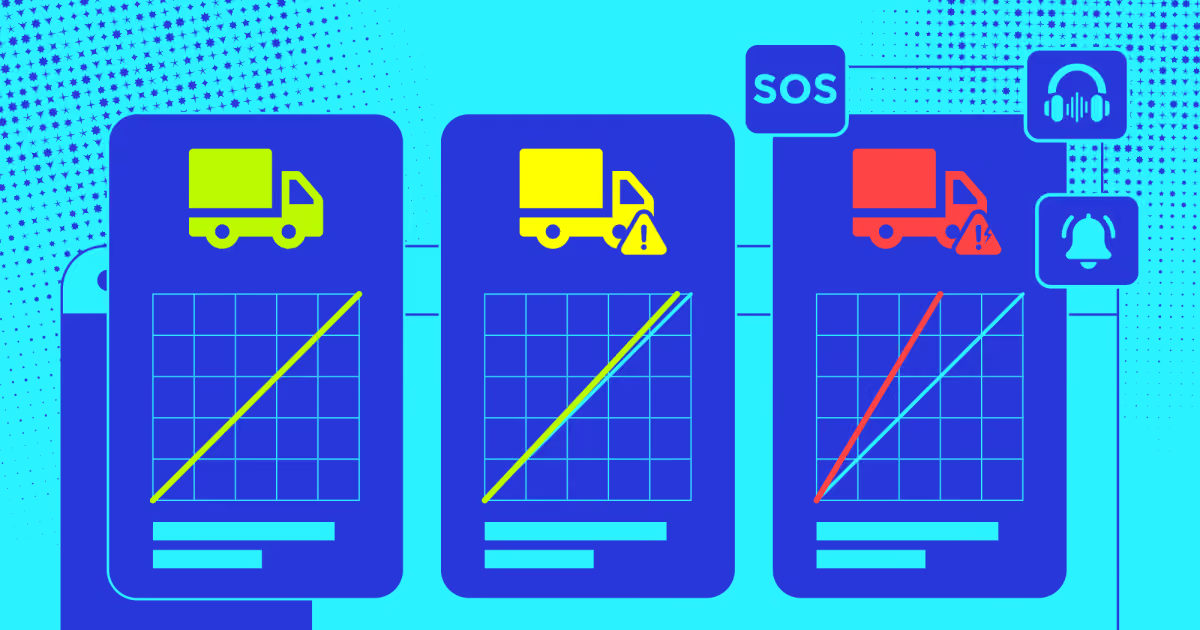
There’s a simple way to picture it. When a dispatcher approves a rerouted delivery in one platform, the warehouse, the customer, and the billing system all update automatically. No calls, no spreadsheets, and no lag.
We saw exactly this play out with DriveIQ, a platform we built for a cross-border logistics operator running 500 vehicles. Their dispatchers were firefighting daily. They had GPS feeds, TMS records, manual logs, and EDI data that never matched. Once we connected those streams into a single decision layer, dispatchers handled 31% more routes without adding headcount. That's what global integrated logistics looks like when it actually works.
The market reflects how urgent this has become. The global logistics sector is on track to exceed 14 trillion euros by 2028, growing at 6.3% annually. Companies that still run fragmented systems are paying for that fragmentation every single day.
Why does integrated logistics matter so much now?
Integrated logistics is critical today. in a high-cost environment, companies can no longer afford to waste half their labor hours manually reconciling siloed data. The best way to survive today's massive hiring shortage is to give your existing team data that helps them instead of fighting them.
The real problem isn't that companies lack tools. It's that the tools don't connect well, and that disconnect is expensive. A survey found that 57% of logistics leaders named hiring and retaining qualified people as their single biggest challenge. But when systems are siloed, the people you do have spend half their time reconciling data instead of making decisions.
Integrated logistics and supply chain thinking fixes the root cause. When transport, warehouse, and procurement share the same data in real time, your team stops chasing information and starts acting on it. Response times drop. Errors drop. And the people doing the work actually feel like the system is helping them, not fighting them.
Reverse logistics is where this gap becomes most painful. Returns are now a $200 billion annual cost center for US retailers alone, according to McKinsey. Most companies still handle them manually, routing decisions made by hand, one item at a time. Connected systems can automate disposition in seconds, routing a returned item directly back to the nearest store. This happens while demand still exists, instead of a warehouse six weeks later.
The difference between scattered and integrated logistics systems is massive. One COAX client came to us with dispatchers opening six different tabs just to track a single delayed shipment. They were manually cross-referencing GPS pings, warehouse spreadsheets, and Slack messages while a frustrated customer waited on hold.
Once integrated, that same dispatcher received an automated alert on a single screen showing the delay, the current warehouse inventory, and an alternative route instantly, turning a 20-minute scramble into a three-click fix.
"We've seen clients with solid teams and real operational knowledge just stuck. It’s simply because the data they needed was in four different places and none of it was current. Integrated logistics management isn't a luxury. It's the baseline for running a modern business without burning your people out," shares Myroslav Stelmashchuk, Node.js Developer at COAX.
The bottom line is that fragmented logistics doesn't just cost money on paper. It costs you driver retention, dispatcher trust, and customer confidence at the same time. On the other hand, integrated logistics fixes these challenges.
Key components of an integrated logistics system
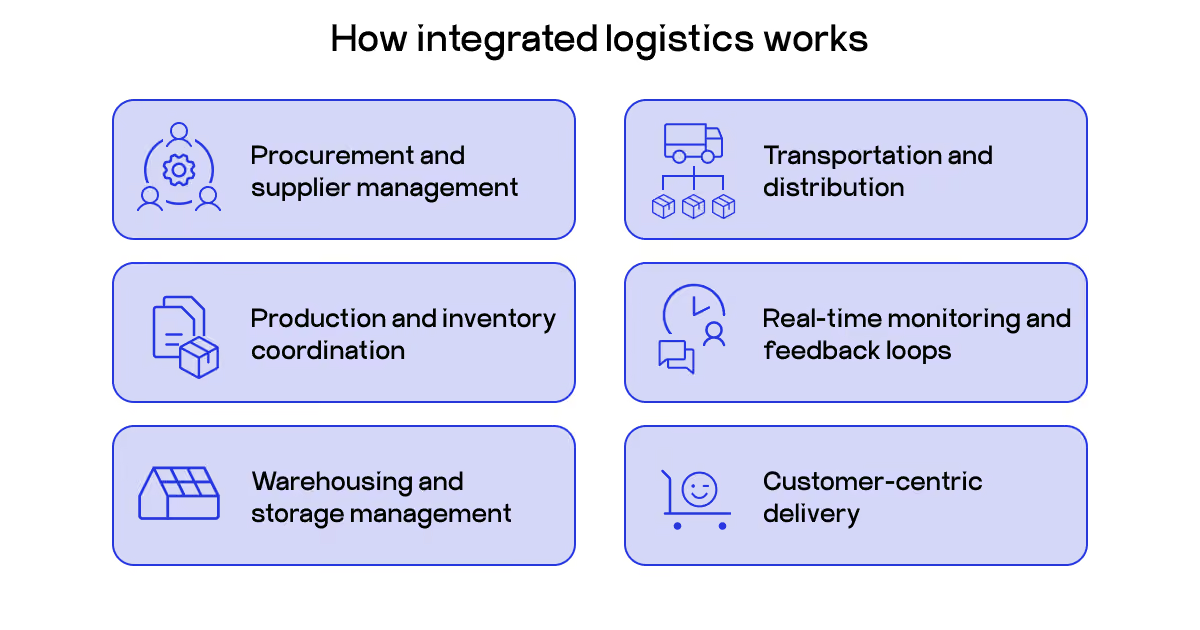
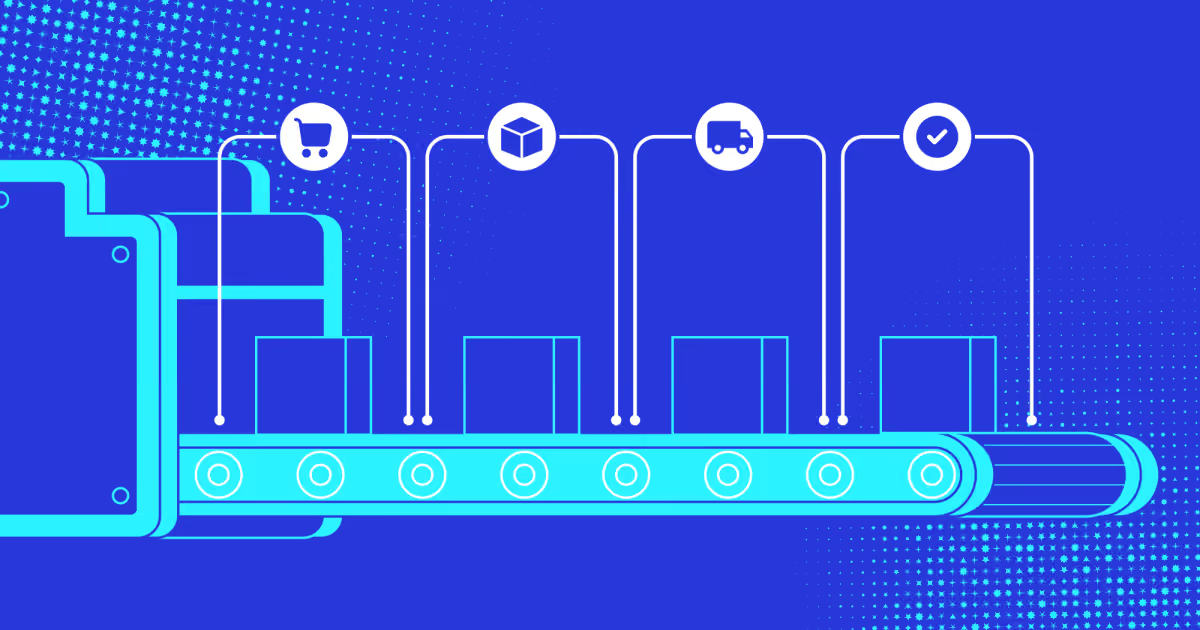
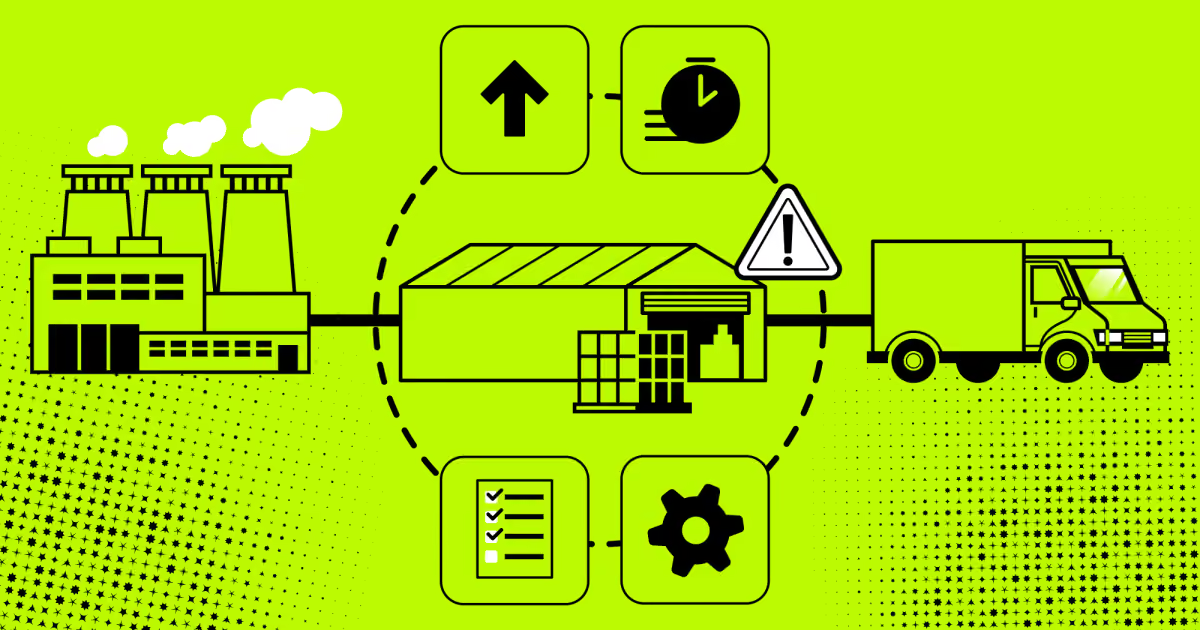
An integrated logistics system is only as strong as its weakest component. If one piece runs on its own data, the whole thing breaks down. True efficiency is achieved only when transportation, warehousing, procurement, production, monitoring, and customer delivery are integrated into a single, real-time ecosystem. This cuts down on the manual data silos and empowers teams to act on accurate information.
Let’s break down these components now.
Transportation and distribution
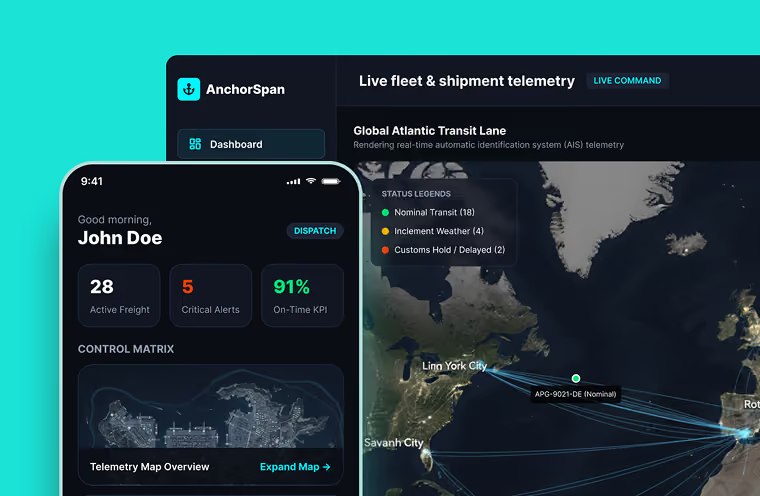
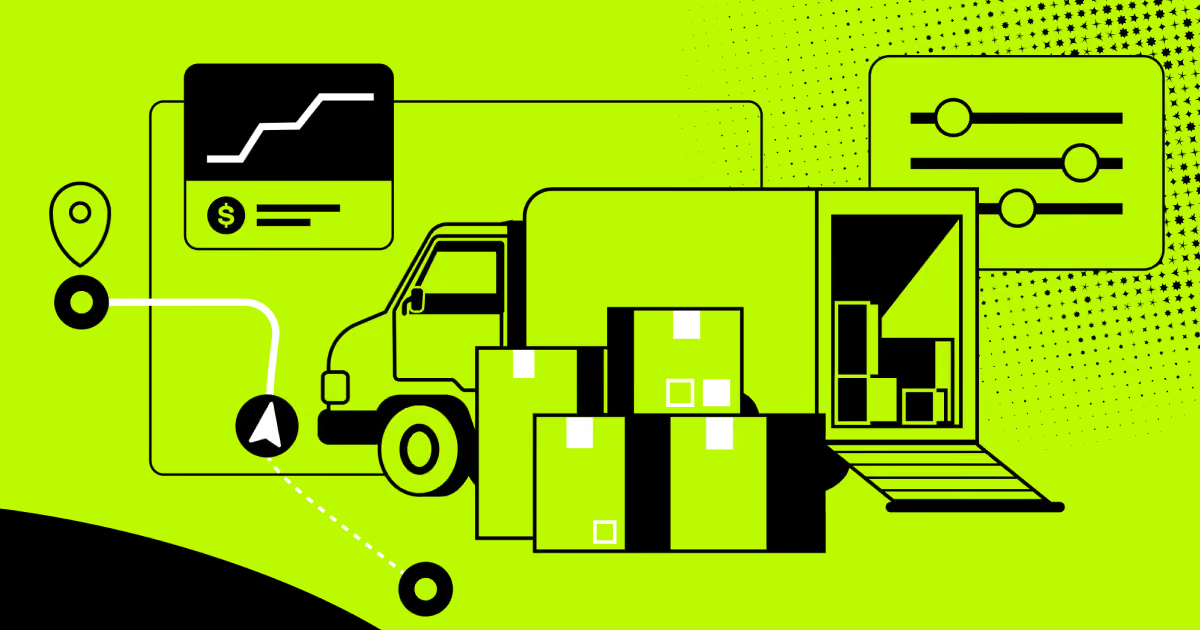
This is the most visible layer of integrated logistics management. Trucks move, routes change. The question is whether your system knows about it before your customer does. Transportation management software handles route planning, carrier assignment, real-time tracking, and delivery confirmation. When it's connected to everything else (such as warehouse status, customer notifications, or billing), a delay on one route doesn't cause a cascade of manual calls.
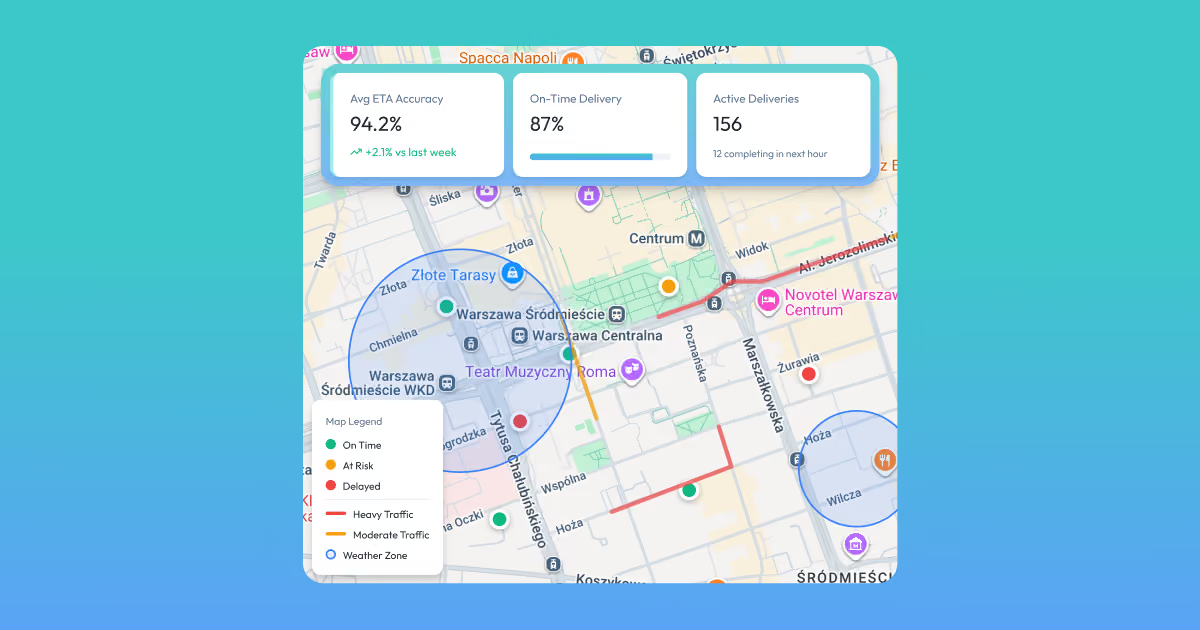
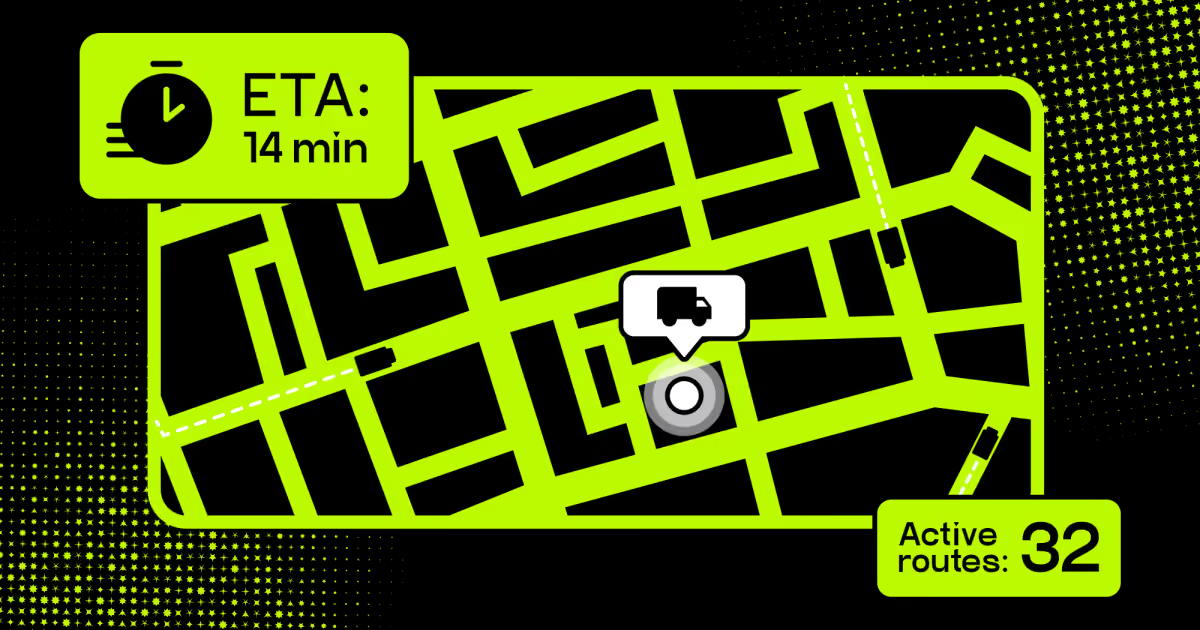
On DriveIQ, we built a predictive ETA engine that updated every 15 minutes using live traffic, weather, and driver data. After 60 days of tuning, it hit 89% accuracy within ±15 minutes. Late deliveries dropped from 18% to 7% of total stops. This result truly came from better information, shared in real time across every role in the system.
At COAX, our transport work covers real-time GPS integration, route optimization engines, automated customer notifications, and carrier performance tracking. We've built these systems for fleets from 50 to 500+ vehicles, across cross-border and domestic operations. Ultimately, our work proves that you don't need better drivers or bigger fleets to cut down delays. You just need a system that connects the dots in real time.
Warehousing and storage management
Your warehouse is where data quality is won or lost. If inventory records don't match physical stock, everything downstream, including order fulfillment and procurement, becomes guesswork.
Good integrated logistics at the warehouse level means your WMS talks to your TMS, your procurement system, and your customer portal. A pick happens, and then inventory updates. A return arrives, and disposition is triggered automatically. Nobody enters the same data twice.
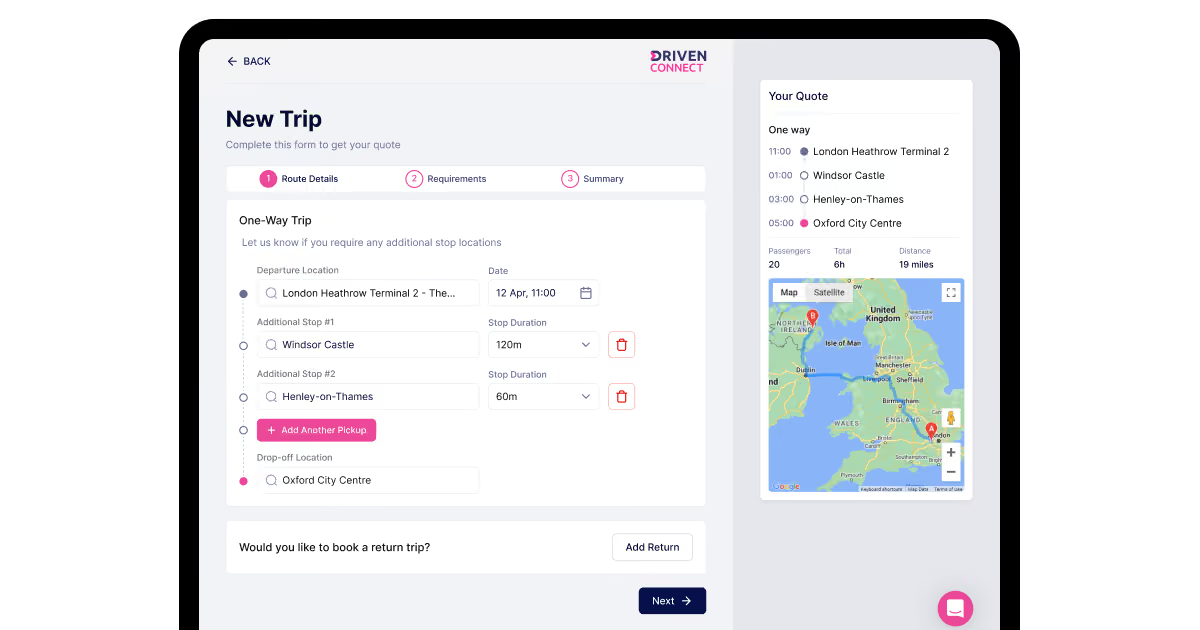
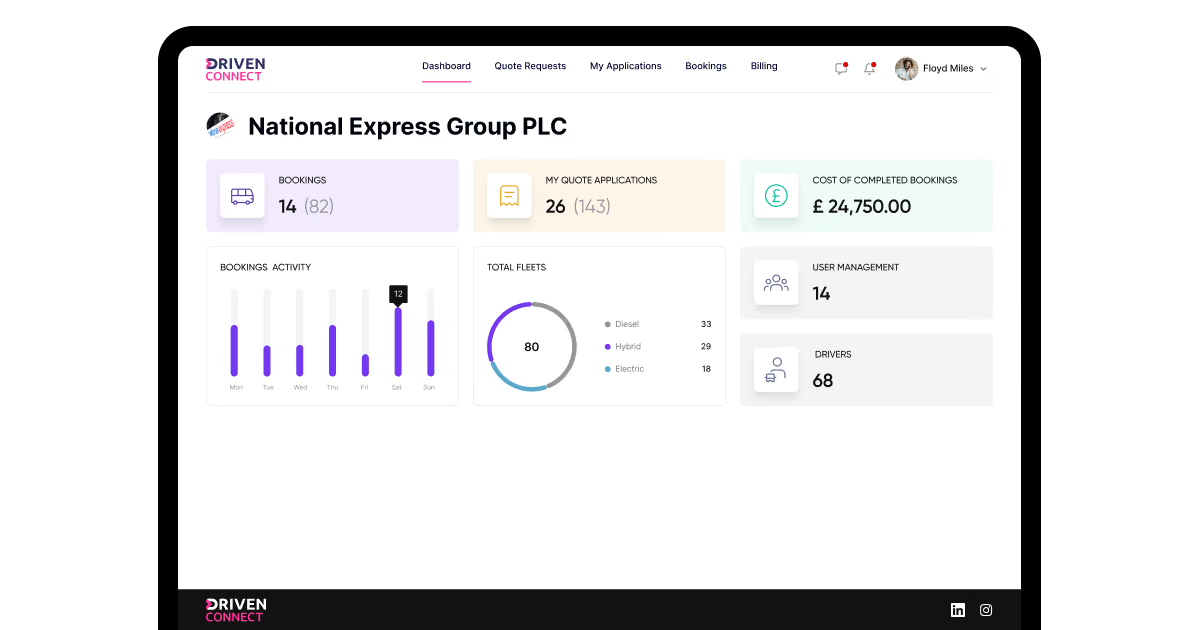
We ran into a sharp version of this problem building Driven Connect, a coach and minibus hiring platform for UK transport operators. Operators were managing vehicle availability, booking confirmations, and billing across completely separate systems. Errors in that process directly cost operators revenue. Once we unified those data flows, operators could manage their entire fleet and booking pipeline from one place. The gap between "we have the tools" and "our tools are connected" is enormous.
Procurement and supplier management
Procurement failures don't look like procurement failures at first. They look like stockouts, production delays, and missed SLAs. By the time the root cause is clear, the damage is done. However, in the integrated logistics solutions, it can and should be very different.
Connected procurement means your purchasing decisions respond to real inventory levels, real demand signals, and real supplier lead times. When procurement and warehousing share live data, you stop ordering too late and stop over-ordering to compensate.
"The most expensive thing in software isn’t a complex feature or a heavy database. It’s building a system where good teams have to make decisions on bad data. When you have procurement so far away from live inventory, you have a deep data pipeline problem. As developers, we focus on fixing that integration tier first. Any feature you build on top of disconnected data is just automating a mistake", says Max Gurak, React Developer at COAX Software.
Production and inventory coordination
In manufacturing or complex fulfillment, production schedules and inventory levels have to move together. A production run that outpaces your storage capacity creates bottlenecks. One that lags creates shortfalls. Neither is acceptable when customers are watching.
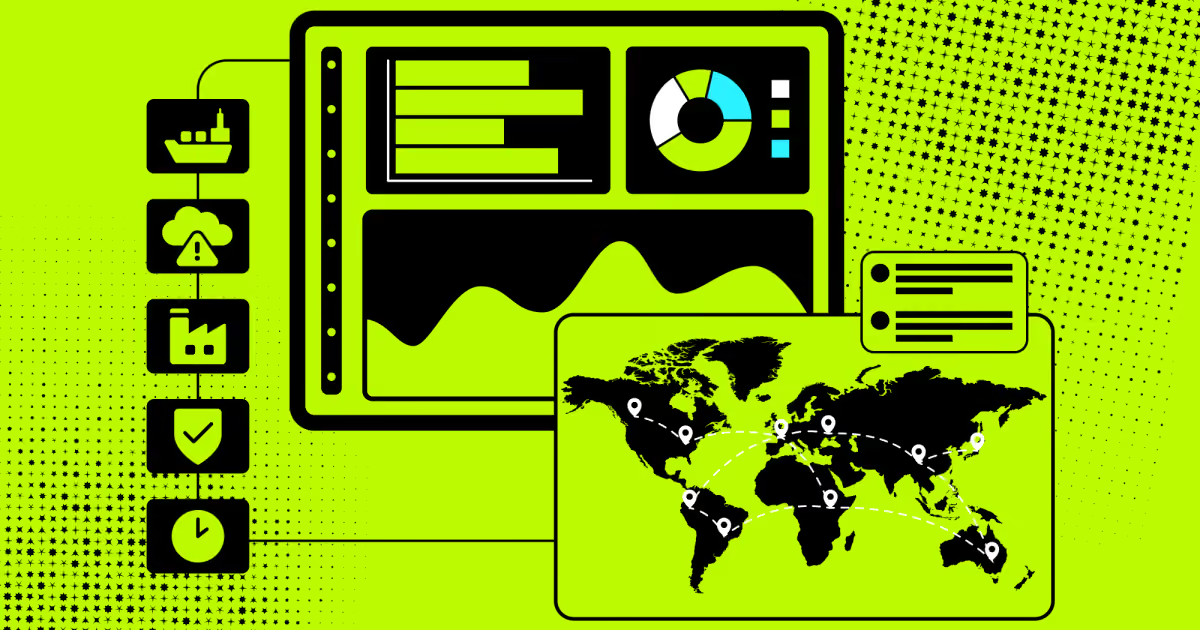
Integrated logistics software connects production planning tools directly to inventory and transport layers. This way, what gets made, what gets stored, and what gets shipped stays in sync. This is where logistics data analytics earns its keep. It’s in giving operations managers visibility into what's actually happening.
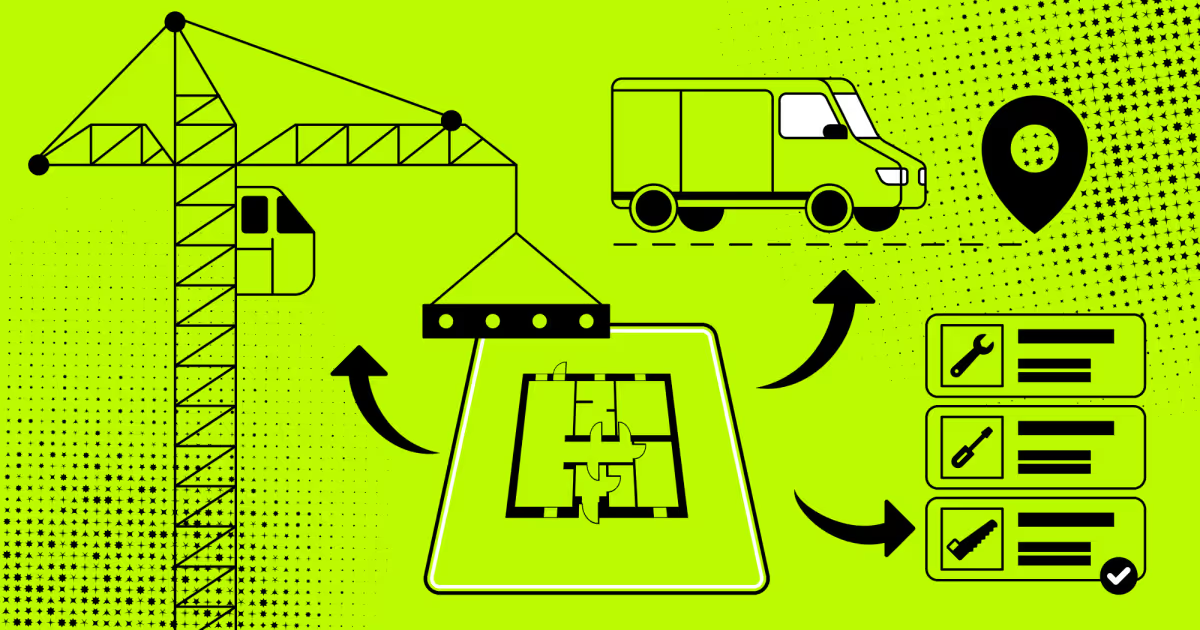
At COAX, we solved this when building a construction marketplace. The client’s customers needed to manage building materials across multiple construction sites without over-ordering or stalling. We built an integrated architecture that processed real-time inventory validation in under one second. By connecting this live inventory data directly to a dynamic scheduling layer, same-day and next-day delivery options became fully automated. This lowered manual routing time by approximately 60% and ensured the right materials hit the right job site at the right time.
Real-time monitoring and feedback loops
A system that doesn't learn from itself will repeat the same mistakes. Real-time monitoring means every exception, delay, and deviation feeds back into the system. This improves future routing, flagging problem lanes, and surfacing patterns that nobody would catch manually.
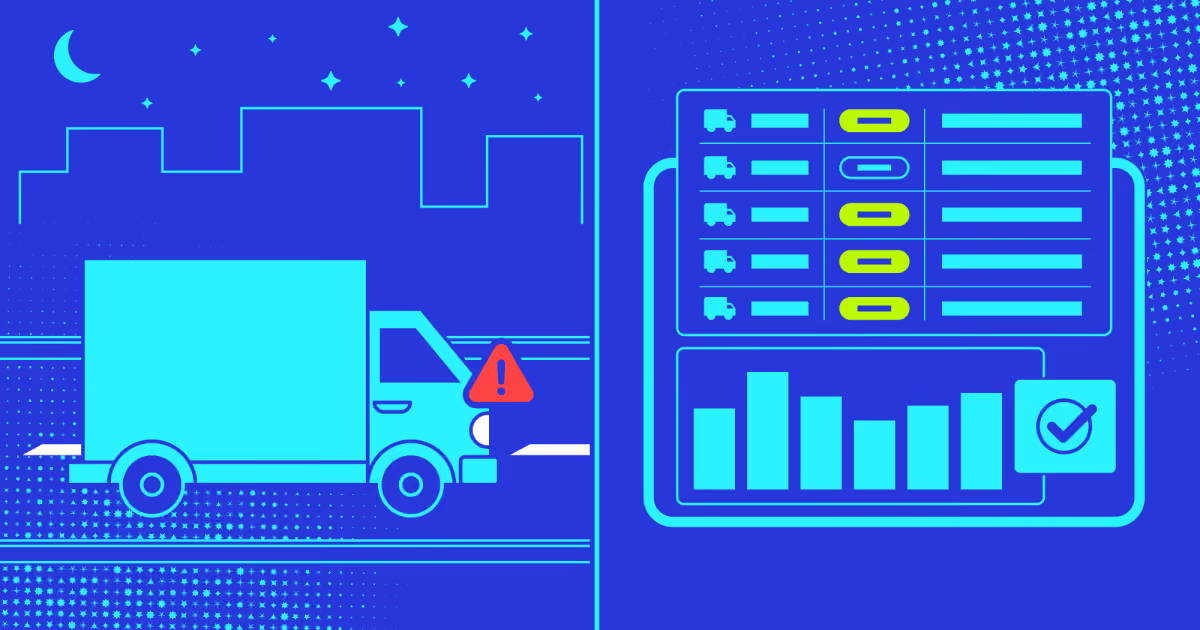
Integrated logistics tracking closes the loop between what was planned and what actually happened. On DriveIQ, intelligent exception clustering reduced the time dispatchers spent diagnosing issues per alert from 12 minutes to under 3 minutes. That's dispatchers getting their day back, which we are proud of.
Integrated logistics support also means the platform flags issues before they escalate, routes them to the right person, and captures resolution data for next time. The goal is a system that gets incrementally smarter every week.
Customer-centric delivery
Everything above exists to serve one outcome: the customer gets what they ordered, when they said they would. That sounds simple, but it really isn't.
Customer-facing delivery means accurate ETAs, proactive delay notifications, proof of delivery, and easy returns. It all connects back to the same operational data. When those layers are siloed, customers feel it immediately.
Driven Connect handled this for the buyer side of UK coach hire. When a buyer submits a transport request, it goes to relevant operators who bid competitively. The buyer sees real options, real pricing, and real availability. Over 400 operators joined the platform because it made the customer relationship cleaner for everyone involved. That's what connected delivery visibility actually does. It removes the friction that was eroding trust on both sides.
Achieving this level of transparency often requires shifting away from standalone software and moving toward an integrated third-party logistics framework. In this model, external carriers and internal data streams communicate flawlessly.
The components above aren't a checklist. They're a system. Every one of them is connected to every other one. That's the only version that actually works.
Principles of integrated logistics, and the software that makes them real
Integrated logistics doesn't run on software alone. It runs on principles, or ways of thinking about how operations should connect. The software is what enforces those principles at scale. Here's how each principle works and what it looks like when you build for it properly.
Single source of truth
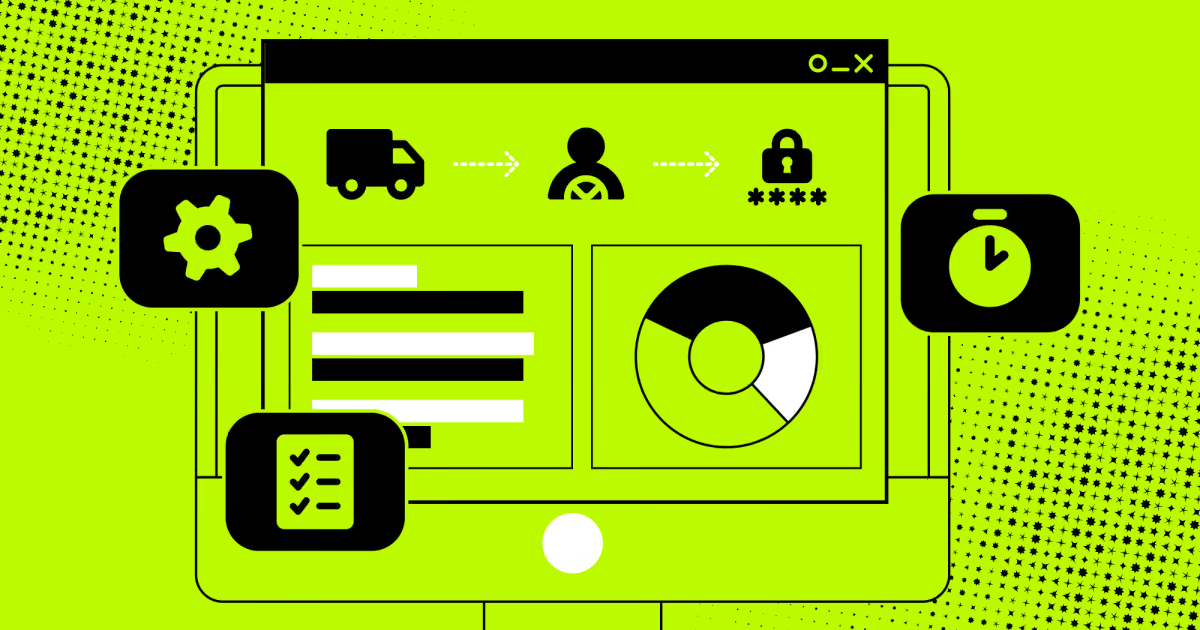
Every role (dispatcher, warehouse manager, procurement lead, customer) should see the same data at the same time. Not a report from this morning. The same live picture.
This sounds obvious. In practice, most logistics operations run on three to five systems that sync on a schedule, not in real time. The gaps between those syncs are where errors live.
When we built a custom CRM for a travel operator managing 20+ suppliers and 60 affiliates, the entire operation was running on siloed data. Suppliers updated their own systems. The client's team reconciled manually. Once we connected every data layer into one unified backend, a 40% profit increase followed. The reason was that decisions started being made on accurate data.
Warehouse management software, as well as TMS systems and procurement tools, only deliver value when they share the same data fabric. Separate systems with separate updates are not an integrated logistics solution. They're a coordination tax.
Visibility across the full lifecycle
You need to see what's happening at every stage, from supplier order to final delivery, and through returns. Blind spots anywhere in that chain cost you money and customers.
This principle covers integrated logistics tracking in the real sense: not just "where is the truck" but "what is the status of every unit, at every node, right now." It also means integrated cold chain logistics for regulated goods. There, visibility is a compliance requirement. By 2027, an estimated 47% of all shipments will carry real-time temperature sensors. The operations that can act on that data will win contracts. The ones that can't will lose them.
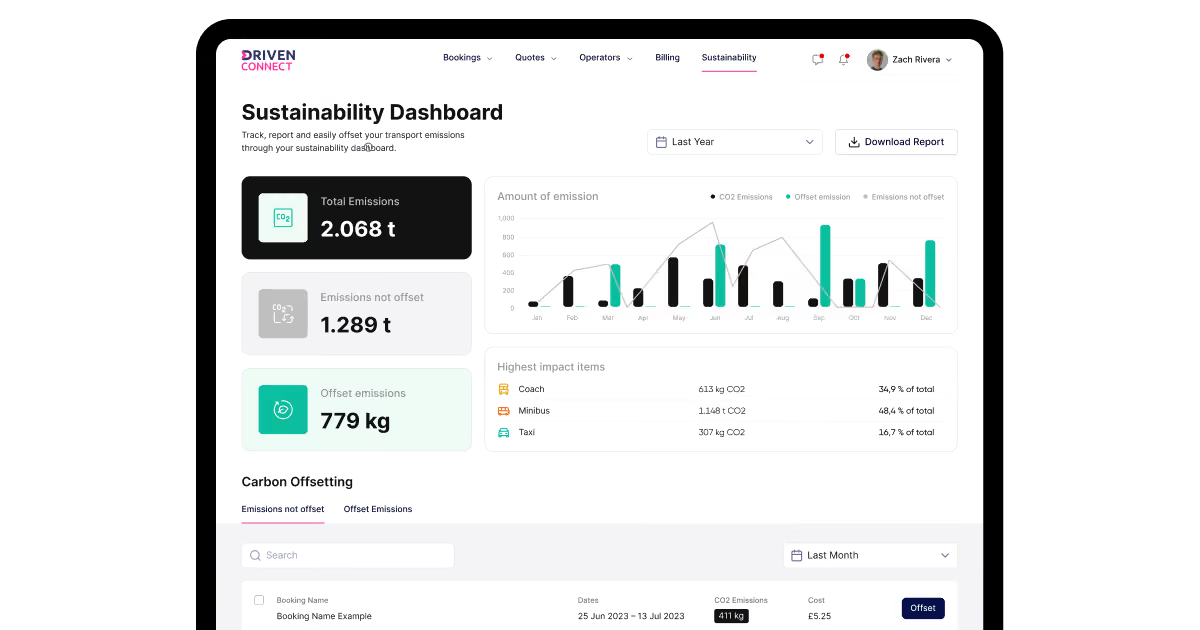
Driven Connect built this principle into the buyer experience for UK coach hire. Buyers could track their booking from quote to departure, with route, emissions data, and operator performance all visible in one place. Over 400 operators joined the platform, partly because that transparency became a competitive advantage in contract negotiations.
Reliability and maintainability by design
A system that works 95% of the time is not a reliable system in logistics. Downtime in one node cascades. A warehouse management outage delays shipments. A TMS failure means dispatchers are back on the phone. Fleet tracking going dark means compliance exposure.
Integrated logistics management treats reliability as a design principle, not an afterthought. That means redundancy in critical systems, predictive maintenance logic built into fleet and warehouse tools, and clear escalation paths when something breaks.
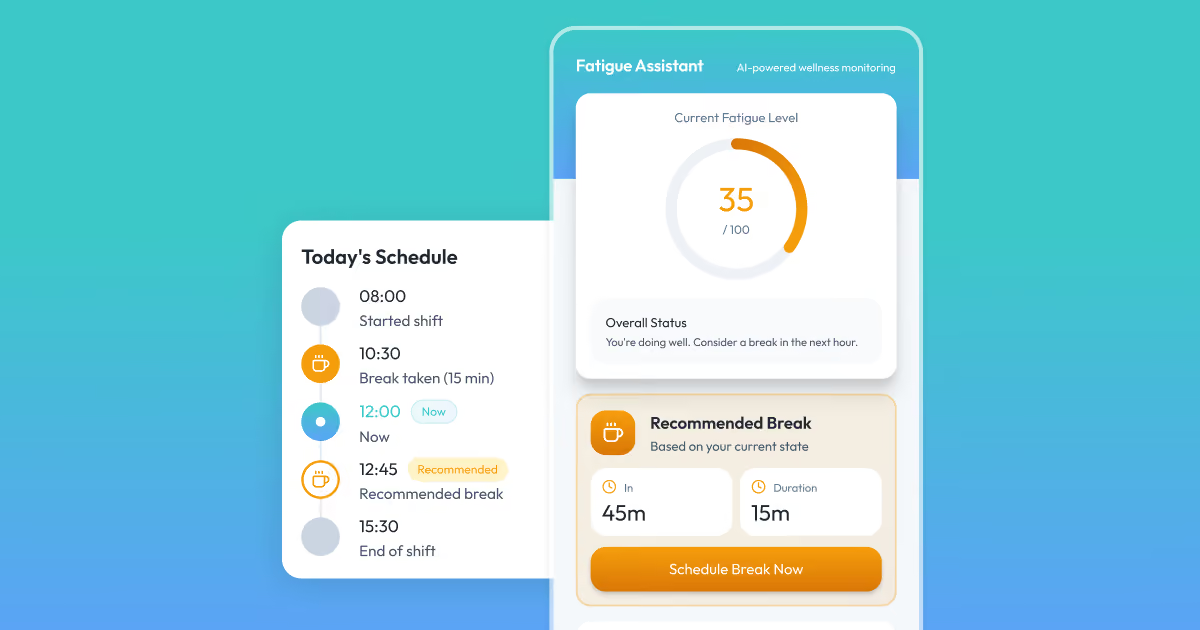
On DriveIQ, we built the fatigue and HOS monitoring layer with exactly this in mind. The system flagged driver risk before limits were hit. In the first quarter alone, it helped prevent over 40 HOS violations by alerting dispatchers to reassign routes proactively.
"Integrated logistics solutions fail at the reliability layer more than anywhere else. You build the connections, the data flows work, and then one node goes down, and the whole thing is manual again. Reliability has to be designed in from the start," describes Max Gurak, React Developer at COAX Software.
Modularity and scalability
A system built as one monolith will break when your operation grows or changes. From the COAX team's experience, good integrated logistics solutions are modular. Each component (TMS, WMS, procurement layer) can be updated, replaced, or scaled independently without bringing down the rest.
This principle also means your software stack can absorb new requirements. A new carrier integration. A new warehouse region. A cold chain module added to an existing transport layer. Modular architecture makes these additions manageable. Monolithic builds make them projects.
When we modernized a social platform for 150,000+ automotive users, the codebase was impossible to update. New features couldn't be added without breaking existing ones. We rebuilt it modularly. One codebase generating two themed apps, with 200+ API connections running cleanly underneath. The principle was the same one that applies in logistics. If the architecture doesn't support change, it's already legacy.
Continuous feedback and improvement
The best integrated logistics management systems don't just execute but also learn. Every delivery, every exception, every return generates data. That data should feed back into routing decisions, inventory planning, supplier evaluation, and maintenance scheduling.
This is what separates a logistics platform from a logistics tool. A tool processes today's work. A platform uses today's work to make tomorrow's better.
Logistics data analytics is the mechanism. But analytics only works if the underlying data is clean, connected, and captured consistently across every layer. That's why the single source of truth principle comes first. Without it, your analytics are averaging noise.
Human-centered design
Integrated logistics solutions fail when people don't use them. A dispatcher who doesn't trust an AI recommendation will override it every time. A driver who finds the mobile app confusing will ignore the coaching alerts. A warehouse team that bypasses the WMS will track inventory in a notebook.
This principle runs through every system we build. On DriveIQ, we discovered that showing dispatchers a confidence score alongside each ETA prediction — not just the prediction — increased how often they acted on it. A small UX decision with a direct operational outcome. Driver scorecards worked better with anonymized peer benchmarking than with raw scores alone. Drivers responded to "here's where you rank" differently than to a number.
Fleet management software development, WMS builds, and TMS platforms depend on whether the people using them feel like the system is working with them, not against them. That's not a soft principle. It's the one that determines whether the investment delivers ROI or sits unused.
What are the benefits of integrated logistics?
The core benefits of integrated logistics come down to one thing. Your operation stops reacting and starts running. When every layer shares live data and responds to the same signals, the compounding effects are significant.
Fewer errors and less firefighting.
Disconnected systems create gaps. Data entered in one place doesn't reach another. Someone reconciles manually. Something gets missed. In a fragmented operation, a meaningful share of your team's day is spent fixing problems that a connected system would have prevented. For instance, in the COAX-built DriveIQ, intelligent exception clustering cut the time dispatchers spent diagnosing each issue from 12 minutes to under 3. That time moved to productive work. Multiply that across a dispatch team and a full working week, and it's a significant recovery.
Better decisions, faster.
Analytics only delivers value when the data feeding it is accurate and current. Connected systems make that possible. When your TMS, WMS, and procurement layer all share live data, your managers start making decisions based on what's happening. This is one of the clearest advantages of integrated logistics for leadership. Not just operational efficiency but strategic clarity. Which routes are underperforming? Which suppliers are causing delays? Which warehouse lanes are creating bottlenecks? The answers are in your data. But only if your data is connected.
Lower costs across the board.
Connected operations find waste that siloed ones can't see. The costs from empty miles, overstocked inventory, and unnecessary overtime exist in every logistics operation. Integrated logistics solutions surface them. As an example, on DriveIQ, the auto-recovery route optimizer reduced empty miles by 8% and overtime hours by 22%. This came from the system having enough visibility to identify smarter options automatically.
Customers feel the difference.
Late deliveries, missed notifications, and inaccurate ETAs are symptoms of upstream disconnection. Fix the integration, and the customer experience improves without anyone specifically working on it. The integrated logistics examples that demonstrate this most clearly are the ones where proactive communication replaced reactive apology. For instance, in DriveIQ, an automated notification system reduced manual customer contact requests by 85%.
Your people simply do better work.
When systems are fragmented, skilled people spend their time on coordination and reconciliation. When systems are connected, those same people can focus on judgment calls, the things that actually require human expertise.
"The architecture decisions should be made early in a project. On how data flows between services, what gets shared in real time versus batched, and where the single source of truth lives. Those decisions shape everything downstream. You can add features later. Rebuilding a data architecture that wasn't designed for integration from the start is much harder," explains the reason Myroslav Stelmashchuk, Node.js Developer at COAX Software.
Challenges of implementing integrated logistics
When integrated logistics fail, they mostly do it because the integration was underestimated. The real challenges aren't on the vendor's brochure. They show up three weeks into implementation, when the legacy ERP won't talk to the new TMS and nobody budgeted for the middleware.
Here's what we often see, project after project, when clients share the challenges they come to us.
Legacy systems that weren't built to connect.
A company has been running the same warehouse system for eight years. It works. But it was never designed to share data in real time with anything else. Connecting it to a modern integrated logistics and supply chain layer is archaeology. You're reverse-engineering undocumented APIs, writing custom adapters, and managing data format mismatches. Many.
The fix isn't always replacing the legacy system. Sometimes it's building a clean integration layer that sits between old and new. It’s about translating, normalizing, and routing data without forcing a full replacement. That takes experience with both sides of the connection.
Data quality that collapses under integration.
The moment you connect siloed systems, every inconsistency becomes visible and consequential. Duplicate records, mismatched SKUs, timestamps in different time zones, inventory figures that don't reconcile. In an integrated logistics system, bad data propagates.
We learned early that data auditing has to happen before integration, not after. On MICRM, we were connecting 20+ suppliers with different data standards. Standardizing that data before building the analytics layer saved months of downstream debugging.
Resistance from the people doing the work.
A warehouse manager who's been running their operation for ten years doesn't trust a new system. A dispatcher who's good at their job doesn't want an algorithm second-guessing their decisions. This is fairly earned skepticism. Integrated logistics management implementations that skip the human layer consistently unde
On DriveIQ, we designed every critical workflow around the moment a user decides whether to trust the system. This meant giving dispatchers a one-click override and letting drivers give feedback on alert types. Engagement followed trust. Trust followed design.
Security and compliance exposure.
Connecting systems means expanding your attack surface. An integrated logistics and supply chain platform that touches payment gateways, driver data, customer information, and fleet telemetry has serious security obligations. Logistics companies are directly targeted by cyberattacks. Integrated platforms are higher-value targets.
This is an area where we don't cut corners. COAX is ISO 27001 and ISO 9001 certified and AWS-certified. Security architecture is built in from the start, not added after a penetration test finds something uncomfortable.
Scale and timeline assumptions that don't survive contact with reality.
47% of companies delay logistics innovation, citing cost. But the real cost calculation rarely includes what fragmented operations cost every month in errors, overtime, and missed opportunities. The question is whether you can afford to keep patching.
"The projects that hit the wall are almost always the ones that tried to integrate everything at once. You map the full vision, then you sequence it. Start with the one connection that causes the most daily pain. Prove it works. Then expand. Integrated logistics support is a series of deliberate steps, each one making the next one easier", concludes Orest Falchuk, Head of Engineering at COAX Software.
Custom logistics software development solves most of the described challenges. This means building around your actual workflows, your existing systems, and your real data. We've built transport platforms, fleet management layers, driver workforce tools, and booking systems. Each one was designed to connect to what the client already had, not replace it wholesale.
The COAX team is 90% mid- and senior-level engineers. That matters here because integration work is where junior teams create technical debt that takes years to unwind. Experience means knowing which shortcuts cost you later, and not taking them.
5 insider tips on implementing integrated logistics
We’ve seen both good and bad integrated logistics examples. The companies that implement it well share one trait. They treat it as an operational project, not an IT project. This is why we’re sharing some insider tips based on what we’ve seen and delivered.
Start with your biggest daily pain
Every project that implements integrated logistics solutions has a temptation. It’s to map the entire future state and try to build it all. Resist this. Find the one integration that costs your team the most time or causes the most errors today. Build that first. Ship it. Let the team feel the difference. That experience buys the organizational trust needed to do the next phase.
On Driven Connect, we started with the core quote-request and operator-matching flow. This was the part causing the most friction. Everything else (emissions tracking, subscriptions, analytics) came after that foundation was solid and trusted.
For scoping this first phase, event storming workshops are underused in logistics. Getting dispatchers, warehouse leads, and developers in the same room helps define every domain event. This way, you can put down what triggers what, where data changes hands. Ultimately, you surface the real integration points faster than any requirements document. It's not glamorous, but it works, and our clients confirm it.
Clean your data before you connect anything
This is the messy work that determines whether your integration succeeds or creates a more sophisticated version of the same mess. Before connecting systems, audit what's in them. Standardize formats. Resolve duplicates. Establish a single source of truth for the records that multiple systems will share.
Logistics and inventory management software development that skips this step ends up with an integration that's technically functional but operationally unreliable. As a result, users stop trusting it within weeks.
For integrated logistics management systems specifically, a master data management approach pays off early. Tools like Stibo Systems or Syndigo handle product and location master data across multiple systems. This ensures that when your WMS and TMS both reference "Warehouse B, Bay 4," they're referring to the same physical place with the same identifiers. Sounds basic. Causes enormous problems when it's missing.
Design for the people who'll use it daily
Every interface decision either builds or erodes adoption. If dispatchers find the dashboard confusing, they'll work around it. If drivers find the mobile app slow, they'll ignore the alerts. Design with the actual users, not just the buyers.
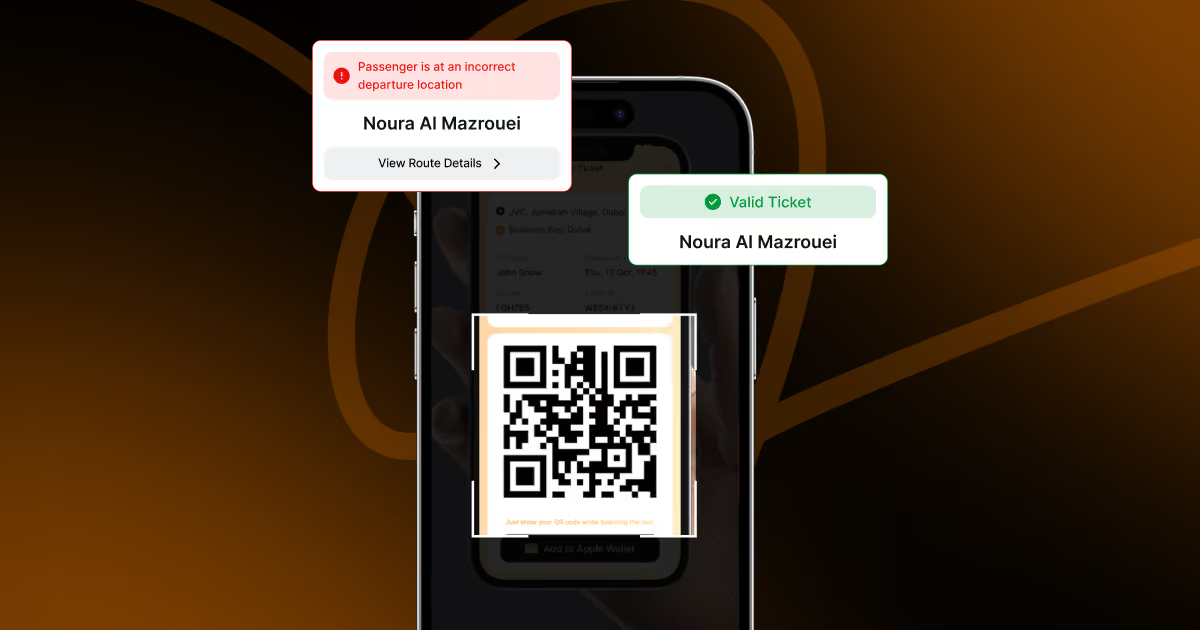
On DrivenBus, the driver app had one job. It was to take shift check-in and ticket scanning fast enough that drivers didn't resent it. QR scan validation ran offline-first, averaged 3.2 seconds per boarding, and worked in areas with poor connectivity. That detail mattered. Drivers adopted.
You can try our role-based access design tools like Casbin for fine-grained permissions, with feature flag systems like LaunchDarkly. They let you roll out new functionality to specific user groups before going platform-wide. That means dispatchers can test a new route recommendation feature for two weeks before it reaches the whole operation. From our experience, it can reduce the shock of change and give you real feedback before full deployment.
Choose integrated logistics providers and partners carefully
The vendor who sells you the platform won't always be the one who makes it work with your existing systems. Evaluate integration capability as seriously as feature lists. Ask how they've handled legacy system connections before. Ask what happens when the data doesn't match. Ask who owns the problem when two systems disagree.
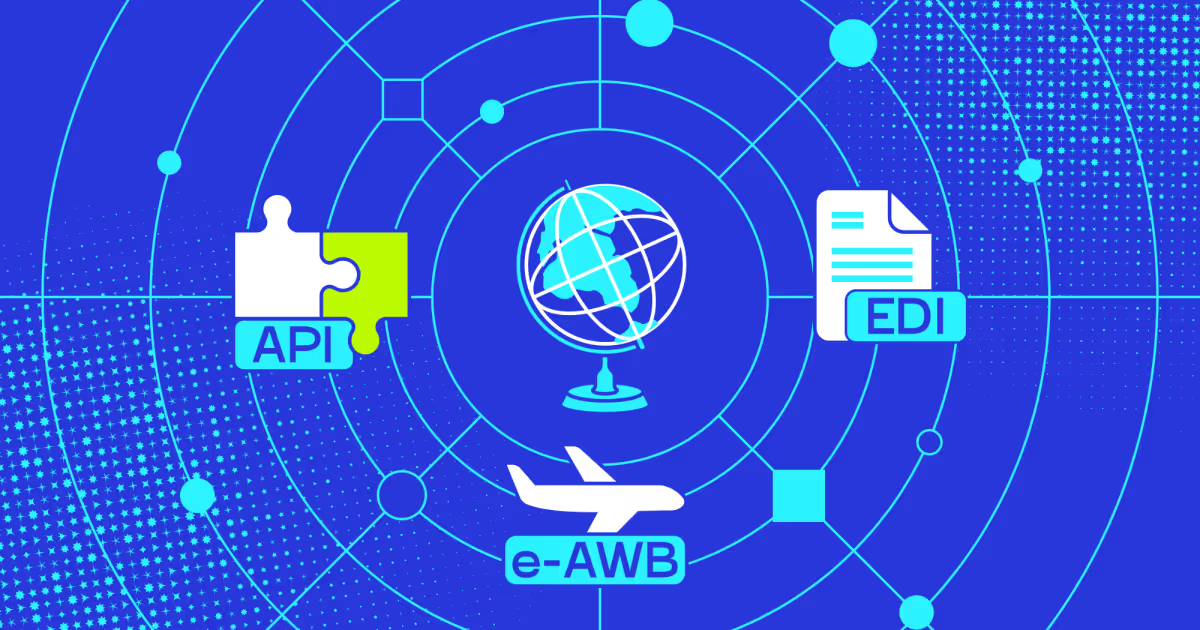
One thing worth knowing: logistics-specific API aggregators (like project44 or FourKites that we mentioned before) are above individual carrier APIs. They give you a single integration point for real-time visibility across dozens of carriers. Instead of building and maintaining separate integrations with each carrier's API, you connect once and get normalized data across the network. For multi-carrier operations, this is a significant architecture simplification.
We’re suggesting API integration as we have a tried and tested path in complex connections at COAX. Our experts build integration architectures using reliable, most suitable providers. Additionally, we work across the full stack, including strategy, architecture, development, QA, and ongoing support. That matters because the challenges above don't respect phase boundaries. A security requirement appears during deployment. A user adoption issue emerges post-launch. You need a team that stays across all of it.
"Don't try to modernize everything in year one. Pick the layer that's causing the most operational drag, fix it properly, measure the result, and use that win to fund the next phase. Integrated logistics management done this way compounds successfully," suggests Orest Falchuk, Head of Engineering at COAX Software.
Build for change, not just for today
Requirements shift. Carriers change. Regulations evolve. New warehouse locations open. An integrated logistics and supply chain architecture that can't absorb these changes without a full rebuild is a liability.
Modular design makes your architecture adaptable. Clean APIs keep components decoupled. Documented data contracts protect system stability. Together, they allow you to easily add a cold chain module two years after launch. You can also swap a payment gateway without touching the routing engine.
Logistics platforms almost always need event-driven architectures. For these systems, message brokers like Kafka or RabbitMQ are essential. They completely decouple your services. This ensures that a change in one system does not cascade and break everything else. We've built systems that clients have been extending for years because the foundation was designed to support it. That's the goal every time.
One final thing to remember. Integrated logistics isn't a destination but a direction. The companies pulling ahead aren't the ones with the most tools. They're the ones who connected the right ones, in the right order, with the right team behind them. If you need the right team with the right experience - COAX Software is there for you.
FAQ
What is integrated logistics’ key difference from regular logistics?
The difference comes down to connection. Regular logistics manages transport, warehousing, and procurement as separate functions. Integrated logistics connects them into one live system where data flows automatically between every layer. The difference in practice is fewer manual hand-offs, faster decisions, and problems caught before they reach the customer.
What is integrated logistics management, and who actually owns it in a company?
What is integrated logistics management is a fair question because ownership varies. In most mid-sized companies, it sits across operations, IT, and supply chain. This is exactly why it struggles. The businesses that implement it well assign a single accountable leader with visibility across all three. Without that, integration becomes everyone's second priority, and nobody's first.
How do integrated logistics solutions handle multiple carriers and third-party partners?
Integrated logistics solutions handle this through a combination of API aggregators and custom integration layers built for your specific partner mix. Instead of maintaining separate connections to each carrier, you connect once to a normalized data layer. Changes in one carrier's API don't break the rest of your operation.
What does integrated logistics tracking actually cover beyond shipment location?
Most people expect integrated logistics tracking to show where a truck is. A properly built system goes further: driver fatigue status, warehouse pick progress, ETA confidence scores, exception flags, and customer notification triggers. It all updates from the same data source. Location is just one signal. The value is in what the system does with all the signals together.
What should the cost of integrated logistics software be, and is custom always more expensive?
Integrated logistics software pricing varies enormously. Off-the-shelf TMS and WMS platforms range from a few hundred to thousands per month, scaling with users and features. Custom development costs more upfront but removes licensing fees and forces no compromises on workflow fit. For operations with non-standard processes or complex integrations, custom frequently costs less over a three-to-five year horizon.



















































































_.avif)










%2520explained.avif)

We are interested in your opinion