A dispatcher at a 500-truck fleet spends his morning fielding the same call: where's my shipment? Drivers are frustrated because routes keep changing. Nobody can explain a late delivery until the customer complains.
At COAX Software, we watched the other end of the problem, as well. A telematics company running five hundred vehicles across three separate apps: one for tracking, one for reporting, one clunky driver tool nobody bothered opening. Then, followed a sharp drop in support tickets.
In between those two projects, we saw what happens when data has nowhere to go. Alerts fire too late. Drivers stop trusting the app. Dispatchers guess instead of deciding. However, logistics automation can bridge this divide between challenge and growth.
In this guide, we ran the top automation software on the market to make a ranked list. Locus and FarEye topped our shortlist. You might be surprised with the next contestants, and even more with the testing framework we used.
This article also covers what logistics automation technology does and why it matters for your business. We also show you how to choose a system that fits your operation and share some insider integration tips and stories.
What is logistics automation?
Logistics automation is software and connected hardware doing the coordination work a dispatcher used to do by phone. This covers the whole process, from matching a GPS feed to a delivery promise to triggering a reorder before a shelf goes empty. Then it automates rerouting a truck around a jam before anyone notices the jam. It closes the gap between the tracking system and the ledger. These are two records that (in most fleets) still don't sync well.
The telematics platform we mentioned earlier is right what we saw benefited with this technology. The client had all the pieces (GPS tracking, reporting, a driver app) just scattered across three different vendor sources. Nothing added up to anything usable. Once we united it into the SyncMatix platform, new sign-ups jumped 40% in a single quarter. From what we see, the demand is here. The technology is already here, too.
The logistics automation market trends confirm our conclusions. This segment is growing because the labor math stopped working. Market size is on track for $132.74 billion by 2031.
Volume backs it up. B2C shipments hit 121 billion worldwide in 2025. Logically, warehouses that used to have breathing room don't anymore. This causes the scramble toward goods-to-person robotics.
Behind that curve are several more aspects. They are tighter labor markets, new energy regulations, and a shift from selling hardware to selling software-defined orchestration.
This sums up the situation the COAX teams keep seeing with automation in the logistics industry. Budgets shifting from one-time robot purchases into ongoing software subscriptions, because that's where the flexibility lives. This brings us to the diverse technologies collectively shaping these unified solutions.
Core technologies behind logistics automation
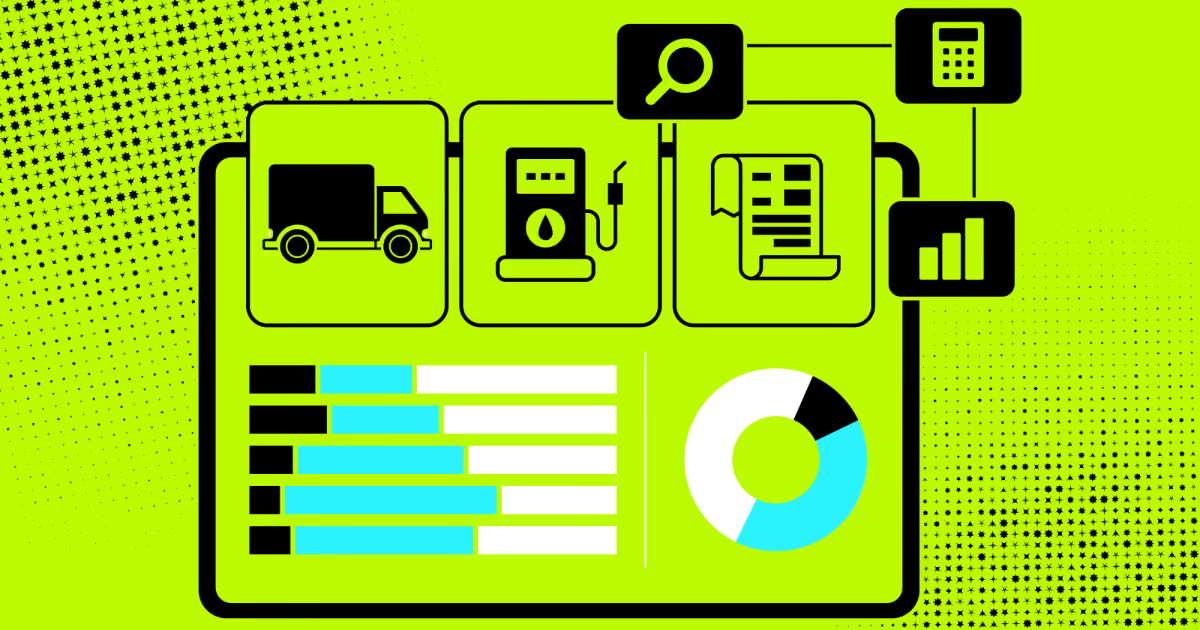
Modern automated logistics relies on AI and predictive modeling to forecast transit delays. Meanwhile, telematics and IoT sensors track assets globally, and RPA quietly automates tedious back-office billing. Warehouse robotics rapidly move physical inventory. Finally, centralized control towers and cloud-based platforms tie these layers together.
Now, let’s review each of these components in more detail.
AI and predictive modeling.
Under the hood, this is pure machine learning. You feed gradient-boosted decision trees and recurrent neural networks (RNNs) streams of multi-source time-series data. What you get are highly accurate probability distributions for what happens next.
Take our cross-border trucking client. Instead of flagging a delay after a truck is already stuck, our model predicted it. The COAX engineers fed the system live traffic and weather data that updated every 15 minutes. As a result, this shift alone dragged late stops down from 18% to just 7%. This is where logistics automation trends are heading.
Most vendors oversell this. At COAX Software, we won't. Building a forecasting model from scratch rarely pays off. Instead, we wrap what already exists: AWS Forecast, OpenAI's APIs. Why train a model when a mature one's available? That's time-to-market thinking, not corner-cutting.
Where we do build custom work is the document layer. Bills of lading, invoices, manifests - these show up messy and half-scanned. We've used AWS Textract and Rekognition to turn that chaos into structured data. A dispatcher can query it in plain language. That's the less glamorous win. It ships faster than custom ML, and it holds up better.
Robotic process automation.
RPA in supply chain workflows tackles the less glamorous part of logistics. It’s about the daily grind: matching mismatched invoices, fixing EDI errors, and filing compliance paperwork. It can't predict a port strike or magically reroute a stranded semi. But it's your quickest win. A bot simply grinds through the formatting, leaving your team free to deal with the problems that need human judgment and find growth opportunities.
Warehouse robotics.
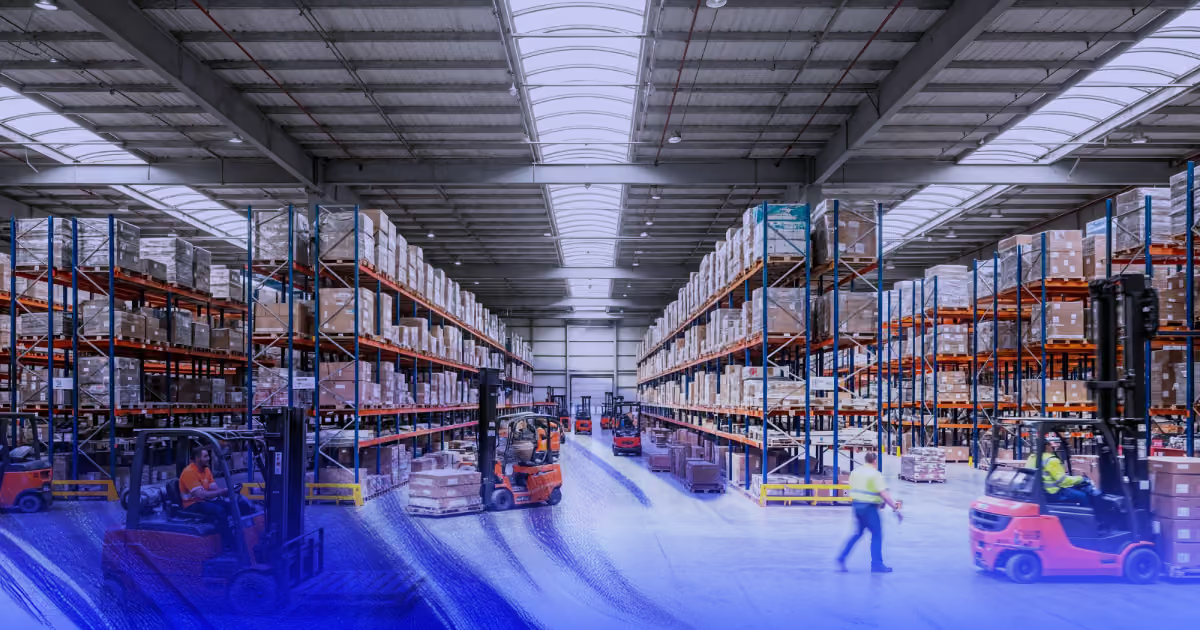
This technology puts an end to forcing workers to trudge miles down dusty aisles and carry heavy boxes. Autonomous mobile robots and towering automated storage-and-retrieval setups bring the bins straight to them.
But here’s the real surprise. The breakthrough actually has nothing to do with raw speed. It's the fact that almost every warehouse running these systems still keeps a human in the loop to handle the inevitable chaos. A bot is incredibly fast at processing the predictable, routine 90% of your inventory. But show it a squished, odd-shaped box or a torn, mislabeled barcode, and it chokes. So keep the humans in, but you can let logistics automation do a great thing here, too.
Telematics and IoT sensors.
At the physical layer, you have edge sensors translating real-world conditions into digital packets. They beam this data over sub-GHz radio to a central gateway, which uses MQTT or CoAP to push the payload up to a cloud ingestion engine.
Now, apply this blueprint down to a six-hectare greenhouse as we did for our client. Instead of industrial assets, your sensors are reading soil moisture and temperature. Wi-Fi won't cut it across a facility that size, so LPWAN radios bridge the distance. From there, the cloud processes those numbers into a dashboard the owner can monitor from another country. Same architecture, adjacent industry, and that's the point. Logistics automation solutions built on IoT don't care whether the cargo is a truck or a crop.
Control towers.
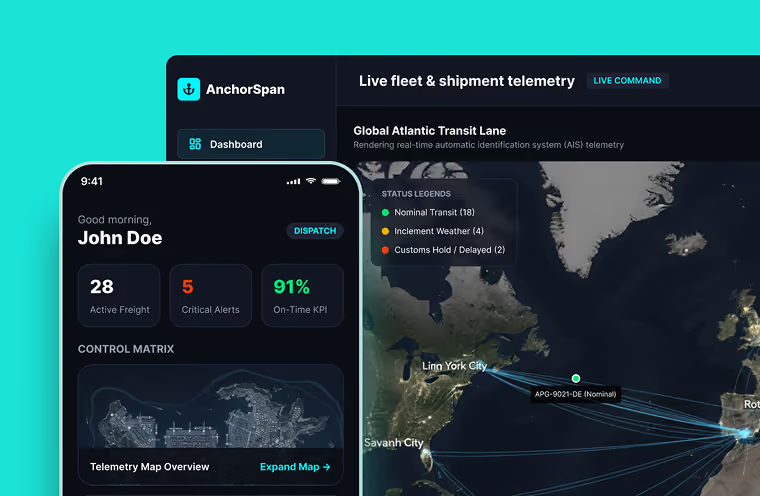
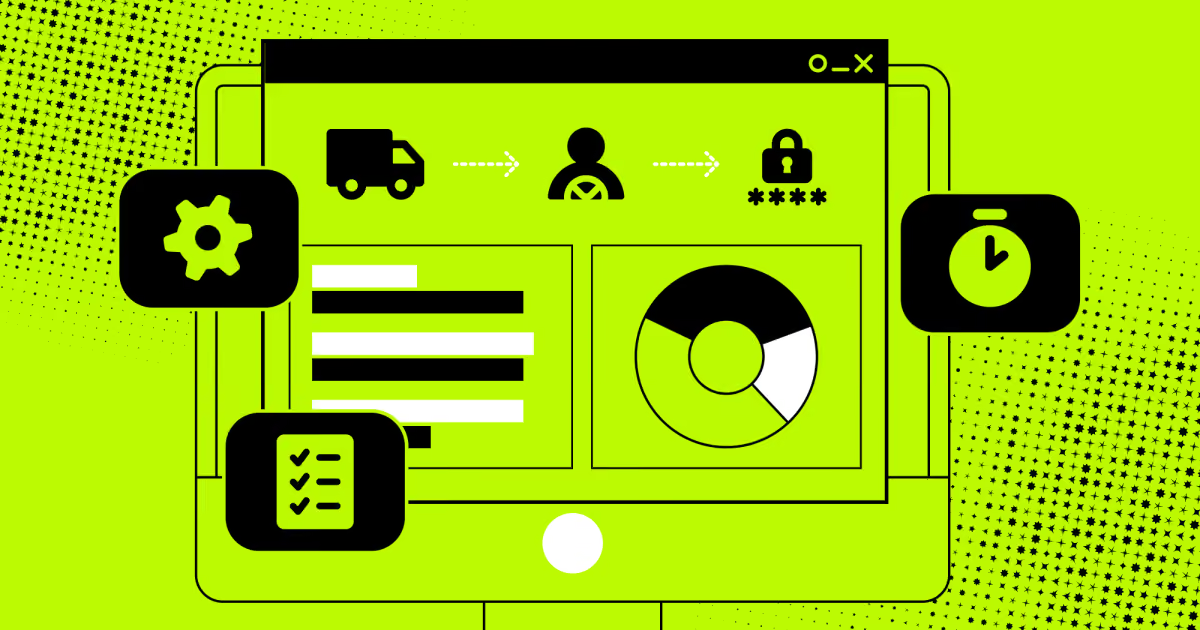
A control tower pulls data from every system in the supply chain (TMS, WMS, telematics, weather feeds) into one dashboard. With it, a single team can see a disruption forming before it hits a customer. The catch is that a control tower is only as good as the data feeding it, which is why most rollouts spend more time on integration than on the dashboard itself.
Cloud-based platforms.
Moving from the on-premise servers to the cloud is the main reason modern automation deployment moves so fast. You don’t need to wait for months to order and rack server hardware. You just spin up a new automated workflow in weeks. Better yet, the cloud instantly bridges the gap between the office and the pavement. The same system feeds live coordinates to a driver's phone while updating the dispatch screen, like in our DriveIQ system.
Real-time decision automation.
This is the layer everyone wants, and almost nobody should trust blindly. It surfaces the fix, not just the flag: reroute here, adjust that window, reorder now. One click, not ten. But full autonomy (a system acting with zero human sign-off) stays rare, for good reason. Most supply chain data is still too unstructured to trust it that far. Call it assistance, not autonomy. The dispatcher still decides. The system just gets them there in seconds instead of twenty minutes.
Stacked together, these layers are what separates logistics automation software from just another flashy app. They're codependent. Take out just one piece, and the whole system falls.
Where LLMs actually help, and where they don't?
Route optimization gets credited to AI constantly. It's really classical operations research: math, not a language model. LLMs earn their keep on the paperwork side: turning BOLs, invoices, and manifests into structured data, then letting a dispatcher ask questions about it in plain language. Handing a model the wheel for live operational calls? That's the overhyped part. Most supply chain data is still too messy to trust it that far.
How does logistics automation work?
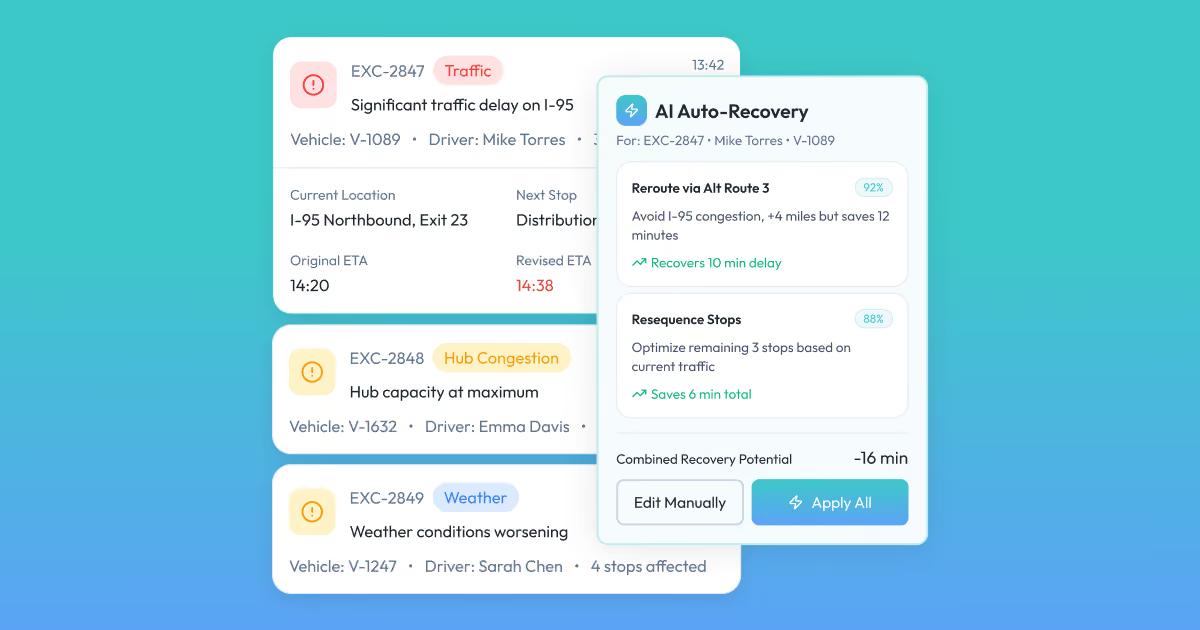
Our client used to face a similar situation consistently. The exception queue at 1:42 PM on a Tuesday. Truck V-1089, driver hauling through I-95 northbound. The system flags it: traffic collapsing near Exit 23, ETA sliding from 14:20 to 14:38. Eighteen minutes late, and the dispatcher hasn't even looked at a map yet.
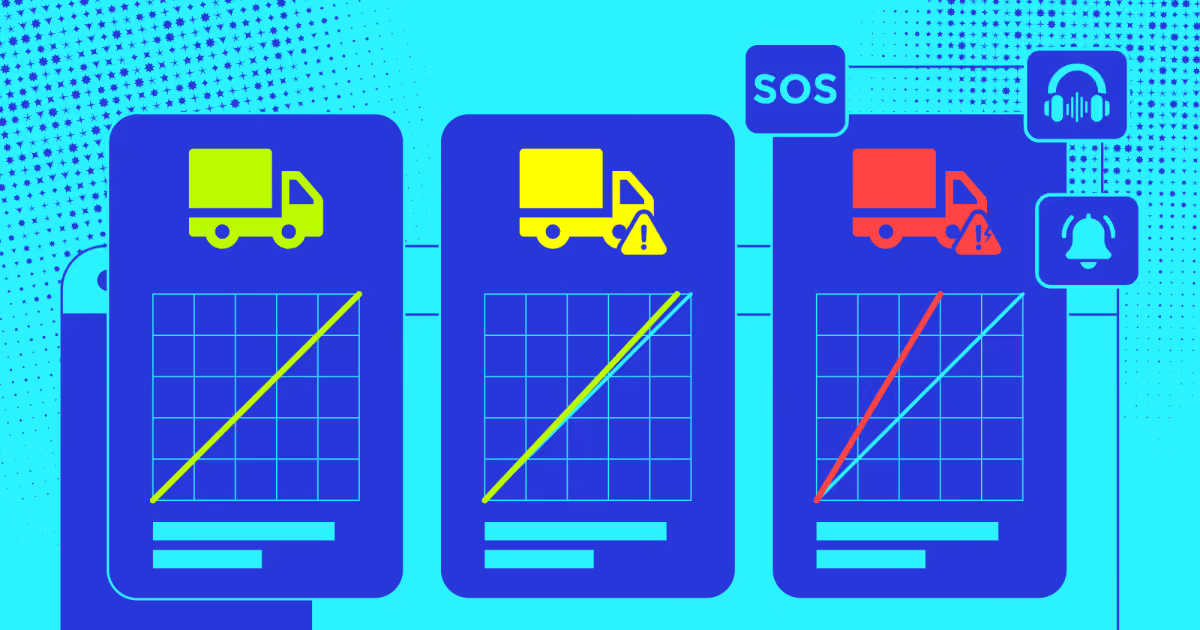
That's where the story used to end. With a late truck, a frustrated customer, and a dispatcher rushing to catch something too late. But on the DriveIQ system we built, the alert doesn't stop at "here's a problem." It arrives with the fix already attached. One might be to reroute via an alternate route, 92% confidence, four extra miles but twelve minutes recovered. A second option is 88% confidence, six more minutes saved. Sixteen minutes of delay, clawed back before the dispatcher finishes reading the alert. One click, and it's done.
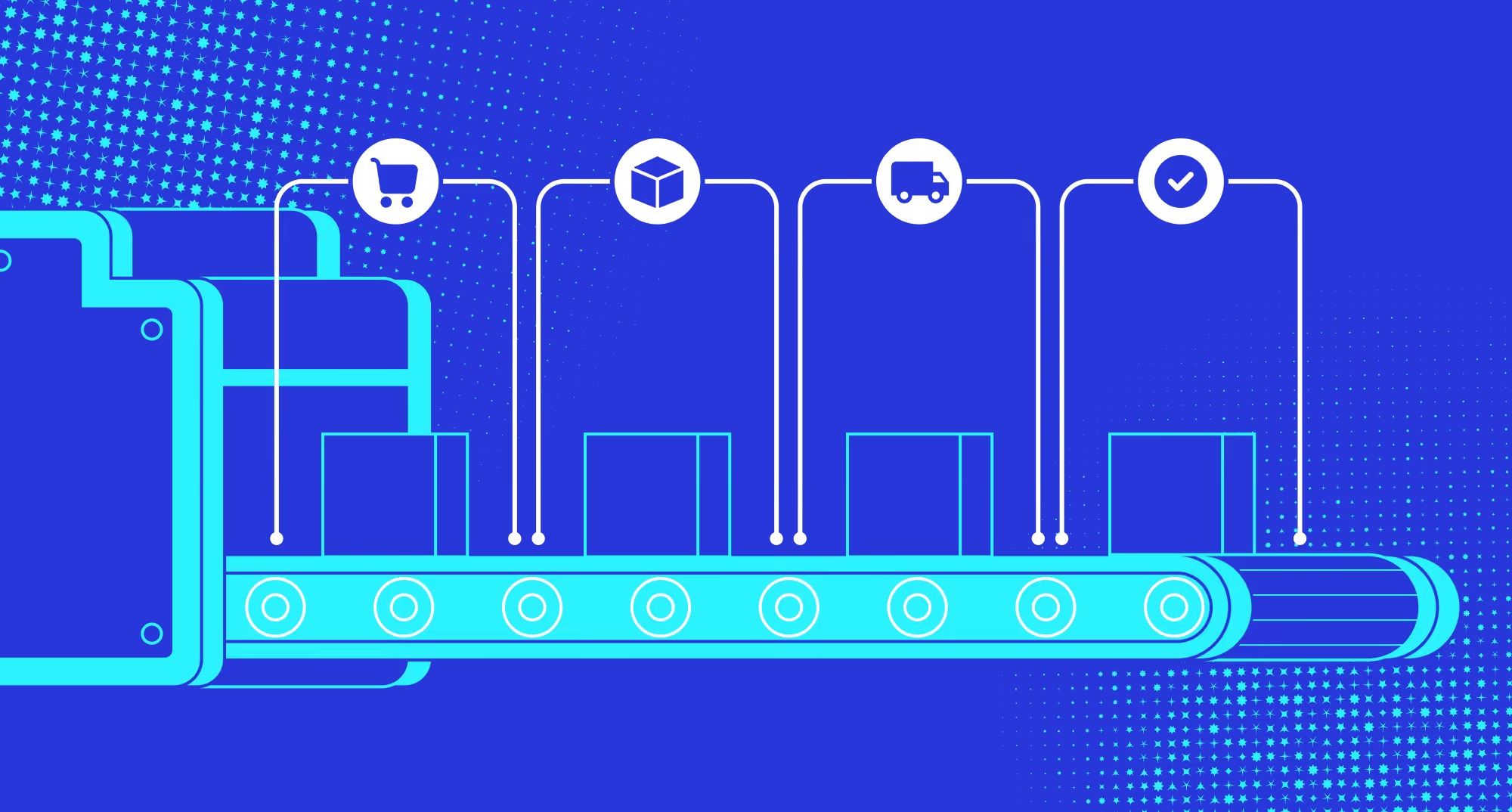
That one situation is logistics automation in miniature. Not a dashboard that tells you something's wrong, but a system that already worked out what to do about it. Zoom out from that single exception, and you get the full picture of how logistics and automation work together end to end. Five stages, each one handing off to the next.
Order intake & processing.
Every automated chain starts with getting an order into a system without a person retyping it. Orders arrive by email, PDF, or EDI. AI agents or data connectors parse them the moment they land. From there, the system checks stock levels and business rules on its own. Then it routes anything that passes those checks straight to the warehouse floor. A human only sees the order if something's actually wrong with it.
Once an order's validated, a WMS takes over the physical side. This covers assigning pick locations, generating digital pick-lists, or triggering automated storage-and-retrieval hardware. The other half of this stage runs in the background, constantly. Inventory thresholds are watching themselves, triggering a purchase order or an internal transfer the moment stock dips. We've seen a version of this logic outside a warehouse, for our greenhouse client platform. It tracks resource consumption in real time. The same threshold-triggers-action pattern that reorders a pallet of stock also tells a grower it's time to replenish before a shortage hits the crop.
Transportation management & routing.
This is where logistics workflow automation starts making decisions. Requests for quotes go out to carriers automatically. Responses get normalized into one comparable format. The system books whichever route clears on cost and capacity. A TMS then plans the actual multi-stop route and keeps recalculating it as conditions shift.
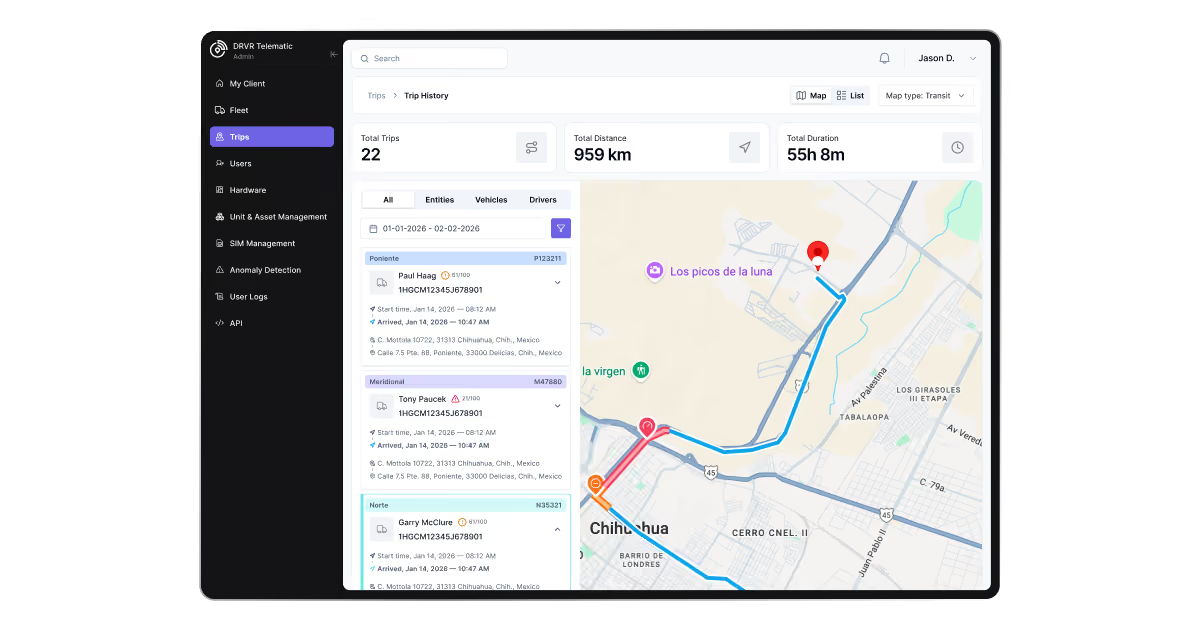
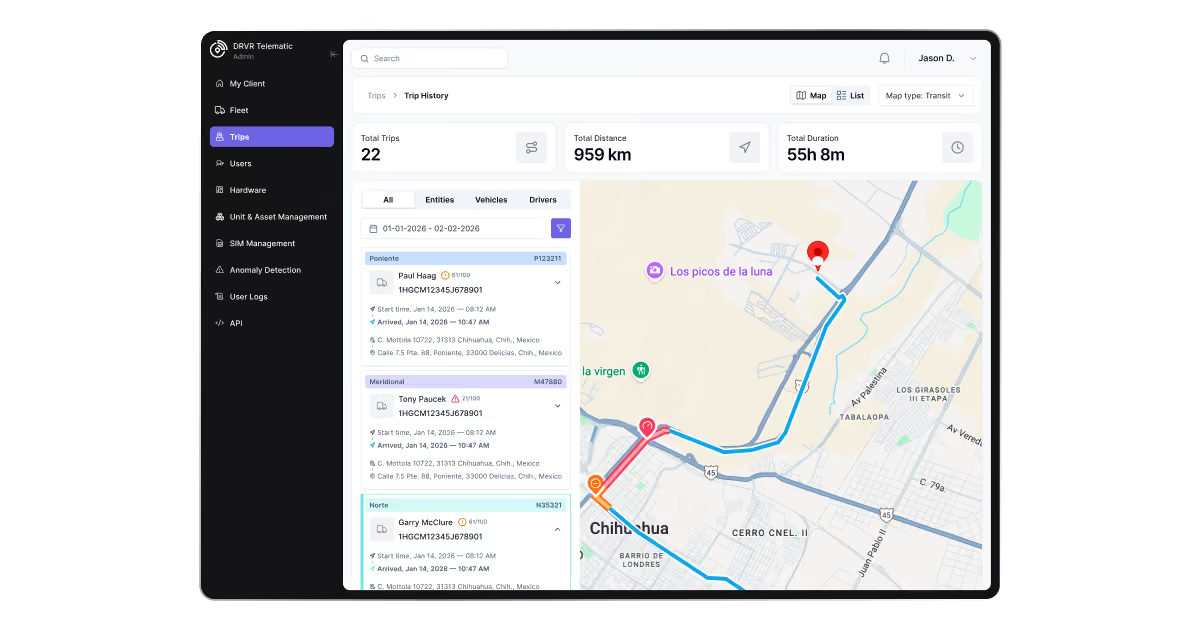
That's our SyncMatix platform pattern almost exactly. Fleet managers see route history laid out with toll-road matching baked in. Consequently, the "cheapest" route on paper doesn't quietly cost more. That level of visibility drove route optimization gains of up to 22% in fuel savings. The system could finally show planners which routes were actually efficient instead of just familiar.
Execution & customer communication.
Once a route's locked, the paperwork generates itself. You get shipping labels, bills of lading, customs documents, fired off without someone at a printer. As the shipment moves, the same automation sends the customer real-time tracking updates.
SyncMatix's alert routing shows this stage doing its job well. We implemented geofencing violations, speed alerts, and maintenance flags. They all get triaged automatically to whoever should actually see them. Nobody's forwarding emails to the right department. The system just knows who the right department is.
Settlement & exception handling.
The last stage is the underestimated one, as it drains resources if done wrong. Freight bills get audited against carrier contracts automatically. Once proof of delivery lands, payment or invoicing follows without a finance team chasing it down. But the more important job here is triage. Delays, damaged goods, and out-of-stock items get pulled out and flagged for a person.
That's the real trick behind good logistics process automation. Not that every problem gets automated away. It's that the system is precise about which 5% actually needs a human, and confident enough to leave the other 95% alone.
Why is logistics automation important?
Most supply chain teams lack sync between the tools they have. That gap creates delays, errors, and burnout long before anyone blames the technology. Six pain points show up again and again across our own client projects. Each one gets fixed the same way: by removing the manual layer sitting underneath it.
Fragmented data across systems
Nobody trusts a number they can't verify. When timestamps don't match across platforms, teams stop believing their own reports. That's how 76% of supply chain operations end up impacted by labor shortages disguised as data problems. People spend hours reconciling instead of deciding.
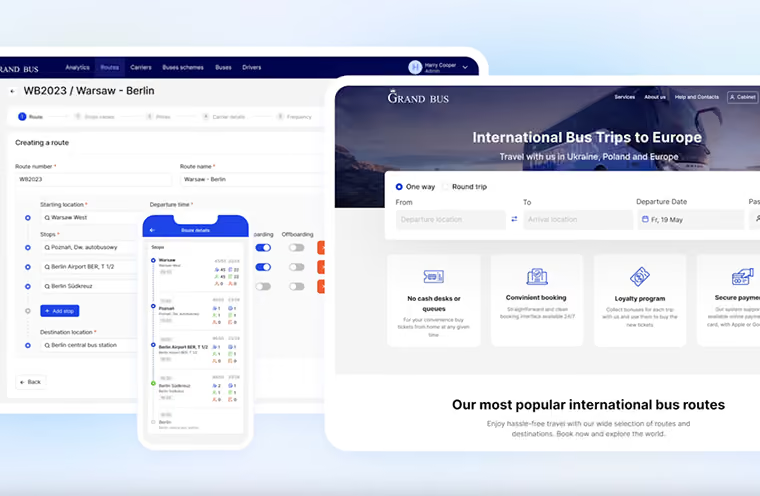
Integrated logistics fixes this by giving every system one shared source of truth. On GrandBus, dispatchers ran routes through spreadsheets and phone calls. Drivers logged passengers in paper notebooks. Nothing synced with anything else.
We replaced that patchwork with a digital route management system. Reports that took 30 minutes by hand now generate instantly. Dispatchers stopped guessing which spreadsheet had the latest number. That's what it means when you automate logistics in practice. Only one system, one version of the truth.
Manual exception diagnosis
A late delivery isn't the real problem. Finding out why takes too long. Dispatchers on our DriveIQ client’s fleet were spending 12 minutes per exception just diagnosing root causes.
That's 12 minutes multiplied across dozens of exceptions daily.
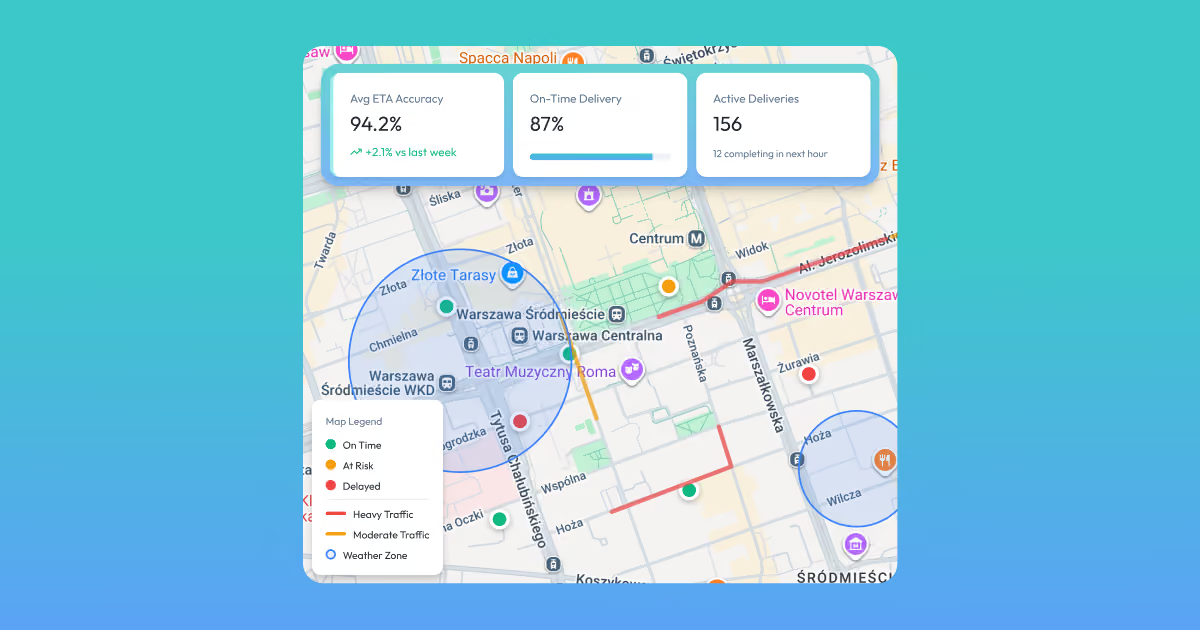
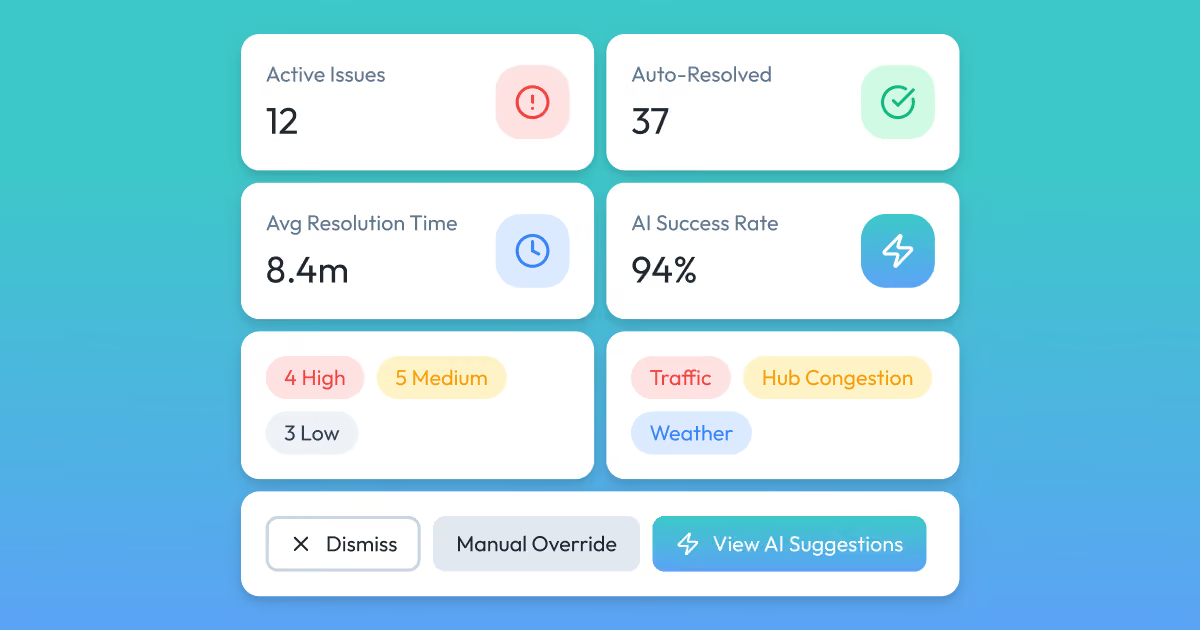
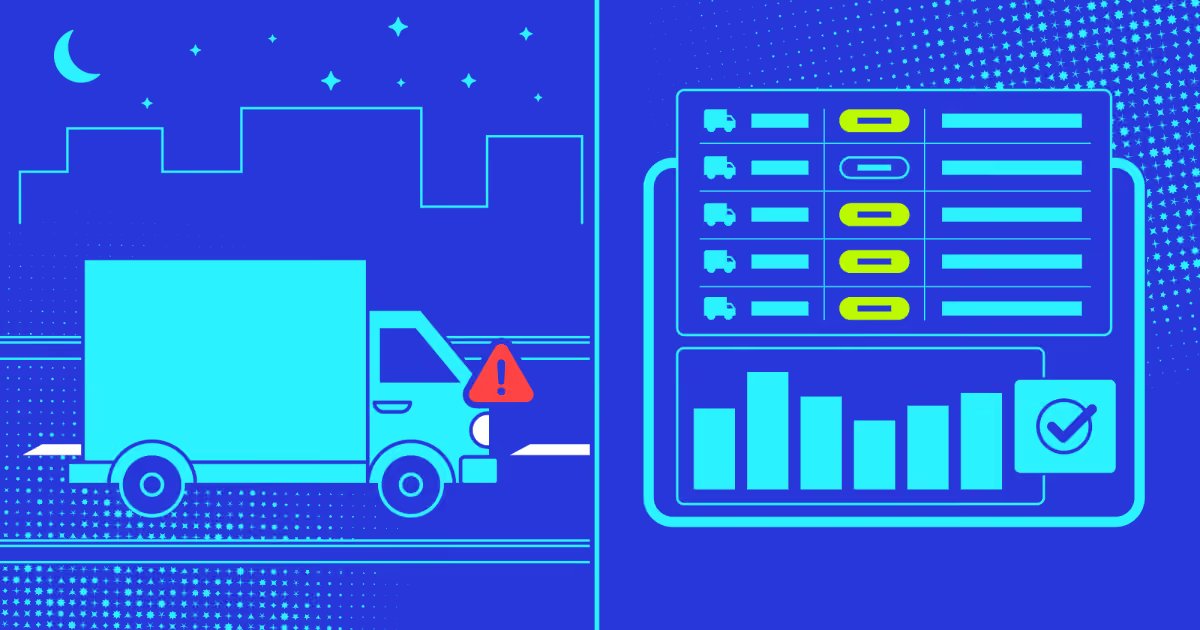
Logistics automation robotics (in this case, an AI clustering layer) grouped exceptions by root cause. Traffic delays got flagged separately from weather delays and hub congestion. Diagnosis time dropped from 12 minutes to under three.
Support tickets fell 35% once issues surfaced before customers noticed them. The dispatcher still decides. The system just stops hiding the decision under noise.
Labor shortages and driver turnover
Warehouses and fleets can't hire fast enough. 41% of warehouse managers report they can't attract and retain workers. Fleets feel it even harder. Logistics management automation removes the friction that burns drivers out.
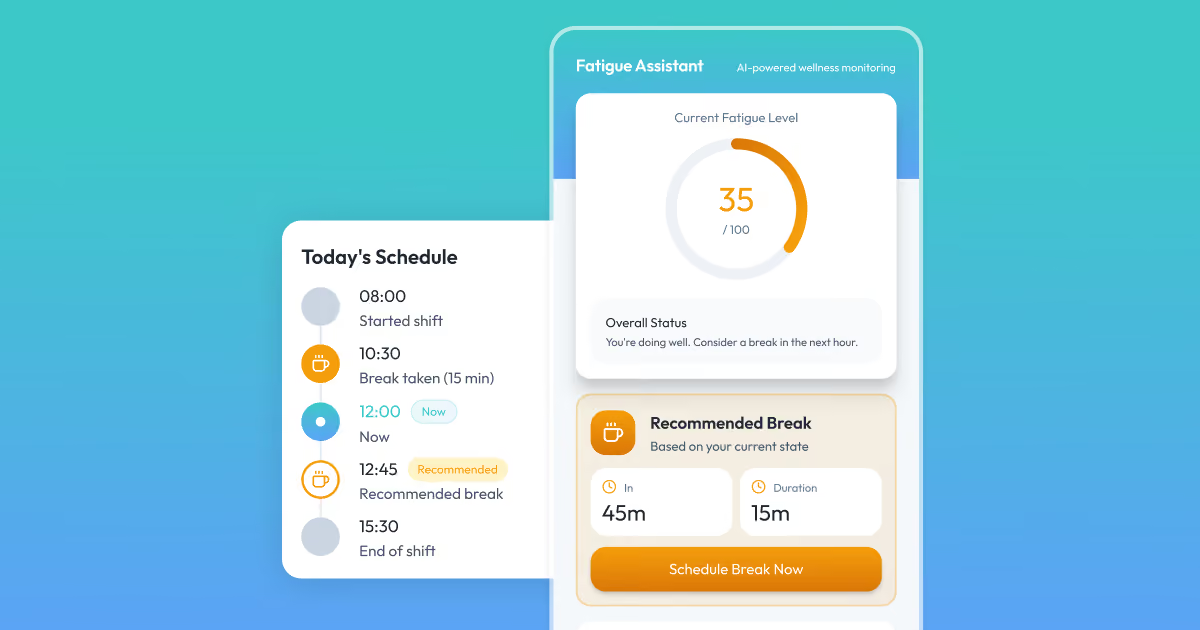
In our case for the AI logistics platform, we automated the human risk factor. Fatigue-and-hours-of-service monitoring flagged high-risk shifts before drivers hit their limits. This alone prevented over 40 violations in one quarter. Transparent scorecards gave drivers visibility into their own performance instead of top-down evaluations.
Turnover lowered to 22% after rollout. Retention improved because the system respected drivers' time, not just their output. That's the difference between automation that watches people and automation that supports them.
Inventory drift during demand spikes
Stock counts fall apart the moment volume spikes. Staff manually adjust numbers between sales channels, and errors compound fast.
A construction retailer, SmartBat, came to us wanting faster checkout. That was the stated problem. The real one surfaced during discovery. Inventory drifted every time traffic spiked, and nobody had real-time visibility into stock across channels. Real-time inventory validation, processing in under one second per transaction, solved it directly. Logistics automation software caught discrepancies before a customer ever saw a broken cart.
As a result of this, reorder time dropped 75% too - as a nice side effect. The checkout project became an inventory-sync project. That's where the actual bottleneck lived. Surface complaints rarely match root causes. That gap is exactly where automation earns its medal.
Slow reporting and compliance paperwork
Cross-border shipments generate customs forms nobody automated. Route summaries that should take minutes eat 30 or more by hand. Compliance work multiplies fastest at scale, especially across international lanes with multiple carriers and jurisdictions.
Logistics automation handles this whole layer. You don't have to touch a single form.
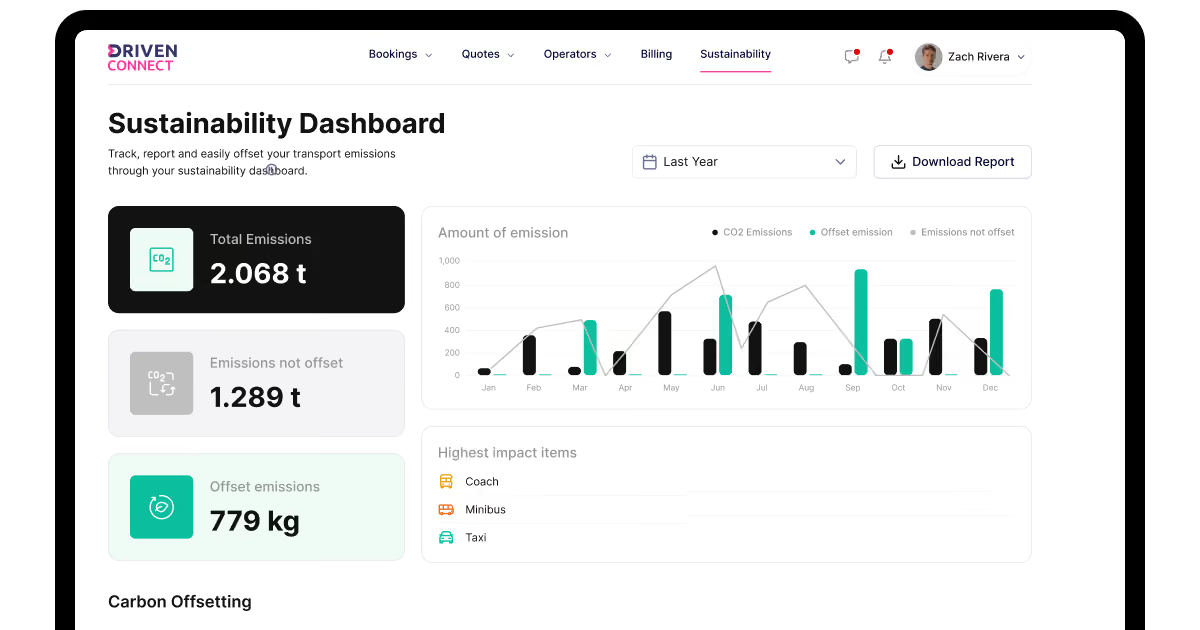
COAX used a comparable approach for Driven Connect. We applied it to remove the headache of environmental reporting in the regulated UK coach hire market. Before, operators and corporate buyers had to manually calculate the footprint for every regional booking.
Now, the platform’s engine takes over the second you plan a route. It pulls live distance data from Google Maps APIs. Then, it cross-checks it with the operator's specific fleet specs, like engine size, fuel type, and MPG. Next, you get projected fuel use and precise emissions on the quote.
Rising operational costs and empty miles
Fuel, empty miles, and inefficient routing quietly drain margin. Most fleets don't see the leak until it's large.
In our client’s case, we also needed to plug these leaks. We built directly onto the unified data foundation established by the DriveIQ platform. This helped turn those real-time streams into active cost-control tools.
An auto-recovery optimizer reassigned routes the moment a delay was detected, cutting empty miles by 8%. Route analytics on a separate telematics build delivered fuel savings of up to 22% by comparing similar trips for efficiency gaps.
The fixes came from software finding waste inside data the company already had. This is where logistics automation pays for itself fastest. It’s through smarter use of existing routes and existing fleets. Cost reduction, in most projects we've run, starts as a byproduct of fixing something else.
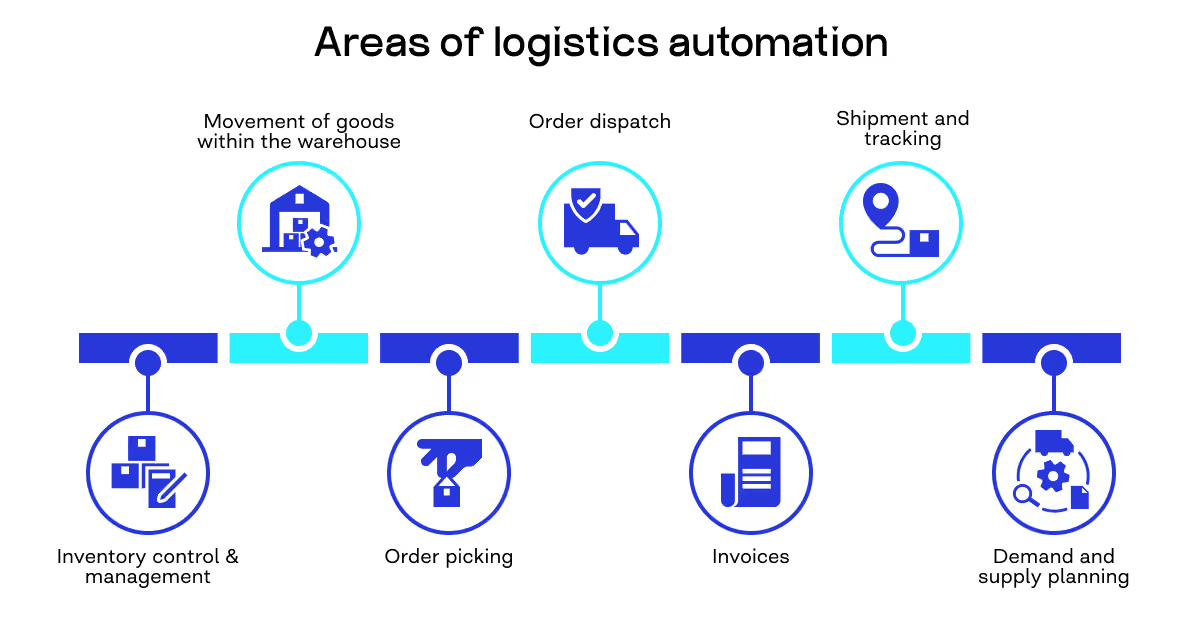
Which logistics processes can be automated?
We've touched on the big use cases already. Now let's look at them the way our engineers do. The ones who actually wired these systems together. Six processes come to mind and to our technical documentation most frequently. Each one gets automated differently.
Warehouse operations
Picking and packing eat more labor hours than almost anything else in a warehouse. Robots and rules-based routing change that math fast. 56% of logistics automation revenue in 2025 went toward warehouse systems alone. That's easy to explain. Warehouse floors are where automation shows up first, because the tasks are repetitive and the ROI is visible within weeks.
On the greenhouse platform we built, IoT sensors track environmental conditions. 70% of production data now gets collected automatically. The parallel to a distribution warehouse is direct: sensors replace walk-throughs, dashboards replace guesswork.
Logistics automation software in this space usually starts with one narrow win. These are often faster picking or fewer misplaced pallets. Only then should you expand into full floor orchestration. Get that first win wrong, and the rest of the rollout stalls before it starts.
Inventory management
Stock counts drift the moment volume spikes. Every retailer eventually learns this the hard way.
SmartBat came to us wanting faster checkout. Inventory turned out to be the real problem. The counts fell out of sync across sales channels the second traffic picked up. We built real-time validation that processes in under one second per transaction. Reorder time dropped 75%.
That's the pattern with automation logistics work on the inventory side. The stated ask rarely matches the actual bottleneck. Thresholds trigger reorders. Validation checks run silently in the background. Nobody notices until the alternative (a stockout or a duplicate order) appears.
RFID and similar tracking tech can push inventory accuracy close to 99%, which sounds abstract until you've watched a warehouse team manually recount a pallet three times because two systems disagreed. Logistics automation examples like this rarely make headlines. They just quietly stop the recount.
Transportation planning
Route planning used to mean a dispatcher, a whiteboard, and a lot of guesswork about traffic.
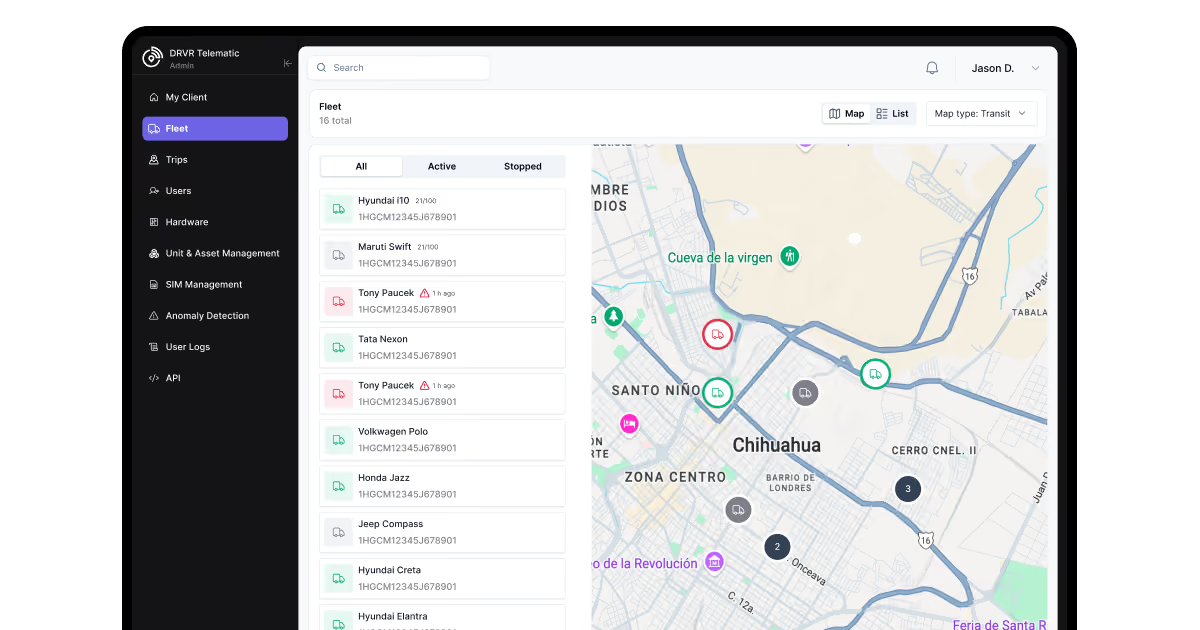
On the SyncMatix telematics platform, we replaced that guesswork with a trip-history dashboard showing total distance, duration, and toll-road matching for every route. Fleet managers could finally compare similar trips side by side instead of trusting instinct. Route optimization built on that data delivered fuel savings of up to 22%.
Real-time tracking closed the loop. Vehicle positions update continuously across the fleet, and response to route events improved by 25% compared to the old, disconnected setup.
That's automation solutions for logistics doing what dispatchers used to do by feel: reading traffic, comparing options, picking the route that actually saves money. The difference is the system does it in seconds, across hundreds of vehicles, without anyone picking up a phone.
Order processing and dispatch
An order sitting in an inbox is a delay waiting to happen. Automated intake kills that delay before it starts. Parsing engines read incoming orders and route valid ones straight to fulfillment. No one retypes a line item at 6 PM anymore. Validation checks stock and business rules automatically, flagging only what actually needs a human.
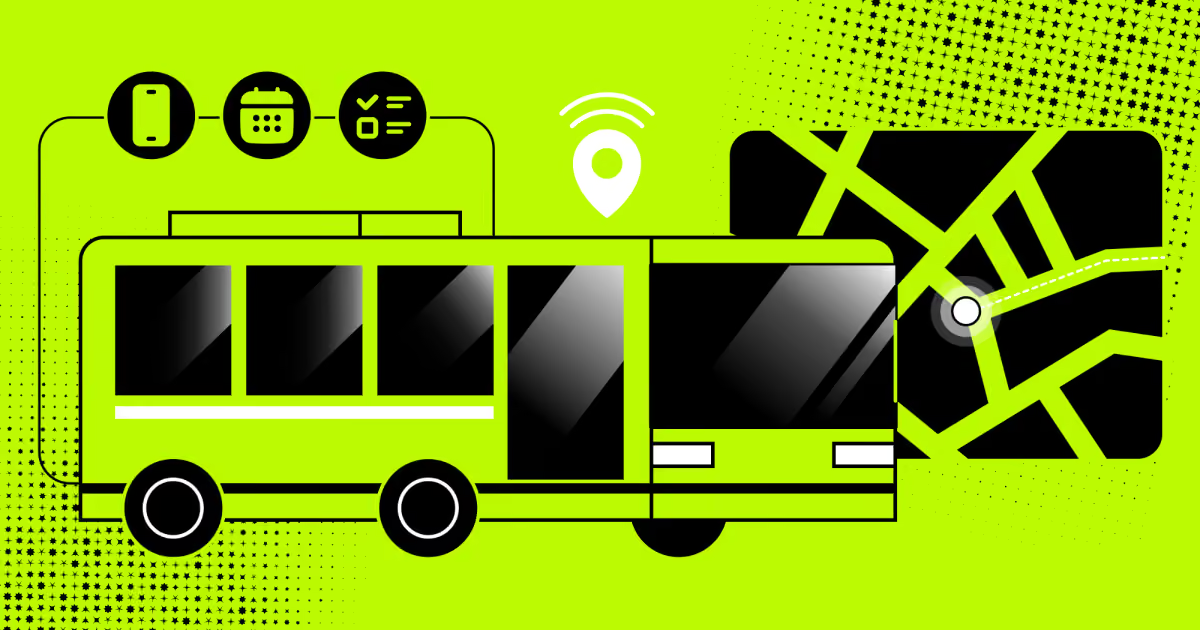
Our DrivenBus project shows this at the dispatch layer. QR code validation scans passenger tickets with 99.7% accuracy, and average boarding time runs just 3.2 seconds. It’s a different system, but the same principle. Remove the manual check, keep the exception path open for when something's actually wrong.
Logistics automation at this stage isn't something to boast about at partner conferences. It's the plumbing of your operation. But a broken pipe here backs up every stage downstream. And this is exactly why it's usually one of the first processes companies choose to automate.
Demand and supply planning
Guessing at demand is expensive. Guessing wrong repeatedly might cost you a business. Predictive models now forecast delays and stock needs using live data, not last quarter's spreadsheet. We typically wrap a proven forecasting engine (AWS Forecast, for instance) rather than build one from zero. That's deliberate: faster to ship, easier to maintain, just as accurate for most fleets. Demand forecasting significantly reduces errors across supply chains.
The gap between "we think" and "we know" is where planning budgets get wasted. Logistics automation solutions built for planning don't replace the planner. They give the planner a number worth trusting, not a hunch dressed up as one.
Documentation and compliance
In your work, you often drown in customs forms, invoices, and bills of lading. Nobody enjoys this paperwork, and still, nobody automates it for years.
That's changing. Freight bills now get audited against carrier contracts automatically. Payments get triggered the moment proof of delivery lands. On the telematics platform COAX created, contract renewals and service tiers live in dedicated dashboards instead of scattered folders. This helped cut the administrative overhead that used to eat a fleet manager's week.
Compliance automation rarely gets credit for saving money. It mostly gets credit for not costing a fine. That's a lower bar, but it's the one most operations teams actually care about.
What are the benefits of logistics automation?
Five benefits show up in nearly every project we've shipped, whether the client moves freight, produce, or passengers. Some are obvious the moment a system goes live. Others only surface months later, buried in a metric nobody was tracking before.
Fewer errors, lower costs.
A mistyped SKU costs more than the five seconds it took to type it. It costs a wrong shipment, a return, a customer who now double-checks every order. Data entry is where most supply chain errors start, and it's also the easiest layer to remove entirely. Automated logistics systems don't get tired. They validate stock, match orders, and flag errors before a human ever touches the record. On SmartBat, real-time inventory validation processes each transaction in under one second. No manual cross-check between channels, no end-of-day scramble to figure it out.
Faster processing, higher throughput.
Volume is easy until it isn't. The moment order counts spike, manual processes buckle first. Often, it’s because there's a hard ceiling on how many orders one person can key in per hour. Robotic picking and AI-driven routing remove that ceiling. A dispatcher managing 20 routes by phone hits a wall. However, a system managing 200 routes never does.
We saw this directly on a cross-border trucking build. Once the routing engine took over exception handling, dispatchers managed 31% more daily routes without adding headcount. The volume grew. The team didn't. That's the whole point of logistics automation software. It scales the work, not the payroll.
Real-time visibility, better service.
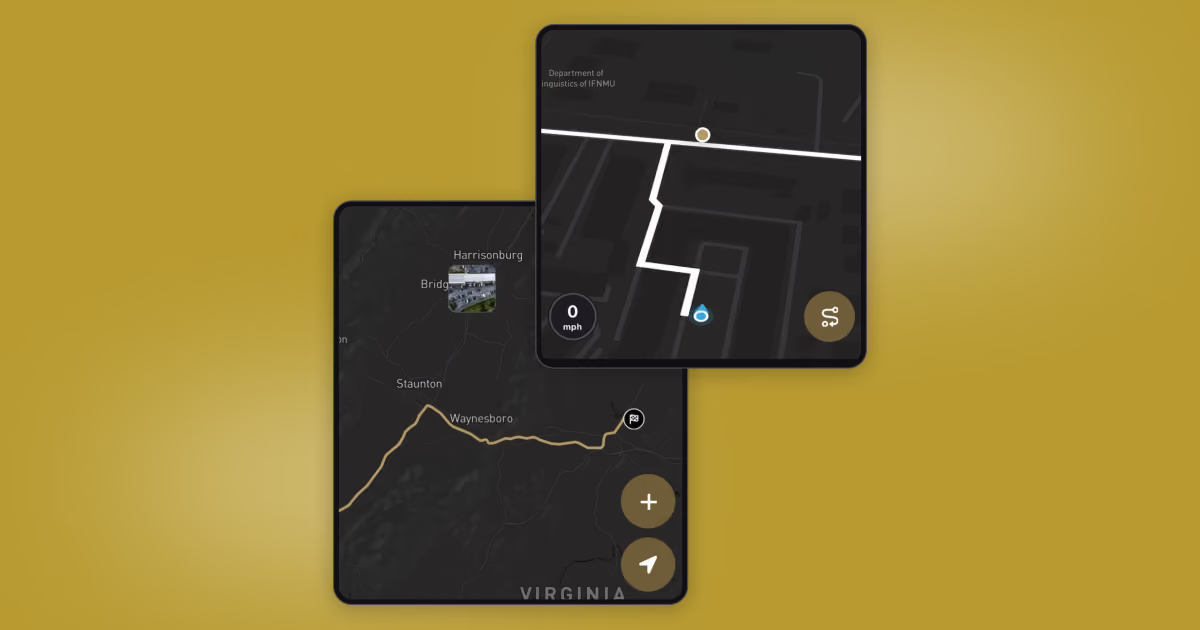
Real-time tracking closes the visibility gap by giving the customer the same information the dispatcher has, at the same moment. That single shift (from "call and ask" to "check the app") changes how customers feel about a company. Our Road&Rally project shows this at a personal scale. Drivers in a group ride see identical, synchronized navigation, recalculated automatically the second anyone takes a detour.
GrandBus shows it at fleet scale. Route schedules, carrier assignments, and driver rosters all live in one dashboard now, replacing the phone calls and spreadsheets that used to eat up coordination time. Visibility isn't a nice bonus to logistics automation. It's usually the first thing a client notices once the old system disappears.
Maximized storage, smaller footprint
Warehouse space costs money whether it's full or half-empty. Wasted vertical space is wasted rent, and most facilities waste more of it than anyone realizes until someone measures.
Automated storage and retrieval systems change the math by using height instead of floor space, packing inventory densely into columns a person could never reach safely on foot. A WMS paired with automated sortation can cut picking errors by roughly 60%. It can also bring the manual labor down by about 30%.
Safer, more sustainable operations.
Heavy lifting injures people. It also costs money, averaging $42,000 per workplace accident, by some industry estimates. This is the number before lost productivity even enters the calculation.
Automating the physically dangerous parts of a job doesn't just prevent injuries. It removes the reason someone quits after their third strained back in a year. Digital transformation is linked to injury reductions above 75% when you need constant manual lifting or stacking.
Our own safety-adjacent wins came through predictions. On DriveIQ, a fatigue-and-hours-of-service model flagged high-risk shifts before drivers hit their limits. It prevented over 40 violations in a single quarter. Nobody got hurt learning the system's limits the hard way. The model caught the risk first.
That's the benefit of logistics automation in practice. Fix visibility, and errors usually drop with it. Fix throughput, and safety often improves too, because rushed humans make more mistakes than well-paced systems. The gains compound. This is exactly why the smartest rollouts rarely automate just one thing.
What are the challenges of logistics automation?
Our team hit this before we started developing some specific features for a project. On the SyncMatix telematics platform, the client tracked hundreds of vehicles across multiple vendor systems. Which meant a headache.
GPS data came from one platform. Reporting lived in another. A separate driver app barely got used at all. Every source formatted timestamps differently. Fuel numbers from one tool didn't match the fleet totals from another. Before we could build anything predictive, we had to make the data agree with itself. That single mismatch cost weeks before a single dashboard shipped. It's the challenge nobody budgets for, and it shows up in nearly every rollout we've done since.
But data mismatches aren’t the only obstacle you can face.
Legacy system integration.
Older TMS and WMS platforms weren't built for modern APIs. Connecting them means custom middleware, not a plug-and-play install. We've built that bridge layer across plenty of stacks. This covered Stripe and Plaid for payments, Salesforce and HubSpot on the CRM side, Xero for accounting, SignNow for e-signatures, and Google Maps for routing. The pattern repeats: legacy system stays live, middleware translates, nothing breaks mid-rollout. For logistics automation companies, rip-and-replace sounds nice. In practice, most fleets end up building a bridge instead, keeping the old system running while the new one earns its trust.
Upfront cost and ROI timing.
Robotics, sensors, and platform licensing cost real money before they save any. A WMS-and-sortation project typically pays for itself in 18 months, not 18 days. Leadership teams comfortable with quarterly wins often struggle with automation's slower payback curve. That mismatch kills more projects than bad technology ever does.
Workforce adaptation.
A dispatcher who's read traffic patterns for fifteen years doesn't automatically trust a model's confidence score. Drivers worry in-cab coaching feels like surveillance, not support. Logistics automation succeeds only when people actually use it. That takes training, transparency, and time no software license can shortcut.
Choosing the right vendor.
Logistics automation software varies wildly in scope, and vendor lock-in is a real risk once data lives inside a proprietary platform. Some tools handle warehouse robotics well but fumble transportation planning. Others do the reverse. Picking one logistics management software option to solve each problem means picking a system that solves none of them particularly well.
Cybersecurity exposure.
Logistics automation systems widen the attack surface the moment they connect TMS, WMS, and carrier portals into one network. Phishing drives roughly 60% of cyberattacks on transport companies. Ransomware alone accounts for nearly 84% of transport-sector incidents in the EU. A compromised system does more than just leak your data. It can also halt dispatch, freeze warehouse picking, and stall billing all at once.
We treat this as a design requirement integrated into the whole lifecycle. COAX is ISO 9001 and ISO 27001 certified, and we sign an NDA on every project regardless of size. A single-site pilot gets the same data-protection standards as an enterprise rollout. Security of your data is the part of the same lifecycle we use for discovery, build, and long-term support. We just know that a system that automates dispatch and billing has to be trustworthy at every stage.
Best logistics automation systems
Every logistics automation platform looks flawless on a curated dataset with perfect addresses and zero traffic. The real test happens on a Tuesday, mid-shift, when three vendors' timestamps disagree. And surely, it happens when the driver's phone drops signal in a parking garage.
Here’s the list of the tools we’ve evaluated. Next, we’ll explain why they got into this shortlist. We’ll also explain how you can apply the evaluation criteria to your own project.
Platform
Best for
Route optimization
Carrier orchestration
Real-time visibility
Deployment scope
Pricing
Locus
Enterprise last-mile, 500+ daily deliveries
Yes, 180+ variables
Yes, full carrier mix
Yes, SLA-risk alerts
Full dispatch-to-settlement
Custom enterprise
FarEye
Multi-carrier retail visibility
Basic
150+ carrier network
Yes, branded tracking
Post-dispatch layer
Custom enterprise
LogiNext Mile
Structured, high-frequency routes
Yes, fixed-window
Limited
Yes, ETA tracking
Route + fleet tracking
From ~$49/resource/mo
Samsara
Mixed fleets, AI-driven coaching
Fleet, not TMS
Not available
Yes, video + GPS
Fleet telematics
Custom
BlueYonder
Global freight + planning suite
Yes, multimodal
Yes, tendering
Moderate
Full supply chain platform
Custom enterprise
Oracle OTM
Cross-border freight compliance
Yes, multimodal
Yes, contract-based
Moderate
Global freight only
Custom, Oracle-bundled
Geotab
Data-heavy fleet analytics
Basic
Not available
Yes, extensive
Fleet telematics + open API
Custom
Dematic
Large-scale warehouse automation
Warehouse, not routing
Not available
Yes, via Dematic iQ
Full warehouse execution
Custom, project-based
KNAPP
Goods-to-person, pharma/retail DCs
Not available
Not available
Yes, via KiSoft
Full warehouse execution
Custom, project-based
Motive
Mid-market fleets, fast rollout
Not available
Not available
Yes, GPS + coaching
Fleet telematics
Custom
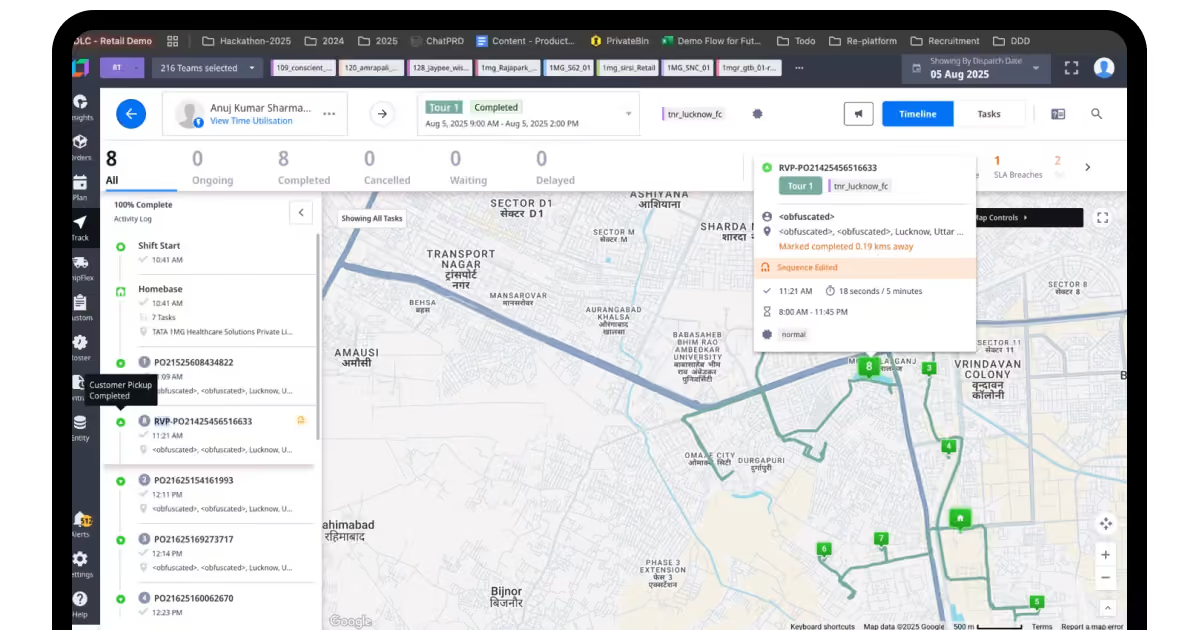
Locus runs the full delivery lifecycle in one workflow. It covers everything: dispatch, hub sorting, driver execution, settlement. We tested it against high-SLA, with mixed-fleet scenarios similar to our DriveIQ build. As a result, its constraint-aware routing handled 180+ variables without choking on edge cases. Documented cost cuts of 15-30% held up in our review of implementation data. The catch: it wants clean address data and defined constraints before go-live. Smaller operations under 50 daily deliveries will feel over-equipped.
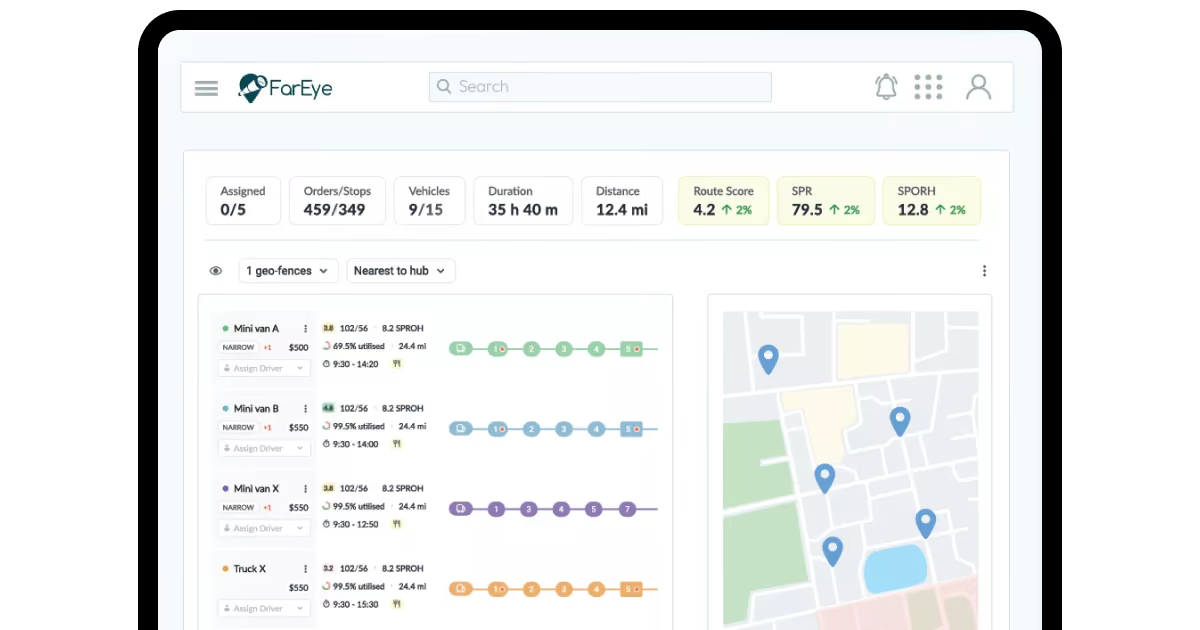
FarEye solves a narrower problem well: the logistics automation of carrier chaos. Connect to 150+ carriers, standardize the tracking data, hand customers one branded page instead of ten different tracking links. We found its no-code rules engine useful for exception handling without pulling in IT. Route optimization stays shallow here, though. Pick FarEye if your gap is visibility across carriers, not owned-fleet dispatch precision.
LogiNext Mile fits repeatable, high-frequency routes. This includes CPG replenishment and fixed courier zones. Implementation moved fast in our review, and pricing starts far lower than the enterprise names on this list. Where it struggles: constant mid-shift changes and unpredictable dispatch conditions. If your operation looks like SyncMatix's structured trip patterns, this is a stronger match than if it looks like DriveIQ's exception-heavy trucking.
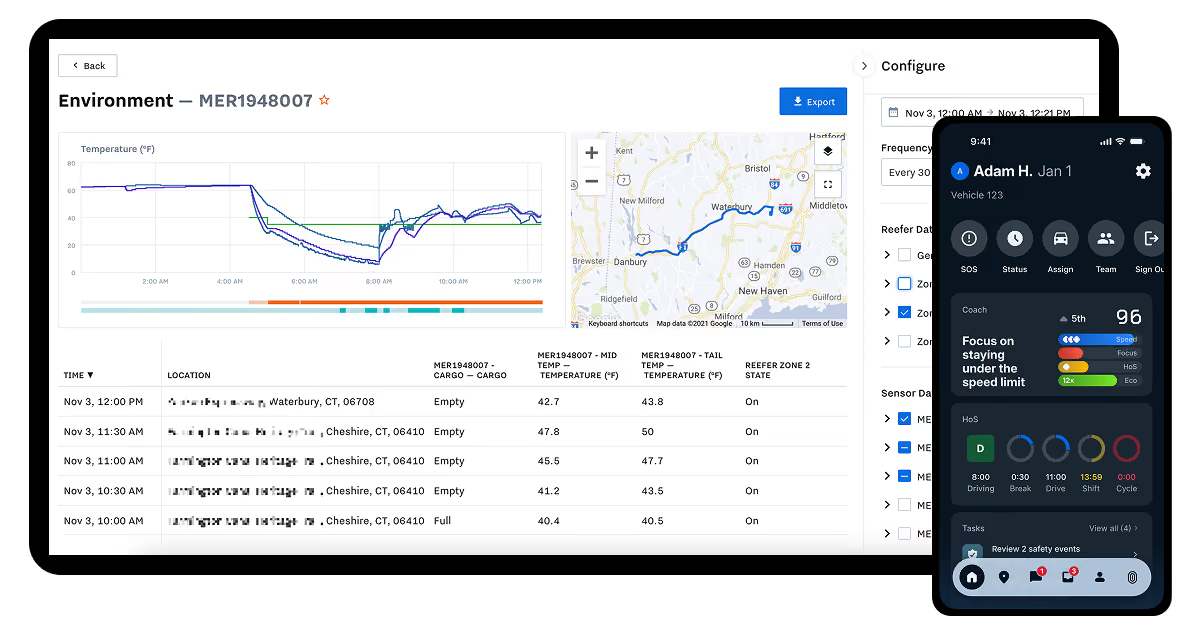
Samsara passed our Messy-Data Test better than any fleet tool we ran. Its AI dashcams flagged distracted driving accurately across every trial, and the open API connected to a test TMS without extra middleware. Predictive maintenance alerts fired days ahead of simulated failures. Pricing runs high for smaller fleets. That's the tradeoff for logistics automation software this polished.
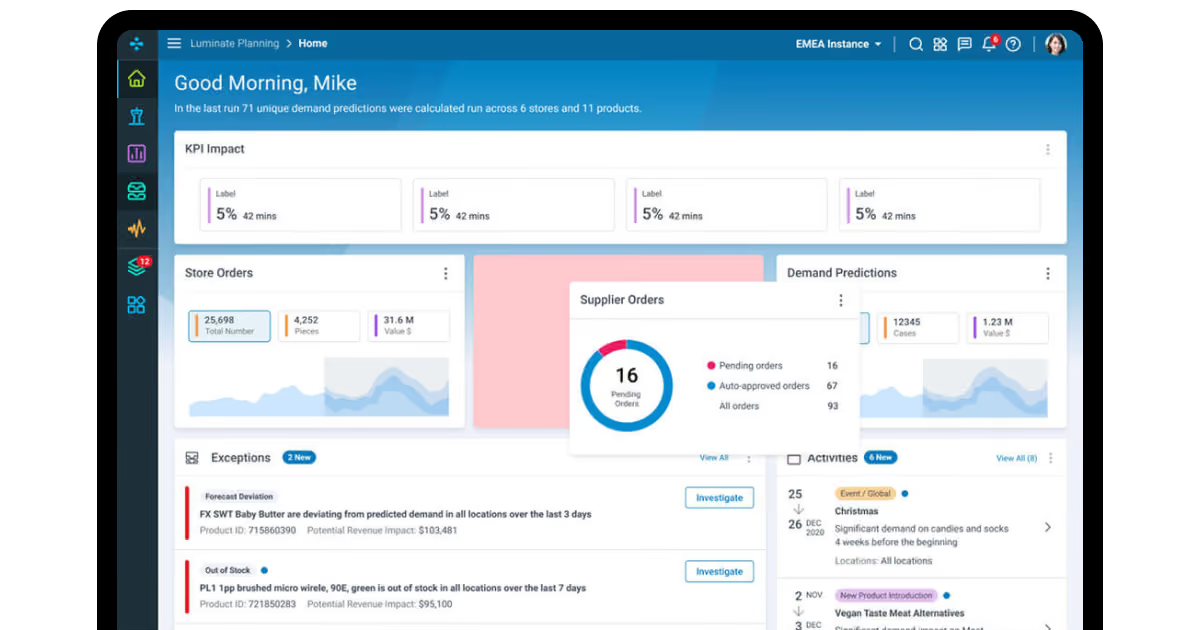
BlueYonder isn't really a TMS. It's a full supply chain suite with transportation fitted into demand and supply planning. That's the appeal for enterprises consolidating vendors, and the cost for everyone else. You might get long implementation, heavy systems-integrator involvement, a total cost of ownership that punishes teams who only wanted routing.
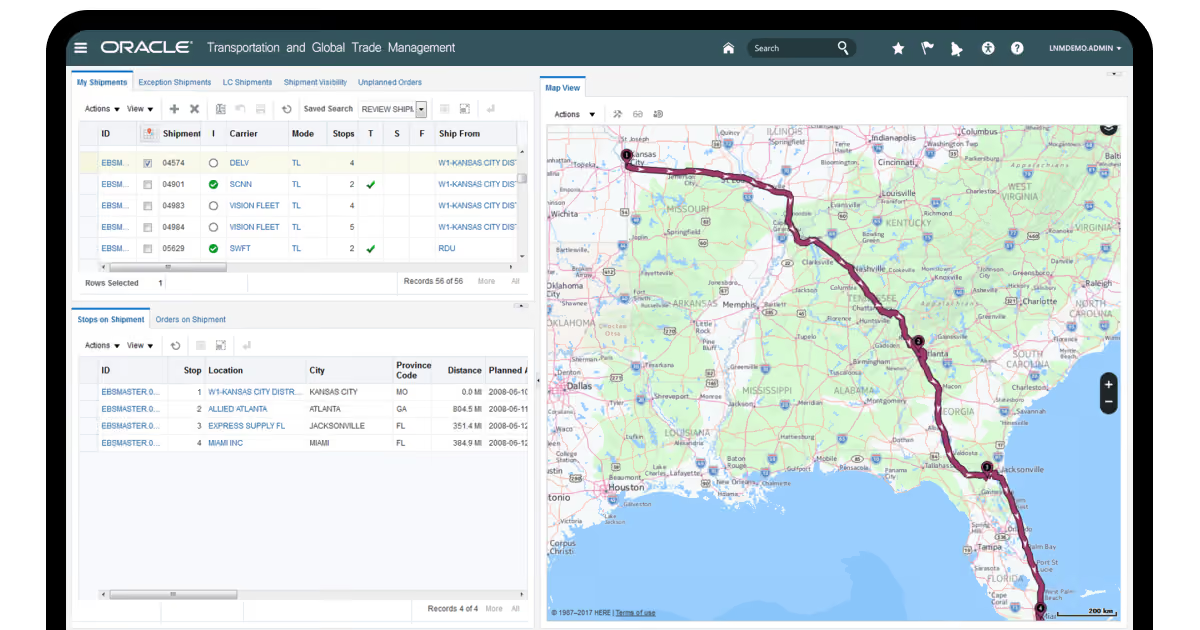
Oracle OTM earns a decent place in cross-border freight. It covers customs documentation, multimodal planning, freight audit across dozens of carriers. Native Oracle ERP integration makes it effortless for existing Oracle shops. Outside that, or for domestic last-mile work, it feels like bringing a freight ship to a bike race.
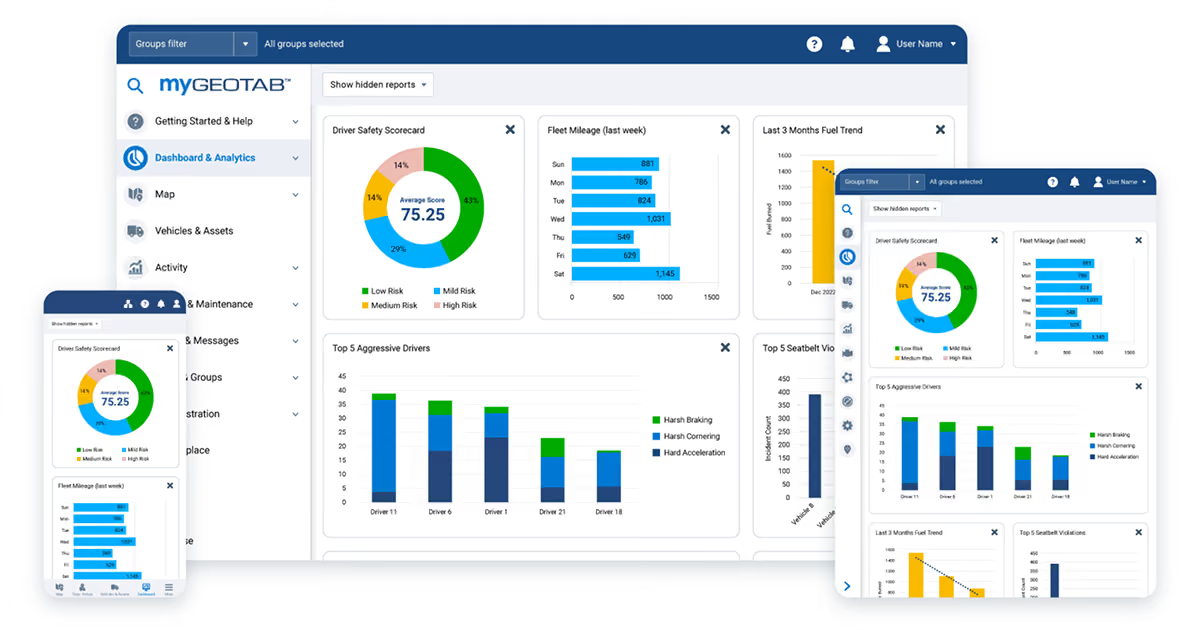
Geotab won on the Integration Tax Test. Its open API and add-in marketplace let us build custom reports without a single vendor support ticket. Driver coaching felt secondary compared to Samsara's. More of an afterthought bolted onto raw telemetry. Teams chasing data depth over driver-facing polish will get more value here than teams chasing adoption.
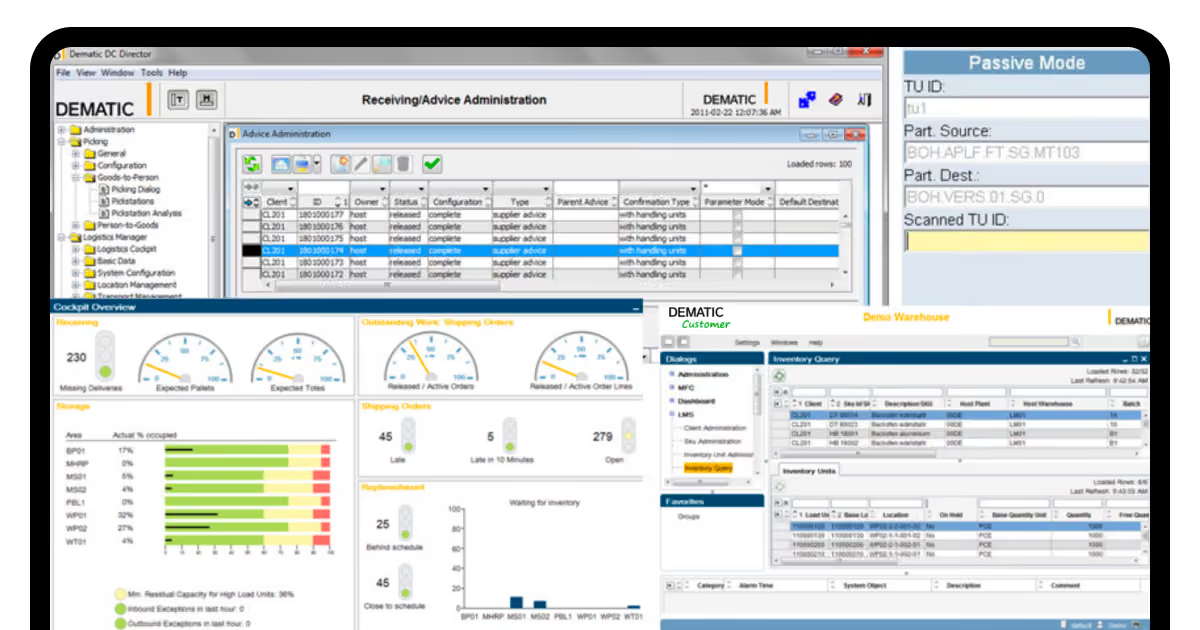
Dematic anchors the warehouse side of automation in logistics work. You get everything from pallet and mini-load AS/RS, multishuttle systems, AGVs, all orchestrated through Dematic iQ. Thousands of installations across ecommerce and manufacturing back its reliability claims. It's built for large, complex greenfield and brownfield projects, not a quick pilot. Expect a multi-year engagement, not a quarterly rollout.
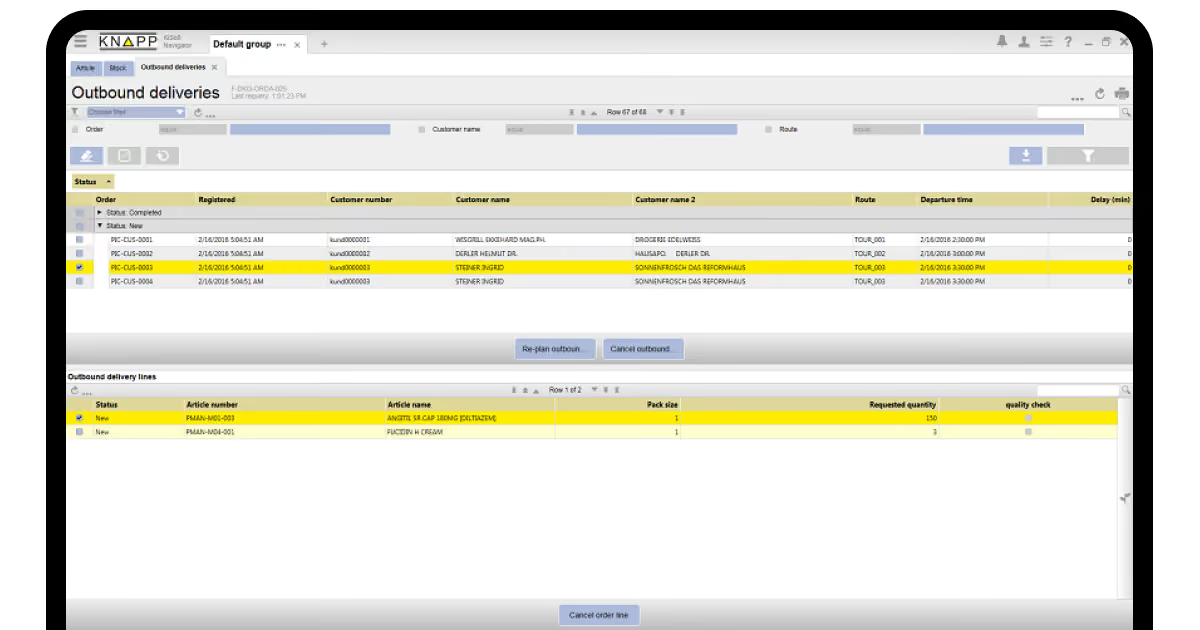
KNAPP stood out for logistics workflow automation inside pharma and omni-channel retail specifically. Shuttle-based goods-to-person systems and intelligent pick-stations run through its KiSoft platform, built with ergonomics and uptime as first-class concerns. It's a strong fit where compliance and reliability outweigh raw speed. At the same time, it’s less compelling if your priority is fast, cheap deployment.
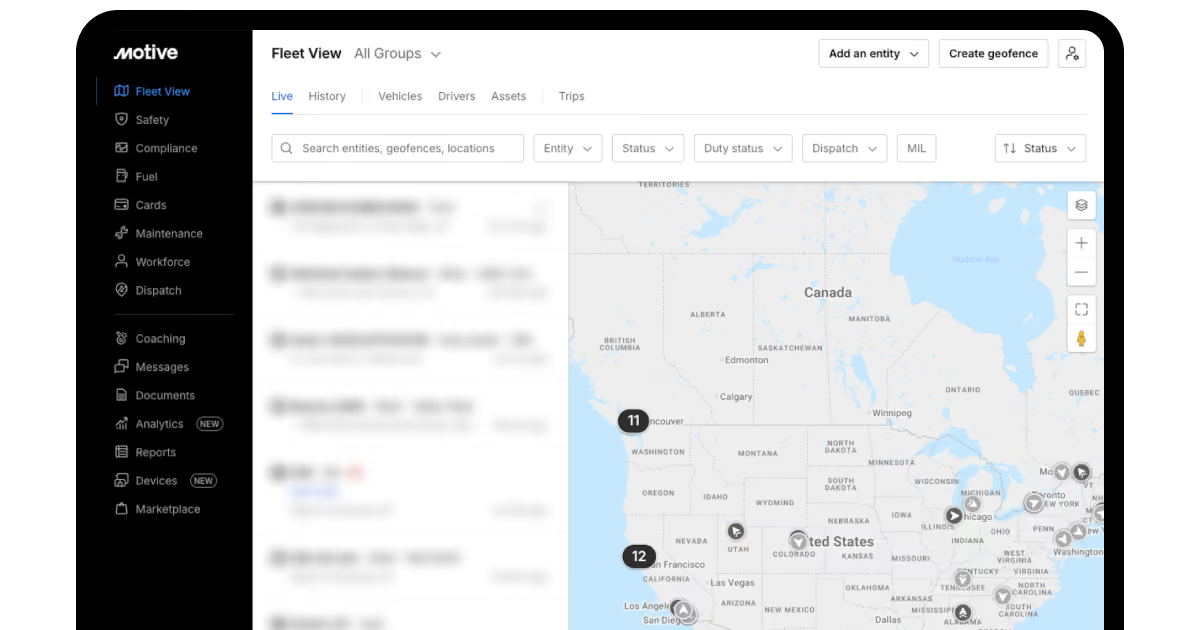
Motive impressed us on speed. We had live tracking and driver coaching running within a single afternoon during testing. Coaching alerts felt less intrusive than Samsara's. Also, our test drivers engaged with them faster. It's the strongest pick here for fleets under 500 vehicles that want results without a multi-week rollout.
Off-the-shelf tools always assume your business fits their template. They won't know how to handle your specific driver pay rules or that ERP your back office relies on. Sometimes you can patch the gap with a custom module or a clever integration. Other times, fighting a rigid platform costs more than building exactly what you need from scratch.
That's where COAX Software comes in. We treat a new feature for your tool, integration service for your architecture, or a new platform development with the same perfectionism. Our experts build the stack (web dashboards, driver apps, or a custom admin layer for your current setup). Whether you need a full fleet platform built from zero or just one missing piece plugged in, we're the team that has 16 years of experience solving challenges you might be experiencing.
How to choose the best logistics automation software?
If you decide to opt for the ready-made solution, we have some tips to share. They’re engineering more than business ones. We built our evaluation criteria around that most common failure point, drawn from our own telematics and dispatch projects.
We’re sharing them now so you can test your potential logistics automation solutions, too.
The Messy-Data Test. Feed the system mismatched formats, dropped GPS pings, three hardware vendors reporting to one dashboard. Watch what breaks. This is where we lost weeks on SyncMatix before a single feature shipped. It’s also where most vendor demos never get tested at all.
The Third-Shift Test. Anyone can get a driver to open an app on day one. The real question is day thirty, shift three, when novelty's worn off. Does the interface earn repeat use, or does it get ignored as the old system did?
The Exception Fluency Test. A late delivery isn't the failure. Slow diagnosis is. Good logistics automation systems cluster root causes automatically instead of dumping every alert on one screen for a human to untangle.
The Integration Tax Test. Every vendor claims plug-and-play. Ask what custom middleware it actually needs to talk to your existing TMS, WMS, or ERP. That number (in weeks, not vague promises) tells you more than any feature list.
The Scale-Down Test. A platform built for 500-vehicle fleets often collapses under its own weight at 20 vehicles. We checked whether each tool still made sense outside its ideal use case, not just inside it.
Run any logistics automation technology through these five filters before signing a contract. You’re targeting the platform that survives messy data, earns third-shift adoption, handles exceptions gracefully, integrates without a six-month side project, and still works at a smaller scale. That's the one worth your budget. Everything else is a nice wrapper of something that won’t fit you.
That's also how we'd frame the difference between logistics automation solutions for enterprise scale and the platforms built for predictable routes. This isn't one-size-fits-all. A warehouse execution system and a fleet telematics platform solve different failure modes. Still, both get marketed under the same "automation" umbrella. Match the tool to the failure, not the other way around.
How to get started with logistics automation?
We ran through our tool-testing criteria already. But in fact, choosing a platform is maybe 20% of the actual work. The other 80% is everything nobody puts in a comparison table. It’s about deciding what to automate first, and what data you actually have versus what you think you have. It’s also much about who on your team needs to trust the system before it earns real use. We've walked clients through every stage of that process. We’re sharing this checklist with you.
Be serious with the discovery process.
We’ll share how we do it, in plain terms. Our experts start with a gap assessment: what data exists, what's missing, what's functional versus not. Every integration point gets logged separately, each with its own complexity rating. Open questions stay tracked until the client resolves them. Nothing gets guessed at. Only then do we design the architecture, built on decisions that are actually confirmed. Skip this step, and you're designing against assumptions instead of facts.
Start with the alert nobody's reading correctly.
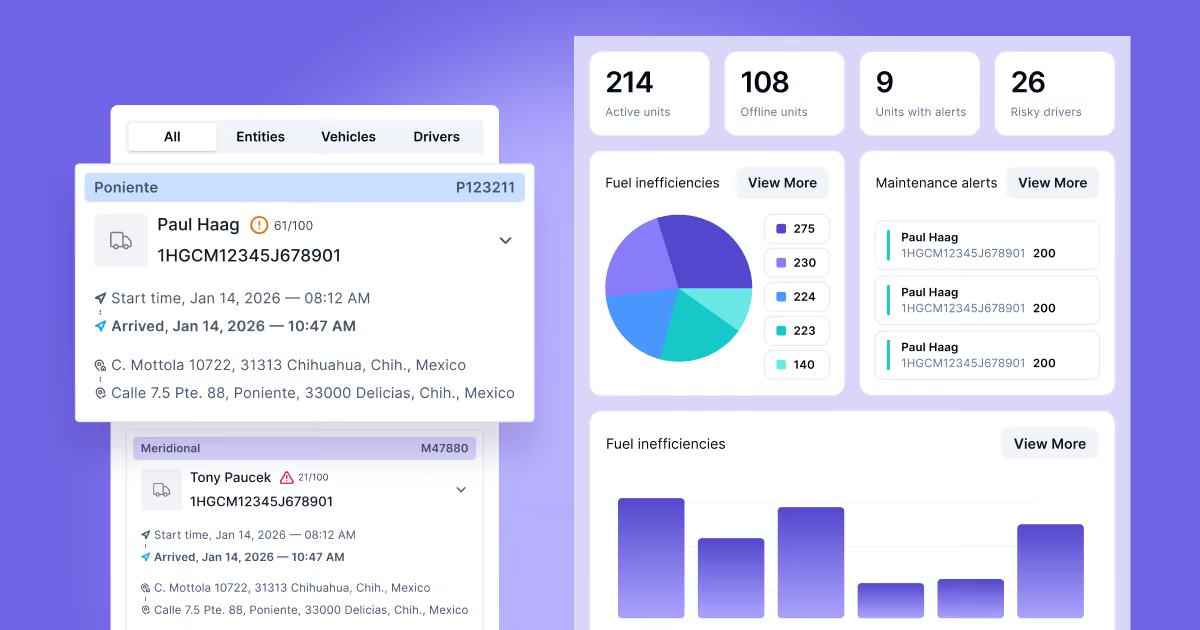
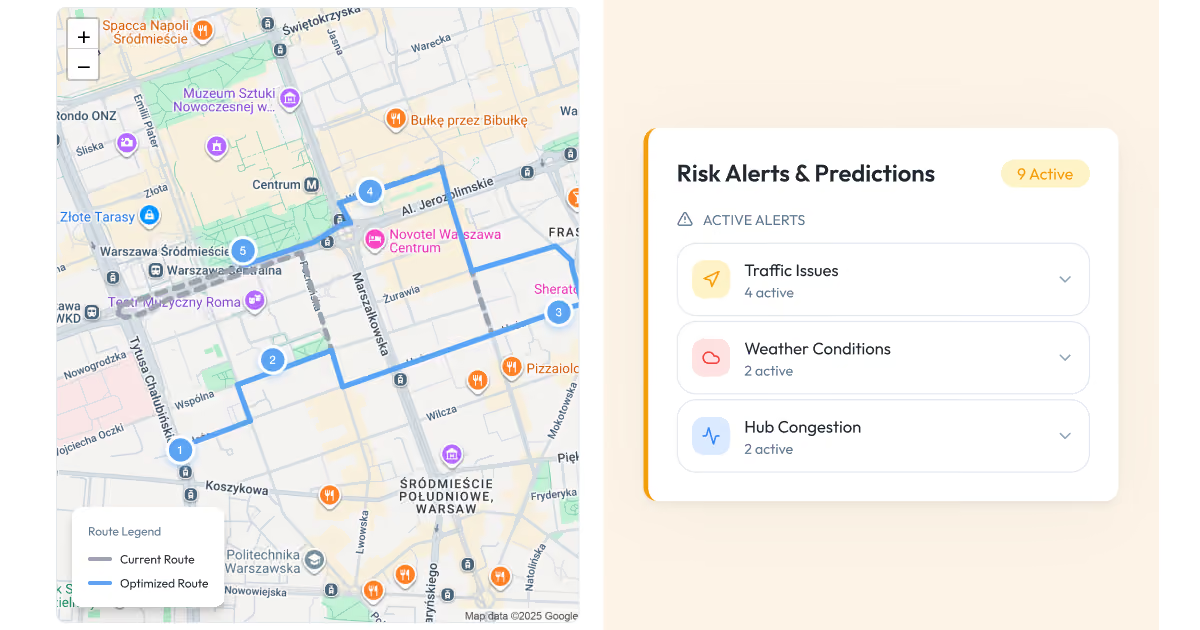
Before you automate anything, watch what your team already flags manually. On DriveIQ, risk alerts split into traffic, weather, and hub congestion. Nine active alerts in three categories. That level of detail didn't come from a template. It came from watching dispatchers separate "ignore this" from "act now" by hand for weeks first. Logistics automation works best when it copies a triage pattern your team already uses instinctively. Don't invent a new categorization scheme from scratch. Automate the one already living in your dispatcher's head.
Decide how deep your analytics layer needs to go.
This is the tip you might feel tempted to skip. However, skipping it is expensive. On SyncMatix, driver performance dashboards score safety, efficiency, and risk, each pulled from different data sources. That's a deliberate architectural choice. Ask yourself early: do you need per-driver behavioral scoring, or just fleet-wide averages? Building the deeper layer later, after launch, means retrofitting data pipelines that should've been designed for it from day one.
Keep the interface boring where it needs to be boring.
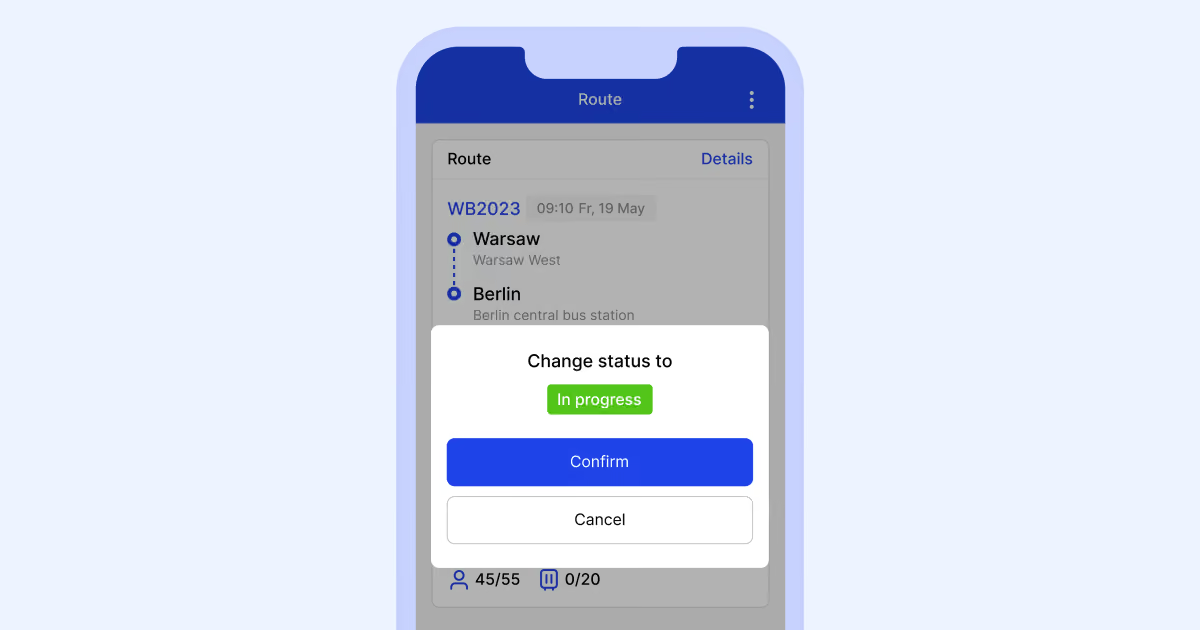
GrandBus drivers update route status with two buttons: confirm or cancel. No settings menu. No configuration screen. Just "In progress," tap, done. That simplicity was a decision, not a limitation. Drivers on shift three don't want to learn a new interface. They want the status update to take four seconds, same as it did on shift one. The fanciest logistics automation equipment in the world fails if the person using it daily finds it slower than what they replaced.
Default to boring architecture, too.
For a mid-size fleet operator, we don't reach for microservices by default. A modular monolith (one backend API, separate admin and driver apps, all on managed AWS) ships faster and costs less to run. Microservices earn their complexity at a scale most logistics projects never reach. Save that architecture for when you actually need it.
A few more things worth knowing before you start:
Pilot on your worst route, not your best one. A system that handles your cleanest lane easily tells you nothing about how it'll survive your messiest one.
Budget for the data-cleanup phase separately. It's rarely quick, and it's rarely included in the vendor's timeline estimate.
Get one skeptical dispatcher involved from week one. Their objections usually surface the real gaps before launch, not after.
Don't chase every feature a vendor demos. Match the tool to your actual failure mode (messy data, slow diagnosis, or adoption resistance), not to the longest feature list.
Plenty of the top logistics automation companies can sell you a platform. Fewer can adapt it to the version of your operation that doesn't match the demo. Logistics software development services that actually change outcomes take engineers who've hit your specific integration problem before. Engineers who can read documentation aren’t enough.
At COAX Software, project teams stay lean by design: one or two mid-to-senior developers, a DevOps engineer, a PM, and QA. A junior joins when the scope calls for it. Small teams debug faster, so nobody's waiting on a handoff. The person untangling your EDI mismatch has usually untangled one just like it.
The other thing worth planning for: scale you don't have yet.
A system built for your fleet today needs to survive double the volume two years out, without a rebuild under pressure. That's how we approach every one of our automated logistics solutions. We keep it sized for now, but built assuming the growth curve doesn't stop where it currently stands. This fits whether you're thinking of a first pilot or replacing something that's already giving under volume. A forward-looking design is the difference between a system you scale and one you eventually tear out.
FAQ
How much does logistics automation cost to implement?
Costs vary by scope. Budget for three things: software licensing, integration work, and hardware if you're adding sensors or robotics. Tuning a wrapped forecasting model to a client's specific lanes still takes real time. It's not instant, even when you're not building from scratch. Budget for a discovery phase separately from build. Vendors rarely quote that phase upfront. Skipping it is the fastest way to blow a timeline.
What kind of logistics automation equipment actually needs hardware versus just software?
Not every project needs physical equipment. Route optimization, dispatch software, and predictive alerts run entirely in software. Hardware enters the picture with warehouse robotics, AS/RS systems, or telematics sensors like the ones we built into our greenhouse platform. Ask a vendor this directly before signing: which parts of their pitch are software, and which require you to buy machines.
Do automated logistics solutions work without replacing my existing TMS or WMS?
Usually, yes. Most rollouts we've built layer on top of existing systems rather than replacing them outright. On SyncMatix, we unified three disconnected vendor tools into one frontend without touching the client's backend infrastructure. Middleware and API connections do the heavy lifting. Full replacement only makes sense when the underlying system genuinely can't support modern integrations, which is rarer than most vendors admit.
Do small fleets actually benefit from automation in logistics, or is it only for enterprise?
Scale matters, but need matters more. A 500-vehicle carrier and a four-driver operator both hit the same walls: missed exceptions, manual reporting, drift between systems. On Road&Rally, a four-person team built synchronized navigation for group rides, not a fleet department. Smaller operations often move faster because there's less legacy infrastructure fighting the rollout. Enterprise budgets aren't a prerequisite for real gains.
How long before logistics automation shows ROI on a real budget?
Timelines depend on what you automate first. Warehouse sortation projects typically pay back within 18 months, according to McKinsey & Company. Software-only fixes move faster. On SmartBat, real-time inventory validation cut reorder time by 75% within the first release cycle. There was no hardware investment required. The fastest ROI usually comes from fixing one specific bottleneck, not from a sweeping platform overhaul on day one.











































































_.avif)








%2520explained.avif)

We are interested in your opinion