Freight-related tools often focus on freight forwarders. However, there are other players in this field - freight brokers. They have their own challenges connected to visibility into managing loads and easy shipper-carrier matching. This is why freight brokering software should have carefully selected functionality. This is why we made a list of the top freight broker software:
AscendTMS - ideal for budget-savvy brokers thanks to zero-cost entry with end-to-end shipment handling.
Wave TMS - top pick for tech-forward firms due to intelligent matching and profit-boosting analytics.
Logistically - perfect for versatile shippers with boundless access at a steady, low monthly fee.
Descartes Aljex - suited for bigger operations with its industry-tailored depth in tracking and data links.
DAT Broker TMS - great for streamlined work via native load posting and billing ties.
DAT One & RateView - excels in market insights with instant rate trends and projections.
Alvys - strong for expansion with endless seats, vast app links, and rapid rollout.
Rose Rocket - shines in design and safety via sleek screens, instant views, and top security.
Quote Factory - fits expanding crews with fast quotes, checks, and easy onboarding.
EKA Omni - leads in smart tech with built-in bots for assignment and cost control.
Custom development - ultimate choice for tailored excellence, delivering specific integrations and AI capabilities, perfect ecosystem unification, and infinite scalability.
In this article, we will break down the key modules and features to look for in freight broker tools. Then, we’ll outline the best options you can get from off-the-shelf vendors, and discuss the cost and approaches to implementing your freight broker system.
What is a freight broker?
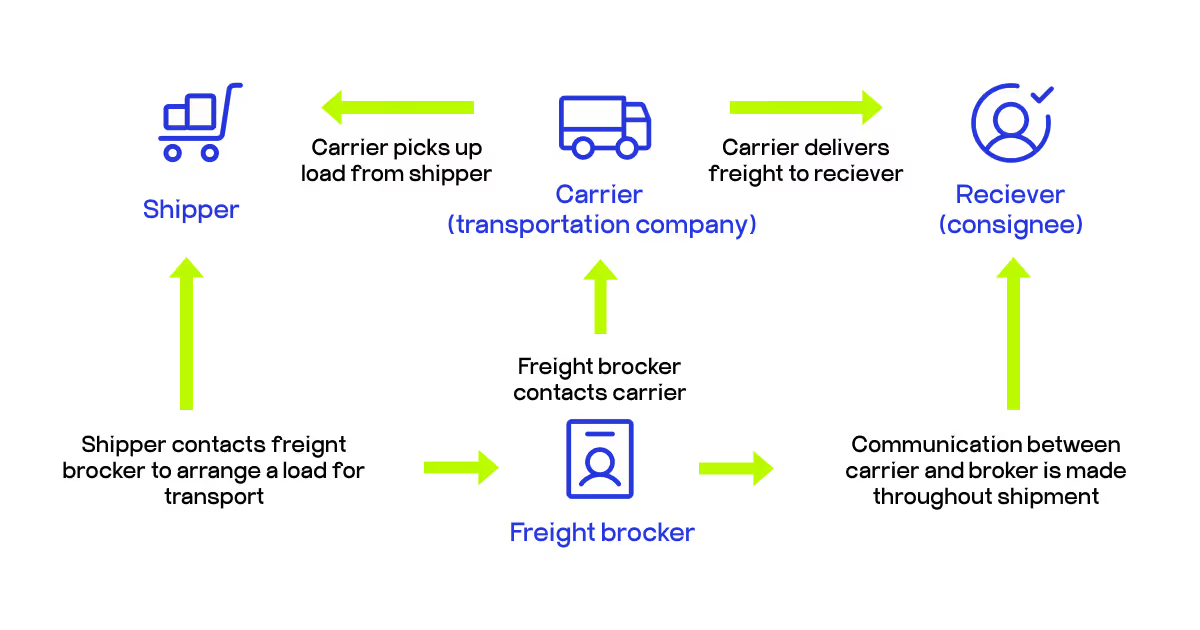
A freight broker connects companies that need to ship goods with truck drivers who can haul those loads. They are important intermediaries for the shipping industry. Freight brokers don't own trucks or warehouses. They just make sure your products get from point A to point B by finding the right carrier for the job.
Brokers handle the complex middle part of shipping. They negotiate rates between you and the carrier, track your shipment, and fix problems when things go wrong. They save you from calling dozens of trucking companies yourself. This role is complex and demands specialized software for brokers to work efficiently.
Freight broker vs freight forwarder vs freight agent
These three roles look similar but work differently. Each of these works with freight (obviously) and is involved in the supply chain. Let’s see how each role stands out.
Freight agents work for brokers. They find carriers willing to move your freight, then step back. Once they book a truck, their job ends. You handle the rest of the pickup and delivery details directly with the carrier. If problems pop up during transit, you and the carrier sort them out.
Freight brokers do more. They stay involved from start to finish. You get one contact person who manages everything while your goods move. Brokers negotiate better shipping rates, plan efficient routes, and track your freight in real time. They cut your shipping costs and save you hours of work. But they won't touch your actual goods or handle import/export paperwork. They coordinate, but don't warehouse or pack.
Freight forwarders offer the full package. They arrange transportation like brokers do, but they also prepare your cargo for shipping. Need packaging? They handle it. Need customs paperwork? They fill it out. Need warehousing or consolidated shipments? They manage that too. Forwarders build custom supply chain solutions and oversee every step. They might even handle some physical shipping themselves. You get end-to-end service, not just coordination.
Now that we cleared out these distinctions, let’s define the most beneficial users of freight brokerage software.
Custom vs. out-of-the-box freight broker software: which is the best?
Before we focus on specific modules and features to focus on in your solutions, let’s break down once and for all whether you need a tailored solution or if an off-the-shelf tool will fit.
Off-the-shelf solutions offer quick deployment and predictable costs. You get proven features, regular updates, and immediate access to standard freight brokerage tools. For brokers running standard workflows, these platforms deliver solid value without long wait times.
Meanwhile, custom-built software creates unique competitive advantages. When your brokerage handles unique carrier relationships, specialized pricing models, or proprietary matching algorithms, custom development turns these into automated workflows.
Also, custom solutions scale precisely with your growth. Add features when you need them, integrate with any system regardless of API availability, and modify functionality as market conditions change. You own the code, control the roadmap, and avoid vendor lock-in.
Additionally, the ROI calculation favors custom development for brokerages with specific needs. Off-the-shelf platforms charge per user or per load indefinitely. Custom software requires upfront investment but eliminates recurring subscription costs.
Security and compliance needs push brokerages toward custom builds. When you need SOC 2 certification, specific data residency controls, or integration with proprietary shipper systems, custom approaches ensure alignment with your security standards.
For brokerages ready to invest in long-term competitive advantage rather than settling for industry-standard features, custom freight software development delivers the control, flexibility, and differentiation that drives sustainable growth.
Who can benefit from freight broker software?
Freight broker software serves multiple user groups across the logistics chain. Some are obvious, and some are less so. Let’s break each one down.
Freight brokers are the primary users. They manage load boards, coordinate shipments, negotiate rates, and track deliveries. The software gives them centralized control over operations.
Carrier dispatchers use the platform to accept loads, update delivery status, and communicate with brokers. They get visibility into available freight and route details.
Office administrators handle invoicing, document management, and compliance tracking. Freight brokering software automates their paperwork and reduces manual data entry.
Shipper representatives access the system to request quotes, book shipments, and monitor their cargo in transit. They can track performance metrics and review billing without constant phone calls.
Company executives use reporting dashboards to analyze profitability, identify top performing lanes, and make strategic decisions. They get insights into carrier reliability and customer satisfaction.
Research by Badica and team highlights that freight broker systems coordinate transportation arrangements between customers and resource providers through multi-agent architectures. The technology handles complex vehicle routing problems and optimizes resource allocation across the network.
Challenges freight broker software solves
Like every representative of the supply chain, freight brokers are susceptible to market disruptions, inefficient traffic, fuel prices, and unexpected demand. But they are impacted by them indirectly. This role is most affected by these challenges:
Manual load entry creates constant frustration. When teams rely on spreadsheets or emails, details get lost, and errors multiply. Freight broker tools fix this with guided load entry systems, built-in validation checks, and automation that captures accurate data from the start.
Communication breakdowns waste hours every day. Keeping carriers and shippers informed through phone calls and scattered messages means updates fall through the cracks. Modern software centralizes communication with automated email confirmations, status updates, and shared visibility portals. Everyone sees the same information without chasing down details.
Billing delays strangle cash flow. Disconnected tools force brokers to manually create invoices, track payments, and reconcile accounts. Integrated software connects load management directly to billing, automatically generating invoices when deliveries are complete. Accounting system integrations eliminate double entry and speed up payment cycles.
Performance blind spots prevent growth. Without clear metrics, brokers guess which lanes are profitable, which carriers are reliable, and where problems cluster. Real-time dashboards reveal lane profitability, carrier performance scores, load volume trends, and margin analysis.
Integration challenges slow everything down. Badica and others demonstrate through their research on freight brokers' software that coordinated digital platforms handle complex vehicle routing problems and optimize resource allocation. EDI capabilities let brokers exchange load tenders, confirmations, and status updates automatically with shippers and carriers, eliminating manual data entry and reducing delays throughout the shipping process.
Freight broker software modules
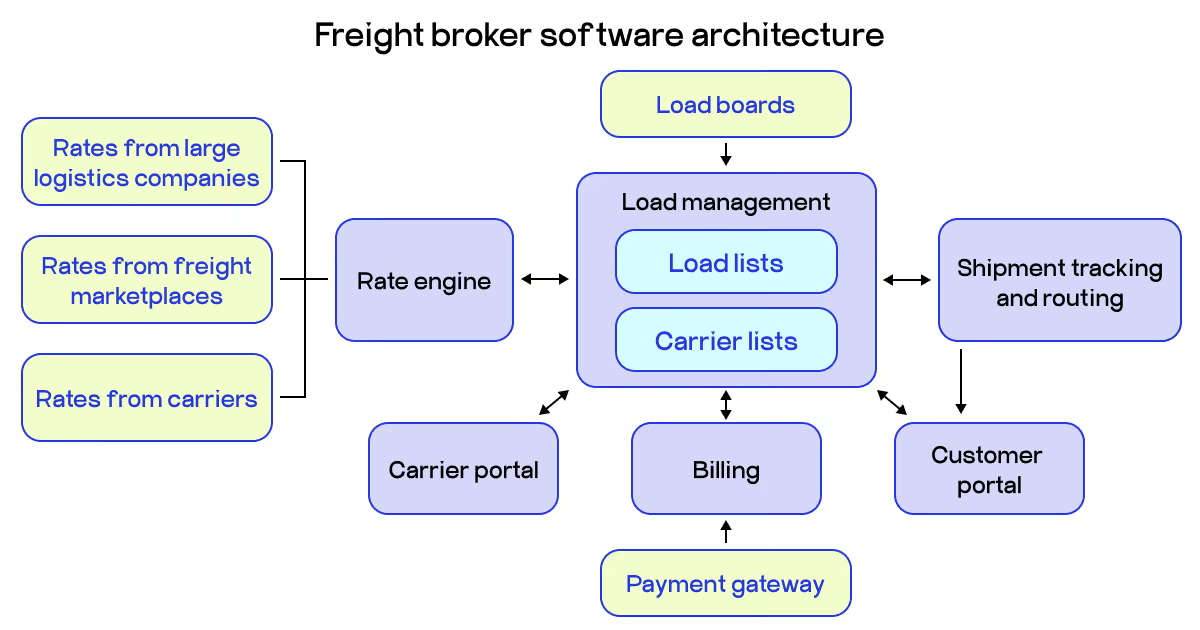
Freight brokering software operates as a modular system where each component handles specific aspects of the workflow. These modules work together to create an efficient end-to-end solution.
Load management module
This module handles the core function of distributing available loads to carriers. It maintains load lists with essential details like:
Lane information
Vehicle requirements
Rates
Cargo specifications (type, size, and weight).
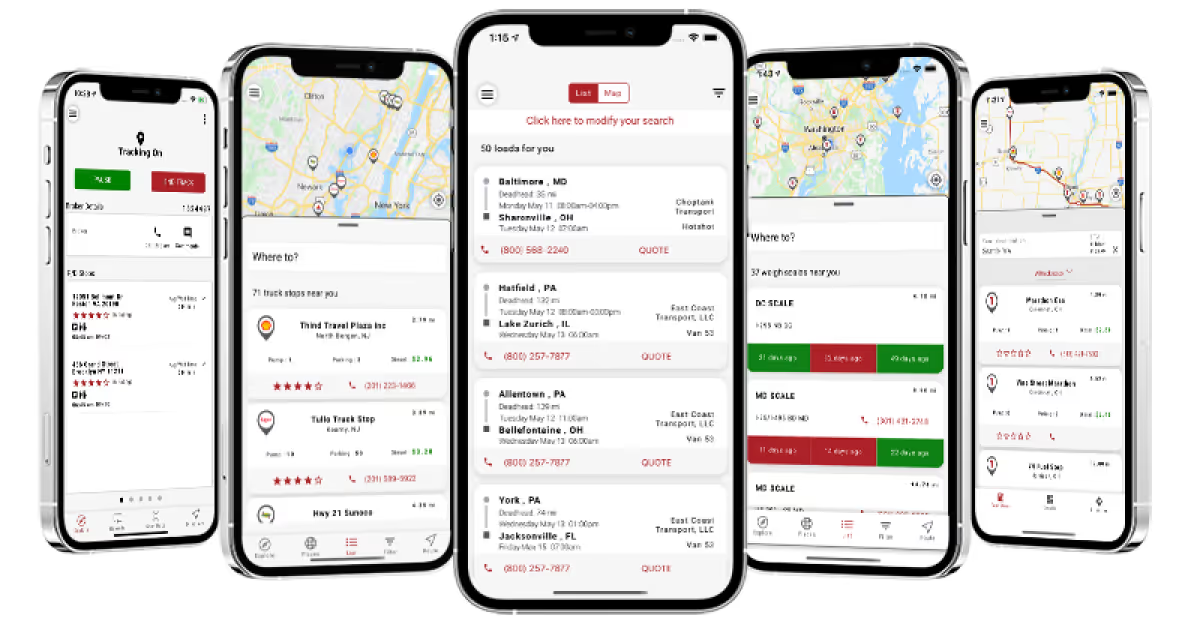
The system offers multiple distribution methods. Brokers can synchronize with shipping marketplaces to post loads on trading desks and receive automatic notifications when carriers select their freight. A freight broker system can also tender loads directly to carrier systems when matches align with their capabilities and available vehicles. Some platforms allow carriers to access internal load boards where they search and book shipments directly.
A centralized dashboard tracks all active loads and stores carrier contact information. This eliminates scattered spreadsheets and keeps pickup, delivery, and dispatch details organized in one location.
Rate engine
Rate engines pull pricing data from multiple sources simultaneously through API integrations with carriers, shipping platforms, and larger brokerages. This consolidation eliminates the need to check rates across dozens of separate systems.
For carriers with contracted rate matrices, brokers configure custom tariffs in the system. Shipments delivered by these carriers get rated automatically without manual spreadsheet lookups.
Freight software with advanced analytics tools examines historical and real-time freight data to identify market trends before they fully develop. This insight helps brokers place competitive bids and select optimal lanes and carriers based on data rather than intuition.
Shipment tracking module
Visibility prevents disruptions across the supply chain. Brokers request drivers to enable tracking through freight visibility platforms, either built into the software or through external integrations.
This eliminates the need to log in to multiple websites or call terminals for location updates. Embedded mileage calculation tools provide accurate arrival time estimates and compare alternative routes to ensure carriers choose the most efficient path.
For brokers charging per-mile rates, these tools generate easy-to-read mileage data that can be shared with shippers transparently.
Customer portal
Customer portals automate communication between brokers and shippers. Shippers tender loads through the portal and track shipments in real time through tracking software integration.
Built-in chat functions collect customer feedback and assist without phone calls or emails. Brokers maintain all invoicing correspondence and upload load-related documents in one accessible location.
This centralized approach to transport broker software keeps customers informed and satisfied while reducing the administrative burden on broker staff.
Billing module
The billing module ensures proper payment flows between all parties. Brokers typically invoice shippers first and pay carriers afterward, though some situations require cash on delivery arrangements for new carrier relationships.
Synced with load data, the billing tool automatically generates invoices along with supporting documents like bills of lading, proof of delivery, and rate confirmations. EDI capabilities enable direct data exchange with carrier and customer systems.
Separate billing boards help brokers manage load payments and quickly identify unbilled shipments. Accounting features include:
Financial reports
Income statements
Balance sheets
Freight bill audits.
Payment gateway integration allows brokers to accept payments directly through the system.
Research by Leon shows that integrating web services with agent-based architectures creates efficient brokerage software. Their work shows how combining these technologies increases service quality while reducing operational costs for logistics companies.
Key features to look for in freight broker software
We have outlined the key modules that, together, create a good system for freight brokers. However, you should also understand more granular features to look for in a solution.
Automated invoicing and billing.
Software that generates carrier payments and shipper invoices automatically based on completed loads eliminates manual accounting work. QuickBooks integration proves especially valuable for small and medium-sized businesses operating in the eCommerce space, connecting financial records directly to load data without duplicate entry.
Load board integrations.
Direct integration with major load boards like DAT and Truckstop.com ranks as the top priority feature for most brokers. These connections allow posting loads and sourcing trucks without leaving the platform, which eliminates data duplicates and mismatches. Research by Kumar shows that AI-powered software for freight brokers distribute bids to 1,000 to 3,000 carriers daily, a volume impossible to manage through manual load board posting. The integration connects to the $150 billion in DAT benchmark data for real-time rate comparisons.
Carrier and shipper portals.
Self-service portals reduce endless email chains by providing dedicated spaces for document uploads, offer acceptance, and load status tracking. These interfaces cut customer support resource requirements significantly while improving communication quality. Carriers access tailored information without phone calls, while shippers maintain visibility without constant broker contact.
Advanced analytics and reporting.
Performance dashboards reveal patterns that drive better decisions. Track metrics like lane profitability, carrier reliability scores, on-time delivery rates, and margin analysis by customer or route. Kumar's work proves that AI-enhanced systems improve response rates from 10% to 20% and booking rates from 15% to 25%, measurable only through robust analytics. Real-time data visualization helps identify which lanes generate the highest returns and which carriers consistently perform well, replacing guesswork with evidence-based strategy.
With the key features listed, let’s get find out the best freight broker software options in the market.
Top 10 freight broker software
We compiled a list of the best software for freight brokers. This is based on more than 15 years of experience in logistics and transportation and our knowledge of current market trends and tech advances.
AI assignment/agents, SONAR integration, workflows, 100+ integrations, rapid go-live
AI automation, innovative partnerships
Custom/transaction-based; $/truck/mo
AscendTMS
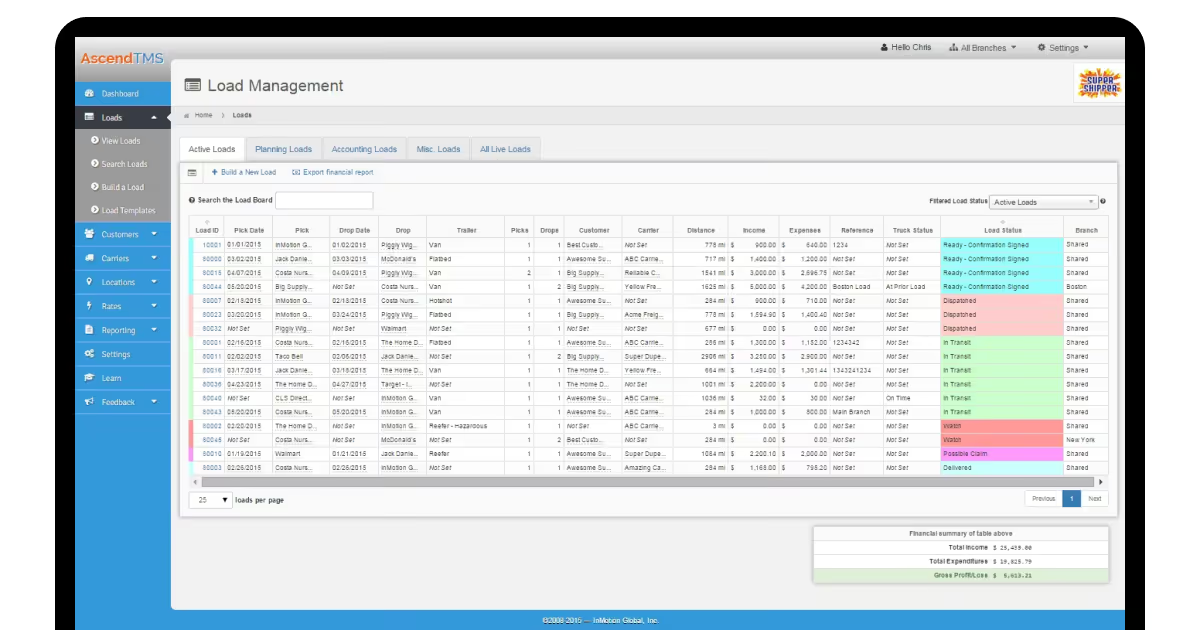
AscendTMS is the only truly free freight forwarding software option on the market. Built for agencies, recruiters, and brokerages of all sizes, it delivers powerful reporting capabilities with exceptional scalability and one of the most intuitive interfaces available.
AscendTMS
Key features:
Robust reporting tools
Load board integrations
Automated workflows
Freight audit capabilities
Carrier management
Customer portals.
The platform handles everything from quote generation to final invoicing.
AscendTMS uses a tiered cloud based model. The Free/Basic tier offers fundamental features at no cost with limited number of users. Premium runs approximately $99 per user per month and includes all standard features plus 33 premium capabilities with 30 day free trials. Pro costs around $149 per user per month, designed for larger multi office operations requiring full functionality and enhanced processing speed.
This solution is the top freight broker software for cost conscious brokers who want enterprise level features without high costs.
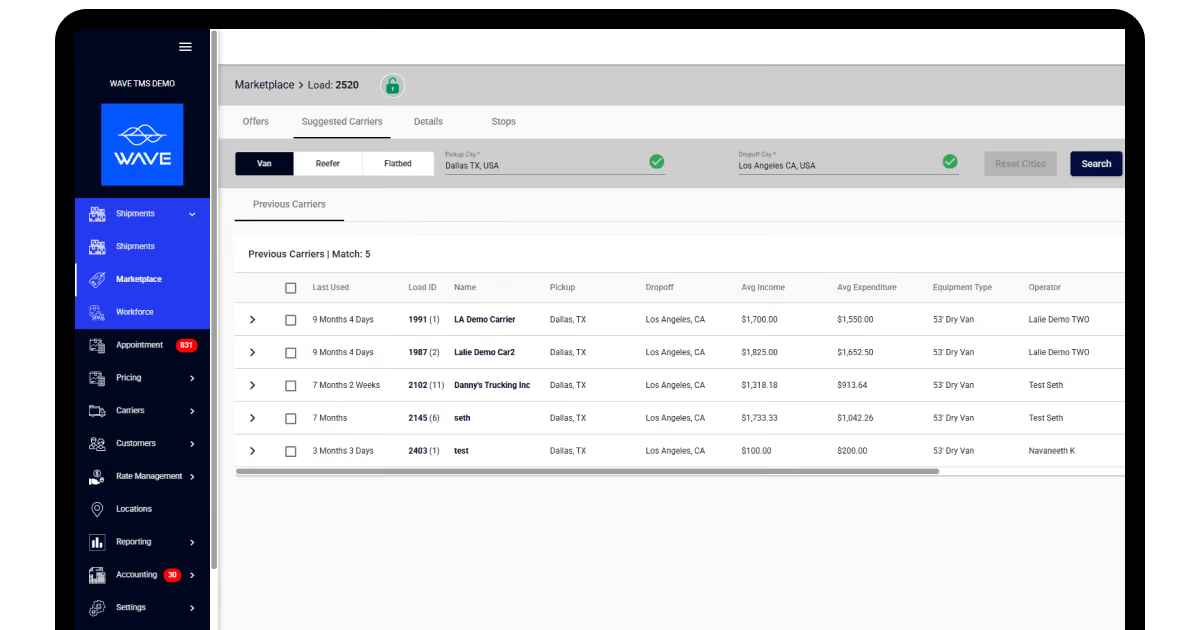
Wave TMS
Wave TMS targets modern brokerages with its cloud native architecture. The platform combines automated load matching and shipment tracking to streamline freight brokering operations for digital first companies.
Key features:
AI powered automation
Real time shipment tracking
Load matching technology
Spot bidding capabilities
Contract management
Lane analysis
Margin optimization tools.
This truck broker software significantly reduces manual data entry.
Wave TMS does not list public pricing but offers advanced pricing tools featuring lane analysis, real time spot bidding, and contract management. Pricing is customized based on brokerage size and needs, with a focus on increasing margins and speeding up quoting processes.
This solution fits modern, digital first brokerages seeking lightweight automated workflows.
Logistically
Logistically provides versatility at an accessible price point. Starting around $330 monthly, this platform handles FTL, LTL, parcel, and drayage workflows, making it one of the more flexible freight broker CRM and TMS software options available.
Key features:
Unlimited users, customers, and shipping locations
3rd party integrations
API access
Business intelligence
Comprehensive reporting
Accounting tools
Multi modal support across various freight types.
Logistically offers a straightforward SaaS pricing starting at $330 to $400 per month flat rate. The subscription includes unlimited users, customers, and shipping locations with no per seat charges. All features included in the base price with no hidden costs.
This option is great for multi-modal brokers handling FTL, LTL, and parcel shipments who want predictable costs.
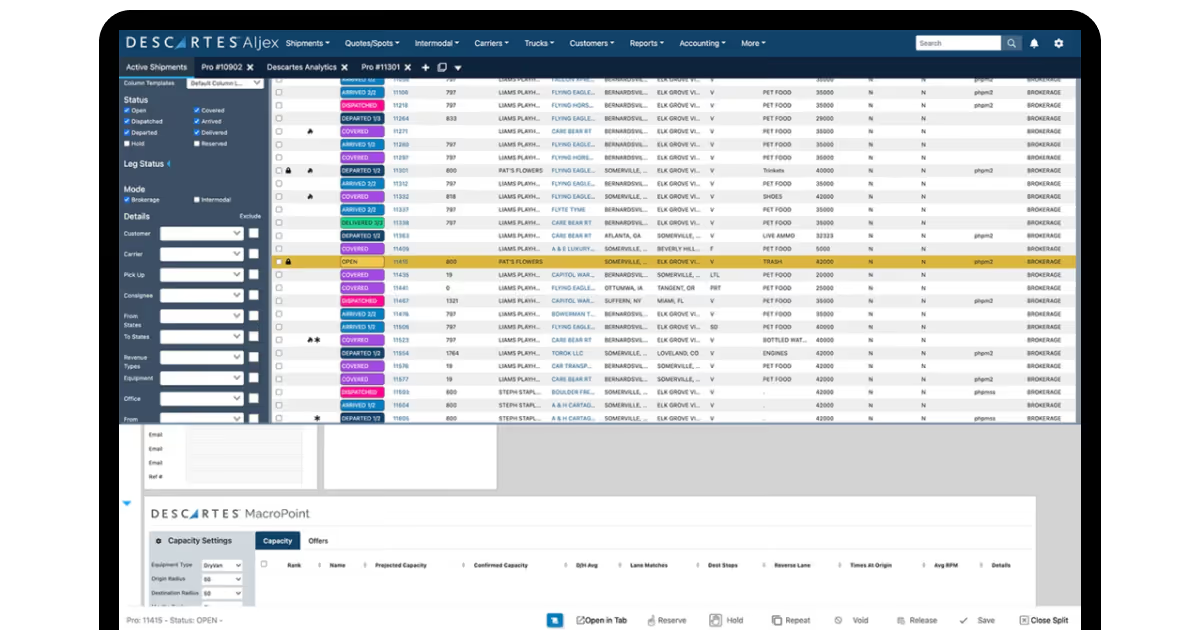
Descartes Aljex
Marketed as TMS "built for freight brokers, by freight brokers," Aljex offers a comprehensive suite backed by Descartes, one of the largest logistics technology platforms. The system scales from small startups to industry leaders.
Key features:
Automated order entry
Carrier management
Lane pricing
Shipment visibility
Unlimited shipment capacity
Carrier portals,
Private load boards
MacroPoint visibility integration
Descartes Analytics
EDI connections.
As to the pricing, there are three tiers available. Essential at $499 per month includes 5 users, unlimited shipments, no setup fees, and one load board integration. Professional at $999 per month includes 15 users, unlimited carrier profiles, 10 hours support, and one EDI connection with a one time implementation fee. Enterprise at $2,375 per month offers unlimited capabilities, 15 hours training, 90 day hypercare monitoring, two EDI connections, and a dedicated customer success manager with implementation fee.
This tool can be the best freight brokerage software for mid to large sized operations needing comprehensive tools built specifically for brokerage workflows.
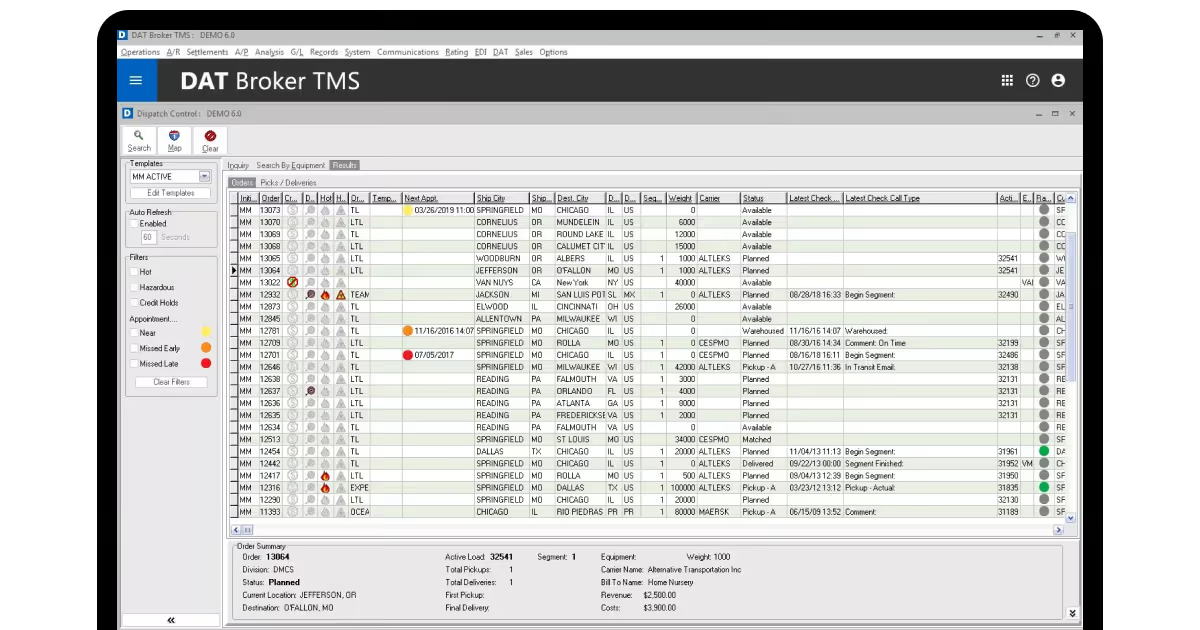
DAT Broker TMS
DAT Broker TMS provides an ultimate blend of speed and control through a unified platform. It handles posting loads, carrier matchmaking, shipment tracking, invoicing, and financial reporting in one integrated system.
Key features:
Direct load board integration
Carrier tracking
Document management
Accounting system connections
Invoice processing
Comprehensive reporting
Seamless integration with DAT's massive carrier network.
The pricing for this truck brokerage software starts at approximately $100 per month for the base "Ops" package. Tiered pricing structure based on brokerage scale and required features with Ops, Anywhere, and Enterprise levels. Specialized add ons like LaneMakers for capacity planning cost an additional $150 monthly. No free trial is typically offered.
This software is best for brokers focused on efficiency and growth who want tight integration with DAT's ecosystem.
DAT One & RateView Analytics
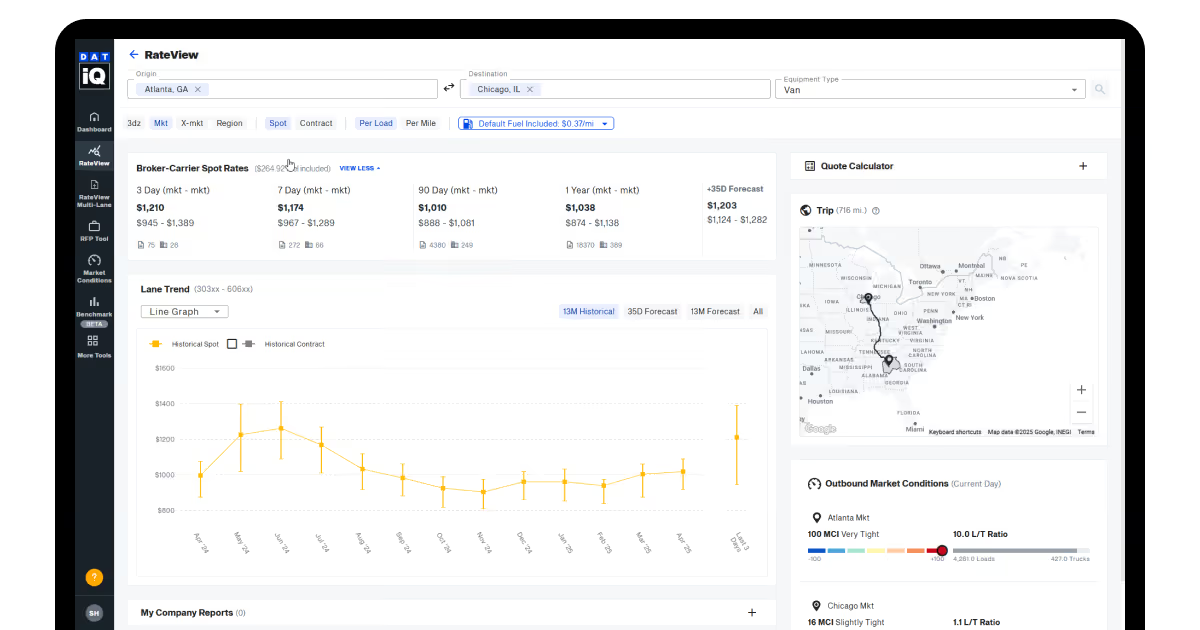
DAT One provides enormous access to posted loads and available carriers combined with market intelligence. RateView Analytics offers near real time visibility into freight rates based on trillions of transactions with predictive forecasting capabilities.
Key features:
Extensive load searching
Market analytics
Route optimization
Broker information access
Spot and contract rate data
15 day average rates
Competitor analysis through LaneMakers
Tools for finding better paying loads.
DAT One’s Standard/Basic pricing plan starts at approximately $45 to $54 per month for essential load searching. DAT One Select runs roughly $169 to $239 monthly offering robust searching and market analytics. DAT One Office/Pro costs approximately $329 per month with advanced features including contract lane rates and comprehensive competitor analysis.
This tool can easily be the most fitting freight broker software for data driven brokers who base pricing and lane selection on market intelligence and forecasting.
Alvys
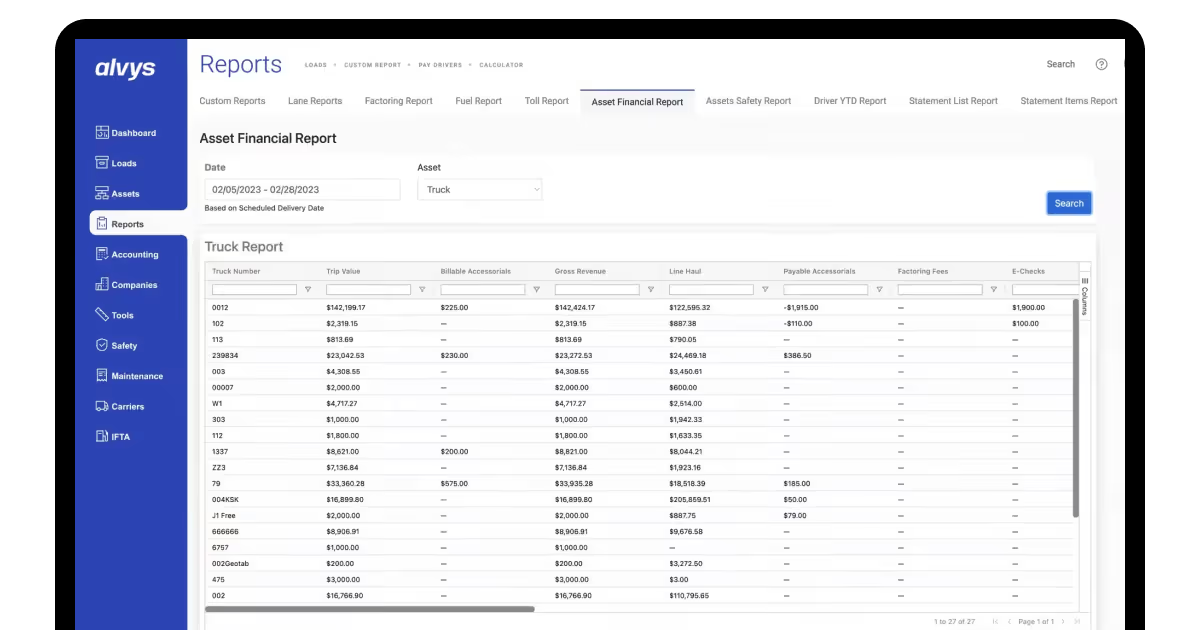
Alvys combines user friendly interface design with competitive pricing. This all in one freight brokering software offers unlimited users and divisions, onboards in days, integrates with over 100 apps, and starts at just $300 monthly.
Key features:
Unlimited users
Unlimited business divisions
Over 120 integrations with no setup fees
Cloud native architecture
Fast implementation
Scalable pricing based on load volume
Comprehensive TMS functionality.
Transparent per load and subscription based model starts around $292 to $514 per month. Costs scale based on monthly load volume, with per load costs decreasing as business grows. Plans include unlimited users and divisions. Monthly or annual billing options available.
This solution is excellent for brokers needing swift setup and scalability with minimal onboarding time.
Rose Rocket
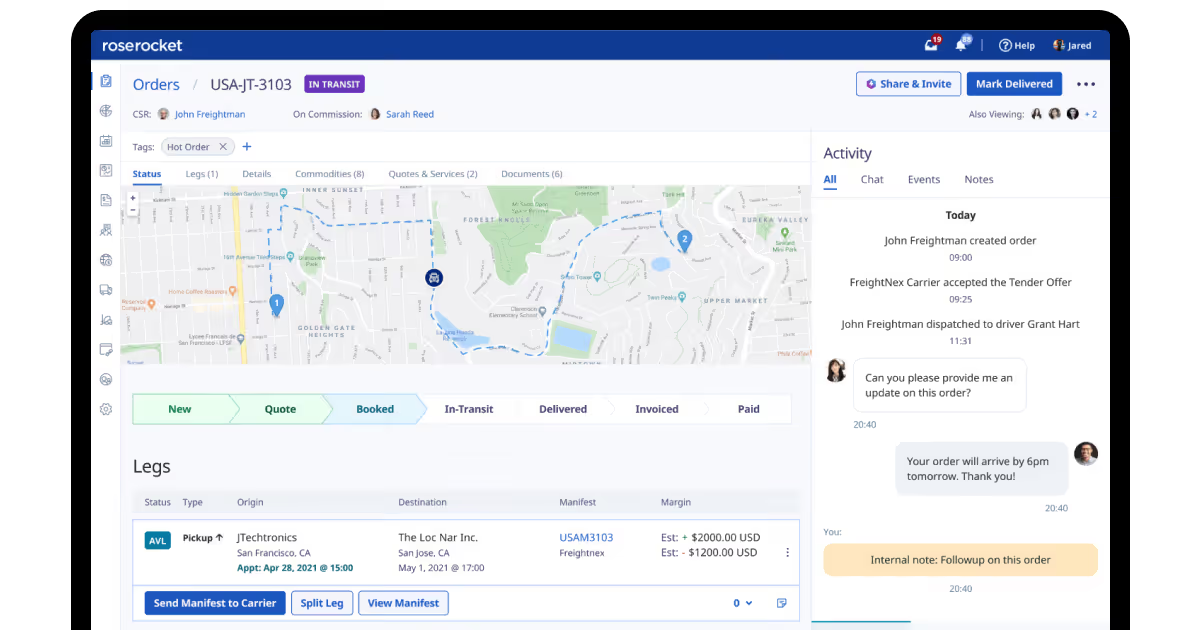
Rose Rocket earns recognition for its beautiful user interface, live tracking boards, automation capabilities, customer portals, and SOC 2 Type 2 security. The platform delivers real time load updates, seamless documentation, and exceptional user experience.
Key features:
Stunning UI design
Live tracking boards
Workflow automation
Customer and carrier portals
SOC 2 Type 2 security certification
Real time load updates
Document management
Intuitive navigation.
This software for brokers offers subscription based SaaS model requiring direct sales engagement. The estimated starting price is approximately $200 to $233 per month for base small business access. Full service enterprise level platforms reported around $2,080 per month.
This tool is best for brokerages prioritizing user experience and security that want a modern interface design.
Quote Factory TMS
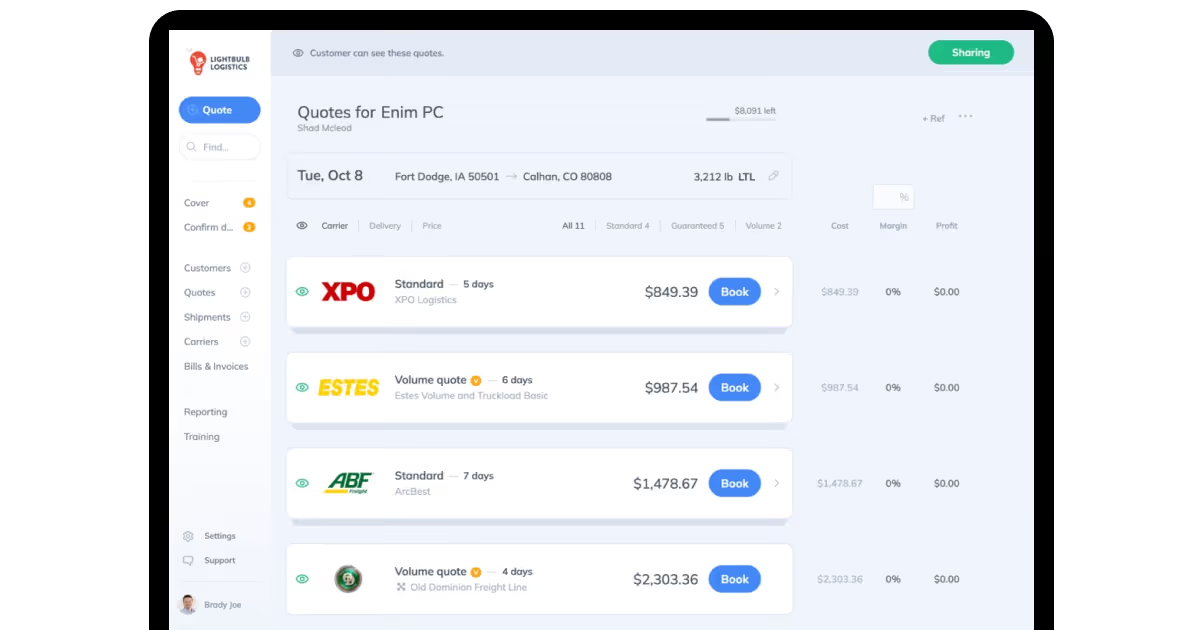
Quote Factory focuses exclusively on freight brokerage needs with a modern interface and powerful tools designed by brokers for brokers. The platform combines pricing, sourcing, movement, and financial close in an intuitive system that new hires master in days rather than months.
Key features:
Instant rate comparisons for confident pricing
Trusted carrier sourcing with built in compliance tools
Real time tracking with proactive alerts
Automated invoicing with QuickBooks integration
Customer portal for self service booking and tracking
Load board posting
Over 100 LTL carrier integrations for fast quotes
Unlimited user access across all tiers.
This transportation brokerage software provides three shipment volume tiers with transparent all inclusive pricing. Build plan costs $499 monthly for up to 150 shipments per month. Grow plan runs $999 monthly for 151 to 300 shipments per month. Scale plan offers custom enterprise pricing for over 300 shipments monthly. All plans include unlimited users, no contracts, no hidden fees, and no implementation costs.
Quote Factory is a good choice for growing brokerages that need an intuitive software that eliminates busywork and gets new team members productive quickly.
EKA Omni TMS
EKA Omni delivers a headless, AI native platform built for speed, intelligence, and accuracy. The modular, API first architecture adapts to your workflow rather than forcing you to adapt to the software. This freight broker software emphasizes going live in two to eight weeks with embedded AI agents handling dispatch, matching, documentation, and pricing.
Key features:
AI driven freight assignment automated by lane to optimize carrier capacity
FreightWaves SONAR market data integration
Workflow activity monitoring system
Embedded AI agents reducing manual lift
Role specific experiences for trucking companies, brokers, and shippers
SOC 2 compliant security
API integrations with Samsara, Denim, QuickBooks, RMIS, Trimble Maps, and major shippers via EDI
White glove onboarding
Custom feature development.
This solution offers a pay as you go transaction model for market data access. Custom pricing based on operation size and required features. Platform promises to pay for itself through reduced admin workload up to 50% and highly flexible workflows from order to cash.
EKA will fit freight companies seeking AI powered automation, rapid implementation, and strategic partnership with a technology provider focused on innovation.
How to choose the right freight broker software
Selecting the right software for freight brokers requires evaluating your current operations, growth plans, and specific business needs. The wrong choice wastes money and disrupts workflows. Meanwhile, the right platform accelerates growth and improves profitability.
Assess your operation size and budget. Your brokerage size directly impacts which platforms make sense. Small operations with limited budgets should consider options like AscendTMS with its free tier and scalable paid plans. Mid sized brokerages handling moderate shipment volumes might find better value in volume based pricing models like Quote Factory, where costs align directly with business activity. Large operations with multiple offices need enterprise solutions like Descartes Aljex Enterprise or Rose Rocket that provide unlimited capabilities, dedicated support, and advanced security.
Match features to your workflow. Different brokerages prioritize different capabilities. Load board integration ranks as the top priority for most brokers. If you rely heavily on DAT or Truckstop, platforms with native integrations eliminate duplicate data entry. Speed of implementation matters when you need to get running quickly. Alvys and Wave TMS emphasize fast deployment for immediate productivity gains.
Automation capabilities reduce manual work dramatically.Research by Kumar shows that AI enhanced brokerage software improve response rates from 10% to 20% and booking rates from 15% to 25%. User experience affects team adoption. Rose Rocket earns recognition for its beautiful interface and intuitive navigation. When your team enjoys using the software, they use it more effectively.
Consider integration and support needs. Your existing technology stack determines compatibility requirements. Accounting system integration streamlines financial workflows, with many platforms offering QuickBooks connections. EDI capabilities automate data exchange with larger shippers and carriers, becoming non negotiable for brokers working with enterprise clients.
Implementation assistance varies dramatically across platforms. Quality support and training availability impact rollout success. Test platforms thoroughly with real world scenarios before committing. Involve your team in evaluation since they'll use the software daily.
These important things to consider are just the first steps. To implement a freight broker system successfully, you also need to build an intelligent implementation plan. Let’s try creating one based on our experience so you can copy this approach.
Implementation tips and costs
Implementing transport broker software requires planning and coordination to avoid disruption. Follow these steps to ensure smooth adoption.
Assess your data quality before migration. Clean up customer records, carrier profiles, and historical shipment data. Remove duplicates, fix incomplete entries, and standardize formats. Poor data quality creates problems immediately after go live. Some platforms like MVMNT complete data migration in under a week, but only when source data is organized properly.
Define workflows and customization needs early. Document how your team currently handles quotes, carrier sourcing, tracking, and invoicing. Identify which processes need customization versus standard features. EKA emphasizes this step with white glove onboarding and custom feature additions, recognizing that one size fits all approaches fail in freight brokerage.
Plan integration touchpoints systematically. List every system that needs to connect with your new truck broker software including accounting software, load boards, tracking platforms, and communication tools. Verify integration availability and test connections during implementation.
Schedule comprehensive team training. Block time for hands on practice before going live. Quote Factory customers report new hires becoming productive in days when training is thorough. Rose Rocket and other platforms with complex interfaces require more extensive training periods. Don't rush this step to meet arbitrary deadlines.
Run parallel operations temporarily. Keep your old system running while testing the new platform with real loads. This safety net catches issues before they impact customers. Descartes Aljex Professional includes 30 day hypercare go live monitoring, while Enterprise offers 90 day monitoring to support this transition period.
Monitor adoption metrics post launch. Track how quickly team members complete tasks, error rates, and feature utilization. Low adoption indicates training gaps or workflow mismatches. Address problems immediately rather than letting frustration build.
There’s one important thing to consider and plan ahead - the cost of implementing your transportation management software for brokers.
Cost breakdown and budgeting
Software subscription fees represent just one component of total implementation costs. Budget for these additional expenses. The following nuances quickly add up to freight broker software cost.
Implementation and setup fees vary dramatically. Many modern platforms like AscendTMS, Logistically, Quote Factory, and Alvys charge no setup fees. Others require significant upfront investment. Descartes Aljex Professional and Enterprise tiers include one time implementation fees on top of monthly subscriptions. Rose Rocket implementation costs depend on customization complexity.
Data migration expenses depend on source system complexity and data volume. Simple migrations from spreadsheets cost less than extracting data from legacy TMS platforms. Budget additional time if historical data requires cleaning or reformatting.
Training costs include both platform provided training and lost productivity during learning curves. Platforms offering faster onboarding like Wave TMS and Alvys reduce these costs. More complex enterprise freight brokerage software require longer training periods and potentially external consultants.
Integration development adds costs when connecting proprietary systems or uncommon platforms. Standard integrations with QuickBooks, DAT, and major load boards typically include no extra fees. Custom API development for unique systems requires developer time and testing.
Change management resources help teams adapt to new workflows. Larger organizations benefit from dedicated project managers guiding implementation. Smaller brokerages can manage this internally but should allocate staff time accordingly.
Total implementation costs for small brokerages using platforms like AscendTMS or Logistically might run minimal beyond subscription fees.
Plan for three to six months before realizing the full ROI of your freight brokering software. Early efficiency gains from automation and better carrier matching offset costs gradually.
Custom development costs apply when off the shelf features don't match your specific workflow requirements. This approach requires budget for developer time, testing cycles, and ongoing maintenance. Custom modules for specialized reporting, proprietary pricing algorithms, or industry specific compliance tracking can range from moderate expenses for simple features to substantial investment for complex integrations. However, the advantage of tailored freight broker software development is complete alignment with business processes.
Hybrid implementation approaches combine multiple platforms to use strengths while controlling costs. Some brokerages use a basic TMS for core operations while subscribing separately to DAT One for market intelligence and carrier sourcing, or adding specialized custom-built tools for tracking or AI analytics. Successful implementations often evolve through MVP solutions that grow into comprehensive platforms over time.
COAX custom transportation software development services deliver fully tailored solutions when market platforms can't meet your specific requirements. Starting from scratch, we build freight broker systems designed around your exact workflows, customer relationships, and competitive advantages. The development process covers complete product design, backend architecture, user interface creation, and feature implementation based on your business model.
Whether you need specialized pricing engines, unique carrier scoring algorithms, custom reporting dashboards, or proprietary load plan optimization tools, COAX engineers solutions that give you capabilities competitors can't replicate.
COAX experts also handle modernization and enhancement of existing freight broker software through redesign, redevelopment, and feature expansion services. If your current TMS feels outdated or lacks critical functionality, COAX can rebuild the interface for better user experience, refactor backend systems for improved performance, and add modern capabilities like AI powered carrier selection, predictive analytics for rate forecasting, or automated document processing.
FAQ
What are the challenges of implementing transportation broker software?
Issues include:
Data migration complexity while maintaining data integrity and relationships.
Connecting with multiple external systems
Balancing standardized features with broker specific processes
Managing data flows from telematics systems, carrier updates, and shipment tracking
Getting staff proficient with new systems while maintaining operational continuity.
Demonstrating ROI quickly enough to satisfy stakeholders
Meeting SOC 2, data encryption, and access control requirements
Ensuring the system handles growing load volumes and expanding carrier networks
Vendor lock in concerns and ensuring data portability when switching providers.
Can I just use a CRM for freight brokers, or do I need an end-to-end solution with all modules included?
CRMs handle customer relationships but lack freight-specific functionality. You need load posting, carrier sourcing, rate calculation, tracking integration, compliance monitoring, and automated invoicing. According to Muckell, generic CRMs can't match loads to carriers, calculate mileage-based pricing, or generate bills of lading. End-to-end TMS platforms include integrated CRM modules plus essential freight tools, eliminating manual data transfer between disconnected systems.
What are the security requirements for developing software for freight brokers?
Freight broker software must implement:
SOC 2 Type 2 compliance for security controls
Data encryption both in transit and at rest
Role-based access controls limiting user permissions
Secure API authentication for integrations
Audit logging of all system activities
Regular security testing and penetration assessments
Backup and disaster recovery protocols
GDPR compliance for customer data protection where applicable.
How does COAX create secure and efficient freight broker software?
COAX holds ISO/IEC 27001:2022 certification for comprehensive security management, risk assessment, and monitoring. Our ISO 9001 certification ensures optimal quality processes. We implement encryption protocols, role-based access, secure API gateways, automated testing in CI/CD pipelines, regular penetration testing, and infrastructure monitoring. Our development follows secure coding standards with code reviews focused on vulnerability prevention.





















































































































_.avif)













%2520explained.avif)

We are interested in your opinion