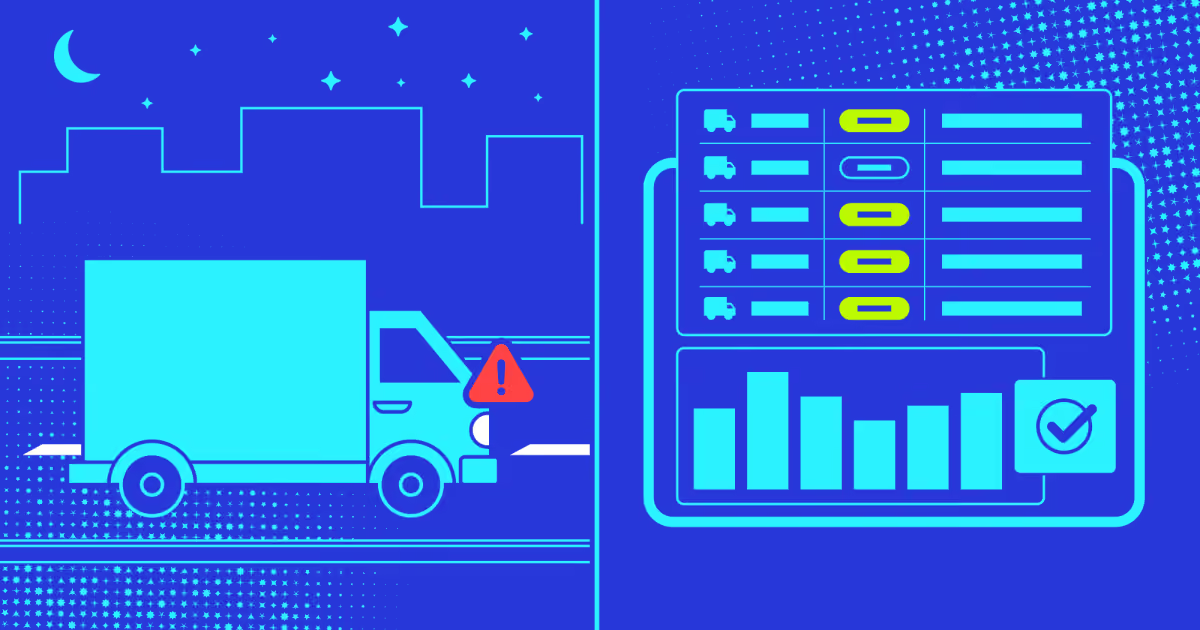
6:42 a.m. A dispatcher stares at three screens at once. One shows a stalled truck. One shows a customer complaint. One shows nothing, because the GPS feed dropped nine minutes ago. Her tea's gone cold. The phone rings again before she answers the last call.
That scene isn't rare. We've watched it play out at our clients more times than we can count. Drivers miss transfer windows. Dispatchers guess instead of deciding. Customers call in before anyone flags the delay internally.
We've spent over 15 years digitizing transportation at COAX Software. One fleet client of ours saw late deliveries drop from 18% to 7%. We rebuilt their routing logic to get there.
Across booking platforms and logistics dashboards, we see one failure repeat. Transport planning software that can't handle messy, real-world data. Clean demo datasets hide this. Live GPS feeds, three telematics vendors, and mismatched timestamps expose it fast.
This guide ranks the top platforms available today. We explain our evaluation method and rating criteria. We also cover how to choose the right fit and share insider implementation tips. Lock in to start planning like never before.
How we selected and ranked the top transport planning software
We tested each platform against real deployment friction, not spec sheets. Our criteria came from our own transportation projects, not vendor demos.
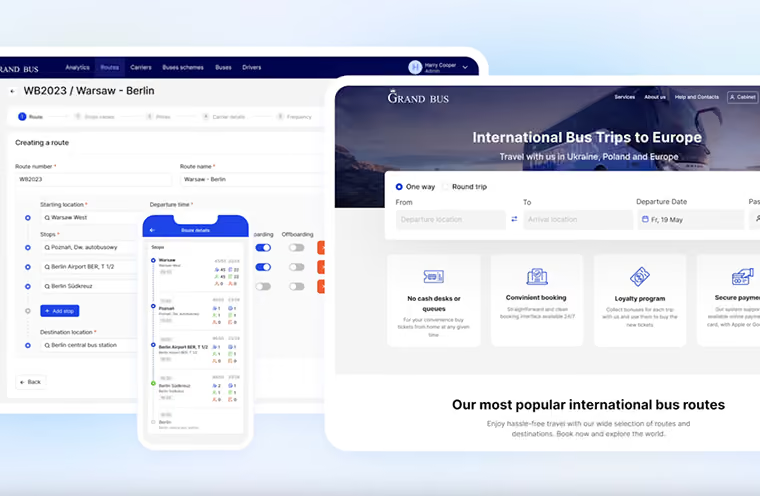
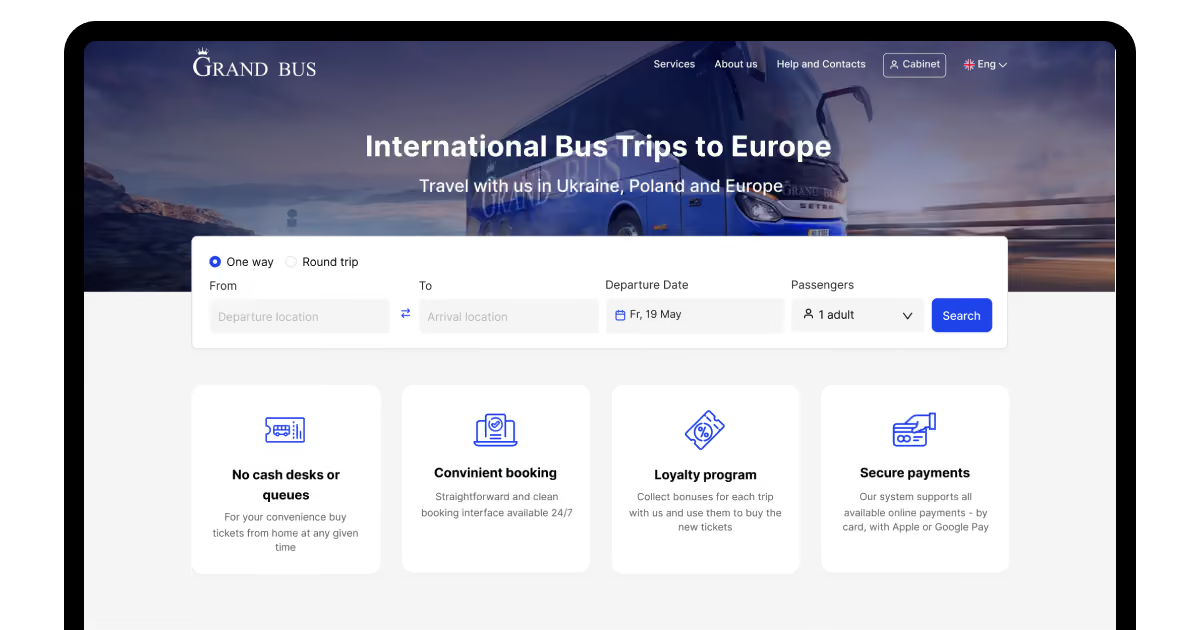
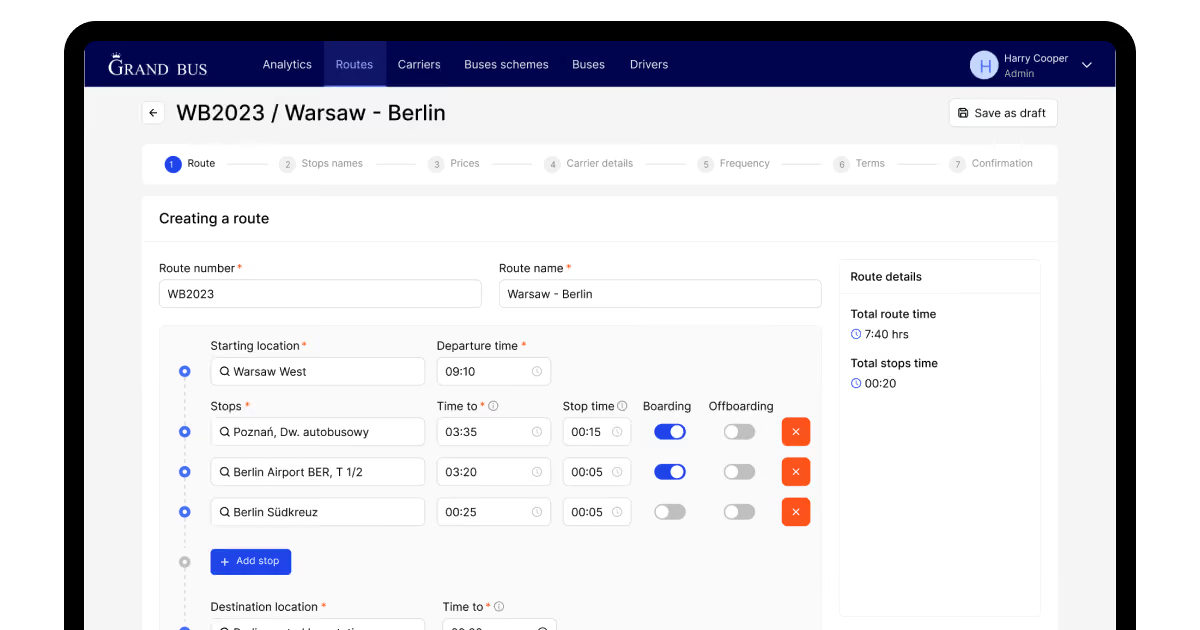
One routing engine looked flawless in the vendor demo. It missed transfer connections on multi-leg bus routes. That gap showed up while we built GrandBus's booking platform.
Passengers there routinely change buses mid-journey, and a missed transfer means a missed refund request an hour later. Now we test every transport planner software candidate against real transfer data, not a clean sample route.
We check the tool's estimated time of arrival accuracy first. Does it hold up when traffic shifts fast? A prediction engine we built for a 500-vehicle fleet hit 89% accuracy within fifteen minutes. That took 60 days of tuning against live GPS feeds, not a single training pass. That's the bar we hold every candidate to.
We also watch what happens after the prediction, not just the prediction itself. A tool can forecast a delay perfectly and still fail the dispatcher. If nothing actionable follows the alert, the accuracy number means little on a real shift.
The best transport planning solution proves itself under real load, not slides. Good transportation planning and technology earns trust from dispatchers who'd otherwise override it.
"We don't trust a platform until it survives our own client's worst data day," says Orest Falchuk, Head of Engineering at COAX Software.
From there, we built out five specific tests every platform had to pass:
Data resilience: does it ingest mismatched formats from multiple GPS or telematics vendors without a custom parser?
Transfer accuracy: does it correctly track multi-leg or multi-stop routes, not just point-to-point trips?
ETA reliability under load: does prediction accuracy hold when traffic or volume spikes overnight?
Dispatcher override rate: how often did our test dispatchers trust the system's recommendation versus manually correcting it?
Integration cost: how many weeks of custom middleware does it need to talk to an existing TMS or ERP?
Every platform on this list passed those five tests to some degree. The rankings below reflect how well, not just whether.
10 best transport planning software picks
Each platform handles a different piece of transport planning software: routing, fleet visibility, carrier orchestration, or full supply-chain planning. Below, we break down what each does well, what it integrates with, and where it falls short.
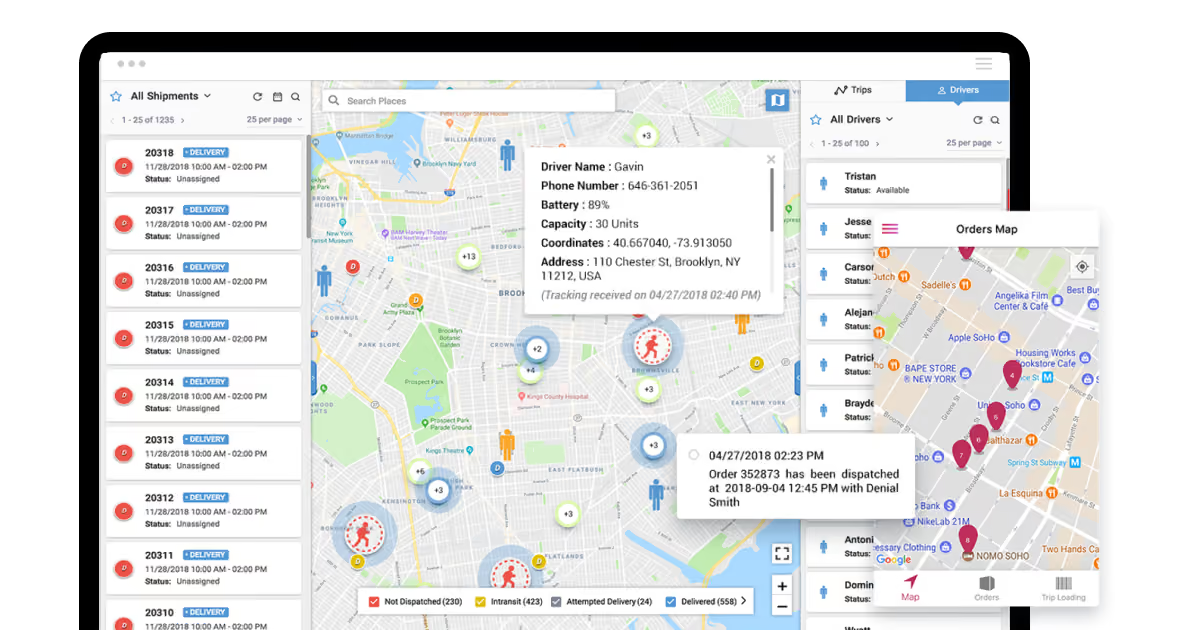
Locus runs the full delivery lifecycle in one workflow. Dispatch, hub sorting, driver execution, and settlement sit in one system. It connects to most major TMS, WMS, and ERP platforms through pre-built connectors. Route constraints cover vehicle capacity, time windows, and driver shift rules.
We tested its constraint-aware engine against 180+ routing variables. It handled mixed-fleet scenarios similar to our DriveIQ build. Documented cost cuts of 15% to 30% held up under review.
It wants clean address data before go-live, though. Smaller operations under 50 daily deliveries will feel over-equipped. Best for enterprise last-mile operations running 500+ daily stops.
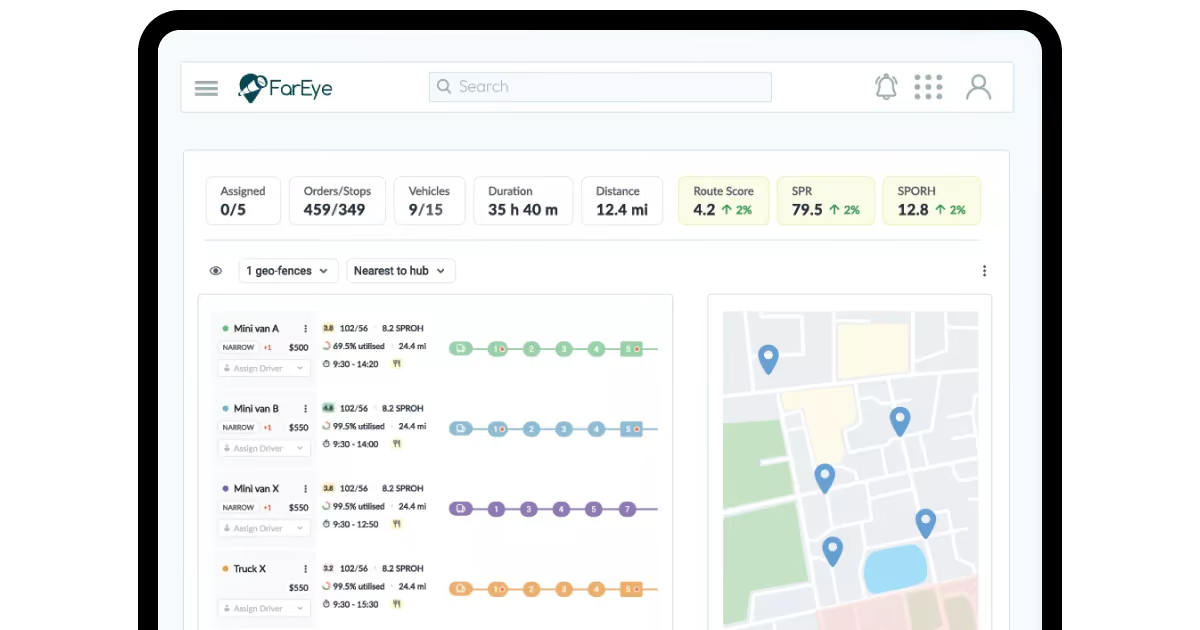
FarEye solves carrier chaos rather than route math. It connects to 150+ carriers and standardizes tracking data into one branded customer view. The platform includes a no-code workflow builder for exception rules and SLA alerts. API and webhook support cover most e-commerce and retail order systems.
We found its no-code rules engine strong for exceptions. Route optimization stays shallow compared to dedicated transport planner software.
Pick FarEye if your gap is carrier visibility, not owned-fleet dispatch. It's one of the more accessible transportation planning companies for retail-heavy operations.
LogiNext Mile fits repeatable, high-frequency routes well. Think CPG replenishment or fixed courier zones. It supports fixed-window scheduling, proof-of-delivery capture, and driver mobile apps out of the box. Integration covers common ERP and e-commerce platforms through REST APIs.
Implementation moved fast during our testing, and pricing starts near $49 per resource monthly.
Constant mid-shift changes expose its limits fast. If your operation resembles a structured trip pattern, similar to fixed bus routes like our GrandBus client has, this planning software transport option fits. However, unpredictable dispatch conditions push it past its comfort zone.
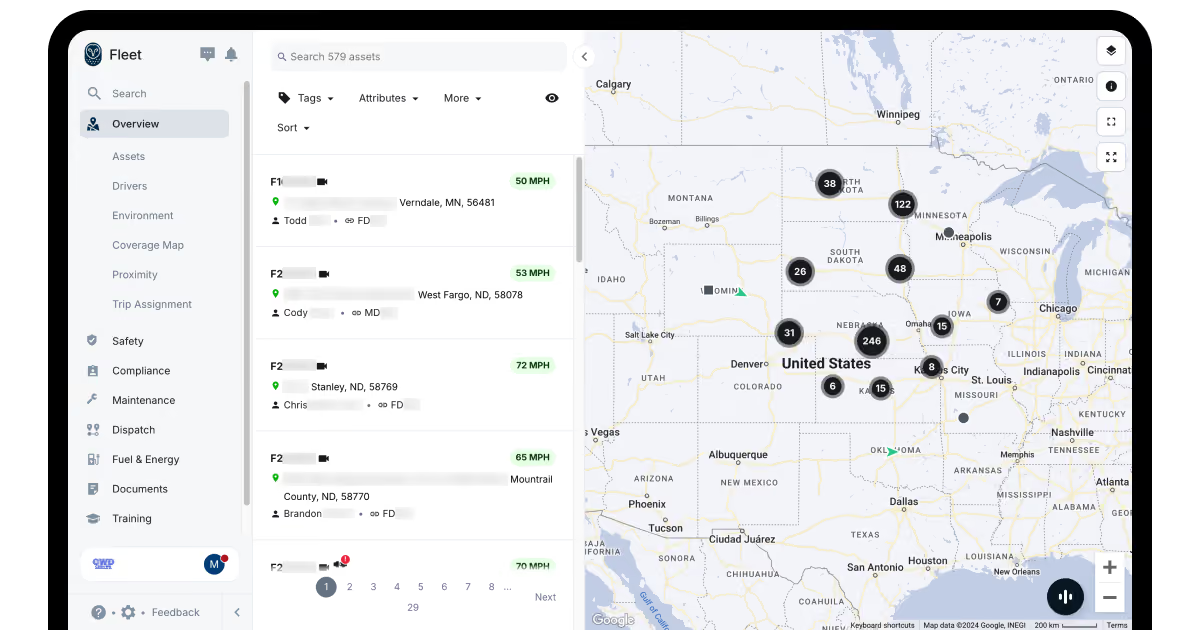
Samsara leans fleet telematics over pure routing or transportation planning. Its hardware includes AI dashcams, GPS trackers, and engine diagnostics sensors. The platform bundles driver coaching, maintenance alerts, and compliance reporting into a single dashboard. Its open API supports custom integrations without a middleware layer.
Its AI dashcams flagged distracted driving accurately across every trial. The open API connected to a test TMS without extra middleware. Predictive maintenance alerts fired days ahead of simulated failures.
Pricing runs high for smaller fleets, though. Best for mixed fleets wanting diagnostics tied to dispatch.
BlueYonder isn't a narrow routing tool. It's a full transport planning and management suite tied to demand planning. Modules cover supply chain planning, warehouse management, and multimodal transportation execution together. It integrates with SAP, Oracle, and most major ERP systems natively.
That's the draw for enterprises consolidating vendors under one system.
Expect long implementation and heavy integrator involvement. Total cost of ownership might punish teams who only wanted routing. Best for global freight operations running multimodal networks.
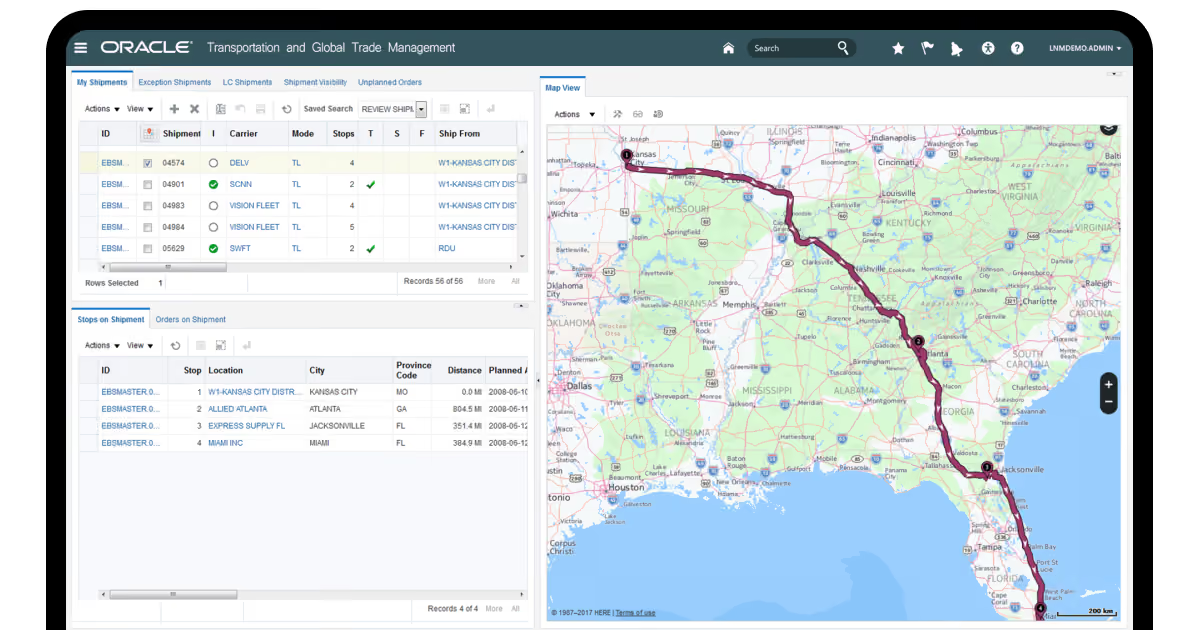
Oracle OTM earns its place in cross-border freight. It covers customs documentation, multimodal planning, and freight audit. The platform handles contract-based rate management and carrier tendering across dozens of carriers. Native Oracle ERP and Oracle Transportation Intelligence integration comes standard.
Native Oracle ERP integration makes it extremely easy for existing Oracle shops to implement this transport planner software.
Outside that context, it feels oversized fast. For domestic last-mile work, it's a mismatch. Best for compliance-heavy, cross-border freight operations.
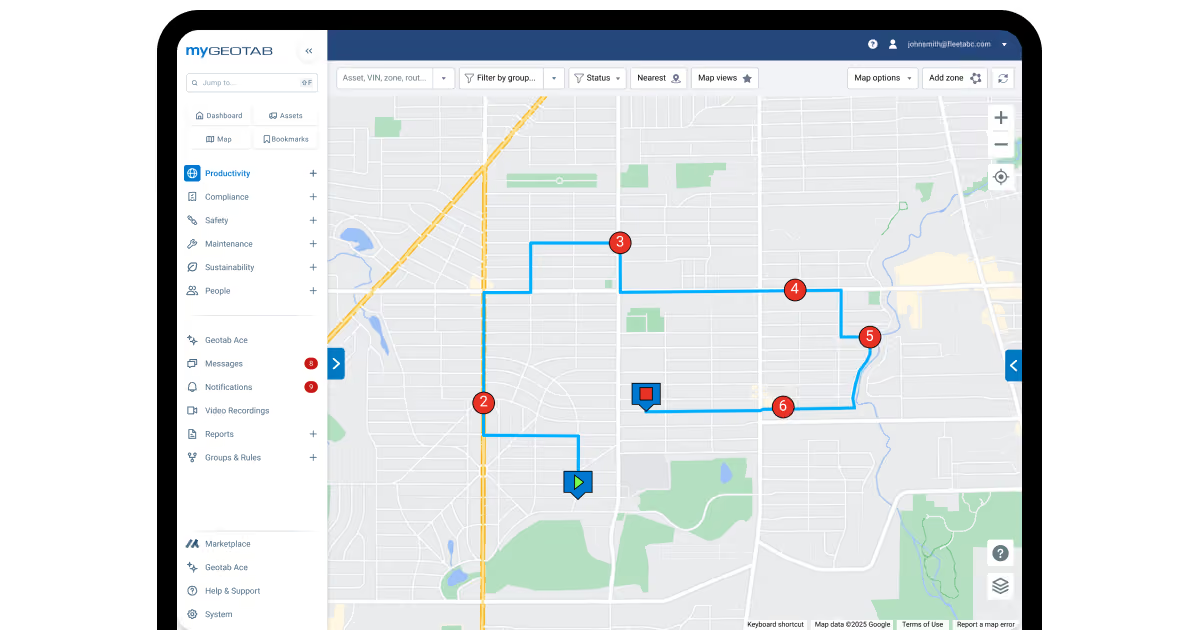
Geotab won our integration stress test outright. Its open API and add-in marketplace let us build custom reports. The marketplace includes hundreds of third-party add-ins for fuel, safety, and compliance tracking. Fleet data covers engine diagnostics, fuel use, and driver behavior scoring.
No vendor support ticket was needed during testing.
Driver coaching felt secondary here, more of an afterthought. Teams chasing data depth will get more value than teams chasing driver adoption. Best for data-heavy fleet analytics workflows.
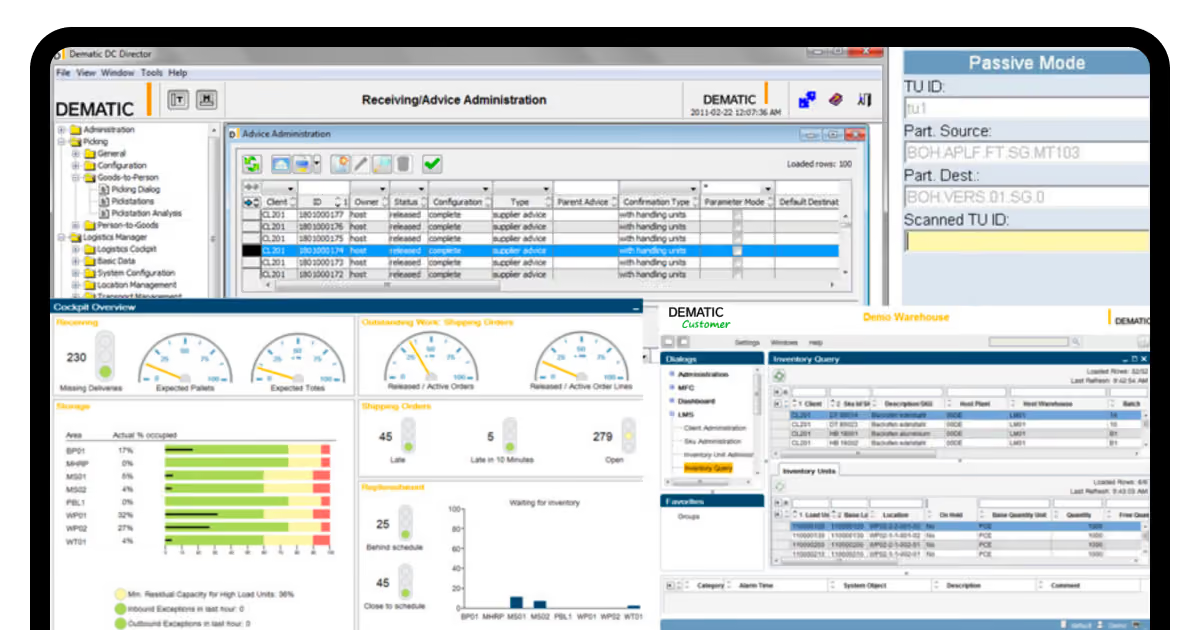
Dematic anchors the warehouse side of transport planning software, not the road side. Pallet and mini-load AS/RS, multishuttle systems, and AGVs all route through Dematic iQ. The platform includes simulation tools for testing warehouse layouts before construction. Integration typically runs through custom middleware built for each site.
It's built for large, complex greenfield projects. Expect a multi-year engagement, not a quarterly rollout. Best for large-scale warehouse automation, not fleet routing.
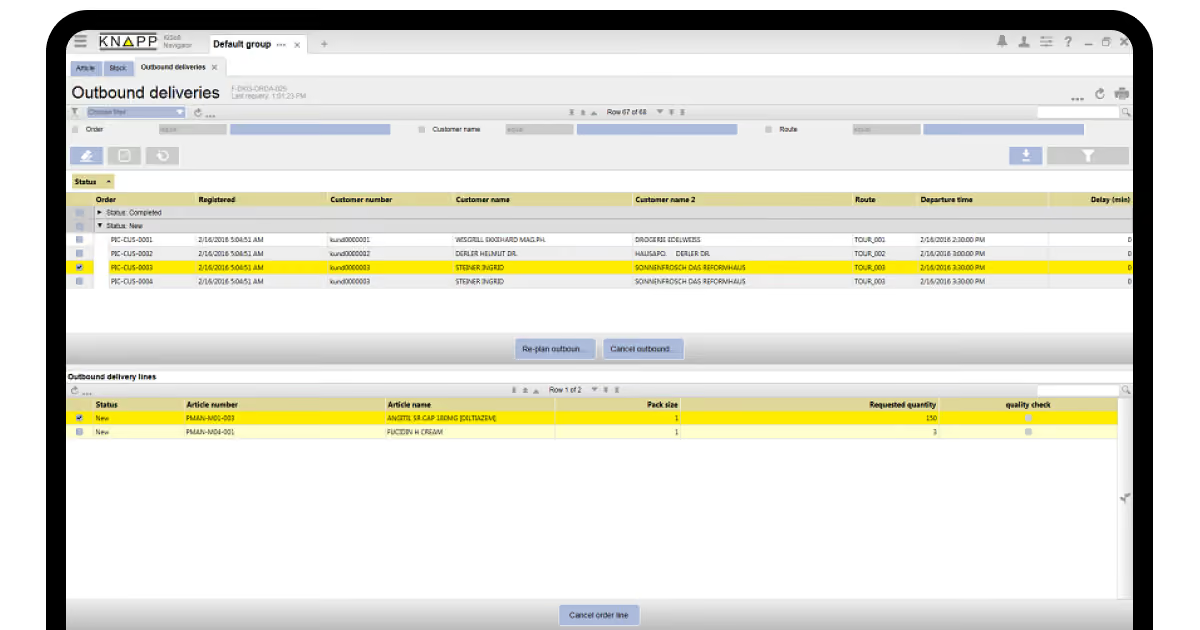
KNAPP stood out for goods-to-person workflows in pharma and retail. Shuttle-based systems and intelligent pick-stations run through its KiSoft platform. The suite includes inventory management, order sequencing, and pick-path optimization modules. Ergonomics and uptime read as first-class design concerns.
It's a strong fit where compliance outweighs raw speed. Fast, cheap deployment isn't the pitch here. Best for regulated distribution centers with strict uptime needs.
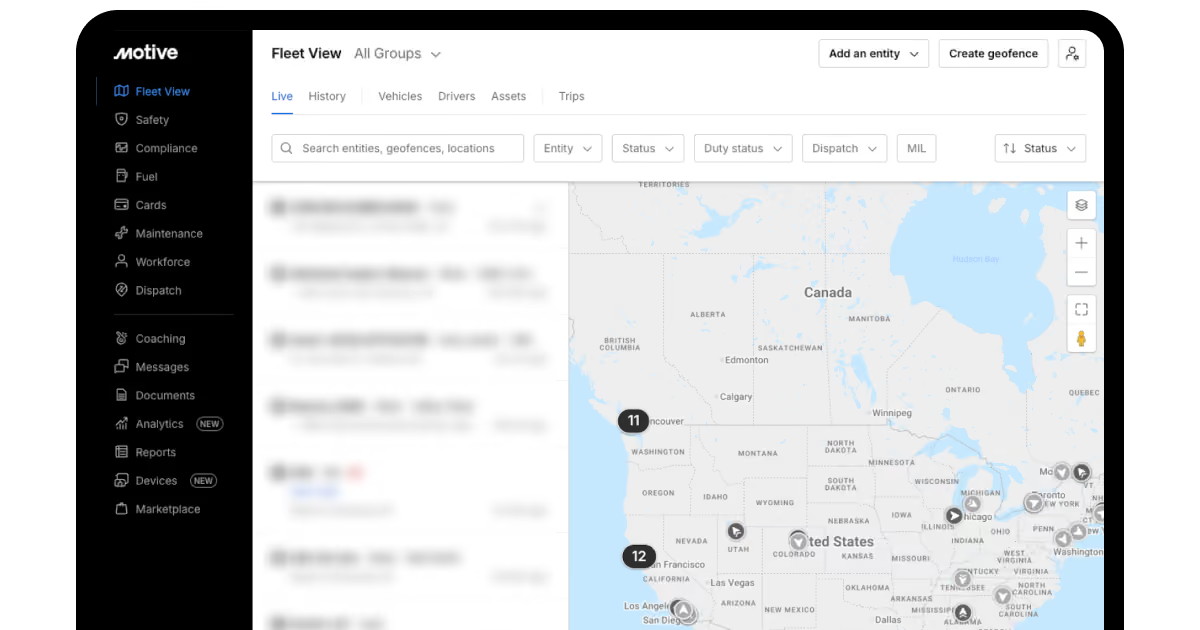
Motive impressed us on rollout speed alone. We had live tracking running within a single afternoon. The platform bundles ELD compliance, GPS tracking, and basic maintenance reminders in one app. Integration options stay lighter than Samsara's or Geotab's marketplace.
Coaching alerts felt less intrusive than Samsara's during testing.
Route planning depth stays thin, though, compared to enterprise-grade tools. It's the strongest pick for fleets under 500 vehicles. Best for fast rollout without a multi-week implementation.
No single platform wins across every criterion. The right transport planning software depends on your fleet size and daily failure points.
How to choose the right transport planning software?
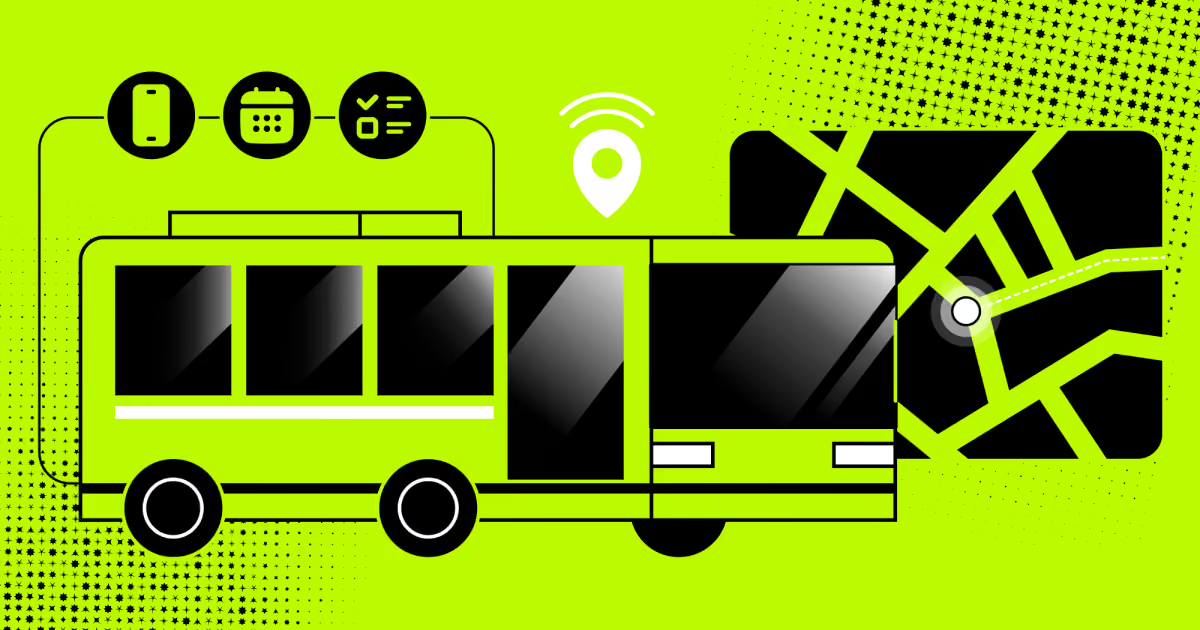
We mentioned our bus transit client business, GrandBus, before. Picture us sitting down with them again, this time to evaluate off-the-shelf tools instead of building from scratch. Their challenge hadn't changed: messy schedules, manual driver coordination, and zero real-time visibility. So we walked through the same steps we'd recommend to you.
Step 1: define your operational needs.
Not every transport planning problem looks the same. We'd start by mapping GrandBus's actual freight and passenger mix, not a generic template. Do you move small parcels, full loads, or, like GrandBus, passengers and baggage together? Do you need simple point-to-point routing, or multi-stop constraints with time windows? Do you own your fleet, or lean on subcontractors as GrandBus did?
For GrandBus, the answer was mixed. They owned some buses and leased others through subcontractors. That single detail ruled out half the vendors on the market immediately.
Step 2: key features to evaluate.
Next, we'd walk through the core feature set. Any solid transportation planning software needs strong routing algorithms, real-time GPS visibility, and clean third-party integrations. For GrandBus, that meant matching driver schedules against ticket sales in real time.
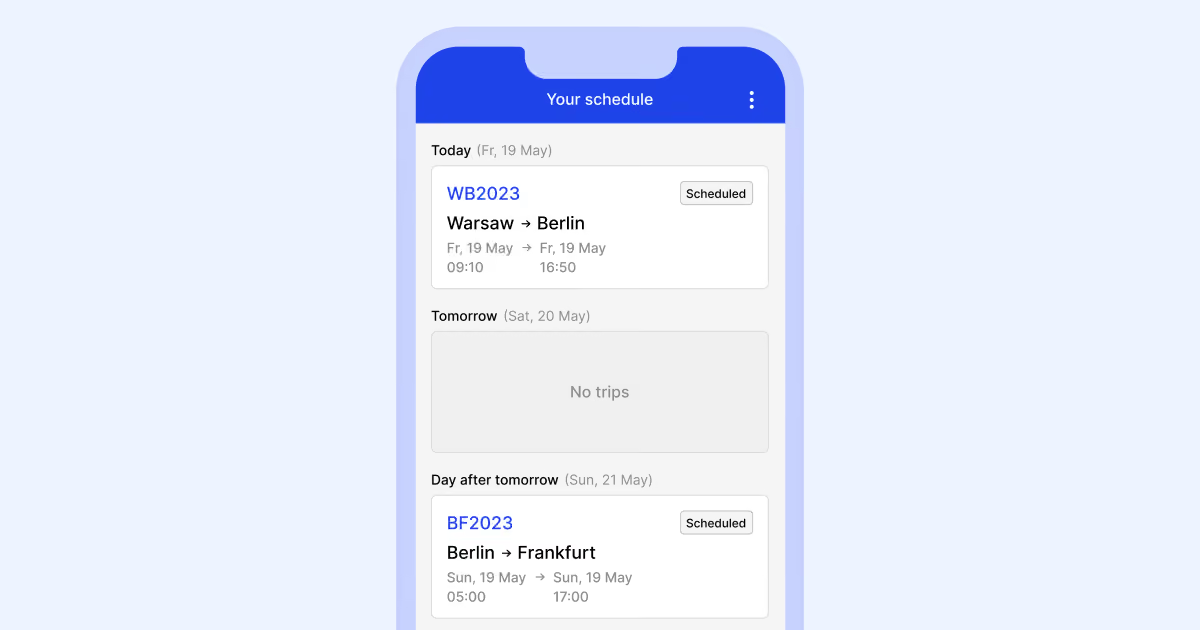
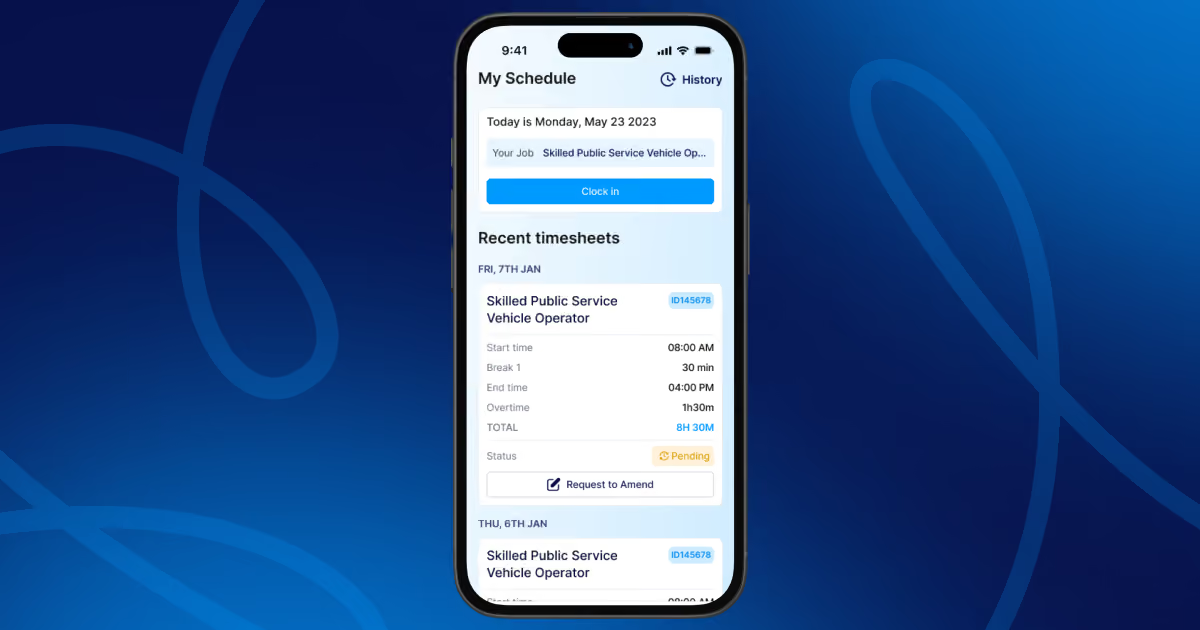
We'd also push hard on driver management software capability specifically. GrandBus's drivers needed check-in tools, live location sharing, and simple ticket validation. Most off-the-shelf platforms handle one of those well. Few handle all three.
Step 3: assess total cost of ownership.
A cheap license means little if support disappears after onboarding. We'd ask about pricing per seat, per vehicle, or per driver. We'd also flag implementation timelines honestly with the client. Enterprise suites can take months to configure properly. Smaller SaaS tools sometimes launch in weeks, with real tradeoffs.
For a client like GrandBus, our transport planning consultancy would weigh all three steps together. We'd likely recommend a mid-tier tool for ticket sales. We'd pair it with a lighter app for driver check-ins.
And still, off-the-shelf tools didn't cover it all. GrandBus needed premium seat selection, loyalty points, and subcontractor oversight in one place. No single vendor offered all three without heavy customization. That gap is where transportation strategy planning conversations usually shift toward building custom.
When is it better to choose custom transport planner software?
So we consulted and found that custom would do better for GrandBus. Off-the-shelf tools solved 70% of the problem. The remaining 30% touched their core business model directly.
"The moment a client's workflow becomes their competitive edge, that's when custom pays off," says Orest Falchuk, Head of Engineering at COAX Software.
When your workflow is the differentiator. GrandBus's premium tier, loyalty points, and subcontractor management weren't side features. They were the product. No transport planner software on the market modeled loyalty points the way GrandBus needed. Building custom let us tie loyalty logic directly to route pricing.
When integration needs run deep. GrandBus needed one system connecting ticket sales, driver check-ins, and real-time bus tracking. Off-the-shelf tools handled each piece separately, never all three together. A custom transport planning app removed the gaps between disconnected systems entirely.
When scale outpaces the vendor's roadmap. GrandBus planned international expansion across multiple countries fast. Vendor roadmaps move on their own timeline, not yours. Custom software development for transportation lets you build exactly what next year's scale demands.
At COAX Software, we build both the web platform and mobile apps together. Take DriveIQ, our driver management build for a 500-vehicle logistics fleet. Instead of piling on generic notifications, we designed in-cab coaching alerts that drivers actually bothered to open. Getting that right took real user testing in the field, not a checked box on a product feature list.
Our engineers adapt every single build to match your specific operational strategy, not some idealized industry standard. We test the software with your actual drivers and dispatchers, the people who will live in it every day. And we take full, end-to-end responsibility for the results.
We have already covered the practical mechanics of choosing a system. You now know the rankings, the criteria, and the custom versus off-the-shelf debate. Now, let's step back and look at the basics.
What is transport planning software?
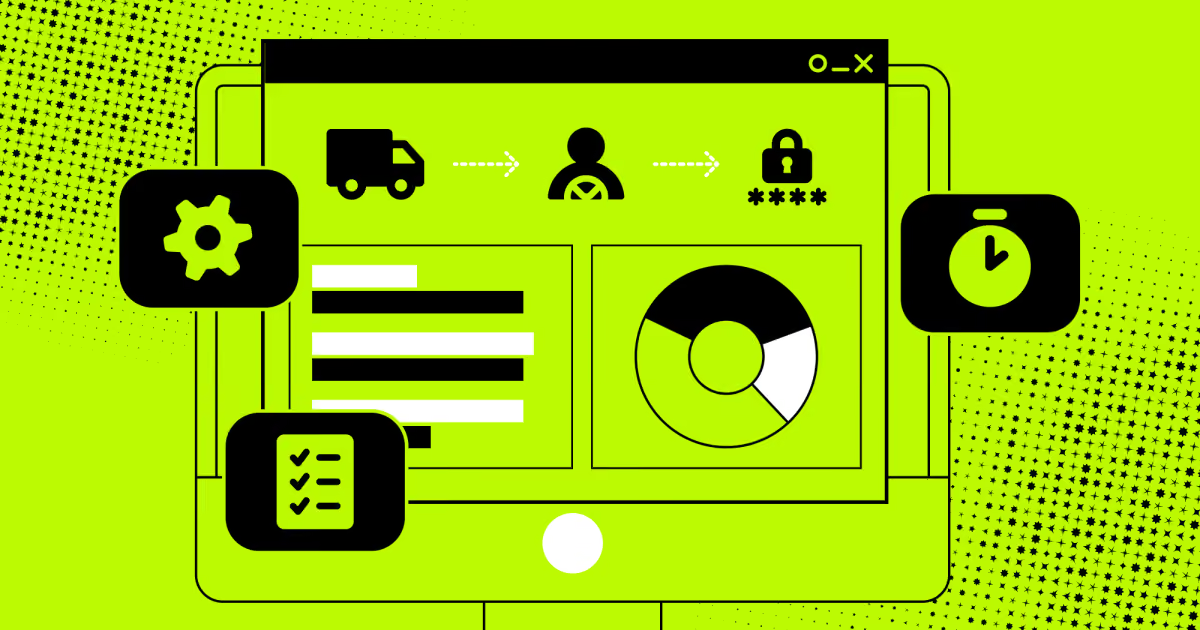
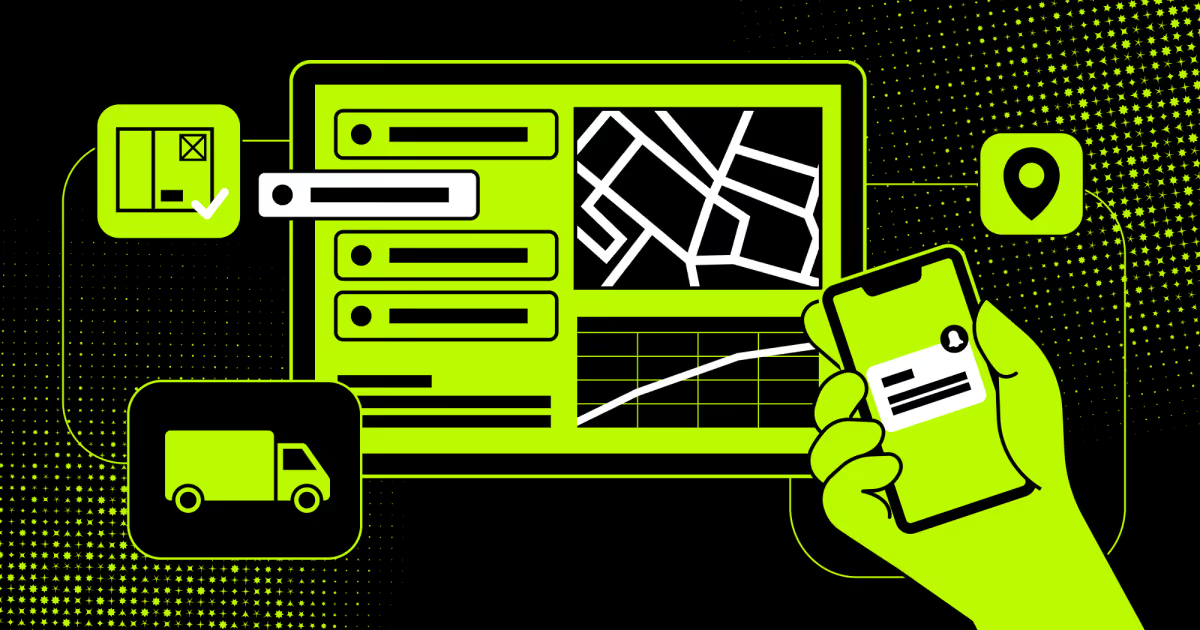
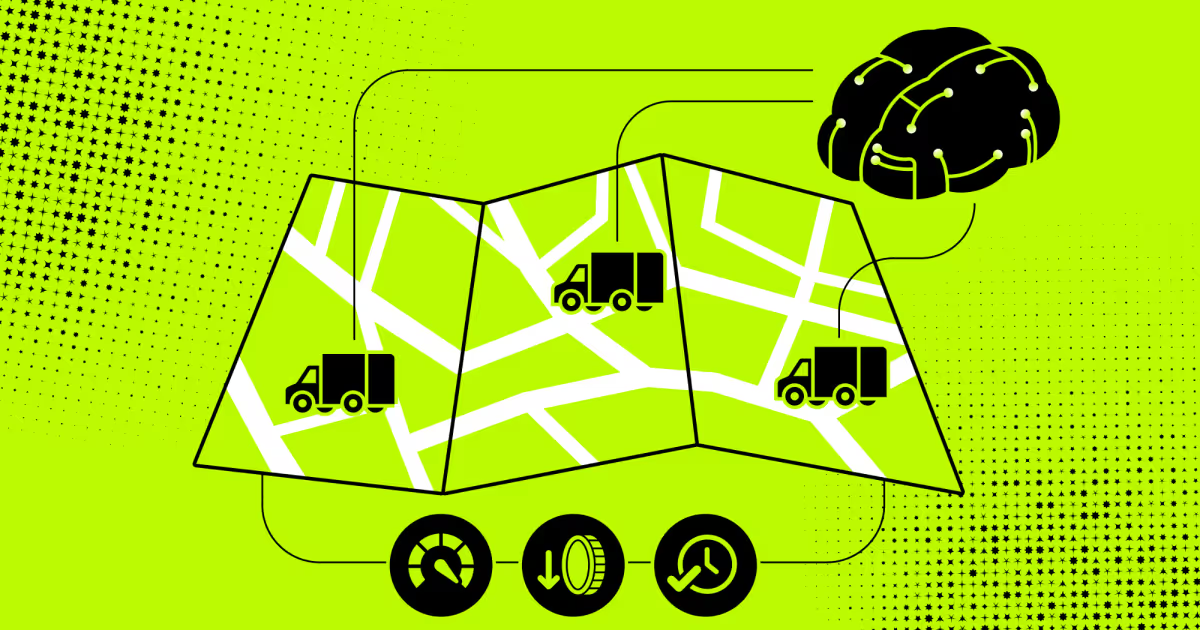
Transport planning software is a system that maps routes, schedules, and vehicle assignments automatically. It takes stops, time windows, and vehicle capacity as input. It outputs an optimized sequence a driver or dispatcher can follow.
Think of it as the translator between a raw list of addresses and an actual, logical route. Without it, planners are stuck building sequences by hand. They basically guess at traffic, delivery windows, and truck capacities. It is a massive time sink. With it, an algorithm weighs those exact variables and spits out an optimized driver sequence in seconds, not hours.
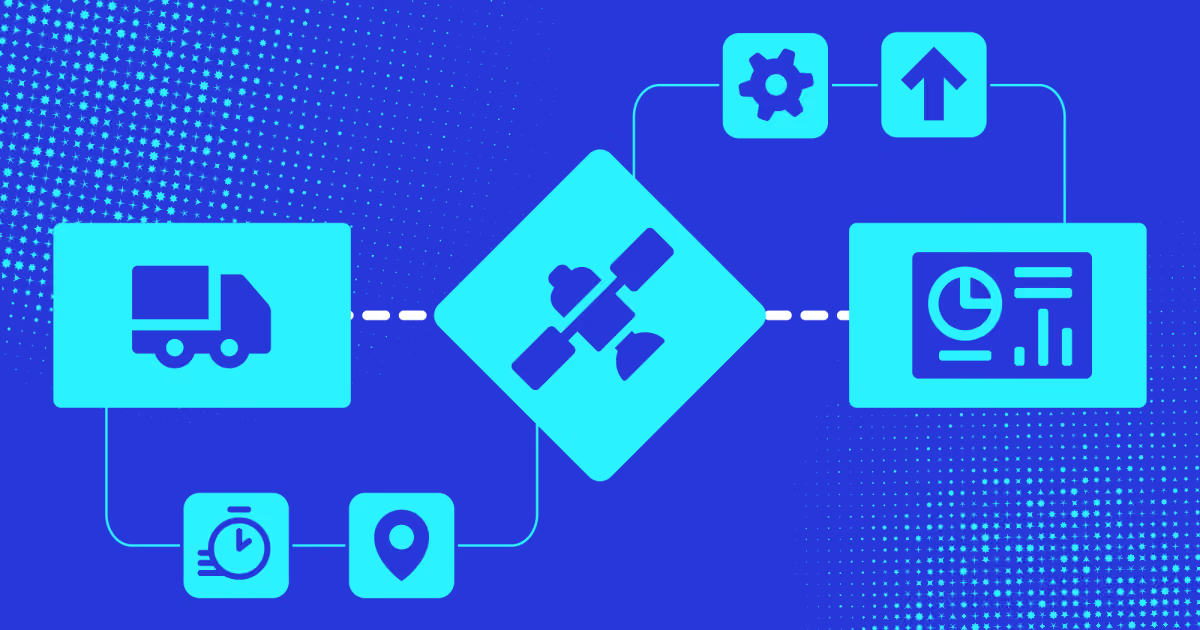
Most platforms do not just stop at the plan, either. Once the trucks roll out, the system shifts to tracking execution, folding live GPS pings, delay alerts, and proof-of-delivery capture into a single workflow.
Who needs transport planning software?
Let’s take a look our DriveIQ's client’s situation before we built their platform. Five years old, 500 vehicles, cross-border freight between two countries. Dispatchers manually rerouted trucks after every delay call.
Driver turnover hit 45% annually under that pressure. Customer service lines jammed daily with the same delay question. That's a business needing transportation planning software urgently.
You'll recognize the same pattern in a few common situations.
Growing fleets outpacing manual coordination.
Once your fleet crosses roughly 50 vehicles, spreadsheets break. No matter how sharp your dispatchers are, they simply can't hold that many variables, traffic patterns, and route details in their heads. A transportation planning solution becomes necessary, not optional, at that size.
Operations with tight delivery windows.
Grocery delivery, medical couriers, and same-day retail all share the same unforgiving baseline: if you miss a window, someone loses real money or faces real harm. A cold pizza is annoying, but a late oxygen tank or a missed insulin delivery is a catastrophe. These operations can't rely on standard navigation apps. They need routing engines built strictly for high-stakes, time-sensitive constraints.
Businesses juggling multiple carriers or subcontractors.
Managing two outside carriers is simple enough. Add a third or fourth, and suddenly you're blind. Your’re left to chase updates across a dozen different emails and portals. You need a single, no-nonsense dashboard that tracks every single leg of every shipment in real time. That's exactly why transport planner software exists. It closes the gap.
Fleets facing driver retention pressure.
High turnover usually traces right back to frustrating daily workflows, not just the paycheck. When drivers face constant, last-minute route changes and a barrage of phone calls, they burn out. Better planning tools fix this by stripping away that daily friction.
Plenty of vendors can sell you a routing dashboard. Fewer can adapt it to your specific carrier mix and driver reality. Logistics software development that changes outcomes needs engineers who've solved your exact integration problem before. Reading a vendor's API docs isn't the same as debugging a live EDI mismatch at 2 a.m.
At COAX Software, senior engineers make up 90% of our team for that reason. We don't hand your project over to juniors to figure out on your dime. The person fixing your telematics feed has almost certainly diagnosed and fixed that same issue before.
Types of transportation planning tools
You don't use the same tools to untangle a single choked intersection as you do to re-engineer a multi-state delivery network. The logistics tech landscape splits right down that line.
Traffic flow and signal tools
These tools are built to untangle physical roads, not delivery fleets. Cities use them to stress-test intersections digitally before a single shovel hits the dirt. Microsimulation platforms track how individual vehicles and pedestrians interact in real time, while signal timing software adjusts light sequences to actively cut down gridlock.
Transportation network planning relies heavily on this category. Engineers test a redesigned interchange virtually first. Bad timing costs commuters minutes daily across a city. Good timing recovers those minutes without new pavement.
Municipal transit authorities and traffic departments use these platforms constantly. Consultants modeling a new highway ramp need this too. Our own relevant work at COAX touched similar ground during SyncMatix's route analytics build.
Zoning and land-use tools
Urban departments plan more than lane widths here. They plan where people, transit stops, and buildings sit together. Urban transport planning platforms combine mapping with zoning simulation. Planners test how a new development affects nearby congestion.
Geographic information systems anchor this entire category. They map the friction points of a city, layering local population density directly against actual road capacity. It's the data a city council needs before debating a new zoning district, and the exact same maps a transit agency relies on to redesign bus routes.
Real estate developers pitching city approval boards lean on these tools for the same reason. Getting a permit almost always means proving your project won't paralyze local traffic first. That's the exact moment spatial modeling earns its budget line.
Demand forecasting platforms
This category answers a completely different question. It’s what happens next year, or next decade. Forecasting software looks at shifting population pockets and economic trends to estimate future trip volumes, following a structured, multi-step model most planners recognize instantly.
Good transportation planning software in this space forecasts mode shift too. Will commuters choose rail over driving after a fare change? Agencies use these forecasts to justify infrastructure spending decisions.
Transit authorities building out a ten-year capital plan need this exact toolkit. So does any city council debating whether to lay down a new light rail line. Without these forecasts, cities are essentially building infrastructure blind.
Fleet and freight coordination tools
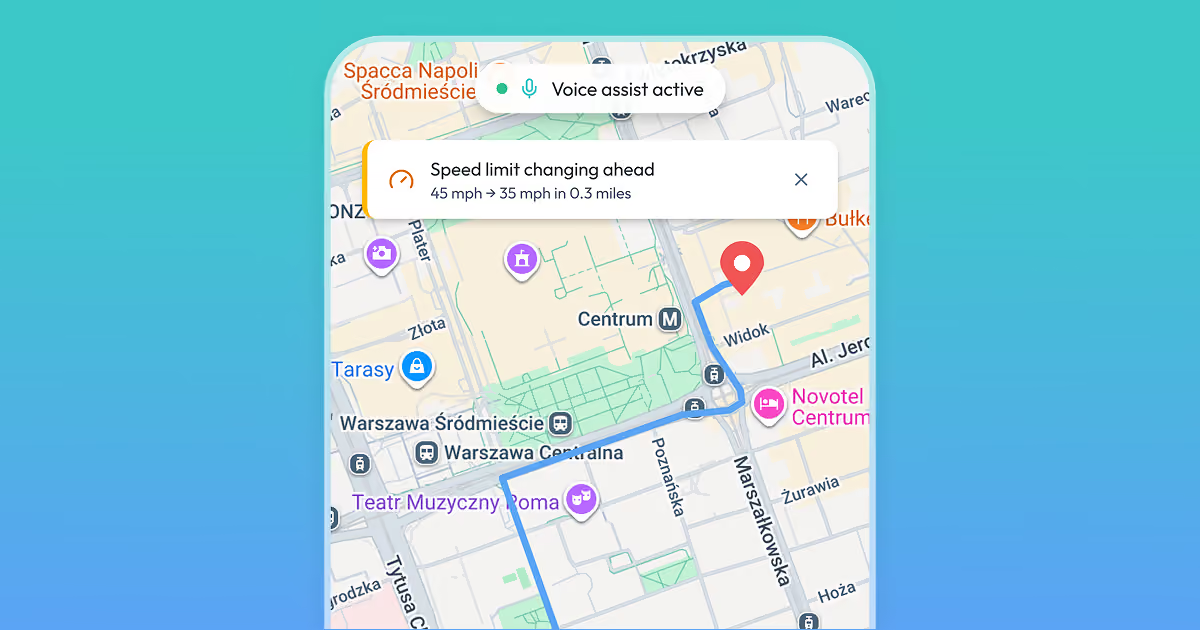
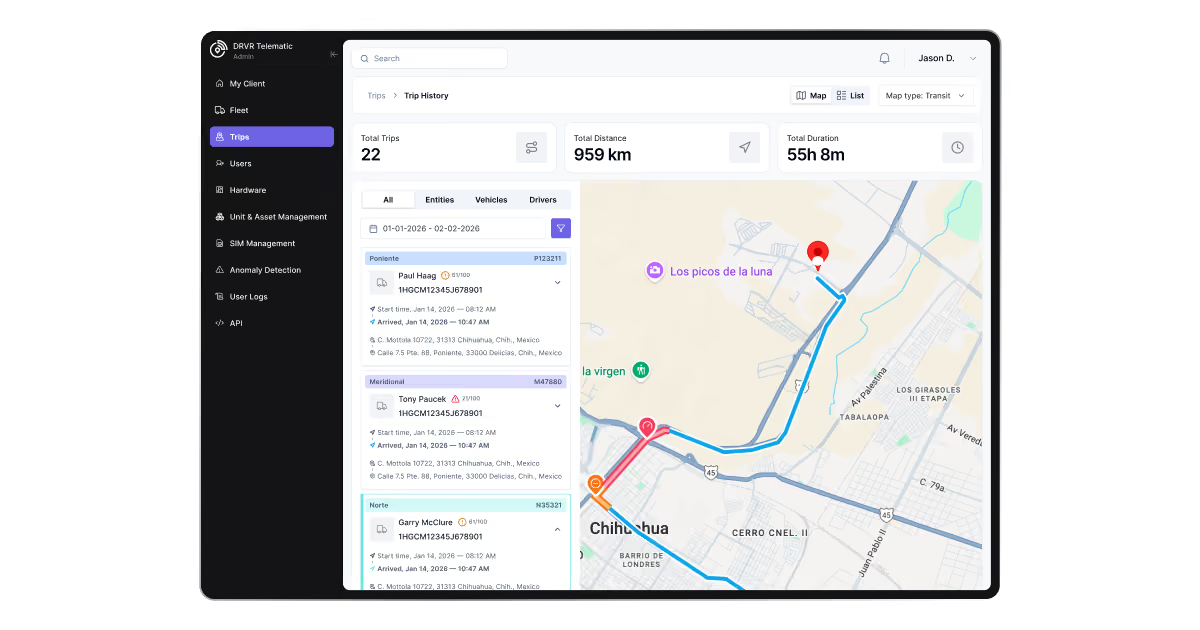
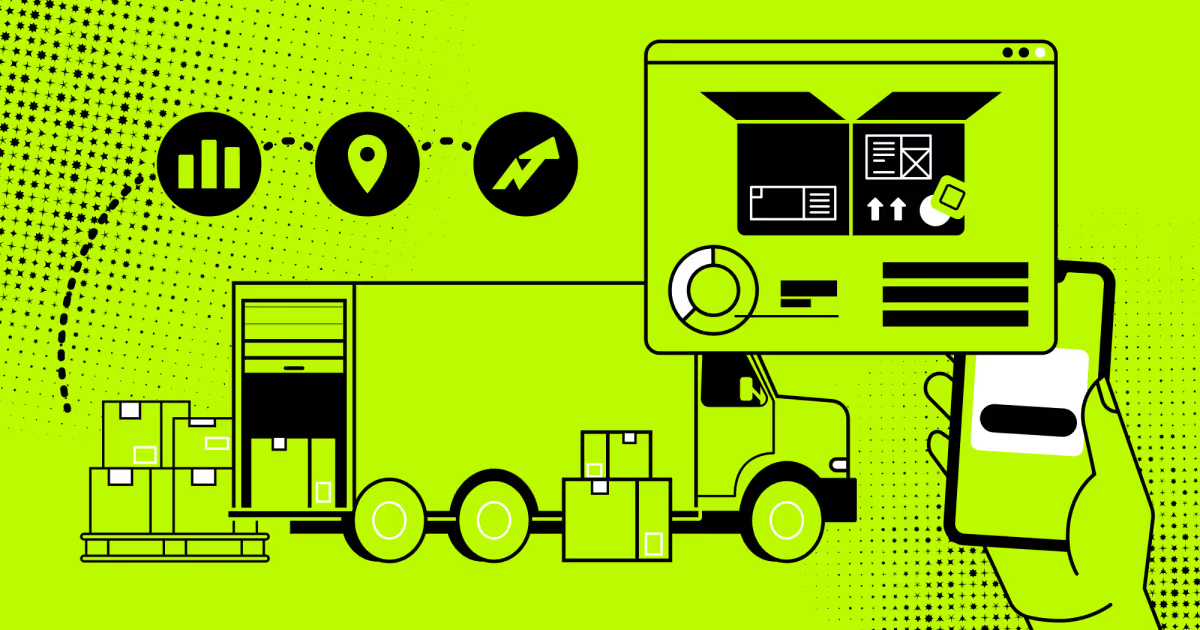
This is exactly where our own hands-on work fits. When you're running a physical fleet, pretty maps aren't enough. You need active, minute-by-minute coordination. True integrated transport planning means hooking GPS tracking, live dispatch, and driver behavior directly into a single screen.
DriveIQ's client was drowning in this gap before we stepped in. They had 500 trucks on the road, a mess of disconnected telematics feeds, and no unified view for their dispatch team. We solved that same headache for GrandBus, tailoring the solution for passenger buses.
Fleet-focused tools in this category typically include:
Route optimization engines: sequencing stops against time and capacity constraints.
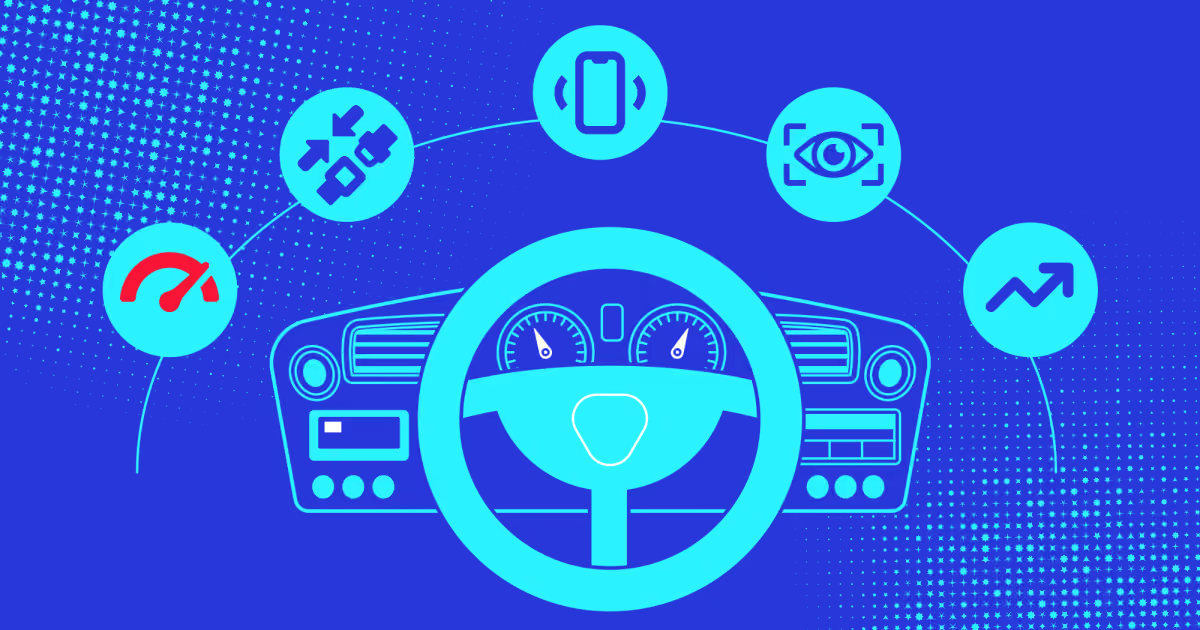
Driver behavior dashboards: scoring safety, fuel use, and on-time rates.
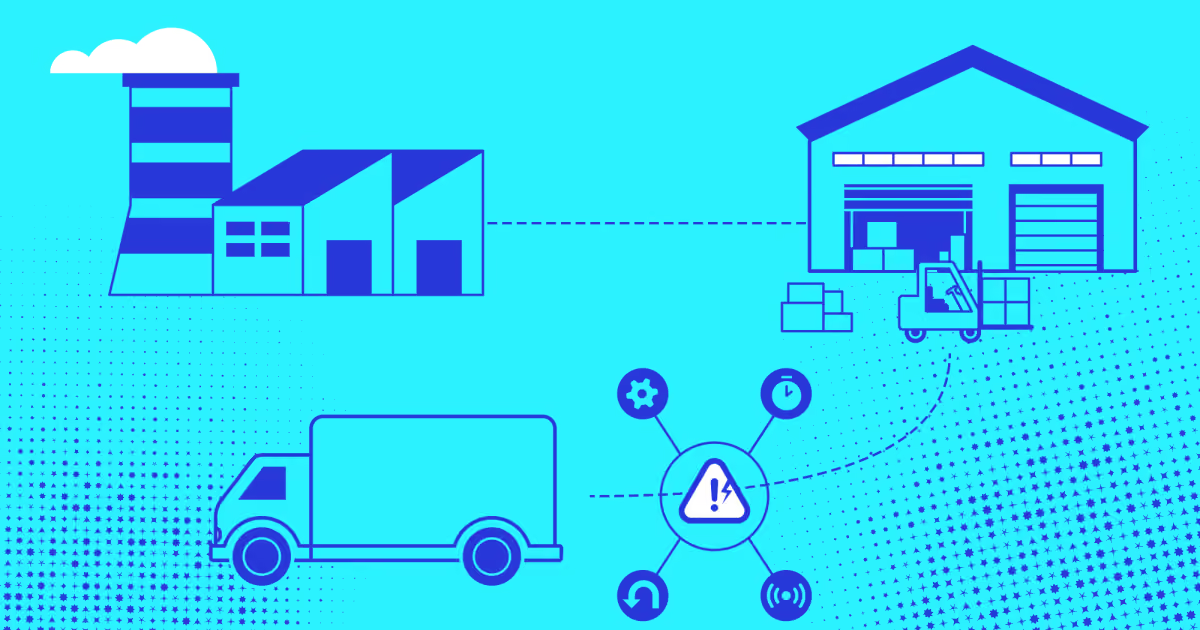
Exception alerting systems: flagging delays before customers notice them.
Logistics operators managing dozens of vehicles daily need this category most. If this is your situation every single day, this is the toolkit you should be using.
Transit and multimodal scheduling tools
Public agencies juggling buses, trains, and shuttles need a different lens again. Urban transportation planning software here handles route design and timetable coordination together. GrandBus's booking platform touched this exact territory, mixing routes with real-time schedules.
These platforms handle stop sequences, driver shifts, and complex fare tiers all at once. When a connection between two routes misses by ninety seconds, riders are stranded, and they're instantly furious. Smart scheduling tools catch those razor-thin gaps while the timetable is still on the screen, not when passengers are standing out in the rain.
Public transit agencies redesigning an entire city bus network need this category. So do private operators like GrandBus running scheduled, high-frequency services. At the end of the day, passenger trust is fragile. It depends on schedules that actually hold up in the real world.
For every type above, our approach stays consistent. We handle complex integrations across GPS, dispatch, and legacy TMS systems. We design and build new features into your existing platform. We build from scratch when nothing existing fits your model. Our TMS software development services cover AI-driven forecasting and analytics too, not just routing screens.
What features to look for in transport planning software?
To illustrate, it’s worth mentioning DrivenPeople, our driver hiring and workforce platform for UK operators. Some features there were non-negotiable from day one. Shift verification, invoice automation, and driver matching had to work flawlessly.
Once the basics hold, other features unlock a whole new gear. Things like referral bonuses and AI-written job posts aren't essential when you're just trying to launch, but they turn into massive growth engines the moment adoption climbs past a certain threshold.
That is the split to understand here. Some features exist simply to keep your daily operations from collapsing. Others are there to push performance far past what you'd ever expect from a baseline system.
Route optimization.
A strong transport planner software calculates efficient sequences automatically. It weighs vehicle capacity, delivery windows, and stop priority together. Historical traffic patterns feed into that calculation, not just live conditions.
With weak software, reality hits fast. A route that looks incredibly clean on a computer screen will completely fall apart the second your driver hits actual morning gridlock.
Real-time tracking and visibility.
Live GPS tracking lets fleet managers watch progress as it happens. Customers get automated ETA updates without calling in. This single feature often determines whether transportation planning firms earn repeat business.
Automated dispatch and scheduling.
Dispatch tools assign loads and adjust routes on the fly, without breaking the system. When a last-minute cancellation hits, you shouldn't have to call five different drivers to fix it. Instead, synchronized workflows push updates to everyone simultaneously. This keeps the whole operation on the same page.
Freight cost and carrier management.
Rate comparison across carriers protects your shipping budget directly. Automated billing and audit tools catch discrepancies before they compound. This is core transport operations planning work, not a nice extra.
Analytics and reporting.
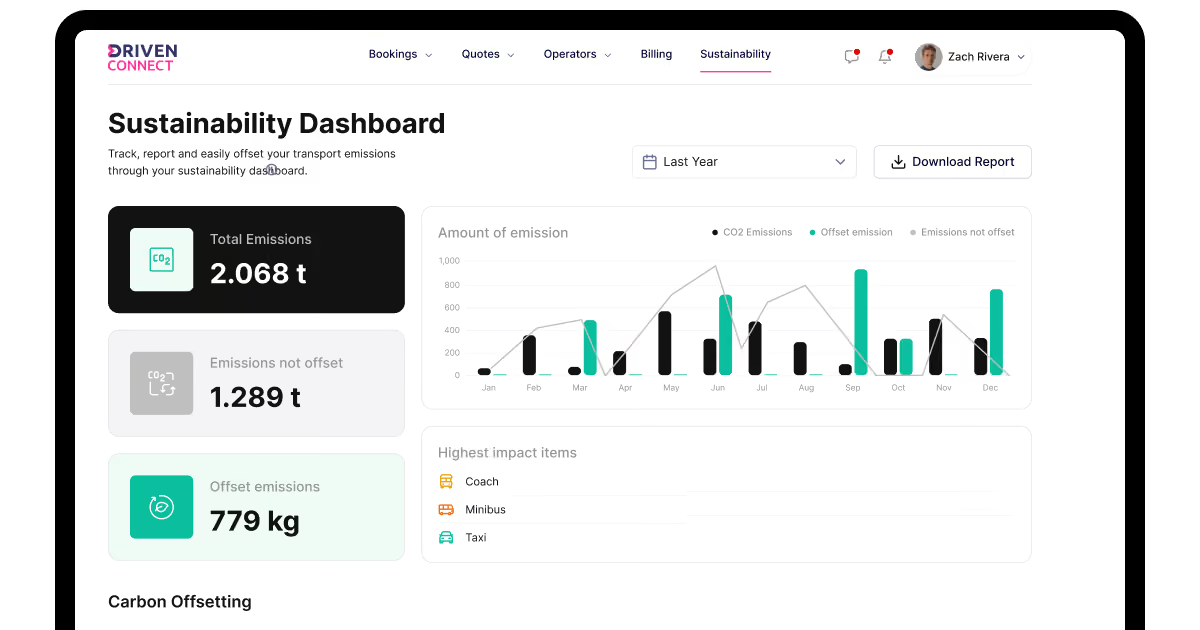
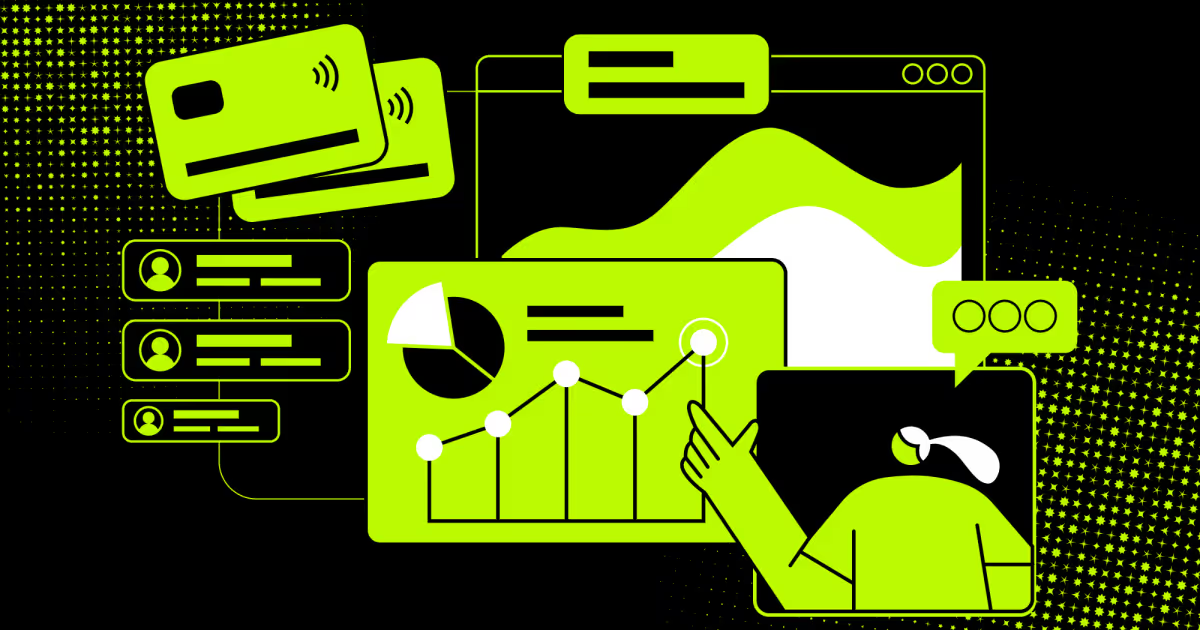
Analytics and reporting are the heartbeat of the system. Your dashboard shouldn't just show you transit times or cost-per-mile. It also needs to surface efficiency gaps. And today, that includes your carbon footprint. Sustainability reporting is no longer a side note. It’s as critical as your bottom line.
We saw this clear as day building Driven Connect's emissions module for UK coach operators. Buyers there needed carbon tax calculations tied directly to route data. Compliance wasn't optional under UK legislation, and reporting had to be exact.
Mobile integrations.
Drivers need a mobile app tied to the central system. Route details, digital signatures, and proof-of-delivery photos should sync instantly. DrivenPeople's shift-tracking app proved how much friction this removes daily.
Enterprise integration.
A platform that can't talk to your ERP or WMS creates isolated data. Strong transport network planning tools connect natively, without months of custom middleware. That connection is often the real dividing line between vendors.
At COAX, we've spent sixteen years closing exactly these integration gaps. We handle everything from one missing feature to a full platform build. Need your transport planning software to talk to a legacy TMS? We build that bridge. Need a feature no vendor has shipped yet? We build it from the ground up.
Our team holds ISO 9001 and ISO 27001 certification as standard practice. Security isn't an upsell we pitch later. It's the baseline every project starts from, audited and documented from day one.
What are the challenges of implementing transport planning software?
"The software never fails first. The workflow around it does," shares Orest Falchuk, Head of Engineering at COAX Software.
Rolling out new software always sounds simple on a slide deck. In the real world, the process is often unpredictable. Here is where many implementations hit a wall and stall.
Data quality and interoperability
Transport data rarely lives in one place. Ticketing, maintenance, and routing often sit in separate, disconnected systems. That fragmentation makes a unified view hard to build.
Legacy infrastructure compounds the problem further. Cloud transport planning tools bolted onto old on-premise systems often cause a lag. Many transportation firms run on decades-old software never designed for interoperability. Layering modern platforms on top often creates a superficial fix.
Real-time data adds another failure point. Agencies often struggle with legacy systems where dispatchers manually juggle trip assignments that don't reflect current conditions.
Fare collection modernization faces similar pressure. Legacy ticketing costs have become unsustainable as transit riders expect the same seamless payment experience they get everywhere else.
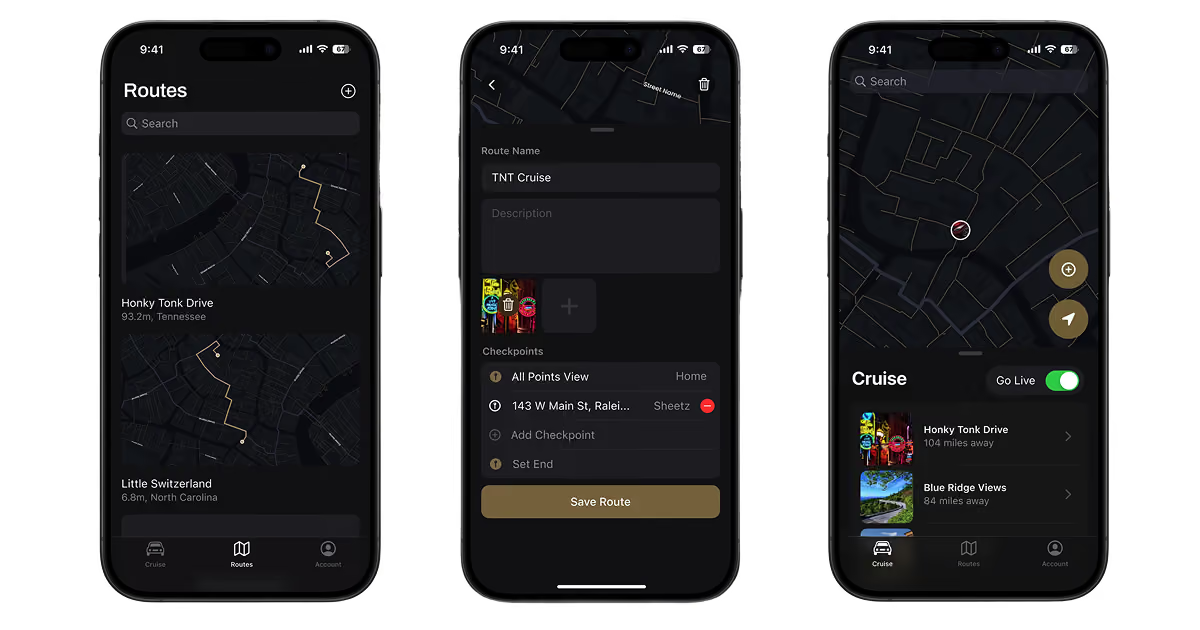
We hit a similar wall building Road&Rally's synchronized navigation. Multiple devices needed identical routes in real time. Poor connectivity in rural areas threatened that sync constantly.
Organizational and cultural hurdles
New transport planning software rarely fails on technical merit alone. People resist changing routines they've trusted for years. If your team sees a digital tool as a threat to their autonomy rather than something that makes their life easier, they will find ways to bypass it.
Skill gaps compound that resistance. Transport staff are experts at keeping wheels turning, but they often lack the data analysis background that modern platforms assume. If training feels like a generic tech lecture rather than a guide on how to survive their daily shift, adoption plummets.
The fix is getting frontline teams involved from day one instead of forcing a top-down rollout. This became evident to our team while building the DrivenPeople solution. Operators and drivers didn't need a single, overwhelming generic dashboard; they needed distinct, simplified interfaces built around their actual, specific daily habits.
Institutional and contextual misalignment
Imported software models sometimes ignore local context entirely. A transportation planning process built for one region rarely maps cleanly onto another. Behavioral patterns and infrastructure limits differ more than vendors assume.
Strategic policy and daily operations often disagree too. Long-term goals get set at one level, workflows at another. The planning software ends up configured for neither reality well.
Redesigning workflows before digitizing them, rather than after, tends to prevent this exact gap. Driven Connect faced its own version of this mismatch. UK carbon tax rules demanded exact emissions reporting tied to vehicle specs. Getting that calculation right meant rebuilding logic mid-project, not before launch.
Every transport planning company promises smooth rollout. Few plan for the data mess, the resistance, and the misalignment together. At COAX Software, we stay involved from early consulting through post-launch support. That's how we help clients like these navigate every one of these challenges as they surface.
FAQ
What is transportation planning for a fast-growing delivery fleet?
Transportation planning covers scheduling, routing, and fleet coordination together. For a growing fleet, it means moving beyond spreadsheets fast. Manual coordination breaks down past roughly fifty vehicles. At that point, dispatchers can't track every variable manually anymore. A structured system replaces guesswork with data-driven decisions. We've watched fleets delay this shift too long, then scramble under pressure. Earlier adoption costs less than reactive scrambling later.
What is transport planning, and how urgent is it for a startup fleet?
Transport planning means matching vehicles, routes, and schedules efficiently. For a new fleet, urgency depends on complexity, not size alone. Multi-stop routes or tight delivery windows demand structure immediately. Waiting until complaints pile up costs more than early investment. We built DriveIQ after a client hit exactly that breaking point. Don't wait for turnover or missed deliveries to force the decision.
How does transportation network planning affect my delivery costs directly?
Transportation network planning determines how efficiently vehicles cover territory. Poorly planned networks waste fuel, time, and driver hours daily. Overlapping routes and unbalanced depot assignments quietly inflate costs. Fixing network structure often saves more than swapping vendors. We saw this with GrandBus's subcontractor and route restructuring. Small network changes there cut coordination time significantly across multiple depots and drivers.
Will transportation planning software actually reduce my driver turnover?
Let’s be direct: software alone will never fix driver turnover. But if you treat it as one highly effective lever alongside fair pay and clear communication, it absolutely moves the needle. The main culprit driving drivers away is daily frustration. When last-minute route changes are chaotic, schedules are unrealistic, and dispatchers are constantly calling to micromanage, drivers burn out fast. Smart scheduling and route planning cut that daily friction right out of their workday. On top of that, transparent performance tracking ensures drivers are judged fairly on metrics they can actually control. DriveIQ's driver coaching approach lowered turnover by 22% for one client. The software works best paired with fair pay and clear communication.
How soon should transportation strategy planning happen before international expansion?
Start transportation strategy planning months before expansion, not during it. Different countries bring different regulations, carriers, and driver expectations entirely. Software chosen too late often can't scale across new markets. GrandBus faced this directly while expanding beyond Ukraine's borders. Early planning prevents costly rebuilds once operations are already live. Treat expansion timing as a technical decision, not just a business one.
Can transport planning software handle a fleet mixing owned and subcontracted vehicles?
Yes, but confirm this before signing any vendor contract. Many transport planning software platforms assume a single ownership model. Mixed fleets need separate visibility for owned versus subcontracted vehicles. GrandBus needed exactly this split across their bus network. We built custom logic since off-the-shelf tools couldn't separate the two cleanly. Always test this scenario during any vendor evaluation, not after.






































































_.avif)








%2520explained.avif)

We are interested in your opinion