A fleet manager opens Monday’s dashboard with one simple question. Which vehicles need attention before they become expensive? The answer should take seconds. Instead, lease dates sit in spreadsheets. Mileage lives inside another platform. Maintenance records sit somewhere else. Finance tracks monthly payments separately. One vehicle approaches its mileage limit. Another lease expires next month. A third vehicle already costs too much to maintain.
Every record looks correct on its own. The problem arises when someone needs a single decision. Should the first contract be extended? Should another vehicle be replaced? Which asset now carries the greatest financial exposure? That’s where vehicle leasing software starts proving its value. It connects contractual obligations to actual vehicle activity.
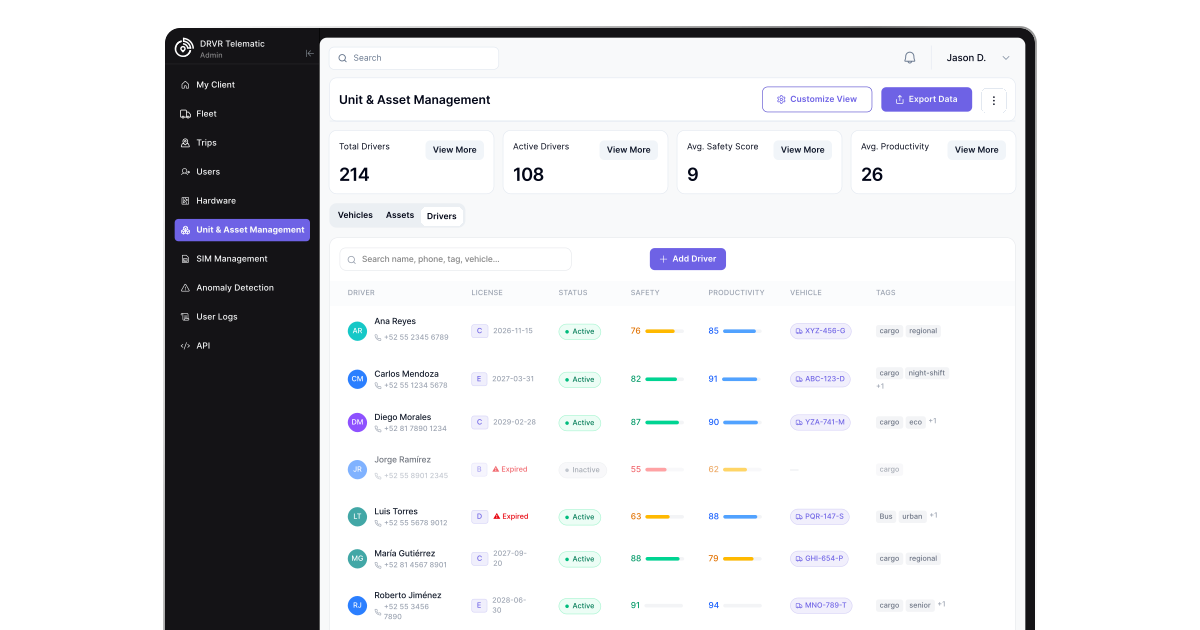
At COAX Software, we’ve spent 16+ years building transportation technology. Our work taught us one recurring lesson. Fleet decisions rarely fail because companies lack data. They fail because relevant records remain disconnected. We saw this while developing SyncMatix. The platform unified fragmented fleet information. Vehicle activity, maintenance data, and costs gained shared context. Route-event response improved by 25% after consolidation.
The same principle applies to fleet vehicle leasing. A lease agreement alone doesn’t tell you enough. You also need mileage, condition, costs, and lifecycle events. This guide compares seven leading vehicle lease software platforms. We examine their strengths, limitations, and best operational fits. You’ll also understand leasing workflows and essential selection criteria.
Why should you manage your vehicle leases?
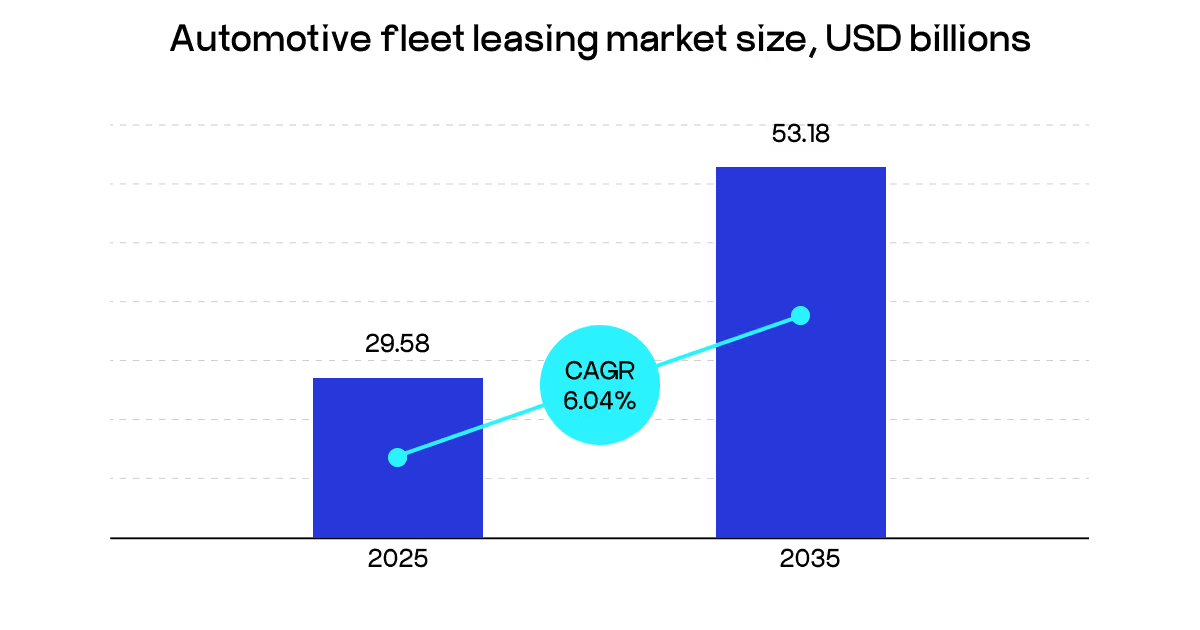
Managing several leases creates more complexity than adding contracts. Every vehicle develops its own financial and operational history. Mileage changes while payments remain fixed. Maintenance expenses also alter the real ownership equation. The market itself continues expanding. Market Research Future valued business vehicle leasing at $29.58 billion in 2025. It forecasts $53.18 billion by 2035. The forecast represents 6.04% annual growth. Broader vehicle financing data shows leasing remains significant. Experian measured leasing at 24.37% during Q4 2025. The figure covers new vehicle financing in America.
Growth makes contract control harder for larger portfolios. One missed renewal may extend an unwanted lease. Incorrect mileage may trigger unexpected end-of-term costs. Delayed service may also hurt vehicle value. Fleet leasing software helps expose those issues earlier. It connects contracts with payments and vehicle records. It also tracks expirations, amendments, services, and return conditions.
Accounting creates another reason for better lease records. FASB Topic 842 requires recognition for most longer-term leases. The requirement covers terms exceeding 12 months. IFRS 16 uses a similar recognition principle. Lessees recognize right-of-use assets and lease liabilities. Limited exceptions apply to short or low-value leases. These rules make historical accuracy especially important. An amendment shouldn’t erase the original obligation. A reassessment also needs its effective date preserved.
Good vehicle leasing software shows future exposure before problems become urgent. COAX Software applies that principle across transport platforms. SyncMatix connects utilization with maintenance and financial information. Its dashboards show cost per mile and vehicle utilization. For us, lease management follows the same logic. Financial terms need current operational context.
Best fleet vehicle leasing software
We assessed seven platforms against actual fleet leasing workflows. Our team reviewed official documentation, integrations, pricing, and customer implementations. We examined contract lifecycle depth and vehicle operations. We also reviewed accounting, integrations, customization, and implementation demands.
"We evaluate them by what breaks when the data gets messy," says Orest Falchuk, Head of Engineering at COAX Software.
We weighted lease lifecycle coverage highest. Integration flexibility came second. Lease fleet operations and accounting depth followed. Implementation burden affected the final position. Pricing transparency served as an additional differentiator. This ranking measures fit for fleet leasing. It doesn't rank overall software quality.
Platform
Best for
Lease lifecycle
Fleet operations
Integration approach
Public pricing
SOFICO Miles
Enterprise vehicle lessors
Very strong
Strong
Enterprise APIs and modules
Not publicly listed
Odessa
Asset finance companies
Very strong
Moderate
API-driven platform
Not publicly listed
Alfa Systems
Large fleet finance providers
Very strong
Strong
Enterprise integrations
Not publicly listed
Solifi
Automotive finance lenders
Strong
Moderate
Open finance platform
Not publicly listed
NETSOL NFS Ascent
Multi-market automotive finance
Strong
Moderate
Enterprise integrations
Subscription option
SOFT4Leasing
Mid-market leasing businesses
Strong
Strong
Microsoft ecosystem
€1,800 Starter listed
FleetWave
Corporate fleets and lessees
Moderate
Very strong
Supplier integrations
£5 per vehicle monthly
The table separates the lessor's and lessee's requirements. That distinction matters more than overall feature counts.
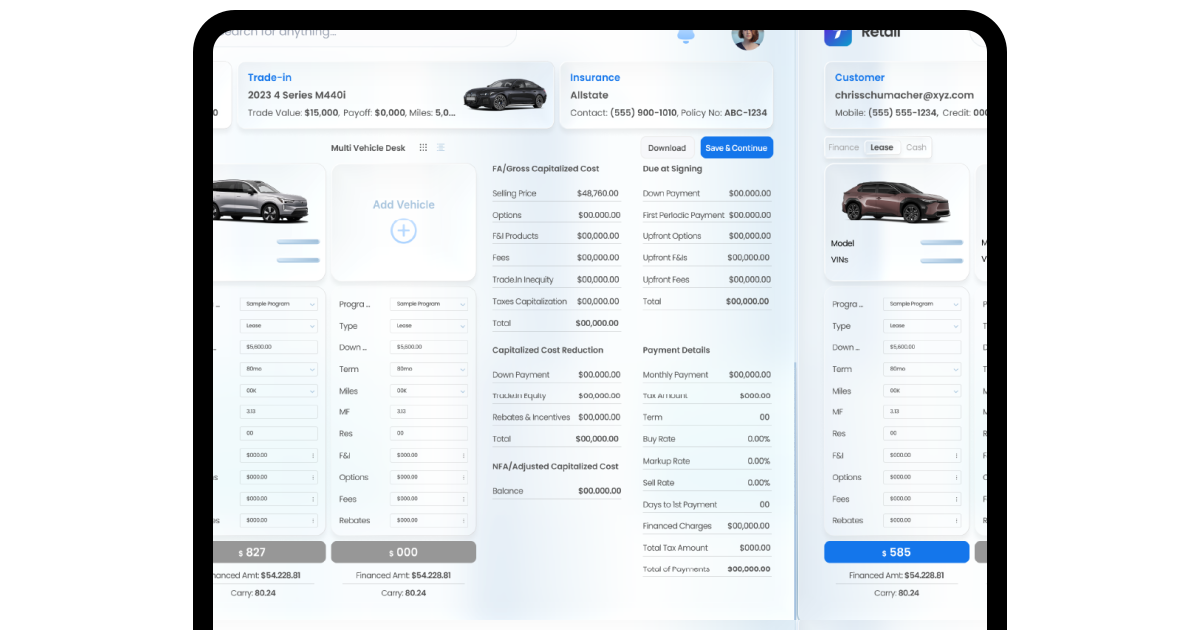
SOFICO Miles provides the broadest lifecycle coverage. It handles finance, leasing, rental, and subscription contracts. Its architecture also supports fleet and retail operations. Its centralized pricing model stood out during our assessment. For us, this is Miles' strongest advantage. Multi-market lessors avoid duplicating pricing logic across channels.
One ruleset supports several channels and contract stages. That reduces inconsistent calculations across separate customer journeys. SOFICO documents this pricing model directly. The tradeoff is implementation ownership. Smaller lessors may struggle to justify enterprise-level configuration. This platform targets complex organizations and portfolios. Smaller lessors may need less infrastructure. A useful proof point comes from Summit Fleet Leasing. Its growing partner ecosystem created pressure for integration. Miles became the operational backbone for those connections.
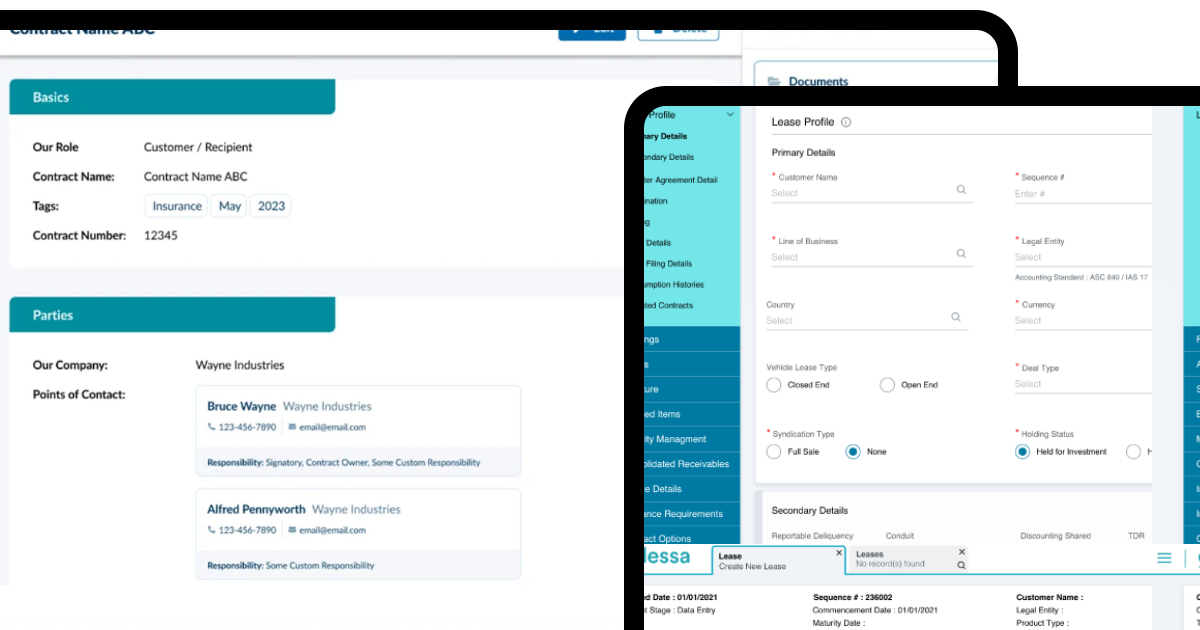
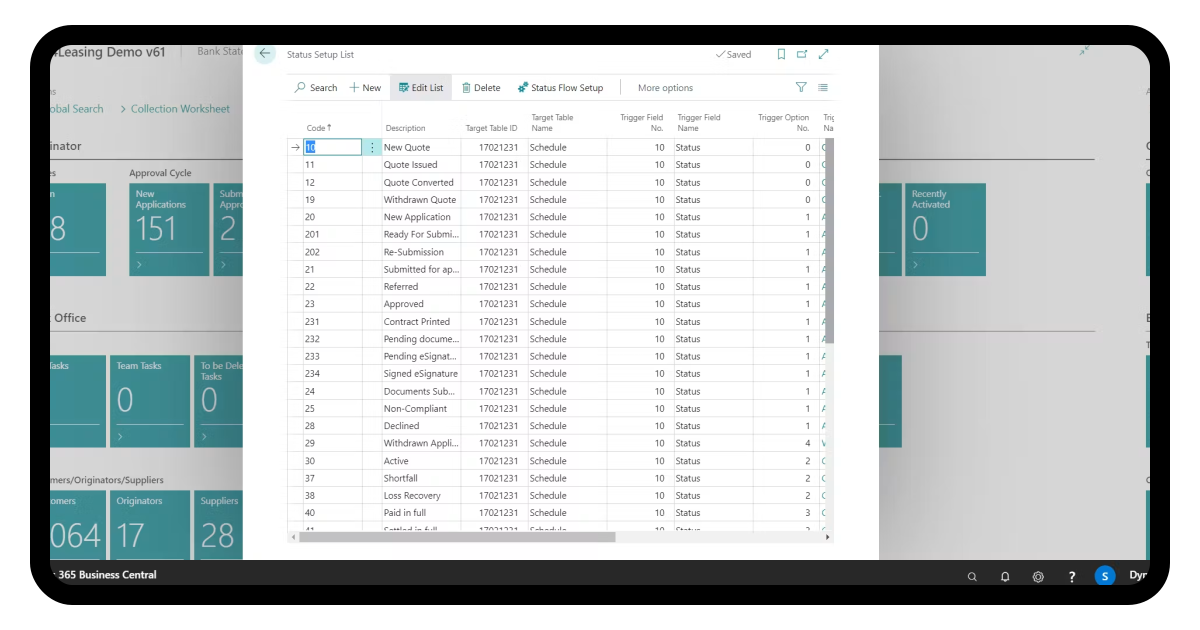
Odessa takes an asset-centered approach. Its lifecycle spans origination, servicing, and remarketing. Asset-level records remain visible across those stages. We see particular value in that asset continuity. Vehicles often outlast individual financing arrangements. A contract-centered model may fragment their history. Odessa also exposes API-driven integration capabilities. Flexible billing supports more complex asset structures. Self-service portals handle documents, payments, and contract updates. However, daily fleet operations aren't its main strength. Corporate fleets may still need another operating platform. We'd choose it for lessors, not operational fleet teams.
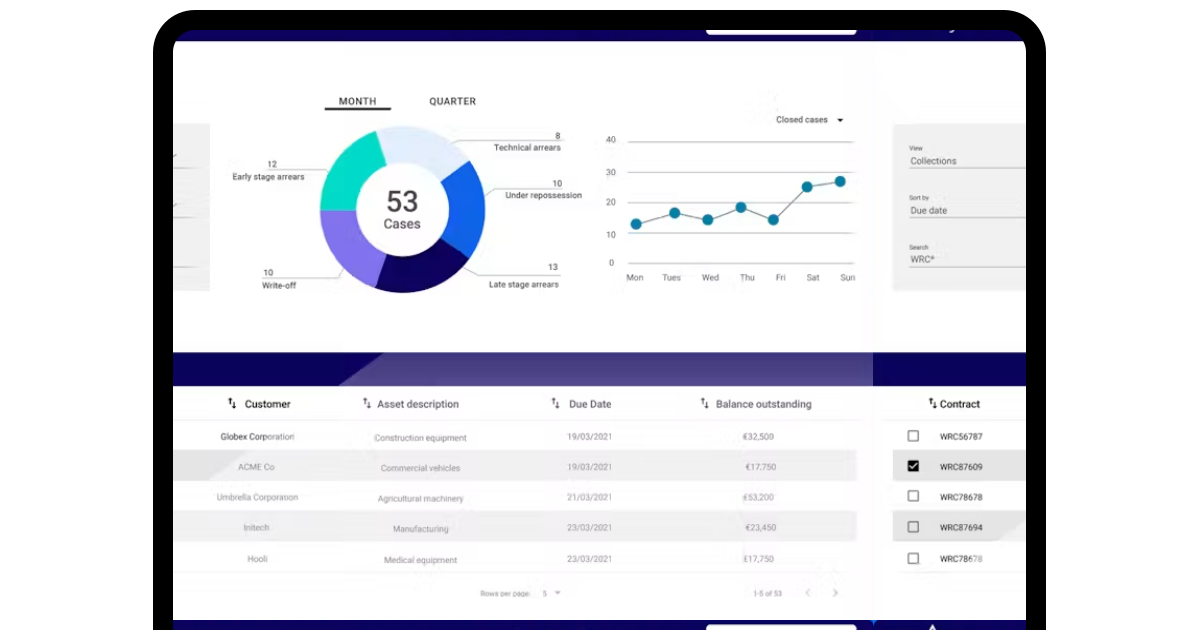
Alfa Systems offers deep fleet finance functionality. Its Master Agreements group assets and related fleet leasing services. It also handles quoting, billing, and in-life changes. For COAX Software, this structure makes operational sense. Large fleet agreements rarely behave like isolated contracts. Pricing and service rules often apply across many vehicles. Alfa also consolidates invoices by fleet structure. Its platform covers origination through asset return. The limitation is similar to SOFICO Miles. Implementation needs experienced internal ownership. Smaller businesses may find the platform excessive.
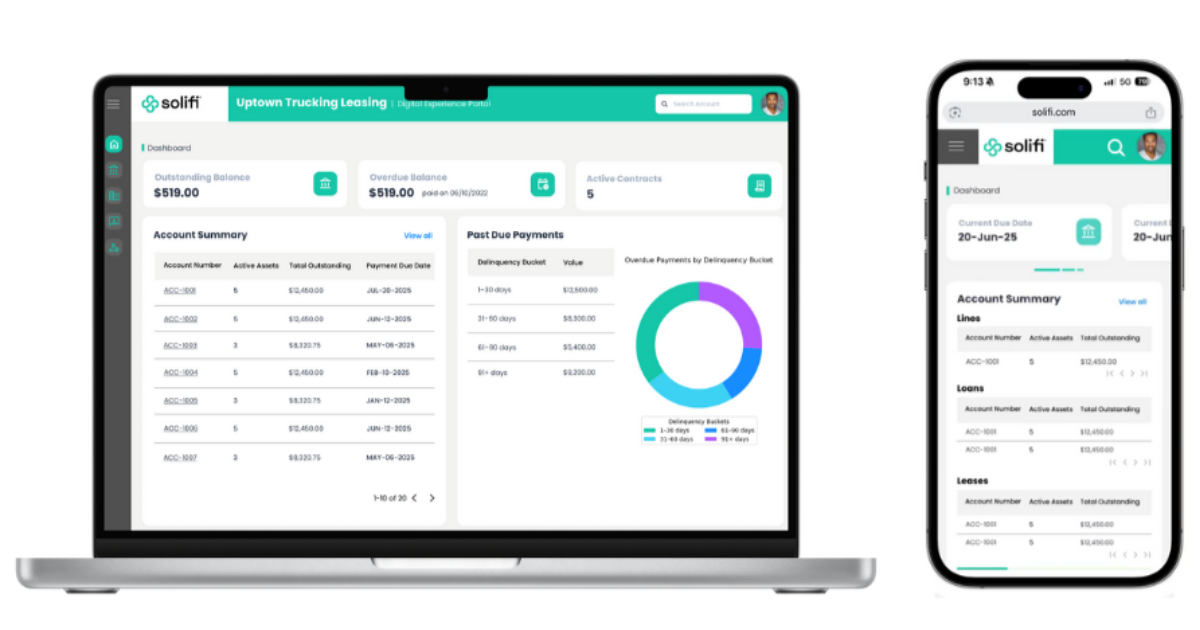
Solifi connects originations with servicing and portfolio oversight. Its strongest fit is finance-led automotive operations. What we liked most was lifecycle visibility. Asset exposure and billing remain close to financing workflows. Its pricing tools also support complex payment structures. For fleet operators, however, Solifi remains finance-first. Maintenance and daily vehicle operations need other systems. Allied Credit selected Solifi for automotive leasing in Australia. The deployment supports novated leasing requirements.
NETSOL NFS Ascent targets automotive and asset finance companies. Its architecture covers origination and contract management. Wholesale financing also sits within the wider product suite. The strongest evidence for us is the depth of international deployment. One German automotive finance customer expanded NFS Ascent internationally. A South Korean rollout followed deployments across other markets. NETSOL also offers subscription-based cloud pricing. Exact rates aren't publicly listed. Monthly, quarterly, and annual subscription structures are available. Its implementation footprint remains substantial. Smaller fleet lease companies may struggle to justify it.
SOFT4Leasing combines fleet and financial workflows. It includes service management, billing, and lease accounting. Support for IFRS 16 and ASC 842 is documented. Pricing transparency makes budgeting easier. Its current pricing page lists Starter at €1,800. Setup starts from €28,800 for that package. From our perspective, that transparency improves early vendor comparisons. However, buyers shouldn't mistake licensing for implementation cost. SOFT4Leasing says small projects may take two to three months. Larger implementations naturally require more work.
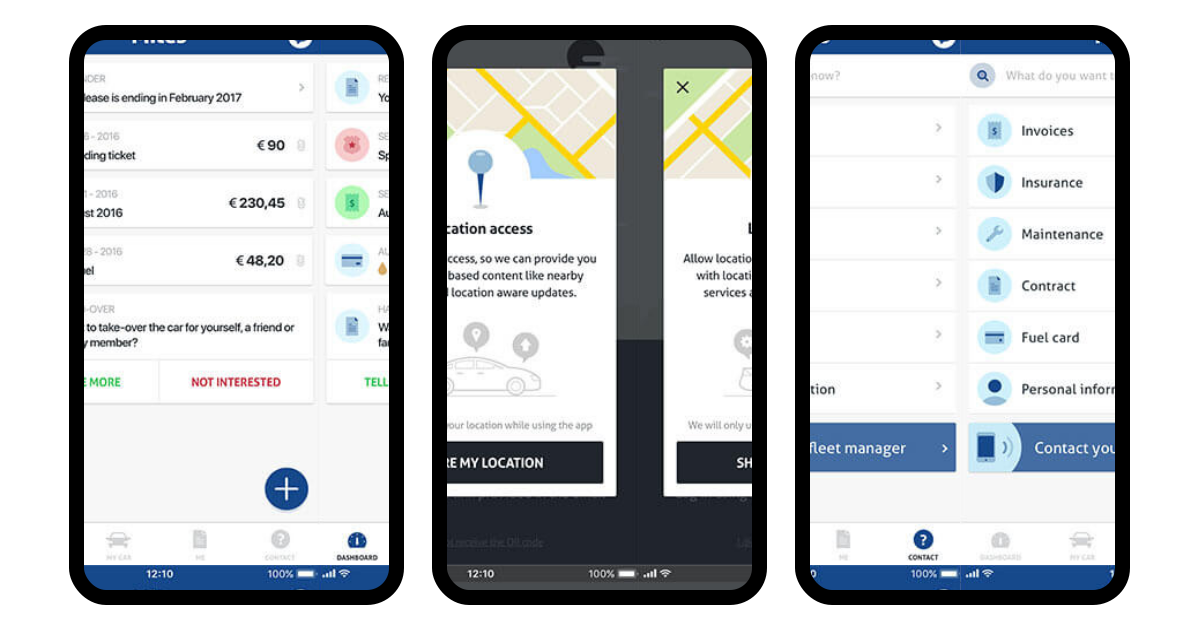
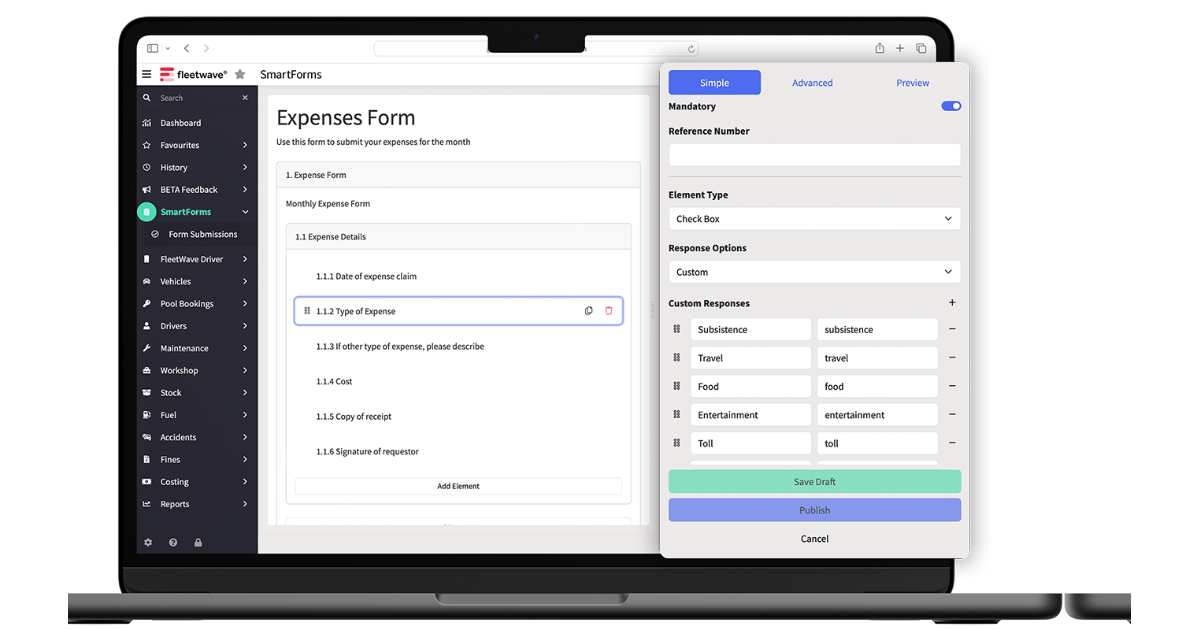
We see FleetWave as the strongest lessee-side option. Cost, maintenance, and utilization matter more here than origination. It focuses more heavily on operating the fleet. Vehicle costs, maintenance, defects, fuel, and assets remain centralized. That makes it useful for fleet vehicle leasing customers. It doesn't replace full lease origination software. Glesby Marks uses FleetWave for leasing decisions. The company operates vehicle and equipment leasing services. FleetWave Core currently costs £5 per vehicle monthly. Advanced pricing requires direct contact. Core and Advanced agreements run for three years.
Our conclusion is straightforward. Choose FleetWave for operational fleet control. Choose another platform for full lease origination. SOFICO Miles offers the broadest overall leasing coverage here. Odessa and Alfa fit complex asset-finance environments. Solifi and NETSOL suit finance-led organizations. SOFT4Leasing provides a clearer mid-market path. FleetWave works best for lessee-side fleet operations.
How to choose the right vehicle lease software?
The right platform should match your actual leasing responsibilities. It should also fit existing finance and fleet systems. Compare real workflows before comparing dashboards or feature counts.
1. Define who owns each lease process
Start by separating lessor and lessee responsibilities. Lessors manage pricing, credit, billing, servicing, and asset returns. Lessees focus more on payments, utilization, renewals, and condition. That distinction also appears in formal accounting guidance. Deloitte’s IFRS 16 overview describes separate lessee and lessor models. IFRS 16 keeps different requirements for each party.
Map each responsibility to one internal owner. Then map it to one system. Duplicate ownership often creates conflicting records or approvals. Consider who approves changes in fleet vehicle leases and vehicle replacements. Also identify who owns billing corrections and termination decisions. Choose software around responsibility, not the longest feature list.
2. Map contract and vehicle events
Document every event affecting a vehicle or contract. Include approval, delivery, mileage, repairs, amendments, and returns. Each event needs one authoritative source. Assign one authoritative identifier to every vehicle. Do the same for every fleet leasing contract. Then verify how corrections propagate between connected systems. Poor identifiers create wider data-quality problems. IBM reported that 43% of COOs prioritize data quality. Over one-quarter estimated losses above $5 million annually. Use a single VIN and a single contract identifier everywhere. Test how corrections propagate between connected systems.
"Integration problems rarely start inside the API. They start when two systems define one vehicle differently."Myroslav Stelmashchuk, Node.js Developer at COAX Software.
A clean identifier model protects every later report and automation.
3. Stress-test pricing and contract amendments
Don't evaluate pricing based on a single standard monthly fleet lease. Test situations that change the contract economics. Include mileage bands, services, deposits, taxes, and residual guarantees. Then extend the term or change expected mileage. The system should preserve the original calculation. Lease modifications also create formal accounting consequences. KPMG’s IFRS 16 guidance addresses modifications for both parties.
PwC also notes that some changes trigger liability remeasurement. This makes version history more than an audit convenience. Test amendments, reversals, and early termination before migration. Those scenarios quickly expose fragile pricing logic. The platform should explain every financial change after contract signing.
4. Review accounting and document requirements
Finance should define the required outputs before selecting software. Check journals, reassessments, disclosures, and amendment handling. Verify support for your applicable accounting framework.
Contracts create more than accounting entries. They also create inspections, amendments, invoices, and return documents. Every file needs a reliable vehicle and contract reference. COAX Software follows this principle in logistics document management. We link documents with operational records whenever possible. Auditability depends on preserving calculations and supporting evidence together.
5. Evaluate integrations before planning migration
Vehicle lease software rarely operates alone. It usually exchanges data with ERP and CRM systems. Telematics, payments, identity, and documents add more connections. Integration complexity should influence the buying decision early. Gartner describes integration-platform migrations as complex and costly. Some migrations also deliver little direct business value.
Connected data reduces silos and inconsistent information across systems. Review APIs before signing a software contract. Test authentication, retries, error queues, and export rights. Confirm how historical records are exported from the platform. Don't replace a reliable system without a clear reason. A smaller integration layer may solve the actual gap. The best migration is often the one you avoid.
What is fleet vehicle leasing?
Fleet vehicle leasing provides businesses with long-term access to vehicles without ownership. The lessor owns the asset during the term of the contract. The customer pays agreed charges for vehicle use. Those charges may also cover maintenance and other services.
This model differs from short-term rental in several ways. Fleet agreements support longer periods and planned replacement cycles. They also connect usage limits with financial obligations. GSA Fleet provides a useful real-world example. Its full-service leases include acquisition, disposal, maintenance, and fuel services. The program also uses centralized fleet-management data.
Open-end agreements suit changing commercial vehicle leasing particularly well. Heavy mileage doesn't automatically create fixed mileage penalties. However, the lessee carries more residual-value exposure. Closed-end structures work better for predictable usage patterns. They usually define mileage and return conditions beforehand. Accounting classification creates another separate layer. Finance and operating leases are accounting categories. Open-end and closed-end describe commercial contract structures. Mixing these concepts creates poor software requirements.
Current accounting rules make that distinction important. IFRS 16 uses one primary lessee model. Most longer leases create recognized assets and liabilities. FASB Topic 842 also recognizes most longer-term leases. It applies separate classification and measurement requirements. Full-service leases add another operating dimension. Maintenance, fuel, replacement, and roadside services may be bundled. GSA's 2026 rates use monthly and mileage charges. Those charges include maintenance and fuel expenses. GSA published those rates in June 2026.
COAX Software treats lease type as a data-model decision. Each structure changes the logic for billing, amendments, and termination. Full-service contracts also create additional operating events. Those events shouldn't live only inside contract notes. Vehicle leasing software should directly represent contractual and operational differences. Spreadsheets usually hide those differences inside formulas and comments.
We hit a similar problem on SyncMatix, our telematics platform. Partner contracts, renewal dates, and service tiers used to live in scattered folders. We moved them into dedicated dashboards instead. Onboarding a new partner dropped from days to minutes. That's the same logic a leasing platform needs: structure the contract, don't bury it.
How does vehicle lease software work?
Vehicle lease software connects contract rules with vehicle lifecycle events. One shared record should follow each vehicle continuously. The workflow starts before delivery and ends after disposal. The first stage usually covers quote creation and approval. The system calculates rates, mileage, services, and residual assumptions. Approved values then become controlled contract terms. Later edits should create amendments, not silent overwrites.
Vehicle delivery activates the operating phase. The system connects the VIN with the commercial vehicle fleet leasing record. It may also assign a driver or business unit .NHTSA requires a 17-character VIN for regulated vehicles. That identifier provides a stable reference across connected systems. During use, the system receives changing operational information. Mileage may come from telematics or manual readings. Maintenance systems contribute repair and service records. Finance systems provide payments, taxes, and adjustments.
Telematics increasingly supports these lifecycle decisions. The U.S. Department of Energy links telematics with vehicle acquisition planning. Its guidance also covers mileage and diagnostic information. This data reduces dependence on periodic manual updates. Billing then follows approved contract events. Regular charges follow the payment schedule. Mileage adjustments may change expected end costs. Service packages may add separate financial events.
Amendments make the workflow harder. A fleet may extend one vehicle's term. Another contract may change mileage expectations. A third asset may return early after damage. These changes need preserved financial history. The IASB continues reviewing this practical burden. Its March 2026 review examined ongoing IFRS 16 measurement costs. Commercial fleet leasing changes remain part of real-world accounting complexity. End-of-term processing links conditions to contract obligations. Software records excess mileage, damage, and final charges. It may then pass the asset into remarketing. Residual performance becomes useful for later pricing decisions.
In our transport systems, we use similar event-driven patterns. Approved operational changes should trigger controlled financial actions. That prevents billing from drifting away from vehicle reality. Our vehicle tracking software work reinforces this principle. Mileage data needs a reliable asset identifier first. Otherwise, automation only accelerates the creation of mismatched records. Contract reality and vehicle reality should remain synchronized throughout the ownership period. That requirement separates lifecycle software from a contract database.
Who needs fleet lease software?
Fleet leasing software becomes valuable before fleets become very large. Process complexity matters more than vehicle count. Ten unusual contracts may create substantial administrative work. Fleet leasing companies need the deepest financial functionality. They create quotes, approve contracts, and manage billing. They also handle renewals, returns, and residual exposure.
Market growth increases pressure on these workflows. Market Research Future forecasts continued expansion in company vehicle leasing through 2035. The market is projected to exceed $53 billion. Corporate fleets need a different operating emphasis. They usually consume leasing services rather than originate them. Their priority is contract visibility across actual vehicle use. Renewal timing, mileage, maintenance, and utilization matter most.
Public fleets show why this operational layer matters. DOE updated its replacement guidance in August 2026. It links decisions with several vehicle factors. These include mileage, age, condition, and repair history. Logistics and transportation providers add route dependence. Vehicle availability directly affects service capacity. High mileage may accelerate replacement decisions. Maintenance interruptions may make a cheap lease operationally expensive.
Automotive captives need stronger credit and localization functions. They finance vehicles through dealer and customer networks. Multi-market operations also require local contract and accounting rules. Their software, therefore, sits closer to financial infrastructure. Mobility providers create another operating model. Subscription terms may change more frequently than standard vehicle leasing solutions. Usage data may directly influence pricing. Self-service also becomes more important for drivers.
Rental and leasing groups manage mixed contract durations. One asset may move between several customer arrangements. That makes continuous vehicle history particularly important. Fleet management companies often sit between these groups. They administer vehicles for external customers. Reporting, permissions, and supplier coordination become central requirements.
Our fleet projects show the same underlying pattern. Business role should determine software boundaries. Fleet size alone provides a weak baseline for requirements. The right fleet management software should reflect contract complexity and operational responsibility.
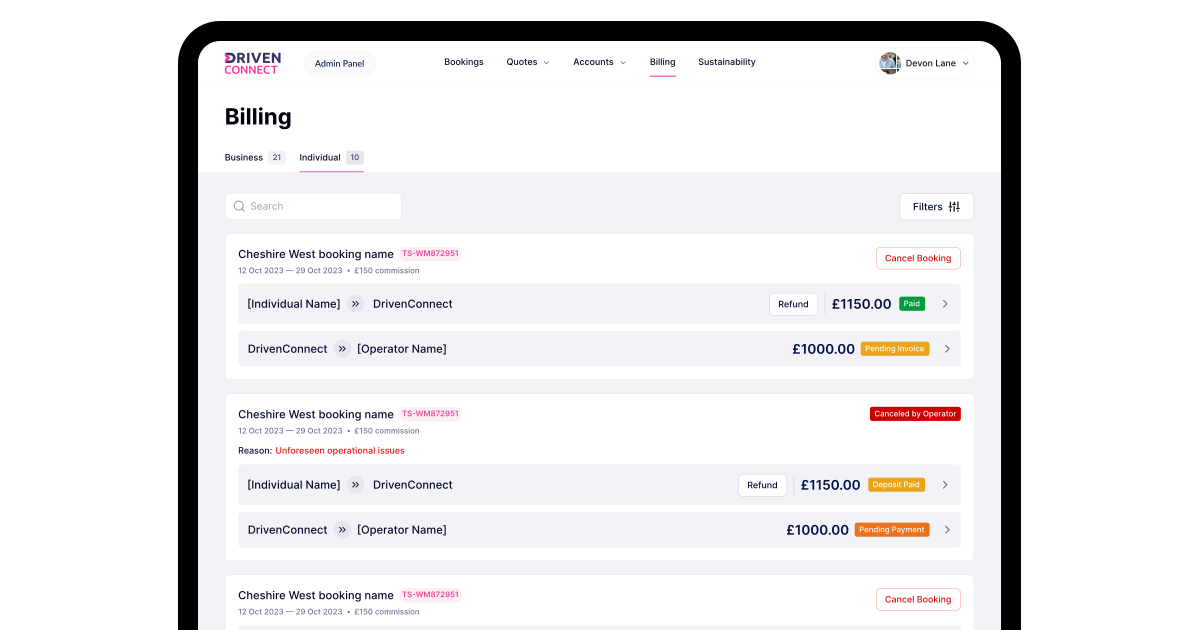
We saw this on Driven Connect, our UK coach-hire marketplace. Over 400 operators needed visibility into contracts, not just vehicles. Carrier bidding, emissions tracking, and billing all lived in one dashboard. That's the same lesson fleet lease software needs to learn.
What are the features of vehicle lease software?
Strong software follows one vehicle throughout its lifecycle. Every module should share asset and contract identifiers. That structure prevents billing, maintenance, and lifecycle records from drifting apart.
1. Contract and pricing management
Contract tools should preserve every approved commercial decision. Pricing engines calculate rates, mileage, services, and residual assumptions. The difficult part starts after contract signing. PwC's ASC 842 guidance addresses modifications to commercial vehicle leasing. Some changes create separate contracts. Others modify the existing agreement.
Software therefore needs effective-dated pricing versions. Original terms should remain visible after every amendment. New calculations should reference the changed terms directly. Test extensions, mileage changes, bundled services, and early termination. These scenarios expose fragile pricing rules before migration. From an engineering perspective, immutable approved records work best. Corrections should create new events rather than rewrite history. Every pricing change should remain traceable to its effective date.
2. Vehicle lifecycle and residual management
Vehicle histories should outlive individual lease contracts. Mileage, repairs, valuation, and disposal affect future decisions. Residual values also change with market conditions. Cox Automotive's 2026 mid-year review highlights this problem. Some EV contract residuals remained above market values. Used EV demand was strengthening at the same time.
That mismatch affects returns and remarketing decisions. Vehicle leasing software should compare original assumptions with actual outcomes. Condition records should explain differences between similar assets. COAX Software applied comparable asset continuity within SyncMatix. Usage, maintenance, and cost information remained linked to each vehicle. That structure preserved context across changing operational events. Residual decisions need operating history, not contract data alone.
3. Billing and lease accounting
Billing should preserve the source behind every posting. Amendments need separate effective dates and transaction references. Reversals should point back to original entries. Closed periods also need protection from silent recalculation.
FASB's Topic 842 review included feedback from more than 1,600 stakeholders. Those reviews show that accounting for lease a vehicle for business remains complex. Software should preserve calculation inputs and posting histories. Reversals should retain references to original transactions. Period cutoffs matter just as much. Late amendments shouldn't silently change closed reporting periods. In practice, operational systems should send validated events into accounting. This keeps posting logic easier to audit. Test one late amendment after period close. The system should preserve both financial versions.
We built this discipline into Driven Connect's billing layer. Contracts, invoices, and renewal dates live in one dashboard. Nothing gets overwritten when a term changes mid-cycle. In practice, operational systems should send validated events into accounting. This keeps posting logic easier to audit. Test one late amendment after period close. The system should preserve both financial versions.
4. Maintenance and telematics integration
Lease economics change when vehicle usage changes. Mileage affects service timing and end-of-term exposure. Current federal guidance supports this connection. The Department of Energy's fleet framework emphasizes data-driven fleet planning. GSA telematics guidance also highlights automated mileage reporting. Telematics reduces dependence on manual odometer updates. It also adds context for maintenance and utilization. However, integration quality matters more than data volume.
Telematics feeds also need source-priority rules. Mileage may arrive from several connected devices. The platform should define which reading wins. Delayed records need original timestamps. Older mileage shouldn't overwrite a newer confirmed reading. In fleet integrations, schema differences often create bigger problems than APIs. Normalizing vehicle identifiers should happen before calculating lease fleet metrics. Telemetry only helps when the lease platform trusts its source.
We faced this on SyncMatix, too. Three vendor feeds reported mileage in different formats. We normalized them before any dashboard went live. In fleet integrations, schema differences often create bigger problems than APIs. Normalizing vehicle identifiers should happen before calculating lease fleet metrics. Telemetry only helps when the lease platform trusts its source.
5. Documents, approvals, and self-service
The fleet lease company creates contracts, inspections, invoices, and amendments. Every document should stay linked to the correct vehicle. Digital portals also require controlled identity management. NIST's Digital Identity Guidelines cover authentication, identity proofing, privacy, and federation. Those controls matter across customer and partner portals.
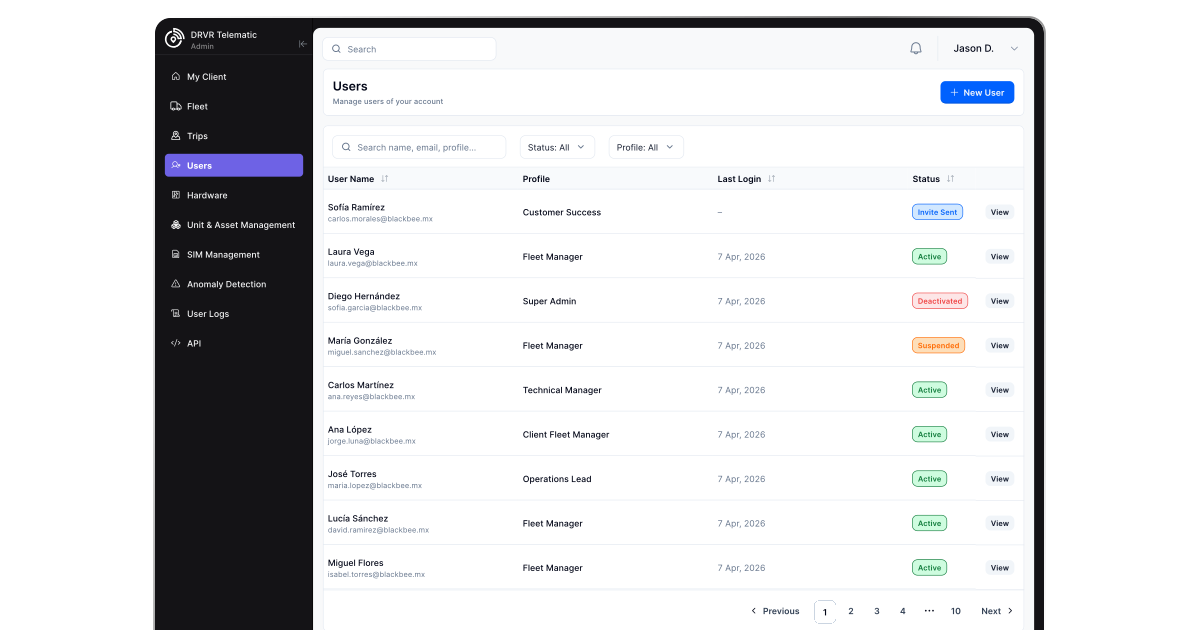
Drivers shouldn't receive finance administrator permissions. Partners shouldn't access unrelated fleet accounts. Approval logs should also record who changed each obligation. Electronic records need reliable retention and access. Federal E-Sign guidance recognizes electronic signatures and records. From a product-design perspective, roles should come before screens. Different users need different actions and visibility. Self-service should reduce administration without weakening access control.
6. APIs, analytics, and access controls
Fleet leasing services rarely operate independently. They exchange data with ERP, CRM, telematics, and payment systems. Analytics should answer practical business questions. Useful views include expirations, utilization, costs, and residual exposure. APIs need equally clear failure handling. Connected fleets also introduce cybersecurity risks. The Department of Energy's fleet cybersecurity guidance addresses connected telematics environments. NIST's Digital Identity Guidelines provide guidance on authentication.
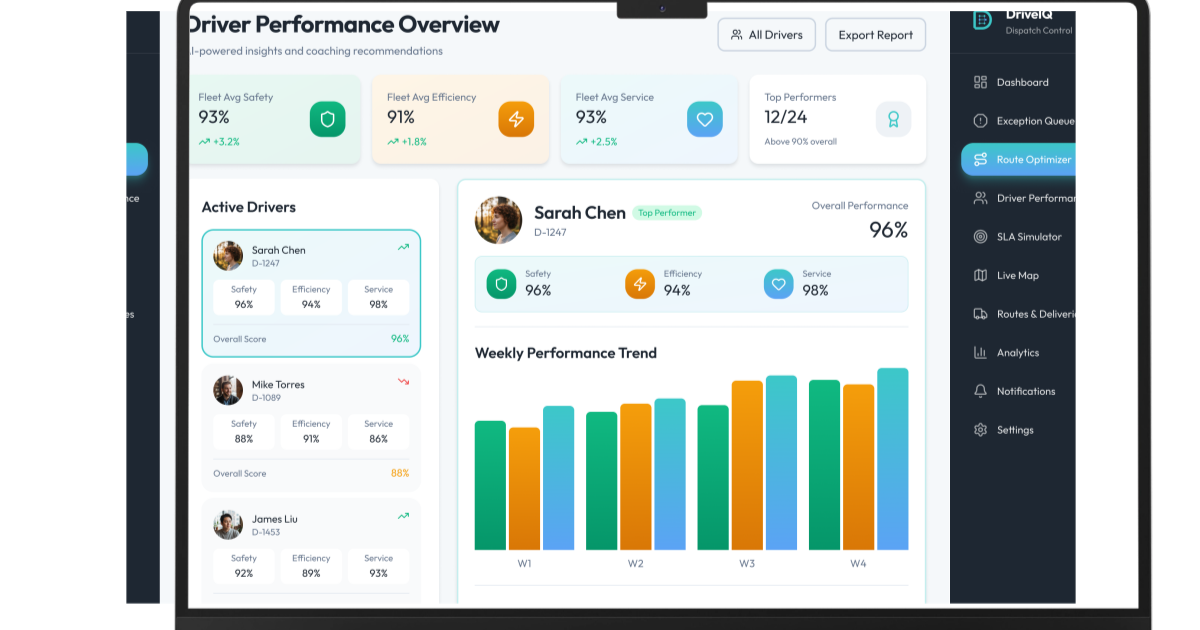
We saw the analytics side play out on DriveIQ, our predictive fleet platform. Live traffic and weather feeds updated ETAs every 15 minutes. Late deliveries dropped from 18% to seven percent. That's what a clear-view API layer actually earns you.
Teams should see rejected messages before reports become incomplete. Multi-tenant systems also need strict account separation. COAX Software applies these principles in its fleet management software development. Integration monitoring should expose failed messages immediately. Missing records shouldn't surface first inside monthly reports. Custom development should close defined gaps, not replace everything.
FAQ
How much does fleet leasing software cost?
Fleet leasing software pricing varies by deployment scope. FleetWave lists £5 per vehicle monthly. SOFT4Leasing lists Starter pricing at €1,800. Its setup starts from €28,800. Enterprise platforms usually require custom quotes. Compare licensing, migration, integrations, support, training, and administration. A three-year ownership model gives a more realistic comparison for larger fleets.
Does vehicle lease software support ASC 842 and IFRS 16?
Some vehicle lease software includes dedicated lease accounting functionality. SOFT4Leasing documents support for IFRS 16 and ASC 842. Other platforms integrate with separate accounting systems instead. Finance teams should verify classification, journal, and disclosure requirements. Test amendments, reassessments, and early terminations before migration. These scenarios reveal accounting gaps much faster than standard monthly billing first.
What integrations should fleet vehicle leasing software support?
Fleet vehicle leasing software commonly connects ERP and CRM platforms. Telematics, payments, documents, and identity systems also matter. Lessor platforms may connect credit and dealer services. Odessa documents an API-driven integration model. Prioritize ERP, CRM, telematics, payments, and document systems. Also test retries, failed messages, and historical exports. One mismatched record may fragment vehicle histories. Test failed transactions, retries, and exports before implementation.
When should fleet leasing software be customized?
Fleet leasing software needs customization when core workflows exceed standard configuration. Typical triggers include proprietary pricing, residual models, or partner portals. Existing accounting and leasing systems may still remain in place. COAX Software provides transportation software development for these integration and customization gaps. This limits the scope of migration while preserving unique business logic.
How long does vehicle leasing software implementation take?
Implementation time depends on migration, integrations, and workflow complexity. SOFT4Leasing states small projects may take two months. Some implementations may require three months instead. Enterprise programs usually involve broader discovery and migration. Start with one representative contract lifecycle before wider rollout. This exposes data and approval issues early. Legacy data quality often determines the final implementation schedule.







































































































_.avif)














%2520explained.avif)

We are interested in your opinion