For modern logistics, it’s no longer viable to manually search for scattered papers from many carriers in many regions and many shipments being delivered at the same time. This translates to wasted time and resources, manual errors, and compliance issues threatening your business's future. To solve this, logistics document management software changes the game:
Metadata-driven search and OCR technology, which instantly finds documents across thousands of files, can take the place of manual folder browsing.
Automated workflow and approval routing procedures that get rid of bottlenecks that lead to shipment delays and compliance problems.
Integrating DMSs with ERP, TMS, and WMS systems that eliminate manual platform re-entry and create unified data streams across operations.
Use of GPS tracking and digital proof of delivery to put invoicing on autopilot and instantly resolve routing issues.
Ensuring regulatory compliance across several jurisdictions without the need for manual tracking.
Diversity of off-the-shelf solutions that meet some of your workflows, but at the same time - efficiency and freedom of custom tools that give you competitive advantages.
In this article, we will outline the concept, key features, integrations, and the best options of DMS solutions so you can choose the right tool for your business.
What is a logistics document management system (DMS)?
Logistics document management software (DMSs) are systems developed to help logistics companies manage their entire process digitally.As said by Orlov, logistics DMSs are considered central repositories for storing documents and integrating multiple business processes to synchronize workflow among various operations. This includes managing all key documents (bills of lading, shipping manifests, customs declarations, invoices, and compliance certificates) in one place, and letting companies track the lifecycle of these documents.
What does it give you? DMSs help you track the real-time location of your documents throughout all the operational processes, including document creation, approval, and final archiving. With these systems, you also get control over the versioning of their documents and maintain regulatory compliance in multiple countries along the shipping corridors - much easier.
How DMSs differ from traditional document storage
There can be confusion here - are these types of systems so different from traditional document storage solutions that most companies already use anyway? Well, yes, there’s a great distinction, the greatest of which is in their approach to document handling and integrations with business processes. It shows in such aspects:
Search and retrieval. DMS system software offers better search abilities due to the use of metadata classification, full-text content search (including the use of Optical Character Recognition (OCR) and NLP). In contrast, traditional document storage systems (file servers, Google Drives, etc.) require you to manually browse through folders and only offer basic document search capabilities.
Process automation. Jordan and others state that DMS automates document workflow, which helps reduce human error, eliminates bottlenecks in approval, and automates the routing of documents. In contrast, traditional document storage systems don’t actively manage any business processes related to documents and require human input.
Integration capabilities. A logistics DMS integrates with ERP systems as well as various other business-related applications, giving a cohesive operational environment, as stated by Orlov. Meanwhile, document storage systems are separated from one another, so document transfer between systems must be completed manually.
Access and security. Based on the findings of Wolfrom, logistics document management tools typically have many different security features, including anti-malware scanning and encryption keys, along with granular access control mechanisms. Traditional file servers use IT configuration and ongoing vulnerability patching to protect their content. Additionally, cloud storage solutions carry the risk of global exposure of documents due to incorrectly set permissions.
Versioning and audit trails. DMSs record extensive version information and track all user activities related to documents in compliance with logistics requirements, while traditional methods of document storage generally provide limited versioning capabilities and tracking of user activity for regulatory purposes.
Classification and organization. Modern DMS systems have the capacity to classify documents automatically based on the contents and the source of the documents. Traditional methods of document organization rely on manual filing and folder creation, leading to a greater chance of misfiled or lost documents.
As you can see, DMSs are a step up from more manual, rigid, and disconnected document storage solutions.
Why logistics businesses need logistics document management software
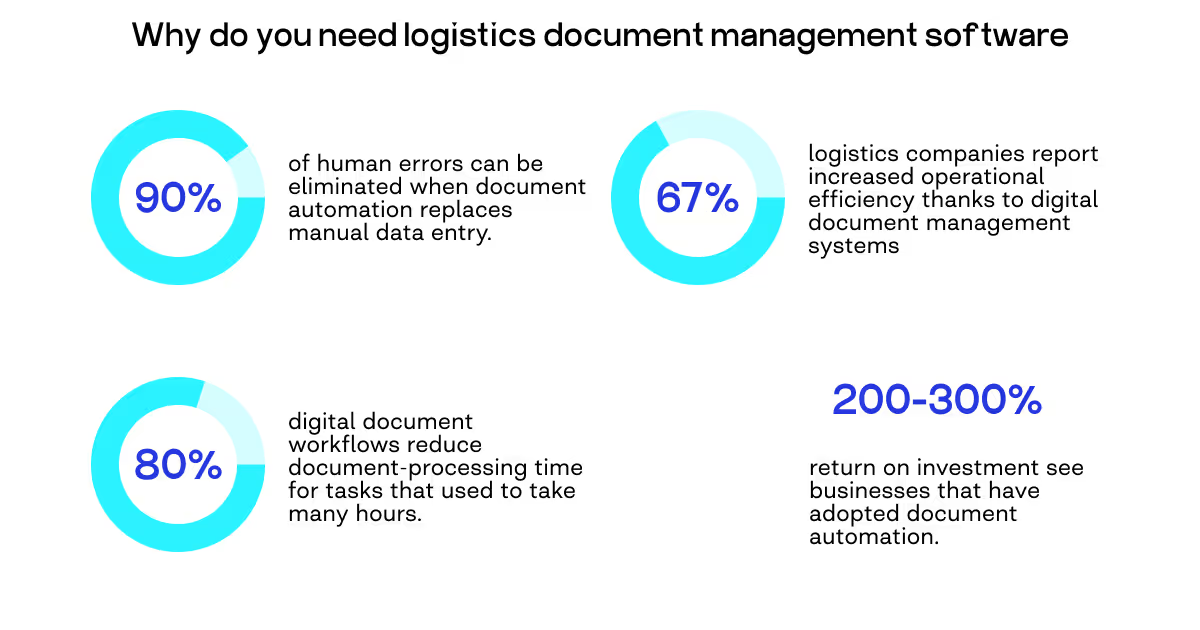
The logistics sector is in a crisis of documentation, which is impacting profitability. According to McKinsey, trade document processing alone can account for between 10 and 20% of total transportation costs, leading to both lost profits and delayed deliveries.
Additionally, the export documentation process represents a compliance minefield, where even agricultural exports typically require over 12 certificates from multiple agencies, with each agency having its own unique requirements that change based on country and season.
This fragmented approach to tracking costs the entire global logistics community tens of billions of dollars annually in both expedited freight charges and missed delivery opportunities. The real-life examples of how this can happen became evident during the 2021 Suez Canal blockage, where companies relying on manual tracking struggled to reroute shipments.
Now, what happens when the visibility becomes clearer? Another study by McKinsey discovered that with a transparent supply chain, businesses get about 15% delivery times. Also, document management for logistics through automated systems is made to manage every type of document that comprises the entire supply chain. Additionally, the DMS manages documents tied to finances, like invoices, purchase orders, and proof of delivery to support payment.
Furthermore, the DMS manages compliance-related documentation, including customs declarations, certificates of origin, phytosanitary certificates, regulatory permits, and other types of documents that vary by jurisdiction. Finally, the DMS manages documentation regarding operations, including track-and-trace information, fleet maintenance records, driver logs, contracts, and client orders.
In short, a single, unified platform to access all of these diverse types of documentation cuts down fragmentation that leads to escalating costs and reduces the labour-intensive effort.
Real-world examples
The ability of logistics document management systems to provide support in various processes shows their superiority to manual document processing in reducing the chaos present in any logistics business.
For instance, the document management issues faced by Fresenius Kabi, a global leader in the healthcare sector for lifesaving medicines, were the ones related to strict regulatory compliance, service level agreements, and other requirements from multiple locations, and the need for accurate and timely documentation delivery. This is why the company implemented a custom DMS that includes automated workflows, version control, and audit trails, with a centralised location for their documents. It allowed all the employees to find the required documents faster and reduced delays, lowering the potential for costly errors or liability issues.
Additionally, TTX, a North American railcar pooling firm in the transportation industry, implemented M-Files DMS to secure sensitive rail data by using centralized storage, metadata tagging, and enterprise search for efficient document handling. As a result, departments reported faster retrieval times and operational gains, with Fleet seeing less handling of critical data; expansion to over 2,000 users.
Finally, DHL Exel Supply Chain deployed a DMS logistics solution to automate the capture and collation of 15,000 employee survey forms, eliminating paper overload, storage needs, and stationery costs while ensuring secure, anytime access across locations.
These real-world applications show how a DMS can improve processes, reduce costs, and automate workflows to get a better system sync and clearer supply chain.
Must-have features of DMS systems
Now that we’ve witnessed the power of logistics document management, let’s break down the features you’d want your solution to have.
Hierarchical structure and centralized storage capability
Any logistics DMS is expected to have the capability to provide a central location where all types of documentation can be stored securely. This includes (but is not limited to customer files and shipment records, compliance certificates, and operational logs. Šaulinskas and others found that an effective document hierarchy typically consists of at least four tiers and contains all types of documents at each tier.
With this systematic approach, a user can quickly find the required document through a browser-like interface. By storing all documents at one centralized location, you won’t face a long search time and have a clearer line of sight to the documents. This saves time compared to searching through various file servers, email attachments, and folders. Also, role-based access controls would allow external partners such as auditors, freight forwarders, and customs brokers to have access only to the documents that are relevant to their job functions.
Automating the capturing and importing of information
It’s anticipated that electronic document management systems should automatically capture and import paper documents into digital form by using OCR. It allows for capturing container numbers, weight, consignee's information, and commodity codes for manual entry. Orlov states that digitizing paper documents greatly reduces the likelihood of data-entry errors.
Additionally, DMSs must be able to automatically categorize emails and email attachments, via content analysis, into specific document types and automatically distribute or route those documents to designated repositories without manual intervention. Natural language processing technology enhances the ability of a DMS by enabling it to understand how the various documents relate to each other and combine these documents.
Automation of workflows
Document management workflow automation and approval routing are essential for logistics operations. Automation streamlines processes, eliminating manual or person-to-person handoffs of approval and data entry, invoicing, and proof of delivery activities. When Šaulinskas performed their research on automating the development and approval of documents for businesses, they found that the automation effectively segmented the various steps of customs clearance using electronic checklists, increasing the efficacy of reliably completing each component of the overall customs clearance process.
The system should automatically route the documentation of approvals based on the content, the urgency of the transaction, and authorisation requirements, such as the requirement for additional levels of approval for high-value shipments, while expediting the routing of routine transactions. Workflow automation also eliminates version confusion and gives a single source of truth with a clear expectation of what version of a document to work from.
Search and metadata-driven retrieval
For efficient logistic document processing, DMSs must enable users to conduct a full-text search of documents by their content and query the document through the use of metadata to search for specific attributes. These can be the shipping date, carrier, destination, and commodity type. Wolfrom illustrates that the results of searches include a preview of documents, show version history, and related files, for enhanced context before actually opening a document.
Version control and audit trails
All modifications to a document must be tracked by time stamp, user id., and description of the change to keep a complete traceability for compliance audits and dispute resolutions. As Orlov points out, centralizing all documents within a single version-controlled database allows users to always access the latest versions of documents while still having the benefit of viewable historical records. This eliminates the possibility of the scenario where an invoice states one weight and a packing list states another, for example.
The system should automatically flag discrepancies in quantities on related documents before customs rejects the cargo or places it on hold. Audit trails must not only record document changes but also record the access patterns of documents: who viewed the document, who downloaded it, and from what source they retrieved it.
Digital proof of delivery with multimedia capture
The system should have the capability to have multiple types of electronic proof of delivery (POD) with signatures from drivers, time-stamped locations for accountability and verification by GPS links to their respective shipments in real-time to solve routing problems efficiently.
For instance, for trucking document management, drivers can use mobile apps to upload PODs as soon as they are delivered, so there will be no delays and potential loss from paper PODs. By being integrated with shipment tracking solutions, POD data can also update customer portals and then trigger invoicing automatically. This helps you demonstrate compliance, since a substantial number of export delays are caused by documentation issues.
One-click document generation from templates
With the right DMS, shipment records data auto-generates bills of lading, commercial invoices, packing lists, and customs documentation, so there won't be any need for a person to re-enter that data. In addition, AI-enhanced software is capable of selecting which templates to use based on shipment stats, shipping regulations in foreign countries, and the client's requirements.
Generally, the templates should be able to support different formats and multiple languages for international shipping documentation requirements. The generated documents should maintain their consistent format and contain end-to-end information.
Seamless integration with business systems
To establish common data streams between various applications, including ERP software, transportation management systems, warehouse management systems, driver management software, CRMs, accounting software, etc. Ship document management software also needs to use the latest technology, connecting through shipping APIs to communicate with all partner solutions in real-time and keep real-time data updated regarding shipments, inventory, and finances across all partner solutions.
Therefore, integration capabilities must include connections to not only carrier portals and customs platforms, but also trading partner platforms to eliminate the need to manually re-enter data between partners.
As logistics operations expand across multiple business units, many organizations move beyond standalone document repositories and adopt enterprise content management software to centralize enterprise content, automate document-centric workflows, strengthen information governance, and integrate seamlessly with enterprise business applications. This broader approach improves document visibility across the supply chain while supporting compliance, collaboration, and long-term scalability.
Barcode and RFID integration for automated tracking
Physical tracking technologies allow for a seamless transition from the physical world to the virtual while providing the ability to automatically link the scanned barcode or RFID tag associated with them to an existing digital document within your DMS. The system must create barcode labels attached to each document. RFID Integration allows the passive identification of document-tagged shipments as they pass through warehouse checkpoints and loading docks.
Compliance control features
Audit-ready compliance controls enhance businesses' audit readiness by automating regulatory audit requirements. According to Šaulinskas, quality document management solutions must maintain operational efficiency while meeting the standards of certification by having defined hierarchies of authority and approval. An effective audit report generated by a DMS must provide an audit trail for document access, document approval chain, document modification history, and document retention compliance.
Furthermore, DMSs must also be able to securely delete expired documents, enabling business owners to minimize their privacy risk and associated storage costs. The system must also support a legal hold functionality that will suspend the normal retention schedule of documents that are becoming relevant to any litigation or investigations, thus preventing the premature deletion of such documents.
Finally, using geographic data residency controls, the documents within a DMS should remain in the proper jurisdictions for the duration of the document's lifecycle and assist in meeting compliance requirements in other countries.
Top logistics DMS solutions
To choose the right DMS software company to get an off-the-shelf system from, let’s first define the top existing solutions.
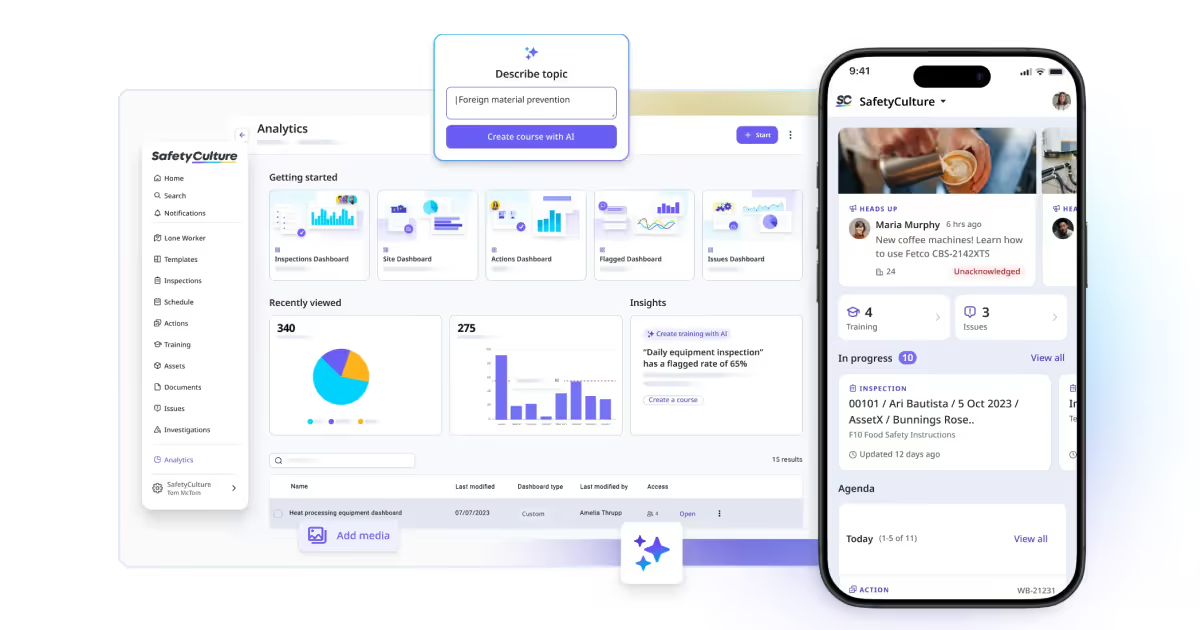
SafetyCulture focuses on providing mobile-first operations and regulatory compliance with a digital platform to track shipping processes on behalf of the end users. This allows for real-time communication with delivery personnel, as well as an automated way of generating complete reports in multiple formats to verify compliance with regulations. Pricing for this tool starts with a free version of SafetyCulture for teams of up to 10 users, and a Premium Plan costs $24 per user per month, which includes unlimited templates, advanced analytics, and custom integrations.
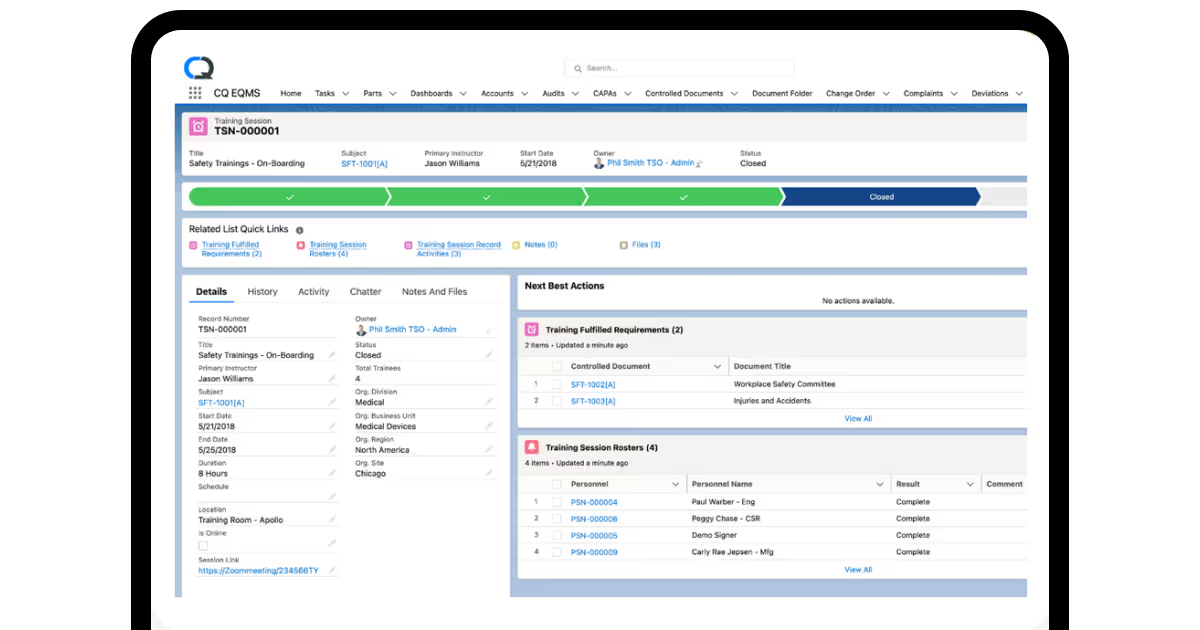
ComplianceQuest provides a DMS software designed for businesses that need to manage huge amounts of critical documents across multiple locations. It allows customers to manage the entire lifecycle of their documents with secure digital capabilities and the ability to create a single source of truth for decision-making. Key features include controlled versioning, streamlined review and approval processes, integration with training systems for updated documents, and comprehensive compliance support for ISO 9001/14001/45001 standards. The vendor provides custom pricing based on individual compliance goals.
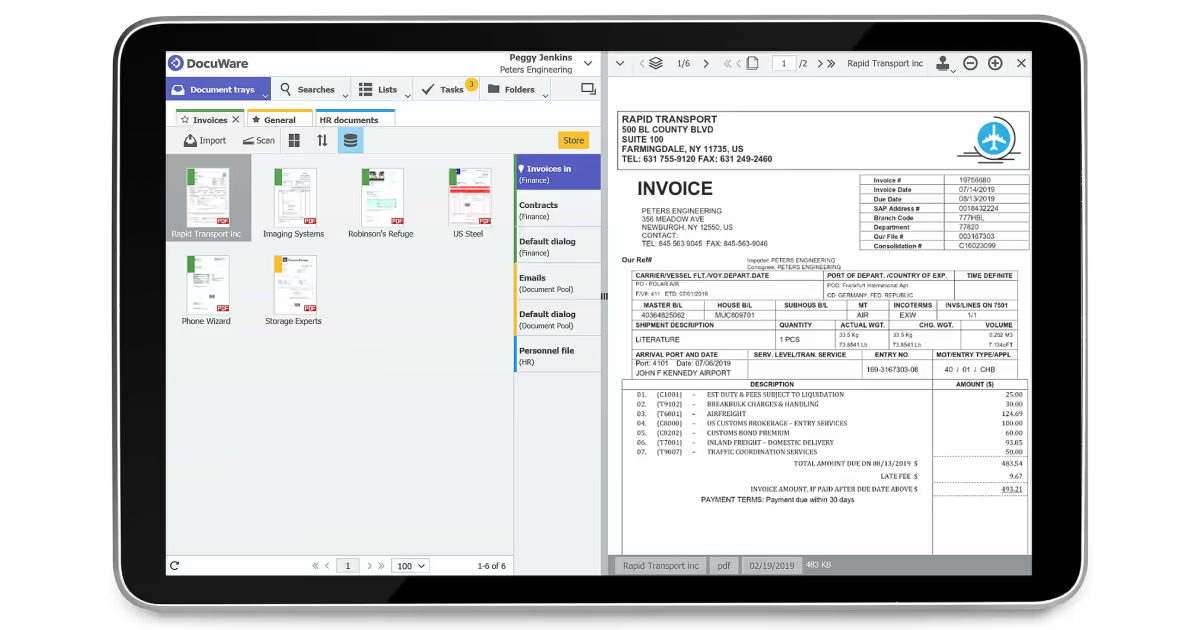
Using AI-powered Intelligent Document Processing (IDP), DocuWareprovides customers with document capture/storage/workflow automation solutions that fit seamlessly into ERP, CRM, and accounting applications, allowing customers significant savings due to increased efficiency and reduced labor costs. DocuWar provides analytics, integration capabilities for NetSuite, and over 15,000 documents managed securely. Pricing is custom quoted with a 30-day free trial option as well.
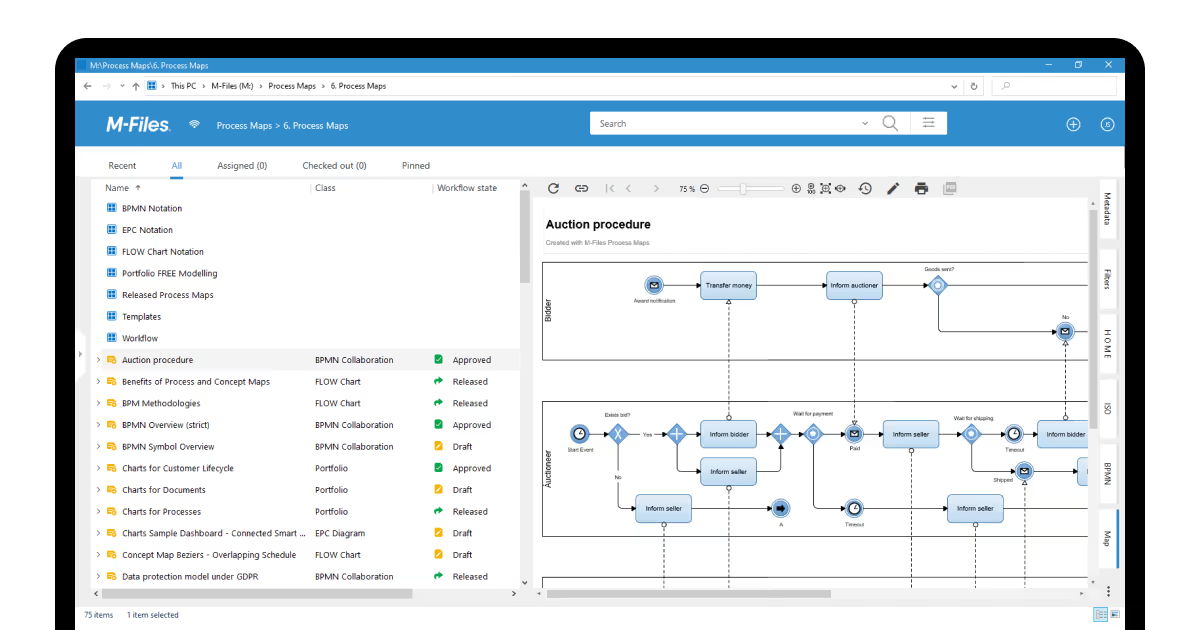
M-Files is one of the best DMS software options that helps replace traditional folder structures with a metadata-based approach. It’s great for handling complex logistics documents across a distributed workforce. Through the use of AI, M-Files makes it easy to find information instantly, automate workflows, and provide complete version control. M-Files integrates with many business systems and has been adopted by more than 6000 companies across the globe. M-Files also offers a 30-day free trial and custom pricing offers based on an organization's requirements.
The Square 9’s Intelligent Information Management solution utilizes generative AI technology to capture data from any document type, allowing businesses to easily find and use the necessary data from unstructured information. The software captures, classifies, and validates large volumes of documents, including faxes, emails, and other attachments within an encrypted SOC 2 and HIPAA-compliant environment. Monthly subscription pricing begins at $50 for 5 users of the Professional plan.
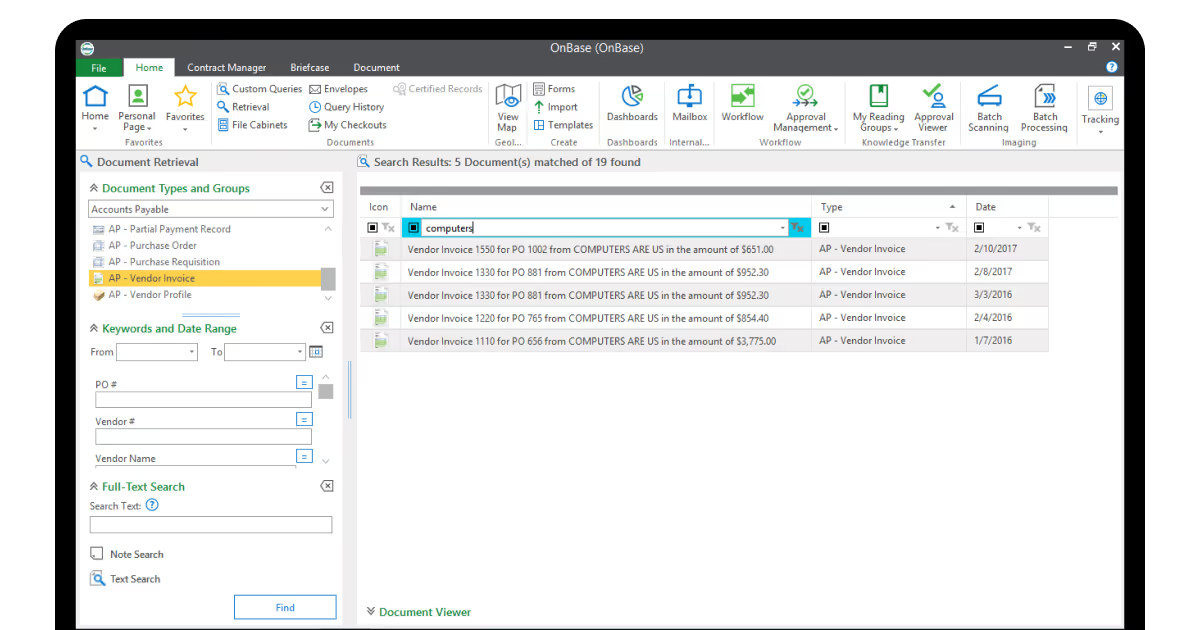
Hyland OnBase provides a full suite of document management systems for shipping and enterprise content management capabilities to give you complete visibility into information. The OnBase platform offers automated multi-channel capture with intelligent classification, customizable workflows, real-time reporting with interactive dashboards, and a complete case management function covering all content-related activities. OnBase integrates with over 500 applications and allows you to manage documents across multiple systems. The tool also has custom-quoted pricing with a demo available.
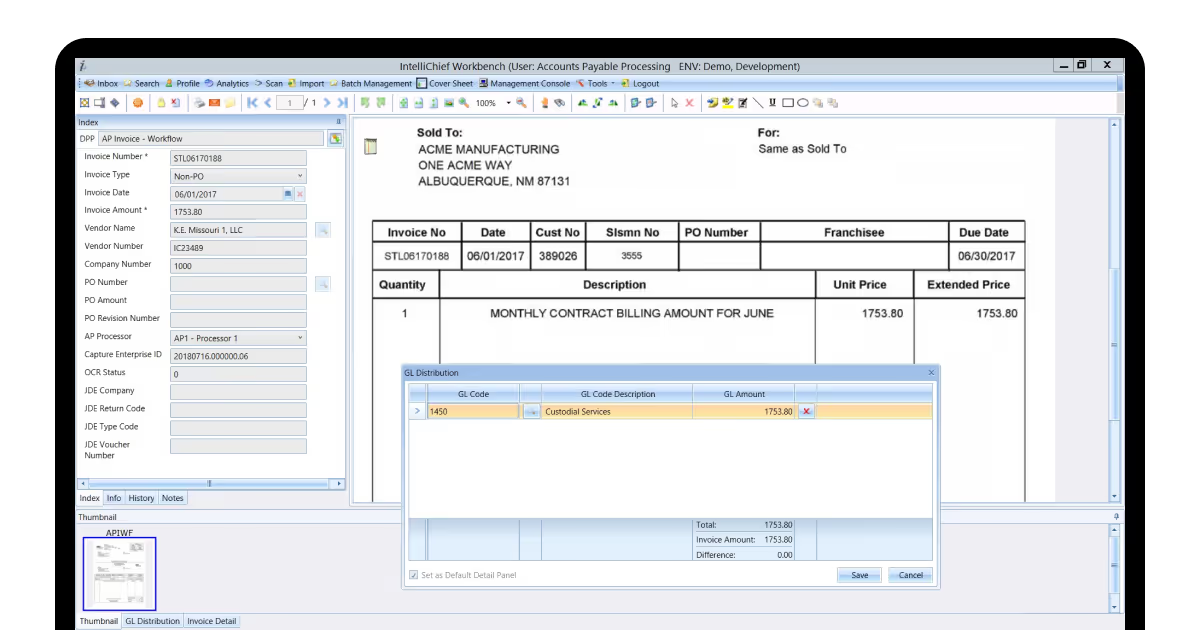
IntelliChief provides AI-driven solutions for automating business processes that work with ERP systems, like SAP and Oracle E-Business Suite. This solution uses Robotic Process Automation to reduce manual data entry for ERP systems, while AI-based validation ensures that the information being entered is accurate. Users can also access, review, and approve documents via mobile devices. The starting price is $50,000, and this is a one-time cost plus any additional customizations.
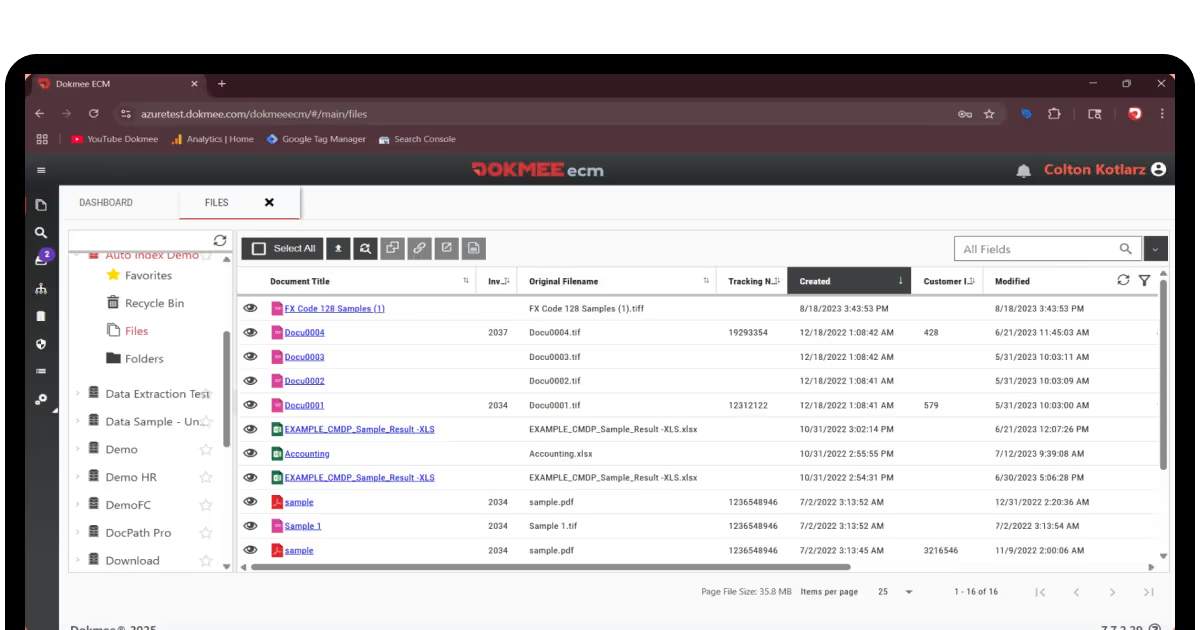
Dokmee functions as both a transportation document management software and an ECM through the use of advanced AI, a user-friendly interface, and a comprehensive automated workflow. It provides complete flexibility in either on-premises or in the cloud. The platform includes OCR to enable full-text searching of scanned and digital files, as well as full integration with many different applications, together with multiple levels of custom approval workflows, electronic forms with electronic signature capabilities, and intelligent indexing. The price is custom, and you can get a trial here.
The variety of vendors for logistics document management is diverse, and there are certain rules and best practices to pick the most suitable one.
How to choose the best document management software
The top solution for your business case depends on several factors, and you should evaluate each step by step. Let’s outline your key considerations.
Determine the size and complexity of your transactional operations.
Consider the number of users, document volumes, and processes you manage. As highlighted by Heines and colleagues, different stakeholders within the transaction process are assigned specific roles to ensure that pre-defined activities are executed exclusively by that individual. For this reason, your DMS must enable various roles, like carriers, consignees, and customs authorities. Small to mid-sized companies typically benefit from simple DMS solutions like SafetyCulture or Dokmee due to their simpler processes. However, larger enterprises dealing with an increasingly complex multi-stage approval process normally require comprehensive DMS platforms such as OnBase or ComplianceQuest.
Consider integration with existing systems.
Next, consider how you'll integrate your digital document management tool with existing ERP, TMS, and accounting systems. Security guidelines here are extremely diverse; for instance, businesses that handle sensitive cargo or work under stringent regulations require a DMS platform with encryption capabilities, role-based access control, and audit compliance features. As stated by Heines and colleagues, cryptographic data-protection measures are necessary to protect applications vulnerable to cyberattack and provide a single source of truth for electronic transactions that can be accessed by multiple companies.
Define the cost requirements.
It’s important to evaluate the cost versus long-term benefit and not just look at what it costs to buy a license, but also the total cost of ownership, which includes time for implementation/training and ongoing maintenance. Solutions that have steep learning curves will offer significant capabilities. However, these solutions require sufficient IT resources and a longer deployment. On the other hand, more intuitive systems allow for quicker adoption with less training overhead.
The thing is, even if you consider every little detail and choose a suitable solution, it still might fall short in the reality of your business. In this case, custom development is a step up.
Why do you need custom DMS software?
Custom logistics document management software offers clear benefits that ready-made solutions can't provide, especially for companies with specific operational needs or unique business processes.
Custom development helps reduce costs by managing resources in ways that fit your exact workflows. Route optimization connected to document processing cuts fuel expenses, while automated inventory management tied to shipment records prevents overstocking and understocking problems, saving money on warehouse operations - when tailored to your exact case.
Unlike subscription platforms, custom software means you own your system completely and control all functionality, updates, and security measures. You're not stuck following a vendor's plans or facing surprise price increases. Custom analytics help companies work more efficiently by tracking operational performance, customer behavior, and market patterns that generic software misses. You can add AI and machine learning features designed specifically for your business to predict demand and adjust operations ahead of time.
Custom development means your DMS grows with your business instead of forcing you to work around software restrictions, giving you the flexibility you need to stay competitive as your company expands.
This mix of flexibility, reliability, and precise business case adherence is what we offer at COAX when we talk about our custom software development for logistics. If you need a scalable document management system for transportation and logistics, our experts cover everything from initial assessment, designing intuitive workflows, careful testing and iteration, and development according to the most recent and efficient stack. We cover API integrations with your existing systems, any third-party providers, and protect everything with the best-grade security measures.
Implementation process and tips
If you are determined to build your own document management platform, you might need some extra tips. This is why we have gathered some implementation hints for you to implement.
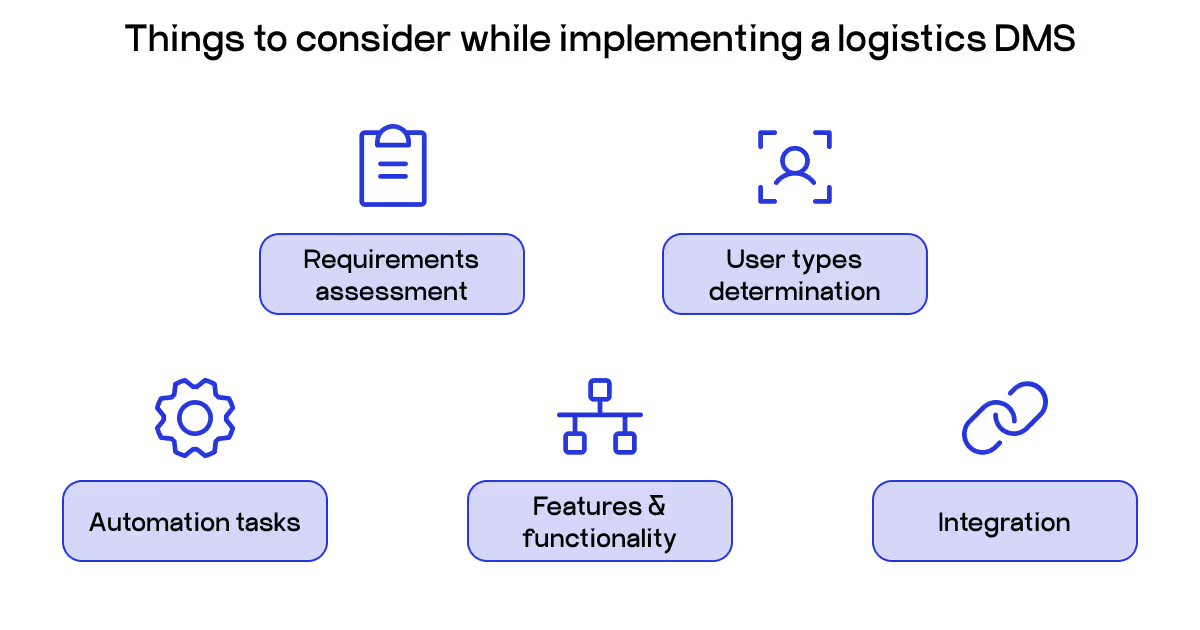
Requirements assessment. Lupi and others emphasize mapping all stakeholders early, so you should identify customs agents, ship agents, carriers, and authorities who will interact with the system. Document their specific needs through workshops and interviews to ensure the platform addresses real operational pain points.
User types determination. Define participation roles clearly. Heines recommends full access for primary actors like shippers and carriers, while authorities need read-only permissions. This role-based approach maintains confidentiality while enabling efficient document verification.
Automation tasks. Start with core functionality rather than implementing everything at once. For instance, Lupi and colleagues deployed five essential menus: Path (route planning), Shipment (data management), Send Notify (disruption alerts), PMIS/PCS integration, and Documents (customs file sharing). This modular approach to document management for logistics companies allows users to adapt gradually.
Functionality. Implement cryptographic data protection and tamper-proof storage from day one. Implement restricted authorization protocols where only verified participants can validate transactions, reducing fraud risks common in paper-based systems.
Integration. The best option is to develop Port Community Systems rather than creating isolated solutions. Heines and team demonstrate that neutral infrastructure with proper interoperability enables smooth data exchange across organizational boundaries.
Onboarding. Provide comprehensive training with clear flowcharts for document upload and download processes to build user confidence during the transition from paper-based workflows.
Surely, building this solution can be challenging, but at COAX, we can help you assess your user roles and needs, define the most suitable technologies, and assist you with ongoing monitoring and fine-tuning of your system.
FAQ
What is document management software in logistics?
DMS software is a specialized system used in logistics that pulls together, processes, and tracks bills of lading, shipping manifests, customs declarations, PODs, invoices, and other transportation documents. These systems increase transparency while tracking documents across the supply chain, simplify document handling procedures, and minimize manual paperwork. According to Jordan and others, DMSs facilitate data collection, management, and storage. Their primary function is to provide quick and easy access to information for users.
What is a DMS system’s key technical requirement?
There are several tech demands from logistics document management services and tools:
Effective management of increasing document volumes and users.
Role-based permissions, AES-256 encryption (data in transit and at rest), thorough audit trails, and compliance support.
API access to accounting, TMS, WMS, CRM, and ERP systems.
Deployment flexibility for on-premises, cloud, or hybrid options.
Mobile accessibility for adaptable user interfaces.
Advanced search with metadata tagging, indexing, and filtering.
Version control that revents conflicting copies and tracking changes.
Disaster recovery with backup systems and central storage.
What are the security challenges of implementing a DMS document management system software?
Data integrity and access control are the basic security issues with electronic ship document management system, according to Romanenko and Ischukova. Among the main obstacles are:
Ensuring that documents are authentic and unaltered throughout their lifecycle.
Managing role-based access and multi-level permissions across departments.
Unauthorized access due to weak encryption or hacked credentials.
Adhering to industry-specific rules, GDPR, and HIPAA.
Audit trail gaps leading to problems with accountability.
Defending against external attacks, ransomware, and malware.
Handling the dangers posed by irate workers who have access to systems.
The researchers suggest using blockchain technology to solve issues with data integrity.
How does COAX develop efficient transportation document management software?
COAX's ISO 9001 and ISO/IEC 27001:2022 certifications guarantee strong security and high-quality procedures. We use thorough audit trails, role-based access controls, and end-to-end encryption. Our solutions provide safe, legal, and effective logistics document management through automated OCR document capture, smooth TMS/WMS/ERP integration, mobile-first driver interfaces, AI-powered workflows, and scalable cloud architecture.


















































































































_.avif)












%2520explained.avif)

We are interested in your opinion