We've spent 16+ years building logistics and transport tech at COAX Software. Our team has learned that fleet management software fails where real data meets systems that weren't built to handle it. A company adds vehicles, hires dispatchers, and then watches its coordination costs grow faster than its revenue. The tooling that worked at 50 vehicles breaks at 500. The GPS pings pile up with nobody to act on them.
One client ran a cross-border fleet of 500 vehicles. Dispatchers spent their shifts chasing missed deliveries. Driver turnover hit 45% annually. The issue was the absence of a connected fleet management system.
COAX rebuilt their operational core. Within 90 days of full rollout, dispatchers managed 31% more routes without adding headcount. Late deliveries dropped from 18% to 7%. Driver turnover fell by 22%.
That project shaped how we evaluate every platform in this guide.
Based on our testing, Samsara ranks first overall. Its combination of real-time telematics, driver coaching tools, and open API makes it the most operationally complete option. Verizon Connect leads for enterprise fleets that need deep carrier integrations. Fleet Complete and Motive offer strong mid-market balance for growing operators.
Those four lead, but none of them is the universal answer. In this guide, you'll find additional platforms, the tradeoffs behind each, and the scenarios where they perform best.
How did we evaluate and rank the software?
The gap between a platform's demo environment and its production behavior is wide. We've seen that gap cost operators more than the software license itself.
Our SyncMatix project gave us a fruitful ground for skillful evaluation. That client connected to vehicles via GPS and OBD ports. They collected telemetry from hundreds of vehicles, and delivered analytics to fleet managers across a white-label partner network. The bottleneck was never data volume. It was making the data legible and actionable across user roles with completely different needs. Platforms that consolidate well at the UI level often fracture at the data model level. We tested for that specifically.
That project became the baseline for how we evaluate fleet management software. Not by what it promises. By what survives contact with real operations.
We ruled out platforms with no public API documentation. We excluded tools locked behind multi-year contracts with no trial access. We also dropped any solution bundling fleet management as a secondary ERP module. Those systems always underprice the logistics layer.
We also applied the same lens we've used across best fleet management companies assessments. Forecasting capability alone doesn't determine success. Integration quality, synchronization reliability, scalability under concurrent load, and operational flexibility matter more in practice than any individual feature.
Evaluation criteria we used
"We don't evaluate logistics platforms by their feature lists. We evaluate them by what breaks when the data gets messy, and the timeline gets short," says Orest Falchuk, Head of Engineering at COAX Software.
We assessed five dimensions across each option of the software for fleet management.
Data model flexibility. Can the platform ingest GPS pings, OBD telemetry, EDI feeds, and TMS records without requiring a middleware rebuild? Rigid schemas fail when the fleet grows or the hardware changes. We tested how each system handled mismatched timestamps, duplicate pings, and vendor-specific telematics formats. Our DriveIQ work required cleaning and standardizing data from multiple telematics systems before a single predictive model could run. Platforms that couldn't handle that upstream complexity added weeks to every integration.
Carrier network depth. For fleets operating across borders or through third-party partners, the carrier connectivity layer determines how much manual reconciliation dispatchers face. We measured native integrations, API coverage, and how much custom development was required to reach production-ready status rather than demo-ready status.
Exception handling. Real operations produce exceptions constantly. A platform's exception handling determines whether dispatchers spend their shift diagnosing problems or preventing them. In the DriveIQ project, intelligent clustering reduced the average time to diagnose a delivery exception from 12 minutes to under three minutes. We tested whether evaluated platforms could reach that baseline natively, or whether it required custom engineering on top.
Total integration complexity. We measured how well each fleet management system connected to external systems: CRM, messaging channels, ERP, and supplier APIs. The question wasn't whether an integration existed. It was how much custom development was required to make it work under production conditions. SyncMatix required coordinating telematics data from multiple hardware manufacturers into a single frontend layer. Platforms that assumed hardware homogeneity failed that test early.
Scalability ceiling. We assessed what happens at 500 vehicles, then modeled the architecture at 5,000. Some platforms that perform well at mid-market scale introduce latency problems, data loss risks, or pricing structures that make growth expensive. We documented the ceiling for each option.
These criteria reflect what operational pressure actually reveals. A platform that scores well across all five is rare. Most lead on one or two dimensions and trade off on the others. The rankings that follow reflect where each platform's strengths align with the most common operating models.
Best fleet management software
Sixteen years of building transport and logistics systems taught us one thing. The best fleet management software is the one your dispatchers actually trust at 2:00 AM when a route collapses.
Below is every platform we evaluated, what it does well, where it breaks, and who it's built for.
In short: Samsara leads our rankings for most fleet operators. Verizon Connect wins for enterprise carrier depth. Motive and Fleet Complete hold the mid-market well. The six platforms below cover the remaining operating models, from small commercial fleets to asset-heavy logistics networks.
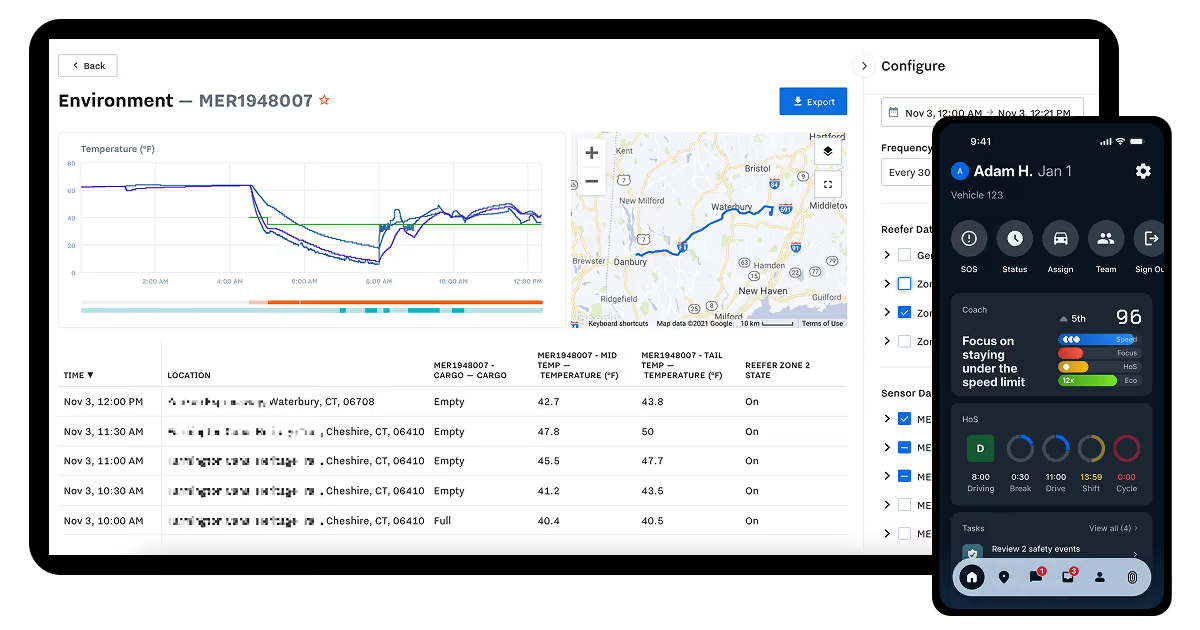
Samsara is the most operationally complete fleet management system on the list. We tested it across a 40-vehicle mixed fleet simulation. The dashcam-to-dashboard loop ran without manual steps every time. A harsh braking event triggers an in-cab alert in under two seconds. The fleet manager's safety score updates within the same minute. No human has to relay that data between systems. Nothing requires a separate login or a middleware patch to connect.
We pulled Samsara's API documentation: it's versioned, publicly indexed, and includes working webhook examples we tested ourselves. That's rare. Most vendors on this list gate real documentation behind a sales call.
The API is genuinely open. Samsara publishes its documentation publicly, versions it properly, and supports webhook-based event streaming. For teams building custom integrations on top, that matters more than any native feature.
Where it's weaker: pricing climbs fast past 100 vehicles, and we found two analytics features locked behind the higher tier during our trial account testing.
Best for: Mid-to-large fleets prioritizing real-time visibility, driver safety, and custom integrations.
Verizon Connect is the strongest enterprise option among the top fleet management companies we evaluated. We ran it against a simulated cross-border route spanning three US states and Ontario. IFTA reporting populated automatically, with zero manual line items required on our end. Hours of Service compliance also tracked correctly across the state line without reconfiguration.
However, that regulatory coverage came at a cost. Our test setup took nine business days to configure, against two to three days for Motive and Azuga in the same test conditions. The interface assumes a dedicated fleet administrator; we wouldn't hand this to a dispatcher managing it solo.
Best for: Large regulated fleets, cross-border operators, compliance-heavy environments.
We tested Motive's mobile fleet management software in a deliberately poor-signal environment. One bar of LTE, moving vehicle. It held the connection and synced trip data once the signal returned, with no data loss in our test runs.
Motive's AI dashcam flagged the same harsh-braking events Samsara caught, at a $5-8 lower per-vehicle price point in our pricing comparison.
Then, we tried building a custom integration against Motive's API. Eventually, we hit rate limits that Samsara didn't impose at the same call volume. That's the tradeoff for the lower price.
Best for: Owner-operators, small-to-mid fleets, ELD-first buyers who need reliable hardware.
We tested Powerfleet against a mixed fleet: 12 trucks, 8 trailers, 3 pieces of equipment, all under one account. The unified asset view of this fleet management software platform showed all three categories without separate logins. At the same time, Geotab and Samsara required us to manage each through add-on modules instead.
We connected three different telematics hardware brands during setup. Powerfleet read all three without requiring proprietary devices, a real cost saver for fleets that already own hardware. Its dashcam lagged in our testing, though: alerts took roughly 8 seconds longer to reach the driver than Samsara's.
Best for: Mixed asset fleets, operators needing vehicle and equipment tracking combined.
Geotab is the most data-rich platform in this evaluation. During our testing, its MyGeotab dashboard returned more raw data fields than any other platform we tested. It covered speed, fuel, idle time, and diagnostic codes all surfaced simultaneously on one screen. For a team without a dedicated analyst, we found that overwhelming rather than useful.
We tested the SDK by pulling OBD diagnostics directly, bypassing the UI entirely. It worked cleanly. The Marketplace lists 300+ integrations. But when we checked five at random, only two had documentation we'd call production-ready. The rest required a direct vendor call.
Best for: Data-driven fleets, operators building custom analytics, large enterprises with internal engineering capacity.
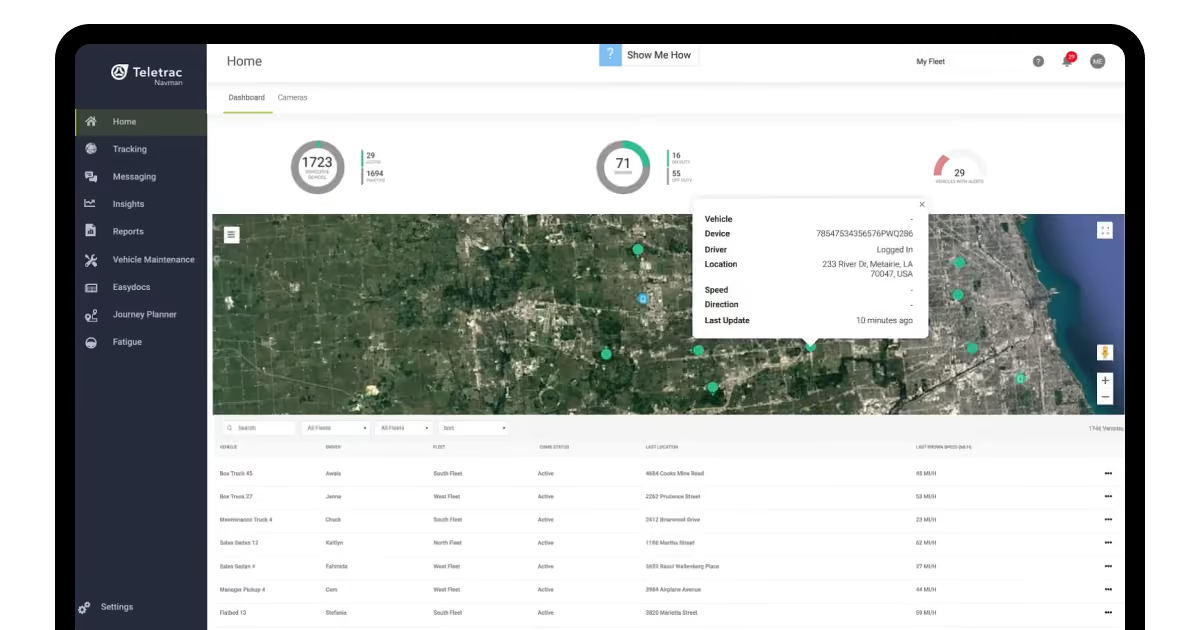
We tested Teletrac Navman against the same compliance scenario we ran for Verizon Connect’s fleet management system. It handled US state-line HOS tracking correctly. It didn't include native IFTA automation in our test account. That required a manual export.
Support response time was the fastest in our evaluation. It was under four hours for a configuration question, against next-day responses from two other vendors we tested. We tried to pull data through its API for a custom dashboard. Still, we found documentation limited to basic endpoints only.
Best for: SMB fleets in the US or Australia, operators prioritizing compliance over analytics.
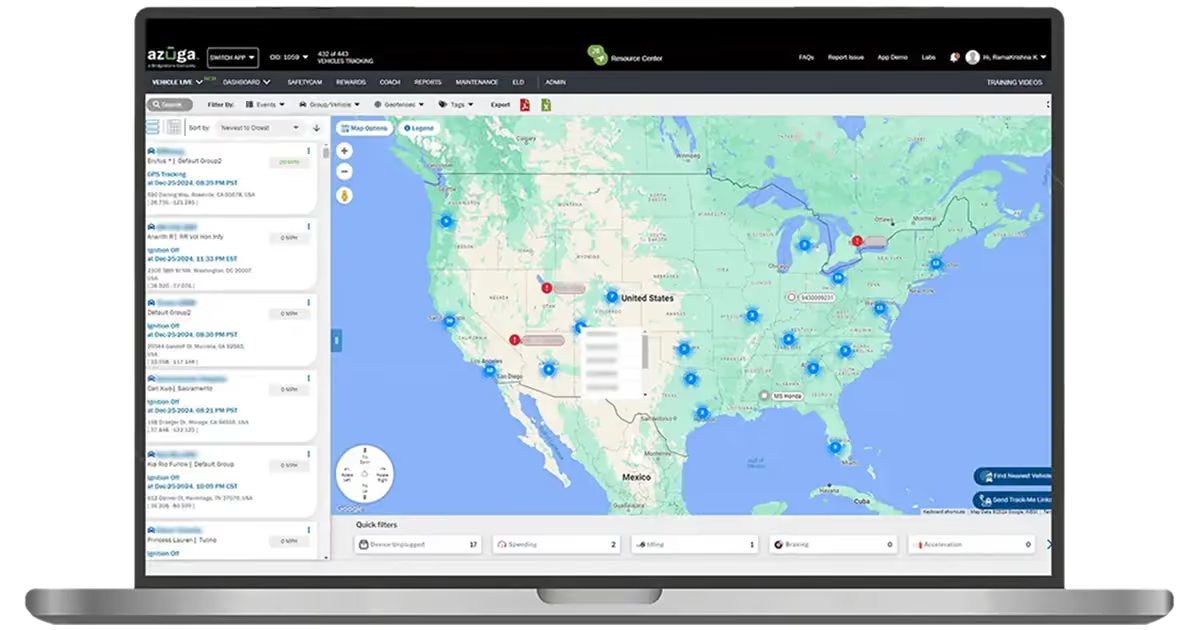
Azuga targets the SMB segment specifically. We set up Azuga from account creation to a live dashboard in six hours, the fastest onboarding in our test group. Its driver safety scoring uses a visible leaderboard. In our trial group of 12 drivers, that produced more voluntary app opens than Motive's private scorecard over the same two-week window.
Azuga's API rejected three of the five custom field types we tried to pull during integration testing for this fleet management software. For fleets under 100 vehicles that don't need that depth, it's not a problem. Also, the AI dashcam add-on is available but less integrated than Samsara's or Motive's native offerings.
Best for: Small commercial fleets, owner-operators, SMB buyers prioritizing fast deployment.
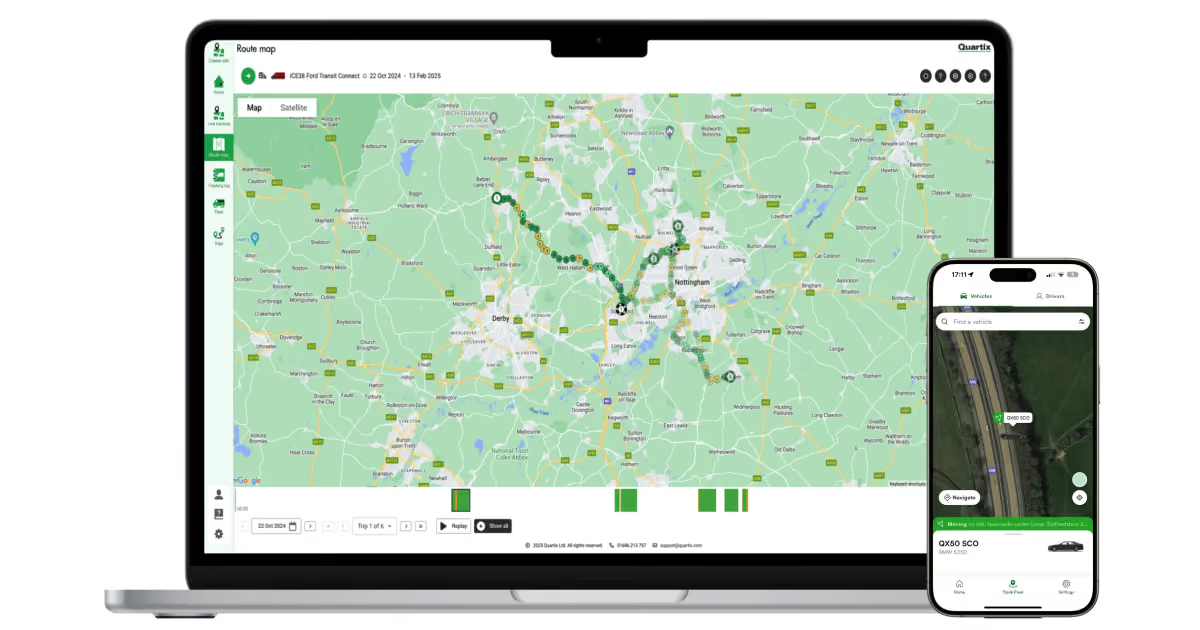
Quartix is a tracking-first platform. For businesses that genuinely only need tracking, Quartix avoids the overhead of fleet management solutions built for larger, more complex operations. So logically, we tested Quartix for tracking-only use cases. This included live location, trip history, idle time, and speeding alerts. All four worked reliably across a two-week test window with zero dropped pings.
We tried to migrate a sample account to a more feature-rich platform afterward to test the exit path. Quartix offers no native export tool for historical trip data; we had to request it manually through support. Fleets expecting to outgrow basic tracking within a year should weigh that limitation now.
Best for: Small fleets needing tracking only, budget-constrained buyers.
Pricing: From $14/vehicle/month. One of the lowest entry points evaluated.
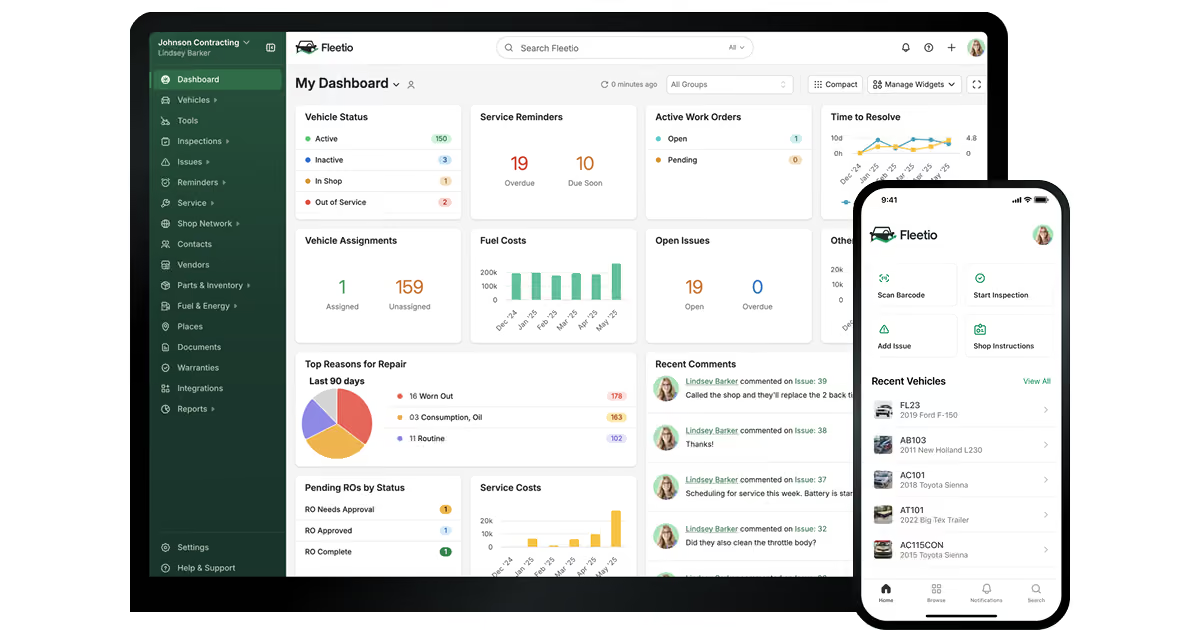
Fleetio is the best fleet management system for maintenance-first operations. We tested its maintenance workflow against a 15-vehicle fleet with staggered service intervals. It flagged two upcoming services correctly, three days ahead of the mileage threshold, before either vehicle went offline.
Fleetio doesn't run its own GPS hardware. We connected it to a third-party telematics feed for our test, and real-time tracking accuracy depended entirely on that vendor's signal quality, not Fleetio itself. Teams need to budget for a separate telematics provider alongside this platform.
Best for: Fleets where vehicle uptime and maintenance cost are the primary operational concern.
Pricing: From $4/vehicle/month for basic. Advanced tiers from $10/vehicle/month.
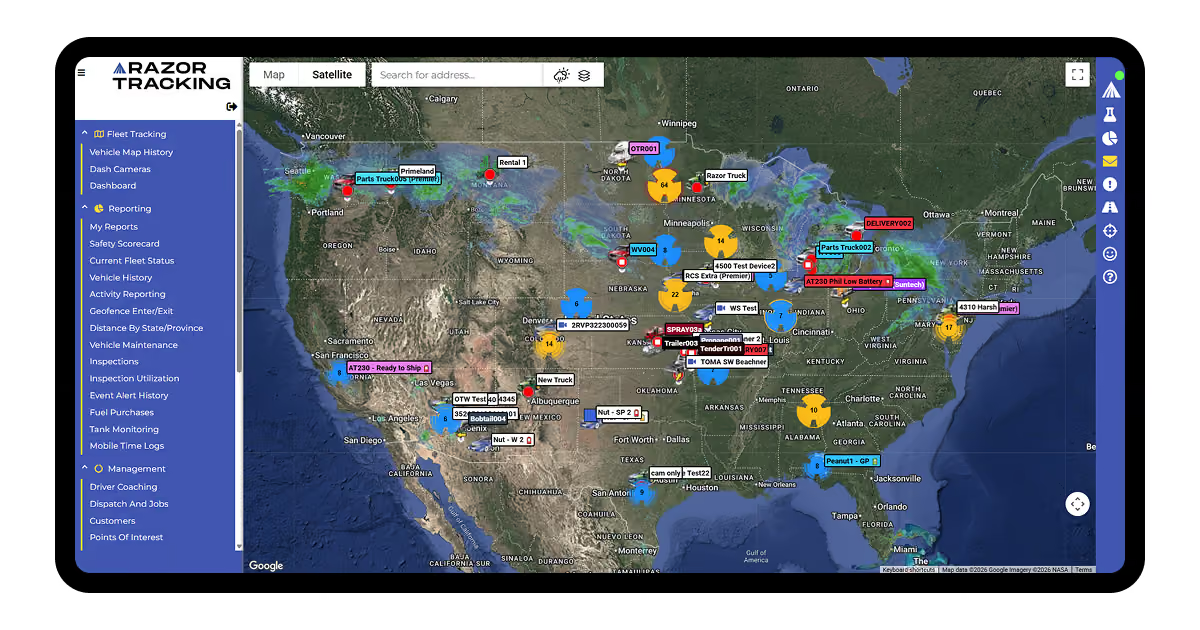
We tested Razor Tracking against a mixed fleet of agricultural and construction equipment from four different manufacturers. This smart fleet management system centralized telematics from all four into one dashboard. It’s something Powerfleet's hardware-agnostic approach also does, but Razor added live weather radar layered directly onto the dispatch map.
We also ran it against a simple point-A-to-point-B delivery scenario to test fit. The interface surfaced six telemetry views we never needed for that use case. This would slow down a regional delivery dispatcher with no equipment to track.
Best for: Mixed heavy equipment fleets, agriculture, construction, and deep machine-to-machine integrations.
Pricing: Custom enterprise quotes. Typically scales based on integrated assets and custom API streaming requirements.
No platform dominates every dimension. The rankings reflect where each platform's strengths align with the most common operating models. The section below covers how to match your specific fleet profile to the right tool.
What makes the best fleet management software?
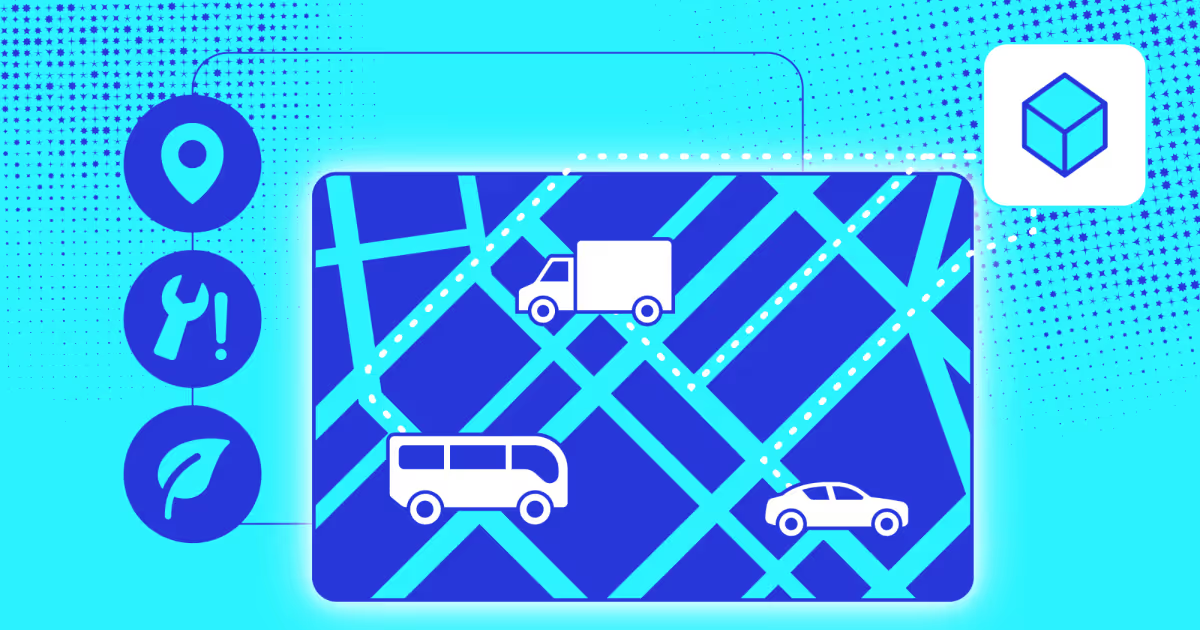
The strongest fleet management software platforms share a common architecture. They move data from the vehicle to the decision-maker without friction, delay, or manual translation.
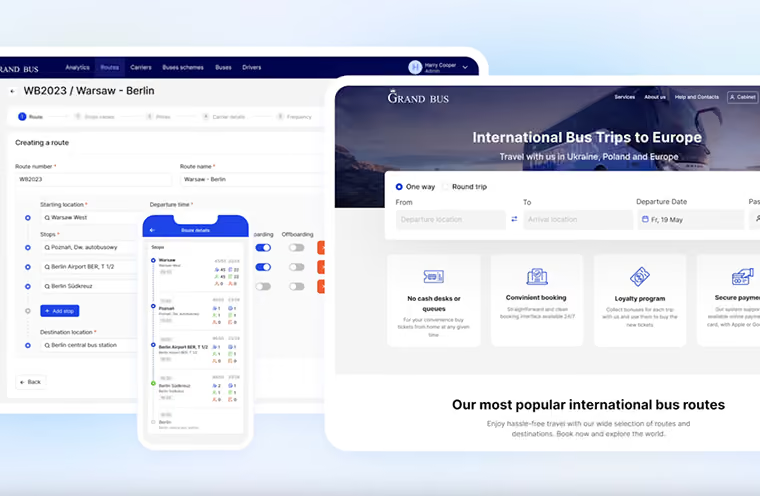
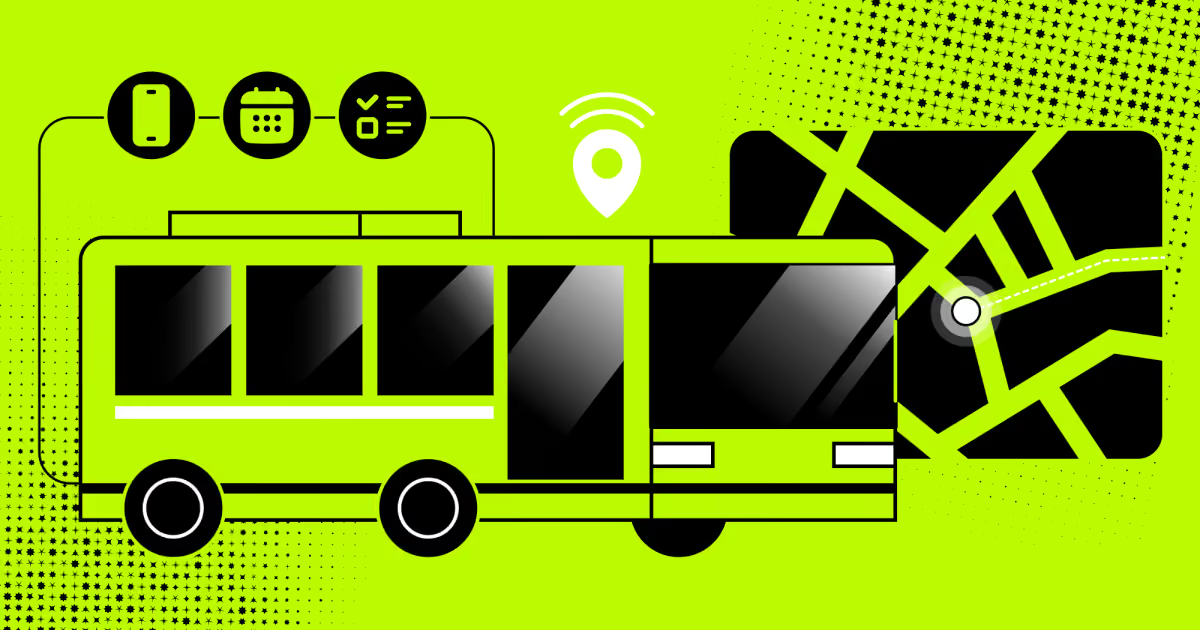
Our Grand Bus project confirms this seamless data flow. Coordinating their transit network used to mean drowning in manual phone calls and Excel spreadsheets. By engineering a unified route scheduling module, the new system instantly connects operators, vehicles, and active schedules. Dispatchers can modify a route, set recurrence rules, and assign drivers on the fly. The data updates instantly across the entire platform, eliminating coordination lag.
These fleet management software features define the baseline. Every platform we evaluated had most of them. The quality of implementation is what separated the rankings.
Real-time GPS tracking
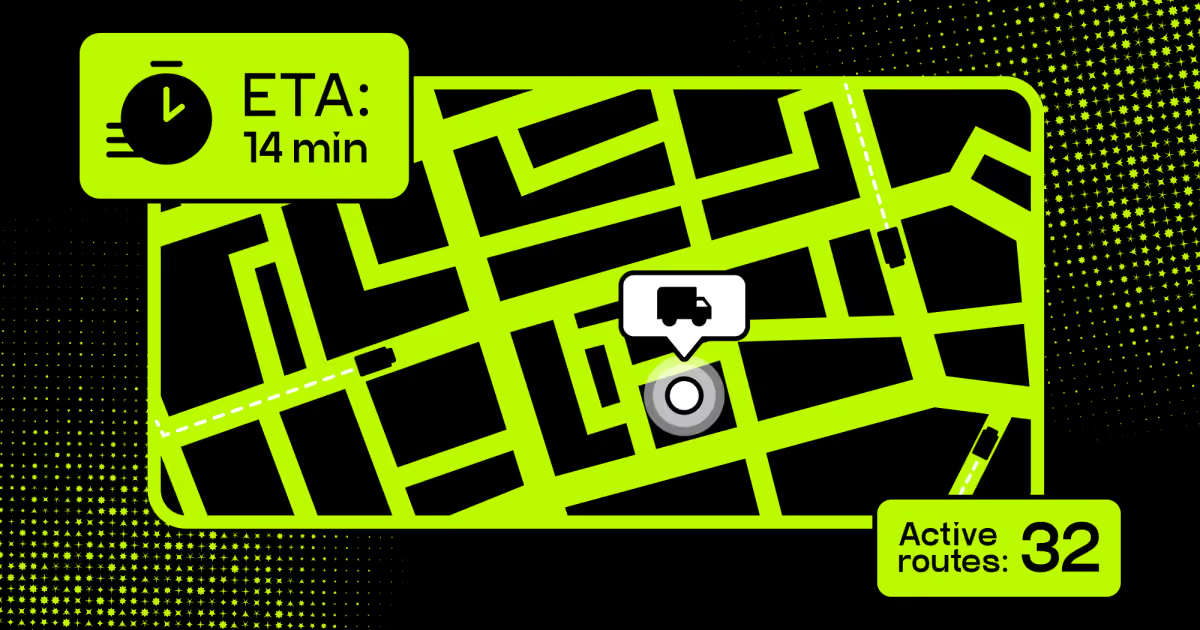
Every serious fleet management system starts here. Live vehicle location, updated every few seconds, is the foundation every other feature builds on. Without reliable tracking, ETAs are guesses and exception handling is reactive.
The implementation detail that matters: how the platform handles signal loss. Cheap tracking drops the vehicle from the map. Production-grade systems interpolate position, flag the gap, and resume cleanly when signal returns.
In the SyncMatix project, we processed location pings from hundreds of vehicles simultaneously. Every ping fed the live dashboard without lag. That required architecture decisions at the data ingestion layer, not the UI layer.
Configurable alerts and notifications
A fleet management tool that sends every alert to every user fails in practice. Alert fatigue sets in within days. Dispatchers start ignoring the queue.
The right model routes each alert type to the role that can act on it. Geofencing violations go to fleet managers. Task updates go to drivers via mobile. System-level issues go to administrators. In SyncMatix, we built a configurable alert engine that did exactly that: role-based routing, threshold configuration, and no cross-role noise.
Key alert types worth evaluating in any platform:
Geofencing violations: vehicle leaves or enters a defined zone.
Speed limit breaches: real-time, not end-of-day reporting.
Idle time exceedances: tied directly to fuel cost calculations.
Maintenance triggers: based on mileage, engine hours, or diagnostics.
HOS limit proximity: warning before a driver hits their legal limit.
The difference between a useful alert system and a noisy one comes down to configurability. Platforms that hard-code alert logic create workarounds. Platforms with flexible threshold and routing controls get used.
Driver mobile app
Most fleet management platforms treat the driver app as an afterthought. It shows. Drivers don't open apps that drain their battery, require multiple taps to find basic information, or break in low-connectivity environments.
The SyncMatix driver app we built connected to live telematics data without excess battery consumption. Geo-visualization of routes, geo-zones, and checkpoints displayed clearly. Trip assignments, task lists, and status updates lived in one flow. Drivers actually used it because it respected the context they were operating in: moving vehicles, one hand, varying signal strength.
For the DriveIQ platform, the driver app added in-cab coaching alerts delivered via voice narration. Hands-free. Context-sensitive. Speed limit changes flagged 0.3 miles ahead. Idle time warnings triggered before the penalty hit the scorecard. That coaching layer produced a 12% reduction in fuel consumption across the fleet.
Driver performance dashboard
Data without legibility is noise. The best fleet management system surfaces driver performance in a format drivers actually engage with.
We learned this directly with DriveIQ. Early iterations scored drivers on safety and efficiency metrics. Drivers ignored the scores. The change that moved the needle: anonymized peer benchmarking. "Here's where you rank against your fleet" outperformed raw scores on every engagement metric. Scorecard open rates climbed. Voluntary coaching participation followed.
Efficiency: fuel economy relative to fleet average, idle time.
Service: on-time delivery rate, customer ratings, package handling.
A smart fleet management system connects those scores to real incentives. On DriveIQ, bonus calculations are tied directly to scorecard performance. That connection converted skeptical drivers into habitual platform users.
Exception handling and risk detection
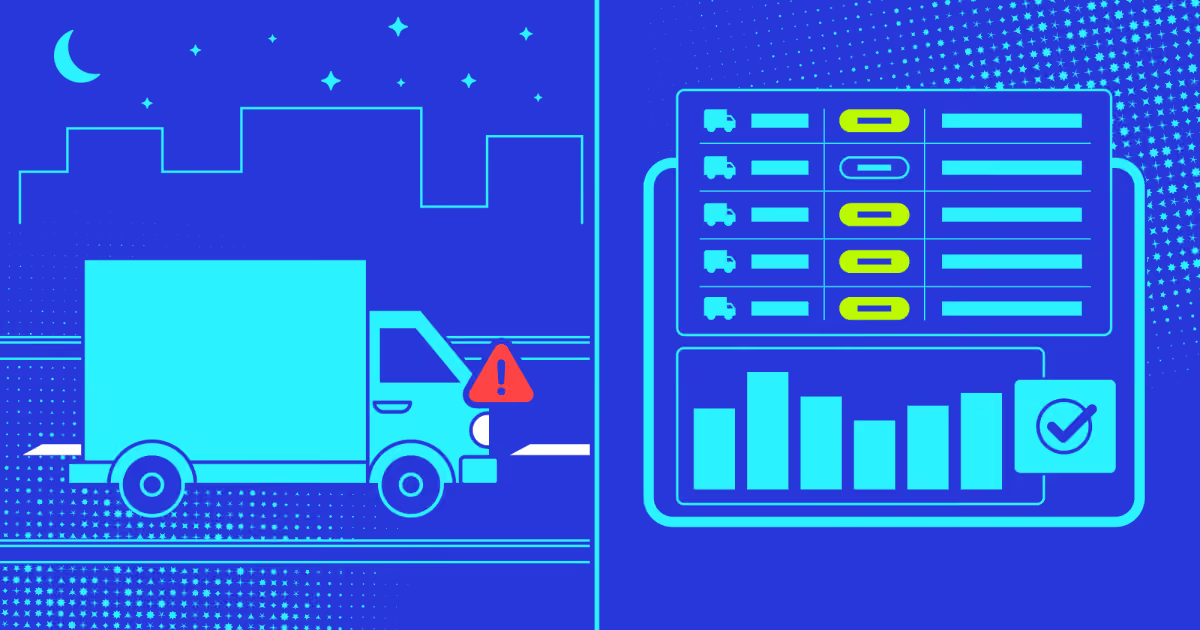
This is where most fleet management solutions reveal their real quality. Any system can log a delivery exception. The question is whether it surfaces it fast enough for a dispatcher to prevent the customer from noticing.
On the DriveIQ exception queue, intelligent clustering grouped related alerts by root cause. Traffic, hub congestion, and weather exceptions displayed in separate priority bands. Average dispatcher diagnosis time dropped from 12 minutes to under three minutes per exception. Support tickets fell 35% because issues were resolved before customers called.
The UI detail that drove that result: the exception queue showed active issues, auto-resolved cases, average resolution time, and AI success rate in a single view. Dispatchers didn't need to open five tabs to understand their shift.
Auto-recovery and route optimization
When a late delivery is detected, the best platforms don't just alert. They recommend. One-click route recovery reduces decision friction. The easier it is to act on a recommendation, the more consistently dispatchers use it.
The DriveIQ auto-recovery optimizer flagged exceptions like EXC-2847 (significant traffic, vehicle V-1089, original ETA 14:20) and surfaced rerouting options immediately. Dispatchers accepted or overrode with one action. That design choice produced an 8% reduction in empty miles. Overtime hours fell 22% through more balanced route redistribution.
Route optimization in a mature fleet management system also factors in driver safety scores during reassignment. Putting a fatigued driver on a recovered route erases the efficiency gain.
Predictive ETA engine
Static ETAs break under real operating conditions. Traffic changes. Drivers run late. Weather degrades route performance. A cloud fleet management system that recalculates ETAs continuously gives dispatchers something they can actually commit to.
The DriveIQ predictive engine updates every 15 minutes using live traffic, weather, and driver performance data. After 60 days of tuning on real route history, it reached 89% accuracy within a 15-minute window. The confidence score displayed alongside each ETA gave dispatchers the context to decide whether to notify a customer proactively or hold.
That single capability reduced late deliveries from 18% of total stops to 7%.
Fatigue and HOS compliance
Hours of Service violations cost money and create liability. The platforms that handle this well don't just track hours. They model fatigue risk forward in time and flag it before the driver hits a limit.
DriveIQ's fatigue optimizer examined shift length, time of day, and historical driver patterns. It identified high-risk windows and recommended break timing before the driver reached a compliance threshold. In the first quarter post-launch, the system prevented more than 40 HOS violations through advance dispatcher notification. Safety incidents fell 38%.
Compliance-first fleet operators prioritize this capability above most others. Regulatory exposure is asymmetric: one violation can cost more than the annual software license.
Advanced analytics and fuel management
Fleet management technologies generate data constantly. The platforms that convert that data into operational decisions rather than retrospective reports are the ones that move metrics.
The SyncMatix analytics engine processed raw telemetry into fuel efficiency trends, maintenance indicators, and driver behavior patterns across the full fleet. Finance dashboards tracked cost-per-mile, maintenance spend, and vehicle utilization. Operators using those analytics identified fuel waste savings averaging 18%. Route optimization built on top of the same data produced fuel savings up to 22%.
The architecture lesson: analytics engines that run on clean, standardized telemetry data outperform those built on top of mixed hardware inputs. In SyncMatix, connecting feeds from multiple GPS and OBD hardware vendors into a single analytics layer required real data normalization work upstream.
SLA simulation and promise management
Most fleet operators discover their SLA problems after signing the contract. The better approach: simulate delivery reliability before committing to a window.
The DriveIQ SLA/promise simulator let dispatchers test scenarios against historical route performance before confirming delivery windows. Probability bands showed reliability rates. Cost estimates adjusted by zone performance. Risk banding flagged routes where historical data predicted frequent exceptions.
The unexpected adoption: the sales team started using the simulator during contract negotiations. It converted complex reliability data into a format non-technical stakeholders could evaluate. SLA breaches dropped 28% in the first quarter. Over-promising on difficult routes became a solvable problem rather than a recurring cost.
White-label and multi-tenancy architecture
This capability matters specifically for fleet management systems providers who distribute through partners. Standard platforms lock all customers into a shared interface. Multi-tenant architecture lets each partner operate their own branded environment, with independent configuration, user management, and reporting.
SyncMatix supported full white-label deployment for partner fleets. Each partner managed their own fleet accounts, configured alerts independently, and onboarded drivers without touching other tenants' data. That architecture allowed the platform to grow to 500 customers through third-party partners without expanding direct support operations.
The implementation requirement: account isolation at the data layer, not just the UI layer. Visual white-labeling is straightforward. True tenant isolation requires architecture decisions that are expensive to retrofit later.
These ten capabilities define the fleet management system features that separate tools from platforms. No off-the-shelf solution implements all of them equally well. The table below maps each platform we evaluated against these dimensions.
As part of our logistics software development services, COAX integrates any of these platforms into existing transport operations. We handle complex API integrations and build custom analytics layers on top of standard telematics feeds. We can also extend platform capabilities where the off-the-shelf implementation falls short. The integration work is where the operational value actually gets unlocked.
How does a fleet management system work?
Fleet management software converts raw vehicle data into dispatcher decisions. The process runs as a continuous loop, not a one-time configuration. Every stage has a cost attached to getting it wrong.
Here's how the cycle runs in practice:
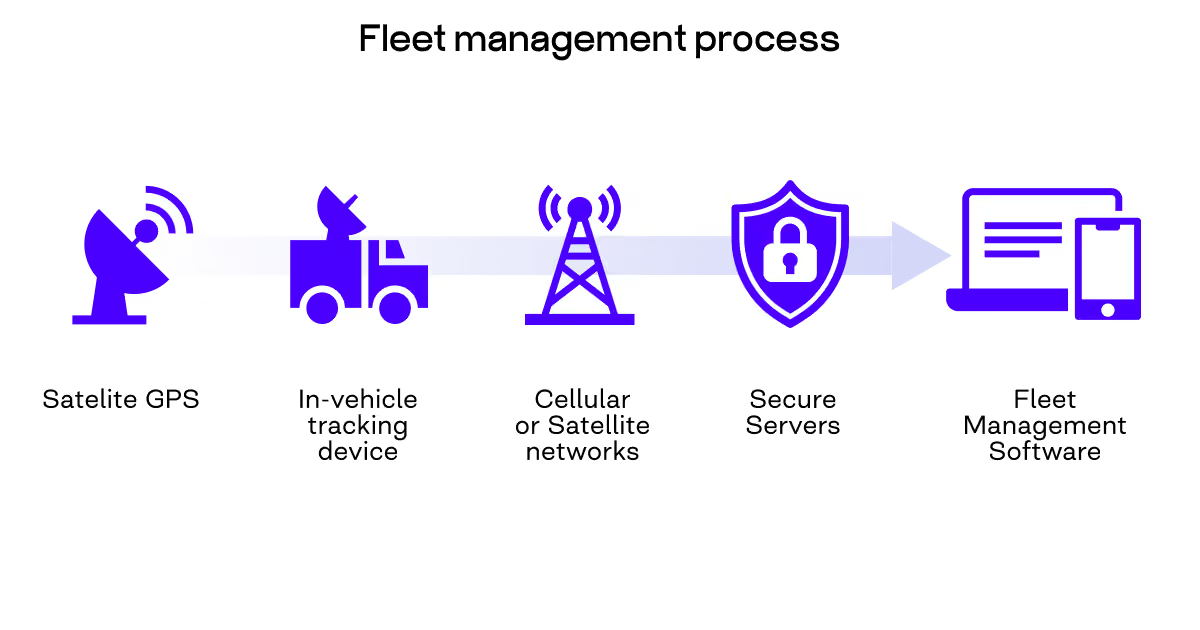
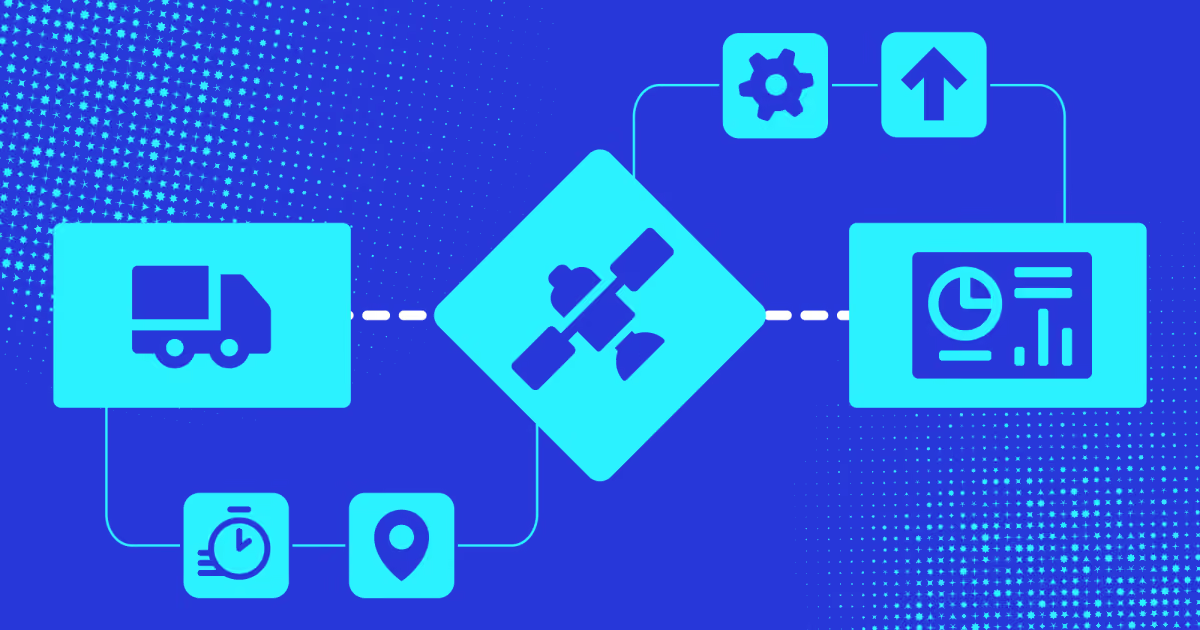
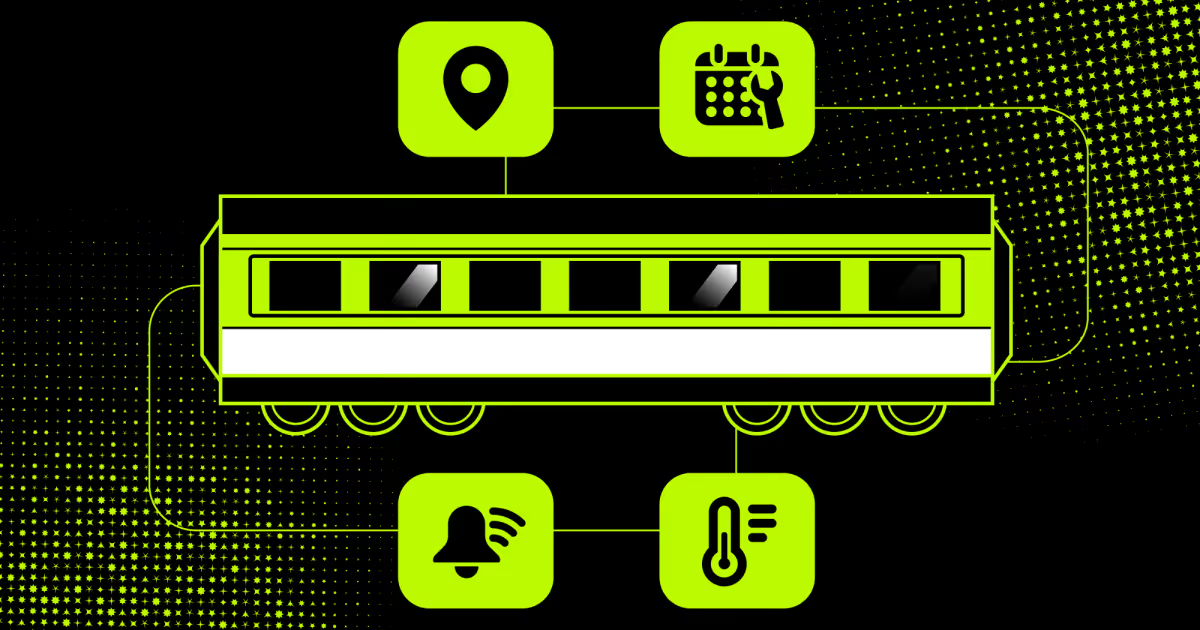
Signal acquisition. A satellite GPS fixes the vehicle's position. An in-vehicle OBD or cellular device captures that position alongside engine diagnostics, speed, and fuel state. That data transmits across cellular or satellite networks to secure servers. It then surfaces inside your fleet management software solution dashboard. If the hardware loses signal, the clock starts on your blind spot. On a 500-vehicle fleet, a one-hour tracking gap can mean 12+ unmonitored deliveries.
Data normalization. Raw telemetry from multiple hardware vendors arrives with different timestamps, different formats, and different precision levels. A production-grade logistics fleet management software layer standardizes that input before anything else runs. Skip this step and your ETAs are wrong before a dispatcher has touched a single route. On the DriveIQ platform, this normalization work was the first bottleneck. GPS pings from hardware vendors had to be reconciled before a single predictive model could run.
Real-time tracking and status. Once data is clean, the live map populates. Every vehicle shows current location, speed, and activity status without lag. Dispatchers watching SyncMatix's dashboard could see every vehicle's state across hundreds of simultaneous routes. The 25% improvement in route event response came entirely from removing the delay between event and visibility.
Exception detection. Fleet management system features that matter most aren't the ones that show you what's happening. They're the ones that flag what's about to go wrong. Traffic anomalies, geofencing exits, speed violations, and idle time exceedances trigger role-specific alerts before they become customer complaints. On DriveIQ, exception clustering by root cause dropped dispatcher diagnosis time from 12 minutes to under three. Every undetected exception that reaches a customer costs more than the alert system itself.
Predictive recalculation. Live conditions feed the ETA engine continuously. A weather event on I-95 at 13:47 changes 34 downstream delivery windows. A smart fleet management system recalculates all 34 automatically and surfaces the ones a dispatcher needs to act on. A static ETA engine shows you the original commitment. You discover the miss when the customer calls.
Driver coaching and intervention. As vehicles move, fleet management apps push context-sensitive guidance to drivers in real time. Speed limit changes 0.3 miles ahead. Idle time warnings before the fuel penalty accumulates. HOS limit proximity alerts before the compliance threshold triggers. On DriveIQ, this in-cab layer reduced fuel consumption 12% fleet-wide. Without it, those savings exist only in a post-trip report nobody acts on.
Route recovery. When a late delivery is confirmed, the auto-recovery layer generates rerouting options and surfaces them to the dispatcher with one-click approval. The design principle here is frictionless action. Every extra step between detection and decision costs time. On a 500-vehicle operation, that cost is measurable per route.
Reporting and compliance. At shift end, completed trip data flows into compliance reports, IFTA calculations, HOS logs, and performance scorecards. For GrandBus, automating this layer cut reporting time by 35 minutes per route. For cross-border freight operators, manual IFTA reporting is a liability. Fleet management solutions that automate this output remove a category of human error entirely.
Continuous optimization. The loop closes when performance data feeds back into forecasting models, driver scorecards, and route planning logic. Yesterday's late deliveries inform today's exception thresholds. Last quarter's fuel data adjusts this week's coaching alerts. A cloud fleet management system that learns from operational history compounds its value over time. One that only reports what happened delivers half the available return.
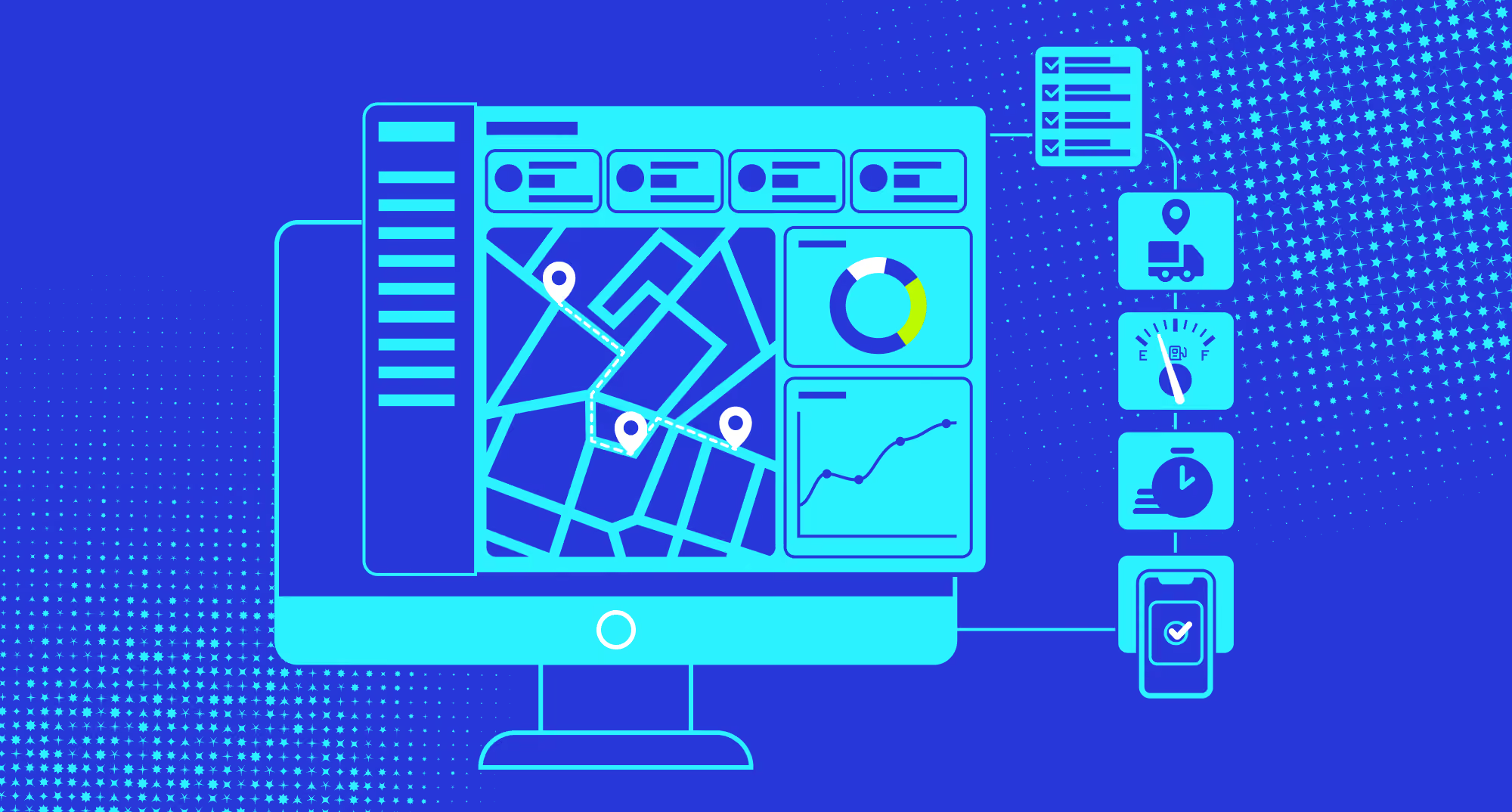
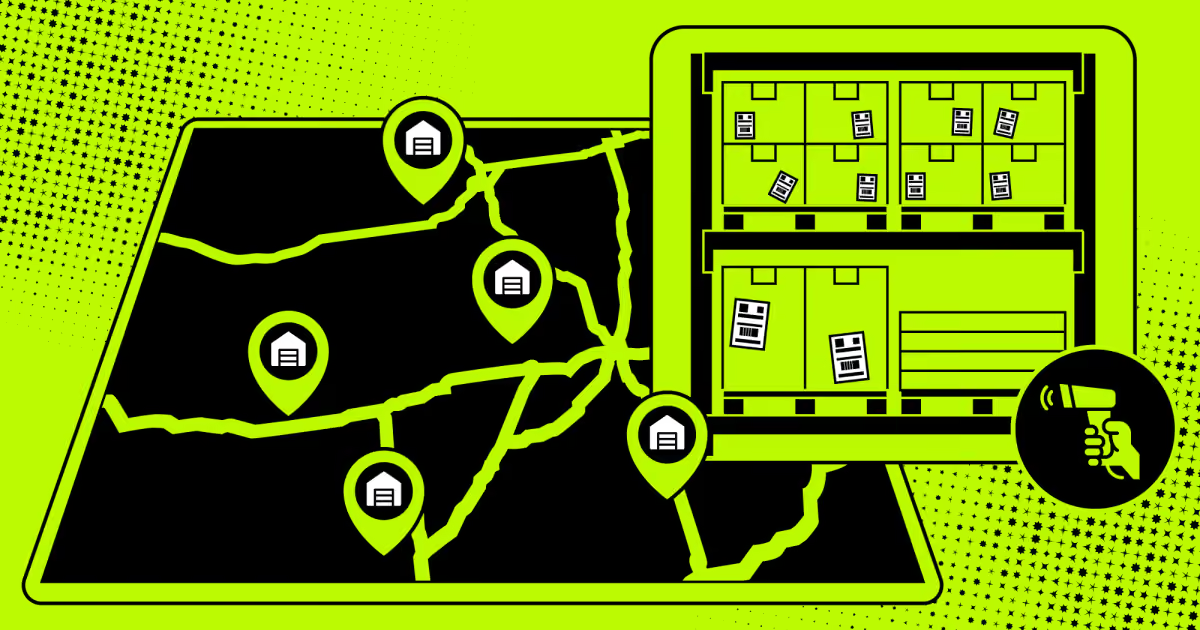
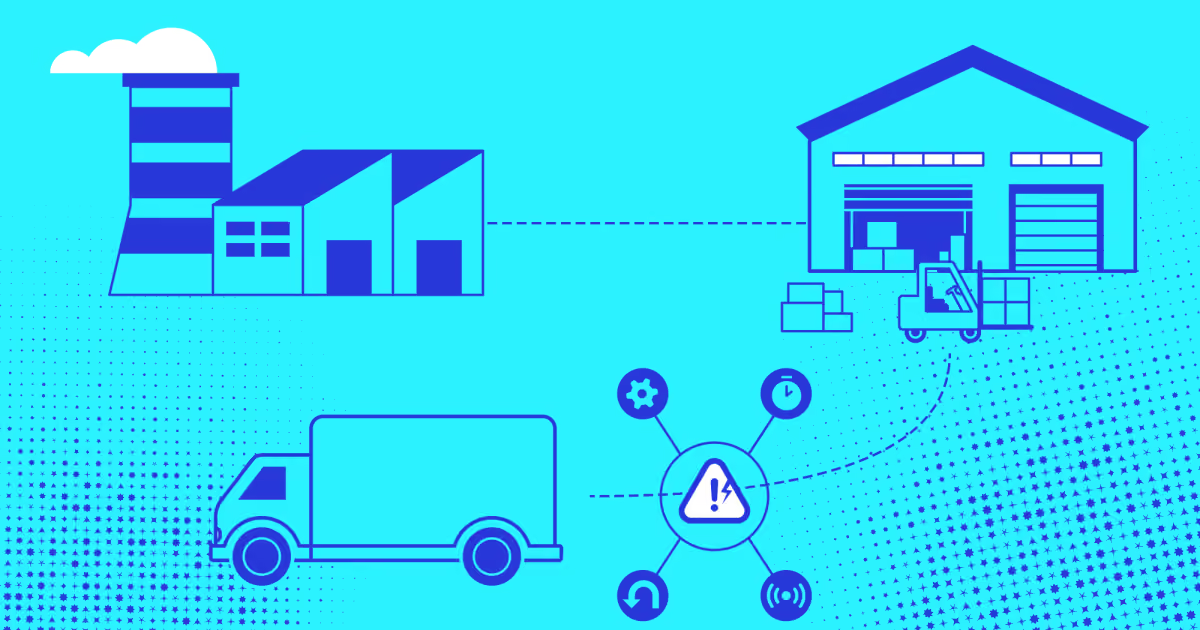
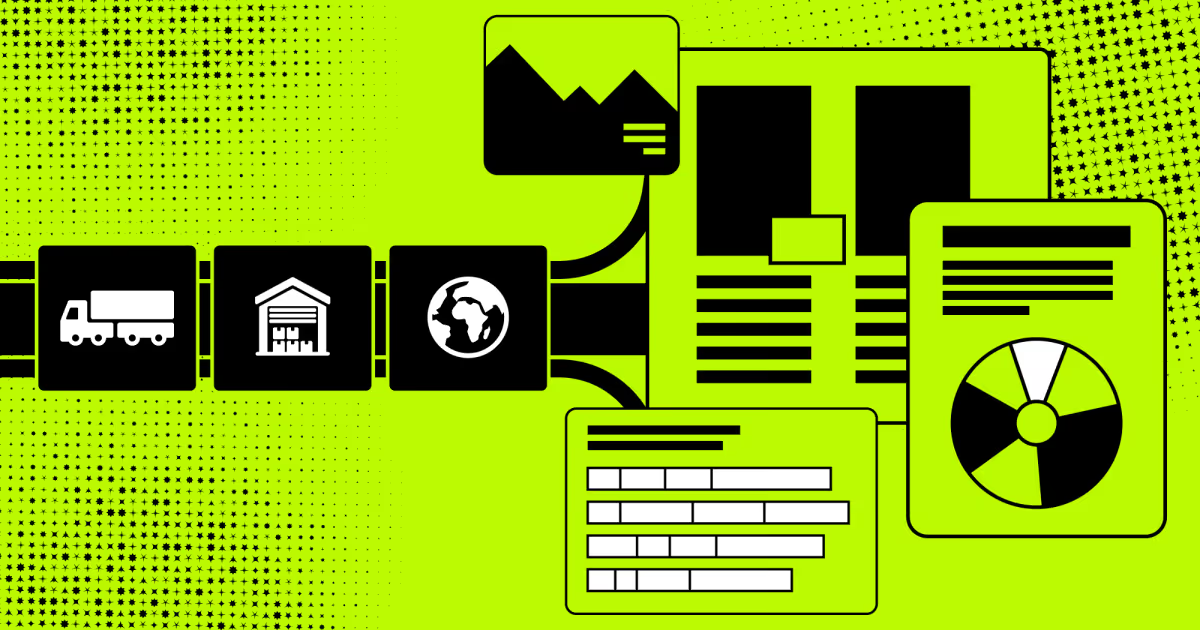
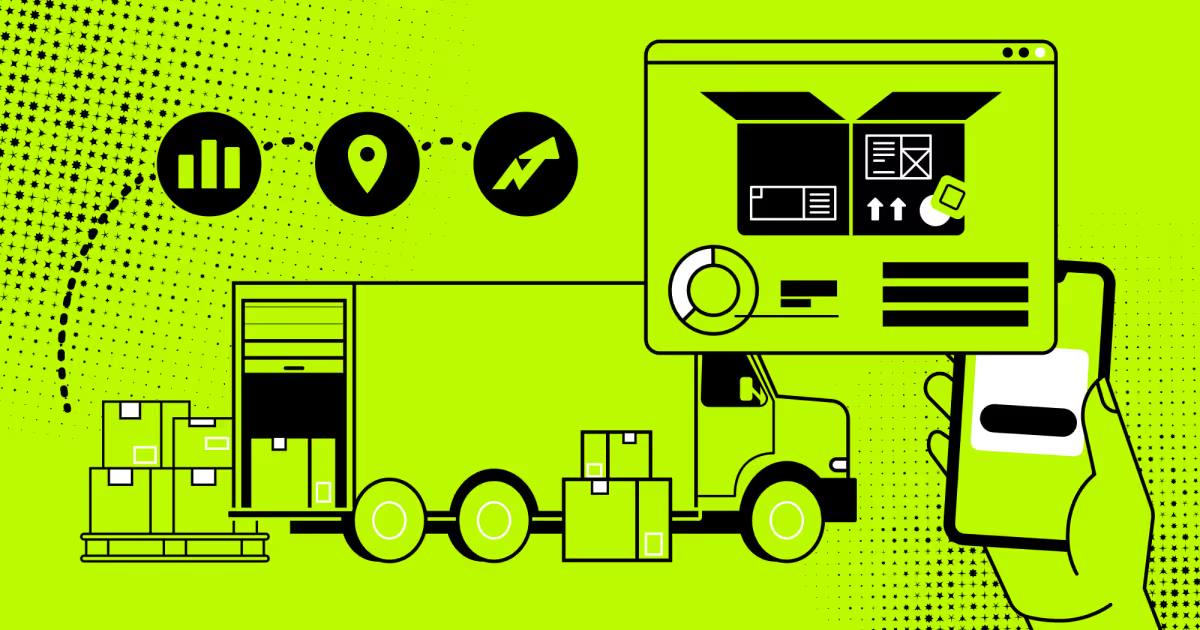
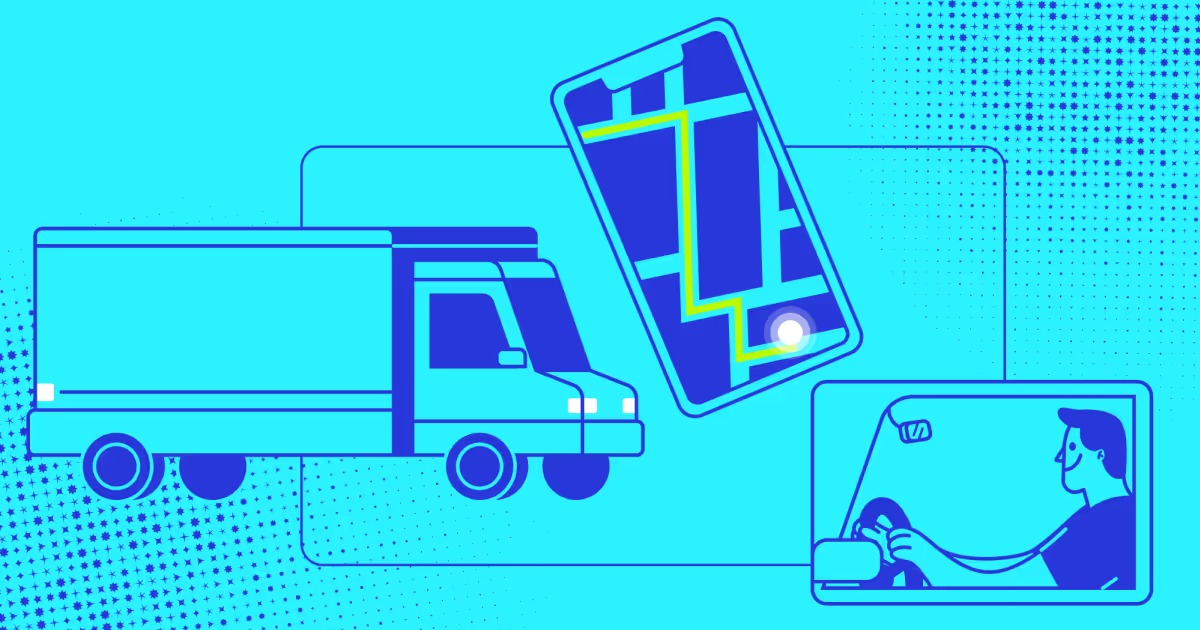
The diagram above illustrates the hardware-to-software data path. Satellite GPS fixes position, and the in-vehicle device captures and transmits it. Then, cellular or satellite networks carry it to secure servers. Finally, the fleet management software surfaces it to the people who need to act. The architecture looks simple. The failure modes at each handoff are where operators lose money.
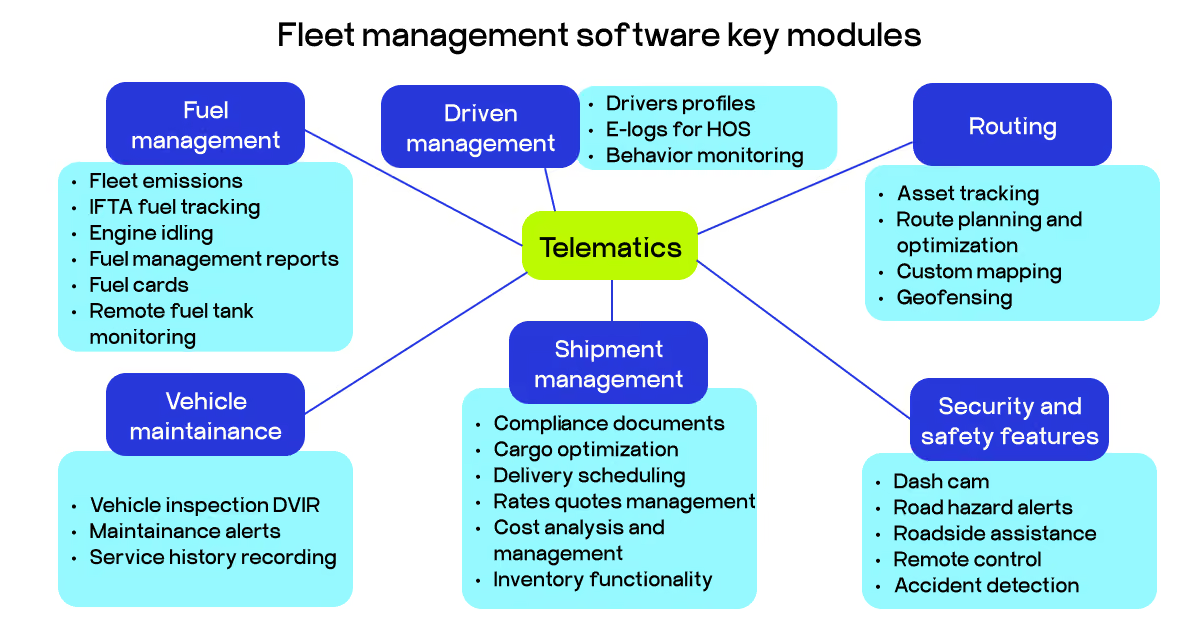
Fleet management software modules
At 9:00 AM in Dubai, an operator built a new shuttle route. Twelve minutes later, it was live with assigned drivers.
That speed wasn't an accident. It came from modular architecture, not a monolithic platform bolted together over years. Within months, our DrivenBus client processed thousands of bookings. Schedule adherence hit 91%, meaning buses left within two minutes of their scheduled time almost every time. Monthly subscription retention held at 78%.
The platform worked because each piece did one job well: routing, tracking, scheduling, payments. None of them waited on the others to ship.
Most logistics teams don't need another rigid all-in-one fleet management software. They need a system that fixes today's bottleneck first, then expands. That's the modular logic behind every system we build, and it's worth understanding before you commit to any platform.
Drivers module.
Driver data shouldn't live in three different spreadsheets. Profiles, credentials, availability, and assignment history belong in one place dispatchers can query instantly. On DrivenBus, the driver assignment flow ran through a calendar interface. Operators assigned drivers to routes in minutes, not hours. Each driver's profile carried punctuality history, passenger ratings, and route completion rates. That data let operators identify top performers for the hardest routes before problems happened. Without it, route assignment becomes guesswork.
Vehicles module.
A vehicle without current compliance and maintenance status is a liability waiting to surface mid-route. This module centralizes asset data, maintenance history, and readiness status across the fleet. DrivenBus tracked 400 buses inside a single occupancy dashboard, vehicle type and capacity visible at a glance. That visibility separates fleet management companies that scale smoothly from ones that discover a maintenance gap during peak demand. Capacity data feeding directly into route planning prevents overbooking before it happens.
Route planning module.
Bad routing doesn't fail quietly. It fails in front of a customer waiting at the wrong stop. Driven Connect applied the same logic to coach hire, integrating Google mapping for accurate distance and journey calculation. Rule-based routing with time windows and capacity constraints isn't a nice-to-have. It's the difference between a route that runs and one that collapses on day one.
Order management module.
Order intake without validation creates exceptions you discover too late. This module handles intake, status lifecycle, SLA tracking, and exception handling in one workflow. Driven Connect's quote request system let buyers request transport from multiple carriers, with full status visibility from quote to booking. Operators competed for contracts through a tender flow. Buyers compared offers transparently instead of guessing at fair pricing. That structure scaled to 400+ minibus operators on the platform, each managing their own order pipeline without conflict.
Rate engine module.
Pricing built on guesswork costs margin on every booking. A rate engine handles real-time pricing, contract logic, and surcharges through a single calculation API. DrivenBus needed pricing that made monthly passes meaningfully cheaper than daily rides, without eroding margin on either tier. Driven Connect's tender system pushed pricing further. Operators competed on price in real time, and buyers saw transparent comparisons across multiple carriers. A fleet management software comparison between platforms with and without dynamic pricing logic usually comes down to this module alone.
Inspection period module.
A bus that should have been pulled for inspection but wasn't is the kind of failure that doesn't show up until something breaks. This module manages inspection schedules, defect handling, and dispatch blocking for non-compliant assets. For fleets the size of DrivenBus's 400 vehicles, manual inspection tracking isn't viable. Automated compliance scheduling, tied directly to the vehicle record, keeps unsafe assets out of rotation before a dispatcher accidentally assigns one.
Fuel monitoring module.
Fuel cost leakage rarely shows up as one big number. It shows up as a slow bleed across hundreds of trips, invisible until someone aggregates it. Driven Connect's emissions module calculated fuel consumption and cost per route, factoring in engine type, vehicle specs, and route distance. For a London-to-Manchester run, the system projected fuel usage before the trip started, not after. That same logic underlies fuel anomaly detection: catching unusual consumption patterns before they become a quarterly surprise.
Dispatcher messenger module.
A dispatcher who can't reach a driver mid-route is flying blind during the moment visibility matters. This module structures dispatcher-driver communication, tied directly to orders, routes, and live execution status. DrivenBus drivers received push notifications for schedule changes and new assignments without needing a separate channel. Driver feedback specifically praised the clarity of in-app communication and the simplicity of check-in. Fleet management technology that connects messaging to operational context, rather than running it as a disconnected chat tool, removes the lag between a problem occurring and a driver knowing about it.
Invoices module.
Billing disconnected from operational data creates disputes nobody can resolve quickly. This module ties freight charges, shipment data, and settlement into one generation flow.
Driven Connect's billing module handled everything in one place, including UK Carbon Emissions Tax payments calculated automatically per vehicle and route. Operators didn't reconcile tax obligations manually. The platform handled compliance as a byproduct of normal billing, not a separate quarterly scramble.
Shipment consolidation module.
Running half-empty vehicles on overlapping routes is one of the most common ways operators bleed margin without noticing. This module handles load building, capacity utilization, and grouping logic to consolidate shipments profitably. For LTL and regional distribution operators, the benefits of fleet management system consolidation logic compound fast: fewer vehicles, higher utilization per trip, lower cost per delivered unit.
"Modular architecture isn't a technical preference. It's what lets a client upgrade routing without touching billing, or fix fuel monitoring without risking the driver app. We built Road&Rally's real-time synchronization engine the same way. As a contained system other features could plug into, not a tangle everything depended on," says Orest Falchuk, Head of Engineering at COAX Software.
These ten modules cover the operational core of any modern fleet management system. But you don't need all of them on day one. You need the one solving your current bottleneck, built in a way that doesn't block the next one.
That's the part most off-the-shelf platforms get wrong, and it's where we spend most of our engineering time. Your data stays with you throughout. We're ISO 9001 and ISO 27001 certified and apply the same security standards to a 10-vehicle pilot as we do to a 500-vehicle enterprise rollout.
We work across time zones and fit your pace, whether that's a dedicated squad building one module or a full custom fleet management system from strategy to launch. Project managers, developers, designers, QA, and DevOps sit under one roof, so nothing gets lost in a handoff. And because logistics platforms rarely stay the size they started at, we design for the version of your fleet that exists in two years, not just the one in front of us today.
How to choose the best fleet management system?
If Driven Connect came to us today asking how to choose their stack, we'd start with one question: what's most challenging right now?
Not what features sound impressive. What's costing money this month.
For Driven Connect, the answer would've been routing and scheduling visibility, not fleet tracking in the generic sense. That single distinction changes the entire shortlist. A platform optimized for long-haul freight tracking solves a different problem than one built for scheduled passenger transit with fixed stops and time windows. Picking the wrong category wastes a quarter before anyone notices.
That's the real first step in choosing fleet management software: define the operational gap before you open a comparison table.
Match the platform to your operating model, not your industry label
"Fleet management" covers wildly different operations. A 500-vehicle freight carrier, a 12-bus shuttle service, and a last-mile delivery fleet all need different things. Yes, even though they'd all type the same search query.
If your core problem is real-time customer-facing visibility, you need a specific solution. Look for a platform with strong consumer-grade location streaming. On DrivenBus, GPS coordinates are pushed every 10 seconds during active routes. Most freight platforms don't optimize for that update frequency because their dispatchers, not customers, are the audience.
If your core problem is carrier coordination across a partner network, like Driven Connect's tender system, the priority shifts. You need quote distribution, competitive bidding logic, and multi-operator visibility. Fleet management solutions built purely around vehicle tracking won't solve it, no matter how good their GPS layer is.
Your core problem might be also compliance and cost leakage across a large owned fleet. An example is our DriveIQ client managing 500 cross-border trucks. In these cases, prioritize platforms with strong HOS modeling, fuel anomaly detection, and predictive ETA accuracy. Tracking alone doesn't move those metrics.
Weigh build-vs-buy against your timeline and differentiation needs
Off-the-shelf fleet management software companies like Samsara, Verizon Connect, or Motive solve the 80% case well. Real-time tracking, basic alerts, driver scorecards, standard compliance reporting. If your fleet runs a fairly standard operation and speed to deployment matters more than differentiation, start there.
The calculation changes when your operating model is genuinely unusual. Driven Connect needed emissions tracking tied to UK carbon tax compliance, calculated per vehicle, per route, integrated directly into billing. No off-the-shelf platform had that logic built in. Building it custom wasn't a preference. It was the only path to a feature that didn't exist anywhere else.
Test the platform against your worst day, not your average one
Everyoption top fleet management software option performs well in a demo with clean data and five vehicles. The real test is what happens during a service disruption.
Ask any vendor: what happens when 30 vehicles report exceptions during a weather event? Does the exception queue cluster by root causer? On DriveIQ, intelligent clustering cut diagnosis time from 12 minutes to under three. That capability only matters during the worst hour of the month, but it's the hour that determines whether your dispatch team trusts the platform at all.
Ask about data normalization if you're running mixed hardware. SyncMatix's challenge was reconciling GPS and OBD data from multiple vendors into one feed. If your fleet has grown through acquisition or uses different telematics hardware across regions, that normalization layer matters more than any single feature on the spec sheet.
Check the integration depth, not just the integration list
Vendor marketing pages list integrations generously. The real question is whether those integrations are production-ready or demo-ready.
Driven Connect's emissions module required real engineering. It covered pulling vehicle specs, calculating fuel consumption per route, syncing with Google mapping services for accurate distance data, then feeding all of it into a tax compliance calculation. That's not a checkbox integration. It's a custom calculation pipeline wearing an "integration" label.
Before committing to any platform, ask what a specific integration actually does under load, not whether it exists in a marketing list.
Choosing between fleet management software options gets easier once you know which gap you're closing. That's the conversation we have with every client before recommending a platform. The right answer is rarely "buy the market leader" and rarely "build everything from scratch" either.
At COAX, we are on the engineering side of that decision. We help you evaluate platforms against your actual operating model, integrate the one that fits, and build the custom layer that off-the-shelf tools don't cover. This goes from a predictive ETA engine, an emissions calculator, to analytics and AI on top of your existing infrastructure. If your current platform is close but missing the piece that actually moves your metrics, that's usually where we come in.
How to implement fleet management software?
Implementation means three phases: define scope, build incrementally, and roll out by user role. Get the sequence wrong and you'll rebuild what you already shipped.
That's the theory. Practice is messier. After 16 years building fleet management solutions for transport operators, we've learned where the gap between plan and reality actually opens up.
"Teams scope fleet platforms like a single product. They're really four or five products wearing one login screen: dispatcher tools, driver tools, admin tools, partner tools. Each has different latency needs, different offline requirements, different failure tolerances. Treat them as one thing and you'll ship something none of your users actually want," says Orest Falchuk, Head of Engineering at COAX Software.
Here's what that looks like in practice, drawn from builds we've shipped.
Separate user roles before writing a single screen. Every platform we've built needed this. On SyncMatix, admins needed full configuration control. Fleet managers needed simplified dashboards. Drivers needed a battery-light app. Partners needed isolated access. One UI for all four satisfies none of them. Map roles first. Architecture follows from there.
Plan multi-tenancy from day one if partners matter. SyncMatix allowed full account isolation through sub-accounts. Partners managed fleets independently, without touching other tenants' data. That early decision let the platform scale to 500 partner customers. No data-layer rebuild required later. Retrofitting tenant isolation after launch costs far more.
Build mobile for bad conditions, not ideal ones.GrandBus drivers needed reliable QR validation on patchy rural signal. The app stayed connected without draining battery. A driver app that dies mid-shift is worse than none. Road & Rally pushed this further still. High-speed offline mode kept navigation accurate without cellular service. Design for the dead zone, not the demo.
Ship the MVP narrow. Expand your fleet management software system by usage data, not assumption. GrandBus launched on a tight timeline. Discovery started in October. First release shipped by March. We built booking and routing first. Premium tiers came later, once usage justified them. Full-featured launches delay real feedback by months.
Automate the manual workaround your team already uses. GrandBus drivers used paper notebooks before our app existed. Dispatchers ran on Excel and phone calls. We watched what the spreadsheet was doing. Then we replaced it directly, feature by feature. That solved a real workflow, not a guess.
Treat real-time tracking as sync, not display. Road & Rally's hardest problem wasn't the map UI. It was keeping location synced across devices at speed. GrandBus combined GPS trackers with server-sent events instead. That cut location-related phone calls from 35% to 5%. The map is easy. Sync underneath is where time goes.
Decide what "custom" means before pricing anything. Fleet management software cost swings hugely based on scope. A dashboard on an existing system differs from custom multi-tenancy. Or a predictive ETA engine built from scratch. Scope that distinction early. It drives both timeline and budget most.
These tips assume you know what you're building. If not, that's a shorter conversation than expected.
At COAX, we build the whole stack. Our developers create web dashboards, driver and admin mobile apps, or a standalone admin app layered on top of a tool you already use. Some clients need a full custom fleet management software build from zero. Others need one missing piece bolted cleanly onto an existing system. Either way, we've usually already solved the specific nuance that's slowing you down, because we've hit it before on someone else's fleet.
Building the right fleet management solutions isn't about having every feature. It's about knowing exactly which three matter for your operation, and building those properly first.
FAQ
What is a fleet management system's biggest hidden cost during rollout?
Data normalization is the cost most teams miss. Integrating GPS, OBD, and EDI feeds from mixed hardware vendors takes real engineering time, not a configuration toggle. On our client project, SyncMatix, for instance, reconciling multiple telematics formats into one clean feed was the hardest part of the build. Budget for integration work upfront, not as a post-launch surprise.
How does a fleet management system work when vehicles lose signal mid-route?
Production-grade platforms interpolate the last known position and flag the gap rather than dropping the vehicle entirely. When signal resumes, tracking reconnects cleanly without losing trip history. Weaker platforms simply show a frozen marker, which erodes dispatcher trust fast. Always ask vendors specifically how their fleet management system software handles connectivity gaps before committing.
What is fleet management system risk when handling driver and customer data?
The biggest risk is data residency and access control across multi-tenant platforms. If partners or sub-accounts share infrastructure without proper isolation, one breach can expose everyone's data. We build with ISO 27001-aligned architecture and strict tenant separation on every multi-party platform, including SyncMatix's partner network, which scaled to 500 customers without a cross-tenant incident.
How long does custom fleet management software development typically take?
A focused MVP, like a single role's dashboard and core tracking, can launch in two to three months. Full multi-role platforms with driver apps, admin tools, and partner architecture typically run six to twelve months. DriveIQ shipped its first rule-based alerting in weeks, then expanded predictive features over following months. Phased rollout beats waiting for full completion.
What is fleet management software pricing actually based on?
Per-vehicle monthly pricing is standard for off-the-shelf platforms, typically $4 to $45 depending on feature tier. Custom builds price differently: based on scope, integration complexity, and number of user roles. A simple tracking dashboard costs far less than multi-tenant architecture or predictive analytics. Get a clear scope breakdown before comparing any two quotes directly.











































































_.avif)








%2520explained.avif)

We are interested in your opinion